Be Wary of Bread and Circuses

“There’s nothing wrong with distractions and wanting to enjoy an event, a spectacle, or indulge a bit but in the times that we’re living in, it’s important to realize that focusing only on ‘bread and circuses’ is something we can no longer afford to do.”

Who doesn’t enjoy sports or entertainment or both? People since the dawn of time have enjoyed being entertained or have been spectators or participants in games, sports, or other spectacles. At best, it is a thrilling adrenaline rush to be part of it to the roar of hundreds or thousands of people. At worse, it is a pleasant distraction from the humdrum of our daily life and our routines. There’s nothing wrong with distractions and wanting to enjoy an event, a spectacle, or indulge a bit but in the times that we’re living in, it’s important to realize that focusing only on ‘bread and circuses’ is something we can no longer afford to do.

The concept and phrasing of “bread and circuses or in Latin known as, “panem et circenses”, comes from the Roman Empire and belongs to the Roman poet Juvenal. Juvenal criticized how the Roman leadership would use free food such as bread and grant entertainment such as the gladiator events and other spectacles of the coliseum to distract the citizenry from societal and economic decay. While the Roman empire declined and fell as all empires do, today, in our modern world, we have major sporting events such as the FIFA World Cup and the NFL Super Bowl. Reality Television shows remain quite popular, and the media spends hours on celebrity scandals and gossip rather than focus on systemic issues affecting each of us daily.

Why is this an issue today as it was almost 200 years ago? I would argue that we are living through an era of upheaval including political instability, economic inequality, the effects of climate change, and the rise of authoritarianism. Distraction such as ‘bread and circuses’ help to keep people distracted from these ongoing issues and is a powerful tool to be utilized by those holding power. While sports and entertainment can be healthy outlets, it does not go well for a society when it is all-consuming, and people are overly reliant on it each day for fulfillment or pleasure. An active citizenry must remain focused on issues that affect them and their families as if they are paying attention and are engaged, positive change is more likely to occur as a result.

Political leaders can use major sporting events to help push their agendas forward as the times surrounding such events are the easiest to enact policies that are controversial but in which public attention is directed elsewhere. Politicians and leaders can also engage in controversies surrounding sporting events and how it related to ‘culture wars’ and ‘celebrity feuds’ to divert from ongoing political scandals or economic problems. Major sporting events are also used to stir national pride in a country and can be used to distract from real issues that the country is facing as well.

Sports and entertainment are big money for corporations and for wealthy individuals. Sports can reflect ongoing economic inequalities especially when multimillion-dollar commercials are paid for by a company rather than in investing in their own workforce’s compensation. Money spent in the billions of dollars each year on sports betting, gambling, or on tickets could have been funneled towards programs focusing on social well-being in health care, education, or infrastructure.

Celebrities and athletes should be compensated well for the work they do but there is an issue when ordinary workers who help make events, games, and other spectacles run smoothly are not paid a living wage. Thousands of workers are making decent pay, but it pales in comparison to what the ‘stars’ are making especially when they are the one preparing their food, keeping them safe with security measures, and helping stock the shelves and sell the merchandise.

There is also the ongoing debate in society about taxpayer money funding massive students and events that are not benefiting the surrounding community or the city itself. A lot of that money gets funneled to corporations in the ‘naming rights’ and to the ‘billionaires’ who see their net worth grow up as the sports franchise becomes more valuable over the years. A society where income inequality is high and is rising will be reflected in sports and entertainment as well. While there are some economic benefits to be made by the average person in these industries, a large sum of the gains to go to the wealthiest owners, players, and stars while the wealth does not ‘trickle down’ much, if at all.

While some of these issues do get coverage in the media although increasingly sparingly, I would argue that general news media, especially in recent years, has become sensationalistic and has focused on ‘click bait’ content rather than on serious investigative journalism. News outlets have prioritized celebrity feuds, sports gossip, and other trivial controversies that pale in comparison in terms of importance compared to real issues going on with the wider society. Viral content gets more clicks and eyeballs, especially on social media, and that’s where the focus has turned especially in recent years. Too much information at one time also presents most people from being able to decipher of what’s real vs. what’s fake and what to pay attention to because ‘information overload’ makes it hard to pinpoint what is likely to affect them the most and is worth paying attention to.

Similarly to the issues I’ve mentioned that ‘bread and circuses’ distract from each day, one issue that is the most immediate and wide scale in terms of ongoing effects is the accelerating climate crisis. Major sports and entertainment events all have an environmental cost and leave a sizable carbon footprint. When you tally up, the travel emissions, energy consumption because of the game or event, and the waste involved from having thousands of people in attendance, communities who support the events or games must deal with the aftermath, including both the financial and environmental costs.

While these massive events like the Super Bowl, the FIFA World Cup, and the Olympics due to pledge to be more sustainable and environmentally friendly, many companies do not end up footing the bill for the carbon emitted or the energy used. They can do so because the companies help sponsor the events and contribute enough money to them, so they aren’t as liable to help with the environmental aftereffects. Looking at two recent examples with the 2016 Rio Olympics and the 2022 FIFA World Cup in Qarar, these two events led to increased carbon emissions (FIFA) and environmental aftereffects. (Olympics)

While I am supportive of sports and entertainment and have been a fan of both, I still recognize the need to tone it back these days because excessive consumption of either will not help our society and our world be better. Sports and reality TV may seem as important as real issues, but they are not and never will be. People must stay engaged in what’s going on in their community, their country, and their world. As consumers of news, we also have the individual and collective power to choose which news outlets we give our time and our money to as well. If frivolities and ‘bread and circuses’ is all a news organization is offering, then it’s not a real news organization to begin with.

 Advocating for solutions to real issues, being a reliable voter, and volunteering in your community consistently can help keep the ‘bread and circuses’ to a more tolerable level. We all want to experience gratification and rewards in our lives and sports, or entertainment do both in providing that kind of dopamine hit but it’s a cheap one, and it’s not something we do ourselves. Political activism, working for social change, and developing our problem-solving abilities is real gratification in whatever issue you want to work on in our world. It’s not as instant and far from being easy but improving anything in society will take effort, discomfort, patience, and a lot of perseverance. Make sure you advocate for what you care about because celebrities and sports figures may not do the same, if at all.

You should stay focused on what’s important in the news, be civically engaged and encourage others in your life to do so. Remember to balance your consumption of entertainment and sports along with awareness of the issues and problems affecting you, your families, and your communities. Watching the Super Bowl is fine and I just did so recently as I have most years of my life, but if we continue to ignore political scandals, economic problems, and societal injustices, there won’t be much to celebrate in our society beyond that one day of the calendar year, where two teams of millionaires play a game that you can’t even be part of or even afford to go to.

The Importance of Giving Actionable Advice

“Being able to give out actionable advice is a key people skill that will set you apart from other people who dole out advice, but for which is not specific enough, not catered to that person in question, or does not have steps laid out for that person to fulfill.”

It is one thing to give some advice and it is another thing to give actionable advice. What do I mean when I say, ‘actionable advice’? Isn’t all advice ‘actionable’? Not necessarily. You can give someone basic advice that could help them to some degree, but ‘actionable advice’ is about laying out a plan or at least steps from A to Z or at least a few steps in chronological order to help someone achieve a goal, reach an objective, or solve a problem. Being able to give out actionable advice is a key people skill that will set you apart from other people who dole out advice, but for which is not specific enough, not catered to that person in question, or does not have steps laid out for that person to fulfill.

For an example of ‘actionable advice’, if you know someone studying for a professional certification and they need to pass an exam to get the certificate, you can lay out some real advice that could help them step by step. Instead of just telling that person in this hypothetical situation, “good luck and remember to study hard!”, that is basic advice that is redundant at best or insulting at worst because everyone knows they need to study for an exam to pass and they know luck may play a small factor in it, but it’s not helping them any more than they already know they need to study.

In this case, giving ‘actionable advice’ would look like, “hey, I know you’ll study hard but remember to join a study group each week, take 1-2 hours per night to review the exam material, be sure to take a few mock exams to get you ready for the test format, and even make flashcards or practice the concepts with me when you have some free time to do so.” This kind of approach is a perfect example of giving ‘actionable advice’ beyond just to “study hard!” You are really diving deeper with the person preparing for the exam by giving them several ways that they can maximize their study time, improve their knowledge, and show your own investment in them succeeding by asking them about the concepts or questions that may come up on the exam as well as reviewing flash cards with the test taker.

You will really stand out when you give that kind of detailed, actionable advice that lays out a plan for the test taker in this case to improve their odds at success. Most people will stop at the “study hard!” or “good luck!” but if you really care about the person, whether it’s a friend, a family member, or someone you’re in a relationship with, you will want to go further than that to show that you care about them and want to help them to the best of your ability.

When giving ‘Actionable advice’, it comes down to tailoring it to that individual person’s request or need such as acing a job interview, passing a test or exam, planning a trip for a few weeks or a few months, or if they are looking to improve their own finances. Deliberate and meaningful advice involves planning, following through with that plan, and marking your progress each time you fulfill a step or a part of the plan. If you are giving general advice that can be summed up in a few words or a sentence, that advice may help a little but it’s going to be forgotten quickly by the person you’re giving it to, and it won’t easily be remembered.

Taking the time with the person you’re helping means working closely with them, sharing ideas and the plan, holding him or her accountable for if they are following through with the advice, and having hard conversations at times about what their goals, dreams, or objectives really are, and how much they are willing to work for it to succeed.            

Anyone can give ‘boiler plate’ or ‘standard’ advice but if you want to know about who really cares about you and is invested in your success, be sure to give out ‘actionable advice’ instead. If it’s the kind of advice where you’re collaborating with that person, mapping out steps in chronological order to have a full plan, and where you’re ticking off the boxes together along the way in the hopes of reaching the ultimate goal(s) or objective(s), you can rest assured that kind of advice will be remembered for a long time by the person(s) you are helping to succeed.

The next time someone asks you for some advice, don’t ignore them or blow them off. Instead, understand where they’re coming from, what they are hoping to achieve and succeed with, and since they’re coming to you specifically, they really care about your perspective and your past familiarity with what they’re going through. Take the time to help them, build them up, hold them accountable, and chart a path together to help them succeed through sheer hard work and effort.

Being The Bigger Person

“If you are not direct with someone about the issue and decide to go behind their back, they may think less of you and to not apologize or at least make the effort to because they will be surprised that there was even an issue to begin with.”

Sadly, some people never grow out of the ‘high school’ or ‘college’ phase of their lives. They become accustomed to gossiping or making conjecture about other people behind their backs and without their knowledge. This is often childish behavior and should be called out as such. If you have a problem or an issue with someone, you should address it in a mature manner, and directly if feasible as an adult. To not do so and to opt to gossip or slander someone’s reputation, even if justified, can often make the situation worse, not better.

There’s nothing wrong with speaking out about a kind of grievance or a specific problem you may have with another person but to do so in terms of gossip or hearsay is wrong. When you decide to ‘go through the grapevine’, it can often insult the person on top of the problem you already have with them and cause the problems to escalate rather than to be solved. If you are not direct with someone about the issue and decide to go behind their back, they may think less of you and to not apologize or at least make the effort to because they will be surprised that there was even an issue to begin with.

If the issue is valid and there is a real concern there, the best way to do it as adults is directly or with a third party directly involved to the ease the tension. If you go through a third party or a third person and then the person you have an issue with hears about it from them, I tend to think that will make them think less of you for having told a third person or party about the problem rather than going to that third party and to you at the same time. To do so professionally can cause problems but to do so in your personal life in the wrong manner can rupture a friendship or a family tie even worse.

When it comes to interpersonal relations, if someone has an issue with you, justly or unjustly, you should always advocate for that issue to be worked on directly whether with just the two parties involved or with a third party, who is supposed to be neutral in weighing the arguments or grievances from both parties. When you have someone as a third party who only hears one side of the story and then already makes a judgment without consideration of the other person’s perspective or viewpoint, then that is also a cause for concern in alleviating the situation.

Indirect grievances or gripes, conveyed to a third party indirectly, with the person or people you have issue with not even hearing from you about it at all can cause further annoyance especially when they feel that their reputation or their livelihood is at risk. I am an advocate for direct communication as much as possible even when the matter at hand can cause offense. It is simply better for both parties to hear each other out and to see if a resolution can be had, especially with a third party as an intermediary who does not make a premature judgment before both persons can be heard fairly.

If one side is not playing fair and is distorting the truth or completely lying about you or what happened, you have the right to defend both your honor and your reputation. You should air your side of the story and make sure the truth is heard. You should not gossip in retaliation or spread falsehoods ever about that person to get even if they have lied or gossiped or spread slander about you. That is what ties into the notion of ‘being the bigger person’ in interpersonal relations. You should not look to score cheap points or to get even or to go down to their level.

You must rise above their childish or teenage behavior and to be the only adult in the room if it comes to that. People’s perception of you or of your reputation does matter a lot especially if you’re a leading member of a community, a state / region, or a country. Even if what you think is gossip or conjecture should not be taken seriously or with a ‘grain of salt’, other people may not take it the same way and your reputation will be harmed as a result. Indirect complaints or problems can often cause bigger issues to emerge because it creates a toxic atmosphere of distrust or ill will especially when one person’s side of the story is not being heard at all, or they can’t find a neutral third party to issue a conclusion or a verdict, or when they would prefer to deal with the problem or issue at hand directly.

It’s often harder to be the ‘bigger person’ in any dispute or issue because some folks want to commit childish actions because they know it will be popular to do so. As odious as ‘gossiping’ is, some adults never grow out of that stage and act like children still even if they are of middle age or even elderly. They want to bring you down to their level in a way and get you to do the same kind of indirect gossip and conjecture as they do, but you should avoid that at all costs.

If you can make a dispute directly with that person in return or find fault with their argument(s), make sure you find a neutral third party to hear you out especially if they heard from that other party without you even knowing. It’s important to not let your guard down in a dispute and protect your reputation to the best of your ability and use the truth and the facts to outweigh the gossip and the falsehoods you may encounter. Being the bigger person is never easy, but it will show to others that you are able to deal with criticism in a healthy and mature manner.

Overreacting by getting upset or using the same ill-advised gossip as they do is a recipe for disaster and for that one issue to lead to multiple other issues. Resolve any dispute or issue that you may find yourself in with the truth of the matter, the straight facts, and to deal with the other party directly. Do not rely upon hearing something suspect, through the ‘grapevine’ as some others prefer to do and accept it without any reservations or questions. Those who accept this kind of conjecture without any pushback or evidence or getting the facts from both sides shows that they may not have matured as much as they think even after having left their high school grounds or their college campus.

Book Recommendations – Volume X

The Summer reading session is well upon us and there is no better time to dive into another edition of my book recommendations. Whether you are at the beach, at the pool, or lounging on a rooftop deck, you can take some leisure time to read a great fictional or non-fictional offering to indulge your mind or open your imagination. The three books I cover are all non-fiction, which is the category that my favorite books often fall under. I do hope to dive into some fiction books sometime soon, but I’ll save that for other post.

The three books I recommend vary from personal finance to progressive politics to self-help psychology, but they all are educational and thought-provoking in their own way. These books aren’t mindless reads, so you’ll have to pay attention and even re-read certain chapters twice or more to really get the gist of what the author is getting at. However, each of these three books have staying power and they would make an excellent addition to anybody’s personal book collection since the different lessons that these books impart are timeliness in nature. Without further ado, let’s discuss which books I enjoyed in this latest volume of recommendations.

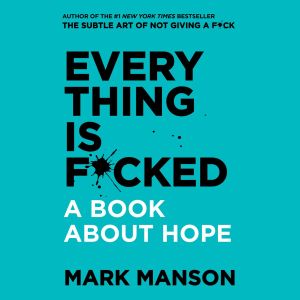
1.) “Everything Is F*cked: A Book About Hope” by Mark Manson

everything-is-f-cked
Following up on the tremendous attention and success gained from his previous New York Times best-selling book, The Subtle Art of Not Giving a F*ck, which dealt with unconventional yet powerful self-help advice, Mark Manson is back with an excellent follow-up book in tackling how to apply similar lessons to humanity as a whole. Whether its today’s turbulent geopolitics, the growing climate crisis, or the negative effects of social media, everything can seem to be f*cked nowadays and hopelessness as a condition of these events seems to be gaining steam.

Manson uses the teachings of Nietzsche, Kant, and other prominent philosophers to denote why humanity is facing these systemic problems and how they came to be based on our collective psychology as a species. He argues that having hope in of itself is a paradox and that it’s best to deal with life’s uncertainties and foibles as they come. Wishing for a better, happier, wealthier, and safer future is unproductive if you do not take actions in the present to create that more hopeful reality. Manson breaks down complex topics such as politics, religion, and even the future of artificial intelligence into digestible concepts on how humanity has gotten to be where it is currently.

One of the aspects I like most about Mark’s writings is that he doesn’t sugarcoat anything, and he allows you to draw your own conclusions based on the evidence he presents and the stories he tells. My favorite parts of Everything is F*cked focus on why treating people as means to an end is a selfish endeavor and how our feeling brain has a lot more influence on our thinking brain than we have been told. Also, in accepting what is ‘The Uncomfortable Truth’, as Mark cites in one of the first chapters is part of recognizing our innate humanity and what drives us collectively. This truth, while uncomfortable to all, is the main reason why we strive to do what we do in life, for better or for worse, and how we tend to live our lives denying that truth when it is staring us right in the face.

Instead of looking to politics or religion to give us hope, which tends to have its own set of consequences, it should rather be our own individual actions of being kinder, gentler, and more respectful of others that carry the day. We should not wait around for other people to change for you or be better to you. This book, like Mark’s first, is well worth a second and third reading to grasp all the lessons he lays out for the reader. Posing deep existential questions and acknowledging hard truths rarely covered elsewhere in the self-help genre, Manson stands out as one of my generation’s best authors and a good example of how to live a better life, not just for ourselves but for others as well.

2.) “Utopia for Realists: How We Can Build the Ideal World” by Rutger Bregman

9780316471916
I really liked this book by Mr. Bregman for several reasons. Whereas most books today examine problems and investigate how they came to be, Bregman describes the possible solutions there can be to these problems and how life in the 21st century should be different from the past. Given the rise of automation, how interconnected we have become globally, and increasing efficiencies in the workplace, Bregman dares to ask how we can make life better for vast majority of people in our societies based on these factors.

Rutger Bregman does an extensive amount of research for this book and draws upon years and decades of datasets and public policy to make his three main ideas not only relevant but persuasive to his overall argument. Bregman’s ideas are not new and have been discussed before but in ‘Utopia for Realists’, he really examines each of his proposals individually from a public policy perspective and how the time is ripe to make them become a reality. Today, it seems like we have lost to the drive to implement big changes to both our economy and our society. Bregman asks his readers to think of the plausibility of the 15-hour work week, a Universal Basic Income for all, and an ‘open borders’ policy that would benefits people’s lives in numerous ways as he lays out diligently in each chapter of the book.

While some may not agree with these proposals politically, Bregman backs up his arguments with facts and evidence, as a good social scientist would. One of the things I did not know before reading his book was how close President Richard Nixon and the U.S. Congress came to passing a universal basic income in legislative form back in the early 1970’s. Giving people the chance to have basic economic security, the ability to live across borders without bureaucratic roadblocks, and having more free time for family life or to better themselves through personal hobbies, interests, or side businesses are related to his three main proposals. These societal changes, he says, would lead to greater fulfillment and happiness and benefit our collective mental health.

While his ideas may be unrealistic today, the way in which the job market is shifting and has become more efficient in terms of productivity over the past few decades, how automation and advanced Robotics may affect millions of jobs being lost, and how the demographic crunch in the Western world may lead to more liberal immigration policies to spur economic growth, the main proposals that Bregman focuses on could become a reality sooner rather than later. It’s not a question of if these utopian ideas could ever happen, it’s more about when they will happen and how they can be implemented successfully around the world.

3.) “I Will Teach You to Be Rich” (2nd Edition) by Ramit Sethi

I-Will-Teach-You-To-Be-Rich
I will be the first to say that I have shied away from reading books on personal finance given that the advice given and the person giving it may not be reliable or trustworthy. However, based on the recommendations of other authors I like and how sensible his recommendations are from watching his videos, Ramit Sethi has delivered and recently updated one of the best personal finance books out there. For someone who is just getting started in thinking about optimal strategies for long-term savings and investments, Mr. Sethi breaks it all down from negotiating lower interest rates on your credit cards to how to find the best investment vehicles to deliver you a secure retirement.

If you are new to personal finance, this book is really meant for you. You don’t have to be an expert in 401ks, Roth IRAs, or index funds to make full use of this book. Ramit is not only an author but also provides an additional website, which offers a free blog, multiple courses to improve your finances, and career opportunities. His common-sense finance solutions garner millions of views per month and very positive media coverage. Ramit’s book does not make his readership feel guilty if they have made financial mistakes in the past. Instead, he offers tips and advice as well as personal stories from people he’s helped to get them out of trouble whether its credit card debt, student loan debt, etc. He wants his readers to figure out what exactly a ‘rich’ life is for them and what steps they can take to make it happen.

You are left reading this book feeling uplifted and ready to use his advice to improve your financial situation. You are also left wondering why Ramit’s book isn’t mandatory reading for high school students, given that we tend to neglect this kind of basic financial education for young people in the United States. Whether you are 18 or 28, it’s never too early to start thinking about your long-term finances. With Ramit’s well-written, digestible, and even humorous personal finance book, you are in good hands. He gives you actionable advice on how to greatly improve your finance in weeks instead of years and discusses in detail how many hours it will take you in setting up your savings, investments, and credit card debt payment options with as little of a hassle as possible. While Ramit can give you all the advice in the world, he leaves it up to you, the reader, to take actions yourself to improve your financial situation. Now that you have the knowledge based off his book, you’ll be ready to create a financially secure future for yourself and perhaps your family too.