English Corner – Past Progressive Tense

Now that we have covered both the Simple Past Tense and the Present Progressive tense in the past few months, we will be able to move forward with our summary and analysis of this month’s ‘English Corner’ focusing on the underrated yet important ‘Past Progressive Tense.’ If you want to express your sentiments or observations in English regarding something that was happening in the past as a continuous action or movement with no clear end date, you’re going to want to utilize the past progressive tense in order to make the grammar of your sentence work properly.

While not as popular as the simple past tense, it’s an important concept to grasp in order to fully understand the past tense as a whole. Both the simple and progressive forms of the past tense tend to overlap quite a bit, sometimes in the same sentence or paragraph, making it necessary to know when and where to use both or either grammar tense to talk about actions and happenings in the past. Compared to most grammar tenses that you will learn in the course of your English studies, the past progressive tense tends to be one of the simplest and easiest to grasp.

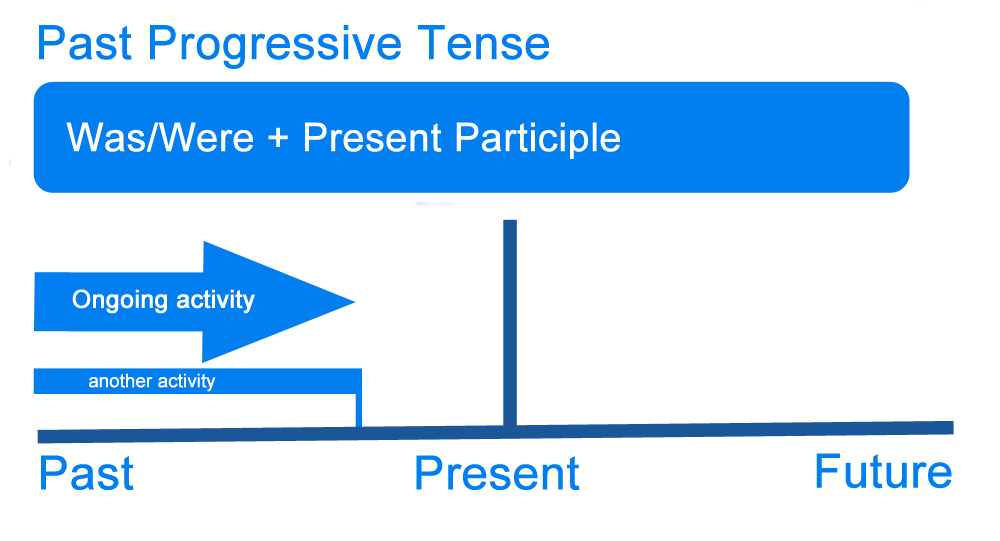
To form the ‘past progressive’ tense is quite simple and is very similar to the present progressive tense in how the structure works. In order to make this grammar tense function, you need to put the ‘to be’ verb in the past tense. There are two different ways for accomplishing this method. If it is a singular action that was occurring, you’re going to use the word ‘was’ before the main verb if you’re referring to one person or thing. However, if it is a plural action being described, you’re going to use the word ‘were’ before the main verb if you’re referring to more than one person or thing.

The actual main verb is going to be in its’ present progressive form with –ing being added to the end of each verb after ‘was’ or ‘were’ that will make it a past progressive tense sentence. It is very important that you follow this structure, otherwise, your sentence won’t make much grammatical sense and you’ll need to re-order the structure in order for your sentence to be understood by the reader. Don’t stress about it if you don’t get the concept at first.

Here are some examples with the basic form of the past progressive tense using ‘was’ or ‘were’:

  • I was riding on the train when lightning struck the tracks nearby.
  • We were going to go to the movies on Saturday night but you canceled on me.
  • They were talking about us at the lunch table today as we walked by.
  • He was not doing the job like his boss wanted him to do it.

If you are thinking of making the past progressive tense negative, all you need to do is to put the word ‘not’ between the ‘to be’ verb in the past form and the actual action that was taking place at the time. If you’re struggling with forming a sentence by using the past progressive tense, you should look to these examples in order to help you in the future as an English student.

When it comes to the past progressive tense, you are often describing an action or an occurrence that is happening within a limited time frame while something else in the past was going on at the same time. When you write a sentence in the past progressive tense, you should be aware that most sentences with this grammar tense would be describing two actions in the past and not just one action. Here are some examples of past progressive sentences where two actions are being described simultaneously:

1) John lost his wallet while he was dancing salsa at the club.

2) Jane found her keys while she was watching her favorite television show.

3) We ate a lot of tapas dishes while the bands were playing Spanish music at the restaurant.

As you can see, it is quite easy to form the past progressive tense in a sentence if you are able to describe two actions occurring within the same timeframe. The major difference between the simple past tense and the past progressive tense that any student of English grammar should be aware is the fact that the simple past tense describes a completed action from the past while the past progressive tense describes an incomplete action from the past that is still playing out. If you’re still confused, here are some examples that highlight the difference between the simple past tense and the past progressive tense:

  • I slept throughout the night while the rain was coming down heavily. (Simple past tense and Past progressive tense)
  • I drank too much juice yesterday, which made me sick. (Simple past tense)
  • He was dancing all night long to the wonderful music of Michael Jackson. (Past progressive tense)

As highlighted in the examples above, the simple past tense and the past progressive tenses can be used together in the same sentence without any problems. However, it is possible to use them in separate sentences as well, which will make the sentence a lot simple to create. Be aware that the word ‘while’ is a way to connect a sentence together that uses the two forms of the past tense together in a seamless manner.

Lastly, it’s important to note that the subjects ‘I, He, She, It’ should be used with the singular word ‘was’, which is the past form of ‘to be’ before describing the past action that was happening. For the subjects of the past progressive tense which are ‘You, We, They’ should be used in conjunction with the plural word ‘were’, which is the past form of ‘to be’ before describing the past actions that were happening. Here are a few examples to clarify the difference between ‘was’ and ‘were’ in the past progressive tense:

Singular: I was playing, He was playing, She was playing, It was playing.

Plural: You were playing, They were playing, We were playing.

Overall, the past progressive tense is a lot simpler and straightforward when compared to other grammar tenses such as the simple past tense. As long as you remember the rules, study the examples, and practice writing sentences using this verb form on your own, you should be just fine. As always, if you have any questions or comments, please leave a comment for me and I would be happy to answer them for you. Good luck and look out for next month’s English corner!


 

A Day In Santa Fe

IMG_2066IMG_2054IMG_2059IMG_2057IMG_2060

IMG_2069IMG_2072IMG_2075IMG_2083IMG_2107IMG_2117IMG_2116IMG_2101IMG_2105IMG_2109

Camera: Canon PowerShot SX710 HS

Location: Santa Fe de Antioquia, Antioquia, Colombia

Cuisine Spotlight – Ajiaco

IMG_2913-thumb-625xauto-113710
“Are you hungry yet?” “I am.”

A delicious yet underrated popular dish here in Colombia that is hearty, tasty, and has a lot of flavor to it is one you may not be familiar with unless you come to the country to experience it firsthand. You may be able to experience this food outside of Colombia but you have to go to the source of where it’s made to perfection in order to get the most out of the dish. While not as hyped up as ‘Bandeja Paisa’ or ‘Sancocho’, Ajiaco is just as delicious if not more so and is pretty easy to make if you can collect all of the necessary ingredients.

Ajiaco is a popular food dish not only just in Colombia but different versions of it can also be found in the countries of Peru and Cuba. Ajiaco has been around since the 16th century but it is unsure as to which country the food originated in first as to whether it was Colombia, Peru, or Cuba.

When it comes to Colombia, Ajiaco is most popular in the capital city of Bogota where it is made mainly with big pieces of chicken breasts that have been sliced up, fresh corn ears that have been cut into smaller pieces, scallions, minced garlic, chopped cilantro, three different types of potatoes such as red potatoes, white potatoes, and Andean potatoes (papa criolla). In order to complete this recipe for ‘Ajiaco Bogatano’, you’re going to need to add some guasca, which are dehydrated herbs as well as capers and heavy milk cream to top it all off.

Some people also like to add white rice to their Ajiaco dish in Colombia as well as some avocado that you can mix in with the rest of the ingredients. In order to get some more flavors out of this dish, you may want to add some salt and pepper to add to the taste. With all of the necessary ingredients to this recipe being added and mixed together, you will need to use a big pot to cook it all in. Ajiaco, Colombian style, will take a couple of hours to prepare, cook, and serve to you and your guests but the end results are delicious. When it comes to Ajiaco, it could be the only meal you have in a day and still come away from eating it feeling full and satisfied.

There is so much to the Colombian version of Ajiaco that it easily one of my favorite dishes to have here. It’s got vegetables, meat, and grains all loaded into one big bowl of deliciousness and if you make enough of it, you’re likely to have seconds and even thirds if you’re lucky. Like many other popular dishes from Colombia, Ajiaco is a great food to share with your friends and your family. It’s the kind of dish that you can serve to five, ten or more people depending on how big of a pot you want to use and how many hours you have free to cook all of the ingredients together.

Ajiaco can be an ideal dish that you can serve at a wedding, a birthday party, a family gathering of some kind, or for celebrating a religious ceremony. Have patience though because Ajiaco takes a while to get ready and serve to your guests. Because it’s got chicken, corn, rice, avocado, potatoes, there’s not much that you won’t like in your Ajiaco serving when it’s finally ready to eat. If you’re feeling a little down in the dumps or are feeling sick, I believe that Ajiaco would be a good way to start to make you feel better and improve your mood.

‘Ajiaco bogotano’ is not the only version of Ajiaco out there in Latin America as there are variations on this popular dish that are available in Peru and in Cuba. When it comes to Peru, Ajiaco is a dish mainly of different kinds of potatoes along with garlic, a mix of yellow and red chilis, yerbabuena, huacatay, that is accompanied with rice on the side and a choice of meat that is either chicken or rabbit stew.

Similar to Ajiaco from Colombia, you can add and mix together as many of the ingredients as you want when it comes to Peruvian form of Ajiaco in order to get the most taste and flavor out of the dish. The Cuban Ajiaco is also distinctly unique from the Peruvian and Colombian versions in its’ own rights. In Cuba, Ajiaco is much more of a stew, which is made up of a lot of different meats such as chicken, beef, pork, rather than just one or two kinds and many vegetables like carrots, onions, scallions, rice, potatoes, tubers, and starchy roots. ‘Viandas’ are also a unique aspect of Cuban Ajiaco that adds a lot to the dish.

As to the origin of Ajiaco as mentioned earlier, it is still debated by different scholars on the subject. It is estimated that the food dish originated with the indigenous tribe of Taino who inhabited parts of the Caribbean including modern-day Cuba. The word ‘Aji’ in Ajiaco is said to have originated from the Taino tribe’s language and the meaning of ‘Aji’ in their language is ‘hot pepper.’

It is believed that Ajiaco first originated in Cuba due to the fact that it is quite a diverse dish of different ingredients reflecting how Cuba was a melting pot of indigenous, African, and European cultures mixed together. Ajiaco has been served in Cuba since the 16th century, which is longer than the food’s origin in both Colombia and Peru. From the city of Havana to the village of Camaguey, the tradition of making Ajiaco was born and continues to thrive today. Farmers, slaves, traders, and regular people would exchange and buy ingredients from each other in order to put their own mark on this popular food dish over the centuries.

Regardless if its’ Cuban, Colombian, Peruvian or just homemade from scratch, Ajiaco is a delicious food dish that has a variety and a flavor that is hard to beat. It doesn’t matter what social status you have or what your cultural background is, Ajiaco is a dish that is deeply loved in Latin America and around the world. If you are curious about trying it out, there are many recipes available on the Internet depending on which kind of Ajiaco you would like to try out.

If you come to any of the countries where Ajiaco is popular and has a known history, I promise you won’t be disappointed when you eat it. Just remember to have an empty stomach when you dig in to eat because you’re going to need extra room for this plentiful and fulfilling dish of goodness. Buen Provecho!
‘Collateral’ – Film Review and Analysis

It’s not often the case that a Hollywood film can go beyond its’ genre to relay a deeper message about the human condition and why people are the way they are. ‘Collateral’ (2004) is one of those movies that is able to achieve just that by making the audience member such as myself care about the characters as well as appreciate the deeper meanings beyond the dialogue and the setting.

While there are numerous crime thriller films out there, ‘Collateral’ is able to go above and beyond the clichés and be original in its’ own right. Part of this is due to the fact that Tom Cruise and Jamie Foxx give outstanding performances for their respective characters along with the rest of the credit that should be given to director Michael Mann who relishes being a director for crime noir dramas that are set in Los Angeles. While ‘Collateral’ was not an Oscar award winning film unfortunately, its’ characters, the setting, the action sequences, the directing, and the overall message that the plot sends to the audience make it a unique and reputable movie that deserves a viewing or two.

Without going into too much detail, the plot of ‘Collateral’ stars two men who come from very different circumstances and live very different lives. However, the Cosmos align to have them meet for the first time at night in Los Angeles. “Vincent” played by Tom Cruise, has just arrived in Los Angeles from the airport and is looking for someone to take him around the city. What better way to see L.A. than to do so by taxi so Vincent goes to the nearest taxi stand to seek one out for a ride. That’s where the plot of the film begins as Max, played by Jamie Foxx, accepts Vincent as a new passenger after ignoring his presence initially. Vincent, dressed in a gray suit with gray hair could be just like any other businessman in Los Angeles but he’s not what he appears to be. Max starts to realize this as the night goes on but not until after he drops off Vincent at his first but not his last destination.

Vincent is more than just the new guy in town here for business. He’s a contract killer and a hitman who is in Los Angeles for one night only in order to carry out a series of hits. After bearing witness to the first of Vincent’s murders, Max is forced into being Vincent’s chauffeur for the rest of the night as he has four more contract hits to carry out for his boss, “Felix”, played brilliant by actor Javier Bardem. Vincent’s goal for the night is to carry out the rest of the contract hits successfully and then get a flight out of Los Angeles as the sun rises after his boss pays him handsomely for his ‘work’. Max’s goal for the rest of the night is to get out of this situation alive without getting killed by Vincent or being seen by the police as an accomplice of Vincent who is dragging him along as he commit these vicious murders in cold blood.

Mixed up in all of this madness is “Annie”, played by Jada Pinkett Smith, who is a prosecutor in the U.S. Justice Department who works out of their office in Los Angeles. She ends up being the first passenger of the evening in Max’s cab before the fates intertwine and Vincent comes along to change Max’s life forever. The only good part of Max’s night is when he meets Annie and they hit it off enough to the point where he is able to get her phone number but it is uncertain whether or not he will have the confidence to call her and make plans.

Unfortunately, Vincent, the contract killer, has Annie in his sights as one of his five targets setting off a series of events that put Max and Vincent on a tense collision course. On top of all of this, you have members of both the FBI and the Los Angeles Police Department noticing what Vincent and Max have been up to which causes more violence and bloodshed to occur. “LAPD Detective Ray Fanning and FBI Investigator Frank Pedrosa” (played by Mark Ruffalo, and played by Bruce McGill) are the ones leading the investigation into these random but coordinated killings popping up all over Los Angeles in the dead of night orchestrated by Vincent with Max as his unwilling accomplice.

There’s no character in this film that isn’t in danger or who may come into harms way and that is partly what makes the title of the film fitting as called ‘Collateral’ because everybody in this movie feels the damage caused by Vincent in some way. Max has feelings for Annie so he wants to do the most he can to protect her before she become apart of the ‘collateral’ damage that is being inflicted by Vincent.

Michael Mann, the director of ‘Heat’ (1995) previously and of this film ‘Collateral’, does an excellent job of making the setting of Los Angeles feel like its’ own character that sets the tone for the movie as well as provide an analogy for what the characters of Max and Vincent are like. Los Angeles is a sprawling urban city of more than four million people and has highways, tunnels, and bridges that loop and wind through the various neighborhoods that can only be connected by car.

For Max, Los Angeles is the only home he’s ever known but for Vincent, it’s a sprawling, disconnected mess of alienated people who don’t know or care about each other even if the collective Gross Domestic Product (GDP) of their city is more than most countries on the planet. Vincent regales Max about a story of someone who dies on the Los Angeles Metro one day and nobody else on the transit system notices for many hours, which proves his supposed point about the city’s culture of alienation. Similar to L.A., Max and Vincent are disconnected from other people in their own ways. Max is shy and reticent with new people he meets and doesn’t go after what he wants while Vincent is a sociopathic killer who doesn’t have much regard for people in general.

There’s one excellent scene in this film where Vincent and Max chide and prod each other as to why they are who they are. Vincent wants Max to call Annie, the girl whose number he got earlier in the evening, because “Life is short. One day it’s gone…” Max doesn’t reply regardless of what Vincent’s opinion is of his dating life. Later on in the scene, they both see a lone grey wolf walking through the streets of Los Angeles presumably searching for food or for some sort of purpose. In so many ways, this is symbolic of who Vincent and Max both are.

Vincent knows his purpose is to kill people because it’s what he ‘does for a living’ but this job alienates him from his humanity and causes him to be a lone wolf. Max is unsure of his purpose in life and wants desperately to be more than a simple taxi driver. He has dreams to start his own limo company one day but never takes the first step to making that dream come true and actually become a reality.

Even though they are two different men from very different circumstances, they are able to see what they should become if they weren’t so set in their ways. Max is a compassionate person who cares for others but is stuck without a purpose and isn’t able to take control of his life. Vincent is a sociopath who can’t relate to other human beings but knows what his one true purpose in life is and this allows him to feel some control over his existence, which he deems as being ‘meaningless’ in the long run.

Even with the fact that they detest each other, they begin to understand the flaws in their own character and how they could be different if they gave themselves a chance. Max could be more spontaneous and avoid having a repetitive life if he chose to be something more than a taxi driver. There’s no changing that Vincent is a cold-blooded killer but you start to see the circumstances that created his monstrous self. He never knew his mother, and his father was an alcoholic who beat him mercilessly and let young Vincent to grow up in foster homes. Max, nor the audience, can show much sympathy for Vincent’s plight but you start to realize that he is not just a simple-minded killing machine.

While life may be meaningless for Vincent, he still thinks that Max should live it to the fullest and ‘carpe diem’ before it’s too late for him. Max gets Vincent to ask himself why he is a sociopathic killer and gets him to reveal a little about his troubled family as well as to why he is a nihilist. In response, Vincent gets Max to ask why he never did anything to make the Limo Company to become a reality. He implores him to think deeply about making his dream come true because someday it may never come to pass if you don’t do anything to make it happen in the first place.

‘Collateral’ is a great crime thriller that is extremely well written, has great acting, and is directed and choreographed superbly by Michael Mann and his team. Beyond that, ‘Collateral’ is a film that makes you question certain things about life and the limits that we put on ourselves. The nihilism and disconnectedness of both Los Angeles and the main characters of Max and Vincent is both surreal and powerful. This is not your typical Hollywood drama and that’s a good thing. This movie is not a blockbuster and feels more like an independent film that came in way under budget.

‘Collateral’ is a gripping take on two men who are forced together by fate to go through a night together that will change them forever. I highly recommend this movie based on the excellent writing, acting, directing, and the strong storyline that keeps the viewer interested. Jamie Foxx and Tom Cruise do an excellent job and have great chemistry together, which is what makes ‘Collateral’ really shine, and have longevity as a unique film over a decade later. If you get the chance sometime, you should really see this movie.

Cultural Spotlight – Salsa

El_Cantante
Hector Lavoe, ‘El Cantante’ (1946 – 1993)

If you’re walking in any city in Colombia or in most parts of Latin America and you start to feel the rhythm and the beat to some up-tempo music that sounds as if jazz and ‘son cubano’ had a baby, it would be known to the world as ‘Salsa.’ Salsa music has only been around for over five decades but has had a lasting impact on the world of music and its’ popularity has stayed consistent in the countries and regions where it was first introduced. While some folks may argue that old-school music genres like jazz, swing, and the blues are on the decline these days; that is simply not the case when it comes to Salsa.

Contrary to popular belief, Salsa did not originate in Puerto Rico, Cuba, or even Colombia. This form of music came out of the communities of immigrants in New York City during the 1960s from Cuba to Puerto Rico who wanted to introduce a new take on ‘son cubano’ music that had been around for a few decades and to bring it to new audiences before who had never been exposed to that kind of genre before.

The music of Salsa has been highly influenced by previous Cuban genres such as ‘son cubano, son montuno, guaracha, mambo, bolero, etc. as well as certain Puerto Rican genres such as ‘bomba, and plena.’ It also should be noted that Salsa was heavily influenced by the American musical genre of Jazz and certain experts have noted Salsa as being a form of Latin jazz. Salsa is a very flexible genre and can incorporate many different forms of music together in order to be innovative and unique. Even rock, r&b, blues, and funk have found their way into the rhythms, beats, and lyrics of Salsa music.

If there were a form of musical expression to represent the Americas whether it was North America or South America, it would be jazz. Salsa music would not be what it is today without previous music genres influencing the sounds and songs to change and adapt as the decades passed by. However, without the early Salsa bands made up of newcomer immigrants from the Cuban and Puerto Rican communities who came to New York City and America for a better life, Salsa would also not be the popular genre that it has become today. From the 1930s to the 1960s, these new immigrants brought joy, happiness, and excitement to both their local communities and cities from Boston to Cali.

From the streets of the South Bronx to the barrios of Cali, Salsa would spread from New York City to Colombia to Peru to all over Latin America. Salsa has become a global music genre today with people all over the world sharing together their passion and love for this unique form of self-expression. You can find Salsa classes and music clubs in most major cities all over the world. It doesn’t matter where you’re from, if you’re new to dancing, or can’t understand the lyrics, Salsa is a music genre open to everybody. Some of the big names in Salsa are Johnny Pacheco, creator of the Fania all-stars band, Hector Lavoe, Willie Colon, Bobby Valentin, Eduardo Palmieri, Marc Anthony, etc.

The instrumentation used in Salsa music is incredibly diverse and can really depend on what kind of style you’re going for whether it’s ‘salsa romantica’ or ‘salsa dura.’ It also depends upon how fast the tempo is and what the chord / verse arrangement is too. The most popular kinds of instruments used in Salsa music are percussion and brass instruments. It’s very rare where string instruments are used unless its’ an acoustic or electric guitar. When it comes to the most widely used instruments, they are usually the piano, the bongo drums, the congas, trumpet, trombone, claves, and different guitars.

Since the genre of Salsa has spread to many parts of the Western Hemisphere, there are many different styles of Salsa dancing that make the music more enjoyable for people to participate in by moving their bodies in various ways. While there is no clear consensus on which style of Salsa is the best or most popular, there’s the Cuban style, the New York style, Puerto Rican style, Los Angeles style, and Cali style from Colombia. Each style of Salsa is a little bit different from each other so once you master one of these types, there is another one out there to learn in order to keep your knowledge up to date. There are few parts of the world that haven’t been touched by Salsa music, which makes it one of the most fun and enjoyable kinds of dances to learn. Whether you’re in Peru, Colombia, Cuba, the Dominican Republic or the United States, you’ll have a chance to dance Salsa if you look hard enough.

By listening to Salsa music and learning how to dance to the rhythms and the beats of this genre, you really learn a lot about Latin American culture. Listen carefully to the lyrics, study the history of both the song and dance, and you’ll be able to gain insight as to why this has become one of the most popular music genres on the planet today. Few things make the average person happier than being able to cut loose on the dance floor and Salsa as a genre succeeds in doing that beyond measure.

During my time here in Colombia, I’ve enjoyed going out to learn Salsa in some classes, and putting the moves I’ve learned into practice when I go out on Saturday nights to a Salsa club. It’s really a joy to dance and sing to the point of exhaustion until your feet can’t move anymore while the beads of sweat roll down your neck. Salsa, to me, is a celebration of living life to the fullest and expressing the movements of your body the way you’re supposed to do. If you haven’t given Salsa music or dancing a chance yet, start to do so today. I promise you won’t regret the experiences you gain by enjoying this popular genre.

Steve Jobs – ‘On Failure’

It’s not often when the average person can gleam some wisdom or some insight from a YouTube video but there are exceptions to this fact when you start to dig deeper. One of these videos that I enjoyed viewing focuses on the late Steve Jobs, the innovative and driven entrepreneur, who was the co-founder of Apple Inc. and for the later half of the 20th century and the beginning of the 21st century helped lead the computer and smartphone revolution around the world. While most people may know him from his appearances at developers’ conferences where he would unveil Apple’s latest invention or innovation, there is a side to Steve Jobs that some folks may overlook.

Steve Jobs wasn’t always a great success and had many failures throughout his life. Fired by the company he co-founded and having gone through product setbacks such as with the Apple III and the NeXT computer, not everything went the right way for the legendary entrepreneur at first. However, these setbacks and failures are obscured today but the massive amount of success and innovation he would bring to the world by sticking to his principles and by always taking the initiative to ‘stay hungry’ for more.

The YouTube video I’m referencing in this blog post is titled, “Steve Jobs on Failure” has over one million unique views and has been up on the website for over six years. In the video, most likely set in the 1990’s, a young Steve Jobs talks about one particular time where he took the initiative that was driven by his innate curiosity. At the beginning of the video, Jobs talks about the fact that most people don’t have the experiences they should because they never ask or inquire about them to begin with. Mr. Jobs hints at the fact that he was never afraid to ask for help from other people, especially if they were in his field of work and would be able to assist him in some way by giving him advice or by mentoring him in some capacity.

The adult Steve Jobs in the video recounts how when he was only twelve years old, he called up Bill Hewlett, the engineer and co-founder behind the massively successful information technology company known worldwide as Hewlett Packard or HP, which similarly to Apple Inc., is also based out of Silicon Valley in California. The twelve-year old Jobs introduced himself to Mr. Hewlett and simply asked him directly for help with building a frequency counter. Little Steve asked Mr. Hewlett for some spare parts that could be used in order to build an effective frequency counter. The young Steve Jobs left quite an impression on Mr. Hewlett, so much so that the co-founder of HP gave him the spare parts as well as a summer job working on an assembly job working with the nuts and bolts that help make the frequency counters at Hewlett Packard work effectively.

You can tell the way from the way that Steve reacts to Mr. Hewlett’s genuine help and generosity with giving him a job and a start to his future in information technology that it meant a lot to him both personally and professionally. Certain moments like that in our lives when somebody really gives a chance and helps us along the way to having a brighter future is a lasting memory that simply does not go away. We can only speculate what might have happened if Mr. Hewlett had instead just hung up the phone on young Steve and not helped him out at all. The world could very much be a different place had Steve not gotten that positive feedback and mentorship that we all seek in our own lives.

“I’ve never found anyone who said ‘No’ or hung up the phone when I called…I just asked.” Steve knew that there was a chance at failure when it came to reaching out to others in his field but he knew also that he had to try in order to get ahead in his life. He had to put himself out there, make connections, and learn from others in order to build his company and create successful products. I think Steve realizes that he would not be where he was as an adult without the help he received from others throughout his life. The video shows his sense of gratitude for that assistance and that he is wise enough to remember to give back to other people as well who want to be in his position one day or to be successful like he was.

“Most people never pick up the phone and call…most people never ask.” Steve is right in his assertion that those who don’t reach out for help or don’t seek out opportunities will never get to where they want to be in life. He makes the correct distinction between those people who take the initiative and those other people who let opportunities pass them by. You can dream and wish for things to happen for yourself but unless you put the pen to the paper or put your phone to your ear, you won’t accomplish that much.

Lastly, Steve notes in this video that ‘you have to be willing to fail…you got to be willing to crash and burn.” Steve Jobs like many other inventors and innovators had multiple failures beset them but they did not give up and they were not afraid to fail. Through failure, we learn from our mistakes and we get better and better at what we are trying to accomplish. With enough hard work and effort, we can push forward to achieve what we set out to do originally and so much more. When an Apple product failed to gain traction or when he was forced out of his own company, Steve Jobs like many other successful men and women did not give up and go home. They learned from their mistakes and became better at what they do.

“If you’re afraid of failing, you won’t get very far.” To put it bluntly, failure happens to everybody. Nobody in the world succeeds 100% of the time at everything they do. People like Steve Jobs recognize that this is all too true but it doesn’t deter them from their goals because they won’t stop until they achieve what they want to accomplish. In order to turn those failures into successes, you need to have an indomitable will and to let nothing stand in your way.

Instead of blaming your failures on others or giving up after a few bumps in the road, you should continue to embrace the learning process and seek help from those other people who have been successful in their lives and would be willing to offer their help to you. Steve Jobs did not become one of the most important men of the 20th century by being afraid of failure or from doing it all on his own. He sought the advice and counsel of others while never giving up even when things looked pretty bleak. That kind of mindset that he explains in the video helps us to understand why he became so successful in his life and how we can learn from his words to become successful in our own lives.

English Corner – Simple Past Tense

For this edition of ‘English Corner’, we’re going into the past to figure out and understand the ‘Simple Past Tense.’ In order to successfully master the English language, you need to be able to use the simple past tense correctly. Whether it’s talking about what you did yesterday or last week or even five years ago, the structure and formation of the simple past tense should not be overlooked. As we discussed previously with the simple present tense and the present progressive tense, having a good grasp of these basic grammar forms will help you to get better in English really quickly.

In this blog post, I’ll go over when and how we should use the simple past tense and you will be able to see a few examples of how to put this grammar tense into action. If you have any questions or comments, please leave them for me below the article, as I am happy to help anyone out who needs additional assistance with the simple past tense. After going through this grammar tense for this post, be on the lookout for the next edition of ‘English Corner’ when we go over the past progressive tense.

If you have heard about the ‘preterite tense’ but don’t know about the ‘simple past tense’, then you can be at ease knowing that they are one in the same. While there are different forms of the past tense, the ‘simple past tense’ has become the most commonly used form and is quite easy to master if you are able to understand and apply the structures and the different ways you can use the grammar tense in a sentence.

When it comes to creating the simple past tense, the structure is quite simple. There are three types of sentences that you can form with the simple past tense: positive, negative, and questions. For positive sentences, you’ll put the ‘subject’ first and then add the ‘main verb’, which will be in the simple past tense. For negative sentences, you put the subject first and then an auxiliary verb with the verb ‘to do’, put into the past tense, which becomes ‘did’ followed by the word ‘not’ afterwards to indicate the negation in the sentence. The last part of the ‘negative’ sentence with simple past is the ‘main verb’ so the structure should be ‘subject’ + ‘auxiliary verb and ‘not’ + ‘main verb’ to complete the sentence fully. The question form of the ‘simple past tense’ is very similar to the negative form but there’s one exception that makes them different from each other.

The ‘auxiliary verb’ comes first before the ‘subject’ and then after the subject comes the ‘main verb’ and the ‘object’, which completes the sentence’s overall purpose. Positive sentences for the simple past tense do not have any auxiliary verbs as the negative and question sentences do reply upon. The verb ‘to do’ is the most important one when it comes to forming the simple past sentence regardless if its’ a positive, negative, or question form of the grammar tense. Lastly, the negative sentences you create must have the ‘not’ word after the auxiliary verb and before the main verb in order for it to make grammatical sense.

Examples

Positive Sentences:

I did go to the mall last weekend. (to go)

         I did play with my friends at the park yesterday. (to play)

Negative Sentences:

I did not think you were polite at the lecture on Monday. (to think)

I did not believe you when you said the stock market crashed. (to believe)

Question Sentences:

Did you do your homework last night? (to do)

Did you tell her you were late for class? (to tell)

When it comes to the verb ‘to be’, there is a different structure for the simple past tense that the average ESL student should be made aware of. In order to put ‘to be’ in the past tense form, it’s either going to become ‘was’ or ‘were’ depending upon what subject is being used at the beginning of the sentence. For the positive form of the was/were usage of ‘to be’ in the past tense, you start with I/He/She/It (subjects) and then the verb, which in this case for singular subjects would be was, followed by the object of the sentence.

For sentences with subject plurals like We/They/You, you are going to change ‘to be’ from was to were to reflect the change followed by the action / object again. For the negative form, you’re just going to add ‘not’ between the main verb and the object at the end of the sentence. ‘Was or were’ are going to be placed at the beginning of a question sentence followed by the subject and the actions that are involved in the sentence.

Examples

Positive Sentences:

He was here yesterday evening at the dinner table. (to be)

         You were in Istanbul last weekend for a friend’s birthday. (to be)

Negative Sentences:

I was not at the park last night because I had work to do. (to be)

They were not at the party because they were not invited. (to be)

Question Sentences:

Was she nice to her date last Thursday night? (to be)

Were you happy with how you did on the Spanish exam? (to be)

Compared to the verb ‘to do’ in the simple past tense, ‘to be’ has no auxiliary verbs at all even for the question and negative forms of the verb tense. However, it is the same in that ‘not’ always comes after the main verb for a negative sentence. The subject also becomes the past tense form of the verb ‘to be’ while the main verb moves to the middle of the sentence and is actually the subject words such as he / she / they, etc.

If you simply would like to use the past simple tense with most of the verbs you’ll be using in your sentences, you will add the letter ‘d’ or ‘-ed’ to the end of the verb in order for it to make sense grammatically. There are a couple of examples we should take a look at it when it comes to forming the simple past tense of the verb with ‘d’ or ‘ed.’

Examples

  1. After school, he walked home in the rain.
  2. He danced really well with his date at the senior prom.
  3. She planned to go to Europe this summer but she couldn’t save up enough money.
  4. Because his mother was sick, he baked a chocolate cake.
  5. We went to the movies after we ate at a Mexican restaurant.

It’s important to note that there may be some irregular verbs that are formed differently when it comes to the simple past tense. For example, ‘go’ in the simple present tense will become ‘went’ when it comes to being grammatically correct in the simple past tense. Another verb like ‘eat’ will become ‘ate’ and ‘drink’ will also change slightly to become ‘drank.’ While most of the verbs only need a ‘d’ or an ‘ed’ to be properly simple past, there are a few irregular verbs that should be memorized for the fact that they are exceptions to the rule when it comes to going from present to past in terms of how the word is written and pronounced.

Now that we know how to use the structure of the simple past tense, you’ll also want to be aware of what kinds of uses do we have for this particular grammar tense. The main purpose of the simple past tense is to talk about the past meaning that we want to shed light about a thing, an action, or a situation that happened in the past. These events can be as recent in the past as in they happened last night or they can be events that occurred long ago such as discussing a sports championship that happened over a decade ago.

Examples

  1. I played my violin last night for my parents and brother. (short time ago)
  2. I had a great time living in Istanbul, Turkey back in 2015. (long time ago)

When we use the simple past tense, you cannot refer to events or actions that are happening currently in the present or are slated to happen anytime in the future. The simple past tense only focuses on those events and actions that were completed sometime in the past. It simply doesn’t matter if the event was finished ten years ago or ten seconds ago. The fact is that it’s still in the past and the sentence structure should reflect the grammatical tense that fits the place and time.

Lastly, it should be noted that the books you’ve read or the movies you seen who occur in the past are mainly going to use the simple past tense. The present perfect and simple present tense may be used in stories or movies as well but you’re going to want to pay attention and listen to the sentences with the simple past tense because they are going to be the most common.

If you want to practice your simple past tense after reading this article, I recommend listening to songs, reading books, watching movies that take place in the past. Besides speaking or writing about the past, participating in the active listening and / or reading about events or moments in the past will help to take your English language skills to the next level. I hope you enjoyed this ‘English Corner’ post and please leave a comment if you have any questions, queries, or comments.

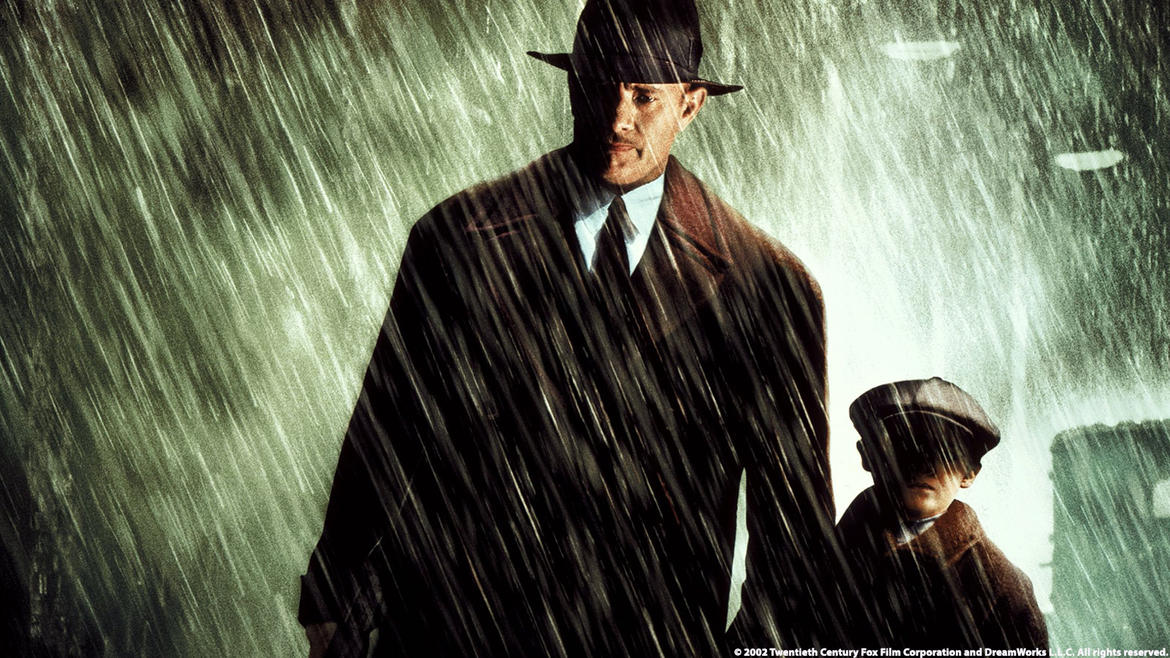
‘Road to Perdition’ – Film Review and Analysis

One of the most underrated movies of the 2000’s was Sam Mendes’s ‘Road to Perdition’, which was released to critical acclaim back in 2002 and did pretty well at the box office with around $200 million in ticket sales. While some people would be skeptical of watching ‘Road to Perdition’ at first because they think it’s your average crime / mafia movie that doesn’t have much to offer in terms of storyline and symbolism, they would be wrong when it comes to this film.

Sam Mendes, who directed two other great films ‘American Beauty’ and ‘Revolutionary Road’, does an excellent job here as this movie is beautifully shot and has a stellar cast. ‘Road to Perdition’ also benefited from the legendary cinematography work of the departed Conrad L. Hall for which he won a posthumous Oscar for ‘Best Cinematography’ for this film after he passed away in 2003. The scenery and settings for this movie help to create quite a unique atmosphere and the wide shots, long angles that are used help to make this film stand out as being above average. Beyond just the cinematography, the acting by the cast also stands out.

When you look back to see who was starring in the main roles for ‘Road to Perdition’, it is a very impressive list. Tom Hanks plays Michael Sullivan Sr., the lead role of the film and a conflicted Irish mafia man caught between his past and keeping his son sheltered from the consequences of his actions. Paul Newman, one of the greatest American actors of all-time plays the role of John Rooney, an Irish mafia boss, who is also conflicted between his paternal feelings of love for Michael Sr., and his wish to protect his own son, Connor, played by a young Daniel Craig, from his own destructive sins. Rounding out the list is Jude Law, who plays a gifted hit-man / grisly photographer known as Harlan McGuire, and Stanley Tucci, who plays a high-ranking member of the Italian mafia known as Frank Nitti. A young actor who steals most of his scenes is the young but talented Tyler Hoechlin who is Michael Sullivan Jr. in the film, a boy who is coming to terms with his father’s lifestyle and his ties to the mafia. A truly impressive cast of Academy Award winners and nominees, which makes this film even more of a lasting treasure.

‘Road to Perdition’ really brings the atmosphere and makes the setting feel real as it portrays life in Great Depression-era America by focusing on specifically both on the city of Chicago and its’ rural hinterlands, cornfields of greater Illinois. The movie really portrays well the last decade of America being discovered and settled, while undergoing deep economic difficulties, as the Irish and Italian mafias become a source of income and employment when none could be had.

Most movies don’t seem to want to portray the mafia as having been a well-oiled machine that acted like a legitimate business, but ‘Road to Perdition’ makes clear that there are ways to look at the criminal enterprises that achieved a lot of prominence during the Great Depression due to their ability to bootleg and their appeal to provide a good income to men without work.

Without spoiling too much of the plot, Michael Sullivan Jr. (Tom Hanks) is an enforcer and bodyguard for the Irish mafia in the Chicago area of Illinois who has a close relationship with his boss, John Rooney (Paul Newman), who is implied to have helped Michael Sr. a lot with a home, a steady income, and a purpose which is quite difficult to come by during the height of the Great Depression. Michael Sr. is a flawed man who has done murder and committed other crimes for his boss, Mr. Rooney, and knows that it may cost him his life. Despite his past transgressions, he wants to protect his family from his sins and wants to keep his boys from knowing about what he does for a living.

Connor Rooney (Daniel Craig) is shown to be jealous of the close relationship that his father, John, and Michael Sr. have and is resentful of him. Michael Sullivan Jr. (Tyler Hoechlin) is distant from Michael Sr., his father due to late working hours and distant lifestyle. As any boy would like to know about his father, Michael Jr. decides to find out the truth about who his father, Michael Sr. is, and what he does for Mr. Rooney. At this point, the plot really takes off in tragic and unexpected ways leaving the viewer engaged in the storyline and the eventual outcome. As mentioned before, the acting done by this legendary cast helps make the film what it is and what it still is today.

Beyond just being a typical mobster movie, ‘Road to Perdition’ has a number of poignant and thought-provoking themes that stay with you even after the end credits begin to roll. This film goes over the trials and tribulations that fathers and sons can have with each other even when they love and care for each other dearly. Michael Sr. and John Rooney are not related by blood by have a relationship similar to a father and son as Mr. Rooney was around for Michael and his family when they had nothing. He is heavily indebted to Mr. Rooney even if he knows what he is doing is wrong by committing violent acts for the mafia. Still, their bond appears to be unbreakable and they get along quite well with each other.

To the contrary, both of their relationships with their respective sons are shaky at best and hostile at worst. There is a considerable distance between Michael Sr. and Michael Jr. due to the fact that Michael Sr. makes his lifestyle and his work for Mr. Rooney a well-kept secret. Michael Sr. does not show much affection or love for his boy and it’s not made clear until the end of the film why that is. Michael Sr. obviously cares for his boy but likely doesn’t want his son to know about the horrible things he’s done to keep him, his brother, and his wife save from harm or want. Still though, Michael Jr. does not want to be kept away from his father and who he is.

He ends up pursuing the truth whether or not his father wants him to or not leading to quite a turn of events when the truth comes to light. Connor Rooney, John’s son is quite envious of the close relationship that Michael Sr. has with his father compared to him. However, this is for a number of reasons. Connor is very much unlike his father, John, and has a number of character and personality flaws that make him a liability to the family. Connor is shown to be impulsive, manipulative, untrustworthy, and greedy but the conflict comes to light when John Rooney must decide if he should stick by his son’s side or give him up due to his past misdeeds. As John Rooney says to Michael Sullivan Sr. during one of the movie’s best scenes, “Sons were put on this Earth to trouble their fathers.”

During one of the movie’s most touching scenes, Michael Sr. tells Michael Jr. about a town called an idyllic town called Perdition, Illinois, which has beautiful scenery along the beach of Lake Michigan, and where the Sullivan family has visited before when Michael Jr. was a little boy. Perdition is portrayed as a goal for the two Michaels to get to in order to start their lives anew and escape the sins of the past. It’s a way for Michael Sr. to get redemption after taking care of his ties to the mafia and by trying to make up for what he did wrong as both a father and a man. The word ‘Perdition’ as defined in other words is ‘hell’ or ‘complete and utter damnation’ in more religious terms. Michael Sr. may try to redeem his sins by going to church or by rectifying the wrongs he’s done by getting revenge on the men who wronged him in the past but he knows deep down that it may not be enough.

If he is on the ‘Road to Perdition’ or the road to hell, the film shows the audience that he wants to keep his son, Michael Jr., from going down that same path. He wants badly for his son to have a better life and a brighter future away from violence and death. Michael Sr. won’t let his downfall lead to that of his son’s as well. Even if Michael Sr. is a murderer and a sinner, he knows what’s still right from wrong and he is going to do his best to preserve the innocence and goodness of his son. As a father, he is flawed but he still loves his son dearly and wants the best for him still.

Certain moves fit a certain season of the year well and ‘Road to Perdition’ is no exception. The winter setting, the Chicago cold, and the mature themes help lead it to being an ideal film to be watched during the depths of winter in January and February. Without spoiling anything, the film is a real story with real characters who are flawed in their own ways but who each have their own complex motives that drive the plot forward. This film, most of all, touches the audience emotionally and will pull on your heartstrings.

‘Road to Perdition’ is very underrated film that remains one of my favorite movies to this day. I highly recommend ‘Road to Perdition’ to other movie buffs who are looking to watch a crime / mafia film that has a soul. In addition to having an all-star cast, a renowned director, and a legendary cinematographer at the helm, ‘Road to Perdition’s music score composed by Thomas Newman is excellent and fits perfectly into the many moods of the film and has some stirring moments that add to the film’s setting. If you’re snowed in this weekend from the blizzard, do yourself a favor and go watch ‘Road to Perdition.’

English Corner – Present Progressive Tense

present_progressive_tense
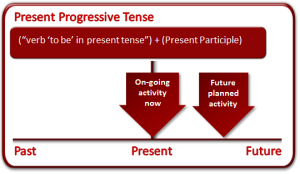
“If you’re not sure where the Present Progressive Tense fits into the timeline, I have a useful chart for you to study.”

As a student of the English language, once you’re able to understand and use the ‘Simple Present Tense’ with proficiency and are ready to move on to the next grammar step, it would be wise to start learning about the ‘Present Progressive Tense.’ This particular grammar tense can help you to describe a number of different topics and can be used in a variety of ways. By studying the examples listed in this blog post and knowing when to apply the present progressive tense, you’ll be able to advance and get better in your study of English grammar rules.

The ‘Present Tense’ is divided into two kinds: the ‘Simple’ present tense and the ‘Continuous’ or ‘Progressive’ present tense. In order to fully understand the present tense grammar form, it’s important to understand both the ‘simple’ and ‘progressive’ aspects to this concept. Please follow along and read through this blog post if you’re a student of English grammar and want to better understand the ‘Present Progressive Tense.’ We will start by looking at a couple of examples regarding how this grammar tense is supposed to be structured. I would recommend that you copy these particular examples so you have some idea on how to use the present progressive tense in a sentence.

Examples

  1. I am going to the store today.
  2. We are planning on coming to your wedding tonight.
  3. What are you doing for dinner later this evening?

For the actual structure of the Present Progressive tense, it’s a little bit different when compared to the Simple Present tense. It’s necessary to begin the sentence with the ‘subject’ word whether it is “I, You, We, They, He / She, etc.” and you can also use the question form as well with “What, When, Where, Why, etc.” at the beginning of a sentence. The auxiliary verb, which is supposed to be conjugated in the Simple Present tense would come next and is modified depending upon which ‘subject’ word is used at the beginning of the sentence.

The auxiliary verb “to be” is the most popular form when it comes to the present tense so it is meant to be used often when it comes to creating the sentence. When you conjugate “to be” in the simple present form, you’ll end up with “is, are, am, etc.” depending upon the subject word. The auxiliary verb is always followed by the main verb, which is supposed to be displayed in present participle form. When we mention the present participle form, it basically involves the verb such as “do” and adding an “ing” to the end of the verb.

For negative sentences, the form of the present progressive sentence is a little bit different compared to regular sentences. It’s necessary to put the word ‘not’ in between the auxiliary verb and the main verb in order for the sentence to make grammatical sense.

Examples

  1. I am not dancing at the ball tonight.
  2. You are not playing basketball tomorrow.

If you’re thinking about making a question sentence with the present progressive tense, there’s a clear step that you need to take in order to make it work. The ‘subject’ at the beginning of the sentence must be exchanged for the ‘auxiliary verb’ due to a necessary change in the structure of the sentence in order to make the question work.

Examples

  1. Am I doing the right thing?
  2. Are you playing the piano for the recital?

As you can see, the ‘am’ which is the auxiliary verb comes at the beginning of the sentence this time and the ‘I’ word comes after and becomes secondary in terms of its’ placement. The positive and negative forms of the present progressive tense are quite similar to each other with the only difference being that the ‘not’ is added into the structure of the sentence in order to create that difference but the actual structure of the present progressive tense does not change at all. When it comes to the question form however, there is a change in the actual structure of the present progressive tense with the fact that the ‘subject’ and the ‘auxiliary verb’ essentially change places in order to form the actual question.

Now that we know the structure of the present progressive tense in its’ main forms of usage, how do we know when to put this grammatical tense into action? Well, it’s quite simple actually. There are some fundamental principles that guide the use of the present progressive tense in formal sentences. The present progressive tense can describe actions that are happening in real time and are continuing into the near future.

These could be actions or occurrences that are happening right now and have not been finished yet. These are actions that are in progress and have not reached the completion stage yet. This is why we add the –ing to our verbs to indicate that the action is ongoing and hasn’t reached an end yet.

Examples

  1. The wheels are spinning.
  2. The tables are turning.
  3. The guns are firing.

In addition to those actions that are occurring right now, there are also actions that have no set time frame or completion date yet but are ongoing and will require some time to finish. This is the most popular use for the –ing form and there are a lot of examples that can be construed from it.

Examples

  1. John is taking Salsa lessons.
  2. Martha is learning how to cook.
  3. Bob is starting a new job.

Despite being known as the ‘present progressive’ tense, this grammatical tense can also be used to describe actions or habits that will be occurring in the near future. In order to make this work though, you must add a word to indicate that something will happen in the future. Some examples of these words include ‘tonight, tomorrow, next week, this weekend, two days from now, etc. Usually, you are describing something that has been planned out to occur in the future with a specific date or timeframe in mind. People are long-term planners and thus, we are able to talk about actions that we will take in the future having made the plans ahead of time.

Examples

  1. I am going to attend university next August.
  2. I am planning to go to Mexico this winter.
  3. We are thinking about having our honeymoon in Hawaii next month.

The plan has already been set in motion and that’s why you’re discussing what you’re going to be doing but at a future time and place. It’s vital to remember that the present progressive tense does not exist without adding -ing to any verb regardless of which verb it is. The present progressive tense may not be the most popular grammatical tense but it is extremely important to practice, create examples, and master it both in its’ written form and its’ spoken form. Before you can go on to the ‘past’ and ‘future’ grammatical tenses, I believe that it’s necessary to have a good handle on the present progressive tense first before moving on to something else. Keep my explanations and examples in mind and look out for another ‘English Corner’ coming to you all soon.

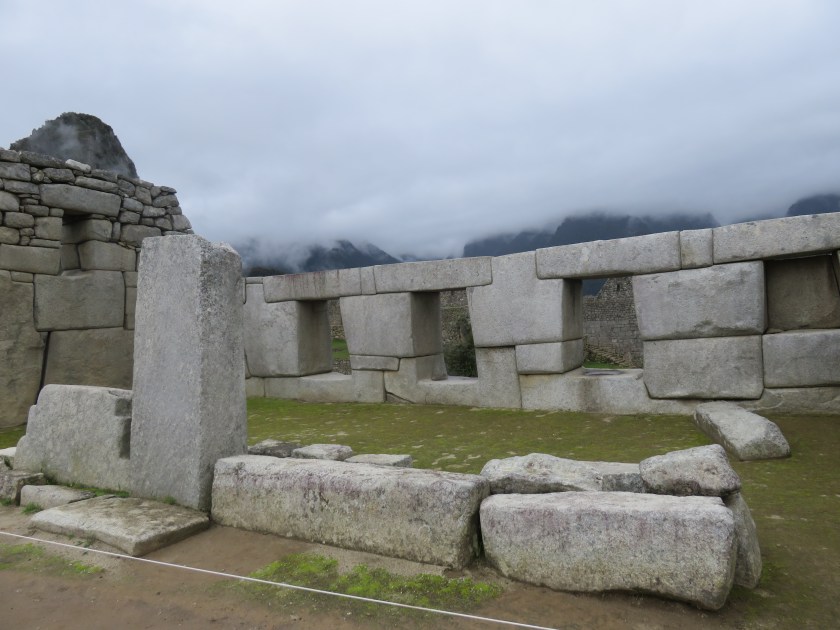
Machu Picchu and Huayna Picchu

img_1723img_1726img_1824img_1827img_1828img_1829img_1830img_1838img_1868img_1878img_1881img_1897

img_1955img_1968img_1984img_1989

Camera: Canon PowerShot SX710 HS

Location: Machu Picchu, Peru