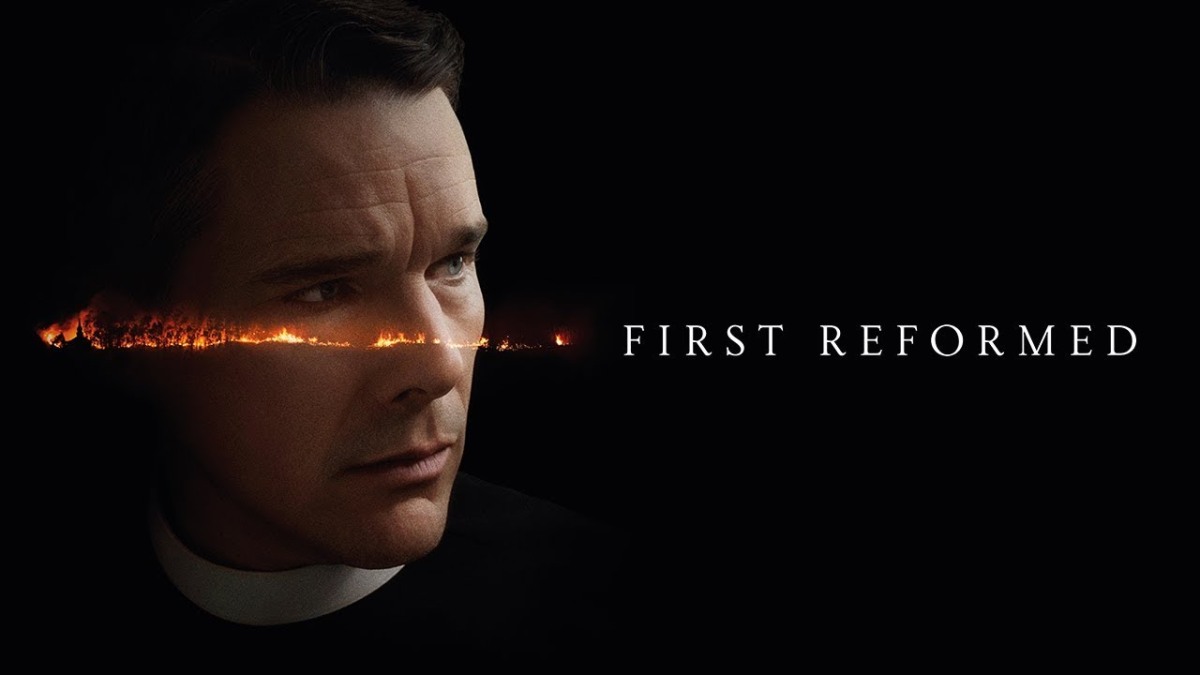
‘First Reformed’ – Film Review and Analysis

Man’s struggle with God can almost be as endearing yet painful as his struggle against man. If there is one way to sum up the excellent film, ‘First Reformed’, that would be it. First Reformed (2017) focuses on the environment, one’s faith, and the struggle to find hope when things seem rather bleak. “Can God forgive us for what we’ve done to the world?”, a troubled environmental activist asks Pastor Ernst Toller and the Pastor replies to his congregant, “Who can know the mind of God?”

While this movie did not receive any Oscar awards, the acting by Ethan Hawke (Pastor Ernst Toller) and also by Amanda Seyfried (Mary) is excellent as well as the cinematography, the adapted screenplay by Director Paul Schrader which helps this film earn its critical acclaim and some Independent Spirit award nominations as well as one Academy Award nomination. I still believe Mr. Hawke was snubbed from getting an Oscar nomination since this film’s performance was one of the best he has ever done and deserved more praise. In many of his films, I find him to be one of the best actors of his generation and able to produce genuine emotion regardless of the situation his character finds himself in.

In ‘First Reformed’, Reverend Ernst Toller (Ethan Hawke) finds himself faced with difficult questions surrounding his faith, morality, the environment in 2017, and what lies ahead in the future for humanity. These are weighty questions for anyone to deal with let alone a pillar of a community like Toller finds himself to be in Snowbridge, New York as the head pastor for the colonial era First Reformed church that dates back to the time of British colonization and the underground railroad movement later on.

This historical church is seen to be losing its membership and interest and Pastor Toller has to resort to touristic gimmicks and a small gift shop to help make ends meet to keep the church going. There is a noticeable parallel to the decline of Christianity in terms of active members of the Christian church in the United States so a fictional movie such as this one has some real-life parallels that seem plausible. The crisis of faith in churches in certain communities has a coinciding similarity with Toller’s own faith in God and in himself. He is an alcoholic struggling to find meaning and purpose in his life at the beginning of the film.

While making the church more touristy, he has also made the church more spiritual as well instead of its Calvinist origins. He sticks more to sermons than to scriptures and has enlisted the financial backing and ownership of an evangelical megachurch in nearby Albany, New York, which is likely to take over the church in the near future much to Toller’s apprehension. As we go through the film, we peel back the curtain on who this pastor is and like any of us, he has his own personal flaws and past sins but has also suffered for them and wishes to make amends in some way.

We find out that Pastor Toller lost his son, Joseph, recently while serving in the Iraq War and feels guilt for having told him to enlist having come from a military background himself as a chaplain. During that difficult time, he committed adultery and started drinking but also found his faith again to then become a pastor at First Reformed after going through grieving his son’s loss. However, a chance encounter with one of his congregants and his wife puts his faith in God and humanity to the ultimate test.

Mary, a devout congregant and believer in God and her skeptical husband, Michael, a stern environmentalist and becoming increasingly radical meet with Pastor Toller separately in their house. Mary has concerns about Michael’s well-being and tells the Pastor they expect to have a child soon. Michael is sincerely struggling with the fact that he will be a father soon when the world’s ecosystems are steadily collapsing, sea levels are rising, and the effects of global climate change are to be felt beginning in the next few decades. For any of us watching this pivotal scene including Pastor Toller himself, there are no easy answers from God or from man either regarding the future of humanity. Ernest finds it difficult to comfort Michael but asks to keep seeing him and to look out for Mary and the unborn child.

This particular scene leads to the rest of the film’s deeper dive into the effects of capitalism and greed on the environment as well as the relationship between big industry and religious institutions. Pastor Toller’s awakening from meeting with Mary and Michael leads him to questioning why the environmental situation is so dire, who is responsible for it, what can be done to stop it, and how far should measures be taken. Because the Pastor has no easy answers for Michael, he starts looking for them and is obviously dismayed by what he finds out regarding the local environmental situation in his community and how greed, industry, and the lack of stewardship for his community have led humanity down towards an unsustainable path.

Without spoiling the film, The Pastor struggles with what he can do as one individual to counteract the forces aligned against good stewardship of the planet and what a person can do to draw attention to the problem. Not only is there a crisis of faith in God but in each other and what is being done to the only planet we have ever known. The Pastor, with certain health issues related to alcoholism, is reconciling with the fact that he is mortal and what kind of impact he wants to leave behind.

He is comforted by the fact that Mary is still a believer in the future and wants to have a child even with the future of the planet looking relatively bleak. Pastor Toller knows however that he has the responsibility now to hold those accountable for their actions whether it’s the Evangelical church, a big industrialist doing environmental damage, or even himself when he strays from helping those in his congregation who need it the most.

‘First Reformed’ poses a lot of weighty questions and it is an extremely timely film in terms of its messages and themes. It is bleak because it has to be and raises a lot of issues that we have neglected regarding the environment and now we may be finding that time to make a difference in this escalating problem is running out. ‘First Reformed’ asks us how an ordinary man of faith yet a pillar of the community so respond to those in his congregation who are in despair regarding environmental damage and destruction.

How far should he go and how radical should he be to get people to listen and understand what is being done? Can love and faith overcome the desire to do harm and take revenge against those who have sinned against the planet? Like any good film, there are no easy answers and the director does not condone or condemn the thoughts or possible actions that Pastor Toller weights leading up to the climax of the last scene.

What this film does an excellent job of is warning its viewers about the consequences of greed, ignorance, lack of stewardship, valuing profits over the health and well-being of people, and the unholy alliance of organized religion and big industries. There are numerous fingers to point at regarding the worsening state of climate change going on in the world currently but perhaps those who watch this excellent film will realize that the finger should be pointed at ourselves first about the damage being done. Perhaps that kind of introspective thinking is what it will take for massive external action to occur and for the worst of the consequences to be avoided.

Tulum

IMG_3204IMG_3201IMG_3208IMG_3215IMG_3216IMG_3218IMG_3220IMG_3221IMG_3225IMG_3229IMG_3240IMG_3251IMG_3254IMG_3255IMG_3261

Camera: iPhone 8

Location: Tulum, Quintana Roo, Mexico

Anatomy of a Scene – The Letter

“For what it’s worth, it’s never too late, or in my case too early, to be whoever you want to be. There’s no time limit, start whenever you want. You can change or stay the same. There are no rules to this thing. You can make the best or worst of it, and I hope you make the best of it. I hope you see things that startle you. I hope you feel things you never felt before. I hope you meet people with a different point of view. I hope you live a life you are proud of. If you find that you’re not, I hope you have the strength to start all over again.”

-The Curious Case of Benjamin Button

Sometimes, you can watch an entire movie and not feel moved by it. Whether it’s a stirring of your emotions or being introspective about your feelings, few movies will touch the viewer personally. Luckily, The Curious Case of Benjamin Button is an exception to the rule, especially when it comes to the scene where the main character, Benjamin Button, writes a letter to his daughter, whom he barely knew in life.
With her mother on her death bed, the daughter finally opens and retrieves many letters from a father whom she barely knew and is startled to have a keepsake from someone who was rarely in her life.

Benjamin Button has a unique condition where instead of getting older like he the rest of us as he goes through life, the opposite happens to him and he gets younger and younger allowing him to experience life backwards. Still, despite this inconvenience he can live a full life and that is what this movie scene so special because he encourages his daughter to do the same. While he is not around to see her have her own adventures, he wants the best for her and wants to her to “live a life that she’s proud of.”

When we first are introduced to this scene, we see that Benjamin’s daughter realizes that he went to India and many other places years ago based on the kind of parchment that his letters are written on. There are many letters addressed to her from the time she was two years old and onward when he was not around to be with her. Despite the sadness and disappointed associated with that, she is relieved that he was writing to her and thought of her even when he was far away. For him to think of her while writing ‘the letter’ in such faraway places show that despite his curious condition, he loved her dearly and wanted to express that even after he passed away.

This movie scene is brilliant because it shows Benjamin travelling around India while narrating to his daughter that he wants her to ‘be whoever you want to be’ whether that’s a traveler or a janitor or a toll booth manager. You can make the ‘best or the worst of it’ as he states to her depending on your perspective on life, but he wants her to make the ‘best of it’ as he did. A father imparting this important message on to his daughter that it’s okay to ‘start over’ again in life is important for her to hear but also for the audience to understand.

If you find that you are not ‘living a life that you’re proud of’, then there is nothing wrong with changing it in order to finally be proud of. While he did a lot of travelling, there is still the humdrum of daily life involved such as cleaning your clothes, talking with the locals, and even drinking from a water hose. “There are no rules to this thing.” Sometimes, we tend to think of life as a narrow path when really there are going to be numerous zigs or zags, and when you become an adult, you have to make the rules for how you want to live, what is important to you, and what to care about.

“I hope you see things that startle you, I hope you feel things that you’ve never felt before…” This part of the scene is brilliant in showing the beauty of Benjamin’s travels and how he would sleep, brush his teeth, and move around by motorbike through beautiful mountain passes and rivers. Benjamin wanted his daughter to experience the world and for her to enjoy what it had to offer in her own life. Part of doing just that is adapting to the places you visit and to seek out the adventures yourself in order to make the most of it.

“I hope you meet people with a different point of view…” Benjamin encourages his daughter also to get to know other people, whether from another city or another country, and how it’s necessary to be open to them and to be kind. The locals help Benjamin fix his motorbike as he drives through their village on one of his journeys.
“I hope you have the strength to start all over again.” Benjamin’s last words to his daughter ask of her to be strong in not being afraid to change your life or decide that you want to live it a different way than before. The mother imparts at the end of the scene that “he had been gone a long time…”

Unfortunately, this scene shows both the beauty and tragedy of life in that sometimes, we can’t be there for the people we love but are with them in spirit. Benjamin could not be with his daughter in life but he wished that he had been there to wish her a happy birthday, to kiss her goodnight, to take her to her first day of school, to teach her to play piano, to chase away boys, and to be her Father. “Nothing he ever did would replace that.” Even after all the adventures that Benjamin had, the most important role he ever had was being her father and he wanted to make sure she knew that by leaving her with his diary.

Even in his absence, this scene shows us the power of a father’s love for his daughter and how he wanted the best for her and to live a life that would yield happiness and fulfillment for her. In one minute, this scene in ‘The Curious Case of Benjamin Button’ has more of an emotional impact than many movies do in more than two hours. Breaking down this narrative and the beautiful cinematography and filmmaking of travelling at its most challenging yet most rewarding was quite an achievement by the film’s director and crew. Not only would this movie scene have an impact on Benjamin’s daughter by also on the rest of us watching in the movie theater or at home. If you have a chance, watch this scene to appreciate the scenery, the message, and the power of love between a father and a daughter. A powerful movie scene worth a watch and a couple of re-watches as well.

Book Recommendations – Volume X

The Summer reading session is well upon us and there is no better time to dive into another edition of my book recommendations. Whether you are at the beach, at the pool, or lounging on a rooftop deck, you can take some leisure time to read a great fictional or non-fictional offering to indulge your mind or open your imagination. The three books I cover are all non-fiction, which is the category that my favorite books often fall under. I do hope to dive into some fiction books sometime soon, but I’ll save that for other post.

The three books I recommend vary from personal finance to progressive politics to self-help psychology, but they all are educational and thought-provoking in their own way. These books aren’t mindless reads, so you’ll have to pay attention and even re-read certain chapters twice or more to really get the gist of what the author is getting at. However, each of these three books have staying power and they would make an excellent addition to anybody’s personal book collection since the different lessons that these books impart are timeliness in nature. Without further ado, let’s discuss which books I enjoyed in this latest volume of recommendations.

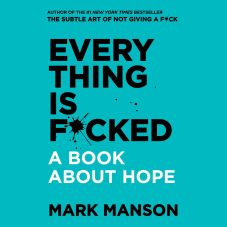
1.) “Everything Is F*cked: A Book About Hope” by Mark Manson

everything-is-f-cked
Following up on the tremendous attention and success gained from his previous New York Times best-selling book, The Subtle Art of Not Giving a F*ck, which dealt with unconventional yet powerful self-help advice, Mark Manson is back with an excellent follow-up book in tackling how to apply similar lessons to humanity as a whole. Whether its today’s turbulent geopolitics, the growing climate crisis, or the negative effects of social media, everything can seem to be f*cked nowadays and hopelessness as a condition of these events seems to be gaining steam.

Manson uses the teachings of Nietzsche, Kant, and other prominent philosophers to denote why humanity is facing these systemic problems and how they came to be based on our collective psychology as a species. He argues that having hope in of itself is a paradox and that it’s best to deal with life’s uncertainties and foibles as they come. Wishing for a better, happier, wealthier, and safer future is unproductive if you do not take actions in the present to create that more hopeful reality. Manson breaks down complex topics such as politics, religion, and even the future of artificial intelligence into digestible concepts on how humanity has gotten to be where it is currently.

One of the aspects I like most about Mark’s writings is that he doesn’t sugarcoat anything, and he allows you to draw your own conclusions based on the evidence he presents and the stories he tells. My favorite parts of Everything is F*cked focus on why treating people as means to an end is a selfish endeavor and how our feeling brain has a lot more influence on our thinking brain than we have been told. Also, in accepting what is ‘The Uncomfortable Truth’, as Mark cites in one of the first chapters is part of recognizing our innate humanity and what drives us collectively. This truth, while uncomfortable to all, is the main reason why we strive to do what we do in life, for better or for worse, and how we tend to live our lives denying that truth when it is staring us right in the face.

Instead of looking to politics or religion to give us hope, which tends to have its own set of consequences, it should rather be our own individual actions of being kinder, gentler, and more respectful of others that carry the day. We should not wait around for other people to change for you or be better to you. This book, like Mark’s first, is well worth a second and third reading to grasp all the lessons he lays out for the reader. Posing deep existential questions and acknowledging hard truths rarely covered elsewhere in the self-help genre, Manson stands out as one of my generation’s best authors and a good example of how to live a better life, not just for ourselves but for others as well.

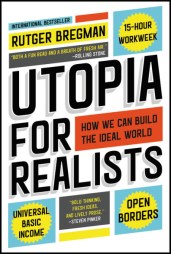
2.) “Utopia for Realists: How We Can Build the Ideal World” by Rutger Bregman

9780316471916
I really liked this book by Mr. Bregman for several reasons. Whereas most books today examine problems and investigate how they came to be, Bregman describes the possible solutions there can be to these problems and how life in the 21st century should be different from the past. Given the rise of automation, how interconnected we have become globally, and increasing efficiencies in the workplace, Bregman dares to ask how we can make life better for vast majority of people in our societies based on these factors.

Rutger Bregman does an extensive amount of research for this book and draws upon years and decades of datasets and public policy to make his three main ideas not only relevant but persuasive to his overall argument. Bregman’s ideas are not new and have been discussed before but in ‘Utopia for Realists’, he really examines each of his proposals individually from a public policy perspective and how the time is ripe to make them become a reality. Today, it seems like we have lost to the drive to implement big changes to both our economy and our society. Bregman asks his readers to think of the plausibility of the 15-hour work week, a Universal Basic Income for all, and an ‘open borders’ policy that would benefits people’s lives in numerous ways as he lays out diligently in each chapter of the book.

While some may not agree with these proposals politically, Bregman backs up his arguments with facts and evidence, as a good social scientist would. One of the things I did not know before reading his book was how close President Richard Nixon and the U.S. Congress came to passing a universal basic income in legislative form back in the early 1970’s. Giving people the chance to have basic economic security, the ability to live across borders without bureaucratic roadblocks, and having more free time for family life or to better themselves through personal hobbies, interests, or side businesses are related to his three main proposals. These societal changes, he says, would lead to greater fulfillment and happiness and benefit our collective mental health.

While his ideas may be unrealistic today, the way in which the job market is shifting and has become more efficient in terms of productivity over the past few decades, how automation and advanced Robotics may affect millions of jobs being lost, and how the demographic crunch in the Western world may lead to more liberal immigration policies to spur economic growth, the main proposals that Bregman focuses on could become a reality sooner rather than later. It’s not a question of if these utopian ideas could ever happen, it’s more about when they will happen and how they can be implemented successfully around the world.

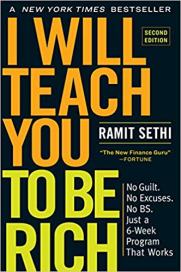
3.) “I Will Teach You to Be Rich” (2nd Edition) by Ramit Sethi

I-Will-Teach-You-To-Be-Rich
I will be the first to say that I have shied away from reading books on personal finance given that the advice given and the person giving it may not be reliable or trustworthy. However, based on the recommendations of other authors I like and how sensible his recommendations are from watching his videos, Ramit Sethi has delivered and recently updated one of the best personal finance books out there. For someone who is just getting started in thinking about optimal strategies for long-term savings and investments, Mr. Sethi breaks it all down from negotiating lower interest rates on your credit cards to how to find the best investment vehicles to deliver you a secure retirement.

If you are new to personal finance, this book is really meant for you. You don’t have to be an expert in 401ks, Roth IRAs, or index funds to make full use of this book. Ramit is not only an author but also provides an additional website, which offers a free blog, multiple courses to improve your finances, and career opportunities. His common-sense finance solutions garner millions of views per month and very positive media coverage. Ramit’s book does not make his readership feel guilty if they have made financial mistakes in the past. Instead, he offers tips and advice as well as personal stories from people he’s helped to get them out of trouble whether its credit card debt, student loan debt, etc. He wants his readers to figure out what exactly a ‘rich’ life is for them and what steps they can take to make it happen.

You are left reading this book feeling uplifted and ready to use his advice to improve your financial situation. You are also left wondering why Ramit’s book isn’t mandatory reading for high school students, given that we tend to neglect this kind of basic financial education for young people in the United States. Whether you are 18 or 28, it’s never too early to start thinking about your long-term finances. With Ramit’s well-written, digestible, and even humorous personal finance book, you are in good hands. He gives you actionable advice on how to greatly improve your finance in weeks instead of years and discusses in detail how many hours it will take you in setting up your savings, investments, and credit card debt payment options with as little of a hassle as possible. While Ramit can give you all the advice in the world, he leaves it up to you, the reader, to take actions yourself to improve your financial situation. Now that you have the knowledge based off his book, you’ll be ready to create a financially secure future for yourself and perhaps your family too.

‘Limitless’ – Film Review and Analysis

What if there was a special pill out there that you could take once a day that would suddenly allow you to tap into all your brain’s potential? What if you were able to recall everything you had ever learned, every language you had ever studied, and every fight move you ever watched? How would your life change if you able to fully actualize your abilities to your full potential, both physically and mentally? Now, you may think of these as silly questions but Limitless as a film does so in an entertaining and thought-provoking manner.

Instead of working hard, taking risks, and pushing ourselves to be better people, Limitless proposes a fictional scenario where a special pill, taken just once a day, can make all the difference. You don’t have to do any heavy lifting as the pill you take while unlock all your hidden potential allowing you to be free to pursue your dreams and goals. Sounds too good to be true, doesn’t it? Well, Limitless lets the audience decides if this illustrious pill is worth the risk involved and whether you would even truly need a pill to become the best version of yourself.

Released in 2011 by Director Neil Burger, Limitless is a mixture of genres blending together to be quite a unique concoction including science fiction, drama, and even some action. The star actor in the film, Bradley Cooper, plays Eddie Morra, who is a struggling author living in New York City who is going through a serious case of writer’s block. Eddie is your typical Average Joe kind of character struggling to make his dreams and goals a reality. The viewer of the film is meant to feel a bit bad for Eddie’s situation since he seems to be doing his best to become a successful author.

However, from Eddie’s unkempt appearance including shaggy hair and heavy bags under his eyes, one’s sympathy for Eddie is undermined by the fact that he can’t even take care of himself physically let alone his apartment, which is a mess filled with strewn about clothes and dirty dishes. The main problem that we learn about Eddie is that he is a well-meaning guy, but he looks for shortcuts and is undisciplined to the point where he is behind on rent payments and his girlfriend is about to leave him.

Instead of changing his ways internally by looking at ways to make himself have more self-discipline and willpower, he instead looks for a shortcut to get himself out of his career, relationship, and financial woes. Eddie runs into Vernon, the brother of his ex-wife, who deals him a strange, new nootropic drug named NZT-48, which Vernon says will help Eddie unlock his brain’s capacity at 100%. Eddie is skeptical at first until he takes one pill and realizes that it is not just a joke and that he is now able to remember everything through enhanced memory and is able to write for hours without losing his concentration. He can also clean his messy apartment, befriend the landlord’s wife, and start to get his life in order.

Because of what this one pill did for him, Eddie goes back to Vernon for more NZT to keep his peak mental capacity going. Horrifically, he discovers Vernon murdered by people also looking for the NZT as well. Eddie is able to find Vernon’s secret stash, which allows him to keep using the nootropic drug to make his life bigger and better. While concerned about what just happened, Eddie becomes addicted to the NZT because of how effortlessly it improves his life and how much more successful he can be without really putting hard work into it.

The old adage of ‘Be careful what you wish for’ is prevalent throughout Limitless as Eddie increasingly puts himself and his girlfriend, Lindy (Abbie Cornish), into greater and greater danger. By needing to use more and more of the drug, Eddie gets addicted to both the potential and the power he gains from enhancing his mental abilities. He become stubborn enough to put himself in harm’s way all to risk it for a chance to becoming a powerful, successful, and wealthy man. Despite being at odds with an finance and investment tycoon, Carl van Loon (played by the legendary Robert De Niro), and being chased around New York City by loan sharks affiliated with the Russian mafia, Eddie’s life is doing a complete 360.

Because of the NZT, he has no shyness or doubts in his interpersonal skills. He gets Lindy, his girlfriend back into his life, he picks up multiple foreign languages including Italian and Mandarin Chinese, and he is able to build up his body through working out and martial arts. In addition, he can concentrate for hours on end and remembers everything he’s ever read, seen, or heard making him a mathematics whiz and an investment genius overnight.

The accumulation of wealth, power, and status can take a lifetime for some people with most never achieving the level that Eddie does in the film. NZT allows him to do it overnight but at a seemingly great risk to his health and survival. The NZT pill is wanted by van Loon and the Russian mafia with Eddie standing in their way. The climax of the film focuses on whether he will be able to use the pill and its abilities to outsmart those around him who would take it from him and leave him to die.

Eddie Mora is a flawed character who is seduced by a powerful nootropic that slowly but surely takes over his life. Actions have consequences and Eddie started mixing with the wrong people. Due to his frustrations with his life and not wanting to suffer to reach his goals, you could argue that he took the easy way out and it could cost him dearly. Had he persevered with his writing and started to take personal responsibility for where he was in life, perhaps he would have never gone to a drug dealer for the NZT in the first place.

This movie may not be one of the best movies of all-time but it is entertaining and carries a few nuggets regarding how any of us should not look for shortcuts in life when things get hard. Taking the easy way out comes with unintended consequences that may be more severe than we realize even when the payoff is really tempting. Eddie, instead of doubling down on his goals and becoming more disciplined and utilizing greater willpower in order to better his life, took the easy way out because he was not built of strong moral fiber. As a result, Eddie gets mixed in with the wrong people and risks his life for a drug that he can not live without.

Any of us, if we are not careful, can be seduced by quick wins and five-minute solutions when true personal development, both mentally and physically, takes years and even decades to get to a high level. While luck can help us along the way to shorten the road to success, it is perseverance, willpower, and the right mindset that can take us further in the long run.

You don’t need any kind of pill to produce a novel (strong shots of espresso maybe), to learn multiple languages, or to get into great physical shape. What’s holding you back are your excuses and your lack of action. With consistent effort and hard work, the goals that Eddie achieves because of NZT in this film can be achieved by the average person without needing what he needed. First, you need to believe in yourself and then you need to write down your goals and come with a plan of action to become successful. As mentioned earlier, true progress in personal development does not happen overnight but can take months and even years. With sustained effort and hard work, you’ll reach your goals and you’ll do it in the right way.

While far from a perfect film, Limitless is entertaining and thought-provoking regarding human nature and what the average person will do to change their lives by taking the easy way out. The story of ‘Limitless’ is a referendum on hoping for a magic pill to solve your problems rather than working through them by your own grit, sweat, and toughness.

The character of Eddie Morra fell to his own short-sighted belief in wanting success by any means necessary but I hope you, if you watch this film realize that it’s far more satisfying to achieve your dreams and your goals through your own hard work rather than looking for an easy fix in the form of a magic solution peddled by others, which may not work or get you into trouble.

I do want to recommend Limitless for the impressive visuals, the acting by Bradley Cooper and Robert De Niro, and the important life lessons that it imparts on the audience by the time the final credits of the film begin to roll.

Tlatelolco and Basilica of Our Lady of Guadalupe

IMG_2189IMG_2190IMG_2191IMG_2193IMG_2198IMG_2200IMG_2205IMG_2206IMG_2209IMG_2211IMG_2214IMG_2219IMG_2220IMG_2223IMG_2227

Camera: iPhone 8

Location: Mexico City, Mexico

The Rule of Diminishing Marginal Return

There is a well-known law in economics called the ‘Law of Diminishing Marginal Utility’, which states that as consumption of a good or service increases per unit, the satisfaction derived from consuming an additional unit or more will lead to a subsequent decline in its overall utility. In other words, the more you consume, the less satisfied you will be with each additional product or service you purchase. The first thing you buy, use, or consume will be the most satisfying but the 2nd, 3rd, or 4th unit of the same item you utilize will not be as useful and could even not satisfy you at all.

This fundamental law in basic economics is one that is worth memorizing because it makes total sense. The first chocolate bar you consume will be delicious and fulfilling. You may not be satisfied with just one chocolate bar so you may end up eating another one since the first one was so tasty. However, anyone will tell you that the 2nd chocolate bar will not be as tasty or satisfying as the 1st one and you may even end up with a stomachache from eating too much chocolate if you are not careful.

The ‘Law of Diminishing Marginal Utility’ does not just apply to economic principles but goes far beyond that in terms of being applied to human psychology. The act of consumption, I would argue, is not just an economic one but also applies to the psychology of choice and how we live our lives. Everybody is a consumer in one way or another whether it’s the air we breathe, the water we drink, or the food we eat each day. Without any consumption, we would not survive but it is our choices that define our consumption habits and how we behave not just as economic actors but as human beings.

In a psychological context, instead of calling it the ‘Law of Diminishing Marginal Utility’, I would refer to it as the ‘Rule of Diminishing Marginal Return’, which is similar but discussing more how it’s a rule of life that the more we buy of something, the less return on that investment we will get out of it. The first of something whether that’s the purchase of a new car, a first trip to a new country, or the first time you try a new cuisine. These experiences will captivate you and do its job of putting your happiness level to a 9 or 10, but it’s a rule of life that it won’t stay there. While the memory of that experience will provide you with satisfaction and joy in its remembrance, your psychological state will revert to the norm of being level in terms of happiness or satisfaction with life. You may try to buy or consume more of something to recapture that feeling of happiness but that would actually be counterproductive in the long run and actually create false expectations compared to the first time you purchased or consumed that activity, experience, food, or drink.

How do you avoid the marginal returns of consuming, buying, or eating too much? Well, that is not easy to do but that is part of being a mature and responsible adult. You must have enough willpower and be able to reason with yourself that one more plate of food, one more drink, or one more car will not do the trick in giving you happiness. You must realize that your base level of happiness as a person won’t change as a result of consuming more and it may end up backfiring by causing your satisfaction to be lower because you consumed too much in the first place.
Being able to limit your consumption and controlling your vices will make you better off. If you can master your desires or your urges, then you can focus on bettering yourself or making you happier through more sustainable means. If you are working on personal projects, devoting yourself to a volunteer cause, or working on improving yourself mentally and/or physically, that kind of satisfaction will have a higher return on investment than just mindless consumption.

Consumption of goods and services may spike your happiness and satisfaction levels in the short run, but that kind of joy is short-lived and can often feel isolating if you are not sharing in that joy with others. That is why a meal with friends or family is often much better than eating by yourself. It’s why travelling with a close friend will generate more memories than a trip by yourself. It is not wrong to sometimes treat yourself to a nice meal, a nice trip, or a new gadget but shared experiences will make you happier and create more memories than those times that you were on your own in consuming.

One should carefully watch what they consume and monitor how much per day, per week, per month, and even per month they are consuming whether that’s food, drink, goods, etc. Everything in moderation is a good way to be as an adult and if you want to abstain entirely from consuming something, then that is an admirable thing to do as well. The worst thing you would want to do is to become overindulgent or overly reliant on a consumable good to make you happy or give you long-term satisfaction in life. You know better than anyone else the limits of your consumption and that true happiness is derived through shared experiences in life and of challenging yourself to be a better and more developed person.

In the long-term, I believe you get increased rather than diminished return through producing instead of consuming, by challenging yourself mentally and physically, and sharing yourself with others whether that’s through a good meal, a volunteer experience, or a worthwhile group project. All the chocolate and ice cream in the world won’t add to your happiness but would rather detract from it. A bowl of ice cream or a chocolate bar will satisfy you for a few hours, but you eventually will be back to that same level of happiness homeostasis that you had previously.

Instead of looking to keep yourself content or happy all of the time, know that happiness is not everything in life and that you benefit more from the hard work and the struggle that you put yourself on a daily basis than of just sitting on the couch and eating ice cream until the end of time.

When you get to that 2nd or 3rd bowl of ice cream, you should realize that you’re starting to get a stomachache and that you should stop yourself before you get sick. The diminishing marginal return of trying to seek out happiness through ice cream should be counteracted by getting off the couch and into the gym to start working out those extra calories you just gained.

By embracing the struggle of a gym workout and burning off all that ice cream, you’ll be sacrificing that short-term happiness for that long-term struggle but eventual satisfaction of improving yourself physically as a person and making yourself happier and healthier in the long-run as a direct result of your choices and decision-making. You should not be afraid to indulge a little bit every now and then but remember that life is better experienced in moderation and you should always watch what choices you are making as you go through your life as both a consumer and a producer.

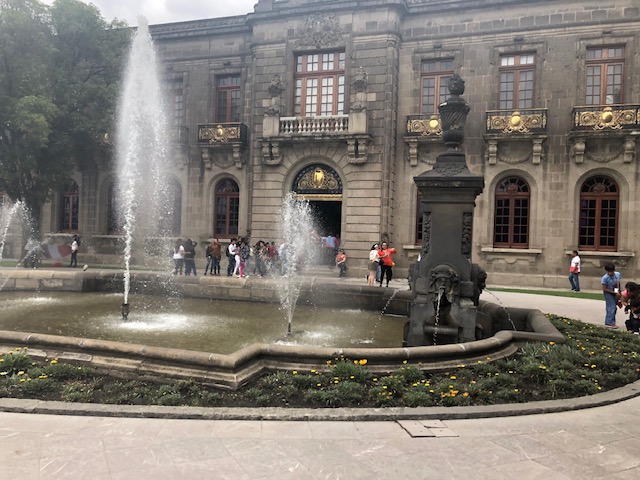
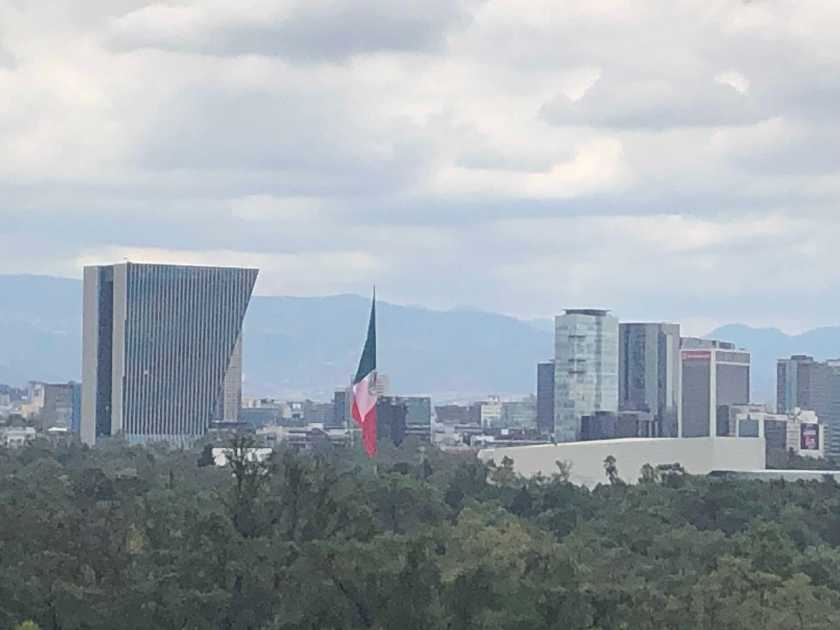
Castillo de Chapultepec

IMG_2010IMG_2011IMG_2012IMG_2013IMG_2018IMG_2024IMG_2029IMG_2037IMG_2038IMG_2045IMG_2048IMG_2050IMG_2051IMG_2052IMG_2055

CameraiPhone 8

Location: Mexico City, Mexico

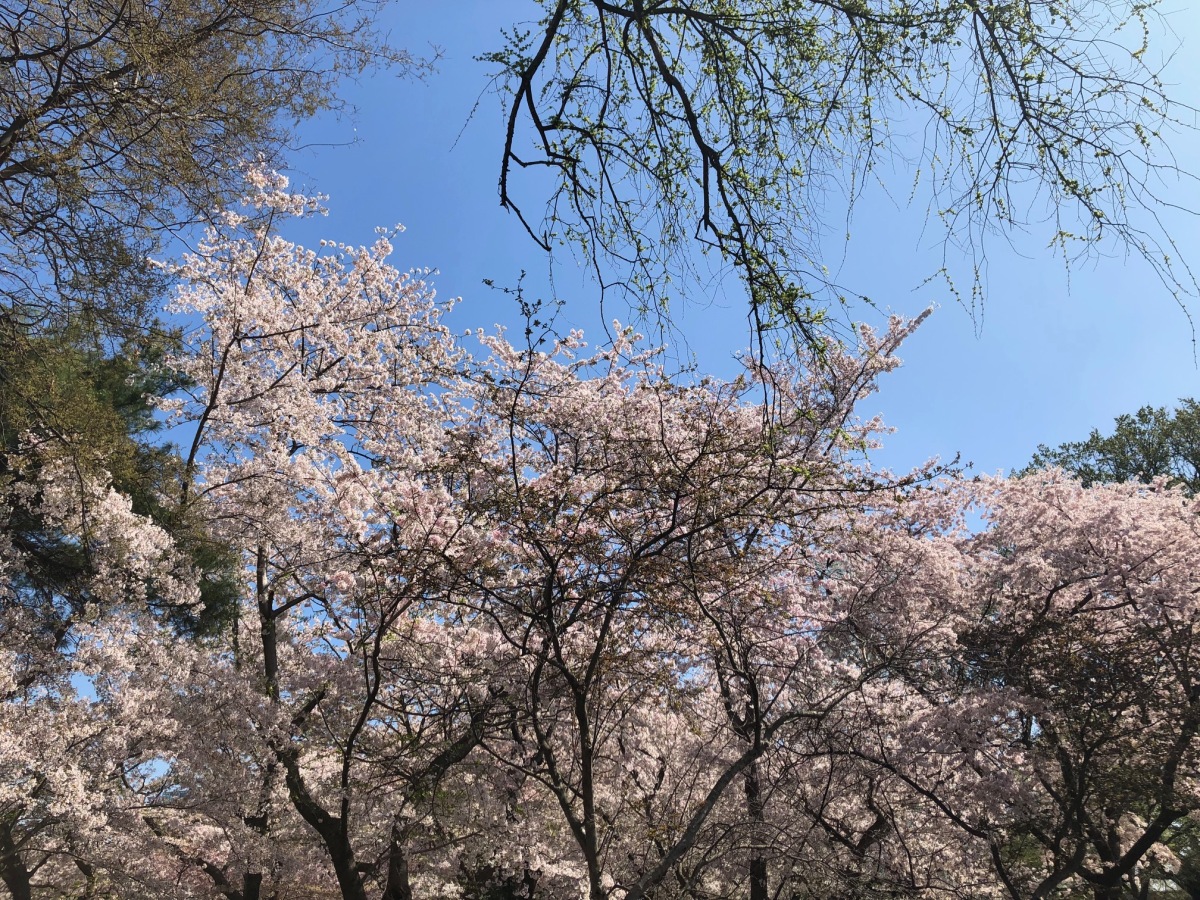
Cherry Blossom Season

IMG_1839IMG_1841IMG_1843IMG_1845IMG_1846IMG_1848IMG_1850IMG_1856IMG_1857IMG_1858IMG_1859IMG_1860

CameraiPhone 8

Location: Washington, District of Columbia 

The Downsides to Sarcasm

Sarcasm is one of those things in life that should be used fleetingly or in moderation so as to not step on anybody’s toes or to get yourself into trouble. Sarcasm has its place and time but when it is used commonly, so much that you are not even sure of whether you yourself are being serious or sarcastic, then you may start to have problems in your interpersonal relationships. Sarcasm may be considered funny or humorous at times but there are much better ways on how to put a smile on somebody’s face.

How do we define ‘sarcasm’? What exactly does it mean? Well, sarcasm is essentially the using of contempt or irony to mock someone or make fun of someone. Sarcasm is often negative in terms of its usage and while it can be funny to some people you’re not referring to as the focus of the joke; others may be offended by it or not find it tasteful. The thing with sarcasm is that once you start using it on people, you may be liable to consequences where people make fun of you in return using sarcasm. Sarcasm is an unclear form of communication and while it can be considered witty or clever, you’re risking it that the joke may not go over well or that the sarcasm will be turned against you.

You also should be careful about who you are using sarcasm around because some cultures and some peoples are not familiar with this form of humor and will think that you are being serious instead of being aware that you’re joking around. While not limited to only the English language, Sarcasm is considered to be most commonly used in English and is rather foreign to other languages who do not use it as a form of humor.

Sarcasm can often be misconstrued even when it is meant to be funny leading to angst and resentment that can hurt friendships and relationships. The biggest downside to sarcasm is that at the heart of it is dishonesty or a lack of forwardness that can cause mixed emotions or bad feelings over time. When it is used over and over again with the same person, they will not be able to tell if you’re ever being serious or if you’re always being sarcastic instead. When you are hoping to clearly communicate with another person in an honest and frank way, you want to stay far away from using sarcasm at all.

While using sarcasm with friends and family isn’t the worst thing if they are familiar with what it is in terms of humor, you should avoid using it with strangers, employers, or people in official roles. You would not be sarcastic with a firefighter if your house is burning down nor would you do it with a police officer if your car got pulled over for speeding on the highway. These kinds of situations are where you do not want to use sarcasm at all because it could backfire on you in terms of hurting your future.                  Using sarcasm at the office or the workplace is also highly inadvisable especially because of the likelihood that it can be taken the wrong way.

This is especially true if you do not know the person well or know about their sense of humor. Using sarcasm with the wrong people or in the wrong situation could backfire on you severely causing you to lose your job or even lose your friendship when you are not careful about it. Sarcasm with strangers is also not a good idea because they don’t know who you are, or they might not even know what sarcasm which is could put you in potential physical danger if you are not careful. Because of these examples that I have cited, we can conclude that sarcasm should only be used with close friends or family members especially sparingly so as to not cause miscommunication or hurt feelings.

Also, compared to other figures of speech in the English language, sarcasm neither translates well to other languages nor can be written in any real form. You can only use spoken sarcasm usually with humorous or hurtful intent, which means it may be one of the least useful figures of speech to learn and use. Sarcasm is mainly used to mask a true form of communication and is a shortcut or cheap way to undermine being honest and open with other people. People who use sarcasm often and without previous thought run the risk of being seen as emotionally distant or uncaring. They will be perceived by others as putting up walls and not being able to hold a serious conversation. As a result, a lot of sarcasm can cause a lot of harm to one’s personal life and prevent somebody from forming deep, real, and lasting relationships.

Sarcasm, when used in the right way can be very funny, but it is one of those things in life that has a diminishing marginal utility the more it is used. People don’t want to be around someone who is sarcastic all of the time and can’t be trusted to have a serious conversation. Open and honest communication is the antithesis to sarcasm, and I think most people would rather deal with someone who is honest rather than sarcastic. There are also much better and more sincere forms of humor out there that can generate a lot more laughs without hurting someone’s feelings. To poke fun of someone in a real way is alright but to constantly do it will lead to serious problems and broken friendships if the sarcasm does not stop.

Unsurprisingly, sarcasm is most popular with middle school and high school children, but it should be a stage that you grow out of in college and beyond. If you’re a grown man or woman using sarcasm all of the time and never being honest with your co-workers, friends, or family, it is almost certainly going to backfire on you and cause issues in your life. The next time you think of being sarcastic as a grown adult, think deeply before you do it and think about the person or people, you’re making the butt of the joke. If you do not think before you speak, it is likely to end up with negative consequences for you.

Sarcasm is a figure of speech in the English language but to me, it is a mostly unpopular and overrated one that doesn’t translate well or write well either. The next time you hear a sarcastic conversation go on for too long, politely step away and ask to be excused. It’s not worth your time and it’s best you spend your time with other people who are more open, honest, and serious. Being able to handle mature conversations without using sarcasm will set you apart from others and show people that you are a serious adult who is not to be made fun of or messed around with.

Lastly, sarcasm is the lowest form of humor in the English language and as a figure of speech, it leaves a lot to be desired when compared to others such as irony or metaphors. While sarcasm isn’t going away anytime soon, let’s try to limit it down to only being used when a really funny situation arises.