











Camera: Samsung Galaxy J2 Core
Location: Farol da Barra Lighthouse; Salvador, Bahia, Brazil

Camera: Samsung Galaxy J2 Core
Location: Farol da Barra Lighthouse; Salvador, Bahia, Brazil
As we all know by now, the world is going through a very tough time right now. Instead of speculating about when will things be back to some sense of normalcy, it would not be right to do guesswork about that as of today. Instead, I think it would be best to remind ourselves of a few things we can do over the next few weeks or months to prepare ourselves both mentally and physically for these challenging times. I would like to give my readers out there some advice which has helped me so far in terms of moving forward with my day-to-day activities and also the larger goals that I have for myself.
Remote work and schooling are important and should be a priority, but you should not forget to make time for those around you and to check in on them. Given how much running around you could be doing, you will likely have more time to reach out to loved ones and really take the time to engage in conversation or have dinner together or just to FaceTime every night before bed. I think it is the #1 priority right now to have during this difficult time.
Nothing is permanent and even if it is not a job you want to be doing, consider it a way to build up your resilience and to be helping others especially if the job calls for it. The wider you broaden the search, the better off you will be. You just want to make sure you polish off your resume and your cover letter to update it after a gap of some time.
Tempers can flare with ease and things can get out of control so just be aware of your emotions, realize that nothing is worth a verbal or physical confrontation over (especially toilet paper), and always remember to say please and thank you. It does not cost anything to be nice and you should always leave the house if you have to now with that in mind. Good manners will always help you get through a crisis like that.
Get together with some friends and put together a spreadsheet of organizations / places in your local town or city that are asking for monetary donations or for food/clothing/supplies, etc. It is a misconception that you need to leave the house to donate or to volunteer. In a time like this, sometimes, people especially the elderly or the solitary just could use someone to talk to or listen to them. I have heard stories of mental health professionals volunteering their time for free to help those people in need and that warms my heart quite a bit. If you are not completely healthy and/or free of symptoms, you should not be volunteering outside of the house!
If you can go for a walk on your own, it is great to get some fresh air even if it is just around the block. You will need some sunlight (vitamin D) and as long as you maintain your social distancing of 2 meters (six feet), there’s nothing wrong with walking for 10-15 minutes to clear your head and shake off the inevitable cabin fever.
Who knows? If you found extra items or clothes around during cleanup time, you could perhaps donate them when you’re finished collecting all those things you may not need but may help out somebody else during this tough time. With restaurants closed for the time being and delivery every day an expensive proposition, now is the best time to crack open your old recipe book and take your cooking more seriously.
You may be able to eat healthier now more than ever with the added time to cook and prepare your meals in advance and it is a good way to bond if you have a family or a loved one with you. Organizing extends to your personal computer and devices as well to make sure your files, bills, and documents are in order. Don’t forget to take the time to give your phone, tablet, or laptop a good cleaning too because it is a germ magnet and it would be wise to keep it clean as much as possible.
I believe you don’t need much to do these workouts as most of them can be done just with your bodyweight when it comes to pull-ups, sit-ups, pushups, squats, crunches, etc. If you can spend the money, it doesn’t hurt to get some free weights or some barbells in order to add some weight to your exercises. You can also get creative by doing some Yoga and Meditation with just a simple mat.
Due to the Internet, you can look up practically anything fitness related to create a good 30 to 45-minute workout. As if that wasn’t enough, you can always use your body to move quickly with sprints, hill runs, jogs, or a brisk walk if you can get out of the house for a bit. It won’t be the same as going to a physical gym, which has a ton of equipment and a sauna or other great amenities but it’s better than nothing and it is relatively easy to make the most of it.
In the next weeks and months, I am positive that there will be an absolute growth in creative pursuits, both online and offline. There are a number of skills and traits that you can work on almost always for free or if you spend money, it is likely be a worthwhile investment from the right teacher. It is also a great time to develop that business idea or side hustle you have been thinking about but never actually committed to. You can always bounce these ideas off your family and friends or if you are able to do so, try to find like-minded people through your network or your organizations to see what they think of your idea and if it has some potential.
Isaac Newton, for example, worked day and night, when a great plague was spreading around the world and due to the time he had to just sit, learn, and experiment, he was able to come up with the brilliant equations and inventions that helped invent the modern life that we have today. Even if you fail, it is better to have tried and done your best than to have wondered later on, what if?
We will all get through this difficult time. It will be a tragic time in human history, but you will be a stronger and more compassionate person at the other end of this pandemic. There are often things in life that happen that are out of our control. It sucks and it is demoralizing but you have to move on, move forward, and keep on moving. We have no choice but to move on and to make the most of the time that we are given. We owe it to ourselves, our family, and our community to be the best that we can be especially now. I hope you take this difficult time to be caring, be kind, and be productive. I wish you well and hope you are well.












Camera: Samsung Galaxy J2 Core
Location: Dunes of Joaquina; Florianopolis, Santa Catarina, Brazil












Camera: Samsung Galaxy J2 Core
Location: Florianopolis, Santa Catarina, Brazil
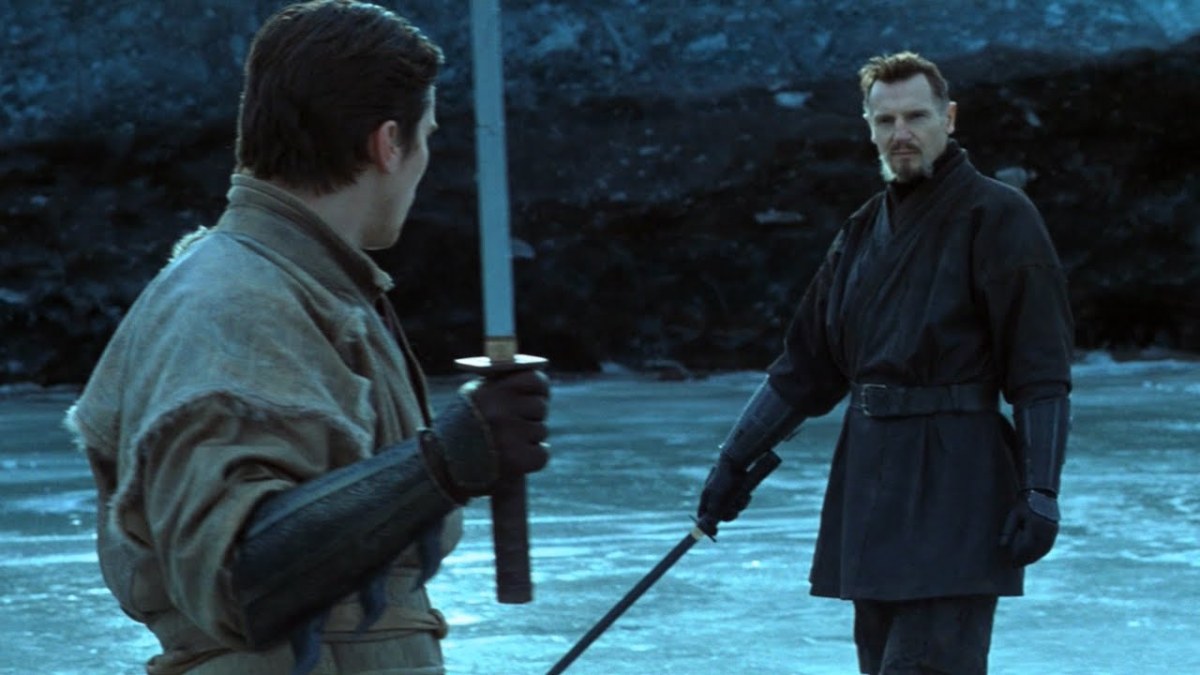
Batman Begins – The Will to Act (Training Scene HD)
‘Batman Begins’ is an excellent film for many different reasons. It has a great cast, excellent cinematography, a realistic story even if based on a famous comic book character, and also a great origin theme to it that is compelling and relatable. While we know that the idea of an ordinary man becoming a ‘superhero’ is farcical at best, the way that process is shown in ‘Batman Begins’ and the way Bruce Wayne (Christian Bale) is able to transform himself both mentally and physically into that role is really awe-inspiring when you think about it.
This is really the first Batman on film experience that shows how this caped crusader was born and what it took for him to become a masked hero to Gotham’s people. The hero’s journey in this one is believable because it takes up almost 30 minutes of the film. We see him at the beginning in a rural Chinese prison for no discernible reason and we only know that he is a wealthy man named ‘Bruce Wayne’ who seems to have lost his way. He seems desperate to find his way in the world and is desperate to fight criminals wherever they are even if it may cost him his life. Rather than concentrating his energy on his home city or finding a way to use his philanthropy for good, he wiles away in a prison fighting lowly conmen and convicts before the police have to force him into solitary confinement for ‘their’ protection and not his.
What Bruce needed at this time in the film is a good mentor to show him a better path and that person at the time is Henri Ducard (played by Liam Neeson). We do not know much about this month but only that he commands a powerful group of ninjas / mercenaries called the ‘League of Shadows’ and they are tucked away in the mountains. He offers Bruce in a previous scene the chance to join them but instills a challenge in other to be worthy. He must seek out a rare blue flower and climb up the mountain by himself so he may be deemed ready to begin his real training to instill fear in his enemies and fight them wherever there is injustice. It is a tall task, but Bruce is up for the challenge of going to their hideaway.
When he gets to this mountain hideout, he is immediately forced to start fighting even though he can barely stand. He is challenged to confront his fears especially of bats when the rare blue flower he carried can be used as a fear-inducing toxin, which he must confront and control in order to be able to succeed as a new member of the League of Shadows. In addition to challenging his mind, in different scenes, he has to learn different kinds of martial arts and learn to balance himself even as he is being attacked with sticks by many members of the League.
In ‘The Training’ scene, we are introduced to the aftermath of Bruce losing both of his parents and feeling guilty that they are dead because of him but Alfred reassures him that it was nothing he did that made them lost their lives in a cowardly homicide by the murderer.
“My anger outweighs my guilty.” Bruce does not feel guilt anymore but the anger of not being able to apprehend or kill the murderer of his parents is difficult for him to still deal with. In this Training scene, what I really enjoy is how both epic and intimate it feels from the snow-covered ice sheets to the sprawling mountain landscapes, it feels as if a superhero is being trained and that his mentor is there to help him launch that path.
“You know how to fight six men; we can teach you to engage 600.” This quote from Henri Ducard shows that he is doing more than training a mercenary like his other men, but he wants to train a future leader who will be able to use ‘theatricality and deception’ to strike fear in the hearts of hundreds of men rather than a few.’ As we see later on in the film, Bruce takes his former mentor’s advice literally by becoming Batman. Beyond different forms of martial arts, we see that Henri and Bruce are sword-fighting as well for the first time which is part of the League of Shadows arsenal. Bruce is curious to learn from Henri intermixed with their training on how to become truly invisible such as using ‘explosive powder’ and disguising one’s identity to disappear and then reappear suddenly.
“Always mind your surroundings.” In addition to skills in dodging, deflecting attacks and also going on the offensive, Ducard likes to remind Bruce on how to always be aware of the environment around you as it can be turned against you or made into an ally as well. Despite the immediate threat of his sword, Bruce must also be considered with the ice-sheets below him and the cold mountain air that can cause him to also lose his life if he is not careful.
“You must become more than just a man in the mind of your opponent.” In order to become more than just a vigilante, Bruce must become a symbol that strikes fear in the hearts of his enemies. The idea of becoming Batman is born in this pivotal training scene and the fact that he must his own fear of bats against his enemies is worth remembering later on in the film.
The example of the farmer as a prisoner because of his murder of his neighbor of a land dispute shows the beginning of a rift between Henri Ducard, the mentor, and Bruce Wayne, the student.:” Crime cannot be tolerated; criminals thrive on the indulgence of society’s understanding.” Henri Ducard has a zero tolerance of criminals and does not believe in society’s prisons and judicial systems as a means of holding them accountable for their heinous actions.
Ducard believes in an ‘eye for an eye’ such as if you murder someone, you must be murdered in return to really receive final justice. It is a very black and white view which Bruce does not entirely agree with and will push back on later. Bruce has faith in his fellow citizens and knows that a punishment such as imprisonment can be sufficient for true justice to occur. He does not believe in the total corruption of society as Henri does and this scene also shows the beginning of that difference in their world views.
In order to get Bruce to lash out at him and cause him to truly unless his potential, Ducard goads Bruce by saying that the death of his parents was not his fault but his father’s. This is a successful ploy by Ducard as Bruce loses control of his emotions and strikes wildly at Ducard who blocks his attempts and causes him to be subdued.
“Your training is nothing, the will is everything! The will to act.” This quote is by far the most powerful moment of this scene and perhaps the movie itself. It does not matter how much physical or mental training you have built what do you do when it comes time to act and take a stand. Will you be able to put your training or your knowledge to good use and make it count? This is an excellent quote by Ducard and shows that when it comes down to it, we can have all the training, expertise, and knowledge in the world on martial arts, advanced chemistry, or business but what good is that knowledge if we fail to act and use this training for the benefit of ourselves but also others in the world. It is a powerful quote that makes this scene stand out from others in ‘Batman Begins.’
Urged on by this challenge to act, Bruce seems to finally subdue Henri towards the end of the scene only to be put back in his place with Ducard’s ability to carve out a hole beneath Bruce’s feet to sink him into the frigid, icy waters. This part shows that Ducard is still the mentor and Bruce still has a lot to learn about his surroundings but also what it means to finally beat your enemies and leave no room for silly errors.
The scene ends with how much Ducard and Bruce have in common even though they barely know each other. They have both felt great anger in the loss of loved ones and how they grieve the same and how they understand the pain that drives them to exact vengeance against criminals like the ones who robbed them of their families. The scene ends with Henri’s warning to Bruce that “Your anger gives you great power but if you let it, it will destroy you as it almost did me.” Unlike Bruce though, Ducard could avenge his wife’s death but Bruce lives with the guilt that he could do what was necessary to avenge the murder of his beloved parents, which haunts him in this ending of the scene.
‘The Training’ scene in Batman Begins is exquisitely filmed, has excellent scenery, and really has different life lessons imbued in its powerful dialogue. The chemistry shows between Henri Ducard and Bruce Wayne is really authentic as a mentor-mentee relationship and this scene is the first one where you can see how their paths will diverge based on their differences in opinion regarding murder, vengeance and what really encompasses true justice for criminals. A must-watch scene as part of a must-watch movie. Check it out when you have the chance.
What is a resume? To sum it up, it is the backbone of your professional background and experience summed up in a one or two-page document which you will be showcasing to potential employers and/or co-workers. It is not the sum total of who you are as a person but rather who you are as a worker and what professional skills you have to offer and to whom your skills would be useful for. In order to get a better job, to get a better salary, or to get that promotion to take the next step in your career, a good resume could make the difference between a ‘yes’ or a ‘no’ answer when it comes to you getting that employment opportunity.
The resume is how you showcase yourself to the professional world and let companies and organizations know what your value would be to them. It’s a document that is the heart of your application, but it’s not the only piece of the puzzle to getting a job. The ideal resume by U.S. standards is 1 to 2 pages length and nothing longer than that. The CV (Curriculum Vitae) is different from a resume.
Again, a resume should highlight your professional experience, educational background, job skills and knowledge, and your technical capabilities. You can create different resumes depending upon the job you’re applying to especially if you can only highlight certain previous work experiences. Without the interview or direct networking, the resume and the cover letter, if requested, are the only ways that you will be able to reach potential employers.
It’s a summation of who you are professionally, what you can offer in business, and should showcase your work effort and drive. It is also a great way for employers to verify that you are qualified for the job opening and that you would be an asset to them rather than a liability.
Compared to less qualified candidates, if your resume looks good on paper, you’ll be able to stand out for a potential interview when your qualifications are better than the other applicants.
When you first beginning writing out your resume, you are going to want to make sure to use action words to highlight those professional experiences and your previous accomplishments you’ve had as well. These actions words should not be the same each sentence and you should never repeat the same one more than once. Also, it is important to use the present tense or past tense correctly based upon if you are still doing the same job or if it was done previously and that you are no longer there.
There are hundreds of action words in the English language and learning a good amount of them is a great way to ensure that you have a good resume. In order to keep the interviewer interested, you do not want to repeat the same action word twice or three times so be sure to do your best to learn as many as you can and know what the meaning of those words are too.
Your action word is a key component of making the resume look legitimate to the reader. The action word should always go at the beginning of the sentence (i.e. next to the bullet point) during the ‘work experience’ part of the resume. If you are currently working at a job but are applying to change to a new job, the action word must be in the present tense. However, if you are writing about previous work experience in your resume, your action words should be in the past tense. Without using action words, your resume won’t look as persuasive or as actionable as it could be otherwise. Your employer will want to know what you bring to the table based on your past work experiences.
Here is a list of good action words you can use in your resume if they apply to what your profession does, it is a small sample list but includes many words that commonly come up in professional resumes and accurately depict what some jobs do:
Action Word – Sentence Examples
In the introduction of a resume, you will want to be able to do many things well to set it up on sound footing before getting to the heart of your resume by introducing yourself and your current skillset. You will want to have a statement of one to two sentences discussing who you are and what you can offer to the employer. It’s basically a summary of your resume and a short summary of what your professional skillset is.
“My name is John Anderson and I have over 10 years of experience in digital marketing focusing on SEO, social media, and advertising campaigns. I am a dependable, hard-working, and motivated individual looking to expand my knowledge and expertise.”
Remember to include at the top of your resume your full name, address, e-mail address, and cell phone number so the employer may be able to contact you.
Headline Example:
John Doe
22 Winston Way, Toronto, Canada 24589
+( ) ( ) ( ) ( ) –> Phone Number
The body part of your resume should focus on two major parts: your professional experiences as well as your educational background. At the top of your resume, you’ve introduced yourself and your professional profile but now you want to go more into detail.
Make sure to include relevant bullet points regarding actions you undertook in each of your previous jobs as well as what goals you were able to accomplish. Remember to write in complete sentences and use a timeline in chronological order from most recent to furthest away in terms of commitment.
For example: Bachelor of Arts Degree, Stanford University; Biochemistry (Major), Physics (Minor). 2011 – 2015.
In the conclusion, you want to highlight what your area of expertise is. You want to leave the reader aware of what kind of professional abilities, skills, and technical capabilities you have. Also, if you have any awards or earned any professional honors, you will want to list them in chronological order from most recent to furthest in the past.
If your work has been published or if you have any items in your professional portfolio, you’ll want to highlight the title of these articles as well as for which publication they were featured in. Depending upon what kind of employer you are focusing on, it’s sometimes beneficial to list what kind of hobbies and interests you have even if they are not professionally related. Regarding coding or foreign languages, you should highlight by the end of your resume which languages you know whether its Python (coding) or Spanish (foreign language) to stand out from the competition.
With a great resume, you will have a much better chance of landing that dream job. While it is not guaranteed, if you can explain yourself well professionally with good vocabulary with the correct action words as well as few or no grammatical errors, it’s likely you will be called in for an interview or be able to take that pivotal next step towards landing your next employment opportunity.





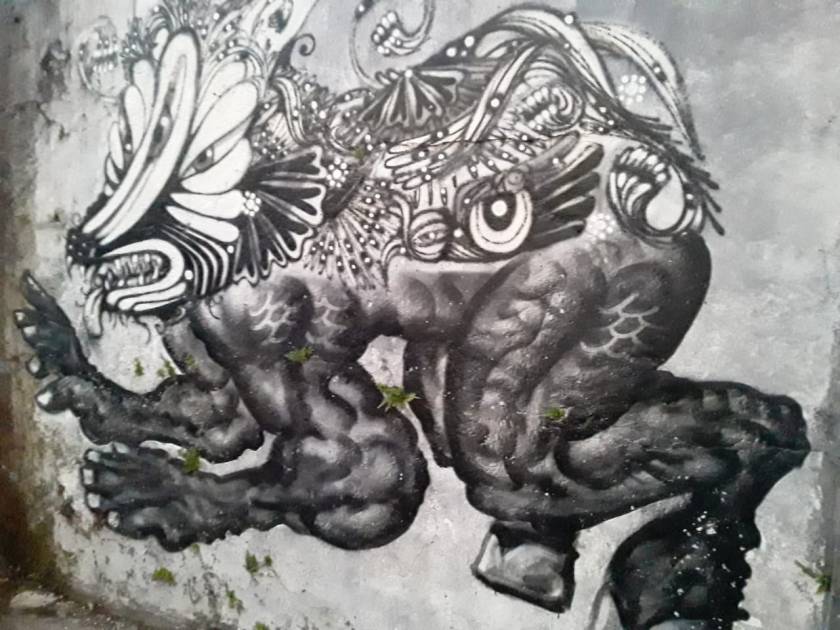


Camera: Samsung Galaxy J2 Core
Location: Beco do Batman; São Paulo, Brazil
We are all imbued with the important personal trait of having patience. I believe that each of us is imbued with a certain amount of it though and there’s a certain limit or tolerance level that we have within us innately. It can be difficult to augment or increase the amount of patience you have without serious mental training and willpower. Everybody has some amount of patience, but that level will stay the same unless you can train yourself to learn to have more of it and to put yourself into situations where it is tested.
In my opinion, patience is the most important trait that a mature adult can have and can change your life for the better or for the worse depending upon how much it is exercised. The level of patience you have or what you teach yourself to tolerate will depend upon your overall maturity, resilience, and willpower. The less patience you have, the more stressful your life will be ironically. The more patience you have, the less stressful your life will be too. Managing your stress levels comes as a result of how much you are able to flex your ‘patience’ muscle.
Patience such as willpower takes time to develop but the more of it, you’re able to accrue, the more payback you’re likely to see later. For example, if you’re at a bureaucratic office of some sort and you are given a number to wait your turn and you’re not sure how long it will take for your number to be called, there’s no logical reason to complain about it. The more you get peeved about it, the more it will backfire for you. Why not make the most of your time and read a book, catch up on e-mails, listen to music, or even make a few calls to pass the hour(s)?
Not only in bureaucratic functions will patience serve you but in every aspect of your life really. When you’re learning a new language, you need to have patience regarding your ability to obtain and retain what you have learned in order to improve. When you’re starting a relationship with someone, you have to be patient with their faults and with their quirks because they are going to have to do the same with you as you get to know each other more and more.
When you’re getting used to your responsibilities and roles in a new job, it will take both patience and time to get the swing of things and you have to accept that you’ll likely make mistakes at first. When you are starting a business for the first time and you have to learn a lot of new skills as well as take on duties that you have never had before to grow the business. In any of these hypothetical but possible situations to occur in your lifetime, you have to be patient in any of these personal or professional endeavors regardless of what they are.
When things are not going your way, you just got to keep your composure, keep pushing through, and stay optimistic that things will eventually work out. Like quitting too early, giving up on exercising your patience will backfire on you more often than not. Nobody really likes someone who loses their patience a lot. There’s a time and a place for confrontation but that is a very rare occurrence especially in an extreme circumstance where you really cannot wait or deal with any further delays. If you don’t have anywhere to be, if there’s a solution to be had, if it’s not a big deal in the grand scheme of things, it’s better to be patient than blowing your gasket and letting go of your emotions.
You will earn respect from other people if you are able to be level-headed, to not let your emotions overtake your decision-making ability, and to keep calm under outside pressure(s). It is a great way to set yourself apart when you are able to exercise patience in 95% of situations and in the other 5% or able to de-escalate the situation calmly without losing control in some way. It is also a fallacy to suggest that you can’t exercise patience and stand up for yourself at the same time.
You do not have to be confrontational, but you do have to advocate for your interests and for your livelihood. This all can be done without losing one’s patience and it will be a sign of how emotionally mature you are when you are able to express your emotions in a healthy manner. Being able to exercise patience on a consistent basis will also make you happier, healthier, and more appreciative of others, flaws and all, when you can maintain a real sense of calm and composure.
Exercising patience is a real skill and positive trait to have that will pay off for you and then some throughout your life. However, like any muscle, it has to be exercised constantly and because life will test you, often at the most random times, this particular muscle will be tested often and you have to decide how much you can adapt and beat these tests that life will throw at you. Speaking as someone writing this article who sometimes struggles with exercising my own patience, it is a lot of work, but it is worthwhile to get better and better at it.
Whereas meaningless and trivial things would have bothered you in the past, if you can simply brush them off and move on quickly to focus your patience and your willpower on things that actually matter to your life and livelihood, then you will be on the right path. Do not let the small irritants of your day-to-day life affect your patience because you will waste precious emotional capital on inconsequential problems. When the waiter takes too long with the bill, when the checkout cashier is rude to you, and when the boss wants to call an extra meeting over something that was previously agreed upon, take a deep breath and let it all slide off your back.
Remember to guide your thoughts to real things that affect you and wait out or not react to the small irritants. The real battles of your patience will be much larger and longer in scale so don’t waste exerting a lack of patience for those irritants of minutes or hours. Save up your patience for the days, months, and years in your personal and professional endeavors that will require you to be in top shape emotionally to handle the challenges that are to come along.
As I have mentioned in other articles, a real mixture of commitment, patience, and willpower will set you apart and cause you to succeed in the long run where others do not. Those three emotional traits are a sign of both intelligence and maturity. Letting them decay or not exercising them consistently will set you back and cause you to fail more. Always do your best to keep those three traits in mind when you set your mind on something new because you will need all three traits of commitment, patience, and willpower to get ahead in life and to make your life the best it can be.
What is a cover letter? Why is it important for an English learner to know about it and also how to create a good one? Well, a good cover letter can make the difference between landing that dream job or hitting refresh on the search results again to find the next job opportunity. Your experience and your professional background need to be succinct and summed up in a well-written way and the cover letter is your best way of doing that. It is an excellent way in which for you to improve your English writing skills and to prove that you can handle your future job’s writing components which there is likely to be many of them since you are a worker during an age of e-mails, 24 hour communications, and instant messaging services.
A cover letter is an opportunity for you to go into more detail about yourself and your experience(s) and background, both professionally and personally. However, your cover letter should focus on the job you are applying for as well as why you are interested in the particular company that you intend to work for. Your cover letter should be a balance of who you are as a professional, what you can offer for the job you’re applying to, and what your interest in the company is. It’s a balancing act between these two objectives and you should remember to personalize your cover letter depending on where you are applying to.
You may be asking yourself as you read this blog post: Why do I need a cover letter and what benefit(s) do I get from creating a worthwhile one? Well, there are a number of reasons for it which I will list below but be sure to note that it’s more than just a chance to land a good job but it’s a chance for yourself to become a better writer and know how to sell your abilities and skills.
Your cover letter is different from the resume in that it allows you to go more in-depth about yourself and why you’re a good fit for the job. Instead of short bullet points, you can highlight your experiences in broader detail. Employers will also expect why you would like to work for their company and how your skills line up with their requirements. It’s a chance to tell your story to them while interweaving how their company or organization aligns with your professional goals. In addition, you have the ability to showcase how good of a writer you are because the cover letter is more grammatically, and vocabulary focused than your resume.
Action words will make up a large component of your cover letter’s sentences so please be sure to put these verbs to good use. Here below are just a sampling of them listed below but remember that there are hundreds that can be used within the context of a regular cover letter. Try not to repeat yourself too much and to keep your usage of action words fresh and consistent throughout the letter.
Sample Action Words
Note: Remember to add –d or –ed to the end of the action verb if using it for the past tense.
In addition, you have to be able to choose and use some phrases and sentences that will come in handy either at the beginning or end of the cover letter so that you will come off as being both professional and serious. You do not have to use all of them but there are a number of them that are cordial in nature that a potential employer will expect from you to see when they read it during their evaluation.
Here are some key useful phrases/sentences that you can use for your average cover letter:
To give you reading at home a better idea of what the content and the structure of a cover letter looks like, I have included two sample cover letter excerpts that will show you how it can be written and what to write about potentially if you are still struggling for ideas as to how the cover letter should be shaping up.
Sample Cover Letter Excerpts
Remember that you should know who your audience is and tailor your phrases to reflect who you are writing the cover letter for. Always use formal language such as sir, madam, sincerely, respectfully, please, thank you, etc. Go into detail about the job you are applying for and give different reasons on what you bring to the table for the position opening. Structure the cover letter into multiple paragraphs with an introduction, body paragraph(s), and a conclusion. The cover letter is a formal piece of writing so it should be structured as a formal letter whereas a resume is less substantive and more general.
In the introduction of the cover letter, remember to always put your full name, your current mailing address, your cell phone number, and your e-mail address at the header of the cover letter. The date at which you are sending out the cover letter should go next in the left hand part of the cover letter below your header. Then, you should begin the cover letter with “Dear Sir or Madam..” or “To Whom It May Concern”, or “Dear Mr. or Mrs. ________” if you know who specifically the cover letter should be addressed to. The introduction should be a paragraph or two focusing on what position you are applying to, the company associated with the position, and for which reasons you are applying for this specific position. You can also add the person or place that referred you to this job application especially if the person works for the company you’re applying to.
The body paragraph(s) of the cover letter should be a few paragraphs in total length but not be too lengthy or repetitive. Each paragraph should cover a different part of your professional or educational background and highlight what these experiences meant to you and what skills you developed. You should give a few examples of where you showed leadership, where you completed a successful project, and what you took from the experience. Do remember to not discuss every professional experience or educational program you’ve gone to but instead highlight the relevant ones related to the job application in question. Always use complete sentences for this part of the cover letter and check it over for grammatical coherence and correct vocabulary usage.
When it comes to a cover letter’s conclusion, you’ll want to re-state again why you are applying to this particular position and company. Discuss which characteristics, skills, and personal traits you have that will make you stand out as a job candidate. The conclusion of your cover letter should indicate gratitude and thankfulness for being able to apply and that you hope to hear back soon from the employer. Sign off with a salutation such as Sincerely, Best regards, Warm regards, Best wishes, Cordially, etc. and re-state your full name at the end of the cover letter. Don’t be too presumptuous that you will land the position but let your experiences, skills, and qualifications speak for themselves.
Your cover letter is what you make of it really and if you want the job bad enough, it will come through in your writing and in your sincerity. The point of becoming a better English learner is to put yourself to the test and to make the most of your abilities in this language and developing a good cover letter is a great way to do that. If you follow this advice, practice until there are few if no mistakes at all, and revise multiple times what you have written, you will be well on your way to having better success in your professional career in the English-speaking world.


Camera: Samsung Galaxy J2 Core
Location: Morumbi; São Paulo, Brazil