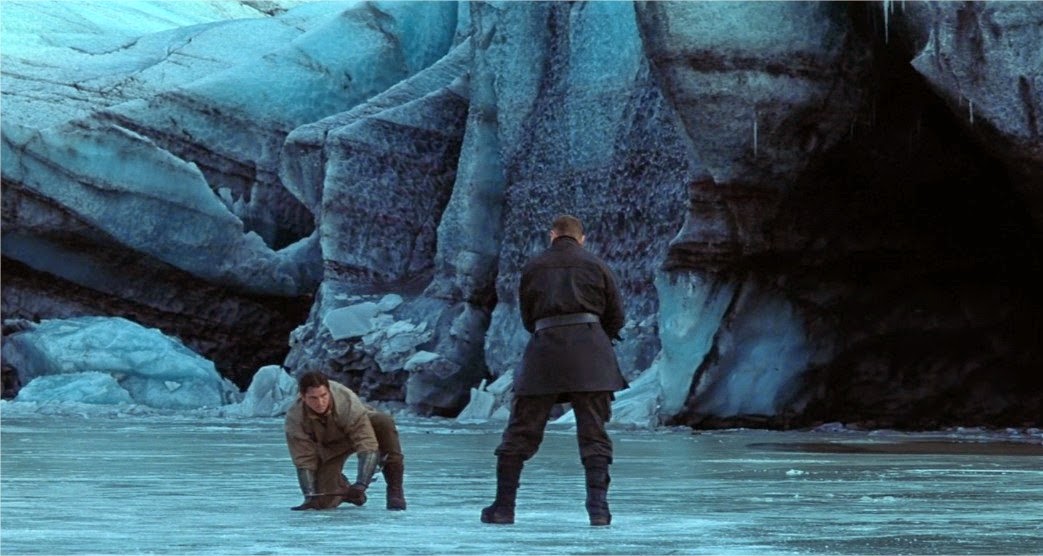
‘The Revenant’ – Film Review and Analysis

What happens when you push a man to his utmost limit? What occurs when you take everything from him including his wife and child? At the point of both physical and mental exhaustion, what carries the man forward to keep on fighting and to keep on living? Few films really probe these questions related to the power of the human spirit as realistically as ‘The Revenant.’ An excellent and unique film that was propelled to success, both commercially and critically because of the acting brilliance of Leonardo DiCaprio and through the special direction of Alejandro González Iñárritu.

‘The Revenant’ is a 2015 film that is both a sprawling epic and an intimate biography, which covers a time in American history where the West was not yet settled, and both the elements and the native population could cause a settler or a trader to lose their lives all too quickly. The film is also a western in that it depicts the rough and tumble life of a frontiersman who was at the whim of not only nature but also hostile animals and native tribes who were lurking just behind the shadows of the mountains and the forestry that surrounded them.

Hugh Glass (portrayed by Leonardo DiCaprio) is one such frontiersman who was a real-life person skilled at being a fur trapper, explorer, and a hunter. While his story was embellished for ‘The Revenant’, the legend itself while it may not have happened in all of its audacity still makes for a great movie adaptation. The legend surrounding Mr. Glass involves him being left for dead after he was abandoned by the fur trappers, he was assisting in their quest to participate in the burgeoning fur trade in the Far West of Montana, the Dakotas, and Nebraska.

After a vicious attack by a grizzly bear while out hunting for food and provisions for General William Ashley’s expedition, Hugh Glass was essentially left for dead by those men who had abandoned him even though he was still alive. Glass had killed the grizzly bear who had attacked him but was essentially rendered immobile by the attack and could not talk or walk on his own two feet for weeks. In the historical accounts, Hugh Glass was able to somehow heal himself enough to crawl, stumble, and walk over 200 miles (320 kilometers) to Fort Kiowa, South Dakota to survive.

In the meantime, he had survived attacks from the native tribes, living in conditions of winter weather and brutal cold, and avoiding potential hazards such as icy tundra, treacherous mountains, and other elements. The one thing about both the historical portrayal of Hugh Glass’s story and that of ‘The Revenant’ was how he thrived in those brutal environments given his history as an explorer and a fur trapper. If you are able to live at the edge of civilization and make a living for yourself in doing so, you should never be counted out when it comes to surviving when all hell breaks loose.

Compared to the historical legend, Hugh Glass, thanks to the brilliant acting of Leonardo DiCaprio is given a more substantive background that makes him a more relatable figure. In the two and a half hours of the film, Glass is portrayed also as a family man just trying to make his way in the world by making himself useful to both the fur trappers and the U.S. Army personnel who have come to take territory for themselves and make themselves rich in the unforgiving North American wilderness. In this cutthroat environment, there are no room for careless mistakes and the viewer will see in the film just how deadly each day can be. If there is any wisdom that Hugh wishes to impart on his family is that he wants to give them the tools for survival even if that means his own demise.

Glass is not a perfect protagonist and it is clear from the beginning of the film that he is out for himself and his family alone as he does not let anyone, or anything come between him and his son Hawk. His deceased wife was a Pawnee Indian and his son, Hawk, is half-Pawnee. After the death of his wife, Hugh Glass is extremely protective of his son, Hawk, because he knows that the men, he is traveling with do not see him as an equal because of his Pawnee background. Glass is committed to protecting his son because that is all he has left to live for.

While respectful towards the Pawnee, Glass and the other fur traders are fearful of the Arikara who are out to find their tribe chief’s abducted daughter, Powaqa, even though they didn’t take her. In order to survive, Glass has to defend himself and the other traders from the Arikara who are vicious in their hatred of anyone who has invaded their territory. After the fateful bear attack that severely wounds Glass, Hawk prevents the trappers from killing his father and they move on without him leaving John Fitzgerald and Hawk to carry him back to the Fort where he can get medical attention.

Unfortunately, Fitzgerald is a sociopath only concerned about his own survival and terrified of the Arikara attacking again. Fitzgerald kills Hawk as Glass watches in agony because Fitzgerald was selfish in his desire to survive and leave Hugh to die. Another man, Bridger, leaves Glass to die as well and they take his gun and all of his provisions leaving him defenseless against the brutal elements. While Bridger is complicit, it is Fitzgerald who draws the ire and contempt from Glass in his quest for vengeance.

Despite being left for dead, Hugh Glass is hellbent on getting vengeance for the death of his son, Hawk, and wanted to get revenge on John Fitzgerald for killing his son, taking his provisions, and leaving him to die in the wilderness. Through his knowledge as a fur trapper, his ability to track both people and animals, Hugh was able to survive the treacherous winter conditions, heal himself and his wounds, and able to eat buffalo and horse meat to survive. So much was Glass’s desire for vengeance that he was able to travel the 200 miles to get to the Fort to seek treatment for his wounds and gather up the strength to set himself on the trail of John Fitzgerald. In the case of Hugh Glass, an eye for an eye is warranted when his whole life (his wife and his son) have been taken from him.

While the real-life story of Hugh Glass is up for debate, ‘The Revenant’ draws the audience in through its stunning visuals, powerful acting by actors Leonardo DiCaprio and Tom Hardy and the visionary directing by Iñárritu whose tracking shots from the opening battle to the bear attack scene to the final fight scene between Fitzgerald and Glass will leave the viewer breathless. This is a pure survivalist movie of man against man and nature but it also revolves around an emotional core of someone who is trying to do his best to sustain himself and his son in harsh living conditions. The movie’s setting is strongly intertwined with a perilous time in American history where Native Americans, fur trappers, French explorers, and even the U.S. army were fighting to the death for control of lucrative trades and future security in the untamed yet wild territory of the Northwest region.

DiCaprio and Iñárritu made ‘The Revenant’ in mind for its unabashed portrayal of both the beauty and the brutality of the natural environment. It is a movie that highlights how precious and fragile our climate is and how men can negatively affect it through their desire for greed and power. ‘The Revenant’ is as much as a morality tale as it is a tale of the utility of revenge. Two men, one whose world has been ripped apart due to the loss of his wife and son, and another man who fears losing his money, his fur pelts, and his life to Arikara attack are brought together in a struggle of good against evil. The film poses the question of is vengeance worth it? and how can justice be served in a world that is based on survival and not codes of morality or law? Arguably, one of the best films of 2015, ‘The Revenant’ was one of the best films of this decade and deserves a viewing.

Led by an Academy award winning director (Alejandro Gonzalez Iñárritu) and starring an Academy award winning actor (Leonardo DiCaprio), ‘The Revenant’ is a jaw-dropping and powerful film that will stay with you after the credits roll. The film’s themes are extremely relevant in terms of its varied focus on family, revenge, survival, and how to seek justice in a lawless environment. More than anything, it shows the fragility of civilization and how important it is to be able to put yourself in difficult and challenging situations to show what you are made of. Hugh Glass was not a perfect man but he knew what it took to survive against all odds and seek justice against those who had wronged him and his family even if it meant certain death.

Mind Your Surroundings

In an era of nearly unlimited distractions, the best way to make yourself stand out is to mind your surroundings. Ironically, this should not be that hard to do yet so many people struggle today with keeping their eyes and ears clear of distractions. One of the main reasons for this phenomenon is the fact that technology has rendered us with the ability to avert the need to use our eyes actively in sizing up our environment by focusing instead on flashy advertisements, fluorescent smartphones, and glittering video board. Our eyes are being constantly assaulted by so many visual cues from inanimate objects that we have an increasing amount of trouble focusing on what’s real and what’s in front of us. Not only are our eyes being affected by this distracted kind of living but our ears as well. If you want to see the extent of this, go to any street corner, subway / bus stop, or any public park, instead of listening to nature with the sound of birds chirping and leaves falling, we instead close ourselves off from the natural world with our earphones, headphones, and even earplugs.

Now I’m as guilty as listening to loud music through my earphones and also focusing on my smartphone or a cheesy advertisement as much as the next person, however, I try to be as self-aware as possible in limiting the amount of time I devote my eyesight to screens and my hearing to artificial sounds. What I worry about and what I would encourage you, dear reader, to do is to know the time(s) and the place(s) to put the distractions away for good and to focus on the world around you. You may not think it is important now until something unfortunate or unseemly happens to you because you were not in touch with the immediate environment. Anything can happen in a split second and if you are not prepared for that to occur, especially in public, you may end up regretting your decision to look at your phone or to listen to music when you should have put the ear-pods away. ‘Mind your surroundings’ is a simple wish I have for everyone especially when you are not at home or in a private domicile. When you are in an unfamiliar environment, you have to be much more aware of your surroundings than you would otherwise because it could even mean the difference between life and death.

Unfortunately, it’s become well documented especially in recent years with the rise of mobile technology how a few folks have met an early end to their lives because they simply were not paying enough attention to their environment. These terrible accidents and freak of nature incidents could be avoided if people put down their phones, their headphones, and their smart watches to listen and look carefully at where they were going. Unless you have an important call, are lost in an unfamiliar area, or have to look at you watch for the time, it can wait. Minding your surroundings is especially true in public places. You need to be watching out for where you are going, or it could cost you. This is especially true when you are not familiar with the local environment or may not speak the language if you are traveling to a new country. Being able to hear the sound of cars / buses going by, of what pedestrians are doing or saying, and to orient yourself to find out which neighborhood or part of town you’re in, this is absolutely critical to do, and you do not need modern technology in order to do this.

While it’s definitely true that most people have good intentions, this is not always the case. Do not let yourself become an easy target especially when it would only take a few precautionary steps to keep yourself aware of your environment. Multiple people have died from texting while driving, looking at their smartphone as they crossed a busy intersection, or have fallen off a cliff from a ‘selfie’ gone wrong. While we live in an era of technological abundance, let us not also live in a time that is bereft of common sense. You owe it not only to yourself but to your friends and your family to make wise decisions in terms of managing your interactions with the immediate environment. The steps you can take are quite simple, but they take serious discipline which may not be easy.

A few tips that I personally think would make a big difference involve some measure of personal responsibility but are really not that strenuous in terms of total effort. Sitting yourself in a restaurant facing the entrance and exit of a restaurant is key if something unfortunate were to happen or if you would like to have a good idea of what’s going on throughout the place, especially if you’re seated further into the room than right by the entrance. I find this tip to be really underrated when you are with close friends or family members who you want to look out for when they are sitting across from you and facing away from the entrance and/or exit.

Another tip of mine is to put your phone on airplane mode or simply turn it off when you are on the go. If you are walking for a little while, driving in a car (all the time!), or are involved in an activity, which requires serious concentration, you should not tempt yourself to be on your phone, smartwatch, etc. because it may lead to deadly consequences if you are not careful. A public service campaign that I fully support is titled, “It can wait”, which shows how 99% of texts or phone calls can wait a half an hour or even more when you’re busy doing other actions such as driving. Having the discipline to use a hands-free method or to contact the person(s) before you operate a vehicle or other machinery is common sense and saves lives.

Above all, the advice of ‘mind your surroundings’ is also appropriate in terms of being able to assess your environment quickly and accurately. You cannot do this if you are listening to music, texting, or have your eyes peeled to the ground. Maintain your awareness, be vigilant, and be sure to maintain eye contact that is dead ahead. You may not think that these tips are important now, but you do not want to regret being distracted if it comes to backfiring on you in the future. Whether you are at a movie theater, the beach, in your car, hiking a mountain, kayaking in the lake, you need to be able to be aware of who and what is around you at all times. If you’re lying in bed or relaxing on the couch, then I would say it’s not bad to let your guard down. However, in public, especially when you’re traveling to a new area, city, country, etc., you need to put the distractions away, mind your surroundings, and pay careful attention to what is going on around you. Unfortunately, this needs to be said in today’s world where every minute, our senses are absorbed all of the time especially in urban environments.

Nobody’s perfect but you really have to adapt yourself to the various locales that you put yourself into. A seasoned traveler, explorer, or observer can tell you that being aware and mindful is a key trait to have that will keep you moving forward. Please do your best to follow some of the tips I have laid out and some of the cautions that I have listed. Keep the texting, calling, and Tweeting to a minimum when you’re on the go and you should be fine. Always mind your surroundings to the best of your ability.

English Corner – Countable and Uncountable Nouns

It’s important to distinguish between countable and uncountable nouns in English because their usage is different in regard to both the determiners and the verbs. Countable and Uncountable nouns are grammatical topics that are likely to come up again and again in your studies so it’s important to know the main differences between them. If you are looking to improve your usage of numbers and to know how to use them to refer to person(s), place(s), and things(s), which are one or more in amount, then you will need to have a good grasp of countable and uncountable nouns.

Compared to many other grammar topics, countable and uncountable nouns are among the easiest to master but they are also the easiest ones to make careless mistakes about. By not paying enough attention to these basic rules, you will put yourself at risk of not referring to them correctly in either a direct or indirect manner. Please be sure to use the examples below to better your understanding and to also write out your own example sentences as well to get more practice. With enough effort, you’ll be able to tell the difference between the significance of one cow and five pencils. Most nouns are countable but there are a few exceptions which are not countable which you will find out more about in the rest of this ‘English Corner’ blog post.

Countable nouns are for things we can count using numbers. They have a singular and a plural form. The singular form can use the determiner “a” or “an”. If you want to ask about the quantity of a countable noun, you ask “How many _______?” combined with the plural countable noun.

Singular: One cat, one woman, one job, one store, one idea.

Plural: Two cats, three women, four jobs, five stores, six ideas.

She has three dogs. I own a house. I would like two books please. How many friends do you have?

Examples of Uncountable Nouns: tea, sugar, water, air, rice, knowledge, beauty

We cannot use a/an with these nouns. To express a quantity of an uncountable noun, use a word or expression like some, a lot of, much, a bit of, a great deal of, or else use an exact measurement like a cup of, a bag of, 1kg of, 1L of, a handful of, a pinch of, an hour of, a day of. If you want to ask about the quantity of an uncountable noun, you ask “How much?”

-There has been a lot of research into the causes of this disease.

-He gave me a great deal of advice before my interview.

-Can you give me some information about uncountable nouns?

-He did not have much sugar left.

-Measure 1 cup of water, 300g of flour, and 1 teaspoon of salt.

-How much rice do you want?

Exceptions to the Rule of Countable v. Uncountable

Some nouns are countable in other languages but uncountable in English. They must follow the rules for uncountable nouns.

The most common ones are:
accommodation, advice, baggage, behavior, bread, furniture, information, luggage, news, progress, traffic

  • I would like to give you some advice.
  • How much bread should I bring?
  • I didn’t make much progress today.
  • This looks like a lot of trouble to me.
  • We did an hour of work yesterday.

Be careful with the noun hair, which is normally uncountable in English, so it is not used in the plural form. However, It can be countable only when referring to certain examples such as the individual hairs on someone’s head.

Examples:

1) Did you wash your hair last night?

2) Your dad is getting some grey hairs on his beard.

As shown in the multiple amount of examples, Countable nouns can be singular or plural although they mostly are plural in usage. This is in contrast with uncountable nouns which are only singular in their nature and can never be plural. This is an important grammatical distinction which will help you to understand the main difference between these two types of nouns. Do your best to study these examples, create your own sentences, and know why countable nouns are singular and plural while uncountable nouns are only singular. Whether it’s one potato or a hundred potatoes, you have to be able to count both.

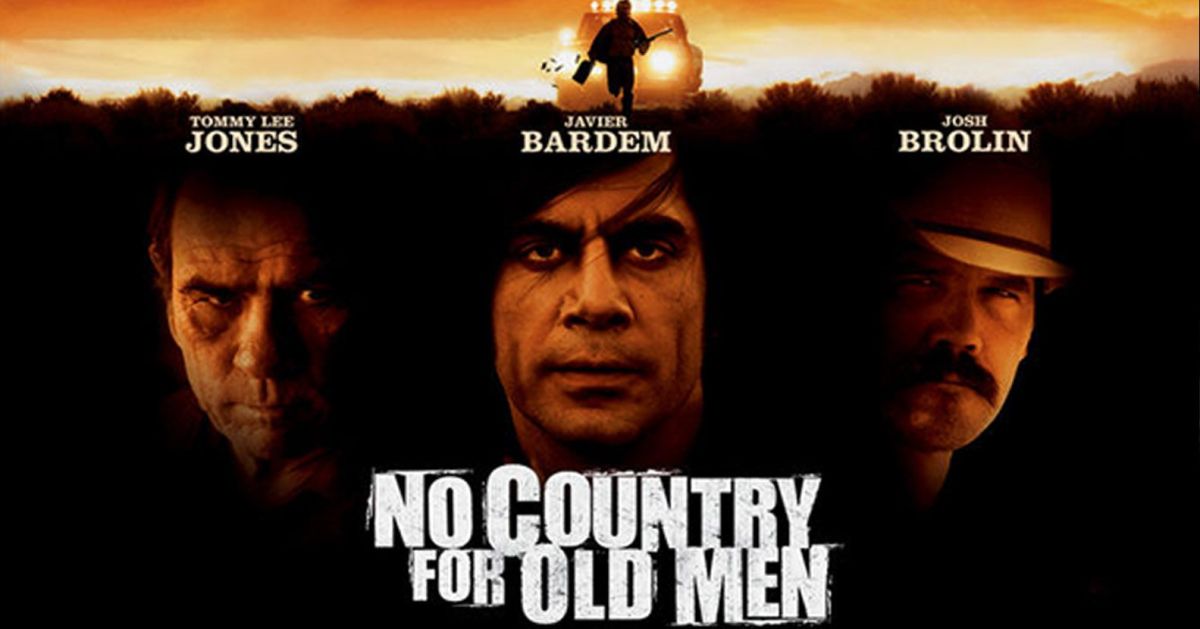
‘No Country for Old Men’ – Film Review and Analysis

Cormac McCarthy, a distinguished American author of such noteworthy novels of ‘The Road’ and ‘Blood Meridian’, is not as well known for ‘No Country for Old Men’, but it is an excellent and renowned novel in its own right. Out of the movies that have been based off of his work, ‘No Country for Old Men’, released in 2007, is considered to be the best book to film adaptation done so far when it comes to the written works of Mr. McCarthy.

Like his other novels, ‘No Country for Old Men’ focuses on the darker parts of human nature including violence, corruption, and the evil that people can do to one another without just cause. ‘No Country for Old Men’ was a hit at the box office and has an all-star cast including Josh Brolin, Javier Bardem, and Tommy Lee Jones. This film was directed by the Coen brothers and received critical acclaim including four Academy Awards including Best Picture and Best Supporting Actor for Bardem. While not the most upbeat and positive film, it’s a film that probes questions regarding fate v. coincidence, if destiny is pre-ordained, and how much the world is beyond our control despite our wishes and desires for it to be different than it actually is.

‘No Country for Old Men’ takes place in Texas, USA in 1980 after the conclusion of the Vietnam War, one of the bloodiest conflicts in American history, and which is referenced at points throughout the film. Each of the three main characters have personal experience committing violence although they do so for different reasons. Anton Chigurh, the name of the film’s antagonist is a man born without a conscience and is a hired killer. However, he doesn’t simply kill because he is getting paid with money to do so but rather because it comes naturally to him and sees himself as an instrument of fate. It does matter whether or not you are ‘innocent’ or not but if you happen to cross paths with him on the road, at a hotel, in a convenience store, he will judge your fate based on the basis of a coin toss flip. Chigurh’s chilling approach to life and how it is totally beyond any of your collective will and actions is an eerie recurrence throughout the film that the Coen brothers use to make him one of the greatest film villains of all-time.

Most relatable as a main character in ‘No Country for Old Men’, Llewelyn Moss (played by Josh Brolin) is a married man, Vietnam war veteran, and welder who enjoys hunting as a Texan. He is not a perfect person but he tries to do the right thing most of the time and is unfortunately a victim of fate as well during the film. On a hunting trip in the west Texas desert, he ends up seeing the aftermath of a drug deal gone bad with men and dogs both badly wounded and dead at the scene. His overall fate is set in motion when he takes two million dollars that does not belong to him and stashes it away.

As an audience member, you know that’s not the right action for him to take because it ends up causing him to be tracked by Chigurh as he is the contract killer hired to kill Moss and bring back the money. It’s not only that Chigurh who is after Moss for the money and this main character is up against fate which has conspired against him due to the stolen money that didn’t belong to him. Moss, at his heart, is a survivalist and wants to live on yet his actions cause himself and his wife to be put into serious danger.

Because of their predicament, Sheriff Ed Tom Bell, a Terrell County mainstay who is closer to retirement and death then he would like to admit is good at his job but is not sure that he can keep up with the violence and evil that he sees around him and which seems to be getting worse and not better. Throughout this film, Ed Tom is one step behind Chigurh and is unable to help Moss as directly as he can as sheriff because he is overmatched and isn’t able to keep up with a part of the country that isn’t always meant for ‘old men’ to live happily ever after.

“What you got, ain’t nothing new. This country’s hard on people. You can’t stop what’s coming. It ain’t all waiting on you. That’s vanity.” Sheriff Bell, throughout the film, becomes disenchanted with the way the world is and how senseless violence is unavoidable and can’t always be stopped. His ability to influence or change events is weakening and as an older sheriff, he’s slowing down and wondering what his ultimate fate will be whether its dying of old age or getting killed by a psychopath like Chigurh. Ed Tom Bell as a character in this film is aware that as human beings, we can only have control over the world around us and that we are limited to the choices we make regarding good and evil but our choices can also be sometimes constrained by the hand we are dealt by life itself and our circumstances. When it comes to the violence of the world, it is something that can never be truly vanquished as long as there is evil in the hearts of men.

The most prominent theme of the film relates to fate and self-determination. Each of the main characters chooses to see those two concepts differently. Anton Chigurh uses the cover of a ‘fateful’ coin toss to leave it up to the fates of his potential victims regardless if he was hired to kill them or not. He brutally rationalizes his violence through the use of ‘fate’ as if they had it coming all of their life. Llewelyn Moss, a simple hunter and welder, makes flawed choices as any normal person would but struggles to outrun his fate based on some bad decisions he made regarding money that was stolen and would be considered ‘blood money.’

Moss is a survivalist at heart but knows that he can only do so much physically and mentally to outrun his fate based on the choices he actually made that led him there. Ed Tom Bell, is the most morally sound character of the film but comes to the realization that he can only deal with the world as it is rather than the world he would like it to be. The choices he makes are his own but the world and its depravity and violence are out of his control and he can only react to those events rather than prevent them from ever occurring.

In various films of theirs, The Coen Brothers often present a bleak and nihilistic view about the world. ‘No Country for Old Men’ is their most serious and brutal look at the nature of violence, how deeply it seems to be embedded in the American landscape, and how everyone regardless if they are good or evil is subject to a fate that is out of their earthly control.

Overall, ‘No Country for Old Men’ is a great film in that it probes a number of moral questions relating to mankind’s capacity for both good and evil. The cinematography is stunningly impressive, the acting is excellent by every character and Bardem especially deserved to win an Academy Award for his chilling role as Anton Chigurh. This film is not meant for those with weak stomachs because the violence is both brutal and frightenly realistic. The Coen Brothers make movies mainly for mature audiences and this film is no exception.

The music of the film carries little weight and there is not much of a soundtrack and that is done on purpose collectively to build up tension and have the audience invest in every scene to see what happens next. It’s hard to classify this movie to a specific genre but it definitely could be best summarized as a dramatic thriller. The directing is excellent overall and ‘No Country for Old Men’ is truly loyal to its unique setting of west Texas and the U.S. – Mexico borderlands. If you would like to see a movie that deals in shades of grey rather than black and white, you will enjoy ‘No Country for Old Men’. However, be forewarned that it does not have a cliché happy Hollywood ending, which is refreshing since men and women do not always get to live to a ripe, old age.

The Why of Standards

How do we define standards? What exactly do they mean to our society and the world as a whole? See, the thing about standards is that if they are not observed by everyone to some degree than what would be the point of having them in the first place. Having standards when it comes to behavior, dress, professionalism, ethics, etc. helps society to function and for people to live productive and healthy lives. Without having standards or not being beholden to anyone else will create a society of winner-take-all or every man or every woman for themselves, which is not only counterproductive but also self-destructive in the long run.

As defined by Dictionary.com, A ‘standard’ is defined as “something considered by an authority or by general consent as a basis of comparison; or an approved model.” It’s a general definition but you can see that creating a standard requires the consent of the society at large. Standards can be difficult or easy to enforce depending on how popular they are but the total absence of standards in different areas of life should be fought against as much as possible. Everybody has different standards but the key to keep in mind is whether a lack of standards or a complete abandonment of standards is making the local community or overall society worse off as a result.

We don’t think about it but basic standards helps create laws, rules, and regulations that keep society running well. When there are no standards in anything whether its’ with business, politics, dress, the environment, etc. then every individual man, woman, and child will suffer in some regard as a result. Another thing to keep in mind is that a lack of standards or standards that are burdensome and counterproductive also cause harm to us as well.

Standards change over time but there are certain ideals and beliefs that I think should stand the test of time. By this I mean that basic manners and politeness should always be observed, presenting yourself well in your outer dress and appearance depending on the setting is crucial, and that you add with basic integrity, decency, and honesty when doing business or leading as a member of your community. Standards over time for these particular areas should not change and should even become stronger so that the next generations do not forget how to act, behave, and be good.

Standards can be relaxed in a number of areas or they can be hardened in other areas depending upon the mood and whims of the larger society but those areas I listed above should be consistent and not be trifled with. When basic manners, integrity, and matters of presenting become optional rather than mandatory, it’s likely that the entire society will feel the ill effects of such an absence of standards rather quickly. Fundamentally, systemic societal issues such as corruption, violence, and poverty, which while they have a wide range of causes are still related to an absence of moral and behavioral standards.

In a free society, standards can most definitely change and be adapted to fit to the times but it has to be with the approval of the majority of those people in that society. Leaving standards to the whims of a few leaders can be cumbersome and even negligent especially if they themselves due not match the standards for which they should follow based on their leadership roles. Standards are best when they are created, managed, and enforced in a democratic fashion and where the majority of people in that society are able to follow those standards.

While we are all individuals, we are all still apart of a collective society and we have to sometimes sacrifice our personal standards when we come up against those standards of the larger society even when we may fundamentally disagree with them. No standard is perfect but if the society has collectively agreed upon those standards, then all of the people must abide by them to the best of their ability. If the standards are to be changed, that should be done over time with the consent of the majority. Even if we don’t like the standards, if no one agrees to them, then they are not standards anymore and society could suffer as a result.

If you don’t like the absence of certain standards or believe that they are too burdensome on you or people that you know, then you need to make the effort and put in the work to change these standards. If you don’t like with how someone is behaving, then you need to make an informed argument as to how that person should behave in a more polite and decent manner. If you see some form of corruption and certain political leaders are letting it slide, then you need to take some responsibility in holding yourself first to a higher standard and then calling out that corruption to get others behind you so that the corruption may end in the future.

Individuals have power in a society with standards but they will fundamentally have less power in a society where there are weak standards or none at all. That is also the case where one sole individual can set standards for everyone else without so much as a protest from others, which is also dangerous and detrimental to society as a whole.

While standards such as for behavior, dress, professionalism, ethics, etc. may not always be popular to uphold, these standards form the backbone of the collective society. With the absence of any sort of standards comes at the behest of laws, rules, regulations, and principles as well. Standards form the base for a civilized society and in their absence; there is no way that a society of individuals can function at all.

When you read this article, think about your own standards and how they came to be in your thinking. Also, think about how important they are to you. Lastly, think about the current standards of your society and how long it took for them to be formed and implemented as well as how important they also are regardless if you agree with their being in existence or not. Standards are not meant to be popular all the time but they are meant to ensure codes of conduct in various manners of life.

The sheer absence of standards leads to an anarchy of sorts that would render polite society meaningless and turn individuals against each other in a collective free-for-all. Understanding the why of standards will make you more likely to improve and better your own existing ones.

Book Recommendations – Volume VIII

As always, the summer season is an excellent time to be catching up on personal reading. One of my favorite activities during the summer is to lie out in the park or at the beach and dive into some books that have piqued my interest. Whether you are a fiction fan or a non-fiction fan, there are a lot of excellent books out there to keep you occupied. My three choices for reading this summer deal with non-fiction topics yet I hope they peak your interest as well even if you are a fiction fan.

1.) “Homo Deus: A Brief History of Tomorrow” by Yuval Noah Harari

Click Me!

The follow-up to Harari’s first book, ‘Sapiens: A Brief History of Humankind’ dives into the promise, the challenges, and the problems facing humanity as we go through the 21st century and beyond. ‘Homo Deus: A Brief History of Tomorrow’ looks at how human beings got to this point in our collective history and how we will need to come up with new solutions whether political, economic, or social to adapt to this current age of rapid technological and climatic change. Clearly, this book deals with more speculation on the part of Harari as he lays out a number of possibilities that could come about in this century and beyond, rather than solely focusing on past human history as ‘Sapiens’ did.

Harari devotes a large part of the book to the fact at how much progress has been made across humankind in terms of eradicating disease, famine, and also how war has been limited in a time of relative peace and prosperity. The question that Harari poses is what will humanity focus its efforts on now that we have been able to get past in large part major sources of human suffering in the form of disease, famine, and war. Mr. Harari makes the argument that humanity will focus a lot of its collective effort on artificial intelligence, genetic engineering, machine learning, etc.

The goal particularly of the rich and wealthy will be to conquer death and achieve immortality through various means that the author goes more into detail about. However, how will social harmony be insured as artificial intelligence, robotics, and machine learning wipe out a large percentage of human jobs over the next few decades? Will the rights of the individual be maintained when a large part of the population no longer are able to find work or where they can receive adequate educational training for the jobs of tomorrow?

Harari is a sociologist so the details of the actual engineering and technology that would need to occur to make this shift happen is lacking in the book. However, he poses urgent questions for policymakers, economists, and other leaders as to what will happen when ‘big data’ algorithms know us and our desires better than they ever have. How will the meaning of ‘work, leisure, and relationships’ change as artificial intelligence continues to advance? Increasingly, Mr. Harari concludes that humans and machines will complement each other in various ways whether its in education, technology, the workplace, etc. and there can be nothing done to avoid this shift from happening in our lifetimes. What remains to be seen is how human societies react to a future where people must adapt to these technological changes to survive, prosper and how man and machine will act as they merge together beyond what was considered possible just a century ago.

2.) “Us v. Them: The Failure of Globalism” by Ian Bremmer

Click Me!

Ian Bremmer, a notable political scientist has written a new book on the populist resurgence in the United States and around the world. He tackles the failure of ‘globalism’ as an ideology and how unfortunately it doesn’t look like we will all be able to live and thrive in a truly borderless world without political, economic, and social differences getting in the way. The fear of the ‘other’ and the tendency for human beings to organize themselves in separate tribes whether it’s the form of nations, races, and religions takes precedence even today as the reaction to globalism.

Mr. Bremmer makes the argument that ‘globalism’ and ‘globalization’ are separate in their meanings as ‘globalism’ as a term is primarily political in nature while ‘globalization’ is primarily economic. Globalization will continue to expand and thrive because its’ practical for nations to engage in trade and finance at the international level to boost and grow their national economies. As long as it is economically advantageous for nations to trade and do business with each other, globalization will continue to be a mainstay in economic relations.

‘Globalism’ however has received a backlash from the rise of political populism primarily in the Western world (the U.S., the U.K.) but also in Eastern Europe (Hungary, Poland), and also in developing nations like India, Mexico, Turkey, etc. Issues of mass migration, cultural shifts in nations, growing income inequality have led populations to look towards protectionism and ‘strongmen-lite’ politicians to address these systemic issues. In my opinion, Bremmer correctly argues that while the world is collectively doing well in terms of economic growth and the subsequent rise in living standards, there is still a serious political recession going on with far left and far right politicians gaining stream in terms of popularity.

‘Us v. Them’ reflect the growing unease and anxiety that a lot of people have regarding ‘globalism.’ Besides the cosmopolitan populations that live in the major cities of the world and who have benefited from the cross-cultural exchange of peoples, trade, finance, etc., there are many others who feel threatened by the ‘other’ and how their country and culture may be changing as a result. Mr. Bremmer sees the happening of Brexit, the election of Trump, and the rise of strongmen around the world as a reaction to ‘globalism’, and how there are drawbacks in that many people feel left behind by their political and economic elites who enacted these policies without their support. ‘Us v. Them’ is something that has occurred throughout human history and to myself, it goes back to our fundamental nature of our willingness to divide ourselves into separate tribes and to look upon the ‘other’ with suspicion and fear.

According to Mr. Bremmer, political populism is not likely to go away anytime soon and the rise of automation, an increase in artificial intelligence, the weakening of the middle class in both the developed and developing world are likely to put continued pressure on weakening political institutions who may or may not be agile and forward-thinking enough to come up with satisfactory solutions to these 21st century issues.

3.) “Notes on a Foreign Country: An American Abroad in a Post-American World” by Suzy Hansen

Click Me!

‘Notes on a Foreign Country: An American Abroad in a Post-American World’ by Suzy Hansen is a refreshing take on the way American foreign policy decisions have affected the U.S.’s relationships with certain countries such as Iran, Greece, Afghanistan, Turkey, Egypt, and specifically the people who feel that they have been negatively affected by those decisions. The average American is likely to be unaware of how large of a role the country has played beyond its borders and how some of those decisions have left deep, festering wounds in the people of those countries who were directly affected and still haven’t forgotten.

Ms. Hansen who came from a personal background similar to mine has lived in Turkey for over ten years and has traveled to the Middle Eastern countries such as Iran and Egypt looking for the perspectives of those citizens in regards to how America changed their countries, mainly for the worse. Her personal background growing up was very insular and she went to travel and live overseas in order to see her country differently.

From reading this book, it was refreshing to see Ms. Hansen do her research about the countries she was living in and visiting as well as interviewing many people in those countries to hear their stories and their perspectives. I believe that her book does a great job of enlightening Americans about negative foreign policy decisions made in the past that our country may not like to remember but is still forefront in many other countries’ perspective of the United States.

As Hansen left home and lived overseas, her innocence and that of America is stripped away because it’s a harsh truth to face yet it is one that we must all face is that America has not always done good in the world and there have been negative effects of past U.S. foreign policy decisions that heavily resonate with those peoples to this day. The key aspect of this mix of journalism and personal memoir makes this book stand out as a referendum on America’s role in the world, and how its likely to decline in the future. While our impact may lessen on our nations in the future, Hansen sees that as a possible good occurrence do the damage that has already been done.

My main critiques of this book is that while Ms. Hansen diagnoses that issues with U.S. foreign policy, I do wish there was an addition to the book where the author discusses how America can better its foreign relations in the future and to move forward positively with the countries she has become familiar with. However, to be fair, that would take a whole another book to diagnose how U.S. foreign policy should move forward. Also, I believe that this book was a bit too negative in its perspective on America and it could have been more balanced in its overall viewpoint. Ms. Hansen’s book pulls no punches and is a clear-eyed look on the blindspots of American exceptionalism and how our values have not always been well received beyond our borders.

‘Ex Machina’ – Film Review and Analysis

The rise of automation, the development of artificial intelligence, and the increasing likelihood that robots who look like us and act like us will become major parts of the next few decades of the 21st century and beyond is not a new phenomenon. Going back to the 1950’s and even earlier, human being have predicted through popular media and culture that the future would have advanced intelligent beings who would aid us, support us, and perhaps even dominate us. Recently, the popular culture seems to have gotten more specific and more in line with the technological developments of today of how artificial intelligence may look not hundreds of years from now but rather mere decades from now.

Television shows like ‘Black Mirror’ and ‘Westworld’ approach the rapid growth of technology and the rise of artificial intelligence with unease and even dystopian consequences. However, the main message that these two TV shows can agree on is that these types of scenarios are not a matter of ‘if’ it will happen but ‘when’ it will happen. Now, obviously these shows are science fiction and are not based in truth but it is becoming more and more difficult to say that it is impossible for the world to look somewhat like a mix of ‘Black Mirror’ and ‘Westworld’ by the latter half of the 21st century.

While these shows are very black and white by mainly displaying the damage that virtual reality, artificial intelligence, and big brother surveillance can do to our societies, the excellent film ‘Ex Machina’ deals with shades of gray correctly when dealing with this phenomenon. As some of the television shows that are currently popular deal with the advent of robots and AI with total dismay and unease, ‘Ex Machina’ is more balanced in its perspective and points to a conclusion that is left to be interpreted by the audience in its repercussions for humankind.

While it didn’t gain much notoriety or was a big hit at the box office, ‘Ex Machina’ released in April of 2015 in the United States garnered critical acclaim, especially for its visuals. The film won for ‘Best Visual Effects’ at the Academy Awards and was also nominated for ‘Best Original Screenplay.’ Alicia Vikander, who plays ‘Ava’ the humanoid robot that has a high level of artificial intelligence also was nominated and won a few major awards for ‘Best Supporting Actress.’ The film was directed by English novelist and director Alex Gardner and despite it being a science fiction-based concept only had a film budget of $15 million dollars. In addition to the talented actress Alicia Vikander, other up and coming actors like Domhnall Gleeson and Oscar Isaac play the other two leading roles. While they are currently known for their high-budget roles in the new Star Wars series, they really get a chance in this film to shine as actors in a movie that centers on dialogue and emotional expression.

The film’s plot begins rather innocuously with pretty spot on references to our world today. A programmer named Caleb Smith (played by Domhnall Gleeson) who works at a Google-like worldwide search engine company known as ‘Blue Book’, similar to Facebook in its name is chosen to meet with the Sergey Brin or Larry Page of this fictional world one-on-one for a week. It’s an office contest that Caleb surprisingly wins and which everyone congratulates him on since this tech CEO is known to be reclusive and does not give interviews. The CEO of ‘Blue Book’ is Nathan Bateman, who lives isolated from humanity in a luxurious mountainous estate that seems to be more of a fortress than a home. Nathan only lives with one other person, Kyoko, who is his personal servant but it is unclear who she is really since she does not speak English.

At first, Caleb is excited to meet his tech idol especially since his boss has developed the first humanoid robot who has passed a simple Turing test, which is quite the triumph where man cannot tell if he who he is talking to a robot or a human being. This special humanoid robot was built and designed by Nathan, and is kept in a singular room in an apartment-like setting within the fortress for which she is never allowed to leave. Unlike other fictional depictions of humanoid robots, it’s clear from the outside that Ava is a robot and does not have a humanlike appearance although Nathan has given her a human face that slowly disarms Caleb in terms of his apprehension of speaking to her and asking her questions. It is clear that Ava is extremely advanced in terms of her artificial intelligence and is curious about who she is and about the outside world.

After a little while, Nathan reveals to Caleb that the real reason he brought him here to his isolated complex was to ask Ava questions to see if she is capable of independent human thought and whether she is conscious of them and her actions. Nathan wants to break the barrier to see if his humanoid robot can relate to Caleb on a human level and to express emotions such as sympathy, remorse, happiness, and even romantic feelings. The big surprise about Ava is how much she is able to turn the tables on Caleb and get him to reveal more about himself than he finds out about her. She is able to connect with him very deeply and even plant ideas in his head regarding her suspicions about who Nathan is and what does he really want.

What once starts out as mutual respect and fascination for Nathan’s work on AI and robotics, Caleb grows to distrust Nathan due to his lack of respect for his servant Kyoko, who is a humanoid herself. Nathan is an alcoholic, quite narcissistic, and uses his robots for personal pleasure and not much else. Nathan is quite controlling of his latest creation, Ava, and is distrustful of her motives when she is around Caleb.

Without spoiling the rest of this intriguing movie, the running theme that binds these three characters together is how they use each other to further their own means. Ava is using Caleb to pursue her potential future away from Nathan and her isolated life, Caleb is using Nathan to absorb his knowledge and to discover more about this AI phenomenon he has created. Nathan is both using Caleb as a test subject for Ava and to also use Ava for his own pursuit in dominating the field of Artificial Intelligence and the future of robotics.

The end of this film, ‘Ex Machina’ has quite a few unexpected twists and turns that will leave the audience member speechless. This movie does a great job of posing questions about the future of humanity and whether we will be able to control artificial intelligence and the sentient beings that may end up usurping us if we are not careful. It’s fascinating to see the humanoid robot character of Ava self-actualize herself throughout the film and her ability to use emotions and feelings to manipulate and best her human creators is astounding. Compared to any other recent science fiction offering, ‘Ex Machina’ is the most realistic in telling us the story of how the latter half of the 21st century might go.

There are many unanswered questions to think about when it comes to this film. Will we be able to control and harness artificial intelligence always or will they be able to usurp our status as the most powerful beings on the planet? What will the relationship be between advanced intelligence creations and human beings? What will AI and humanoid robots expect from human beings and what should we expect from them? Is it right to play God and develop artificial intelligence to the point where they can think like us, act like us, have emotions like us, and even look like us like another face in the crowd.

I am no expert on artificial intelligence or the future of it but I believe that this film ‘Ex Machina’ is important to watch because there may come a day soon in our lifetimes where the possibilities that are laid out in this film come to fruition. We may want to look at ‘Ex Machina’ with different perspectives but we should be united in the fact that these issues and questions are not going away anytime soon and will likely become more prominent and pressing as the 21st century rolls on.

We ignore the message, the theme, and the scenarios played out in ‘Ex Machina’ to our own detriment. If you are reading this review of ‘Ex Machina’ and are intrigued more about what the 21st century may bring, I would definitely recommend the book by the author Yuval Noah Harari titled, ‘Homo Deus: A Brief History of Tomorrow’, to gain further insight into how the rest of this century may shape up. If one thing’s for certain, our world is changing quite rapidly and it may lead to being beyond our total control as human beings not too far into the future.

The Wonder of Flight

Imagine a scenario where you were able to transport yourself back in time to the 1950s. You would be coming from the modern era and a time now where you can travel to your heart’s content if you have the means to do so. The 1950s, in contrast, was a decade before the age of commercial aviation had really blossomed and taken off, and where the average person could not board a flight to go halfway around the world, round-trip, for a couple hundred dollars. People of that era would think you’re crazy and out of your mind for suggestion that commercial aviation would either be that accessible or affordable.

However, that is where we are today in our modern society. We often take the chance to fly around our country or internationally for granted nowadays but for most of human history, there was absolutely no chance to fly to the next town let alone to Japan or Australia. Modern aviation can be considered one of mankind’s greatest successes and that is due partly to the Wright Brothers and the countless others who are skilled engineers and builders. The advances in flying will continue to make travel more efficient, faster, and more affordable.

While there is a growing disparity on numerous airlines in terms of how much you pay equaling the quality of services that you will receive as a result, it is good for us as travelers to keep it in perspective of how lucky we are to be in an age where at least the possibility of flight exists and how wondrous it is for the world to be connected so easily. You no longer have to board a ship for months on end to cross the dangerous Atlantic Ocean nor do you have board an extremely long train ride where the accommodations won’t be much better.

For example, you can travel across the continental United States in less than six hours thanks to modern aviation technology. Compare this to driving a car or bus across the country which would take a few weeks or your average Amtrak train which could take about a week or so and not be that much cheaper. The fact that we can be reunited with our loved ones or our friends within a day if they live across the country from us or around the world is a truly monumentous achievement in human history.

In addition to the simple fact that you’re now able to travel through the sky in relative comfort at over five hundred miles per hour, it’s easier now than ever to entertain yourself with books, movies, and music. On certain airlines, you can even connect to the internet if you need to get some work done. While they may not feed you a lot or feed you food that’s good or tasty, you have the option of snacking or eating a meal and you will definitely be hydrated with the help of flight attendants.

There has been a lot of bad press lately about certain airlines in the United States and the condition of airports here, and these criticisms are definitely warranted. However, instead of trying to tear down this form of transportation, I would hope that this industry continues to improve in terms of services offered, having affordable prices, and providing a comfortable experience by having airports that are both modern and efficient. It’s clear to me that not every airline or airport experience is going to be great but I consider myself lucky that I was born in an era and also have had the means to travel both domestically and internationally.

To me, the experience of going to an airport to go to a far-off destination that’s new to me is really exhilarating and fills me with a deep sense of adventure. While the airport security workers may be too overzealous, the check-in counter machine may not work, and we could be delayed due to unforeseen mechanical issues, the destination is worth the price involved with traveling anywhere new. Not everybody has had the chance to fly anywhere or to fly to multiple places so I actually look forward to arriving at the airport, checking in to my flight, and boarding the plane. Sometimes, you have to hope for the best and to expect the worst when it comes to flying.

While airports aren’t perfect, I love what they symbolize and what they stand for. The free movement of peoples from different parts of the world, converging in one central location, to then be whisked off to another far away destination is pretty cool. The airport is a place where people of all backgrounds, faiths, and creeds can come together for a shared purpose: the desire to travel.

In my opinion, the more airports a nation has, the more that nation signals to others that they are open to the world and are not afraid of it. Airports are the beginning point in the global exchange of ideas, beliefs, and economic opportunities, and it’s important to make sure that they accommodate both travelers and the workers themselves to make these impressive places run so smoothly 24 hours a day, 7 days a week. Airports are like a living, breathing global city which represents an important piece of the economy, of society, and of human nature. You can see the good, the bad, and the ugly represented in any airport.

Once I have made it through security, through check-in, and have made it through the gate, a great sense of excitement washes over me. It is the truth that any trip that I have taken or will take in the future give me a strong desire to experience the unknown. I watch the plane take its place at our gate of departure and I observe the children, teenagers, businessmen, and elderly seniors board my flight. We, as passengers, may not have much in common at all besides the shared belief in the wonder of flight and how it can bring different breadths of humanity together under the same banner of discovering parts unknown.

Defying The Odds

What are the odds that you should be alive right now reading this article and my website? We don’t normally think about the likelihood of our existence on this planet but I believe that it’s something to ponder and be thankful for. We tend to not think about the odds behind being alive and breathing but it is quite fascinating if you do a little bit of research. According to Business Insider, the probability of you or any other human being existing comes out to 1 in 10^2,685,000.

That’s a huge number and leaves us with the very low probability of you actually existing at all. The odds of any of us actually believe according to this calculation is quite slim. In order for all of these events to align, your parents have to have met each other, fallen in love over a period of time, etc. for you to have been born as you are. When you consider the odds, the process of creating life is truly a miracle and is a reminder that we all have defied the odds at the first moments of our life.

When we consider the unlikely event of our births, it’s something that we should remember and take pride in. There are no greater odds against us than being able to experience existence as human brings after birth. If you are able to take into account how lucky and fortunate it is to be alive, then perhaps you’ll be able to defy the odds when it comes to how you live your life and meet the challenges that are in your way. No odds are greater than the probability of existence so when you keep that in mind, other goals that you have should not seem so insurmountable.

What must you do in order to defy the odds? Well, the first thing that you must understand is that you are going to have to put the work in. That is truly an undeniable fact of life is that the odds will be stacked against you when you’re first starting out but the only way to lessen those odds effectively is to put the time and effort in in order to have your best chance of success. If you do nothing at all and expect everything to instead be done for you, you’re not going to defy the odds and won’t be able to reach your goals.

When you’re working hard at a goal or an objective, there are always going to be the naysayers. If they are not somebody who has your full trust and confidence, it’s honestly better to ignore them than to take their critiques of you seriously. They know the odds are stacked against you and are rooting for you to fail. There is a clear difference between those people who give you sound advice to help you defy the odds and those other folks who would rather see you fail just for no other reason than they take pleasure from that happening.

If they are not giving you good advice or are helping you reach your goals despite the odds, then you need to cut those people out of your life. It’s okay to have critics when you are trying to do something big with your life especially when you’re trying to do something new but it’s not okay when they are actively trying to undermine you and prevent you from trying at all. Whether it’s trying out for the basketball team, starting your own business, or pursuing your PhD, you’re going to have some people out there doubting you and your abilities. Those people are not worth your time and energy. You need to invest your time instead on those people out there willing to support you in your goals despite how insurmountable and challenging they may be.

If you think the odds are stacked high against you, it’s best to chip away at them little by little. If it’s a long-term project or goal, you can make progress to keep you going over time and make you feel better about what you’re doing. If you know that you are getting better or improving in some way, then you are on the right track.

To give you all some perspective, let’s take a look at three people who had the odds stacked against them in life but still were able to have major success in their pursuits. These three people are Abraham Lincoln, Thomas Edison, and J.K. Rowling.

Abraham Lincoln was the 16th President of the United States and helped to save the union from splitting into two thanks to his leadership during the Civil War. He is considered to be one of the greatest presidents in American history along with George Washington. Assassinated while in office, Lincoln is immortalized in U.S. society as a brave man who was guided by a steady moral compass in his commitment to freeing the slaves.

What most admirers of President Lincoln forget is that his path to the Presidency was set back many times with failures and shortcomings. Unlike other American presidents including our current one, President Lincoln was not born into wealth or privilege. He was born into poverty and had to work from a young age to support his family especially after the death of his mother when he was only nine years old. Although he was not able to have consistent access to formal schooling, young Abraham was an avid reader who considered himself to be a lifelong learner.

This love of learning helped him to pursue his profession as a lawyer and later as a politician. The road to becoming President of the United States was not an easy one for Lincoln as he lost eight different elections before winning the highest office in the land. As if that weren’t enough, he twice failed in starting businesses and also battled severe depression even during his presidency. Him and his wife, Mary Todd Lincoln, also lost two children that would have broke anyone but President Lincoln never gave up on his goals and his vision for the United States as a truly free nation. Even when the odds were stacked against him, he knew never to give in to failure totally and to throw in the towel. He kept fighting to succeed and that drive and determination is why we remember him as being one of America’s greatest presidents.

Thomas Edison is known as America’s greatest inventor. We often take the light bulb as an invention for granted since it is so ubiquitous today as part of our daily lives. However, if you can imagine it, the light bulb was only patented in 1879, which is a little more than one hundred and twenty five years ago today. What would have happened had the light bulb never been invented? Would we be able to power our modern, technological society without being able to harness electricity without this invention so easily? While there is much debate about who actually invented the light bulb, Edison is acclaimed as the one who patented it along with a 1,000 other U.S. patents to his name. In addition to the light bulb, he is also credited with developing the phonograph, the motion picture camera, and the stock ticker.

Despite the massive amount of success Edison eventually achieved, it took a whole lot of failure in order for him to be world-renowned. As an inventor, Edison had to work extremely hard to get his inventions to actually work. The most famous example of him defying the odds is when it took him over one thousand recorded attempts to get the invention of the light bulb to actually work. When a local reporter asked him, “How did it fail to fail 1,000 times?” Edison said, “I didn’t fail 1,000 times. The light bulb was an invention with 1,000 steps.”

As you can see from the quote above, Edison injected a little bit of humor and self-deprecation into his failures. When you’re striving to defy the odds, you have to make sure that the failures you’ve had don’t stick with you and that you are able to rise above them. If Edison gave up after try #500 and chose to quit, I would not be referencing his powerful story today. He had the tenacity and drive not to give up and chase his dream of being a successful and innovative inventor.

Most importantly, Edison believed in himself and what he was doing. A teacher of Thomas Edison once remarked that, “he was too stupid to learn anything.” Edison was also fired from his first two jobs as an adult when his bosses thought he was “not productive.” Thomas Edison knew his self-worth and did not let others opinions of him stand in his way. He worked hard at his inventions, did not let his failures stop him, and became an American success story. He is a perfect example of literally defying the odds.

Before millions of fans would stand in line for hours to read her latest book or to go to midnight showings with their friends dressed as wizards and witches, famed J.K. Rowling was a struggling author trying to sell the first Harry Potter book to different publishers. She was a single mother living on welfare in the mid 1990s and was only able to sell the first book in the Harry Potter series for only $4,000. Now, over two decades later, she is one of the wealthiest women in the world and is a living example of the ‘rags to riches’ story. The Harry Potter series has installed a love of reading for my entire generation.

I have my own fond memories of going to the midnight book releases and racing home to read the latest book in the series throughout the night when I got my hands on a copy. More than just her writing, she inspires people both young and old with her standing up for those who have less in life and advocating for the fair and equal treatment of all people. J.K. Rowling didn’t let the success of her book series get to her head but has used her wealth and resources to donate to the causes of anti-poverty and improving children’s welfare.

While there is much debate over her views of politics and religion, the Harry Potter series is not only the biggest selling book and film series of all time but also a needed reminder of how we should treat other people with decency and respect despite their similarities and differences to us. Her actions in her writing and in her philanthropic work show us the importance of observing and following the ‘golden rule.’ Treat other people the way you would like to be treated. Hopefully, we all choose to remember that due to her example.

What do these three men and women have in common? They never gave up and they never gave in. Even when the stakes were raised against them, they were able to turn things around to become great successes in their pursuits. Although they were born in different eras and had different callings in life, they shared the common trait of fighting onward even when the odds were against them. That is why I am imploring you if you are reading this to keep going and keep fighting.

You have to defy the odds even when they look slim. Sometimes as shown above in the stories of these storied people, the greatest successes can come when all hope seems lost. You’re going to have to work harder than ever, you will have to put up with obstacles and barriers thrown in your way by life, and you will hear comments from the critics and naysayers but you must keep doing your best. To bring a pop culture reference into this weighty yet meaningful article, you must remember the words of the Jedi Master Yoda from the Star Wars series, “Do or do not, there is no try.” Good luck to you if you’re reading these words and I wish you much success in your endeavors.

Sources

1.) http://www.businessinsider.com/infographic-the-odds-of-being-alive-2012-6

2.) http://www.abrahamlincolnonline.org/lincoln/education/failures.htm

3.) https://www.uky.edu/~eushe2/Pajares/OnFailingG.html

4.) https://lifebeyondnumbers.com/people-defied-odds-find-success/

Book Recommendations – Volume VII

Over the past couple of months, I’ve been lucky enough to do some good reading. Each of these three books are enjoyable, interesting and which hold different lessons about the state of the world and humanity at large. These three books come highly recommended from myself and are well worth the time invested to read them. If you are looking for a few books to read, as spring becomes summer, below you will see the 7th edition of my book recommendations which highlights Submission by Michel Houellebecq, Sapiens: A Brief History of Humankind by Yuval Noah Harari, and A World in Disarray by Richard Haass.

71qwSzqHLcL

1.) Submission by Michel Houellebecq is an enjoyable and humorous take on French politics in the 21st The French author is known for his edgy content and his nihilistic take on modern life. Houellebecq is not known for writing about satire and for those who are a fan of his works, this novel was a sharp turn away from the other topics that he usually focuses on. Personally, I haven’t read the other novels associated with this writer but I really enjoyed this satirical look at French politics.

The premise of the novel is that there is a new political crisis in France. In order to stave off a win in the 2022 French presidential elections from Marine Le Pen’s National Front party, the Socialist party and the center-right Union for a Popular Movement party are forced to align with a newly formed Muslim Brotherhood party led by its charismatic leader, Mohammed Ben-Abbes in order to achieve victory as a coalition. The main character, Francois, is a middle-aged Literature professor at the Sorbonne is going through his own mid-life crisis. While he enjoys teaching at the university and cavorting physically with some of his students, he struggles to find meaning in his life and is distraught at the loss of both of his parents. This is on top of the fact that the rise of the Muslim Brotherhood party will affect his ability to keep his full pension and be able to keep his job.                                                                                                                       

On top of the probability of losing his teaching job at the Sorbonne as well as the fleeing of his steady Jewish girlfriend, Myriam, who leaves France for Israel in the face of rising anti-Semitism, Francois contemplates suicide but decides instead to seek refuge in a monastery in the town of Martel. Ironically, Francois, after going through a self-imposed exile for a few weeks, comes to realize that the world didn’t end when the Muslim Brotherhood party takes power. Instead of fighting the changes going on at the Sorbonne, Francois is intrigued by the fact that if he converts or ‘submits’ to Islam, he will be able to still find a prestigious job, keep his lucrative pension, and be able to have a few wives chosen for him since polygamy had become legal in France. The main character, Francois, is a spectator to the changing political landscape rather than an active player.

While this book is known for being controversial, I find it to be full of slapstick humor in making fun of the main character’s overly dramatic take on life. Francois is a mere spectator whose desire for alcohol, food, and sex overrides any core convictions that he may have politically. Mainly, Houellebecq is making fun of French intellectuals who can’t be bothered to invest in them beyond their own hedonistic desires.

His take on the political situation in France is an obvious dramatization and I don’t believe that he was looking to ruffle any feathers. The rise of an Islamic nationalist party in France in 2022 would be completely unrealistic which is what the author was making clear in focusing on the political satire associated with that idea. Overall, it is a witty, entertaining novel, which tells us more about human nature than it does about the precarious state of French politics in the 21st century.

51zJS6PmxbL._SX333_BO1,204,203,200_

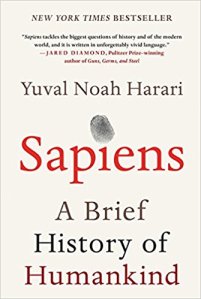
2.) Sapiens: A Brief History of Humankind by Yuval Noah Harari is one of the best books I have ever read. In all likelihood, this is the kind of book that you can come back to multiple times and still enjoy it. This is not your average history book in that it focuses more on the big ideas and developments associated with each era of human history rather than diving into the endless details and events related to each period. Instead of a 4,000 page behemoth focused on human history, Harari does a great job in condensing the how and why of Homo sapiens into only 400+ pages.

While I was reading this book, it didn’t feel laborious at all and was a real page-turner. Harari’s main argument in the book is that the homo sapien (the modern human) were able to dominate the Earth because of our ability to cooperate and share with each other in large numbers. The downfall of pre-homo sapiens such as the Neanderthals along with various other extinct animals and plants was the result of the Cognitive Revolution, which occurred at around 70,000 BCE.

The exciting developments related to the establishment of shared human myths and imaginary mainstays such as money, religions, human rights, nation-states, etc. directly tied to Homo Sapien culture put sapiens on the path to long-term survival and flourishing. Harari convincingly argues that the history of humanity can be broken down into four parts: the Cognitive Revolution (the development of imagination), the Agricultural Revolution (the formation of collective societies), the Unification of humankind (the rise of empires and nations), along with the Scientific Revolution (the emergence of scientific knowledge) which is the stage where sapiens currently find ourselves in.

Harari believes that the rise of Homo sapiens as a species has had significant consequences on the planet we all inhabit as well as the harsh treatment of animals that has resulted from being at the top of the food chain. Also, while the Agricultural revolution led to the creation of large human societies and eventually sprawling empires, the shift from hunter gathering to farming caused the human diet and lifestyle to suffer as a direct result. Human beings after agriculture became less self-reliant and had to rely on a king, an emperor, or the state itself to provide food, water, and other necessities. Out of all of the developments in human history, the rise of agriculture was a fundamental shift in our thinking, which still affects us in the modern society we all inhabit today.

Overall, Sapiens is an excellent, informative, and timely read that I would recommend to anyone. It’s an easy book to pick up and a hard one to put down. I am currently reading another book of his, which is the sequel to Sapiens, this book and the one that follows it just shows how good of an author and intellectual that Mr. Harari is.

51mz0ftqxyL._SX329_BO1,204,203,200_

3.) A World in Disarray: American Foreign Policy and the Crisis of the Old Older by Richard Haass is a refreshing take on the topsy-turvy world of international relations in this current period. Mr. Haass, who is currently the President of the Council on Foreign Relations, has advised previous U.S. presidents and worked as the Director of Policy Planning at the U.S. State Department during the Bush Administration, is an expert on world affairs who has published multiple books and this one in particular could not be timelier.

While the U.S. remains the most powerful country in the world both economically and militarily, it has started to lose ground in terms of its ability to sway world opinion and events due to failures of U.S. foreign policy in the early years of the 21st century. The lack of success in denuclearizing of the Korean peninsula, the rise of Iran as a regional power in the Middle East, and the mixed results of the East Asia ‘pivot’ from the Obama administration have created a worldwide power vacuum. Also, due to the long and costly wars in Iraq and Afghanistan, both U.S. prestige and values were harmed by these adventures in the Middle East. Haass argues correctly that the post-WWII order that the United States and its European allies helped create is fraying due to the failure of its leaders, institutions, and policies to maintain stability across the globe.             

There are real challenges to contend with that the United States won’t be able to solve on its own. The threat of climate change, the challenge of cyber-security, and preventing the spread of nuclear weapons require a unified approach that has been lacking between the U.S. and its European allies. The events of Brexit, the Trump administration’s ‘America First’ isolationist policies, and the great power rivalries going on between Russia, China, and India have thrown the world in disarray. The days where the U.S. could have great influence and sway over events around the world may be drawing to a close. Haass sees that the U.S. is just one of the great global powers and must be willing to cooperate, collaborate with other powers in order to achieve results when the main issues of today are multilateral in nature.

In order for the world to follow America’s lead, Haass aptly understands that we must get our own house in order first. The rising national debt, the ongoing problems with investing in education, infrastructure, and health care prevent the United States from acting as an example to the rest of the world. A dysfunctional political process as well as a President who doesn’t believe in leading the international, post WWII order are preventing the United States from realizing its full potential as a global power.

For anyone who is new to international relations, A World In Disarray, is an excellent take on the history of the international system after World War II and how did we get to this point where the world seems more chaotic and unstable than ever. Mr. Haass understands the limits of American power and that in order to lead on the world stage; the U.S. must undertake reforms to benefit our own citizens at home. In order to solve complex, multilateral issues, the U.S. must value diplomacy and the relationships that we have with our allies. Where the U.S. used to be the only global superpower, after the fall of the Soviet Union, America is just one of the great powers now. In order to solve the multilateral issues of the 21st century, the United States cannot do it alone and we must be willing to use effective diplomacy and other forms of soft power to create peace and prosperity.