America Off Track – Why It Needs a Nationwide High-Speed Rail Network

“In an age where it’s hard to agree about anything, I do think having nationwide high-speed rail as the rule rather than the exception is something most Americans would support if given a choice of whether to fund it.”

Introduction: Connectivity Beyond Broadband and Rocket Ships

Connectivity in the modern age is more than high speed broadband or rocket ships that can go to the Moon or Mars, it can be as simple as connecting major towns and cities together. It is a simply an economic win-win when you think about having high speed rail being as common as any kind of subway, commuter rail, or streetcar. It is an economic investment that pays for itself over time and is a great way to support local to national economies. It is the exact kind of rail that I believe America is lacking outside my home region of the Northeast and which continues to be neglected despite the benefits far outweighing the costs. In an age where it’s hard to agree about anything, I do think having nationwide high-speed rail as the rule rather than the exception is something most Americans would support if given a choice of whether to fund it.

From Railroad Pioneers to Going Off the Rails

Long ago, the United States was the leader in rail across the board especially when the transcontinental railroad was first established connecting the continental nation together from east to west in the late 1860s. Fast forward to the mid-20th century, America decisively turned away from rail and embraced cars and planes as symbols of modernity and freedom. The construction of the Interstate Highway System in the 1950s, along with generous federal subsidies for aviation, made driving and flying faster, cheaper, and more convenient than taking the train. As families moved to the new and sprawling suburbs, car ownership exploded, and passenger rail ridership collapsed.

Meanwhile, freight railroads, struggling with shrinking margins, often abandoned or neglected passenger services. Amtrak’s creation in 1971 was a last-ditch effort to save intercity rail travel, but chronic underfunding, outdated equipment, and lack of political will left it unable to compete with well-funded highways and airports. This shift cemented a car-and-plane culture in the United States, relegating trains to a niche role in the American transportation landscape rather than the preferred mode of transportation. Unfortunately, today, it continues to be a disappointing national story as trains and train speeds here are some of the slowest, most infrequent, and bordering on dysfunctional in the modern era.

There are a whole host of factors and finger pointing to go around in terms of how we got to where we are as a nation in 2025 from NIMBYism to the airline and auto lobbies to cost overruns that drain support for any of these high-speed rail projects. However, I’d like to focus first on where America stands now compared to other developed nations and how far the U.S. needs to go to catch up to other nations who have surpassed us in this key area of development.

China Leads, Europe Excels

China is currently the world leader in high-speed rail with the biggest network of high-speed trains on Earth with top speeds clocking in at around 220 miles per hour (350 kilometers an hour). If you look at any map of Chinese high-speed rail, all major cities are connected to each other by a train and often for one day, multiple trains serve each city at different times a day making it a better option than flying within the country. Many more cities in China are connected by high-speed rail than American cities and the trains are much faster by comparison.

Unfortunately, this is not only the case in China but in also much of the European Union. France, Germany, Spain, and Italy all have high speed rail networks that are extensive, fast, and reliable, whose coverage far exceeds the U.S. when you do an overlay of their networks compared to the regional networks in the U.S. or per capita in terms of access despite the size difference. Other major players in high-speed rail include Japan, South Korea, Indonesia, with Thailand, Vietnam, and India looking to start building their ‘bullet’ trains in the 2020s. Even developing nations in Africa such as Morocco have invested in having their own high-speed rail with Morocco’s Al-Boraq line between Casablanca and Tangier having opened in 2018, which is the first high speed train in Africa (approx. 180 miles per hour / 300 kilometers per hour) and not likely to be the last.

High-Speed Rail: A 21st Century Economic Engine

As we get close to being well into the second half of the 2020s-decade, high speed rail investment makes more sense and not less sense. It is a win-win to me economically when you can create jobs in construction, project management, and other related industries. As more economies pivot to clean energy, I find that high speed rail is a more efficient, less polluting form of travel that is also extremely safe and reliable if run well. Regional and local economies can flourish more especially when high speed rail comes to their communities’ bringing tourists and possibly new businesses to set up shop there.

Business travel can expand as well when you don’t have the options of only relying on renting a car, taking a bus, or flying on a plane to get to a conference or a meeting in another city in the same day. Cutting carbon emissions is a goal almost universally shared in 2025 so a keyway to do it is embracing forms of travel that are better for the environment such as high-speed rail. Multiple studies in Europe show that every dollar or euro spent on high-speed rail returns multiple dollars in long-term economic gains. The overall return on investment speaks for itself and that’s why more than ever, nationwide high-speed rail efforts should become a national priority.

America’s Missed Opportunities in High Speed Rail

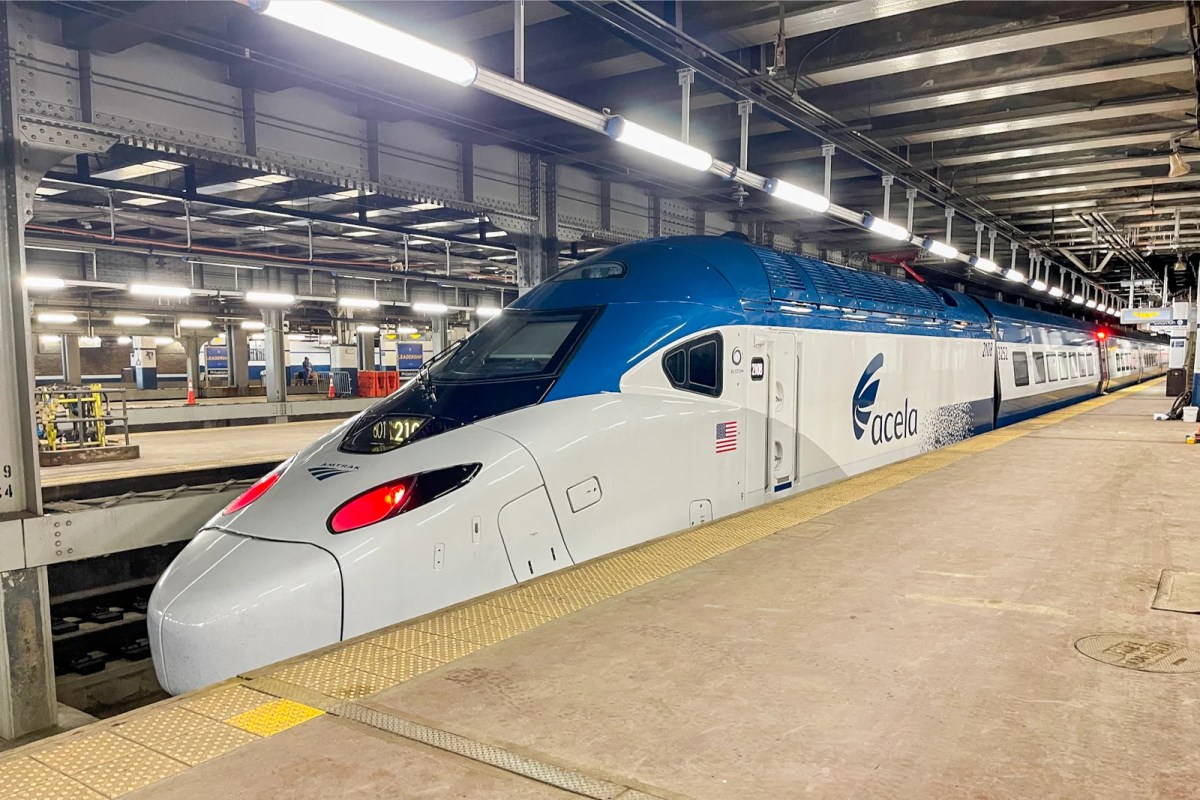
My love for the Northeast’s Amtrak lines as someone who rides multiple times a year, especially the Acela and Northeast Regional, comes from knowing how liberating it feels to speed past gridlocked highways and soul-crushing airport security. However, I would like to be clear in that what we have in the Northeast United States is the exception, not the rule. The rest of the nation is left with woefully inadequate or non-existent passenger rail options, especially no high-speed rail train options.

California’s notorious and still unfinished high-speed rail project, originally envisioned to connect Los Angeles and San Francisco in under three hours, has become a cautionary tale of political infighting, spiraling costs, and endless delays, now more than fifteen years since voters approved it, the line remains incomplete as of this writing. Texas’ proposed Dallas-to-Houston bullet train, based on Japan’s Shinkansen technology, has been mired in lawsuits and land disputes, while Florida’s once-promising plan for a Tampa-Orlando-Miami high-speed corridor was killed by politics despite federal funding being on the table. These failures aren’t just isolated missteps; they’re a systemic reflection of America’s inability to plan, fund, and execute transformative infrastructure projects in the 21st century.

A Vision of a More Connected America

Imagine for me now a future United States where a high school student in Indianapolis could visit Washington, D.C. on a field trip by getting there in 4-5 hours, or where a business traveler could commute between Atlanta and Charlotte in 90 minutes, turning what’s now a grueling four-hour drive into a swift and productive journey. France’s TGV system, which I have been lucky enough to ride from Bordeaux to Paris has long proven that high-speed rail is profitable and competitive with air travel for distances up to 600 miles, drawing millions of passengers who might otherwise fly or drive in that country.

China’s network, the world’s largest as mentioned earlier, has shrunk travel times dramatically: for example, the 819-mile Beijing–Shanghai route, once a ten-hour slog by conventional train, now takes just four and a half hours. A similar Chicago–New York high-speed line, roughly the same distance, could cut today’s fourteen-hour Amtrak ride by more than two-thirds if it were ever developed and invested in.

The creation and development of a nationwide rail grid could connect major population centers such as Houston, Dallas, Austin, Chicago, Detroit, Miami, Atlanta, Denver, and Los Angeles with frequent, fast trains. This would wholeheartedly reshape the American economy as we know it and foster new hubs of innovation, tourism, and opportunity in cities both large and mid-sized, and if smaller cities can be added to a more local line with more stops, that’s a positive as well.

Overcoming America’s High Speed Rail Barriers

There’s no denying the hurdles that exist and will continue to slow the development of a nationwide high speed network: federal and state governments have rarely aligned on rail priorities; outdated regulations, such as the Federal Railroad Administration’s archaic crash standards, make it difficult to adopt off-the-shelf European or Asian trainsets; and NIMBYism often turns local communities into fierce opponents of new rail lines.

However, none of these obstacles are insurmountable if America learns from the examples set by other nations. Spain’s national AVE system, for instance, was built with robust public support and clear national commitment, resulting in more than 2,000 miles of high-speed track in a country with less than a seventh of America’s population. Japan’s initial Shinkansen line was completed in just five years, transforming travel patterns permanently, and this is despite being a mountainous island nation where political gridlock can also occur.

America could adopt federal legislation to streamline permitting, incentivize public-private partnerships, and dedicate a long-term funding mechanism like the Highway Trust Fund to ensure reliable and consistent investment. Beyond these present technicalities, it will take real leadership willing to communicate to the American voter that high-speed rail is not a luxury for a developed nation, but a real necessity for economic growth, energy security, and national competitiveness in the 21st century.

Conclusion: It’s Time to Board the Train of Real Progress

I am writing this article on an Amtrak Northeast regional train to Washington, DC ironically but not intentionally because as someone who treasures the unique sense of freedom and connection offered by train travel in the Northeast United States, I believe deeply that every American deserves the same opportunity. This should be the case whether they live in Houston, Detroit, or Los Angeles. We have the financial resources, the technology, and the know-how; what we lack is the political resolve to make high-speed rail a reality nationwide.

Our tax dollars should be able to build systems that make our daily lives better, and there are few investments more transformative than modern, fast, reliable trains that knit together our cities and regions. High-speed rail would give Americans more options, less stress, and cleaner air, while restoring our global reputation as a nation of builders and innovators. It’s time for the United States to leave the station of outdated thinking, board the train of progress, and embrace a future where high-speed rail is not the rare exception, but the expectation for every American traveler.

Note: The views expressed in this article are entirely my own and do not reflect the opinion(s) of any outside organization, firm, or entity.

Works Cited / Endnotes (MLA)

  1. “China’s High-Speed Rail Development.” China Railway Corporation, 2023, www.china-railway.com.cn/en/high-speed-rail/.
  2. “TGV: The French High-Speed Train.” SNCF, 2024, www.sncf.com/en/trains/tgv.
  3. International Union of Railways (UIC). “High-Speed Rail in Europe: A Competitive Advantage.” UIC Publications, 2023, uic.org/IMG/pdf/high-speed-rail-in-europe.pdf.
  4. “Al Boraq, Africa’s First High-Speed Train.” Office National des Chemins de Fer (ONCF), 2019, www.oncf.ma/en/Projects/High-Speed-AlBoraq.
  5. Hurst, Dana. “Morocco Opens First High-Speed Rail Line in Africa.” BBC News, 15 Nov. 2018, www.bbc.com/news/world-africa-46227056.
  6. California High-Speed Rail Authority. “Project Update Report to the Legislature.” CHSRA, March 2024, www.hsr.ca.gov/docs/about/legislative_reports/2024_Project_Update_Report.pdf.
  7. Swarts, Jonathan. “Texas’ Bullet Train Faces Legal, Financial Roadblocks.” Texas Tribune, 20 Apr. 2024, www.texastribune.org/2024/04/20/texas-high-speed-train-lawsuits/.
  8. United States Government Accountability Office (GAO). “Intercity Passenger Rail: Amtrak’s Challenges in Implementing High-Speed Rail.” GAO-21-480, Sept. 2021, www.gao.gov/assets/gao-21-480.pdf.
  9. International Energy Agency. “The Future of Rail: Opportunities for Energy and the Environment.” IEA, 2019, www.iea.org/reports/the-future-of-rail.
  10. European Commission. “White Paper on Transport: Roadmap to a Single European Transport Area.” Publications Office of the European Union, 2011, ec.europa.eu/transport/themes/strategies/2011_white_paper_en.
  11. Pew Research Center. “Most Americans Support Investments in Infrastructure, Including Public Transit.” 15 June 2021, www.pewresearch.org/2021/06/15/public-views-on-infrastructure/.
  12. American Public Transportation Association (APTA). “Economic Impact of High-Speed Rail.” APTA Reports, 2022, www.apta.com/research-technical-resources/research-reports/economic-impact-of-high-speed-rail/.

Be Bold and Take Chances in Life

“Nothing will ever be given to you on a plate whether that’s a new job, a pay raise, acceptance to your preferred college, or achieving a new professional certificate. You have more say over your life than you think with the effort you put into it.”

I want everyone reading this article to succeed in life. I want you to make good choices and not be to rash in your decision making as well. However, to foster new opportunities, you have to take the initiative, be bold, and take chances to really get ahead in this world. Nothing will ever be given to you on a plate whether that’s a new job, a pay raise, acceptance to your preferred college, or achieving a new professional certificate. You have more say over your life than you think with the effort you put into it.

Nowadays, you can’t be too complacent especially with the pace at which we are going through life. Time speeds up the older you get, and you have to make the most with the time given to you. You must be bold, take some chances, and see if it pays off. You don’t want to go all-in per say and take too much risk on to achieve a goal, but you also don’t want to never try at all so be sure to balance your desire to take chances with your need to preserve your livelihood. Going all-in without doing your research, not knowing your limits, or being unprepared is a recipe for disaster and that is the opposite of being bold, it is being foolhardy instead.

Calculated risk-taking is what you should be striving for in your life and to prepare yourself to succeed in whatever you choose to pursue to give yourself the best shot at success. Being bold is not about going all-in with no resources or preparation but it’s rather about taking a shot where you feel as if you have a realistic chance of succeeding. You should always think about what I am getting out of this pursuit, is it worth the risk, and what happens if I succeed or fail? You want to make sure that you can bounce back if it doesn’t turn out well and you still have the means to try again.

To cite a personal example from my own life, I prepared myself for the project management professional (PMP) certification for months, took multiple preparatory exams, enrolled in an intensive course, and took evenings and weekends to study the exam material. It was a good strategy because I didn’t go all-in without preparing myself first and reminding myself that if I fail, it’s not the end of the world and I can try again.

I also thought if it was worth the investment and if passing the exam and getting certified would benefit me in my own professional pursuits. I did the analysis before spending the money and the time to get ready for the certification exam and to go through the steps also to qualify to sit for the exam. Was it easy? No, not at all, but I’m glad I took the time to take and pass the exam because I knew that this kind of chance was worth it and would benefit me in the long run.

You will find that to be bold in life, you may have to suffer to achieve or do something truly great. Whether that is starting your first business, applying for that dream job, moving to a new city, or just asking that girl or guy out who you’ve been meaning to talk to but haven’t yet. Doing anything worthwhile in life is far from easy and often will be painful and difficult. However, the alternative of doing nothing, never trying at anything you want to do, and going through your life thinking of ‘what if?’ is no way to live your life.

I am so adamant about this topic because I’ve been through a lot of these situations I’m describing, and it required a lot of boldness to do it. You have to be bold often to get what you want out of life, especially since nothing is going to be handed to you. Make sure you take measured risks and think before you take upon a challenge as well. Boldness isn’t thoughtlessness or recklessness. Rather, it’s about thinking about what challenges you wish to take on, being realistic about your success chances, and coming up with a plan to give yourself the best shot at being successful.

Whatever dreams, goals, or ambitions you currently have, think about what it would take to make them a reality. Come up with a few steps on how to achieve your goal(s), eventually formulate a plan with further details, and then execute to the best of your ability. Sometimes, your bold decisions will be more instantaneous such as networking on the fly, asking someone out by introducing yourself and being vulnerable, or pitching your supervisor at your job about why you deserve that promotion in a one-on-one conversation.

It’s better to look back on your life and think of ‘how it happened’ rather than ‘why didn’t it happen?’ You want to live life with fewer regrets as you get older and avoid ‘what if?’ in your thoughts as much as possible. That is why I stress to you about the importance of being bold, taking an action, and working hard on what you really want out of life. If you fail, at least you gave it the best effort that you could, and the next time you try, it will be less painful, you’ll have more confidence and you’ll likely have a better chance of success the more times you take the initiative. Good luck and remember to be bold!

The Bill Always Comes Due

“It is an inevitability that we all must face and even when we try to push it out of our mind, that responsibility is there to provide lest we face any consequences that comes with not paying the bill.”

When we think about the moment of slight anxiety or stress involved with sitting in a restaurant, you’re satiated from a great meal of great food and drinks, maybe you’re surrounded by friends and family on a special night together, in all that joy and happiness, you still have that thought in the back of your mind, “the bill always comes due.”

There is no way of avoiding it and you’re going to have to pay it, one way or another. It is an inevitability that we all must face and even when we try to push it out of our mind, that responsibility is there to provide lest we face any consequences that comes with not paying the bill.

While you are under the expectations that any food, drinks, or other service at a restaurant always will come at a cost, we as consumers try to not think about that at all to be here and now in the present to enjoy what we have ordered with the company that we keep. It is a key characteristic of human nature that we often avoid thinking about the future even when we do at present is likely to carry its own kind of consequences. I use ‘the bill coming due’ as an anecdote for how what we choose to do, how we act, what we focus on and prioritize, will lead to what kind of bill we end up paying in the future.

Just like you would not want to pay a restaurant bill you cannot afford by understanding your budget and what you can afford to order off the menu of that particular reasonably priced restaurant, we should be aware of the fact that there are other ‘bills’ that can come due in the future that can cost us more than we bargained for if we are not careful about it. What we do in the present can help us manage our bills and how we handle our future by dealing with it in a responsible and mature manner now.

Let’s think about our health and how we manage it as there will be some kind of ‘bill’ handed down to us as we get older. It can be a clean ‘bill’ of health as your physician or doctor will tell you if everything goes well or it can instead be an array of expensive tests, surgeries, or procedures that lead to a hefty medical ‘bill’ that will cost us dearly beyond what we can afford, even if you have some form of insurance. How do we avoid this kind of ugly ‘bill’ of health? Well, I won’t dive into specifics as I am not a medical physician but how you eat, if you exercise, whether you stay active in your daily life, can help us pay off that ‘bill’ in advance or make it that much smaller to manage in the long run. There are common sense ways to manage the ’bill’ of health as it will come due at some point, and you have a measure of control over it in the present to make sure it does not bankrupt you or cost you with your health in the future.

In a similar way, one’s ‘wealth’ and how you manage it in the present can help you pay the various ‘bills’ that come due on a monthly, yearly, or longer basis. When you use part of your paycheck and weekly or monthly earnings to pay down outstanding debt or to save up for an emergency or to help yourself learn an employable skill, you are making sure that you will be able to pay for any bill that can come due because you have accrued your wealth and investments in a way where you will never be broke from these ‘bills’ coming due.

If you make other choices instead where you spend every dollar you make and beyond that, get into debt with various bill collectors including the credit cards and other loans you have taken out, the bills that come due will be beyond your accrued means, and you may be struggling for the rest of your life to get out from the ‘bills’ coming due that you have to pay or face serious financial consequences.

You do not want your health, wealth, or ability to earn a living to suffer because you cannot handle both present and future bills to come. You should make sure to think of the future to save, invest, and earn for a ‘rainy day’ fund that can overcome an unforeseen or unexpected bill coming due. Again, I am not making any specific financial recommendations to you as I am neither a financial planner or investor, but I do want to impart some common sense and wisdom in how to avoid future ‘bills’ by planning to save and invest for the future in some measurable way so the bills coming due will be paid for entirely without any stress or anxiety.

Lastly, it is unfortunate where we live in a society where it can cost exorbitant amounts to educate oneself for the workforce and for financial success, indebting ourselves in the process. I believe education is worth investing in if you are able to afford the bills to come due, but if you are in a cycle where you can’t get out of accrued bills or debt because you went for higher or professional education, please make sure that the investment that you make in the present will help pay off the debt in the future. The worst thing to do is invest in an education that does not end up paying for itself later and help with all the bills coming due to that investment.     

Make sure you focus on those employable skills or to be a subject matter expert or practitioner, in an important area that will pay off because you invested in your education in a useful area. I know of a lot of people who cannot get themselves out of a debt or pile of bills, even with their extra years of education, because what they learned what not useful for the job market, and now they are stuck with bills that will never be paid off.

I am not against the idea of paying for more education but please make sure it is aligned with your future career or business goals. If you are not sure of what you want to invest financially in an education, there are many free tools and videos that can help you understand better of what opportunities are out there. I think it’s important to think hard about what bills you want to take on for your education because it is no good to have a debt burden that will prevent you from future job or educational opportunities because you have bills coming due that you must sacrifice your ideal career or business for.

Whether it is health, wealth, or education, you will have to pay the bills that come due, even if they come at an unknown future date. Make sure you invest in each area within reason that you will be able to afford to do so without suffering later for bills or obligations that you took on that you found were beyond your capacity.

Do not sacrifice your future by what you do in the present. Make sure you practice good health habits, invest in your wealth accrual with whatever route that you find is best for your goals, and to reasonably access educational opportunities that can create excellent business or career opportunities that you will not have to sacrifice either your health or your wealth to achieve. Remember that the bill(s) always come due at the end, but that does not mean life should not be enjoyed or taken advantage of, but to do so in responsible manner, where your present is secured in each of these three areas, and as a result, your future is prosperous, healthy, and full of opportunities.

Out on the Sea

“While the Sea is as mysterious as it is as vast, as terrifying as it is humbling, it is truly one of the most wondrous places on Earth to find yourself.”

While the Sea is as mysterious as it is as vast, as terrifying as it is humbling, it is truly one of the most wondrous places on Earth to find yourself. You never know what will happen when you’re out in the open sea. Each time you’re out there, you can encounter a variety of experiences to change how you perceive the sea from its walloping waves to clear skies to powerful sunlight to treacherous downpours. From stormy to sunny, the weather when you’re out on the sea can range from peaceful to disastrous. The Sea has an allure to it like the mountains and the desert because of its vastness, its complexities, and its remarkable inhabitants.

I find the Sea to be appealing because it demands you respect it for all it can bring in return if you’re able to overcome the difficulties of setting sail. You can traverse the Sea to reach new destinations, to find food to catch and sustain yourself, or to even create a source of energy from the wind and sun that envelop it at times. We cannot even begin to fathom how vast the sea below us is but as we want to stay above it lest we sink to the bottom on whatever vessel we find ourselves on. As a result, the Sea is not to be disrespected, tampered with, or polluted. What it can give us in its bounty, it can easily take away from us if we are not careful. We should not take more than what we need or pretend that the Sea is not able to take what it needs from us in return.

If you do not take the necessary precautions, use proper navigation tools, or realize when you may head into a storm or squall stronger than your boat, you may end up a victim of the Sea as a result. The Sea is not meant to be terrifying, but if you don’t realize its scope, scale, power, and depths, you may not have a good experience being out there. You should not take chances on the sea that you can’t live with and it’s best to imagine as many scenarios as possible that can occur when you’re out there on your boat, ship, or canoe. Any time out on the Sea, you can expect to find something you never thought you’d ever see before and for which it will continue to surprise each time you’re out on the water.

Because each time at Sea is unique, you need to prepare for what kind of creatures you’ll encounter below from octopus to squid to fish to crabs to sharks to whales, etc. There is a whole ecosystem that you may be able to encounter depending on if you’re a fisherman, a scuba diver, a snorkeler, or a deep-sea explorer. Be careful in remembering that while you may think you’re top of the food chain at Sea, as a human being, you’re not the fastest swimmer or stronger mammal in the deep blue waters, so you should be careful when trying to catch something that may want to catch you first in response.

While the Sea has had a lasting appeal on man economically, socially, and for its plentiful environmental goods, we should remember that it is not our natural environment, and we are the mercy of Mother Nature out there. Make sure you know what you may be getting into when you get on your vessel headed out to Sea because you never know what you may find out there. Maps, compasses, a good crew who knows the waters will all help but you also need to show leadership, resolve, a hard work ethic, and be able to make life or death decisions if you are the captain of the boat or ship you’re traversing the Sea with.

It is not just the waters below that can bring down a boat or a vessel but rather the waves, the squalls, the storm surge, or the lightning that can make your small piece of home sink quicker than you can imagine. Even the biggest boat over a century ago, the Titanic, was thought by most observers to be ‘unsinkable’ at the time, but it was based on faulty hubris, human error, and a lack of respect for what the Sea can throw at you.

You may think your boat, your ship, or your vessel will always stay afloat but in my view, the Sea can take what it wants, when it wants, and you must know to avoid its wrath if you are not careful. We may claim dominion over the land of the Earth, but the Sea is still the Wild West despite us using it for commerce, trade, and for food. You can never fully control the Sea because it is a treacherous, ever-changing environment, for which demands planning, respect, and oftentimes good luck.

While others may shy away from it, I have always found the Sea to be a beautiful part of our Earth where you can be at peace and at ease yet still respect it enough to keep your head about yourself as you make your way through its horizons. It can lull you into complacency one day with calm waters and then snap you back into reality the next day with an unbelievable storm. The Sea yields tremendous beauty but also tremendous terror. You should use the unpredictability of it by being a better Seaman and preparing as much as you can for how to be a good Captain, a good Crew member, or just a good Passenger to make it back home safely after your time at sea is over. If you respect the Sea, you will have a much better time whichever way you choose to enjoy its bountiful fruits and its sheer wonders.

Why You Should Take The Initiative

“A lot of times in life, things won’t be handed to you, opportunities won’t just present themselves to you, and relationships or friendships don’t just form out of thin air.”

A lot of times in life, things won’t be handed to you, opportunities won’t just present themselves to you, and relationships or friendships don’t just form out of thin air. You must be making the effort more often than not to take the initiative to do all those things I just mentioned. It is not easy and can cause you rejection, stress, and even heartache, but if you just expect your life to just progress on its own without putting in the work, you will be sorely mistaken.

Making that initial effort will make the difference as you devote 80-90 or even 100% to get the return you were looking for. You may expect others at work, at school, or in your personal life to meet your half-way or 50/50 after a while but you may find that it’s a running theme in that instead of finding it as being equal or meeting them halfway, it’s likely to be more 60-40 or 70-30 in terms of your effort versus theirs. Now, that does not mean you should be taking the initiative all the time to ask for that promotion, or be open to developing a friendship, or seeking a new relationship but you’ll be better off from driving the effort rather than by taking a backseat.

Having more of the effort initially won’t just make an impression on the person but it will also develop your abilities, your relationships, and your professional / educational future more so than if you had made less of the effort. You should be conscious that the initiative you are taking is worth it and that the time you are putting in gets the result(s) that you are looking for. Your hard work, effort, and perseverance should lead to the other party putting in some conscious effort after a while. If it is just a one-way street in terms of that effort months or years later, I think that relationship, job, or friendship is likely to be doomed to fail.

It would not be fair or just for you to be constantly taking the initiative especially when that person isn’t reciprocal at all or even 30-40% of the way in a friendship or relationship. If you are giving all of the effort and feel like you’re not getting anything back from it, you may be dealing with an ‘emotional vampire’, who you may enjoy their company and like them but the fact that you are putting in all the work to keep things going and them not doing anything to reciprocate is not only a form of manipulation but it is also a sign of someone who only wants to take advantage of you.

They may lack certain qualities including introspection or self-awareness so they may not think they are at fault but if you believe that nothing is going to change, your time and efforts aren’t being valued adequately, and you are not getting as much in return from them, you may need to cut them off or just take a break from being with them or working for them. I encourage proactivity, being extroverted, sociable, and wanting to take on new goals, but if it is draining you and the results professionally or the relations personally you get as a result are not satisfying from that 60-40 or 70-30 set up, it may be best to move on to another person or opportunity.

To cite some examples, if you are good at reaching out to friends or acquaintances and just checking in to see how they are doing or even making the effort to see them and spend time together, that’s a positive initiative to take and shows you care about keeping that relationship going even if it had fizzled out a bit. However, if you feel like you are constantly the one making the calls, setting up the plans, or checking in on them, and they are not doing the same to you on that 30-70 or 40-60 balance that I mentioned, then it may be best to cut back on making the initiative there. If they truly cared about you, they would seek to make plans to see you by their own initiative or they would call to check in every now and then to see how you have been doing. Again, you should not be doing that all the time and if you find that it is becoming a pattern with that person, it may be best to stop seeing them so much since it looks like more of a one-sided friendship or relationship rather than a balanced one.

Another example professionally would be if you’re looking to boost your career and would like to learn new skills, then you should take that initiative with a training or a workshop or a conference that can make you more valuable to your employer. Similarly, if you take it upon yourself at work to learn a new skill by taking courses or attending seminars or providing trainings to others, it should be recognized not only to develop your career but to also further yourself in your role with better compensation or to be promoted to a new role because of the skills / abilities you acquired. If you take the time to volunteer, to be trained, to train, and to become a better worker, your employer or company should realize that it is also not a one-way street so there should be a proper recognition of your having taken the initiative to be more valuable to the firm in question.

However, if you find that after multiple trainings, skills developed, or competencies improved upon, that you are not getting the desired career promotion or compensatory boost, it may be that your initiative, while recognized, is not being formally appreciated. You made the most of the opportunities given but the other party involved doesn’t seem to recognize the new value or abilities you can provide. In this kind of situation, it may be best to start looking elsewhere professionally with those new proficiencies in your work to find a firm, company, or organization who will do their best to meet you halfway or maybe 40-60 so that you know that they care about you staying with them into the future and that your presence is both valued and appreciated, which is actually shown in different ways, a promotion, a raise, or otherwise.

Personally or professionally, you should consistently be looking to take action or initiative to improve your life in either way. However, it should not give the other party free reign to not give anything back in return or to provide their own initiatives or actions for you to take part in after they start it up. If you invite your friend to a barbecue, hopefully they’ll reciprocate in the future by having you over for a birthday party. If you do a skills workshop for a week to improve your competency at work, maybe your company or firm can reward you with a promotion to apply those new skills you picked up. It’s not always 50-50 in life and you may have to do most of the work, especially at the beginning of a new job or friendship. However, if it is you who is giving 100% and them putting in 0% in return on a consistent basis without the other party realizing it, it’s a toxic kind of relationship and you should be cutting ties with that person or entity as soon as possible.

The Real Meaning of ‘Seize The Day’

“You seize the day when you can plan for how you are going to seize not just today but tomorrow as well.”

Seizing the day or ‘Carpe diem’ is an oft-quoted Latin phrase that has become as popular as often as it has been misunderstood. Seizing the day is definitely a principle that I stand by for a couple of reasons, but I don’t agree with people who say that seizing the day means to ignore the future or not to think past today’s goals or tasks. You seize the day when you can plan for how you are going to seize not just today but tomorrow as well.

Some people choose only to live in the present moment, and I think that is a fundamental misreading of what it means to really ‘seize the day’. You really have a bigger advantage when you plan ahead of time for what you should accomplish not just on the same day but in the weeks or months ahead. You won’t be able to make the most of each day if you do not know ahead of time what you need to get done or what is most important in your life to complete.

Living only for the day will keep you in a constant state of searching and jumping from activity to activity without planning how long you plan to study, work, explore, travel, or focus on. That is to say that life is nothing without a little spontaneity and that when a good opportunity or event pops up out of nowhere and this will be your only chance to experience it, then it would definitely be acceptable to ‘carpe diem.’ If it is truly a once-in-a-lifetime chance or a very rare opportunity that you would live to regret or would change your life, that is an opportune time to seize the day and chart a new course for yourself.

When you don’t plan for your day ahead, you will not be able to seize it as easily. You do not want to spend your days drifting about from idea to idea, opportunity to opportunity, place to place. Life inherently is not all about spontaneity and being in the moment at all times. You should try to plan ahead to some degree but also be open to changing your life course is a good enough lasting opportunity or change of plan comes around that would definitely benefit you in the long run.

Short-term pleasures, wins, and successes can be quite enjoyable especially when you seize them when they come but it’s the little victories over time that build up and lead you to a successful relationship, business, or career will pay off a lot more. You truly do seize the day when you are planning and doing something each day to push those long-term goals forward in some capacity. When you work towards your goals consistently each day and putting in the work each day, you’ll start to see your hard work come to fruition. That is what will truly go along with the phrase ‘seize the day’ when you make the most of each day to give yourself the highest life satisfaction.

Frittering your days away impulsively going from party to party, country to country, or job to job without a long-term plan can be ruinous to somebody. Seizing opportunities that come your way should be encouraged but not at the expense of having some long-term goal or dream in mind that would truly change your life for the better. Making the most of each day to reach your life goals or to do something meaningful whatever that may be should definitely be part of that famous saying of ‘carpe diem.’

‘Seizing the day’ is not just about working consistently to achieve goals and dreams but it’s also about taking care of both your mental and physical health and to take the necessary time out of a busy day to see a friend or a family member, to go on a bike ride, or to do another hobby like photography or hiking, which will make you feel more well-rounded and relaxed. Human being are not machines that can be constantly on the go and we need that time to reflect alone or socialize with others to improve our relationships as much as possible.

Another key thing to know about ‘seize the day’ is just showing up every day and doing your best. You may not get every opportunity that presents itself, you may not hit your goals each day, or you may not prioritize your relationships or hobbies as much as you want but the main thing is to just show up each and every day to work hard at what you have going on not just immediately but into the future.

As another popular saying goes, “showing up is just half the battle.” Putting yourself out there takes courage and grit, and some people today can’t even do that. Seizing the day is about putting yourself out there enough so you can attract those chances and opportunities that you wouldn’t have gotten ahold of had you not even made yourself available. When you stay at home, isolate yourself, and don’t try at all, you won’t get anywhere in one day or even in one year. If you don’t put in the effort each day, you won’t be able to seize anything of importance or value to make yourself that much more meaningful.

If you are reading this article, I hope you rethink the meaning of ‘carpe diem’ or ‘seize the day.’ It’s much more than just living in the moment and pursuing instant gratification in whatever form that may be. It’s about putting in the effort each day, consistently, in pursuit of a long-term opportunity or goal that isn’t handed to you automatically and which will often take more than one day to succeed at. Whether it’s competing for a championship, building a business, or planning out one-year of travel around the world, you seize the day by working towards these visions each and every day by putting yourself in front of those opportunities and doing your best to succeed at them with hard work, grit, and a little bit of luck too.

Steady As We Go

As we all know by now, the world is going through a very tough time right now. Instead of speculating about when will things be back to some sense of normalcy, it would not be right to do guesswork about that as of today. Instead, I think it would be best to remind ourselves of a few things we can do over the next few weeks or months to prepare ourselves both mentally and physically for these challenging times. I would like to give my readers out there some advice which has helped me so far in terms of moving forward with my day-to-day activities and also the larger goals that I have for myself.

  1. Take Care of Your Friends and Family: Now is the time to be there for your family and close friends in any way that you can. Even if you are not in the same city or in the same country, take some time out of your day to call or message them to see how they are doing. If you can do so, try to help around the apartment or house with cooking, cleaning, running errands, etc. This is a time to be close to the ones you love and to be there for them.

Remote work and schooling are important and should be a priority, but you should not forget to make time for those around you and to check in on them. Given how much running around you could be doing, you will likely have more time to reach out to loved ones and really take the time to engage in conversation or have dinner together or just to FaceTime every night before bed. I think it is the #1 priority right now to have during this difficult time.

  1. Look for New Opportunities: Obviously, this is a hard time both employment wise and financially. If you have to find a new job or a new opportunity, do your best to be prepared to find those jobs and work opportunities even if they are not ideal for your long-term career pursuits. In a time like this, it would be best to swallow your pride and expand your availability for jobs that will be coming down the pipeline. You have to do what you have to do within reason to keep the lights on and feed your family. It may be working to stock shelves to delivering groceries or to work as a receptionist but if it comes with health insurance and a decent wage, it may be in your best interest to take that opportunity at least for a few months.

Nothing is permanent and even if it is not a job you want to be doing, consider it a way to build up your resilience and to be helping others especially if the job calls for it. The wider you broaden the search, the better off you will be. You just want to make sure you polish off your resume and your cover letter to update it after a gap of some time.

  1. Be Kind to Others: People are stressed out and worried. You have to act like that is currently the situation and give others the benefit of the doubt. You don’t know what is going on in their lives during this crisis and it’s not something you should be asking about. Be respectful, patient, and kind. Don’t be demanding, rude, or just overall a bad person to others. There is such a thing as karma, and it can accrue in both good and bad ways especially now. I do believe that you should treat others the way you would want to be treated and that is how you should approach life under quarantine.

Tempers can flare with ease and things can get out of control so just be aware of your emotions, realize that nothing is worth a verbal or physical confrontation over (especially toilet paper), and always remember to say please and thank you. It does not cost anything to be nice and you should always leave the house if you have to now with that in mind. Good manners will always help you get through a crisis like that.

  1. Volunteer and Donate If You Can: This is only a suggestion but this is the time to give blood if you are eligible, donate extra food and clothes to those organizations who need it and can vouch as to where the money is going, and also see if you can deliver groceries if you have free time. It should go without saying that you should only be volunteering in public if you have a clean bill of health and have not been traveling overseas in the past two weeks. I have seen numerous remote volunteering opportunities pop up in the past week include video conferencing with senior citizens and asking as a pen-pal for them as they stay secluded at home and could use a friend.

Get together with some friends and put together a spreadsheet of organizations / places in your local town or city that are asking for monetary donations or for food/clothing/supplies, etc. It is a misconception that you need to leave the house to donate or to volunteer. In a time like this, sometimes, people especially the elderly or the solitary just could use someone to talk to or listen to them. I have heard stories of mental health professionals volunteering their time for free to help those people in need and that warms my heart quite a bit. If you are not completely healthy and/or free of symptoms, you should not be volunteering outside of the house!

  1. Stay Home and Wash Your Hands: This advice should go without saying by now, but it should be repeated that you should not be leaving your home unless your job requires it or if you need to pick up groceries or go to the pharmacy. I try not to compulsively wash my hands but it’s better to overdo it than under-do it so make sure you sing the ‘happy birthday’ song twice and use enough soap for the 20 seconds it takes to wash your hands.

If you can go for a walk on your own, it is great to get some fresh air even if it is just around the block. You will need some sunlight (vitamin D) and as long as you maintain your social distancing of 2 meters (six feet), there’s nothing wrong with walking for 10-15 minutes to clear your head and shake off the inevitable cabin fever.

  1. Cleaning, Cooking, and Organizing: A good way to avoid being lethargic during this time is to occupy yourself away from work and/or school by keeping things neat, tidy, or clean in the house or apartment where you reside. Daily tasks like cooking meals, cleaning your room, or organizing your papers will definitely keep you busy. Currently, it’s ‘Spring cleaning’ season so you will have your work cut out for you these next few quarantined weeks if you have not cleaned your place since the beginning of the wintertime.

Who knows? If you found extra items or clothes around during cleanup time, you could perhaps donate them when you’re finished collecting all those things you may not need but may help out somebody else during this tough time. With restaurants closed for the time being and delivery every day an expensive proposition, now is the best time to crack open your old recipe book and take your cooking more seriously.

You may be able to eat healthier now more than ever with the added time to cook and prepare your meals in advance and it is a good way to bond if you have a family or a loved one with you. Organizing extends to your personal computer and devices as well to make sure your files, bills, and documents are in order. Don’t forget to take the time to give your phone, tablet, or laptop a good cleaning too because it is a germ magnet and it would be wise to keep it clean as much as possible.

  1. Get Some Exercise In: Gyms and fitness centers are closed. No more pools, saunas, or even Yoga classes. So, what do you do now? Well, it can be easy to give up on your fitness goals but luckily, we have the Internet and delivery services are still working. You can utilize both to keep working out as there are hundreds of home workout exercises and guides out there now. Most of the information is free to use and easily accessible especially with YouTube videos showing you exactly how to do these exercises.

I believe you don’t need much to do these workouts as most of them can be done just with your bodyweight when it comes to pull-ups, sit-ups, pushups, squats, crunches, etc. If you can spend the money, it doesn’t hurt to get some free weights or some barbells in order to add some weight to your exercises. You can also get creative by doing some Yoga and Meditation with just a simple mat.

Due to the Internet, you can look up practically anything fitness related to create a good 30 to 45-minute workout. As if that wasn’t enough, you can always use your body to move quickly with sprints, hill runs, jogs, or a brisk walk if you can get out of the house for a bit. It won’t be the same as going to a physical gym, which has a ton of equipment and a sauna or other great amenities but it’s better than nothing and it is relatively easy to make the most of it.

  1. Flex Your Creative Muscle: If you have some extra time on your hands now, put it to good use by being creative. Sit down and figure out how best you want to pass the time in a productive way. Perhaps you can learn an instrument, pick up a new language, or even write an eBook or an entire book. Harness that energy into action to make the most of your time spent indoors and without most of the distractions that we have in our normal daily lives.

In the next weeks and months, I am positive that there will be an absolute growth in creative pursuits, both online and offline. There are a number of skills and traits that you can work on almost always for free or if you spend money, it is likely be a worthwhile investment from the right teacher. It is also a great time to develop that business idea or side hustle you have been thinking about but never actually committed to. You can always bounce these ideas off your family and friends or if you are able to do so, try to find like-minded people through your network or your organizations to see what they think of your idea and if it has some potential.

Isaac Newton, for example, worked day and night, when a great plague was spreading around the world and due to the time he had to just sit, learn, and experiment, he was able to come up with the brilliant equations and inventions that helped invent the modern life that we have today. Even if you fail, it is better to have tried and done your best than to have wondered later on, what if?

We will all get through this difficult time. It will be a tragic time in human history, but you will be a stronger and more compassionate person at the other end of this pandemic. There are often things in life that happen that are out of our control. It sucks and it is demoralizing but you have to move on, move forward, and keep on moving. We have no choice but to move on and to make the most of the time that we are given. We owe it to ourselves, our family, and our community to be the best that we can be especially now. I hope you take this difficult time to be caring, be kind, and be productive. I wish you well and hope you are well.