English Corner – Simple Present Tense

wordle1
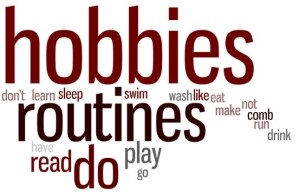
“Hobbies, routines, and daily habits are key actions that are described by the simple present tense.”

If you’re a student of the English language, chances are good that you’re familiar with the ‘Present Tense’ grammar form. In order to form basic sentences in your writing or to make yourself understood verbally when speaking to a native speaker, it’s important to learn the ‘Present Tense’ especially before moving on to the ‘Past’ and ‘Future’ tenses which is slightly more advanced and complicated to master.

The ‘Present Tense’ is divided into two forms: the ‘Simple’ present tense and the ‘Continuous’ or ‘Progressive’ present tense. In order to fully understand the present tense grammar form, it’s important to understand both the ‘simple’ and ‘continuous’ aspects to this concept. Please follow along and read through this blog post if you’re a student of English grammar and want to better understand the ‘Simple Present Tense.’ For next month’s edition of English Corner, we will focus on the ‘Present Continuous Tense’ and how that grammar tense is formed correctly.

The Simple Present tense is regarded as being the easiest to learn and most vital tense to master in order to the basics of English grammar down. For example, the simple present tense uses verbs like “to be” and changes the form into singular or plural depending on if you are referring to one more person or more.

For Example:

  • He is on his way to the store to pick up some fruits and vegetables.
  • They are at the ballpark tonight to watch the baseball game.

We can see from these examples how the verb “to be” is put into the simple present tense using the word ‘is’ or ‘are’ depending on if the subject of the sentence is singular or plural. For the subject ‘He’, the corresponding simple present tense form of “to be” would be is which is singular. For the subject ‘They’, the corresponding simple present tense form of “to be” would be are which is plural. With the subject word ‘I’ which is singular, we will use the word am which is singular but is different from the word ‘is’ which is used for ‘he’, ‘she’, or ‘it.’ The subject words of ‘they’, ‘you’ or ‘we’ would be used for the word ‘are’ as mentioned before.

The structure of the present simple tense is quite easy to form correctly when compared to other English tenses. You simply need to put the subject and the main verb together to form the basis of a sentence. This goes for positive sentences which don’t have a negative connotation or which form the basis of a question.

For Example:

1) I do like to swim with my friends at the lake.

The subject for this sentence is the word ‘I’ and the verb form is ‘do’ and it is possible sometimes to follow one verb with another verb or two verbs, as is the case with this sentence. ‘Do’ and ‘like’ can be together as well as ‘to swim’ and then to finish off the sentence with ‘my friends’ who are the objects and ‘at the lake’ which is the location along with a prepositional phrase.

The first verb in a sentence when there are other verbs after is known as the auxiliary verb, which comes before the main verb(s). Once again, it’s important to note that ‘I do’ can change form into becoming ‘He does’ or ‘She does.’ It is a common rule that the verb must be modified to change depending on which subject word in English is being used.

If you need to make a simple present sentence negative, it’s important to add the word ‘not’ after the auxiliary verb of ‘to do.’

For Example:

1) I do not like to dance because the basic moves are hard for me.

2) He does not want to go to work because he does not like his boss.

Regardless of the subject word being ‘I’ or ‘He’, there will always be a ‘not’ after the auxiliary verb. You can have multiple verbs being used in a simple present sentence as well. There is no limit to the amount as long as the sentence makes grammatical sense to the audience.

In order to form a question using the simple present tense, the order of the sentence needs to change slightly in order to reflect this shift. Instead of the ‘subject word’ leading off the sentence, the auxiliary verb of ‘to do’ must be at the beginning. You can either put ‘do’ or ‘does’ at the beginning of a simple present tense sentence. After that, you can place the subject word whether it is ‘I’ or ‘you’ right after the auxiliary verb. In this case, after the auxiliary verb and the subject comes the main verb and then finally the object which is wrapped up with a question mark to finish the sentence.

For Example:

1) Do you like to go skiing?

2) Does he know who you are?

It’s important to remember that the positive form of a simple present tense sentence doesn’t have an auxiliary verb in it while there is one in both the negative and the question form of the sentence. With the main verb for the positive form, it’s important to add an ‘s’ to the end of the word especially if it’s a third-person subject like ‘it’, ‘he’ or ‘she’ in order to make the sentence grammatically correct.

For Example:

  • He likes to dance salsa on Saturday night.
  • She knows that it’s important to study for the Chemistry exam.

When it comes to the negative and question forms of the simple present tense, certain rules must be observed. The auxiliary verb form must be used in both cases and also needs to be conjugated. The main verb form does not change and often comes in its’ normal form which is ‘to ____’. For negative sentences, the word not must come between the auxiliary verb and the main verb for the sentence to be coherent. Lastly, The auxiliary verb has to come at the beginning of a question sentence while the subject comes afterwards which is a reversal of what you would see in a positive or negative form of the simple present tense.

In terms of using the simple present tense correctly, it’s best usage comes in terms of describing general times and situations. Action verbs like ‘to do’, ‘to eat’, ‘to work’, ‘to dance’, and ‘to swim’, etc. are apart of the simple present tense umbrella of usage. This grammar tense is instrumental in describing a statement, which is always true as well as describing actions, which are continuous, habitual, or come from a routine. The simple present tense is most often associated with the verb ‘to be’ which can describe whom somebody is, what they do, where are they going, and why they are unique. The simple present tense can describe those actions, which happen in all forms of time whether it is the past, present, and future.

Out of all English grammar forms, the ‘Simple Present’ tense forms the base of a simple sentence. For any Basic English language student out there, it’s a necessity to master this concept before moving on to other forms of the present tense. After successfully understanding the methodology and the usage behind the simple present tense, an English learner will be ready to move on to the next challenge: The ‘Present Continuous’ tense.

English Corner – Conjunctions

This ‘English Corner’ on the subject of conjunctions is a continuation of an ongoing blog post series with a new post every month to help English language learners to better understand the vocabulary, grammar, and syntax in order to better develop their own proficiency. I have over two years of experience of teaching the English language to non-native speakers, both online and in person.

I hope to use these posts to help you, the reader, improve your understanding of English, and also develop your fluency. If you have any questions about this ‘English Corner’ post, please leave a comment and I will answer them to the best of my ability. Any constructive feedback is appreciated and I hope that this will become a popular series of posts within my website. If you enjoy my ‘English Corner’ series, you can also request private English lessons with me through the WordPress message system.

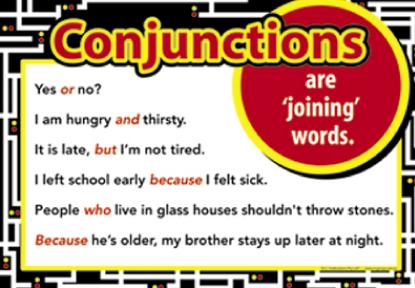
Second only to ‘Prepositions’ in terms of grammatical importance, ‘Conjunctions’ play a vital role in the formation of sentences in the English language. Conjunctions do the important job of connecting words and phrases together to form a complete sentence. Examples of conjunctions include although, and, because, but, etc. Instead of forming simple sentences such as: “I like to play sports”, we can then add on to this sentence by adding the word ‘and’ to create a complete sentence which could be “I like to play sports and hang out with my friends on the weekends.”

Having a good grasp on conjunctions can make writing complete sentences a lot easier and give you the ability to form paragraphs and even entire essays by adhering to the sentence structure by adding a conjunction or two. When it comes to grammar topics like conjunctions, it’s important to be able to remember the correct words that fit into the category and to know when to apply them in your sentence.

The word ‘And’ is the most popular conjunction because it can be used for three different functions. Not only can it connect words but clauses as well as phrases. ‘And’ is also used to describe more than one person in a sentence by grouping them together such as “Tim and Tina went to the movies together last time. In addition to the word ‘and’, other popular conjunctions that are commonly used to connect sentences are ‘although, since, but, unless, or, yet, so, etc.’

Contrary to popular belief, conjunctions can be used in the beginning of a sentence rather than just in the heart of a sentence. For example: “Although he was tired from working late, James still decided to go out for a drink with his friends.” A conjunction is a part of speech that can also be more than one word. Examples of conjunctions that make up more than one word include ‘so that, in order to, as long as, etc.’ By clearing up the confusion and misleading information regarding conjunctions, beginner students of English will better be able to handle this important grammar subject.

part-speech-nounb
Conjunctions: Successfully joining words and phrases together in order to form complete sentences.”

Learners of the English language often forget that conjunctions can be divided into two categories: coordinating and subordinating conjunctions.

Coordinating conjunctions are known for connecting two parts of a sentence or phrase together to form a complete sentence. This first type of conjunctions is usually used in the middle of a sentence and is supposed to connect words and clauses together along with two parts of a sentence.

An example of a sentence where a coordinating conjunction would be used could be “John picked up Tim after his soccer practice in the park and then they went to the movies together.” There are many different coordinating conjunctions but the most popular ones are ‘and, but, for, or, so, yet.’

Subordinating conjunctions have a more specific purpose than their coordinating counterparts. The main purpose of subordinating conjunctions is to join the dependent clause of a sentence to its’ independent clause to form a complete sentence. The main clause is also known as the independent clause and the conjunction is placed in between the two clauses in order to create the grammatical structure of the sentence.

For example, a sentence with a subordinating conjunction would look like “I had to study hard last night because we have an important English test today. Some examples of subordinating conjunctions include ‘although, because, since, unless.’ It’s important to remember that a subordinating conjunction will always come at the beginning of the subordinate clause, which could either be before or after the main clause. This means that there is some flexibility when it comes to inserting your subordinate conjunction in that it can come in either the beginning or middle of a sentence.

Lastly, in addition to conjunctions that are subordinate or coordinate and are one word usually, there are other types of conjunctions that can be a few words in all when forming a sentence. These two other types of conjunctions are known as compound or correlative.

Compound conjunctions often end in the words ‘that’ or ‘as’ and some examples of these conjunctions include: ‘as long as’, ‘provided that’, ‘because of that’, ‘in order to.’ Remember that a compound conjunction does not always end in ‘as’ or ‘that’ but it’s usually true in most instances. For example, a sentence with a compound conjunction would be like; “You can eat ice cream later as long as you eat your vegetables first.”

Correlative conjunctions are often made up of pairs of two corresponding words such as ‘neither…nor’, ‘either…or’, ‘both…and’, which serve to balance the sentence and the two clauses. For example, you could write a sentence like “We could either go to Spain or Italy for vacation this summer.” When using correlative conjunctions, remember that there needs to be two words that relate to each other in the overall meaning.

Like our previous topic of ‘Prepositions’, learning about ‘Conjunctions’ will help a beginner in English to gain confidence in developing both grammar and vocabulary. Both of these topics are important to review and go over with a student in order for them to correctly form a sentence by adhering to the necessary structure.

By knowing about the different types of conjunctions, some key examples, and their varied uses, students of English reading this post will gain a better understanding of this vital grammar topic. If you have any questions or comments about this ‘English Corner’ post, please feel free to write me a message. In the mean time, good luck with your continuing studies of the English language! I promise that there will be a new post next month focusing on another key topic.

A Wealth of Knowledge

knowledge-translation-and-exchange1
“The sharing and exchange of knowledge is easier now than it has ever been in human history.”

There has been no other time in human history than in today’s era where the average person with access to the Internet can seemingly have unlimited amounts of information available to him or her. When you truly think about the magnitude of it, untold amounts of data are being created every day. According to IBM, “The current estimate is 2.5 quintillion bytes of data per day and over 90% of the data in the world today has been created in the past two years alone.”

A common response nowadays from both family and friends when I ask a question to them about a random query is not a straight-forward answer but rather an off-handed suggestion to “Google it.” Living in this era of ‘Big Data’ can be quite overwhelming to the average person but one could also look into it as an opportunity to gain knowledge and further ones’ understanding on a limitless amount of subjects with the simple click of a mouse. The Internet is an amalgamation of thousands of libraries of Alexandria at the beck and call of one’s fingertips.

Compared to past ages when information and knowledge was more exclusive and harder to come by, today’s era allows everyone with an Internet connection to search and find information to their heart’s content. Instead of going to a library to find what you need on a subject, websites like Google, Wikipedia, and other online encyclopedias have largely replaced the main role of the physical library. I remember when I was younger and in my high school days having to seek out certain books in order to write a research paper or complete a book report.

However, now more than ever, you can easily find the sources of information you need online in order to facilitate your research and evidence. While I love libraries and hope that they never go out of style, the reality is that online encyclopedias and eBooks are largely replacing their original purpose. In order for libraries to stay relevant, they need to start incorporating computers, free Wi-Fi, and technical classes in order to remain useful.

From the 18th to the 20th centuries, universities and colleges across America were the standard bearers and purveyors of higher education. Originally for the elite, wealthy, and well connected, those students who were able to get accepted and afford undergraduate and graduate studies believed that they would have an advantage in the job market and in achieving the American Dream. More recently, as colleges and universities have become more inclusive than exclusive, tuition prices have inversely risen as well.

While higher education has become accessible to more and more young Americans, it also has become more expensive especially over the past decade. These events have led to an ongoing debate as to whether college is really worth the price tag and whether the average student gains anything from earning a four-year degree. With student loan debt at an all-time high of $1.3 trillion in 2015 in the United States and tuition rates at both public and private universities continuing to rise, people are beginning to look for alternatives to the current higher education system.

Over the past decade, there has been a drastic proliferation of massive open online courses (MOOCs) provided by both private companies and traditional universities. At a much lower price and sometimes free, people from all over the world can sign-up for these courses and partake in lectures, tests, quizzes, and papers as if they were actual enrolled undergraduate and graduate students at the physical form of the university. As the credentials and certifications bestowed upon these courses continue to increase and become more widely accepted, we may begin to see ‘the end of college’ as we know it.

Examples like Khan Academy, edX, Coursera, Udacity, etc. and other MOOCs have leveled the playing field. Tech entrepreneurs from Silicon Valley have allowed students from all over the world to access unlimited online courses to further their academic knowledge at a lower price. With the subsequent rise in online university programs for undergraduates and graduates, the physical college experience of dormitories, lecture halls, football stadiums, etc. may become less appealing to students as tuition prices continue to increase. While the social and networking benefits of college life are numerous, they may not be enough to compete with this era of free information that we are living in.

Compared to past decades, we’re living in a time when access to the Internet is at an all-time high and is increasingly rapidly due to the rise of mobile technology. Traditional havens of knowledge such as the library or the public university will have to adapt to stay relevant in this unlimited information age. In a worldwide job market that is evolving rapidly and where the average child today will work in an industry not yet created, the free exchange of knowledge must continue to spread through the worldwide web.

Countless others and I have benefited from taking online coding courses on ‘Codeacademy’ to learning new languages on ‘Duolingo.’ As MOOCs and online universities continue to develop their courses and credentials, we may begin to see an era where the average person can earn a degree or two without breaking the bank. MOOCs are cheaper, less time intensive, and can adapt more easily to the rapidly changing employment market.

A well-educated population is now more possible now than ever with the wealth of knowledge and information that is available. That fact is evident but it also is up to the individual to be willing to search for that information and actually apply it. Instead of getting frustrated with people asking me to ‘Google’ the answer, I find that it’s worth the hassle because it’s often true that I will find the answers I’m looking for and in greater detail than if I were to ask a friend or family member for a quick description. That’s the power of the Internet. That’s the wealth of knowledge that we are able to take advantage of.

Sources

Sites Mentioned

Expanding National Service

nationalservice
“Congress agrees…but will that turn into actual legislation in the future?”

If you are a young American thinking about what to do next with your life after finishing high school or college, and you’re interested in serving greater causes than your own personal goals and pursuits, you should seriously consider becoming a volunteer. You may have your own preferences when it comes to serving but what matters is that you choose to do something to give back to those in your country and those around the world who are less fortunate than yourself. Your career goals, your family, and even your friends will understand if you choose to put things on hold for a few years, especially if you’re in your 20s still. You may like your volunteer service so much that you choose to make a career out of it too.

Currently, in the United States, a country which continues to be divided more and more along political and economic fault lines, I think it is vital that young Americans choose to put their differences aside and contribute to bettering their country or the wider world in some measurable way. Volunteering or serving a community can help you to become a better person and a better citizen. There are many options out there if you decide to take the leap and apply for some programs. Not only will you be doing good for a school, a community, a city, etc., you will be helping your own future out with the experience, knowledge, and skills that you will gain from the type of service you commit to.

Contrary to popular belief, joining the Military, while a very noble and brave pursuit, is not the only way to serve one’s country or community. There are many other options for those of us in the United States. The most popular volunteer programs include AmeriCorps, Peace Corps, Habitat for Humanity, CommunityHealth Corps, Teach for America, City Year, FEMA Corps, etc. Those are some of the most well-known and reputable organizations and agencies that have successfully made in a difference in the lives of thousands of people both in the United States and around the world. Besides these national programs, there is also thousands of other more local and community-based volunteer service organizations located in different towns and cities across America. While the options to serve are out there in global, national, and local settings, most young people do not commit to any type of service after college and choose instead to go into the private sector and begin their careers right away.

While the number of applications number in the thousands and continue to grow for service programs like Teach for America and the Peace Corps, there are not nearly enough spots available for all the young people who would like to serve but can’t due to a lack of funding or not enough spaces for them. Demand is not the overall issue when it comes to the issue of national service but rather the supply. Less than 1% of the American population currently serves in the Military and while other national service programs enroll tens of thousands of volunteers and the competition to get accepted is intense, only 25% of adult Americans are known have served in some capacity, which is quite a low number when you think about it.

Senator John McCain of Arizona and U.S. Army General Stanley McChrystal recently wrote an excellent Op-Ed article for CNN where they also argued for an expansion of choices and options when it comes to national service for young Americans. They both believe that this issue is non-partisan and should be heartily agreed upon by both political parties and the American public as well. They go on to discuss the idea of a year or more of mandatory national service in order to foster a greater sense of citizenship, mutual investment, and commitment among young people for the country and the world. I agree with their sentiment wholeheartedly.

While there are a great amount of people my age who commit a few years in their 20’s to public and national service, many of my fellow citizens do not have the chance to or do not want to. Mandating a year or two of national service for all American citizens after college or high school would be an excellent policy idea and would be a great benefit to institutions like Teach for America, AmeriCorps, etc. Creating the opportunity for every young American to give back to their community and country is a noble endeavor and can only help the future rather than hinder it.

Overall trust in the American government, national institutions, and even other citizens are at all-time lows. Expanding opportunities for young Americans to serve would be a great way to begin to restore that faith and confidence in our civil society, and to rebuild that national fabric that holds us together as one people. Recent legislative efforts like the Edward M. Kennedy Serve America Act and the 21st Century Conservation Service Corps have been great in expanding national service in certain ways by increasing AmeriCorps membership by 250,000 volunteers per year and focusing on putting more resources towards improving our national parks and forests respectively.

However, none of the legislation thus far has gone far enough to make at least one year of national service mandatory for every citizen and to provide enough opportunities and programs available to make it a feasible commitment. I would hope that the next President and Congress will strive to involve more young people in building a better America and a better world. One or more years of national service from millions of young Americans would make such a positive and sizable impact on the country as a whole. It would be definitely worth the money it would take to make this public policy idea a reality.

As President Theodore Roosevelt once said, “We have fallen heirs to the most glorious heritage a people ever received, and each one must do his part if we wish to show that the nation is worthy of its good fortune.”

Sources:

1.) https://www.washingtonpost.com/blogs/therootdc/post/why-volunteer-programs-like-the-peace-corps-teach-for-america-reward-children/2012/02/02/gIQAOXl8mQ_blog.html
2.) http://www.cnn.com/2015/08/10/opinions/mccain-mcchrystal-national-service-legislation/
3.) http://www.nationalservice.gov/about/legislation/edward-m-kennedy-serve-america-act
4.)http://www.nationalservice.gov/sites/default/files/documents/10_0421_saa_implementation.pdf
5.) http://www.mccain.senate.gov/public/index.cfm/2015/8/senators-john-mccain-michael-bennet-introduce-bill-to-expand-national-service-opportunities-for-american-youth
6.) http://www.huffingtonpost.com/michael-brown/americorps-funding_b_1280200.html
7.) http://www.people-press.org/2014/11/13/public-trust-in-government/
8.) http://21csc.org/

The Benefits of Learning a Foreign Language

“There’s so many languages to learn and so little time to master them. What are you waiting for?”

 Learning a foreign language often gets overlooked by those people who like to travel to different countries and have fun adventures, unique experiences but refuse to learn the local tongue while they are traveling. However, A large part of truly integrating yourself into a foreign culture when living overseas is to develop a working proficiency in the local language. When you make the effort to learn the language, it truly makes a difference both to those in the new community and/or country in which you’re residing. If you consider yourself to be a worldly person who likes to travel, you must also seek to become well-versed in foreign languages.

 The locals will respect you more and you also stand out from the other tourists and expatriates who only know the basic phrases and words even though some of them have been there for a longer period of time than you. Especially in a professional context, learning foreign languages makes you stand out in many different types of businesses and industries today. I’ve met so many people from around the world during my recent experience of living overseas who are very successful and are fluent in three to four global languages including English, French, Spanish, etc. One of my personal goals in life is to be fluent in three to four languages excluding my native tongue of English.

 I’ve been pretty successful thus far in developing a good proficiency in Spanish, Turkish, and with some basic knowledge of German and Arabic. I hope to keep improving my foreign language background as I go through my 20’s. One of the best things about language learning is that it’s never too late to start and to see how far you can develop your proficiency in it. I’ve heard that it does get harder though as you become older and that it takes more and more work to learn a foreign language starting in your 30’s and beyond. Even if you don’t want to really become fluent, it makes all the difference really in just having those basic 25–50 words and phrases that you learned and memorized before you head off for your travels to new countries and foreign locales.

 There are a lot of cognitive benefits to knowing more than one language and there is a lot of research to back this statement up. (For example; Source –http://www.actfl.org/advocacy/what-the-research-shows) It helps your mind stay sharp and it allows you to see the world in a different way. It’s hard to describe but by thinking in multiple languages, it makes your mind much more agile and able to think creatively, and to analyze thoughts much more deeply.

 I think that every person should learn a foreign language even if it’s just the basic phrases and sayings. There are so many free and cheap ways to learn a foreign language these days. For example, Duolingo is an excellent web application that is free to try and use. There are also many websites nowadays where you can hire a native speaker of a foreign language to tutor you in a private lesson for an hour for only $15–20 which is quite affordable.

 The fact that foreign language learning goes neglected sometimes in the United States is a real shame. However, regardless of where you’re from, even though you may have never picked another language up when you were younger doesn’t mean it’s not still possible.(http://qz.com/453297/many-european-kids-…cans-zero/) Hopefully, everyone who reads this blog entry will think hard and long about giving foreign languages another go of it and to make it part of your personal development. It’s challenging yet rewarding and there are many benefits to it, both professionally and personally.