What can the creative process give us?

Anything that is done in the creative process takes effort and hard work. Any work of art, any piece of music, any lengthy novel took days, weeks, months, and even years to create. The creative process allows any person to express oneself in any way they see fit. The idea to keep in mind is that it is best for somebody to discover what he or she would like to create based on what his or her interests are. They then must discover for themselves what exactly they are good at creating and what they have a passion for doing. Being creative cannot be forced on someone.

The person in question has to decide what they enjoy doing and how far their talent can take them. Sometimes, the person can discover his creative vocation on his or her own but other times, it’s often the recommendation of a close friend or family member who gives the person inspiration to continue on with their craft. The key to remember about the creative process is that it can add value to people’s lives and also provide substantive meaning for any human being.

Being creative allows you to step outside of yourself and observe the external world in some way to shape it in a way that you see fit. Whether it is painting, writing, sculpting, etc., you’re putting yourself out there to see how you can do it differently and how can you create something truly unique. The creative possibilities out there are infinite and it’s important to choose a hobby or interest that appeals to you and which you can devote serious time to.

Some other traits that you can develop besides being observant and aware of the world around you are to become more collaborative and open to learning from others. A creative person will learn from others who have come before him or her in order to develop themselves as an artist, writer, builder, etc. Without copying them directly or replicating their kind of work, a creator will take what they have learned and studied to develop their own style or add value to their field. You don’t have to become the next Mozart or Rembrandt but you should try to innovate or change up the creative field so as to do something that will be remembered in the future.

Collaborating with other creative people and working alongside them or just to learn from them can make you more skilled in your work. You can learn a lot of valuable lessons from other creative people and they can mentor you based on their years of experience if you’re just starting out. Even if you suffer setbacks or false starts, knowing that you have a network of people similar to you in your creative world who can give you advice or a new perspective will give you the extra motivation to continue forward and learn from your mistakes. Through collaboration, you’ll learn to be less defensive and tame your ego so that you can learn and become better at your creative vocation.

Harnessing your creative energies can make you more outgoing, more connected to the world and can make you more humble. In a world that seems to be moving faster and faster, being able to slow down, observe your surroundings, and collect your thoughts is a great way to fuel your creative impulses. While we cannot control much outside of our own choices and decisions, harness your creative abilities will give you a sense of control over the external world. You can also gain a lot of satisfaction from putting something out into the world even if it never gains popular recognition. To keep it as a healthy endeavor, exercising your creative abilities should never be done for the possible fame, fortune, or notoriety of it but rather for your own benefit.

Without any kind of creative outlet, humans can stagnate both mentally and physically. People can often be placed into two categories: producers and consumers. We have the capacity to do both but we are often told by the larger society and culture to consume, consume, and consume some more. While there’s nothing wrong with consumption within reason, being able to channel our energies into a productive endeavor can be good for both the mind and the body. This is especially the case when you’re working to solve a problem or to make life better for people. You don’t know what your own potential or capacity for creativity is until you begin to do it. Everybody has the ability to be creative but they have to figure out where they can contribute the most to an idea, a project, or a work of art.

There has never been a better time in human history to be a creative individual. The advent of the Internet and global social networking has allowed people of all backgrounds to express themselves in various ways. More than ever, the average person is a website, a YouTube channel, an eCommerce shop away from sharing their creativity with the world at the click of a button. While the creative process is long, challenging, and comes with no certain reward, the benefits to a person’s mental and physical health cannot be overstated. The Einsteins, Beethovens, and Rembrandts of the world knew that their creative contributions would change the world in one way or another. They did it not just for the world though but their own sense of fulfillment and purpose. Instead of asking themselves what they could receive from the world, they thought instead of what they could contribute to the world with their individual talents.

Being creative, innovative, and experimental comes with risks but also a number of rewards. Even if you fail or don’t reach your goals, you will still learn a lot about yourself as well as what you are capable of. The key is to keep working at it to find out what you are skilled at whether that’s being an artist, a writer, an architect, an engineer, etc. Everybody has a creative flame within them that can be harnessed and molded. You just have to figure out for yourself how to develop, practice, and become proficient in your craft throughout the creative process.




‘Babel’ – Film Review and Analysis

There’s a famous story from the Book of Genesis in the Bible that is known as the ‘Tower of Babel.’ It’s a mythic story about how human beings were once speaking the same language around the world and were able to communicate seamlessly enough where they were able to build a magnificent tower to reach the heavens. Humanity is united and in peace with each other given that they share the same language, culture, and geographical location.

After the ‘great flood’ washed away and receded, humanity wanted to build the tower of Babel in order to reach God and the heavens. In the story, God is befuddled by this show of hubris and ego that has united humanity together in building this tower to reach his presence, and decides to make humanity speak different languages, and separates people into different tribes located in different places around the world. The confusion of languages has a major impact on humanity causing a breakdown in communication, and leading to the future certainties of conflict, violence, and overall suffering.

Alejandro Gonzalez Inarritu has created a beautiful film named after this allegorical Biblical event titled, Babel (2006), which was released over a decade ago, and was a winner of Best Original Score at the Oscars as well as six other Academy Award nominations. The film was released to critical acclaim and has garnered a lot of recognition for its’ themes of globalization, cultural and language miscommunication, and the powerlessness of people to control critical events that happen in their lives.

‘Babel’ features an ensemble cast of actors from around the world, which include Brad Pitt, Cate Blanchett, Gael Garcia Bernal, Koji Yashuko, and Adriana Barraza. ‘Babel’ is an intriguing film in that the characters and situations in the film take place in three different parts of the world but are interrelated with each other. The sequences of events that occur are out of order but are shown to connect with each other as the film goes on. As for the countries where the film is set, they include Morocco, Japan, Mexico, and the United States. A lot of credit must be given to Mr. Inarritu for weaving these three storylines together without making it too hard to follow or too farcical to be believed. The aspects that make this film unique are the interweaving storylines, the excellent acting, and the themes and questions that ‘Babel’ poses to its’ audience.

The stories that make up ‘Babel’ show how unrelated and seemingly random events at the time can end up turning people’s lives upside down. The overall plot of ‘Babel’ starts out with a Japanese businessman giving a rifle to his hunting companion / tour guide in Morocco as an innocuous gift. This event seems harmless as a moment between two men of different countries and cultures sharing a gift but which causes different events of the movie to unfold over three different continents.

The hunting rifle that makes its’ way to Morocco, is eventually sold by Hassan Ibrahim, who receives the rifle from his old Japanese hunting partner and the rifle ends up in the hands of a goat-herder named Abdullah. Perhaps not using the best judgment as a grandfather should but not seeing a problem with it, Abdullah gives over the hunting rifle to his two sons, Yussef and Ahmed, who want to use it to ward off jackals from killing the goats in their flock.

The boys who are only teenagers and are not skilled with weapons end up practicing the range of the rifle and end up practicing the firing of the rifle on rocks, a moving car, and then the bus. The two boys do not really know the danger that they’re playing with and they don’t know who is on the bus they’re firing the rifle at. The Western tourists who are travelling through Morocco are also unaware as to what is about to happen and are trying to enjoy their trip to a foreign country. Susan, played by Cate Blanchett, is an American woman sleeping on that bus filled with Western tourists and is trying to get some rest when she is shot in the neck accidentally by one of the Moroccan boys with the hunting rifle.

Her husband, Richard, played by Brad Pitt, is caught unaware of what happens to his wife, Susan, but quickly catches up to the reality that his wife is severely wounded in a foreign country where he doesn’t speak the language, and he doesn’t have control of the situation. After losing their third child recently to the SIDS disease, Richard and Susan’s marriage is on the rocks and they took the trip to Morocco to get the spark back in their love life. In some scenes of the film, they seem angry, confused, and emotionally distraught after the tragic death of their infant child.

While Richard and Susan are on vacation in Morocco as a means to save their marriage, their two children are in the care of their long-term nanny who is originally from Mexico. Amelia (played by Adriana Barraza) is put into a difficult situation after Susan’s injured state becomes known. She is an undocumented person working in the United States illegally but she has been a nanny and housekeeper for Richard and Susan for many years. She treats their children like her own son and daughter after being a personal caretaker for them. It is made clear to the audience that Adriana has been in the U.S. for over a decade and a half and she has close ties to the American family.

During the film, Adriana is put into a very difficult situation, as she has to go back to Mexico for her son’s wedding but is unable to leave Richard and Susan’s children by themselves at the house in California. Because Richard can’t leave Susan’s bedside, they are delayed in their arrival back to San Diego. Against Richard’s wishes, Adriana decides to take their children with her to Mexico for the evening to enjoy the wedding of her son. Everything is fine for Adriana and the children at the wedding until her nephew, Santiago, decides to drink heavily during the celebration. He is shown to be intoxicated before driving on the way back to U.S.-Mexico border with Adriana and the children causing a number of unfortunate events that upends the lives of all those who are involved in his serious mistake.

The last part of the storyline takes place in Japan and focuses mainly on a teenage girl named Chieko Wataya (played by Rinko Kikuchi). Chieko is deaf and is unable to hear the outside world. On top of that, her mother recently committed suicide, which Chieko became the first witness to leaving her traumatized and inconsolable. She struggles in her attempts to relate to people anymore and is frustrated with boys her age. It is implied that her father and Chieko don’t have the best relationship with each other and haven’t discussed the traumatic event of her mother’s suicide.

During this storyline, it becomes clear that Chieko is confused, lonely, and looking to receive love from a father-like figure since her own father has been so absent in her life. Without spoiling the ending of this storyline, it is also revealed that Chieko’s father is the one to originally give the hunting rifle to the Moroccan man, Hassan Ibrahim, who he met on his trip there. The police eventually question Chieko’s father about why he sold his rifle to Hassan, and how Susan’s wounded state has become a major political point of contention between the U.S. and Moroccan governments.

Overall, Alejandro Gonzalez Inarritu does an excellent job of bringing these four storylines over three continents to life, and is able to tie them together seamlessly. ‘Babel’ is a story of human beings living their lives in their own ways within their own cultures but who get caught up in external events beyond their control. Inarritu is able to capture how interconnected our world is today in the early stages of the 21st century whether we would like to be aware of it or not. Seemingly unrelated events to each other are able to cause powerful effects that can change people’s lives when they least expect them.

A Japanese man goes on a hunting trip in Morocco, enjoys his Moroccan hunter’s company, and gives him a gift. That Moroccan man sells the rifle to a local goat-herder who lets his two sons practice with the weapon, and they fire the gun consecutively without knowing the damage it can do. The boys, not trying to do harm intentionally, end up shooting accurately at a bus that happens to be filled with Western tourists. An American woman who is catching some sleep catches a stray bullet and starts to bleed to death. She has to seek help from the local Moroccans in the village, and her wounded status causes a political feud between the U.S. – Moroccan governments over whether or not the act was ‘terrorism.’

While she’s recovering from her wounds, her housekeeper half a world away takes her children to Mexico to see her son get married at a wedding. Her nephew uses poor judgment on the drive back to the U.S. from Mexico and makes a fateful decision that changes Adriana and the children’s lives. ‘Babel’ was one of the first movies of the 21st century to really capture the phenomenon of globalization, and how actions that happen half a world away can affect other people’s lives directly. In this movie, we see how people try to do their best as people do, and often times don’t mean to do harm to others intentionally.

Sometimes, people can get caught up in making decisions that they think are good at the time but end up having the opposite effect. ‘Babel’ is not a simple black and white film with truly good or truly evil people. This is a film that understands that there are various shades of grey to life, and that it is difficult to control everything that happens to us and the people in our lives.

Overall, ‘Babel’ is an emotionally charged film that reminds us how people, things, and events can be misinterpreted. When you as an individual come from different cultural and language backgrounds, there are things that are likely to be lost in translation with another person of a different background. Unfortunately, miscommunication is apart of life, and problems are going to occur when people are unable to understand and connect with each other even if they do speak the same language with each other.

As the Biblical story goes, humanity ended up being divided by different languages after trying to be unified in their desire to build up a singular tower to the heavens. We are said to have been punished for our hubris and ego, which caused us to be separated from each other as we were spread out intentionally across the globe.

The audience is left to wonder at the end of ‘Babel’ if there is a truly happy or sad ending to take note of. The plain truth of the ending to me is that ‘Babel’ purposely shows all the elements of the human experience from Chieko’s joy at going to a rave party with her friends to Adriana’s pure despair at losing Richard and Susan’s children in the Mexican desert.

‘Babel’ shows us that life has its’ inevitable ups and downs, and that we can only control so much about our own lives, and many things are often out of our control yet still happen to affect us deeply regardless. Still, this brilliant film captures the resilience of its’ characters who try to make amends for their mistakes, and want to become better as they figure out the complexities and difficulties that make up life. I highly recommend ‘Babel’ to others and hope that it will get the recognition it deserves for years to come.

USS Constitution 220th Anniversary and Head of the Charles Regatta

22688008_10159366808305262_4588052671143962007_n22688902_10159366808395262_4729354069572982806_n22555000_10159366808575262_3491509295398557863_n22549844_10159366808785262_9195479170625921047_n22688562_10159366808695262_9084972316984606405_n22552614_10159366809210262_7603151149935310572_n22549738_10159366809205262_4060032975434527134_n22728718_10159366809020262_1399246638696222734_n

CameraiPhone 6

LocationBoston, Massachusetts; Cambridge, Massachusetts

Book Recommendations – Volume V

Similarly to the months to come during the heart of wintertime, the current summer season is a great chance to catch up on reading new books or books you have yet to finish. Whether you’re at the beach, hanging out in the backyard, or are going on a long road trip, reading a good book is a good way to pass the time.

My last ‘Book Recommendations’ post came in February so it’s time for another volume of recommendations for you to consider when it comes to your next book purchases. While you may not be interested in the same book genres or same authors as myself, I still encourage you to read a book before the end of the summer. Whether it’s through Amazon, your local mom and pop bookstore, or at a book fair, you owe it to yourself to put down the iPhone and pick up a good book instead.

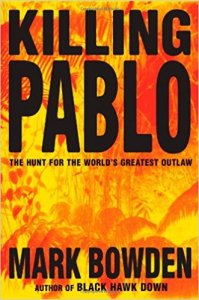
1.) Killing Pablo: The Hunt for the World’s Greatest Outlaw by Mark Bowden (2001) is a non-fiction, and detailed take on the combined efforts by the Colombian and United States governments to bring down the infamous Pablo Escobar, head of the Medellin cartel. Mr. Bowden, known foremost for his take on the Battle of Mogadishu between U.S. special forces and Somali militants in the critically acclaimed novel, Black Hawk Down (1999) is a great journalist with over thirty years of covering recent events involving war, peace, and international affairs.

Mr. Bowden is a reporter and a journalist who does his research when it comes to Killing Pablo, and this book is a real page-turner. The author covers both the early years of Pablo’s empire to his international rise as the #1 drug kingpin in the world to his eventual downfall at the home of Search Bloc and Los Pepes. With many interviews from U.S. and Colombian government officials, as well as a lot of research into the terrible events that transpired in the 1980s and 1990s, Mark Bowden gives a comprehensive account of the manhunt for Pablo Escobar, and how his eventual death came to be.

There is often a lot of speculation and rumors surrounding the Medellin cartel that are unfounded which is why reading ‘Killing Pablo’ is a refreshing take on what really happened and who was involved in the drug kingpin’s demise. This is a great book if you’re interested in learning the true story behind the rise and fall of Pablo Escobar.

51VGfzTSErL._SX329_BO1,204,203,200_
Killing Pablo: The Hunt for The World’s Greatest Outlaw by Mark Bowden

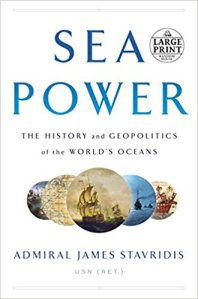
2. Sea Power: The History and Geopolitics of the World’s Oceans by Admiral James Stavridis, USN (Ret.) is an excellent and comprehensive look at each of the world’s major bodies of water, and how they each affect world geopolitics in different ways.

With over thirty years of experience in the United States Navy having commandeered every kind of amphibious vessel that you can think of, Admiral Stavridis has the life experience and intellectual background necessary to make this book quite a compelling read. As the only admiral in the history of NATO to serve as its’ Supreme Allied Commander, Mr. Stavridis is well poised to look at the state of the world through its’ largest and most valuable commodity, the oceans and the seas that make up over 70% of this planet.

If you’re new to geopolitics or don’t know much about the significance of the world’s oceans, Admiral Stavridis breaks down the history, the culture, and the geopolitical importance of each body of water throughout the book. From the Arctic Ocean to the Mediterranean Sea, the author discusses who are the countries involved in the area, what should the role of the United States be, and how can we ensure that this body of water stays conflict free, and friendly to international commerce into the far future.

Since the release of this book in June of 2017, it has risen to the top of many best sellers’ lists and for good reason. In a geopolitical area that doesn’t get much focus, Admiral Stavridis reminds us of the sheer importance of the world’s oceans and seas. In a 21st century world filled with uncertainty and ambiguity, The admiral’s book is a clear-cut, well-reasoned take on the geopolitics of the oceans, and how their collective future is tied to each and every one of us.

41ewMAemkRL._SX328_BO1,204,203,200_
Sea Power: The History and Geopolitics of the World’s Oceans by Admiral James Stavridis, USN (Ret.)

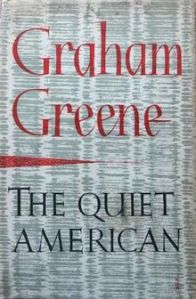
3. The Quiet American by Graham Greene is an exceptional book that is well written, has deep and complex characters, and involves a time period in world history that is often overlooked. The novel takes place during the early 1950s as the French Army is entangled in skirmishes and indirect conflict with the Vietminh. Meanwhile, the new presence of American aid workers including a young economic attaché, Alden Pyle, whose motives for being in French colonial-era Vietnam are considered to be suspect to the narrator, a British journalist named Thomas Fowler. Not only do the two men come into conflict regarding the future of Western influence in Vietnam but they also are at odds in a romantic triangle with a Vietnamese woman known as Phuong.

The two main characters, Fowler and Pyle, could not be more different in their outlook. Fowler is cynical about the West’s involvement in Vietnam, and is jaded by politics and war. Pyle is a young, idealistic, and naïve American who is reserved in his personal manners, but is unafraid to interfere in Vietnamese affairs by acting as a ‘third force’ to help bring change to the country by economic and military means.

Phuong is the young Vietnamese woman who is caught between Fowler and Pyle, as she is desired by both men but for different reasons. While Fowler regards her simply as his lover, Pyle wants to protect her. It is implied in the book that Pyle’s desire for Phuong is reflected in his desire to have a non-communist South Vietnam through any means necessary. Fowler does not go along with Pyle’s thinking and regards his belief in ‘American exceptionalism’ to be shortsighted.

An interesting novel and an engaging read, The Quiet American has become a mainstay in popular fictional literature and has been adapted into two major motion pictures, one in 1958, and more recently in 2002, which starred Michael Caine (Fowler) and Brendan Fraser (Pyle). This fictional novel is based off of real events in the 1950s when French colonial rule in Vietnam was coming to an end.

QuietAmerican
The Quiet American by Graham Greene

While reading books during the summer season may seem like a chore to some people, for others, it’s a great time to kick back, relax, and dive into different genres, and characters that offer a refreshing reprieve from the humdrum of our busy lives.


English Corner – Definite and Indefinite Articles

When it comes to using ‘definite and indefinite articles’, this grammar concept in English is a lot easier to use and master when compared to other languages such as French, German, and Spanish. There are only four examples of definite and indefinite articles in the English language so it is pretty easy to remember them all. Most other languages tend to have more than ten unique articles, definite and indefinite, compared to the four that are commonly used in English.

On top of all that, there is only one definite article used in English, which is quite surprising considering how diverse and versatile the language is especially when it comes to structuring a sentence in different ways. While not the most interesting of grammar topics, both definite and indefinite articles are used so often that it’s necessary to master both their formation and usage in order to become a better English student.

You may be asking yourself: What exactly is an article? That’s a good question with a simple answer. Any definite and indefinite article whether it’s ‘a, an, some, the’ can be used to give information about the noun in a noun phrase. A noun phrase usually includes a noun and an adjective together with the article coming before both the noun and the adjective to form the complete basis of the sentence. I’ve listed below two examples of a noun phrase (article, adjective, and noun):

  1. The brown paper bag
  2. A golden retriever

If you so choose to use a noun phrase, remember that they can also include numbers, possessive adjectives or demonstratives such as this, that, those, these, etc. When it comes to the purposes of the definite and indefinite article in the English language, there are quite a few of importance that you should be aware of.

Definite and Indefinite Articles should:

  1. Tell us how many of a person, place, or thing that you’re dealing with. (a, an à for one, some à more than one)
  2. Tell us if the noun being referenced is a specific one or a general one.
  3. Show the reader or the audience listening that the noun is being introduced for the first time or has appeared before and is a familiar one from a story or another paragraph.

Now that we know what definite and indefinite articles are used for, let us take a look at the similarities and differences between the two types of articles.

Indefinite Articles

When it comes to indefinite articles, there are three of them total. Two of them are to be used with singular nouns and the other one is for plural and uncountable nouns. Singular nouns use the indefinite articles of ‘a’ and ‘an’ that go with the next word, which has to be singular in nature. Unlike other languages whose articles depend upon factors such as gender, spelling, and other factors, the only thing that matters for indefinite articles in this case is the numerical value of the noun being referenced.

Also, when it comes to the next word, the indefinite article ‘a’ is used with nouns that begin with a vowel sound and the other indefinite article ‘an’ is used with nouns that start with a consonant sound. Here are some examples below of ‘a’ and ‘an’ being used with nouns and adjectives to form noun phrases.

‘A’

  1. A poor man
  2. A green jacket
  3. A public beach
  4. A private university

‘An’

  1. An apple
  2. An unbelievable party
  3. An hour
  4. An ostrich

When it comes to plural nouns, there is one specific indefinite article that is to be used with the noun and/or adjective. The indefinite article in this case is ‘some.’ This indefinite article of ‘some’ can be followed by any kind of adjective, adverb, and uncountable or plural noun as long as the noun phrase can be completed successfully.

Let us take a look at some examples with the indefinite article ‘some’:

  1. Some brave men
  2. Some courteous women
  3. Some money
  4. Some black hair

There are numerous examples you could use with ‘some.’ You are not restricted with the usage of nouns as long as they are plural and uncountable in their nature.

When it comes to the reasons for using the indefinite article like ‘a, an, some’, there are two main ones:

-You are introducing a noun for the first time.

For example: A boy learns how to ride his bike.

-The specifics of the noun are not important. The noun ‘boy’ is simple and direct.

For example: Can you go to the supermarket and pick me up some milk?

-The indefinite article ‘some’ with milk doesn’t refer to any particular brand or kind of milk, just ‘some milk’ in general making it easier for the person doing the grocery shopping.

Indefinite articles are not usually supposed to be used for specifics and are much more general in their formation and usage. When it comes to definite articles, that’s a different story however.

Definite Articles

Luckily, there’s only one definite article that we need to cover in this blog post and that’s the very popular word of ‘The.’ ‘The’ is very flexible in terms of both its’ formation and usage within a sentence. You can use ‘The’ for singular, plural, and uncountable nouns making it very versatile. Both the reader and the writer should have a good understanding though of what the word ‘the’ is being used for. There are three main uses for the definite article of ‘The.’

  1. You have introduced it already in the story or paragraph. “The old man, Jerry, thought about his future, and decided that he needed to retire.”
  2. There is only one of ‘the’ object, person, or place in existence and is unique in its’ existence as well. “I visited The Roman Coliseum last summer and it was magnificent.”
  3. You have to describe which thing you are specifically talking about or referencing. “Let’s pop open The 2014 Sauvignon Blanc to celebrate your recent college graduation!”

Here are some examples of the definite article, ‘The’:

  1. The red fox
  2. The happy students
  3. The scary truth
  4. The kind doctor

When it comes to the similarities that definite and indefinite articles have in common, it is important to remember that ordinal numbers can be used with both ‘a, an, the’ under different circumstances.

Examples:

  1. A third book
  2. The second floor
  3. An eighth of an ounce

Lastly, the innate differences between definite articles and indefinite articles can be summed by the fact that a definite article like ‘The’ can be used with specific places such as rivers, monuments, cities, and countries themselves while ‘A, an’ are used with general objects, groups of people and places.

While not the most popular or well-known grammatical subject, having a good grasp on definite and indefinite articles will help you immensely to become a better English language student.

‘Lord of War’ – Film Review and Analysis

Arguably one of the best movies of the 2000’s and Nicholas Cage’s best performance as a lead actor, The film ‘Lord of War’, released in 2005, is a realistic and unfiltered take in the role of illegal arms dealers, who facilitate the sale and transfer of arms trafficking throughout the international arms industry, which continues to be one of the world’s most profitable endeavors. ‘Lord of War’, while nonfictional in its’ story is actually based off of the lives and exploits of different real-life arms smugglers. ‘Lord of War’ is directed by Andrew Niccol, and stars a cast of Nicholas Cage, Jared Leto, Ethan Hawke, and Bridget Moynahan.

Nicholas Cage plays Yuri Orlov, the son of Ukrainian refugees from the Soviet Union, where he and his brother, Vitaly, help their parents out in their Ukrainian restaurant as cooks and helpers. While Vitaly is somewhat satisfied with this simple life of cooking borscht and washing dishes, Yuri wants to achieve the ‘American Dream’ and get out of Brighton Beach, Brooklyn, where he grew up after leaving Ukraine. He struggles to grasp at any real business opportunity in order to get out of the shadow of his ordinary life in Brooklyn.

However, one day when he is dining at a restaurant in Brighton Beach, the business idea he needs comes to life for Yuri in the form of a Russian mobster killing two would-be assassins and fending off their attack with AK-47 Kalashnikov rifles. Yuri believes that there is a lot of money to made in international arms sales and decides to go into business despite the protests of his brother, Vitaly, and the fact that his parents don’t know what he’s up to.

One scene in particular that stands out in Yuri’s beginning as an illegal arms dealer is when he tells his brother that since there are so many McDonald’s and gun stores in America already, he needs his business to be international in its’ focus. At first, Yuri feels that dealing arms is comparable to serving food at a restaurant. He justifies his nefarious business by narrating to the audience that its’ providing for a part of human nature in his opinion, the instinct to kill and harm others, as documented by the “earliest human skeletons who had spears in their heads and rib-cages.”

While Vitaly, Yuri’s brother has moral reservations about what Yuri is doing, he decides to join him later on as they crisscross the globe during the late 1980’s and into the 1990’s dealing with corrupt governments, genocidal dictators, and other more ruthless arms dealers as their competition. As Yuri becomes more popular and wealthy with the illegal arms business, he runs up against a by-the-book, incorruptible, and idealistic Interpol agent, Jack Valentine (Ethan Hawke), who tries unsuccessfully to track Yuri’s business dealings down by air and by sea.

Despite the fact that his brother, Vitaly, becomes a drug addict, and is an unreliable business partner, Yuri continues to run his illegal arms business as a one-man show. While a fictional story, ‘Lord of War’ is based off of real life conflicts and real life people who were involved in the illegal arms trade. These conflicts include the 1982 Lebanon War, the Soviet Union’s War in Afghanistan against the Mujahadeen, the civil war in Liberia during the 1990’s, etc. The movie does not gloss over the dissolution of the Soviet Union and the impact that the end of this cold war conflict had on the rest of the world in terms of arms sales. Yuri is able to become a very wealthy and powerful arms dealer in the film due to his family connections in Ukraine and the sheer weaponry, and arsenal that the Soviet military left unused.

Like his arms business, which is run under false pretenses, he does the same with his love life as he falls for a fashion model and childhood crush, Ava Fontaine (Bridget Moynahan), who he sets himself up with under the guise of a false photo shoot. Despite the fact that his parents don’t know about his illegal dealings, he lies to his new wife regularly, and his brother ends up in a drug rehabilitation center, Yuri does not give up on the arms business because he likes it, is good at it and is unable to go straight in legal business endeavors. However, in the wake of all of his ‘success’, innocent men, women, and children get killed by the guns, bombs, ammunition, tanks, planes, etc. that he sells and profits off of. As the film progresses, the director makes clear that Yuri has sold his soul in this dirty trade and it may cost him his life or the lives of others close to him if he doesn’t stop.

In a way, the audience who watches ‘Lord of War’ could be most closely aligned with the perspective of the Interpol agent, Jack Valentine. He knows that Yuri is a bad person and he wants to bring him down, but will it make any difference to bring one sole arms dealer down when billions of dollars are exchanged around the world each year through both legal and illegal arms sales. Like Jack, the audience may question the nobility of bringing down one arms sales dealer like Yuri when there are dozens of them out there, and Presidents / Prime Ministers of the major countries are the biggest arms dealers of them all.

Yuri never takes full responsibility for his business dealings during the film even if the sale of his arms causes bloodshed and death. He remarks bluntly to his brother, Vitaly during one scene: We don’t talk about it. How many car salesmen talk about their work? How many cigarette salesmen talk about their work? Both their products kill more people every year than mine, at least mine comes with a safety switch. Those guys can leave their work at the office, so can I.”

In Yuri’s opinion, he may be evil, but he’s ‘necessary evil’ because there are other people or governments out there like him involved in the business, but sometimes they ‘can’t have their fingerprints on the gun.’ Despite the pressures placed on him by family, friends, and the law, Yuri is committed to doing what he does best without having the moral imperative to stop. As I don’t want to reveal the ending, the first time you see it, you may be shocked but this film doesn’t deal in black and white, and that’s what I love about it.

There are numerous shades of grey that go along with the black and white, and the ending of ‘Lord of War’ falls within those shades of gray. ‘Lord of War’ doesn’t have your typical Hollywood ending, and that’s partly what it makes it such an alluring film. On top of the exquisite directing, acting by Nicholas Cage, Jared Leto, Ethan Hawke, etc. and the deep political and philosophical themes behind this film, I highly recommend it.

I’ll leave you with a quote from the film that is very poignant and is still true twelve years after ‘Lord of War’ was released in movie theaters. “While private gun-runners continue to thrive, the world’s biggest arms suppliers are the U.S., the U.K., Russia, France, and China…they are also the five permanent members of the United Nations Security Council.”

Cultural Spotlight – Bachata

If you consider Salsa to be wild and exhilarating, then Bachata could be considered the opposite kind of music in that it is both suave and smooth. While Bachata may not be the most exciting kind of Latin music, it is a genre that is both popular and historical. It may not be as skill-based as Salsa or Merengue, but you do need to keep a good rhythm and there is a good amount of variation to this kind of dance. The most important thing to be aware of when dancing Bachata is to watch your steps and make sure you’re moving seamlessly with your lady or gentleman partner in tow.

Bachata is a Latin music genre originally from the Dominican Republic, which came of being in the first half of the 20th century. One of the cool aspects about Bachata is that it combines European, African, and Indigenous musical elements to really captivate its’ listeners and dancers. Jose Manuel Calderon of the Dominican Republic did the first compositions, which formed the original Bachata songs back in those early days of the 20th century.

Bachata is considered to be a mixture of its’ predecessors: Merengue, Bolero and Son, which are other distinct Latin music genres. Similar to Salsa, Bachata takes both the form of a song and the form of a distinct dance that are supposed to go together. The mood of a Bachata song can be either very exuberant or more melancholy. Bachata’s original name was ‘amargue’ which means ‘bitter music’ or ‘blues mules’ reflecting in its’ origins the fact that Bachata used to be more somber and reserved when it was first created in the Dominican Republic.

A surprising fact about the Bachata music genre is that it wasn’t always that popular until the past few decades. Throughout most of the 20th century, especially in the Dominican Republic, this form of music was associated with rural communities who were mostly working class or poor in terms of their status. For a long time, Bachata was not allowed to be played on television or radio because it was too vulgar or crass for the elite members of Dominican society.

However, this attitude began to change in the 1980s and 1990s when both the instrumentation and the styles of Bachata multiplied to become more urban and diverse. Bachata has ended up in the 21st century as being one of the most popular forms of Latin music, up there with both Salsa and Merengue, and is played in bars, discotheques, and dance halls all across Latin America.

Bachata requires a group of musicians playing diverse instruments in order for an actual song to be played from the genre and for dancing to occur. There are seven instruments that usually make up the structure, rhythm, and beat of a Bachata song. You have your ‘Requinto’ (lead guitar), ‘Segunda’ (rhythm guitar), electric guitar, bass guitar, acoustic guitar, bongos, and guira. While none of these instruments are mandatory, you need them all in order to create a dance-oriented form of Bachata rather than a more classically oriented form that is most similar to Bolero.

While Bachata started originally in the Dominican Republic and became popular there eventually after a few decades, Bachata has now become one of the most popular forms of Latin music in the region. You can find Bachata music playing in countries such as Cuba, Panama, Mexico, Honduras, Guatemala, Venezuela, Colombia, Chile, etc. Anywhere you go within the region, you’re likely to hear a Bachata song being played in your neighborhood or in your city.

The first Bachata songs that were composed by Jose Manuel Calderon, considered to be the modern founder of the genre, were titled ‘Borracho de amor’ and ‘Que sera de mi’. These songs came about in the early 1960s, which shows that the modern form of Bachata has been around for over five decades now. Hundreds of musicians, singers, and dancers have contributed to this unique and popular genre. Some of the more famous contributors to Bachata include names like Marino Perez, Leonardo Paniagua, Luis Vargas, Antony Santos, Juan Luis Guerra, and Romeo Santos. If you have the chance to listen or dance to some Bachata music, do yourself a favor and tune in, kick off your shoes, and enjoy this very popular genre of Latin music.

‘Sideways’ – Film Review and Analysis

notdrinkingmerlot
“Miles is not drinking any Merlot!”

Sideways (2004) is an excellent film about the topsy-turvy nature of middle-age life and how to cope with the curveballs that life throws at us to challenge us. Critically acclaimed at the time and nominated for many awards, Sideways, directed by Alexander Payne is a good tale about male friendship, how to deal with mid-life problems, and finding love and purpose during difficult times.

The very title of the film ‘Sideways’ is symbolic of the best way in which wine bottles should be preserved by being laid on its’ side in order to age properly. Also, men and women who are going through their mid-life ‘sideways’ must embrace the challenges that lie ahead and the changes that come to them with this part of life in order to grow and mature as a person.

The basic premise of the film ‘Sideways’ involves two middle-aged men who are close friends, Miles Raymond (played by Paul Giamatti) and Jack Cole (starring Thomas Haden Church) that decide to take a week long Bachelor’s trip up to the wine country of Napa Valley in California to celebrate Jack’s upcoming wedding and the end of his singledom. Both of these men are in their forties and have a sinking feeling that the best of life is behind them.

Miles is in a depressive state due to the fact that he feels like a failed writer due to the uncertain future success of his yet-to-be published book. While he has a steady job as a high school English teacher, he feels unfulfilled by his life and wants to achieve greater success as a novelist but has yet to break through. On top of that, he has gone through a recent divorce that he has yet to recover from fully and is newly single.

Luckily or unluckily for Miles, he has a friend, Jack, who is hoping to have a good time for his last few days as a single man. Jack Cole, Miles’ friend is an actor who may be past his prime. While he used to be a TV soap opera star years ago, now, he is mostly relegated to doing voiceovers for silly commercials and seems to be getting tired of the acting business. Jack loves his fiancé but has the problem of not being able to control him when it comes to women.

Unlike Miles, Jack is not a big wine connoisseur and is more into playing golf and hooking up with a local woman before he takes those fateful steps down the aisle. Jack is hoping to not screw up his marriage but he obviously misses the single life while his friend, Miles dreads being single again. Jack may love his fiancée but he is also hoping to get involved with the real estate business that his soon-to-be father-in-law is running in Los Angeles, which Jack wants to be apart of in order to get away from acting once and for all.

Beyond just writing novels and teaching his students, Miles’s true passion in life is wine, which is why he proposes Jack that they go to Napa Valley to drink some great wine, play some golf, and eat some good food together. While Jack enjoys all of those activities, he has other plans in mind for his last days as a single guy leading to hilarious and disturbing results for the both of them. Before Jack wants to get married, he wants one last fling as a ‘single’ guy before he becomes the husband to his wife. In the meantime, Miles encounters a woman he never expected to meet.

Maya, (played by Virginia Madsen), is a kind and intelligent waitress at a local restaurant in Napa Valley known as ‘The Hitching Post II.’ She is someone who Miles has encountered before during his previous solo trips to Napa Valley. While they were friendly to each other, it’s only on this Bachelor’s trip to the wine country where Miles with the help of Jack’s support gets to know Maya better. Maya and Miles really hit it off with each other especially over their shared love of good wine and they start to develop a relationship.

Luckily for Jack, Maya knows a local wine keeper, Stephanie, (played by Sharon Oh), who has a lot of the characteristics that Jack likes in a woman. The two men end up dating and hooking up with both women but with unforeseen and negative consequences. Jack’s adulterous philandering almost catches up with him and causes Miles a lot of unneeded stress. Miles also suffers during this trip from the lack of hope for his novel in finding a publisher to sell and advertise it.

He also struggles to give up on his ex-wife, Vicki, who he did cheat on leading to their divorce and breakup. The almost breaking point for Miles comes when he finds out that his ex-wife, Vicki, got re-married and has a newborn daughter causing him to regret his divorce from her. While his wife has moved on from him, he still struggles with the fact that his book is going nowhere, he is single in his 40’s, and has no legacy or children at the moment.

Despite all of mid-life struggles that both Miles and Jack go through during the film, they remain loyal and true friends despite the pain and suffering they cause each other. Miles and Jack are almost complete opposites of each other in terms of their personality and character. Miles is serious yet forlorn and an intelligent, well-spoken man while Jack is a cocky womanizer who never really grew out of his teenage years.

However, despite their differences from each other, they do help lift each other out from their problems. Jack gives Miles encouragement to keep working on his novel and to self-publish it if he has to. He wants Miles to succeed at starting a relationship with Maya and really gets him to start going out with her. Miles saves Jack from himself multiple times throughout the film and even though Jack’s integrity is compromised, Miles is there to clean up the damage and makes sure that his friend follows through on his marriage commitment to his fiancée, Stephanie.

Every character in this film is flawed in some way and even though each of them, both men and women, are in their forties, they still have some growing up to do and don’t have everything figured out when it comes to life. Each of these characters has their own personal demons with Miles having depression and a lack of success in his passion and Jack being an adulterer and a compulsive liar.

While they are not perfect men and the women they are involved with make that clear to them, they are still good guys at heart and want to do the right thing. Life has thrown them ‘Sideways’ and they are trying to keep up with all of the curveballs that they must dodge and move forward against. It is really no surprise to me that similar to ‘Lost In Translation’, this film has become a cult classic that can warrant multiple viewings.

While it may not be your typical feel good movie, it’s a ‘real’ film about ‘real’ people who are trying to succeed both personally and professionally against the odds. If you decide to watch ‘Sideways’ for the first time, you’re going to be rooting for each of these characters to find happiness. They are endearing to us as the audience because they make mistakes and have setbacks just like those of us watching the film. In addition to the brilliant acting especially by Virginia Madsen, Paul Giamatti, and Thomas Haden Church, the adapted screenplay is brilliantly written and thought out.

Even though most viewers would consider it a dark, morose film, it also has a lot of comedy in it and some great lines about wine. There are a lot of moments in ‘Sideways’ that will make you sad, happy, angry, and even make you relate to the characters themselves. A great film overall directed by Alexander Payne, Sideways was released way back in 2004 but still remains a popular and heart-warming film that will leave you satisfied. I highly recommend checking ‘Sideways’ out when you get the chance and to remember after watching the whole film to never order a tall glass of Merlot again.

‘Collateral’ – Film Review and Analysis

It’s not often the case that a Hollywood film can go beyond its’ genre to relay a deeper message about the human condition and why people are the way they are. ‘Collateral’ (2004) is one of those movies that is able to achieve just that by making the audience member such as myself care about the characters as well as appreciate the deeper meanings beyond the dialogue and the setting.

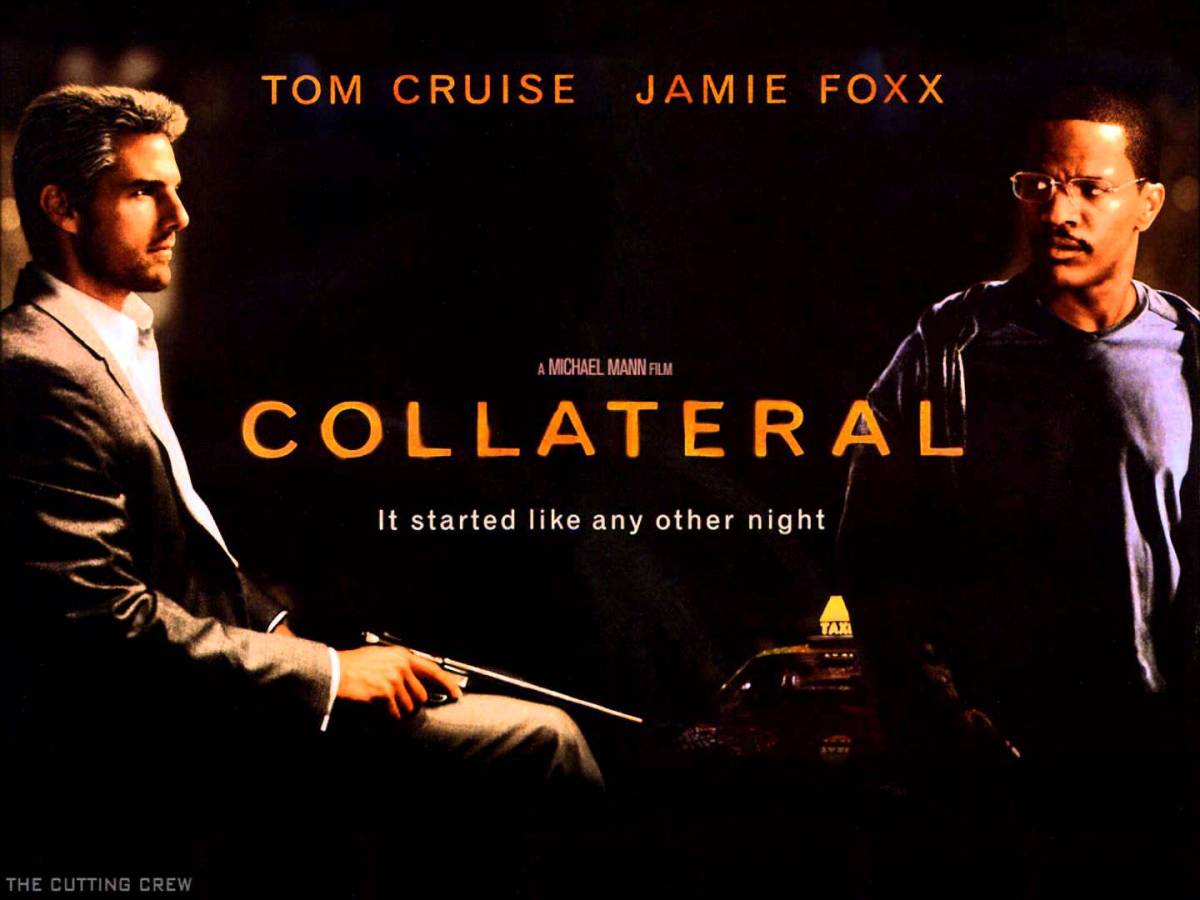
While there are numerous crime thriller films out there, ‘Collateral’ is able to go above and beyond the clichés and be original in its’ own right. Part of this is due to the fact that Tom Cruise and Jamie Foxx give outstanding performances for their respective characters along with the rest of the credit that should be given to director Michael Mann who relishes being a director for crime noir dramas that are set in Los Angeles. While ‘Collateral’ was not an Oscar award winning film unfortunately, its’ characters, the setting, the action sequences, the directing, and the overall message that the plot sends to the audience make it a unique and reputable movie that deserves a viewing or two.

Without going into too much detail, the plot of ‘Collateral’ stars two men who come from very different circumstances and live very different lives. However, the Cosmos align to have them meet for the first time at night in Los Angeles. “Vincent” played by Tom Cruise, has just arrived in Los Angeles from the airport and is looking for someone to take him around the city. What better way to see L.A. than to do so by taxi so Vincent goes to the nearest taxi stand to seek one out for a ride. That’s where the plot of the film begins as Max, played by Jamie Foxx, accepts Vincent as a new passenger after ignoring his presence initially. Vincent, dressed in a gray suit with gray hair could be just like any other businessman in Los Angeles but he’s not what he appears to be. Max starts to realize this as the night goes on but not until after he drops off Vincent at his first but not his last destination.

Vincent is more than just the new guy in town here for business. He’s a contract killer and a hitman who is in Los Angeles for one night only in order to carry out a series of hits. After bearing witness to the first of Vincent’s murders, Max is forced into being Vincent’s chauffeur for the rest of the night as he has four more contract hits to carry out for his boss, “Felix”, played brilliant by actor Javier Bardem. Vincent’s goal for the night is to carry out the rest of the contract hits successfully and then get a flight out of Los Angeles as the sun rises after his boss pays him handsomely for his ‘work’. Max’s goal for the rest of the night is to get out of this situation alive without getting killed by Vincent or being seen by the police as an accomplice of Vincent who is dragging him along as he commit these vicious murders in cold blood.

Mixed up in all of this madness is “Annie”, played by Jada Pinkett Smith, who is a prosecutor in the U.S. Justice Department who works out of their office in Los Angeles. She ends up being the first passenger of the evening in Max’s cab before the fates intertwine and Vincent comes along to change Max’s life forever. The only good part of Max’s night is when he meets Annie and they hit it off enough to the point where he is able to get her phone number but it is uncertain whether or not he will have the confidence to call her and make plans.

Unfortunately, Vincent, the contract killer, has Annie in his sights as one of his five targets setting off a series of events that put Max and Vincent on a tense collision course. On top of all of this, you have members of both the FBI and the Los Angeles Police Department noticing what Vincent and Max have been up to which causes more violence and bloodshed to occur. “LAPD Detective Ray Fanning and FBI Investigator Frank Pedrosa” (played by Mark Ruffalo, and played by Bruce McGill) are the ones leading the investigation into these random but coordinated killings popping up all over Los Angeles in the dead of night orchestrated by Vincent with Max as his unwilling accomplice.

There’s no character in this film that isn’t in danger or who may come into harms way and that is partly what makes the title of the film fitting as called ‘Collateral’ because everybody in this movie feels the damage caused by Vincent in some way. Max has feelings for Annie so he wants to do the most he can to protect her before she become apart of the ‘collateral’ damage that is being inflicted by Vincent.

Michael Mann, the director of ‘Heat’ (1995) previously and of this film ‘Collateral’, does an excellent job of making the setting of Los Angeles feel like its’ own character that sets the tone for the movie as well as provide an analogy for what the characters of Max and Vincent are like. Los Angeles is a sprawling urban city of more than four million people and has highways, tunnels, and bridges that loop and wind through the various neighborhoods that can only be connected by car.

For Max, Los Angeles is the only home he’s ever known but for Vincent, it’s a sprawling, disconnected mess of alienated people who don’t know or care about each other even if the collective Gross Domestic Product (GDP) of their city is more than most countries on the planet. Vincent regales Max about a story of someone who dies on the Los Angeles Metro one day and nobody else on the transit system notices for many hours, which proves his supposed point about the city’s culture of alienation. Similar to L.A., Max and Vincent are disconnected from other people in their own ways. Max is shy and reticent with new people he meets and doesn’t go after what he wants while Vincent is a sociopathic killer who doesn’t have much regard for people in general.

There’s one excellent scene in this film where Vincent and Max chide and prod each other as to why they are who they are. Vincent wants Max to call Annie, the girl whose number he got earlier in the evening, because “Life is short. One day it’s gone…” Max doesn’t reply regardless of what Vincent’s opinion is of his dating life. Later on in the scene, they both see a lone grey wolf walking through the streets of Los Angeles presumably searching for food or for some sort of purpose. In so many ways, this is symbolic of who Vincent and Max both are.

Vincent knows his purpose is to kill people because it’s what he ‘does for a living’ but this job alienates him from his humanity and causes him to be a lone wolf. Max is unsure of his purpose in life and wants desperately to be more than a simple taxi driver. He has dreams to start his own limo company one day but never takes the first step to making that dream come true and actually become a reality.

Even though they are two different men from very different circumstances, they are able to see what they should become if they weren’t so set in their ways. Max is a compassionate person who cares for others but is stuck without a purpose and isn’t able to take control of his life. Vincent is a sociopath who can’t relate to other human beings but knows what his one true purpose in life is and this allows him to feel some control over his existence, which he deems as being ‘meaningless’ in the long run.

Even with the fact that they detest each other, they begin to understand the flaws in their own character and how they could be different if they gave themselves a chance. Max could be more spontaneous and avoid having a repetitive life if he chose to be something more than a taxi driver. There’s no changing that Vincent is a cold-blooded killer but you start to see the circumstances that created his monstrous self. He never knew his mother, and his father was an alcoholic who beat him mercilessly and let young Vincent to grow up in foster homes. Max, nor the audience, can show much sympathy for Vincent’s plight but you start to realize that he is not just a simple-minded killing machine.

While life may be meaningless for Vincent, he still thinks that Max should live it to the fullest and ‘carpe diem’ before it’s too late for him. Max gets Vincent to ask himself why he is a sociopathic killer and gets him to reveal a little about his troubled family as well as to why he is a nihilist. In response, Vincent gets Max to ask why he never did anything to make the Limo Company to become a reality. He implores him to think deeply about making his dream come true because someday it may never come to pass if you don’t do anything to make it happen in the first place.

‘Collateral’ is a great crime thriller that is extremely well written, has great acting, and is directed and choreographed superbly by Michael Mann and his team. Beyond that, ‘Collateral’ is a film that makes you question certain things about life and the limits that we put on ourselves. The nihilism and disconnectedness of both Los Angeles and the main characters of Max and Vincent is both surreal and powerful. This is not your typical Hollywood drama and that’s a good thing. This movie is not a blockbuster and feels more like an independent film that came in way under budget.

‘Collateral’ is a gripping take on two men who are forced together by fate to go through a night together that will change them forever. I highly recommend this movie based on the excellent writing, acting, directing, and the strong storyline that keeps the viewer interested. Jamie Foxx and Tom Cruise do an excellent job and have great chemistry together, which is what makes ‘Collateral’ really shine, and have longevity as a unique film over a decade later. If you get the chance sometime, you should really see this movie.

Book Recommendations – Volume III

After a five-month break, I’m back with another edition of “Book Recommendations.” I’ve had some free time on my hands lately which has allowed me to read these really great books. I would like to share my latest selections with my visitors and hope that you will check these books out for yourself.

Note: I have also posted the links to these books so you can check them out on Amazon.com. You simply need to click on the books’ images below in order to be re-directed to the Amazon page of the book itself. Enjoy.

1.) And Then All Hell Broke Loose: Two Decades In The Middle East by Richard Engel, Chief Foreign Correspondent for NBC News

As someone who has studied the Middle East region extensively in college and has made a few trips to the region (Turkey, Israel, Jordan), I continue to enjoy learning about this tumultuous part of the world despite its rough past and present.

This book by Richard Engel is excellent because it comes from someone who understands the complexities and historical background of the region. He is also a great correspondent and storyteller who weaves his own history of working in the Middle East alongside the tumultuous events over the past two decades, which have fundamentally transformed the region.

Mr. Engel has been a foreign correspondent in the Middle East for over twenty years now. In this book, he clearly displays his vast knowledge of its’ history, culture, societies, and the troubles that continue to plague the region. Engel is fluent in Arabic, Italian, and Spanish. He has worked for NBC News and other major news organizations for over two decades. He re-tells his firsthand experiences and stories of starting out as a freelance journalist for the Agence France-Presse in the late 1990’s during the time of Mubarak’s Egypt. He goes on to discuss his experiences of working and living in Iraq during the collapse of Saddam’s regime and the subsequent U.S. occupation of Iraq.

In addition, Mr. Engel has also spent a lot of time covering the fall of Muammar Gaddafi in Libya and the recent civil war in Syria. Richard Engel has also endured some trauma during his career as he was captured and kidnapped by ISIS in late 2012. For the readers of his book, we get personal insight into the hellish situations he has been drawn into through his accounts of witnessing the deaths and injuries of many of his journalist colleagues over the past twenty years. This book is fundamentally a more personal story as he recounts how his 20 years of covering the Middle East had affected his marriage, his friendships, and his mental state.

What I like most about this book is that Mr. Engel gives you the historical background and the straight facts of what happened in the region and why it happened. You can tell that he was both physically and emotionally affected by the wars and insurgencies that he bravely covered for the U.S. media. More than anything else, it is a well-written account of what it means to be a journalist in a very difficult region of the world for journalists. Richard Engel doesn’t preach about what should have happened or what could have been different in terms of the politics but he simply relays his past experiences for those of us who want a more personal, firsthand account of what it is like to cover the Middle East.

2.) Kitchen Confidential: Adventures in the Cultural Underbelly by Anthony Bourdain

A world-renowned traveler, famous television show host, coolest American alive over 50 years of age. You can also add best selling-author to this list as if it wasn’t long enough. These are just a few of the titles that Mr. Bourdain has earned over the course of his life. However, most people forget that he was a very successful chef in New York City and elsewhere during the 1980’s and 1990’s. He is especially known for being the executive chef at the famed restaurant of ‘Les Halles’ in Manhattan, NY.

Due to his years in the kitchen, Kitchen Confidential is an in-depth, intriguing look into the actual process of how the food we eat in restaurants ends up on our plates. You may not feel very hungry after reading this book due to the expose on some food industry practices that could be considered unsatisfactory in terms of health regulations. I know now that I won’t ever order fish or any other seafood from a restaurant if it’s a Monday.

This book is an unfiltered look into life as a cook and Bourdain hilariously delves into stories from his past and the characters he encounters in the various kitchens he’s worked in. He discusses how he worked alongside drug dealers, degenerates, thieves, loose cannons, etc. in the kitchen but that didn’t detract from the excellent chefs that they made themselves out to be. If anything, Bourdain argues, their eccentricities and attention to details help make these people into great cooks.

Kitchen Confidential is also useful in that Bourdain gives tips and advice to his readers on how to cook and prepare food better. His advice ranges from what kind of knives are best to which simple gadgets make the most difference in having a decent kitchen to cook in. If you like his travel shows and his antics as a TV host, you will most certainly enjoy this book.

3.) Connectography: Mapping The Future of Global Civilization by Parag Khanna

The race to win the 21st century will not be a race between militaries, or of competing arms but of overall connectivity. Mr. Khanna argues that whichever country becomes the most connected to the global supply chains of trade, finance, technology, infrastructure, etc. will stand to benefit most in our current globalized world. A geopolitical strategist, consultant, and world traveler, Mr. Khanna displays his in-depth knowledge of international affairs and geopolitics from his past travels and from his extensive research.

From Ukraine to the UAE and from China to Nigeria, Mr. Khanna details how national borders are no match for the global supply chains that are increasingly emerging. Physical boundaries of geography are becoming less important than the priorities of developing high-speed rail lines, building intercontinental pipelines, expanding the World Wide Web, along with increasing energy outputs and resource trading among many different nations.

While some prominent figures in politics are advocating for resurgent nationalism and wall-building, Mr. Khanna understands that this perspective is detrimental in a world which is becoming more fundamentally connected. In the 21st century, countries and continents need each other now more than ever. With ten trillion dollars and growing being spent per year on infrastructure, transportation, energy, and communications, this trend is likely to continue unabated.

Among the notable ideas in this great book that Mr. Khanna highlights are the emerging North American Union with related maps in the book showing how the United States, Canada, and Mexico are becoming more interdependent. China is also connecting itself to many of its neighbors in Eurasia through gas, oil pipelines and freight rail networks.

In Connectography, Mr. Khanna gives us an in-depth perspective on the world’s growing interdependence and how its’ affecting our everyday lives. While there are numerous challenges to this worldwide trend, which are also highlighted in the book, Mr. Khanna strikes on a final note of optimism. Even with the difficulties and struggles of climate change, terrorism, civil wars, etc., only a more inclusive, connected global society can meet these challenges head on and succeed together.