


Call or Text Those Who Matter to You

“You may not think it is a big deal, but I really believe it is one of the kindest things you could do for another person.”

You can tell who really cares about you by those people in your life who take a little time out of their busy days to call or text you. You may not think it is a big deal, but I really believe it is one of the kindest things you could do for another person. They aren’t expecting you to reach out at all perhaps or you have not reached out in a while so they wouldn’t expect any contact, but the fact that you take the time to think of them, to send them a text message or to give them a call, shows just how much they really matter to you.

There are certainly other ways to show your appreciation and care for the people in your life such as meeting them to go out for dinner or for drinks or even a coffee or tea. However, I believe that sustaining a friendship or relationship isn’t just about meeting up every now and then but it’s about actively taking an interest in their life and how they are really doing. Being able to check in on them in a sincere way will make you stand out compared to other people in that person’s life.

Being a simple acquaintance is someone who doesn’t mind meeting up with you but for which you are the one who is always initiating, always reaching out, and always doing the leg work. That kind of one-sided contact can get old after a while as you may enjoy their company but feel as if they never reciprocate or attempt to make plans with you as well. Having a one-sided set up especially if you are always the initiator is what makes that person more of an acquaintance than a friend or a romantic partner. Those kinds of one-sided interactions can be fun and enjoyable, but they don’t have the kind of longevity you should really be looking for.

If you are always the person who is reaching out to call or text them, then good for you on doing so and I recommend it, but don’t let your own kindness and thoughtfulness not be reciprocated at all. Hopefully, the other person will eventually take the hint to do the same for you not just because it is the right thing to do but because they want to do so, and they also care about you. If you are always calling, texting, or making plans, and you don’t mind doing so, you can keep it going if you enjoy that person’s company. Moreover though, if they never reciprocate or show an active interest in your life and it frustrates you to how it is so one-sided, you may need to rethink how often you see or talk to that person.

Kindness should not ever come with an expectation of any reciprocation, but a one-sided friendship or relationship is not going to work out. I still would encourage anyone reading this to not be afraid to check-in with a loved one whether it’s a romantic partner, a friend, or a family member. Don’t expect to always have them to do the same for you but I will say that it’s more likely for them to reach back out to you when you do that for them. You may have to be the first to do so but hopefully you won’t be the only person to do so and they’ll start thinking of you more and wondering how life is treating you.

Whether you are going through good times or bad times, you should call or text those people who really matter to you. It makes a huge difference, more than you would ever think, when you reach out to someone. You are going to brighten their day, improve their mood, or even strengthen the bond or connection you both already have. It truly is a selfless and kind act that we should be encouraging more in our society. If someone knows that you care and are thinking of them, they will feel energized and perhaps a little less sad or lonely as a result.

We may not be able to see that person in person but when you can call or text them to have a conversation, that is the next best thing that you can do. With how much technology has advanced, it’s almost as if they are with you physically and in the room with you. We are all busy and have a lot going on these days in our lives, but a simple call can just take a few minutes and a text message takes less than that in just a few seconds.

Let us strive to be there for one another especially when you know that person is struggling with something or having a rough patch in their life. Reach out to those who matter to you and don’t let it just be you doing it all the time. Make sure it’s a two-way street but if you must take the initiative first, do not hesitate in doing so. Kindness is about caring for one another and making a simple phone call or sending a text message to someone you love or like is the best way to start.
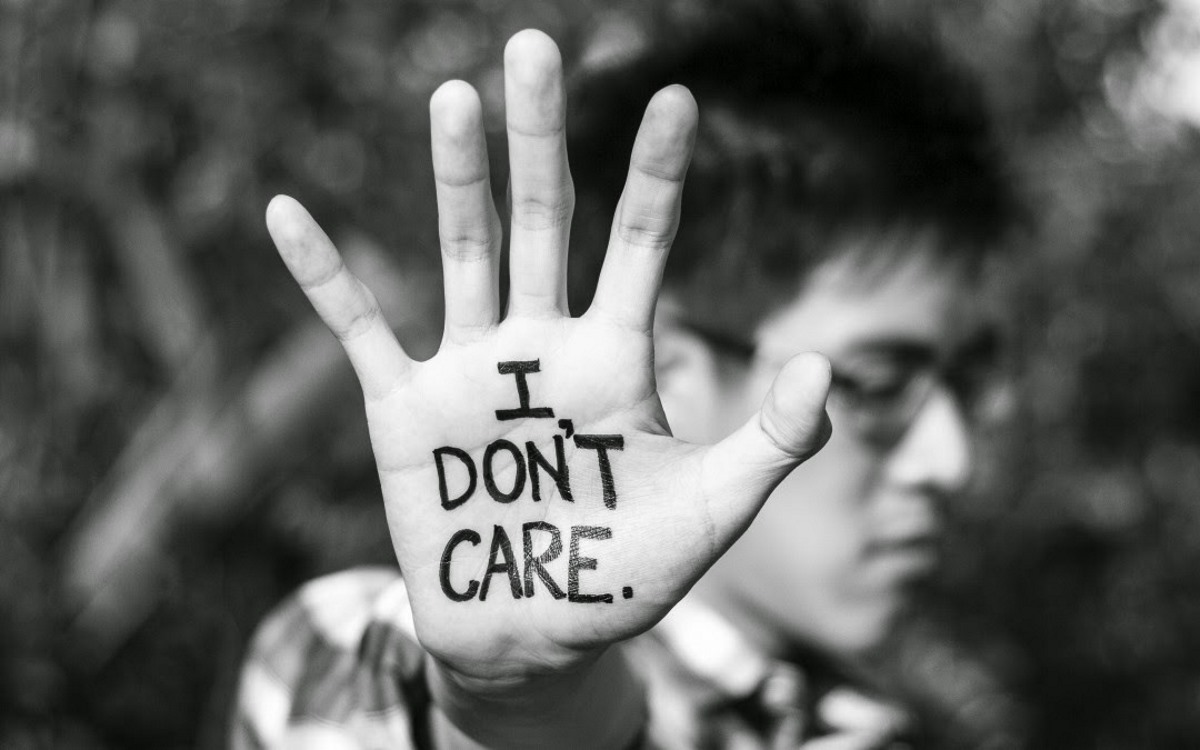
They Know, They Just Don’t Care

“A lot of personal and professional issues that are unaddressed or dealt with will not go away and will need to be handled. In most cases, the problem or issue will metastasize and becomes even more difficult to resolve.”

The popular adage that goes “the first step to solving a problem is to realize that there is one” is key to recognize in life even if it involves admitting an inconvenient truth. A lot of personal and professional issues that are unaddressed or dealt with will not go away and will need to be handled. In most cases, the problem or issue will metastasize and becomes even more difficult to resolve. On top of that, you’ll often need more manpower, resources, or funds to solve the growing problem when it could have been tackled days, weeks, months, or years ago.

I truly believe that knowing a problem exists and refusing to solve it or letting it fester is worse than when a person is unaware that there is a problem to deal with in the first place. Pleading ignorance when you know the truth but lie to yourself and to other affected problem will lead to a lot of stress and turmoil in the long run. There are numerous ways to describe this kind of mentality but to me, it’s about someone or a group of people knowing that a situation is unsustainable or untenable and refusing to fix it even when it would be the right thing to do.

Acting or admitting fault or an error is never easy but doing so is the first step in actively solving the problem instead of letting it continue. Standing by and not admitting what’s going on is not right or not sustainable will put you on a collision course with a rough ending in most cases. This kind of mentality of “knowing but not caring” can erode trust, relationships, and even ruin people’s lives if it is allowed to go on. In this case, knowledge of a problem and not acting to resolve it can cause a lot of damage in various areas of life. To make this ‘knowing and not caring’ examples of hypothetical professional or personal situations where this kind of attitude would lead to negative consequences, let me discuss two instances where ‘knowing and not acting’ can lead to regrettable events:

Let’s say that someone worked hard to be trained as a lifeguard and was paid to do so by the local city by the beach for the summer season. Many people were trained, funds were spent, and chairs / stations were built. The foundation is strong so that people’s lives can be saved if something bad were to happen and each of the lifeguards were trained in CPR and other first aid tactics in case it is necessary.

Not only are the lifeguards trained in first aid, but they also need to pass swimming tests to qualify for the city’s public beaches as employees. However, since the city’s budget is running a deficit because of improper management and cost overruns, the city council must decide where to cut funding to balance the budget. The folks in charge of the budget knew that the deficit would cause problems when they projected in in the previous years, but nothing was done about it.                                                                                                      

As a result, costs need to be cut by the city so difficult decisions will need to be met. The city needs to keep schools open for some students to receive summer school and must pay the public-school teachers to do so. They also can’t reduce the police or firefighter budget given that the summer season tends to be the busiest for them and they also are guaranteed pensions that are negotiated by the unions.

Sadly, the only way to start to balance the budget is to cut recreational programs including the lifeguards at the beach even after they did the training, and the city spent the money to train them for these jobs. Other recreational programs will need to be cut along with reducing hours for access to public parks and sports courts. Most regrettably, the city council will have to cut access to the public beaches there because they don’t want to take the risk of having liabilities involved of having its citizens swim without lifeguards present. It causes a lot of anger, disappointment with the city’s residents as well as students who were looking forward to swimming, playing on the beach, and seeing friends but since the city can’t afford lifeguards, the public beaches will have to be closed the whole summer season.

While many individuals or one individual in city government would be responsible for seeing where the budget deficit would start to harm the city’s services, but because no one looked hard at how to prevent the deficit from affecting the public recreational programs or saw that cuts would need to be made in a year or two years’ time in other less important areas, the problem was unaddressed. It’s about knowing the problem exists in this case, but doing little or nothing, or ‘passing the buck’ onto someone else in the city’s government rather than working in advance to fixing this issue before people’s lives were affected.

Another potential issue is that it is difficult to keep watch over public beaches 24 hours, 7 days a week. Chances are increasingly high then for an accident to happen where college or high school kids come to the beach even when it’s closed or limited to swim or have a bonfire. Because of their anger, they may end up swimming in defiance or doing something that could put themselves in harm’s way. Not only will the city not have lifeguards there to prevent that from happening, but it’s possible that the city will be blamed or liable for any possible accident or issue with people using the beach illegally because they did not balance the budget in advance.

A potential tragic loss of a life, an accident, or the loss of trust in the city’s government are all regrettable consequences that could be avoided if a group of people or person(s) would do something about the problem when they knew of it rather than letting it grow out of control later. While this is a fictional instance, this kind of regrettable story or event happens a lot in our world and the issue at hand could often be avoided with due diligence, foresight, and good work.

More generally, regarding possible examples of this kind of ‘knowing and not caring’ regarding someone’s personal relations, I believe this could apply to situations when it comes to family members or close friends not helping someone out when they know their beloved family member or friend is going through a tough time. They may know of a problem that person has like an addiction to gambling, drugs, alcohol, or other substances, and believe that only they can help them rather than taking them to a licensed professional or a doctor.

This can also be applied when that person’s addiction is harming their relationships, is getting worse, and tends to cost that personal financially, morally, and in other ways. If the family member(s) or friend(s) don’t address their beloved one’s problems head on and let them continue, that affected person in a personal situation will be more likely to hit ‘rock bottom’ and may not be able to be saved from themselves. When that person is not reigned in and told that they have that problem the family member or friend knows about, then they are doing a real disservice by not helping them get better actively. Letting the addiction or mental health problem continue even when that other person in the relationship or friendship knows it must not go on but won’t take action to resolve it, then that’s a prime example of where ‘knowing and not caring’ enough to solve the problem can really backfire.

Sadly, in most cases, the friend or family member affected may suffer even more from the problem not being fixed or aided by the significant other. They can lose themselves fully to the addiction, end up losing their job, their home, or even their life as a result. Part of being a friend or a family member is to be there when that person needs you the most. They don’t want you to sugar coat things and sometimes, you must give them the ‘tough love’ by telling them the absolute truth and letting them know that they have a problem, but that they are not beyond saving, and that you can go ahead and help them get better. That is the mark of a true friendship and relationship when you know about the other person but also care enough to help them be and get better if necessary.

The world can be a messy and complicated place but the concept of knowing when a problem exists in your personal or professional life and not doing anything about it and trying to find a solution to it is disheartening to me when it does happen. It does happen a lot in life, and I hope that you will be different to act on the problem rather than letting it fester. You may change someone’s life or people’s lives for the better when you know about the problem and address it so the solution can improve lives and make the world a better place through your actions to find solutions rather than let the problems you know about to multiply and grow.

Kindness Always Matters

“One of those things is the effort taken to be kind. It does not take much to do and while it can be difficult to be kind all the time, it doesn’t cost anything, and the effort is always worth it.”

There are a few things in life that are non-negotiable. One of those things is the effort taken to be kind. It does not take much to do and while it can be difficult to be kind all the time, it doesn’t cost anything, and the effort is always worth it. Some of the issues that we experience in our world is due to a lack of kindness in our daily interactions. If more people tried to be kind towards one another, I could guarantee that a lot of conflict, irritation, and resentment would go away.

Someone who is always kind to anyone regardless of who they are or what they can or cannot do for the person will stand out even more. The smallest gestures can make all the difference in another person’s day or week. As the popular saying goes, “It costs nothing to be kind.” I would add on to that saying but highlighting that, “It costs nothing to be kind, but it means everything to be kind.” When you do kind gestures and use kind words, not only will it reflect well on you, but it will also endear you to the people around you.

When we are living in a day and age of rapid technological, social, and political change, it is even more important to stay true to the morals and values that make people trust, believe, and have faith in one another. Showing kindness and being a kind person helps make the world a little bit better in a measurable way. I have written before about the ripple effect and how your kind gesture is likely to lead to another kind gesture from the person you impact. I’ll give an example to highlight just exactly what I mean.

We open and close doors multiple times a day and usually we are in a public place when we must do this. It takes approximately three to five seconds to hold the door open for the next person. You may not think it’s a kind gesture, but I would like you to imagine that the person behind you has a bag or two bags in their hand. Maybe, they also have their dog with them, or they are on a cell phone call. Thus, when you put it like that, the simple gesture of opening the door for them so they don’t have to use their arms if they’re full or if they’re busy with another urgent task can make all the difference.

You will have to exert a little bit of physical effort to hold that door open to a complete stranger but think about if they automatically would not hold the door open for you when you are in need. It would not feel that good to you if you were the person occupied with other items or tasks and the person before you did not hold the door open for you when you need that. When it comes to kindness, we do have to think about being in someone else’s shoes and how a lack of kindness can make our day worse and not better.

I do believe that when you do a kind gesture for someone, they will likely then reciprocate by following that learned behavior. It’s similar to what we do when we are children, and someone offers us a piece of gum, or a candy and we do that to someone else as we learn that “sharing is caring.” You can have that kind of impact each day by holding the door open for someone reminding them that they themselves can do that same small act of kindness for the next time when the opportunity presents itself.

In the Post-COVID era where we were instructed to stay away from each other to prevent the pandemic from spreading, I think it’s not even more important to get back to looking out for each other in the opposite way by looking out for one another even more after a hard period of isolation, distress, and uncertainty. The world remains in a tumultuous and difficult period still but now we have the chance to make life a little easier by being kind because it is the right thing to do as we are taught since we are children.

Whether it is holding that proverbial door open or asking how someone is really doing and hearing them out if they are not doing well, or remembering to check in with friends and family from time to time and asking if they need help with anything, especially if you have elder family members in need. We truly show our humanity when we look out for one another, and it is the singular characteristic for which we will be remembered for or not remembered for when we are gone from this Earth.

While we would like to think we were remembered for having a prestigious job or for all the things we did for our own personal gain or benefit, or for what kind of impact we had in the world, which are not bad things to be remembered for, I do think it is better to be remembered as a kind person firstly. I believe it is best for others who will remember you to focus most on if you were the kind of person who endeared himself or herself to others in a selfless manner without expectation of a return for having done so.

You can bet that if you are a kind person, people who will remember you when you’re gone will focus on that quality more than anything else. If you have ignored being kind to others or have not focused on it as a character trait, it is never too late to instill more kindness to people in your life. Every effort matters and kindness always matters. If you can change your ways to a better person, being a kind person is a trait that will always be remembered long after you’re gone. Remember that people are struggling out there and the simplest kind gesture of asking how a person is doing, opening the door for someone else, and checking in on people to help them if they are in need is the greatest gift to share in this world.

The Art of an Apology

“One thing I have noticed recently is that some people have a hard time giving a simple apology when they mess up, are rude to others, or don’t have the emotional intelligence to realize when they were in the wrong about something. Now, this is not a good habit to develop as an adult and one that makes you appear to be childish more so than any other negative trait that you could display.”

One thing I have noticed recently is that some people have a hard time giving a simple apology when they mess up, are rude to others, or don’t have the emotional intelligence to realize when they were in the wrong about something. Now, this is not a good habit to develop as an adult and one that makes you appear to be childish more so than any other negative trait that you could display. Learning how to apologize is done when we are children and our parents tell us to always ‘say sorry’ and to learn to be nice to others.

‘Sorry’ is one of the golden words we learn are key to our day-to-day lives. It doesn’t take much to do and will cost you nothing. The fact that many adults don’t know how to do this today in our society is a worrisome sign of how personal relations have decayed compared to previous times. Some people choose to dance around the offense and not acknowledge it while others refuse to take responsibility for their actions which leads to the person who was offended feeling aggrieved and holding a grudge against that person for longer than they should need to.

The old adage of ‘you forgive but you don’t forget’ is not a pretty one but if there is no apology from that person who committed the offense, the other person may learn to forgive them but they will not forget that there was no apology rendered from the other person. I do not endorse holding a long-lasting grudge against other people but being rude, saying bad things about others, and overall not being a respectful person will cause you to lose many different relationships with others. Most adults do not know want to associate with somebody who refuses to apologize or does not take responsibility for their actions.

I believe that with social media and how often we do not see the other person’s face and their body language that we feel comfortable getting away with rude behavior and it has led to that kind of behavior spilling over into real life interactions. A lack of an apology can be due to a person’s own narcissistic nature and to think that the rules like the ‘golden rule’ don’t apply to them and that they can ever do no wrong including causing harm or offense to other people.

The sign of a true mature adult is one who apologize and does so in a sincere manner. It is a heartfelt apology and is usually more than just a simple ‘sorry’ and then move on. If someone cannot even say ‘sorry’ or realize the hurt that they have caused, then they still have a lot of growing up to do and act more like a child or a teenager in an adult’s body than an adult themselves. The sad thing to see in society is when a 45 year old acts like a 15 year old or when a 75 year old acts like a 5 year old, which is often as the result of them not registering other people’s emotions or feelings, and thinking reflectively about their behavior, their tone of voice, and how their language was inappropriate.

The art of an apology is not as simple as it can be made out to be with just a quick ‘sorry’. Often in life, a simple ‘sorry’ does not cut it. I think it’s better to follow these steps to having a legitimate and heartfelt apology that will make the other person feel better and try to restart the relationship or improve it rather than letting it fester and causing the other person to dwell on your insult.

1. Acknowledge You Were Wrong

The first step for any good apology is to acknowledge to someone face-to-face if you can or over phone or email if you can’t see that person that you were wrong. Whether it was something you said or something you did or that you hurt their feelings, acknowledge the thing that caused the original offense, state how it wasn’t right for you to do that, and apologize in that way beyond a quick ‘sorry’. It’s as direct as “I was wrong to…”, “It was not right for me to…”, “You deserve an apology for…”

2. Remember the Incident and What You Took from It

When you acknowledge what you did and that it was wrong, it makes the other person feel like you remembered that it was not the right thing for them to do and that pain was caused. It also means remembering that certain feelings were hurt and that the other person realizes they could have done things different / not said anything at all / or watched what they have said better. Saying ‘sorry’ or apologizing without saying what the ‘sorry’ is for is not a good way to do an apology because you have to be specific regarding what the apology is for and what you did wrong if you caused offense.

3. Be Sincere and Don’t Rush It

How you say an apology is often more important than what you say in the apology. If you are rushing through it, only saying a one-word apology, and not even looking at the person or acknowledging their presence while saying it, then that is not a real apology. A real apology must be congruent with your body language and your eye contact and your tone of voice all on the same page together. You should give that person your full attention and not be checking your phone, reading your email, or have your attention generally elsewhere while doing the apology.

Also, not rushing it means it’s going to take more than a five second ‘sorry’ and move on, if you follow the previous two steps, a good apology will take as long as it needs to which could be anywhere from a minute to ten minutes depending upon what the other person has to say. Depending on the severity of the negative action, you want to give that person a chance to respond, to accept your apology, and to decide how your relationship with them is going to move forward. You cannot force an apology to move forward without the other person agreeing to it so make sure you are patient, forthcoming, and open to listening to what they have to say to you.

4. Be Open to a Change in the Relationship

Even with an apology, sometimes, that person is going to want to take a break from seeing you, hanging out with you, or being around. It can be hard to bring that relationship back to what it was when harsh words are exchanged or when negative actions happened between two people to cause the strife. You have to understand and accept what the other person does because they may not want to trust you again as much or recognize that you aren’t the person who they thought you were.

This may be a hard pill to swallow but you are likely going to have to spend some time away from that person, let them forgive you on their own timetable, and they will set the terms on if they see you again or not. It is possible they may never fully get over what you did and not want to be around you again at all. This is a harsh truth to face for most people but the least you can do is apologize and try to move on.

If that person chooses to accept your apology but not go out of their way to see you again then that is their right to do so and it is up to them how they want to conduct their interactions with you moving forward. As adults, people want to spend time with those people who treat them well, respect them, and are emotionally mature. If you can’t do that, it’s going to be tough to have friends or to be around other family members.

I write this article because too often today I have seen other adults refuse to apologize for being in the wrong and this can cascade throughout the rest of our society. There is a fundamental lack of accountability and also responsibility that starts with a failure to apologize sincerely. It takes real wisdom and maturity to apologize to someone, but it is necessary since we are all flawed and make mistakes.

A true adult owns up to these mistakes they made, apologizes for them to seek forgiveness, and accepts what the other person does in response without any future expectations on how the relationship can move forward. It begins with saying ‘you’re sorry’ but it does not end there and a good apology is more than saying ‘sorry.’ It means acknowledging what you did was wrong, being sincere about it, listening to the other person, and being open to a change in the relationship based on how they want to move forward with you in the future. That is the true art of an apology and one that I hope you will follow in your own life.