













Camera: Canon PowerShot SX710 HS
Location: Gloucester, Massachusetts, United States

Camera: Canon PowerShot SX710 HS
Location: Gloucester, Massachusetts, United States
In order to facilitate your grammar studies, it’s important to not overlook certain topics that are integral to boosting your knowledge of English grammar. ‘Gerunds’ is one of those key topics to really get a handle on and master because it will come up again and again in both your speaking and writing. While not the most complex topic, being able to understand the rules behind gerunds and memorizing them will put you ahead of other learners. ‘Gerunds’ is a topic that needs to be put into use over and over in order to be used proficiently.
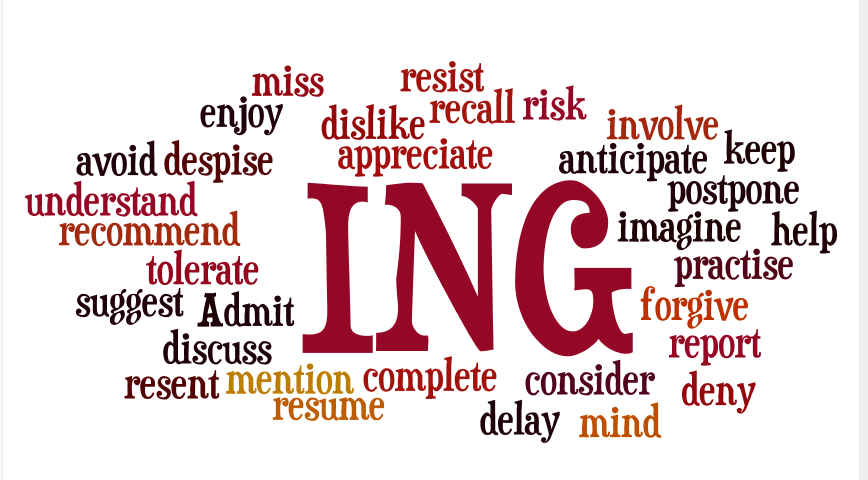
The main thing to keep in mind with gerunds is not to overcomplicate what they are and what they are used for. Gerunds are simple verbs that end in –ing and that never changes regardless of which tense they are used in. –Ing can be added to verbs that are used in the present, past, and future tenses. Gerunds can also be utilized at the beginning, middle, and ending of sentences. These verbs + -ing are extremely versatile in their usage and it’s important to be aware of where they can be placed within sentences.
The key thing to keep in mind with a gerund word is that it used more like a noun than a verb or an adjective. Most students don’t remember that a verb that ends in –ing can also function as a present participle which is different than a gerund. Gerunds are not the same as present participles and the main difference between them is quite easy to remember. Gerunds are primarily used as more of a noun than a verb or adjective whereas present participles function more as exact verbs. Here are a few examples below as to how ‘gerunds’ are used as nouns in a regular sentence:
Gerunds have to be thought of nouns in verb form essentially. If you notice from the above examples, ‘gerund’ words can be used as the subject or object of a sentence. They can be placed at the beginning of the sentence to become the main subject or they can be the object of the sentence when the gerund comes after the main subject and the main verb as well.
While gerunds can mainly function as nouns, they can also be used as adjectives when they are right next to each other in the sentence structure.
It is important to note that you can often use gerunds after many different kinds of prepositions during a normal sentence. Gerunds often act as a substitute for noun words that you could be used right after prepositions. If you’re only using the base verb without the gerund (-ing), it won’t be grammatically correct. Here are a few examples of how to use the gerund after a few different prepositions:
It’s important to keep in mind that the gerund immediately follows each preposition directly after the preposition word is used in the sentence. There are dozens of prepositions used in the English language so it is important to keep in mind when to use the gerund after any kind of preposition comes up in a sentence.
Lastly, ‘gerunds’ can be used in a passive voice kind of sentence under multiple circumstances. In these kinds of cases, the gerund word would often come at the end of the sentence to reflect the action taking place. Here are a few examples of how you can use gerunds in a passive voice kind of sentence:
Please note that in sentences #1 and #2 from my examples that the main verb ‘need’ is used right before each gerund word. Without the main verb of ‘need’, it becomes much more difficult to express the action that is occurring at the end of the sentence.
Whatever use you find for the gerund, remember that the gerund comes up very often in both spoken and written English. You can use the gerund for multiple purposes including for nouns, adjectives, prepositions, passive voice, etc. The key thing to take away is that gerunds are very flexible in terms of their placement within a sentence. They can also be combined with various parts of speech to make your writing flow better and have more details. While gerunds are easy to form with ‘verb + -ing’, using them within the right context and in the right format is something that requires patience, practice, and repetition.
We live in a world where the first impression that we give out to others is a key determining factor into what kind of relationship we have with them and how they see us as human beings. I believe that it is naïve in this day and age still to think that first impressions don’t matter at all because they really do matter and if you don’t know how to present yourself in a positive, mature manner, it may affect your life in various negative ways.
Our culture is based around the individual yet we cannot forget that ultimately, you are still tied to other parts of society such as your family, your local community, and your country. Now, one may not care what others think of them and that is their right to do so but your actions, words, habits, and personal dress have an affect on society whether you like it or not. You are not an island unto yourself where you can do whatever you want and there are no consequences that can come of that. We are all part of an overall society and failure to recognize that fact of life will not change this part of human nature.
Whenever you’re out in public meeting new people for the first time, how you dress, how you act, and how you use your spoken language carries a number of effects as to how people will treat you. You never know what kind of relationship whether personal or professional you’ll be able to build with somebody else if you’re not willing to put in that effort. There are numerous opportunities that the average person can miss out on in their daily interactions if they are not actively thinking about presenting themselves in the right fashion.
The key thing to know is that people are always going to judge you when they first meet you and this always happens very rapidly. There are certain ways that you can make yourself stand out in a positive manner which will benefit you in terms of more people will take you seriously and will respect you more. The opposite of that is also true in that if you fail to present yourself in a respectable manner when you meet other people for the first time, there could be a number of negative consequences for you if you don’t learn to change certain bad habits.
In this day and age where people are becoming more and more addicted to technology, especially the smartphone, you can stand out easily if you know how to present yourself. Basic social skills are not being taught as much whether it’s for young people in school or for adults in the workforce. Just a few generations ago, both men and women were taught at a young age how best to present them so they could be taken seriously as individuals who are part of the collective society. To put it simply, we do not teach these social graces, cues, and skills anymore but I’d like to propose a few tips on how to present oneself for the good of yourself and the good of your society.
If you want to be taken seriously, you have to look the part. Everyone has the choice to make in terms of how they dress and look everyday but it is important to keep in mind how that will effect others opinions of you. If you go to an interview for a job that you really want, you have to present yourself professionally. You wouldn’t wear a baseball hat, shorts, and a tank top to an important job interview, right? If you don’t dress the part, it’s a certainty that you won’t get to play the part. Obviously, modes of dress in the workplace are flexible.
An office worker is going to dress differently than a construction worker but even for both jobs, you want to present yourself with an appearance where you’ll be taken seriously. If you put in the bare minimum and your colleagues are putting more effort into their appearance, who is going to get the benefit of the doubt? Your colleagues. A suit and tie isn’t necessary for most jobs these days but you don’t want to be that one person who shows up in flip flops and jeans when everybody else is putting in the effort. There’s a healthy balance that needs to be struck and you want to make sure that you are following the dress code while even going a bit above and beyond to make yourself stand out.
Your appearance is not just about what you wear but how you wear it. Good-fitting clothes, polished shoes, facial and body hair that has been cut groomed or shaved properly; all of these small actions add up that can help you in both your personal and professional life. If you’re not able to take care of your face and body, what does that say about you as a person? It doesn’t say anything positive because the effort really matters and other people will notice when your appearance is on point. Others will see that if you’re able to take care of your appearance, you’ll be able to manage an important coding project, closing that lucrative business deal, or overseeing the construction of a tall skyscraper. When you’re able to take care of yourself first, you’ll be better able to tackle the big projects that you will come across in your professional life.
If you’re worried about how much money it costs to put into your appearance, it really doesn’t cost too much these days. I’m not going to go into exact figures but some new clothes, a haircut, and a nice pair of shoes as your baseline in terms of appearance would cost about $100 here in the U.S. I believe that the return on investment would be much more on that because the clothes and shoes will last you a while and the haircut will be positively noticed by your peers. While you may put $100-200 per month into your appearance, think about how much use or gains that you can get out of this personal investment. I think most people would find that they get a lot out of dressing and looking well when you do the math.
Presenting yourself doesn’t end in terms of taking care of your dress and your grooming. It extends greatly to how you follow social graces and courtesies that keep our society running smoothly. Even if you have had a bad day and don’t feel like extending these courtesies to strangers, try to see it from their perspective. Being polite, respectful, and minding your behavior is an integral part to how you present yourself in public. While graces, courtesies, and customs vary greatly from culture to culture, I have found in my own travels that you should always say ‘hello, please, and thank you’ to win yourself some points. It doesn’t hurt to say ‘how are you?’ or the equivalent in other languages to strike up a conversation with the person making your coffee, serving your food, or cutting your hair.
While there is a trend of people being on their Smartphone, listening to the music through their earphones, and ignoring the world around them, you can be better than that by making an effort to express pleasantries to the people you rely upon in your day to day activities. Social skills take time to develop and they can atrophy if they are not put to good use. Everyone is guilty of being antisocial every now and then, and that’s okay, but it can be a bad habit if you don’t make the effort.
As human beings, we tend to err towards the negative as a biological impulse but it’s really important to try and stay positive. You may not think of it too much but we are all social creatures and the attitude that we display has a contagious effect on to how others act and behave. If you are negative about life constantly and put on a negative attitude to those around you, you should not be surprised when no one wants to hang out with you or even help you. It’s okay to express frustrations about the stress and anxiety of daily life but you have to keep it in check. Things do get better over time and having a positive attitude about life will help you enormously rather than being negative all the time.
With your manners, you also want to go the extra mile. Helping other people feels good and the easiest way to do that is by having good manners. You could help an old lady cross the street, let the women and children off the elevator first (chivalry is not dead yet, ladies), tip a service worker extra if they did a great job, or even wait to let people off the bus and train first before you get on. These actions all display having good manners and will brighten up someone else’s day causing a ripple effect throughout our society. If everybody observed the golden rule of ‘treat others the way you would like to be treated’, our manners and attitude would shift quite a bit.
Sometimes, we don’t have the right attitude or display good manners but it’s good to be remembered of what they are. Unfortunately, there are no schools or institutions anymore that teach these social graces and courtesies to young men and young women, but I do hope that they make a comeback. Without each member of our society trying their best to display good manners and have a positive attitude, there would immediately be dysfunction, chaos, and a torrent of rudeness.
You wouldn’t think about it often but it is the icing on the proverbial cake to be able to present yourself well when it comes to both your eye contact and body language. While these two actions take place subconsciously, if you’re able to be mindful of it at times especially at key moments in your personal and professional life, you will be able to stand out in a great way. Maintaining strong eye contact and confident body language could help you improve your life tremendously. This is especially the case when you are meeting someone for the first time. You want to look them in the eye, keep your head held high, and give them a firm handshake.
Even after you meet them, you want to keep your shoulders back and walk with purpose. I’m not an expert when it comes to body language but I know what not to do in most situations. You want to be keep your legs pointing forward, your head should be at eye level, and you should keep your body open in how you stand and sit. Bad body language like looking down at the floor, having your legs crossed all of the time, folding your arms, and scrunching your shoulders are all bad habits that you are going to be mindful of avoiding. It’s important when presenting yourself to be confident, serious, and even smile a bit to diffuse your own internal stress and anxiety depending on the situation you’re in.
The saying, “Fake it until you make it” is key when it comes to body language. If you practice it enough times, it will eventually be so ingrained in you that you won’t have to act the part anymore. Having strong eye contact and confident body language will set you apart from other people who display the opposite. If you’re looking for that edge in work, business, or aspects of your personal life, you’ll want to be working hard to present yourself well in these two regards.
When you meet strangers for the first time, eye contact and body language are two key things that they’ll notice right off the bat. If you’re not able to create a positive impression with them, it’s likely that you won’t get very far with them professionally or personally. If you have a trustworthy family member or a good friend, it’s beneficial to practice body language and eye contact with them. Once they give you high marks for setting the right tone and finishing it off with a firm handshake, you’ll be able to impress strangers, employers, and even love interests with this overlooked aspect of presenting yourself well.
The main reason why I wrote this article is because I think we have reached the point in society where we pay too little attention to presenting ourselves well. With the absence of rules or standards, society can degrade to a point where it becomes dysfunctional. This comes down to being able to present yourself well to the world in the hopes that it will return the favor to you in one way or another. It’s not just about other people too but it’s about self-respect and doing your best to live up to your own standards and code. Having an overall society made up of individuals who understand that appearances do actually matter but so do manners and body language can help us progress to be fairer, kinder, and more respectful of one another.
Unfortunately, knowing how to present oneself is not taught anymore and hasn’t been for a few generations but I hope with this article that this kind of advice can come back into fashion and spur a good dialogue. How you dress, what you say, and how you act does not stop at you as an individual but ripples out to the rest of your society. If you’re not putting in the effort, why should anyone else do the same? We all have an individual responsibility to present ourselves well because by doing that, the society as a whole can improve in a number of ways by following your example.








Camera: iPhone 8
Location: Cape Cod, Massachusetts, United States










Camera: iPhone 8
Location: Cambridge, Massachusetts, United States
In order to become an excellent English writer, it’s very important to have the structure in place if you want to write a good essay. Firstly, you are going to want to make sure that you start with a beginning paragraph known as the ‘introduction.’ With the introduction paragraph, you’re going to set the tone in terms of telling the audience what the topic of your essay is along with some supporting sentences discussing the topic(s) that are going to be covered later in the body paragraph(s). Your introduction paragraph should be between 3 to 4 sentences total and you should also have a thesis sentence laying out the main purpose of your essay and what you hope to get across to the audience.
After completing the introduction, you should make sure to have a body paragraph or a few body paragraphs next where you can discuss the main topic in more detail depending upon how many paragraphs you need to express your point of view or opinion.
For example, if you’re discussing the weighty topic of climate change, you’ll need a couple of paragraphs in the body section of the essay to discuss why it’s an issue, what can be done about it, and how should people work together to reduce the effects of climate change. For this particular example, you’re going to want to have three body paragraphs total which should be between 4 – 6 sentences total. In these body paragraph(s), you need to make sure you’re giving examples, statistics, or evidence to support the claims and/or ideas that you brought up in your introduction paragraph. The body paragraph(s) are the meat of your essay or article so make sure that it’s convincing, detailed, and engaging to your audience.
Lastly, you will need to finish up your essay or article with a ‘conclusion’ or concluding paragraph. The conclusion is similar to the introduction in that it is only going to be 3 – 4 sentences total. For this paragraph, you are going to sum up the main points or arguments again that you want the readers of the essay to take from what you wrote. You’ll want to restate your thesis from the beginning paragraph and make sure to leave your reader wanting more information about the topic that you just addressed. It’s important that you follow the introduction + body paragraph(s) + conclusion structure in order to have a truly great essay. The structure and formatting of an essay is really important so you have to make sure that it becomes a personal habit for yourself whenever you’re writing in English.
An overlooked part to writing a good essay is the fact that you’ll need to back up your main ideas with real examples. These examples can be more scientific or research-based in nature or they can be based off of your own personal experiences and background depending on what kind of essay you are writing. If it is an academic, scientific, or evidence-based essay, you’ll need to use outside sources that are legitimate and directly related to the main ideas you’re reiterating in each paragraph.
For an academic essay or paper, you should not be using your own opinions or personal experiences to count as doing research. When it comes to this kind of writing, you need to find research that is evidence-based, that has been backed up by more than one source, and is able to be cited in either the footnotes or the endnotes of your essay. The examples needed for this kind of essay should be not your own but rather those of other authors in your field who came to a similar kind of conclusion based on their research. You can use their quotations to cite the work that they’ve done and use their findings to supplement your ideas while adding validity to your essay’s argument.
When it comes to a persuasive or opinionated essay, you won’t have to do as much scientific or academic research, but you’ll still have to use your own experiences and personal background to add to your essay. Also, there should sometimes be an added effect in these essays where you can use the experiences of other people to back up your main ideas and thesis statements. Your own background and experiences could be useful in developing one body paragraph but another body paragraph or two could be supplemented by those experiences of other people whether they are historical figures or friends and family of yours.
Your research and outside examples should always be cited in the correct manner whether that is a quotation, a footnote, an endnote, etc. There are many different citation styles that can be used for various types of essays but do choose the one that feels most comfortable for you to implement successfully. Whether its Chicago / Turabian style being used for Business and History writing, MLA (Modern Language Association) style being used for the Humanities, or APA (American Psychological Association) style being used for Education and the Sciences, please choose one of the above citation styles that would fit best for your essay.
The main point to keep in mind is to always cite your research / findings in some way if it is not your own. You should always be careful in avoiding plagiarism or taking from another person’s work without carefully citing their examples. Depending on the type of essay you are writing, you may also be able to use your own experiences, research, and background to make your writing stand out more to the audience. Without any evidence, examples, or research to support your thesis statement and/or main ideas, your essay won’t nearly be as complete or as appealing to the reader.
It’s necessary to re-state the fact that in order for an essay to be truly complete, the basic structure of an essay needs to be in place in order for the reader to get the most out of it. There is no substitution in the English form of writing for the introduction + body paragraph(s) + conclusion format.
However, once you have the essay structure down, it’s important to be able to brainstorm the main idea of each paragraph followed up two or three key supporting ideas for that paragraph using evidence and/or examples to back up your main idea. Whether it is a research article, an argumentative essay, or a persuasive essay, it’s key to remember that each paragraph especially the introduction and the body paragraph(s) should highlight the main idea and the supporting ideas. When it comes to the conclusion paragraph, you are basically going to re-state the main idea that you introduced in the opening paragraph while citing your supporting ideas once more to leave the reader with.
The introduction paragraph is used to ‘introduce’ your main idea followed by a brief tidbit about what your supporting ideas are going to entail. Depending upon how many body paragraph(s) you have planned, each supporting idea should be expanded upon in a separate body paragraph where the research and the evidence are cited through facts and details given. In the body paragraph(s), you can rehash what your main idea is but you should not give it too much of your attention. Listed below, I have detailed how the structure of each paragraph should play out along with an example of what a main idea would be along with three supporting ideas for an example essay topic.
Introduction: Tell the audience what the main idea of the essay is along with an introduction to each of the three supporting ideas to be highlighted in the body paragraphs.
Body: Paragraph #1 – Supporting Idea #1 with Main Idea briefly discussed (evidence / research needed)
Paragraph #2 – Supporting Idea #2 with Main Idea briefly discussed (evidence / research needed)
Paragraph #3 – Supporting Idea #3 with Main Idea briefly discussed (evidence / research needed)
Conclusion: Re-state the main idea of your essay while discussing briefly your supporting ideas and why they should matter to the audience. No more evidence or research should be introduced into the concluding paragraph.
Example Essay Topic
Main Idea: There is too much plastic in the oceans.
Supporting Idea #1: Many sea mammals have been harmed or even killed by the plastic in the oceans.
Supporting Idea #2: The plastic in the oceans is contaminating our food and even our de-salinization of water efforts.
Supporting Idea #3: The plastic is disrupting our oceanic ecosystems and causing coral reefs to be permanently damaged.
Whatever essay topic you choose to focus on, remember to make sure that you clearly have a main idea and at least two or even three supporting ideas to make the essay flow better whether it is persuasive, academic, or research-based in nature. Writing a good essay is not an easy task but if you’re willing to create an outline with your main and supporting ideas written down, you’ll be off to a good start.
Additionally, good punctuation and grammar will help your essay flow better allowing the reader to easily understand and grasp the ideas you are writing about. As the saying goes, ‘practice makes perfect’ so make sure to practice writing about different topics often and to use peer reviewing and proofreading to fix your mistakes and learn from them.
The rise of automation, the development of artificial intelligence, and the increasing likelihood that robots who look like us and act like us will become major parts of the next few decades of the 21st century and beyond is not a new phenomenon. Going back to the 1950’s and even earlier, human being have predicted through popular media and culture that the future would have advanced intelligent beings who would aid us, support us, and perhaps even dominate us. Recently, the popular culture seems to have gotten more specific and more in line with the technological developments of today of how artificial intelligence may look not hundreds of years from now but rather mere decades from now.
Television shows like ‘Black Mirror’ and ‘Westworld’ approach the rapid growth of technology and the rise of artificial intelligence with unease and even dystopian consequences. However, the main message that these two TV shows can agree on is that these types of scenarios are not a matter of ‘if’ it will happen but ‘when’ it will happen. Now, obviously these shows are science fiction and are not based in truth but it is becoming more and more difficult to say that it is impossible for the world to look somewhat like a mix of ‘Black Mirror’ and ‘Westworld’ by the latter half of the 21st century.
While these shows are very black and white by mainly displaying the damage that virtual reality, artificial intelligence, and big brother surveillance can do to our societies, the excellent film ‘Ex Machina’ deals with shades of gray correctly when dealing with this phenomenon. As some of the television shows that are currently popular deal with the advent of robots and AI with total dismay and unease, ‘Ex Machina’ is more balanced in its perspective and points to a conclusion that is left to be interpreted by the audience in its repercussions for humankind.
While it didn’t gain much notoriety or was a big hit at the box office, ‘Ex Machina’ released in April of 2015 in the United States garnered critical acclaim, especially for its visuals. The film won for ‘Best Visual Effects’ at the Academy Awards and was also nominated for ‘Best Original Screenplay.’ Alicia Vikander, who plays ‘Ava’ the humanoid robot that has a high level of artificial intelligence also was nominated and won a few major awards for ‘Best Supporting Actress.’ The film was directed by English novelist and director Alex Gardner and despite it being a science fiction-based concept only had a film budget of $15 million dollars. In addition to the talented actress Alicia Vikander, other up and coming actors like Domhnall Gleeson and Oscar Isaac play the other two leading roles. While they are currently known for their high-budget roles in the new Star Wars series, they really get a chance in this film to shine as actors in a movie that centers on dialogue and emotional expression.
The film’s plot begins rather innocuously with pretty spot on references to our world today. A programmer named Caleb Smith (played by Domhnall Gleeson) who works at a Google-like worldwide search engine company known as ‘Blue Book’, similar to Facebook in its name is chosen to meet with the Sergey Brin or Larry Page of this fictional world one-on-one for a week. It’s an office contest that Caleb surprisingly wins and which everyone congratulates him on since this tech CEO is known to be reclusive and does not give interviews. The CEO of ‘Blue Book’ is Nathan Bateman, who lives isolated from humanity in a luxurious mountainous estate that seems to be more of a fortress than a home. Nathan only lives with one other person, Kyoko, who is his personal servant but it is unclear who she is really since she does not speak English.
At first, Caleb is excited to meet his tech idol especially since his boss has developed the first humanoid robot who has passed a simple Turing test, which is quite the triumph where man cannot tell if he who he is talking to a robot or a human being. This special humanoid robot was built and designed by Nathan, and is kept in a singular room in an apartment-like setting within the fortress for which she is never allowed to leave. Unlike other fictional depictions of humanoid robots, it’s clear from the outside that Ava is a robot and does not have a humanlike appearance although Nathan has given her a human face that slowly disarms Caleb in terms of his apprehension of speaking to her and asking her questions. It is clear that Ava is extremely advanced in terms of her artificial intelligence and is curious about who she is and about the outside world.
After a little while, Nathan reveals to Caleb that the real reason he brought him here to his isolated complex was to ask Ava questions to see if she is capable of independent human thought and whether she is conscious of them and her actions. Nathan wants to break the barrier to see if his humanoid robot can relate to Caleb on a human level and to express emotions such as sympathy, remorse, happiness, and even romantic feelings. The big surprise about Ava is how much she is able to turn the tables on Caleb and get him to reveal more about himself than he finds out about her. She is able to connect with him very deeply and even plant ideas in his head regarding her suspicions about who Nathan is and what does he really want.
What once starts out as mutual respect and fascination for Nathan’s work on AI and robotics, Caleb grows to distrust Nathan due to his lack of respect for his servant Kyoko, who is a humanoid herself. Nathan is an alcoholic, quite narcissistic, and uses his robots for personal pleasure and not much else. Nathan is quite controlling of his latest creation, Ava, and is distrustful of her motives when she is around Caleb.
Without spoiling the rest of this intriguing movie, the running theme that binds these three characters together is how they use each other to further their own means. Ava is using Caleb to pursue her potential future away from Nathan and her isolated life, Caleb is using Nathan to absorb his knowledge and to discover more about this AI phenomenon he has created. Nathan is both using Caleb as a test subject for Ava and to also use Ava for his own pursuit in dominating the field of Artificial Intelligence and the future of robotics.
The end of this film, ‘Ex Machina’ has quite a few unexpected twists and turns that will leave the audience member speechless. This movie does a great job of posing questions about the future of humanity and whether we will be able to control artificial intelligence and the sentient beings that may end up usurping us if we are not careful. It’s fascinating to see the humanoid robot character of Ava self-actualize herself throughout the film and her ability to use emotions and feelings to manipulate and best her human creators is astounding. Compared to any other recent science fiction offering, ‘Ex Machina’ is the most realistic in telling us the story of how the latter half of the 21st century might go.
There are many unanswered questions to think about when it comes to this film. Will we be able to control and harness artificial intelligence always or will they be able to usurp our status as the most powerful beings on the planet? What will the relationship be between advanced intelligence creations and human beings? What will AI and humanoid robots expect from human beings and what should we expect from them? Is it right to play God and develop artificial intelligence to the point where they can think like us, act like us, have emotions like us, and even look like us like another face in the crowd.
I am no expert on artificial intelligence or the future of it but I believe that this film ‘Ex Machina’ is important to watch because there may come a day soon in our lifetimes where the possibilities that are laid out in this film come to fruition. We may want to look at ‘Ex Machina’ with different perspectives but we should be united in the fact that these issues and questions are not going away anytime soon and will likely become more prominent and pressing as the 21st century rolls on.
We ignore the message, the theme, and the scenarios played out in ‘Ex Machina’ to our own detriment. If you are reading this review of ‘Ex Machina’ and are intrigued more about what the 21st century may bring, I would definitely recommend the book by the author Yuval Noah Harari titled, ‘Homo Deus: A Brief History of Tomorrow’, to gain further insight into how the rest of this century may shape up. If one thing’s for certain, our world is changing quite rapidly and it may lead to being beyond our total control as human beings not too far into the future.
One of the biggest challenges that the average English learner can face is not being able to interpret or understand the difference between direct and indirect speech. In order to really understand how they are formed and used, we first need to define these two terms and what they are supposed to represent.
Let us start first with what ‘direct speech’ is. Direct speech simply repeats or quotes the exact words that were spoken word for word without any hesitation. If you need to use direct speech in writing, in English, we use quotation marks (““) to highlight the words that the person spoke so as to not to give false representation. Direct speech in writing always goes within the two quotation marks so that there is no confusion as to who said what words. For direct speech, you can highlight what was said in the present but also what was said in the past. I have listed a few examples below that could be used both in the spoken and written contexts.
Examples
It is important to keep in mind that direct speech can refer to both the past and the present which is a key difference from indirect speech as I will go on to discuss further.
Indirect speech, also known as reported speech, often discusses what was said or what was written about in the past and may not always be 100% in its accuracy so that is important to keep in mind. The words are often used in the past tense and there are different verbs used for indirect speech such as ‘say, tell, ask, hear, see.’ The word ‘that’ also comes in handy in sentences that use indirect speech and commas are not used as frequently as they are when it comes to direct speech.
Examples
As you can see from a few of these examples, the word ‘that’ is a key part of differentiating indirect speech from direct speech. It is also common to see indirect speech or reported speech not using commas as well. If you weren’t actually there with the person who said those words or had heard it from someone else afterwards, you need to use indirect speech because it wouldn’t be right to quote someone when you weren’t actually there to hear them.
You don’t always have to use ‘that’ to make it indirect speech. However, you never really want to use commas in sentences with reported speech. Lastly, as mentioned before, indirect speech always refers to the past tense whereas direct speech can reflect the present as well since you can quote people’s words in real time as you’re there listening to them speak. That distinction is key to understanding one of the differences between direct and indirect speech because there are a few of them to be aware of.
There are certain verbs for the act of speaking in English that are going to come up in direct and especially indirect speech. You’ll want to use the verb ‘to say’ in a sentence where there is no indirect object. You can use the verb ‘to tell’ when you know who it is the person is talking to in the sentence and can verify who they are. When it comes to communicating with other people, the verbs ‘to speak’ and ‘to talk’ come in handy for both direct and indirect speech.
It’s important to note that the future tense cannot be used for direct speech since you would be basing those quotes or words on your own speculation rather than what you are hearing the person say or would have heard what the person said. Direct speech is for present and past tense while indirect speech is used for the past tense only.
While the tenses are either present or past tense when it comes to the direct speech or indirect speech verbs of ‘talk, speak, say, tell’, etc., it is important to keep in mind that the quoted parts of the sentence referencing the speaker can refer to the past, present, and the future. The direct and indirect speech verbs maintain their present or past tense format while the rest of the verbs can be past, present, or future tense depending upon the context. I have listed a few examples below to make this bit of information more easily digestible.
Examples
Another thing to keep in mind when it comes to indirect or reported speech are that modal verbs such as could, might, must, should, etc. do not change their actual form at all.
Examples
While there are many small differences between direct and indirect speech in English, the main thing to take away from this blog post is that how to phrase and quote speech is really important and must involve practice and effort. Being able to write stories or quote dialogue correctly are integral skills in the English language that can only come from being able to understand and use both direct and indirect speech. If you have any questions or comments, please let me know and best of luck in using this article to further your English language goals!











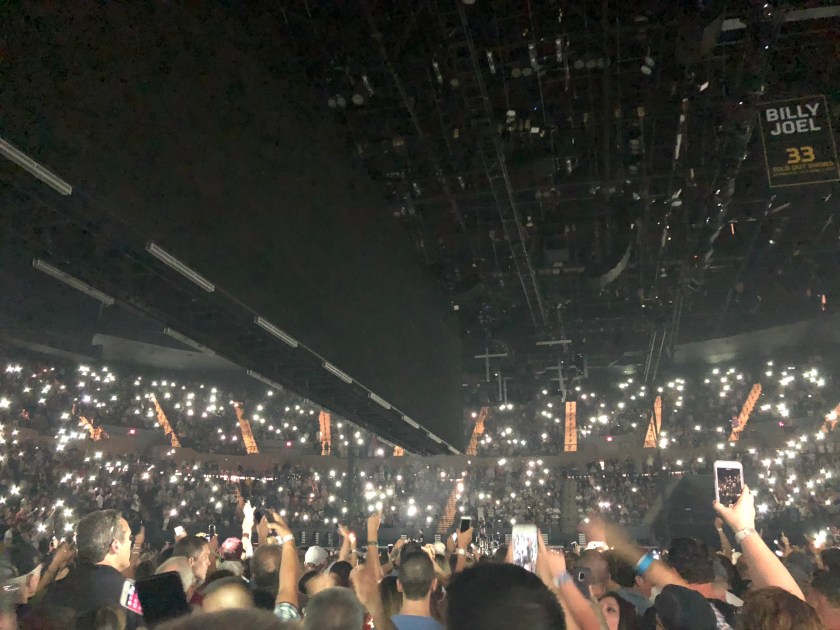


Camera: iPhone 8
Location: Nassau Veterans Memorial Coliseum (NYCB Live) – Uniondale, New York, United States
Imagine a scenario where you were able to transport yourself back in time to the 1950s. You would be coming from the modern era and a time now where you can travel to your heart’s content if you have the means to do so. The 1950s, in contrast, was a decade before the age of commercial aviation had really blossomed and taken off, and where the average person could not board a flight to go halfway around the world, round-trip, for a couple hundred dollars. People of that era would think you’re crazy and out of your mind for suggestion that commercial aviation would either be that accessible or affordable.
However, that is where we are today in our modern society. We often take the chance to fly around our country or internationally for granted nowadays but for most of human history, there was absolutely no chance to fly to the next town let alone to Japan or Australia. Modern aviation can be considered one of mankind’s greatest successes and that is due partly to the Wright Brothers and the countless others who are skilled engineers and builders. The advances in flying will continue to make travel more efficient, faster, and more affordable.
While there is a growing disparity on numerous airlines in terms of how much you pay equaling the quality of services that you will receive as a result, it is good for us as travelers to keep it in perspective of how lucky we are to be in an age where at least the possibility of flight exists and how wondrous it is for the world to be connected so easily. You no longer have to board a ship for months on end to cross the dangerous Atlantic Ocean nor do you have board an extremely long train ride where the accommodations won’t be much better.
For example, you can travel across the continental United States in less than six hours thanks to modern aviation technology. Compare this to driving a car or bus across the country which would take a few weeks or your average Amtrak train which could take about a week or so and not be that much cheaper. The fact that we can be reunited with our loved ones or our friends within a day if they live across the country from us or around the world is a truly monumentous achievement in human history.
In addition to the simple fact that you’re now able to travel through the sky in relative comfort at over five hundred miles per hour, it’s easier now than ever to entertain yourself with books, movies, and music. On certain airlines, you can even connect to the internet if you need to get some work done. While they may not feed you a lot or feed you food that’s good or tasty, you have the option of snacking or eating a meal and you will definitely be hydrated with the help of flight attendants.
There has been a lot of bad press lately about certain airlines in the United States and the condition of airports here, and these criticisms are definitely warranted. However, instead of trying to tear down this form of transportation, I would hope that this industry continues to improve in terms of services offered, having affordable prices, and providing a comfortable experience by having airports that are both modern and efficient. It’s clear to me that not every airline or airport experience is going to be great but I consider myself lucky that I was born in an era and also have had the means to travel both domestically and internationally.
To me, the experience of going to an airport to go to a far-off destination that’s new to me is really exhilarating and fills me with a deep sense of adventure. While the airport security workers may be too overzealous, the check-in counter machine may not work, and we could be delayed due to unforeseen mechanical issues, the destination is worth the price involved with traveling anywhere new. Not everybody has had the chance to fly anywhere or to fly to multiple places so I actually look forward to arriving at the airport, checking in to my flight, and boarding the plane. Sometimes, you have to hope for the best and to expect the worst when it comes to flying.
While airports aren’t perfect, I love what they symbolize and what they stand for. The free movement of peoples from different parts of the world, converging in one central location, to then be whisked off to another far away destination is pretty cool. The airport is a place where people of all backgrounds, faiths, and creeds can come together for a shared purpose: the desire to travel.
In my opinion, the more airports a nation has, the more that nation signals to others that they are open to the world and are not afraid of it. Airports are the beginning point in the global exchange of ideas, beliefs, and economic opportunities, and it’s important to make sure that they accommodate both travelers and the workers themselves to make these impressive places run so smoothly 24 hours a day, 7 days a week. Airports are like a living, breathing global city which represents an important piece of the economy, of society, and of human nature. You can see the good, the bad, and the ugly represented in any airport.
Once I have made it through security, through check-in, and have made it through the gate, a great sense of excitement washes over me. It is the truth that any trip that I have taken or will take in the future give me a strong desire to experience the unknown. I watch the plane take its place at our gate of departure and I observe the children, teenagers, businessmen, and elderly seniors board my flight. We, as passengers, may not have much in common at all besides the shared belief in the wonder of flight and how it can bring different breadths of humanity together under the same banner of discovering parts unknown.