Book Recommendations – Volume VIII

As always, the summer season is an excellent time to be catching up on personal reading. One of my favorite activities during the summer is to lie out in the park or at the beach and dive into some books that have piqued my interest. Whether you are a fiction fan or a non-fiction fan, there are a lot of excellent books out there to keep you occupied. My three choices for reading this summer deal with non-fiction topics yet I hope they peak your interest as well even if you are a fiction fan.

1.) “Homo Deus: A Brief History of Tomorrow” by Yuval Noah Harari

Click Me!

The follow-up to Harari’s first book, ‘Sapiens: A Brief History of Humankind’ dives into the promise, the challenges, and the problems facing humanity as we go through the 21st century and beyond. ‘Homo Deus: A Brief History of Tomorrow’ looks at how human beings got to this point in our collective history and how we will need to come up with new solutions whether political, economic, or social to adapt to this current age of rapid technological and climatic change. Clearly, this book deals with more speculation on the part of Harari as he lays out a number of possibilities that could come about in this century and beyond, rather than solely focusing on past human history as ‘Sapiens’ did.

Harari devotes a large part of the book to the fact at how much progress has been made across humankind in terms of eradicating disease, famine, and also how war has been limited in a time of relative peace and prosperity. The question that Harari poses is what will humanity focus its efforts on now that we have been able to get past in large part major sources of human suffering in the form of disease, famine, and war. Mr. Harari makes the argument that humanity will focus a lot of its collective effort on artificial intelligence, genetic engineering, machine learning, etc.

The goal particularly of the rich and wealthy will be to conquer death and achieve immortality through various means that the author goes more into detail about. However, how will social harmony be insured as artificial intelligence, robotics, and machine learning wipe out a large percentage of human jobs over the next few decades? Will the rights of the individual be maintained when a large part of the population no longer are able to find work or where they can receive adequate educational training for the jobs of tomorrow?

Harari is a sociologist so the details of the actual engineering and technology that would need to occur to make this shift happen is lacking in the book. However, he poses urgent questions for policymakers, economists, and other leaders as to what will happen when ‘big data’ algorithms know us and our desires better than they ever have. How will the meaning of ‘work, leisure, and relationships’ change as artificial intelligence continues to advance? Increasingly, Mr. Harari concludes that humans and machines will complement each other in various ways whether its in education, technology, the workplace, etc. and there can be nothing done to avoid this shift from happening in our lifetimes. What remains to be seen is how human societies react to a future where people must adapt to these technological changes to survive, prosper and how man and machine will act as they merge together beyond what was considered possible just a century ago.

2.) “Us v. Them: The Failure of Globalism” by Ian Bremmer

Click Me!

Ian Bremmer, a notable political scientist has written a new book on the populist resurgence in the United States and around the world. He tackles the failure of ‘globalism’ as an ideology and how unfortunately it doesn’t look like we will all be able to live and thrive in a truly borderless world without political, economic, and social differences getting in the way. The fear of the ‘other’ and the tendency for human beings to organize themselves in separate tribes whether it’s the form of nations, races, and religions takes precedence even today as the reaction to globalism.

Mr. Bremmer makes the argument that ‘globalism’ and ‘globalization’ are separate in their meanings as ‘globalism’ as a term is primarily political in nature while ‘globalization’ is primarily economic. Globalization will continue to expand and thrive because its’ practical for nations to engage in trade and finance at the international level to boost and grow their national economies. As long as it is economically advantageous for nations to trade and do business with each other, globalization will continue to be a mainstay in economic relations.

‘Globalism’ however has received a backlash from the rise of political populism primarily in the Western world (the U.S., the U.K.) but also in Eastern Europe (Hungary, Poland), and also in developing nations like India, Mexico, Turkey, etc. Issues of mass migration, cultural shifts in nations, growing income inequality have led populations to look towards protectionism and ‘strongmen-lite’ politicians to address these systemic issues. In my opinion, Bremmer correctly argues that while the world is collectively doing well in terms of economic growth and the subsequent rise in living standards, there is still a serious political recession going on with far left and far right politicians gaining stream in terms of popularity.

‘Us v. Them’ reflect the growing unease and anxiety that a lot of people have regarding ‘globalism.’ Besides the cosmopolitan populations that live in the major cities of the world and who have benefited from the cross-cultural exchange of peoples, trade, finance, etc., there are many others who feel threatened by the ‘other’ and how their country and culture may be changing as a result. Mr. Bremmer sees the happening of Brexit, the election of Trump, and the rise of strongmen around the world as a reaction to ‘globalism’, and how there are drawbacks in that many people feel left behind by their political and economic elites who enacted these policies without their support. ‘Us v. Them’ is something that has occurred throughout human history and to myself, it goes back to our fundamental nature of our willingness to divide ourselves into separate tribes and to look upon the ‘other’ with suspicion and fear.

According to Mr. Bremmer, political populism is not likely to go away anytime soon and the rise of automation, an increase in artificial intelligence, the weakening of the middle class in both the developed and developing world are likely to put continued pressure on weakening political institutions who may or may not be agile and forward-thinking enough to come up with satisfactory solutions to these 21st century issues.

3.) “Notes on a Foreign Country: An American Abroad in a Post-American World” by Suzy Hansen

Click Me!

‘Notes on a Foreign Country: An American Abroad in a Post-American World’ by Suzy Hansen is a refreshing take on the way American foreign policy decisions have affected the U.S.’s relationships with certain countries such as Iran, Greece, Afghanistan, Turkey, Egypt, and specifically the people who feel that they have been negatively affected by those decisions. The average American is likely to be unaware of how large of a role the country has played beyond its borders and how some of those decisions have left deep, festering wounds in the people of those countries who were directly affected and still haven’t forgotten.

Ms. Hansen who came from a personal background similar to mine has lived in Turkey for over ten years and has traveled to the Middle Eastern countries such as Iran and Egypt looking for the perspectives of those citizens in regards to how America changed their countries, mainly for the worse. Her personal background growing up was very insular and she went to travel and live overseas in order to see her country differently.

From reading this book, it was refreshing to see Ms. Hansen do her research about the countries she was living in and visiting as well as interviewing many people in those countries to hear their stories and their perspectives. I believe that her book does a great job of enlightening Americans about negative foreign policy decisions made in the past that our country may not like to remember but is still forefront in many other countries’ perspective of the United States.

As Hansen left home and lived overseas, her innocence and that of America is stripped away because it’s a harsh truth to face yet it is one that we must all face is that America has not always done good in the world and there have been negative effects of past U.S. foreign policy decisions that heavily resonate with those peoples to this day. The key aspect of this mix of journalism and personal memoir makes this book stand out as a referendum on America’s role in the world, and how its likely to decline in the future. While our impact may lessen on our nations in the future, Hansen sees that as a possible good occurrence do the damage that has already been done.

My main critiques of this book is that while Ms. Hansen diagnoses that issues with U.S. foreign policy, I do wish there was an addition to the book where the author discusses how America can better its foreign relations in the future and to move forward positively with the countries she has become familiar with. However, to be fair, that would take a whole another book to diagnose how U.S. foreign policy should move forward. Also, I believe that this book was a bit too negative in its perspective on America and it could have been more balanced in its overall viewpoint. Ms. Hansen’s book pulls no punches and is a clear-eyed look on the blindspots of American exceptionalism and how our values have not always been well received beyond our borders.

Radiohead @ TD Garden

IMG_0908IMG_0910IMG_0895IMG_0885IMG_0840IMG_0872IMG_0852IMG_0846IMG_0862IMG_0879IMG_0868IMG_0855

Camera: iPhone 8

Location: Boston, Massachusetts, United States

Gloucester

IMG_3198IMG_3199IMG_3201IMG_3202IMG_3204IMG_3206IMG_3209IMG_3214IMG_3218IMG_3220IMG_3224IMG_3226IMG_3229IMG_3234IMG_3238

CameraCanon PowerShot SX710 HS 

LocationGloucester, Massachusetts, United States

English Corner – Gerunds

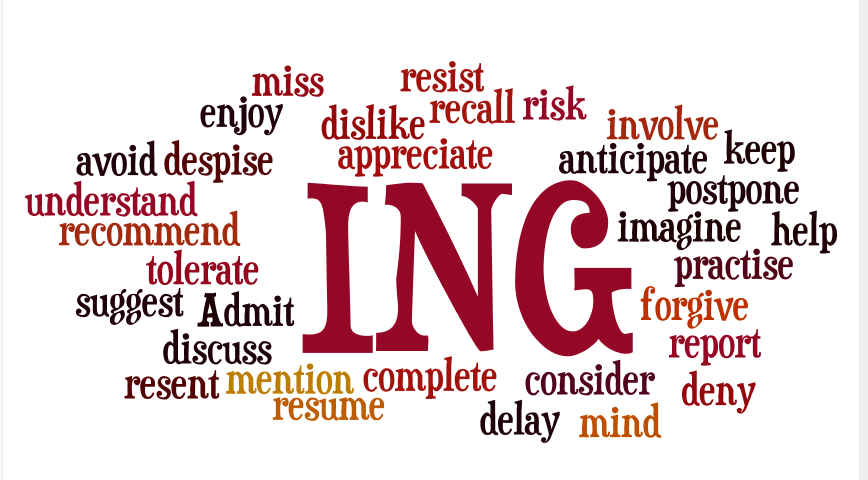
In order to facilitate your grammar studies, it’s important to not overlook certain topics that are integral to boosting your knowledge of English grammar. ‘Gerunds’ is one of those key topics to really get a handle on and master because it will come up again and again in both your speaking and writing. While not the most complex topic, being able to understand the rules behind gerunds and memorizing them will put you ahead of other learners. ‘Gerunds’ is a topic that needs to be put into use over and over in order to be used proficiently.

The main thing to keep in mind with gerunds is not to overcomplicate what they are and what they are used for. Gerunds are simple verbs that end in –ing and that never changes regardless of which tense they are used in. –Ing can be added to verbs that are used in the present, past, and future tenses. Gerunds can also be utilized at the beginning, middle, and ending of sentences. These verbs + -ing are extremely versatile in their usage and it’s important to be aware of where they can be placed within sentences.

The key thing to keep in mind with a gerund word is that it used more like a noun than a verb or an adjective. Most students don’t remember that a verb that ends in –ing can also function as a present participle which is different than a gerund. Gerunds are not the same as present participles and the main difference between them is quite easy to remember. Gerunds are primarily used as more of a noun than a verb or adjective whereas present participles function more as exact verbs. Here are a few examples below as to how ‘gerunds’ are used as nouns in a regular sentence:

  1. I like dancing on a Saturday night.
  2. Playing video games is really fun.
  3. Singing in the rain is an underrated activity.

Gerunds have to be thought of nouns in verb form essentially. If you notice from the above examples, ‘gerund’ words can be used as the subject or object of a sentence. They can be placed at the beginning of the sentence to become the main subject or they can be the object of the sentence when the gerund comes after the main subject and the main verb as well.

While gerunds can mainly function as nouns, they can also be used as adjectives when they are right next to each other in the sentence structure.

  1. It was a night of ceaseless partying that went until the morning light.
  2. The careful building of the Statue of Liberty was a great French achievement.

It is important to note that you can often use gerunds after many different kinds of prepositions during a normal sentence. Gerunds often act as a substitute for noun words that you could be used right after prepositions. If you’re only using the base verb without the gerund (-ing), it won’t be grammatically correct. Here are a few examples of how to use the gerund after a few different prepositions:

  1. I will make breakfast before going into work today.
  2. Please do wash your hands after making dinner for our guests.
  3. We are used to driving on the right here in the United States.

It’s important to keep in mind that the gerund immediately follows each preposition directly after the preposition word is used in the sentence. There are dozens of prepositions used in the English language so it is important to keep in mind when to use the gerund after any kind of preposition comes up in a sentence.

Lastly, ‘gerunds’ can be used in a passive voice kind of sentence under multiple circumstances. In these kinds of cases, the gerund word would often come at the end of the sentence to reflect the action taking place. Here are a few examples of how you can use gerunds in a passive voice kind of sentence:

  1. I have three pairs of pants that need washing.
  2. The water cooler at my workplace needs replenishing.
  3. Your shirts are outside the house on the clothesline drying.

Please note that in sentences #1 and #2 from my examples that the main verb ‘need’ is used right before each gerund word. Without the main verb of ‘need’, it becomes much more difficult to express the action that is occurring at the end of the sentence.

Whatever use you find for the gerund, remember that the gerund comes up very often in both spoken and written English. You can use the gerund for multiple purposes including for nouns, adjectives, prepositions, passive voice, etc. The key thing to take away is that gerunds are very flexible in terms of their placement within a sentence. They can also be combined with various parts of speech to make your writing flow better and have more details. While gerunds are easy to form with ‘verb + -ing’, using them within the right context and in the right format is something that requires patience, practice, and repetition.

How to Present Yourself Well

We live in a world where the first impression that we give out to others is a key determining factor into what kind of relationship we have with them and how they see us as human beings. I believe that it is naïve in this day and age still to think that first impressions don’t matter at all because they really do matter and if you don’t know how to present yourself in a positive, mature manner, it may affect your life in various negative ways.

Our culture is based around the individual yet we cannot forget that ultimately, you are still tied to other parts of society such as your family, your local community, and your country. Now, one may not care what others think of them and that is their right to do so but your actions, words, habits, and personal dress have an affect on society whether you like it or not. You are not an island unto yourself where you can do whatever you want and there are no consequences that can come of that. We are all part of an overall society and failure to recognize that fact of life will not change this part of human nature.

Whenever you’re out in public meeting new people for the first time, how you dress, how you act, and how you use your spoken language carries a number of effects as to how people will treat you. You never know what kind of relationship whether personal or professional you’ll be able to build with somebody else if you’re not willing to put in that effort. There are numerous opportunities that the average person can miss out on in their daily interactions if they are not actively thinking about presenting themselves in the right fashion.

The key thing to know is that people are always going to judge you when they first meet you and this always happens very rapidly. There are certain ways that you can make yourself stand out in a positive manner which will benefit you in terms of more people will take you seriously and will respect you more. The opposite of that is also true in that if you fail to present yourself in a respectable manner when you meet other people for the first time, there could be a number of negative consequences for you if you don’t learn to change certain bad habits.

In this day and age where people are becoming more and more addicted to technology, especially the smartphone, you can stand out easily if you know how to present yourself. Basic social skills are not being taught as much whether it’s for young people in school or for adults in the workforce. Just a few generations ago, both men and women were taught at a young age how best to present them so they could be taken seriously as individuals who are part of the collective society. To put it simply, we do not teach these social graces, cues, and skills anymore but I’d like to propose a few tips on how to present oneself for the good of yourself and the good of your society.

  • Clean Appearance and Appropriate Dress

If you want to be taken seriously, you have to look the part. Everyone has the choice to make in terms of how they dress and look everyday but it is important to keep in mind how that will effect others opinions of you. If you go to an interview for a job that you really want, you have to present yourself professionally. You wouldn’t wear a baseball hat, shorts, and a tank top to an important job interview, right? If you don’t dress the part, it’s a certainty that you won’t get to play the part. Obviously, modes of dress in the workplace are flexible.                                                                                                                     

An office worker is going to dress differently than a construction worker but even for both jobs, you want to present yourself with an appearance where you’ll be taken seriously. If you put in the bare minimum and your colleagues are putting more effort into their appearance, who is going to get the benefit of the doubt? Your colleagues. A suit and tie isn’t necessary for most jobs these days but you don’t want to be that one person who shows up in flip flops and jeans when everybody else is putting in the effort. There’s a healthy balance that needs to be struck and you want to make sure that you are following the dress code while even going a bit above and beyond to make yourself stand out.

Your appearance is not just about what you wear but how you wear it. Good-fitting clothes, polished shoes, facial and body hair that has been cut groomed or shaved properly; all of these small actions add up that can help you in both your personal and professional life. If you’re not able to take care of your face and body, what does that say about you as a person? It doesn’t say anything positive because the effort really matters and other people will notice when your appearance is on point. Others will see that if you’re able to take care of your appearance, you’ll be able to manage an important coding project, closing that lucrative business deal, or overseeing the construction of a tall skyscraper. When you’re able to take care of yourself first, you’ll be better able to tackle the big projects that you will come across in your professional life.

If you’re worried about how much money it costs to put into your appearance, it really doesn’t cost too much these days. I’m not going to go into exact figures but some new clothes, a haircut, and a nice pair of shoes as your baseline in terms of appearance would cost about $100 here in the U.S. I believe that the return on investment would be much more on that because the clothes and shoes will last you a while and the haircut will be positively noticed by your peers. While you may put $100-200 per month into your appearance, think about how much use or gains that you can get out of this personal investment. I think most people would find that they get a lot out of dressing and looking well when you do the math.

  • Positive Attitude and Good Manners

Presenting yourself doesn’t end in terms of taking care of your dress and your grooming. It extends greatly to how you follow social graces and courtesies that keep our society running smoothly. Even if you have had a bad day and don’t feel like extending these courtesies to strangers, try to see it from their perspective. Being polite, respectful, and minding your behavior is an integral part to how you present yourself in public. While graces, courtesies, and customs vary greatly from culture to culture, I have found in my own travels that you should always say ‘hello, please, and thank you’ to win yourself some points. It doesn’t hurt to say ‘how are you?’ or the equivalent in other languages to strike up a conversation with the person making your coffee, serving your food, or cutting your hair.

While there is a trend of people being on their Smartphone, listening to the music through their earphones, and ignoring the world around them, you can be better than that by making an effort to express pleasantries to the people you rely upon in your day to day activities. Social skills take time to develop and they can atrophy if they are not put to good use. Everyone is guilty of being antisocial every now and then, and that’s okay, but it can be a bad habit if you don’t make the effort.

As human beings, we tend to err towards the negative as a biological impulse but it’s really important to try and stay positive. You may not think of it too much but we are all social creatures and the attitude that we display has a contagious effect on to how others act and behave. If you are negative about life constantly and put on a negative attitude to those around you, you should not be surprised when no one wants to hang out with you or even help you. It’s okay to express frustrations about the stress and anxiety of daily life but you have to keep it in check. Things do get better over time and having a positive attitude about life will help you enormously rather than being negative all the time.

With your manners, you also want to go the extra mile. Helping other people feels good and the easiest way to do that is by having good manners. You could help an old lady cross the street, let the women and children off the elevator first (chivalry is not dead yet, ladies), tip a service worker extra if they did a great job, or even wait to let people off the bus and train first before you get on. These actions all display having good manners and will brighten up someone else’s day causing a ripple effect throughout our society. If everybody observed the golden rule of ‘treat others the way you would like to be treated’, our manners and attitude would shift quite a bit.

Sometimes, we don’t have the right attitude or display good manners but it’s good to be remembered of what they are. Unfortunately, there are no schools or institutions anymore that teach these social graces and courtesies to young men and young women, but I do hope that they make a comeback. Without each member of our society trying their best to display good manners and have a positive attitude, there would immediately be dysfunction, chaos, and a torrent of rudeness.

  • Strong Eye Contact and Confident Body Language

You wouldn’t think about it often but it is the icing on the proverbial cake to be able to present yourself well when it comes to both your eye contact and body language. While these two actions take place subconsciously, if you’re able to be mindful of it at times especially at key moments in your personal and professional life, you will be able to stand out in a great way. Maintaining strong eye contact and confident body language could help you improve your life tremendously. This is especially the case when you are meeting someone for the first time. You want to look them in the eye, keep your head held high, and give them a firm handshake.

Even after you meet them, you want to keep your shoulders back and walk with purpose. I’m not an expert when it comes to body language but I know what not to do in most situations. You want to be keep your legs pointing forward, your head should be at eye level, and you should keep your body open in how you stand and sit. Bad body language like looking down at the floor, having your legs crossed all of the time, folding your arms, and scrunching your shoulders are all bad habits that you are going to be mindful of avoiding. It’s important when presenting yourself to be confident, serious, and even smile a bit to diffuse your own internal stress and anxiety depending on the situation you’re in.

The saying, “Fake it until you make it” is key when it comes to body language. If you practice it enough times, it will eventually be so ingrained in you that you won’t have to act the part anymore. Having strong eye contact and confident body language will set you apart from other people who display the opposite. If you’re looking for that edge in work, business, or aspects of your personal life, you’ll want to be working hard to present yourself well in these two regards.

When you meet strangers for the first time, eye contact and body language are two key things that they’ll notice right off the bat. If you’re not able to create a positive impression with them, it’s likely that you won’t get very far with them professionally or personally. If you have a trustworthy family member or a good friend, it’s beneficial to practice body language and eye contact with them. Once they give you high marks for setting the right tone and finishing it off with a firm handshake, you’ll be able to impress strangers, employers, and even love interests with this overlooked aspect of presenting yourself well.

The main reason why I wrote this article is because I think we have reached the point in society where we pay too little attention to presenting ourselves well. With the absence of rules or standards, society can degrade to a point where it becomes dysfunctional. This comes down to being able to present yourself well to the world in the hopes that it will return the favor to you in one way or another. It’s not just about other people too but it’s about self-respect and doing your best to live up to your own standards and code. Having an overall society made up of individuals who understand that appearances do actually matter but so do manners and body language can help us progress to be fairer, kinder, and more respectful of one another.

Unfortunately, knowing how to present oneself is not taught anymore and hasn’t been for a few generations but I hope with this article that this kind of advice can come back into fashion and spur a good dialogue. How you dress, what you say, and how you act does not stop at you as an individual but ripples out to the rest of your society. If you’re not putting in the effort, why should anyone else do the same? We all have an individual responsibility to present ourselves well because by doing that, the society as a whole can improve in a number of ways by following your example.

Cape Cod Weekend

+tzuEFUqTY+kmORiQh9zVQyzsGvDBRTrushr2IvA7CeQCvMFUpzIQJ2TnaWUqT1HXQkk4mydTET6SsJ90g6zWwxQgaTngbAJQE2OaFTe1HXg4gj%5GBkGcQ5GTXttmmFp2vw3Fp0TaIIQGuX3OlUJQfcRwdpwpb6w+RC+VbAxuu3ftQwBVssV7K5Q96UCThN+4aWqwogt%1lyLRSuQ%7n6Mbe+GQLaTNBh65R3C1t8RMlt0atw7IbaOYAnTmOeByh%Q6tcyAP0hZ2RPKTga7jLT3xL3bVg2Y+N6MneS7aMkf01LRelbg

CameraiPhone 8 

LocationCape Cod, Massachusetts, United States

Explosions In The Sky

NHS1qfBoQ1icPYfxCBaAdg36652554_10160426085275262_8160391889070063616_n36728134_10160426084440262_5953606171620278272_n36692333_10160426085300262_6800878970012172288_n36664460_10160426084300262_5660578050710962176_n36706327_10160426084405262_5055160315365294080_n36786390_10160426084200262_6810809724674506752_n36628969_10160426084245262_4291888775111376896_n36634401_10160426083840262_4632043592179777536_n36632365_10160426083895262_4848645823778521088_n

CameraiPhone 8 

LocationCambridge, Massachusetts, United States

English Corner – Writing a Good Essay

In order to become an excellent English writer, it’s very important to have the structure in place if you want to write a good essay. Firstly, you are going to want to make sure that you start with a beginning paragraph known as the ‘introduction.’ With the introduction paragraph, you’re going to set the tone in terms of telling the audience what the topic of your essay is along with some supporting sentences discussing the topic(s) that are going to be covered later in the body paragraph(s). Your introduction paragraph should be between 3 to 4 sentences total and you should also have a thesis sentence laying out the main purpose of your essay and what you hope to get across to the audience. 

After completing the introduction, you should make sure to have a body paragraph or a few body paragraphs next where you can discuss the main topic in more detail depending upon how many paragraphs you need to express your point of view or opinion. 

For example, if you’re discussing the weighty topic of climate change, you’ll need a couple of paragraphs in the body section of the essay to discuss why it’s an issue, what can be done about it, and how should people work together to reduce the effects of climate change. For this particular example, you’re going to want to have three body paragraphs total which should be between 4 – 6 sentences total. In these body paragraph(s), you need to make sure you’re giving examples, statistics, or evidence to support the claims and/or ideas that you brought up in your introduction paragraph. The body paragraph(s) are the meat of your essay or article so make sure that it’s convincing, detailed, and engaging to your audience. 

Lastly, you will need to finish up your essay or article with a ‘conclusion’ or concluding paragraph. The conclusion is similar to the introduction in that it is only going to be 3 – 4 sentences total. For this paragraph, you are going to sum up the main points or arguments again that you want the readers of the essay to take from what you wrote. You’ll want to restate your thesis from the beginning paragraph and make sure to leave your reader wanting more information about the topic that you just addressed. It’s important that you follow the introduction + body paragraph(s) + conclusion structure in order to have a truly great essay. The structure and formatting of an essay is really important so you have to make sure that it becomes a personal habit for yourself whenever you’re writing in English. 

An overlooked part to writing a good essay is the fact that you’ll need to back up your main ideas with real examples. These examples can be more scientific or research-based in nature or they can be based off of your own personal experiences and background depending on what kind of essay you are writing. If it is an academic, scientific, or evidence-based essay, you’ll need to use outside sources that are legitimate and directly related to the main ideas you’re reiterating in each paragraph. 

For an academic essay or paper, you should not be using your own opinions or personal experiences to count as doing research. When it comes to this kind of writing, you need to find research that is evidence-based, that has been backed up by more than one source, and is able to be cited in either the footnotes or the endnotes of your essay. The examples needed for this kind of essay should be not your own but rather those of other authors in your field who came to a similar kind of conclusion based on their research. You can use their quotations to cite the work that they’ve done and use their findings to supplement your ideas while adding validity to your essay’s argument. 

When it comes to a persuasive or opinionated essay, you won’t have to do as much scientific or academic research, but you’ll still have to use your own experiences and personal background to add to your essay. Also, there should sometimes be an added effect in these essays where you can use the experiences of other people to back up your main ideas and thesis statements. Your own background and experiences could be useful in developing one body paragraph but another body paragraph or two could be supplemented by those experiences of other people whether they are historical figures or friends and family of yours. 

Your research and outside examples should always be cited in the correct manner whether that is a quotation, a footnote, an endnote, etc. There are many different citation styles that can be used for various types of essays but do choose the one that feels most comfortable for you to implement successfully. Whether its Chicago / Turabian style being used for Business and History writing, MLA (Modern Language Association) style being used for the Humanities, or APA (American Psychological Association) style being used for Education and the Sciences, please choose one of the above citation styles that would fit best for your essay. 

The main point to keep in mind is to always cite your research / findings in some way if it is not your own. You should always be careful in avoiding plagiarism or taking from another person’s work without carefully citing their examples. Depending on the type of essay you are writing, you may also be able to use your own experiences, research, and background to make your writing stand out more to the audience. Without any evidence, examples, or research to support your thesis statement and/or main ideas, your essay won’t nearly be as complete or as appealing to the reader.

It’s necessary to re-state the fact that in order for an essay to be truly complete, the basic structure of an essay needs to be in place in order for the reader to get the most out of it. There is no substitution in the English form of writing for the introduction + body paragraph(s) + conclusion format.

However, once you have the essay structure down, it’s important to be able to brainstorm the main idea of each paragraph followed up two or three key supporting ideas for that paragraph using evidence and/or examples to back up your main idea. Whether it is a research article, an argumentative essay, or a persuasive essay, it’s key to remember that each paragraph especially the introduction and the body paragraph(s) should highlight the main idea and the supporting ideas. When it comes to the conclusion paragraph, you are basically going to re-state the main idea that you introduced in the opening paragraph while citing your supporting ideas once more to leave the reader with. 

The introduction paragraph is used to ‘introduce’ your main idea followed by a brief tidbit about what your supporting ideas are going to entail. Depending upon how many body paragraph(s) you have planned, each supporting idea should be expanded upon in a separate body paragraph where the research and the evidence are cited through facts and details given. In the body paragraph(s), you can rehash what your main idea is but you should not give it too much of your attention. Listed below, I have detailed how the structure of each paragraph should play out along with an example of what a main idea would be along with three supporting ideas for an example essay topic. 

IntroductionTell the audience what the main idea of the essay is along with an introduction to each of the three supporting ideas to be highlighted in the body paragraphs.

BodyParagraph #1 – Supporting Idea #1 with Main Idea briefly discussed (evidence / research needed)

           Paragraph #2 – Supporting Idea #2 with Main Idea briefly discussed (evidence / research needed)

           Paragraph #3 – Supporting Idea #3 with Main Idea briefly discussed (evidence / research needed)

Conclusion: Re-state the main idea of your essay while discussing briefly your supporting ideas and why they should matter to the audience. No more evidence or research should be introduced into the concluding paragraph.

Example Essay Topic

Main Idea: There is too much plastic in the oceans.

Supporting Idea #1Many sea mammals have been harmed or even killed by the plastic in the oceans.

Supporting Idea #2The plastic in the oceans is contaminating our food and even our de-salinization of water efforts.

Supporting Idea #3The plastic is disrupting our oceanic ecosystems and causing coral reefs to be permanently damaged. 

Whatever essay topic you choose to focus on, remember to make sure that you clearly have a main idea and at least two or even three supporting ideas to make the essay flow better whether it is persuasive, academic, or research-based in nature. Writing a good essay is not an easy task but if you’re willing to create an outline with your main and supporting ideas written down, you’ll be off to a good start.

Additionally, good punctuation and grammar will help your essay flow better allowing the reader to easily understand and grasp the ideas you are writing about. As the saying goes, ‘practice makes perfect’ so make sure to practice writing about different topics often and to use peer reviewing and proofreading to fix your mistakes and learn from them.


English Corner – Direct and Indirect Speech

One of the biggest challenges that the average English learner can face is not being able to interpret or understand the difference between direct and indirect speech. In order to really understand how they are formed and used, we first need to define these two terms and what they are supposed to represent.

Let us start first with what ‘direct speech’ is. Direct speech simply repeats or quotes the exact words that were spoken word for word without any hesitation. If you need to use direct speech in writing, in English, we use quotation marks (““) to highlight the words that the person spoke so as to not to give false representation. Direct speech in writing always goes within the two quotation marks so that there is no confusion as to who said what words. For direct speech, you can highlight what was said in the present but also what was said in the past. I have listed a few examples below that could be used both in the spoken and written contexts.

Examples

  1. Jimmy says that, “We will need to come home early tonight for dinner.”
  2. Katherine shouted, “There’s a bee in my hat! Help!”
  3. My mom asked me earlier, “What time will you be home? I said to her, “I don’t know yet, mom.”

It is important to keep in mind that direct speech can refer to both the past and the present which is a key difference from indirect speech as I will go on to discuss further.

Indirect speech, also known as reported speech, often discusses what was said or what was written about in the past and may not always be 100% in its accuracy so that is important to keep in mind. The words are often used in the past tense and there are different verbs used for indirect speech such as ‘say, tell, ask, hear, see.’ The word ‘that’ also comes in handy in sentences that use indirect speech and commas are not used as frequently as they are when it comes to direct speech.

Examples

  1. Janet said, “I spoke to him earlier. “ (Direct)                                                                      Janet said that she had spoken to him earlier. (Indirect)
  1. The principal stated to the class, “He will not accept bullying in this school.” (Direct)                                                                                                                                      The principal stated to the class that he will not accept bullying in this school. (Indirect)
  1. They told him that he would never receive a work promotion. (Indirect)
  2. We told the children yesterday that it was time for them to go to bed. (Indirect)

As you can see from a few of these examples, the word ‘that’ is a key part of differentiating indirect speech from direct speech. It is also common to see indirect speech or reported speech not using commas as well. If you weren’t actually there with the person who said those words or had heard it from someone else afterwards, you need to use indirect speech because it wouldn’t be right to quote someone when you weren’t actually there to hear them.

You don’t always have to use ‘that’ to make it indirect speech. However, you never really want to use commas in sentences with reported speech. Lastly, as mentioned before, indirect speech always refers to the past tense whereas direct speech can reflect the present as well since you can quote people’s words in real time as you’re there listening to them speak. That distinction is key to understanding one of the differences between direct and indirect speech because there are a few of them to be aware of.

There are certain verbs for the act of speaking in English that are going to come up in direct and especially indirect speech. You’ll want to use the verb ‘to say’ in a sentence where there is no indirect object. You can use the verb ‘to tell’ when you know who it is the person is talking to in the sentence and can verify who they are. When it comes to communicating with other people, the verbs ‘to speak’ and ‘to talk’ come in handy for both direct and indirect speech.

It’s important to note that the future tense cannot be used for direct speech since you would be basing those quotes or words on your own speculation rather than what you are hearing the person say or would have heard what the person said. Direct speech is for present and past tense while indirect speech is used for the past tense only.

While the tenses are either present or past tense when it comes to the direct speech or indirect speech verbs of ‘talk, speak, say, tell’, etc., it is important to keep in mind that the quoted parts of the sentence referencing the speaker can refer to the past, present, and the future. The direct and indirect speech verbs maintain their present or past tense format while the rest of the verbs can be past, present, or future tense depending upon the context. I have listed a few examples below to make this bit of information more easily digestible.

Examples

  1. Alice said, “She will go to the farmers market tomorrow to get some vegetables.” (Direct)
  2. I heard Alice say that she will go to the farmers market tomorrow to get some vegetables. (Indirect)
  3. Murphy says to the other teachers, “I don’t understand why my students didn’t pay attention in class yesterday. (Direct)
  4. The Math teacher told us how Mr. Murphy didn’t understand why his students weren’t paying attention in class yesterday. (Indirect)

Another thing to keep in mind when it comes to indirect or reported speech are that modal verbs such as could, might, must, should, etc. do not change their actual form at all.

Examples

  • They explained to us that this tax bill could have negative consequences for the middle class.
  • We were told earlier that there might be consequences if we don’t finish all of the assigned homework by the end of the semester.

While there are many small differences between direct and indirect speech in English, the main thing to take away from this blog post is that how to phrase and quote speech is really important and must involve practice and effort. Being able to write stories or quote dialogue correctly are integral skills in the English language that can only come from being able to understand and use both direct and indirect speech. If you have any questions or comments, please let me know and best of luck in using this article to further your English language goals!

U2 at the Coliseum

gz1%tmoCT5iyFY0vdpeHUQ5O0UAF9rTo+XgJmeAcvFLAZbSvy2djTWu7%iDr36QnAwdrf0bqJBSLGR%6vb0gX6PgOqsmycqaSV6u9+4Q661fiQvIvnnjiyRaKetIWXGX5zUQPaimf7vjRsqPbVsgwzuJIgFYLrJIwZSNyyFarkjuDqsQBZauI1+cRuag8x+54m32zw7WMo0ITYQIWMk0A2BbPzUASTVIISu0SGWtXMpBtJIKdAS16nLOKITuyC+JDTiT%xLAWNLnIwdTT7KP95hr454ONAVo3IGlNWScKUNGkww5vlgAk7hvZJihQNuzSO8W7GCvdA

Camera: iPhone 8 

Location: Nassau Veterans Memorial Coliseum (NYCB Live) – Uniondale, New York, United States