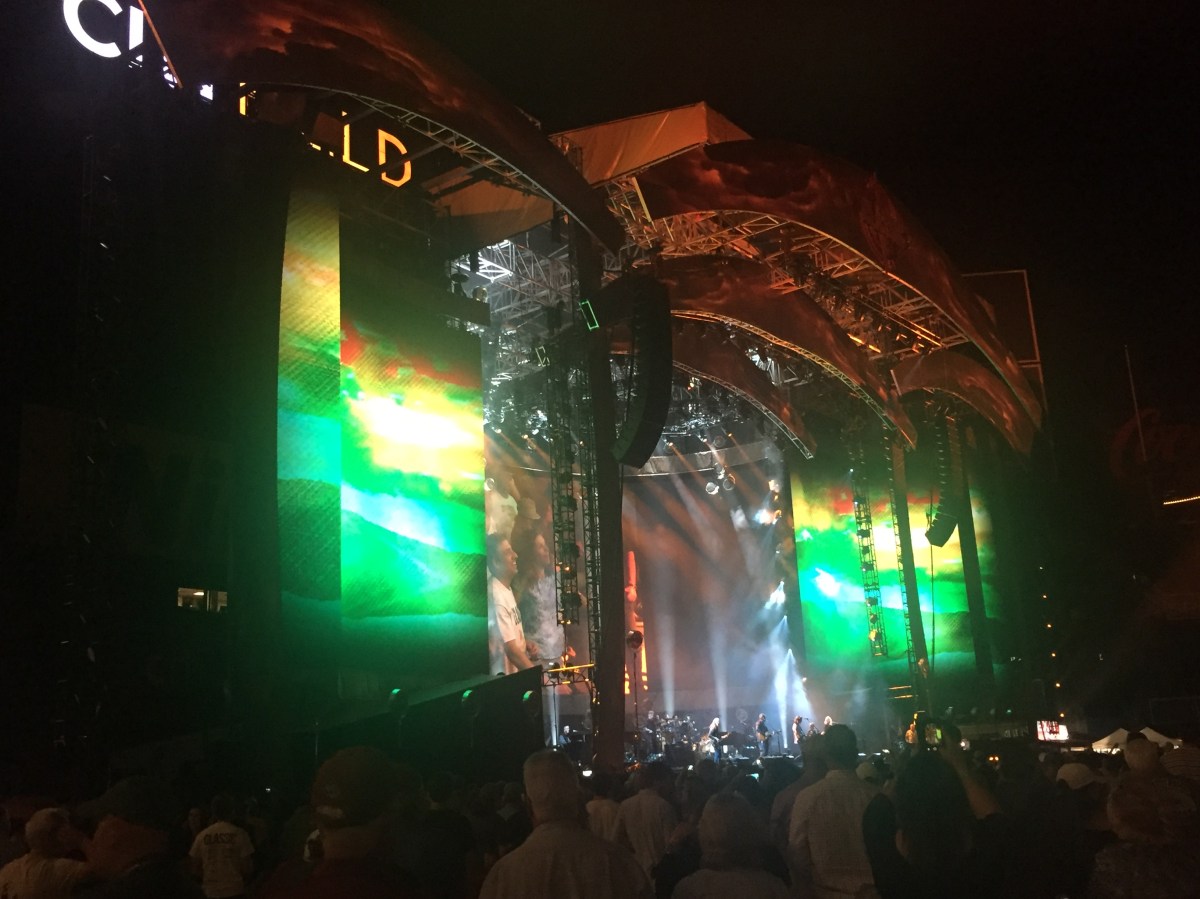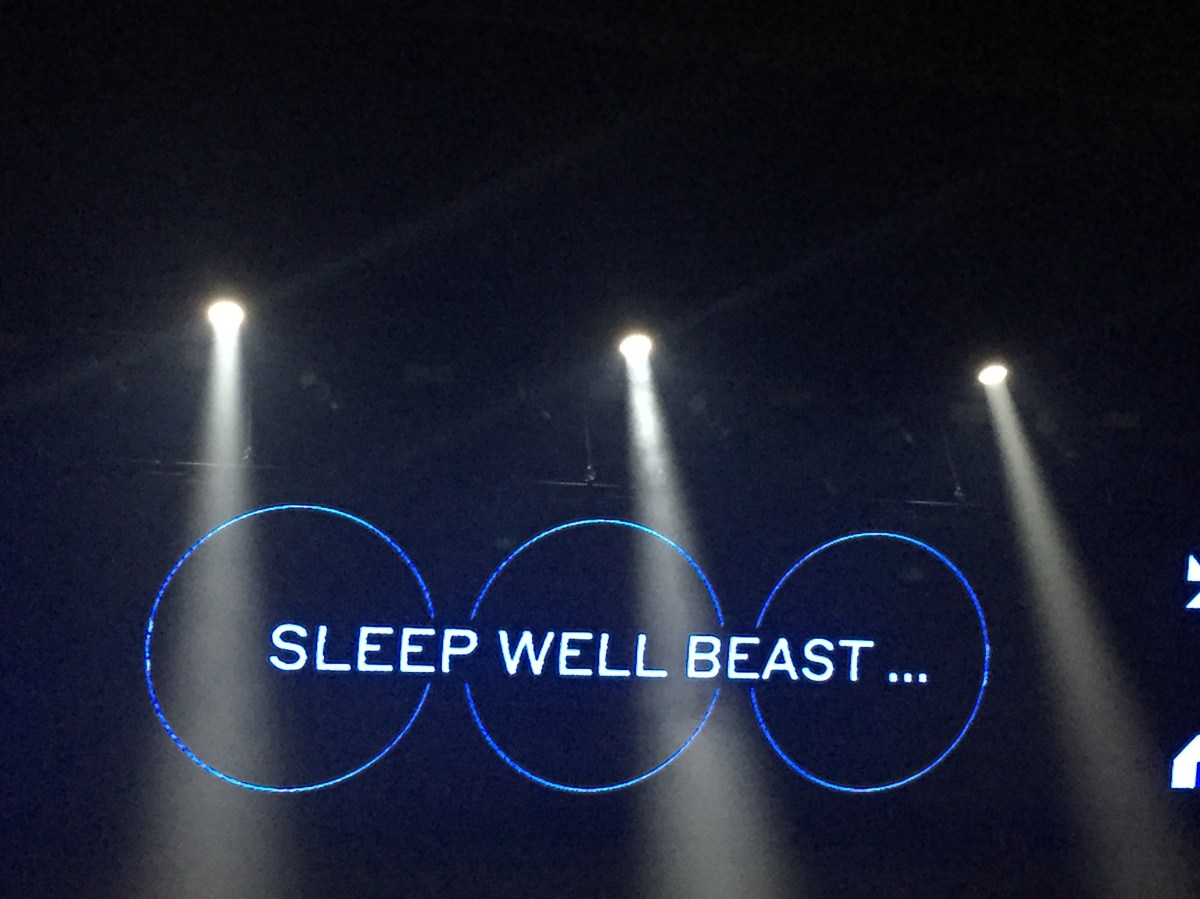













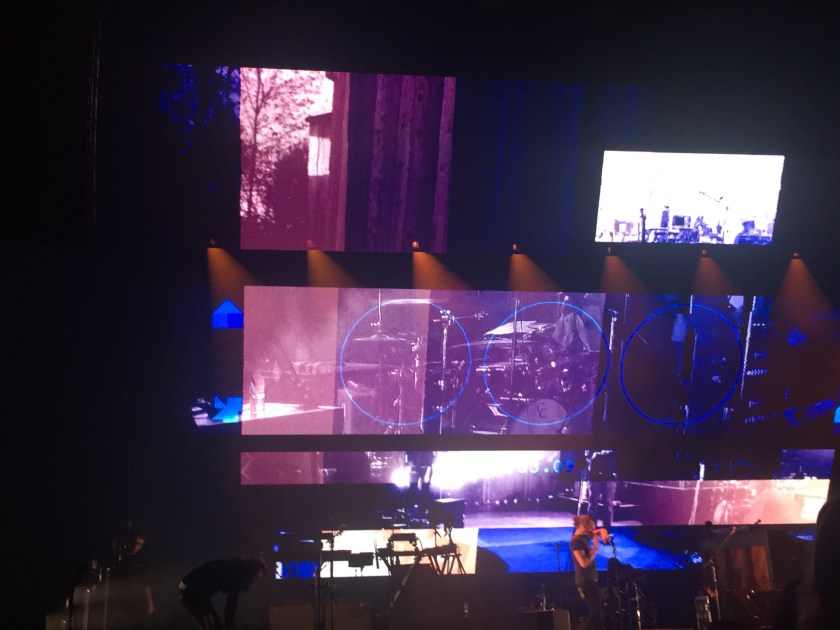
“Bloodbuzz Ohio” by The National (Video)
Camera: iPhone 6
Location: Boston, Massachusetts; The Wang Theatre at Boch Center

“Bloodbuzz Ohio” by The National (Video)
Camera: iPhone 6
Location: Boston, Massachusetts; The Wang Theatre at Boch Center
If you were to define the word ‘wonder’, you would characterize it as meaning a feeling of amazement or admiration caused by seeing or witnessing something beautiful, unexpected, captivating, and inexplicable. When you are a child, it’s easy to have that sense of wonder about the world. Your sense of curiosity and disbelief is quite high and your imagination can run wild believing in the possibilities of the unknown.
Even as we grow older and become adults, we still have a sense of wonder that never fully leaves us and is part of our essence as human beings. While you may not have the same sense or amount of wonder as you did when you were a child, it’s important to never fully extinguish that feeling and to let it stay within you even if you are an adult or in your elderly years.
Having a sense of wonder connects you to your childhood years and reignites the kid within you because that part of your being never truly goes away unless you let it. By maintaining that curiosity and desire to know about the world, this helps us keep our sense of wonder about life and its’ beauty. It can be easy nowadays to be jaded about the state of the world and to think that everything is going to hell in a handbasket.
While there are certainly serious problems to be fixed in our ever-changing and complicated world, being doom and gloom about it 24 / 7 won’t make you feel any better. You have to maintain the ability to never be too down or be too up about your surroundings. While there can be a lot of ugliness to be found, there is also a staggering amount of beauty to be in awe about.
I believe that it can be much easier to see things through a negative lens and seek out the ugliness in life. It’s harder yet much more rewarding to seek out the beauty and wonder that you can find if you know where to look. You also have to take the time to enjoy the beauty of things and open yourself up to the beauty of the world. While it may be cliché to state this, you have to have an open heart and an open mind. If you close yourself off to the wonders of life, you’ll never really be able to appreciate them fully.
A sense of wonder has to be cultivated over a long period of time and doesn’t happen overnight. When you are a child, you’re amazed by anything and almost everything new and unique. As you get older and you experience more of life, it can be more and more difficult to feel amazement or be captivated by life. Each person has a different sense of wonder, and different things amaze different people. When I think about wonder though, there are a few things that cause me to feel that unexpected thrill or captivation.
I think most people would agree that a sunrise or a sunset could really create awe and wonder in a person. The colors and the vibrancy of the environment when the sun lights up your world at dawn’s break or when it fades into darkness to make way for the stars and night sky; those moments can truly captivate a person’s imagination. You could also make the case that when you witness the sunrise from a mountain top or see the sun set from the backdrop of a vast ocean, witnessing those natural occurrences are too beautiful to be put into words.
Sunrises and sunsets never get old for me because they are never the same and they are always different depending upon which environment you’re witnessing them in. It only takes a few minutes to stop what you’re doing in your hectic day-to-day life to really enjoy the spectacle of the sun’s rising and setting. It’s also a reminder about how our time here on Earth is limited and that there are cosmic occurrences that happen beyond our control and our understanding.
I think this is mainly why solar eclipses are so powerful to witness in person because you’re seeing an event that is beyond human control and that only comes around once or twice in a lifetime. Those men, women, and children who traveled hundreds or thousands of miles to see the recent solar eclipse occur across the continental United States are in touch with their sense of wonder, and they believe in its’ ability to make you feel astonished, wowed, and even humbled.
Witnessing the sun’s and the moon’s movements aren’t the only ways to cause yourself to feel wonder though. There are hundreds, if not thousands of possibilities out there that will make your jaw drop in disbelief. I have always thought of photography as a good way to capture the wonders of the world, and I have taken many photos throughout my previous travels in order to really remember those special moments of life when I was on the road. Beyond just taking photos, it’s really wonderful to interact with your environment by jumping in a freezing lake, hiking up a mountain, smelling different flowers in a garden, rafting down a streaming river, etc. Those moments really make you feel alive and help to maintain a sense of wonder about the world.
You don’t have to travel, take photos, or be an adventure junkie to have a sense of wonder though. If you’re willing to challenge yourself by learning new things and bettering yourself, that will help you maintain a healthy curiosity about life and a thirst for knowledge. Whether its’ learning a new trade, developing a website, or speaking a new language, the pursuit of knowledge in different areas is a great idea and the things you will learn about yourself and the world around you will captivate and excite you. If you’re curious, confident, and willing to have an open mind, the world will teach you many things if you open yourself up to the possibilities.
Never let the flame inside you go out. As a child, you definitely did not have worry about wonder because you always had it and every day, you most likely had energy and a curiosity not easily extinguished. However, when you get older and more accustomed to the ways of the world, it can be very tempting to think of everything as mundane, childish, and routine, but that’s simply not how it should be.
However, The differences that occur when you’re a teenager or a fully-grown adult is that you have to pursue the wonder for yourself. You have to take the time and put yourself out there to figure out what really captivates you. Everybody has a unique way of seeing the world but make sure it’s not always from a serious and pessimistic point of view. Let yourself be wowed by the unknown or by the newly discovered. Pursue the passions and the beauty in life based on what fills your heart or your mind up.
For some, it may be playing Jazz music and for others, it may be hiking through the mountains. The best thing about experiencing wonder is that it is ever-present in our lives but you have to be aware of what reaches out to you and touches your soul. Most people live out their lives not fully embracing the wonders around them.
You have to be always on the lookout for what fills your heart up with joy and happiness whether it’s a watching beautiful sunset over the water, viewing an original painting by Claude Monet, or playing Beethoven in a symphony orchestra as your friends and family sit in the audience. Always be looking out for the wonders in life, otherwise, you’ll never find them at all.










Camera: Canon PowerShot SX710 HS
Location: Hyde Park, New York – Franklin Delano Roosevelt Presidential Library and Museum, and The Culinary Institute of America
When it comes to using ‘definite and indefinite articles’, this grammar concept in English is a lot easier to use and master when compared to other languages such as French, German, and Spanish. There are only four examples of definite and indefinite articles in the English language so it is pretty easy to remember them all. Most other languages tend to have more than ten unique articles, definite and indefinite, compared to the four that are commonly used in English.
On top of all that, there is only one definite article used in English, which is quite surprising considering how diverse and versatile the language is especially when it comes to structuring a sentence in different ways. While not the most interesting of grammar topics, both definite and indefinite articles are used so often that it’s necessary to master both their formation and usage in order to become a better English student.
You may be asking yourself: What exactly is an article? That’s a good question with a simple answer. Any definite and indefinite article whether it’s ‘a, an, some, the’ can be used to give information about the noun in a noun phrase. A noun phrase usually includes a noun and an adjective together with the article coming before both the noun and the adjective to form the complete basis of the sentence. I’ve listed below two examples of a noun phrase (article, adjective, and noun):
If you so choose to use a noun phrase, remember that they can also include numbers, possessive adjectives or demonstratives such as this, that, those, these, etc. When it comes to the purposes of the definite and indefinite article in the English language, there are quite a few of importance that you should be aware of.
Definite and Indefinite Articles should:
Now that we know what definite and indefinite articles are used for, let us take a look at the similarities and differences between the two types of articles.
Indefinite Articles
When it comes to indefinite articles, there are three of them total. Two of them are to be used with singular nouns and the other one is for plural and uncountable nouns. Singular nouns use the indefinite articles of ‘a’ and ‘an’ that go with the next word, which has to be singular in nature. Unlike other languages whose articles depend upon factors such as gender, spelling, and other factors, the only thing that matters for indefinite articles in this case is the numerical value of the noun being referenced.
Also, when it comes to the next word, the indefinite article ‘a’ is used with nouns that begin with a vowel sound and the other indefinite article ‘an’ is used with nouns that start with a consonant sound. Here are some examples below of ‘a’ and ‘an’ being used with nouns and adjectives to form noun phrases.
‘A’
‘An’
When it comes to plural nouns, there is one specific indefinite article that is to be used with the noun and/or adjective. The indefinite article in this case is ‘some.’ This indefinite article of ‘some’ can be followed by any kind of adjective, adverb, and uncountable or plural noun as long as the noun phrase can be completed successfully.
Let us take a look at some examples with the indefinite article ‘some’:
There are numerous examples you could use with ‘some.’ You are not restricted with the usage of nouns as long as they are plural and uncountable in their nature.
When it comes to the reasons for using the indefinite article like ‘a, an, some’, there are two main ones:
-You are introducing a noun for the first time.
For example: A boy learns how to ride his bike.
-The specifics of the noun are not important. The noun ‘boy’ is simple and direct.
For example: Can you go to the supermarket and pick me up some milk?
-The indefinite article ‘some’ with milk doesn’t refer to any particular brand or kind of milk, just ‘some milk’ in general making it easier for the person doing the grocery shopping.
Indefinite articles are not usually supposed to be used for specifics and are much more general in their formation and usage. When it comes to definite articles, that’s a different story however.
Definite Articles
Luckily, there’s only one definite article that we need to cover in this blog post and that’s the very popular word of ‘The.’ ‘The’ is very flexible in terms of both its’ formation and usage within a sentence. You can use ‘The’ for singular, plural, and uncountable nouns making it very versatile. Both the reader and the writer should have a good understanding though of what the word ‘the’ is being used for. There are three main uses for the definite article of ‘The.’
Here are some examples of the definite article, ‘The’:
When it comes to the similarities that definite and indefinite articles have in common, it is important to remember that ordinal numbers can be used with both ‘a, an, the’ under different circumstances.
Examples:
Lastly, the innate differences between definite articles and indefinite articles can be summed by the fact that a definite article like ‘The’ can be used with specific places such as rivers, monuments, cities, and countries themselves while ‘A, an’ are used with general objects, groups of people and places.
While not the most popular or well-known grammatical subject, having a good grasp on definite and indefinite articles will help you immensely to become a better English language student.
We’re going back to the future for this edition of ‘English Corner.’ The ‘future perfect tense’ is our last main form of the perfect tense. The future form of the perfect tense is the most specific in terms of its’ usage and formation. While not the most important grammar tense to learn, if you want to be able to describe actions in the future that have already been completed, it’s necessary to have a good working knowledge of the ‘future perfect tense’ and to be able to use it proficiently. First, let’s take a look at its’ formation and usage before looking at some examples of the future perfect tense in action.
The future perfect tense is a very specific grammatical tense and is only used in a few situations. The 1st situation in which it is used is to describe how long an action will take until some point and time in the future, regardless if its’ near or far from the present time. The 2nd situation is when it’s used to describe at what time or point will a specific action be finished in the future.
Often times, the future perfect tense is used in conjunction with the present simple tense in order to form a grammatically accurate sentence. It’s important to note that when using the future perfect tense, you should have a good knowledge of how to utilize days, weeks, months, years, and other time-related vocabulary in order to be successful in making these kinds of sentences.
Let’s take a look at some examples of the future perfect tense utilizing the simple present tense + the word ‘for’ to describe the length of time in which a specific action is being taken.
Examples
A good ‘future perfect’ sentence should include a future indicative word, which deals with a period of time such as ‘by.’ This is imperative because you can then describe an action being done by a certain time in the future but being more specific with using ‘by’ to hold yourself or other subjects to a general deadline whether it’s on an hourly, daily, weekly timetable.
Examples
In addition, it should also be pointed out that the future perfect tense is formed with a combination of the simple future tense with verbs like ‘to be’. In the future perfect tense, ‘to be’ becomes ‘will be’ combined along with the past participle in the regular form (verb + -ed) to go after the verb being used to complete the sentence.
Here are some other examples when the future perfect tense is being used in the positive form:
Examples
If you would like to shorten the word ‘will’ and combine it with the subject phrase, you can do so quite easily. All you have to do is change ‘will’ to ‘ll’ and put the subject word (I, we) together with ‘ll and then make the future perfect sentence as you normally would.
Examples
In order to make the future perfect tense ‘negative’ in its formation, you simply need to put the word ‘not’ in between the future indicative word of ‘will’ and the verb ‘to have’, and then the past participle would follow afterwards towards the end of the sentence. You can also make the negative form of the future perfect tense contracted by combining ‘will’ and ‘not’ together to form ‘won’t.’ It’s all a matter of preference but if you’re choosing to use this grammatical tense in formal settings, you should err on the side of caution and use ‘will not’ instead of ‘won’t.’
Examples
When you have to put the future perfect tense into the question form, you simply need to place the word ‘will’ before the subject word especially if you’re focusing on simple yes or no questions. English learners should not hesitate to use the future perfect tense with ‘Wh-‘ based questions because that is acceptable in its’ formation and usage as well.
Examples (Yes or No – Questions)
Examples (Wh – Questions)
During those times when we think about ourselves, other people and the actions that we take in the future, we need to be able to understand, use, and master the future perfect tense. While these actions may be completed, we need to have some insight into what circumstances did these actions occur especially when it comes to time and place. To project ourselves into the future, we need the future perfect tense to make that happen.
The future perfect tense can make us reflect upon an action or an event that will be completed sometime into the future and beyond the present, but it’s not certain as to when that will happen. Using time expressions are a necessity with the future perfect tense, so make sure that you practice a lot so you can be able to merge these two grammatical concepts together to form functional and unique sentences.







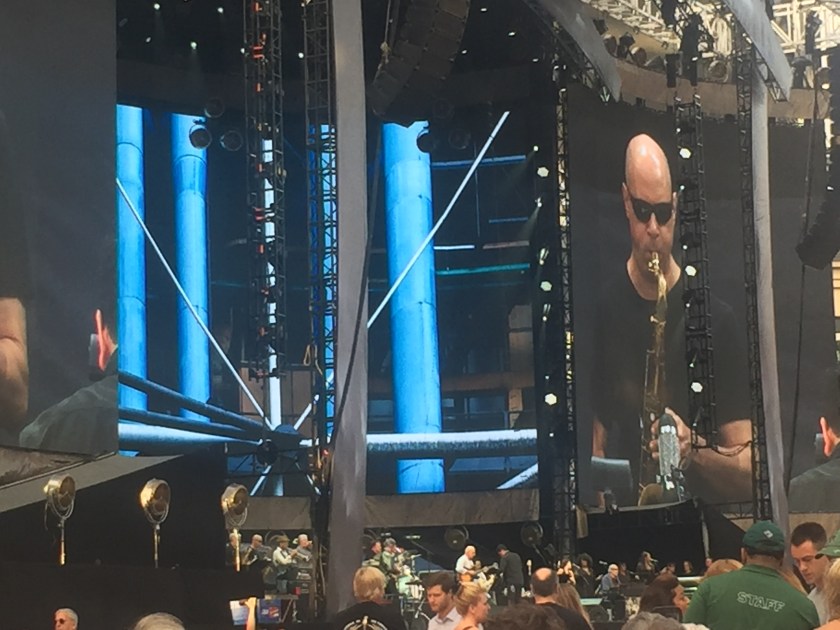




Camera: iPhone 6
Locations: Bronx, New York (Yankee Stadium), Queens, New York (Citi Field)

Getting better at a foreign language or achieving an advanced level of proficiency in one is not an easy task. I’m not going to sugarcoat it. Regardless of which language you’re focusing on, it can months or even years to get the hang of it. Depending upon how much hard work and effort you put in, you are going to likely improve quicker and remain committed to the process of becoming bilingual or multilingual. Certain people are going to pick up language(s) quicker because they may have a natural talent for it or because they truly enjoy learning the subject and find it easy to excel in.
However, even if you’re not naturally gifted or don’t pick it up quickly, you can still get ahead and make gains in the language through a number of ways. As someone who has studied foreign languages for over half of my life and has also taught English as a Second Language for a few years now, I have a pretty good idea at what separates those students who are going to succeed in their language studies and those students who are likely to fail.
Even though, you may want to be fluently writing in Japanese or speaking to friends in Spanish, you have to put the work in even if language learning happens to come easy to you. It won’t happen overnight but the process can be sped up if you want to boost your ability to learn with a few key steps that I will highlight in the rest of this post. Take these five steps that I will flesh out to heart because it could mean the difference between you being at an advanced level in a year rather than being stuck at the intermediate stage. You don’t have to do all of my five recommended steps to make language gains quickly but it’s definitely recommended to try our at least one or two of them for your own personal benefit as a student of foreign languages.
While not the most noteworthy recommendation, some language learners forget to put the work in on a consistent basis. If you happen to work five hours on one day specifically on learning a language, that sounds great on paper but if you happen to neglect the six other days of the week, then you’re not really going to make any progress. This is partly why if you study a foreign language in a school or at a university, you’re going to usually have classes four or five days a week so that it stays fresh in your mind. One or two hours per night five or six days a week will go a long way for you and your learning language goals.
Being consistent and responsible in your hours of study will pay off much greater dividends than cramming all of your language studies into one night for a bunch of hours. It’s likely that your brain and memory will be so overwhelmed by all of that information if you cram it into one night that you won’t be able to remember anything you learned by the next week or month. When it comes to any academic subject including foreign languages, you should listen to wise words of a popular phrase that I remember from my high school days: “It’s better to study smart, then it is to study hard.” Don’t overwhelm yourself, stay committed to a language study schedule, and remember to take one day off instead of five or six days off to retain the vocabulary, grammar, phrases, etc. that you have been learning.
We live in an amazing time and I would argue that it’s easier than ever to learn a foreign language if you’re willing to do your research, both online and offline. When it comes to online resources, there is almost a limitless amount of information that you can discover dealing with the study of a foreign language. Whether it’s grammar, vocabulary, listening, writing activities, etc. you’re likely to find what you need in order to study and improve if you make the effort to research carefully. In addition to that, it’s easier now than ever to do a language exchange with a native speaker through the medium of an online platform such as Skype, Google Hangouts, etc. You can also use a website like Meetup.com to find a social group to meet up, hang out, and practice your target language with if you happen to live in a big city or large town.
Beyond just online resources, you can network in person by offering to have coffee for an hour with a native speaker of the language you’re learning and if you haven’t had success with Meetup, you can enroll in language classes for a fee at either a foreign language center, community college, or at a local university of note. It’s much easier to make language gains when you live in a big city and have a good amount of money to spare for some formal classes. However, not everybody in the world has that luxury, which leads me to my next step.
As mentioned before, not everybody can live in a big city or have the ability to pay for classes at a university or a language center. However, if you can make the more affordable investment of getting a private tutor, it will save you some money and you will be able to practice directly, one-on-one with a native speaker and teacher of the target language.
Usually, a private tutor or teacher who you meet with face to face in person is going to be a bit more expensive than an online tutor. If you prefer to be physically present with your tutor to make it easier for you to learn and clarify the content that you’re absorbing, you may prefer to shell out the extra money for them to meet you at a café or to make a house call to your home and apartment.
However, if you are on a budget, don’t have access to a native speaker of the language you’re learning in your current location because you’re in a small town, don’t live near a foreign language center, etc. you should consider getting an online tutor or teacher. Even though you won’t be physically in the same room as your tutor, you’ll still be able to learn new material, go through lessons together, speak in the target language, and be able to complete homework and classwork to improve your fluency. Online tutors also tend to be less expensive as an investment when compared to real life tutors or to enroll in group classes.
You have to consider how much time you have to devote to the foreign language you’re learning and what your budget is. The cheapest and least expensive option is to have a free exchange of languages if you have a friend or colleague who wants to improve at your language in exchange for them teaching you their language. If you are particularly interested in learning a foreign language online, you should check out platforms like Verbling or Italki.
Another great way to boost your foreign language abilities is by seeking out opportunities outside of the classroom or textbook to brush up on your knowledge. Through a variety of media that is available both online and offline, you can spend an hour or two each day going through books, music (songs), movies, TV shows, etc. to listen and absorb the language you’re learning. For example, when you’re reading a book in a foreign language, you can highlight the words that you do not know and find out the meaning with a dictionary. You can also look up news articles online and take the time to translate the sentences and paragraphs from the foreign language into your own language.
You can immerse yourself more deeply into the culture behind the language you’re learning by being exposed to the songs and dances whose lyrics you’ll be able to study and analyze. In addition, you can pick up a lot of a language when you watch a popular TV Show, Movie, or other program. You can not only pick up a lot of a foreign language by spending some time listening to the language and interacting with it but also by observing the host culture(s), and finding out more about the individual expressions and phrases that also make this language you’re studying unique in its’ own ways.
To save the best and most important step for last, if you want to immerse yourself fully and take your foreign language studies to the next level, you’re going to want to move overseas for a period of time for some intense study of the language. You can watch a lot of movies, you can take a lot of classes, and you can study five or six nights out of the week, but moving to a country where they speak the language you’re learning as a fact of life will challenge your language skills and abilities as never before and put you to the test. Out of the five steps that I mentioned, this one will be the most beneficial to your language studies and also make the biggest impact on your life. I cannot recommend it enough for you as the student to go overseas for as long as you need to improve your language skills and improve as much as you can.
Even if you can only make it overseas for a cultural / language study exchange program for a month or two, you should take advantage of an opportunity like that. Also, if you happen to be in university and have the chance to study abroad for a semester or even a year, you should really do it especially if you’re committed to mastering the foreign language you’ve chosen. Foreign language learning doesn’t have to end even after you have earned your diploma.
You can continue to make trips to those countries where the language is the official one into the future. Other options include taking a gap year off from work or school to devote yourself to language study while you’re traveling around the world. If you are TEFL certified and want to learn a foreign language at the same time, you can move overseas to teach your language to students while receiving lessons from a teacher in that country as well as being immersed in the culture at the same time. There are tons of options out there so if you want to boost your language skills as much as possible, moving overseas for a long period of time could be a great chance for you.
There is no ‘magic bullet’ that will guarantee you perfect, almost native-like fluency in a foreign language. It’s a goal that takes a lifetime to master and even then you’ll still make mistakes and may retain your accent while speaking the language. Learning a foreign language is a lifetime project and is a skill that has to be consistently studied and improved upon.
It’s a common fact that the younger a person is when they start a foreign language, the better off they’ll be. If you start learning Chinese at five years old, you’ll be at a clear advantage when compared to somebody who is first starting a language at twenty years old. The younger a learner is when it comes to a foreign language, the more vocabulary and grammar they’ll be able to retain.
However, it’s important to not be discouraged about this fact even if you’re starting a foreign language in your 20’s and 30’s. With hard work and determination, you can still make a lot of progress especially if you follow these five steps. You can boost your level quicker than usual if you consider implementing these useful steps in your weekly or daily routine.
It’s also a positive that after you learn your first foreign language well, it’s likely to be easier for you when it comes to getting a high proficiency for your 2nd, 3rd, or 4th foreign language. Anything worth doing in life does not come easy so you have to decide how much the study of languages means to you personally. However, with the five steps that I have outlined in detail for you as the reader, you will be able to learn the language well, improve quickly, and reach your goals as a student to develop this crucial skill for the 21st century.
If you liked this article of mine and you are looking to improve your English language skills, please consider the option of having me as your private tutor. You can find out more information about this opportunity at https://benjweinberg.com/learn-english-with-me/. Whether it’s a lesson through Verbling, Italki, or another platform, I’d be happy to work with any English language student from around the world in their quest to achieve an advanced proficiency in my mother tongue. Good luck!
While not the most widely used or well-known grammar tense in the English language, the ‘perfect’ tense does come up every now and then in either your writing, speaking, or listening skills. It’s important to understand both the usage of the ‘perfect tense’ as well as the forming of this grammar tense. We’ll begin this series of the ‘perfect tense’ with its’ usage and formation in the present. In the next two posts, we’ll then dive into the past and future forms and uses of the ‘perfect tense.’ When you get the basic grammar tenses down as I have gone over in past ‘English Corner’ posts, you can move onto more challenging and specifically used tenses such as the ‘perfect tense.’
It may be surprising to teach this right off the bat but the present perfect tense helps to create a link between the past and the present. In a present perfect sentence, you are going to be describing an action or an event that has happened before but it isn’t certain whether that action or event is ongoing. When you use the present perfect tense, you are going to want to focus on the result or conclusion of an action rather than if it’s still continuing or not.
There are five main circumstances in which you can use the present perfect tense. You can do so when discussing an action or situation, which began in the past and has continued into the present. You can talk about an action that was undertaken during a period of time and that has not yet been finished. You could also discuss a repeated action or event that occurred over an unspecified amount of time between the past up until now.
You can also insert the word ‘just’ into your sentence to indicate that an action or event was completed very recently in the past to emphasize how close it was to the present. Lastly, you can describe an action or event that simply took place and was completed without mentioning the time or date at all. If you want to be more detailed about asking why, when, where, what, how, who, etc., you’re going to want to focus on using the simple past tense instead so as to not to confuse these two distinct tenses. In order to get a better idea of these five different uses for the present perfect tense, here are some examples to remember.
Actions Started In The Past that Continue Into The Present
Examples:
The Time Period Hasn’t Been Completed Yet
Examples:
Repeated Actions Between The Past and Now (Unknown Period)
Examples:
Completed Actions In The Very Recent Past – ‘Just’
Examples:
The Timing of the Action is Not Known or Not Important
Examples:
Ultimately, it’s important to remember that additional words like ‘just’, ‘since’, ‘for’, and ‘still’ may pop up every now and then in your present perfect tense sentences depending upon which of the five uses you are utilizing this specific grammar tense for.
When it comes to forming the present perfect tense, there is an actual formula towards creating the right form that each English learner should be aware of. There are two elements to the present perfect tense. The first is the right form of the auxiliary verb represented by the verb to have in the present tense. The second element is represented by using the past participle of the main verb with the base verb + ed. For some examples, the past participle of these regular verbs could be danced, finished, worked, etc. The two elements will also go together when the base verb is irregular regardless of the circumstances.
Positive Form – Example
(Subject + verb ‘to have’ + past participle)
Negative Form – Example
(Subject + verb ‘to have + not’ + past participle)
Question Form – Example
(Verb ‘to have’ + subject + past participle)
Negative Question Form – Example
(Verb ‘to have + not’ + subject + past participle)
To finish off this entry on the ‘present perfect’ tense, I’d like to leave my readers with an additional example of how to use a simple verb and express that word in the positive, negative, and question forms by using the present perfect tense. You can use these examples to help yourself when it comes time for you as the student to use this particular grammar tense in your everyday speaking and writing activities as an English language student.
As always, if you have any questions or comments about my ‘English Corner’ posts, please do let me know. Next time, I’ll be covering the ‘past perfect’ grammar tense, which is quite similar to the ‘present perfect’ tense but with a few differences to highlight. In the meantime, keep studying hard and do check out my previous ‘English Corner’ posts on my website.
To Run – Present Perfect Tense
Positive Form
Negative Form
Question Form
Note: It’s important to remember that the verb ‘to run’ goes from ran to run when it comes to the question form of the ‘present perfect’ tense. Otherwise, in the positive and negative forms of this grammar tense, you will use ‘ran’ instead to describe this particular verb in the ‘present perfect.’ This is a helpful tip to remember for readers if you happen to be confused by this change.
For my last blog post regarding Colombian culture for a while, I’d like to focus on a form of dance that is very popular there, especially on the Caribbean coast. Similar to cumbia, vallenato is a form of Colombian folk music that is both traditional and innovative in its’ instrumentation, interpretation. If we were to translate vallenato to English, it would roughly mean, “born in the valley,” which refers to vallenato’s roots coming from the Caribbean region of Colombia.
The valley that is being referenced as having started this popular music is located between Sierra Nevada de Santa Marta and the Serrania de Perija. Vallenato is also partly named after the Colombian city of Valledupar where this genre of music originated. Vallenato has become so popular not just in Colombia but also in rest of Latin America making it apart of mainstream Latin music that is apart of the cultural heritage of that country and that region of the world.
Vallenato originated from the tradition of farmers who would travel from Colombian village to village on long journeys in their quest to sell cattle in local fairs or look for greener pastures for them. During these trips, the farmers would sing together, play guitars and other instruments like gaita flutes (kuisis), which were indigenous to the local culture. Since these farmers would travel often, they would often bring news and information to the different towns that they visited. Sometimes, these messages to the village folk would be delivered in the song form so that the towns would know what’s going on nearby in the valley.
Vallenato is an eclectic mix of different kinds of world music such as Spanish, African, and Amerindian. Vallenato songs started to become common during the early 1900’s from the Caribbean region of Colombia. The early forms of vallenato would come with instruments such as gaita flutes, guacharaca (percussion), caja, bass guitar, and acoustic guitar. Additionally, you could make the sounds more European by adding instruments like the accordion or the piano.
Since the early days of vallenato, the accordion has become an increasingly large part of the sound of the songs of this particular genre of music. While vallenato was originally a genre of music for lower class folk and farmers in particular, it has since become popular across all spectrums and social classes within Colombian society. Many subgenres have come out of traditional vallenato such as romantic vallenato, commercial vallenato, and new wave vallenato.
Since the heart of the vallenato genre deals with telling stories, it is a very social form of music. You can drink liquor, enjoy a nice meal, and even dance with a partner to this genre. Listening to vallenato can go well with having a family party, attending a festival, or checking out a carnival. Vallenato has become so popular that there are two main festivals devoted to it: the Vallenato Legend Festival and the Cradle of Accordions festival. Valledupar has also become one of Colombia’s most famous cities given the fact that it was the birthplace of one of its most popular music genres, Vallenato.
When it comes to vallenato, you cannot have a song without the caja, the guacharaca, and the accordion to flesh out the sound and rhythm. The caja, is a small drum, that you can place between your knees and play with your bare hands. This drum was originally brought over by the Europeans during colonization and was mainly used by African slaves for entertainment.
The guacharaca, a wooden, ribbed stick that most looks like sugar cane can be rubbed together with a small fork in order to create a scraping sound. This instrument is meant to imitate the sound of the guacharaco bird from the Cesar region of Colombia, who is known to hunt for food and dance to perform the mating ritual. Lastly, you can’t forget to use the accordion of German origin in order to get the different tones needed to fill out the vallenato sound. By using the right buttons and hitting the right reeds, you should be able to get the rhythm down.
Speaking of the rhythms of vallenato, there are four different beats that create a rhythmic structure and a melody chord structure to form the basis for a song. The four rhythms are known as son, paseo, merengue, and puya. The son and paseo are played in a 2/4 time while the merengue and puya are played in a 6/8 time or ¾ time structure. ‘Son’ is known as being the slowest and most somber movement of vallenato and also has a heavy cadence. ‘Paseo’ is probably the most widely recorded rhythm of vallenato is known as being the most consistent of the four rhythms.
When it comes to ‘puya’, it’s the easiest rhythm of vallenato for each musician to have a solo with one of the three main instruments. It also has a faster up-tempo and is the oldest of the four rhythms. ‘Merengue’, which is not the same type of music as the original genre, but is the fourth and last vallenato rhythm, and was brought to Colombia by some African tribal groups. It’s a more narrative style of vallenato and is played in decimas, which is a 10-line format with Spanish internal rhythms the came over to Colombia originally during the 16th century.
There have been many composers, singers, and groups of Vallenato bands that have emerged over the past century who have helped to contribute to this genre of music. Perhaps the most famous Colombian composer of Vallenato was Rafael Escalona, who composed a number of famous songs and was one of the co-founders of the Vallenato Legend Festival along with Consuelo Araujo and Alfonso Lopez Michelsen.
Many Vallenato groups have also become orchestras in both their large size and instrumentation. The most popular of these orchestras are Binomio de Oro de America, Carlos Vives y la provincia, and Los Diablitos del Vallenato. You also can’t talk about Vallenato without mentioning Silvestre Dangond, who has become maybe the most famous modern day singer and composer of songs in this genre.
He has become popular not only in his native Colombia but also in Latin America and worldwide. While originally a genre of music from Colombia, Vallenato has expanded its’ popularity to Latin America and the rest of the world to share with its’ listeners both the joys, sadness, and romance of life itself.














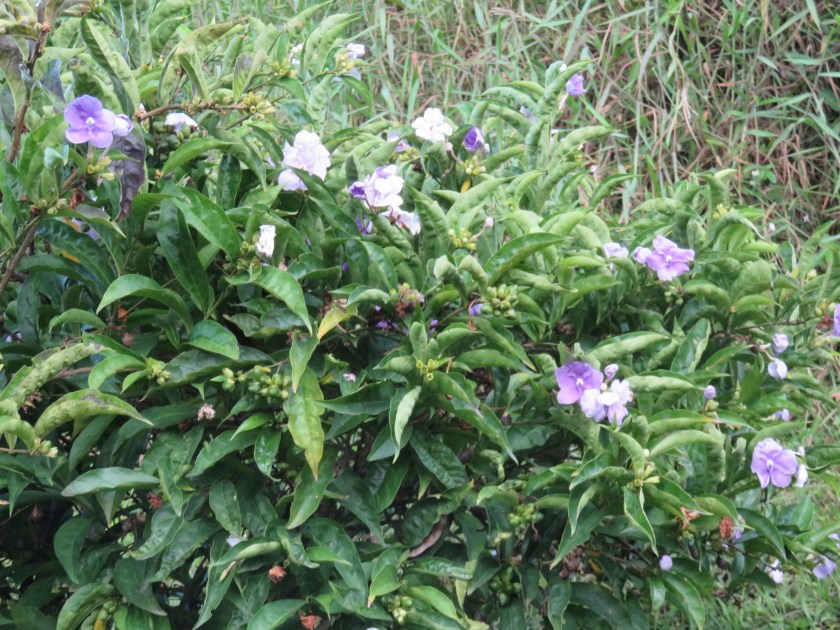
Camera: Canon PowerShot SX710 HS
Location: Medellin, Antioquia, Colombia