The Lost Skill of Making People Feel Seen

“Most people aren’t lonely because they lack friends, they’re lonely because nobody truly sees them. In a world of constant interactions, at work, online, or in our daily routines, these moments are often shallow, rushed, and forgettable.”

Most people aren’t lonely because they lack friends, they’re lonely because nobody truly sees them. In a world of constant interactions, at work, online, or in our daily routines, these moments are often shallow, rushed, and forgettable.

One of the best books I’ve read recently on this subject is from New York Times writer and columnist, David Brooks, who authored the book, ‘How to Know a Person: The Art of Seeing Others Deeply and Being Deeply Seen’ in October 2023. The core idea of his book was that you can divide people into two camps of ‘Illuminators vs. Diminishers’, with illuminators making people feel recognized, clearer, more important, and the diminishers who make interactions about themselves or forget about the other person (often not on purpose). If attention is now the primary currency in our lives, giving or receiving quality attention is the key difference in seeing others fully.

Let’s go into what ‘feeling seen’ means in 2025 and what it doesn’t because it can get confusing if you’re new to this concept. Feeling seen is not about just agreeing with someone, praising them effusively, being ‘nice’ or ‘kind’, fixing their problems for them, dumping your own problems or inadequacies on them to compensate in return for them sharing their issues. Rather, feeling seen is about being perceived accurately and without judgment often, having your inner logic understood and how you see the world, and feeling that your emotions are being recognized rather than just analyzed and interpreted.

An example of this in action could be a friend, a spouse, or a co-worker telling you, “I don’t necessarily agree with you here, but I understand why that matters to you and I see your perspective.” Being able to let that person know that you know where they are coming from in their views and why it matters to them makes a huge difference in your personal and professional life.

Technological and other daily distractions aside, there are various reasons why people don’t feel fully seen nowadays. Most people are not patient in waiting for their turn to talk, rehearse their response in advance while you’re still speaking, filtering everything through themselves and what they would do, or just not wanting to understand when they listen. If you are not seeing someone enough, start with listening to understand the other person rather than listening to reply or putting themselves in their shoes right away. You cannot see someone else while you’re playing their role in your own mental movies or thinking through what you would do, say, or behave in their shoes.

Like any social skill, there are ways to make someone feel more seen and to build up that skill like it’s a positive habit. The more you use, repeat, and solidify these response tactics, the more comfortable other people will feel around you. First, listen to the emotion that they are carrying with their words even if they don’t express it outright. Train yourself to hear the ‘fear, anxiety, pride, shame, sadness, frustration, hope, joy, etc. that they exude with their cadence and tone beyond the words they are saying. Being able to voice what emotions they may be expressing to you in their words is very powerful and will make someone feel very seen. For example, “You sound disappointed, not angry, about ____.” As David Brooks wrote about ‘illuminators’, seeing people’s emotions clearly even if they aren’t telling you with their words what exactly they are feeling is a very useful people skill.

Second, I think it’s key to asking expanding questions, rather than extractive or basic ones. Good questions open doors to a deeper and more fulfilling conversation while bad questions can feel like an interview or an interrogation. A good question could be, “What part of your work gives you the most fulfillment?”, which can expand the conversation and take that person through a positive memory or a feeling of contentedness sharing what they do for a living in a specific way. Rather than an extractive question that may not lead anywhere that we often hear a lot as “So, what do you do?” If the question helps them understand better or explains why someone does what they do, you’re doing it the right way.

Additionally, some other ways to make others feel seen is to avoid pivoting to yourself right away. You should want to reflect on the conversation rather than redirect it to be about yourself or what you would do. For example, you could say “What I’m hearing from you is ____”, allowing that person to know that you were paying attention but also that you heard them correctly in terms of their viewpoint. Remember to ask questions that open the conversation, not trap it. Name specific strengths you notice. These small moves make someone feel truly seen. A friend once told me they felt burnt out by their job. In this case, just nodding back wasn’t enough, but I reflected on their frustrations with their work environment, and it completely shifted the conversation

Naming the strength(s) and good qualities of a person is also an excellent way to make them feel seen. Instead of calling someone you respect ‘smart, clever, hard-working’, go deeper than that by taking why you think they are that way and what it is specifically that led you to come to that conclusion about them. At a meeting once, instead of saying “Good point. I said, ‘I see why that approach would make sense given the constraints you’re dealing with.”

Lastly, people are unfinished characters meaning that they are complex, deep, and contradictory at times. Mr. Brooks’s book emphasizes the need to have a ‘moral imagination’ about someone to get beyond who you think they are just because you know their politics, childhood, job, worst moment(s). Assume in good faith that there is a lot more going on in a person’s life than you currently understand and try to hold judgment about them based just on the information that you have available about them.

Being seen by another person deeply is a great feeling and is increasingly rare these days. Seeing others requires courage, dedication, and attention, which is in short supply. The ability to see and be seen demands humility, slowing ourselves down, removing our ego armor, and being present with them fully. It is also worth noting that the people who feel most unseen by others end up being the worst at seeing others in response as it becomes a negative cycle. If you’re not seen at all or at least a little bit, why would you want to do the same for others rather than breaking the cycle?

Making others feel seen changes you for the better as a person. When you see others well, your relationships deepen, you become a better leader, your conflicts soften or end, and your own sense of personal meaning grows as a result. As Brooks writes in ‘How to Know a Person’, “To know other person well is one of the highest forms of love.” I think this is a great lesson worth imparting on us all to try to illuminate other people as often as people and to do so in a consistent manner. I’ve seen it personally in my classrooms, work meetings, or even casual coffee chats as people light up when someone hears them and not just nods along.

Try this once today: make someone feel truly understood. Watch what happens. Whether it’s a comment, a reflection, a thoughtful question, a moment of real attention without distraction, you can make a positive difference in that person’s life, especially if they are going through a tough time. You don’t need grand gestures, just presence, attention, and care. In a world obsessed with being seen, the rarest superpower is knowing how to see.

I’ll Take Kind Gestures Over Kind Words Any Day

“When was the last time someone let you merge into traffic or grabbed you a coffee without asking? Too long, right? Small gestures like these can make your day or even your week. We’re taught from a young age that kind words keep the world turning, but words are just the starting point.”

When was the last time someone let you merge into traffic or grabbed you a coffee without asking? Too long, right? Small gestures like these can make your day or even your week. We’re taught from a young age that kind words keep the world turning, but words are just the starting point.

Even rarer than kind words are kind actions. Post-COVID, people’s social skills have atrophied, making everyday courtesies harder to come by. Things like holding the door, walking on the right side of the sidewalk, or letting someone merge on the highway might seem small but they matter far more than words alone, and we could all use more of them.

Having these kinds of gestures be optional instead of compulsory represents an overall reflection of the fracturing of what used to be common courtesy along with the kind of bare minimum expectations we have of one another too often. Instead of kind gestures, we often have the opposite now: people being loud in public places, not using earphones or headphones on their meetings or in the music they listen to, or just not minding their body language or others’ personal space. I value the importance of these basic gestures because they take such little time or self-awareness yet have become harder to find even when I consider them to be increasingly important to societal harmony.

It’s one thing for strangers to abstain from kind gestures or words but it’s entirely another when they come from business associates, colleagues, family, or friends. Taking the initiative and building a two-sided friendship or relationship, professional or personal, doesn’t take much to sustain but it truly can make a world of difference to the other person(s). Such kind gestures mean more than the average word could ever and people really remember those sincere actions more than giving a basic compliment or heaping on effusive praise.

These kind gestures depend on the kind of relationship you have with the person or group in question, but sending business associates a holiday card or remembering their birthday can strengthen the relationship significantly. You could also offer to buy them coffee or tea for providing advice or mentorship with your work or business. With work colleagues, it doesn’t hurt to share your appreciation in giving a kind word for them, but it could mean much more to bring in food or drinks for lunch or help them with a problem they are having on a difficult project. If you’re a manager, kind words are nice to hear but recognizing your employees with a bonus, a promotion, or just an award or other kind of real recognition can make a huge difference with morale building or employee retention at your firm.

With one’s family and friends, it’s always important to say ‘please’, ‘thank you’ and show your appreciation for their presence in your life. However, it’s always better to take the initiative to ask them out for a dinner or a concert or just to give them a call consistently to check-in with them and see how they’re really doing. Keeping a friendship or family relationship in good shape is hard to do but at least making the effort to see each other and to do so in a two-way manner is key to keeping it sustainable.

Being complimentary, supportive, and positive are all great with your words but real actions or gestures will always speak loudest. That’s especially the case when you’ve known that person a long time and have a history together. Sometimes, friendships end out of nowhere and family bonds are breakable by one party or the other, but if you want to make a real effort, make sure to rely on kind gestures primarily because they mean a lot more to someone than your words.

These days, it’s hard to get kind words out of strangers or people you don’t know and even more so when it comes to expecting basic social graces or gestures of kindness. As a result, we are starved for those kinds of gestures and actions that are unprompted, considerate, and relevant to us. We need those friends, family, and even close associates doing kind things for us and for them to be reciprocated as well because it helps foster our happiness, joy, and overall life satisfaction more than we think.

Kindness begets kindness. While words can move the needle, gestures, actions, and time spent together make a world of difference. Remember: kind words are the minimum of a polite society but making kind gestures second nature to you, especially for the people in your orbit, will make your life richer and fuller. Tomorrow, remember to hold the door for someone, send that quick ‘thank you’ note if someone did something kind for you, or buy a mentor or a friend a cup of coffee. Small gestures always make a big impact, which makes life better for everyone.

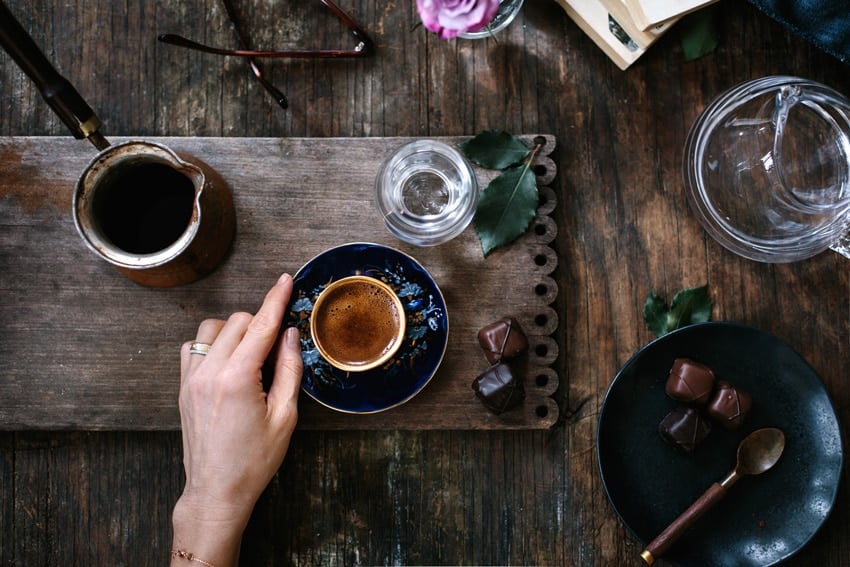
Thinking of Life Like It’s a Cup of Turkish Coffee

“Similarly to life itself, I find that the Turkish coffee experience is a lot like life and perhaps even more so than a box of chocolates (no offense to any Forrest Gump fans).”

I love Turkish coffee. Its roast, its scent, its strength, and subtle sweetness that I can’t get enough of. I don’t even mind the times I drink too much, leaving bitter remains on my tongue. I’m not too bothered by it because sometimes you must taste the bitter ends to get the sweetness out of most of the coffee you drink. Turkish coffee is unique, the jolt and caffeine rush unlike any other I’ve experienced in the world. Similarly to life itself, I find that the Turkish coffee experience is a lot like life and perhaps even more so than a box of chocolates (no offense to any Forrest Gump fans).

Preparing Turkish coffee to be served is an art, requiring patience, precision, and care, qualities life demands from us as well. The finely ground beans must be measured just right, water poured with attention, and heat applied slowly to coax out the perfect brew without letting it boil over. A slight misstep can change the flavor entirely, just as small choices in life can ripple into large consequences. Stirring the coffee gently, watching the foam rise, and letting it rest before serving mirrors the need to pause, reflect, and nurture the moments that matter most. In both coffee and life, the effort put into preparation shapes the richness of the experience and skipping the process only leaves you with a bitter, incomplete taste.

Just like a cup of Turkish coffee is carefully prepared with time and attention, life rewards those who pause to notice the details. The swirling patterns at the bottom of the cup hint at what’s to come, just as small choices ripple into larger consequences. Sometimes, life surprises you with unexpected flavors like a hint of cardamom, a twist of fortune, and other times it’s a sharp bitterness that makes you wince. But every sip, whether sweet or strong, shapes the experience and reminds you that the richness of life comes from paying attention, savoring the moment, and accepting the unknown.

When you first taste Turkish coffee, it’s like a jolt of pure energy and a rush that I would liken to the sun hitting your face as you wake up from a dream and when your consciousness first stirs in the morning. You try to recapture that feeling with each sip, chasing the sweetness that lingers consistently. You can even add a bit of sugar, stir it around to keep the bitterness at bay, and prolong the experience as much as you can. Life like a Turkish coffee cup is pretty small and the portion is not as big as you would expect. It’s a concentrated dose of caffeine and is a high-quality batch of brew.

Like life itself, you got to enjoy it to the fullest but also savor it at the same time. No matter your age, life rushes by, just like the last sip at the bottom of a Turkish coffee cup. Bitterness is inevitable in a Turkish coffee experience as it’s mixed in with the rest of the sweet flavor. There are bitter times in life to be had mixed in with the sweet times and as much as you try to avoid it or abstain from it, you need the bitter parts of life to truly realize how sweet the overall experience was. The bitterness reminds you to savor the good times and to not let it affect your perception of the life you had as a whole. Coffee, like life, can be bitter or strong at times, but that doesn’t mean we should stop living or stop drinking it. 

Especially towards the end of life, the bitterness is unavoidable and comes on strong. As health wanes and loved ones are lost, life goes on and you sip, and you savor it while it lasts. A good Turkish coffee is enjoyed ideally by a body of water like the Bosphorus Strait in Istanbul but ideally, it can be with a view of the ocean, the mountains, or even just on your back patio with the quiet of the day. Life, like Turkish coffee, should be embraced in all its sweetness, bitterness, and everything in between. You really don’t want to miss out on the whole experience having never fully lived it to the most extent. Don’t miss it. Drink it all.

Does He or She or It Spark Joy for You?

“Just like keeping a clean house or organizing your closet is what helped American homeowners create joy in their home lives, I fully believe Kondo’s asking of “does it spark joy?” can be reframed for our friendships, relationships, and our hobbies.”

I’ll be honest in that I never really watched Marie Kondo’s famous show, “Tidying Up”, and while I do respect her commitment to reducing clutter and helping hoarders get rid of their extra junk, I am going to focus more on who or what sparks joy for you beyond just household items. Just like keeping a clean house or organizing your closet is what helped American homeowners create joy in their home lives, I fully believe Kondo’s asking of “does it spark joy?” can be reframed for our friendships, relationships, and our hobbies.

You should never want to exert too much effort into someone or something that doesn’t provide ‘joy’ or at least ‘contentedness’ and while ‘joy’ like any feeling is ephemeral, we should work to maximize the ‘joy’ we feel in life. If you are not getting that ‘joy’ at all from that relationship, that friend, or that job, you got to do some soul searching to see if it’s worth the effort involved to keep it going. You can’t choose your family, your coworkers, or even where you live at times so instead of finding ‘joy’ only there, find those things and people that are voluntarily in your life and where you can better evaluate if they are worth your time.

If you find you are spending your limited time with people who are as dull as dishwater or are even putting you down, you need to cast them aside like old clothes that Marie Kondo would want you to discard from your closet. Now, this does not mean being mean, cutting off contact without a reason, or just straight up ending on bad terms, it’s rather about letting them know that the relationship, the friendship, or the hobby you’re doing isn’t worth the effort anymore. Very few things in life are permanent and if it does not spark any kind of joy for you, you should not keep pursuing it to no fulfilling end.

Instead, I believe it is key to find those people or those activities that continue to give you some joy or happiness. I would classify it as giving you a ‘real shot of life’ and making you feel more alive. It’s not an easy thing to be conscientious of but you’ll often know when someone or something is breathing life into you rather than leaving you drained of it.

Not everything or everyone you interact with in life will give you that ‘spark of joy’ or a ‘shot of life’ but your job is to work hard in those interactions that you do control such as a friendship or a relationship to choose wisely and to do so discerningly. Your boss or your tax attorney is rarely going to spark that ‘joy’ but you’re going to have to interact with them regardless because it’s necessary in life. What you can do instead in your free time is to maximize ‘joy’, ‘happiness’ or just ‘fulfillment’ with people, places, and hobbies that make you feel most alive.

It really is a rare thing in our technologically driven, profit maximizing, socially shallow, and standardized daily routine to find those people who leave a big impression on you, but you got to put yourself out there to receive those kinds of connections. Build a life around trying to find interesting people who inspire you, who make you laugh, who you want to learn from, who you enjoy being around, and for you to be the same to them.

Life is too short to be around ‘joyless’ people who you could choose not to be around instead and to commit yourself to prioritizing those people who make you happy or joyful because of how they make you feel. The same can be said of those activities, hobbies, or interests that brighten your day and that you can look forward to. Routine in adulthood is monotonous, contrite, and not joyful, but you can still find those moments, those hobbies, and those people who make your life that much richer and more colorful.

At the end of the day, Marie Kondo had it right. Joy should be the filter through which we decide what stays and what goes in our life. The difference is that life’s clutter isn’t just found in closets or drawers of hoarders whose houses are too full; rather, it’s in the people we chase, the jobs we keep, and the habits we cling to long after they’ve stopped serving us. Maybe the real act of tidying up isn’t just folding shirts; it’s clearing out the emotional junk that keeps us from feeling alive and fulfilled. When you ask yourself what sparks joy as Marie Kondo does to her clients, don’t stop at your wardrobe or your closet. Ask it instead about your world, your personal life, your hobbies and don’t be afraid to get rid of the extra clutter.

What It Really Means to Be a True Friend

“Having a true friend is hard to come by and it’s important to get better at distinguish who is a ‘true’ or ‘real’ friend and who should deserve that kind of title in your mind.”

People tend to throw the word ‘friend’ around a lot especially when you may be desperate or wanting to have a new ‘friend’ come into your life. It is natural to want to build rapport with someone and to do so quickly. It is good to have someone want to spend time with you and get to know you are. When you are short on friends or when friends you know have moved on to a different town, city, or country, you want to work on replacing those lost or far away friendships that you used to have.

Especially as you get older, friends move away, get married, have children, and it can be hard to keep those friendships the same or keep them alive in a meaningful away. Having a true friend is hard to come by and it’s important to get better at distinguish who is a ‘true’ or ‘real’ friend and who should deserve that kind of title in your mind.

Unless the bonds you have are broken or ruptured due to any kind of factor, which does happen in life, you will still have your friends to pick up the connection again despite factor of distance or life circumstances. A friendship that has been established for years or decades doesn’t ever fully go away but you both must work to keep in touch to keep the flame alive into the future. Friendships do fade away, and you or the other person may not be getting what you need to keep it going. It can be sad to let go of a friendship especially when you invest the time, the emotions, and the money spent to keep it alive, but that is just part of life.

We have a tendency in American culture to form friendships at a dizzying pace or want to have someone as a friend quickly to ensure our own need for popularity or for social status. Other cultures tend to be slower in establishing those tight social connections or friendships, but once you do, you have a friend for life, or you have a true friend under a separate kind of category that should be reserved for a few friends and not for many connections or acquaintances.

Yes, we do throw around the word ‘friend’ a lot and too quickly. However, you should be wary of entrusting people who you consider ‘friends’ without feeling out how much that friendship entails. When I think of the meaning of a ‘true friend’, it is deeper than getting drinks every now and then or meeting up to play a sport or do an activity, it is someone who you can share both the good and the bad in your life and they can do the same with you. You don’t have to reveal your whole life story or be exhaustive about it, but a true friend is someone for whom you can be vulnerable with. A true friend won’t judge you for looking for their help, advice, or let you vent to them every now and then.

There are also several kind and thoughtful gestures a friend would do for you whereas an acquaintance or social connection would not. When you need to move and you’re free to lend a helping hand with the furniture, that is a true friend in action. If you need a ride to and from the airport and they don’t mind it even when it’s a little out of the way, that is a true friend. If you need a place to sleep or ‘crash’, and you would rather not splurge for a hotel room, a true friend will offer you their coach or a spare bedroom.

Now, there are two sides to any friendship so keep in mind that if they are willing to do that for you, you should try to do the same for them if the need arises. It is not being transactional but it’s remembering that any true friendship needs effort from both people, and it is good to look out for another especially in an increasingly isolated and technologically driven world. Our phone or our computer or our AI chat tool will never be a replacement for a true friend who is a real person, one whom you can share stories with, help each other with advice, and lend a hand to you when you are in need. Now, you can still drink, eat, play sports, or hang out with a ‘friend’, but if that friend isn’t someone who you can confide in, discuss life and its happenings, or be there for each other, it’s not a deep friendship or can be a bit shallow.

True friendships in my view take years or even decades to foster so while it’s good to try to make new friends, don’t neglect the older friendships you have that can be revived or don’t be too quick to trust someone without giving the friendship time to bloom and see if you both are compatible in the long-run. I would rather have five ‘true friends’ than a hundred or more ‘friends’ who don’t really know me, care about me, or for whom we are close enough to help each other out or just look out for each other.

Friendships are like relationships, though platonic in nature, they are just as important to foster in a healthy manner and that both people are contributing to it. You can start off just as acquaintances but if you’re putting in the time, trying on each side, and growing deeper as friends over the months and years, instead of staying in the shallow subjects, you really are building the ‘true friendships’ that survive time, distance, and other challenges.

Even if you’re married, or have children, or are busy at work, you also need friends and healthy friendships so keep trying to create them, build them, and be a good friend to others in your life. Remember to have quality friendships over the quantity of them as having a few friends for life is much better than have 100 friends who will drop you in a few months because you couldn’t keep up with their lifestyle or their demands or their ‘image.’ True friendship is missing someone when they’re gone and looking forward to the day when you can rekindle the friendship anew.

“Don’t Look Back In Anger”, A Lyric and Life Lesson

“Don’t look back in anger, I heard you say.” Few lyrics from the 1990s have aged as gracefully as this one has from Oasis. It’s more than just a line from the Oasis anthem sung brilliantly by lead singer Noel Gallagher, it’s a mantra and a life lesson disguised as a rock chorus, and a call to stop letting yesterday’s pain and sorrow weigh down tomorrow’s joy.”

“Don’t look back in anger, I heard you say.” Few lyrics from the 1990s have aged as gracefully as this one has from Oasis. It’s more than just a line from the Oasis anthem sung brilliantly by lead singer Noel Gallagher, it’s a mantra and a life lesson disguised as a rock chorus, and a call to stop letting yesterday’s pain and sorrow weigh down tomorrow’s joy.

When Noel Gallagher wrote “Don’t Look Back in Anger,” it was meant as a stadium singalong, but the phrase itself has outlived its Britpop origins from the 1990s. It’s been sung at concerts, football matches, and even vigils, most notably after the tragic Manchester Arena bombing in 2017. In moments of grief or frustration or malaise, people cling to words that help them move forward, and this one delivers in just five simple words that we all can relate to.

Beyond popular cultural and music history, what does this lyric mean for the way we live our lives? For anyone who’s been mistreated, overlooked, or hurt by other people, whether at work, in love, or by life in general, intentionally or unintentionally, it’s a reminder not to stay stuck in bitterness because of how you have been wronged. Because anger or being angry forever, if you let it, will make a home in your chest and eat away at your peace of mind.

Life isn’t always fair; we all know that fact from a young age. You might work hard only to have a work colleague promoted over you who didn’t deserve it. You might trust someone like a friend who lets you down or lies about you to other people. You might pour yourself into a relationship that ends with betrayal. The gut reaction in these moments is anger and honestly, it’s justified. Anger is the body’s alarm system, telling us something wrong has happened to you.

The problem is what happens next and, in the days, months, and years that follow the event. Anger is useful for a moment, and we should be allowed to feel that emotion rather than bottle it up entirely, but corrosive over time. It tempts you to replay every slight, to act out, to rehearse every insult, and cling to grudges like they’ll somehow make the scales of justice even. Anger keeps you bound to the people and situations you want freedom from and to be free of mentally.

That’s why this song lyric hits so hard. “Don’t look back in anger” doesn’t mean “forget what happened.” It means instead to don’t let your gaze stay fixed on the wreckage. You’ve got to keep walking and moving forward, because the road ahead is always longer than the one behind.

Forgiveness is one of the most misunderstood concepts out there in life. People often think it means excusing someone’s behavior or giving them another chance to hurt you again. This is not true at all. Forgiveness is less about them and more about you, it’s a decision to release your grip on your anger so you can move forward in life and to move your emotions on from that person.

Think of it this way metaphorically: carrying anger is like holding a burning coal. Yes, it’s hot, and yes, it proves you were hurt. But the longer you clutch it, the more damage it does to you, not to the person who wronged you, but to you alone. To not look back in anger doesn’t mean inviting mistreatment to happen again. Boundaries are still vital and it’s best to get away from the person(s) who wronged you in the first place. You can forgive someone and still choose never to deal with them again. The difference is whether you carry that heavy emotional baggage with you on the road forward while not ever letting it go.

How do you live the lyric you might ask? Here are a few ways to start doing so today:

  1. Reflect, then release: Acknowledge what happened to you and how it made you feel. Then, consciously decide to stop replaying it. Journaling or talking it out can help you.
  2. Redirect your energy: Instead of fueling resentment, pour that fire into something constructive like playing music, writing, going traveling, or even doing physical exercise.
  3. Build stronger boundaries: Forgiveness doesn’t mean letting people walk all over you. Learn from the mistreatment you received and protect yourself from it in the future.
  4. Practice self-compassion: Often, the hardest person to forgive is yourself. Don’t beat yourself up for trusting, caring, or trying with that person who wronged you. Recognize that those qualities are strengths, not weaknesses and to not give up on trusting others entirely.

What makes this song lyric timeless and still relevant in 2025, especially as Oasis is touring the world again and playing this song each time, is its dual simplicity and power. Everyone has something they regret or someone they resent from their past. Everyone carries scars from unfair treatment whether from work, from family, or from supposed ‘friends.’ However, “Don’t look back in anger” doesn’t ask for perfection, it asks for direction in going forward and leaving the anger behind.

Even three decades later since Noel Gallagher first put this famous song lyric down on scratch paper, it’s still sung loudly at concerts because it feels good to let it all out. Belting the words is cathartic as I did recently on a warm summer night in New Jersey but living them is transformative. In a world where negativity and hate spreads faster than hope and kindness, this song lyric reminds us to choose the harder, better path: release over revenge, peace over poison.

There’s no sugarcoating it: forgiveness isn’t easy. Sometimes it feels impossible to do. If you’ve ever carried anger long enough like I have in my past, you know how exhausting it is to hold on to. Anger narrows your world; forgiveness widens it again. The lyric, then, becomes less of a suggestion and more of a survival strategy. “Don’t look back in anger” because the future needs you to be free, not bitter and burnt out. “Don’t look back in anger” because life is too short to let someone else’s behavior dictate your happiness. “Don’t look back in anger” because joy requires space in your heart, and anger takes up too much of it and corrodes it slowly.

“Don’t look back in anger, I heard you say.” It’s a simple song lyric, yes, but it’s also timeless advice, true therapy, and a way of living well. Life will hand you plenty of reasons to grow bitter at yourself and at other people, but it will also hand you a thousand opportunities to move forward with forgiveness in your heart.

You can’t change what happened to you and who did it to you. You can’t undo the mistreatment or rewrite the past. Instead, you can decide not to be imprisoned by your anger. You can decide to keep walking, keep building, keep loving, and keep moving forward. In the end, that’s the only way to win. The next time you feel anger weighing you down because of someone or something, ask yourself this question: what would it feel like to finally set it down? You just might find the answer in a song you’ve been singing for years.

Why You Need Something To Look Forward To In Life

“Life is not just about paying bills, taking care of errands, and going to and from work or school. No, life is more than just going through the motions.”

Life is not just about paying bills, taking care of errands, and going to and from work or school. No, life is more than just going through the motions. As an adult especially, you must have a life beyond the daily grind. You must be going out of your way to make time to enjoy life and to have something to look forward to, as frequently as possible. Life is short and days, weeks, and months can pass you by without taking full advantage of it. As you get older, it becomes not just about being successful and finding purpose but finding enjoyment out of it before your time is up here.

Enjoyment doesn’t have to lead to you spending your money needlessly. It could be going on a walk, a hike, or chatting with a friend on a park bench. You can enjoy the sunrise, the sunset, or take the time to exercise and feel good about yourself as a result. These are all things that you can look forward to without spending your hard-earned money. While there is nothing wrong with using money to have fun and relax a bit, it’s not the end all be all with looking forward to a gift, a purchase, or a subscription. If it brings you happiness and you’re responsible for it, monetary or not, you should always be marking your calendar each day to at least one thing or event or person you’re looking forward to interacting with.

Clearly, man or woman is not a machine and grinding endlessly just to sustain us alone is not healthy in the long-term. You can be a hard worker and still take the time to enjoy life even when you have a busy schedule. However, you need to also set boundaries and be willing to look at your time honestly to figure when and where you can fit this downtime in. You can easily get overwhelmed with errands, chores, duties, work, and other obligations and not carve out any time for yourself but that is no way to go through this life.

We all need our down time to reset, enjoy, and relax without feeling guilty for having done so. No one in your life is going to plan out your fun experiences or down time for you so you need to be actively doing so yourself. Managing your calendar well is part of that and being conscious of what brings you joy and happiness. Other people will often dictate for you what they think will bring you fulfillment outside of work or school, but you need to decide for yourself the best uses for your free time.

For some people, that could be playing tennis on a weekly basis, for others, it could be catching up with different friends over a drink or coffee over the course of a month. You should always be looking to make time for your fun and enjoyment as you see it best. It takes effort, communication, and planning but it’s better than just going through the motions without breaking up the daily grind a bit.

Being able to plan a vacation, a concert, a hike, or just time spent with loved ones is what really will fuel you through the ups and downs of professional and academic life. You need interests, hobbies, experiences, and people you like to get more out of life beyond the briefcase or backpack. We were not meant to live to work and earn our daily bread alone. Take the time out when you can to have something to look forward to doing, experiencing, or enjoying, whatever that may be, guilt free.

There will always be plenty of hours to give for that job, that class, or that bill payment, but there is less time for our free time by and large. That is why it’s important to plan out your free time well, to have a life beyond the grind, and to create fun, joy, and laughter wherever you can, whenever you can. Enjoy your free time and make the most of it because it’s not for forever and you need to make the most of the time we are given to pursue our own happiness.

Why It’s Important to Romanticize Life a Little (While Not Losing Your Grip on Reality)

“When I say romanticize life, it’s about choosing a balance between being aware of suffering and cruelty in all its forms but not letting it steal our joy or every drop of beauty we should experience during our short time we are living on this planet.”

A star-filled sky, a sunset that looks like a colorful painting come to life, a delicious cup of coffee on a patio or rooftop, a smile from a stranger, or a song that just puts you in a good mood; romanticizing life itself is important to maintaining one’s contentedness. Romanticizing life itself isn’t about deluding oneself about the ills of our troubled world or denying that life has its problems, but it’s about choosing meaning, joy, and pleasure in a chaotic thing that we call existence. When I say romanticize life, it’s about choosing a balance between being aware of suffering and cruelty in all its forms but not letting it steal our joy or every drop of beauty we should experience during our short time we are living on this planet.

What does it mean exactly to romanticize life itself? For me, it’s about viewing life not only through its troubles, struggles, and effort, but also about embracing wonder in all its forms, keeping your imagination going, and living life with intention to observe joy and be appreciative of being able to exist in this moment. Being able to romanticize life does not come easy and we can lose track of how precious life really is. However, you can appreciate life more when you’re able to enjoy the small rituals and little moments that bring you a sense of calm and contentedness.

Maybe it’s your morning coffee or your daily walk around the neighborhood. If you’re a parent, maybe it’s the sound of your child’s laughter or if you’re married, your partner smiling at you. In those precious moments, you are left with a sense of what the good stuff in life is and that it can be good. You know those moments don’t last forever so it’s important to recognize them when they happen and to find enjoyment in them. I also think romanticizing life is about embracing yourself as the ‘main character’, which I have written about in a previous article. Being able to embrace new places, new foods, new cultures, and new adventures can give your life much more volume of good memories, meaningful connections, and some amazing stories to tell upon your return.

Life isn’t perfect and neither is your own, but it’s important to remind yourself daily of the good stuff even if it’s minor things in your routine and daily rituals. Even if life seems bad, I always think there’s the ‘little’ things in life to be grateful for and to remind yourself of what to be fortunate for even if things can look bleak at times. Romanticizing life matters even more in today’s world in my view. Modern life is designed to overwhelm us seemingly everyday and can drain our joy completely if we are not careful.

A lot of us are burnt out from work, overstimulated by 24/7 news cycles, and overwhelmed by the technological change going on around us. Romanticizing life is not about ignoring these changes going on around us but to remember exactly why life is still beautiful and how to find out what inspires us, moves us, and allows us to embrace the good things in our world.

It is also a good antidote to apathy, nihilism, and numbness to the problems in our society because remembering the good things in life and what’s worth fighting for. We cannot control the world or right every wrong, but we can control how we experience and move through the world in our own way. Being able to romanticize life and the good it can offer us encourages positive feelings of gratitude, mindfulness, and presence especially when there are so many distractions around that can cause us to lose sight of what we really should be focusing on.

While I advocate for romanticizing life, I’ll never shy away from acknowledge the pain and suffering we all inevitably go through in life. However, we cannot let ourselves be consumed by the pain we experience or seek to escape reality in unhealthy ways. Remember to be able to hold the good and the bad of life in you, the joy and the grief, stress and peace, happiness and sadness.

Don’t romanticize life to escape your problems or the pain you experience but instead use it as a tool to ground yourself, to have perspective, and to think in a more balanced way rather than ‘everything is terrible’ or ‘everything is perfect.’ For some examples of this you may experience in life, you can still pay your bills and light a candle for a nice dinner in the same day. You can still enjoy Paris while it’s raining down on you and you’re late for a tour. You can still have a bad day and still journal your thoughts down while being grateful for the good things you have in your life overall.

As the famous philosopher Albert Camus once wrote, “There is no love of life without despair of life.” To me, this quote represents that you can still be in touch with life’s beauty and joy without being broken by the pain and sorrow you experience that’s a part of life too. This is the kind of perspective that you should be cultivating like Mr. Camus in that you need to be romanticizing the ordinary and mundane of life and to find some beauty in it if you can.

How to do this exactly? Well, I like to write and observe to romanticize and find joy in the world. For others, it could be reading literature, watching films, or learning about art. Even better than that is to create these types of output yourself and to collaborate and work with others because building out human connection through these endeavors makes life more enjoyable and makes it easier to romanticize it all.

Romanticizing life does not mean broadcasting for the world every photo you take, every meal you consume, or every sunset you enjoy. It’s about living in the moment, not being performative or fake about what you experience, and taking the time to really embrace beauty wherever it can be found. It’s about being intentional in how you embrace life, little by little, the good and the bad. You need to have perspective in that things are never as bad as they seem nor as good as they seem. Romanticizing life is not about pretending bad things don’t exist or that good things don’t exist, but it’s about believing in that there is good in the world still and it’s worth taking pleasure in.

If you’re into romanticizing life through travel and adventure, do more of that, and for others it could be the comfort of family and friends, while others can do it more simply with watching the passing of a cloud or the blossoming of a flower, you need to find one small way each day to bring some good energy to your life and to uplift oneself when you can. Life is not meant to be an endless grind where we are meant to struggle endlessly without taking some time to reflect, be present, embrace beauty when we see it, and to live life with as much passion  as you can muster when we find things worth enjoying, both big and small, both random and planned, and above all else, reminds us that while life can be tough, it can also be beautiful too.

Life, Subscribed: How Everything Became a Recurring Fee

“Welcome to the age of subscriptization: a world where the default mode of engagement is no longer ownership, but ongoing payment(s).”

Okay, not literally everything, but it’s certainly starting to feel that way. Remember that feeling you had as a kid or teenager picking up a compact disc (CD), a DVD, or a book from the local school fair. You paid for it only once and then you owned it for life or if you didn’t sell it to someone else or lose it entirely. I get nostalgic for those days when ownership of items was the priority in this economy. We used to buy things.

Now, we rent or subscribe to experiences, housing, streaming services, and even our identity, one monthly or yearly payment at a time. From software and streaming to meals, mattresses, and meditation, life itself has undergone a quiet revolution from owning to subscribing. Welcome to the age of subscriptization: a world where the default mode of engagement is no longer ownership, but ongoing payment(s).

At first glance, this model seems like a win to anyone. Why drop hundreds upfront on a good or service when you can pay $9.99 a month forever? Subscription services promise convenience, affordability, and flexibility, and they’ve reshaped how we consume as a society. Need entertainment? Subscribe to Netflix. Need groceries? Subscribe to weekly HelloFresh deliveries. Therapy? BetterHelp sessions, available by month or more. Transportation? Try Tesla’s subscription model. It’s not just media and goods anymore; it’s your health, your fitness, your mental well-being, and your relationships.

However, beneath the surface of ease lies a subtler transformation if you haven’t noticed it already, one that touches everything from personal finance to cultural values. Subscriptions create the illusion of choice and control while tethering us to an endless cycle of micropayments that add up over time and can lead to a financial trap. They can fragment our budgets, blur the line between need and want, and slowly chip away at your financial autonomy. When every facet of life comes with a recurring fee or payment, you may never feel “caught up” or always feel like you need to add one more service to make your life more convenient. There’s always one more plan, one more upgrade, one more renewal reminder in your inbox making it harder and harder to unsubscribe entirely.

Beyond our bank statements, the subscription model is rewiring our expectations and sense of satisfaction with our choices. We’ve become conditioned to expect instant access, regular updates, and constant novelty, whether it’s a new show to binge, a wardrobe refresh, or the latest application feature update. That “always something new” mindset can quietly foster impatience, restlessness, and even entitlement. Why wait for anything or stick with something you buy once when everything can be delivered, streamed, or unlocked for a monthly fee? This kind of mindset creates a culture that prizes immediacy over depth, reducing life’s experiences to transactions, and undermining the joy that can come from delayed gratification or from rewarding true craftmanship.

As people, we are also internalizing the logic of subscriptization in how we relate to ourselves and others. Self-improvement has become something you can subscribe to, through fitness applications, meditation platforms, career coaching, or therapy on demand. While these tools have value as subscriptions, they often position growth as something you consume, not something you do. There’s a growing risk that we start seeing our personal progress as another product, measurable, trackable, and cancelable, rather than as a slow, often uncomfortable process that lasts a lifetime.

This recent economic shift also speaks volumes about our societal mindset. In an era marked by career instability and a gig-based economy that more people must participate in to survive and make ends meet, people are more hesitant to commit entirely for the foreseeable future, whether it’s to a car, a house, or a romantic partner. Socially, we now navigate dating and relationships through platforms that resemble subscription services themselves, where matches, friends, or followers can be swiped, upgraded, or ghosted as easily as deleting your Spotify playlist.

The emotional consequences of this wide shift are still unfolding, but the early signs suggest it’s making genuine connection more fragile, and commitment feel optional entirely. Subscriptions cater to our age of societal anxiety, offering an easy way out at any time. Don’t like it? Cancel it. Swipe left. Move on. That same disposability in what we subscribe to may be eroding our sense of permanence, ownership, and investment, in both materialistic and emotional ways.

Meanwhile, companies aren’t just selling services, they’re collecting our data for months and years because of the subscription model. Every subscription is a pipeline of behavioral intelligence; when you watch, what you skip, how often you order, when you’re most likely to purchase. Algorithms then feed this data back into your shopping, dating, or entertainment experience, shaping your preferences before you even know you have them. It’s a form of consumer surveillance masquerading as personal freedom.

The subscriptization of life isn’t inherently evil, but it’s worth examining the consequences of moving more and more to a subscription-only economy. As we increasingly trade ownership for access to services and goods that we need rather than just want, and permanence for flexibility, we must ask ourselves: what are we gaining with this model, and what are we losing? Subscriptions might make life smoother, more convenient, but they can also make it shallower, more transactional, and harder to disconnect from. It is also possible that we end up paying more for these goods and services in the long run every week, month, or year, rather just one-time only.

The question isn’t whether we’ll return to owning everything again as that ship has sailed. In this new economy of access, the challenge is to subscribe with real intention, not out of pure habit. Because if everything is on auto-renew, or there’s no longer a ‘buy now’ option, it might be time to ask: who’s really in control of our choices as consumers?

More importantly, we need to consider what kind of life we’re curating through this endless stream of monthly and yearly commitments. Are we building something lasting or simply paying to keep the lights on in a lifestyle we don’t fully own? The convenience is real, especially for those who benefit from seamless access. However, so is the quiet erosion of autonomy when we outsource our decisions to algorithms, platforms, and plans we barely remember signing up for. At some point, the goal should be more than just temporary access. It must be about intentionally creating meaning, through what we purchase, who we support, and how we contribute. And meaning, as it turns out, isn’t something you can just rent or subscribe to.

Be Bold and Take Chances in Life

“Nothing will ever be given to you on a plate whether that’s a new job, a pay raise, acceptance to your preferred college, or achieving a new professional certificate. You have more say over your life than you think with the effort you put into it.”

I want everyone reading this article to succeed in life. I want you to make good choices and not be to rash in your decision making as well. However, to foster new opportunities, you have to take the initiative, be bold, and take chances to really get ahead in this world. Nothing will ever be given to you on a plate whether that’s a new job, a pay raise, acceptance to your preferred college, or achieving a new professional certificate. You have more say over your life than you think with the effort you put into it.

Nowadays, you can’t be too complacent especially with the pace at which we are going through life. Time speeds up the older you get, and you have to make the most with the time given to you. You must be bold, take some chances, and see if it pays off. You don’t want to go all-in per say and take too much risk on to achieve a goal, but you also don’t want to never try at all so be sure to balance your desire to take chances with your need to preserve your livelihood. Going all-in without doing your research, not knowing your limits, or being unprepared is a recipe for disaster and that is the opposite of being bold, it is being foolhardy instead.

Calculated risk-taking is what you should be striving for in your life and to prepare yourself to succeed in whatever you choose to pursue to give yourself the best shot at success. Being bold is not about going all-in with no resources or preparation but it’s rather about taking a shot where you feel as if you have a realistic chance of succeeding. You should always think about what I am getting out of this pursuit, is it worth the risk, and what happens if I succeed or fail? You want to make sure that you can bounce back if it doesn’t turn out well and you still have the means to try again.

To cite a personal example from my own life, I prepared myself for the project management professional (PMP) certification for months, took multiple preparatory exams, enrolled in an intensive course, and took evenings and weekends to study the exam material. It was a good strategy because I didn’t go all-in without preparing myself first and reminding myself that if I fail, it’s not the end of the world and I can try again.

I also thought if it was worth the investment and if passing the exam and getting certified would benefit me in my own professional pursuits. I did the analysis before spending the money and the time to get ready for the certification exam and to go through the steps also to qualify to sit for the exam. Was it easy? No, not at all, but I’m glad I took the time to take and pass the exam because I knew that this kind of chance was worth it and would benefit me in the long run.

You will find that to be bold in life, you may have to suffer to achieve or do something truly great. Whether that is starting your first business, applying for that dream job, moving to a new city, or just asking that girl or guy out who you’ve been meaning to talk to but haven’t yet. Doing anything worthwhile in life is far from easy and often will be painful and difficult. However, the alternative of doing nothing, never trying at anything you want to do, and going through your life thinking of ‘what if?’ is no way to live your life.

I am so adamant about this topic because I’ve been through a lot of these situations I’m describing, and it required a lot of boldness to do it. You have to be bold often to get what you want out of life, especially since nothing is going to be handed to you. Make sure you take measured risks and think before you take upon a challenge as well. Boldness isn’t thoughtlessness or recklessness. Rather, it’s about thinking about what challenges you wish to take on, being realistic about your success chances, and coming up with a plan to give yourself the best shot at being successful.

Whatever dreams, goals, or ambitions you currently have, think about what it would take to make them a reality. Come up with a few steps on how to achieve your goal(s), eventually formulate a plan with further details, and then execute to the best of your ability. Sometimes, your bold decisions will be more instantaneous such as networking on the fly, asking someone out by introducing yourself and being vulnerable, or pitching your supervisor at your job about why you deserve that promotion in a one-on-one conversation.

It’s better to look back on your life and think of ‘how it happened’ rather than ‘why didn’t it happen?’ You want to live life with fewer regrets as you get older and avoid ‘what if?’ in your thoughts as much as possible. That is why I stress to you about the importance of being bold, taking an action, and working hard on what you really want out of life. If you fail, at least you gave it the best effort that you could, and the next time you try, it will be less painful, you’ll have more confidence and you’ll likely have a better chance of success the more times you take the initiative. Good luck and remember to be bold!