I’ll Take Kind Gestures Over Kind Words Any Day

“When was the last time someone let you merge into traffic or grabbed you a coffee without asking? Too long, right? Small gestures like these can make your day or even your week. We’re taught from a young age that kind words keep the world turning, but words are just the starting point.”

When was the last time someone let you merge into traffic or grabbed you a coffee without asking? Too long, right? Small gestures like these can make your day or even your week. We’re taught from a young age that kind words keep the world turning, but words are just the starting point.

Even rarer than kind words are kind actions. Post-COVID, people’s social skills have atrophied, making everyday courtesies harder to come by. Things like holding the door, walking on the right side of the sidewalk, or letting someone merge on the highway might seem small but they matter far more than words alone, and we could all use more of them.

Having these kinds of gestures be optional instead of compulsory represents an overall reflection of the fracturing of what used to be common courtesy along with the kind of bare minimum expectations we have of one another too often. Instead of kind gestures, we often have the opposite now: people being loud in public places, not using earphones or headphones on their meetings or in the music they listen to, or just not minding their body language or others’ personal space. I value the importance of these basic gestures because they take such little time or self-awareness yet have become harder to find even when I consider them to be increasingly important to societal harmony.

It’s one thing for strangers to abstain from kind gestures or words but it’s entirely another when they come from business associates, colleagues, family, or friends. Taking the initiative and building a two-sided friendship or relationship, professional or personal, doesn’t take much to sustain but it truly can make a world of difference to the other person(s). Such kind gestures mean more than the average word could ever and people really remember those sincere actions more than giving a basic compliment or heaping on effusive praise.

These kind gestures depend on the kind of relationship you have with the person or group in question, but sending business associates a holiday card or remembering their birthday can strengthen the relationship significantly. You could also offer to buy them coffee or tea for providing advice or mentorship with your work or business. With work colleagues, it doesn’t hurt to share your appreciation in giving a kind word for them, but it could mean much more to bring in food or drinks for lunch or help them with a problem they are having on a difficult project. If you’re a manager, kind words are nice to hear but recognizing your employees with a bonus, a promotion, or just an award or other kind of real recognition can make a huge difference with morale building or employee retention at your firm.

With one’s family and friends, it’s always important to say ‘please’, ‘thank you’ and show your appreciation for their presence in your life. However, it’s always better to take the initiative to ask them out for a dinner or a concert or just to give them a call consistently to check-in with them and see how they’re really doing. Keeping a friendship or family relationship in good shape is hard to do but at least making the effort to see each other and to do so in a two-way manner is key to keeping it sustainable.

Being complimentary, supportive, and positive are all great with your words but real actions or gestures will always speak loudest. That’s especially the case when you’ve known that person a long time and have a history together. Sometimes, friendships end out of nowhere and family bonds are breakable by one party or the other, but if you want to make a real effort, make sure to rely on kind gestures primarily because they mean a lot more to someone than your words.

These days, it’s hard to get kind words out of strangers or people you don’t know and even more so when it comes to expecting basic social graces or gestures of kindness. As a result, we are starved for those kinds of gestures and actions that are unprompted, considerate, and relevant to us. We need those friends, family, and even close associates doing kind things for us and for them to be reciprocated as well because it helps foster our happiness, joy, and overall life satisfaction more than we think.

Kindness begets kindness. While words can move the needle, gestures, actions, and time spent together make a world of difference. Remember: kind words are the minimum of a polite society but making kind gestures second nature to you, especially for the people in your orbit, will make your life richer and fuller. Tomorrow, remember to hold the door for someone, send that quick ‘thank you’ note if someone did something kind for you, or buy a mentor or a friend a cup of coffee. Small gestures always make a big impact, which makes life better for everyone.

Be Careful Of Who You Associate With

“One key trait that is often undervalued is knowing how to spot someone who is not just friendly, kind, and decent but who values this kind of traits and characteristics in other people whom they surround themselves with professional and/or personally.”

A good way to examine someone’s character and moral values is who they surround themselves with. Whether they are a friend, a family member, a public figure, or even someone in the workplace, you can tell a lot about someone based on who they spend their time with or confide in. One key trait that is often undervalued is knowing how to spot someone who is not just friendly, kind, and decent but who values this kind of traits and characteristics in other people whom they surround themselves with professional and/or personally.

You must be able to get comfortable with both analyzing and understanding how other people act and whether their behavior or their personality will not just be good for you but also whether it is good for other people too. It’s often overlooked but being able to assess accurately the character of a man or a woman is key to keeping potential trouble or problems out of your life as a result. It can take a lot of time to really get to the heart of who someone is but if you feel that you want to truly know that person deeply and how they act not only to you but towards other people, it’s important to spend a lot of time around them not only privately but publicly as well to get a real sense of who they are.

Remember that who you surround yourself with by choice reflects either good or bad on you. We can’t choose our family members, but we can choose who are friends are, who we have a relationship with, which work colleagues we mentor or learn from, and our other associates in our network of personal or professional connections, however casual they may be to us. If you don’t take the time to truly assess someone’s moral compass, their character, and their overall behavior, you may be drawn into negative situations or circumstances that could affect your life badly.

Do not put yourself into those kinds of negative situations in life by choice where you could have instead cut ties with the person(s) who were affecting your life poorly. Be able to say ‘no’, walk away, maintain your distance, or cut ties permanently to preserve your own peace and your own moral character. It is extremely important in life to avoid the sycophants, suckups, liars, cronies, fools, toadies, goons, and flunkeys who can make our life much more complicated or worse as a result.

Life is too short to hang around people of poor behavior and character especially when you have a choice in the matter. That is why it is so key to be careful of the people who you associate with freely. I encourage everyone reading these words to take seriously how you size up your fellow man or woman even if it is a casual connection or someone in your general network of connections. Who you surround yourself with says a lot about a person and you do not want your connections or friends or network to reflect poorly on you.

It is often said that a man’s / woman’s reputation is built over decades but can be lost in minutes or hours. Surround yourself with people of moral fiber and good character and your reputation will be positive as a result. There are so many numerous examples of public figures or well-known people in our society who do such a poor job of surrounding themselves with the right people and it harms so many others as a result. People who cannot judge the character of someone well enough should have no business being a leader or overseeing a company, organization, or a country. Judgment of character is a key skill that must be honed over the course of our lives whether it is thinking of having that person as a friend, a romantic partner, or a business associate.

When you can judge character well and find good people to surround yourself with, the benefits of doing so will reverberate throughout your life. You will have much less stress, anxiety, and experience much less negativity as a result. Your own reputation won’t suffer, and you’ll be able to spend time better with those good people creating both positive experiences and the good memories from them. In addition, you want to have people not only of good character and moral fiber but to have people around you who will tell you the truth, tell you what they really think, let you know when you’re messing up, and who will support you during the good times and the bad.

Being around people who lie to you, mislead you, talk about you behind your back, kiss up to you, or act phony around you are not worth the time or the effort to keep around you at all. It takes a while to really get to know someone but if you let people who you don’t vet or don’t really get to know into your life especially your inner, private life, you are asking for trouble as a result. Maybe you will have fewer friends or a smaller professional network because of your own vetting or analysis of people around you but to me, it’s always better to have a few true friends and associates than a bunch of liars, sycophants, and phonies who tell you what you want to hear rather than what you need to hear.

Please be careful of who you associate with whoever they may be. Be sure to know how to evaluate and assess the people in your life and believe in your own intuition of who a person is and whether they deserve to be part of your life. Remember that who you surround yourself with reflects who you are as a person. Don’t try to be everyone’s friend and have suspect people in your life as a result. Find people of strong moral character, vet them well, and make sure you and they continue to do good and be good to themselves and to others in life.

Is ‘The Grass Always Greener’ On The Other Side?

“There is a sense of whimsy about wishing what would your life be like if you had made a different decision or if a different opportunity had come your way.”

The popular English language expression on ‘the grass is always greener on the other side’ is a common refrain when discussing the possibilities of where one could see themselves in a different reality or circumstance other than their own. There is a sense of whimsy about wishing what would your life be like if you had made a different decision or if a different opportunity had come your way. You may even want to switch places with someone else you know or someone you admire or someone you read about. Beyond that, it could also be wanting to live in a different city or country or to experience a different culture or set of customs other than the one you were born into or grew up in.

I find that there is nothing wrong with daydreaming about the possibilities for change or how to make your life better or more successful. I do think it is a good thing to be reflective as well on how others live, what you can take from their example or even discard based on your own perspective, and to not be afraid to even experiment with making different choices in life based on what others have done ahead of you. It is good to be inspired by other people, read about their lives, and to change your own approach to how you live, where you work, how you act, and what you can be within reason.

I think, however, that it is important to not be fantasizing all the time about how others live or envious of other people without knowing the full story. Being obsessed with mimicking or copying other people is also a recipe for disaster in my view. It is okay to be influenced by others around you who are making a positive impact and living life in a successful and moral manner. However, it does not justify being a ‘copycat’ or a ‘sycophant.’ Often, we must think for ourselves, make our own decisions, and to live a life true to our own morals, values, and code. Doing what others do just because they think it is ‘popular’, ‘cool’ or ‘successful’ is not what a mature individual should be following.

You may think that the other person or group of people has it all figured out, but the reality is much more complicated than that. You may envy the house, the car, the lifestyle, or the personality they have but often, you only know the surface of what you can see about that person. The same goes for endlessly admiring another city, country, or culture. It is okay to admire and adopt those customs, the food, the language, and the beliefs, but it’s important to take a step back to see what is compatible with you and what you would rather not adapt as your own self-expression.

As another saying goes, ‘walk a mile in another person’s shoes’, that is not a bad thing to do in life. Still, to automatically wish to live like them, be like them, and change who you are entirely is losing your own conception of self in the process. I am a fan of learning about other people, their backgrounds, their cultures, and their viewpoints, but that should be a way for you to more fully accentuate who you are as a result rather than change you are entirely. It’s good to see how others live, why they live like that, and be the more educated and worldly for it, but there’s a limit to how much we can live like those people.

Instead, use those variety of experiences, either lived or learned, to water ‘your own grass’ to be ‘greener and livelier.’ Instead of envy, jealousy or obsession, be more concerned with how to live a life that’s truer to yourself and what you wish to achieve. Think about what you’ve learned, seen, or heard, to adapt that to benefit your own life. Adopt those practices that will make your life better and make you a better person. Use your expansive knowledge based on living in different places, meeting different people, or studying different topics to make your life much more fulfilling and richer. We never truly have all the information regarding the lives of others and often we just see a snapshot of it rather than the full picture.

This is the same when we visit a place or even live there for a little bit of time. Even with that knowledge of a place and a people, we are not born there, or grew up there, and it limits our perception of what is going on there to some degree. Regardless of if you’re envious, apprehensive, dismissive, or neutral about a person, place, or culture, you should not automatically think that where you are or the ‘grass’ on your side is better or worse than theirs because you really can’t even make a real judgment.

You can always ‘walk in other’s person’s shoes’ for some time but you’ll never fully live in their shoes as they do. The same goes with where, why, and how we live and comparing it to others’ lives we learn about as they may want to have our life and we may want to have theirs, but we should remember that we will never have the full picture regarding their life’s circumstances. Instead of envying the ‘grass on the other side’ that we are constantly exposed to in person and online, you should remember to focus primarily on watering, fixing, and shaping your own ‘grass’ under your own feet and in your life to make it a more fulfilling, joyful, and happy kind of life to live.  

Anatomy of a Scene – ‘Capital Gains’ (The Wire)

“Additionally, the subplot involving one of the show’s lead characters, Jimmy McNulty, taking a bribe adds depth to the show’s narrative, reflecting the complex moral compromises made by the working class to survive in a system that often leaves them behind and without any viable mobility upwards.”

The opening scene of “The Wire” Season Two serves as a powerful commentary on socio-economic disparities that continue in modern-day America. This scene that I would like to highlight, through both its characters and setting, sets the tone for exploring themes of economic hardship, corruption, and the American Dream’s elusive nature. Additionally, the subplot involving one of the show’s lead characters, Jimmy McNulty, taking a bribe adds depth to the show’s narrative, reflecting the complex moral compromises made by the working class to survive in a system that often leaves them behind and without any viable mobility upwards.

The scene itself opens with a bleak view of the channel leading to the port of Baltimore, which various imagery reflecting the industrial decline and economic stagnation affecting the middle class of the city. Characters are introduced through their mundane yet telling actions, highlighting their struggles and aspirations. Jimmy McNulty’s character, a police detective with a perennial professional chip on his shoulder amid his own set of personal challenges, becomes embroiled in a morally dubious activity by the end of the scene, further complicating the framing of certain characters being ‘purely good’ and others being ‘purely bad.’ With ‘The Wire’, there are many shades of gray in morality and understanding the reasoning behind characters’ actions.

The cinematography of this scene uses dark, muted tones to emphasize the grim reality of the workers’ lives. The ambient sounds of the port’s gray and murky waters, combined with a somber soundtrack of foreboding ahead, enhance the sense of despair and frustration with the status quo. These visual and audio elements work in tandem to create an atmosphere that underscores the themes of economic hardship and moral compromise that permeates the iconic show’s second season.

The central theme of this scene revolves around the precipitous decline of traditional industries such as manufacturing, shipbuilding, and longshoring in Baltimore, and its deleterious impact on the middle class there from its decline. The scene underscores the economic disparities and the futile chase for financial stability, a stark contrast to the wealth and power depicted elsewhere in the series and for which the middle class is forced to shield the wealthy or protect them from the errors of their poor decision making. McNulty’s acceptance of a bribe is a poignant example of the lengths to which some individuals without economic security will go to make ends meet, even if it means compromising their ethics in the face of financial malaise and stagnation.

The middle-class workers, portrayed prominently in season two, with a sense of resignation to their fates and perseverance despite the odds, contrast sharply with the wealthy individuals who appear disconnected from these struggles including in this scene as they dance, drink, and party onwards. The boat that they drift across the deteriorating port and city channel is aptly named ‘Capital Gains’ for which they profit off selling those companies and laying off the works who help make the economy run. They get rich from the assets, stocks, bonds, and other ‘capital gains’ they trade and sell while the working class shoulder the increasingly large burden of doing the hard, dirty, and often unappreciated work that is the real ‘labor’ keeping the economy and the nation moving forward without enough money to show for their hard work and efforts.

These interactions between the characters in this scene and elsewhere in the show highlight the inherent power imbalance and the lack of upward mobility for the middle class. McNulty’s character epitomizes the moral gray areas navigated by those who find themselves caught between maintaining their integrity and dealing with the necessity of surviving economically. His own willingness to take a bribe reflects a broader theme of systemic corruption and the desperate measures taken by the working class to stay afloat when the rest of the economy gets hollowed out all for more ‘capital gains’ and ‘stock buybacks.’

Officer Jimmy McNulty’s involvement in taking a bribe exemplifies the complex dynamics of survival within the working class. Faced with limited options and a pressing need to provide for themselves and their families, individuals like McNulty often resort to unethical practices. This subplot highlights the pervasive nature of corruption and the moral compromises made by those who feel trapped by their circumstances. It illustrates how the working class is sometimes complicit in perpetuating a system that exploits them, driven by the necessity to secure their economic survival.

The scene mirrors contemporary issues such as job insecurity, wage stagnation, and the shrinking middle class. It critiques the capitalist system that often leaves the working class in a perpetual state of struggle while the wealthy thrive. McNulty’s actions can be seen as a microcosm of larger societal issues, where individuals are forced to compromise their values due to economic pressures. This reflects the broader reality of modern-day America, where financial hardship can lead to ethical lapses and the erosion of moral standards.

From that opening scene onwards, season two of “The Wire” further delves into the lives of dock workers in Baltimore, painting a vivid picture of the economic decline faced by the American working class. The season explores themes of globalization, the loss of blue-collar and good-paying jobs, and the resulting social and economic fallout. The working class is depicted as being left behind in the wake of economic shifts, with their traditional livelihoods eroded by technological advancements and policy changes favoring the wealthy and corporate interests.

The narrative highlights the systemic failures that contribute to the marginalization of the working class. Characters are often portrayed as victims of circumstances beyond their control, struggling to navigate a landscape where opportunities are scarce, and the cost of living continues to rise. The season’s portrayal of the working class serves as a critique of the socio-economic structures that perpetuate inequality and hinder social mobility.

Since “The Wire” first aired on HBO, the American Dream has continued to remain elusive for many people in the United States. The show brought these emerging issues to light in the early 2000s, highlighting the struggles of the working class in a society increasingly marked by economic inequality and technological upheaval. “The Wire” was ahead of its time in addressing these themes, as income inequality has only worsened since then.

The gap between the rich and the poor has not been alleviated, and the systemic issues the show portrayed are still prevalent today. The depiction of the working class’s plight and the moral compromises they make to survive reflects ongoing societal challenges, not just in the U.S. but around the world. The show’s foresight in presenting these issues has made it a timeless piece, resonating with audiences who continue to witness the widening economic divide in modern America.

This scene from “The Wire,” coupled with McNulty’s own moral compromise, is a microcosm of the broader socio-economic issues facing modern-day America. Through its poignant depiction of the middle class’s struggles and the ethical dilemmas they face, it offers a critical perspective on the elusive nature of the American Dream. Season Two’s exploration of these themes highlights the systemic challenges that continue to affect the working class, underscoring the need for a deeper understanding and more equitable solutions to address these persistent economic and social disparities.

Don’t Let Yourself Be Gaslighted

“There are numerous ways to combat gaslighting, but it is key to make sure you don’t let yourself be gaslighted, even when it is by people you are close to or have grown to trust or admire.”

‘Gaslighting’, a term that was originally derived from the 1944 film titled, “Gaslight,” is sadly an increasingly common form of psychological manipulation, where one person tries to make another person doubt their own reality, memory, or perceptions.

This manipulative kind of behavior can have severe consequences on an individual’s mental health and overall well-being. Recognizing and combating ‘gaslighting’ is crucial in maintaining one’s psychological integrity and emotional health. There are numerous ways to combat gaslighting, but it is key to make sure you don’t let yourself be gaslighted, even when it is by people you are close to or have grown to trust or admire.

Gaslighting itself can occur in various scenarios, from personal relationships to workplace environments and even on an entire societal level. Here are some common examples that I would like to highlight where ‘gaslighting’ can take place and whom can be responsible for it occurring:

  1. Personal Relationships: In intimate relationships or romantic partnerships, a partner might persistently deny events that have happened, downplay your feelings, or blame you for their own abusive or manipulative behavior. For example, they might say to you, “You’re too sensitive” or “You never take things seriously.” “That never happened; you’re imagining things.” Gaslighting in any relationship at any time is a toxic combination and can cause some long-lasting trauma, regret, or depression.
  2. Family Dynamics: Within families, parents might gaslight children by denying past abusive behavior or shifting the blame onto the child for what the parent did to them. Phrases like, “I never said that”, “I never did that to you”, “I knew you couldn’t do it,” or “You’re just making things up to get attention”, “How would you know? You’re just a child.” are commonly used in terms of gaslighting.
  3. Workplace Conditioning: In professional settings, a supervisor could deny promises they had previously made to an employee or group of employees. They could also undermine their employees’ performance and contributions by taking credit for it themselves or by taking advantage of the work you do without rewarding it later or acknowledging its positive impact. Comments made by a supervisor or fellow employee could be such as, “I never approved that project”, “I did not give you permission to do that”, “That presentation was all my idea”, “You did not do as much as I did” or “You must be mistaken, that wasn’t your idea” can make employees question their own competence, proficiency, and memory when it comes to the work they do for their fellow employees or employer.
  4. Societal Distrust: Gaslighting can also be seen on a broader societal scale where media heads, activists, or political figures deny facts or historical events that did occur, leading to widespread confusion and distrust among the public because leaders of those institutions are meant to be trusted but since they lie or deceive, the institution itself is distrusted and loses its standing in society.

Gaslighting has become increasingly prevalent in today’s digital age, where misinformation and manipulation are rampant combined with seemingly never-ending ways to engage people to disbelieve what they perceive or create a different reality than what we are used to. Social media platforms, where information can be easily distorted, manipulated and spread endlessly, provides fertile ground for gaslighting on a mass scale. Politicians, national leaders, and public figures often engage in gaslighting tactics to sway public opinion or deflect criticism to win support for their agendas and policies. When it comes to personal relationships, the anonymity, the rapid pace, and the sheer distance provided by online communication can embolden individuals to gaslight others without facing immediate repercussions because of how they hide who they are and what they really believe by gaslighting you instead.

Avoiding being gaslighted is not easy especially in the modern era where we are constantly exposed to other people’s worldviews and are made to take in rapid streams of information instantaneously. Being able to avoid gaslighting involves the following steps in no order, which can help you avoid these manipulative tactics that harm your mental health:

  1. Educate Yourself: Understanding what gaslighting is, where it can come from, and recognizing the signs of when it is happening is the first step in protecting yourself. Familiarize yourself with common gaslighting tactics and how they manifest in different situations in different areas of our life.
  2. Trust Your Perception: Keep a journal to document events and conversations where you think gaslighting could have occurred. It won’t always be the case, but this approach can help reinforce your memory and provide tangible evidence of what happened, making it harder for someone to distort your reality because you’re able to jog your memory on what happened, what you did, and what was their reaction or behavior about it.
  3. Set Boundaries: It’s vital to establish clear boundaries with those who exhibit gaslighting behavior even if they are close friends or family. Make it known that manipulative behavior is unacceptable to you and that you will not engage with it regardless of if they think they are gaslighting you or not. It is better to preserve your own mental health and wellness even if it harms the friendship or relationship temporarily.
  4. Seek Support: Confide in friends, family, or a mental health professional who can provide an outside perspective and validate your experiences as an impartial participant in what happened. Support networks from people you trust and can confide in are essential in maintaining your sense of reality and self-worth. Never seek support from someone you found out was gaslighting you or attempting to gaslight you. You must hold your standards high because if they did it once, chances are good that they will do it to you again.
  5. Practice Self-Care: To protect your own health and wellness, you should continue to engage in daily or weekly activities that bolster your mental and emotional health. Exercise, meditation, sports, and hobbies with trusted friends and family members can help reduce stress and enhance your resilience against manipulation and other gaslighting tactics.
  6. Assert Your Reality: Calmly assert your version of events without getting drawn into a debate. If you can give examples surrounding what you were doing at the time or provide proof or evidence to back up your point, it doesn’t hurt to do so. Most impactful will be to use phrases with the accuser such as, “I remember it differently”, “I wrote down what happened and have proof to share with you” or “I don’t agree with your version” can help you maintain your stance without escalating the conflict further.

We know that there are ways to avoid gaslighting, but how do we combat it in different ways to give ourselves options to get out of the situation or to remedy the effects of it happening to us.

  1. Direct Confrontation: If safe to do so with the person(s), address the gaslighter(s) directly. Use specific examples and “I” statements to express how their behavior affects you. For example, “I feel confused when you say that because it contradicts what I remember” or “I am upset when you don’t believe what I tell you was how it happened to me.”
  2. Detach Emotionally: Emotionally distancing yourself from the gaslighter can reduce their impact on you or ability to affect your mental state. Do your best to practice this form of detachment by recognizing that their actions reflect their own issues, and not yours. Their problem is not your problem, and you did not do anything wrong.
  3. Seek Professional Help: Therapy or talking to a professional psychiatrist can be invaluable in recovering from the effects of gaslighting. A therapist can help you rebuild your self-esteem and develop strategies to deal with manipulative behavior if you experiencing it happening again to you.
  4. Limit Physical Contact or Distance Yourself: In some cases, the best course of action is to limit or sever contact with the gaslighter. This is especially true in toxic relationships where the gaslighting is severe and persistent. It is always better to get that person out of your life or to never see him or her again if it gets to be too much to deal with their behavior.

Gaslighting is a deeply harmful form of psychological abuse that can have long-lasting effects on someone’s mental health. It erodes your self-esteem, creates self-doubt, and can lead to anxiety, depression, and a host of other issues. The pervasive nature of gaslighting in our modern era, amplified by endless forms of digital communication, misinformation, and coarsening societal dynamics, makes it a significant issue to address for people everywhere.

Recognizing gaslighting as a negative behavior and taking steps to combat it is essential for maintaining your psychological well-being. By educating yourself, trusting your perceptions, setting boundaries, seeking professional support, practicing self-care, and potentially limiting or ending contact with gaslighters, you can protect yourself from this serious form of manipulation. Ultimately, preventing, addressing, or combating gaslighting is not just about preserving one’s mental health; it is about fostering healthier, stronger, more authentic relationships and societal environments where care for one another, truth, and trust can flourish equally.

They Know, They Just Don’t Care

“A lot of personal and professional issues that are unaddressed or dealt with will not go away and will need to be handled. In most cases, the problem or issue will metastasize and becomes even more difficult to resolve.”

The popular adage that goes “the first step to solving a problem is to realize that there is one” is key to recognize in life even if it involves admitting an inconvenient truth. A lot of personal and professional issues that are unaddressed or dealt with will not go away and will need to be handled. In most cases, the problem or issue will metastasize and becomes even more difficult to resolve. On top of that, you’ll often need more manpower, resources, or funds to solve the growing problem when it could have been tackled days, weeks, months, or years ago.

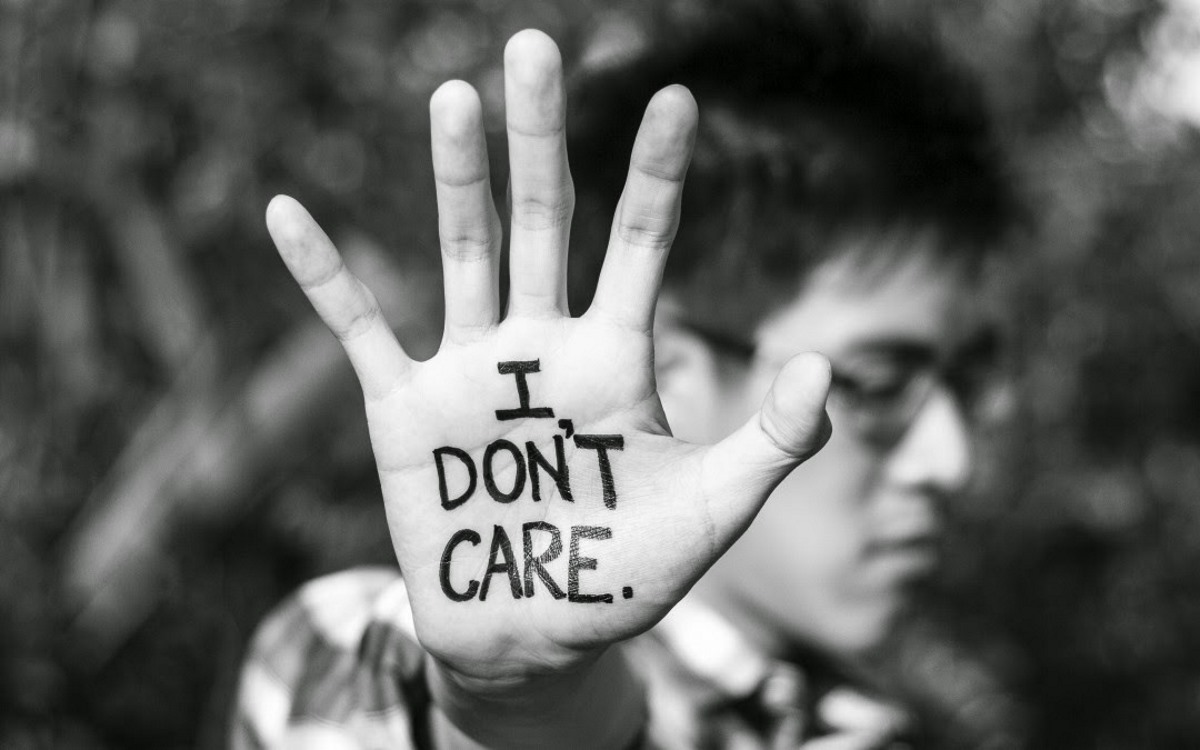
I truly believe that knowing a problem exists and refusing to solve it or letting it fester is worse than when a person is unaware that there is a problem to deal with in the first place. Pleading ignorance when you know the truth but lie to yourself and to other affected problem will lead to a lot of stress and turmoil in the long run. There are numerous ways to describe this kind of mentality but to me, it’s about someone or a group of people knowing that a situation is unsustainable or untenable and refusing to fix it even when it would be the right thing to do.

Acting or admitting fault or an error is never easy but doing so is the first step in actively solving the problem instead of letting it continue. Standing by and not admitting what’s going on is not right or not sustainable will put you on a collision course with a rough ending in most cases. This kind of mentality of “knowing but not caring” can erode trust, relationships, and even ruin people’s lives if it is allowed to go on. In this case, knowledge of a problem and not acting to resolve it can cause a lot of damage in various areas of life. To make this ‘knowing and not caring’ examples of hypothetical professional or personal situations where this kind of attitude would lead to negative consequences, let me discuss two instances where ‘knowing and not acting’ can lead to regrettable events:

Let’s say that someone worked hard to be trained as a lifeguard and was paid to do so by the local city by the beach for the summer season. Many people were trained, funds were spent, and chairs / stations were built. The foundation is strong so that people’s lives can be saved if something bad were to happen and each of the lifeguards were trained in CPR and other first aid tactics in case it is necessary.

Not only are the lifeguards trained in first aid, but they also need to pass swimming tests to qualify for the city’s public beaches as employees. However, since the city’s budget is running a deficit because of improper management and cost overruns, the city council must decide where to cut funding to balance the budget. The folks in charge of the budget knew that the deficit would cause problems when they projected in in the previous years, but nothing was done about it.                                                                                                      

As a result, costs need to be cut by the city so difficult decisions will need to be met. The city needs to keep schools open for some students to receive summer school and must pay the public-school teachers to do so. They also can’t reduce the police or firefighter budget given that the summer season tends to be the busiest for them and they also are guaranteed pensions that are negotiated by the unions.

Sadly, the only way to start to balance the budget is to cut recreational programs including the lifeguards at the beach even after they did the training, and the city spent the money to train them for these jobs. Other recreational programs will need to be cut along with reducing hours for access to public parks and sports courts. Most regrettably, the city council will have to cut access to the public beaches there because they don’t want to take the risk of having liabilities involved of having its citizens swim without lifeguards present. It causes a lot of anger, disappointment with the city’s residents as well as students who were looking forward to swimming, playing on the beach, and seeing friends but since the city can’t afford lifeguards, the public beaches will have to be closed the whole summer season.

While many individuals or one individual in city government would be responsible for seeing where the budget deficit would start to harm the city’s services, but because no one looked hard at how to prevent the deficit from affecting the public recreational programs or saw that cuts would need to be made in a year or two years’ time in other less important areas, the problem was unaddressed. It’s about knowing the problem exists in this case, but doing little or nothing, or ‘passing the buck’ onto someone else in the city’s government rather than working in advance to fixing this issue before people’s lives were affected.

Another potential issue is that it is difficult to keep watch over public beaches 24 hours, 7 days a week. Chances are increasingly high then for an accident to happen where college or high school kids come to the beach even when it’s closed or limited to swim or have a bonfire. Because of their anger, they may end up swimming in defiance or doing something that could put themselves in harm’s way. Not only will the city not have lifeguards there to prevent that from happening, but it’s possible that the city will be blamed or liable for any possible accident or issue with people using the beach illegally because they did not balance the budget in advance.

A potential tragic loss of a life, an accident, or the loss of trust in the city’s government are all regrettable consequences that could be avoided if a group of people or person(s) would do something about the problem when they knew of it rather than letting it grow out of control later. While this is a fictional instance, this kind of regrettable story or event happens a lot in our world and the issue at hand could often be avoided with due diligence, foresight, and good work.

More generally, regarding possible examples of this kind of ‘knowing and not caring’ regarding someone’s personal relations, I believe this could apply to situations when it comes to family members or close friends not helping someone out when they know their beloved family member or friend is going through a tough time. They may know of a problem that person has like an addiction to gambling, drugs, alcohol, or other substances, and believe that only they can help them rather than taking them to a licensed professional or a doctor.

This can also be applied when that person’s addiction is harming their relationships, is getting worse, and tends to cost that personal financially, morally, and in other ways. If the family member(s) or friend(s) don’t address their beloved one’s problems head on and let them continue, that affected person in a personal situation will be more likely to hit ‘rock bottom’ and may not be able to be saved from themselves. When that person is not reigned in and told that they have that problem the family member or friend knows about, then they are doing a real disservice by not helping them get better actively. Letting the addiction or mental health problem continue even when that other person in the relationship or friendship knows it must not go on but won’t take action to resolve it, then that’s a prime example of where ‘knowing and not caring’ enough to solve the problem can really backfire.

Sadly, in most cases, the friend or family member affected may suffer even more from the problem not being fixed or aided by the significant other. They can lose themselves fully to the addiction, end up losing their job, their home, or even their life as a result. Part of being a friend or a family member is to be there when that person needs you the most. They don’t want you to sugar coat things and sometimes, you must give them the ‘tough love’ by telling them the absolute truth and letting them know that they have a problem, but that they are not beyond saving, and that you can go ahead and help them get better. That is the mark of a true friendship and relationship when you know about the other person but also care enough to help them be and get better if necessary.

The world can be a messy and complicated place but the concept of knowing when a problem exists in your personal or professional life and not doing anything about it and trying to find a solution to it is disheartening to me when it does happen. It does happen a lot in life, and I hope that you will be different to act on the problem rather than letting it fester. You may change someone’s life or people’s lives for the better when you know about the problem and address it so the solution can improve lives and make the world a better place through your actions to find solutions rather than let the problems you know about to multiply and grow.

Kindness Always Matters

“One of those things is the effort taken to be kind. It does not take much to do and while it can be difficult to be kind all the time, it doesn’t cost anything, and the effort is always worth it.”

There are a few things in life that are non-negotiable. One of those things is the effort taken to be kind. It does not take much to do and while it can be difficult to be kind all the time, it doesn’t cost anything, and the effort is always worth it. Some of the issues that we experience in our world is due to a lack of kindness in our daily interactions. If more people tried to be kind towards one another, I could guarantee that a lot of conflict, irritation, and resentment would go away.

Someone who is always kind to anyone regardless of who they are or what they can or cannot do for the person will stand out even more. The smallest gestures can make all the difference in another person’s day or week. As the popular saying goes, “It costs nothing to be kind.” I would add on to that saying but highlighting that, “It costs nothing to be kind, but it means everything to be kind.” When you do kind gestures and use kind words, not only will it reflect well on you, but it will also endear you to the people around you.

When we are living in a day and age of rapid technological, social, and political change, it is even more important to stay true to the morals and values that make people trust, believe, and have faith in one another. Showing kindness and being a kind person helps make the world a little bit better in a measurable way. I have written before about the ripple effect and how your kind gesture is likely to lead to another kind gesture from the person you impact. I’ll give an example to highlight just exactly what I mean.

We open and close doors multiple times a day and usually we are in a public place when we must do this. It takes approximately three to five seconds to hold the door open for the next person. You may not think it’s a kind gesture, but I would like you to imagine that the person behind you has a bag or two bags in their hand. Maybe, they also have their dog with them, or they are on a cell phone call. Thus, when you put it like that, the simple gesture of opening the door for them so they don’t have to use their arms if they’re full or if they’re busy with another urgent task can make all the difference.

You will have to exert a little bit of physical effort to hold that door open to a complete stranger but think about if they automatically would not hold the door open for you when you are in need. It would not feel that good to you if you were the person occupied with other items or tasks and the person before you did not hold the door open for you when you need that. When it comes to kindness, we do have to think about being in someone else’s shoes and how a lack of kindness can make our day worse and not better.

I do believe that when you do a kind gesture for someone, they will likely then reciprocate by following that learned behavior. It’s similar to what we do when we are children, and someone offers us a piece of gum, or a candy and we do that to someone else as we learn that “sharing is caring.” You can have that kind of impact each day by holding the door open for someone reminding them that they themselves can do that same small act of kindness for the next time when the opportunity presents itself.

In the Post-COVID era where we were instructed to stay away from each other to prevent the pandemic from spreading, I think it’s not even more important to get back to looking out for each other in the opposite way by looking out for one another even more after a hard period of isolation, distress, and uncertainty. The world remains in a tumultuous and difficult period still but now we have the chance to make life a little easier by being kind because it is the right thing to do as we are taught since we are children.

Whether it is holding that proverbial door open or asking how someone is really doing and hearing them out if they are not doing well, or remembering to check in with friends and family from time to time and asking if they need help with anything, especially if you have elder family members in need. We truly show our humanity when we look out for one another, and it is the singular characteristic for which we will be remembered for or not remembered for when we are gone from this Earth.

While we would like to think we were remembered for having a prestigious job or for all the things we did for our own personal gain or benefit, or for what kind of impact we had in the world, which are not bad things to be remembered for, I do think it is better to be remembered as a kind person firstly. I believe it is best for others who will remember you to focus most on if you were the kind of person who endeared himself or herself to others in a selfless manner without expectation of a return for having done so.

You can bet that if you are a kind person, people who will remember you when you’re gone will focus on that quality more than anything else. If you have ignored being kind to others or have not focused on it as a character trait, it is never too late to instill more kindness to people in your life. Every effort matters and kindness always matters. If you can change your ways to a better person, being a kind person is a trait that will always be remembered long after you’re gone. Remember that people are struggling out there and the simplest kind gesture of asking how a person is doing, opening the door for someone else, and checking in on people to help them if they are in need is the greatest gift to share in this world.

Don’t Let Little Transgressions Become Big Issues

“I would also extend to calling out those transgressions where someone is trying to take advantage of you or doing something illegal or unjust when they know it’s wrong but refuse to do anything about it.”

It can be difficult to step in when it comes to witnessing someone commit a transgression, which goes against societal norms and values. A transgression is an act, often small or basic in nature, that goes against a rule, law, code of conduct and causes offense to others in the society. While you may witness these transgressions as a bystander, you have it within your rights to call it out when you see it within reason. While I am not an advocate for self-policing and calling out random strangers for bad behavior, I do believe that it should be allowed especially in matters of public health and/or safety.

I would also extend to calling out those transgressions where someone is trying to take advantage of you or doing something illegal or unjust when they know it’s wrong but refuse to do anything about it. To give you some basic examples, if you are living in a city or a town and see somebody littering or throwing trash on the ground in front of you, I believe it’s worth calling them out for doing it because your tax dollars are going towards maintaining the cleanliness of your community and for hiring those local employees who help keep the streets clean.

The person causing the offense must be held accountable or at least giving a stern reprimand because while they may think they get away with it, everybody including yourself witnessing it is paying for it in extra tax money or effort to pick that trash up later. When you call out a transgression, be stern, make your point, and move on. It does not do any good to escalate directly with that person since you’re not enforcing the law yourself as your duty but rather express your concern as an ordinary citizen.

Other transgressions that come to mind include not picking up after your pet when they do their daily business, which you should call the person out for if you witness it and to report it after privately if you know where the transgression occurred. Also, another increasingly common one in certain cities is to see a group or a few individuals shoplifting and if you see this serious transgression, let a store person know to apprehend them or even call the police who can catch the individuals if the store or place has cameras.

You must keep your eye out for these kinds of transgressions because if there are no consequences for acts like littering, trespassing, not picking up after your pet, shoplifting, etc. which can result in heavy fines and even mandatory community service, those offenders will feel more emboldened to continue doing so and even commit even more violations of the laws and rules that our society is built on. If some people are abusing these basic morals and values with their transgressions, no matter how small they are, they must be held accountable for them in some form or another.

Think of our society as pillars holding the foundation together that binds us all under the same rules, laws, regulations no matter who we are. When one of those pillars starts to falter, in this case, being when little transgressions go without reprimand or punishment, it can start to crumble the entire foundation and weaken the other pillars as well. When these violators cause infractions and don’t get a stern slap on the wrist or a scolding at least, then they will be emboldened to do it again or even commit worse offenses, which we should be mindful of as a society.

The COVID-19 pandemic made me think about these small transgressions especially when you’re abiding by a mandate on public transportation, for example, and others refuse to abide by the mandate, and for which is not being enforced. When you follow the temporary mandate especially in a bus or on a train and others don’t, it does create a sense of entitlement to for those people who think they are above the rules and that the mandate should not apply to them even when it is a ‘mandate.’ I often ignored those people who would not abide by the mandate but there was one instance where I had to say something when the only people not wearing a face mask on the bus were sitting next to me and it was an entire family. They were oblivious to the fact that everyone else on the bus had a mask on at the time and even the driver had one on. This was before the vaccines were being distributed.

I would rather the bus driver had enforced the mandate himself but if you’re sitting next to me without a mask and I’m abiding by it, I don’t want my health to be put at risk by your lack of acquiescence. It was the only time I spoke out about it to a group of people as it puts you in an awkward spot but when it comes to public health, mask mandates on a bus, train, or a plane at the time should be the same for everybody especially when 90-95% care enough to abide by the temporary measure.

Unfortunately, those who impose the mandates are not able or willing to enforce them, which is doubly annoying for those people who abided by them each time and yet had to see other people flaunt the rules like it was no big deal without being held accountable for it. This kind of transgression is particularly disturbing when you realize that it could have public health consequences and those who set up such a mandate to begin with lacked the follow through or the care to enforce such a mandate making it rather useless and abusable.

Another transgression I’ve noticed is some people jumping the fare gate at the metro system or going in right behind someone who has paid their fare ahead of them and not paying it because they sneak in before the gate closes. That situation happened to me as I paid my fare to enter the metro station and go down to the train like any usual trip and there was a young guy behind me who bumped up right behind me and invaded my personal space. I noticed he came in right behind as I paid the fare and the gate opened for me. I also noted how he didn’t pay the fare since he wanted to use mine without paying his own way. I was mad about this to the point that I sternly reprimanded him and told him that he was abusing the system by not paying his fare like the rest of us.

He made a lame excuse in saying that he was in a rush and had to catch the next train. I kept my cool but informed him sternly that was not an excuse to not pay his fare and that some of us pay taxes and the fares each time to keep the system running well. The offender didn’t get it, of course, and weaseled his way onto the next train and I kept my distance from him. Sadly, he is a violator of the metro system like others who feel like they can jump the gate or not pay by bumping up against someone like me who pays each time.

These hooligans who do it unfortunately don’t get fined or reprimanded by the metro system officials very often, if at all, which is quite unfortunate and even detrimental to the larger society. When fare-beaters and anti-maskers get away with breaking the rules without consequences, it makes the rest of us sad that we are carrying all the weight for them, and they are mooching off the system based on mutual trust, benefit, and adherence.

As I mentioned earlier in the article, the rules and laws are meant for everyone and when the smaller ones are abused or not followed, these transgressions can lead to bigger issues in the general society. It leads to a lack of trust, a breakdown in norms, and an inability to keep track of how many people are abusing the basic laws and standards that keep the society running well. It erodes the pillars over time that keep the foundation of our shared society afloat. I’m not arguing for self-policing since that tends to not solve anything, but we need stricter enforcement for everyone to avoid these little transgressions, so they don’t lead to bigger problems that form later for all of us when the accountability and transparency is gone.

A Belief in Karma

“These ideals play into the belief in karma that can be complex to follow but to myself means that what you put out into the world will often come back to affect you as a result.”

We are all born with our own innate sense of fairness that can develop as we get older. From childhood where we learn to share our toys in the playground with our classmates and friends to adulthood where we share our workspace with colleagues or our kitchen with roommates or our homes with loved ones. People have this innate sense of fairness that ties into larger ideals of justice, equality, and righteousness.

These ideals play into the belief in karma that can be complex to follow but to myself means that what you put out into the world will often come back to affect you as a result. Karma is a belief that how you treat others or how you interact with the world will have an effect of the world giving you what you put out in return.

While karma is not an innate reason why we strive to be fair, just, and equal in our actions towards other people, the belief in it can play our notion of fairness because if we don’t treat someone well or treat them fairly, you have a better chance of them not reciprocating or someone else not treating you fairly, as a result. There is a popular English expression that relates to Karma known as, “what goes around, comes around.”

For children, if you hog all the toys and don’t share, then no one is going to want to play with you or want to be your friend. As adults, if you repel people with your attitude or behavior towards them, it may cause you to suffer in your social relations but in your ability to hold a job or to have a productive life. Believing in Karma is not religious, but it takes a lot of lessons from religious and spiritual belief systems.

What we put out into the universe may not affect us right away, but it may come back in some other form when we least expect it. People fear not just the karma that could come because of their decisions, behaviors, and actions, but also how it affects their conscience and their memories. When you don’t have good karma, you’re likely to suffer other consequences such as bad memories, a muddled conscience, and harmful habits that could cause you to retreat from the world because of poor interactions with it.

While some people don’t believe in karma and don’t think their actions can have a ricochet effect on them, they still have a conscience and emotions that will be negatively affected from their bad behavior. Sometimes, karma is not enough to deter bad behavior, but it can be a motivating factor for people to act better because they don’t want it to come back on them if they have built up bad karma that would backfire.

Karma has its origins in Buddhism and while many people are not Buddhists, they can see the principle of ‘cause and effect’ at work in their lives. Even from a young age, we become aware that if we don’t share toys or listen to the teacher, it will likely lead to negative consequences as a result. We learn subconsciously to be good to not only feel good but to receive what’s good in return. That does not mean that if we only put out good deeds or actions or words into the world, that we will always receive such reciprocity. That is a naïve viewpoint, but we shouldn’t do good just for karma’s sake. We should do good to be good people and to automatically have a positive effect on the world in whatever small and measurable way that can in our lives.

Karma can make us better people but primarily, it would be best to follow our conscience first as well as our sense of right and wrong, which I do believe we innately have as babies but learn to hone more and more as we get older with education in character and conduct. Karma is an important layer that is part of our overall belief system, which allows us to be better people and to try to do as much good in the world as possible in the hopes that not only will it come back to us, but it will ripple out in its effect of leading to other good actions by others to boost other peoples’ karma. We want to spread the good karma around so that’s the only karma that can come back on all of us.

When you think of karma from a societal or global perspective, it makes sense in that good actions have a collective effect in that the planet will be better off as a result if we all do good by it. The karma that comes back on us from recycling, lowering our carbon output, taking care of nature and animal species, and limiting our negative impacts environmentally, that kind of karma leads to a healthier planet and a better existence for all of us.

Karma is not just for the individual but for a society and even the whole planet’s inhabitants. If we put out good into the world through better actions, behavior, and deeds, the karma we receive in return will often be better as a result. If you believe in karma, you believe in a deeper sense of overall fairness and justice. You believe that good begets good and fair begets fair. As the civil rights leader, activist, and visionary Martin Luther King, Jr. would say, “The arc of the moral universe is long, but it bends towards justice.”            

If more of us believe that our good morals and beliefs will lead to greater justice, than the world will likely have more justice as a result. What we put effort into our behaviors, emotions, and deeds will have an impact and an effect on the rest of us. I truly believe in Karma as a guiding principle and although it may not conclude what exactly our impact will be on one another each and every time, how we generally interact with other day by day does lead to karmic consequences, for better or for worse.

A Life Well Lived According to Emerson

“Emerson was not a man who saw success in only the material or popular means that is often the case of how individuals measure success today. Instead, Emerson believed success in life was about much more than fame, fortune, and overall popularity.”

Whenever I am looking for inspiration in my own life whether it comes to how to develop myself professionally or to be better on a personal level with others, I like to refer to the excellent quote on success and on a well-lived life by American essayist, philosopher, abolitionist, and 19th century transcendentalist Ralph Waldo Emerson. Emerson was not a man who saw success in only the material or popular means that is often the case of how individuals measure success today. Instead, Emerson believed success in life was about much more than fame, fortune, and overall popularity.

Emerson saw success and life itself as leaving the world a little better than when you found it. He believed in the importance of caring for nature, of having good relationships with other people, of honing your craft professionally in whatever you were passionate about, and of caring for family or friends who could rely upon your kindness and care. This quote by Ralph Waldo Emerson has always been a favorite of mine because while it was a conventional means of measuring a life well lived or a ‘successful’ life in the 19th century; I believe that too often today, we measure a ‘good life’ in shallow and often selfish ways.

In the era of the transcendentalist movement, there was much more to life than accruing things for material worth, or showing off how much money you had, or thinking that because you have more you are then better than someone else. On the contrary, Emerson and other thinkers of that movement believed in progressive ideals of equality, justice, and fairness. They believed in giving back to others in whatever way was possible and to do so consistently. While it was not a religious movement, it was based around individual actions to help a larger community or society.

It did not shun personal success or individual wants or needs as being unnecessary, but it asked people to believe in the power of working together to a common goal or cause, treating your fellow man or women with respect, fairness, and dignity, and to believe in giving back through charity, through helping others, and to be of good character not just in words but in actual deeds. Emerson like others were idealists and believed in the goodness of humanity despite the dark impulses that can lead us astray. While we are unique individuals of free will, we must never forget to care for our family or our friends, or nature itself which is gift not to be squandered.

The actual quote by Ralph Waldo Emerson is a long yet impactful one that touches on many different parts of one’s success in life that must not be ignored. When most people define success in a singular manner and often involving their own joy and happiness, Emerson does quite the contrary by arguing that success or a good life is based on how we leave the world after we depart from the Earth and what do we do in life to leave those around us better off than they were before. Above all else, Emerson asks the reader to imagine how they can impact the world in their own way for the betterment of not just themselves but for others as well and humanity.

In the quote, he does not ignore our hierarchy of mental needs such as the need to be respected by others, to laugh often with friends, to be appreciated for what we do, to be able to overcome adversity such as suffering betrayal, which is inevitable at points in our lives but to also appreciate the beauty around us because it is temporary in life as well. Fulfilling that life well lived according to Emerson is not just about being there for others but also being there for ourselves mentally by having our emotional needs met and fulfilled with joy, happiness, laughter, kindness, respect, and overcoming negative emotions such as betrayal and deceit.

“What is success?…
To laugh often and much; to win the respect of intelligent people and the affection of children; to earn the appreciation of honest critics and endure the betrayal of false friends; to appreciate the beauty; to find the best in others; to leave the world a bit better, whether by a healthy child, a garden patch Or a redeemed social condition; to know even one life has breathed easier because you have lived. This is to have succeeded!”

― Ralph Waldo Emerson

When you look at this memorable quote from Emerson, he prioritizes in life partaking in individual joy in the form of laughter most importantly. He also indicates the need to be respected by other people especially who you choose to associate with as being intelligent either emotionally or figuratively. He also discusses the need to be compassionate towards children, whether they are your own or not. Knowing that critics are inevitable in various avenues of life, Emerson seeks that any individual appreciate the critics who are honest about him or her and asks the reader of the quote to be mindful of those who want you to improve and to try to do right by them in becoming better at what you do.

Emerson also asks that while some friends are necessary to have in life; we must be prepared for betrayals that can occur from those who you thought were friends but were rather only looking out for themselves. Even though others, even friends and family members will let us down at times, we should still seek to see the good in others and to try to get the best out of everyone we meet. Human beings are fallible creatures, Emerson would say, but we should try to look for signs of redemption and efforts of good faith because people deserve to show you that they have good in them, and they can rectify their wrong doings often when they are given a real chance.

Despite facing inevitable criticism, betrayal, and disappointments throughout life, we must stop and take time to appreciate life itself for all its natural beauty. It will calm us down, put our lives in perspective, and think of a world much bigger than our own internal musings. Because of the sheer beauty surrounding us that we can often fail to fully appreciate, this divine beauty should inspire us to be caretakers of this world that we inherited at our birth and to be true guardians of the planet for the next generations. He includes in his musings on success in life to include leaving the world ‘a bit better.’ As individuals, we can only do so much for the state of the world, but if we all pitch in to do our part, that will cause massive change to occur on a societal and global level.

Leaving the world, a bit better is not just about recycling or not littering or being aware of how you’re affecting the natural world with consumption but it’s also about beautifying the world too. Whether it is cleaning a park littered with trash or creating a garden patch for others to enjoy or deciding to walk instead of driving a car, little actions like these by individuals can leave the world better off than before. I saw this kind of contagious effect working with others as a volunteer lately in helping to create a new vegetable and flower garden for a youth center in Washington, DC. Getting your hands dirty, beautifying a small part of the neighborhood, and having others pitch in to help is one of the best feelings one can have in life. It’s not often in our lives when we get to see a positive change happen in real life but creating a garden or even beautifying a park has a large ‘ripple effect’ that can change the world for the better even if it is on a small scale.

Emerson lasts mentions that if you have a child or care for one in your custody that to ensure their health and happiness is one of the great joys of living and contributes to improving the world in a measurable way. Giving back to nature and to other people is a consistent theme in this quote by Emerson and to redeem a societal condition such as creating a garden, raising a child, or being a mentor to a friend who needs your help will not only be doing good for you but for others as well. Ralph Waldo Emerson finishes his quote to sum up success in life and having a good life as coming down to fundamentally whether because you lived, did others live easier because of your presence? Was someone or something healthier, happier, or more fulfilled because you were there? These are important questions to ask yourself. In your life, are you just in it for the fame, fortune, and your own personal gratification? Or are you living your life to leave a legacy that can do some good in the world in some measurable way?

Emerson never mentions personal gratification such as having a lot of money or being popular as keys to a life well-lived and I agree with him. Emerson prioritizes the fact that after we depart from this Earth, what will we be remembered by? What contribution to others and our society did we make? Are people in our lives better or worse off because of your existence? That is what true ‘success’ means in the long-run and that a life well-lived should be based around. I hope that you take this excellent quote by Ralph Waldo Emerson to heart as I have. It’s a brilliant piece of wisdom that gives each of us steps to make the most of our remaining days on this Earth. Let the joy, laughter, beauty, conscientiousness, and unselfishness among other characteristics that he mentions as being the keys to a life well-lived guide you in all your days here.