














“Bloodbuzz Ohio” by The National (Video)
Camera: iPhone 6
Location: Boston, Massachusetts; The Wang Theatre at Boch Center

“Bloodbuzz Ohio” by The National (Video)
Camera: iPhone 6
Location: Boston, Massachusetts; The Wang Theatre at Boch Center
I know what you may be thinking as you read out loud the title of this blog post. You’re probably wondering why I would choose to review and analyze a movie based off a super hero from a comic book series. It may appear to be juvenile but I made this creative choice for a couple of good reasons.
A superhero who has been around since the early days of comic books in the early 1930’s, Batman is a popular cultural figure who until the 2000’s came around was never done justice on the silver screen. I remember as a kid watching the overly cartoonish and god-awful early film adaptations such as ‘Batman Forever’ and ‘Batman and Robin.’ The best film up until ‘Batman Begins’ was Tim Burton’s ‘Batman’, released in 1989, and even that movie was a bit goofy and contrived at times. Luckily, Batman on film earned a well-needed revival due to the masterful directing, screenwriting, and casting for Batman Begins, which was released over a decade ago in 2005.
Christopher Nolan, who directed Batman Begins, and helped to write the screenplay, did an amazing job in bringing Batman to life again as a superhero that comes from a realistic setting. Compared to The Avengers or X-Men, this is as close to reality as a superhero film can get. Compared to all of the comic book movies I’ve seen, and I’ve seen a good amount, ‘Batman Begins’ is the most realistic. It never gets too fanciful, and it takes itself seriously as a film that falls under the ‘drama’ genre.
For those readers who are unfamiliar with the origins of Batman, ‘Batman Begins’ does a great job of setting up the rise of this super hero from his childhood to his 30th birthday. You can see how much Bruce Wayne evolves into the role of the masked dark knight due to the painful tragedy that befalls him at an early age.
Bruce Wayne is a boy who grew up with everything a child could ask for: a loving family, a safe home, and a bright future. He has it all taken away from him when his parents are gunned down in front of him by one of the people they were trying to help. The Wayne family comes from immense wealth and they are tied to Gotham City through the generations. The Wayne’s are great benefactors to the city and try to help it out financially so that citizens can gain economic opportunities even during hard times.
The death of Bruce Wayne’s parents is the true beginning of his path to becoming Batman. This film does a great job in showing the phases that Bruce goes through after suffering a trauma such as the loss of his closest family members: his mother and his father. For many years, Bruce turns his deep-seated emotions onto blaming himself to feel the full guilt, the relentless anger, and the deep sadness fully. He is unable to use those powerful emotions, and turn them into constructive action.
An ever-present theme throughout ‘Batman Begins’ is Fear. As a young child, Bruce fell into a deep well near his parents’ mansion, and was unable to get himself out after experiencing a wave of bats surrounding him as they flew away into the sunlight. During an opera performance one night, young Bruce asks his father if they can leave the theater for a little while because he is frightened by the performers pretending to be bats in one of the play’s acts. Because of this fateful decision, for many years, Bruce blames himself completely for his parents’ death because they ended up being shot and killed by the mugger, Joe Chill, after Bruce asked them to leave the theater, and head into the nearby alley.
Bruce seeks out vengeance against the man who killed his parents and wishes to kill Mr. Chill as he leaves the courthouse. He buys a gun one day and wants to take justice into his own hands like a vigilante. Before he is able to do the grisly deed, Joe Chill is killed by one of Carmine Falcone’s men, a Gotham City mob boss. Although Mr. Falcone didn’t kill Bruce’s parents, the corruption befalling the city’s institutions, the unrelenting crime wave, and the lack of a respectable police force have led to more injustice than ever that has left Gotham City a shell of what it used to be.
One of the best scenes of ‘Batman Begins’ highlights the fact that Bruce has more to lose than he knows and should protect the people he cares about. He decides to use Batman as more than just a man flying around in a cape, but more as a symbol to be feared by criminals everywhere, and that anybody can become Batman if they have the will to act. Bruce is wise to use his fear of Bats and turn that fear into a powerful symbol, which criminals will one day fear themselves.
Despite the personal tragedy that befell him, men like Carmine Falcone lecture the young Bruce Wayne regarding his naivety about the world. “You always fear what you don’t understand”, and “people from your world have so much to lose.” Before becoming Batman, Bruce decides to travel the world, learn about the psychology of criminals, train himself in various martial arts, and harness the power of stealth to strike fear into the hearts of Gotham’s underbelly.
In order to learn fully about the evils of the world, Bruce has to go out there himself to experience what actually drives criminals to do what they do. He has to push himself physically and mentally in order to be able to stop them. In order to become Batman, he has to develop a strong moral code so that he can be incorruptible, and more than just a vigilante taking justice into his own hands. In this film, Batman doesn’t kill and he desires to make sure that all criminals face true justice to prove that it’s more than just vengeance for him.
In order to fully develop into Batman, he must complete his training under the tutelage of Henri Ducard (played brilliantly by Liam Neeson). Henri and Bruce have both suffered personal tragedies at the hands of ruthless criminals, but they decide to use their anger and pain to motivate them to strengthen, develop, and confront their adversaries whomever they may be. Bruce becomes Ducard’s best student and excels in different areas of physical and mental training. As Ducard imparts on Wayne, “Your training is nothing, the will is everything. The will to act.”
Batman Begins does an excellent job of showing the physical dexterity and the mental will needed to become a hero like Batman. In addition to that, the training scenes are spectacular in highlighting how Bruce must use deception, theatricality, and stealth in order to overcome his enemies with fear. Most similarly, he must play the role of an actual ninja. “In order to manipulate the fear in others, you must first master the fear within yourself.”
Batman is a symbol that cannot be bought off, corrupted, or killed. Ducard reminds Bruce Wayne of the fact, “If you make yourself more than just a man, if you devote yourself to an ideal, and if they can’t stop you…you become something else entirely…A legend, Mr. Wayne.” However, Ducard and Wayne have a fundamental difference of belief regarding the nature of criminals that puts them on an adversarial footing with each other, which leads to an inevitable confrontation later on. Bruce desires to bring criminals to justice but with the support of the police and the criminal justice system. On a fundamental level, he wants to uphold the institutions of Gotham City to be free of corruption in all of its’ forms.
We find out that Mr. Ducard is no fan of granting any leniency to criminals and wants them to be punished without any hesitation or limits. For Ra’s al-Ghul, Henri Ducard, and the rest of the League of Shadows, an organization that helped train Bruce Wayne to become Batman, crime cannot be tolerated and that criminals thrive when societies indulge themselves by not having them pay the ultimate price of death. Even if the criminal is a despicable murderer, Bruce still believes in the rule of law, wants them to be tried in a fair court, and does not desire to become a singular executioner.
Batman wants to save Gotham City in the right way even though he finds it to be an almost insurmountable task given the lack of allies he has. However, he discovers that he has help with the incorruptible Officer James Gordon of the Gotham City Police Department and his friend, Rachel Dawes, a district attorney who won’t be bought off.
Batman comes up against another villain who desires to strike fear into the heart of Gotham’s citizenry: The Scarecrow (played by Cillian Murphy) who uses fear toxin gas to poison people, and make them do horrible things to each other out of their fear of each other. Bruce Wayne must lead a double life, keep his secret safe, weed out corruption, and be able to combat two villains who use fear to prey on the fearful (Scarecrow and Ra’s al-Ghul).
Instead of using fear against the citizens of Gotham, Batman uses his terrifying appearance to strike fear into the hearts of criminals and villains everywhere. While he understands that justice is never ensured for all criminals, he does not want to be a murderer himself who decides the fate of all those enemies he fights and stops.
‘Batman Begins’ is a deep superhero movie that asks some philosophical and psychological questions regarding the nature of true justice, and how far individuals and a collective society should go in order to stop crime. The film also probes the feeling of ‘fear’ and how a person can master their own fear in order to become mentally and physically stronger.
Christopher Nolan asks the question of how do we control our own fear and keep it from controlling us. Batman is a flawed superhero, but he is able to control his fear to become a legend. His symbolism helps Gotham City to rise up against corruption, crime, and to fight injustice. While he is only just a man without any real superpowers, he is able to inspire others to fight the good fight with his moral example.
In a movie where there’s not much hope, the Batman inspires others to believe in themselves and their city again. He is a regular man, driven into action after going through a terrible tragedy. Instead of being broken by what happened to him at a young age, he uses his pain and sorrow to motivate himself so that others don’t suffer the same kind of tragedy in life of losing a loved one. As a superhero and as a film character, Batman sets himself up as an example to follow for the audience even if it is a fictional story.
Making a super hero film is an extremely difficult process, which is why director Christopher Nolan should be given a lot of credit. Mr. Nolan has directed a lot of great films including Inception and Interstellar. Batman Begins is the first of three movies in the Dark Knight film series, and it may be the most underrated of them all. He and his team did a great job of bringing this character back onto the big screen in a big way.
It’s a realistic take on the Batman, and its’ a film franchise that has produced three excellent, unique films. For myself and many other fans, Batman Begins is more than just a simple superhero movie. It is a morality tale about hope overcoming fear, how to overcome adversity to become a stronger person, and how to set an example for others to follow in your footsteps.
Batman has survived in our popular culture for so long because you get the sense that he is a relatable character for many people despite the fiction behind it. Ultimately, he is a man who has his strengths, his weaknesses, yet he is ultimately fallible. Still though, he is a powerful individual that strives to fight for justice, hope, and wants to bring the best out of others. It’s important to remember that you don’t have to become a superhero like Batman to emulate those characteristics. You just have to do the right thing and be a good person.
If you are looking for a mainstay of most living languages, you should look no further than the concept of the ‘Idiom.’ The Idiom is the closest thing that humans have in terms of a universal connector among the diversity inherent in all forms of spoken language. The most important thing to understand about the idiom is that you are not supposed to take them literally but you are still supposed to take them seriously. There’s a deeper, implied meaning beyond any idiom regardless of the language it’s spoken in. This is especially the case in the English language where there are hundreds, if not thousands of idioms that can be used for any matter or circumstance.
Idioms can be extremely diverse in their range and can refer to any amount of unique subjects or topics. Idioms can also be used very locally, regionally, or nationally depending upon the language and the culture it comes from. A dialect, jargon, or accent can also lend to the idioms used by a certain group of people who share common interests and/or beliefs. Idioms can be used in reference to business, politics, science, art, music, and other parts of daily life.
It can be tough to decipher which idioms are the most used in the English language but there are a few of them that stand out in terms of their popularity and their different ways of usage. Most people who speak English are likely to be familiar with these idioms below or have used them themselves.
Examples
Meaning: Don’t get ahead of yourself before things are accomplished.
Meaning: You’re bothered or annoyed by something that won’t go away.
Meaning: While not taking this statement literally, you shouldn’t pass judgment on someone or something before you receive all of the facts.
Meaning: Very common, easily found anywhere and everywhere.
Meaning: A secret advantage or a benefit that no one else knows about and is going to be used soon against an opponent or adversary.
Sentences
Idioms can refer to someone’s actions and the consequences of those actions highlighted in example idioms such as ‘Pay the piper’ and ‘Rub somebody the wrong way.’ Idioms can refer to people in general when you say that they are ‘sick as a dog’ or ‘six feet underground.’ Lastly, colors in English can often become part of idioms themselves such as when you describe somebody as feeling upset or depressed as having ‘the blues.’ You know that the person isn’t actually ‘blue’ in their color but rather they have ‘the blues’, which is referred to as when somebody isn’t feeling well. There is a whole musical genre that is devoted to this kind of mellow music called the ‘Blues.’ ‘Out of the blue’ is another example of a color kind of idiom that refers to something happening when you least expect it to.
It can be very difficult to get the hang of idioms especially if your proficiency level is at a low level. First, you need to be able to conjugate verbs, have a good grasp on the vocabulary by knowing a lot of different words, and then you need to be able to understand the meaning behind the idioms and use them with other native speakers in the right way. The idioms being used depends upon the region, the culture, and the social group you find yourself in. That is why there are such a sheer variety of idioms that can be used in any given situation regardless of the language that the idiom falls under. Idioms cut across language and cultural barriers and can have similar meanings to each other depending upon the situation.
The best way in which to comprehend and start using English idioms is to talk with native speakers who will use them throughout a conversation even if they don’t realize it at times. The more conversations you have with English speakers, the more idioms you will pick up on and remember. They will most likely want to help you out so do not be afraid to ask questions if you don’t understand the meaning of the idiom or why it’s being used in a certain sentence.
Before you start using idioms yourself, you want to be absolutely clear that you’re using the idiom within the right context for the right meaning. It can be a bit embarrassing if you tell your American friend who is starring in a Broadway play that you want him to ‘jump the gun’ instead of to ‘break a leg.’ Idioms take time to understand, use, and master but they are an important part of learning any language, including English.
______________________________________________
If you have liked what I have written in this ‘English Corner’ post, and you are interested in improving your English language skills whether its’ with speaking, writing, or just boosting your knowledge of grammar, I would be happy to help you reach your language learning goals. Check out Learn English With Ben to book a private lesson with me today!
Today, September 16th marks the 2nd anniversary of www.benjweinberg.com, my personal blog and website which I have been proud to create and build up over the past two years. I have to say that it’s been the most successful year yet in terms of both overall viewership and unique visitors. I am proud to note that I have reached thousands of people from around the world each month, and have published over one hundred and fifty and photo-blog posts total over the past two years.
In the last year, I’ve documented my travels throughout Colombia and have really made the ‘English Corner’ series a cornerstone of this blog. In addition, I have reviewed many films and analyzed them such as ‘Collateral’, ‘Traffic’, and ‘Lord of War.’ I continue to write about psychological themes that are highlighted in articles such as ‘How You Think Affects Everything You Get’ and ‘Reaching the Gold Standard.’
In this 2nd year of blogging, I have done my best to improve my writing and editing skills in order to create useful content for my site visitors. In the third year of my website, I hope to write longer-form posts at 2,000 or 3,000 words total in order to dive deeper into topics of my choosing. I continue to devote a lot of time and effort into this blog and I am very thankful to all of the readers, friends, and family who have supported it by reading my articles, leaving comments, and giving me constructive feedback.
I’ve recently moved to Boston, Massachusetts so I do hope to focus on some cultural aspects of living in this historical New England city and to highlight some of the destinations that are popular here. I will continue to write about ESL topics in my ‘English Corner’ posts but also focus more on personal and professional development ideas that I think will help my readers to succeed and advance themselves in different parts of life.
As this blog enters year three, I will continue to produce consistent content on a weekly basis, and to also update the layout and design of the website to be more viewer friendly. If you’re new to this blog and don’t know much about me or my writings, I have an archives section which has the location of all one-hundred and fifty of my posts which have occurred in the past two years. I also have a ‘Best Of’ Articles page where I highlight the ten-blog posts that I like the most when it comes to culture, lifestyle, traveling, music/movies/books, and personal development. You can find the individual links to these ten top posts here: https://benjweinberg.com/best-of-articles/.
Lastly, the biggest changes that I’ve made to my website are to incorporate the ability of ESL students to sign-up and take private English lessons with me if they are interested in doing so. If you go to the ‘Learn English With Me’ page, you can find out more about which kinds of private lessons I’m offering as well as my pricing per lesson. There’s a sign-up interest form at the bottom of this webpage, and you can also check out my ESL teaching background and experience here: https://benjweinberg.com/learn-english-with-me/.
I also have advertised my freelancing services in writing and editing. I have done freelance writing and editing jobs for clients over the past couple of years and am looking to expand my clientele. If you would like to find out more information about my pricing, experience, and see my portfolio, you can check it out at this webpage: https://benjweinberg.com/freelance-services/. There is a sign-up interest form at the bottom of that webpage too so you can get in touch with me through an e-mail message.
In this third year, I hope that my website will continue to grow in terms of audience and produce better and more useful content. I want to say thank you to all the readers and supporters of benjweinberg.com. I look forward to keeping in touch with you throughout the rest of the year and into 2018. As always, you are free to comment on any and all of my articles, give me helpful feedback through a direct message, or to show interest in my freelance and teaching services by completing a sign-up form. Thank you again for your readership and I think that this 3rd year of benjweinberg.com will be the best one yet. Cheers!
Similarly to the months to come during the heart of wintertime, the current summer season is a great chance to catch up on reading new books or books you have yet to finish. Whether you’re at the beach, hanging out in the backyard, or are going on a long road trip, reading a good book is a good way to pass the time.
My last ‘Book Recommendations’ post came in February so it’s time for another volume of recommendations for you to consider when it comes to your next book purchases. While you may not be interested in the same book genres or same authors as myself, I still encourage you to read a book before the end of the summer. Whether it’s through Amazon, your local mom and pop bookstore, or at a book fair, you owe it to yourself to put down the iPhone and pick up a good book instead.
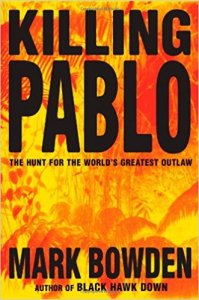
1.) Killing Pablo: The Hunt for the World’s Greatest Outlaw by Mark Bowden (2001) is a non-fiction, and detailed take on the combined efforts by the Colombian and United States governments to bring down the infamous Pablo Escobar, head of the Medellin cartel. Mr. Bowden, known foremost for his take on the Battle of Mogadishu between U.S. special forces and Somali militants in the critically acclaimed novel, Black Hawk Down (1999) is a great journalist with over thirty years of covering recent events involving war, peace, and international affairs.
Mr. Bowden is a reporter and a journalist who does his research when it comes to Killing Pablo, and this book is a real page-turner. The author covers both the early years of Pablo’s empire to his international rise as the #1 drug kingpin in the world to his eventual downfall at the home of Search Bloc and Los Pepes. With many interviews from U.S. and Colombian government officials, as well as a lot of research into the terrible events that transpired in the 1980s and 1990s, Mark Bowden gives a comprehensive account of the manhunt for Pablo Escobar, and how his eventual death came to be.
There is often a lot of speculation and rumors surrounding the Medellin cartel that are unfounded which is why reading ‘Killing Pablo’ is a refreshing take on what really happened and who was involved in the drug kingpin’s demise. This is a great book if you’re interested in learning the true story behind the rise and fall of Pablo Escobar.
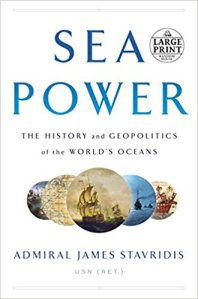
2. Sea Power: The History and Geopolitics of the World’s Oceans by Admiral James Stavridis, USN (Ret.) is an excellent and comprehensive look at each of the world’s major bodies of water, and how they each affect world geopolitics in different ways.
With over thirty years of experience in the United States Navy having commandeered every kind of amphibious vessel that you can think of, Admiral Stavridis has the life experience and intellectual background necessary to make this book quite a compelling read. As the only admiral in the history of NATO to serve as its’ Supreme Allied Commander, Mr. Stavridis is well poised to look at the state of the world through its’ largest and most valuable commodity, the oceans and the seas that make up over 70% of this planet.
If you’re new to geopolitics or don’t know much about the significance of the world’s oceans, Admiral Stavridis breaks down the history, the culture, and the geopolitical importance of each body of water throughout the book. From the Arctic Ocean to the Mediterranean Sea, the author discusses who are the countries involved in the area, what should the role of the United States be, and how can we ensure that this body of water stays conflict free, and friendly to international commerce into the far future.
Since the release of this book in June of 2017, it has risen to the top of many best sellers’ lists and for good reason. In a geopolitical area that doesn’t get much focus, Admiral Stavridis reminds us of the sheer importance of the world’s oceans and seas. In a 21st century world filled with uncertainty and ambiguity, The admiral’s book is a clear-cut, well-reasoned take on the geopolitics of the oceans, and how their collective future is tied to each and every one of us.
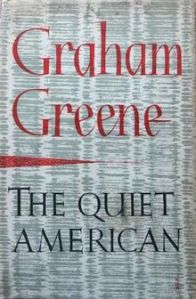
3. The Quiet American by Graham Greene is an exceptional book that is well written, has deep and complex characters, and involves a time period in world history that is often overlooked. The novel takes place during the early 1950s as the French Army is entangled in skirmishes and indirect conflict with the Vietminh. Meanwhile, the new presence of American aid workers including a young economic attaché, Alden Pyle, whose motives for being in French colonial-era Vietnam are considered to be suspect to the narrator, a British journalist named Thomas Fowler. Not only do the two men come into conflict regarding the future of Western influence in Vietnam but they also are at odds in a romantic triangle with a Vietnamese woman known as Phuong.
The two main characters, Fowler and Pyle, could not be more different in their outlook. Fowler is cynical about the West’s involvement in Vietnam, and is jaded by politics and war. Pyle is a young, idealistic, and naïve American who is reserved in his personal manners, but is unafraid to interfere in Vietnamese affairs by acting as a ‘third force’ to help bring change to the country by economic and military means.
Phuong is the young Vietnamese woman who is caught between Fowler and Pyle, as she is desired by both men but for different reasons. While Fowler regards her simply as his lover, Pyle wants to protect her. It is implied in the book that Pyle’s desire for Phuong is reflected in his desire to have a non-communist South Vietnam through any means necessary. Fowler does not go along with Pyle’s thinking and regards his belief in ‘American exceptionalism’ to be shortsighted.
An interesting novel and an engaging read, The Quiet American has become a mainstay in popular fictional literature and has been adapted into two major motion pictures, one in 1958, and more recently in 2002, which starred Michael Caine (Fowler) and Brendan Fraser (Pyle). This fictional novel is based off of real events in the 1950s when French colonial rule in Vietnam was coming to an end.
While reading books during the summer season may seem like a chore to some people, for others, it’s a great time to kick back, relax, and dive into different genres, and characters that offer a refreshing reprieve from the humdrum of our busy lives.
‘Traffic’ (2000) is one of those films that was way ahead of its’ time when it was first released over a decade and a half ago. It is a film that makes you think deeply hours or even days after you first watch it. ‘Traffic’ should be viewed more than once to really understand all of the nuances and subtleties embedded in its’ individual stories underneath its’ overarching central themes.
When compared to most other movies of the crime drama genre, ‘Traffic’ gained a lot of particular praise for the way its’ director and screenwriter were able to successfully weave multiple plotlines, characters, and settings together that slightly overlap with each other but are seamless enough as to not overburden the viewer with unrealistic connections.
‘Traffic’ is a movie that respects the intelligence of its’ audience and isn’t afraid to tackle the controversial topic of the ‘War on Drugs.’ It’s quite surprising when you think about how this movie was released back in 2000, but is still just as relevant and timely of an issue today as it was back when it was first released to the public. When ‘Traffic’ came out, it gained universal recognition and critical acclaim, and after viewing it for the first time, it’s easy to see why it was so noteworthy.
Steven Soderbergh directed ‘Traffic’, and Stephen Gaghan wrote its screenplay. Mr. Gaghan, who was responsible for another multi-layered film with multiple plotlines in ‘Syriana’ (2005), which also starred an ensemble cast of actors dealing with a different timely issue of oil and geopolitics in the Middle East. Unbeknownst to most people, ‘Traffic’ won numerous awards including for Oscar awards for Best Director, Best Supporting Actor, Best Adapted Screenplay, and Best Film Editing. This ensemble cast of actors for ‘Traffic’ is very impressive and includes star names such as Michael Douglas, Don Cheadle, Benicio del Toro, Dennis Quaid, and Catherine Zeta Jones.
At its’ core, ‘Traffic’ focuses on the illegal drug trade going on in both the United States and Mexico. One of the brilliant things about this film is the fact that each character in the movie represents a different perspective on the drug war whether they are a user, enforcer, trafficker, lawyer, or politician. It’s unlikely that a film like ‘Traffic’ would be made today but it’s distinctive editing, multi-use of colors depending on which of the three stories are being highlighted, and the political relevance of its’ themes could keep a lot of viewers away these days.
Its’ importance and timeliness today can’t be overstated as this film doesn’t try to impose a point of view on the audience. ‘Traffic’ would rather cause the individual viewer to ask questions, seek out more knowledge about the issue, and weigh the different opinions expressed by the characters throughout the movie. The three-color grades that are used for the three different stories are probably one of the most interesting things that I’ve ever seen when it comes to film editing. Each story in ‘Traffic’ could be its’ own movie in its’ own right, and the film is lengthier than most in terms of run time at two hours and twenty minutes total.
To briefly highlight the substance of the three stories without spoiling the whole movie, let’s go over each one to introduce the arch of the overall plot to prospective viewers out there. The first story is mainly set in Mexico City and other parts of the country, which highlights the efforts of two Mexican police officers that are trying to do their job as enforcers of the law under difficult circumstances. While trying to bring down local cartels in the easiest way possible, the two officers, one of them, Javier Rodriquez (played by Benicio del Toro) come up against corruption, and crime within their own ranks, which makes their ability as officers to keep their areas safe difficult with money and influence blurring the line between the good guys and bad guys.
Officer Rodriguez (del Toro) wants to do his best to keep his job, but to also hold his fellow policemen and elements of the Mexican army accountable for their actions without compromising his safety. He knows that ending the drug war is futile but he wants to keep his immediate community safe and that of its’ inhabitants. This is especially true if it means that the local kids in his neighborhood can play baseball at night with new stadium lights and not be at risk of joining gangs instead in their free time.
The second storyline in ‘Traffic’ takes place between the nexus of small town Ohio and the capital city of Washington, DC in the United States. A conservative judge, Robert Wakefield (played by Michael Douglas), is appointed to head the President’s Office of National Drug Control Policy, and he becomes an unofficial ‘drug czar.’ Mr. Wakefield doesn’t seem to be enthused with the new position he’s been given due to the long hours, lack of support, and political skepticism from the official circles within Washington. He tries to make the most of fighting the ‘war on drugs’ even if he knows deep down that it is truly unwinnable. Because he is away from his family for long periods of time, he is unaware that his daughter in high school has developed a drug problem over the past six months and is struggling with a heroin addiction now.
On top of dealing with being a father and the leader of a national drug control policy effort, he struggles to be a open and forthcoming husband to his wife. Compared to other characters in the film, Wakefield changes the most in his views on the ‘war on drugs’ as the audience can see that his mindset changes when this issue becomes personal and not just professional. With his daughter’s future and life at stake, the ‘war on drugs’ becomes less of an abstract war and more of a battle to save his family from falling apart.
The third and last storyline takes place mostly in southern California in the San Diego area where two DEA agents are conducting an underground investigation. The investigation, led by Agents Ray Castro and Montel Gordon (played by Don Cheadle), eventually leads to the successful capture and arrest of a top drug dealer, Eduardo Ruiz, who pretends to be a fisherman as his cover.
This arrest is instrumental in helping along the trial of suspected drug lord, Carl Ayala, who is thought to be the leading distributor of illegal drugs for one of the biggest cartels in the world. Ruiz is important to be kept alive and in good shape so that he can testify to the illegal activities of Ayala and his empire, but that is harder for the DEA than they ever imagined. With Ayala’s possible imprisonment and/or cooperation, the DEA agents are hoping to bring down this cartel, once and for all.
However, since Ayala and his wife, Helen (played by Catherine Zeta Jones), have a lot of wealth and influence still, they are able to put a damper on the DEA’s plans with the help of the shady family lawyer, Arnie Metzger (played by Dennis Quaid). DEA Agent Gordon and his partner are unable throughout the film to cope with the long tentacles of the drug cartels, and the amount of money and hit men the Ayala’s are able to use to threaten the safety of the DEA’s witness and the potential success of the prosecution against Ayala. You could imagine that this particular story in the film does not come with a happy ending.
Any of the three unique yet intertwined storylines of ‘Traffic’ could be ripped from newspaper headlines from over the past forty years. Ever since the beginning of the ‘war on drugs’ back in the 1970’s, there has been endless debate about whether there have been any successes or mainly just the upholding of the status quo. ‘Traffic’ doesn’t try to impose a simple yes or no answer to the ‘war on drugs’ question.
Rather, this film intelligently asks its’ audience to weigh the outcomes of these different stories that are affected by the drug trade, and the viewer is supposed to make that decision for themselves. When it comes to special movies like ‘Traffic’, there are no simple black and white solutions. There are many shades of grey in all of these human stories, and it takes deep insight, critical thinking, and analysis in order for slow changes of the status quo to actually occur.
While this is a fictional movie, it is made clear by the film itself that a lot of these characters are based off of actual people who make up all sides of the ‘war on drugs.’ Overall, the one key thing that the ending of this film makes clear to the audience is that there are no winners in the drug war, only losers, and it takes an impactful movie like ‘Traffic’ to make that fact absolutely clear.
When it comes to using ‘definite and indefinite articles’, this grammar concept in English is a lot easier to use and master when compared to other languages such as French, German, and Spanish. There are only four examples of definite and indefinite articles in the English language so it is pretty easy to remember them all. Most other languages tend to have more than ten unique articles, definite and indefinite, compared to the four that are commonly used in English.
On top of all that, there is only one definite article used in English, which is quite surprising considering how diverse and versatile the language is especially when it comes to structuring a sentence in different ways. While not the most interesting of grammar topics, both definite and indefinite articles are used so often that it’s necessary to master both their formation and usage in order to become a better English student.
You may be asking yourself: What exactly is an article? That’s a good question with a simple answer. Any definite and indefinite article whether it’s ‘a, an, some, the’ can be used to give information about the noun in a noun phrase. A noun phrase usually includes a noun and an adjective together with the article coming before both the noun and the adjective to form the complete basis of the sentence. I’ve listed below two examples of a noun phrase (article, adjective, and noun):
If you so choose to use a noun phrase, remember that they can also include numbers, possessive adjectives or demonstratives such as this, that, those, these, etc. When it comes to the purposes of the definite and indefinite article in the English language, there are quite a few of importance that you should be aware of.
Definite and Indefinite Articles should:
Now that we know what definite and indefinite articles are used for, let us take a look at the similarities and differences between the two types of articles.
Indefinite Articles
When it comes to indefinite articles, there are three of them total. Two of them are to be used with singular nouns and the other one is for plural and uncountable nouns. Singular nouns use the indefinite articles of ‘a’ and ‘an’ that go with the next word, which has to be singular in nature. Unlike other languages whose articles depend upon factors such as gender, spelling, and other factors, the only thing that matters for indefinite articles in this case is the numerical value of the noun being referenced.
Also, when it comes to the next word, the indefinite article ‘a’ is used with nouns that begin with a vowel sound and the other indefinite article ‘an’ is used with nouns that start with a consonant sound. Here are some examples below of ‘a’ and ‘an’ being used with nouns and adjectives to form noun phrases.
‘A’
‘An’
When it comes to plural nouns, there is one specific indefinite article that is to be used with the noun and/or adjective. The indefinite article in this case is ‘some.’ This indefinite article of ‘some’ can be followed by any kind of adjective, adverb, and uncountable or plural noun as long as the noun phrase can be completed successfully.
Let us take a look at some examples with the indefinite article ‘some’:
There are numerous examples you could use with ‘some.’ You are not restricted with the usage of nouns as long as they are plural and uncountable in their nature.
When it comes to the reasons for using the indefinite article like ‘a, an, some’, there are two main ones:
-You are introducing a noun for the first time.
For example: A boy learns how to ride his bike.
-The specifics of the noun are not important. The noun ‘boy’ is simple and direct.
For example: Can you go to the supermarket and pick me up some milk?
-The indefinite article ‘some’ with milk doesn’t refer to any particular brand or kind of milk, just ‘some milk’ in general making it easier for the person doing the grocery shopping.
Indefinite articles are not usually supposed to be used for specifics and are much more general in their formation and usage. When it comes to definite articles, that’s a different story however.
Definite Articles
Luckily, there’s only one definite article that we need to cover in this blog post and that’s the very popular word of ‘The.’ ‘The’ is very flexible in terms of both its’ formation and usage within a sentence. You can use ‘The’ for singular, plural, and uncountable nouns making it very versatile. Both the reader and the writer should have a good understanding though of what the word ‘the’ is being used for. There are three main uses for the definite article of ‘The.’
Here are some examples of the definite article, ‘The’:
When it comes to the similarities that definite and indefinite articles have in common, it is important to remember that ordinal numbers can be used with both ‘a, an, the’ under different circumstances.
Examples:
Lastly, the innate differences between definite articles and indefinite articles can be summed by the fact that a definite article like ‘The’ can be used with specific places such as rivers, monuments, cities, and countries themselves while ‘A, an’ are used with general objects, groups of people and places.
While not the most popular or well-known grammatical subject, having a good grasp on definite and indefinite articles will help you immensely to become a better English language student.
Facts are a tricky thing, but the importance and recognition of them is vital in order to consider yourself a critical thinker. In this era of ‘alternative facts’ and opinionated media, it’s necessary to be able to read, analyze, and think about all of the information that you’ve been taking in and figure out for yourself if it’s truthful or nonsense. In this day and age, opinions are easy to find everywhere but what have become harder to find are the cold, hard facts. The famous expression, “take it with a grain of salt” can be applied to you if you want to be a critical thinker.
The first thing you have to do, as a critical thinker is to be able to sort out the facts from the falsehoods. You should be able to use more than one source of information and before you use those sources of information, you need to verify that they are both unbiased and trustworthy. The evidence that you gather for these facts have to be based off of real sources, who have compiled the information and verified its’ authenticity.
For example, if you’re a Chemistry student and you’re trying to do an experiment on making a chemical volcano, would you choose to get the information from an actual scientist who has their PhD and teaches Chemistry at a local university or would you trust the advice of a best friend in your Science class instead?
While it’s desirable to be a good friend and trust them because they would like to help you most likely, it’s likely their advice will pale in comparison to the Chemistry professor with the PhD who wrote a ‘how to’ article on chemical experiments in the latest edition of ‘Science Weekly.’ If you’re a critical thinker, you would choose option #2 100% of the time because you would like to create an experiment that’s going to be the best that it can be and using your friend’s advice won’t get you to that point.
Regardless of what professional or educational field that you decide to pursue, you’re going to need critical thinking. Being inherently skeptical at first of the information you’re receiving is important to do because you need to be able to discern if what you’re reading, watching, listening to, etc. is factual. In your daily life, you’re going to need to identify prejudice, bias, propaganda, etc. that you’re likely to encounter in your daily life. You have to do your best to discern fact from fiction even if it takes some time. You could decide to ingest every bit of information that you see in the news or at the office as being factual but it would benefit you instead to deep a bit digger by doing your research, verify the source(s), bounce it off other pieces of information to see if there’s a pattern, and then decide if it’s factual.
A true critical thinker is not lazy and does not take shortcuts. He or she goes the extra mile to gather the right information, prioritize it to give it credence in your decision-making, and then recognize, solve the problems in order to move on to the next goal. If you’re in a field where you’re working with data on the computer, you have to be able to interpret it, evaluate it, and then use it for your business or company’s needs. By being able to communicate effectively and clearly is also a necessity when it comes to being able to take those fresh facts you’ve verified and then pass it on to the next person so they know that they’re not being misled by you.
As a critical thinker, it’s also necessary to disregard generalizations made about complex topics, which require in-depth research and analysis. Instead, critical thinking also necessitates the ability to draw conclusions from the evidence and the facts that you have gathered. Then, you have to be able to pass those conclusions on to the right people so they know what’s true and what’s false.
Conclusions that you’ve made in the past can sometimes change in the present or in the future so it’s vital to not be stubborn about your beliefs. Critical thinking requires that you also be flexible in your beliefs especially if you’re able to take in new evidence, and logic. A man or a woman who does not change their views on anything despite overwhelming evidence to the contrary cannot consider himself or herself to be a true critical thinker. While it can be difficult to let go of your innate biases and prejudices, you still should be open-minded and be able to accept the truth and the facts even if they contradict with yours.
If your mother, someone who you loved and respected, happened to have told you one day that the sky was the color red instead of blue, would you accept her statement at face value or would you go outside of the house to check, verify her statement to see if it was true or false? If you are not a critical thinker and a great son, you would choose option #1 and believe that statement without actually checking to see if it’s true. If you are a critical thinker but still a good son, you would choose option #2 and tell your mother later that the sky is actually blue because you went outside to see its’ color for yourself. Even if your mom might be offended by your conclusion, she would still love and respect you for being a critical thinker as is necessary.
To put it bluntly, there are a lot of people out there in different industries that are not critical thinkers and they’re hoping the same about you. I don’t want to name names but you’re likely to encounter them in your neighborhood, your city, and your city. However, if you’re able to develop the right personal habits and characteristics, you’ll be able to set yourself apart as a real critical thinker rather than just a person who believes what he hears, reads, or listens to all of the time regardless of the source it’s coming from.
Those habits involve being a problem solver, an evidence gatherer, a decision maker, a rational thinker, being able to reason with others, and an inquisitive learner above all else. While critical thinking isn’t mandatory in life, you’ll still go a lot further and succeed more when you put those skills and habits to use when compared to those who don’t. If you’re an open-minded, intelligent, mature, and inquisitive person, you’ll turn out to be a good critical thinker and a positive example for others to follow.












Camera: iPhone 6
Locations: Bronx, New York (Yankee Stadium), Queens, New York (Citi Field)
Arguably one of the best movies of the 2000’s and Nicholas Cage’s best performance as a lead actor, The film ‘Lord of War’, released in 2005, is a realistic and unfiltered take in the role of illegal arms dealers, who facilitate the sale and transfer of arms trafficking throughout the international arms industry, which continues to be one of the world’s most profitable endeavors. ‘Lord of War’, while nonfictional in its’ story is actually based off of the lives and exploits of different real-life arms smugglers. ‘Lord of War’ is directed by Andrew Niccol, and stars a cast of Nicholas Cage, Jared Leto, Ethan Hawke, and Bridget Moynahan.
Nicholas Cage plays Yuri Orlov, the son of Ukrainian refugees from the Soviet Union, where he and his brother, Vitaly, help their parents out in their Ukrainian restaurant as cooks and helpers. While Vitaly is somewhat satisfied with this simple life of cooking borscht and washing dishes, Yuri wants to achieve the ‘American Dream’ and get out of Brighton Beach, Brooklyn, where he grew up after leaving Ukraine. He struggles to grasp at any real business opportunity in order to get out of the shadow of his ordinary life in Brooklyn.
However, one day when he is dining at a restaurant in Brighton Beach, the business idea he needs comes to life for Yuri in the form of a Russian mobster killing two would-be assassins and fending off their attack with AK-47 Kalashnikov rifles. Yuri believes that there is a lot of money to made in international arms sales and decides to go into business despite the protests of his brother, Vitaly, and the fact that his parents don’t know what he’s up to.
One scene in particular that stands out in Yuri’s beginning as an illegal arms dealer is when he tells his brother that since there are so many McDonald’s and gun stores in America already, he needs his business to be international in its’ focus. At first, Yuri feels that dealing arms is comparable to serving food at a restaurant. He justifies his nefarious business by narrating to the audience that its’ providing for a part of human nature in his opinion, the instinct to kill and harm others, as documented by the “earliest human skeletons who had spears in their heads and rib-cages.”
While Vitaly, Yuri’s brother has moral reservations about what Yuri is doing, he decides to join him later on as they crisscross the globe during the late 1980’s and into the 1990’s dealing with corrupt governments, genocidal dictators, and other more ruthless arms dealers as their competition. As Yuri becomes more popular and wealthy with the illegal arms business, he runs up against a by-the-book, incorruptible, and idealistic Interpol agent, Jack Valentine (Ethan Hawke), who tries unsuccessfully to track Yuri’s business dealings down by air and by sea.
Despite the fact that his brother, Vitaly, becomes a drug addict, and is an unreliable business partner, Yuri continues to run his illegal arms business as a one-man show. While a fictional story, ‘Lord of War’ is based off of real life conflicts and real life people who were involved in the illegal arms trade. These conflicts include the 1982 Lebanon War, the Soviet Union’s War in Afghanistan against the Mujahadeen, the civil war in Liberia during the 1990’s, etc. The movie does not gloss over the dissolution of the Soviet Union and the impact that the end of this cold war conflict had on the rest of the world in terms of arms sales. Yuri is able to become a very wealthy and powerful arms dealer in the film due to his family connections in Ukraine and the sheer weaponry, and arsenal that the Soviet military left unused.
Like his arms business, which is run under false pretenses, he does the same with his love life as he falls for a fashion model and childhood crush, Ava Fontaine (Bridget Moynahan), who he sets himself up with under the guise of a false photo shoot. Despite the fact that his parents don’t know about his illegal dealings, he lies to his new wife regularly, and his brother ends up in a drug rehabilitation center, Yuri does not give up on the arms business because he likes it, is good at it and is unable to go straight in legal business endeavors. However, in the wake of all of his ‘success’, innocent men, women, and children get killed by the guns, bombs, ammunition, tanks, planes, etc. that he sells and profits off of. As the film progresses, the director makes clear that Yuri has sold his soul in this dirty trade and it may cost him his life or the lives of others close to him if he doesn’t stop.
In a way, the audience who watches ‘Lord of War’ could be most closely aligned with the perspective of the Interpol agent, Jack Valentine. He knows that Yuri is a bad person and he wants to bring him down, but will it make any difference to bring one sole arms dealer down when billions of dollars are exchanged around the world each year through both legal and illegal arms sales. Like Jack, the audience may question the nobility of bringing down one arms sales dealer like Yuri when there are dozens of them out there, and Presidents / Prime Ministers of the major countries are the biggest arms dealers of them all.
Yuri never takes full responsibility for his business dealings during the film even if the sale of his arms causes bloodshed and death. He remarks bluntly to his brother, Vitaly during one scene: We don’t talk about it. How many car salesmen talk about their work? How many cigarette salesmen talk about their work? Both their products kill more people every year than mine, at least mine comes with a safety switch. Those guys can leave their work at the office, so can I.”
In Yuri’s opinion, he may be evil, but he’s ‘necessary evil’ because there are other people or governments out there like him involved in the business, but sometimes they ‘can’t have their fingerprints on the gun.’ Despite the pressures placed on him by family, friends, and the law, Yuri is committed to doing what he does best without having the moral imperative to stop. As I don’t want to reveal the ending, the first time you see it, you may be shocked but this film doesn’t deal in black and white, and that’s what I love about it.
There are numerous shades of grey that go along with the black and white, and the ending of ‘Lord of War’ falls within those shades of gray. ‘Lord of War’ doesn’t have your typical Hollywood ending, and that’s partly what it makes it such an alluring film. On top of the exquisite directing, acting by Nicholas Cage, Jared Leto, Ethan Hawke, etc. and the deep political and philosophical themes behind this film, I highly recommend it.
I’ll leave you with a quote from the film that is very poignant and is still true twelve years after ‘Lord of War’ was released in movie theaters. “While private gun-runners continue to thrive, the world’s biggest arms suppliers are the U.S., the U.K., Russia, France, and China…they are also the five permanent members of the United Nations Security Council.”