
Bahia Solano & Nuqui

If you’re visiting Colombia and you are really looking for an off-the-beaten track experience that most tourists who visit the country don’t get to experience, then you may want to consider visiting Bahia Solano and Nuqui.

Before you start to book your trip to these two beautiful and distinct places in Colombia, it’s important to do your research first on how you can get there, what to do when you get there, and how to make the most of this mostly undiscovered part of the Pacific coast. Although Bahia Solano and Nuqui fly under the radar in terms of destinations to visit in Colombia, both of these places are becoming more and more popular as more tourists strive to discover these hidden gems.

Nuqui is both a town and municipality located on the Pacific coast of Colombia and is not a very big place when compared to Cartagena, Santa Marta, or Cali. There are only eight thousand residents of Nuqui in total and is located within the department of Choco specifically. The Choco department is wedged between the Baudo Mountains and the Pacific Ocean making the scenery quite unique and appealing to visitors.

There’s a lot of diversity, both culturally and ethnically to discover in Nuqui, and it’s a great chance for tourists to experience the Pacifico culture in Colombia while meeting the friendly and down-to-earth locals. Similar to Bahia Solano and the rest of the Choco department, the majority of the population there are Afro-Colombians or are the descendants of the various indigenous tribes that still call Colombia home to this day. You’ll get a chance to experience a different regional culture that is very different when compared to other regions such as Antioquia or Santander.

What may draw some tourists specifically to visiting Nuqui is the fact that there is an extremely diverse amount of flora and fauna to see and explore. It’s only a short trip from Nuqui to visit the mangroves of PNN Utria where you also have the option to go snorkeling or relax at the Playa Blanca. The main draw of Nuqui is considered to be the pristine beach of Guachalito that is mostly empty but is filled with mocha-colored sand next to a nearby jungle. Between checking out the marine life, hanging out on the mostly untouched beaches, and wading through the deep jungles, there’s plenty to do when it comes to visiting Nuqui.

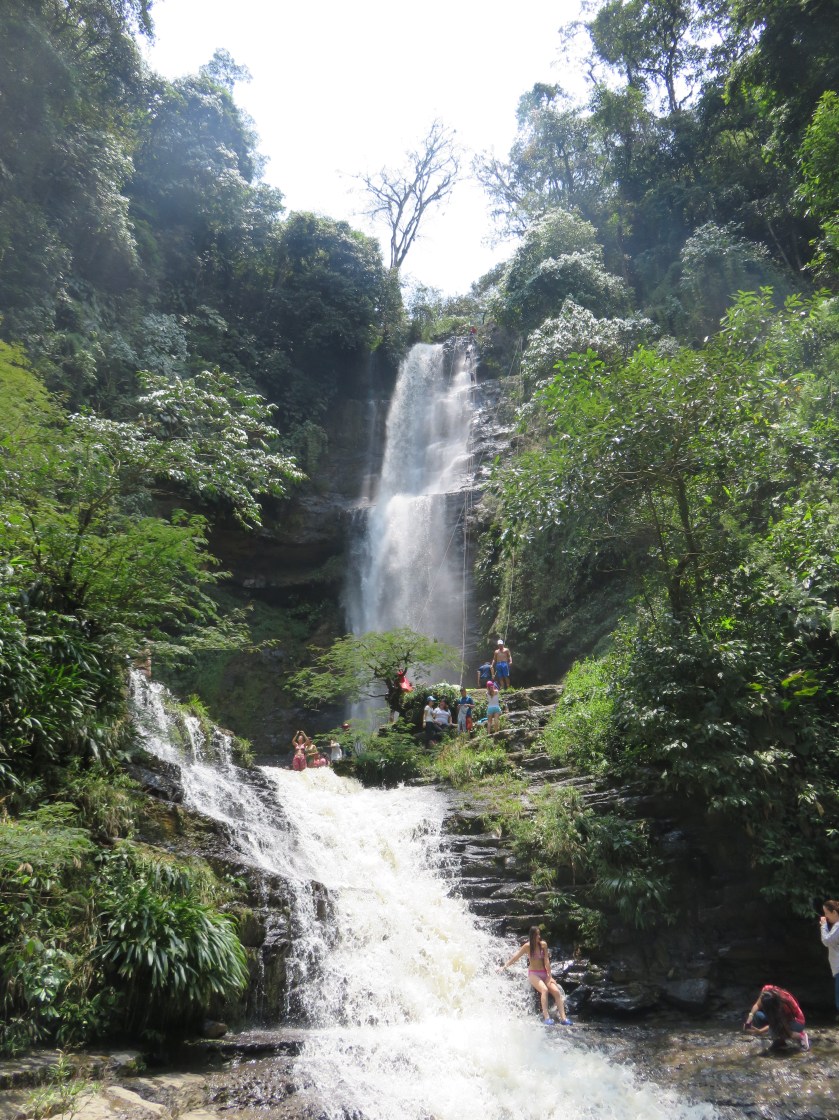
There are also numerous other activities that you can do in Nuqui as well. If you want to chill out, you can hang out at some thermal springs and rub some healthy mud all over your body. You can do some ecological hikes just a stone’s throw from the beaches and check out some waterfalls where you can do some swimming to cool off. The most popular waterfall is known as the ‘Terco’ waterfall, which is about a four-hour hike but is worth the effort to get there.

If you happen to visit Nuqui between the months of June to October, you can check out whale watching and get up close to those beautiful mammals. Don’t be afraid to hit up the surf with the massive waves that can be found in Nuqui especially ‘Cabo Corriente’ if you’re up for the challenge at a more advanced level. Lastly, you can also tour the Jovi river especially by canoe if you would like to get some exercise into your trip.

In order to get to Nuqui, it’s possible by flying from the Olaya Herrera airport in Medellin or from Bogota with a stopover in the city of Quibdo. You can also take a boat to Nuqui from the beach of Guachalito, which will take about an hour or so.

Bahia Solano is pretty similar to Nuqui in terms of location as they are both located in the Choco department of Colombia. However, compared to Nuqui, Bahia Solano is considered the tourist capital of the Pacific coast of Colombia due to its’ location and its’ relatively cheap cost of touristic activities. Bahia Solano has the only airport on the Pacific coast or in Choco so you can fly to there first from other cities in Colombia before you travel on to Nuqui or another part of the Choco department.

There’s also a seaport, which will allow you to travel there by boat from other parts of the Pacific Coast if that is what you choose to do. Bahia Solano has a little bit of everything to offer the seasoned traveler or tourist. Between the mangroves, marshes, rivers, beaches, mountains, and scenic coasts, Bahia Solano has a natural biodiversity that is unmatched when compared to other destinations in Colombia. The flora, fauna, and overall biodiversity will draw you in as well as other sport activities such as surfing, fishing, and scuba diving. Bahia Solano is very close to other tourist draws such as the beach town of ‘El Valle’ and the nearby Ensenada de Utria National Park, which is also accessible from Nuqui too.

If you are looking for an organized tour within Bahia Solano, you may want to check out Pacifico tours. It will be a good chance to meet new people and explore the undiscovered Pacific coast with customizable trips that focus on your outdoor activity preferences. You can also partake in surfing and whale watching (June through October) through these tours or on your own.

‘Huina’ is a beautiful, remote beach in Bahia Solano that is popular with the locals and hasn’t been spoiled yet. You can choose a number of hikes to do that last from four to six hours to destinations like the ‘el Tigre’ waterfall from playa Aljemal or to the ‘Boro Boro’ area to explore the jungle part of Choco. If you want to do canoeing in Bahia Solano, you can tour the Rio Tundo to combine exploring the coast with exploring the jungle by passing through this river.

Whatever you decide to choose to do, Nuqui and Bahia Solano have a lot to offer the average tourist or traveler. You are going to be impressed by the natural beauty, warm people, and agreeable climate that you will encounter when you visit this part of the Pacific coast of Colombia. Have a good time and remember to take some pictures and video to remember this unique travel experience.

________________________________________

Note: For this blog post, while I haven’t been to either of these places yet, I did some thorough research regarding these two destinations as well as talking to other Colombians and friends of mine about these places. They have been highly recommended to me and I hope to visit Bahia Solano and Nuqui in the future.

‘Sideways’ – Film Review and Analysis

notdrinkingmerlot
“Miles is not drinking any Merlot!”

Sideways (2004) is an excellent film about the topsy-turvy nature of middle-age life and how to cope with the curveballs that life throws at us to challenge us. Critically acclaimed at the time and nominated for many awards, Sideways, directed by Alexander Payne is a good tale about male friendship, how to deal with mid-life problems, and finding love and purpose during difficult times.

The very title of the film ‘Sideways’ is symbolic of the best way in which wine bottles should be preserved by being laid on its’ side in order to age properly. Also, men and women who are going through their mid-life ‘sideways’ must embrace the challenges that lie ahead and the changes that come to them with this part of life in order to grow and mature as a person.

The basic premise of the film ‘Sideways’ involves two middle-aged men who are close friends, Miles Raymond (played by Paul Giamatti) and Jack Cole (starring Thomas Haden Church) that decide to take a week long Bachelor’s trip up to the wine country of Napa Valley in California to celebrate Jack’s upcoming wedding and the end of his singledom. Both of these men are in their forties and have a sinking feeling that the best of life is behind them.

Miles is in a depressive state due to the fact that he feels like a failed writer due to the uncertain future success of his yet-to-be published book. While he has a steady job as a high school English teacher, he feels unfulfilled by his life and wants to achieve greater success as a novelist but has yet to break through. On top of that, he has gone through a recent divorce that he has yet to recover from fully and is newly single.

Luckily or unluckily for Miles, he has a friend, Jack, who is hoping to have a good time for his last few days as a single man. Jack Cole, Miles’ friend is an actor who may be past his prime. While he used to be a TV soap opera star years ago, now, he is mostly relegated to doing voiceovers for silly commercials and seems to be getting tired of the acting business. Jack loves his fiancé but has the problem of not being able to control him when it comes to women.

Unlike Miles, Jack is not a big wine connoisseur and is more into playing golf and hooking up with a local woman before he takes those fateful steps down the aisle. Jack is hoping to not screw up his marriage but he obviously misses the single life while his friend, Miles dreads being single again. Jack may love his fiancée but he is also hoping to get involved with the real estate business that his soon-to-be father-in-law is running in Los Angeles, which Jack wants to be apart of in order to get away from acting once and for all.

Beyond just writing novels and teaching his students, Miles’s true passion in life is wine, which is why he proposes Jack that they go to Napa Valley to drink some great wine, play some golf, and eat some good food together. While Jack enjoys all of those activities, he has other plans in mind for his last days as a single guy leading to hilarious and disturbing results for the both of them. Before Jack wants to get married, he wants one last fling as a ‘single’ guy before he becomes the husband to his wife. In the meantime, Miles encounters a woman he never expected to meet.

Maya, (played by Virginia Madsen), is a kind and intelligent waitress at a local restaurant in Napa Valley known as ‘The Hitching Post II.’ She is someone who Miles has encountered before during his previous solo trips to Napa Valley. While they were friendly to each other, it’s only on this Bachelor’s trip to the wine country where Miles with the help of Jack’s support gets to know Maya better. Maya and Miles really hit it off with each other especially over their shared love of good wine and they start to develop a relationship.

Luckily for Jack, Maya knows a local wine keeper, Stephanie, (played by Sharon Oh), who has a lot of the characteristics that Jack likes in a woman. The two men end up dating and hooking up with both women but with unforeseen and negative consequences. Jack’s adulterous philandering almost catches up with him and causes Miles a lot of unneeded stress. Miles also suffers during this trip from the lack of hope for his novel in finding a publisher to sell and advertise it.

He also struggles to give up on his ex-wife, Vicki, who he did cheat on leading to their divorce and breakup. The almost breaking point for Miles comes when he finds out that his ex-wife, Vicki, got re-married and has a newborn daughter causing him to regret his divorce from her. While his wife has moved on from him, he still struggles with the fact that his book is going nowhere, he is single in his 40’s, and has no legacy or children at the moment.

Despite all of mid-life struggles that both Miles and Jack go through during the film, they remain loyal and true friends despite the pain and suffering they cause each other. Miles and Jack are almost complete opposites of each other in terms of their personality and character. Miles is serious yet forlorn and an intelligent, well-spoken man while Jack is a cocky womanizer who never really grew out of his teenage years.

However, despite their differences from each other, they do help lift each other out from their problems. Jack gives Miles encouragement to keep working on his novel and to self-publish it if he has to. He wants Miles to succeed at starting a relationship with Maya and really gets him to start going out with her. Miles saves Jack from himself multiple times throughout the film and even though Jack’s integrity is compromised, Miles is there to clean up the damage and makes sure that his friend follows through on his marriage commitment to his fiancée, Stephanie.

Every character in this film is flawed in some way and even though each of them, both men and women, are in their forties, they still have some growing up to do and don’t have everything figured out when it comes to life. Each of these characters has their own personal demons with Miles having depression and a lack of success in his passion and Jack being an adulterer and a compulsive liar.

While they are not perfect men and the women they are involved with make that clear to them, they are still good guys at heart and want to do the right thing. Life has thrown them ‘Sideways’ and they are trying to keep up with all of the curveballs that they must dodge and move forward against. It is really no surprise to me that similar to ‘Lost In Translation’, this film has become a cult classic that can warrant multiple viewings.

While it may not be your typical feel good movie, it’s a ‘real’ film about ‘real’ people who are trying to succeed both personally and professionally against the odds. If you decide to watch ‘Sideways’ for the first time, you’re going to be rooting for each of these characters to find happiness. They are endearing to us as the audience because they make mistakes and have setbacks just like those of us watching the film. In addition to the brilliant acting especially by Virginia Madsen, Paul Giamatti, and Thomas Haden Church, the adapted screenplay is brilliantly written and thought out.

Even though most viewers would consider it a dark, morose film, it also has a lot of comedy in it and some great lines about wine. There are a lot of moments in ‘Sideways’ that will make you sad, happy, angry, and even make you relate to the characters themselves. A great film overall directed by Alexander Payne, Sideways was released way back in 2004 but still remains a popular and heart-warming film that will leave you satisfied. I highly recommend checking ‘Sideways’ out when you get the chance and to remember after watching the whole film to never order a tall glass of Merlot again.

How You Think Affects Everything You Get

1. Your mind is a fertile garden patch. Failure to cultivate it allows weeds to run rampant. 

As the popular saying goes, “Your mind is a terrible thing to waste.” In order to get the most out of your brain, you need to put your mental and intellectual capabilities to the test every single day. Whether it is reading the newspaper, doing a crossword puzzle, or solving a Rubix cube, you must exercise your mind as you do so for your body. If you don’t do anything to stimulate your learning capabilities, it’s likely that you will be left behind in life to some degree. Especially in this day and age where there is an unlimited amount of information to be accessed by the average person, there is simply no excuse as to why someone can’t cultivate their mind to improve themselves and become smarter.

You don’t even need to spend your whole day learning because it’s likely that you’re already a busy person. However, it only takes an hour or two a day of active learning in order to get ahead in life and improve a little bit. For example, you could spend that hour or two each day learning a musical instrument, studying a foreign language, or reading a chapter or two from a new book. The possibilities are seemingly endless but you need to take the initiative in order to make it happen. As an adult, nobody is going to hold your hand and force you to learn new things.

This isn’t like it was in school growing up where you had set periods of learning and a teacher there who could guide you to improve and become more knowledgeable. After high school or even college, you need to take initiative when it comes to learning and empowering your mind to become more open, agile, and responsive for the increased amount of knowledge that you want to retain. You can hold the weeds at bay if you’re willing to plant some flowers there instead.

2. Thoughts lead to feelings, and feelings lead to actions and actions lead to results. If         you don’t like the results you’re getting, reexamine your thinking.

You may not be able to control the thoughts or the feelings that enter your head but you need to control how you act and react to them. There is a direct correlation between your thoughts and feelings and your actions that come later. It’s important to think about why you are experiencing these particular thoughts and feelings, and if they are constructive or not to be having in your mind. You need to make sure that the actions that you are willing to undertake as a result of your feelings are done for the right reasons and are not just based off of poor impulses.

Part of being a mature adult is realizing that you have control over your actions and you should weed out the thoughts, emotions that are completely negative in nature and won’t get you very far in your goals and in your results. The effort that you put forth in your actions is a direct result of the effort you put into your thoughts. For example, if you feel confident about the subject material for a biology exam and are thinking about the topics you need to study and master, then you will be more likely to turn those positive thoughts into real actions as you crack open the books to study for this exam and then take the exam the next day with good feelings of confidence from putting efforts behind your original thoughts.

However, if you choose to focus on the negative aspects of your thoughts and emotions, it will likely cause a downward spiral, leading you to make mistakes and achieve less than desired results. With positive thoughts and emotions come the positive efforts of hard work that will often lead to good results. You really need to believe in yourself internally before you can have external success in the world and that all begins with your thought process and how you feel about yourself as a person.

3. Don’t deceive yourself. Confront reality, as it exists, even when the facts are brutal! Once you do, and then take action based on that reality.

Reality can be difficult to cope with but it is absolutely necessary to be able to handle even when the facts are not in your favor. In anything in life, you need to have a sound understanding of the facts and figures before you can start taking action regarding the subject you’re researching.

It is very easy these days to wrap yourself up in falsehoods and misleading information, which is why it’s more important than ever to seek out the reality of things in order to not confuse or distort your understanding of it all. The facts that may make you depressed, angry, or disturbed but the facts are the facts and they won’t be handed to you automatically. Any good student or researcher will know that you have to check and verify the facts on any subject before moving forward with taking any serious actions.

For example, when it comes to the issue of climate change and global warning, the facts matter a lot which is why so many scientists spend years in their field compiling data, doing research, testing out hypotheses, etc. before they decide to take substantive action to reverse this problem or lessen its’ effects. There are a lot of people out there who wish to distort the truth or dismiss it entirely but when you do not have a consensus on an important global issue like climate change, the problem will get worse and not better especially if no action is taken.

Reality must always be confronted even if there are some harsh truths that we as human beings must deal with. Part of being a mature, responsible adult is seeking out the facts in a situation and getting to the truth of the matter regardless if you like what the outcome is or not. Once you have the facts, you’ll be clear to take action and to do the right thing in your mind.

4. Worrying about things you can’t control creates a negative feedback loop that will cause you unneeded stress and anxiety.

Worrying is useless when you think about it. It doesn’t do anyone let alone yourself any good to think about the things that may happen in the future but also may not happen otherwise. You can only really know what’s going to happen exactly for today or maybe for tomorrow but beyond that you can never really be sure about what is going to happen to you.

Worrying can really be a mental block that can prevent you from making progress in your daily goals or from being successful in whatever you set your mind or your body to. By worrying all of the time, you’re not going to be able to do anything useful with your life if you’re worried about something bad is going to happen. By doing that, you’ll create a negative spiral of negative thoughts that you may not be able to get out of so easily.

When you decide to worry about something out of your control, stop yourself right there, take a deep breath, and push those negative thoughts out of your head. Instead, you must think positively and act positively in order to create the change you need and to become a better person in different areas of life. Worrying will get you nowhere and will create an endless loop of negatively. You have to be willing to take some chances, face some risks, and do your best effort in order to get to where you need to be. Worrying is a wasteful endeavor when you could focus your mental energies in a way that is more positive and productive overall.

5. Harnessing your thoughts to drive tangible, positive outcomes – It’s not enough to stare up the steps, you have to step up the stairs.

Thoughts must become actions in order to make things happen. You can think as much as you want about what you’re going to do, but unless you put actions to words, you won’t be able to get anywhere. There’s an important saying when it comes to this subject, which is, “Watch what people do, not what they say.” There’s also another saying such as, “Actions speak louder than words do.”

If people aren’t willing to follow through with their actions, you can be sure that they won’t be able to advance or progress that much with their goals, dreams, or aspirations. The difference between someone who’s a big talker and someone who actually walks the walk is quite stark. Success and progress doesn’t just come out of thin air. You need to be the person who is willing to take action after forming a plan of how to make the outcome positive or successful. This applies to a number of things in life that we often strive to achieve.

Whether it’s being the first person in your family to graduate from college, or working extra hours for that raise, or going back to night school to get the skills you need to apply for that job, positive outcomes must come from actual efforts and hard work. Good things come to people who put actions behind their thoughts. Anybody can talk a good game but the ones who really stand out in life are the ones who go the extra mile to achieve their goals with planning, taking action, and doing their best.

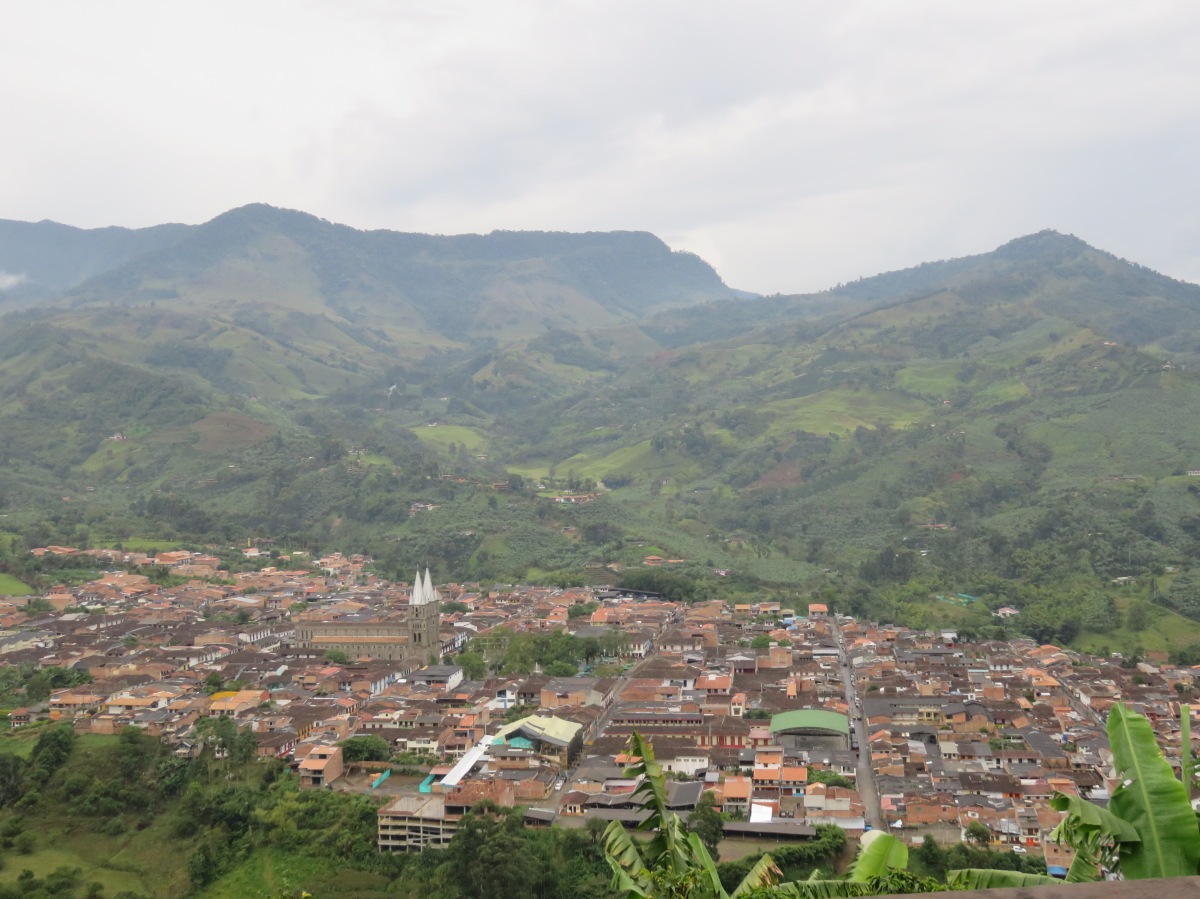
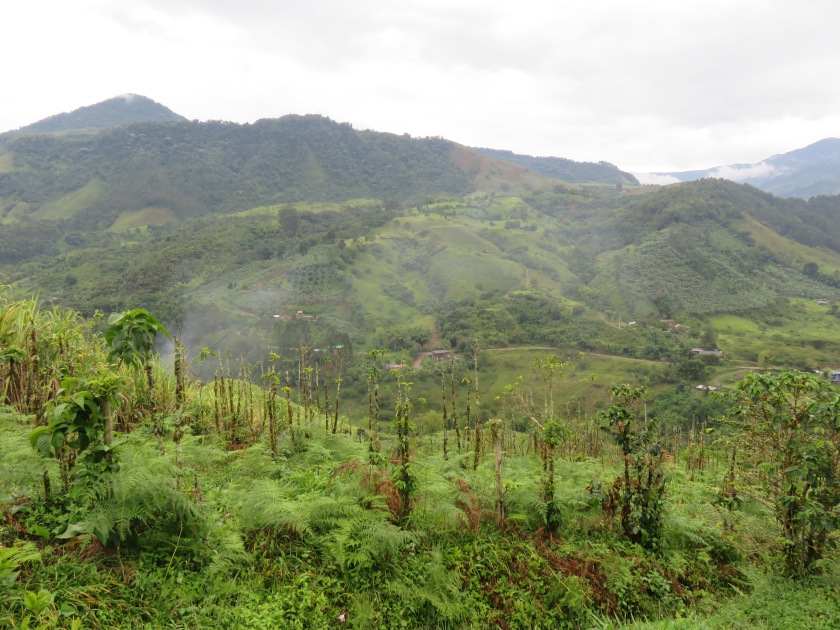
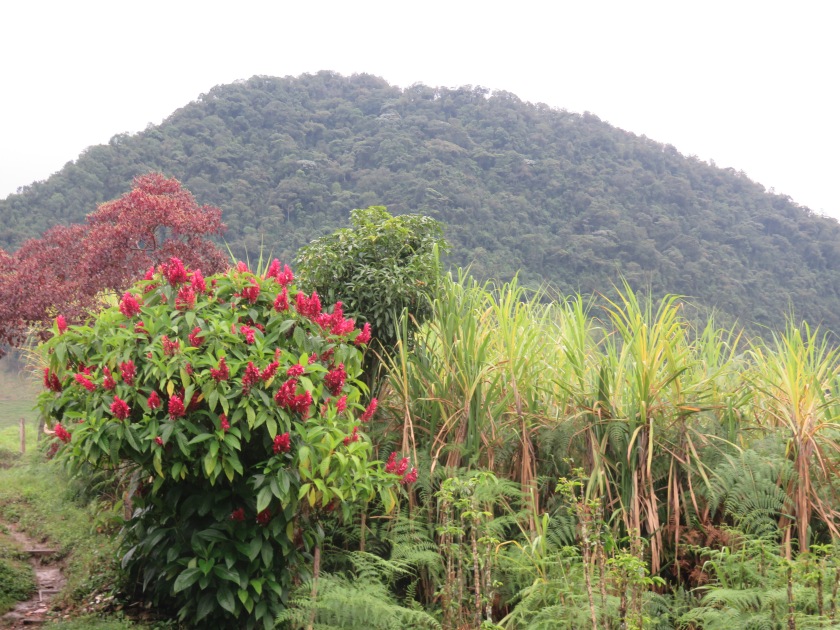
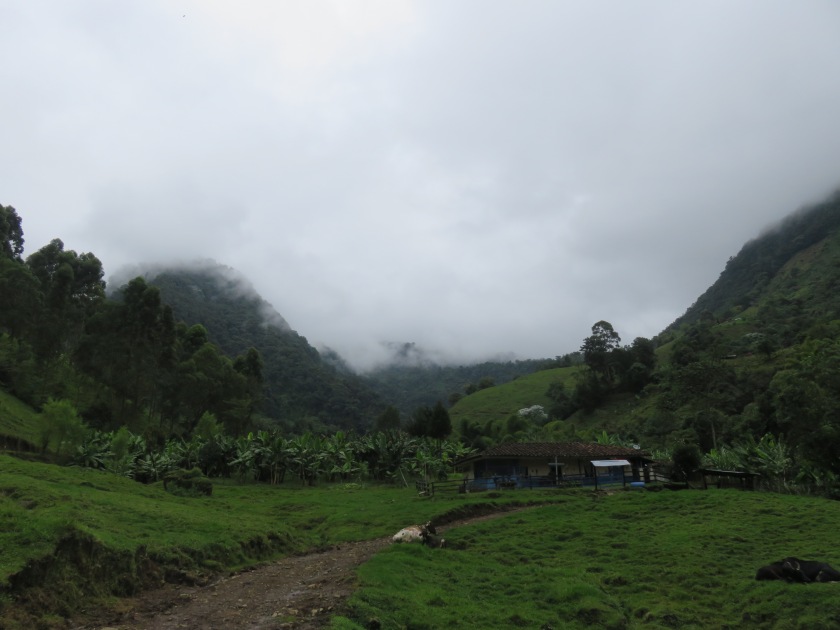
Jardin

IMG_2471IMG_2474IMG_2480IMG_2473

IMG_2484IMG_2490IMG_2503IMG_2502IMG_2492IMG_2485IMG_2511IMG_2512

Camera: Canon PowerShot SX710 HS

Location: Jardin, Antioquia, Colombia

English Corner – Simple Future Tense

In the past couple of editions of the ‘English Corner’, we’ve gone from the past to the present in terms of understanding and using the grammar structures that encompass these lengths of time. Now, we’re going to take our knowledge of English grammar into the future by going over and analyzing the ‘Simple Future’ tense. If you have a good basis of understanding when it comes to the past tense and the present tense, you should have no trouble with the future tense, especially the ‘simple’ version of the tense to start out with.

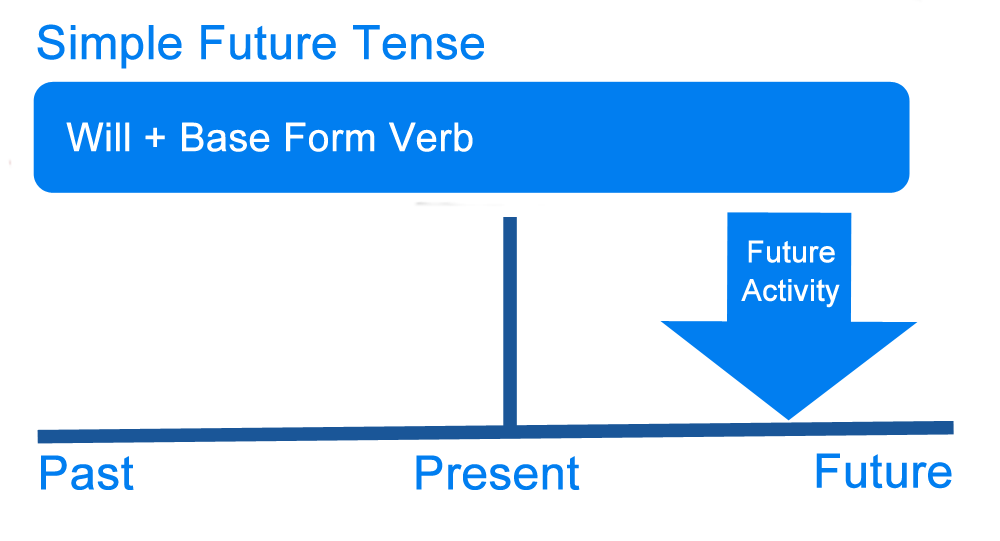
In order to master the simple future tense, we need to use the word ‘will’ and implement that word into the correct order of the sentence. This is why the simple future tense is sometimes known as the ‘will tense’ instead due to the importance of this particular word. In order to create the correct form of the simple future tense, we need to get the structure down without any problems.

As always in the English language, we are going to want to start our sentence even in the simple future tense with the ‘subject’ at the beginning whether it is ‘I, You, They, We, He / She, It, etc. After the subject comes the auxiliary verb first which in this case you are going to put the future indicator ‘will’ right after the subject. Once you have the subject and the auxiliary verb set up, you can then put the main verb after that to fill out the third part of the sentence. Lastly, you’re going to finish the sentence with the action taking place and the object that is being referred to. Overall, the structure of a ‘simple future’ tense sentence should be ‘subject + auxiliary verb + main verb + action (object).

Here are a few examples to consider:

  • I will go to the store today.
  • He will do his homework before tomorrow.
  • We will attend the theater musical later tonight.
  • They will finish the job as necessary.
  • She will study mathematics for her test tomorrow.

Sometimes, you’re going to want to make the simple future tense from its’ usual, positive form into the negative form which isn’t that much different except for one important difference. In order to make this grammar tense negative, you’re going to want to put the word ‘not’ between the auxiliary verb, which is the word ‘will’ and the main verb, which could be any number of verbs to express what you would like to be doing in the future.

If you want to go ahead and put the simple future tense into the question form, you’re going to want to exchange the usual placement of the subject for the auxiliary verb and switch them around with each other. In order to get a better understanding of the negative and question forms of the simple future tense, let us take a look at some examples that I have listed below:

Negative

  • I will not go to the store tomorrow.
  • He will not beg to keep his job.
  • You will not get a promotion unfortunately.

Questions

  • Will you do your homework please?
  • Will she go out with you to the dance this weekend?
  • Will we win the match if we practice hard today?

Another thing to be aware of when it comes to the simple future tense is that you don’t need to use ‘will’ in the auxiliary verb part of the sentence all of the time. To express the future, you can exchange ‘will’ for ‘shall’ in order to get your point across.

Examples

  • I shall not waver from this decision that I must make tomorrow.
  • I shall work my hardest to ace this job interview on Wednesday.

Beyond just writing correctly in the simple future tense, when it comes to the spoken form, you can be much more informal with your choice of words. If you’re speaking to someone about the future, you’re going to want to contract both the subject and the auxiliary verb. You should push them together to become one word with the help of a well-placed apostrophe. You don’t have to speak or write in the contracted form but you can do so if you’re being informal and don’t feel the need to sound everything out for the other person or for the audience.

Examples

I will –> I’ll

I’ll be sure to call you back after I’m done cooking.

You’ll need more time to study tonight since your exam is tomorrow.

In addition to contracting the positive form, you can also contract the negative form of ‘will’ with a slight difference in its’ wording. Instead of ‘will’ being contracted into ‘I’ll’, it becomes something else entirely.

Examples

I will –> I won’t

We won’t stop the strike until our demands are met.

They won’t stop playing their awful music in the house next door.

Now that we have the structure of the simple present tense down to a science, let’s focus on the ways in which we can use this grammar form to the best of our ability.

More often than not, the main reason we choose to use the simple future tense is because we have no plans or obligations ahead of us so we can choose to do things spontaneously instead without putting much thought into it. Sometimes, as human beings, we do things without much planning so using ‘will’ in a sentence to express a spontaneous action is quite useful. The decision that you make or the action that you take can occur right away or within a short notice.

Examples

  • I’ll bring you a drink.
  • We will go see the new Star Wars movie tonight.
  • They will leave after dessert is served.

It should be kept in mind that there are a few known exceptions where ‘will’ is actually the main verb in a sentence and the auxiliary verb is another word that can take its’ place to express a future action to take place. The primary example of this exception is the word ‘think’, which can exchange places with ‘will’ to become the auxiliary verb and to express what the subject may do in the future with regards to their plans or obligations.

Examples

  • I think I’ll buy a bike later today.
  • We think they’ll do the right thing and return the money.
  • She doesn’t think that you are guilty.

Another main use of the simple future tense is to try and predict the future. While these predictions aren’t foolproof and could end up being wrong, we try to be as certain as possible before using ‘will’ in a sentence to prove its’ inevitability. As human beings, we are prone to make mistakes but we try to predict the future as if it is set in stone.

Examples

  • It will snow heavily tomorrow.
  • He said the Yankees will win the World Series this season.
  • We will be victorious in the spelling bee next week.

Lastly, without changing the structure of the simple future tense, you can add the verb ‘to be’ after the important auxiliary verb ‘will’ to create some additional sentences with the same grammatical form. It is not necessary to use ‘be’ in a sentence with ‘will’ but it can help you to create additional examples such as the ones below.

Examples

  • I will be waiting for you outside the doctor’s office when you finish.
  • Will we be meeting at the ice skating rink at 8 PM?
  • They won’t be able to come tonight to dinner, should we reschedule?

Oftentimes, you can use ‘going to’, the present progressive (continuous) tense to express what plans or actions you have for the future. However, for now and for the next edition of ‘English Corner’, we are going to continue to focus on how to use ‘will’ to express the future including its’ continuous form, which we will review next month. Until then, keep studying your English and please let me know if you have any questions or comments!

Cuisine Spotlight – Mondongo

Mondongo Soup is one of those polarizing foods that you encounter where you either love it or hate it. There’s no in between when it comes to Mondongo, which is what makes it a unique kind of food to cover in this month’s edition of cuisine spotlight. The main ingredient of diced or pieces of Tripe (the stomach entrails of a cow or pig) cause some folks to go nauseous while others salivate over the chance to get a big bowl of mondongo for their lunch or dinner.

However, Mondongo is more than what meets the eye and comes with a number of different ingredients that vary depending upon which country or part of Latin America you find yourself in. Part of what makes Mondongo an interesting food is that you can find it in more than one country and each place makes it a little bit differently than the other. I didn’t know Mondongo existed before I started living in Colombia and although I tried it once and enjoyed it, I’m not big on tripe in general while others love it very intensely. Even if you find yourself disgusted by the idea of eating cow’s stomach, perhaps you’ll reconsider after reading this article.

Mondongo is more than just beef or pork tribe. The main ingredients also include various vegetables cut up and chopped such as bell peppers, onions, carrots, cabbage, celery, tomatoes, lettuce, etc. Additional ingredients can include salt, pepper, coriander, garlic, oregano, and cilantro if you want to spice up the dish with some seasoning. You can also decide to add some corn and rice to the soup if you want to make it more heavy, and filling.

Usually, the tripe is soaked in citrus juice or sodium paste before it can begin cooking in a pot. If there are many types of spice or seasoning available in your local supermarket, you can make your Mondongo as bland or as zesty as you see fit. The great thing about a soup like Mondongo is that there is a lot of variety in making it and there’s no right or wrong way to make it. It would be quite a dish to make when you haven’t eaten all day and are ready to dig in after a long day at work.

Mondongo is a food dish most commonly found in Latin America, the Caribbean, and the Philippines. When it comes to the specific countries in which you can try Mondongo, there are quite a few that have it available. That list of countries includes Brazil, Panama, Puerto Rico, El Salvador, Venezuela, and in Colombia.

In Colombia, Mondongo is a traditional dish for Lunch and is made with a lot of cilantro and is known for having a lot of chicken or beef broth for the vegetables and tripe to soak in. Peas, Carrots, Onions, etc. are the most common vegetables for this type of Mondongo and corn is sometimes added to the mix. In addition to pork and beef tripe, chicken and turkey tripe is sometimes used in the Colombian version of Mondongo depending upon which region of the country you are in.

Mondongo is sometimes known as ‘mocoto’ in Brazil as the Portuguese translation of this popular soup dish. Mondongo is mainly consumed in the southern regions of the country but can also be found in the Northeast where it is known by the name of ‘dobradinha’ when it comes to Panama, Mondongo can be seasoned with pieces of chorizo or pigtails to create some added flavors. Pig knuckles, and feet can sometimes be added to Panamanian Mondongo as a substitute for pigtails or chorizo.

This type of Mondongo can also come with chickpeas; bay leafs, and is served with salads and/or plantains. There is also a tradition in Panama that some folks observe that when a new house is built for a family, they will gather together to celebrate the occasion and have a meal known as ‘mondongada’ that focuses on eating big servings of Mondongo.

In Puerto Rico, vegetables such as squash, pumpkin, eddo, cassava, capers, etc. can be added as well as the salted pork tail and feet that you can also find the Panamanian version of Mondongo. Lemon juice is the main ingredient that helps to distinguish the Puerto Rican version of Mondongo from other countries’ versions. For El Salvador, Their Mondongo is also called the ‘sopa de pata’ where chili powder, coriander leaves help to give it a spicy kick on top of the tripe, pieces of yucca, sweet corn, green beans, and plantains that make up the soup. Lastly, the Venezuelan version of Mondongo is often the only meal of the entire day due to the fact that it is very heavy compared to other kinds of Mondongo.

This kind of Mondongo is served with plenty of vegetables, different types of tripe, pigs’ feet, and seasoning but also comes with a serving of arepa on the side, which can be considered the national snack of Venezuela. The restaurants that sell Mondongo in Venezuela are known as ‘areperas’, which focus mainly on cooking Arepas, but the mondongo dish and the arepa go strictly together in Venezuela. Many Venezuelans make it a priority to eat Mondongo early in the morning before they go to work or later in the night before they go out to party and drink.

Regardless if you’re eating Mondongo in Colombia or Puerto Rico, it is a hearty, fulfilling soup dish that has a ton of variety to it. You can mix and match different ingredients together and decide what kind of sides you would like to serve with your Mondongo. Wherever in the world you eat this dish, you should do so on an empty stomach due to how heavy it is. You won’t need to have any breakfast, lunch, or dinner if your only meal of the day happens to be a big bowl of Mondongo. Enjoy responsibly or you may risk a stomachache. Buen provecho!


Bucaramanga

IMG_2129IMG_2132IMG_2135IMG_2136IMG_2142IMG_2146IMG_2152IMG_2154IMG_2181IMG_2186IMG_2185IMG_2191

Camera: Canon PowerShot SX710 HS

Location: Bucaramanga, Santander, Colombia

San Gil

IMG_2203IMG_2230IMG_2285IMG_2298IMG_2306IMG_2322IMG_2332IMG_2346IMG_2343IMG_2348IMG_2352IMG_2358IMG_2374IMG_2361IMG_2304

Camera: Canon PowerShot SX710 HS

Location: San Gil, Santander, Colombia

Barichara

IMG_2384IMG_2386IMG_2387IMG_2391IMG_2397IMG_2399IMG_2404IMG_2405IMG_2407IMG_2420IMG_2421IMG_2431IMG_2440IMG_2461IMG_2465

Camera: Canon PowerShot SX710 HS

Location: Barichara, Santander, Colombia

Cultural Spotlight – Semana Santa

Semana Santa or ‘Holy Week’ is a very special, religious week in Latin America and specifically here in Colombia. Compared to the United States, the United Kingdom and other predominantly Christian nations, Easter in Colombia is a little bit different and a lot longer in terms of length. Schoolchildren across Colombia get off for the entire week leading up to Easter and most employees in local companies usually will get time off as well to observe the religious traditions, to travel to other parts of the country, or to celebrate with friends and family.

After the festivities of Carnival that goes throughout February comes the beginning of the Eastern season with the beginning of Lent, otherwise known as ‘Ash Wednesday’ or ‘La Quaresma’ in Spanish. Most Christian and Catholic societies around the world observe the forty days of Lent by giving up something important or useful to them. Others pray each day and even fast as a way to atone for their sins. Ash Wednesday is perhaps most known for the fact that observant Catholics go to church that day to have the sign of the cross put on their foreheads by their priests with the grey ash.

While Easter is important in Colombia, Semana Santa, the days leading up to the most holy of days, has also taken on great significance. Students, teachers, and workers from different professions usually get the whole week off if not the most important days of Semana Santa off such as Holy Thursday (Maundy) and Good Friday, which are official holidays in Colombia leading up to Easter weekend.

On these days or even throughout Semana Santa, it is unlikely that you will find many shops, restaurants, or businesses that are open for customers. Instead, most observant Catholics will be at their church during these days and partaking in mass as well. Certain observers will make a habit of visiting different churches in their town or city as well as visiting important altars that have some significance to the community.

For some Colombians, Semana Santa is a chance to have a much-needed break from work to relax with family and friends. This holy week is a spring break for many people throughout the country who choose to take meaning from Semana Santa in different ways. It’s quite clear that many families here will use it as a chance to have a vacation to different places like Santa Marta, Cartagena, Manizales, Pereira, etc. The bigger cities in Colombia are likely to empty out and achieve a rare form of quiet that the remaining locals are likely to enjoy while it lasts. Many small towns and pueblos throughout Colombia are going to have many hundreds or even thousands of new visitors. More religious people will be visiting smaller cities like Popayan, Tunca, or Mompox in Magdalena, which are some of the more famous places to go to during Semana Santa, and which have the largest observations and celebrations of the Christian holidays.

In many of these smaller cities during Holy Week, there are a number of important religious processions, many holiday sweets are given out, and there are many decorations displayed in the town square and in the town churches. While some folks may go to the smaller cities and towns in Colombia, others may decide to travel to the United States or other countries in Latin America for their vacations.

Despite the celebrations, religious observances, ceremonial processions, decorations that are a big part of what makes Semana Santa memorable in Colombia and throughout Latin America, Easter Sunday tends to be a rather quiet and personal affair. Those people who are religiously observant will attend mass and other church services but you won’t see any Easter bunnies, colored eggs, or sweets being exchanged by children. I would say that Easter and the Holy Week leading up to it is a lot less commercialized than it is in the United States, which is a good thing because it puts a lot more focus on the actual meaning of the religious holiday for those who observe it rather than focusing on gifts, sweets, and other distractions.

Holy (Maundy) Thursday and Good Friday are national holidays here in Colombia, leading them to be more significant and observed more. Most Colombians may be surprised to find out that neither the Thursday or Friday leading up to Easter Sunday in the United States are considered national or religious holidays of observance. There are many traditions surrounding Easter in Colombia that are not followed in the U.S. and vice versa.


However, even though countries such as Colombia and the United States observe Easter and other days of this holy week in Christianity differently, there is a common theme cross-culturally that many countries can relate to in that these days are also time to spend with your family, friends, and other loved ones in your life. Getting together during any holiday, religious or otherwise, is a truly universal, human occurrence that all cultures and countries can relate to despite our differences from each other.