Always Stand Up to Bullies

“We’ve all dealt with bullying in our lives at one point or another. It can range from verbal slights such as biting sarcasm to full on insults to even threats of physical violence, but these actions all harm the bullied person regardless of the severity or extent.”

We’ve all dealt with bullying in our lives at one point or another. It can range from verbal slights such as biting sarcasm to full on insults to even threats of physical violence, but these actions all harm the bullied person regardless of the severity or extent. For myself, I was unfortunately bullied when I was younger and it’s something that you never truly get over even as you grow older, and it starts to recede to the back of your mind.

Still though, words hurt especially when they come from people you trusted such as a family member or even a friend. Bullying from a stranger is bad, but it’s worse when it comes from people who you liked or respected initially. You should never grow comfortable with being bullied even when you are a young person and if it’s happening to someone you know or care about as well, you should always look to stand up for them or make sure they stand up for themselves in front of the bully.

Bullying is never acceptable from a child let alone a fully grown adult, and it continues way too often in our society not only to children but to adults as well. Usually, the person doing the bullying to others was hurt by other bullies and has become insecure as a result, but that does not give them the right to hurt others in the same way they were hurt. They should instead choose to break the cycle of bullying as it really is a cycle that goes from one person to the other. Even when I was bullied, I didn’t want to do that to other people. Instead, I have learned that you must put your foot down and confront the bully directly. I’m not talking about getting into a war of words with the bully or escalating the situation with them. Instead, you call them out on their bullying, tell them you won’t tolerate the abuse or the rhetoric, and make sure you don’t associate with that person anymore.

Now, I will only make an exception if they apologize and promise it won’t happen again especially if it’s from a friend or a family member. You got to be direct with that person who you still care about and basically let them know that what they said is disrespectful and you don’t want to hear it anymore. Jokes or sarcasm can often disguise bullying, but you have to call it out if it hurts your feelings. If you let them get away with it once, you should be prepared for them to do it again because they’ll feel like they have free reign once you let it slide the first time.

I’ve had instances in my own life where a friend or a family member was disrespectful to me either due to my physical appearance or the way I dressed, and I did not tolerate it. I didn’t shout or didn’t insult them back. Rather, I made sure to let them know that wasn’t polite or kind and I took offense to it. Often, they’ll back down when they’re being called out on it and when you make clear that you’re serious that you were offended. If they do it again, it’s best you cut them out of your life completely or begin to maintain distance from them until they get the message and apologize formally.

If they never apologize or keep doing it, you need to have ‘zero tolerance’ for that bullying kind of behavior even when you were close to the person to begin with or have familial ties. Just because you have a history with that person doesn’t mean it gives them license to take advantage of that relationship or friendship to begin bullying you. These days, you really got to put your foot down and stamp out disrespect and incivility when you see it begin to happen to you. It can be hard as you may not want to lose that person but if it’s harming your emotional or mental health, you’ll be better off cutting that person off from you and spending your time around people instead who value you, respect you, and treat you well.

Just as you would not tolerate bullying from a friend or a family member, the same should be said for a colleague at work, a classmate, or even a stranger on the street. Bullies are often cowards who hide behind their words because it makes them feel better because they are insecure themselves about who they are as a person. You always have a choice on how you react to a bully, whoever they are, but make sure to not accept the bullying, never get used to it, and call the bullying out, and get away from that person(s) who bully you.

If it escalates to become harassment, abuse, or worse, you can get a restraining order, sever contact, or even get the legal authorities involved. There are always options to stop bullying and it should never be tolerated by you. If you’ve been bullied, are being bullied, or worry about bullying, make sure to stand up for yourself, have ‘zero tolerance’ for it, and remember that trading insults will bring you down to the bully’s level, which they enjoy doing.

Instead of escalating and trading insults with the bully, make sure to let them know you call them out on their behavior, preferably in front of other peers, extricate yourself from the situation, prevent that person from seeing you or contacting you again, and highlight the verbal or emotional abuse to other people in the bully’s orbit to make them aware of what the bully has done to you.

Bullying sucks and it’s sad that this article must still be written but whether you’re an adult, a teenager, or a child, you should know that bullies do not have control or power over you. Their words may hurt but they are not a reflection of who you actually are as a person. Hurt people like bullies hurt other people to make themselves feel better. You may be bullied sadly at points in your life, but it is not permanent, and you can choose to remove yourself from the situation and call it out clearly when it happens. By doing that, the bully will be shamed and ridiculed for their bad behavior, and they will likely back down from doing it again.

Don’t be afraid to stand up to the bullies of the world and always call them out on their bad behavior when the time comes for it.

Maslow’s Hierarchy of Needs and The True Quality of Life

“Maslow’s hierarchy of needs has always been a good reference for me in describing what exactly makes us have a safe, secure, happy, and fulfilling life. I do believe we need to have our hierarchy of needs in mind as people when we focus on what’s best for our fellow man or women and how to build a prosperous society.”

Everybody wishes to have a high quality of life but what exactly does that mean? We hear the term ‘quality of life’ a lot but what goes into the ‘quality’ of it and what makes for a satisfying ‘life’? Maslow’s hierarchy of needs has always been a good reference for me in describing what exactly makes us have a safe, secure, happy, and fulfilling life. I do believe we need to have our hierarchy of needs in mind as people when we focus on what’s best for our fellow man or women and how to build a prosperous society.

                                                                                                Source: SimplyPsychology.com

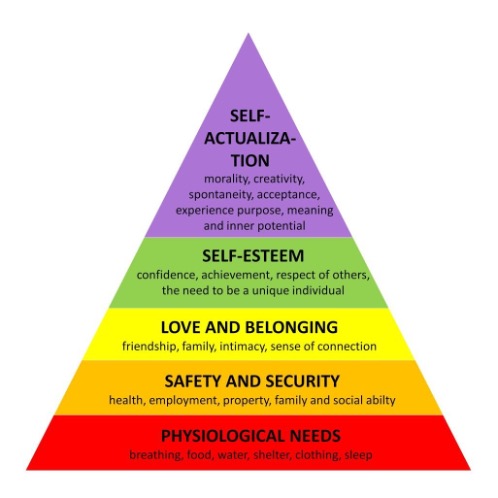
While I don’t wish to compare my own views on what true ‘quality of life’ is compared to Abraham Maslow’s ‘hierarchy of needs’ as shown in the pyramid diagram above, but it’s important to look at what makes a society flourish. I agree with Maslow at the base of the pyramid is the most important to ensure a life has some quality with it.

The societies that have the strongest base for ‘physiological needs’ usually are the happiest and satisfied with their quality of life. For example, you cannot focus on ‘safety and security’ as much as you can when you can’t even guarantee that the water you drink is clean and the air that you breathe is clean. Everything else on Maslow’s pyramid goes out the window if you are hungry, thirsty, don’t have a roof over your head or cannot clothe yourself or your family.

A lack or absence of ‘physiological needs’ is often found in the poorest or least developed of our societies and can still plague even our wealthiest and most developed societies. The key thing for all societies is that we should have an attitude of wanting to guarantee the ‘highest quality of life’ we can deliver to all people rather than just the few who can afford it financially. I do believe any society and its leadership is responsible for delivering on both ‘physiological needs’ and on ‘safety and security’ and once that is achieved, it will lead to better conditions whereas we go up Maslow’s pyramid, love, belonging, self-esteem, and self-actualization tend to be easier to achieve as well. True quality of life is knowing that if you fall on hard times, not by your fault, you’ll be looked after by your society and your government while you look to get back on your feet.

I don’t believe it’s anything farfetched or overly utopian to believe in everyone having the right to breathe clean air, drink clean war, have enough food each day, and have a roof over one’s head. I also think that while education and health care may not be on ‘physiological needs’, it ranks close in that regard to build that functional society. Everyone should be able to afford a good education and find good health care where they live and societies that accomplish this for their people are rewarded back and then some with citizens who are thriving as a result. Societies that are more educated, healthier, and with more opportunities to succeed tend to be those that have a true quality of life in my view.

You may be thinking that true quality of life is about having a big bank account, a bigger house, all the gadgets and electronics you could ever want, and all your material desires within reach, but to me, that would not go along at all with Maslow’s hierarchy. Having that stuff may make you happier but it doesn’t reflect a true quality of life in any society. If the roads are falling apart, people around you are suffering and in poverty, and you can go bankrupt for seeking medical care or a higher education, your quality of life will also suffer as a result even if you’re not directly affected by it.

When we are looked after or cared by others in the society who can ensure we have a good education, good health care, and to have affordable housing, the quality of life for everyone will go up. We are not islands unto ourselves alone and we are reflections of how we treat others. If you’re reading this article, think more about how your society or country could have a better quality of life not just for yourself but for the people living there too.

I ask that you believe in your ability to create change whether that’s advocating for more environmental regulations, prioritizing people’s access to basic needs including food and housing and thinking more about how we can include people in making them feel they belong in the society. We should collectively work towards providing more opportunities to everyone, so they don’t feel left out. Any healthy society has those public places to gather, discuss, and hopefully fix the quality-of-life issues going on in their community, town, city, or country.  

I don’t judge a society by how wealthy it is, how big the houses people live in are, or how much they have in material goods and services available. I judge a society by how they treat the least well-off members, how they prioritize the public good or not, and what they are doing to improve the overall quality of life rather than ignoring it or having it steadily decline under their watch.

It’s important for us to start thinking about not just ourselves and our own quality of life but those of our fellow man and woman. When they are worse off than us, let’s lift them up and look out for them instead of shunning them or isolating them instead. We should always be advocating for a ‘true quality of life’ where everybody is given the opportunity to succeed, grow, live healthy and happy lives, and pursue their dreams.

We all will be better off for having invested in the basic tenets of civilized society such as education, health care, transit, housing, and healthy food supply rather than just guarantee them for the few who can afford it. The higher the quality of life is not just for us but for every member of our society, the more likely we will all flourish together and reach our highest fulfillment.

The World Will Humble You

“What you believe you deserve out of life is often out of your control at the end of the day.”

What you or I want from the world will be different from what the world will give to us. You must understand that the world will humble you in terms of your expectations versus what you will get. A key part of our lives is managing the difference between what we get against what we expect. It is important to keep your own beliefs in check because the world will test them continually and often turn them on their head. What you believe you deserve out of life is often out of your control at the end of the day.

The world will see fit to humble you when it comes to the outcomes we get when compared to what we earn and are able to get based on our hard work and effort. In a perfect world, the fruits of our labor would earn the same kind of return but often, that is not the case and sometimes hard work can be punished rather than rewarded. We have our expectations of the world around us, and the world often has different expectations from those that we expect from it. We must keep trying, to keep working, and to put our best foot forward in our individual efforts but must also understand that what we get back for those efforts may fall short of our own expectations.

Humbling oneself in the face of adversity or a negative result does not come naturally but is part of our maturation process. There is not much we can do but to try again or to move on to another opportunity. Failure is just a part of being human and the better we can handle it and be humble in a bad outcome, the better off you will be in the long run. Instead of being bitter, developing an inconsequential grudge, or blaming yourself or the other party without coming to grips with the fact that what’s done is done, you just must be willing to move on and grow from the failure itself.

We distinctly desire to avoid failure or setbacks and to think that they can’t happen to us, but they can, and they will. How we react to these failures and how we move forward will tell us more about ourselves than the initial failure itself. I would say that it does get easier as you get older as you get more used to the feeling of failure or setbacks and are able to bounce back quicker from them. You must have a thick skin about it, and I think that our age plays an important factor in being able to absorb the blow of failure or a setback without letting it derail you for a long time.

To have your ego be humbled by what the world gives you in return in it of itself is a victory. One’s ego can grow out of control when the world doesn’t humble you or push back on you in any way. When you let your own self-confidence or ego get out of control, you’re more likely to develop megalomaniac behaviors as a result. I find that it is a good thing when the world humbles you because without that happening, you tend to isolate yourself from others’ who have had it more difficult than you and tend to believe everything you do is the best thing ever or without any critique or issue.

Life is not meant to be failure-free or error-free. We are all human and thus, we will falter, make mistakes, and let our own ego get in the way. The key test is if we can push through these setbacks and failures to chart a new course or to try again if we believe enough in what we are trying to accomplish. Perhaps we did not work hard enough, study enough, use our full abilities, or sometimes it just wasn’t meant to be. There is no use fighting against an outcome that is out of our own control.

Sometimes, life has other plans for us, and it just wasn’t in the cards for us in the result we expected. You must take it in and decide how to best move forward. I find that there is nothing wrong with trying again if you believe in your own abilities enough where you want to re-try something by doubling your efforts. If you tried it once and you don’t want to do it again after failure, I don’t think that there is any shame in that either if it doesn’t appeal to you enough. Just because you failed at one thing and the world made it clear that you aren’t ready to move on with it now, doesn’t mean that is a final verdict on you or your capacity to do better or to get to where you want to be.

At the end of the day, there is nothing wrong with being humbled and to keeping your ego in check. If it wasn’t meant to be, it wasn’t meant to be. There is neither no harm in trying again nor is there any harm in moving on to a new goal or objective you have in your life. One’s ego can run rampant without any kind of pushback or critique, and you don’t want to end up in that place. Failure is the best teacher, and it should not reflect on your whole self as a person but rather on your skill set or aptitude that could use some improvement. Yes, it hurts, and it can feel like an absolute rejection of yourself as a human being, but I want you to know that it is not the case.

It is better to have tried and failed and sometimes to have done so a few times than not to have tried or failed at all. You may eventually succeed, or you may never end up succeeding at all, but the point is that you allow the world to humble you and your ego, without letting it derail you from keeping at it, trying again, or moving on to try in a different area of life that you believe you would be good at. It is natural to fail and to pretend otherwise is doing yourself and those around you a disservice. Being humble and accepting your limitations is part of being a human and hope that even if you fail, you dust yourself off, get back out there, and keep trying your best.

Don’t Let Yourself Be Gaslighted

“There are numerous ways to combat gaslighting, but it is key to make sure you don’t let yourself be gaslighted, even when it is by people you are close to or have grown to trust or admire.”

‘Gaslighting’, a term that was originally derived from the 1944 film titled, “Gaslight,” is sadly an increasingly common form of psychological manipulation, where one person tries to make another person doubt their own reality, memory, or perceptions.

This manipulative kind of behavior can have severe consequences on an individual’s mental health and overall well-being. Recognizing and combating ‘gaslighting’ is crucial in maintaining one’s psychological integrity and emotional health. There are numerous ways to combat gaslighting, but it is key to make sure you don’t let yourself be gaslighted, even when it is by people you are close to or have grown to trust or admire.

Gaslighting itself can occur in various scenarios, from personal relationships to workplace environments and even on an entire societal level. Here are some common examples that I would like to highlight where ‘gaslighting’ can take place and whom can be responsible for it occurring:

  1. Personal Relationships: In intimate relationships or romantic partnerships, a partner might persistently deny events that have happened, downplay your feelings, or blame you for their own abusive or manipulative behavior. For example, they might say to you, “You’re too sensitive” or “You never take things seriously.” “That never happened; you’re imagining things.” Gaslighting in any relationship at any time is a toxic combination and can cause some long-lasting trauma, regret, or depression.
  2. Family Dynamics: Within families, parents might gaslight children by denying past abusive behavior or shifting the blame onto the child for what the parent did to them. Phrases like, “I never said that”, “I never did that to you”, “I knew you couldn’t do it,” or “You’re just making things up to get attention”, “How would you know? You’re just a child.” are commonly used in terms of gaslighting.
  3. Workplace Conditioning: In professional settings, a supervisor could deny promises they had previously made to an employee or group of employees. They could also undermine their employees’ performance and contributions by taking credit for it themselves or by taking advantage of the work you do without rewarding it later or acknowledging its positive impact. Comments made by a supervisor or fellow employee could be such as, “I never approved that project”, “I did not give you permission to do that”, “That presentation was all my idea”, “You did not do as much as I did” or “You must be mistaken, that wasn’t your idea” can make employees question their own competence, proficiency, and memory when it comes to the work they do for their fellow employees or employer.
  4. Societal Distrust: Gaslighting can also be seen on a broader societal scale where media heads, activists, or political figures deny facts or historical events that did occur, leading to widespread confusion and distrust among the public because leaders of those institutions are meant to be trusted but since they lie or deceive, the institution itself is distrusted and loses its standing in society.

Gaslighting has become increasingly prevalent in today’s digital age, where misinformation and manipulation are rampant combined with seemingly never-ending ways to engage people to disbelieve what they perceive or create a different reality than what we are used to. Social media platforms, where information can be easily distorted, manipulated and spread endlessly, provides fertile ground for gaslighting on a mass scale. Politicians, national leaders, and public figures often engage in gaslighting tactics to sway public opinion or deflect criticism to win support for their agendas and policies. When it comes to personal relationships, the anonymity, the rapid pace, and the sheer distance provided by online communication can embolden individuals to gaslight others without facing immediate repercussions because of how they hide who they are and what they really believe by gaslighting you instead.

Avoiding being gaslighted is not easy especially in the modern era where we are constantly exposed to other people’s worldviews and are made to take in rapid streams of information instantaneously. Being able to avoid gaslighting involves the following steps in no order, which can help you avoid these manipulative tactics that harm your mental health:

  1. Educate Yourself: Understanding what gaslighting is, where it can come from, and recognizing the signs of when it is happening is the first step in protecting yourself. Familiarize yourself with common gaslighting tactics and how they manifest in different situations in different areas of our life.
  2. Trust Your Perception: Keep a journal to document events and conversations where you think gaslighting could have occurred. It won’t always be the case, but this approach can help reinforce your memory and provide tangible evidence of what happened, making it harder for someone to distort your reality because you’re able to jog your memory on what happened, what you did, and what was their reaction or behavior about it.
  3. Set Boundaries: It’s vital to establish clear boundaries with those who exhibit gaslighting behavior even if they are close friends or family. Make it known that manipulative behavior is unacceptable to you and that you will not engage with it regardless of if they think they are gaslighting you or not. It is better to preserve your own mental health and wellness even if it harms the friendship or relationship temporarily.
  4. Seek Support: Confide in friends, family, or a mental health professional who can provide an outside perspective and validate your experiences as an impartial participant in what happened. Support networks from people you trust and can confide in are essential in maintaining your sense of reality and self-worth. Never seek support from someone you found out was gaslighting you or attempting to gaslight you. You must hold your standards high because if they did it once, chances are good that they will do it to you again.
  5. Practice Self-Care: To protect your own health and wellness, you should continue to engage in daily or weekly activities that bolster your mental and emotional health. Exercise, meditation, sports, and hobbies with trusted friends and family members can help reduce stress and enhance your resilience against manipulation and other gaslighting tactics.
  6. Assert Your Reality: Calmly assert your version of events without getting drawn into a debate. If you can give examples surrounding what you were doing at the time or provide proof or evidence to back up your point, it doesn’t hurt to do so. Most impactful will be to use phrases with the accuser such as, “I remember it differently”, “I wrote down what happened and have proof to share with you” or “I don’t agree with your version” can help you maintain your stance without escalating the conflict further.

We know that there are ways to avoid gaslighting, but how do we combat it in different ways to give ourselves options to get out of the situation or to remedy the effects of it happening to us.

  1. Direct Confrontation: If safe to do so with the person(s), address the gaslighter(s) directly. Use specific examples and “I” statements to express how their behavior affects you. For example, “I feel confused when you say that because it contradicts what I remember” or “I am upset when you don’t believe what I tell you was how it happened to me.”
  2. Detach Emotionally: Emotionally distancing yourself from the gaslighter can reduce their impact on you or ability to affect your mental state. Do your best to practice this form of detachment by recognizing that their actions reflect their own issues, and not yours. Their problem is not your problem, and you did not do anything wrong.
  3. Seek Professional Help: Therapy or talking to a professional psychiatrist can be invaluable in recovering from the effects of gaslighting. A therapist can help you rebuild your self-esteem and develop strategies to deal with manipulative behavior if you experiencing it happening again to you.
  4. Limit Physical Contact or Distance Yourself: In some cases, the best course of action is to limit or sever contact with the gaslighter. This is especially true in toxic relationships where the gaslighting is severe and persistent. It is always better to get that person out of your life or to never see him or her again if it gets to be too much to deal with their behavior.

Gaslighting is a deeply harmful form of psychological abuse that can have long-lasting effects on someone’s mental health. It erodes your self-esteem, creates self-doubt, and can lead to anxiety, depression, and a host of other issues. The pervasive nature of gaslighting in our modern era, amplified by endless forms of digital communication, misinformation, and coarsening societal dynamics, makes it a significant issue to address for people everywhere.

Recognizing gaslighting as a negative behavior and taking steps to combat it is essential for maintaining your psychological well-being. By educating yourself, trusting your perceptions, setting boundaries, seeking professional support, practicing self-care, and potentially limiting or ending contact with gaslighters, you can protect yourself from this serious form of manipulation. Ultimately, preventing, addressing, or combating gaslighting is not just about preserving one’s mental health; it is about fostering healthier, stronger, more authentic relationships and societal environments where care for one another, truth, and trust can flourish equally.

Getting Off The Hedonistic Treadmill

“It is important to explore the pitfalls of exclusively chasing after hedonistic pleasures and why it’s crucial to get off the hedonistic treadmill.”

In our modern world that often seems primarily consumed by the pursuit of pleasure and instant gratification, the philosophy of ‘hedonism’, which advocates for the maximization of pleasure and the minimization of pain, has found its way into the hearts and minds of many people in our society. However, if we undergo a critical examination of the pursuit of hedonism for its own sake, it reveals a complex interplay between short-term pleasure and long-term well-being. It is important to explore the pitfalls of exclusively chasing after hedonistic pleasures and why it’s crucial to get off the hedonistic treadmill.

The hedonistic treadmill is a concept that is defined by how a person can be on a constant pursuit of pleasure, akin to running on a treadmill that never stops like a hamster looking to constantly drink from the waterspout in its cage or have a morsel of food released that it can devour. Despite one’s efforts to increase their well-being by seeking pleasure, individuals find themselves in a perpetual cycle where the happiness derived from hedonistic pursuits is fleeting, short-lived, and can’t match their prior pleasure intake. This treadmill effect occurs because as people experience pleasure, their expectations rise, and what once brought joy and satisfaction becomes the new baseline for the future. Consequently, a person must constantly seek higher and more intense pleasures to maintain the same level of satisfaction as they had experienced before.

At the heart of hedonism is the pursuit of dopamine hits, defined as ‘the brain’s reward neurotransmitter’ that is released in response to pleasurable stimuli. Whether it’s indulging in rich foods, drinks, smoking a cigar or cigarette, engaging in impulsive behaviors like skydiving, sports betting, or seeking another kind of immediate gratification, the dopamine rush provides a temporary sense of euphoria that we seek to replicate more and more. However, relying on these short-term pleasures can have detrimental effects on our long-term well-being.

The more individuals indulge in hedonistic behaviors solely for the sake of having pleasure, the more our brains become desensitized to the dopamine rush. This desensitization leads to a reduced ability to experience pleasure from the same stimuli over time. As a result, individuals may find themselves trapped in a cycle of escalating hedonistic pursuits, constantly searching for more intense experiences, to recapture the initial pleasure that they felt when experiencing it for the first time.

Hedonism fosters a tolerance to pleasure, where the same stimuli that once brought joy or happiness lose its effectiveness. This tolerance often drives individuals to seek novel and riskier experiences to elicit the same level of satisfaction. The pursuit of novelty, especially in different areas of pleasure, can lead to reckless behaviors, as individuals become increasingly desensitized and crave ever more intense experiences to maintain their hedonistic highs.

The relentless pursuit of hedonistic pleasure can take a toll on our mental health. The fleeting nature of pleasure on the hedonistic treadmill can contribute to feelings of emptiness, anxiety, and even depression when the anticipated happiness doesn’t materialize or quickly dissipates. The constant need for more pleasure can create a vicious cycle that undermines mental well-being and prevents the cultivation of lasting contentment.

Hedonism, when pursued exclusively, can create an illusion of fulfillment. Individuals may mistake the pursuit of immediate pleasures for overall life satisfaction, only to realize that the pursuit itself was devoid of deeper meaning. The fleeting nature of hedonistic pleasure leaves individuals yearning for a greater sense of purpose and fulfillment that goes beyond the momentary highs of pleasure-seeking.

In the relentless pursuit of hedonistic pleasures, individuals may inadvertently neglect the development and maintenance of their personal and professional relationships. The focus on self-gratification can lead to a disregard for the emotional needs and connections with others, hindering the development of supportive social networks that are essential for long-term well-being.

Hedonic adaptation is a psychological phenomenon wherein individuals return to a baseline level of happiness despite the positive or negative changes in their lives. This adaptation undermines the long-term effectiveness of hedonistic pursuits, as the pleasure derived from external sources tends to be temporary in nature. Understanding hedonic adaptation highlights the futility of relying solely on external stimulus for achieving lasting happiness and emphasizes the importance of internal factors such as mindset, gratitude, selflessness, and purpose.

While hedonism focuses on the pursuit of pleasure, ‘eudaimonia’, a concept rooted in Ancient Greek philosophy, emphasizes the pursuit of a meaningful and purposeful life. Eudaimonia involves living in a state of well-being, which aligns with one’s own values and contributes to personal growth but also the welfare of others in your life. Eudaimonia encourages individuals to seek their fulfillment through meaningful pursuits that go beyond momentary pleasures. By engaging in activities that align with your personal values and contributes to your personal growth, one can foster a deeper and more enduring sense of well-being.

Unlike hedonism, which can leave individuals vulnerable to the whims of external circumstances such as if the pleasure is achieved or not, eudaimonia promotes resilience. By focusing on internal strengths, values, and personal growth, individuals can weather life’s challenges with a sense of purpose and a resilient mindset.

Eudaimonia places a strong emphasis on the cultivation of positive and meaningful relationships at its core philosophy. Unlike the isolating nature of hedonistic pursuits for one’s own personal gratification, it is better to be building and maintaining connections with other people in your life, which contributes significantly to one’s long-term well-being.

The pursuit of hedonism for its own sake, driven by the relentless chase for dopamine hits, from lust to money to material items, can lead individuals into a never-ending cycle of escalating pleasures on the hedonistic treadmill. The ephemeral nature of these pleasures, coupled with the diminishing sensitivity to any kind of pleasure gained and an escalating tolerance to its achievement, poses a serious threat to any person’s long-term well-being and overall mental health.

It is crucial that we all recognize the limitations of pursuing hedonism, especially as the number one purpose in one’s life above all other priorities. I believe it is necessary to consider alternative paths to well-being, such as eudaimonia. By embracing a life of meaning, purpose, and both deeper and positive relationships, anybody can break free from the hedonistic treadmill and cultivate a more enduring and fulfilling sense of overall well-being. While pleasure has its place in a balanced life of moderating one’s impulses and desires, it should not be the sole driver of one’s overall pursuit of happiness. Ultimately, a life well-lived is one that combines pleasure with purpose, which creates a sustainable foundation for long-term contentment and fulfillment.

Tempering The Ego

“Ego, to me, is a holistic sense of our abilities, capabilities, and our possibilities. For the ego to not go out of control, it has to be tamed and to be done so repeatedly.”

The Ego can either be your best friend or your worst enemy. It can drive us forward to make progress in different areas of your lives, but it can also detract from us by setting our expectations too high and in not actually challenging ourselves to see if our ego is being realistic. Ego, to me, is a holistic sense of our abilities, capabilities, and our possibilities. For the ego to not go out of control, it has to be tamed and to be done so repeatedly.

When the Ego is not tamed, it has an unhealthy tendency to run wild. Your Ego can grow, often unhealthily, when you leave it to be unchallenged. I have found that those people with the biggest Egos in life are the ones who never challenge themselves to back it up in a real way. The Ego can inflate our sense of self to the point where we are actively deluding ourselves with who we want to be without taking account of who we really are.

Everyone has an ‘Ego’ or Latin for ‘I’ and as world-renowned psychologist Sigmund Freud pointed out1, we each have a perception of our ‘self’ that will differ often from how others would perceive us. Our ‘Ego’ or our ‘I’ is often about our physical self, the sum of our experiences, our innate abilities, and our drive to get ahead in life. The ego can grow, or it can shrink, often based on how we alone view ourselves, but it also is reflective of how others see us and what they expect of us. The Ego must be kept in check because it can inflate or deflate based on what we tell ourselves about who we are and how others tell us who we are. The Ego is malleable and can be different on the day based on what we experience or what happens to us.

You can have an excellent day one day where you win a sports competition, gain a promotion at work, or overcome a challenge that you previously thought was impossible. One good day can massively inflate our Egos and while it is good to boost one’s Ego and be proud of what you accomplished and how hard you worked, you should still have that sense of humility and understand that one good day does not mean that you are suddenly God’s gift to Earth.

The same can be said of when you have a terrible day such as perhaps you failed an important test or exam, a work presentation you gave wasn’t received well, or you had someone insult you or talk down to you. These kinds of events, especially in the same day, can really wound your Ego and your self-worth. While bad events can hurt you, you should not totally give up your Ego or sense of ‘self’ from them as that would be disastrous. One bad day does not have to be a referendum on the sum of your entire life. Your Ego has to be resilient, when it is both humbled and challenged, and this should happen on a daily basis.

My firm belief is that you should never get too low or get too high when it comes to the self or your Ego. You have to constantly remind yourself of what you do well on, what you need to work on, and what you have no experience or ability with. For example, I like to think that I’m a good writer at this point, but some articles have turned out better than I expected, and some have been worse than I thought. Despite how I perceive my written work and how others do so, I can continue to work on my style, syntax, and substance, and I can expand my writing focus to challenge myself that I may have previously avoided on different topics that are new to me.

I also think of how one’s Ego needs to be challenged especially in a new activity or hobby that you have picked up. A good way to think about the Ego is to challenge it in different ways by putting yourself out there physically for yourself to be tested in that manner. One example of this is to train in the martial arts where your body is being challenged. You may weightlift, run, or consider yourself athletic, but it’s a good way to measure yourself against others when you are training against other people who have been doing it for a while and who could be bigger or stronger than you.

It does not mean that you won’t become better as a martial artist, but you should temper the Ego by challenging those practitioners who know more, can teach you new skills and abilities, and who you can face off with even when you are getting beaten for a while by them. Whether it’s’ boxing, jiu jitsu, krav maga, or kickboxing, I think any martial arts, whichever one(s) you choose, are a great way to temper one’s Ego. This is because you’ll see just how exactly you measure up against other fighters, especially if you’re new to the sport, and while you may think you are strong, fast, or have great stamina, you won’t truly know if that is the case or not until you step on the mat or into the ring.

The same could be said when you challenge your Ego mentally such as when you try to learn something new or adapt a new skillset that you know nothing about. I find that learning a new language is a way to temper my Ego in a healthy manner because every language, while they have some similarities, are also quite different and cause me to adapt how I learn that language, and the kinds of difficulties I’ll have when learning it based on how the language is written or spoken.

While I may be great at learning Spanish and am comfortable there, I can throw my Ego for a loop by learning a non-romance language such as German. I can brag that I can speak one or two foreign languages well after a lot of practice and that fuels my Ego but so that it doesn’t get too fragile, I temper it by learning a different language or trying to advance my Spanish or other learned language with more advanced material.

The Ego is constantly changing and evolving because our sense of self is different daily. The key is to not let it grow too big without putting yourself out there and being challenged or by deluding yourself by not ever trying anything new by putting your mental or physical abilities to the test. The best way to temper the Ego is to constantly challenge it both physically and mentally to have a more accurate measure of yourself against other peers in your field(s) or area(s) of expertise.

You should not ever ignore your Ego as it is your sense of ‘self’ and how you fit into the world, but rather you should not think of yourself as either the best or the worst in anything without going out into the world and seeing where exactly you fit in. As the popular expression goes, “you’ll never know until you try” and when it comes to the Ego or self, you must be testing yourself and by extension, testing your Ego to temper it or and keep it in check. The worst thing to do to yourself when it comes to the Ego is to continue to delude yourself by not trying, never challenging yourself, or not trying to go beyond the standards that you have set for yourself.

Source:

1.) https://www.britannica.com/topic/ego-philosophy-and-psychology

What is ‘True Wealth’?

“I believe the key is being able to maximize wealth in both facets as much as possible without sacrificing one or the other too much.”

There is a standard definition of ‘wealth’ as a concept: An abundance of valuable possessions, money, or other resources to the degree that it causes prosperity. However, what is prosperity to you may not be prosperity to others. I like to think of wealth is not an abundance not just of material possessions or of money or of how much you can acquire but also how much you value what inherently belongs to you. What I mean by that is your time, your health, and your freedom. While building wealth is key to having success in life, there are other facets to wealth that we can neglect if you are not careful.

Wealth will come with sacrifices whether it is your time, your freedom, or your health as there are tradeoffs involved. You’ll find that to become more prosperous, you may have to sacrifice time, freedom, or health to build that wealth up whether in the form of money, resources, or material possessions. I believe the key is being able to maximize wealth in both facets as much as possible without sacrificing one or the other too much.

In order to gain more money, you may have to sacrifice your time in the sense that you exchange your time to earn money or you are not as free to do what you want each day because you have to work a job, grow your business, or learn new skills in order to earn the money to become wealthy. The same could be said of your health whereas you may have to sacrifice the time you could use to invest in your own health to build material or resource wealth with the time you put in to earn money or other assets. That time that could be used to be spent at the gym, on a run, going on a hike, or practicing a sport could go to your job or your business or investing into a new asset.

If you can find out what you truly value and what you want to maximize in terms of your wealth, make sure you prioritize it to have true wealth for you. For example, if fancy cars, big houses, and a lot of material possessions appeal to you, maybe you don’t mind putting a lot more time into working for that, putting your health on the backburner, and sacrificing certain freedoms to do what you must instead of what you want to. On the contrary, if you care less about possessions, material wealth, but still want to be comfortable in terms of money or investments, then maybe you can work less, focus on your health and free time more, and exercising more freedoms to do what you want with the extra time you have as a result.

You should decide what kind of wealth is best for you. What truly will make you happy, what you are passionate about in life, and what you want to get most out of life, you’ll be able to build that true wealth. I think the key for anyone is to maximize the 24 hours in a day, 7 days in a week as much as possible. If you can build your wealth passively to get some of your time back, that is a key advantage in my view to having true wealth too. When you can be financially successful by having multiple sources of income, multiple options to build wealth, and with some or a lot of autonomy in your work or business pursuits, that really can be an advantage in not only being successful but happy too.

Wealth is not just about being financially well off but also about being well off in other areas including health, time, and exercising freedom in what you do and how you do it. There is a distinct difference between someone who must rely on others for their wealth building and someone who is able to create their own opportunities or build their own means of wealth in a business, in real estate, or in investments that can create more freedoms rather than slowly eliminate them.

You can have as many possessions as possible, houses, cars, and money in the world but if you have no free time, no health, or no autonomy in what you do or how you earn that wealth, then you may need to reassess if that is the true wealth that you want out of life. I hope that you’ll rethink what wealth means to you because only you can decide what you would like to prioritize as you build it. You must consider that sacrifices will have to be made, that time, money, and health are all commodities that can be saved or lost depending on what you prioritize these days.

I only ask that you realize that having the freedom to do what you want and when you want is underrated. It is a form of wealth within itself along with keeping your health in good shape as long as possible even if you must sacrifice some time or freedom as a result. Consider that you can be very wealthy in the material sense but if you are unhealthy, working all the time, and have to answer to others in order to keep building that wealth, are you truly wealthy or is it only one kind of wealth that you have?

Think about what you are willing to sacrifice, what you are willing to earn, and how to passively build on the wealth you want to earn to save more time and freedoms that can be used for health, time spent with family and/or friends, or enjoying what the world has to offer outside of your own wealth building. Wealth takes many forms as I mentioned so remember that while we often think of money, cars, houses, and other assets, we should remember that wealth can be time spent away from an office to enjoy a vacation, wealth can be an extra hour in the day to use the gym or go for a hike, wealth can be starting businesses that matter to you with hours of work that you set for yourself and only you can hold yourself accountable for. Think about the wealth that you want to build throughout your life and how you want to make it work for you.

They Know, They Just Don’t Care

“A lot of personal and professional issues that are unaddressed or dealt with will not go away and will need to be handled. In most cases, the problem or issue will metastasize and becomes even more difficult to resolve.”

The popular adage that goes “the first step to solving a problem is to realize that there is one” is key to recognize in life even if it involves admitting an inconvenient truth. A lot of personal and professional issues that are unaddressed or dealt with will not go away and will need to be handled. In most cases, the problem or issue will metastasize and becomes even more difficult to resolve. On top of that, you’ll often need more manpower, resources, or funds to solve the growing problem when it could have been tackled days, weeks, months, or years ago.

I truly believe that knowing a problem exists and refusing to solve it or letting it fester is worse than when a person is unaware that there is a problem to deal with in the first place. Pleading ignorance when you know the truth but lie to yourself and to other affected problem will lead to a lot of stress and turmoil in the long run. There are numerous ways to describe this kind of mentality but to me, it’s about someone or a group of people knowing that a situation is unsustainable or untenable and refusing to fix it even when it would be the right thing to do.

Acting or admitting fault or an error is never easy but doing so is the first step in actively solving the problem instead of letting it continue. Standing by and not admitting what’s going on is not right or not sustainable will put you on a collision course with a rough ending in most cases. This kind of mentality of “knowing but not caring” can erode trust, relationships, and even ruin people’s lives if it is allowed to go on. In this case, knowledge of a problem and not acting to resolve it can cause a lot of damage in various areas of life. To make this ‘knowing and not caring’ examples of hypothetical professional or personal situations where this kind of attitude would lead to negative consequences, let me discuss two instances where ‘knowing and not acting’ can lead to regrettable events:

Let’s say that someone worked hard to be trained as a lifeguard and was paid to do so by the local city by the beach for the summer season. Many people were trained, funds were spent, and chairs / stations were built. The foundation is strong so that people’s lives can be saved if something bad were to happen and each of the lifeguards were trained in CPR and other first aid tactics in case it is necessary.

Not only are the lifeguards trained in first aid, but they also need to pass swimming tests to qualify for the city’s public beaches as employees. However, since the city’s budget is running a deficit because of improper management and cost overruns, the city council must decide where to cut funding to balance the budget. The folks in charge of the budget knew that the deficit would cause problems when they projected in in the previous years, but nothing was done about it.                                                                                                      

As a result, costs need to be cut by the city so difficult decisions will need to be met. The city needs to keep schools open for some students to receive summer school and must pay the public-school teachers to do so. They also can’t reduce the police or firefighter budget given that the summer season tends to be the busiest for them and they also are guaranteed pensions that are negotiated by the unions.

Sadly, the only way to start to balance the budget is to cut recreational programs including the lifeguards at the beach even after they did the training, and the city spent the money to train them for these jobs. Other recreational programs will need to be cut along with reducing hours for access to public parks and sports courts. Most regrettably, the city council will have to cut access to the public beaches there because they don’t want to take the risk of having liabilities involved of having its citizens swim without lifeguards present. It causes a lot of anger, disappointment with the city’s residents as well as students who were looking forward to swimming, playing on the beach, and seeing friends but since the city can’t afford lifeguards, the public beaches will have to be closed the whole summer season.

While many individuals or one individual in city government would be responsible for seeing where the budget deficit would start to harm the city’s services, but because no one looked hard at how to prevent the deficit from affecting the public recreational programs or saw that cuts would need to be made in a year or two years’ time in other less important areas, the problem was unaddressed. It’s about knowing the problem exists in this case, but doing little or nothing, or ‘passing the buck’ onto someone else in the city’s government rather than working in advance to fixing this issue before people’s lives were affected.

Another potential issue is that it is difficult to keep watch over public beaches 24 hours, 7 days a week. Chances are increasingly high then for an accident to happen where college or high school kids come to the beach even when it’s closed or limited to swim or have a bonfire. Because of their anger, they may end up swimming in defiance or doing something that could put themselves in harm’s way. Not only will the city not have lifeguards there to prevent that from happening, but it’s possible that the city will be blamed or liable for any possible accident or issue with people using the beach illegally because they did not balance the budget in advance.

A potential tragic loss of a life, an accident, or the loss of trust in the city’s government are all regrettable consequences that could be avoided if a group of people or person(s) would do something about the problem when they knew of it rather than letting it grow out of control later. While this is a fictional instance, this kind of regrettable story or event happens a lot in our world and the issue at hand could often be avoided with due diligence, foresight, and good work.

More generally, regarding possible examples of this kind of ‘knowing and not caring’ regarding someone’s personal relations, I believe this could apply to situations when it comes to family members or close friends not helping someone out when they know their beloved family member or friend is going through a tough time. They may know of a problem that person has like an addiction to gambling, drugs, alcohol, or other substances, and believe that only they can help them rather than taking them to a licensed professional or a doctor.

This can also be applied when that person’s addiction is harming their relationships, is getting worse, and tends to cost that personal financially, morally, and in other ways. If the family member(s) or friend(s) don’t address their beloved one’s problems head on and let them continue, that affected person in a personal situation will be more likely to hit ‘rock bottom’ and may not be able to be saved from themselves. When that person is not reigned in and told that they have that problem the family member or friend knows about, then they are doing a real disservice by not helping them get better actively. Letting the addiction or mental health problem continue even when that other person in the relationship or friendship knows it must not go on but won’t take action to resolve it, then that’s a prime example of where ‘knowing and not caring’ enough to solve the problem can really backfire.

Sadly, in most cases, the friend or family member affected may suffer even more from the problem not being fixed or aided by the significant other. They can lose themselves fully to the addiction, end up losing their job, their home, or even their life as a result. Part of being a friend or a family member is to be there when that person needs you the most. They don’t want you to sugar coat things and sometimes, you must give them the ‘tough love’ by telling them the absolute truth and letting them know that they have a problem, but that they are not beyond saving, and that you can go ahead and help them get better. That is the mark of a true friendship and relationship when you know about the other person but also care enough to help them be and get better if necessary.

The world can be a messy and complicated place but the concept of knowing when a problem exists in your personal or professional life and not doing anything about it and trying to find a solution to it is disheartening to me when it does happen. It does happen a lot in life, and I hope that you will be different to act on the problem rather than letting it fester. You may change someone’s life or people’s lives for the better when you know about the problem and address it so the solution can improve lives and make the world a better place through your actions to find solutions rather than let the problems you know about to multiply and grow.

On Territory and Hierarchy

“It’s not just being rewarded financially but there are also the noted past benefits such as being the first to eat at a meal or having livestock awarded to you for leading the tribe or group.”

When you rise in the hierarchy of any company, firm, or organization, you are likely to be rewarded for it subsequently. It’s not just being rewarded financially but there are also the noted past benefits such as being the first to eat at a meal or having livestock awarded to you for leading the tribe or group. The leader, if he or she does a good job, gets first dibs on what they would like as a result whereas if it’s money, food, or what I think is the most common today as it was in the past: land or space.

In my view, there is a direct correlation between rising in the hierarchy and having more space or territory allotted to you. This kind of correlation has really stood the test of time when you think about the era of feudalism when there would be lords over the land and forts or castles would be built to maintain that territory, even if it was contested by outsiders. When you think of the rise of empires from the Ottoman to the French to the British whose kings, queens, emperors, or sultans who would make their royal palaces and compounds as elegant, grand, and massive as they could.

Even your modern-day Presidents and other heads of state live more lavishly than 99% of their population and while they may command a modest salary, they still hold the keys to a massive home and office where they have people waiting on them to make sure any of their needs are taken care of. Because of the way hierarchies are set up, the people who have the most power tend to get the most benefits in terms of taking up space and territory because of the office or title or family legacy that they hold.

While it would make sense that in a capitalist society, you must ensure lopsided rewards and benefits to those people entrusted with political or other forms of power. When you think of your average CEO or company owner, they tend to on average also take up more territory or have more space than your average person. As your status rises so does the amount of acreage or square meters you would like to claim as your own. While there are exceptions, popular culture encourages the acquisition of power and status to correlate with not only acquiring financial wealth but territorial wealth too.

You can even see this in terms of who gets the most space in the c-suite or in the average office. While the average worker may have to work in a cubicle or share a space with others at a lower level of hierarchy in their organization or company, the management or higher-level executive will often have the corner office or their own floor depending on the place of work. It is easy to see where your status in the working world is just by seeing who is taking up the most space even when the impact you or your colleague have on the firm, company, organization, may be different in terms of actual value provided.

The societal drive to get that corner office, or to get a bigger home, or to have a piece of land to call your own is an innate part of what keeps our drive to boost our economic means in life. Taking up territory and holding it is such an innate part of our caveman-like nature that even if we may have come out of the caves into homes, palaces, and offices, we still strive to show off to others where we are in the hierarchy by showing how much space we take up compared to the other guy.

While there’s nothing wrong with staking your claim, working hard for what you earn, and claiming that corner office or hectare of land as your own, it does not mean that you’ll automatically be happy or fulfilled. It’s likely you’ll be satisfied, happy, or content with how far you’ve come and how hard you had to work for your spot in the hierarchy, but it does not guarantee you long-term happiness or fulfillment. When you think about it, while you can get an office or a home or a castle to yourself, it can cause a tendency to isolate yourself, to think you know better than anyone, and worst of all, to lose a kind of empathy for what your co-workers, your compatriots, or your community is going through.

You may be able to stock more resources, live more lavishly, and show off to others, but it won’t fill our most basic need as human beings, and that is to connect with one another on a deeper level. You may have family or close friends but the higher you are up in the hierarchy, the tendency is there to ignore others’ advice, or to start thinking you’re better than other people even when you may not know what to do or what the answer is, and it may prevent you from being touch with other people are going through who are going through a tough time in life.

The more we seek to rise in a hierarchy, whatever it may be, the more likely it is to lead to isolation, loneliness, and even unhappiness if we use the territory that we have to shut the door on interacting with others around us or who work with us. It is tempting to let our success and our status get to our heads, but it can lead to increased narcissism, apathy toward what got you there in the first place, and an ego that can run out of control if it’s not checked by others.

When you think about a successful leader or executive, they let others tell them when they are wrong or show humility when they don’t know the answer. Instead of isolating themselves entirely, they make sure those people who helped them share in the success and are treated well. They share their space with others instead of hoarding it for themselves. They go out in the community to find out how they can help as a leader with more resources and knowledge. Instead of becoming a hermit with a lot of territory but no one around to help, a good leader will let people in to give advice, counsel, and to back down when he or she knows when they are wrong.

It’s the reason why dictators, kleptocrats, and monarchs can be so out of touch with their compatriots and why the CEO who has his own floor and never leaves his mansion are not long for staying in power. They neglect having people around them to be part of their apparatus and to tell them when the decisions they make should be rethought. It is also because when a leader hoards all the wealth, territory, or resources for him or herself and their family or close friends, people who are worse off tend to notice, can congregate, and organize together, and an overthrow of that leader is just around the corner.

A good leader makes sure that he does not hoard more than he needs to succeed in his role and that he or she relinquishes their title so a successor can rise whatever the vocation to share in the continued success of the company, organization, or firm. There’s nothing wrong with letting your rise in hierarchy allow you to acquire more land, territory, or money, but to hoard it all or to do nothing to let others improve their own lot in life to make sure they have the same shot at success is a recipe for disaster. You cannot take land with you after you’re gone so the priority should be on making sure you are a good leader first and also someone who uses their status to assist others, to make wise decisions, and to help give other people in their community or country a leg up so they can have enough territory to live a good life and share their own success with their family and friends.

Don’t Rely on Others for Your Happiness

“Happiness is fleeting, comes and goes, and can come from a variety of sources, sometimes unexpectedly. I want you to be sure, dear reader, that you can diversify your happiness as much as possible.”

It’s important that I give my readers a little bit of tough love every now and then. I don’t do it to be negative but to give some advice that may help you out in the future. You can think I am wrong on this one, but I’ll be sure to defend where I’m coming from here. ‘Don’t Rely on Others for Your Happiness’ is what I am wanting to get across to you if nothing else. Happiness is fleeting, comes and goes, and can come from a variety of sources, sometimes unexpectedly. I want you to be sure, dear reader, that you can diversify your happiness as much as possible.

To put it simply, you need to be always cultivating both your internal happiness as well as your external happiness. You cannot have one form of happiness without the other and you should be continually trying to exercise both forms of happiness when you can. Happiness must be experienced, and it can be a futile emotion to pursue. It comes naturally to us, often when we least expect it, and can come from both within us and from those around us. Being happy because someone made you smile, someone made you loved, or even someone made you laugh is just as important as being happy from your own accomplishment(s), your own spirituality, and by being around the right environment.

In my view, happiness should be experienced both internally and externally. It can also be a bit of a balancing act but to neglect your own internal happiness especially or the ability to create your own happiness without others’ input is a key trait that you should always have available to you. If other people can give you happiness and then take it away just as easily without you being able to create that happiness that they took away, then you’re going to be in trouble in terms of your emotional state. Depending on another person or even another thing for all your happiness is a recipe for disaster.

It can be invigorating at first for someone to add on to your happiness by leaps and bounds. You never knew perhaps that you could be that happy or feel as happy as often. You’re basically on ‘cloud nine’ and you owe it to someone else. This can be an emotional kind of apex that gives your life that much more enjoyment and contentedness. While this kind of life event whether it’s a new relationship, a new friendship, or even a new role in society that others rely on you before, it should not take away from your own way to generate happiness internally.

I don’t discourage you from maximizing your happiness but if you rely on someone else such as a lover, a friend, a family member, etc. for all your happiness to be generated then that can lead to a very negative place. You should remember that if someone can give you all your happiness and heighten it to a new level; they can easily take it away just as fast and leave you without any of that emotion left if you let yourself be wrapped up in their adoration, love, or friendship. What I encourage you to remember is that it is good to be happy from what others share with you and what they help you enjoy about life, but don’t let yourself be at the whim of their ability to give you happiness…or not at all.

Always keep some of your own happiness in a personal reserve that cannot be taken away from anyone else regardless of what they mean to you personally. While external validation, love, and warmth is beautiful to enjoy, you should let it be the end all be all your emotional state. It is vital to look within yourself to generate your own happiness even if it comes less often to you or is as not as intense or long-lasting as that external kind of happiness. Internal happiness tends to take discipline, patience, and even action on your own part. It is often not given to you like external happiness but must be done by your own self without any support or encouragement.

When it comes to creating your own happiness, look to yourself to find joy and pleasure in other ways whether it’s a stroll in nature, a goal you’re seeking to accomplish, a new place to travel to and enjoy, or even being able to manage your life well by cleaning your place or by eating healthy. The better you take care of yourself, the happier you’ll be as a result. It’s important to not neglect yourself in your pursuit of happiness externally. Some of the best gratification and contentedness can come from reaching your own goals, having your own unique experiences, or having your own accomplishments that you achieved through hard work and effort.

If you are not able to generate your own feelings of happiness, it is going to be much harder to have external happiness from others as well. If you are not able to laugh, to dance, to celebrate, to enjoy, etc. without it being done with another person by your side, then that is a slippery slope towards not having any happiness at all. While it is great to having both internal and external happiness come together, if you cannot have your own internal happiness first, there is no way in my view for you to have the external happiness to come next. Forming some internal happiness first is the key step to being able to share in being happy with others.

You also should not look to become a total hermit and only take in happiness internally. It is good to share moments of happiness with other people so make sure to get out there once you have that sense of your own happiness that can be generated on your own to seek that external validation within reason to make your life even more content and joyful. To conclude, it does no good for you to have one without the other when it comes to happiness so make sure you work on cultivating both internal and external happiness but if you can only choose one that comes first, make sure you don’t rely on others for your happiness alone and to start with your internal sense of what it means to be happy first.