Earth Before Mars – Why Humanity Must Solve Today’s Crises First

“We continue to dream about colonizing Mars and visiting the Moon again while ignoring the rising Oceans and hungry mouths here on Earth.”

We continue to dream about colonizing Mars and visiting the Moon again while ignoring the rising Oceans and hungry mouths here on Earth. I read a recent headline that summed this contrast up for me when it was reported that ‘record heat of 2024 triggered a surge in sea level rise’, which is a headline that should give us all some pause going forward as Earth is and will remain our only place in the universe that is habitable for the foreseeable future. Still, we push forward with satellite launches, planned manned missions to the Moon and Mars, and developing other capabilities in the space realm.

Now, I have no issue with organizations and companies that seek to reach the next frontier of Space and there are real benefits for science and technology along with fomenting further international cooperation in this area. However, it is worrisome when we take our collective eye off the ball regarding real man-made issues that we have yet to solve here on Planet Earth that either are lacking attention entirely or continue to get worse (climate, poverty / inequality, wars, famine, etc.) Humanity should always dream big and continue to push ourselves forward intellectually. It is good to devote oneself to a mission when it involves curiosity, knowledge, and progress.

Space travel, universal Internet access (via Starlink, for example), breakthroughs with artificial intelligence, developing the cities of the future, etc. At the same time, we should not risk ignoring or downplaying the real urgent problems in front of us, of which there are many left unsolved. Progress matters and that has been the case throughout human history, but survival, justice, and shared prosperity should be first and foremost in terms of our priorities going forward.

There has been a trend in recent years towards apathy or not putting enough resources to end hunger, homelessness, or poverty in favor of space travel for the privileged few, colonizing planets including Mars where life, more than likely, cannot be sustained there, and mining asteroids and planets for crucial minerals and other resources of interest. There’s nothing wrong with romanticizing exploration beyond Earth and dreaming of what future generations could achieve beyond our planet one day.

Still though, that day is many decades or centuries away and right now, Planet Earth needs more of our attention than those faraway planets and solar systems. Those of great wealth, popularity, fame, and notoriety are pouring more money and resources to interplanetary dreams for themselves (most likely) rather than helping their fellow man or woman who could use their help instead. Some of the wealthy and privileged in our society seem to be hypnotized increasingly about seeking out these distant dreams rather than being part of the solutions here on Earth.

We need a reality check for everyone, including those of superior means, that there are major issues on our planet that are not going away and are getting worse in recent headlines. Whether it is climate change, wealth inequality, political instability, crumbling infrastructure, possible pandemics, wars and conflict, these are the primary issues that should capture all our attention. If we cannot make Earth a livable, sustainable, and safe place for future generations, then we do not deserve to leave the planet to colonize other planets nor set foot on Mars to begin with. All of these issues on Earth are solvable still in my view but we have to keep creating attention to these different yet interconnected problems, and to me, it is not a question of money or resources, as if we have enough money for manned missions to Mars in 5 years then there is no reason why we can’t eliminate poverty or hunger on this planet first.

Prioritizing our present and future on Earth is also not anti-progress for humanity. I am not against dreaming big or for resources to go to space travel. However, it’s about sequencing our collective priorities better going forward. Before we build a new boat, let us fix the leaks in the current boat before we sink and must abandon ship for that new boat.

There is not just innovation to be found in this current space race but I do believe also that solving present issues can accelerate innovation here on Earth. Whether it’s AI tools leading to new health cures, developments in clean energy technology building new industries here, or eliminating hunger allowing children to learn better, retain more information, and create more educated professions to solve the next challenges here on Earth. Humanity must handle survival, stability, prosperity, and justice for our baser levels before we move on to higher-level pursuits, similarly to ‘Maslow’s Hierarchy of Needs’ on a planetary scale.

We are not just dealing with one or two current issues on a humanity scale right now. I can name at least five major issues that are still unresolved and are either stagnating in terms of progress or getting worse currently.

  1. Climate Change & Environmental Collapse – the most existential issue of our time and a threat to all life on the planet, more immediate mitigation is needed and on a scale of global effort to avoid the worst kind of consequences that are likely to happen in my lifetime.
  2. Global Inequality and Poverty – Billions of people still lack clean water, enough food, or a basic education, and we have the money available on the planet to solve these challenges, yet our financial capital is being spent towards other dreams like space travel.
  3. Conflict and Authoritarianism – Recent conflicts or wards along with rising political extremism threaten to destabilize humanity’s future and saps our ability to come together to solve these other problems on my list. We also run the risk of turning against each other rather than rallying our resources together to solve issues on a global scale.
  4. Public Health and Pandemics – COVID-19 showed us all the importance of pandemic preparedness, investing in science and research, and establishing early warning systems to alert the public when a pandemic takes hold. Are we prepared for another pandemic? I am not so sure and believe this is an area where more collective action is needed.
  5. Infrastructure and Governance – Crumbling systems whether its infrastructure, health care, schools, or other vulnerable institutions that fail us leave nations and peoples behind and causes inequality to grow among us. Investing in our collective futures starts with investing in our public systems in different areas so that each of us is given the best chance to succeed and contribute to society.

There is a cost to ignoring or downplaying the issues of today because we will eventually be paying for them in the future. Runaway climate change, more wars, growing inequality, dysfunctional public institutions will all impose a heavy burden on us here on Earth and technological dreams become pointless if society stagnates, ruptures, or collapse beneath the sheer weight of these issues. Space travel isn’t so great when nobody can afford to go, the Earth the astronauts come back to isn’t so pleasant, or when there’s no money to continue funding the dream because other issues became so severe, space travel couldn’t be afforded anymore. A colony on Mars won’t help any of us if we can’t figure out how to keep power grids running here or how to keep our cities from flooding from further projected sea level rise.

Let’s continue to invest in space exploration because of what good it can do for humanity but let us also not sacrifice fixing the problems here on Earth not yet solved because we want to colonize Mars or other planets. We should weigh better as a society our collective priorities and how much funding, talent, and attention we will give to our problems here on Earth vs. our future dreams on a planet far, far away.

Governments, businesses, and individuals can each play a role by changing our priorities to focus first on fixing the problems of today rather than solely focusing on the dreams of tomorrow. We should continue to vote for leaders who prioritize our current Earthly issues, participate civically in helping to draw attention to these issues, and live sustainably to start to shift attention and resources to these issues that I’ve highlighted, which affect all of us today, whether directly or indirectly.

If we devote ourselves to fixing Earth today and into the future, we won’t just survive, we will then be strong enough to reach for the stars while comfortably knowing that we have a thriving and prosperous planet that our astronauts would be returning to, with their heads held high. Ask yourself this question too: what is the one issue of our time that you can help fix today, before we start building the future on another planet many years from now? I think you’ll find that we have more power and influence than we think and that our actions today will inspire others to also act in shaping a better planet where we can both live out our days here and still dream of a space-bound future one day for generations to come.
Anatomy of a Scene – Bourdain’s ‘Parts Unknown’ in Congo and NYC Contrast

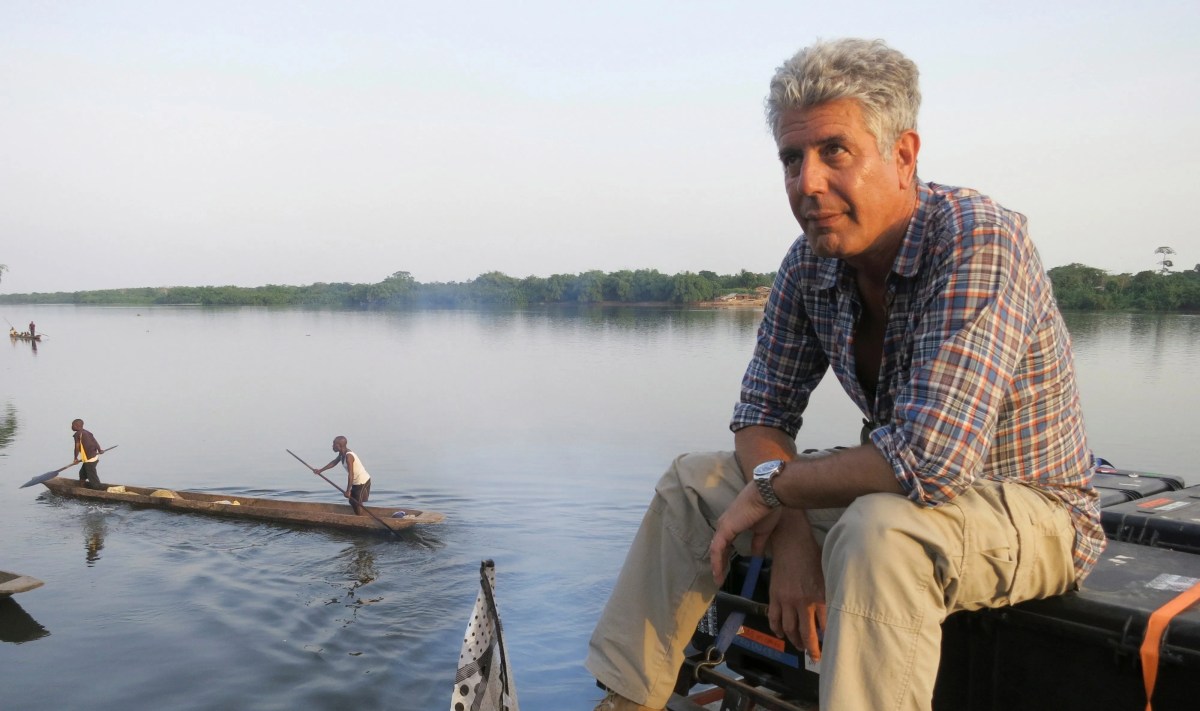
“One of Anthony Bourdain’s ‘Parts Unknown’ episodes in the Congo has one of the show’s best scenes where it has a vivid description of Bourdain gazing over New York City from his high-rise apartment in the closing moments, set up against the backdrop of his first and only foray to the Democratic Republic of Congo.”

If you had to pick opposites in the world, you couldn’t do much worse to contrast the journey through the thick Congolese jungles and down the Congo River with the urban sprawl of New York City. One of Anthony Bourdain’s ‘Parts Unknown’ episodes in the Congo has one of the show’s best scenes where it has a vivid description of Bourdain gazing over New York City from his high-rise apartment in the closing moments, set up against the backdrop of his first and only foray to the Democratic Republic of Congo.

There are multiple themes to take away from the significance of Bourdain’s perilous journey in the Congo throughout the episode and with the contrasting solitude and isolation he likely had felt back in his NYC apartment after such a harrowing trip. There is a burden that he must have felt in witnessing such a contrast between the Congo and New York City that leaves the contrasting scenes up for our interpretation as fans of his ‘Parts Unknown’ show. How easy it can be to feel lonely amongst millions of people after traveling to such a distinct place, the burden of making it through a perilous journey and putting your life on the line, and how traveling to such extreme places can change your sense of place in a complicated and often troubling world.

Before his passing in 2018, Anthony Bourdain was the preeminent travel host for over 15 years and his last show, Parts Unknown, from 2013-2018 was the deepest dive in his own mission of uncovering people’s stories through food and culture. In terms of looking at human nature and the human condition, few shows, if any, were better than Parts Unknown. More than anything, many of the Parts Unknown episodes had Bourdain providing needed historical context regarding the complex and difficult history of the country or place he would be visiting. This was especially the case during the Congo episode where he spends part of the episode looking at the colonial exploitation, civil conflict, and poverty that has gripped the country both before and after it became the nation state known as the Democratic Republic of the Congo today.

Bourdain was a huge fan of the Joseph Conrad book, ‘Heart of Darkness’ and makes it known in the episode of how became obsessed with the Congo and the Congo River without trivializing the country or its people. His approach is sincere, and he looks to paint an accurate picture of what the Congo is like, why he sought to demystify and humanize the place, and how it was both similar and different to Conrad’s interpretation of it.

“When all is said and done, I wanted to go to the Congo, and I did.” Bourdain knew that this would be one of his most difficult journeys, but he also wanted to pay homage to Conrad’s novel by following a similar exploration to the authors with a boat trip down the Congo river. However, this kind of journey as shown in the episode was not simply a leisurely trip down the river without witnessing the history, culture, or food of the Congolese. Bourdain and his film crew interacted with different villagers, aid workers, and other locals to hear their stories despite how difficult the journey had been especially losing power on the boat and being surrounded by mosquitoes and other insects at one point.

It takes a toll on a person to look at the dark history of a place’s past as well as its uncertain present and not be affected by it. Bourdain has a visible weariness and introspection upon the conclusion of the journey given how hearing about the history of violence, dealing with the security issues involved, the lack of infrastructure to make the journey work, and to hear about the sheer resilience and fortitude of the Congolese people under extremely difficult circumstances.

The hardest part for Bourdain in my view maybe wasn’t the actual trip down the Congo river with all the bureaucracy, bribery, and lack of infrastructure involved to make it finally happen. I think the final scene of this Parts Unknown episode sums up the ‘lost’ feeling and the isolation to have witnessed all that and come back to a New York City that is abundant, thriving yet inequal, and with a completely different set of circumstances than one would encounter in the Congo. There’s ‘culture shock’ and then there is experiencing a bit of a totally different reality that few Americans and fewer New Yorkers would ever see for themselves. This contrast in realities and the stark scene transition from leaving the Congo River to being back at his high-rise apartment in Manhattan is perhaps the greatest scene ever shot for Parts Unknown or in any of his travel shows.

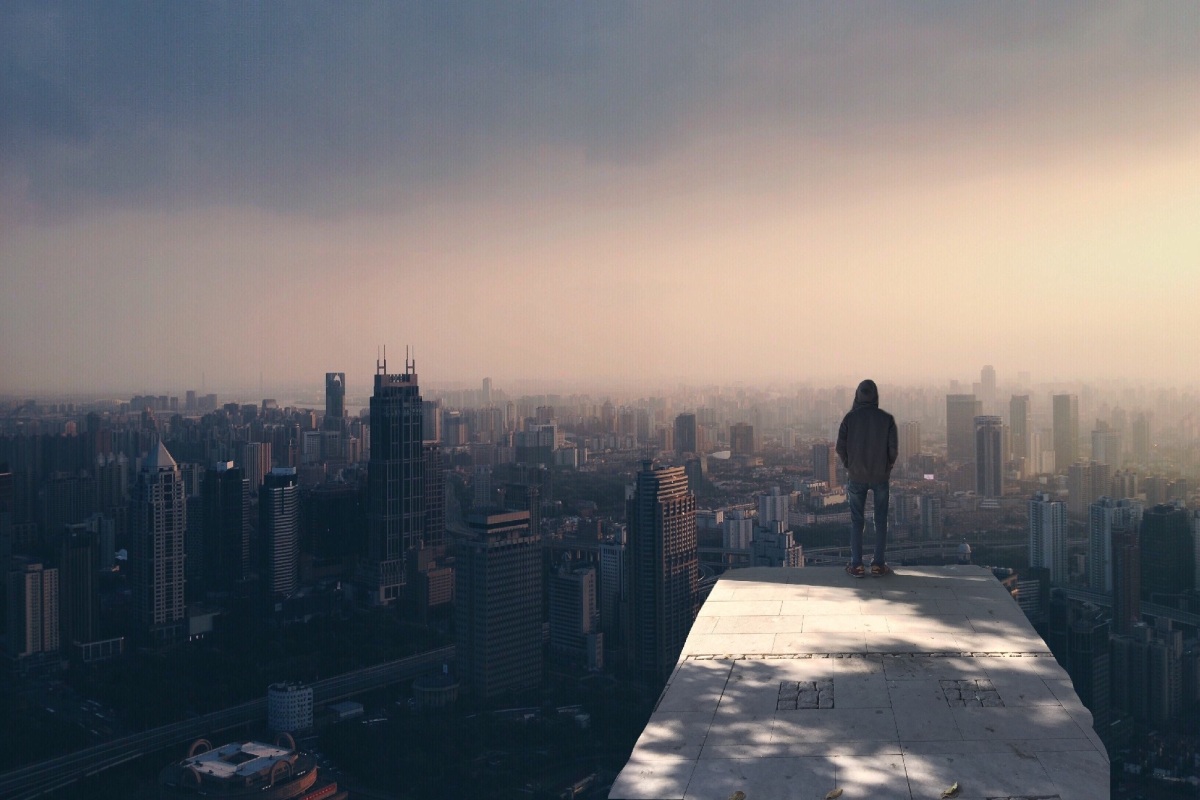
To break down this excellent scene and contrast further, Bourdain is in one of the world’s most crowded cities, but he is alone and isolated in his apartment like being isolated from most people’s lived experiences of the world, which pales in comparison to his own having had been to over 100 countries in his travels. He is filmed sitting behind his apartment windows, which acts as a barrier between Anthony and the rest of the world, seeing everything for himself but finding it difficult to connect with his immediate surroundings in NYC after witnessing such a contrasting reality in the Congo.

I think this final scene of the Congo episode really encapsulates Bourdain’s struggle as a travel host and writer to search for meaning and purpose in a world that often feels indifferent or alienates the struggles of other people who live in a different place or country. Bourdain’s gaze through the window symbolizes the distance between the world he witnessed and the world he felt disconnected from. It reflected the existential tension that marked his life: the constant search for meaning, tempered by the knowledge that some things, no matter how deeply we travel, remain elusive.

In his life, Antony Bourdain likely felt a sense of solitude and isolation having witnessed the worst of humanity at times, which could be hard to relate to other people or even travelers who had not been to the same places. He was brave, kind, and let other people to tell their stories without judgment but it must have been lonely especially after a return from the Congo and returning home where he may have felt the most alone rather than out on the road with others in his crew or amongst people he had met. There is a loneliness in the familiar as any traveler can attest and the novelty of new places, people, and experiences make the routine feel mundane and trite. Bourdain’s entire journey, in this case, from the Congo back to his home in New York, shows that it can be hard to come full circle after visiting one of the least known places in the world.

The final shot of Anthony Bourdain in his New York City apartment, looking out over the vast, bustling city, yet consumed by solitude, serves as a poignant culmination of his journey as a seasoned traveler. After traveling the world, exploring the darkest corners of humanity in places like the Congo, Bourdain returns home, not with answers, but with a profound sense of isolation. The Congo episode, with its harrowing depictions of suffering and resilience, reflects the complexity of human nature that Bourdain grappled with throughout his career. The contrast between the vibrant, chaotic cityscape of NYC and Bourdain’s contemplative stillness in his apartment alone emphasizes a universal paradox: despite all the human connections made in the world, the traveler often finds themselves confronted with a loneliness that cannot be filled as a result.

Bourdain’s Parts Unknown was not merely about exploring food and culture, but it was also an exploration of the man himself. His travels were a quest for greater understanding, but they also unearthed the difficult truth that knowing the world does not necessarily mean knowing oneself at the same time. In the end, Bourdain’s legacy lies in the raw, honest portrayal of this duality, the external world and the internal battles that shape who we are. His life story continues to remind us that, no matter where we go or how much we learn, we all face the same fundamental challenge in life: to find a true connection in a world that often seems vast, indifferent, and overwhelming.

Adaptability Is Both Our Greatest Strength And Weakness

“To be, feel, or act the same or to be resistant to change can hurt us in an ever-changing society where we are constantly at the mercy of forces that are beyond our control.”

Being adaptable is largely thought of as a good characteristic and for which you are usually commended for. We try our best to be adaptable to the challenges and opportunities that life throws at us as best as we can. To be, feel, or act the same or to be resistant to change can hurt us in an ever-changing society where we are constantly at the mercy of forces that are beyond our control.

When you can adjust to new conditions or changes, there is usually positive reinforcement from others who also are adaptable to the changes or conditions at the same time. My concern is that while adaptability has helped us thrive in different eras as a species, it has at the same time been a weakness of ours in adapting to norms or behaviors that harm our collective progress.

Adaptability is both our biggest strength and our biggest weakness in that it both allows us to change conditions and norms for the better, but also it can make things worse when we backslide into previous harmful attitudes, values, and beliefs that can make a comeback. Being adaptable has helped humanity survive different tumultuous eras since the early days when we were foraging for basic sustenance and shelter to survive.

The act of adaptation goes back to what makes us innately human, at our core, even when we get used to adapting to less-than-ideal conditions or changes that revert progress we’ve made rather than embracing further progress to our benefit. While change does not always equal to progress, my concern is that when we are adaptable to any kind of change, both positive and negative, without thinking of the consequences of such constant adaptability, we remain at risk for going backwards and worsening our quality of life.

To give a few examples of when adaptability is a strength of ours as a species, I would refer to our ever-increasing desire to assimilate, tolerate, and promote diversity, inclusion, and equity in our world. This social inclusion and desire for equal rights has been an adaptation that is rather recent when you consider how far humanity has come from the centuries and millennia of mistreatment, discrimination, slavery, and wars that were fought to keep the horrible status quo of how we treat each other.

Our ability to adapt to making sure that this previous status quo was no longer acceptable and repugnant in terms of previous attitudes has led to greater tolerance, acceptance, and more diversity throughout the world. Yes, there are still challenges to our adaptability in this important area but to say that we haven’t made progress in this area of life would be a falsehood. Being able to adapt successfully to these societal changes has by and large been a positive development in my lifetime and beforehand earlier on in the 20th century. While there has been negative resistance to this kind of adaptability, I’ve found there has been most people accepting these changes that have gone on and while the struggle continues, this strength of humanity to seek greater equality and inclusion has been a net positive of our adaptability mechanism.

In addition to that previous point, the expansion of social and economic rights to more and more people throughout the world have led to greater political and civil rights as a result. They have been tied to each other and have been a positive step in the right direction. There is greater representation politically and economically for more diverse populations than ever before and while progress still needs to be made, the status quo has been upended by our adaptability in this area to these kinds of societal changes.

While adaptability is our greatest strength, it can also be our greatest weakness ironically, and this has been shown in different areas of life where there has been a reversal of progress recently or too much comfort shown with a lack of progress. I’ll point to two different areas where there been a reluctant yet steady adaptability towards the climate crisis and for democratic backsliding across the world. Where there is significant resistance in both areas, we are running out of time in preventing these new ‘norms’ from taking hold. It’s common knowledge that our planet’s climate is changing with disastrous consequences for livability for more and more people in different worlds.

Longer-lasting heat waves, disastrous storms with greater frequency, and unyielding glacial icecap melting threaten to become the rule of our life on this planet rather than the exception. From my perspective, we have become complacent to these changes and are looking to adapt rather than to work harder to change course. From our political leaders to our civil society, we are looking more and more like we are giving up rather than trying harder to reverse the negative changes set to befall us around the world.

Our ability to adapt to a warming world highlight how while we can adapt to negative changes, many of us will still suffer as a result and some won’t survive this kind of adaptation. Rather than seek to change the status quo in climate action, I believe that we are seeking to adapt to the changes that will befall us despite the harm it will do to the planet and our place in it rather than do our best to collectively try to resist such a negative adaptation.

Related to this regretful kind of adaptability, our political leadership worldwide has failed to martial the resources and the willpower necessary to combat climate change as quickly and as effectively as needed. Instead of championing solutions and working across societies to solve the climate crisis, there has been instead of focus on centralizing power, holding on to political office, and reversing previous norms and values of democratic rule to a forthright shift towards autocratic or dictatorial rule. I think this is a negative adaptation that more and more countries are seemingly getting used to as previous norms, values, and equality under the law are being undermined. It is not too late to reverse the damage done while the power of the vote and the right to assemble and protest is still allowed but that is not a given.

As much as we had to adapt to democratic rule centuries ago, it’s been shown that when there is no fight to keep those norms and values alive, we can just as slide backwards to the days when kings, tyrants, and demagogues ruled by force and decree across broad swaths of the world. Democratic norms and values are not universal values these days but our adaptions to them have largely further greater equality, inclusion, and prosperity than the opposite of autocratic rule. If we get used to the unraveling of previous norms that had served us well as a society to a previous time where we adapted to autocratic norms and rule by the few over the many, then we are in for a rough period of adaptation which will not serve us as well.

Adaptability has largely served humanity well since our early days of foraging and hunter-gathering. It is an innate trait that we must make whatever conditions we live in work well enough for us. Being able to adapt can both help us but also harm us depending on what we are adapting to. Let’s continue to set a higher standard individually and collectively to what we tolerate and adapt to and what we will not adapt to. We still have a choice in what we get used to and for what we do not accept and let’s hope we always will but right now, our adaptability is leading us on a crash course where instead of choosing to adapt to our surroundings, we will be forced to do so and will have to do so as a result without having had the choice in previous eras.

The World Will Humble You

“What you believe you deserve out of life is often out of your control at the end of the day.”

What you or I want from the world will be different from what the world will give to us. You must understand that the world will humble you in terms of your expectations versus what you will get. A key part of our lives is managing the difference between what we get against what we expect. It is important to keep your own beliefs in check because the world will test them continually and often turn them on their head. What you believe you deserve out of life is often out of your control at the end of the day.

The world will see fit to humble you when it comes to the outcomes we get when compared to what we earn and are able to get based on our hard work and effort. In a perfect world, the fruits of our labor would earn the same kind of return but often, that is not the case and sometimes hard work can be punished rather than rewarded. We have our expectations of the world around us, and the world often has different expectations from those that we expect from it. We must keep trying, to keep working, and to put our best foot forward in our individual efforts but must also understand that what we get back for those efforts may fall short of our own expectations.

Humbling oneself in the face of adversity or a negative result does not come naturally but is part of our maturation process. There is not much we can do but to try again or to move on to another opportunity. Failure is just a part of being human and the better we can handle it and be humble in a bad outcome, the better off you will be in the long run. Instead of being bitter, developing an inconsequential grudge, or blaming yourself or the other party without coming to grips with the fact that what’s done is done, you just must be willing to move on and grow from the failure itself.

We distinctly desire to avoid failure or setbacks and to think that they can’t happen to us, but they can, and they will. How we react to these failures and how we move forward will tell us more about ourselves than the initial failure itself. I would say that it does get easier as you get older as you get more used to the feeling of failure or setbacks and are able to bounce back quicker from them. You must have a thick skin about it, and I think that our age plays an important factor in being able to absorb the blow of failure or a setback without letting it derail you for a long time.

To have your ego be humbled by what the world gives you in return in it of itself is a victory. One’s ego can grow out of control when the world doesn’t humble you or push back on you in any way. When you let your own self-confidence or ego get out of control, you’re more likely to develop megalomaniac behaviors as a result. I find that it is a good thing when the world humbles you because without that happening, you tend to isolate yourself from others’ who have had it more difficult than you and tend to believe everything you do is the best thing ever or without any critique or issue.

Life is not meant to be failure-free or error-free. We are all human and thus, we will falter, make mistakes, and let our own ego get in the way. The key test is if we can push through these setbacks and failures to chart a new course or to try again if we believe enough in what we are trying to accomplish. Perhaps we did not work hard enough, study enough, use our full abilities, or sometimes it just wasn’t meant to be. There is no use fighting against an outcome that is out of our own control.

Sometimes, life has other plans for us, and it just wasn’t in the cards for us in the result we expected. You must take it in and decide how to best move forward. I find that there is nothing wrong with trying again if you believe in your own abilities enough where you want to re-try something by doubling your efforts. If you tried it once and you don’t want to do it again after failure, I don’t think that there is any shame in that either if it doesn’t appeal to you enough. Just because you failed at one thing and the world made it clear that you aren’t ready to move on with it now, doesn’t mean that is a final verdict on you or your capacity to do better or to get to where you want to be.

At the end of the day, there is nothing wrong with being humbled and to keeping your ego in check. If it wasn’t meant to be, it wasn’t meant to be. There is neither no harm in trying again nor is there any harm in moving on to a new goal or objective you have in your life. One’s ego can run rampant without any kind of pushback or critique, and you don’t want to end up in that place. Failure is the best teacher, and it should not reflect on your whole self as a person but rather on your skill set or aptitude that could use some improvement. Yes, it hurts, and it can feel like an absolute rejection of yourself as a human being, but I want you to know that it is not the case.

It is better to have tried and failed and sometimes to have done so a few times than not to have tried or failed at all. You may eventually succeed, or you may never end up succeeding at all, but the point is that you allow the world to humble you and your ego, without letting it derail you from keeping at it, trying again, or moving on to try in a different area of life that you believe you would be good at. It is natural to fail and to pretend otherwise is doing yourself and those around you a disservice. Being humble and accepting your limitations is part of being a human and hope that even if you fail, you dust yourself off, get back out there, and keep trying your best.

Tempering The Ego

“Ego, to me, is a holistic sense of our abilities, capabilities, and our possibilities. For the ego to not go out of control, it has to be tamed and to be done so repeatedly.”

The Ego can either be your best friend or your worst enemy. It can drive us forward to make progress in different areas of your lives, but it can also detract from us by setting our expectations too high and in not actually challenging ourselves to see if our ego is being realistic. Ego, to me, is a holistic sense of our abilities, capabilities, and our possibilities. For the ego to not go out of control, it has to be tamed and to be done so repeatedly.

When the Ego is not tamed, it has an unhealthy tendency to run wild. Your Ego can grow, often unhealthily, when you leave it to be unchallenged. I have found that those people with the biggest Egos in life are the ones who never challenge themselves to back it up in a real way. The Ego can inflate our sense of self to the point where we are actively deluding ourselves with who we want to be without taking account of who we really are.

Everyone has an ‘Ego’ or Latin for ‘I’ and as world-renowned psychologist Sigmund Freud pointed out1, we each have a perception of our ‘self’ that will differ often from how others would perceive us. Our ‘Ego’ or our ‘I’ is often about our physical self, the sum of our experiences, our innate abilities, and our drive to get ahead in life. The ego can grow, or it can shrink, often based on how we alone view ourselves, but it also is reflective of how others see us and what they expect of us. The Ego must be kept in check because it can inflate or deflate based on what we tell ourselves about who we are and how others tell us who we are. The Ego is malleable and can be different on the day based on what we experience or what happens to us.

You can have an excellent day one day where you win a sports competition, gain a promotion at work, or overcome a challenge that you previously thought was impossible. One good day can massively inflate our Egos and while it is good to boost one’s Ego and be proud of what you accomplished and how hard you worked, you should still have that sense of humility and understand that one good day does not mean that you are suddenly God’s gift to Earth.

The same can be said of when you have a terrible day such as perhaps you failed an important test or exam, a work presentation you gave wasn’t received well, or you had someone insult you or talk down to you. These kinds of events, especially in the same day, can really wound your Ego and your self-worth. While bad events can hurt you, you should not totally give up your Ego or sense of ‘self’ from them as that would be disastrous. One bad day does not have to be a referendum on the sum of your entire life. Your Ego has to be resilient, when it is both humbled and challenged, and this should happen on a daily basis.

My firm belief is that you should never get too low or get too high when it comes to the self or your Ego. You have to constantly remind yourself of what you do well on, what you need to work on, and what you have no experience or ability with. For example, I like to think that I’m a good writer at this point, but some articles have turned out better than I expected, and some have been worse than I thought. Despite how I perceive my written work and how others do so, I can continue to work on my style, syntax, and substance, and I can expand my writing focus to challenge myself that I may have previously avoided on different topics that are new to me.

I also think of how one’s Ego needs to be challenged especially in a new activity or hobby that you have picked up. A good way to think about the Ego is to challenge it in different ways by putting yourself out there physically for yourself to be tested in that manner. One example of this is to train in the martial arts where your body is being challenged. You may weightlift, run, or consider yourself athletic, but it’s a good way to measure yourself against others when you are training against other people who have been doing it for a while and who could be bigger or stronger than you.

It does not mean that you won’t become better as a martial artist, but you should temper the Ego by challenging those practitioners who know more, can teach you new skills and abilities, and who you can face off with even when you are getting beaten for a while by them. Whether it’s’ boxing, jiu jitsu, krav maga, or kickboxing, I think any martial arts, whichever one(s) you choose, are a great way to temper one’s Ego. This is because you’ll see just how exactly you measure up against other fighters, especially if you’re new to the sport, and while you may think you are strong, fast, or have great stamina, you won’t truly know if that is the case or not until you step on the mat or into the ring.

The same could be said when you challenge your Ego mentally such as when you try to learn something new or adapt a new skillset that you know nothing about. I find that learning a new language is a way to temper my Ego in a healthy manner because every language, while they have some similarities, are also quite different and cause me to adapt how I learn that language, and the kinds of difficulties I’ll have when learning it based on how the language is written or spoken.

While I may be great at learning Spanish and am comfortable there, I can throw my Ego for a loop by learning a non-romance language such as German. I can brag that I can speak one or two foreign languages well after a lot of practice and that fuels my Ego but so that it doesn’t get too fragile, I temper it by learning a different language or trying to advance my Spanish or other learned language with more advanced material.

The Ego is constantly changing and evolving because our sense of self is different daily. The key is to not let it grow too big without putting yourself out there and being challenged or by deluding yourself by not ever trying anything new by putting your mental or physical abilities to the test. The best way to temper the Ego is to constantly challenge it both physically and mentally to have a more accurate measure of yourself against other peers in your field(s) or area(s) of expertise.

You should not ever ignore your Ego as it is your sense of ‘self’ and how you fit into the world, but rather you should not think of yourself as either the best or the worst in anything without going out into the world and seeing where exactly you fit in. As the popular expression goes, “you’ll never know until you try” and when it comes to the Ego or self, you must be testing yourself and by extension, testing your Ego to temper it or and keep it in check. The worst thing to do to yourself when it comes to the Ego is to continue to delude yourself by not trying, never challenging yourself, or not trying to go beyond the standards that you have set for yourself.

Source:

1.) https://www.britannica.com/topic/ego-philosophy-and-psychology

‘Extrapolations’ – TV Series Review and Analysis

“Recent wildfires in Canada that have caused the worst air pollution in decades across the Northeast U.S. this week have made me think about how our lives are becoming more and more impacted by the effects of climate change.”

Recent wildfires in Canada that have caused the worst air pollution in decades across the Northeast U.S. this week have made me think about how our lives are becoming more and more impacted by the effects of climate change. Growing wildfires, powerful hurricanes, sea level rise, melting glaciers, species extinction, and more acidic oceans are all causes for concern for people around the world and no country or people is likely to be exempt from at least one of the effects that have already been documented. What happens though in the next 50 years when we don’t take enough action now and in the past to reverse a possible future of no return?

That question is the premise for the first mainstream drama to focus on a future where climate change wins the battle that we are currently on track to lose if we don’t make drastic changes to our impact on the world around us. ‘Extrapolations’ is not a run of the mill documentary about climate change nor is it a disaster film that has become popular in Hollywood regarding disastrous storms. Instead, it is a rather intelligent take on the world soon when humanity cannot prevent global temperatures from staying at or below a 1.5-degree Celsius increase. The show covers what happens when humanity fails in its objective to keep the warming of the planet to a tolerable level. What starts out as 1.5 degrees Celsius becomes 2 degrees than 3 degrees until we become way past the point of no return past mid-century when 3.5 – 4 degrees Celsius is where the planet is headed.

Throughout the show’s eight episodes, we see the effects on the planet from Miami, Florida to New York City to London to Tel Aviv, Israel to Mumbai, India. From sea level rise wiping out the most popular nightlife areas in Miami including a historic synagogue to the constant wildfires that engulf Israel and the Middle East to limited outdoor time in Mumbai each day due to the overbearing heat and polluted air that causes deleterious effects to one’s health, the writers paint a grim yet realistic picture on what will happen if our climate change efforts fail miserably. More so than just the settings that are portrayed accurately in terms of how these popular cities may face their own negatives based on their geographic location, the characters in ‘Extrapolations’ have fully developed backgrounds, and you really get to know each of them over the course of the TV series.

There is a wide berth of society who are represented in this show from the wealthy billionaire who is interested in maximizing profits and takes advantage in his corporation from a dying planet to the Rabbi who is trying to wrestle with his faith in God as his synagogue slowly floods from the rising sea. What ‘Extrapolations’ does well is that it acknowledges that no one is purely innocent or purely guilty because of how badly climate change has warped the planet. Everyone is responsible in their own way, some more than others, but humanity is to blame for how we did not act quickly or unite fast enough to overcome our differences to reverse the worst effects to come.

The human effects of climate change are also explored such as how we are affected when we cannot go outside or must stay indoors to avoid heart or lung issues, why the extreme heat can prevent any work or leisure to take place, and how loneliness, depression, and atomization becomes more common when we despair at the worsening state of the planet.

My favorite episode in the eight-part TV series is ‘2066: Lola’ where we see how much augmented and virtual reality has come by then so that people are paid essentially to pretend to other people as a gig job and earn credits or money that can help improve their lives and insulate themselves more from climate change’s effects. The desire to connect with other people to distract ourselves from a dying planet is truly the TV series’ most impactful episode and makes you think about how much the emergence of augmented reality will make us both lonelier than ever and wanting to connect with others in untraditional and sometimes unseemly ways.

‘Extrapolations’ as a show really gets the A-list attention for a futuristic take on climate change’s effects on humanity with movie stars like Meryl Streep, Forest Whitaker, Kit Harrington, Edward Norton, Matthew Rhys, Gemma Chan, David Schwimmer, etc. All eight episodes are boosted by a stellar cast who really pour their hearts into the performances they give. I believe that they all truly cared about the project and how important it is to have a show like this become the center of attention. While Apple has been rightly condemned for some corporate practices that are harmful to the planet, it is a major TV show and movie distributor and should be commended for being the first major studio to have a series that doesn’t shy away from the brutal honesty of where we are headed if we don’t mitigate the worst effects of climate change to come.

If you are reading this article in 2023, you already know that the sea levels are starting to rise, wildfires are growing in both size and scale, bigger and stronger hurricanes that are also becoming more powerful, and deadly heat waves are becoming more common. While the first episode in this series takes place in 2037 and the last one ends in 2070, climate change is already here in 2023 as recent news events make clear and it has been affecting us for quite some time.

I encourage ‘Extrapolations’ to be watched by viewers with an open mind but also a commitment to do better for the planet. Do not shy away to act and make your voice heard regarding climate change after watching the series. You may think you know how bad it can get in the future from watching this series but ‘Extrapolations’ importance as a show is that it is as clear as day to where we will end up if we don’t hit the collective climate target goal of 1.5 degrees Celsius or keep as close to 1.5 degrees as possible.

While the show does mention possible stopgaps and solutions that can mitigate the damage, by that time in the 21st century, these solutions are risky with side effects on the planet that can only be speculated about. While the billionaire tycoon character was likely modeled after a few people who are prominent in our current age, as the show makes clear, the blame does not fall on him alone. We all can do our part by taking action to reduce our own carbon emissions, to encourage others to petition for policies and solutions now instead of 10 to 50 years down the line.

If the show has one central message after its eight impactful episodes, we all have stake in making sure this planet is livable for future generations. Even if you won’t be around to see the worst of climate change, we all should do our part, advocate for solutions now, and to hold people in power and of great wealth accountable if they do not action as well on a larger scale. The clock is ticking and as ‘Extrapolations’ highlights from 2037 to 2070, it can go downhill and get worse than what are experiencing already in 2023. Let’s not make the show a reality but keep it as a cautionary tale of what would have happened if we did not act strongly enough in these first decades of the twenty-first century.

I recommend ‘Extrapolations’ based on its great acting, stunning visuals, excellent writing, and interesting plots, but most importantly, because it focuses on the biggest issue of our time and one that we cannot ignore or downplay anymore.   

The Case Against Hyper-Individualism

“You can be an individualistic person but that does not excuse selfish or amoral behavior at all.”

It is not inherently bad to look out for yourself and your own interests. How many times have you heard that you have to “be a better friend to yourself” or to “take care of yourself?” If you can’t help yourself, then how can you help others out? The key thing to keep in mind with being individualistic is that while it can help you as a person, you should always remember that it does not mean neglecting, hurting, or disadvantaging others in the process. You can be an individualistic person but that does not excuse selfish or amoral behavior at all.

I would argue that hyper-individualism has become more and more common in our society and has led to people being taken advantage of, scammed, lied to, or otherwise mistreated because they had someone take advantage of them because they were acting in their own interest but without regards for others who were affected. If I had to give my own definition of what distinguishes hyper-individualism from individualism is that in the former, you are looking out for yourself only without regards for others or you are looking out for yourself even if it may cause other people to be negatively affected by your focus on individualistic behavior.

While it is okay in my view to strive to achieve your own goals, seek out a better life, find your own path, and to not be dependent on others if you can afford to do so. It is not okay to hurt others in the process by robbing them of their own goals, their own chance at seeking a better life, and even preventing them from building a community where the individual takes a back seat to the interests of a group.

I find that hyper-individualism is similar to a ‘dog eat dog’ kind of world where everybody is on their own all the time, there is limited or no support if you fall on tough times, and where communal living or community-building is sacrificed for individual power seeking, wealth gaining, or prestige building. Caring about oneself alone and not others at all or not caring if your own goals, success, and overall happiness may put others in a bad place can also fall under what hyper individualism would be to me.

I believe that most people cannot be hyper individualistic because since the early days of our species, we could not live on our own without the support of a tribe, group, or a small community. Everybody had their own individual wants, desires, or needs, but we worked together to achieve those needs by catering to our individual strengths. Each person brought something unique or useful to the larger group and that is where individualism can play a healthy role within a community. If you can hunt, you can provide food to yourself, yes, but also to others if you are good at what you do. If you can fish, you can fish enough to help yourself but also for others in the tribe too. The same could be said for cooking, cleaning, protecting livestock, building shelter, etc.

This kind of individualism where we express ourselves in what we do best and how we can contribute meaningfully to a larger group, community, or society helps to make individualism a powerful force, often for good. Where hyper-individualism goes wrong is where you only look out for yourself and don’t share with anybody else or lend a helping hand with your skills and talents. It is not good to hoard or be greedy but that is what hyper individualistic behavior is based around and the disturbing thing to remember is that it seems to be encouraged more and more by our popular culture.

Think about the advertising and marketing messages we often receive: do they cater to your needs or to the needs of a group? When society is largely telling you to constantly be going after the money, the cars, the clothes, and the fancy mansions, this kind of behavior often leads to hyper-individualism. Sadly, we don’t hear about how we can use our skills to help others or to volunteer to use our resources for a shared good or effort. It is up to us to resist hyper individualistic behavior as much as possible.

Hyper-individualism may make that person feel good at first, but it is an empty feeling especially if they are not contributing anything meaningful to the larger society. Yes, you were able to buy a nice car, a flashy television, and an expensive house, but while that’s good for you and your own skills and abilities, is that all there is to your life? For a few of us, maybe that’s good enough, but I believe that we feel happiest and most fulfilled when we not only share our talents with the world, but we use those talents to also better the world in some way.

Individualistic societies and more community-focused societies can both be wealthy, happy, and productive, but if you go to the extremes of individualism or to communism, to state the obvious, societies will often crater in on themselves and cease to function well. I like to think that the best societies in our world are those that recognize, encourage, and foster individual talent but to use that talent to create a better society and to make sure that success while rewarded financially or otherwise, is also meant to help others receive a helping hand up so they too can also succeed and pursue their individual dreams and goals.

My analogy for hyper-individualism is if you’re in a rowboat and you have six people in the boat, and we’re all meant to row to get to the shore. Problems can start to arise when you have five people rowing in sync together and starting to move the boat faster and faster to the shore. However, if that sixth person does not row at all because he or she does not want to or if they want to row back out to sea, all six people as a result are going to suffer together because of that one person’s hyper-individualism.

Think of that rowboat of six people like a society of a million or a billion people. If you have one person or a few people ‘rowing’ against the others and hurting the total society as a result, the problems even a few people can cause would affect everyone in that boat or in the society negatively. Let’s all remember that we all rise or fall together and that while individual success, wealth, and prestige, is admirable to achieve, it is not everything in life and we are judged not just by our own merits but by our character and our values as well in society.

Kindness Always Matters

“One of those things is the effort taken to be kind. It does not take much to do and while it can be difficult to be kind all the time, it doesn’t cost anything, and the effort is always worth it.”

There are a few things in life that are non-negotiable. One of those things is the effort taken to be kind. It does not take much to do and while it can be difficult to be kind all the time, it doesn’t cost anything, and the effort is always worth it. Some of the issues that we experience in our world is due to a lack of kindness in our daily interactions. If more people tried to be kind towards one another, I could guarantee that a lot of conflict, irritation, and resentment would go away.

Someone who is always kind to anyone regardless of who they are or what they can or cannot do for the person will stand out even more. The smallest gestures can make all the difference in another person’s day or week. As the popular saying goes, “It costs nothing to be kind.” I would add on to that saying but highlighting that, “It costs nothing to be kind, but it means everything to be kind.” When you do kind gestures and use kind words, not only will it reflect well on you, but it will also endear you to the people around you.

When we are living in a day and age of rapid technological, social, and political change, it is even more important to stay true to the morals and values that make people trust, believe, and have faith in one another. Showing kindness and being a kind person helps make the world a little bit better in a measurable way. I have written before about the ripple effect and how your kind gesture is likely to lead to another kind gesture from the person you impact. I’ll give an example to highlight just exactly what I mean.

We open and close doors multiple times a day and usually we are in a public place when we must do this. It takes approximately three to five seconds to hold the door open for the next person. You may not think it’s a kind gesture, but I would like you to imagine that the person behind you has a bag or two bags in their hand. Maybe, they also have their dog with them, or they are on a cell phone call. Thus, when you put it like that, the simple gesture of opening the door for them so they don’t have to use their arms if they’re full or if they’re busy with another urgent task can make all the difference.

You will have to exert a little bit of physical effort to hold that door open to a complete stranger but think about if they automatically would not hold the door open for you when you are in need. It would not feel that good to you if you were the person occupied with other items or tasks and the person before you did not hold the door open for you when you need that. When it comes to kindness, we do have to think about being in someone else’s shoes and how a lack of kindness can make our day worse and not better.

I do believe that when you do a kind gesture for someone, they will likely then reciprocate by following that learned behavior. It’s similar to what we do when we are children, and someone offers us a piece of gum, or a candy and we do that to someone else as we learn that “sharing is caring.” You can have that kind of impact each day by holding the door open for someone reminding them that they themselves can do that same small act of kindness for the next time when the opportunity presents itself.

In the Post-COVID era where we were instructed to stay away from each other to prevent the pandemic from spreading, I think it’s not even more important to get back to looking out for each other in the opposite way by looking out for one another even more after a hard period of isolation, distress, and uncertainty. The world remains in a tumultuous and difficult period still but now we have the chance to make life a little easier by being kind because it is the right thing to do as we are taught since we are children.

Whether it is holding that proverbial door open or asking how someone is really doing and hearing them out if they are not doing well, or remembering to check in with friends and family from time to time and asking if they need help with anything, especially if you have elder family members in need. We truly show our humanity when we look out for one another, and it is the singular characteristic for which we will be remembered for or not remembered for when we are gone from this Earth.

While we would like to think we were remembered for having a prestigious job or for all the things we did for our own personal gain or benefit, or for what kind of impact we had in the world, which are not bad things to be remembered for, I do think it is better to be remembered as a kind person firstly. I believe it is best for others who will remember you to focus most on if you were the kind of person who endeared himself or herself to others in a selfless manner without expectation of a return for having done so.

You can bet that if you are a kind person, people who will remember you when you’re gone will focus on that quality more than anything else. If you have ignored being kind to others or have not focused on it as a character trait, it is never too late to instill more kindness to people in your life. Every effort matters and kindness always matters. If you can change your ways to a better person, being a kind person is a trait that will always be remembered long after you’re gone. Remember that people are struggling out there and the simplest kind gesture of asking how a person is doing, opening the door for someone else, and checking in on people to help them if they are in need is the greatest gift to share in this world.

On Duty and Honor

“Two concepts that are not discussed very often today in our culture, but for which go hand in hand to have a purposeful life are duty and honor.”

Two concepts that are not discussed very often today in our culture, but for which go hand in hand to have a purposeful life are duty and honor. Duty is the obligation, either moral or legal, to uphold your responsibilities and to take upon tasks and actions when called upon. Duties are be thrust upon you such as being part of jury or registering to be eligible for military service but also done voluntarily such as keeping your community clean by picking up trash, giving money to a charity, being part of the local school board or town forum.

There are many variations on duty, but what they all have in common is to think of more than just yourself and to be responsible to those people around you. We are duty-bound by law in many such cases, but we are also duty-bound by morals and values that are passed on from generation to generation.

Being dutiful is conscientiously being able to know what your duties in life are, pursue them vigorously, and to conduct them in a moral manner. Duties may not be easy or fun to fulfill, but we have them in place so that society can function at a higher level. If no one was duty-bound to others, selfishness, greed, and egocentric behavior would replace it, which would cause the larger community and society to collapse over time. Lack of duties breeds this kind of behavior whether they are mandatory or not. If everyone is out for themselves and not able to look after others or think of their behavior’s effect on other people, it would create what we know to be as a ‘dog eat dog’ world.

When you fulfill your duties, legally bound or morally footed, you uphold the basic contract as a citizen and as a human being, to help improve your community and the society to some degree. If everyone fulfills their duties, trust, confidence, and belief in each other will be much more assured. If nobody does what is required or expected of them, nothing substantive can get done. The more duties we fulfill and the more we look out for another rather than ourselves, the better off we are to be when we commit to these obligations.

Duties can be granted and often must be enforced to be fulfilled but if we each uphold the duties we are given and see each other as all being on the same page, other duties that we voluntarily take on can be added on if we see that the system is working, and people are putting in their fair share. If a few individuals, especially if they leaders or representatives of their community, are found to be neglectful of their duties, and especially lied about fulfilling such duties, it can easily cascade to where the average person sees this and will unfortunately not find the duties they have been given as being as necessary to commit to if they see those who put them into place or have mandated them do not fulfill them as well.

Regardless of where you find yourself in the overall society, a leader, a citizen, a representative, a voter, etc., we are all held to the same duties and obligations that we commit ourselves to by law or by morality. If we all uphold those duties through acts of good faith and completing tasks that are insured to us, the better off everyone will be.

However, if duties are neglected, discouraged, or done away with even if they are mandated, the whole society will suffer as a result due to a loss of trust, faith, or belief in what upholds this basic sense of equality that we have to be beholden to the same duties as everyone else is regardless of age, sex, race, religion, ethnicity, etc. Now, it is commendable to do your duty, but it is even better to do so with honor.

Being honorable or conducting oneself with honor is taking the duties you are given to uphold or the tasks that come with such duties is to perform such duties with integrity, accountability, and trustworthiness. It is one thing to do your duty and it is another thing to do your duty well.

You can think of someone who is elected to be a representative of a community, town, city, or nation who will use the position for egotistical purposes and to twiddle the time away while doing nothing of honor to make sure the people who elected him or her will benefit as a result. They have been given the honor of representing their community or a nation and have squandered it by neglecting the privilege of having such a position to do good on behalf of others. There is no honor in that even if they are technically fulfilling the duty of public service.

Duties can be bestowed on soldiers, politicians, community leaders, public figures of influence, religious clergy, teachers, etc. and they can perform them because they have been trained or are seen as qualified to fulfill them. However, the question arises is if they are doing their duties with honor? Some will only do the bare minimum and will only think of themselves while having their position of power or influence wrapped up. Others will use their newfound duties to abuse their position for financial or social gain and lie to say that they did not do anything dishonorable to begin with.

Luckily, there will be those people in positions of status who will conduct themselves honorably and seek to uphold that trust bestowed upon them by being transparent, accountable, and forthright. A good leader or example of someone who conducts themselves with honor is that they do not only do their duties as expected of them, but they also seek out those in a similar position or authority who are not doing their duties. They will not only conduct themselves with honor intact but make sure they are holding others in their position accountable and to find out if their honor is there.

If not, that person of authority or influence would work to ensure that the individual without honor even while having done their duties albeit in a lackluster manner are held to account. To uphold that trust across a society where we all must do our duties and to do so with honor, those without honor should lose their given duties when it is found that they are not holding themselves to that standard. When we each hold ourselves to an honorable standard by doing the duties bestowed upon us to the best of our abilities, then the larger community or society will benefit as a result.

Without duties, there is no honor to be had. If duties are being done without honor, no functioning society will result. It is important to understand how much these two concepts feed off each other. One cannot exist without the other and if one concept is neglected, the other will suffer as a result. We all must commit the duties and obligations bestowed upon us whether by law or by creed, but duties must also be performed to high standards, both morally and ethically. Performing one’s duties without honor cannot work and nor can having honor without upholding one’s duties.  

‘The Whale’ – Film Review and Analysis

“‘The Whale’, directed by director Darren Aronofsky shows us how low someone can go when things go wrong in life but also how our lowest lows can also bring out the best of us when it is most important.”

2022 may be over but I am still thinking about the most emotionally impactful movie of the past year, which deserves its own review and analysis. Likely to be nominated for a few Academy Awards at the least an Oscar for Best Actor nomination for Brendan Fraser, ‘The Whale’ is a powerful film about a man’s desire to try to right past wrongs in some way before it is too late. ‘The Whale’, directed by director Darren Aronofsky shows us how low someone can go when things go wrong in life but also how our lowest lows can also bring out the best of us when it is most important.

Aronofsky’s filmography from ‘Requiem for a Dream’ to ‘The Wrestler’ to ‘Black Swan’ to ‘The Foundation’ to now ‘The Whale’ all deal with flawed characters looking to right past wrongs or to find redemption in the most meaningful way(s) before they are past the point of no return. Aronofsky so brilliantly can capture psychological drama and tension in each sense in his movies that by the end, you’re so emotionally affected by it all that it can be hard to wrap your head around what you just watched. As a director, he is excellent at painting a picture of a person or people in distress and how while they may have had good intentions, they are almost too far gone to seek redemption or a new start.

Different from Aronofsky’s past films, ‘The Whale’ is adapted from a play of the same name dating back to 2012 so the screenplay that is written and the way the film is set up is exactly how a play would be seen on the big screen. There are few characters, the plot does not get too murky or complicated, and the setting remains the same largely throughout the whole film.

Film critics today may dismiss this film as lacking scale and scope in its ambition, but I was drawn to how beautifully it portrays what could be real people living real lives. ‘The Whale’ may be a film and fiction but it likely portrays real situations and real tragedies that some people unfortunately come to pass in their life. The film deals with multiple real world issues affecting people from obesity to alcoholism to lost loves to broken up families that most people in life can see how that can throw someone’s life off a cliff and make it almost impossible to recover.

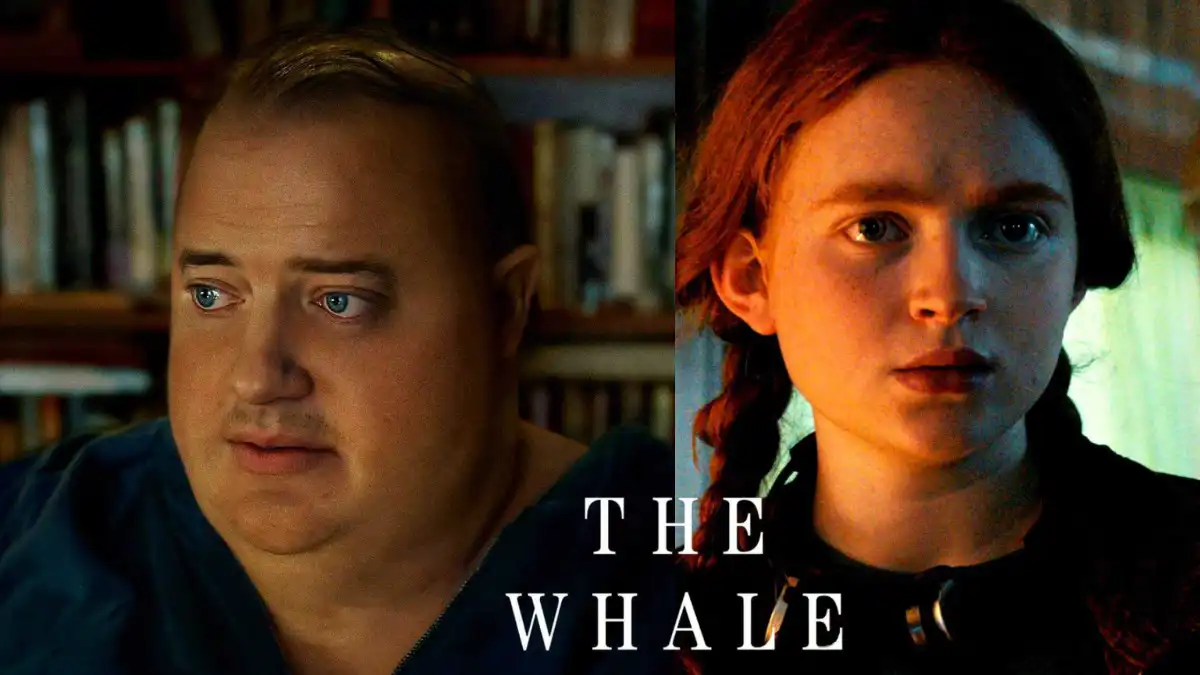
‘The Whale’, as the title makes clear is about a severely obese man named Charlie who weighs around 600 pounds and suffers from multiple health issues because of his weight issue. He is estranged from his teenage daughter, separated from his alcoholic wife, and unable to turn the video screen as an online English professor because of his weight condition that may affect how his students see him. His only interaction is with his friend, Liz, who is also a nurse who comes to take care of Charlie especially with his multiple health issues causing him to be near death and at risk of heart failure.

Charlie has become a tragic figure in that he only has Liz left in his life after suffering the loss of the man who he fell in love with. Because of that love, he sacrificed his marriage with his previous wife and his relationship with his daughter for. After the affair he had with his student, Alan, who is also the brother of Liz, for whom she was adopted by a family and her father who was a pastor in the New Life Church. Liz was able to escape the church’s cultish tendencies but Alan’s possible guilt from being disowned by the Church and perhaps his family as well for his homosexuality and relationship with Charlie caused him to end his own life.

This terrible series of events punished Charlie and his eating condition after the death of Alan exacerbated his obesity and caused him major depression and an inability to form relationships with others beyond his caretaker and friend, Liz. Charlie is not looking for any pardoning of ‘sins’ from God or the Church that disowned Alan but rather the sole forgiveness of his daughter for whom he last saw when she was eight years old. Ellie is not a child anymore but is a rebellious and sullen teenager who misses her father and lashes out at her mother, who deals with her problems by downing a bottle of liquor, rather than raising her daughter to be better. Charlie is no saint in the matter in that he did commit adultery with Alan and led him to neglect his daughter, Ellie, and to push his wife away as well.

He never made amends for having caused them both grief and pain with his impulsive decision. His love for Alan eclipsed his love for his daughter, which he struggles in the film to get back. When the New Life Church’s doctrine and his family’s discontent with Alan’s sexuality, Alan’s suicide caused Charlie to spiral further to eat uncontrollably and to negate his relationships even more by becoming a total recluse who cannot even leave the house because of his body weight and inability to walk or drive a car.

‘The Whale’ also highlights how Charlie is not looking for pity from others or for forgiveness. He knows how much his life has gotten out of hand, but he is hoping to do ‘one thing in his life’ right before it’s too late for him. He believes that while his daughter acts out and despises what he has done, that there is still hope for her and that can she achieve her potential but to more importantly to ‘be a good person.’ It may be too late for Charlie to turn it around in life much to Liz’s, his wife’s, and even Ellie’s disappointment, but Charlie knows that redemption is possible for each of them and that even if he is not there, he will try to leave money for his daughter to have a future, or to tell his wife that he is regretful for him leaving them for his affair, and that he apologizes to Liz for what he has done to himself with the loss of her adopted brother that has strained their friendship in the aftermath.

Charlie does not want to be saved by God or religion or from himself but he wants to know that his life through the birth of his daughter is one thing that he got right in life and that while he wasn’t there for her before when she needed him, he can try to make amends before he leaves the world, and to encourage her to be better than he was, to be better off in life, and to be kind to others. He may have lost hope for himself, but he has never lost hope for his daughter.

Similar to how Charlie encourages his English students to be honest with their written essays, he tries to be honest with Ellie in why he did what he did, how he could have been a better husband to his wife, Mary, and how he let Liz down after the tragic death of Alan. Not everyone can be this honest, but Charlie has nothing left to lose, nothing much to gain, and with not a lot of life ahead of him except imminent death due to his body’s condition.

Despite all the concurring factors, Charlie is trying to regain his humanity and his family back as much as he can recoup after it had been lost even if he has become ‘The Whale’. While he may be misunderstood and loathed like the whale in the book Moby Dick by Herman Melville, he is not beyond redeeming himself in the eyes of others and providing some closure for himself in a life that had gone so far astray yet for which he had also been able to give something out of love back to the world to live on in the form of his daughter, Ellie.