Reading Between The Lines Is A Key Skill

“When you ‘read between the lines’, you understand better what someone means even when they may not be outright saying or expressing it.”

‘Reading Between the Lines’ is a popular expression or phrase that really holds a lot of weight to it when you think of the meaning. When you ‘read between the lines’, you understand better what someone means even when they may not be outright saying or expressing it. Beyond simply verbally conveying their thoughts or feelings, the key ability to perceive how someone really feels through other factors such as their tone, their body language, their interaction(s) with the environment around them, this can really make a difference in how well you read them and what they really mean.

Culturally, indirect speech, behavior, or communication is quite common and what is not said is as important or if not more so important than what is said. You can save yourself a lot of trouble in life by reading between the lines and inferring what is meant or indicated than what is vaguely said or stated to you directly. Maybe you will be able to grasp a basic idea of what someone means through their speech or their mannerisms, but you will often have to look at not just those factors but also the environment for which it was said, the context for which it was given, the body language of the person(s) involved, and the tone of voice that they used to convey the message.

Because of trying to protect sensitivities or not disrupt group harmony or not wanting to ‘rock the boat’, another similar expression, either professionally or personally, you will be asked to read between the lines of what is written and what is said throughout life. Knowing the difference and how to understand what is directly implied to you but indirectly stated will save you a lot of confusion, disappointment, and time above all else. I’ve written before about how important it is to mind your surroundings, and that ties into why it is key to notice the environment you’re in when the speech is given, or where the meeting happens.

Some factors that come into play when it comes to reading between the lines of a speech or a public discourse that is happening, the speaker(s) body language, tone, and whether they are really conveying their true feelings or beliefs in what they are saying. If they are masking what they truly believe or feel, you should be able to pick that up through steady practice. It is not just about the spoken word but also about the written word and this can be crucial when it comes to important legal, medical, or financial documents.

You should constantly be noting the who / when / where / what / why / how of the author and who is the audience they are addressing. It is also necessary to ask are they writing with a specific tone and do they have a personal bias or an agenda that shows through their written piece. It is much easier to read between the lines when you are with that person in the same room and they are speaking to you directly or indirectly in an audience because you can hear the tone, see the body language, and watch their emotional state. It is much harder yet no less important to be able to pick that up through writing whether it is a text message from a friend or a legal contract from a lawyer.

This kind of skill is not taught to many people, but it is a vital skill to have especially when you are trying to tell if someone is being truthful, if they have your best interests at heart, and if they really understand what you are telling them. If you are listening intently, absorbing what you are hearing or reading, and able to come to your own conclusions after putting some thought into it, you will be ahead of other people. Reading between the lines is a skill that takes not only additional concentration but patience as well. You should not be interrupting when you do this verbally, be distracted by another task or person to mix up your attention, really watching the person(s) talking and observing how they act in the environment they’re in, and most importantly, what is your relation to the person, how long have you known them for, and if you know anything about their background for which you can infer something about who they are.

It is easier to know someone’s true thoughts, feelings, or beliefs when you are giving them your undivided attention. You also have an advantage if you know a little bit about them beforehand, their background, what their personality is like, and what their point of view is likely to be based on all those factors. This kind of perspective can make a big difference especially professionally because you’ll know better of who you’re dealing with, where they’re coming from, and what they might be like when they meet and talk with you.

There are going to be crucial points in your life where you’ll need to read between the lines such as during an intense negotiation, dealing with business meetings, and just making sure in your day-to-day life that you’re not being taken advantage of. It can be hard to trust other people at times and you really must screen them hard to see if they are giving you the truth, embellishing a little bit, or outright lying. Being able to read between the lines will not only help with the major events in life but also in small day-to-day interactions as well. Most importantly, if you carry yourself well, give steady eye contact, listen without interrupting, speak clearly and in a steady tone, avoid distractions when you’re reading or listening, you will have a much easier time being able to read people.

You likely won’t be anywhere near 100% successful in thinking you know the person or people you’re reading in terms of body language, behavior, and their actions but you’ll be much better off than before if you at least try. Indirect communication can be a real pain to navigate but it is quite common in our culture and our society. To remedy that, make sure you do your best to read between the lines, make an assessment, and carry forward with the best intentions. I think it is quite likely you’ll be in a better position than you were before by adopting this skill and making it a priority in your life.

The Belem Tower

Camera: iPhone 12

Location: Belem Tower, Lisbon, Portugal

The Increasing Digitization of Everything

“Increasingly gone are the days where you can build a scrapbook of physical items like tickets, boarding passes, certificates, letters, newspaper clippings, etc. because of the digitization of everything.”

Call me old fashioned or a ‘luddite’ but I really do miss the feeling of paper tickets, boarding passes, and even the plastic menu. It does not mean I don’t enjoy the fruits of the abundance of technology that we have today, and it is something I’m comfortable with having grown up in the 1990s and 2000s as the computer, personal cell phone, and mobile applications came into being. I do also remember going to baseball games to buy a physical ticket at the ‘will call’ window and keeping the ticket stub as a form of memorabilia. The same could be said for receiving a boarding pass when you’re traveling to a new city or country and keeping it with you to remember when and where it was when you went there.

Increasingly gone are the days where you can build a scrapbook of physical items like tickets, boarding passes, certificates, letters, newspaper clippings, etc. because of the digitization of everything. Yes, you may still have the option to print out what it is you need or send out birthday cards, wedding invitations, college diplomas to enjoy the momentous occasions that come up throughout our lives, but when it comes to our day-to-day needs, we increasingly rely on digital wallets, QR codes, mobile applications, and smartphones to get the job done.

You could argue that given how present a reality climate change is in our current era that not using paper or plastic to protect our trees and wildlife is a positive step, but I would argue that everything has an environmental effect including our smartphones, smartwatches, and computers. Using less paper and plastic is overall a good thing but my concern these days is that it seems like we are not being given a choice to have either option.

I like to keep physical / paper records, when possible, up to a point whether for personal, financial, or medical reasons. It is hard to do that when you are only allowed to use a digital record for your files, which may not be as permanent or as secure. Maybe physical records are never 100% secure either but at least you know that you are the only one that has access to it or people you trust who you give access to as well.

When it comes to digital records or files, there is a cost involved in building up the security and safety measures around those sensitive records, and it is never 100% secure regardless of how many firewalls or barriers you put up. There have been numerous data breaches, hacks, and manipulation of people’s digital records, and that will be a cause for concern going forward as we increasingly go to a digital-first world where our first go to is a swipe of smart phone instead of the stroke of a pen. I believe that each person should have the option though to go forward with having both options of having a physical as well as a digital copy rather than having to choose between the two options.

There are always going to be external costs involved with both physical records (paper, plastic, etc. or digital records (computer, smartphones, smartwatches, wi-fi enabled devices). The key for the future is how to minimize these harmful costs whether to the environment, to our safety and security, or to our mental health as well when it comes to using either option. Those costs need to be factored in to how much we pay to use them and whether the competition can be fairer as companies vie to be both ethical and responsible in how they use our records, physical or digital.

Having a choice at the end of the day between physical v. digital when it comes to our personal data and records should be advocated for to companies and other entities before we give them access to our information and our wallets. The lack of an option to choose who, when, where, what, why, and how our data is obtained and shared should change especially as we increasingly rely on digital services and products to power our daily lives.

For example, during the COVID-19 pandemic, the QR code or barcode went from being used to scan items that we buy to allowing customers to read menus, see advertisements, subscribe to a new service, and have access to a unique link to sign-up for events and workshops. While in the interest of public health, the QR code utilization helped maintained social distance protocols and assisted in keeping workers safe by limiting contact with clients, however, QR codes have not really gone away in the post-pandemic era and are still being substituted for real person-to-person interaction.

Not only can you see your dinner menu on a QR code, but you scan your movie or concert ticket without needing a paper ticket or printout copy of it, you can also use it to order food or drinks or shop from that QR code without needing a catalog or a store magazine or a customer service employee to help you with the transaction. The rise of self-checkouts, automated service to order what we want and when we want, and being able to pay or reserve or check out with our phone alone is not just creating less paper but also the need for less person-to-person interaction.

Without being someone who yearns for the good old days, but you used to be able to order from a paper menu, get your ticket collected and stub ripped off for you to keep, and be able to pay with cash at a business without worrying if it was card or Apple / Google Pay only. Less paper and plastic are not a bad thing, but I do think it’s healthy from a social interaction point of view and as the world digitalizes and automates, I also think we will be less comfortable making small talk or socializing with those we don’t know who provide us with a service or a product.

There are real security concerns with an increasingly digital only world that have their own potential costs and drawbacks to consider as well. I hope that even as technology continues to advance with automation and artificial intelligence surpassing our own human capabilities, we will not allow ourselves to be robbed of our choice especially when it comes to how we receive our mail, pay our bills, buy our products, or if we can opt to talk to someone at the checkout register instead of self-check-out because we believe that 2-3 minutes we talk to a worker there is better than that 30 seconds or 1 minute we do it ourselves but without talking to anyone and with no one to maybe brighten our day a bit or make small talk with.

Losing that choice of digital vs. physical records or information would be detrimental in the long run. We should know of the environmental, security, and mental health costs involved if we tip too far in one direction or the other, but I think given that we are social creatures and we enjoy the physical touch of a book, a magazine, a letter, or even a ticket to a baseball game, let’s not try to go to 100% digital especially for those of us who remember when information was primarily shared physically.

It’s a complex era that we are currently living through, and it appears that we are transitioning slowly but surely to a digital-only world. However, my hope is that we allow ourselves to choose how much or little as individuals we opt into this ‘brave new world’. We may not be nostalgic now, but something tells me we would miss our scrapbooks, our photo albums, our book collection, and even our baseball tickets, and boarding passes if they were up in the ‘Cloud’ protected by facial recognition and multi-factor authentication instead. That’s not the world I wish for us to have in the future and that our choice(s) to opt-out will never go away.

Jerónimos Monastery or Mosteiro dos Jerónimos

Camera: iPhone 12

Location: Jeronimos Monastery; Lisbon, Portugal

Tempering The Ego

“Ego, to me, is a holistic sense of our abilities, capabilities, and our possibilities. For the ego to not go out of control, it has to be tamed and to be done so repeatedly.”

The Ego can either be your best friend or your worst enemy. It can drive us forward to make progress in different areas of your lives, but it can also detract from us by setting our expectations too high and in not actually challenging ourselves to see if our ego is being realistic. Ego, to me, is a holistic sense of our abilities, capabilities, and our possibilities. For the ego to not go out of control, it has to be tamed and to be done so repeatedly.

When the Ego is not tamed, it has an unhealthy tendency to run wild. Your Ego can grow, often unhealthily, when you leave it to be unchallenged. I have found that those people with the biggest Egos in life are the ones who never challenge themselves to back it up in a real way. The Ego can inflate our sense of self to the point where we are actively deluding ourselves with who we want to be without taking account of who we really are.

Everyone has an ‘Ego’ or Latin for ‘I’ and as world-renowned psychologist Sigmund Freud pointed out1, we each have a perception of our ‘self’ that will differ often from how others would perceive us. Our ‘Ego’ or our ‘I’ is often about our physical self, the sum of our experiences, our innate abilities, and our drive to get ahead in life. The ego can grow, or it can shrink, often based on how we alone view ourselves, but it also is reflective of how others see us and what they expect of us. The Ego must be kept in check because it can inflate or deflate based on what we tell ourselves about who we are and how others tell us who we are. The Ego is malleable and can be different on the day based on what we experience or what happens to us.

You can have an excellent day one day where you win a sports competition, gain a promotion at work, or overcome a challenge that you previously thought was impossible. One good day can massively inflate our Egos and while it is good to boost one’s Ego and be proud of what you accomplished and how hard you worked, you should still have that sense of humility and understand that one good day does not mean that you are suddenly God’s gift to Earth.

The same can be said of when you have a terrible day such as perhaps you failed an important test or exam, a work presentation you gave wasn’t received well, or you had someone insult you or talk down to you. These kinds of events, especially in the same day, can really wound your Ego and your self-worth. While bad events can hurt you, you should not totally give up your Ego or sense of ‘self’ from them as that would be disastrous. One bad day does not have to be a referendum on the sum of your entire life. Your Ego has to be resilient, when it is both humbled and challenged, and this should happen on a daily basis.

My firm belief is that you should never get too low or get too high when it comes to the self or your Ego. You have to constantly remind yourself of what you do well on, what you need to work on, and what you have no experience or ability with. For example, I like to think that I’m a good writer at this point, but some articles have turned out better than I expected, and some have been worse than I thought. Despite how I perceive my written work and how others do so, I can continue to work on my style, syntax, and substance, and I can expand my writing focus to challenge myself that I may have previously avoided on different topics that are new to me.

I also think of how one’s Ego needs to be challenged especially in a new activity or hobby that you have picked up. A good way to think about the Ego is to challenge it in different ways by putting yourself out there physically for yourself to be tested in that manner. One example of this is to train in the martial arts where your body is being challenged. You may weightlift, run, or consider yourself athletic, but it’s a good way to measure yourself against others when you are training against other people who have been doing it for a while and who could be bigger or stronger than you.

It does not mean that you won’t become better as a martial artist, but you should temper the Ego by challenging those practitioners who know more, can teach you new skills and abilities, and who you can face off with even when you are getting beaten for a while by them. Whether it’s’ boxing, jiu jitsu, krav maga, or kickboxing, I think any martial arts, whichever one(s) you choose, are a great way to temper one’s Ego. This is because you’ll see just how exactly you measure up against other fighters, especially if you’re new to the sport, and while you may think you are strong, fast, or have great stamina, you won’t truly know if that is the case or not until you step on the mat or into the ring.

The same could be said when you challenge your Ego mentally such as when you try to learn something new or adapt a new skillset that you know nothing about. I find that learning a new language is a way to temper my Ego in a healthy manner because every language, while they have some similarities, are also quite different and cause me to adapt how I learn that language, and the kinds of difficulties I’ll have when learning it based on how the language is written or spoken.

While I may be great at learning Spanish and am comfortable there, I can throw my Ego for a loop by learning a non-romance language such as German. I can brag that I can speak one or two foreign languages well after a lot of practice and that fuels my Ego but so that it doesn’t get too fragile, I temper it by learning a different language or trying to advance my Spanish or other learned language with more advanced material.

The Ego is constantly changing and evolving because our sense of self is different daily. The key is to not let it grow too big without putting yourself out there and being challenged or by deluding yourself by not ever trying anything new by putting your mental or physical abilities to the test. The best way to temper the Ego is to constantly challenge it both physically and mentally to have a more accurate measure of yourself against other peers in your field(s) or area(s) of expertise.

You should not ever ignore your Ego as it is your sense of ‘self’ and how you fit into the world, but rather you should not think of yourself as either the best or the worst in anything without going out into the world and seeing where exactly you fit in. As the popular expression goes, “you’ll never know until you try” and when it comes to the Ego or self, you must be testing yourself and by extension, testing your Ego to temper it or and keep it in check. The worst thing to do to yourself when it comes to the Ego is to continue to delude yourself by not trying, never challenging yourself, or not trying to go beyond the standards that you have set for yourself.

Source:

1.) https://www.britannica.com/topic/ego-philosophy-and-psychology

Sunset Boat Ride in Lisbon

Camera: iPhone 12

Location: Lisbon, Portugal

Why A Digital Detox Is Good For You

“It is a great chance to recenter yourself, focus more on what matters to you whether it is more time spent with family or friends, or just to be more present with the world around us without staring at our phone, computer, or even our smartwatch.”

We are not meant to be on our digital devices 24 / 7 / 365 a year. I think a key part of realizing how our digital lives are so integral to who we are nowadays is to take some time away from them whenever possible. On a recent vacation I was on, I was able to be without cell service or an internet connection for a week. I do have to say that while the first day or two was difficult, it became nice to be out of reach for a while. It is a great chance to recenter yourself, focus more on what matters to you whether it is more time spent with family or friends, or just to be more present with the world around us without staring at our phone, computer, or even our smartwatch.

Now, in work or in school, we are always expected to be plugged in and reachable even when we might not want to be. However, if you’re on a break, a vacation, or it’s the weekend, I do believe that is a good time to have a digital detox where you can put your devices away. A day, a week, or even a month, is not asking too much to get away from your emails, your social media, or your mobile applications. In that time away, you can really interact with the physical world more fully, feel more present with what you are doing, and it is likely to be healthier for you to devote more time to walking, hiking, playing sports. Instead of reading Twitter or X now, you can read some books. Instead of listening to Spotify, you can play some records or some CDs on your speakers to gain a greater appreciation of the music you like.

In addition, you will have more time to pick up a new skill like playing the guitar, focusing more on your home life with fixing up your apartment or house if it has been neglected, and you can take full advantage of spending more time with friends and family. Digital detox is not so much unplugging from technology forever but temporarily taking some time away to focus on other parts of your life that may have been neglected due to your time spent online. It is hard for most of us to realize this fact, but we likely spend 4-5 hours a day online especially if we have classes or must work online for our jobs.

On top of video games, streaming TV and movies, and the rise of augmented and virtual reality headsets, we are on the path to being more present virtually than being present physically. There is such an endless amount of content that we are exposed to when online that it can be overwhelming for us. If you find that you are too wrapped up in your emails, your Instagram feed, your TikTok videos, or just not being able to pull away from your computer to get enough sunlight and fresh air, you could use a digital detox.

After my week away from being on my laptop, phone, and tablet, I felt lighter in the sense that I was not so overburdened by the constant stream of emails, updates, reminders, news updates, and overall wave of notifications that come with being plugged in. You really live more in the moment when you don’t have your devices with you or in my case, not being able to connect to WIFI or the 5G connection while we are on vacation. Overall, this is a good thing to happen in my view. If someone needs to reach out to us, a regular phone call is still possible or if it’s an emergency, you can enable texts or messages to come through to you.

However, there are many activities and hobbies to do without needing to be online as you’ll soon find out when doing your digital detox.
I encourage you when you go on vacation from work or school to leave your phone and computer on silent or off or even leave it at home. You’ll be surprised on how much you don’t miss it after 1-2 days of the initial FOMO (Fear of Missing Out) hurdle. You will likely be more present with others, more engaged with the world, and more aware of what you are actively doing without the necessary digital distraction or allure that the smartphone, smartwatch, or laptop has on us.

Yes, we do need our digital devices most days, if not every day, but if you can at least take the weekend off, or take a few hours where you’re unreachable, then that is also a good form of digital detoxing. I do recommend using a week or two each year to not be reachable via your devices or to not use them at least for Internet, email, or any mobile applications.

That week or two where you’re fully unplugged will do a world of good for you and your loved ones who could join you to be fully present with you. You’re likely to be closer to one another, enjoy doing more things together, and really appreciate what the physical world has to offer whereas you’re not really thinking anymore about what’s going on online or what kind of digital content you’re potentially missing.

Lastly, we should remember that for hundreds, if not, thousands of years, everybody got on pretty well living their daily lives without being able to have the Internet, computers, or TikTok. They managed to do just fine in the world without the digital age. I think it is good for each of us to remind ourselves that we can get by fine without our devices, if only for a short while. Overall, It is good in my view to be free of technology here and there because as much as we rely on it more and more nowadays, it is not the end all, be all for our lives here.

Cave Time

Camera: iPhone 12

Location: Albufeira, the Algarve, Portugal

Out on the Sea

“While the Sea is as mysterious as it is as vast, as terrifying as it is humbling, it is truly one of the most wondrous places on Earth to find yourself.”

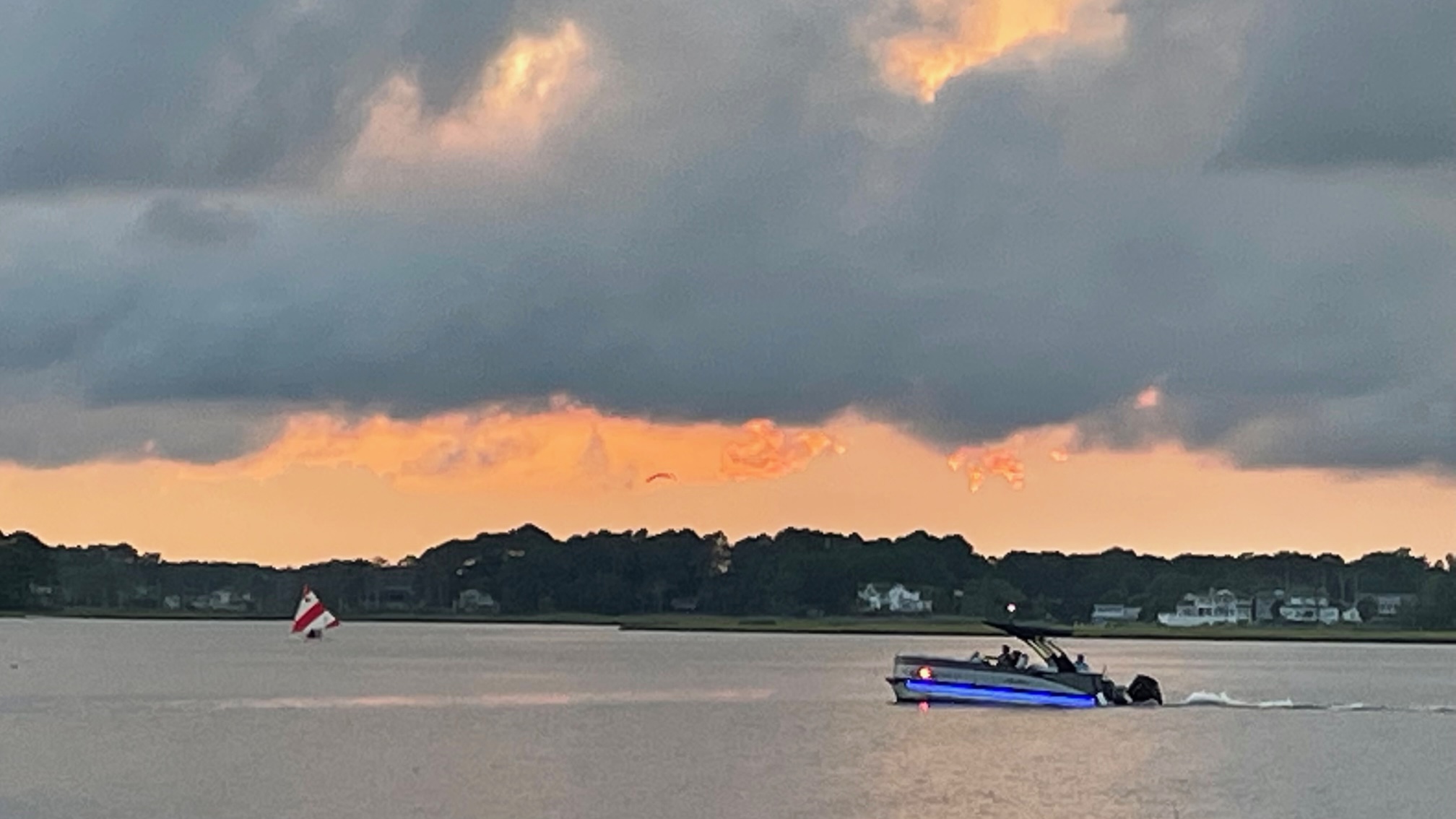
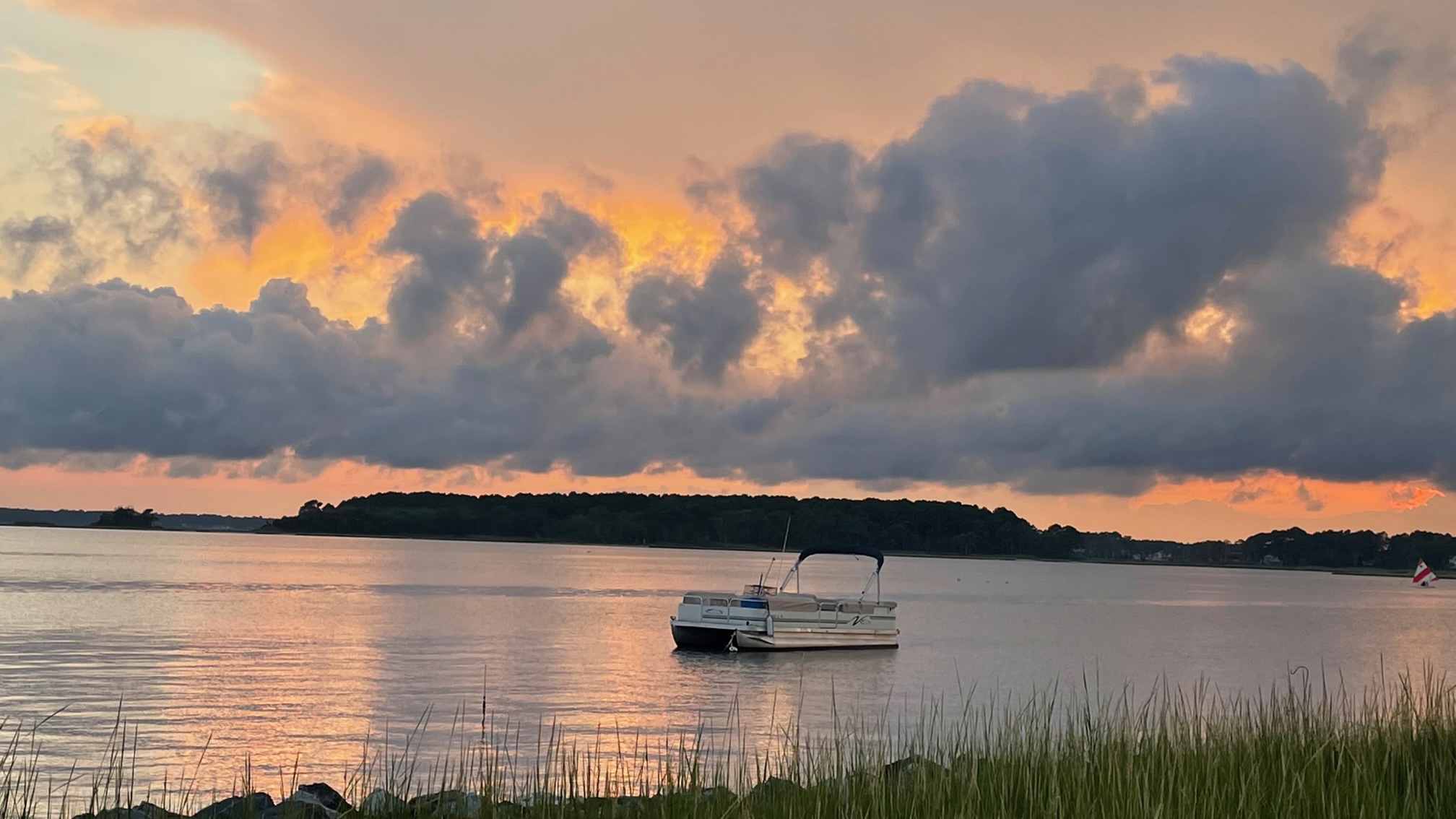
While the Sea is as mysterious as it is as vast, as terrifying as it is humbling, it is truly one of the most wondrous places on Earth to find yourself. You never know what will happen when you’re out in the open sea. Each time you’re out there, you can encounter a variety of experiences to change how you perceive the sea from its walloping waves to clear skies to powerful sunlight to treacherous downpours. From stormy to sunny, the weather when you’re out on the sea can range from peaceful to disastrous. The Sea has an allure to it like the mountains and the desert because of its vastness, its complexities, and its remarkable inhabitants.

I find the Sea to be appealing because it demands you respect it for all it can bring in return if you’re able to overcome the difficulties of setting sail. You can traverse the Sea to reach new destinations, to find food to catch and sustain yourself, or to even create a source of energy from the wind and sun that envelop it at times. We cannot even begin to fathom how vast the sea below us is but as we want to stay above it lest we sink to the bottom on whatever vessel we find ourselves on. As a result, the Sea is not to be disrespected, tampered with, or polluted. What it can give us in its bounty, it can easily take away from us if we are not careful. We should not take more than what we need or pretend that the Sea is not able to take what it needs from us in return.

If you do not take the necessary precautions, use proper navigation tools, or realize when you may head into a storm or squall stronger than your boat, you may end up a victim of the Sea as a result. The Sea is not meant to be terrifying, but if you don’t realize its scope, scale, power, and depths, you may not have a good experience being out there. You should not take chances on the sea that you can’t live with and it’s best to imagine as many scenarios as possible that can occur when you’re out there on your boat, ship, or canoe. Any time out on the Sea, you can expect to find something you never thought you’d ever see before and for which it will continue to surprise each time you’re out on the water.

Because each time at Sea is unique, you need to prepare for what kind of creatures you’ll encounter below from octopus to squid to fish to crabs to sharks to whales, etc. There is a whole ecosystem that you may be able to encounter depending on if you’re a fisherman, a scuba diver, a snorkeler, or a deep-sea explorer. Be careful in remembering that while you may think you’re top of the food chain at Sea, as a human being, you’re not the fastest swimmer or stronger mammal in the deep blue waters, so you should be careful when trying to catch something that may want to catch you first in response.

While the Sea has had a lasting appeal on man economically, socially, and for its plentiful environmental goods, we should remember that it is not our natural environment, and we are the mercy of Mother Nature out there. Make sure you know what you may be getting into when you get on your vessel headed out to Sea because you never know what you may find out there. Maps, compasses, a good crew who knows the waters will all help but you also need to show leadership, resolve, a hard work ethic, and be able to make life or death decisions if you are the captain of the boat or ship you’re traversing the Sea with.

It is not just the waters below that can bring down a boat or a vessel but rather the waves, the squalls, the storm surge, or the lightning that can make your small piece of home sink quicker than you can imagine. Even the biggest boat over a century ago, the Titanic, was thought by most observers to be ‘unsinkable’ at the time, but it was based on faulty hubris, human error, and a lack of respect for what the Sea can throw at you.

You may think your boat, your ship, or your vessel will always stay afloat but in my view, the Sea can take what it wants, when it wants, and you must know to avoid its wrath if you are not careful. We may claim dominion over the land of the Earth, but the Sea is still the Wild West despite us using it for commerce, trade, and for food. You can never fully control the Sea because it is a treacherous, ever-changing environment, for which demands planning, respect, and oftentimes good luck.

While others may shy away from it, I have always found the Sea to be a beautiful part of our Earth where you can be at peace and at ease yet still respect it enough to keep your head about yourself as you make your way through its horizons. It can lull you into complacency one day with calm waters and then snap you back into reality the next day with an unbelievable storm. The Sea yields tremendous beauty but also tremendous terror. You should use the unpredictability of it by being a better Seaman and preparing as much as you can for how to be a good Captain, a good Crew member, or just a good Passenger to make it back home safely after your time at sea is over. If you respect the Sea, you will have a much better time whichever way you choose to enjoy its bountiful fruits and its sheer wonders.

Lagos and Praia da Dona Ana

Camera: iPhone 12

Location: Lagos, the Algarve, Portugal (Praia da Dona Ana)