Anatomy of a Scene – ‘The Lady In The Red Dress’ (The Matrix)

“In a simulated world, which is built both on illusion and deception, distraction is the perfect weapon for keeping one complacent and from asking questions.”

In a simulated world, which is built both on illusion and deception, distraction is the perfect weapon for keeping one complacent and from asking questions. Few film moments capture that idea more powerfully than a short but iconic scene from The Matrix (1999): Neo (Keanu Reeves), newly unplugged from the simulated world he once thought of as reality or the ‘real world’, walks through a bustling cityscape inside a training simulation that is programmed to feel like ‘The Matrix’, but whose participants realize it is a simulation and not the ‘real world’.

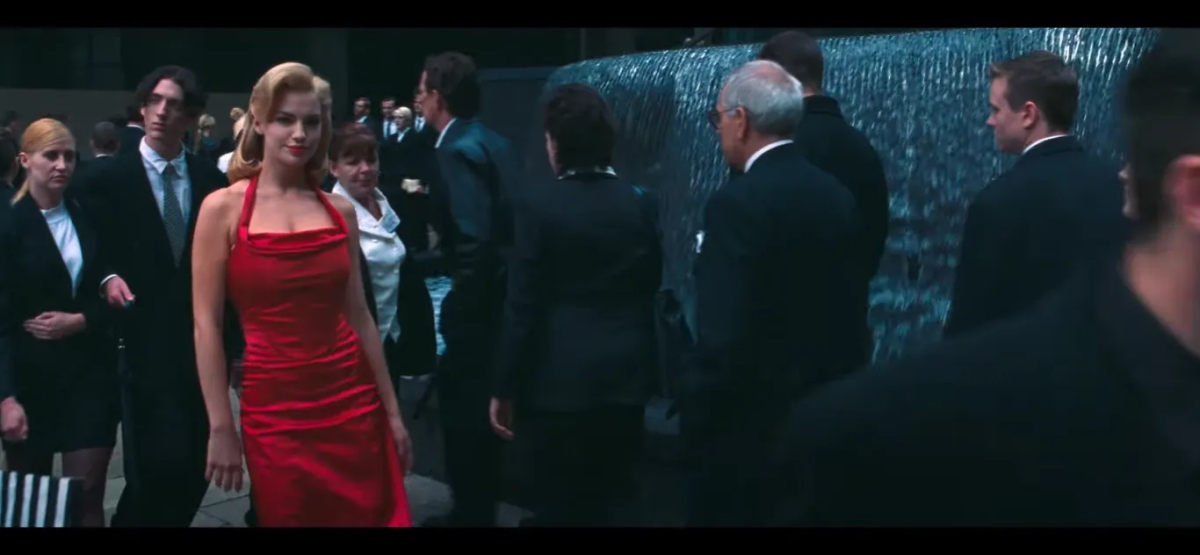
Suddenly, his attention is captured fully as he stops listening to Morpheus’s speech and focuses elsewhere. This distraction is not of danger, but by desire. A stunning blonde woman in a bright red dress walks past him on a city street. He turns to look at her and take in her beauty. A moment later, he’s staring down the barrel of a gun from an Agent of The Matrix.

This moment, while brief, is the Matrix in miniature form, a system that doesn’t just imprison the body, but hijacks the mind as well. In this scene, the Wachowski Brothers, who directed the Matrix film series, deliberate show the audience how distraction can be deadly, how perception can be manipulated, and how even the most liberated minds are vulnerable to illusion even after escaping from the simulated word of The Matrix. Over two decades later, this scene resonates more than ever as we live in a blurred world now of reality and simulation and of seemingly endless distractions like the lady in the red dress.

Let’s walk through how the scene unfolds similarly to how Neo and Morpheus experience the simulation themselves. Neo and Morpheus are in what appears to be a peaceful, clean city environment with sun-drenched streets, people in business attire moving in orderly fashion of different occupations and livelihoods. It’s not the gritty or green-tinted world Neo has just escaped from. Everything here is vibrant, bright, almost too perfect and calm. There’s a catch to it but we don’t know what it is yet as the audience.

Morpheus explains to Neo, “This isn’t the real world. It’s a computer-generated dreamworld built to keep us under control.” They’re inside a training program that mimics the Matrix, but this version is safe and controlled with seemingly no threats like what lurk inside the Matrix. As they walk, Morpheus encourages Neo to stay alert and keep up with him. However, Neo’s attention suddenly drifts elsewhere. A tall, blonde, and slightly smirking woman in a red dress glide past him, a stark contrast to the grayscale suits and muted tones of the crowd. The camera follows Neo’s gaze and not Morpheus’ words. Just as Neo turns around to look at her again, Morpheus interrupts: “Were you listening to me, Neo, or were you looking at the woman in the red dress?”

Neo turns again and instead of the woman, an Agent from the Matrix stands there with a gun to his head. The simulation freezes. Morpheus smiles. “Look again.” This is Neo’s wake-up call after he flinches from the sight of the Agent’s gun in his face. Neo is shaken as at any time in the Matrix, any of those ‘people’ are enslaved by the Matrix can turn into an Agent who is looking to prevent others from being freed from their enslavement by Neo, Morpheus and his crew. In The Matrix, distractions can be deadly because anyone can be an Agent and turn into one at any time. Neo learns his lesson and Morpheus instructs Neo about the real danger of going back into the Matrix, but they have a mission to free those from a reality that is not real, whatever the cost may be.

At its core, the Lady in the Red Dress scene isn’t just about Neo getting distracted having not been accustomed to the unique threat of an Agent. It’s about how the Matrix and by extension, any system of contro uses desire, beauty, and sensory overload to mask its true threat.

The woman in red is not a glitch, nor an accident of the simulation. She is designed by Morpheus’s crew to test Neo’s ability to focus and to challenge his awareness in an environment that constantly floods the senses, a virtual simulation that is meant to feel real but isn’t real. Morpheus isn’t just teaching Neo about the Matrix’s mechanics but also, he’s teaching him about vulnerability. The greatest danger isn’t always visible or known in the Matrix. Often, it’s hidden behind the things we want most or desire to have the most.

The red dress is more than a splash of color on a woman who is simulated to be a distraction. It’s a symbol in the overall movie of temptation, distraction, and the human tendency to follow what pleases us, rather than what protects us, even if it will end up hurting us later. In mythology, this kind of idea of ill-fated temptation appears often: sirens luring sailors to their doom in ‘Odysseus’, the forbidden fruit offered to Adam and Eve in Eden from the Old Testament, each of these illusions are designed to distract heroes from their quests or to lead to the fall of man and woman.

In this scene, the woman in the red dress is a test, one for which Neo fails, momentarily, and I think a lot of us would fail like he did with the distractions that are constantly thrown at us each day. His eyes are drawn away from his mentor, away from the lesson he is teaching, and toward something that feels more real than the truth. The result of his ill-fated choice? Instant danger and his potential demise if he were to make the same mistake again.

The brilliance of this scene lies in how it’s staged visually and shot from Neo’s perspective: everyone is dressed in grayscale, forming a camouflage of conformity and ordinariness. The woman is the only thing that stands out to Neo and the audience. She breaks the pattern of what we see and thus, attracts attention and an extra look. That’s what makes her the perfect distraction and allegory for ill-fated temptation, and that’s what makes this scene timeless.

Fast forward to today’s world where distraction has become the default mode for many of us. Our attention is fragmented by design, engineered by algorithms, applications, increasingly ‘real’ virtual and simulated realities, and seemingly endless digital stimuli, for which has dramatically shortened our attention spans. The modern “Matrix” isn’t an actual simulation in our brains, at least not yet as I write this, but it’s a network of more and more screens, news feeds, constant notifications, and seductive content. It’s the all-knowing algorithm pushing what it knows will make you pause mid-scroll and continue to feed your dopamine receptors.

Every time you find yourself watching a video you didn’t intend to watch, reacting to an outrage post on a political or social issue, comparing your life to curated influencer perfection on social media, or buying something new because it popped up at just the right time in your news feed, that’s the ‘red dress’ in action. While you’re watching the distraction, whatever kind it may be, something else is happening in the background of our lives: real threats are forming that pose real danger to us. Climate change. Political instability. Ongoing wars. Mental health crises. Surveillance capitalism. Social isolation. Economic inequality. Things that are far more dangerous and impactful than seeing ‘a lady in red’. Like Neo, we rarely see ‘the Agent’ or the real threats coming at us on the horizon.

In The Matrix, Morpheus teaches Neo that true liberation begins with awareness, not just of the system, but of how the system manipulates us and our desires. The Lady in the Red Dress is a metaphor for all the ways we’re trained to look away, to not pay attention, to surrender to the pleasure of the moment rather than focus on the issues of the present and the future. In 2025, this scene is more relevant than ever to our real world. It reminds us that to stay aware, engaged, and vigilant in a constantly distracted world is a small yet meaningful act of rebellion.

The focus and impact that you give to the world around you rather than cheap simulated or virtual distractions is actual power. Being able to have greater perception and awareness is everything these days and will allow you to help other people do the same. The next time something flashy, tempting, or beautifully packaged grabs your attention, you should ask yourself: “Am I listening, or was I looking at ‘the woman in the red dress’?”
Be Wary of Bread and Circuses

“There’s nothing wrong with distractions and wanting to enjoy an event, a spectacle, or indulge a bit but in the times that we’re living in, it’s important to realize that focusing only on ‘bread and circuses’ is something we can no longer afford to do.”

Who doesn’t enjoy sports or entertainment or both? People since the dawn of time have enjoyed being entertained or have been spectators or participants in games, sports, or other spectacles. At best, it is a thrilling adrenaline rush to be part of it to the roar of hundreds or thousands of people. At worse, it is a pleasant distraction from the humdrum of our daily life and our routines. There’s nothing wrong with distractions and wanting to enjoy an event, a spectacle, or indulge a bit but in the times that we’re living in, it’s important to realize that focusing only on ‘bread and circuses’ is something we can no longer afford to do.

The concept and phrasing of “bread and circuses or in Latin known as, “panem et circenses”, comes from the Roman Empire and belongs to the Roman poet Juvenal. Juvenal criticized how the Roman leadership would use free food such as bread and grant entertainment such as the gladiator events and other spectacles of the coliseum to distract the citizenry from societal and economic decay. While the Roman empire declined and fell as all empires do, today, in our modern world, we have major sporting events such as the FIFA World Cup and the NFL Super Bowl. Reality Television shows remain quite popular, and the media spends hours on celebrity scandals and gossip rather than focus on systemic issues affecting each of us daily.

Why is this an issue today as it was almost 200 years ago? I would argue that we are living through an era of upheaval including political instability, economic inequality, the effects of climate change, and the rise of authoritarianism. Distraction such as ‘bread and circuses’ help to keep people distracted from these ongoing issues and is a powerful tool to be utilized by those holding power. While sports and entertainment can be healthy outlets, it does not go well for a society when it is all-consuming, and people are overly reliant on it each day for fulfillment or pleasure. An active citizenry must remain focused on issues that affect them and their families as if they are paying attention and are engaged, positive change is more likely to occur as a result.

Political leaders can use major sporting events to help push their agendas forward as the times surrounding such events are the easiest to enact policies that are controversial but in which public attention is directed elsewhere. Politicians and leaders can also engage in controversies surrounding sporting events and how it related to ‘culture wars’ and ‘celebrity feuds’ to divert from ongoing political scandals or economic problems. Major sporting events are also used to stir national pride in a country and can be used to distract from real issues that the country is facing as well.

Sports and entertainment are big money for corporations and for wealthy individuals. Sports can reflect ongoing economic inequalities especially when multimillion-dollar commercials are paid for by a company rather than in investing in their own workforce’s compensation. Money spent in the billions of dollars each year on sports betting, gambling, or on tickets could have been funneled towards programs focusing on social well-being in health care, education, or infrastructure.

Celebrities and athletes should be compensated well for the work they do but there is an issue when ordinary workers who help make events, games, and other spectacles run smoothly are not paid a living wage. Thousands of workers are making decent pay, but it pales in comparison to what the ‘stars’ are making especially when they are the one preparing their food, keeping them safe with security measures, and helping stock the shelves and sell the merchandise.

There is also the ongoing debate in society about taxpayer money funding massive students and events that are not benefiting the surrounding community or the city itself. A lot of that money gets funneled to corporations in the ‘naming rights’ and to the ‘billionaires’ who see their net worth grow up as the sports franchise becomes more valuable over the years. A society where income inequality is high and is rising will be reflected in sports and entertainment as well. While there are some economic benefits to be made by the average person in these industries, a large sum of the gains to go to the wealthiest owners, players, and stars while the wealth does not ‘trickle down’ much, if at all.

While some of these issues do get coverage in the media although increasingly sparingly, I would argue that general news media, especially in recent years, has become sensationalistic and has focused on ‘click bait’ content rather than on serious investigative journalism. News outlets have prioritized celebrity feuds, sports gossip, and other trivial controversies that pale in comparison in terms of importance compared to real issues going on with the wider society. Viral content gets more clicks and eyeballs, especially on social media, and that’s where the focus has turned especially in recent years. Too much information at one time also presents most people from being able to decipher of what’s real vs. what’s fake and what to pay attention to because ‘information overload’ makes it hard to pinpoint what is likely to affect them the most and is worth paying attention to.

Similarly to the issues I’ve mentioned that ‘bread and circuses’ distract from each day, one issue that is the most immediate and wide scale in terms of ongoing effects is the accelerating climate crisis. Major sports and entertainment events all have an environmental cost and leave a sizable carbon footprint. When you tally up, the travel emissions, energy consumption because of the game or event, and the waste involved from having thousands of people in attendance, communities who support the events or games must deal with the aftermath, including both the financial and environmental costs.

While these massive events like the Super Bowl, the FIFA World Cup, and the Olympics due to pledge to be more sustainable and environmentally friendly, many companies do not end up footing the bill for the carbon emitted or the energy used. They can do so because the companies help sponsor the events and contribute enough money to them, so they aren’t as liable to help with the environmental aftereffects. Looking at two recent examples with the 2016 Rio Olympics and the 2022 FIFA World Cup in Qarar, these two events led to increased carbon emissions (FIFA) and environmental aftereffects. (Olympics)

While I am supportive of sports and entertainment and have been a fan of both, I still recognize the need to tone it back these days because excessive consumption of either will not help our society and our world be better. Sports and reality TV may seem as important as real issues, but they are not and never will be. People must stay engaged in what’s going on in their community, their country, and their world. As consumers of news, we also have the individual and collective power to choose which news outlets we give our time and our money to as well. If frivolities and ‘bread and circuses’ is all a news organization is offering, then it’s not a real news organization to begin with.

 Advocating for solutions to real issues, being a reliable voter, and volunteering in your community consistently can help keep the ‘bread and circuses’ to a more tolerable level. We all want to experience gratification and rewards in our lives and sports, or entertainment do both in providing that kind of dopamine hit but it’s a cheap one, and it’s not something we do ourselves. Political activism, working for social change, and developing our problem-solving abilities is real gratification in whatever issue you want to work on in our world. It’s not as instant and far from being easy but improving anything in society will take effort, discomfort, patience, and a lot of perseverance. Make sure you advocate for what you care about because celebrities and sports figures may not do the same, if at all.

You should stay focused on what’s important in the news, be civically engaged and encourage others in your life to do so. Remember to balance your consumption of entertainment and sports along with awareness of the issues and problems affecting you, your families, and your communities. Watching the Super Bowl is fine and I just did so recently as I have most years of my life, but if we continue to ignore political scandals, economic problems, and societal injustices, there won’t be much to celebrate in our society beyond that one day of the calendar year, where two teams of millionaires play a game that you can’t even be part of or even afford to go to.

Control What You Can Control

“Instead of trying to change things that we cannot control, it is best to focus solely on things that we can control and hope that we can make a positive impact on the people around us and the wider world through this kind of ‘ripple effect.’”

There is only so much that we have control over in our lives. We are constantly being influenced and affected by factors outside of our control for which we may not even have any awareness of. There are events that take place each day of our lives that can change our trajectory without us even knowing. We try to make sense of the lack of control we have but it does no good to constantly be wishing things were different if you were to have control where none exists. Instead of trying to change things that we cannot control, it is best to focus solely on things that we can control and hope that we can make a positive impact on the people around us and the wider world through this kind of ‘ripple effect.’

Life is unpredictable each day, filled with uncertainties and unknowns that can provoke anxiety, frustration, and stress within us. From work pressures to global events, it’s easy to feel overwhelmed by circumstances that appear beyond our control or influence. In this chaotic and ever-changing world, I believe it’s important to adopt the mindset of “control what you can control” to foster both resilience and personal fulfillment. By focusing on what is within our reach, we gain clarity on what is most important, reduce stress, and strengthen both our mental and physical health, preparing us to navigate the complexities of life.

It’s natural to feel compelled to try to control everything or as much as we can in life, especially in a world that rewards constant achievement and control over one’s surroundings. However, trying to control things that lie outside our influence can lead to a never-ending cycle of frustration and disappointment. Conversely, focusing on what we can control allows us to feel grounded and empowered, fostering inner peace despite external turbulences.

By narrowing our focus on what we have control over, we can manage our energies better and put it toward actions that genuinely make a difference in our lives and for those around us. Concentrating on our own responses, attitudes, and habits lets us sidestep the paralyzing effect of factors beyond our control. This approach is about freeing us from wasting energy on things that simply cannot be changed. Adopting this mindset is not about giving up or avoiding the ills around us but about creating a more productive and healthy approach to life’s challenges.

It’s a fair question to ask at this point in what do we have control over? It is more than you would think based on this list below of what we can control in our life.

  1. Our Attitudes and Perspectives

How we perceive situations has a profound effect on how we experience them. While we may not control the events, we do have control over how we interpret and react to them. Developing a positive or growth-oriented mindset allows us to find lessons, strength, or motivation even in difficult situations. When we focus on what can be gained or learned from the events, setbacks become opportunities for growth rather than new sources of despair.

  1. Our Reactions and Behaviors

Our reactions are among the most tangible aspects we can control in life. Although emotions often arise involuntarily without much forethought, we can practice responding to situations in ways that align with our values. Choosing how to react, rather than allowing automatic responses to take over, is a skill that can be developed with focusing on mindfulness. This life skill enables us to handle our challenges more constructively, turning potential stressors into manageable experiences.

  1. Our Habits and Choices

The habits and routines we cultivate each day play a significant role in our quality of life. We control what we eat, what we drink, how much sleep we get, and how we manage our free time. Positive routines, such as regular exercise, limiting social media content, focusing on healthy eating, and setting aside time for relaxation, create a foundation for resilience and better health. When we invest in these areas of life, we build a stronger buffer against the impact of unexpected difficulties and changes.

  1. Our Goals and Efforts

While outcomes that happen to us or that which affect us are not always within our control, our efforts are in our control. Setting personal goals and consistently working toward them provides us with a sense of purpose and direction. Focusing on the quality of our work, rather than obsessing over the potential results, ensures that our self-worth remains stable regardless of external factors. This effort-oriented mindset helps us feel accomplished and satisfied even in unpredictable and changing environments.

Understanding what lies beyond our control is essential in practicing acceptance and letting go of what is beyond our grasp. These examples include:

  1. Other People’s Actions, Behaviors, and Opinions

Attempting to control how others think, feel, behave, or act is an exhausting and fruitless endeavor. People are influenced by their own experiences, beliefs, and emotions, which we cannot change. Rather than trying to shape others’ opinions or actions, focusing on tolerance, self-respect, and authenticity allows us to establish genuine connections without feeling responsible for people’s behaviors.

  1. External Circumstances and Events

Natural events, market trends, or political shifts are all examples of uncontrollable circumstances that happen to all of us. While we can adapt to these realities and prepare for them to some extent, we cannot dictate or know when they will occur or what the outcome(s) will be. Learning to accept and know that the world will continue to evolve with or without our influence is liberating; it relieves the pressure of feeling responsible for the many forces beyond our own reach.

  1. What Happened In The Past and What Will Happen In The Future

The past is unchangeable as we cannot go back to change anything about it and the future remains uncertain at best. While reflecting on our past experiences can provide insight and comfort to us; dwelling on past mistakes or obsessing over potential future scenarios drains our energy that could be used in the present to improve our daily lives. Embracing the present moment enables us to shape our future without being paralyzed by what it may be or what you think it could be.

When we focus on controlling what is within our reach, we naturally turn inward to cultivate resilience especially when times are tough. Investing in our mental and physical health creates a solid foundation that allows us to weather the storms of life, even those we cannot control at all.

Practicing mindfulness and self-care helps us stay present and reduces anxiety about both the present and future. Activities such as meditation, journaling, painting, or simply spending time in nature help to cultivate a calmer mind. Regular acts of self-care, such as setting boundaries, prioritizing rest, and engaging in hobbies helps nurture a strong mental state. When our minds are balanced, we’re better equipped to face challenges with a clear, calm perspective.

Physical health also supports mental resilience, making daily exercise, balanced nutrition, and sufficient rest, vital components of handling stress and anxiety. Physical exercise releases endorphins, boosts our mood, and reduces out stress. When our bodies are well-nourished and strong from exertion, we can face life’s uncertainties and changes with more stamina and energy.

We can always control who we spend time within our personal lives. Building meaningful connections with others we care about creates a network of support, which is especially important when facing various challenges. We cannot control how others act, but we can control the energy we put into cultivating positive relationships. Trusted friends, family, or networking groups offer encouragement, perspective, and comfort during tough times.

Developing a growth mindset will serve you well throughout life especially in being able to exert more control in areas of professional and personal development. It is key to have an openness to learning from every situation, which helps us adapt and thrive both in the workplace and at home. Life rarely goes exactly as planned, but those who can adapt to those changes we cannot control maintain resilience and will be better off as a result. Investing time in learning new skills, embracing change as much as possible, and nurturing a lifelong curiosity and inquisitiveness empowers each of us to see life’s challenges as opportunities for growth and improvement.

Adopting this philosophy of “control what you can control” is not easy to do but it does empower us to live more peaceful, healthy, and balanced lives. By focusing on what we truly have influence or control over such as our attitudes, learning, reactions, habits, and health builds resilience and clarity. Accepting that certain aspects of life are beyond our control frees us from futile worry and frustration as a result. In this way, we prepare ourselves to not only withstand life’s uncertainties but to thrive amid them, cultivating inner strength and well-being. In the end, it is not about being able to control life itself; rather it is about becoming the best stewards of ourselves as we navigate the beautiful, unpredictable, and uncertain journey that is life itself.

Finding Your Personal Sanctuary in Modern Life

“With how hectic and chaotic modern life can be, it’s more important now than ever to find your own sanctuary where you can be at peace.”

With how hectic and chaotic modern life can be, it’s more important now than ever to find your own sanctuary where you can be at peace. It’s a place that you only know ideally but if not, it is a quiet place where you can be at ease. We all deal with a lot of stressors each day and it is key to find your own sanctuary where you can be yourself, be by yourself, and enjoy being at peace. It is increasingly hard to do these days when there are so many distractions, commitments, or other things to take care of in our day-to-day lives.

Still though, for one’s own mental health, it is more important now than ever to find your own place, secluded in nature or just somewhere you can call your own, public or private, where you can be free to relax and enjoy some peace. Each person’s sanctuary will look differently from another person’s, but it must be a place where you can rest easy, relax fully, and away from work, chores, or other commitments. You should be focused on this place being good for not only your mind and your body but your soul. It is a place that you can choose to be by yourself but also that you can let other people enjoy as well should you choose to.

When I think of these places of sanctuary, it can vary in terms of setting and background. I have always loved being near the sea or the ocean. It calms me down, lets me focus, or just lets me relax and be at ease. I can leave my earthly troubles for a while and just focus on the birds, the sound of the waves, and the sand beneath my feet. I can also think more clearly when I’m just looking at the water crashing down on the beach or to be watching a seal, dolphin, or birds in the distance. There’s something relaxing about a natural setting like the ocean that may not take my problems away but where I can take a break from them instead and realize also how insignificant and temporary they are. I also love to go in the ocean, to walk on the sand, or to play a sport there a bit like volleyball or some football.

If it’s not the ocean, I have discussed the beauty of a walk in the woods or a hiking trek through the mountains to ease one’s stress and provide some clarity through life’s stressors. If you have a park or a mountain, or even just some nature nearby, a place of sanctuary can be found there as well in nature. Being able to camp or to hike or just to walk in nature, preferably by yourself in a deserted area for a while can do a lot of good for mind, body, and soul.

A sanctuary is one that you decide for yourself, and it can range from a mountain pass, a walk through the flat woods, a serene beach by an ocean or the sea, or a local park at sunset where you’re the only one there. You can let people into your own sanctuary, or you can keep it private as it should be up to you. I do believe that we all need our own sanctuary away from people now and then.

It does not mean I am recommending being a social recluse, but we do need a place where we can rest, relax, and recharge to face our challenges again, whatever they may be. We need that alone time to ourselves in a public or private setting where we can truly think freely, feel different emotions, and let us get in touch with nature.

Now, if you have not decided on what your sanctuary is yet, do not be discouraged. You have time to figure out a place in the world where you like to go and is quiet for you to be free in. There are a lot of places to choose from but the key thing to keep in mind is that it is quiet, solitary, and where you can do some reflection. If you cannot find your sanctuary to call your own, it’s important to find a private room, a private garden, or just a private setting in general, where you can be by yourself for a while to give yourself time to relax and reflect amid your days of hustle and bustle.

Your own sanctuary is what you make of it. You must decide how it looks, where it is, and how often you go there. The main thing to take away from having a sanctuary is that wherever or whatever it is, you can call it your own and it is quiet enough where it provides some solitude and peace. Others can join you there, but they don’t have to if you don’t want them to. Make sure your sanctuary is never disturbed and that is always welcoming regardless of whatever may be going on in your life, both good and bad. A sanctuary is where we find true peace in this world, and I hope you’ll find your own one day.

Why A Digital Detox Is Good For You

“It is a great chance to recenter yourself, focus more on what matters to you whether it is more time spent with family or friends, or just to be more present with the world around us without staring at our phone, computer, or even our smartwatch.”

We are not meant to be on our digital devices 24 / 7 / 365 a year. I think a key part of realizing how our digital lives are so integral to who we are nowadays is to take some time away from them whenever possible. On a recent vacation I was on, I was able to be without cell service or an internet connection for a week. I do have to say that while the first day or two was difficult, it became nice to be out of reach for a while. It is a great chance to recenter yourself, focus more on what matters to you whether it is more time spent with family or friends, or just to be more present with the world around us without staring at our phone, computer, or even our smartwatch.

Now, in work or in school, we are always expected to be plugged in and reachable even when we might not want to be. However, if you’re on a break, a vacation, or it’s the weekend, I do believe that is a good time to have a digital detox where you can put your devices away. A day, a week, or even a month, is not asking too much to get away from your emails, your social media, or your mobile applications. In that time away, you can really interact with the physical world more fully, feel more present with what you are doing, and it is likely to be healthier for you to devote more time to walking, hiking, playing sports. Instead of reading Twitter or X now, you can read some books. Instead of listening to Spotify, you can play some records or some CDs on your speakers to gain a greater appreciation of the music you like.

In addition, you will have more time to pick up a new skill like playing the guitar, focusing more on your home life with fixing up your apartment or house if it has been neglected, and you can take full advantage of spending more time with friends and family. Digital detox is not so much unplugging from technology forever but temporarily taking some time away to focus on other parts of your life that may have been neglected due to your time spent online. It is hard for most of us to realize this fact, but we likely spend 4-5 hours a day online especially if we have classes or must work online for our jobs.

On top of video games, streaming TV and movies, and the rise of augmented and virtual reality headsets, we are on the path to being more present virtually than being present physically. There is such an endless amount of content that we are exposed to when online that it can be overwhelming for us. If you find that you are too wrapped up in your emails, your Instagram feed, your TikTok videos, or just not being able to pull away from your computer to get enough sunlight and fresh air, you could use a digital detox.

After my week away from being on my laptop, phone, and tablet, I felt lighter in the sense that I was not so overburdened by the constant stream of emails, updates, reminders, news updates, and overall wave of notifications that come with being plugged in. You really live more in the moment when you don’t have your devices with you or in my case, not being able to connect to WIFI or the 5G connection while we are on vacation. Overall, this is a good thing to happen in my view. If someone needs to reach out to us, a regular phone call is still possible or if it’s an emergency, you can enable texts or messages to come through to you.

However, there are many activities and hobbies to do without needing to be online as you’ll soon find out when doing your digital detox.
I encourage you when you go on vacation from work or school to leave your phone and computer on silent or off or even leave it at home. You’ll be surprised on how much you don’t miss it after 1-2 days of the initial FOMO (Fear of Missing Out) hurdle. You will likely be more present with others, more engaged with the world, and more aware of what you are actively doing without the necessary digital distraction or allure that the smartphone, smartwatch, or laptop has on us.

Yes, we do need our digital devices most days, if not every day, but if you can at least take the weekend off, or take a few hours where you’re unreachable, then that is also a good form of digital detoxing. I do recommend using a week or two each year to not be reachable via your devices or to not use them at least for Internet, email, or any mobile applications.

That week or two where you’re fully unplugged will do a world of good for you and your loved ones who could join you to be fully present with you. You’re likely to be closer to one another, enjoy doing more things together, and really appreciate what the physical world has to offer whereas you’re not really thinking anymore about what’s going on online or what kind of digital content you’re potentially missing.

Lastly, we should remember that for hundreds, if not, thousands of years, everybody got on pretty well living their daily lives without being able to have the Internet, computers, or TikTok. They managed to do just fine in the world without the digital age. I think it is good for each of us to remind ourselves that we can get by fine without our devices, if only for a short while. Overall, It is good in my view to be free of technology here and there because as much as we rely on it more and more nowadays, it is not the end all, be all for our lives here.

Don’t Sweat The Small Stuff

“Now, it can be easy to overlook the small stuff because of how tedious and unrewarding the small details or tasks can be sometimes. However, to build up to handling the big things in life, you can’t sweat the small stuff.”

In other articles, I have stressed the importance of focusing on what you have control over in your life and not worrying about what is out of your control. I also have discussed why you should start each day by tackling small you can do to build confidence and belief in yourself such as making your bed each morning or being able to cook meals consistently each week. Now, it can be easy to overlook the small stuff because of how tedious and unrewarding the small details or tasks can be sometimes. However, to build up to handling the big things in life, you can’t sweat the small stuff.

In this post, I am going to focus on how to make the small ‘stuff’ or ‘tasks’ a little bit easier than before. While you may have no choice to get the small stuff done so they don’t become big problems later, I do believe it is easier now than ever to get the small stuff done as quickly and as painlessly as possible without sweating it too much. I am going to cover three different ways where you at home can get the small stuff done and to be done well with no issues. Between automation, making list(s) / calendar tracking, and keeping a consistent weekly or daily routine, you won’t have to worry about the small stuff because you’ll have a system ready to go that is organized and efficient to handle all your menial tasks.

Step 1: Automate, Automate, Automate

When most people think of automation, they think of giant robots handling packages in a factory or a counter where you can order McDonald’s without talking to a human being because they’ve been replaced by an interactive screen; while that is automation, that’s not the kind of automation I am talking about. You can automate many menial or annoying tasks or chores these days with the palm of your hand.

There are multiple mobile applications or websites where you can automate your payments whether its’ your mortgage / rent, your utility bills including Internet, electric, gas, etc. or even when it comes to your retirement, insurance, or other long-term commitments. You no longer need to send a check or use the mailing system to automate these chores or tasks. Bills are among the most annoying of the small stuff that we must take care of but even though we still have to pay them, it’s easier now than ever to set up a system that month to month, year to year, takes care of it for you with minimal effort.

In addition, there used to be a lot more work involved to rent a car, to get your driver’s license, to apply for a passport. I believe many of these tasks, while still tedious involve less bureaucracy than before and are more technologically advanced where you don’t need to go to the DMV, the post office, etc. You can do most of these menial tasks from the comfort of your home and that makes the ‘small stuff’ much less to sweat about.

Step 2: Making List(s) / Track with Your Calendar

Related to automating your small tasks, it’s easier now with the Internet or the digital age in general to create new portable lists or having different kinds of calendars to track your daily, weekly, and/or monthly tasks. You can easily categorize your lists by kinds of tasks whether it’s for errands, bills, family obligations, travel, work items, business tasks, etc. and keep track of what you need to still do with check lists. The best part is with the digitalization, you can keep your lists with you on the go rather than having to carry a notepad or small book with you everywhere you go to remind you of what’s on the list(s).

Similarly, to the digitization of lists, using digital calendars to mark down different work, personal, school, travel, family events is key, and you can also color code them to not mix them up. You can use various applications to set up your calendars and to set reminders, so you won’t forget the tasks, obligations, or other ‘small stuff’ you need to take care of. The best thing about calendars is you can also mark them by time and place and to put them in chronological order to not overlap.

Calendars used to be big sheets of white paper that were physically based and a bit hard to read depending on the person’s handwriting. Now, similar to lists, you can take your calendars with you on the go. It is good for the environment too as you waste less paper too when you put your lists and calendars on your phone or laptop rather than a piece of paper. Just remember to protect your privacy and make sure your personal lists and events remain personal.

Step 3: Stay Consistent with Your Routine(s)

This last step may seem a bit redundant, but you are your own worst enemy or best friend when it comes to keeping consistent with your routines. You can set them up however you want but just make sure they work for getting all the small stuff in your life done well. If you’re better at doing a bunch of things in one day, then you should do it. If you are instead a master at spreading out tasks over a week or even a month, that should be your route to small stuff completion. I recommend going through a trial and error to see if a daily routine or a weekly routine, or even a monthly routine for certain tasks would work best for you.

You should not get frustrated if you need to add to your routine(s) or take things away when you no longer do them. Maybe you prefer automating grocery delivery on a different day instead of going on a Saturday when you have karate practice; you should be comfortable with adapting your routine as new tasks and even new hobbies fill your schedule. The key to consistency is to keep doing what you have to do every day, every week, or every month to keep life going right as much as you can control. Making sure your bills are paid on time, saving up for your rent or mortgage by keeping a set budget, or showing up to your soccer practices each week and not skipping will all make huge differences in your life.

To improve your overall life satisfaction, I believe it’s necessary especially as you get older to embrace these three steps to help you overcome the small stuff that could end up derailing you in life if you don’t take care of them and don’t do so consistently. You may think you only need one out of these three steps, but I think all three steps are great to utilize to some degree.

They also really complement each other as well as you can set your calendar to what bills you pay through an automated application each month and make a routine of following that system you set up for not just a month but a year and beyond. To not end up sweating the small stuff, you got to plan and strategize in advance to make sure you don’t even have to think about the small stuff in the future because you’ll already have planned to have each menial task, chore, or errand set up to be taken care of without waiting until the last minute.

Finding Your Flow State

What’s one thing that all professional athletes, musicians, artists, writers, and anyone devoted to their craft have in common? They have all achieved a ‘flow state’, which is difficult to relate to unless you are fully immersed in terms of what you are pursuing and truly enjoy what you are doing. The flow state is elusive for most people because they either haven’t found their passion in life or haven’t put the time in yet to get better through consistent practice or play. The flow state is a higher state of being because for a point in time, your concentration is matched with your intensity producing a beautiful result.

When you can put other thoughts or other concerns out of your mind to focus on your craft regardless of what it is, you are utilizing your full potential and will be able to achieve a better result for yourself. To outside observers, the flow state looks nearly impossible to accomplish but when you are devoted to art, to music, to sports, or to writing, the final result is nearly guaranteed because you have put blood, sweat, and tears to produce something meaningful.

To me, the flow state is the most optimal state of mind that you can be in because it requires you to be at your best and to perform at the highest level. It’s requires being in a state of movement and using your body in some way to produce an action. You are putting your energy, your concentration, and your focus into a singular goal and it’s inspiring to those people who get to benefit in some way from what you were able to produce. It’s better to be a doer than to be an observer but it can inspire others to find their flow state when you see them do theirs and to do it extremely well.

For example, I was at a popular Jazz club in Mexico City recently and the headliner was a talented Danish guitarist along with a group of local musicians backing him up on the saxophone, the drums, and the Jazz bass. Every one of them was talented at what they do and were in sync generating a group kind of ‘flow state’ that is even more powerful. The thing with a good Jazz group is that you start to yourself get into the ‘flow’ of enjoying the music and moving your body to the rhythm as well.

As someone who played trumpet for 11 years straight and enjoyed the feeling of togetherness and comradery that playing in a Jazz Ensemble can bring, it is impressive to see a group working well together and nailing their parts to achieve their flow state together. To play a musical instrumently proficiently on your own is tough enough, but to work together with different musicians to produce a catchy tune without making any mistakes is as near to a modern-day miracle as it can get.

Musicians thrive off the energy and the drive of others as well as professional athletes and even politicians. It is much harder to achieve a flow state on your own in the solitude of one’s house especially if your craft requires some sort of public attention. Writers and artists tend to be more introverted on average and don’t need the attention of others to achieve an individual flow state. However, there’s something to be said for achieving a group flow state when you’re cheering on a ruthless dunk from a professional basketball player or listening intently in an arena to a Presidential candidate’s stump speech.

People want to believe in the achievements of others, and I know that we prefer to lift each other up rather than to tear each other down. While it’s beneficial to take part in watching other people reach and show off their flow state, you should be trying to find yours every day. You will get much more satisfaction out of life when you are in that mode where you are merging with your craft whether that’s art, music, writing, sports, etc. While it’s fun to cheer others on and take part in their joy, you should always be trying to create a little bit of your own.

Intense concentration and effort is not easy to achieve, but it is extremely rewarding to put your worries and anxieties aside to focus on a singular goal that you want to achieve. It may take hours, days, weeks, months, and even years to get to where you want to be but there is joy to be found in putting away all distractions and devoting yourself to a craft that you enjoy and are able to put serious time into. Our individual potential will not be able to be achieved unless we are able to reach a flow state relating to a kind of creative or intuitive pursuit.

Do your best to try different activities out and see what you like. If you find an activity or an interest you enjoy, continue to add more time to it and you should start to see results. Don’t start to look for monetary rewards or personal fame to keep you going with this pursuit but you should be doing it for yourself primarily and for your desire to reach that state of flow where you can fully immerse yourself in the activity whatever it may be.

You should find happiness and joy in what you do and become the best that you can be at it. If you can enjoy the activity, you’ll eventually find your ‘flow’ with it and be able to do it effortlessly. While you will have a lot of frustration and stress with practicing and doing the activity, if you like it and find it worthwhile, you won’t mind the downsides when the upsides can produce such an intense ‘flow’ where you are in the zone and are able to produce a beautiful result that others will appreciate. Being able to inspire others to reach their own ‘flow state’ creates its own ripple effect allowing our society to become more creative, intuitive, and productive as a result.

The Power of Mentorship

Since the days of ancient Greece, the concept of mentoring or mentorship has been apart of human recordkeeping and history. The naming of the word itself ‘mentor’ is said to have come from Homer’s ‘Odyssey’ where the main character, Odysseus, while getting ready to leave for his famous voyage, decided to leave his infant son behind. Because he didn’t want to leave his son alone considering how long his ‘odyssey’ could be, His infant son, Telemachos, was left in the care and companionship of Odysseus’s friend named ‘Mentor.’ From this allegorical story from Homer, we get a sense of how longstanding the idea of mentorship has been around and why it has lasted throughout the centuries.

Why exactly is mentorship so powerful? Well, there are a number of reasons why it can be such a helpful and important part of a person’s success. People very rarely can do everything by themselves and to have the ability to seek out someone who gives them both their time and expertise without asking for anything in exchange is what makes having a mentor so powerful. Now, not everybody starts out being the best mentor. It’s a skill like any other skill that takes time to develop. It’s also impossible to mentor somebody in every aspect of his or her life.

It would be better to focus on an area where you think you can be a good mentor and lend help to another person. For example, if you’re good at writing and consider yourself to be a writer, you should want to mentor someone else who’s aspiring to be a writer and not someone who wants to become a mechanical engineer. Your mentoring has to line up with the mentee’s aspirations and what they hope to do in the future. Mentorship doesn’t only have to be professional advice but it can also involve be personal advice as well. Mentorship can range from how to learn a new skill set in order to make more money to being able to manage your personal relationships better.

Before mentorship can begin though, a level of trust has to be built up over time between the mentor and the mentee. When you’ve taken upon the role of the mentor, it’s important to make sure that you think that the mentee can be successful and that they can put in the work and effort to reach their goals. If somebody is mentoring you, it’s important to make sure that you know them well already, you respect them, and you find that they have good expertise and knowledge in the field or area that you need mentoring in.

A mentor doesn’t have to be a boss or a co-worker. It could also be a friend or family member who you have a close relationship to and is able to give you sound advice based off of their personal and/or professional experiences. When it comes to mentorship, it has to be a consistent and long-standing relationship between two people. The mentor and the mentee should be meeting on a weekly, bi-weekly, or monthly basis together in order to make actual real and sustained progress on both their short-term and long-term goals. If you’re only meeting with a mentor once every month or every three months, it’s not going to work out and you’ll be lucky to make any lasting progress. If mentorship is done right, the mentee will see themselves go far in the area, skillset, or field that they’re focusing on especially if the mentor is giving out real, practical advice that they themselves have proven to work.

For mentorship to be successful, it’s important that this kind of relationship between two people be a two-way street and not just a one-sided affair. The mentee should not be getting 100% of the benefits out of the mentorship because respect and appreciation has to be paid from the mentee to the mentor. Time, as we all know, is quite valuable and for a mentor to be giving his time freely to the mentee especially on a weekly or monthly basis is a very selfless thing to be doing. While the mentor should not expect anything in return right away, a healthy mentorship would involve the mentee taking it upon himself to show his appreciation and thanks through small gestures. It could be buying your mentor a gift for the holidays or buying them a ticket to a baseball game or a concert but it’s important to show that you care about the mentorship and that you realize it’s nice to give back every now and then.

If you’ve built up a strong personal friendship with your mentor, it would be nice for the mentee to spend time with the mentor outside of their formal meetings / sit-downs, etc. For example, if you two have shared interests outside of business, you can go out together for dinner, or do an activity together. Mentorships don’t have to be strictly business all of the time and the best mentorships are when both parties like each other and would consider themselves to be good friends. One of the key powers of mentorship is its’ sustainability and longevity when it’s done right. A fruitful mentorship of months and even years can definitely change the course of a person’s life. While not the easiest thing in life to take upon oneself, being a mentor to someone is one of the most rewarding things a person can do and it’s an easy way to make the world a bit better than before.

Unfortunately, true mentorship today isn’t as prevalent as it used to be and is a far cry from what it was like just a generation or two ago. Most people today do not have a mentor in their lives to help them who can they rely on for good advice without paying money. If you’re able to be a mentor to someone who needs your help or advice, it is something that should be seriously considered especially if that person has a lot of potential. Mentorships shouldn’t always be thought of in terms of the mentor being older the mentee in terms of age.

That’s a fallacy in that there are ways in which older people can learn from younger people especially in this current digital age of technology. The power of mentorships lies in the inherent decency of one person helping another person to get ahead in life in any way that they can. The mentee can then take the advice to heart and work hard to improve themselves in professional and/or personal ways. The mentee should show gratitude and appreciation to the mentor because having a good mentor who is generous with his time is not easy to find these days. While mentorships and apprenticeships were more common a generation or two ago, they are exceedingly rare nowadays. If you’re able to have a good mentor in your life, remember to be grateful for it and pay it back in the future by mentoring another person who is growing through the same struggles and setbacks that you once conquered yourself.

If there were more active mentoring going on between people, not only would their own individual lives improve over time but also that of the local community and society as a whole. When more and more folks are willing to give back to others in their community and help them out consistently, that helps out the society in general. The power of mentorship is also a reminder that we’re all in this together and we should try to spur on success of others rather than kick them down a notch. You’ll feel happier and more engaged in the world to when you give mentorship a shot so I encourage those of you reading this article to go out there, think about why mentorship is important, and figure out if that is a calling that you personally would like to take upon in the future in an effort to help other people help themselves.