Accountability Starts at the Top

“Having great power comes with great responsibilities as the popular adage goes and that involves making sure you set a good example for your peers and those people who look up to you.”

Good leadership has never been more important than it is now. Regardless of which organization, firm, company, or working body you oversee or manage, you have a responsibility to be open, transparent, and accountable to both your subordinates and others who have a stake in the leadership role you oversee. Having great power comes with great responsibilities as the popular adage goes and that involves making sure you set a good example for your peers and those people who look up to you.

While what you’re in your own role should not reflect on how others in an organized company, firm, or agency to do their own roles, but you can have an outsized impact on the effect you have on other people you work with by setting a good example for them. What do I mean by setting a good example? There are several ways, including the fifteen I have listed below to do that in a leadership role in the working world and for which will not only help you as a leader but help the workplace that you are both developing and managing.

  1. Own Up to Your Mistakes – Acknowledge personal errors without deflecting blame to your subordinates. This sets up a culture where it’s okay to fail, but it’s crucial to learn from it without being chastised.
  2. Communicate Transparently and Consistently – Keep team members in the loop about decisions, challenges, and updates on a weekly or at least a monthly basis. Transparent communication fosters trust and accountability. Avoiding gossip, rumors, and other loose talk is a key role of a leader to make sure that doesn’t override official guidance.
  3. Set Clear Expectations for Everyone – Define what success looks like in specific terms for each person’s performance and hold everyone, including themselves as the leader or CEO, to those same standards.
  4. Lead by Actual Action(s) – Demonstrate work ethic, punctuality, proper dress code and overall professionalism each day. Leaders who practice what they preach inspire others to do the same. Always be willing to put in serious work relevant to your company’s mission and not just sit in meetings all day when you could be pitching in to help with the big picture, especially for a smaller organization when you may not have as many employees to solve problems that come up each day.
  5. Encourage Consistent Feedback from Others – Actively seek feedback from all levels of the organization for how things could improve or be better for the average worker. This shows that the leader values input and is open to improvement even when it may reflect negatively on them or the organization.
  6. Hold Themselves to the Same Standard – Apply the same level of accountability to themselves as they would to others, regardless of rank or position. Make sure that they are open to having their performance reviewed just the same as anyone else.
  7. Be Consistent in Your Decision Making – Consistency in decisions, actions, and behavior reinforces trust and a culture of accountability. For example, if there is a flexible hybrid or remote work policy and a contract is signed for that part of the work environment, that cannot just be ended without abiding by the contract or letting people know there will be changes after the end of a contract. It’s important to not pull the rug out from your employees when they come into the job with certain work expectations that they agreed to.
  8. Provide Recognition and Consequences – Celebrate successes and address failures in a fair and constructive way. Holding people accountable, positively or negatively, ensures a balanced approach that people will appreciate because of your honesty and consistency.
  9. Empower Other People in Their Roles – Provide resources, training, and autonomy for team members to succeed and be responsible for their roles. Make sure that they can go to conferences, relevant trainings, skills development courses, and other events that they will benefit from whether it’s for IT, sales, marketing, business development, etc.
  10. Always Maintain Ethical and Moral Standards – Model both Ethical and Morally sound behavior for others in your organization, even when no one is looking. This sets a baseline for personal and organizational integrity that others will follow based on your example as the leader of the firm and because they know they are doing right and following the rules.
  11. Be Present and Available to Everyone – Hold open office hours each week and make it a priority to meet with each employee or each team throughout the year to see how they are doing, especially individually. Be accessible to all team members when they need guidance or clarity, demonstrating commitment to their growth and accountability in your firm or organization.
  12. Follow Through on Your Commitments – Demonstrate reliability by keeping promises and meeting deadlines, setting an example for follow-through in the organization. Your word is your bond as a leader in the work you do, and others will want to do business with you or continue the partnership if you are able to do what you said you were going to do.
  13. Foster a Culture of Mutual Accountability – Cultivate an environment where everyone feels responsible for the success of the team, not just individual performance. If you have different teams, make sure they know the role that is expected of them, what they are responsible for, and how to resolve issues with each other when they inevitably come up.
  14. Address Issues Promptly and Privately – Tackle accountability problems early before they grow into larger organizational issues, showing that problems are addressed fairly and swiftly. Make sure to do it privately as well with those affected employees and keep it constructive in terms of ensuring more accountability. It’s never good to air out grievances with your workers in public or in front of a team or group of employees.
  15. Provide Continued Growth and Training Opportunities – Workers want to feel like they are progressing in the job and giving skills or certification training(s) can really help with overall job satisfaction. Being able to provide a long-term trajectory for those people in your firm or company so they stick around and lower the turnover rate is key too.

Being a leader of a company, firm, or organization is not easy, but the reward of being an effective leader of a thriving workplace is worth the stress of it all. You must be a positive example who sets a high standard but also is able to help the people under you develop their own professional futures and be willing to adapt and adjust your own ideas and policies based on constructive feedback. If accountability and transparency are to thrive in any organization, it must come from leadership first and work its way down through the hierarchy.

Trust Is The Foundation

“Trust is the bedrock that glues our society together. It is the foundation for which our relationships are built on.”

Without trust, there can be nothing. Trust is the bedrock that glues our society together. It is the foundation for which our relationships are built on. Once that bedrock is ruptured, it can never fully heal again. This is why we place such a high value on it because it can be hard to find or even replicate whether in business or in work or in our lives in general. We learn from a young age the value of keeping our word, being accountable for our actions, and being part of a team or a whole.

If we cannot make a promise, we shouldn’t keep it. We learn not to overpromise, undersell, or to bite off more than we can chew in what we can be relied upon for. Whether it is a secret between friends, a business deal that should remain private, or our duty to uphold a certain standard in our professional lives, the ideal of trust is at the center of how we are expected to act and behave. Trust can be earned over time and can take months, years, or even decades to build on it but while it is hard to gain trust initially, it can last a very long time with repeated adherence.

However, once the trust is broken between people or groups or societies, it can never truly be fully healed again as it once was. While verbal trust is a key part of our lives, we often go above and beyond to string together the bonds of trust more deeply. We shake hands to formalize a deal, sign the terms and conditions of an agreement, have legal papers, lawyers, and the ‘fine print’ drawn up, so the trust given and received is as clear as day. There are multiple ways to establish trust with each other but there are just as many ways that trust can be broken too if you are not careful.

It is not just our work lives or business success that depends on the trust established within them but also our personal relationships. If you are not seen as trustworthy but those people who are closest to you, it is likely that will extend outwards to other kinds of relationships in your life. It is vital to maintain your trustworthiness across the board regardless of how fleeting the ties to the other person or group are. While our relationships, business dealings, and professional ties will all begin and come to an end, our reputation precedes us throughout our lives, and it is important to keep your trustworthiness intact as you navigate the years and decades of who you meet and who you establish connections with.

Trust is not only about keeping your word or telling the truth to someone else or acting in an honest matter, but it is also about not promising something that you can’t deliver on or embellishing or making up falsehoods to earn the other person’s trust. You may think you are able to take an action or provide something or to promise a result but if you cannot guarantee it 100%, it’s best to pull back and let that person or group know that it is not entirely possible. How often have you heard that expression, “don’t make a promise that you know you can’t keep.”

It’s not only about breaking a promise that shatters trust but also trying at something that you said would happen and guaranteeing its success without being realistic about the odds or about if you could deliver the intended result without error, delay, or setbacks. You not only have to be honest with other people to establish trust but also honest with yourself and what you can and what you cannot do for them.

Our own ego can sometimes hurt our own trustworthiness because we are biased in believing we can do more or be more or accomplish more than what we can do when we make a promise. It can be difficult to reign back our promises to others and to pull back our own ego when it comes to what we are capable of. However, it is necessary to keep our trust alive with the other group or person with whom you are dealing with. I believe it is better to hurt our own ego when it comes to being realistic about the promises or the actions, we can accomplish rather than to lie or to embellish or to delay the unrealistic promises that were made, which hurts that trust or even breaks it completely. When the trust is broken, the other person won’t think you’re honest or reliable or even a good person so that is why trust itself is the foundation for which any kind of relationship is built upon.

Trust being the foundation of an individual’s relationships is key, but it also portends to our society and our world. Shared values, beliefs, and rules are built on trust in that if you will follow them and obey them so will everyone else living in that society. If that trust is broken in the sense that there are rules for me and you, but not for them, then that trust in one another starts to erode. Basic civility, courteousness, respect for laws and rules, and overall trust builds society up and when promises are broken, when double standards are common, and when one party or group holds unfair advantages over another group, without any kind of recourse or change made to make the society fairer, then the society will suffer as a result.

It is no accident that more productive and successful societies and countries function at a higher level, and it comes down a high level of trust between its citizens regardless of age, gender, race, socioeconomic background, etc. When trust is shared by all to play by the rules and do the right thing for each other, then that society and/or country will flourish as a result. How can a society establish strong economic ties, pass new laws that are enforced for all, and foster a strong education system that works for all? if it is not built on that fundamental trust that we are to look out for one another rather than to take advantage of one another instead.

If you can read this article knowing that your trust for your fellow man or woman is high and that they can rely on you as you would rely on them, then you’re in good shape where you are with the trust of your society. However, if your trust in your fellow man or woman is waning and you are skeptical of other people’s intentions often, well, then unfortunately, your society has a lot of work to do to rebuild and strengthen that fundamental trust. You should be part of that change by helping to build up the trust in one another again where you are at rather than to keep poking holes in the foundation or to tear it down completely. The choice is yours to make.

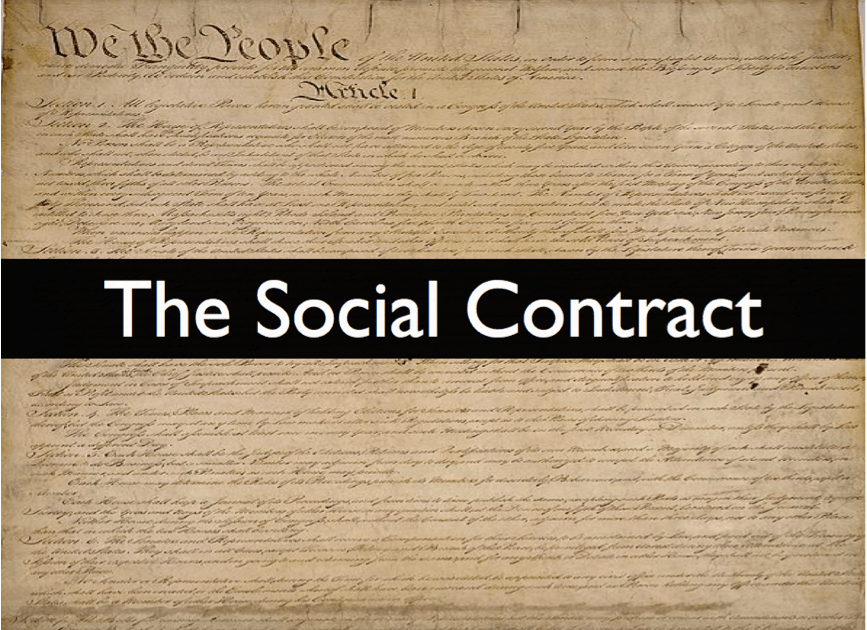
Restoring The Social Contract

“If everyone just decided to opt out, to not pay their share, to simply protect everything they have, not only would things generally decay quite quickly but the foundational trust that any society is built upon would crumble as well.”

When we are born, we start off with new responsibilities, commitments, or duties. We are purely helpless and rely on other people to assist us in everything from feeding ourselves to being clothed or to even how to be cleanly. Oftentimes, we rely on our first teachers and friends, our parents, to care for us. Of course, not everyone has the luxury to have both or one parent to care and nurture for them, which is why we rely on adoption, local and state services, and even foster care to make sure those who are young, vulnerable, and in need of care are provided for.

If you did not have parents around to guide and nurture you, it is likely that at one point or another, to prevent you from being hungry and homeless, you relied upon services provided by a local, state, or national government. In exchange for such services provided for in part or by whole by taxpayer funding, you would receive support as a child or teenager to receive public schooling, get publicly funded health care or subsidized health insurance to make it more affordable, and even food if you are able to get breakfast or lunch at no or low cost due to circumstances beyond your control. These different services, especially to the young, the poor, the homeless, or even the elderly are part of what I like to call the ‘social contract.’

By participating in the ‘social contract’, you receive certain necessities to live such as food, shelter, housing, and ideally, health care in exchange for later contributing back to the society either financially through taxes and even voluntarily through charitable donations, volunteering, or being active in the political process. The key thing to remember is that the better the taxpayer money is spent and the more accountable it is in those areas, the better those services will end up being.

Going back to the case of an orphaned or abandoned child, since their parent(s) were not there for them when they needed that love and care the most, who else should step in but society itself? Would it be better to abandon such a child to the streets or to an uncertain future to likely starve, to miss school, to be homeless, and to fall into despair or rather should we as a society remember that it could have been us in that situation as a child or a newborn and to ensure that the child will have the same opportunity or chance to succeed despite being born into uncertain circumstances?

Children or teenagers don’t pay taxes but by investing in them, we invest into the collective future of our society. Even if we use private health care, private schools, private roads, etc., the worse off the general society gets, everyone will be negatively affected by it even if those who are well off seek to shield them from such a deformed society. After using such services rather than not having had them at all, I find that it is much more likely that that child will grow a contributing adult to the general society rather than if we had not collectively invested in him or her at all.

Many such issues in adulthood involving joblessness, alcoholism, drug abuse, higher likelihood of prison can be avoided if there are safeguards in place because a home without parents can lead to a slippery slope of lack of opportunities and an eventual grim future if society through our provided services funded by each of us does not help to fill in the gap.

Now, that does not mean that personal responsibility should not be accounted for, and each person should work hard to achieve their goals and pursue opportunities if they put the effort in. You can’t just be given these services and expect them to give you an easy life. You still must be able to finish your schooling, find work in your field, and become part of the large pot of contributions that keep our society running. If everyone just decided to opt out, to not pay their share, to simply protect everything they have, not only would things generally decay quite quickly but the foundational trust that any society is built upon would crumble as well.

Any well-run society in any country always has two fundamental pillars going for it: accountability and trust. If you only have one and not the other, the society will be on shaky ground and be deteriorating in the other area after a while. If you lose both, the society will generally collapse until it can be built again after re-establishing at least one of these two fundamental tenets after it has taken hold in the general population again. Advanced societies are inherently fragile because if you can’t be held accountability regarding why certain services are not given when you believe you are paying a lot into the society and feel like you’re not getting much back in return that you can see, feel, touch, or enjoy, then there is a big issue at hand.

If there is no accountability given on behalf of those who provide such services like health, housing, defense, basic services such as water, energy, or even food production, then people will become increasingly distrustful of each other and seek to provide those services themselves outside of the state or society or focus on only having private means of acquiring such services, which due to the profit motive, may leave part of the society out in the dust if they cannot afford the private services and there are no public ones available as a substitute.

As U.S. Supreme Court Associate Justice Oliver Wendall Holmes Jr. once said about the means of taxation, “Taxes are what we pay for a civilized society.” As much as people will complain about their taxes, if we don’t have them, how else would we provide for clean water, clean air, reliable energy, good schools, safe streets, plentiful hospitals, etc.? The key idea to keep in mind is that if we don’t see our taxes going to these areas that improve upon society or advance it further for the well-being of the population, then there is a lack of accountability there that should be rectified.

Waste, fraud, and abuse of taxpayer money is a serious offense and so is an inability to break down for the taxpayer where their money goes to fund local, state, and national services year after year. Collectively, there should be a role in taxpayers demanding accountability from those in power to know where are taxpayer money is going, how can we make it more responsive to societal needs, and are we reaching enough of the population to justify the level of taxes we incur?

While it is seriously unlikely, we ever get a full accounting of where our tax money goes individually, it would improve the trust and accountability tenets of society to know which percentage of our taxes are spent on health care, housing, safety, defense, education, etc. and if we have that general idea, I do believe there would be more transparency to change those percentages at least at a local, state, or even national level to be more befitting with the priorities of the general public.

If we see that millions of people do not have access to public or private health care, perhaps our societal priorities can change to accommodate for that in the general contract. If we believe that economically, our roads, bridges, tunnels, airports, and public transit are not enough to compete in the 21st century, that should change the calculations. If our schools are crumbling, our teachers are underpaid, and the schoolchildren with parents or no parents are growing hungry there because there is no free lunch or breakfast accommodated for, that should change the calculations.

These are all good examples of how our general societal contract can be expanded and adapted to. Everybody, regardless of their social class or economic upbringing should have basic dignity afforded to them. I believe that social contract needs to be upheld especially if we are paying into it but not getting enough out of it in exchange. When health care, housing, food, and even school are considered luxuries rather than necessities, that contract is fraying and needs to be strengthened.

If our society becomes complacent and does not allow for such public services including health care and housing to care for all, either it will be privatized or it will vanish from being accounted for. We should begin to account for the societal contract where if you work hard, play by the rules, pay your share, and invest back into your community and country, you should get back what you put in especially if you need a leg up when you fall on hard times. Public necessities like education, health care, housing, and good public transit should not at all be considered luxuries.

We should believe it to be absolutely absurd to hear about people with two jobs not able to afford housing, two hard working parents not able to afford to send their children to publicly funded colleges and universities, or even going bankrupt because you have taken on too much medical debt. The societal contract we pay into and hope to receive back in return is fraying when that becomes not only common place in the society but accepted by the population. There should be push back in terms of accepting that kind of contract, which has to be either rewritten or redone entirely.

U.S. President Franklin D. Roosevelt delivered a speech on January 6th, 1941, titled the “Four Freedoms” speech. It addressed what should be what we would consider common sense for a social contract to be based on but during the era of Nazism, fascism, and totalitarianism on the march, it was a key historic event where he lined out what people around the world regardless of birthplace, creed, ethnicity, and background should be born with. They are the freedom of speech, freedom of worship, freedom from want, freedom from fear. Without addressing the whole of human needs from birth, Roosevelt argued that the general society in the United States and in countries around the globe would be worse off.

While FDR did not specifically mention health care, housing, education, or infrastructure in his speech, it can be inferred that economic security made up the ‘freedom from want’ part of the four freedoms. If we do not have a roof over our head, food in our belly, medicine, and care when we get sick, or school / work to give us opportunities to afford such needs as we age then general insecurity and the society itself will fray as a result.

Roosevelt understood that if the social contract does not include the four freedoms or the additional needs encompassed within these four freedoms of humanity, then our societies and the world at large will fall victim to another war, another depression, or general malaise and misery. FDR may have given this speech on the ‘Four Freedoms’ over eighty years ago but his words and his call to action remain as ever necessary in our society today. If there is a child without parents, we must be there to provide and care for his or her future, if a teenager can’t find work, we must provide that community college or technical education to give him an opportunity to succeed, and if that man or woman can’t find a way to get health care when they get sick and are in between jobs, we must step in to fill the void.

Simply put, the social contract is what we decide it is if we work together and find common ground on where it’s lacking based on what we pay into it and how we implement it to see the benefits of what comes out the other end. There is no doubt in my view that the four freedoms of FDR should be upheld and strengthened, especially around economic security or the ‘freedom from want’, which would eventually ensure that more and more of the general population would have the means to pursue their dreams, to be better able to succeed, thrive, and live their lives to the fullest extent.

The Utility of Making Lists

“A key productivity hack that really works wonders in our fast-paced, modern era, which involves both discipline and consistency is to make a list. It is also an excellent habit to build upon and one that only requires your laptop and a ‘notes’ application or just a simple pen and piece of paper.”

A key productivity hack that really works wonders in our fast-paced, modern era, which involves both discipline and consistency is to make a list. It is also an excellent habit to build upon and one that only requires your laptop and a ‘notes’ application or just a simple pen and piece of paper. Lists have a reputation of being tedious and time-consuming, but what is actually more time-consuming is spending minutes or even hours trying to remind yourself what tasks or items you actually have to do.

List making is a good habit to build upon for a number of reasons. You hold yourself accountable and there is no shirking away from what you have set for yourself. The biggest misconception when it comes to lists is that they are all the same and focused on a to-do list. You can make lists for other reasons ranging from your progress at the gym with different weights you’ve lifted and what you hope to accomplish next to your future goals in life and what you hope to do in your ‘bucket list.’ Lists not only involve things you have to do whether its grocery shopping, what bills you have to pay, or what errands you have to run but also what career / business goals you have, what your exercise regimen looks like or where you hope to travel to in terms of next destinations.

Making lists is part of exercising that daily discipline that you need to have in order to put yourself on a path to success. It’s easier to accomplish your goals or your tasks when you remember what they are. You may have an amazing memory and feel you don’t need to have any lists at all but having that reminder especially if you have a due date for a pending school assignment or a work task can really help you especially if your memory fails you, which is always possible.

The impact of technology in our lives has made our attention spans that much more limited or distracted so I believe that the utility of lists has increased in response. There are many more things on our plate that we have to pay attention to that we may not have time to remember them all. Lists can help us organize these tasks from most urgent to least urgent and give us some peace of mind since you would likely have these lists stored in a place such as in an application on a computer or in a folder if you’re more traditional with pen and paper.

Not only do lists help to organize our lives, our goals, and our tasks, but lists also hold us accountable just by the fact that they make clear what you have done or what you have not done. There is no arguing with a list because you have either done it or not done it. You can indicate in a list your progress towards the goal or the task but it’s better to simplify it to be blunt to ask of you whether the item is completed or not. If it isn’t done yet, you can go back to it to see how much you have left to do, whether it’s been started yet, or how much you have left to finish. That kind of blunt accountability, which can be lacking in our society, is going to be staring you right in the face, so there is really no hiding from a list because it does not sugarcoat anything or try to come up with an excuse.

I also would like to point out that making too many lists can hinder you from achieving all you would like to get done each day, each week, or beyond. You should be careful not to make too many lists or have too many notes where you start to forget what actually is most vital to get done. I would recommend instead to make one list only for a specific part of your life such as one for exercise, one for work, one for business, one for errands, and perhaps one for future goals. That’s five lists right there on a specific subject so not to become too cluttered or difficult to implement. Lists can help you out a lot up to a point but can become burdensome when you have a dozen lists for ten different parts of your life.

In any list you make, focus on a main goal you wish to achieve for the day and then start to branch out to include weekly tasks and then long-term goals that may take months. Organizing an individual list around immediate, medium-term, and long-term tasks is an effective way to stay on top of each part of your life that will need attention. Having five lists, for example, can be helpful too where you might start the day looking at your exercise task(s) to complete, then move on to work/school, then see about errands, and then see what future goals you are working towards that you can start on. Organizing lists is about as important as making lists to begin with and it’s very important not to make too many lists where you feel like you can’t keep track of them all or have too long of a list where it distracts from your other lists that you’re working on.

You may be thinking to yourself right now, why do you care about making lists so much and why have lists at all? Having list(s) is about building structure in one’s life. You can create good habits from following your lists and you can organize your life in a meaningful and productive way. Also, you alone can hold yourself accountable with lists as it’s only you who knows about the list and is responsible for completing the goals and the tasks that you set up for yourself. No one else is going to hold your hand so it’s up to you alone to be reliable, responsible, and solely in charge of ultimately crossing those important items off your list(s) to help make your life a better, happier, and healthier one.

How to Spot a BS Artist

I do not like to speak ill of people, but I do think it is important to warn about certain people who may not have your best interests in mind. You may want to look out for what I will reference as being ‘BS Artists’ as I do not like to curse in my writings. I will tell you what a BS Artist is, what to look for in spotting a BS Artist, and how to avoid them as best as you can. BS Artists do not necessarily intend or want to be mean and they are not necessarily bad people, but they can be deceptive, misleading, and not have your interests in mind.

BS Artists are definitely not your friends even though they may initially appear to be friendly. They seem to care about you initially and remember certain details about who you are. Their kind of friendliness is an obvious bit of shallowness that leaves you feeling a little let down. You can tell after a little while that the friendliness was not genuine, that they are looking to curry a favor or are trying to take more from you than they want to give back, and they are mainly looking out for themselves and want to take advantage of your time or your money.

A BS Artist will do their best to convince you of something without giving any proof or by hyping something up without checking his or her facts. They do not see lying as that bad if it’s a means to an end even if that hurts people’s feelings or misleads them. They resent facts and the truth and will attack you if you push back on them. If it is in their interests, they will BS their way even if it means disregarding the truth to further their own agenda even if it causes harm.

Instead of admitting that they are wrong or that they do not know or to say that they need to find out the facts first, they go ahead with illogical assumptions and conclusions on any given subject and will not back down at any cost. They would rather ‘save face’ or maintain positive relations with others rather than be honest and upfront about what they might have been wrong about. Because lies upon lies can do the most damage, BS Artists cause a lot more harm because the little white lies become big lies and before they can admit fault, many people can be hurt from being misled.

It is not a bad trait to be confident, but BS Artists take it to the next level by being cocky and showing hubris even in the face of contrary evidence or contradictory claims. They can be overconfident, selfish, and demeaning when other people disagree with them or want to debate regarding the facts of the matter. Being that cocky will get a BS Artist into trouble and can cost them dearly even if they are able to evade the truth for a little while. Even if they put off the truth for months of years, it will come back to bite them and it could cost them money, their jobs, their families, and their freedom.

From devious landlords to banking fraudsters to pyramid scheme creators to corrupt politicians, they are all BS artists at the heart of it and while some people in these professions are good people and care about others, BS artists in these fields of work give others a bad reputation because of the heinous acts they end up committing.

What we have to do as a society is to not enable them to rise to influence other or hold power over others. It starts with a strong sense of accountability, ethics, and holding people responsibility for their actions. It has to also begin with not any of the small lies slide which end up becoming bigger and bigger lies that cause a lot more damage the more a BS artist gets enabled. A BS Artist is bad enough but when he or she has free reign to do as they please with no consequences so then the rest of society will be left holding the bag and with no due recourse to hold them accountable.

You first have to detect if there are any lies, get to know that person really well and decide if they are truthful and trustworthy. It may take months or even years but don’t jump into a friendship or a business partnership with someone you haven’t seriously gotten to know for. When you are not in a rush, why risk a lot when you don’t know anything about that person? Another warning sign is when they refuse to divulge information about themselves when you start to get to know them such as what their job is like, a little about their hobbies, and what they enjoy doing.

You should also make sure that they want to get to know you and that they follow up on their commitments when you ask them for their time. If they aren’t willing to respond to your emails or phone calls, you should not push forward with any higher level of commitment such as an in-person commitment or any long-term partnership or relationship. Do not let a BS Artist let you waste your time or your money whether it’s through the television or face-to-face.

A BS Artist is not hard to find, and they are always going to be around. Part of being a functioning adult is knowing how to think critically about who you are dealing with and how you deal with them. You have to be skeptical to some degree and having a ‘wait and see’ mentality when it comes to other people. You do not want to give much or give too little but it’s not good to heavily invest since you may get burned in the process. The best you can do is really get to know the other person well whether its’ for business, relationships, or career-wise.

The main characteristics that you want to avoid are people who are deceitful, uncaring about the truth, and not willing to hear the facts. They can be manipulative, compulsive liars, and they may use you to get ahead and not feel any remorse about it. Some BS Artists are so good at it sadly that you may only realize that they are a BS Artist a decade or two decades later. There are going to be times like that unfortunately where you may be taken advantage of and done all you can to avoid that happening. The best you can do in that case is admit that you made a mistake but were trying to protect yourself to the best of your ability. At times in life, you have to cut your losses and hope the damage was not too bad.

Ultimately, what we all must do is make sure that the BS Artists do not hold too much sway over our society or our economy. That is when the real trouble begins when they control a lot of daily life leading to greater corruption, inequality, and societal dysfunction. When an entire society is deceived, the damage may last for decades and we are likely to know that we were warned but not enough of us were aware that we were dealing with BS Artists rather than genuine and good people. We have to do better than that and make sure that we prioritize the right kind of character, ethics, and personal qualities in our politics, in our daily life, and in our society.