Getting Good at Asking Questions

“Asking questions is a fundamental life skill that you should always be improving on. You should be able to ask relevant questions without feeling as if you are imposing on someone.”

Asking questions is a fundamental life skill that you should always be improving on. You should be able to ask relevant questions without feeling as if you are imposing on someone. There are limits to how many questions or what kind of questions we can ask but you won’t know if that question will be answered until you ask it. Most of the time, there is no harm in asking someone a question and seeing what the response will be. I find that it’s often better to have posed the question than not to have asked anything at all.

Unfortunately, I would say that a lot of people are afraid of asking any questions at all. They may not want to cause a stir, fear a reprisal, or feel that their ego would be harmed by asking a question. I can sympathize with these concerns but it’s important to make sure that before agreeing to someone, before signing a document, or verifying a statement, that you ask all relevant questions that come to mind.

I would also argue that asking questions is not only necessary professionally but in your personal life. Being able to know more about your friend(s), your family member(s), and even your romantic partner comes down to asking good questions without overdoing it. It is one thing to be able to ask simple questions, but I would encourage you to get good at asking questions by following a few steps before you ask the question of the other person or of a group of people.

  1. As I mentioned earlier, the question should be relevant to the subject(s) that you are talking about. To give a simple example, if you need to ask someone what their plans are job or career-wise, I could ask them, “what would you like work on in the future?” or “where would you like to work in the future?” I wouldn’t say, “what does the future hold?” or “what will you do?”. You must make the sentence a bit more relevant by expressing that you are asking about ‘work’ specifically and highlighting ‘in the future’ to make sure that you are discussing a future opportunity. The other two questions are too general and do not specify enough that this is about a future job or opportunity. You should also make sure your question focuses on ‘your future’ and not ‘the future’ when asking that person. The other question of “what will you do?” has ‘in the future’ missing from the end where it could be more relevant.

2. Not only should questions be as relevant as possible, but you should avoid having them be open-ended. Similarly to not omitting ‘in the future’ from the end of the question, your question should be more concrete and firmer in what you are asking. Instead of asking someone, for example, “Did you tell the truth?”, it’s too open ended compared with, “Did you tell the truth about what happened at the party?” The person you are questioning may feign ignorance about an open-ended question such as not know what ‘truth’ or ‘true statement’ you are referring to. At the end of the question, you should be specific about what the ‘truth’ pertains to such as ‘the party’, that the person you’re questioning was likely at and can tell you more about it. I believe that when it comes to asking questions, they should be relevant but not be open-ended so the other person will not better what you are asking them about and will find it more difficult to feign ignorance. You only may have one chance to ask the relevant person(s) your question(s) so it’s better that they be as a specific as possible and discuss what the person or people should already have some familiarity with.

3. Lastly, when it comes to getting good at asking questions, make sure you are addressing not just ‘what’ and ‘why’ but to get the full context, including all the -wh question words as well as ‘how’ to add on to it. I believe ‘what’ and ‘why’ to be the most important kinds of question words to use in any question. However, I would recommend not neglecting the chance to have follow up questions if feasible. Those follow up questions you ask should include ‘where’, ‘who’, ‘when’, and ‘how.’ You can also include other ways to ask the question such as ‘for what reason _______’ or ‘for what purpose ______’ as questions can begin in English with ‘for’. If you have just one question to ask, ‘why’ followed by ‘what’ can be used almost interchangeably but are most effective in finding out the person’s reasoning or justification regarding the answer.

Don’t repeat the same kind of questions repeatedly. It is important to mix up your questions involving the question words that you use at the start of the sentence. If you can ask multiple questions, make sure you address each relevant question word with the person you’re asking. You’ll find that you will get more information from them and will get better answers by using each question word. Whether it is reason, explanation, justification, or overall rationale in their answer(s), the various question words can be a large difference in the information you receive as a result. If you are going to ask questions, do not make them the same and vary them each chance you get to achieve better results.

Asking good questions is not easy and there is some skill involved. It is better to ask a question than to not have asked one at all if you take the time to practice. You should want to make sure that you are asking questions generally but ones that are relevant, not too open-ended, more specific, and are also varied in how they are phrased. These key steps will set you apart in terms of the kind of answers you may get. If your questions are vague, irrelevant, open-ended, or too generic, you will likely not get the answers you need, and your professional or personal life may not progress as well as a result.

Like any good life skill, asking good questions will take serious time and effort. Make sure to practice what questions you’ll ask someone before stepping in front of them. Take the time to prepare, write down your questions, analyze them for relevance, and practice with a trusted person before stepping up to ask the actual question. You’ll be glad for the practice in doing so and I think you’ll be much better off as a result when ‘question time’ comes around.

What Is The Real Rate of Return on Investment?

“As you get older, you realize just how valuable time as a commodity is. You tend to start measuring the cost-benefit analysis or the return on investment that you are receiving not just regarding finances and how you spend or invest your money but also on how you spend your time.”

As you get older, you realize just how valuable time as a commodity is. You tend to start measuring the cost-benefit analysis or the return on investment that you are receiving not just regarding finances and how you spend or invest your money but also on how you spend your time. Unfortunately, this is a topic that we do not prioritize or learn about very well at a young age. Often, you must figure out what are the best ways to use your time wisely and your money.

There are numerous tools out there to help guide you find the real rate of return on your investment, but you must be the one making the decision on what you prioritize. We know for a fact that our time on this Earth is limited from the day we are born. Having such knowledge shouldn’t be morbid or despairing, but rather help us to prioritize how we spend our lives in search of a good use of our time, our money, and much more.

Now, not everything that we do in life should be correlated with a ‘cost-benefit analysis’ or ‘opportunity cost’ involved. Such behavior should be discouraged if you’re obsessing over how you spend every waking minute each day. You should be leaving some room for spontaneous actions that you enjoy regardless of if it’s geared towards health, wealth, and personal satisfaction. There are times each day where we have to commit to actions that take time when we would rather be doing something else and that is what adulthood entails sometimes.

The true focus is what can we do with our time that is free, which will help us in the long-term. If we have goals of wealth, health, and pursuing our own happiness, your time should be spent in looking in investing each day in building yourself up in each of these areas. For example, when we look at investing in our health, we know there are concrete things that can be done, which will help us with a return on having a healthier body, a healthier mind, and managing our stress and anxiety.

We may have to join a gym, change our diet, sleep more, and make time for exercising, and these are the kinds of investments, if done consistently, that can pay off in the long-term. These investments that I cite will not guarantee a longer life, but it is giving yourself the best possible chance of living a healthier life, especially if you are focusing on multiple investments.

In this case, the real return on investment may not be seen right away but you are likely to see some results if you’re consistent with your investments on a long-term basis. You can measure how your diet is helping you lose weight, how your sleep patterns have changed, and how much time you spend at the gym, the yoga studio, or in playing sports. These investments are measurable but the results on these investments will eventually show up in a real rate of return that will put you on a path that leads to a healthier life in the long-term. Returns are not guaranteed but if you are putting in the work over a long enough period, I believe the chances are good that you will be better off than you were years or even decades ago.

Similarly, how we save and invest financially for our long-term financial future, we can do the same with our health and our happiness. Everyone has different financial goals, and I won’t talk about specific investment advice to give, but you can always estimate to a degree what kind of percentage return you’re likely to get from your investments over a year or a decade or a century in terms of growth. These real returns will come to you but if you’re not consistently investing in building your wealth, those real returns will not be as impactful or as fruitful as you would have hoped. It goes to show that with either health, wealth, and happiness, that the earlier you invest in those facets of life and the more that you invest in them, the better off that you will be.

What makes someone truly happy is complicated and will differ depending on your emotional state, but I do believe spending more time with those who care about you, and you who care about them, enjoying more time spent doing the hobbies and interests that give you joy, and being able to invest time in learning new skills, exploring new places, or investing in your home and community, those kind of investments will have real returns on making you happier in the long-run. There will be times when what you did or do no longer makes you happy and that is alright. The key here is to keep trying out new things, keep meeting people, keep trying to be involved in areas of life that you think will make you happier, that is key in continuing to make those investments in building your happiness into the future to keep producing better and better returns.

Time is fleeting and you must prioritize health, wealth, and happiness in my view, which will give you those real returns in your life to enjoy and take joy in. Most of all, you have to know the difference as you get older between what’s give you actual returns for your hard work and efforts, and what you have to stop doing that is giving you no real returns. It is important to prioritize more of what will pay off in the future throughout your life and increasingly avoid those activities that produce a negative return and will leave you worse off.

It is one thing to be able to invest well in activities that bolster your life satisfaction, but you should also remember to avoid those other ways of spending the time that lower your real returns or negate them entirely. Be sure to know what a waste of your time is, if you can cut that activity out or lower your exposure to it and be able to replace the time spent on that activity with a good alternative. which you can take part in to continue to invest in building a life and a future that will make you healthy, wealthy, and happy.

The Bill Always Comes Due

“It is an inevitability that we all must face and even when we try to push it out of our mind, that responsibility is there to provide lest we face any consequences that comes with not paying the bill.”

When we think about the moment of slight anxiety or stress involved with sitting in a restaurant, you’re satiated from a great meal of great food and drinks, maybe you’re surrounded by friends and family on a special night together, in all that joy and happiness, you still have that thought in the back of your mind, “the bill always comes due.”

There is no way of avoiding it and you’re going to have to pay it, one way or another. It is an inevitability that we all must face and even when we try to push it out of our mind, that responsibility is there to provide lest we face any consequences that comes with not paying the bill.

While you are under the expectations that any food, drinks, or other service at a restaurant always will come at a cost, we as consumers try to not think about that at all to be here and now in the present to enjoy what we have ordered with the company that we keep. It is a key characteristic of human nature that we often avoid thinking about the future even when we do at present is likely to carry its own kind of consequences. I use ‘the bill coming due’ as an anecdote for how what we choose to do, how we act, what we focus on and prioritize, will lead to what kind of bill we end up paying in the future.

Just like you would not want to pay a restaurant bill you cannot afford by understanding your budget and what you can afford to order off the menu of that particular reasonably priced restaurant, we should be aware of the fact that there are other ‘bills’ that can come due in the future that can cost us more than we bargained for if we are not careful about it. What we do in the present can help us manage our bills and how we handle our future by dealing with it in a responsible and mature manner now.

Let’s think about our health and how we manage it as there will be some kind of ‘bill’ handed down to us as we get older. It can be a clean ‘bill’ of health as your physician or doctor will tell you if everything goes well or it can instead be an array of expensive tests, surgeries, or procedures that lead to a hefty medical ‘bill’ that will cost us dearly beyond what we can afford, even if you have some form of insurance. How do we avoid this kind of ugly ‘bill’ of health? Well, I won’t dive into specifics as I am not a medical physician but how you eat, if you exercise, whether you stay active in your daily life, can help us pay off that ‘bill’ in advance or make it that much smaller to manage in the long run. There are common sense ways to manage the ’bill’ of health as it will come due at some point, and you have a measure of control over it in the present to make sure it does not bankrupt you or cost you with your health in the future.

In a similar way, one’s ‘wealth’ and how you manage it in the present can help you pay the various ‘bills’ that come due on a monthly, yearly, or longer basis. When you use part of your paycheck and weekly or monthly earnings to pay down outstanding debt or to save up for an emergency or to help yourself learn an employable skill, you are making sure that you will be able to pay for any bill that can come due because you have accrued your wealth and investments in a way where you will never be broke from these ‘bills’ coming due.

If you make other choices instead where you spend every dollar you make and beyond that, get into debt with various bill collectors including the credit cards and other loans you have taken out, the bills that come due will be beyond your accrued means, and you may be struggling for the rest of your life to get out from the ‘bills’ coming due that you have to pay or face serious financial consequences.

You do not want your health, wealth, or ability to earn a living to suffer because you cannot handle both present and future bills to come. You should make sure to think of the future to save, invest, and earn for a ‘rainy day’ fund that can overcome an unforeseen or unexpected bill coming due. Again, I am not making any specific financial recommendations to you as I am neither a financial planner or investor, but I do want to impart some common sense and wisdom in how to avoid future ‘bills’ by planning to save and invest for the future in some measurable way so the bills coming due will be paid for entirely without any stress or anxiety.

Lastly, it is unfortunate where we live in a society where it can cost exorbitant amounts to educate oneself for the workforce and for financial success, indebting ourselves in the process. I believe education is worth investing in if you are able to afford the bills to come due, but if you are in a cycle where you can’t get out of accrued bills or debt because you went for higher or professional education, please make sure that the investment that you make in the present will help pay off the debt in the future. The worst thing to do is invest in an education that does not end up paying for itself later and help with all the bills coming due to that investment.     

Make sure you focus on those employable skills or to be a subject matter expert or practitioner, in an important area that will pay off because you invested in your education in a useful area. I know of a lot of people who cannot get themselves out of a debt or pile of bills, even with their extra years of education, because what they learned what not useful for the job market, and now they are stuck with bills that will never be paid off.

I am not against the idea of paying for more education but please make sure it is aligned with your future career or business goals. If you are not sure of what you want to invest financially in an education, there are many free tools and videos that can help you understand better of what opportunities are out there. I think it’s important to think hard about what bills you want to take on for your education because it is no good to have a debt burden that will prevent you from future job or educational opportunities because you have bills coming due that you must sacrifice your ideal career or business for.

Whether it is health, wealth, or education, you will have to pay the bills that come due, even if they come at an unknown future date. Make sure you invest in each area within reason that you will be able to afford to do so without suffering later for bills or obligations that you took on that you found were beyond your capacity.

Do not sacrifice your future by what you do in the present. Make sure you practice good health habits, invest in your wealth accrual with whatever route that you find is best for your goals, and to reasonably access educational opportunities that can create excellent business or career opportunities that you will not have to sacrifice either your health or your wealth to achieve. Remember that the bill(s) always come due at the end, but that does not mean life should not be enjoyed or taken advantage of, but to do so in responsible manner, where your present is secured in each of these three areas, and as a result, your future is prosperous, healthy, and full of opportunities.

Thoughts on Carl Sagan’s ‘A Pale Blue Dot’

“This effort will only intensify in the years and decades to come as we go from being space-bound again to even Moon-bound and Mars-bound with our eyes set forward to being a galactic species.”

Carl Sagan’s ‘A Pale Blue Dot’ Speech

As much as we try to ignore it, pay it no thought, or just let it fade into the background of our priorities, Planet Earth is our only current and future home. When I say ‘future home’ as well, I may be met with some skepticism given the exciting recent events in putting man and woman back into space with success. This effort will only intensify in the years and decades to come as we go from being space-bound again to even Moon-bound and Mars-bound with our eyes set forward to being a galactic species.

However, while this excitement is commendable and our goals of being an interplanetary species a revolutionary event that could transform human life, I think we all need to remember that even though this effort to touch down on other planets including Mars may be a decade away, it will be quite a while still where people in large quantities can explore, live, and settle down in a planet not named Earth. You can practically guarantee that by reading this article in the year 2022 that it is very remote that we will be able to see humanity transcend Earth to live on other Earth-like planets in our lifetimes.

While I personally believe that Earth in our galaxy is not the only habitable planet, finding one that is, being able to go there, and then sustaining ourselves there will be the challenges of not years or decades but centuries forward. It is a noble pursuit and one that is likely to occur in the far future. My concern during this renewed era around space travel and interplanetary focus is that we stand to lose our only planet’s hospitable climate while we try to find others like the current one, which we are so blessed to have.

Multiple reports out there especially recently cite that we may be past the point of no return already when it comes to pulling the planet back from the depths of climate change activity already in motion. Our Planet Earth or as the great Carl Sagan would say, the ‘Pale Blue Dot’ is in danger of only having a century or less left where it is hospitable for humans to live there comfortably. Natural disasters are clearly getting worse, droughts, wildfires, flooding, torrential downpours culminating together to create something out of a Biblical prophecy on top of the fact that the Polar ice caps melting has accelerated alongside unseasonably warm temperatures in the Arctic.

While we marvel at putting impressive rockets into space that can land vertically after being thousands of miles away, our planet is going through a stage five fire alarm and basically ringing the warning signs for us to collectively do something about the current climate crisis. We do not know how fast this crisis will accelerate and how bad it will get and when it will be unsustainable for Earth to be a hospitable planet, but we can measure that in decades and not centuries. We race to get to space and to find a hospitable planet other than our neglected and vengeful home of record, but we are at a disadvantage in my view. We do not have centuries to fix our climate crisis, but mere decades or even a decade as some have argued. Our ability to find an Earth-like planet for which humanity would have to relocate in mass would not take place for centuries and not decades.  

I am not writing this article to solve the climate crisis or to illustrate what we all should do to combat it; I believe we know what to do in our lives and what we should tell those in power to implement but rather my fear is that we have lost sight of the importance of why Planet Earth is so precious and worth fighting for. There is no better illustration of the gravity of our current fight to save Earth than the humble video recorded speech of the late famous American astronomer, Carl Sagan, who summed up the sheer importance of why ‘here’ or ‘Earth’ matters so much in the grand scheme of the Cosmos. “That’s here. That’s home. That’s us.”

The ‘A Pale Blue Dot’ speech by Mr. Sagan highlights the totality of how Earth captured the human experience from across the globe among the tens of billions of people who lived on our planet including every hunter, forager, creator, destroyer, king, peasant, mother, father, and hopeful child. Everyone who has existed has lived on Earth on a ‘mode of dust suspended on a sunbeam.’ Mr. Sagan highlights the cruelties and violence that we have committed and continue to commit against each other to control a small part of the ‘pale blue dot’ we call Earth. The delusions of grandeur, the great ego we all struggle with, and how we think of ourselves as greater than the vastness of space and the endless infinity that surrounds us outside of our banal conflicts and glories.

Carl Sagan makes the point that in 2022, “The Earth is where we make our stand.” We can visit other planets like Mars or our own Moon, but we cannot live there yet. Mr. Sagan highlights the need to preserve and cherish ‘the pale blue dot’, which is still the only home we have ever known. To be kind to one another, to treat one another with respect, and to realize that the significance of our lives and of our place in the universe is quite minimal when you consider the vast never-ending spectrum of the cosmos. The Voyager 1 took the photo of the miniscule ‘pale blue dot’, otherwise known as Earth, over thirty years ago on February 14th, 1990, which inspired Carl Sagan’s speech and then book on what it means to see Earth from space to realize how small yet precious it is to have our home in the galaxy, and that it is the only known one we have in our universe.

As much as we try to distance ourselves from the fact that we are quite small and insignificant outside of ‘pale blue dot’, we occasionally should use that photograph to remind ourselves of how significant the Earth is to humanity and how we would not be surviving as a species without it as our home since the dawn of man and woman. If we choose not to preserve and protect for future generations, it will be a sad day with ancestors henceforth will have to leave a dying Earth to hope for a ‘better’ world, which may not even exist for us. All the love, death, goals, hopes, dreams, pain, pleasure of what it means to be human has taken place on our only home of Earth. The speech was a wakeup call to people in 1990 to take our only home of Earth more seriously and it will continue to be that clarion call for 2022 and beyond as the warning signs grow louder and more ominous if actions are not taken to combat the climate crisis.

While the movement to preserve Planet Earth has been around since at least the 1960s with the growth of environmentalism, Sagan’s ‘pale blue dot’ speech has inspired and continues to inspire those of us who realize how grave of an existential threat climate change is to humanity and how vital it is to protect this only home of ours. Sagan would not argue with those people who are trying to get us into space currently and to the parts unknown of our galaxy, but he would also remind us not to neglect our only home, not to abandon it to certain devastation, nor destruction, and to fight to keep it as a hospitable home for future generations. “Every human, who has ever lived, has lived on Earth,” he makes clear in the ‘pale blue dot’ speech and if the Earth is thriving, humanity will also have the chance to thrive too.

The Yearning for Nostalgia

“Whether it is an escape through our popular culture, a preference to revisit the past than to explore what may come in an unknown future, or to enjoy simply what we have been accustomed to, the power of nostalgia should not be underestimated.”

What is it about nostalgia that stirs such powerful emotions in us all? Why do we insist on revisiting, remaking, and reconstructing the past? This innate yearning that is part of being human, I would argue, is a part of gaining back some comfort and familiarity in an increasingly unfamiliar and complex world. Whether it is an escape through our popular culture, a preference to revisit the past than to explore what may come in an unknown future, or to enjoy simply what we have been accustomed to, the power of nostalgia should not be underestimated.

As the new year begins, looking at the popular culture, which reflects trends in our overall society, this yearning for nostalgia has only gotten more prominent in the recent years, especially with the continuing of the COVID-19 pandemic. There are multiple examples in pop culture where nostalgia is the rule rather than the exception. One example would include video games where remakes, sequels, and remastered games from the Halo series to Assassin’s Creed to Call of Duty are still the most popular even after being decades long in terms of their original creation.

Another example would be television shows where one of the most popular series released recently is ‘Cobra Kai’ whose origins come from the Karate Kid movies of the 1980s, but for which has had a rebirth with the same actors almost four decades later but also with new characters who compliment the original story. Other popular shows involve those from the ‘Star Wars’ and ‘Marvel’ series whose revitalizations include the bounty hunter Boba Fett (also from the 1980s as a character) and popularly known comic book heroes including ‘Loki’, ‘Captain America’, and ‘Hawkeye.’ While these comic book heroes may be new to some viewers, they also date back in their creation back to the 1990s or even earlier allowing their fans to indulge in their own nostalgia in seeing these comic book heroes come to the small screen.

I haven’t even mentioned the plethora of movies from ‘Licorice Pizza’ (1970s), ‘The Power of the Dog’ (1920s Western), ‘The Matrix: Resurrections’ (1990s-2000s), released just in the past few months who pay homage to the past from settings we are familiar with or at least recognize. While there are films and TV series that do focus on mankind’s possible future(s), such as ‘Station Eleven’ on HBOMax or ‘The Expanse’ on Amazon Prime, most popular media today focuses on either adapted stories or at least remakes of stories with slight changes or new ideas related to the same characters to keep its popularity going.

In 2022, nostalgia sells the best, which is why new Halo video games, new Spider-Man movies, and new Game of Thrones books still rule the day in terms of our popular media consumption. Now, that does not mean that our appetite for new and original ideas in our popular culture are going extinct, but you can tell that we live in an age of rampant nostalgia, which is the norm rather than taking a chance or a risk on a new story or new ideas.

I believe that this resurgent nostalgia does have its positives to give people some familiarity with what they already know from their own past and for which they have experience in liking already. In addition, it can take more time to warm up to a new story, a new idea, or a new experience when it’s easier to go with something or someone you already know. Stories can change or adapt or get better sometimes over times and just because we are familiar with a character, or a series does not mean that it automatically gets boring after a certain point.

However, it is much easier to rely on nostalgia rather than to forge a new path. In anything in life and not just popular culture, it’s not as challenging to look back on what we’ve done, where we’ve been, or what we’ve experienced than to go forward, challenge oneself, and try new things. The impulse to be comfortable with what’s familiar rather than the unknown is a powerful force and an impulse that can be hard to overcome without pushing yourself. Nostalgia does not create lasting comfort though usually and it can be rather stale to rely on reliving things, experiences, or places rather than to look forward to unknown occurrences in the future.

Sequels, remakes, reshoots, adapted materials are harder to make better than the originals and they also do not break any new ground. Whether it is film, music, art, books, or in general, it may be easier to rely on nostalgia for creation but if it does not work out, it can be harder to bounce back from that failure. If you do something original or unique instead, it will stand out much more currently, and while you may polarize people who have gotten so used to nostalgia everywhere, you can be more wildly successful in your endeavor potentially and create a new cultural touchstone.

One great example from this past year that generated not only a cultural touchstone, but a worldwide phenomenon from Seoul to London to New York was the Netflix original series, ‘Squid Game.’ While the popular show contained elements from other TV series from the past, it had its own flair to it with unique set design, memorable characters, and a compelling and timely plot. It was the #1 TV series on the global streaming platform for over a month or so and generated important conversations in the public sphere regarding capitalism, income inequality, and debt servicing. The creators of the series took a big gamble, and they could have failed but they put their heart and soul into this unique show, and it paid off in more ways than one.

‘Squid Game’ and other original programming are a lesson for us all to not let our imaginations be stymied by what’s familiar and already known. Even in an uncertain world being continually upended by a pandemic and the effects of climate change, people want to be challenged to discover what’s new and what’s important. There is room in this world for both what’s new and what’s nostalgic. I think our problems begin in society when we only crave what’s comfortable or only what’s nostalgic to us. If we only choose to focus on what we already know, we won’t be able to face what’s new or on the horizon for us. It is not good to dwell only on what’s past and to rehash forever and ever what we already like rather than not trying to discover what we may like or embrace in the future that can help us learn more about the world around us.

A Pleasant Vision

“The cool, ocean breeze blows the wisps of water onto my face and my hair with the soft rustle of the wind refreshing and relaxing me as the sunset envelopes the bright horizon leaving just one solid line of distinction on the horizon to separate the sea from the sky.”

The sand beneath me is coarse yet soft as it envelopes my feet and legs whole as I begin to pull myself up after admiring the waves lapping up to cool my body and soothe my worries as if I were in a welcome trance. Looking around at the vast sunset before me, the canvas of colors from blue to yellow to orange to pink, light up the seascape village I find myself near to but still so far away from. The cool, ocean breeze blows the wisps of water onto my face and my hair with the soft rustle of the wind refreshing and relaxing me as the sunset envelopes the bright horizon leaving just one solid line of distinction on the horizon to separate the sea from the sky.

I am wearing all-white as I pick myself up out of the sand and I see the shimmering lights behind me of a picturesque village where there is laughter, unknown music, and the smell of delicious food cooking over an open flame. After the sun sets over the village, I feel the distinct urge to go towards the village where everything and nothing seems familiar to me at the same time. The shimmering lights help me as I climb from the base of the beach up through the rocky hillside feeling at ease even as my bare feet climb over the rocks and shrubbery covered boulders.

As I climb higher and higher to the top of the hillside that juts out of this mountainous formation, the sound of people in different languages laughing heartily, the sounds of beautiful music playing in a sweet symphony as to not clash with the people’s joy. The smells of enticing foods, which become more and more familiar to me that come either from a distant past or of a future yet to come. The arduous hill climbing causes me to stumble and rest prematurely but I am undeterred. I do not bleed and while I tire, I do not fall back. Eventually, I make my way to the entrance of this pristine yet unfamiliar village with cobbled streets and stucco walls. Each of the village homes I walk past have large windows but no one’s inside, the walls are white or pastel-colored, and the arches speak to a grandeur of which I immediately fall in love with.

The windows and doors are arched with beige or dark red clay roof tiles with outdoor space with gardens likely filled with lush tomatoes and other plants to grow one’s own food. Surprisingly, I encounter women and men dressed from different eras on these cobbled streets who greet me in the languages of my ancestors. They have carriages and horses with them and exchange pleasantries with me as I pass them by on the way to the party. While I do not know them, they know me and perhaps they’ve known me my whole life. Even though I am tired from my journey, my hunger and thirst apparent to them all, they whisper words of belonging and encouragement in my ears and tell me that, “everyone is waiting for me.”

Who is everyone? Is it my friends? My family? My loves of past, present, or future? Where am I? Questions wash over me, but I am not anxious. It’s that strange sense of anticipation that comes after a fortuitous journey where my last destination is not known but I have no doubt of where it is that I am supposed to go. I am here for a reason and while I do not know when, where, or how I got here, I finally know that I have a destination in mind that may be what I was looking for all along.

Once I get there, the high, wooden entrance of a pure white village house made of solid brown doors swing wide open for me as an honored guest. There are sturdy, mahogany tables filled with known faces who have known me throughout my life and unknown yet familiar faces who I may be related to by blood or folks who I don’t remember as a child or baby but have also met them at one point or another. The tables and chairs seem to go on forever up to the edge of the hillside looking out on the moon, the sea, and the stars as gloriously bright as can be with no way not see hundreds or thousands in the night sky. Ornate dining sets have been set up with wine goblets and delicious foods with peaceful music playing in the background and it seems everyone is waiting for me to arrive to begin the meal together.

Everybody at each table is dressed up in their own regalia from the era they lived in and are at the age that they most would like to be remembered by. Surprisingly, while each person is exchanging languages with each other that they themselves may not speak, they are somehow being instantaneously translated so everyone can understand one another even while having not been from the same century or same continent.

It dawns on me that this is exactly where I’m meant to be. The food is as delicious as can be, the wine and other drinks plentiful, and everyone is enjoying each other’s company with pure joy and happiness lighting up the evening. They all know me as if I were a family…which I am. Many hugs, kisses, and handshakes are exchanged as each of my ancestors and family members encourage me to join them at the table through a night that seems to stretch across time like a flowing river.

I am the latest to arrive to the celebration here, but it feels like they’ve all been waiting a while for me to join them here at this heavenly setting. There is no mention of anything negative in the conversations I have. We don’t highlight my or their own Earthly failures, setbacks, heartbreaks, and tragedies. There is just happiness, joy, warmth, and discussing the fine setting and meal we find ourselves enjoying together after having been apart. There are no hard feelings, no pain, no remorse, no odd person out, as we are a whole family again united after all this time, which feels like just yesterday we were all together but may have been decades, centuries, or millennia since our paths have crossed. If this is heaven, I ask myself, it is certainly a pleasant vision of it.

The Real Meaning of ‘Seize The Day’

“You seize the day when you can plan for how you are going to seize not just today but tomorrow as well.”

Seizing the day or ‘Carpe diem’ is an oft-quoted Latin phrase that has become as popular as often as it has been misunderstood. Seizing the day is definitely a principle that I stand by for a couple of reasons, but I don’t agree with people who say that seizing the day means to ignore the future or not to think past today’s goals or tasks. You seize the day when you can plan for how you are going to seize not just today but tomorrow as well.

Some people choose only to live in the present moment, and I think that is a fundamental misreading of what it means to really ‘seize the day’. You really have a bigger advantage when you plan ahead of time for what you should accomplish not just on the same day but in the weeks or months ahead. You won’t be able to make the most of each day if you do not know ahead of time what you need to get done or what is most important in your life to complete.

Living only for the day will keep you in a constant state of searching and jumping from activity to activity without planning how long you plan to study, work, explore, travel, or focus on. That is to say that life is nothing without a little spontaneity and that when a good opportunity or event pops up out of nowhere and this will be your only chance to experience it, then it would definitely be acceptable to ‘carpe diem.’ If it is truly a once-in-a-lifetime chance or a very rare opportunity that you would live to regret or would change your life, that is an opportune time to seize the day and chart a new course for yourself.

When you don’t plan for your day ahead, you will not be able to seize it as easily. You do not want to spend your days drifting about from idea to idea, opportunity to opportunity, place to place. Life inherently is not all about spontaneity and being in the moment at all times. You should try to plan ahead to some degree but also be open to changing your life course is a good enough lasting opportunity or change of plan comes around that would definitely benefit you in the long run.

Short-term pleasures, wins, and successes can be quite enjoyable especially when you seize them when they come but it’s the little victories over time that build up and lead you to a successful relationship, business, or career will pay off a lot more. You truly do seize the day when you are planning and doing something each day to push those long-term goals forward in some capacity. When you work towards your goals consistently each day and putting in the work each day, you’ll start to see your hard work come to fruition. That is what will truly go along with the phrase ‘seize the day’ when you make the most of each day to give yourself the highest life satisfaction.

Frittering your days away impulsively going from party to party, country to country, or job to job without a long-term plan can be ruinous to somebody. Seizing opportunities that come your way should be encouraged but not at the expense of having some long-term goal or dream in mind that would truly change your life for the better. Making the most of each day to reach your life goals or to do something meaningful whatever that may be should definitely be part of that famous saying of ‘carpe diem.’

‘Seizing the day’ is not just about working consistently to achieve goals and dreams but it’s also about taking care of both your mental and physical health and to take the necessary time out of a busy day to see a friend or a family member, to go on a bike ride, or to do another hobby like photography or hiking, which will make you feel more well-rounded and relaxed. Human being are not machines that can be constantly on the go and we need that time to reflect alone or socialize with others to improve our relationships as much as possible.

Another key thing to know about ‘seize the day’ is just showing up every day and doing your best. You may not get every opportunity that presents itself, you may not hit your goals each day, or you may not prioritize your relationships or hobbies as much as you want but the main thing is to just show up each and every day to work hard at what you have going on not just immediately but into the future.

As another popular saying goes, “showing up is just half the battle.” Putting yourself out there takes courage and grit, and some people today can’t even do that. Seizing the day is about putting yourself out there enough so you can attract those chances and opportunities that you wouldn’t have gotten ahold of had you not even made yourself available. When you stay at home, isolate yourself, and don’t try at all, you won’t get anywhere in one day or even in one year. If you don’t put in the effort each day, you won’t be able to seize anything of importance or value to make yourself that much more meaningful.

If you are reading this article, I hope you rethink the meaning of ‘carpe diem’ or ‘seize the day.’ It’s much more than just living in the moment and pursuing instant gratification in whatever form that may be. It’s about putting in the effort each day, consistently, in pursuit of a long-term opportunity or goal that isn’t handed to you automatically and which will often take more than one day to succeed at. Whether it’s competing for a championship, building a business, or planning out one-year of travel around the world, you seize the day by working towards these visions each and every day by putting yourself in front of those opportunities and doing your best to succeed at them with hard work, grit, and a little bit of luck too.

The Utility of Making Lists

“A key productivity hack that really works wonders in our fast-paced, modern era, which involves both discipline and consistency is to make a list. It is also an excellent habit to build upon and one that only requires your laptop and a ‘notes’ application or just a simple pen and piece of paper.”

A key productivity hack that really works wonders in our fast-paced, modern era, which involves both discipline and consistency is to make a list. It is also an excellent habit to build upon and one that only requires your laptop and a ‘notes’ application or just a simple pen and piece of paper. Lists have a reputation of being tedious and time-consuming, but what is actually more time-consuming is spending minutes or even hours trying to remind yourself what tasks or items you actually have to do.

List making is a good habit to build upon for a number of reasons. You hold yourself accountable and there is no shirking away from what you have set for yourself. The biggest misconception when it comes to lists is that they are all the same and focused on a to-do list. You can make lists for other reasons ranging from your progress at the gym with different weights you’ve lifted and what you hope to accomplish next to your future goals in life and what you hope to do in your ‘bucket list.’ Lists not only involve things you have to do whether its grocery shopping, what bills you have to pay, or what errands you have to run but also what career / business goals you have, what your exercise regimen looks like or where you hope to travel to in terms of next destinations.

Making lists is part of exercising that daily discipline that you need to have in order to put yourself on a path to success. It’s easier to accomplish your goals or your tasks when you remember what they are. You may have an amazing memory and feel you don’t need to have any lists at all but having that reminder especially if you have a due date for a pending school assignment or a work task can really help you especially if your memory fails you, which is always possible.

The impact of technology in our lives has made our attention spans that much more limited or distracted so I believe that the utility of lists has increased in response. There are many more things on our plate that we have to pay attention to that we may not have time to remember them all. Lists can help us organize these tasks from most urgent to least urgent and give us some peace of mind since you would likely have these lists stored in a place such as in an application on a computer or in a folder if you’re more traditional with pen and paper.

Not only do lists help to organize our lives, our goals, and our tasks, but lists also hold us accountable just by the fact that they make clear what you have done or what you have not done. There is no arguing with a list because you have either done it or not done it. You can indicate in a list your progress towards the goal or the task but it’s better to simplify it to be blunt to ask of you whether the item is completed or not. If it isn’t done yet, you can go back to it to see how much you have left to do, whether it’s been started yet, or how much you have left to finish. That kind of blunt accountability, which can be lacking in our society, is going to be staring you right in the face, so there is really no hiding from a list because it does not sugarcoat anything or try to come up with an excuse.

I also would like to point out that making too many lists can hinder you from achieving all you would like to get done each day, each week, or beyond. You should be careful not to make too many lists or have too many notes where you start to forget what actually is most vital to get done. I would recommend instead to make one list only for a specific part of your life such as one for exercise, one for work, one for business, one for errands, and perhaps one for future goals. That’s five lists right there on a specific subject so not to become too cluttered or difficult to implement. Lists can help you out a lot up to a point but can become burdensome when you have a dozen lists for ten different parts of your life.

In any list you make, focus on a main goal you wish to achieve for the day and then start to branch out to include weekly tasks and then long-term goals that may take months. Organizing an individual list around immediate, medium-term, and long-term tasks is an effective way to stay on top of each part of your life that will need attention. Having five lists, for example, can be helpful too where you might start the day looking at your exercise task(s) to complete, then move on to work/school, then see about errands, and then see what future goals you are working towards that you can start on. Organizing lists is about as important as making lists to begin with and it’s very important not to make too many lists where you feel like you can’t keep track of them all or have too long of a list where it distracts from your other lists that you’re working on.

You may be thinking to yourself right now, why do you care about making lists so much and why have lists at all? Having list(s) is about building structure in one’s life. You can create good habits from following your lists and you can organize your life in a meaningful and productive way. Also, you alone can hold yourself accountable with lists as it’s only you who knows about the list and is responsible for completing the goals and the tasks that you set up for yourself. No one else is going to hold your hand so it’s up to you alone to be reliable, responsible, and solely in charge of ultimately crossing those important items off your list(s) to help make your life a better, happier, and healthier one.

Anatomy of a Scene – Miracle Ceasefire

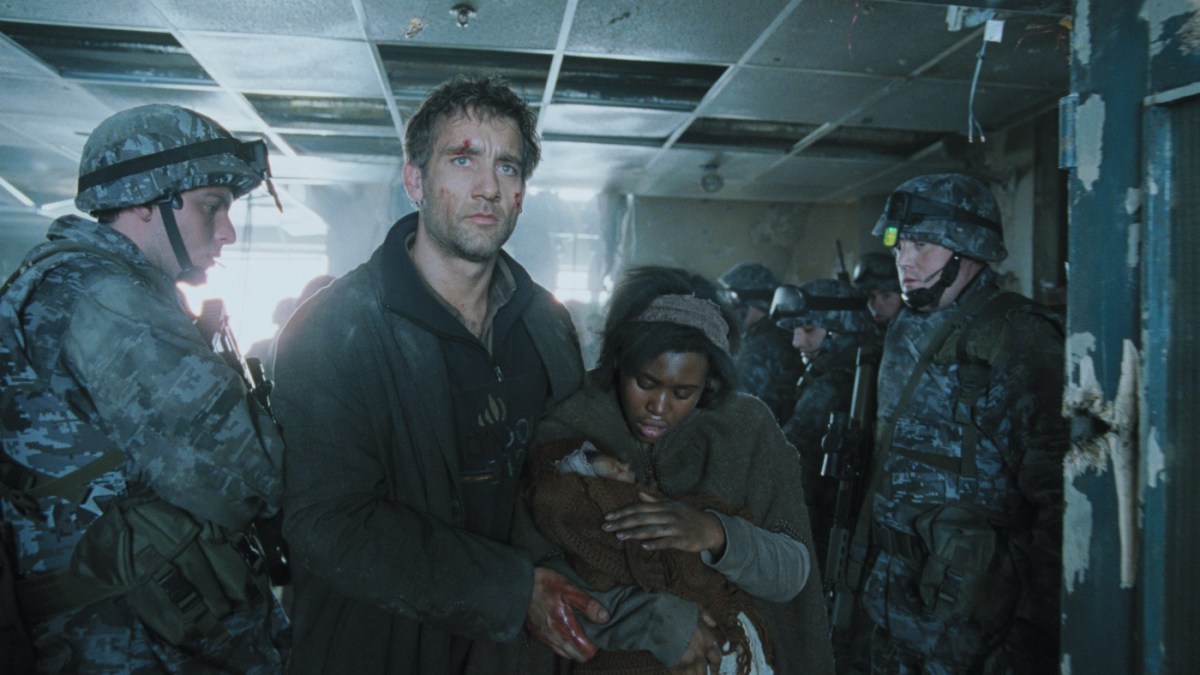
How we as humanity cling to hope is our investment into the future that better and brighter days are ahead as long as we persevere, push forward, and leave our world a little bit better for the next generation. ‘Children of Men’ is great because it poses the answer to the question of how does humanity hope for a future when no babies are being born?

The world without hearing children’s voices, laughter, and even cries can be a dark and hopeless place. That central message of the now classic movie ‘Children of Men’ (2006) has stayed with me especially in the current times of a pandemic that we are living in. How we as humanity cling to hope is our investment into the future that better and brighter days are ahead as long as we persevere, push forward, and leave our world a little bit better for the next generation. ‘Children of Men’ is great because it poses the answer to the question of how does humanity hope for a future when no babies are being born?

When you think deeply about it, humanity is restored generation after generation thanks to our youth, their ideas, their drive, their desire to not repeat the mistakes of the past and to learn from history. When you take humanity’s future away, what is there left to fight and live for? It is a powerful premise and one for which I am glad Director Alfonso Cuaron decided to focus on. His movie does not pull any punches and shows humanity at its worst when women are no longer able to have children.

Without children, playgrounds and swing sets remain empty. Refugees and immigrants are persecuted and forced into detention camps, suicide pills are common place, environmental degradation is the norm rather than an obscenity, and violent factions fight it out with the government in a post-apocalyptic United Kingdom where suicide bombings are an increasingly common occurrence as Theo (Clive Owen) discovers when he is almost the victim of one in one of the earliest scenes. Perhaps the most frightening part of the whole movie is that no one has figured out why women can’t have babies anymore and the novel that the film is based on is also clear when it shies away from saying why men can’t help in the reproduction process anymore.

In ‘Children of Men’, no child has been born for 18 years and it can be hard to retain hope after that long that things will change. The world is in a downward spiral and things get worse as the youngest person alive, Diego, is killed by an angry crowd. Theo takes solace in the fact that he has a good job at the government ministry and has a funny friend who goes by the name Jasper. Still, you can tell that Theo has lost faith in humanity especially after the death of his infant son due to a flu pandemic and his estranged relationship with Julian, his wife. However, when Julian tells Theo about Kee, a pregnant African woman, who may be carrying the first baby in almost two decades, everything changes, and Theo finds his purpose again to live and to fight for a tomorrow. Theo dedicates himself to protecting Kee and her future baby and wants to get her to safety, which means getting her to the Human Project, a group of the world’s best scientists discussing how best to make humans fertile again.

Theo’s journey with Kee involves getting her out of a refugee camp, escaping men who want to keep Kee’s baby for political purposes and who are also armed combatants, and avoiding fascist police forces who intend to get in their way. To escape the escalating urban violence around them as both the government and rebels fight it out in bombed out Bexhill, Theo and Kee take shelter in a refugee settlement in a former apartment building. The three of them come close to being killed and the baby’s cries echo throughout the building much to the stunned shock, joy, and awe it inspires among the refugees, the rebel forces, and the government troops.

The way the cinematographer follows Kee’s baby and Kee around in a wide tracking shot is absolutely beautiful making it one of the most memorable scenes in cinema history. “How is she?”, Theo asks Kee. “Annoyed.” Kee replies. A refugee woman reaches out her hand to touch the baby and another woman sings a sweet song in her native language. Prayers and aspirations are given to the baby as Theo and Kee walk through the crowd. The rebel soldiers acknowledge the baby as they get away from the advancing troops behind them. The government’s military soldiers are in absolute shock as one soldiers’ yell at his army unit: “Ceasefire! Ceasefire!” All of them stop shooting at once and look upon Kee’s baby in disbelief, many of them never having seen a human child before in person.

To see the armed men in tanks and heavy weapons and their technological mastery stop, think, and realize how humanity and its future must be preserved and let free without being in danger. Not much can stop a war from continuing but a baby’s cries can most certainly pause it for a few minutes as this brilliant scene exemplifies. An immediate symbol of hope for humanity and its possible redemption is realized in its newest addition and it is a wonderful allegory to how despite our differences, any human around the world will stop to comfort, aid, and protect for a baby as we would do for our own children or grandchildren or even nieces and nephews.

Those men who don’t see the baby continue to fire at each other in the distance but any soldier, man, or woman who hears the baby crying lowers their weapon, pays their respect, and let Theo and Kee have safe passage as they represent a glimpse of hope finally for humanity’s future rather than its eventual extinction. Some of the soldiers pray to their God and others peer in to get a look at the baby with their own eyes but all are silent and in disbelief thinking that finally there might be hope again.

After a minute or two of calm and as Kee and Theo are about to get away, a rocket RPG hits the government soldiers and the men ignore the baby again and get back to fighting the rebel forces in the building that Kee and Theo just left. To me, that is a tragic symbol of how once we have something out of sight and out of mind, we go back to fighting each other instead of uniting around a common cause. As that RPG fires, I think to myself watching this scene how somebody always has to ruin it for everybody else. Unfortunately, Kee’s baby does not lead right away to world peace and a cessation of arms. However, it is enough time for the two of them to escape and have a fighting chance of reaching the Human Project.

A baby’s cries are more powerful and everlasting than any weapon, any political cause, and any division between humanity. While human nature cannot be totally pacified by children and babies being born, it allows us to fight for better days and for a future freer of pain, sorrow, and tragedy.

I hope that when you watch this scene, you’ll realize that even in our current age when fertility is not extinct and is not a present issue that we are still fighting to preserve hope for the next generation and generations to come. Whether it is preventing pandemics, stemming the worst effects of climate change, or preventing nuclear war between nations, we all have a responsibility to be stewards like Theo in protecting the babies of the future against any manmade harm that could befall them due to our own neglect and ignorance.

Please do watch this ‘Miracle Ceasefire’ scene and the rest of ‘Children of Men’ when you have the chance. It is an excellent film to see and this scene may be the best one of the entire film. Hope and redemption are only as strong as our ability to have a better future.

An Ode to Curiosity

What separates the dreamers from the strivers? There are a number of characteristics and personal qualities that distinguish someone who dreams of doing big things and one who actually strives to accomplish these big things. Among these characteristics include commitment, consistency, hard work, patience, perseverance and they are all important for different reasons but the most important characteristics that stands out to me is having curiosity and being willing to learn new things because of that curiosity. If you don’t have any curiosity or willingness to learn how things work and why, you can dream about making an impact all you want but if you aren’t willing to spend time learning about what you’re interested in and what you can improve upon whether physically or mentally, then your goals will likely not be accomplished.

This ability to strive for hard-to-reach goals amid an appetite for education, learning, and overall growth is exemplified by a number of great men and women throughout history. Even when they were unsure that they would not live to see their ideas or their plans come to fruition, their insatiable curiosity was used to move the goal posts forward often to the benefit of humanity as a whole.

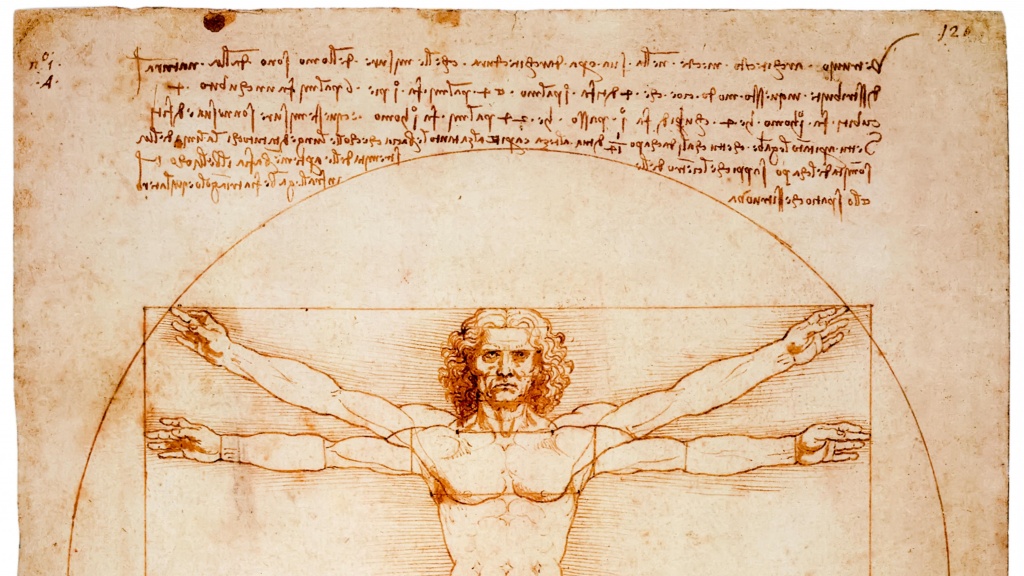
I was reminded by this characteristic this past weekend as I went to a really well-done and educational exhibit on 500 Years of Leonardo Da Vinci regarding both his finished and his unfinished works. Books full of notes, dozens of paintings, and sketches, graphs, and illustrations to note what he had in mind for the furthering of humankind. I would say most of what he set out to do during his life was not accomplished during it but what he did was open up the ideas and the possibilities to the rest of the world so that some other engineer or inventor could go all the way to make his vision a reality.

Da Vinci was a genius, but he was also curious about how to bring about new ideas in the world. He did not care if they could never come to fruition or if they failed. Similar to other great inventors, he knew that sometimes you have to try things out one hundred or even one thousand times to get things truly right. You can’t be shy or timid if you have something you think can truly change the world and make it a better place. In some cases, Da Vinci’s ideas where decades or even centuries ahead of time and if more people were curious to the same extent, there is no telling that the 1500s could have been more like the 1900s much quicker.

To understand how to make a man fly in the air or how to bring him back down safely, to figure out how to make cities more livable, and how to engineer machines to bring energy and water to people more easily, these are all monumental tasks that stem from Da Vinci’s trait of having an insatiable curiosity. He was mainly self-educated and self-taught who loved learning about the wonders of the world from engineering to painting to the science of the human body. It is difficult to even comprehend how things would be different today had he been born in the modern era instead of during the renaissance era.

He was almost superhuman in his drive and in his motivation but what all of us can have in common with Da Vinci is to awaken the innate curiosity or curiosities inside of us. Few of us today, if any, will have the curiosity matched by the genius and intellect of a Da Vinci but all of us are curious about something and we want to do our best to master it. For some of us, it’s our curiosity to play a piece of music perfectly without stopping.

For others, it’s about solving an almost impossibly hard equation that could have real-world consequences. Whether it is art, science(s), programming, mathematics, politics, etc., you have to find out what you are curious about and how you can use your curiosity to further advancements and developments in any of these fields. You may only have curiosity about a particular field, but it is your prerogative then to be the best you can in that field in order to get that sense of fulfillment.

Leonardo Da Vinci was a special person and a once-in-a-lifetime talent whose likes we may have seen the last of but what he represents is our drive as human beings to reach new heights and to challenge past notions of what is and what isn’t possible. During his relatively short life, he was able to accomplish so much in different areas of human endeavor and still has had an impact on the world today more than 500 years after his death. He is an example of what is possible if you set your mind and your body to quenching your curiosity and leaving your mark on the world in some small way.

Even if you are not recognized during your life, it is important to keep notes, drawings, illustrations, and records of your hard work so that someone may be able to pick up the torch after you and carry it forward. Sharing your thought process and your ideas with the world long after your time on Earth comes to an end is the closest a person can get to a sense of immortality.

Da Vinci may not have made man fly during his lifetime or made them capable of constructing his idea of the perfect city, but he was able to leave detailed blueprints for other engineers and inventors to carry forward with their own innate sense of curiosities. Having an insatiable curiosity and a powerful imagination can drive you even when you have tried your 100th or 1000th idea. If you are curious, passionate, and willing to fail more than you will likely succeed, you will be sure of having some impact on the world and a chance to be remembered by others long after you have gone.