English Corner – Simple Past Tense

For this edition of ‘English Corner’, we’re going into the past to figure out and understand the ‘Simple Past Tense.’ In order to successfully master the English language, you need to be able to use the simple past tense correctly. Whether it’s talking about what you did yesterday or last week or even five years ago, the structure and formation of the simple past tense should not be overlooked. As we discussed previously with the simple present tense and the present progressive tense, having a good grasp of these basic grammar forms will help you to get better in English really quickly.

In this blog post, I’ll go over when and how we should use the simple past tense and you will be able to see a few examples of how to put this grammar tense into action. If you have any questions or comments, please leave them for me below the article, as I am happy to help anyone out who needs additional assistance with the simple past tense. After going through this grammar tense for this post, be on the lookout for the next edition of ‘English Corner’ when we go over the past progressive tense.

If you have heard about the ‘preterite tense’ but don’t know about the ‘simple past tense’, then you can be at ease knowing that they are one in the same. While there are different forms of the past tense, the ‘simple past tense’ has become the most commonly used form and is quite easy to master if you are able to understand and apply the structures and the different ways you can use the grammar tense in a sentence.

When it comes to creating the simple past tense, the structure is quite simple. There are three types of sentences that you can form with the simple past tense: positive, negative, and questions. For positive sentences, you’ll put the ‘subject’ first and then add the ‘main verb’, which will be in the simple past tense. For negative sentences, you put the subject first and then an auxiliary verb with the verb ‘to do’, put into the past tense, which becomes ‘did’ followed by the word ‘not’ afterwards to indicate the negation in the sentence. The last part of the ‘negative’ sentence with simple past is the ‘main verb’ so the structure should be ‘subject’ + ‘auxiliary verb and ‘not’ + ‘main verb’ to complete the sentence fully. The question form of the ‘simple past tense’ is very similar to the negative form but there’s one exception that makes them different from each other.

The ‘auxiliary verb’ comes first before the ‘subject’ and then after the subject comes the ‘main verb’ and the ‘object’, which completes the sentence’s overall purpose. Positive sentences for the simple past tense do not have any auxiliary verbs as the negative and question sentences do reply upon. The verb ‘to do’ is the most important one when it comes to forming the simple past sentence regardless if its’ a positive, negative, or question form of the grammar tense. Lastly, the negative sentences you create must have the ‘not’ word after the auxiliary verb and before the main verb in order for it to make grammatical sense.

Examples

Positive Sentences:

I did go to the mall last weekend. (to go)

         I did play with my friends at the park yesterday. (to play)

Negative Sentences:

I did not think you were polite at the lecture on Monday. (to think)

I did not believe you when you said the stock market crashed. (to believe)

Question Sentences:

Did you do your homework last night? (to do)

Did you tell her you were late for class? (to tell)

When it comes to the verb ‘to be’, there is a different structure for the simple past tense that the average ESL student should be made aware of. In order to put ‘to be’ in the past tense form, it’s either going to become ‘was’ or ‘were’ depending upon what subject is being used at the beginning of the sentence. For the positive form of the was/were usage of ‘to be’ in the past tense, you start with I/He/She/It (subjects) and then the verb, which in this case for singular subjects would be was, followed by the object of the sentence.

For sentences with subject plurals like We/They/You, you are going to change ‘to be’ from was to were to reflect the change followed by the action / object again. For the negative form, you’re just going to add ‘not’ between the main verb and the object at the end of the sentence. ‘Was or were’ are going to be placed at the beginning of a question sentence followed by the subject and the actions that are involved in the sentence.

Examples

Positive Sentences:

He was here yesterday evening at the dinner table. (to be)

         You were in Istanbul last weekend for a friend’s birthday. (to be)

Negative Sentences:

I was not at the park last night because I had work to do. (to be)

They were not at the party because they were not invited. (to be)

Question Sentences:

Was she nice to her date last Thursday night? (to be)

Were you happy with how you did on the Spanish exam? (to be)

Compared to the verb ‘to do’ in the simple past tense, ‘to be’ has no auxiliary verbs at all even for the question and negative forms of the verb tense. However, it is the same in that ‘not’ always comes after the main verb for a negative sentence. The subject also becomes the past tense form of the verb ‘to be’ while the main verb moves to the middle of the sentence and is actually the subject words such as he / she / they, etc.

If you simply would like to use the past simple tense with most of the verbs you’ll be using in your sentences, you will add the letter ‘d’ or ‘-ed’ to the end of the verb in order for it to make sense grammatically. There are a couple of examples we should take a look at it when it comes to forming the simple past tense of the verb with ‘d’ or ‘ed.’

Examples

  1. After school, he walked home in the rain.
  2. He danced really well with his date at the senior prom.
  3. She planned to go to Europe this summer but she couldn’t save up enough money.
  4. Because his mother was sick, he baked a chocolate cake.
  5. We went to the movies after we ate at a Mexican restaurant.

It’s important to note that there may be some irregular verbs that are formed differently when it comes to the simple past tense. For example, ‘go’ in the simple present tense will become ‘went’ when it comes to being grammatically correct in the simple past tense. Another verb like ‘eat’ will become ‘ate’ and ‘drink’ will also change slightly to become ‘drank.’ While most of the verbs only need a ‘d’ or an ‘ed’ to be properly simple past, there are a few irregular verbs that should be memorized for the fact that they are exceptions to the rule when it comes to going from present to past in terms of how the word is written and pronounced.

Now that we know how to use the structure of the simple past tense, you’ll also want to be aware of what kinds of uses do we have for this particular grammar tense. The main purpose of the simple past tense is to talk about the past meaning that we want to shed light about a thing, an action, or a situation that happened in the past. These events can be as recent in the past as in they happened last night or they can be events that occurred long ago such as discussing a sports championship that happened over a decade ago.

Examples

  1. I played my violin last night for my parents and brother. (short time ago)
  2. I had a great time living in Istanbul, Turkey back in 2015. (long time ago)

When we use the simple past tense, you cannot refer to events or actions that are happening currently in the present or are slated to happen anytime in the future. The simple past tense only focuses on those events and actions that were completed sometime in the past. It simply doesn’t matter if the event was finished ten years ago or ten seconds ago. The fact is that it’s still in the past and the sentence structure should reflect the grammatical tense that fits the place and time.

Lastly, it should be noted that the books you’ve read or the movies you seen who occur in the past are mainly going to use the simple past tense. The present perfect and simple present tense may be used in stories or movies as well but you’re going to want to pay attention and listen to the sentences with the simple past tense because they are going to be the most common.

If you want to practice your simple past tense after reading this article, I recommend listening to songs, reading books, watching movies that take place in the past. Besides speaking or writing about the past, participating in the active listening and / or reading about events or moments in the past will help to take your English language skills to the next level. I hope you enjoyed this ‘English Corner’ post and please leave a comment if you have any questions, queries, or comments.

English Corner – Present Progressive Tense

present_progressive_tense
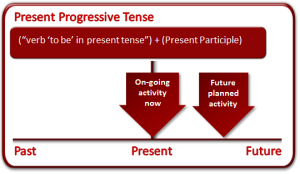
“If you’re not sure where the Present Progressive Tense fits into the timeline, I have a useful chart for you to study.”

As a student of the English language, once you’re able to understand and use the ‘Simple Present Tense’ with proficiency and are ready to move on to the next grammar step, it would be wise to start learning about the ‘Present Progressive Tense.’ This particular grammar tense can help you to describe a number of different topics and can be used in a variety of ways. By studying the examples listed in this blog post and knowing when to apply the present progressive tense, you’ll be able to advance and get better in your study of English grammar rules.

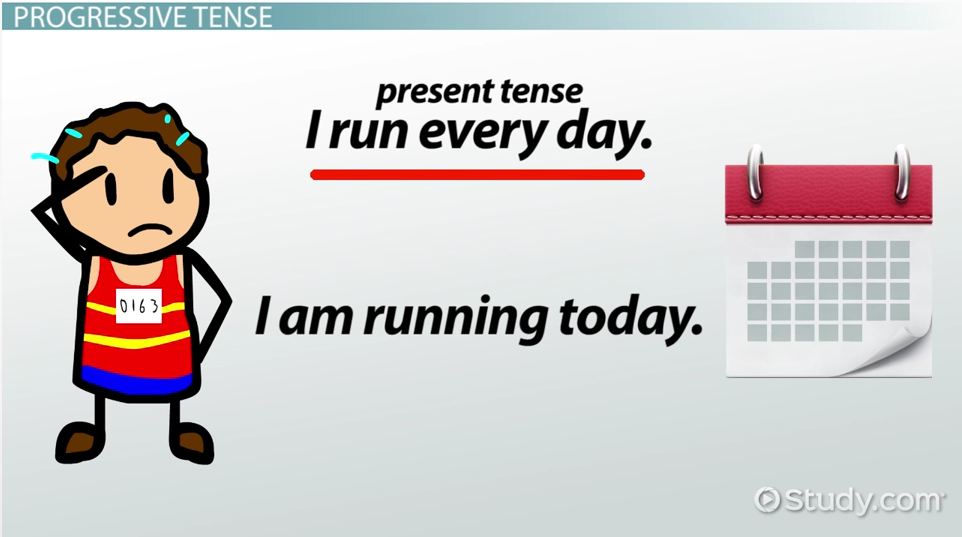
The ‘Present Tense’ is divided into two kinds: the ‘Simple’ present tense and the ‘Continuous’ or ‘Progressive’ present tense. In order to fully understand the present tense grammar form, it’s important to understand both the ‘simple’ and ‘progressive’ aspects to this concept. Please follow along and read through this blog post if you’re a student of English grammar and want to better understand the ‘Present Progressive Tense.’ We will start by looking at a couple of examples regarding how this grammar tense is supposed to be structured. I would recommend that you copy these particular examples so you have some idea on how to use the present progressive tense in a sentence.

Examples

  1. I am going to the store today.
  2. We are planning on coming to your wedding tonight.
  3. What are you doing for dinner later this evening?

For the actual structure of the Present Progressive tense, it’s a little bit different when compared to the Simple Present tense. It’s necessary to begin the sentence with the ‘subject’ word whether it is “I, You, We, They, He / She, etc.” and you can also use the question form as well with “What, When, Where, Why, etc.” at the beginning of a sentence. The auxiliary verb, which is supposed to be conjugated in the Simple Present tense would come next and is modified depending upon which ‘subject’ word is used at the beginning of the sentence.

The auxiliary verb “to be” is the most popular form when it comes to the present tense so it is meant to be used often when it comes to creating the sentence. When you conjugate “to be” in the simple present form, you’ll end up with “is, are, am, etc.” depending upon the subject word. The auxiliary verb is always followed by the main verb, which is supposed to be displayed in present participle form. When we mention the present participle form, it basically involves the verb such as “do” and adding an “ing” to the end of the verb.

For negative sentences, the form of the present progressive sentence is a little bit different compared to regular sentences. It’s necessary to put the word ‘not’ in between the auxiliary verb and the main verb in order for the sentence to make grammatical sense.

Examples

  1. I am not dancing at the ball tonight.
  2. You are not playing basketball tomorrow.

If you’re thinking about making a question sentence with the present progressive tense, there’s a clear step that you need to take in order to make it work. The ‘subject’ at the beginning of the sentence must be exchanged for the ‘auxiliary verb’ due to a necessary change in the structure of the sentence in order to make the question work.

Examples

  1. Am I doing the right thing?
  2. Are you playing the piano for the recital?

As you can see, the ‘am’ which is the auxiliary verb comes at the beginning of the sentence this time and the ‘I’ word comes after and becomes secondary in terms of its’ placement. The positive and negative forms of the present progressive tense are quite similar to each other with the only difference being that the ‘not’ is added into the structure of the sentence in order to create that difference but the actual structure of the present progressive tense does not change at all. When it comes to the question form however, there is a change in the actual structure of the present progressive tense with the fact that the ‘subject’ and the ‘auxiliary verb’ essentially change places in order to form the actual question.

Now that we know the structure of the present progressive tense in its’ main forms of usage, how do we know when to put this grammatical tense into action? Well, it’s quite simple actually. There are some fundamental principles that guide the use of the present progressive tense in formal sentences. The present progressive tense can describe actions that are happening in real time and are continuing into the near future.

These could be actions or occurrences that are happening right now and have not been finished yet. These are actions that are in progress and have not reached the completion stage yet. This is why we add the –ing to our verbs to indicate that the action is ongoing and hasn’t reached an end yet.

Examples

  1. The wheels are spinning.
  2. The tables are turning.
  3. The guns are firing.

In addition to those actions that are occurring right now, there are also actions that have no set time frame or completion date yet but are ongoing and will require some time to finish. This is the most popular use for the –ing form and there are a lot of examples that can be construed from it.

Examples

  1. John is taking Salsa lessons.
  2. Martha is learning how to cook.
  3. Bob is starting a new job.

Despite being known as the ‘present progressive’ tense, this grammatical tense can also be used to describe actions or habits that will be occurring in the near future. In order to make this work though, you must add a word to indicate that something will happen in the future. Some examples of these words include ‘tonight, tomorrow, next week, this weekend, two days from now, etc. Usually, you are describing something that has been planned out to occur in the future with a specific date or timeframe in mind. People are long-term planners and thus, we are able to talk about actions that we will take in the future having made the plans ahead of time.

Examples

  1. I am going to attend university next August.
  2. I am planning to go to Mexico this winter.
  3. We are thinking about having our honeymoon in Hawaii next month.

The plan has already been set in motion and that’s why you’re discussing what you’re going to be doing but at a future time and place. It’s vital to remember that the present progressive tense does not exist without adding -ing to any verb regardless of which verb it is. The present progressive tense may not be the most popular grammatical tense but it is extremely important to practice, create examples, and master it both in its’ written form and its’ spoken form. Before you can go on to the ‘past’ and ‘future’ grammatical tenses, I believe that it’s necessary to have a good handle on the present progressive tense first before moving on to something else. Keep my explanations and examples in mind and look out for another ‘English Corner’ coming to you all soon.

View From The Top

Tired and thirsty, my friend and I had finally reached the glorious peak at ‘La Piedra’ or ‘El Peñol del Piedra’, which loosely translates in English to ‘The Stone.’ It was quite a physically taxing climb up to the top of the rock as my legs burned and my feet became sore as my friend and I ascended the 750 steps along with some steep hiking up a good-sized hill to get to the base of the ‘La Piedra’ rock.

I came to Guatepe partly after hearing from friends in Medellin on how beautiful and unique it was and after seeing various pictures of the stunning landscapes that make up this tranquil part of Antioquia. I was skeptical of the place and didn’t think that it would live up to the hype but I am happy to say that I was completely wrong. Out of all the places I’ve visited and the landscapes I’ve traversed, Guatepe is a really special place to visit. The area is made up of dozens of intertwining, clear blue lakes surrounded by the greenest forestry you could imagine with soil rich in different colors. My friend compared it to the southern United States and thought that it was similar to the state of North Carolina. To me, that’s part of the beauty of Colombia in that there are so many varied landscapes. You could sometimes wonder whether or not you’re in a different country entirely depending on if you’re in Atlantico or in Antioquia.

The landscapes were beautiful, the air was clean, the people were friendly, and the view from the top of ‘La Piedra’ was unbeatable. A 360-degree vista of all of the lakes, hills, and greenery that make up Guatepe was quite breathtaking and peaceful to behold. It helped that my friend and I had great weather to enjoy where the skies were clear blue and the bright sun was shining down on us.

It was really pleasant to take pictures, to soak up the view, and to have a cold drink after the long journey to the top. I consider myself to be in pretty good shape but walking up the steep 750 steps is not for everyone and it really is quite the challenge. While it’s not insurmountable, your feet and legs feel the pain and you wonder when the full view is going to come into play. At ‘La Piedra’, they really make the tourists and the visitors to the rock work for it. There are no escalators or elevators. You have to pay for admission and if you don’t make it to the top, you don’t get your money back. Like a lot of things in life, you have to invest yourself physically and mentally in order to reap the benefits.

Similar to many other moments in life, I reflected on those 750 steps of ‘La Piedra’ as being a necessary yet temporary struggle to reach the top and enjoy the view. For me, it wouldn’t have been as worthwhile at all to check out ‘La Piedra’ if there were an escalator or an elevator to shortcut the journey. I believe that I enjoyed the view from the top of ‘La Piedra’ much more given the fact that I was tired, hungry, and in need of a rest. The struggle was tough enough for me that as a result, the ultimate reward became more fulfilling. If the climb up had been much easier, it simply would have been less rewarding. Because the views from this rock were magnificent, I was willing to climb the 750 steps to get to the top. Sometimes in life, the struggle is worth the reward.

Whether it’s traveling to a new country, starting a new job, moving to a new place, or working on a blog, there’s going to be some struggles and setbacks involved. Sometimes, you’re going to have to decide whether the sacrifices you make and the challenges you have to overcome are enough to justify the rewards. Nothing in life is as easy as it seems and if it appears that way, you may be let down when the reward or success you’ve seen from it doesn’t feel as good as a result. It’s important to realize that working hard and trying new things can lead to failure but it can also lead to a success that’s more whole and fulfilling.

Putting blood, sweat, and tears, into a project, a job, or a relationship takes a lot of work but you can rest easy knowing that it was your labor, which brought it into fruition. If everything in life is simply handed to you, you may feel happy and experience pleasure from it in the short-term but it’s likely to make you miserable in the long-term. Being able to exert yourself in the world physically or mentally can give you a much more lasting feeling of success and contentment. While I would have been happy with the ‘view from the top’ had there been an elevator for tourists like me to go to the top, I felt much more relieved and excited from the view after step #750 because it was the sweat and the toil to get up there physically that filled me with contentedness and satisfaction.

Before I left Guatepe, I wanted to see more of the area so I rented a kayak in the morning and set out by myself. I untied the canoe, got ahold of the equipment and the oars, and pushed the kayak out into the open waters. The day before, I had viewed Guatepe from the top but now I was back on level ground exerting myself physically stroke by stroke on a two-seater kayak in order to enjoy the scenery, and the peaceful quiet of a Sunday morning.

For anybody who’s done kayaking by themselves before should know, it’s a struggle at first to steer the kayak and to move in sync with the tide. Like the day before, I was challenging myself physically and thus, I felt more rewarded when I was able to glide by the birds chirping, the local residents fishing, and taking in the sheer greenery of Guatepe. I have to say it was a good way to end my weekend trip to that part of Antioquia, which is a truly beautiful and well-preserved area of Colombia.

I hope to get across to my readers that it’s very likely in life that you’ll get the most satisfaction from those challenges you endured and personally overcome. Whether it’s that huge rock in Guatepe you climbed or that successful business you started on your own time and with your own money, these efforts will create sustainable happiness and noticeable self-confidence. It’s not easy to get to the top and that’s why you have to work hard and exert yourself in order to enjoy the view.


The Blog Turns One

This week officially marks a year of my blog’s existence and I have to say that it’s been a rewarding and fulfilling experience overall. It started over seventy-five posts ago with my first look into the increasing presence of smartphones in today’s society with “Smartphones: Man’s New Best Friend?” and has continued up through this September with pictures during my recent trip to Guatepe, Antioquia, Colombia.

Over the past year, I’ve learned a lot about the writing process especially when it comes to topics like travel and self-development. While my writing and photography skills are still a work in progress, I believe that I am a better writer and photographer than I was a year ago. I have put a lot of time and effort into this blog over the past year and I am thankful to all of the readers, friends, and family who have supported it by reading the articles, leaving comments, and giving me constructive feedback.

I’ve been through some big life changes with moving home and then back to Colombia recently. This blog has changed to become more travel and culture focused since that’s where I am right now in my life but I hope to continue writing about self-development and even ESL topics. I’m quite proud of the work that has gone into this blog and hope that you as the reader have learned a lot or gained something from my writings. So far, I have had a couple of thousand unique visitors from many different countries along with thousands of individual views and that’s very exciting to see.

As this blog enters year two, I am hoping to invest more time and money into the layout and formatting as well as creating more content for the reader. The first year has been very rewarding for me and I hope to continue developing this blog and expanding the readership. As a writer who enjoys hearing constructive comments, feedback, and criticism, I hope that you will leave a comment telling me your thoughts and suggestions about the blog. I am open to any advice as long as its’ respectful and within reason. I will continue to have eight to ten posts per month in 2017 and will highlight more of my experiences of living, working in Colombia as well as some upcoming travels to different parts of South America.

If you’re new to this blog and don’t know much about me or my writings, I have organized an archives section which has the location of all seventy-five of my posts which have occurred in the past year. I also have a ‘Best Of’ Articles page where I highlight the ten blog posts that I like the most when it comes to culture, lifestyle, traveling, music/movies/books, and personal development. You can find the individual links to these ten top posts here: https://benjweinberg.com/best-of-articles/.

I am now one year into my blogging hobby and I am happy with the results so far. I hope that this website will continue to grow in terms of audience and expand in terms of its’ content. I want to say thank you to all the readers and supports of benjweinberg.com and I look forward to keeping in touch with you throughout the rest of the year and into 2017. Please feel free to leave a comment on this particular post if you would like to share your thoughts or express your opinion about the blog so far and where you might like to see it go in the next year. Cheers to the future and here’s hoping to a great 2nd year of this blog!

The Art of Traveling Solo

The famous English author, J.R.R. Tolkien, once wrote in his poem “All that is gold does not glitter” a line that should be noted for its’ truth and its’ profundity. The 2nd line of the poem states, “Not all those who wander are lost.” This is a fitting statement for those of us travelers who have stepped foot in another city or country being completely on our own. It’s not something that can be easily done and requires a bit of mental fortitude to be able to enjoy it despite the inherent challenges.

While most travelers like to go from place to place in packs, big groups, or in guided tours, I believe that it is necessary to try out traveling alone especially if you have prior experience in traveling to other cities and countries. Once you are comfortable with the art of traveling itself, I think it’s a good idea to challenge yourself by traveling alone. I won’t choose to judge you if you decide to never try it by I respect any fellow traveler more when they tell me that they have been by themselves in a new country for days, weeks, months, and even years at a time.

In order to travel alone successfully, I would recommend that a person be able to adapt or inherently have a few traits or characteristics that will put them more at ease with the idea. First, you have to be comfortable being alone. You have to be able to embrace the solitude of your thoughts and to be more observant of the world. This is a hard thing to accomplish for strictly extroverted people who thrive off of the energy of being around others. However, if you’re a strict introvert or fall somewhere in the middle of those two broad categories like myself, then you won’t find traveling solo as hard as pure extroverts. Sometimes, you will have to be alone in a restaurant, in a museum, or in your train/plane/taxi.

I think there’s a benefit to this because then you’re more likely to focus on the place you’re traveling to and be able to better absorb the culture, customs, and especially the food/drinks of the new place you’re traveling to. When you’re with your friends and family on a trip, you’re often wrapped up in what they’re thinking, what you’re going to do with them for the day, if they’re having a good time or not, etc. With friends and family, you’re in a mini-bubble that’s hard to break out of. When you’re traveling with another person or a group in general, you’re less likely to appreciate other aspects of the trip. How can you focus on the sheer beauty of the Coliseum in Rome, Italy when your close friend is trying to discuss the latest Game of Thrones episode with you?

Some critics of traveling solo also forget about the fact that you will still meet people during your travels to new places. You’ll only truly be alone if you never open your mouth and be social. It’s easier now than ever to connect with new people and make new friends due to the wonders of the Internet. Due to the popularity of websites like AirBNB, Couchsurfing, and the ubiquitous amount of hostels in every part of the globe, even if you travel alone for an extended period of time, it’s still easy to meet people due to the sharing economy’s emphasis on affordable, shared living spaces.

I also couldn’t forget the sheer amount of other opportunities to have language exchanges, expat gatherings, and to just make the effort to open your mouth to someone and start a conversation. I find that it’s easier to meet people on the road than it is when I’m at home because they’re curious about where you’re from, how long you have been traveling for, and what you are doing in their country, etc. and you’ll also be curious about the same things.

During my recent trip to Santa Marta, which was done solo, I was able to befriend my kind AirBNB host from Bogota, hang out with the locals at a bar, and practice my beginner Portuguese with a Brazilian woman from Rio de Janeiro. When you’re traveling alone, you really have to put yourself out there and be more social. That’s not easy for a lot of people but it’s important to try it at least once. If you have any kind of social anxiety or shyness, you’ll be able to overcome it more and more due to solo travels.

Traveling alone is something that you have to ease into over time. I think it’s wise to start with a day trip to a nearby city where you don’t know anyone and then eventually work your way up to visiting a new country by yourself for a few days or a week. Personally, the longest that I’ve traveled by myself for has been about two weeks. I’d like to eventually reach that level of a month or more on the road without anyone holding my hand. Traveling alone forces you out of your comfort zone and mentally challenges you. You have to navigate a new city and country, practice the language by yourself, and be able to handle flights, trains, and buses without the guidance of others.

While this is not easy and takes practice, you’ll feel more confident and sure of yourself as a result. The times where you could have been taking selfies with your friends or partying until the wee hours of the morning are instead focused on having a nice coffee by the river or taking your time in an art museum by going through the galleries at your own pace. Traveling solo is a good time to be selfish as you can set your schedule, your own destinations, and decide where you want to go and when you want to go. There’s nobody holding you back and that’s quite liberating. I often get a feeling of true freedom while traveling alone that’s not easily replicated.

Even if there was no one else physically with me, I have nice memories of my past solo travels. The moment when I woke up on my train to Krakow, Poland in the early morning to open my window to see fresh snow on the ground and the sun rising as we entered the train station. The feeling of pure relaxation as I enjoyed a nice mid-day cappuccino with a view of the Prague skyline in the Czech Republic, and the absolute quiet I felt as I sat on the beach in Parque Tayrona, Colombia and heard nothing but the soft, sea breeze and the waves splashing against my feet. These are the memories that I will cherish and never forget. That is why I enjoy the art of solo traveling.

Fear of The Unknown

visually-expressed-thoughts-by-carlos-lang-24
“I couldn’t have said it better myself.”

Why do people sometimes have a fear of the unknown? As human beings, we each have our own unique doubts, fears, and phobias that develop as we deal with the world and its’ challenges. Whether they are fears related to heights, spiders, snakes, or even speaking in front of a large audience, it’s part of what makes us human to have fears. Facing and confronting your fears is not an easy struggle and it takes courage, compassion, and emotional maturity to get past your phobias. One of the most common fears that most of us have from time to time is ‘Fear of the Unknown.’

To have a strong desire to control your circumstances, your path in life, and your future is only natural. However, it’s clear that some things can never be fully known and that there will be changes that we will have to cope with. Trying to control everything and everybody around you is a recipe for disaster. Facing the unknown without fear is not easy but it is necessary in order to become a more mature and more centered person. Fear of the unknown is related to other fears that people have which have a connection to one another such as the fear of death, the fear of getting old, the fear of being homeless, the fear of life changes, etc.

There’s a popular saying that goes, “You always fear what you don’t understand.” This quote ties into a central idea that people fear most what they cannot change, anticipate, or prevent from happening. Some examples of this phenomena include economic recessions, societal changes, job loss, personal loss, election results, retirement planning, health problems, environmental concerns, etc. All of these phenomenon tie into the overall ‘fear of the unknown’ for the average man or woman. None of these phenomena can be controlled or even changed by one individual. Since we cannot usually have a great effect on preventing these fears from becoming real or taking place in our lives, what can we do or what should we do?

It’s best not to resist the changes that are bound to happen at some point in our lives. We simply cannot know everything that is to occur in the future and it would be useless to try to plan for everything ahead of time. Most of the time, it’s best to go with the flow, try best not to fight what comes your way, and to make the most out of things. Do not give in to fear, hate, doubt, disappointment, and anger, which are all negative consequences that come with fearing the unknown and the unseen. Having fear about what can happen a week, a month, a year, or a decade from today is a waste of time because you simply can’t know what exactly lies ahead in the future.

The older I get, the more I realize how important it is to be adaptable and malleable to the future. Trying to plan everything out is a waste of time and energy. While seeking stability, security for yourself and others is an important part of the human condition. Sometimes, you need to cope with some instability and insecurity that will come your way. Another notable saying that people rely on for strength is the popular quote; “Whatever doesn’t kill you makes you stronger.” Persistent fear of what’s to come is not productive, not enjoyable, and not healthy for anyone in the long-term.

What happens to most people when they feel a palpable sense of fear? Well, there are a number of common symptoms and ailments that one can experience as a result. Your heart rate starts to increase, and your breath will become shorter and more harried. You may begin to panic, and feel an enormous sense of tension in your body. You’re going to be anxious and stressed about the unknown and what you’re going to do about it. The more extreme symptoms of feeling fear involve nausea, fainting, vomiting, crying, and shaking uncontrollably. I mention these reactions to fear not to scare my readers but so you can better learn to recognize these symptoms and try to control and alleviate them as best as you can.

Now that we know what the ‘Fear of the Unknown’ is and how to classify it along with the related symptoms, how can we cope we this fact of life? The most important thing to keep in mind when confronting this particular fear is to stay positive about what’s to come. Not everything in life will go smoothly and there will be challenges ahead. However, it’s important to remove the negative associations, conclusions that your mind will come up with sometimes when it comes to thinking and planning for the unknown. A little bit of anxiety and stress is natural when it comes to facing the future but it should not affect your daily activities and your personal relationships.

You’ll have a more peaceful state of mind when you react to the strange and unforeseen future with a positive and upbeat outlook. It’s best to focus on your goals, stay focused, and don’t get sidetracked about what might or what not happen to you in the future. Changing your thoughts and your mindset through meditation for five to ten minutes on a daily basis can also be a great self-help remedy for getting rid of your fear of the unknown.

Embracing a new environment, new friends, and new work opportunities can also keep your imagination in the right state of mind. If your sense of anxiety and fear of the unknown is extremely strong and hard to break, it may be best to consider neurolinguistic programming, cognitive behavioral therapy, and even certain medications if the problem becomes that severe. However, these kinds of remedies should be used only as a last resort.

Having a sense of ownership and direction in our lives is extremely important. However, we cannot control everything especially the unknown that lies ahead. Whether its’ moving to a new city or country, jumping into a dark lake, starting a new job or hiking up a mountain, these are all instances in life that can give us reasons to worry and to be anxious. However, by controlling our thoughts and emotions, and having the ability to stay positive regardless of the circumstances will keep you both mentally and physically fit.

As the 32nd President of the United States, Franklin D. Roosevelt stated famously during his 1st inaugural address to the American people on the subject of facing the Great Depression, “Let me assert my firm belief that the only thing we have to fear is…fear itself.”

English Corner – Prepositions

The ‘English Corner’ will be a new blog post series from me with a new post every month to help English language learners to better understand the vocabulary, grammar, and syntax in order to better develop their own proficiency. I have over two years of experience of teaching the English language to non-native speakers, both online and in person. I hope to use these posts to help you, the reader, improve your understanding of English, and also develop your fluency.

If you have any questions about this ‘English Corner’ post, please leave a comment and I will answer them to the best of my ability. Any constructive feedback is appreciated and I hope that this will become a popular series of posts within my website. If you enjoy my ‘English Corner’ series, you can also request private English lessons with me through the WordPress message system.

One of the biggest struggles that new learners of the English language will encounter during their studies is mastering the grammatical concept of the ‘Preposition.’ The most common issue that a lot of my ESL students have come across is how to better understand and memorize the grammar rules of the ‘Preposition.’

It’s nearly impossible to memorize all of the ‘Prepositions’ and their specific uses in English. I find that it’s best to examine certain examples where the individual preposition is being used in the sentence and for what context does it most apply fittingly. It’s important to remember that a preposition is considered to be a part-of-speech that comes before a noun type of phrase and connects it to another part of the sentence. The name of ‘Preposition’ can be broken down into pre-position which gives us a good hint that this part-of-speech needs to be placed before the noun. There are different types of noun phrases such as the noun phrase (the short boy), the noun (meat), the pronoun (us), and the ‘gerund or before the verb in –ing form’ (dancing).

The most common prepositions are on, in, to, for, with, by, and. There are numerous other prepositions and for a full list of them, I highly recommend going to this link: https://www.englishclub.com/grammar/prepositions-list.htm

There are three types of relationships that the preposition has with the rest of the sentence. They are relationships in time, in space, and of a certain method.

For some examples of prepositions in these three different relationships, let’s look at the following sentences:

  • The soccer ball is on the floor. (relationship in space)

Note: The physical location of the soccer ball is located on the floor. ‘On’ is a good example of a preposition that is used to demonstrate the relationship in space between itself and the noun.

  • You will meet him in October to discuss the business deal. (relationship in time)

Note: When it comes to date / time / place, a preposition like in is perfect for highlighting the relationship of time when it comes to a noun like ‘October.’ For months, days, weeks, and other words for time, it’s important to use the correct preposition to express this relationship.

  • I sent the wedding invite to you by postal mail. (relationship of method)

Note: When describing a method with a preposition, using by is the most popular and the most useful. Whether its’ mailing a package, or writing a reply to your boss, this kind of preposition will come in handy especially when it comes to connecting the gerund (verb + ing) to the part of speech.

There are several kinds of relationships that are expressed with the help of prepositions but the most common relate to space, time, and method.

Prepositions can either be one word (after, in, by, etc.) or a couple of words, which makes them more complex in their overall nature. (according to, despite that, because of, etc.)

Prepositions will usually come in the middle of a sentence to connect two parts of a whole sentence. However, there are exceptions and sometimes they will appear at the beginning or end of a sentence.

Examples:

Which person did you talk to?

To which person did you talk?

____________________________________________

Another important distinction between prepositions is related to whether they involve place or time.

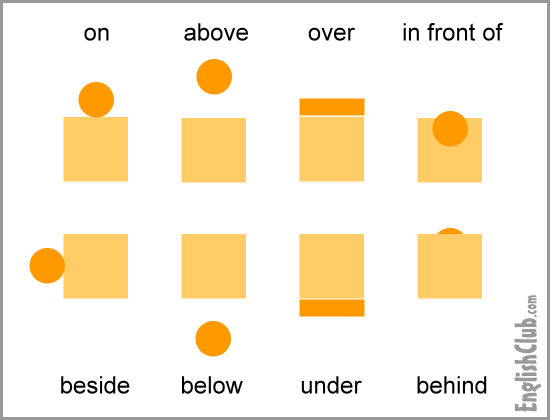
Prepositions of place describe the relation of an object or thing to another object or thing in terms of space.

This chart below provided by http://www.englishclub.com explains this phenomenon along with a list of corresponding prepositions of place:

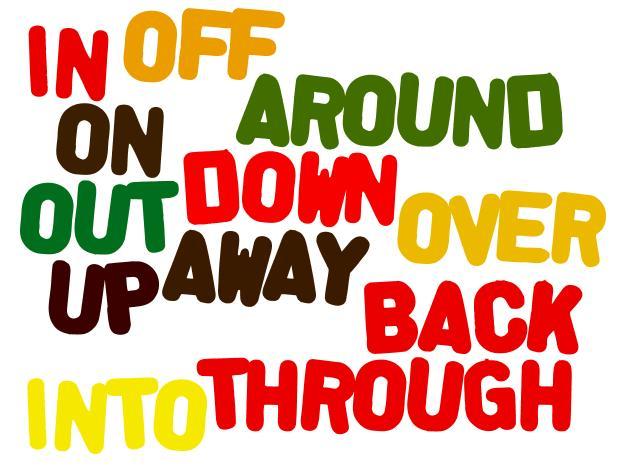
prepositions-of-place

Here are some example sentences for preposition of place:

  • My dinner plate is on the table.
  • The boy hid under his bed.
  • He stood in front of the door.
  • The bird flew above the crowd.
  • He looked over his assembled troops on the battlefield.

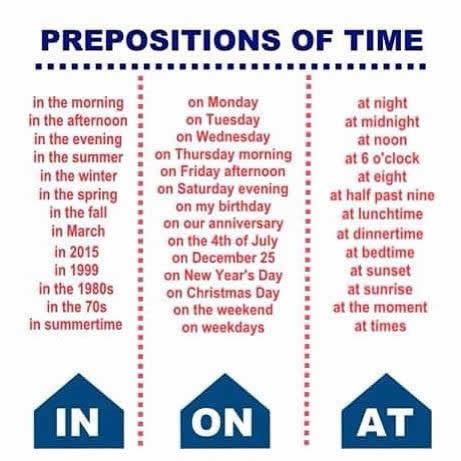
Prepositions of time usually involve prepositions like at, in, on, by, etc. We use at to describe a specific time or date. We use in to highlight months, years, decades, and long periods of time. The last preposition of on is the most specific and deals with days of the week, and dates in time. By is the least common preposition of time but can be used to express important due dates when it comes to days and weeks.

Here are some example sentences for preposition of time:

  • I have a salsa class at 8 pm tonight.
  • In September, I started my new job.
  • We ended our job strike on Tuesday because our demands were met.
  • You need to finish this project by next week.
  • We will be back from our vacation by Friday night at 11 PM.

This chart below from http://www.englishlearnsite.com is very useful in giving us more examples on how to use these prepositions of time in the correct manner without getting frustrated.

prepositions-of-time

Prepositions are an important grammatical concept to master in order to become fluent in the English language. I hope this first ‘English Corner’ session was helpful to you as a reader of my website. Remember that a preposition is always followed by a noun, and never by a verb. Prepositions usually appear in the middle of a sentence but sometimes at the beginning or end too. Placing your prepositions before the ‘noun’ and after the subject/verb will help you greatly with regards to your English grammar.

I hope you enjoyed this first edition of ‘English Corner’ and I look forward to sharing another topic with all of my visitors again soon.

Walks In The Park

IMG_0382
“When seeking solitude, there is no better place than nature.”

With the constant temptations of technology, the Internet, endless entertainment options, and other distractions, it is all too easy nowadays to get caught up in work, school, and other commitments without ever taking time for yourself. It’s been scientifically and medically proven that your body and your mind need some time away from your daily stressors. It doesn’t have to be a long amount of time for solitude away from your home, or your workplace but just enough minutes or hours where you can re-charge your energy and re-capture your focus. When it comes to seeking out solitude and alone time, our options these days are becoming increasingly limited.

Some people choose yoga classes while other folks enjoy long workouts at the gym. While these activities in particular are healthy and enjoyable, they do not provide true solitude and quietness. Meditation can clear your head and allow you to control your thoughts better but it is not an active form of peace and serenity. For myself, to enjoy solitude, quiet, and a place to think; nothing truly beats a simple walk in the park for an hour or two. Clearly, I am not the first person to advocate for the joys and benefits of being in nature.

Henry David Thoreau, considered to be “the father of nature writing”, wrote many books including the famous novel, Walden, a reflection on the simplicities of living among nature in his cabin near Walden Pond in rural Massachusetts. In addition, his friend and fellow writer Ralph Waldo Emerson helped found the Transcendentalist movement partly due to the independence and intellectual stimulation, which he received from his retreats into the world of nature.

Whether you’re walking, jogging, running, or hiking in the park, it is going to be highly beneficial to you and your state of mind. It’s okay if you do it with a friend or a family member but it’s even better to do it by yourself. Taking a walk in the park or in the local nature preserve will allow you to clarify your thoughts, experience some solitude, and enjoy the world around you.

When you heed my advice from this blog post and decide to go for a walk in the park, remember to take the following steps before you go through with this idea:

  • Leave the iPhone, iPad, Laptop, MP3 player, and any other modern technological device at home. I know it can be really tempting to check your Twitter account or listen to the new Action Bronson album, but when you’re taking a walk through the park, this course of action is highly inadvisable. You’re there to observe nature, to listen to the birds’ chirping, to hear the bees buzzing, and to see the flowers begin to bloom in the springtime sunshine. If you wanted to be with your technological gadgets, the park is not the place to do that.
  • In the park or place of nature you go to, remember to find a part of the park that doesn’t have many or any people around. I write this piece of advice not to encourage you to be anti-social but to embrace a little bit of solitude in your life. A walk in the park will help you to focus your thoughts and clarify what you’re going through in your life. It’s refreshing and natural for people to be truly alone from time to time. This doesn’t mean you’re lonely and need someone to hang out with but that you’re using this walk or run in the park to concentrate and focus on the simple act of being in nature. Our distant ancestors did fine for themselves when they were on their own to hunt for animals or to gather food for their tribe. I think that you can survive on your own for an hour or two without needing any assistance or companionship.
  • When you’re on your walk or run in the park, it is important to go off the beaten path. There are set pathways and trails that you can follow in nature but it’s very enjoyable to go outside of your comfort zone instead by trying out new paths or walkaways that you have yet to discover. If there are certain areas of the park or preserve that you haven’t been to yet, go there! If there’s a massive hill or body of water in your path, don’t be afraid to hike over it or swim through it. The best adventures that a person can have are by taking the road not yet discovered or taken and that is true for other facets of life. Try to see and be in the new areas of the park that you haven’t been to yet. I promise that you won’t regret it later. You will be glad that you expanded your perception that you have of the natural park or preserve that you’re walking or running through.
  • Last but not least, please remember to take it all in. Spend some time just to admire the beauty of the sights that lie before you. If its’ a towering waterfall, a captivating sunset, or a stunning hillside view, remember to stop and just be present in the moment. It will be so quiet that you can hear the beating of your own heart and the sound of your own breath. You’re apart of nature just as nature is apart of you. As much as we try to avoid nature and natural living today, it’s still apart of whom we are as human beings. Nothing will change that and its’ apart of our nature since the early days of the hunter-gatherers. You only have one life to live and the more time you spend in natural settings, the better off you’ll be.

In conclusion, instead of that Sunday afternoon you spend at the bar watching your favorite sports team or at home catching up on the latest Netflix series, why not go to your local park instead? Do some walking or some jogging and eventually rest your legs to sit down at the nearest park bench. Take in the sights, sounds, and even the smells to remind yourself that there is more to life than just work or school. You’re apart of this world and the world is apart of you.

A Wealth of Knowledge

knowledge-translation-and-exchange1
“The sharing and exchange of knowledge is easier now than it has ever been in human history.”

There has been no other time in human history than in today’s era where the average person with access to the Internet can seemingly have unlimited amounts of information available to him or her. When you truly think about the magnitude of it, untold amounts of data are being created every day. According to IBM, “The current estimate is 2.5 quintillion bytes of data per day and over 90% of the data in the world today has been created in the past two years alone.”

A common response nowadays from both family and friends when I ask a question to them about a random query is not a straight-forward answer but rather an off-handed suggestion to “Google it.” Living in this era of ‘Big Data’ can be quite overwhelming to the average person but one could also look into it as an opportunity to gain knowledge and further ones’ understanding on a limitless amount of subjects with the simple click of a mouse. The Internet is an amalgamation of thousands of libraries of Alexandria at the beck and call of one’s fingertips.

Compared to past ages when information and knowledge was more exclusive and harder to come by, today’s era allows everyone with an Internet connection to search and find information to their heart’s content. Instead of going to a library to find what you need on a subject, websites like Google, Wikipedia, and other online encyclopedias have largely replaced the main role of the physical library. I remember when I was younger and in my high school days having to seek out certain books in order to write a research paper or complete a book report.

However, now more than ever, you can easily find the sources of information you need online in order to facilitate your research and evidence. While I love libraries and hope that they never go out of style, the reality is that online encyclopedias and eBooks are largely replacing their original purpose. In order for libraries to stay relevant, they need to start incorporating computers, free Wi-Fi, and technical classes in order to remain useful.

From the 18th to the 20th centuries, universities and colleges across America were the standard bearers and purveyors of higher education. Originally for the elite, wealthy, and well connected, those students who were able to get accepted and afford undergraduate and graduate studies believed that they would have an advantage in the job market and in achieving the American Dream. More recently, as colleges and universities have become more inclusive than exclusive, tuition prices have inversely risen as well.

While higher education has become accessible to more and more young Americans, it also has become more expensive especially over the past decade. These events have led to an ongoing debate as to whether college is really worth the price tag and whether the average student gains anything from earning a four-year degree. With student loan debt at an all-time high of $1.3 trillion in 2015 in the United States and tuition rates at both public and private universities continuing to rise, people are beginning to look for alternatives to the current higher education system.

Over the past decade, there has been a drastic proliferation of massive open online courses (MOOCs) provided by both private companies and traditional universities. At a much lower price and sometimes free, people from all over the world can sign-up for these courses and partake in lectures, tests, quizzes, and papers as if they were actual enrolled undergraduate and graduate students at the physical form of the university. As the credentials and certifications bestowed upon these courses continue to increase and become more widely accepted, we may begin to see ‘the end of college’ as we know it.

Examples like Khan Academy, edX, Coursera, Udacity, etc. and other MOOCs have leveled the playing field. Tech entrepreneurs from Silicon Valley have allowed students from all over the world to access unlimited online courses to further their academic knowledge at a lower price. With the subsequent rise in online university programs for undergraduates and graduates, the physical college experience of dormitories, lecture halls, football stadiums, etc. may become less appealing to students as tuition prices continue to increase. While the social and networking benefits of college life are numerous, they may not be enough to compete with this era of free information that we are living in.

Compared to past decades, we’re living in a time when access to the Internet is at an all-time high and is increasingly rapidly due to the rise of mobile technology. Traditional havens of knowledge such as the library or the public university will have to adapt to stay relevant in this unlimited information age. In a worldwide job market that is evolving rapidly and where the average child today will work in an industry not yet created, the free exchange of knowledge must continue to spread through the worldwide web.

Countless others and I have benefited from taking online coding courses on ‘Codeacademy’ to learning new languages on ‘Duolingo.’ As MOOCs and online universities continue to develop their courses and credentials, we may begin to see an era where the average person can earn a degree or two without breaking the bank. MOOCs are cheaper, less time intensive, and can adapt more easily to the rapidly changing employment market.

A well-educated population is now more possible now than ever with the wealth of knowledge and information that is available. That fact is evident but it also is up to the individual to be willing to search for that information and actually apply it. Instead of getting frustrated with people asking me to ‘Google’ the answer, I find that it’s worth the hassle because it’s often true that I will find the answers I’m looking for and in greater detail than if I were to ask a friend or family member for a quick description. That’s the power of the Internet. That’s the wealth of knowledge that we are able to take advantage of.

Sources

Sites Mentioned

Dealing with Adversity

Historical-Perspective-When-Adversity-breeds-Resilience-top-I.J.-Singh
“There is always something positive that comes out of something negative.”

“Remind thyself, in the darkest moments, that every failure is only a step toward success, every detection of what is false directs you toward what is true, every trial exhausts some tempting form of error, and every adversity will only hide, for a time, your path to peace and fulfillment.”
―Og Mandino

Anybody who has ever lived has faced adversity and struggles that test one’s resolve and fortitude. How someone deals with these challenges and setbacks can show you their true character. I used to live under the assumption that everything will go smoothly if you work hard, play by the rules, and do your best. Recent events in my life have shown this hypothesis to not be true. Life is not fair sometimes and it is extremely important to adapt to this fact rather than to fight it head on.

We can curse our misfortunes but it is much better to move on and look to the future. The worst thing that someone dealing with adversity can do is to wallow in self-pity and to be endowed with guilt. The past won’t change but the future is still in your hands to shape. I am glad that I am aware of the realities of the world now while I’m still young rather than to be surprised by them at a later age. If a goal you strived for vanishes into thin air or a dream that you thought would be yours disappears, it does no good to consider what might have been but to plan instead on what could still be.

I would be lying if I didn’t say that over these past two weeks I’ve felt a range of emotions ranging from anger to sadness. I was in denial at first about what happened to me and why it happened to me. Initially, I could not accept what I could not change. I went through the five stages similar to the popular model of ‘Denial, Anger, Bargaining, Depression, and Acceptance.’ Luckily, I did not suffer a personal loss or suffer from a serious ailment but I was crushed by the news that I would not be continuing on the adventure that I started eighteen months ago when I filled out my first application form.

It is difficult to deal with these painful emotions and feelings but it is far better to embrace them rather than to let them bottle up inside of you and fester on and on. I would have loved to continue the good work that I was doing and to finish the job that I had signed up for. Unfortunately, life has other plans for me and I am willing to embrace the challenges that lie ahead. Luckily, we live in a world where there are plenty of opportunities and possibilities available to those of us who are willing to work hard and to use our knowledge.

Clearly, I am not the only person to ever suffer setbacks and misfortunes. Many exemplary leaders and icons of history were unsuccessful in their initial hopes and dreams before greatness found them later on in their lives. The 16th President of the United States, Abraham Lincoln, had many personal misfortunes and professional failures happen to him before he became elected to the highest office in the land. He lost lovers and family members, failed in business, was defeated multiple times for elected office, and dealt with mental health struggles all throughout his life.

However, he never gave up because he knew what he was worth, had faith in himself and his abilities. He displayed a strong intellect and a strong drive to be great. President Lincoln had a lasting impact on my country and the world. This would not have been possible if he had simply given up when he encountered all of these adversities and disappointments. His story is a continual inspiration for me and for others who have been dealt a personal or professional blow to their lives.

How would our world be different today if inventors like Edison had given up after his 900th try at inventing the lightbulb or if geniuses like Einstein had listened to those teachers / headmasters who told him that he was lazy, dumb, and not worth the effort? If you don’t have confidence or don’t believe in yourself, you are not going to get very far in life.

While it’s pleasant to have other people think highly of you and give you praise, there will be other times where they’ll tell you that you’re not good enough and that you don’t belong there. If there is anything that I want the readers of this blog post to realize is that you can’t let anybody else stand in the way of your goals and dreams. They may have good intentions and think that they know what’s best for you but you have to decide that for yourself.

When I was younger, I was naïve to think that everything would go smoothly in my life and that I could control every outcome. Especially after what happened to me recently, I know that this notion is unrealistic. There are certain aspects of your life that you have some control over and there are other aspects that are completely out of your control. I do not regret the past nine weeks that I spent in Colombia, and I am proud of the good work that I was doing. I am happy for my fellow CII-8 trainees and wish them all the best as they become volunteers and move on to their communities for the next two years of service. I was grateful for the opportunity and have some good memories from this experience that I will remember fondly.

The future is unclear at the moment but I look forward to the opportunities and possibilities that lay ahead. I know that I will continue to write and develop this personal blog that I started eight months ago. I believe that there are many adventures that lie ahead for me in my life. I will continue to have faith in myself and my abilities. Dealing with this particular adversity will make me a stronger and more mature person in the long run. I have a strong mind, a strong body and I am confident that I will get through this momentary setback. Your past does not define you and the future is yours for the taking. Always remember that.