
Always Stand Up to Bullies

“We’ve all dealt with bullying in our lives at one point or another. It can range from verbal slights such as biting sarcasm to full on insults to even threats of physical violence, but these actions all harm the bullied person regardless of the severity or extent.”

We’ve all dealt with bullying in our lives at one point or another. It can range from verbal slights such as biting sarcasm to full on insults to even threats of physical violence, but these actions all harm the bullied person regardless of the severity or extent. For myself, I was unfortunately bullied when I was younger and it’s something that you never truly get over even as you grow older, and it starts to recede to the back of your mind.

Still though, words hurt especially when they come from people you trusted such as a family member or even a friend. Bullying from a stranger is bad, but it’s worse when it comes from people who you liked or respected initially. You should never grow comfortable with being bullied even when you are a young person and if it’s happening to someone you know or care about as well, you should always look to stand up for them or make sure they stand up for themselves in front of the bully.

Bullying is never acceptable from a child let alone a fully grown adult, and it continues way too often in our society not only to children but to adults as well. Usually, the person doing the bullying to others was hurt by other bullies and has become insecure as a result, but that does not give them the right to hurt others in the same way they were hurt. They should instead choose to break the cycle of bullying as it really is a cycle that goes from one person to the other. Even when I was bullied, I didn’t want to do that to other people. Instead, I have learned that you must put your foot down and confront the bully directly. I’m not talking about getting into a war of words with the bully or escalating the situation with them. Instead, you call them out on their bullying, tell them you won’t tolerate the abuse or the rhetoric, and make sure you don’t associate with that person anymore.

Now, I will only make an exception if they apologize and promise it won’t happen again especially if it’s from a friend or a family member. You got to be direct with that person who you still care about and basically let them know that what they said is disrespectful and you don’t want to hear it anymore. Jokes or sarcasm can often disguise bullying, but you have to call it out if it hurts your feelings. If you let them get away with it once, you should be prepared for them to do it again because they’ll feel like they have free reign once you let it slide the first time.

I’ve had instances in my own life where a friend or a family member was disrespectful to me either due to my physical appearance or the way I dressed, and I did not tolerate it. I didn’t shout or didn’t insult them back. Rather, I made sure to let them know that wasn’t polite or kind and I took offense to it. Often, they’ll back down when they’re being called out on it and when you make clear that you’re serious that you were offended. If they do it again, it’s best you cut them out of your life completely or begin to maintain distance from them until they get the message and apologize formally.

If they never apologize or keep doing it, you need to have ‘zero tolerance’ for that bullying kind of behavior even when you were close to the person to begin with or have familial ties. Just because you have a history with that person doesn’t mean it gives them license to take advantage of that relationship or friendship to begin bullying you. These days, you really got to put your foot down and stamp out disrespect and incivility when you see it begin to happen to you. It can be hard as you may not want to lose that person but if it’s harming your emotional or mental health, you’ll be better off cutting that person off from you and spending your time around people instead who value you, respect you, and treat you well.

Just as you would not tolerate bullying from a friend or a family member, the same should be said for a colleague at work, a classmate, or even a stranger on the street. Bullies are often cowards who hide behind their words because it makes them feel better because they are insecure themselves about who they are as a person. You always have a choice on how you react to a bully, whoever they are, but make sure to not accept the bullying, never get used to it, and call the bullying out, and get away from that person(s) who bully you.

If it escalates to become harassment, abuse, or worse, you can get a restraining order, sever contact, or even get the legal authorities involved. There are always options to stop bullying and it should never be tolerated by you. If you’ve been bullied, are being bullied, or worry about bullying, make sure to stand up for yourself, have ‘zero tolerance’ for it, and remember that trading insults will bring you down to the bully’s level, which they enjoy doing.

Instead of escalating and trading insults with the bully, make sure to let them know you call them out on their behavior, preferably in front of other peers, extricate yourself from the situation, prevent that person from seeing you or contacting you again, and highlight the verbal or emotional abuse to other people in the bully’s orbit to make them aware of what the bully has done to you.

Bullying sucks and it’s sad that this article must still be written but whether you’re an adult, a teenager, or a child, you should know that bullies do not have control or power over you. Their words may hurt but they are not a reflection of who you actually are as a person. Hurt people like bullies hurt other people to make themselves feel better. You may be bullied sadly at points in your life, but it is not permanent, and you can choose to remove yourself from the situation and call it out clearly when it happens. By doing that, the bully will be shamed and ridiculed for their bad behavior, and they will likely back down from doing it again.

Don’t be afraid to stand up to the bullies of the world and always call them out on their bad behavior when the time comes for it.

Maslow’s Hierarchy of Needs and The True Quality of Life

“Maslow’s hierarchy of needs has always been a good reference for me in describing what exactly makes us have a safe, secure, happy, and fulfilling life. I do believe we need to have our hierarchy of needs in mind as people when we focus on what’s best for our fellow man or women and how to build a prosperous society.”

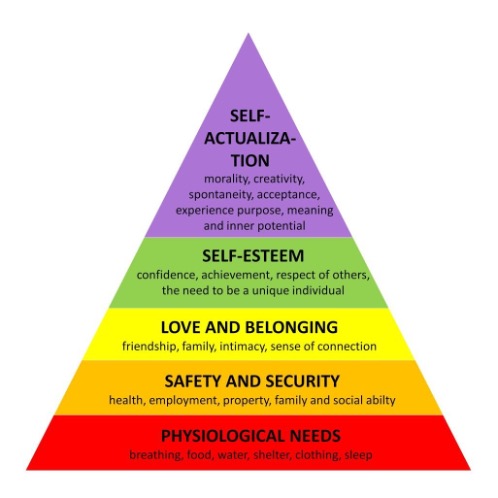
Everybody wishes to have a high quality of life but what exactly does that mean? We hear the term ‘quality of life’ a lot but what goes into the ‘quality’ of it and what makes for a satisfying ‘life’? Maslow’s hierarchy of needs has always been a good reference for me in describing what exactly makes us have a safe, secure, happy, and fulfilling life. I do believe we need to have our hierarchy of needs in mind as people when we focus on what’s best for our fellow man or women and how to build a prosperous society.

                                                                                                Source: SimplyPsychology.com

While I don’t wish to compare my own views on what true ‘quality of life’ is compared to Abraham Maslow’s ‘hierarchy of needs’ as shown in the pyramid diagram above, but it’s important to look at what makes a society flourish. I agree with Maslow at the base of the pyramid is the most important to ensure a life has some quality with it.

The societies that have the strongest base for ‘physiological needs’ usually are the happiest and satisfied with their quality of life. For example, you cannot focus on ‘safety and security’ as much as you can when you can’t even guarantee that the water you drink is clean and the air that you breathe is clean. Everything else on Maslow’s pyramid goes out the window if you are hungry, thirsty, don’t have a roof over your head or cannot clothe yourself or your family.

A lack or absence of ‘physiological needs’ is often found in the poorest or least developed of our societies and can still plague even our wealthiest and most developed societies. The key thing for all societies is that we should have an attitude of wanting to guarantee the ‘highest quality of life’ we can deliver to all people rather than just the few who can afford it financially. I do believe any society and its leadership is responsible for delivering on both ‘physiological needs’ and on ‘safety and security’ and once that is achieved, it will lead to better conditions whereas we go up Maslow’s pyramid, love, belonging, self-esteem, and self-actualization tend to be easier to achieve as well. True quality of life is knowing that if you fall on hard times, not by your fault, you’ll be looked after by your society and your government while you look to get back on your feet.

I don’t believe it’s anything farfetched or overly utopian to believe in everyone having the right to breathe clean air, drink clean war, have enough food each day, and have a roof over one’s head. I also think that while education and health care may not be on ‘physiological needs’, it ranks close in that regard to build that functional society. Everyone should be able to afford a good education and find good health care where they live and societies that accomplish this for their people are rewarded back and then some with citizens who are thriving as a result. Societies that are more educated, healthier, and with more opportunities to succeed tend to be those that have a true quality of life in my view.

You may be thinking that true quality of life is about having a big bank account, a bigger house, all the gadgets and electronics you could ever want, and all your material desires within reach, but to me, that would not go along at all with Maslow’s hierarchy. Having that stuff may make you happier but it doesn’t reflect a true quality of life in any society. If the roads are falling apart, people around you are suffering and in poverty, and you can go bankrupt for seeking medical care or a higher education, your quality of life will also suffer as a result even if you’re not directly affected by it.

When we are looked after or cared by others in the society who can ensure we have a good education, good health care, and to have affordable housing, the quality of life for everyone will go up. We are not islands unto ourselves alone and we are reflections of how we treat others. If you’re reading this article, think more about how your society or country could have a better quality of life not just for yourself but for the people living there too.

I ask that you believe in your ability to create change whether that’s advocating for more environmental regulations, prioritizing people’s access to basic needs including food and housing and thinking more about how we can include people in making them feel they belong in the society. We should collectively work towards providing more opportunities to everyone, so they don’t feel left out. Any healthy society has those public places to gather, discuss, and hopefully fix the quality-of-life issues going on in their community, town, city, or country.  

I don’t judge a society by how wealthy it is, how big the houses people live in are, or how much they have in material goods and services available. I judge a society by how they treat the least well-off members, how they prioritize the public good or not, and what they are doing to improve the overall quality of life rather than ignoring it or having it steadily decline under their watch.

It’s important for us to start thinking about not just ourselves and our own quality of life but those of our fellow man and woman. When they are worse off than us, let’s lift them up and look out for them instead of shunning them or isolating them instead. We should always be advocating for a ‘true quality of life’ where everybody is given the opportunity to succeed, grow, live healthy and happy lives, and pursue their dreams.

We all will be better off for having invested in the basic tenets of civilized society such as education, health care, transit, housing, and healthy food supply rather than just guarantee them for the few who can afford it. The higher the quality of life is not just for us but for every member of our society, the more likely we will all flourish together and reach our highest fulfillment.

Is ‘The Grass Always Greener’ On The Other Side?

“There is a sense of whimsy about wishing what would your life be like if you had made a different decision or if a different opportunity had come your way.”

The popular English language expression on ‘the grass is always greener on the other side’ is a common refrain when discussing the possibilities of where one could see themselves in a different reality or circumstance other than their own. There is a sense of whimsy about wishing what would your life be like if you had made a different decision or if a different opportunity had come your way. You may even want to switch places with someone else you know or someone you admire or someone you read about. Beyond that, it could also be wanting to live in a different city or country or to experience a different culture or set of customs other than the one you were born into or grew up in.

I find that there is nothing wrong with daydreaming about the possibilities for change or how to make your life better or more successful. I do think it is a good thing to be reflective as well on how others live, what you can take from their example or even discard based on your own perspective, and to not be afraid to even experiment with making different choices in life based on what others have done ahead of you. It is good to be inspired by other people, read about their lives, and to change your own approach to how you live, where you work, how you act, and what you can be within reason.

I think, however, that it is important to not be fantasizing all the time about how others live or envious of other people without knowing the full story. Being obsessed with mimicking or copying other people is also a recipe for disaster in my view. It is okay to be influenced by others around you who are making a positive impact and living life in a successful and moral manner. However, it does not justify being a ‘copycat’ or a ‘sycophant.’ Often, we must think for ourselves, make our own decisions, and to live a life true to our own morals, values, and code. Doing what others do just because they think it is ‘popular’, ‘cool’ or ‘successful’ is not what a mature individual should be following.

You may think that the other person or group of people has it all figured out, but the reality is much more complicated than that. You may envy the house, the car, the lifestyle, or the personality they have but often, you only know the surface of what you can see about that person. The same goes for endlessly admiring another city, country, or culture. It is okay to admire and adopt those customs, the food, the language, and the beliefs, but it’s important to take a step back to see what is compatible with you and what you would rather not adapt as your own self-expression.

As another saying goes, ‘walk a mile in another person’s shoes’, that is not a bad thing to do in life. Still, to automatically wish to live like them, be like them, and change who you are entirely is losing your own conception of self in the process. I am a fan of learning about other people, their backgrounds, their cultures, and their viewpoints, but that should be a way for you to more fully accentuate who you are as a result rather than change you are entirely. It’s good to see how others live, why they live like that, and be the more educated and worldly for it, but there’s a limit to how much we can live like those people.

Instead, use those variety of experiences, either lived or learned, to water ‘your own grass’ to be ‘greener and livelier.’ Instead of envy, jealousy or obsession, be more concerned with how to live a life that’s truer to yourself and what you wish to achieve. Think about what you’ve learned, seen, or heard, to adapt that to benefit your own life. Adopt those practices that will make your life better and make you a better person. Use your expansive knowledge based on living in different places, meeting different people, or studying different topics to make your life much more fulfilling and richer. We never truly have all the information regarding the lives of others and often we just see a snapshot of it rather than the full picture.

This is the same when we visit a place or even live there for a little bit of time. Even with that knowledge of a place and a people, we are not born there, or grew up there, and it limits our perception of what is going on there to some degree. Regardless of if you’re envious, apprehensive, dismissive, or neutral about a person, place, or culture, you should not automatically think that where you are or the ‘grass’ on your side is better or worse than theirs because you really can’t even make a real judgment.

You can always ‘walk in other’s person’s shoes’ for some time but you’ll never fully live in their shoes as they do. The same goes with where, why, and how we live and comparing it to others’ lives we learn about as they may want to have our life and we may want to have theirs, but we should remember that we will never have the full picture regarding their life’s circumstances. Instead of envying the ‘grass on the other side’ that we are constantly exposed to in person and online, you should remember to focus primarily on watering, fixing, and shaping your own ‘grass’ under your own feet and in your life to make it a more fulfilling, joyful, and happy kind of life to live.  

United States Naval Academy

A Visit to the United States Naval Academy in Annapolis, Maryland

Camera: iPhone 12

Locations: United States Naval Academy; Annapolis, Maryland, United States

Dealing with Melancholy after Travel

“Still though, it’s hard for me after dozens of trips and hundreds of places visited to not have that feeling of melancholy wash over me after I come home again.”

There is a comedown feeling that happens after the end of a trip, regardless of how long or short it is. All the planning, the effort, the money spent, and the adrenaline rush that goes into relocating yourself elsewhere creates a unique feeling that is hard to replicate. Often, the trip will go smoothly, and you’ll have fond memories to look back on long after it’s over. Still though, it’s hard for me after dozens of trips and hundreds of places visited to not have that feeling of melancholy wash over me after I come home again.

Luckily, it is not a deep melancholy, but it is a melancholy of missing the feeling of being on an adventure or not knowing that the next day will bring. It’s the pure excitement of the unknown, of yearning to experience a new thing or event or place, and about being more open than usual to meeting new and often interesting people you encounter during your travels. Being able to settle back into your usual routine can be a bit of a downer after the rush of going from place to place, city to city, and being footloose for a while.

Despite a routine not being the most fun to go back into, it is necessary to reestablish a routine again as it can provide some comfort after a trip rather than doting on the past trip, however fun and exhilarating it may be. I do believe we need a routine in our lives often, rather than be rudderless and without anything to focus on. If our travels are temporary and we do not live life on the road on a permanent basis, easing back into our daily lives takes time but if we don’t have anything to refocus our attention on after a trip, the melancholy can be even more profound and difficult to deal with.

It is a good idea to develop your hobbies, interests, and your goals even more after a trip to accomplish what you want to set out to do with the time you have been given. Devoting yourself to something you’re working on or taking time to achieve something you want for yourself is a good way to deal with the blues that can happen after your travel is over. Being able to have ‘travel’ as something you enjoy doing is important, but it should not be the only thing you have going for you in your life. We cannot only be one-dimensional in our focus no matter how much we enjoy taking ourselves on the road.

Being able to share your travels with others is important because it helps hone and shape our memories. You may not be able to talk about your trip as much as you would like if you would like but it is good to share with your family and friends how it went because it’s likely they will want to know how it went. Beyond that, make sure to take care of your mementos, souvenirs, keepsakes, and other items you brought back with you, because they will give you a comforting feeling from having been to that place or done that activity, and it is good to reflect on the travels you’ve done in a sustainable way. I also like to organize my photos, create canvas prints, and even share videos from the places I’ve been and to keep them in my own records to reflect on to remember better of where I was, who I was back then, and how I felt about the trip.

Lastly, keep thinking of ways to travel again to go back to the place(s) you loved again or try new places you want to visit. Travel should be a passion that sustains you throughout life and you should know that it is a marathon, not a sprint. I like to casually look at where I want to go next as I do like to plan, and I always like to have something to look forward to. Think about the culture, the language, and the people who live in the place you’re going to and start studying up in advance to learn more about what it will be like there potentially and how to prepare yourself for the trip you want to take next.

The most rewarding travel experiences for me have been those that I spent time learning the language (if need be), studying the places I want to visit as part of the itinerary, and devoting time to knowing the history and the culture a bit there. Travel is more than just taking photos and eating good food to me. While those are both enjoyable to do on a trip, I do make a conscious and concerted effort to know a bit about where I am going, and to learn as much as I can before I step on the bus, plane, or train.  As travel writers have noted, it’s not the destination that is the central reward but the journey it takes to get there.

Remember, when you get back home, it’s not the end of your traveling days. You may have put the suitcase away and the mementos on the shelf, but you’ll be back on the road again, and sooner than you may think. Embrace what you’ve done, enjoy being home for a little while and seeing friends, family again while keeping up a routine, and start planning for your next trip when you can. Travel may not be your permanent mode of living as it isn’t for most people, but once you go somewhere, even if only for a short while, you’re still a traveler for life, and that is something that will never change.

Watching The World Go By In Paris

“Many cities are great for people watching or just seeing daily life transpire in front of your eyes, but Paris is different from the others because you are allowed to slow down fully to take it all in.”

Few cities embrace the pleasure of watching the world go by more than Paris. No wonder why writers from all corners of the globe have come to the ‘City of Lights’ to be inspired to reach their creative goals. If you’re a keen observer as any good writer should be, you’ll see all walks of life come through Paris each day. Whether it’s a starry-eyed tourist with a camera in their hand, a bookkeeper plying his trade by the Seine River, or a street music performer trying to earn a Euro or two. Many cities are great for people watching or just seeing daily life transpire in front of your eyes, but Paris is different from the others because you are allowed to slow down fully to take it all in.

In Paris, the pace of life is fast like any city but the city’s awe-inspiring beauty, its prominent café culture, its pleasant on their ears language of French encourages you to slow down, have a coffee or a pastry, sit down with a book or a pad of paper, and really take it all in. One of my favorite aspects of the city is that compared to most major cities or even other cities I’ve been to in France is that you are encouraged not to rush the experience whether when you’re dining, drinking, or smoking (for those who partake).

No one cares how long you sit at a café or a brasserie (some places are even open 24/7), if you pay for something on the menu and be kind to your server. Some tables may have you face each other if you’re with a companion but often, your chair(s) and table will be facing out on to the lively Parisian streets or plaza whether you are alone or with someone else.

Paris does not bemoan the lone traveler or the lone wanderer who comes to visit it. It is perfectly normal to be by yourself with your thoughts, your sketch pad, and your cup of coffee spending as much time as you need with whatever you happen to be working on. I’d imagine that even if you visit in the Fall or Winter, you’ll still see people out in the streets or in the plazas, talking, laughing, eating, drinking, and making the most out of their lives in the big city. When you are in Paris, you can watch the world go by and even if you’re in a rush personally that day with work or studies, the city will encourage you to slow down, stop somewhere, and take in its ever-enchanting beauty and detail.

Writers, painters, musicians, and other kinds of artists have had a field day with creating great works from having lived in Paris because there is so much to be inspired by. The city of Paris and French culture, in general, have a high emphasis placed on beauty, aesthetics, and the art of good presentation. Any type of artist will be able to come to Paris to draw or paint about the daily scenes of life they see there, have time to think deeply about their approach to their work, and foster ideas without being interrupted endlessly.

Even with the humming noise of traffic and pedestrians, it is not a overly loud city when compared to other major cities I’ve been to in the world. You can find those moments of quiet and peace amid the waves of people and vehicles who pass you by. Sitting and facing out towards the world and not with your back to it allows you to assess better how you fit into this magnificent city and where you fit into its ever-changing melody and rhythm.

I believe you could spend years in Paris and not have tried every restaurant, café, brasserie, or bar. There are seemingly endless places to sit, drink, relax, think, write, and reflect, which is why the city is and will always be such a haven for brilliant artists of all kinds throughout the millennia. Paris encourages you to soak it all in and to pay attention to what you’re surrounded by.

Throughout Paris’s history, the city has sought to inspire humanity to move forward through making new inventions, creating new works of art, writing new literature, and building more beautiful and awe-inspiring architecture. When you think about a self-fulfilling prophecy for a city to have, Paris was built on reaching higher and higher in terms of our human aspirations to create beauty in this life and to find the beauty in each other.

We may fall short from time to time, but Paris is a city built on pursuing excellence in all facets through the pursuit of one’s dreams. For those people who are creative in any sense of the word, who want to share their creativity and gifts with the world, Paris is a great home to begin doing so. When you come to the ‘Ville de Lumiere’, not only can you watch the world go by without a care in the world and be able to take in all its beauty and charm, but you will also be inspired by the city that was built on fulfilling the hopes and dreams of its many inhabitants.

Paris would not be the city it is today without the creative and forward-thinking men and women who built it to be what it is today and will remain for the future, a beautiful and inspiring beacon of human ingenuity and vision that inspires both visitors and Parisians alike.

Some Thoughts On “This Too Shall Pass”

“The main message of the quote is meant to be comforting to those who hear the words strung together either in a poem, a speech, a song, or a fable, and it is supposed to let us all know that whatever we are experiencing or feeling at the moment, whether it is positive or negative, good or bad, happy or sad, “this too shall pass.”

A favorite quote of mine in the English language, originally adapted from Farsi / Persian centuries ago, has been used by both Sufi poets and American presidents alike to describe the impermanence of everything. The main message of the quote is meant to be comforting to those who hear the words strung together either in a poem, a speech, a song, or a fable, and it is supposed to let us all know that whatever we are experiencing or feeling at the moment, whether it is positive or negative, good or bad, happy or sad, “this too shall pass.”

The human condition is ever evolving and what we experience one moment, one hour, or one day can be drastically different later from what was before. Nothing is permanent as we all know because one of the first things we become sentient of is our own mortality and our own impermanence on Earth. While this can fill us with existential dread and despair, it can be a blessing too because the pain, the suffering, and other negative emotions we experience in this life are not for forever. Just as we can’t be experiencing euphoria in the form of only good things happening every moment of our life, the same can be said for having everything go wrong throughout life.

What happens to us in life is largely beyond our control but what we can control is how we react to life and its challenges. In addition, we should remind ourselves that tough times are not forever and if you stay in the game, you keep moving forward, you give yourself a chance of pulling yourself out of a bad rut or a down time. I find it healthy emotionally to remember the Persian and now translated to English saying of, “this too shall pass.” It is a good reminder for us all about the impermanence of all things we experience including life itself.

In addition, this quote of “this too shall pass” can be correlated to “carpe diem” because we must do our best to enjoy life despite its challenges because we never know how many days will be given to live this life. You may not know what life will throw your way day by day, but you should be prepared to make the most of it, to ‘seize’ it, and to have an impact on it in whatever way you can.

The impermanence of everything in life should make us savor the good moments more whenever they come to us. We can remind ourselves that the bad times don’t last forever too and that good times can be just around the corner if we believe in ourselves to turn things around. Being more grateful, more appreciative, more kind, and being a better person even when we don’t feel like karma or life itself is reflecting the good that we’re doing should not mean we stop trying. The reward of life is to live it to the fullest and to do it well even with the inevitable ups and downs, the highs and lows that come with it.

We must refuse to give up or surrender when the bad times in life challenge us, sometimes beyond what we would ever want to endure. We must believe in doing good and being good even when bad things or times happen to us. Life is a gift; however we are affected by existing and living day by day, we must make the most of it and to continue making our lives better even when times are tough on us. Those four words of “this too shall pass” have comforted people in different cultures and in different languages throughout the centuries.

The human condition is not the same day by day and what we experience today will not be what we experience tomorrow. Time can blend, routines can become suffocating, and experiences can become mundane in life, but it is up to you and you alone first to make changes to your life, to make different choices to how you react to life, and to form different habits that could make what looks like a permanent situation turn into a temporary blip in your life trajectory. We may think that we are on a set course, but we have agency, and nothing is permanent, and we can make our lives what we wish if we decide to act and make change to go from good to bad or bad to good depending on how we act on both our actions and choices.

“This too shall pass” is a timeless piece of wisdom that resonates deeply with the human experience and has done so for centuries. At its core, this universal phrase has served as a powerful reminder to all human beings of the impermanence of all things and of life itself. By acknowledging that both good and bad moments are fleeting, we cultivate a healthier and balanced perspective on life. When faced with the challenges life throws at us each day, remembering that “this too shall pass” helps us to endure the hardships with greater resilience, humility, and patience. It encourages us to stay grounded, knowing that difficult times will not last forever. This outlook can alleviate the weight of anxiety and stress, providing a sense of hope, belief, and a clear mind to navigate through life’s adversities.   

Similarly, this kind of wisdom also teaches us to cherish the happy and joyful moments more fully, understanding that they are both precious and temporary. It fosters an appreciation for the present moment we are living in, urging us to savor the beauty and happiness we encounter even in a minute way. By internalizing this phrase in our lives, we become more mindful and grateful for the positive experiences in our lives when they occur.

Incorporating “this too shall pass” into our mindset every day can lead to a more balanced emotional and mental state. This quote promotes resilience by reassuring us during tough times and maximizing our joy by reminding us to live in the present, whether good or bad. Ultimately, this simple yet profound wisdom from earlier times in the history of humanity helps us embrace the ebb and flow of life with grace and humility, transforming how we approach both our triumphs and our trials.

Why Cooking is Relaxing to Me (and Can Be for You Too)

“Cooking, beyond its practical necessity to prepare food to eat without making yourself sick or worse, offers a unique blend of relaxation, creativity, and control that benefits our well-being if you put the time and effort in.”

Cooking may be stressful to some people, but to me, it’s relaxing. In our fast-paced, distraction-filled world, finding an activity that genuinely relaxes yet focuses my mind is a tough challenge. Cooking, while appearing ordinary and mundane on the surface, when approached with mindfulness, can be restorative and even therapeutic to engage in. Cooking, beyond its practical necessity to prepare food to eat without making yourself sick or worse, offers a unique blend of relaxation, creativity, and control that benefits our well-being if you put the time and effort in.

Cooking engages all of one’s senses, creating an immersive kind of experience that naturally draws attention away from other worldly distractions and to focus only on the present moment. The sizzle of garlic sautéing in a pan, the vibrant colors and shapes of fresh vegetables, the aromatic scents of herbs and spices mixing, the pleasure of melting olive oil and butter, and the first to last tastes of a carefully prepared dish – these kinds of inputs anchor the mind in the here and now. This immersion in cooking creates a state of being more mindful, like the effects of doing meditation or taking a yoga class.

The repetitive, rhythmic actions involved in cooking – chopping, stirring, arranging – provide a soothing and almost hypnotic effect. These repetitive actions can be incredibly calming to me, much like the rhythmic movement of playing notes on a guitar or the repetitive strokes of painting a canvas. The predictability of these actions creates a sense of stability and tranquility, allowing the mind to unwind and the stress of the day to dissipate, whatever that may be.

Cooking has always been to me a form of creative expression, offering endless possibilities to create, experiment, and innovate. Unlike many aspects of life that are governed by rules and regimen, cooking allows for a kind of freedom to embrace creativity. This creative aspect can be immensely satisfying and relaxing, which lends to providing a sense of accomplishment and fulfillment. Whether it’s experimenting with new recipes, combining unexpected ingredients, or presenting food in aesthetically pleasing ways, the creative process in cooking is what I’ve grown to enjoy over the years, especially since I started taking it more seriously in the wake of the COVID-19 pandemic.

Cooking requires total attention to detail and concentration, which naturally diverts the mind from other worries and distractions. Following a recipe, measuring the ingredients, timing the cooking process – these tasks demand focus and precision. This kind of attention serves as a mental break from the constant barrage of thoughts, worries, and concerns that often plague our minds. By channeling our cognitive focus into the cooking process instead, we can create a mental space free from our external stressors, promoting a sense of peace and clarity.

In a world where aspects of our lives feel beyond our control on a day-to-day basis, cooking offers one domain where we can exercise complete authority over the outcome. From selecting ingredients to purchasing the kind(s) of food to deciding how to prepare and present the dish, cooking is a personal endeavor where we are responsible for making all the decisions. This kind of control can be empowering and reassuring, providing a counterbalance to the uncertainties and overall unpredictability of life. By mastering the culinary process, we can gain more confidence and a sense of competence, which can extend to other areas of our lives over time.

While cooking can be a solitary activity, it also has the power to foster more connection and strengthen a community. Preparing and sharing meals with your loved ones strengthens social bonds and creates a unique sense of belonging. The act of cooking for other people can be a form of nurturing and care, enhancing feelings of empathy and compassion for the whole group. Additionally, by participating in communal cooking activities, such as cooking classes or potluck dinners, we can expand our social networks and provide opportunities for meaningful interactions.

Cooking more often leads to more mindful eating, a practice that encourages us to savor and appreciate our food fully and to know where it comes from. Mindful eating involves paying attention to the taste, texture, and smell of each bite, as well as acknowledging the effort and care that went into preparing the meal. This practice enhances our enjoyment of food and promotes a healthy relationship with food, reducing tendencies towards mindless or emotional eating or by ordering whatever you’re craving. By focusing on the present meal with the people around you at the dinner table, I believe we can cultivate mindfulness and gratitude for the food we eat.

Cooking is a key life skill that is always evolving, which means that even if you get a meal wrong and it’s a stressful outcome, you will have many other days and nights to grow in your abilities while having endless opportunities for further learning and growth. I particularly enjoy taking the time to experiment with new recipes, cuisines, and techniques, which can expand my culinary knowledge. The process in cooking of learning and improving over one’s life can be satisfying and motivating, providing a sense of both purpose and achievement. Additionally, even if you always find cooking relaxing, it’s good to have a little bit of stress involved. You can do this by finding new challenges in cooking like mastering a difficult recipe or perfecting a technique you learned which builds other skills like resilience and problem-solving.

The preparation process in cooking can be seen as a daily ritual that signals a necessary transition from the busyness of the day to a more relaxed state. Setting up the kitchen, gathering the ingredients, putting the tableware together, and arranging the utensils can be a meditative kind of practice that prepares the mind and body for the act of cooking. This ritualistic aspect of cooking creates a sense of anticipation and intention, enhancing the overall experience, and promoting a mindful approach to the task at hand of feeding yourself. The hungrier you are in my view too, the better of a cook you will be that evening if I can speak from personal experience.

In my opinion, cooking is much more than just a means to an end; it is a therapeutic kind of effort that offers a myriad of benefits for one’s mental well-being. By engaging each of the five senses in a deep way, providing a creative outlet, fostering total focus, offering us a sense of control, and promoting a greater connection to the food we buy and then eat, cooking becomes a powerful tool for both relaxation and mental clarity. In our world filled with constant distractions and stress, the simple act of preparing a meal for oneself and for your loved ones can bring profound peace, happiness, and joy. By embracing the art of cooking, it allows us to nourish not only just our bodies but also our minds and souls.

The World Will Humble You

“What you believe you deserve out of life is often out of your control at the end of the day.”

What you or I want from the world will be different from what the world will give to us. You must understand that the world will humble you in terms of your expectations versus what you will get. A key part of our lives is managing the difference between what we get against what we expect. It is important to keep your own beliefs in check because the world will test them continually and often turn them on their head. What you believe you deserve out of life is often out of your control at the end of the day.

The world will see fit to humble you when it comes to the outcomes we get when compared to what we earn and are able to get based on our hard work and effort. In a perfect world, the fruits of our labor would earn the same kind of return but often, that is not the case and sometimes hard work can be punished rather than rewarded. We have our expectations of the world around us, and the world often has different expectations from those that we expect from it. We must keep trying, to keep working, and to put our best foot forward in our individual efforts but must also understand that what we get back for those efforts may fall short of our own expectations.

Humbling oneself in the face of adversity or a negative result does not come naturally but is part of our maturation process. There is not much we can do but to try again or to move on to another opportunity. Failure is just a part of being human and the better we can handle it and be humble in a bad outcome, the better off you will be in the long run. Instead of being bitter, developing an inconsequential grudge, or blaming yourself or the other party without coming to grips with the fact that what’s done is done, you just must be willing to move on and grow from the failure itself.

We distinctly desire to avoid failure or setbacks and to think that they can’t happen to us, but they can, and they will. How we react to these failures and how we move forward will tell us more about ourselves than the initial failure itself. I would say that it does get easier as you get older as you get more used to the feeling of failure or setbacks and are able to bounce back quicker from them. You must have a thick skin about it, and I think that our age plays an important factor in being able to absorb the blow of failure or a setback without letting it derail you for a long time.

To have your ego be humbled by what the world gives you in return in it of itself is a victory. One’s ego can grow out of control when the world doesn’t humble you or push back on you in any way. When you let your own self-confidence or ego get out of control, you’re more likely to develop megalomaniac behaviors as a result. I find that it is a good thing when the world humbles you because without that happening, you tend to isolate yourself from others’ who have had it more difficult than you and tend to believe everything you do is the best thing ever or without any critique or issue.

Life is not meant to be failure-free or error-free. We are all human and thus, we will falter, make mistakes, and let our own ego get in the way. The key test is if we can push through these setbacks and failures to chart a new course or to try again if we believe enough in what we are trying to accomplish. Perhaps we did not work hard enough, study enough, use our full abilities, or sometimes it just wasn’t meant to be. There is no use fighting against an outcome that is out of our own control.

Sometimes, life has other plans for us, and it just wasn’t in the cards for us in the result we expected. You must take it in and decide how to best move forward. I find that there is nothing wrong with trying again if you believe in your own abilities enough where you want to re-try something by doubling your efforts. If you tried it once and you don’t want to do it again after failure, I don’t think that there is any shame in that either if it doesn’t appeal to you enough. Just because you failed at one thing and the world made it clear that you aren’t ready to move on with it now, doesn’t mean that is a final verdict on you or your capacity to do better or to get to where you want to be.

At the end of the day, there is nothing wrong with being humbled and to keeping your ego in check. If it wasn’t meant to be, it wasn’t meant to be. There is neither no harm in trying again nor is there any harm in moving on to a new goal or objective you have in your life. One’s ego can run rampant without any kind of pushback or critique, and you don’t want to end up in that place. Failure is the best teacher, and it should not reflect on your whole self as a person but rather on your skill set or aptitude that could use some improvement. Yes, it hurts, and it can feel like an absolute rejection of yourself as a human being, but I want you to know that it is not the case.

It is better to have tried and failed and sometimes to have done so a few times than not to have tried or failed at all. You may eventually succeed, or you may never end up succeeding at all, but the point is that you allow the world to humble you and your ego, without letting it derail you from keeping at it, trying again, or moving on to try in a different area of life that you believe you would be good at. It is natural to fail and to pretend otherwise is doing yourself and those around you a disservice. Being humble and accepting your limitations is part of being a human and hope that even if you fail, you dust yourself off, get back out there, and keep trying your best.

Don’t Let Yourself Be Gaslighted

“There are numerous ways to combat gaslighting, but it is key to make sure you don’t let yourself be gaslighted, even when it is by people you are close to or have grown to trust or admire.”

‘Gaslighting’, a term that was originally derived from the 1944 film titled, “Gaslight,” is sadly an increasingly common form of psychological manipulation, where one person tries to make another person doubt their own reality, memory, or perceptions.

This manipulative kind of behavior can have severe consequences on an individual’s mental health and overall well-being. Recognizing and combating ‘gaslighting’ is crucial in maintaining one’s psychological integrity and emotional health. There are numerous ways to combat gaslighting, but it is key to make sure you don’t let yourself be gaslighted, even when it is by people you are close to or have grown to trust or admire.

Gaslighting itself can occur in various scenarios, from personal relationships to workplace environments and even on an entire societal level. Here are some common examples that I would like to highlight where ‘gaslighting’ can take place and whom can be responsible for it occurring:

  1. Personal Relationships: In intimate relationships or romantic partnerships, a partner might persistently deny events that have happened, downplay your feelings, or blame you for their own abusive or manipulative behavior. For example, they might say to you, “You’re too sensitive” or “You never take things seriously.” “That never happened; you’re imagining things.” Gaslighting in any relationship at any time is a toxic combination and can cause some long-lasting trauma, regret, or depression.
  2. Family Dynamics: Within families, parents might gaslight children by denying past abusive behavior or shifting the blame onto the child for what the parent did to them. Phrases like, “I never said that”, “I never did that to you”, “I knew you couldn’t do it,” or “You’re just making things up to get attention”, “How would you know? You’re just a child.” are commonly used in terms of gaslighting.
  3. Workplace Conditioning: In professional settings, a supervisor could deny promises they had previously made to an employee or group of employees. They could also undermine their employees’ performance and contributions by taking credit for it themselves or by taking advantage of the work you do without rewarding it later or acknowledging its positive impact. Comments made by a supervisor or fellow employee could be such as, “I never approved that project”, “I did not give you permission to do that”, “That presentation was all my idea”, “You did not do as much as I did” or “You must be mistaken, that wasn’t your idea” can make employees question their own competence, proficiency, and memory when it comes to the work they do for their fellow employees or employer.
  4. Societal Distrust: Gaslighting can also be seen on a broader societal scale where media heads, activists, or political figures deny facts or historical events that did occur, leading to widespread confusion and distrust among the public because leaders of those institutions are meant to be trusted but since they lie or deceive, the institution itself is distrusted and loses its standing in society.

Gaslighting has become increasingly prevalent in today’s digital age, where misinformation and manipulation are rampant combined with seemingly never-ending ways to engage people to disbelieve what they perceive or create a different reality than what we are used to. Social media platforms, where information can be easily distorted, manipulated and spread endlessly, provides fertile ground for gaslighting on a mass scale. Politicians, national leaders, and public figures often engage in gaslighting tactics to sway public opinion or deflect criticism to win support for their agendas and policies. When it comes to personal relationships, the anonymity, the rapid pace, and the sheer distance provided by online communication can embolden individuals to gaslight others without facing immediate repercussions because of how they hide who they are and what they really believe by gaslighting you instead.

Avoiding being gaslighted is not easy especially in the modern era where we are constantly exposed to other people’s worldviews and are made to take in rapid streams of information instantaneously. Being able to avoid gaslighting involves the following steps in no order, which can help you avoid these manipulative tactics that harm your mental health:

  1. Educate Yourself: Understanding what gaslighting is, where it can come from, and recognizing the signs of when it is happening is the first step in protecting yourself. Familiarize yourself with common gaslighting tactics and how they manifest in different situations in different areas of our life.
  2. Trust Your Perception: Keep a journal to document events and conversations where you think gaslighting could have occurred. It won’t always be the case, but this approach can help reinforce your memory and provide tangible evidence of what happened, making it harder for someone to distort your reality because you’re able to jog your memory on what happened, what you did, and what was their reaction or behavior about it.
  3. Set Boundaries: It’s vital to establish clear boundaries with those who exhibit gaslighting behavior even if they are close friends or family. Make it known that manipulative behavior is unacceptable to you and that you will not engage with it regardless of if they think they are gaslighting you or not. It is better to preserve your own mental health and wellness even if it harms the friendship or relationship temporarily.
  4. Seek Support: Confide in friends, family, or a mental health professional who can provide an outside perspective and validate your experiences as an impartial participant in what happened. Support networks from people you trust and can confide in are essential in maintaining your sense of reality and self-worth. Never seek support from someone you found out was gaslighting you or attempting to gaslight you. You must hold your standards high because if they did it once, chances are good that they will do it to you again.
  5. Practice Self-Care: To protect your own health and wellness, you should continue to engage in daily or weekly activities that bolster your mental and emotional health. Exercise, meditation, sports, and hobbies with trusted friends and family members can help reduce stress and enhance your resilience against manipulation and other gaslighting tactics.
  6. Assert Your Reality: Calmly assert your version of events without getting drawn into a debate. If you can give examples surrounding what you were doing at the time or provide proof or evidence to back up your point, it doesn’t hurt to do so. Most impactful will be to use phrases with the accuser such as, “I remember it differently”, “I wrote down what happened and have proof to share with you” or “I don’t agree with your version” can help you maintain your stance without escalating the conflict further.

We know that there are ways to avoid gaslighting, but how do we combat it in different ways to give ourselves options to get out of the situation or to remedy the effects of it happening to us.

  1. Direct Confrontation: If safe to do so with the person(s), address the gaslighter(s) directly. Use specific examples and “I” statements to express how their behavior affects you. For example, “I feel confused when you say that because it contradicts what I remember” or “I am upset when you don’t believe what I tell you was how it happened to me.”
  2. Detach Emotionally: Emotionally distancing yourself from the gaslighter can reduce their impact on you or ability to affect your mental state. Do your best to practice this form of detachment by recognizing that their actions reflect their own issues, and not yours. Their problem is not your problem, and you did not do anything wrong.
  3. Seek Professional Help: Therapy or talking to a professional psychiatrist can be invaluable in recovering from the effects of gaslighting. A therapist can help you rebuild your self-esteem and develop strategies to deal with manipulative behavior if you experiencing it happening again to you.
  4. Limit Physical Contact or Distance Yourself: In some cases, the best course of action is to limit or sever contact with the gaslighter. This is especially true in toxic relationships where the gaslighting is severe and persistent. It is always better to get that person out of your life or to never see him or her again if it gets to be too much to deal with their behavior.

Gaslighting is a deeply harmful form of psychological abuse that can have long-lasting effects on someone’s mental health. It erodes your self-esteem, creates self-doubt, and can lead to anxiety, depression, and a host of other issues. The pervasive nature of gaslighting in our modern era, amplified by endless forms of digital communication, misinformation, and coarsening societal dynamics, makes it a significant issue to address for people everywhere.

Recognizing gaslighting as a negative behavior and taking steps to combat it is essential for maintaining your psychological well-being. By educating yourself, trusting your perceptions, setting boundaries, seeking professional support, practicing self-care, and potentially limiting or ending contact with gaslighters, you can protect yourself from this serious form of manipulation. Ultimately, preventing, addressing, or combating gaslighting is not just about preserving one’s mental health; it is about fostering healthier, stronger, more authentic relationships and societal environments where care for one another, truth, and trust can flourish equally.