How You Think Affects Everything You Get

1. Your mind is a fertile garden patch. Failure to cultivate it allows weeds to run rampant. 

As the popular saying goes, “Your mind is a terrible thing to waste.” In order to get the most out of your brain, you need to put your mental and intellectual capabilities to the test every single day. Whether it is reading the newspaper, doing a crossword puzzle, or solving a Rubix cube, you must exercise your mind as you do so for your body. If you don’t do anything to stimulate your learning capabilities, it’s likely that you will be left behind in life to some degree. Especially in this day and age where there is an unlimited amount of information to be accessed by the average person, there is simply no excuse as to why someone can’t cultivate their mind to improve themselves and become smarter.

You don’t even need to spend your whole day learning because it’s likely that you’re already a busy person. However, it only takes an hour or two a day of active learning in order to get ahead in life and improve a little bit. For example, you could spend that hour or two each day learning a musical instrument, studying a foreign language, or reading a chapter or two from a new book. The possibilities are seemingly endless but you need to take the initiative in order to make it happen. As an adult, nobody is going to hold your hand and force you to learn new things.

This isn’t like it was in school growing up where you had set periods of learning and a teacher there who could guide you to improve and become more knowledgeable. After high school or even college, you need to take initiative when it comes to learning and empowering your mind to become more open, agile, and responsive for the increased amount of knowledge that you want to retain. You can hold the weeds at bay if you’re willing to plant some flowers there instead.

2. Thoughts lead to feelings, and feelings lead to actions and actions lead to results. If         you don’t like the results you’re getting, reexamine your thinking.

You may not be able to control the thoughts or the feelings that enter your head but you need to control how you act and react to them. There is a direct correlation between your thoughts and feelings and your actions that come later. It’s important to think about why you are experiencing these particular thoughts and feelings, and if they are constructive or not to be having in your mind. You need to make sure that the actions that you are willing to undertake as a result of your feelings are done for the right reasons and are not just based off of poor impulses.

Part of being a mature adult is realizing that you have control over your actions and you should weed out the thoughts, emotions that are completely negative in nature and won’t get you very far in your goals and in your results. The effort that you put forth in your actions is a direct result of the effort you put into your thoughts. For example, if you feel confident about the subject material for a biology exam and are thinking about the topics you need to study and master, then you will be more likely to turn those positive thoughts into real actions as you crack open the books to study for this exam and then take the exam the next day with good feelings of confidence from putting efforts behind your original thoughts.

However, if you choose to focus on the negative aspects of your thoughts and emotions, it will likely cause a downward spiral, leading you to make mistakes and achieve less than desired results. With positive thoughts and emotions come the positive efforts of hard work that will often lead to good results. You really need to believe in yourself internally before you can have external success in the world and that all begins with your thought process and how you feel about yourself as a person.

3. Don’t deceive yourself. Confront reality, as it exists, even when the facts are brutal! Once you do, and then take action based on that reality.

Reality can be difficult to cope with but it is absolutely necessary to be able to handle even when the facts are not in your favor. In anything in life, you need to have a sound understanding of the facts and figures before you can start taking action regarding the subject you’re researching.

It is very easy these days to wrap yourself up in falsehoods and misleading information, which is why it’s more important than ever to seek out the reality of things in order to not confuse or distort your understanding of it all. The facts that may make you depressed, angry, or disturbed but the facts are the facts and they won’t be handed to you automatically. Any good student or researcher will know that you have to check and verify the facts on any subject before moving forward with taking any serious actions.

For example, when it comes to the issue of climate change and global warning, the facts matter a lot which is why so many scientists spend years in their field compiling data, doing research, testing out hypotheses, etc. before they decide to take substantive action to reverse this problem or lessen its’ effects. There are a lot of people out there who wish to distort the truth or dismiss it entirely but when you do not have a consensus on an important global issue like climate change, the problem will get worse and not better especially if no action is taken.

Reality must always be confronted even if there are some harsh truths that we as human beings must deal with. Part of being a mature, responsible adult is seeking out the facts in a situation and getting to the truth of the matter regardless if you like what the outcome is or not. Once you have the facts, you’ll be clear to take action and to do the right thing in your mind.

4. Worrying about things you can’t control creates a negative feedback loop that will cause you unneeded stress and anxiety.

Worrying is useless when you think about it. It doesn’t do anyone let alone yourself any good to think about the things that may happen in the future but also may not happen otherwise. You can only really know what’s going to happen exactly for today or maybe for tomorrow but beyond that you can never really be sure about what is going to happen to you.

Worrying can really be a mental block that can prevent you from making progress in your daily goals or from being successful in whatever you set your mind or your body to. By worrying all of the time, you’re not going to be able to do anything useful with your life if you’re worried about something bad is going to happen. By doing that, you’ll create a negative spiral of negative thoughts that you may not be able to get out of so easily.

When you decide to worry about something out of your control, stop yourself right there, take a deep breath, and push those negative thoughts out of your head. Instead, you must think positively and act positively in order to create the change you need and to become a better person in different areas of life. Worrying will get you nowhere and will create an endless loop of negatively. You have to be willing to take some chances, face some risks, and do your best effort in order to get to where you need to be. Worrying is a wasteful endeavor when you could focus your mental energies in a way that is more positive and productive overall.

5. Harnessing your thoughts to drive tangible, positive outcomes – It’s not enough to stare up the steps, you have to step up the stairs.

Thoughts must become actions in order to make things happen. You can think as much as you want about what you’re going to do, but unless you put actions to words, you won’t be able to get anywhere. There’s an important saying when it comes to this subject, which is, “Watch what people do, not what they say.” There’s also another saying such as, “Actions speak louder than words do.”

If people aren’t willing to follow through with their actions, you can be sure that they won’t be able to advance or progress that much with their goals, dreams, or aspirations. The difference between someone who’s a big talker and someone who actually walks the walk is quite stark. Success and progress doesn’t just come out of thin air. You need to be the person who is willing to take action after forming a plan of how to make the outcome positive or successful. This applies to a number of things in life that we often strive to achieve.

Whether it’s being the first person in your family to graduate from college, or working extra hours for that raise, or going back to night school to get the skills you need to apply for that job, positive outcomes must come from actual efforts and hard work. Good things come to people who put actions behind their thoughts. Anybody can talk a good game but the ones who really stand out in life are the ones who go the extra mile to achieve their goals with planning, taking action, and doing their best.

Reaching The Gold Standard

‘The Gold Standard’ is a popular term that is used to describe the best quality and ideal that you can hold yourself to. The term of ‘gold standard’ has often been used to refer to the finance, medical, and other industries where people are trying to get the best outcome and live up to high expectations. The gold standard can also be a benchmark that can be set for yourself or a company that is trying to reach a goal that would be difficult to achieve but is still within the realm of possibility. Often times, when it comes to the gold standard, you’re going to be comparing two different options together and seeing which one falls within a closer range of that needed benchmark. According to Google, the official definition of a gold standard is when something or someone is “the best, the most reliable, or most prestigious kind of thing of its’ type.”

The correlation between something being golden and something being the best has been linked as being one in the same for a couple of decades now. It is often considered to be an analogy to the literal definition of a ‘gold standard’, which is when the value of a currency is defined in terms of its’ overall worth in gold. In this case, there are many different standards with gold being one of them when it comes to the finance world, especially when currencies are being compared to gold in terms of overall value. Since gold was seen as a reliable resource to base value off of, it was held to an increasingly high standard, which other currencies were able to base their own value on and see how much gold they could own on the world market. The gold standard can be defined when it comes to both economics but also in terms of behavior as a scientific factor.

As for the first modern usage of the gold standard, it is believed to have occurred originally in a written paper from 1979, explaining the scientific usage of the word. The paper was titled, “In search of the gold standard for compliance measurement.” In this same academic paper, the gold standard is linked directly to the ideal standard of being compliant. The excerpt from this article states that, “While other methodological problems are involved, these four highlight the absence of a real gold standard for compliance, the ideal standard would be…”

While the gold standard is often held as the ideal for currency exchanges, for medical advances, and for statistical accuracy, it can also be referencing a person’s behavior or conduct especially when it comes to business or personal matters. While the gold standard phrase may have been invented with finances or medicine in mind, the expression has become mainstream over the past couple of decades and is now used quite regularly when it comes to people’s achievements.

For example, if you are an Olympic athlete whose competing in a number of events, you are also being held to a ‘gold standard’ as you compete for a gold, silver, or bronze medal. The gold standard here is definitely the ideal standard that is held not just for athletes that are competing in the Olympics for all major sports.

In order to be the best, you need to hold yourself to your highest standards and work you’re hardest to win the gold medal. In our society, even before the phrasing of ‘gold standard’, striving for gold was seen as an endearing quality and that it often symbolically represents the best that you can achieve as an athlete who is competing in a tournament or championship. It seems to be no coincidence either that most of the trophies that you receive for coming in first place or for winning a competition are made out of gold, whether it is real or fake. The gold standard in sports is a concept that has been around for many decades and doesn’t seem to be going away anytime soon. Winning gold medals or trophies in competitions is strongly linked to being the best of the best, making it a significant part of the idea of the gold standard.

Beyond signifying personal achievements and athletic success, the idea of holding yourself personally to a gold standard of behavior is quite common in our society. When it comes to having the ideal behavior, you’re going to want to hold yourself accountable for your actions, and you need to have such qualities as being honest, fair, responsible, organized, and hard working.

Many businesses and companies, when they decide whether or not they are going to hire someone as their new employee evaluate if you hold yourself to a high standard of behavior or ethics. They do not want someone who is going to lie, cheat, and steal to make the company and your colleagues look bad. The idea of holding yourself to a gold standard is quite popular in many of today’s companies. Many contracts and work agreements come with behavioral clauses that lay out the do’s and don’ts of what they require of you as an employee when they decide to hire out. If you do not hold yourself to a ‘gold standard’ of behavior at work, you may be out of a job much quicker than you had imagined.

Outside of your work life, setting the gold standard of behavior in your home life is a good habit to practice. As an individual, you need to set the standard for your friends and your family as to how to act and behave as a member of a society. You need to show them that being kind, honest, hard-working, organized, and reliable are good qualities to have both at home and at work and that these are personal characteristics that should be emulated, and spread around as much as possible.

If your children or other family members see you behaving well at the grocery store by saying ‘please’ and ‘thank you’ to the workers as well as when you leave a nice tip for the waiter or waitress at a restaurant, you are setting the gold standard for them by acting as a good example of how to behave and act as a regular person. Sometimes, you have to set your own gold standard and to have it be a high one in order for other people to follow similarly. If you are able to follow your own rules and ways of conduct, you will make yourself more of a leader and a person who is to be respected by others.

By having a gold standard whether it is in the field of athletics, statistics, science, economics, finance, etc., there are a lot of benefits to holding yourself or holding others to a very high level of standards. If everyone in society just did the bare minimum, then not much would change or advance. By being responsible, using sound judgment, working hard, and striving to be the best we can be, we become better people and we develop a strong code of conduct. You don’t need to have a gold standard in order to be a good person or a good worker but it certainly helps in setting some key boundaries, rules, and ethics that should be followed in order to get the most out of yourself and out of others.

Those who strive to be the best are rewarded with reaping the benefits of the gold standard in many different fields. If you’re able to hold yourself physically, mentally, and emotionally to different ideals, you’ll reach the high standard that is set for yourself. The gold standard is not for everyone because not everyone can reach that highest level of human conduct and action. However, the purpose of the gold standard is for people who have the means and the drive to be the best can do just that if they set their minds and bodies to that illustrious goal.

To put it simply, if there were no gold standard or no standards at all to hold yourself or others to, society would not be as civilized and humans would not have as advanced as much as we have to the present day. While the gold standard is for the best of the best, there are other standards that we accept and implement whether it is an employees’ code of conduct from any regular company or the Constitution of the United States. Regulations, rules, and codes of conduct can be difficult to follow and observe at all times but they are necessary in order to keep society functioning well.

Those people who disregard these norms of behavior are often castigated and are excluded from being the best of the best. If you lie, cheat, or steal, you won’t meet any normal standard let alone the gold standard. The gold standard is aiming for all of us to achieve the best of human nature and to do so in different fields of work and in life. While we may not successfully get to the gold standard in finance, medicine or in athletics, we always have the chance to reach the gold standard in our personal behavior and conduct.


An Urban Transformation

img_2039
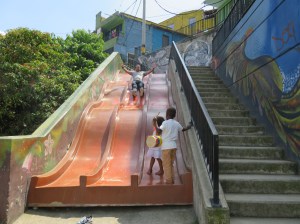
“The kids were cheering me on.”

I had the pleasure recently of visiting Comuna 13, a neighborhood in Medellin that has had a difficult history with gang violence and the illegal drug trade but which is showing signs of both progress and renewal. Due to the investments made by both the local and city government, Comuna 13 has become a hotbed for beautiful street art and graffiti murals, which has attracted many local artists to make a positive mark on this community. Many of these artists are from Medellin and grew up in the neighborhoods of Comuna 13. Rather than discuss the past of Comuna 13, I would rather talk about why this particular community is poised to have a brighter future.

Beyond just the new street art and the graffiti murals that you can find around Comuna 13 are the relatively new escalators that connect the San Javier metro station to the communities located in the hills surrounding this transportation hub. These escalators make it a lot easier for both students and workers to gain easier access to the rest of the Medellin metropolitan area and are an easy way to get from point A to point B. The escalators are free to use for all people including the tourists who come to visit this part of the city.

While the escalators are not so numerous, it is possible that more of them will be added to other parts of the city in the future if I were to haphazard a guess. Medellin can set an example to other urban cities on how to connect neighborhoods efficiently with the use of escalators, especially those with sloping hills and steep mountains within the city limits. For the elderly and children as well, these escalators can be quite useful in helping them get around the neighborhood without too much trouble.

If you don’t feel like taking the escalators, there are concrete staircases adjacent to the new escalators so you can choose which way you want to go up or go down. The escalators are weatherproof as well which is quite genius when you think about. On your way to the metro, the overhang, which is a bright, fluorescent orange color, will protect you fully from the elements such as rain, snow, hail, etc. It only takes about five to ten minutes to get from the top of the escalators to the bottom of the escalators so if you’re in a rush, you won’t have to go through too many escalators to get to your final destination.

The city government of Medellin and local police has done a great job in my opinion with regards to keeping this part of Comuna 13 safe and secure. I noticed during my visit that locals and volunteers are instrumental in helping to keep the area around the escalators clean and orderly. There are park benches and small parks nearby to encourage community get-togethers as well as the fact that there is a big slide where the local children can use to slide up and down to have some fun in the neighborhood. Being the kid at heart that I am, I partook in one of the slides because it is pretty enjoyable and you do go down at a pretty fast speed.

Beyond just the new escalators, the cool slides, and the park benches, there are also now a few library parks, which are free for members of the community to enjoy, explore, and learn. In addition to being places for education, the libraries are great meeting places for the community and can strengthen neighborhood ties. You can also hold cultural, recreational, and educational activities such as group English classes or a family birthday party. Books in these libraries are free to borrow and use.

Everyone can use them regardless of their age, educational level or social status. The mind is a terrible thing to waste and because of the twelve library parks in Comuna 13 and other parts of Medellin, city residents here have a real chance to learn new things and satisfy their curiosity. One particular volunteer group that I’m interested in learning about is called ‘Stairway to English’, which provides free English classes with native speakers to members of the Comuna 13 community.

My visit to Comuna 13 left quite an impact on me. I did go through an organized tour this time, which I do recommend to people visiting this webpage. It was really useful to learn about the history, background, and the progress being made for this part of Medellin. Medellin is quite a large city and it can be easy to get caught up in only staying within your own neighborhood and to not see other parts of the city. Personally, I do hope that other escalator projects in urban areas will become popular in Colombia and other parts of the world.

Human beings are increasingly becoming more urban with over 70% of the world’s population projected to be living in cities by mid-century. This puts the onus on local, city, and national governments to adapt to this reality and try to make life easier and better for the millions of people who call a city their home. Other cities should take note of the social progress being made in Comuna 13 and I can only hope that more and more residents of Medellin will be able to improve their lives in different ways because of urban projects like building library parks or constructing escalator routes.

If you’re in Medellin sometime and you’re curious to check out the positive urban transformation that is ongoing in Comuna 13 and other parts of the city, I would recommend using Comuna 13 Tours, which has a very knowledgeable, kind, and helpful staff members who are bilingual and want to share their city with foreigners out of the goodness in their heart. This is not an official endorsement and I don’t get paid or receive any benefits from mentioning this tour on my website.

I’m doing it because I really enjoyed the experience I had recently with them and I think other visitors who come to Medellin should do the same based off my positive experience using this tour group. Perhaps, most importantly of all, you’ll meet a few locals during your tour and you can see how hospitable, kind, and open they are in Comuna 13. My only advice is to be careful about your photo taking, and to be respectful of both the tour guide and the locals who are kind enough to take some time out of their day to share with you. I look forward to visiting Comuna 13 again someday and I hope to use that giant slide again too.

For more information: http://www.comuna13tours.com/

Being Sentimental

Is it worth it for a person to be sentimental? Is it healthy or unhealthy to hold on to certain items, memories, or keepsakes for the long-term? Like most things in life, there is a balance that has to be struck when it comes to sentimentality. Some folks are not sentimental at all and don’t have much care for old family photos or for holding on to gifts beyond their initial utility. Other people are much more sentimental and hold on to personal keepsakes for years on end allowing their living spaces and their memories to become cluttered as time goes by.

As you get older, your memories will inevitably start to fade away so certain items, keepsakes, and important people in your life can help you to remember certain moments of your past that you’ll want to preserve due to their importance to you. Not everything and not everyone from your past will live on in your memories so you have to be responsible enough to choose what really matters to you and which memories mean the most to you going forward. Being able to balance your sentimentality will help you to become a more mature and emotionally healthier adult.

In my possessions, I have a duffel bag, which has some sentimental value to me. I tend to be a more sentimental person than most people and I try to collect photographs and hold on to personal keepsakes as long as I can. One of the items that is particularly sentimental to me is my duffel bag. There’s nothing particularly notable about this duffel bag based on its’ design, style or purpose. Its’ similar to most other duffel bags on the market and can be used for multiple purposes including trips to other places, which is something that I have done a lot of the past couple of years.

The one thing that visually stands out about this duffel bag is its’ logo. Its’ a black duffel bag with a logo of a purple dragon and the name ‘Saprissa’ embroidered in the same logo. ‘Saprissa’ is short for ‘Deportivo Saprissa’, which is a popular Costa Rican football club based out of San Jose, the capital of the country. The duffel bag’s significance to me isn’t based out of its’ usability, color, or design but rather its’ importance lies in where I bought the item and what I have done with it since then.

The reason why this particular duffel bag is sentimental to me, and why I have continuously used it for almost a decade now is because it brings back a lot of memories for me. Ever since I bought the Saprissa duffel bag back in 2008 when I was studying the Spanish language in Costa Rica, I’ve held on to it and have brought it around the world with me.

From short trips to Jordan and the Czech Republic to my long-stays in Turkey and Colombia, this duffel bag has been to almost as many foreign countries as I have. What the bag lacks in style or design, it makes up for it in terms of substance and reliability. For over eight years, my duffel bag has weathered mud, dirt, snow, rain, wind, and other natural elements that I’ve traveled in along with the dozens of taxi, train, plane, and bus rides I’ve been on. It’s never failed me and it has concurrently led to me becoming more and more attached to using it for each of my trips to distant places.

After almost nine years of using this duffel bag, like all things, its’ starting to show physical wear and tear. Most likely, I should have stopped using it after two or three years but the memories always seem to flow back to me when I see the bag lying there in my room or when I pack it up for another trip. The bag itself is linked to the places I’ve been, the people I’ve met, the meals I’ve had, and the experiences that were tied into the adventures I’ve gone through with the help of this simple, black duffel bag which I carried along with me.

The bag handle is starting to fray, the zippers are exhausted, and the strap material is starting to rupture, and I think it may be time for a new duffel bag. It will be difficult for me to stop using the Saprissa bag that I’ve grown so accustomed to over the years. You simply can’t transfer those powerful memories to another bag quite so easily. The best you can do is mentally let your attachment dissolve, get rid of the bag, and transfer those special memories over to those other keepsakes and photographs that will remind you similarly of your past adventures.

Everything and everyone in your past will fade away to some degree. The important thing is to have one or two things left in your possession that you can fall back on so those items can also trigger those past memories for you to remember and recollect, whether they were joyous, happy, sad, or challenging. Being sentimental about all the things from your past can lead to a cluttered memory and a lack of set priorities. However, having one or two items from a trip or event can be enough to give you all the memories and remembrance you need in order to feel connected to your past.

Finding that particular balance of healthy sentimentality is a lifelong struggle but it helps to pave the way for a complete and fulfilling life. The key is to not the let the remembrance of your past keep you from living in the present and from creating your future. Your sentimentality should not prevent you from making new memories, creating new friendships, and forming new bonds with keepsakes.

Like my duffel bag, certain objects will fade away so it may be best to sustain your past with personal photographs, writings, or even paintings so that your memories can feel more permanent and can even be enjoyed by your friends and family members long after the day when you’re no longer around. Where you can let go of your sentimentality is when you realize that some things will be taken away from you whether you like it or not sometimes and it’s not productive to fight against this fact of life.

The best you can do is to place your memories into different items whether it be a journal or a photo album, which are much more sturdy and reliable than my trusty yet fading duffel bag. Above all else, Sentimentality is about caring. As an adult, you have to find out what’s truly worth caring about. If you’re lucky, you’ll be able to replace what’s been lost and hold on to the memories that are special to you. You have to be ready to let go one day because nothing lasts forever.

The City of Eternal Spring

Medellin, a bustling metropolis of over three million people, has a popular and well-known nickname, “The City of Eternal Spring.” I can say for certain that this particular nickname is well warranted and appropriate given the moderate temperatures and humidity that make up the day and night here. Among the cities and towns I’ve visited in Colombia thus far, Medellin is special in that its’ climate is hospitable and agreeable.

Luckily, after a long day’s work at my new school, I can come back home without sweating through my shirt and dress pants. When it does rain here, it’s refreshing and cool. Sometimes, it can pour really hard but usually only for short periods of time and despite July and August being the prime months for the rainy season, it hasn’t been that frequent of an occurrence.

In addition to its’ great climate, there are other qualities that make Medellin a unique city. Its’ transportation is well organized and runs smoothly. The metro system here is one of the few in South America and is clean, affordable, and has frequent trains. I’ve been impressed at how easy it is to get around the city without breaking the bank. In addition to the metro, there are also the ‘Colectivo’ buses, the Metro Plus bus system, the Metro Cable car system, plentiful taxis, and Uber if you really need to get around in a hurry. Motorcycles, which I noticed to be quite popular on the Atlantic coast, are also another great way to get around especially if you’re not patient with the traffic here.

Caution is necessary, as ‘right of way’ does not exist for the pedestrian so you have to be an eye out for both cars, taxis, motorcycles, and large buses. Everything seems to run efficiently when it comes to getting people to and from their jobs whether they are in the north, south, or central part of the city. While I haven’t spent much time in Bogota or Cali, I would say that Medellin is the most interconnected city in Colombia when it comes to transportation.

Residents of Medellin and the Antioquia region in general are commonly known as ‘Paisas.’ This nickname is also spot on given the fact that these people are really born and raised here in the countryside. Compared with Costenos, Paisas are accustomed to the mountains and hills that surround their fair city. It’s been an adjustment for me given my past experience of living near the Atlantic coast of the country. It’s a unique opportunity to be able to see Colombia through a different lens.

While the food is similar to what you would find in other parts of Colombia, Paisa cuisine is unique in offering hearty dishes like ‘La Bandeja Paisa’ and ‘Cazuela Antioquia.’ Rather than seafood, Antioquia pride itself on its’ offerings of different kinds of meat served with potatoes, avocado, tomatoes, etc. Each region of Colombia including Antioquia are known for its’ cuisine offerings which may be unique to the particular region.

To put it bluntly, Medellin is a city which contrasts its’ natural surroundings of mountains and rivers with its’ skyscrapers, bridges, and freeways. In any view of the city, you get a mix of pure nature and urban settings. Tucked below the valley, the city rises with its’ buildings and elevated metro to contend with the nearby green mountains that surround the city. The most special sight to me occurs at night when the lights of the city flicker brightly across the valley and off the side of the mountains. Each white and orange light that shines in the valley at night signifies one of the homes, apartments, and buildings that house a few of the city’s overall three million residents.

I have only been in Medellin for two weeks so far but I can tell that this is a special place. In addition to the great climate, good public transportation, tasty local cuisine, and stunning views of nature, the city’s inhabitants are friendly and helpful. Sometimes, to me, it doesn’t feel like a big city but a cluster of small towns that make up an urban area. Part of the fun of living here is discovering new neighborhoods that each has something different to offer. There are cool museums and botanical gardens to see at the University of Antioquia, trendy restaurants and bars that make up most of the Laureles / Estadio neighborhood, and the heart of the nightlife scene in El Poblado. It’s also cool to check out the more suburban neighborhoods that are within a metro ride of Medellin such as Envigado and Sabaneta.

Even if one were to get bored with Medellin, there are a lot of things to do, and places to see in the Antioquia region. In addition, there’s also a number of day trips out there to explore the local nature scene and to experience more traditional villages. It would be unrealistic for me to say that you can get bored living in Medellin because it really is a vibrant cultural capital and I believe that a lot of tourists and residents from other Colombian cities now acknowledge that fact. Having had an unfortunate negative reputation in the international news media for many decades, Medellin is a city on the rise with a deep culture, cool neighborhoods, and hard-working, friendly people who want to show you the best of what their home city and region have to offer. I am very happy with my decision to have come back here to Colombia and to make my current residence here in ‘The City of Eternal Spring.’ Hopefully, as a reader of my blog and website, you’ll come down to visit Medellin sometime to find out just what all the hype is about.

Return to Colombia

bilingueprogram
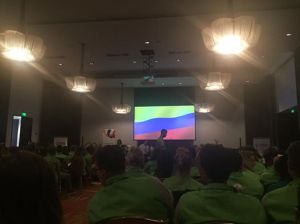
“Yes, there are quite a lot of us in our group of teaching fellows for Colombia Bilingue. Pretty cool.”

After my first experience of living and working in Colombia was cut short rather unceremoniously, I decided not to give up on volunteering here as an English teacher and worked hard over the past three and a half months to return to this beautiful and lively country. After going through visa, medical, flights, and other forms of tedious paperwork all over again, I remained committed to what brought me to Colombia in the first place; a chance to improve the English proficiency of my students and to inspire them to look at the world a bit differently than before.

I have arrived here again in early July to accept the role of ‘English Teaching Fellow’ with the Heart for Change program and Volunteers Colombia organizations with the additional support of the Colombian Ministry of Education. I was extremely excited to hear that I had been accepted to this program in mid-April of 2016. Since then, I’ve worked diligently to prepare myself for the responsibilities and duties expected of me during these next six months to a year.

I’m quite proud to be among 240 English Teaching fellows who have come from over 30 countries around the world to be apart of this mission. It’s truly inspiring to meet and see other teachers come from nations like Iceland, Iran, Kenya, Serbia, and elsewhere with the goal of making Colombia a bilingual nation. This effort to improve the English language proficiency level of Colombia’s students is a massive undertaking and a worldwide effort. I am glad to once again play a small role as an ESL teacher in making Colombia more proficient in the English language.

After arriving in Bogota, the capitol of Colombia, the other 240 fellows and I underwent a week of intensive teacher training in order to prepare us for the job that lies ahead. While the topics that we went over were mostly review for me given my past experiences, I was grateful for the refresher and was impressed by the job done by the UNICA (Institucion Universitaria Colombiano Americana) in helping prepare us for the program’s start.

Unfortunately, I wasn’t able to explore much of Colombia’s capitol city of Bogota but I was able to walk around and check out the historic district along with the Plaza de Bolivar. In addition, I was able to dance some Salsa, eat some delicious Ajiaco soup at La Puerta Falsa (highly recommend), and practice Spanish again with the locals. Hopefully, I will be able to return to Bogota soon because there is a lot to do there and it’s a bustling metropolis on the same level as New York City and Mexico City.

What someone would notice immediately about Bogota is the unpredictability of its’ climate and it’s weather patterns. It could be sunny and warm in the early afternoon, completely cloudy an hour later, and then rainy and cold in the evening. If a direct comparison can be made with a U.S. city, the weather of Bogota would most closely resemble Seattle for better or worse.

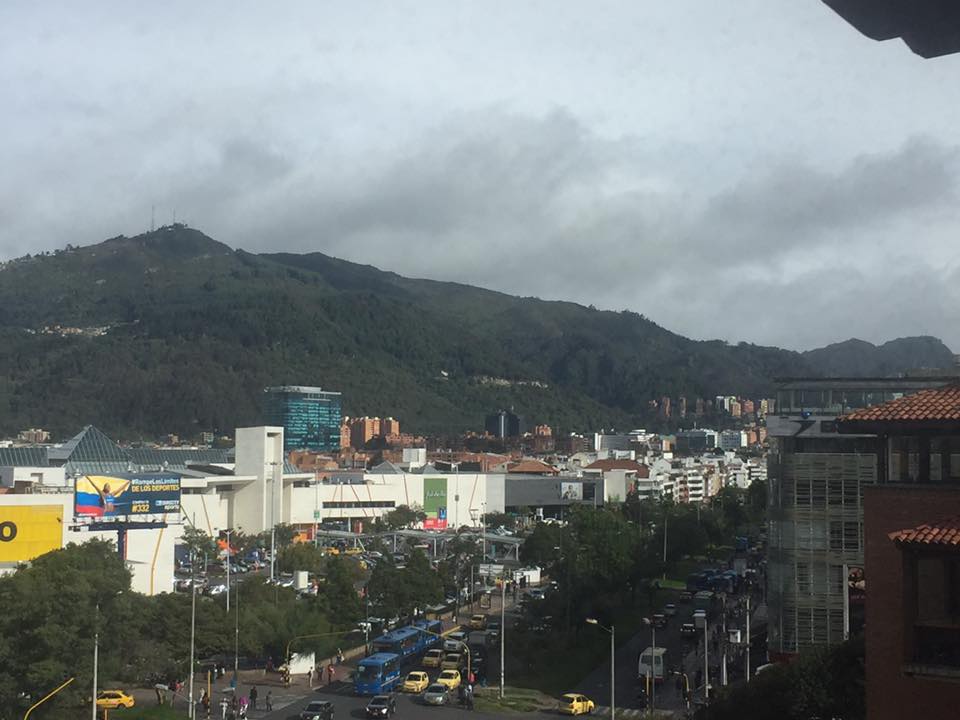
Bogota is tucked in close to the Andes which allows visitors an excellent view of nearby towering, green mountains that jut out beyond the modern array of skyscrapers and office buildings. Bogota, like other Colombian cities, are urban oasis’s surrounded by rivers, mountains, and tropical jungles. Thankfully, from what I have noticed, there is a healthy balance here between nature and civilization, which is lacking in other places.

After having finished the initial paperwork, received my certificate from UNICA, and flown on to Medellin where I’ll be working full-time as a co-teacher in a public school starting next week, I am happy to close a past chapter in my life and open up a new one which has a positive, optimistic outlook. The first six months of 2016 were tough for me personally but I’ve put the past behind me and am ready for what comes next.

I look forward to finishing the work that I started back in January 2016 here in Colombia and hope to do some good work for my new students for the next six months or more. It’s been a wild ride with ups and downs, but I’m happy to continue riding the rollercoaster and seeing where I end up. For now, I’m fortunate to be back here in Colombia and won’t let this second chance go to waste. Todos Por Un Nuevo Pais!

Fear of The Unknown

visually-expressed-thoughts-by-carlos-lang-24
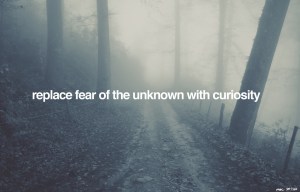
“I couldn’t have said it better myself.”

Why do people sometimes have a fear of the unknown? As human beings, we each have our own unique doubts, fears, and phobias that develop as we deal with the world and its’ challenges. Whether they are fears related to heights, spiders, snakes, or even speaking in front of a large audience, it’s part of what makes us human to have fears. Facing and confronting your fears is not an easy struggle and it takes courage, compassion, and emotional maturity to get past your phobias. One of the most common fears that most of us have from time to time is ‘Fear of the Unknown.’

To have a strong desire to control your circumstances, your path in life, and your future is only natural. However, it’s clear that some things can never be fully known and that there will be changes that we will have to cope with. Trying to control everything and everybody around you is a recipe for disaster. Facing the unknown without fear is not easy but it is necessary in order to become a more mature and more centered person. Fear of the unknown is related to other fears that people have which have a connection to one another such as the fear of death, the fear of getting old, the fear of being homeless, the fear of life changes, etc.

There’s a popular saying that goes, “You always fear what you don’t understand.” This quote ties into a central idea that people fear most what they cannot change, anticipate, or prevent from happening. Some examples of this phenomena include economic recessions, societal changes, job loss, personal loss, election results, retirement planning, health problems, environmental concerns, etc. All of these phenomenon tie into the overall ‘fear of the unknown’ for the average man or woman. None of these phenomena can be controlled or even changed by one individual. Since we cannot usually have a great effect on preventing these fears from becoming real or taking place in our lives, what can we do or what should we do?

It’s best not to resist the changes that are bound to happen at some point in our lives. We simply cannot know everything that is to occur in the future and it would be useless to try to plan for everything ahead of time. Most of the time, it’s best to go with the flow, try best not to fight what comes your way, and to make the most out of things. Do not give in to fear, hate, doubt, disappointment, and anger, which are all negative consequences that come with fearing the unknown and the unseen. Having fear about what can happen a week, a month, a year, or a decade from today is a waste of time because you simply can’t know what exactly lies ahead in the future.

The older I get, the more I realize how important it is to be adaptable and malleable to the future. Trying to plan everything out is a waste of time and energy. While seeking stability, security for yourself and others is an important part of the human condition. Sometimes, you need to cope with some instability and insecurity that will come your way. Another notable saying that people rely on for strength is the popular quote; “Whatever doesn’t kill you makes you stronger.” Persistent fear of what’s to come is not productive, not enjoyable, and not healthy for anyone in the long-term.

What happens to most people when they feel a palpable sense of fear? Well, there are a number of common symptoms and ailments that one can experience as a result. Your heart rate starts to increase, and your breath will become shorter and more harried. You may begin to panic, and feel an enormous sense of tension in your body. You’re going to be anxious and stressed about the unknown and what you’re going to do about it. The more extreme symptoms of feeling fear involve nausea, fainting, vomiting, crying, and shaking uncontrollably. I mention these reactions to fear not to scare my readers but so you can better learn to recognize these symptoms and try to control and alleviate them as best as you can.

Now that we know what the ‘Fear of the Unknown’ is and how to classify it along with the related symptoms, how can we cope we this fact of life? The most important thing to keep in mind when confronting this particular fear is to stay positive about what’s to come. Not everything in life will go smoothly and there will be challenges ahead. However, it’s important to remove the negative associations, conclusions that your mind will come up with sometimes when it comes to thinking and planning for the unknown. A little bit of anxiety and stress is natural when it comes to facing the future but it should not affect your daily activities and your personal relationships.

You’ll have a more peaceful state of mind when you react to the strange and unforeseen future with a positive and upbeat outlook. It’s best to focus on your goals, stay focused, and don’t get sidetracked about what might or what not happen to you in the future. Changing your thoughts and your mindset through meditation for five to ten minutes on a daily basis can also be a great self-help remedy for getting rid of your fear of the unknown.

Embracing a new environment, new friends, and new work opportunities can also keep your imagination in the right state of mind. If your sense of anxiety and fear of the unknown is extremely strong and hard to break, it may be best to consider neurolinguistic programming, cognitive behavioral therapy, and even certain medications if the problem becomes that severe. However, these kinds of remedies should be used only as a last resort.

Having a sense of ownership and direction in our lives is extremely important. However, we cannot control everything especially the unknown that lies ahead. Whether its’ moving to a new city or country, jumping into a dark lake, starting a new job or hiking up a mountain, these are all instances in life that can give us reasons to worry and to be anxious. However, by controlling our thoughts and emotions, and having the ability to stay positive regardless of the circumstances will keep you both mentally and physically fit.

As the 32nd President of the United States, Franklin D. Roosevelt stated famously during his 1st inaugural address to the American people on the subject of facing the Great Depression, “Let me assert my firm belief that the only thing we have to fear is…fear itself.”

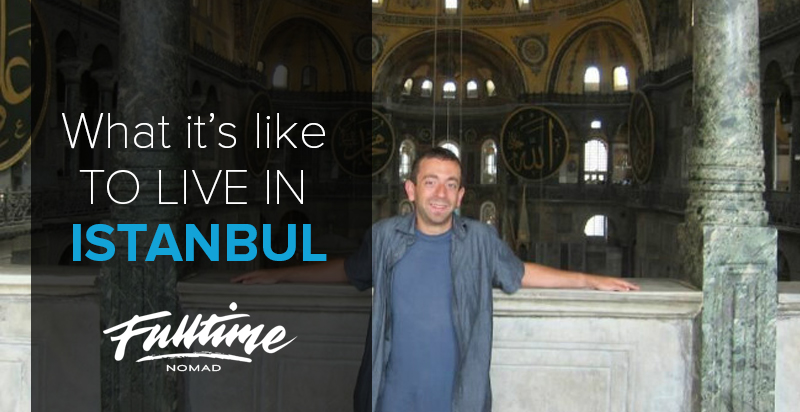
Fulltime Nomad – Istanbul, Turkey (Living Abroad Series)

Recently, I wrote an article and submitted pictures for a guest blog post on the travel website, Fulltime Nomad, as apart of their “Living Abroad Series.”

Johnny & Radhika of Fulltime Nomad were nice enough to let me share my thoughts and experiences on their website on what it was like to live in Istanbul, Turkey.

In the article, I talk about what life is like for a foreigner in Istanbul, the unique food and culture of the city, and how best to navigate the challenges and adaptations that come with living and working as an expatriate.

Here are a few excerpts from the article:

What did you love about living there?

“I loved a lot of things about living in Istanbul. I really enjoyed the Turkish cuisine with my favorites being menemen, iskender kebab, baklava, lahmacun, borek, etc. I could go on and on about the food in Istanbul but you’ll have to visit for yourself!

Being within walking distance of the Bosphorus was a real treat for me too. I’m a big fan of history so I liked learning more about the Ottoman Empire, the founding of the Turkish Republic, and visiting all of the great museums and monuments that Istanbul has to offer.”

What are the local people like? Were there any challenges that you faced?

“Istanbul is an enormous city with a lot of different people from different backgrounds mixing together. It’s similar to a lot of other major cities where there’s a lot of hustle and bustle so people may not be as warm or friendly as they would be in smaller towns or communities. However, there are a lot of smaller neighborhoods within Istanbul that are unique in that they feel smaller and people look out for each other. Overall, Turkish culture is very hospitable and kind. When you’re invited to a Turkish person’s home, be ready because they will feed you, enjoy your company, and care for you as a foreigner in their country.

The biggest challenges I faced were battling the horrendous Istanbul traffic on a daily basis and becoming advanced in the Turkish language. I tried to avoid it as much as possible by taking Istanbul’s rapidly developing metro system but it’s inevitable that you’ll hit traffic 90% of the time. That’s why I encourage people who come to visit Istanbul to stay close to the major tourism spots and/or near to the cool, hip neighborhoods. The Turkish language isn’t that hard for foreigners to learn but you really have to memorize the grammar structures and be prepared to work on your pronunciation and vocabulary skills. It’s not easy but the local people will respect and admire you very much if you try to learn Turkish.”

And, finally, any advice or encouragement for someone wanting to take the leap and live overseas?

“Do it. Have a plan and know what you’re getting into but I highly, highly recommend it. If you’re young, want to explore the world, and have a little money saved up; it’s a worthwhile investment. It’s a lot different living overseas than just being a tourist but it’s a much more special experience. You get to experience the culture more, go deeper into the language, and a gain a more mature perspective of the world.”

_____________________________________________

You can read my full article here: Full Time Nomad – Living in Istanbul

I want to thank Johnny & Radhika again for letting me be apart of their ‘Living Abroad’ blog post series. It was a real pleasure for me to write about my past experiences and memories of Istanbul.

If you’re interested in learning more about the digital nomad lifestyle, go to Fulltime Nomad to learn more about Johnny & Radhika’s story. You can also like them on Facebook at FulltimeNomad and follow them on Twitter, @FTNomad.


Interconnected

interconnected
“Will humanity become more or less interconnected during the 21st century?”

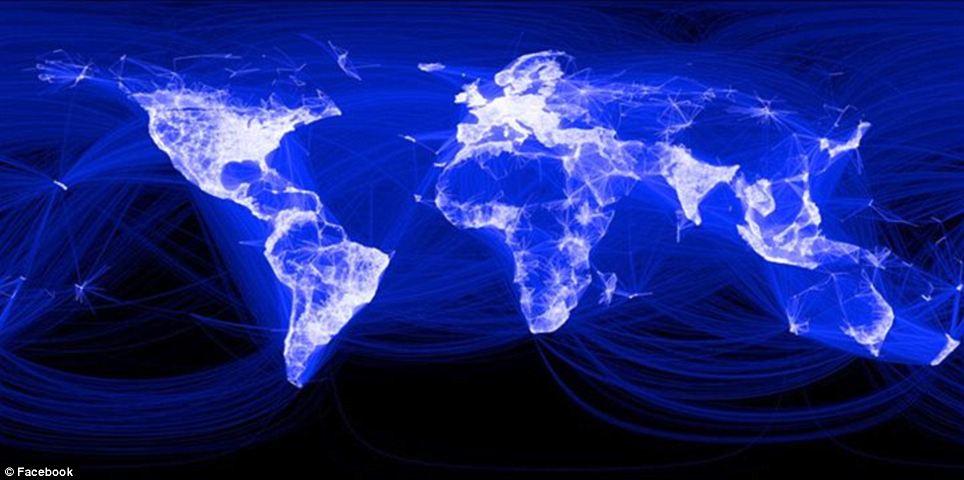
When the 21st Century is over and becomes apart of the history books, it will be known as the first truly interconnected, interdependent, and entangled era of human history. Compared to past eras, borders are more open, long-distance travel is common place due to modern aviation, and global commerce is more free than it ever has been. Globalization as a phenomenon has been made possible not just through open borders and advances in aviation but also due to the wonders of the Internet.

While many human beings can not physically cross borders or take modes of transport to other countries, the Internet has helped to minimize that gap of connection by allowing people from around the world to connect virtually at an increasing frequency. As the technology continues to improve and advance, the Internet has made our planet interconnected on a scale once considered unthinkable a generation ago.

I woke up one morning in New York, had my breakfast and juice, and then was able to log-in to Skype and chat with my good friend who is living in Beirut, Lebanon about his work there and how he has adjusted to living in the Mediterranean metropolis. After that, I sat down to have lunch and finished some homework for a 1:30 PM Spanish lesson with my teacher who is originally from Mexico but currently lives in Italy. Somehow, we were able to make the six-hour time difference work between me in New York and her in Italy. Before the day was over, I had two more Skype and Google Hangout based English lessons with my students from countries like Saudi Arabia and South Korea. Satisfied with my day of both teaching and learning, I settled the rest of my affairs and went down to the kitchen to prepare my dinner for the evening.

None of these lessons or exchanges of information would be possible between persons of different countries and backgrounds without the invention of the Internet. Too often, the average person either takes for granted the capabilities that allow us to stay connected on a worldwide scale or doesn’t take advantage of using this technology to bolster their abilities personally or professionally.

Professionally, as an ESL teacher, the fact that I have been able to use the Internet and web applications such as Skype, Google+, etc. to connect with numerous students from around the world virtually has been a real treat for me. Sometimes, my students with whom I’m working with online do not have the means or ability to work with a native English speaker / teacher in person in their own city or country. Those of us language teachers who commit time out of our lives to help others learn our native languages should be commended for making this a possibility. It is truly enjoyable for me to work with those students online from different countries who will share with me interesting tidbits about their cultures and societies.

Personally, I have been able to stay in touch and meet up again with friends of mine from different regions of the world thanks to staying connected through social media websites like Facebook, CouchSurfing, Twitter, etc. The Internet has allowed me to stay connected with international friends, both new and old, thanks to the rise of social media and its applications. It is funny to think that only fifty to hundred years ago, or even before the advent of the Internet, twenty years ago, the best that you could do is send a handwritten letter by mail or make an expensive call to any location overseas. Now, such communication to an international location is often very cheap or even free of charge depending on which application you decide to use.

While the advent of globalization has its positives and negatives, which are often debated and discussed endlessly, I believe that one net positive from globalization has been how the Internet and the “world wide web” has made humanity interconnected. This one trend of “Interconnectedness” for the 21st century is one that isn’t going to reverse course anytime soon and is going to be hard pressed to find itself limited in total amount of users or overall global popularity.

According to the World Bank’s recent report titled “World Development Report 2016: Digital Dividends”, the number of people worldwide who have access to the Internet has tripled from about 1 billion people in 2006 to about 3.5 billion people in 2016. This recent development is an extraordinary occurrence. This means that over 40% of humanity now has some type of access to the Internet which has become increasingly possible due to rise of mobile technology and the spread of 3G and 4G cellular networks.

As more and more people connect to digital markets of e-commerce, become new entrepreneurs and start to create their own small businesses, this will also allow more students to connect and learn with me here in New York and other teachers around the world to learn English or another foreign language. The possibilities of eventually having everyone connected to the Internet would be truly endless. It could lift millions more people out of poverty and create new economic opportunities where there were none before.

Some of the big questions to be answered in the coming decades is how do we as a global community work together to connect the remaining 60% of humanity to the Internet? How do we work together as governments, NGOs, and individuals to give people the means virtually to benefit economically and personally from the advent of the Internet? These are not easy questions to answer let alone solve. However, if humanity is to continue advancing and developing into the future, we must continue to become more interconnected to each other. That is a fundamental truth of the 21st century for which we all must be aware of.

Sources:

1.)  http://www.theguardian.com/technology/2016/jan/13/internet-not-conquered-digital-divide-rich-poor-world-bank-report

2.) http://www.worldbank.org/en/publication/wdr2016

A Wealth of Knowledge

knowledge-translation-and-exchange1
“The sharing and exchange of knowledge is easier now than it has ever been in human history.”

There has been no other time in human history than in today’s era where the average person with access to the Internet can seemingly have unlimited amounts of information available to him or her. When you truly think about the magnitude of it, untold amounts of data are being created every day. According to IBM, “The current estimate is 2.5 quintillion bytes of data per day and over 90% of the data in the world today has been created in the past two years alone.”

A common response nowadays from both family and friends when I ask a question to them about a random query is not a straight-forward answer but rather an off-handed suggestion to “Google it.” Living in this era of ‘Big Data’ can be quite overwhelming to the average person but one could also look into it as an opportunity to gain knowledge and further ones’ understanding on a limitless amount of subjects with the simple click of a mouse. The Internet is an amalgamation of thousands of libraries of Alexandria at the beck and call of one’s fingertips.

Compared to past ages when information and knowledge was more exclusive and harder to come by, today’s era allows everyone with an Internet connection to search and find information to their heart’s content. Instead of going to a library to find what you need on a subject, websites like Google, Wikipedia, and other online encyclopedias have largely replaced the main role of the physical library. I remember when I was younger and in my high school days having to seek out certain books in order to write a research paper or complete a book report.

However, now more than ever, you can easily find the sources of information you need online in order to facilitate your research and evidence. While I love libraries and hope that they never go out of style, the reality is that online encyclopedias and eBooks are largely replacing their original purpose. In order for libraries to stay relevant, they need to start incorporating computers, free Wi-Fi, and technical classes in order to remain useful.

From the 18th to the 20th centuries, universities and colleges across America were the standard bearers and purveyors of higher education. Originally for the elite, wealthy, and well connected, those students who were able to get accepted and afford undergraduate and graduate studies believed that they would have an advantage in the job market and in achieving the American Dream. More recently, as colleges and universities have become more inclusive than exclusive, tuition prices have inversely risen as well.

While higher education has become accessible to more and more young Americans, it also has become more expensive especially over the past decade. These events have led to an ongoing debate as to whether college is really worth the price tag and whether the average student gains anything from earning a four-year degree. With student loan debt at an all-time high of $1.3 trillion in 2015 in the United States and tuition rates at both public and private universities continuing to rise, people are beginning to look for alternatives to the current higher education system.

Over the past decade, there has been a drastic proliferation of massive open online courses (MOOCs) provided by both private companies and traditional universities. At a much lower price and sometimes free, people from all over the world can sign-up for these courses and partake in lectures, tests, quizzes, and papers as if they were actual enrolled undergraduate and graduate students at the physical form of the university. As the credentials and certifications bestowed upon these courses continue to increase and become more widely accepted, we may begin to see ‘the end of college’ as we know it.

Examples like Khan Academy, edX, Coursera, Udacity, etc. and other MOOCs have leveled the playing field. Tech entrepreneurs from Silicon Valley have allowed students from all over the world to access unlimited online courses to further their academic knowledge at a lower price. With the subsequent rise in online university programs for undergraduates and graduates, the physical college experience of dormitories, lecture halls, football stadiums, etc. may become less appealing to students as tuition prices continue to increase. While the social and networking benefits of college life are numerous, they may not be enough to compete with this era of free information that we are living in.

Compared to past decades, we’re living in a time when access to the Internet is at an all-time high and is increasingly rapidly due to the rise of mobile technology. Traditional havens of knowledge such as the library or the public university will have to adapt to stay relevant in this unlimited information age. In a worldwide job market that is evolving rapidly and where the average child today will work in an industry not yet created, the free exchange of knowledge must continue to spread through the worldwide web.

Countless others and I have benefited from taking online coding courses on ‘Codeacademy’ to learning new languages on ‘Duolingo.’ As MOOCs and online universities continue to develop their courses and credentials, we may begin to see an era where the average person can earn a degree or two without breaking the bank. MOOCs are cheaper, less time intensive, and can adapt more easily to the rapidly changing employment market.

A well-educated population is now more possible now than ever with the wealth of knowledge and information that is available. That fact is evident but it also is up to the individual to be willing to search for that information and actually apply it. Instead of getting frustrated with people asking me to ‘Google’ the answer, I find that it’s worth the hassle because it’s often true that I will find the answers I’m looking for and in greater detail than if I were to ask a friend or family member for a quick description. That’s the power of the Internet. That’s the wealth of knowledge that we are able to take advantage of.

Sources

Sites Mentioned