USS Constitution 220th Anniversary and Head of the Charles Regatta

22688008_10159366808305262_4588052671143962007_n22688902_10159366808395262_4729354069572982806_n22555000_10159366808575262_3491509295398557863_n22549844_10159366808785262_9195479170625921047_n22688562_10159366808695262_9084972316984606405_n22552614_10159366809210262_7603151149935310572_n22549738_10159366809205262_4060032975434527134_n22728718_10159366809020262_1399246638696222734_n

CameraiPhone 6

LocationBoston, Massachusetts; Cambridge, Massachusetts

English Corner – Second and Third Conditionals

To follow up on the previous article about the ‘Zero and First Conditionals’, it’s important to continue on with the ‘conditionals’ unit to explain the second and third conditionals as well. In order to fully understand conditionals, we need to know every type of conditional, and when and why do we use them in sentences. If you’re struggling with the second and third conditionals, it’s important to learn how to form either conditional in terms of its’ structure, and then learn how to use the conditionals by following the examples that I will be creating for you.

Let’s begin with the 2nd conditional first. As always, the second conditional is going to start with the word ‘If’ as is the case with the zero and first conditional. However, the second conditional focuses mainly on the ‘past simple’ grammatical tense, and how to make the second conditional compatible with expressing what you would do in the past if something were to have happened to you. Usually, the second conditional is good for talking about things in the future that are probably not going to become true.

It’s also used secondly for occurrences going on in the present, which are considered to be impossible or unfeasible because they are not true. The second conditional usually expresses desires, wants, and needs that are more unrealistic and unlikely than those that would be expressed in the first conditional. Also, with the second conditional, you’re going to focus on the past simple tense rather than the present simple tense to go along with the ‘If’ + the subject of the sentence. In order to get a better idea of the 2nd conditional, let us take a look at a few examples of this conditional in action.

Examples:

‘Talking about the future’

  • He would travel to Japan if he had the money.
  • If they did their homework earlier, they would have went to the movies.
  • If I won the Powerball lottery, I would have bought my parents a nice house.

‘Talking about impossibilities in the present’

  • If I were you, I wouldn’t do that.
  • If you had studied harder for the exam, you would have done better.

The main thing to remember about the 2nd conditional is the unlikeliness of something to happen in the future or in the present. You’re also referring to an unlikely possibility in the past to discuss what is not realistic in happening in the future.

Last but not least, it’s important to know about the third conditional in terms of its’ formation, usage, and examples. It’s a very simple formula when it comes to creating the third conditional. While the second conditional focuses on ‘If’ + past simple, the third conditional focuses on a formula of ‘If’ + past perfect à would + have + past participle’ in order to create a complete sentence.

When we use the third conditional in a sentence, we talk mainly about the past as well as to discuss a situation that didn’t really happen. We can also imagine the hypothetical results of a situation that didn’t actually occur, but that we would like to think about the possibility of. It’s important to remember that the ‘past participle’ is often added to the second part of a third conditional sentence, and can be switched to the first part of the sentence as long as the ‘if’ remains part of the other half of the conditional sentence.

Examples:

  • If I hadn’t eaten so much candy on Halloween, I wouldn’t have gotten sick.
  • She would have become a doctor if she had been able to afford medical school.
  • If we had taken the subway, we would have arrived at the airport earlier.
  • If they had been telling the truth about the food fight, they wouldn’t have gotten in trouble with the school principal.
  • If he had showed up for the job interview on time, he would have been hired on the company.

When it comes to any conditional whether its’ the zero, first, second, or third, it’s important to take the time to really study this grammatical concept. You need to put in the time and the effort to study the formula, the usage, and practice with some example problems in order to memorize how to create the sentence. There are plenty of ways to practice the conditional sentences, and it’s important to study this concept consistently in order to master it.


Traditions

Why are traditions important? Why do we continue to pass down certain rituals, celebrations, customs, etc. from generation to generation? This is not a simple question to answer but I’d like to discuss my reasoning as to why traditions are important and why they should stick around in this article. In this day and age, there seems to be a movement against traditions and a counter-movement to think only about the present and what’s to come in the future.

I think that this view on traditions is shortsighted and inconsistent with human nature. While not all traditions are sustainable, useful, conscientious, or inclusive, there are numerous reasons as to why traditions should stick around, and why people should embrace traditions as being apart of how they live their lives. While people love to look forward into the future, it’s important to heed the customs and the ways of the past.

By observing traditions and celebrating them at times, we connect ourselves to past generations and rekindle the flame of days gone by. This is especially pertinent when it comes to the traditions instilled within us by our families and our communities. If we choose not to uphold those traditions instilled in us by past generations of family and friends, then we are doomed to lose traditions and the value that they held in our hearts and in our minds.

Each person must decide how much to incorporate the traditions of the forefathers into their lives and to what degree. However, to completely disavow of those traditions that lift the human spirit and are positive, and rewarding is to disregard one’s ancestry and upbringing in a sense. Not all traditions should make it from one generation to another but if there are traditions that are meaningful to you, and connect you to the past in a good manner, then those traditions should be continued and passed on to the next generation if that is the road you wish to take.

Having a tradition or traditions also helps you to create memories whether its’ with acquaintance, friends, or family. The memories around traditions are likely to be good ones and you’ll look back on them one day thinking about how special it was to celebrate or observe that tradition with the people you most care about in the world. While the tradition may only take an hour, a day, or a week, the memories of it will stay with you for a lifetime.

Also, it’s important to remember that traditions only come around every now and then whether it’s once a year or sometimes less than that so it gives you something to look forward to. Traditions give people a chance to relax, to enjoy, to reflect, and to be at ease in their lives surrounded by people who feel the same way. While the planning and the execution of traditions can be stressful and filled with anxiety, the payoff is worth it in the fact that you’re carrying on what’s been done for years, decades, or centuries beforehand, and that fact is something to really be proud of. Good and worthwhile traditions will likely lead you and others to count down the weeks and days until you can observe, celebrate, and reflect upon the special occasion.

It can be very difficult to get family and friends together under the same roof and near impossible especially if you live in different states or in different countries. Traditions give families an excuse to get together, laugh, talk, eat good food, and enjoy time together. Once your family starts a shared tradition together, it can be hard to let go of it. When traditions are observed, everybody has a role to play so it gives a chance for family members to connect with each other by having a personal stake in making sure that the tradition is observed in the correct manner. The ability to bring families together is a beautiful thing in life and sometimes it is only possible through the observance of a shared tradition. It can be difficult for family members to agree on everything but it’s likely that the thing they’ll all have in common is a desire to keep the tradition going, and make it a successful one.

Having a sense of identity is another reason why traditions are powerful. By connecting people to ideals, values, and beliefs, greater than themselves, your identity can truly feel whole. Being able to belong to a certain group, or a certain place can be quite healthy for most people, and to celebrate a healthy tradition as a group can really help to create a good sense of identity within an individual. It can be easy to lose your sense of identity nowadays, but by tying your identity to a set of values and ideals related to a group or your family through different traditions can help you feel like a whole person.

In a world where the present and the future take precedence, traditions can connect us deeply to those who came before us and to the past itself. Traditions from the past are important to preserve and uphold, and it’s a way to connect generations to each other. For myself, my traditions involve thinking about those who came before me and the sacrifices and struggles they went through in their own lives. Traditions are always passed down from generation to generation so that others and I in my family could celebrate and observe the traditions that are rich in history, religion and culture. If traditions are not followed and maintained in the current generation, then they are doomed to die out before being passed on to the next generation. If you or other family members refuse to pass on traditions to a member of the next generation, they will go extinct one way or another.

Finally, not all traditions are worth keeping or observing. Certain traditions can be harmful and carry a heavy height that people should not be forced to burden themselves with. Not every tradition created by humans is worthwhile, fair, or just. You don’t need to follow traditions if they don’t align with your moral conscience. Traditions can be good or bad, and they reflect upon our human nature.

The beauty of traditions is that you are given the choice, which traditions you would like to uphold to preserve and pass on to other people. If a tradition is aligned with the core values, beliefs that you have as an individual, then you should feel at ease with continuing it into the future. However, you should not seek to force your traditions on other people, and you should not preach about the superiority of your traditions when compared to the traditions of others. When it comes to traditions, use your best judgment and figure out which ones would be best to observe and celebrate with your family and friends.

Our ties to the past whether its’ through our ancestors, our family history, or our understanding of the world as it once was, is tied to our traditions. If you decide to forgo all traditions, then you are doomed to forget the past. Having a connection to the past through our traditions is a powerful thing and being able to celebrate them in a healthy manner should be encouraged. The memories we make with family and friends, the identity we gain from them, and the values and beliefs we pass on to the next generation make traditions a beautiful part of our existence on this planet. Whether its’ sitting down to a yearly Thanksgiving dinner, going to church weekly, or marching in a parade to celebrate your heritage and culture, traditions are apart of both who we are now and who we once were.


You may ask, how did this tradition get started? I’ll tell you…I don’t know, but it’s a tradition!” -Fiddler on the Roof

English Corner – Zero and First Conditionals

These are the first two types of conditionals to be aware of when it comes to studying this particular grammar topic of conditionals. The ‘zero’ conditional is formed when it comes to discussing general truths and things that can happen under certain circumstances. It’s important to know how to form the ‘zero’ conditional, and how to create sentences using it.

The second type of conditional to study is the ‘first’ conditional and is used for discussing possibilities that can occur in the present or in the future. I will be writing about the first conditional and how its’ made along with its’ usage in English grammar. The ‘zero’ and ‘first’ conditionals are the most frequently used and it’s important to be aware of how to use them and when to use them in sentences.

When you form a ‘zero’ conditional sentence, there are two parts or clauses to it that make it a complete sentence. The first clause in the sentence is the ‘if’ clause and the second clause is the main clause that completes the sentence. The ‘if’ clause usually begins at the beginning of the sentence followed by the main clause. It’s important to note that you don’t need to begin the ‘if’ clause with if but rather use ‘when’ instead to start the sentence.

Here are some examples of how to form and put the zero conditional into action:

Example:

If you cool water to 0 degrees Celsius, it freezes.

When you use the ‘if’ clause first, you’re going to have to put a comma there before using the main clause which in this case is ‘it freezes.’

However, if you were to put the ‘if’ clause second in the sentence, you don’t need to use a comma at all to connect the sentence’s clauses together.

Example:

Water freezes if you cool water to 0 degrees Celsius.

When it comes to the grammatical basis for an ‘if clause’ sentence, you’re going to want to follow this formula of formation.

‘if clause’ – ‘if’ + subject + simple present verb = complete sentence

‘main clause’ – subject + simple present verb = complete sentence

Now that you know how to form the ‘zero’ conditional, it’s important to see some other examples in order to get a better sense of how this particular conditional is used.

Examples:

  • If you heat the snow, it melts.
  • If it rains a lot, the flowers get wet.
  • Forest fires don’t start if there is no drought.
  • If you cross time zones, the time changes.

When it comes to the first conditional, you have to make sure to follow a similar formula to the zero conditional but with keeping a few differences in mind. The first conditional or conditional type 1 is used for talking about current possibilities or those that are possible to happen in the near future. Similar to the zero conditional, the first conditional has a basic structure that should be memorized.

A first conditional sentence has two clauses which consist of the ‘if’ clause and the main clause. Instead of simply addressing the simple present tense as the zero conditional does, the first conditional can reference the future with the simple future tense in its’ sentences. The ‘if’ clause can either come first or second in the structure of a first conditional sentence; it’s really up to your personal preference as the learner. You can have the main clause go first instead or have it come second after the ‘if’ clause. The most important thing to remember is that the first conditional must address the future primarily and not the present as the zero conditional does.

Here below are a few examples of the first conditional in action:

Example:

  • If you do your homework, you will pass the class.

The ‘if’ clause goes first in this sentence followed by the main clause and the use of the future simple tense with ‘will.’

Example:

  • You will catch the train if you run fast.

In this first conditional sentence, the main clause goes before the ‘if’ clause, and there is also no comma used because of this change in the sentence structure. You should notice that ‘will’ and the simple future tense is still being used regardless of which clause is used first or second.

Example:

  • I will dance Salsa if I hear the music.

For this particular example, you should note that there are two different verbs being used for their respective clauses. ‘Dance’ comes with the main clause while ‘hear’ goes with the ‘if’ clause for the second part of the sentence. Since the sentence begins with the main clause, you don’t need the comma to make a complete sentence.

Now that you know how to form the ‘first’ conditional, it’s important to see some other examples in order to get a better sense of how this particular conditional is used.

Examples:

  • If you drop the glass, it will break.
  • If the airplane is full, I will leave.
  • We will not go to the movies if the tickets cost $12 each.
  • They will not leave Disneyland if they do not get a refund.

Conditionals are a popular English grammar topic and it’s important to know how and when to use them with your sentence. The zero and first conditionals are only the first two types of conditionals that can be used in English. For the next ‘English Corner’ blog post, I will be focusing on the other types of conditionals that are sure to come up in your English grammar studies. Study the examples above and you should start seeing some progress with this particular grammar topic!

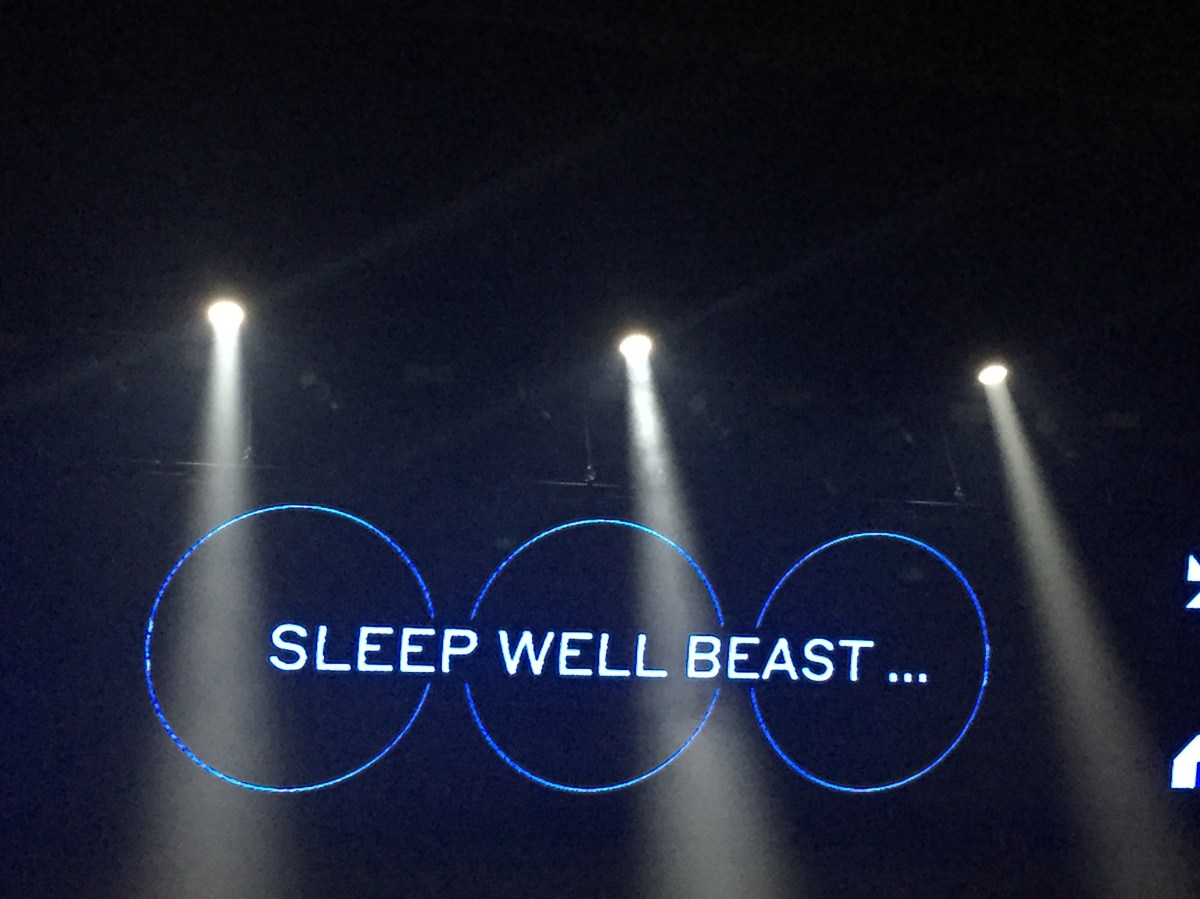
The National at Boch Center

IMG_0053IMG_0055IMG_0057IMG_0059IMG_0061IMG_0067IMG_0070IMG_0072IMG_0074IMG_0077IMG_0080IMG_0084IMG_0085IMG_0086IMG_0051

“Bloodbuzz Ohio” by The National (Video)

Camera: iPhone 6

Location: Boston, Massachusetts; The Wang Theatre at Boch Center

A Sense of Wonder

If you were to define the word ‘wonder’, you would characterize it as meaning a feeling of amazement or admiration caused by seeing or witnessing something beautiful, unexpected, captivating, and inexplicable. When you are a child, it’s easy to have that sense of wonder about the world. Your sense of curiosity and disbelief is quite high and your imagination can run wild believing in the possibilities of the unknown.

Even as we grow older and become adults, we still have a sense of wonder that never fully leaves us and is part of our essence as human beings. While you may not have the same sense or amount of wonder as you did when you were a child, it’s important to never fully extinguish that feeling and to let it stay within you even if you are an adult or in your elderly years.

Having a sense of wonder connects you to your childhood years and reignites the kid within you because that part of your being never truly goes away unless you let it. By maintaining that curiosity and desire to know about the world, this helps us keep our sense of wonder about life and its’ beauty. It can be easy nowadays to be jaded about the state of the world and to think that everything is going to hell in a handbasket.

While there are certainly serious problems to be fixed in our ever-changing and complicated world, being doom and gloom about it 24 / 7 won’t make you feel any better. You have to maintain the ability to never be too down or be too up about your surroundings. While there can be a lot of ugliness to be found, there is also a staggering amount of beauty to be in awe about.

I believe that it can be much easier to see things through a negative lens and seek out the ugliness in life. It’s harder yet much more rewarding to seek out the beauty and wonder that you can find if you know where to look. You also have to take the time to enjoy the beauty of things and open yourself up to the beauty of the world. While it may be cliché to state this, you have to have an open heart and an open mind. If you close yourself off to the wonders of life, you’ll never really be able to appreciate them fully.

A sense of wonder has to be cultivated over a long period of time and doesn’t happen overnight. When you are a child, you’re amazed by anything and almost everything new and unique. As you get older and you experience more of life, it can be more and more difficult to feel amazement or be captivated by life. Each person has a different sense of wonder, and different things amaze different people. When I think about wonder though, there are a few things that cause me to feel that unexpected thrill or captivation.

I think most people would agree that a sunrise or a sunset could really create awe and wonder in a person. The colors and the vibrancy of the environment when the sun lights up your world at dawn’s break or when it fades into darkness to make way for the stars and night sky; those moments can truly captivate a person’s imagination. You could also make the case that when you witness the sunrise from a mountain top or see the sun set from the backdrop of a vast ocean, witnessing those natural occurrences are too beautiful to be put into words.

Sunrises and sunsets never get old for me because they are never the same and they are always different depending upon which environment you’re witnessing them in. It only takes a few minutes to stop what you’re doing in your hectic day-to-day life to really enjoy the spectacle of the sun’s rising and setting. It’s also a reminder about how our time here on Earth is limited and that there are cosmic occurrences that happen beyond our control and our understanding.

I think this is mainly why solar eclipses are so powerful to witness in person because you’re seeing an event that is beyond human control and that only comes around once or twice in a lifetime. Those men, women, and children who traveled hundreds or thousands of miles to see the recent solar eclipse occur across the continental United States are in touch with their sense of wonder, and they believe in its’ ability to make you feel astonished, wowed, and even humbled.

Witnessing the sun’s and the moon’s movements aren’t the only ways to cause yourself to feel wonder though. There are hundreds, if not thousands of possibilities out there that will make your jaw drop in disbelief. I have always thought of photography as a good way to capture the wonders of the world, and I have taken many photos throughout my previous travels in order to really remember those special moments of life when I was on the road. Beyond just taking photos, it’s really wonderful to interact with your environment by jumping in a freezing lake, hiking up a mountain, smelling different flowers in a garden, rafting down a streaming river, etc. Those moments really make you feel alive and help to maintain a sense of wonder about the world.

You don’t have to travel, take photos, or be an adventure junkie to have a sense of wonder though. If you’re willing to challenge yourself by learning new things and bettering yourself, that will help you maintain a healthy curiosity about life and a thirst for knowledge. Whether its’ learning a new trade, developing a website, or speaking a new language, the pursuit of knowledge in different areas is a great idea and the things you will learn about yourself and the world around you will captivate and excite you. If you’re curious, confident, and willing to have an open mind, the world will teach you many things if you open yourself up to the possibilities.

Never let the flame inside you go out. As a child, you definitely did not have worry about wonder because you always had it and every day, you most likely had energy and a curiosity not easily extinguished. However, when you get older and more accustomed to the ways of the world, it can be very tempting to think of everything as mundane, childish, and routine, but that’s simply not how it should be.

However, The differences that occur when you’re a teenager or a fully-grown adult is that you have to pursue the wonder for yourself. You have to take the time and put yourself out there to figure out what really captivates you. Everybody has a unique way of seeing the world but make sure it’s not always from a serious and pessimistic point of view. Let yourself be wowed by the unknown or by the newly discovered. Pursue the passions and the beauty in life based on what fills your heart or your mind up.

For some, it may be playing Jazz music and for others, it may be hiking through the mountains. The best thing about experiencing wonder is that it is ever-present in our lives but you have to be aware of what reaches out to you and touches your soul. Most people live out their lives not fully embracing the wonders around them.

You have to be always on the lookout for what fills your heart up with joy and happiness whether it’s a watching beautiful sunset over the water, viewing an original painting by Claude Monet, or playing Beethoven in a symphony orchestra as your friends and family sit in the audience. Always be looking out for the wonders in life, otherwise, you’ll never find them at all.

‘Batman Begins’ – Film Review and Analysis

I know what you may be thinking as you read out loud the title of this blog post. You’re probably wondering why I would choose to review and analyze a movie based off a super hero from a comic book series. It may appear to be juvenile but I made this creative choice for a couple of good reasons.

  1. Batman is not just any super hero. He is often ranked as being the most popular and well-known super hero worldwide up there with Superman or the ‘Man of Steel.’
  2. Batman isn’t your traditional super hero to make a movie about due to the fact that he has no super powers, and is an ordinary man who strives to be extraordinary.

A superhero who has been around since the early days of comic books in the early 1930’s, Batman is a popular cultural figure who until the 2000’s came around was never done justice on the silver screen. I remember as a kid watching the overly cartoonish and god-awful early film adaptations such as ‘Batman Forever’ and ‘Batman and Robin.’ The best film up until ‘Batman Begins’ was Tim Burton’s ‘Batman’, released in 1989, and even that movie was a bit goofy and contrived at times. Luckily, Batman on film earned a well-needed revival due to the masterful directing, screenwriting, and casting for Batman Begins, which was released over a decade ago in 2005.

Christopher Nolan, who directed Batman Begins, and helped to write the screenplay, did an amazing job in bringing Batman to life again as a superhero that comes from a realistic setting. Compared to The Avengers or X-Men, this is as close to reality as a superhero film can get. Compared to all of the comic book movies I’ve seen, and I’ve seen a good amount, ‘Batman Begins’ is the most realistic. It never gets too fanciful, and it takes itself seriously as a film that falls under the ‘drama’ genre.

For those readers who are unfamiliar with the origins of Batman, ‘Batman Begins’ does a great job of setting up the rise of this super hero from his childhood to his 30th birthday. You can see how much Bruce Wayne evolves into the role of the masked dark knight due to the painful tragedy that befalls him at an early age.

Bruce Wayne is a boy who grew up with everything a child could ask for: a loving family, a safe home, and a bright future. He has it all taken away from him when his parents are gunned down in front of him by one of the people they were trying to help. The Wayne family comes from immense wealth and they are tied to Gotham City through the generations. The Wayne’s are great benefactors to the city and try to help it out financially so that citizens can gain economic opportunities even during hard times.

The death of Bruce Wayne’s parents is the true beginning of his path to becoming Batman. This film does a great job in showing the phases that Bruce goes through after suffering a trauma such as the loss of his closest family members: his mother and his father. For many years, Bruce turns his deep-seated emotions onto blaming himself to feel the full guilt, the relentless anger, and the deep sadness fully. He is unable to use those powerful emotions, and turn them into constructive action.

An ever-present theme throughout ‘Batman Begins’ is Fear. As a young child, Bruce fell into a deep well near his parents’ mansion, and was unable to get himself out after experiencing a wave of bats surrounding him as they flew away into the sunlight. During an opera performance one night, young Bruce asks his father if they can leave the theater for a little while because he is frightened by the performers pretending to be bats in one of the play’s acts. Because of this fateful decision, for many years, Bruce blames himself completely for his parents’ death because they ended up being shot and killed by the mugger, Joe Chill, after Bruce asked them to leave the theater, and head into the nearby alley.

Bruce seeks out vengeance against the man who killed his parents and wishes to kill Mr. Chill as he leaves the courthouse. He buys a gun one day and wants to take justice into his own hands like a vigilante. Before he is able to do the grisly deed, Joe Chill is killed by one of Carmine Falcone’s men, a Gotham City mob boss. Although Mr. Falcone didn’t kill Bruce’s parents, the corruption befalling the city’s institutions, the unrelenting crime wave, and the lack of a respectable police force have led to more injustice than ever that has left Gotham City a shell of what it used to be.

One of the best scenes of ‘Batman Begins’ highlights the fact that Bruce has more to lose than he knows and should protect the people he cares about. He decides to use Batman as more than just a man flying around in a cape, but more as a symbol to be feared by criminals everywhere, and that anybody can become Batman if they have the will to act. Bruce is wise to use his fear of Bats and turn that fear into a powerful symbol, which criminals will one day fear themselves.

Despite the personal tragedy that befell him, men like Carmine Falcone lecture the young Bruce Wayne regarding his naivety about the world. “You always fear what you don’t understand”, and “people from your world have so much to lose.” Before becoming Batman, Bruce decides to travel the world, learn about the psychology of criminals, train himself in various martial arts, and harness the power of stealth to strike fear into the hearts of Gotham’s underbelly.

In order to learn fully about the evils of the world, Bruce has to go out there himself to experience what actually drives criminals to do what they do. He has to push himself physically and mentally in order to be able to stop them. In order to become Batman, he has to develop a strong moral code so that he can be incorruptible, and more than just a vigilante taking justice into his own hands. In this film, Batman doesn’t kill and he desires to make sure that all criminals face true justice to prove that it’s more than just vengeance for him.

In order to fully develop into Batman, he must complete his training under the tutelage of Henri Ducard (played brilliantly by Liam Neeson). Henri and Bruce have both suffered personal tragedies at the hands of ruthless criminals, but they decide to use their anger and pain to motivate them to strengthen, develop, and confront their adversaries whomever they may be. Bruce becomes Ducard’s best student and excels in different areas of physical and mental training. As Ducard imparts on Wayne, “Your training is nothing, the will is everything. The will to act.”

Batman Begins does an excellent job of showing the physical dexterity and the mental will needed to become a hero like Batman. In addition to that, the training scenes are spectacular in highlighting how Bruce must use deception, theatricality, and stealth in order to overcome his enemies with fear. Most similarly, he must play the role of an actual ninja. “In order to manipulate the fear in others, you must first master the fear within yourself.”

Batman is a symbol that cannot be bought off, corrupted, or killed. Ducard reminds Bruce Wayne of the fact, “If you make yourself more than just a man, if you devote yourself to an ideal, and if they can’t stop you…you become something else entirely…A legend, Mr. Wayne.” However, Ducard and Wayne have a fundamental difference of belief regarding the nature of criminals that puts them on an adversarial footing with each other, which leads to an inevitable confrontation later on. Bruce desires to bring criminals to justice but with the support of the police and the criminal justice system. On a fundamental level, he wants to uphold the institutions of Gotham City to be free of corruption in all of its’ forms.

We find out that Mr. Ducard is no fan of granting any leniency to criminals and wants them to be punished without any hesitation or limits. For Ra’s al-Ghul, Henri Ducard, and the rest of the League of Shadows, an organization that helped train Bruce Wayne to become Batman, crime cannot be tolerated and that criminals thrive when societies indulge themselves by not having them pay the ultimate price of death. Even if the criminal is a despicable murderer, Bruce still believes in the rule of law, wants them to be tried in a fair court, and does not desire to become a singular executioner.

Batman wants to save Gotham City in the right way even though he finds it to be an almost insurmountable task given the lack of allies he has. However, he discovers that he has help with the incorruptible Officer James Gordon of the Gotham City Police Department and his friend, Rachel Dawes, a district attorney who won’t be bought off.

Batman comes up against another villain who desires to strike fear into the heart of Gotham’s citizenry: The Scarecrow (played by Cillian Murphy) who uses fear toxin gas to poison people, and make them do horrible things to each other out of their fear of each other. Bruce Wayne must lead a double life, keep his secret safe, weed out corruption, and be able to combat two villains who use fear to prey on the fearful (Scarecrow and Ra’s al-Ghul).

Instead of using fear against the citizens of Gotham, Batman uses his terrifying appearance to strike fear into the hearts of criminals and villains everywhere. While he understands that justice is never ensured for all criminals, he does not want to be a murderer himself who decides the fate of all those enemies he fights and stops.

‘Batman Begins’ is a deep superhero movie that asks some philosophical and psychological questions regarding the nature of true justice, and how far individuals and a collective society should go in order to stop crime. The film also probes the feeling of ‘fear’ and how a person can master their own fear in order to become mentally and physically stronger.

Christopher Nolan asks the question of how do we control our own fear and keep it from controlling us. Batman is a flawed superhero, but he is able to control his fear to become a legend. His symbolism helps Gotham City to rise up against corruption, crime, and to fight injustice. While he is only just a man without any real superpowers, he is able to inspire others to fight the good fight with his moral example.

In a movie where there’s not much hope, the Batman inspires others to believe in themselves and their city again. He is a regular man, driven into action after going through a terrible tragedy. Instead of being broken by what happened to him at a young age, he uses his pain and sorrow to motivate himself so that others don’t suffer the same kind of tragedy in life of losing a loved one. As a superhero and as a film character, Batman sets himself up as an example to follow for the audience even if it is a fictional story.

Making a super hero film is an extremely difficult process, which is why director Christopher Nolan should be given a lot of credit. Mr. Nolan has directed a lot of great films including Inception and Interstellar. Batman Begins is the first of three movies in the Dark Knight film series, and it may be the most underrated of them all. He and his team did a great job of bringing this character back onto the big screen in a big way.

It’s a realistic take on the Batman, and its’ a film franchise that has produced three excellent, unique films. For myself and many other fans, Batman Begins is more than just a simple superhero movie. It is a morality tale about hope overcoming fear, how to overcome adversity to become a stronger person, and how to set an example for others to follow in your footsteps.

Batman has survived in our popular culture for so long because you get the sense that he is a relatable character for many people despite the fiction behind it. Ultimately, he is a man who has his strengths, his weaknesses, yet he is ultimately fallible. Still though, he is a powerful individual that strives to fight for justice, hope, and wants to bring the best out of others. It’s important to remember that you don’t have to become a superhero like Batman to emulate those characteristics. You just have to do the right thing and be a good person.


English Corner – Idioms

If you are looking for a mainstay of most living languages, you should look no further than the concept of the ‘Idiom.’ The Idiom is the closest thing that humans have in terms of a universal connector among the diversity inherent in all forms of spoken language. The most important thing to understand about the idiom is that you are not supposed to take them literally but you are still supposed to take them seriously. There’s a deeper, implied meaning beyond any idiom regardless of the language it’s spoken in. This is especially the case in the English language where there are hundreds, if not thousands of idioms that can be used for any matter or circumstance.

Idioms can be extremely diverse in their range and can refer to any amount of unique subjects or topics. Idioms can also be used very locally, regionally, or nationally depending upon the language and the culture it comes from. A dialect, jargon, or accent can also lend to the idioms used by a certain group of people who share common interests and/or beliefs. Idioms can be used in reference to business, politics, science, art, music, and other parts of daily life.

It can be tough to decipher which idioms are the most used in the English language but there are a few of them that stand out in terms of their popularity and their different ways of usage. Most people who speak English are likely to be familiar with these idioms below or have used them themselves.

Examples

  1. Don’t count your chickens before they hatch.

Meaning: Don’t get ahead of yourself before things are accomplished.

  1. Have a chip of my shoulder.

Meaning: You’re bothered or annoyed by something that won’t go away.

  1. Don’t jump to conclusions.

Meaning: While not taking this statement literally, you shouldn’t pass judgment on someone or something before you receive all of the facts.

  1. A dime a dozen.

Meaning: Very common, easily found anywhere and everywhere.

  1. An ace in the hole.

Meaning: A secret advantage or a benefit that no one else knows about and is going to be used soon against an opponent or adversary.

Sentences

  1. The science project isn’t finished yet because we still have to build the volcano. Don’t count your chickens before they hatch.
  2. I don’t like critics doubting my basketball skills. They really give me a chip on my shoulder.
  3. We don’t know whether or not he’s telling the truth about his new invention, Let’s not jump to conclusions.
  4. These Amazon ‘Alexa’ AI devices are a dime a dozen. You can find them everywhere and they are really popular.
  5. I have Matt Ryan as my starting Quarterback in Fantasy Football this weekend. He’s my ace in the hole.

Idioms can refer to someone’s actions and the consequences of those actions highlighted in example idioms such as ‘Pay the piper’ and ‘Rub somebody the wrong way.’ Idioms can refer to people in general when you say that they are ‘sick as a dog’ or ‘six feet underground.’ Lastly, colors in English can often become part of idioms themselves such as when you describe somebody as feeling upset or depressed as having ‘the blues.’ You know that the person isn’t actually ‘blue’ in their color but rather they have ‘the blues’, which is referred to as when somebody isn’t feeling well. There is a whole musical genre that is devoted to this kind of mellow music called the ‘Blues.’ ‘Out of the blue’ is another example of a color kind of idiom that refers to something happening when you least expect it to.

It can be very difficult to get the hang of idioms especially if your proficiency level is at a low level. First, you need to be able to conjugate verbs, have a good grasp on the vocabulary by knowing a lot of different words, and then you need to be able to understand the meaning behind the idioms and use them with other native speakers in the right way. The idioms being used depends upon the region, the culture, and the social group you find yourself in. That is why there are such a sheer variety of idioms that can be used in any given situation regardless of the language that the idiom falls under. Idioms cut across language and cultural barriers and can have similar meanings to each other depending upon the situation.

The best way in which to comprehend and start using English idioms is to talk with native speakers who will use them throughout a conversation even if they don’t realize it at times. The more conversations you have with English speakers, the more idioms you will pick up on and remember. They will most likely want to help you out so do not be afraid to ask questions if you don’t understand the meaning of the idiom or why it’s being used in a certain sentence.

Before you start using idioms yourself, you want to be absolutely clear that you’re using the idiom within the right context for the right meaning. It can be a bit embarrassing if you tell your American friend who is starring in a Broadway play that you want him to ‘jump the gun’ instead of to ‘break a leg.’ Idioms take time to understand, use, and master but they are an important part of learning any language, including English.
______________________________________________
If you have liked what I have written in this ‘English Corner’ post, and you are interested in improving your English language skills whether its’ with speaking, writing, or just boosting your knowledge of grammar, I would be happy to help you reach your language learning goals. Check out Learn English With Ben to book a private lesson with me today!

The Blog Turns Two

Today, September 16th marks the 2nd anniversary of www.benjweinberg.com, my personal blog and website which I have been proud to create and build up over the past two years. I have to say that it’s been the most successful year yet in terms of both overall viewership and unique visitors. I am proud to note that I have reached thousands of people from around the world each month, and have published over one hundred and fifty and photo-blog posts total over the past two years.

In the last year, I’ve documented my travels throughout Colombia and have really made the ‘English Corner’ series a cornerstone of this blog. In addition, I have reviewed many films and analyzed them such as ‘Collateral’, ‘Traffic’, and ‘Lord of War.’ I continue to write about psychological themes that are highlighted in articles such as ‘How You Think Affects Everything You Get’ and ‘Reaching the Gold Standard.’

In this 2nd year of blogging, I have done my best to improve my writing and editing skills in order to create useful content for my site visitors. In the third year of my website, I hope to write longer-form posts at 2,000 or 3,000 words total in order to dive deeper into topics of my choosing. I continue to devote a lot of time and effort into this blog and I am very thankful to all of the readers, friends, and family who have supported it by reading my articles, leaving comments, and giving me constructive feedback.

I’ve recently moved to Boston, Massachusetts so I do hope to focus on some cultural aspects of living in this historical New England city and to highlight some of the destinations that are popular here. I will continue to write about ESL topics in my ‘English Corner’ posts but also focus more on personal and professional development ideas that I think will help my readers to succeed and advance themselves in different parts of life.

As this blog enters year three, I will continue to produce consistent content on a weekly basis, and to also update the layout and design of the website to be more viewer friendly. If you’re new to this blog and don’t know much about me or my writings, I have an archives section which has the location of all one-hundred and fifty of my posts which have occurred in the past two years. I also have a ‘Best Of’ Articles page where I highlight the ten-blog posts that I like the most when it comes to culture, lifestyle, traveling, music/movies/books, and personal development. You can find the individual links to these ten top posts here: https://benjweinberg.com/best-of-articles/.

Lastly, the biggest changes that I’ve made to my website are to incorporate the ability of ESL students to sign-up and take private English lessons with me if they are interested in doing so. If you go to the ‘Learn English With Me’ page, you can find out more about which kinds of private lessons I’m offering as well as my pricing per lesson. There’s a sign-up interest form at the bottom of this webpage, and you can also check out my ESL teaching background and experience here: https://benjweinberg.com/learn-english-with-me/.

I also have advertised my freelancing services in writing and editing. I have done freelance writing and editing jobs for clients over the past couple of years and am looking to expand my clientele. If you would like to find out more information about my pricing, experience, and see my portfolio, you can check it out at this webpage: https://benjweinberg.com/freelance-services/. There is a sign-up interest form at the bottom of that webpage too so you can get in touch with me through an e-mail message.

In this third year, I hope that my website will continue to grow in terms of audience and produce better and more useful content. I want to say thank you to all the readers and supporters of benjweinberg.com. I look forward to keeping in touch with you throughout the rest of the year and into 2018. As always, you are free to comment on any and all of my articles, give me helpful feedback through a direct message, or to show interest in my freelance and teaching services by completing a sign-up form. Thank you again for your readership and I think that this 3rd year of benjweinberg.com will be the best one yet. Cheers!

English Corner – Imperatives

Using the ‘imperative’ is similar to using the bare infinitive and has the same form as the singular or plural ‘you’ when it comes to forming it. The imperative clause is used for many reasons and is flexible in terms of its’ usage. Some of the reasons for using the imperative include when you want to tell somebody else to do something, giving them advice, making suggestions, creating requests, enforcing commands, or handing out orders and/or instructions. This means that you can tell people do things or to not do things and you are usually not referring to anyone in particular when you give out these imperatives.

There is no specific subject indicated when it comes to the imperative form of sentences. It’s rather about addressing who is listening to you whether it’s one listener or multiple listeners, and the speaker is addressing a general subject rather than a specific subject. The base form of the verb in its’ present form is usually the most common way to create an imperative sentence. You can make the imperative as direct as possible or make it more indirect as to not hurt someone’s feelings, which will make him or her less likely to do something for you.

Let us take a look at some of the reasons why we use the imperatives as mentioned earlier as well as cite some specific examples when it comes to the reasons being used.

  1. To give advice or suggestions

Examples:

-Go to the gym three times a week to lose weight.

-Eat fruits and vegetables daily to stay healthy.

  1. To give directions or instructions

Examples:

-Turn right at the street corner and walk 400 meters to the store.

-Cut the tomatoes into small pieces and add them to the guacamole.

  1. To give orders or commands

Examples:

-Fire the missiles!

-Shoot the ball!

-Be silent now!

  1. To give warnings

Examples:

-Put your cell phone on to airplane mode.

-Wear your seatbelt.

  1. To make polite requests

Examples:

-Please eat your peas and carrots, Karen.

-Be quiet during the movie please.

  1. To offer invitations

Examples:

-Join us for the birthday party, John.

-Come with him to the dance tonight.

It’s important to not refer to the subject as ‘you’ regardless if your imperative is singular or plural in its nature. Instead, it would be better to refer to the specific individual by their name or be more general than that by omitting the subject totally from the sentence.

If you really want your ‘imperative’ to stand out, it would be best to add the word ‘do’ to the beginning of your command, request, or instruction. The word ‘do’ really adds emphasis to your imperative and helps to create a sense of urgency that is not easily replicated with other word substitutes. The word ‘do’ has a powerful meaning in the English language that makes it an important part of mastering imperatives. Here are a few examples that uses ‘do’ in an imperative sentence effectively:

Examples:

  1. Do be kind and gentle to your grandmother.
  2. Do the right thing and help that old lady carry her groceries home.
  3. Do finish your exam on time!

Having been able to use the word ‘do’ in an imperative sentence in the ‘positive’ form, you should also be able to use ‘do’ in its’ negative form. In order to use ‘do’ negatively, you need to add the word ‘not’ right after ‘do’ to create ‘do not’ as the beginning of the imperative sentence. You can also combine ‘do not’ together to create ‘don’t’ to create an even more powerful and emphatic command or request. Here are some examples that you can use with ‘do not’ or ‘don’t’ to create imperative sentences.

Examples:

  1. Do not smoke inside the restaurant.
  2. Don’t give alcohol to underage minors.
  3. Don’t loiter in front of the grocery store.

An important thing to remember when it comes to using imperatives correctly is not to use them if you’re addressing your employer, a family member or relative, or a police officer / authority figure. Imperatives are very direct and you can come off as being harsh or rude in English if you don’t understand when and where to use this type of sentence.

It’s necessary to know who you’re talking with and how well you know them before you start to give out a formal request, a dire command, or a stern warning. Hopefully, with this edition of ‘English Corner’, you’ll know a lot more about ‘imperatives’ and how to form and use them correctly in polite conversation.