
On Leadership

There are a number of keys and steps that it takes to become a good leader. There are also many interpretations of what a good leader can be, but I believe there is also a specific formula of characteristics, habits, and traits that separate the good leaders from the bad ones. It is extremely useful nowadays to go over the themes and the values that often make up the blueprint of a good leader whether you are referring to a business executive or to a prime minister. I particularly rely upon using books and other reference materials for further analysis, which help to highlight the importance of leadership when operating under difficult circumstances.

Especially when it comes to working within an adaptive leadership framework, you have to be able to address different challenges and crises that arise which may cause you to adapt your leadership style to fit the times. In order to meet these challenges, a leader has to be open to new ideas, be able to self-reflect, and stay true to the overall vision or goals at hand even when obstacles are thrown in the way.

Each modern and historical leadership figure that you can think of was an adaptive leader since they were not following a specific script or manual and had to sometimes improvise or change their beliefs or views when the time came for it. Still though, these leaders had a steadfast vision, were good communicators, and had the trust of their constituents and colleagues to carry out the work they were doing even under high pressure situations.

The most useful example for me of displaying adaptive leadership in action was the movie “Invictus”. That movie portrays an excellent example set by the former President of South Africa and human rights icon Nelson Mandela as an adaptive leader. He did not let his past experiences of being jailed unjustly in Robben Island cloud his ability to forgive and bring his country together to fight for a better future. He was open to compromise, dialogue, and reconciliation to heal a very divided country.

I think that even if we do not consider ourselves to be a natural leader, it would do us a lot of good to put ourselves in other leaders’ shoes to decide how we would act if we had been the leader in those situations. I believe it would be very beneficial for anyone to do role playing scenarios, either historical or modern-day ones, where someone is forced to put our leadership abilities to the test and see how they would do when evaluated by counterparts or colleagues.

Being a principled leader takes time but can be rather straightforward when you really think about it. Anyone can have principles that they stand for but that does not necessarily make a good leader. There are other qualities that make a good leader which involves having a deep sense of who they are including their strengths, weaknesses, and how they can tell their story. Even if a leader has principles, they may not be morally sound or ethically fashionable, which is what someone can conclude when you consider the actions of controversial leaders such as U.S. President Donald Trump and Saudi Arabia’s Crown Prince Mohammed bin Salman.

When you contrast these principled yet morally compromised modern leaders with positives historical examples of real leadership from the likes of President John F. Kennedy or Attorney General Robert F. Kennedy, you can get a better sense of how a leader can be principled in their decision-making but still a bad leader in terms of reputation. The Kennedy brothers still had principles, but they were based in sound morals and humane values as well as an ability to reach out for advice and counsel before making an important decision. They were decisive but not arrogant. Both men would be considered well-versed in exercising what is known as emotional intelligence. Under immense pressure, they were able to not let their ego or personal feelings get in the way of making a fateful executive decision that prevented World War III.

I have learned through my own life experience and by reading about other people that a leader must be able to put him or herself in difficult situations where their ability to exercise leadership will be tested. Being able to open yourself up to risk, setbacks, and failure can help to mold a true leader as overcoming adversity has helped many people in the past to rise up to take charge when their community, their country or the world needed them.

You do not need a stirring personal narrative to be a good leader, but it does help you build a strong connection with others. Sharing your story and connecting that story to the larger society is a very powerful tool that can make you stand out as a leader. I believe that a leader should always aim to be authentic when they connect with other people and to see themselves as not the center of attention but a small part of a larger story. To be transformational and a servant of the people, you have to put your ego aside. Those leaders who are the most developed as individuals are those who know themselves well.

A leader must not only be successful in leading himself or herself but also in successfully leading a team to achieve goals and in working together collaboratively. In order to lead a team, every member must be open and honest with each other. Accountability is a key aspect of being a team leader both to themselves and the rest of the group in order to be a more cohesive force.

While the leader has to hold the team members accountable for how they work and what they do, the leader must expect that the team members can also hold their leader fully accountable in response. Each member of the team must live up to the duties expected of them because if just one of the team members isn’t pulling their weight, then everyone on the team will suffer as a result. A true leader will not let the weight of the powers and responsibilities given to them let it go to their head. True leaders must be humble as well as selfless in how they set the example for the rest of the team or organization that they are in charge of.

In a group setting, each member of the team including the leader must be willing to have difficult conversations and point out both the positives and negatives that are ongoing within the team. Sometimes, I believe it is best to pull a team member aside to have a private conversation if the matter is really serious but if it is a consistent yet small error that is hampering progress, then that should be brought up in the team meeting. However, it’s best for the leader or any members to gossip or talk negatively about someone in a passive-aggressive manner.

I, myself, am wary of a hierarchical structure when it comes to leading teams. It creates an unhealthy dynamic where the team leader may not be accountable to anyone in the group but himself or herself. They may be able to critique their team members flaws without any fear, but the team members would not be able to do the same to the leader. The hierarchical system of leadership should be considered imperfect in its nature and I think it’s best to consider a more collaborative approach to the concept of leadership where the team or group take turns becoming the leader at different intervals in order to better understand what it’s like to lead the group rather than just stay on the sidelines and carry out orders from above.

As a leader, you should be willing to bring together qualified people of different skill sets and capabilities together in the hopes of achieving a common goal that you have set for your team. There is an inherent importance of being open with your teammates as well as a willingness to accept your own boundaries within the team or organization. In order to be an effective leader, one must realize their own limits within their given expertise and skillset. A good leader will not try to do everything or infringe upon the necessary work of other team members. Building a true sense of collaboration and cohesiveness instead of competition and infringement is key in order to achieve the goals and objectives you set as a leader.

Being vulnerable with your team members is a key part of being an effective leader. However, there’s a balance that you have to have as a leader. You should be open to having difficult yet necessary discussions with all team members, a few of them, or just one-on-one if the discussion is extremely sensitive. I believe it’s best to be open and honest with your team members rather than closed off and withdrawn. You should act with transparency when it comes to your decision-making process and the actions that the team as a whole should implement. It’s also necessary to not sweep things under the rug and let a small issue become a big one. A leader should also admit his or her own shortcomings, which will let others in the team be more comfortable around you in expressing their flaws as well.

When constructive criticism is warranted both for the leader and team members, it should be discussed. Before criticizing, I think it’s important to follow the rule of saying one or two nice things about the work the team is doing before discussing what should be improved upon. Any kind of critical feedback should be preempted by a positive remark that would soften the blow of a negative comment that could be taken the wrong way. A true leader will let himself hear open feedback from the team he or she is leading and implement those changes to improve the results of the team. Also, it’s the most important job of a leader to delegate responsibilities and tasks well enough so they are not responsible for too much or find themselves to be too prideful to bring on new team members.

Lastly, I think another distinct priority of a leader should be to always actively look for the most qualified people and bring them onboard. Having the diversity of background and of opinion can build a strong team but you must also have a variety of opinions available to you so as to avoid groupthink within the ranks. A leader should be aware of their strengths and weaknesses at all times and be humble enough to fill in the gaps with wise counsel, strategy through the addition of others who compliment his or her area of expertise. Any leader can only go so far in life and in work by themselves, but it is the team, the organization, the army, or the people that the leader builds who can help that leader build their legacy in the history books for their good governance and fair decision-making.


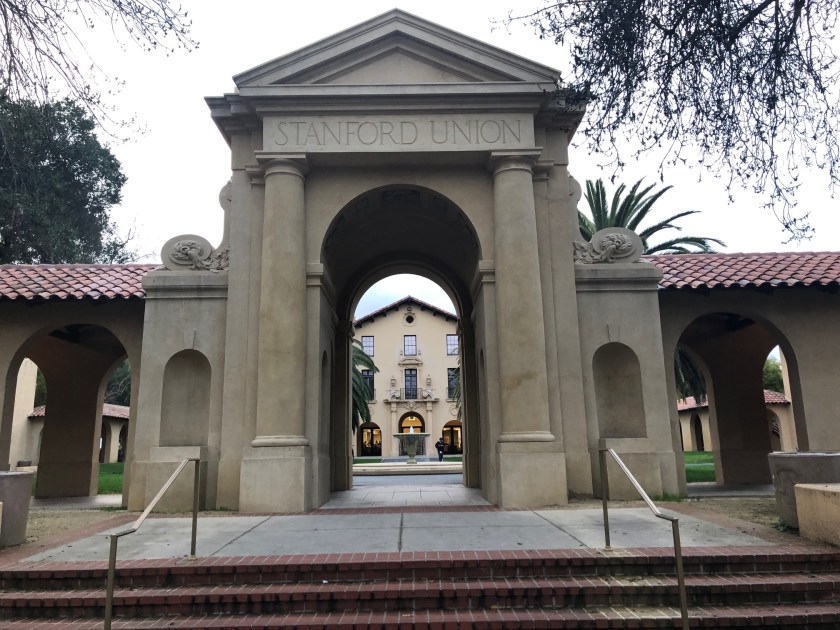
Stanford University

IMG_1778IMG_1777IMG_1774IMG_1771IMG_1769IMG_1767IMG_1765IMG_1763IMG_1762IMG_1761IMG_1759IMG_1758IMG_1757IMG_1755IMG_1754

CameraiPhone 8

Location: Palo Alto, California

Silicon Valley

IMG_1590IMG_1788IMG_1750IMG_1649IMG_1647IMG_1646IMG_1645IMG_1643IMG_1642IMG_1639IMG_1636IMG_1595IMG_1594IMG_1593IMG_1592

IMG_1648

Camera: iPhone 8

LocationBay Area, California (Silicon Valley)

English Corner – Embrace Your Errors

It’s natural to make mistakes. As famous English poet Alexander Pope once wrote, “To err is human.” To err or to make a mistake is unavoidable and the earlier you accept the fact, the faster you will be able to move on. If you can’t acknowledge your mistake, you won’t be able to fix it which will help you to become a better English learner. The 1st step in the process of improving your proficiency is realizing you are going to make mistakes and to be ready to correct them so that it does not happen again.

The ability to make yourself vulnerable is key when it comes to learning a new language. The vulnerability to put yourself out there and making yourself susceptible to making mistakes will do more for your English language learning than anything else. If you do not try at all or if you refuse to participate, you will definitely not improve at all. It is okay to be nervous, shy, and even worried about these mistakes but you should know that there are countless others who have come before you, made the same mistakes but they learned from them, and they were able to use these mistakes to fuel their improvements and use them as motivation to become better listeners, readers, speakers, and writers.

When you make an error, stop yourself and ask: ‘why is this an error?’ Also, realize ‘how could it be fixed?’ and then lastly inquire to yourself about ‘what can I do to avoid this mistake in the future?’. If you stop, answer, and process these three questions, you will be well on your way to avoiding further errors and helping also to allay your fears of making them in the first place.

An English teacher can only do so much for each student especially if they have 30 to 40 of them in the classroom. The individual student must take it upon themselves to face their fear head on, make the inevitable mistakes, and to learn from them through perseverance and practice. A teacher can only do so much to motivate his or her students but it is up to the student themselves how far they want to take their language learning. The classroom is a place of equal standing among language students but it is outside of the classroom where those who put in the most effort, who will likely make the most mistakes, but who spend the most time fixing those mistakes who will have the most lasting success.

Learning a language is hard work but it can be among the most gratifying things worth accomplishing during our lives. It can be messy, uncomfortable, and challenging process but that goes for life itself as well. There will be setbacks and obstacles laid in your way but you must not be afraid of making mistakes. Being able to make mistakes and to bounce back from them shows a spirit of character and determination that is not easily quenched. If the fire of learning is in you, you won’t be dismayed when you use the singular noun instead of the plural noun or you put the verb at the beginning of the sentence instead of in the middle.

Hopefully, you will have caring teachers to light your path forward along with friends and family at your side when you stumble and make those mistakes. Embracing your errors is not an easy process by any means but it’s a necessary part of the learning process. Looking back on your past mistakes, you will be grateful that you made them because they taught you a lesson and they made you a better learner. Without the chance to make mistakes, there is no true mastery. I hope that all of you English language learners reading this article to know that when you fail, simply brush it off, try again, and push forward until you succeed.

Waterloo

IMG_3656IMG_3657IMG_3660IMG_3664IMG_3667IMG_3668IMG_3670IMG_3671IMG_3677IMG_3679IMG_3683IMG_3691IMG_3692IMG_3694IMG_3695

CameraCanon PowerShot SX710 HS

Location: Waterloo, Belgium

The European Parliament

IMG_3617IMG_3621IMG_3623IMG_3625IMG_3627IMG_3632IMG_3633IMG_3634IMG_3635IMG_3636IMG_3640IMG_3643IMG_3644IMG_3645IMG_3647

Camera: Canon PowerShot SX710 HS

LocationBrussels, Belgium

Paying It Forward

Over the course of a lifetime, you can acquire knowledge, resources, and perspective from having lived longer and experienced more than perhaps your peers and more so than those people younger than yourself. Hopefully, although this is not always the case, you will have gained ideas, maturity, and wisdom, which you can impart on those who will come after you. Now while I am not directly referencing mentorship or being a mentor to others, I encourage those who have the knowledge and skills handed down to them or learned through their own efforts to pass that wisdom down to the next generation.

While ‘paying it forward’ may have gone out of style, it has been a part of human history since the early days of man. All great works in this world could be lost if it was not for oral or written recordings so that the knowledge could be passed on to those younger and curious to learn from those who came before them. Teachers, professors, coaches, and mentors play a valuable role in our society because they are entrusted with the high responsibility on passing on their mastery of different subjects on to the next generation. While these are not perfect people, they take it upon themselves to pass on their teachings to those younger and more inexperienced in the hopes that they will take their learnings to improve the world in some way.

However, you do not need to be a teacher or a professor to pass on your knowledge or your skills to younger peers or students. Everybody should take it upon themselves to ‘pay it forward’ in some way by imparting your hard-earned knowledge on to others whether they are family members, friends, mentees, or work colleagues. Part of paying it forward is realizing that you will not be around forever and if you bottle up all of your wisdom, experiences, and overall knowledge inside your mind then it will be truly lost with your passing.

You can be sure that one way to leave an impact, make your mark, and have a legacy is to teach others what you were taught while adding your own perspectives on what you have learned so that you can add your own context to the subjects you have mastered. Nobody is perfect but it is better to share that knowledge with an apprentice or a student than to let it go to waste and be lost to the ether.

From Socrates to Plato and Robespierre to Napoleon, both knowledge and wisdom has been passed down from one generation to the next. In order to progress and advance in your professional life, you’ll sometimes need to reach out on your own to those older and more experienced than you in your field of work. Guilds, trade apprenticeships, and mentoring programs do a lot of the good work in terms of paying it forward, but these opportunities don’t always come around for the average person.

If you see someone who you can help out either professionally or personally and you want to take them under your wing to see how they progress, that’s the best way of paying it forward. Instead of just choosing anyone to help, focus on those people who are interested in your line of work or have the same kind of personal life as you did. You will want to help those folks who are willing to listen, to learn, and to actually implement the advice that you give them. Sometimes, it’s best to let that person reach out to you when they are looking for help but you may have to take the initiative if you don’t have anyone reaching out.

As I discussed in a previous post, mentorship goes both ways but paying it forward is something you should do out of the good of your own heart and out of a desire to leave the world better than when you found it by positively impacting someone’s life. All of us have a lot of experience, knowledge, and skills to share and there are many people out there who don’t or won’t have access to the same resources as we did.

Of course, first, you’ll have to find who that person is who you want to help but remember to not be too selective or wait forever to make your impact. If you have been working hard over the years and decades to build up your knowledge, you should not let it all go to waste by keeping it to yourself. When no one sets the example of paying it forward, it can create a negative ripple effect whereas that kind of useful information or life experience won’t be passed down to those who need it the most.

You may not see the rewards of your efforts in sharing your knowledge or expertise right away but over the years and decades of you helping others, you will definitely see the results whether its’ in the neighborhood, the community, the country, or the world. Everybody has something to contribute to the overall society and even more so when you are able to help others do the same in their own way. ‘Paying it forward’ may not be requirement in living a good life but it will certainly leave an impact on yourself and those who you assist and help during the course of your life.

Brussels Holiday Lights

IMG_1520IMG_1405IMG_1404IMG_1403IMG_1397IMG_1396IMG_1395IMG_1393IMG_1391

CameraiPhone 8

Location: Brussels, Belgium

English Corner – Utilization, Not Memorization

Many English language learners and students are taught from a young age to memorize, repeat, and regurgitate what they have been assigned by their teachers. When it comes to the main focus of English as a Second Language, there is a tendency for educators in this field to focus on having memorization be the main focal point of an English student’s language base when it should not be this way. Instead of memorization and repetition, we should instead focus on helping English language learners with utilization, which means putting the English grammar and vocabulary they have acquired for actual use.

While learning different types of English vocabulary and understanding English grammar rules are very important parts for a beginner student to master, instead of focusing on fill-in-the-blank, matching, and multiple choice questions, teachers should instead focus on putting the English student in situations where they need to use this vocabulary or remember these grammar rules so they’ll better be able to retain the knowledge they have gained. Relying too heavily upon vocabulary sheets or grammar rules sheets for too long will disengage the students from enjoying the process of mastering a foreign language.

A good lesson should encompass grammar and vocabulary together, but for which leads to a chance for the students in the class to be put in activities or lessons where they need to use what they have learned right away so they retain it better. There are numerous examples out there on how to achieve this kind of lesson plan but a good one would involve speaking and writing parts, so students not only engage with the material alone but also with each other or in small groups. English does not have to be boring but a strict curriculum with the same activities over and over again will not help students to improve their retention of the language.

Students have the responsibility to study the grammar and vocabulary that the teacher has assigned in class, but it is the teacher’s responsibility to mix the subject matter up enough so that the students will have enough chances to let the material sink in over time so that they can absorb it better. In addition to speaking and writing exercises, utilizing listening and reading activities are crucial too. To break up the monotony of continuous vocabulary and grammar exercises, a good English teacher will mix it up in different ways to make the class more fun and interactive.

In my experiences as an English as a Second Language teacher, I have noticed a deficit in some cases where the students are able to do well on grammar and vocabulary assignments but struggle greatly when it comes to utilizing these lessons to improve their speaking and writing capabilities. By incorporating related speaking and writing activities to supplement the new material, students will better able to progress in these areas as well. Going through the textbook, doing the same kind of activities over and over again is no recipe for a proficient English learner.

When it comes to speaking, if you are doing a unit on types of food and drinks, it’s good to do an activity where students ask each other questions and get answers from their classmates. They could ask, “what is your favorite food?”, “what do you like to eat for breakfast / lunch / dinner?”, “What supermarket do you go to?”, “Do you like to cook? why or why not?” These question and answer activities are extremely effective in keeping the students engaged and allow them to put their grammar and vocabulary knowledge to good use by actually applying it in a real-life situation.

For grammar retention, writing sentences and even essays are a key aspect to utilizing the grammar lessons that they have learned in the past and applying them in the present. For example, if you introduce an essay topic or question such as “Where do you see yourself in ten years?, what will you be doing with your life, and what would you like to do?”, this essay assignment is a great way to jog the student’s memory so that they remember how to use verb tenses such as the ‘simple future tense’ or the ‘future progressive tense.’ Letting students use the future tense to describe their future selves is a great way in engaging them honestly and utilizing their understanding of English grammar by putting it into the written form.

Your English students will also be more engaged when they can utilize their base grammar and vocabulary knowledge to both read and listen. Having high levels of comprehension in these two areas is crucial in becoming a proficient learner of this language. For Reading, it’s important to incorporate different forms of reading for your class such as poetry, short stories, interesting magazine articles, and relevant newspaper articles.

For example, if your class is learning about how to describe weather in English, it would be good to share the newspaper section, which covers the weather specifically, and have the students describe the weather in different cities and towns from reading the descriptions in the newspaper. Having the students read newspaper articles about current events and other news will help satisfy their curiosity about English-speaking cultures and countries. There are numerous speaking and reading activities that can be done together to utilize what the student has learned to be put to good use.

Lastly, being able to utilize listening to music, audiobook passages, or news reports will do a great job in allowing the students to hear the grammar and vocabulary necessary to further their comprehension. You can get very creative with listening lessons and add on speaking and writing components to give your students more chances to utilize their English language skills in different ways. Testing the students without multiple choice, matching, or fill-in-the-blank activities can be done by assessing their comprehension of listening passages. Listening and repetition is also another way to help students retain their vocabulary and grammar knowledge.

A huge reason why English as a Second Language students struggle with retaining their knowledge of the language is that they are simply not utilizing it enough. Teachers should be aware that endless vocabulary and grammar lessons that are based around memorization and repetition are not helping their students but hurting them instead. In addition, focusing only on teaching to the test is a recipe for disaster and students will not enjoy actually learning the language if the teacher is not utilizing creative lesson planning, fun activities, and group cooperation when it comes to improving their students’ English skills.

In order for students to keep their English skills going into the future, teachers should focus on speaking, writing, listening, and reading lessons so that students will not only utilize the language in various ways but to also remember and use it years into the future long after they finish working with that teacher.

Movie Recommendations – Volume I

‘Good Kill’ (2014)

220px-Good_Kill_poster

Good Kill is an excellent drama/thriller film that highlights the ethics and the cost involving drone warfare and how it can affect the servicemen and women who have to pull the trigger and live with the consequences. Starring Ethan Hawke, this film is a deep and probing look at how warfare conducted from thousands of miles away can still leave a lasting imprint on those who have a role in it even when they are not anywhere near the battlefield.

The film highlights correctly how while drone strikes may carry less collateral damage to civilian lives, there will always be the chance for the loss of innocent life and families being destroyed. Whether that’s an errant missile crashing into a wedding party or a group of children running by a targeted building within seconds of a missile being launched and getting caught in the crossfire, death from the skies will not only affect terrorists, but women and children too. Because drone strikes are less costly to governments and militaries, the rules of engagement can sometimes be abused to focus too often on low-level targets, who pose some actionable threat, but who could also be captured for intelligence purposes. A lack of international norms and standards regarding drone warfare leads to serious consequences in terms of possible abuse by governments who overuse it on secondary targets.

Airmen and women such as Ethan Hawke’s character and his colleagues, who conduct drone strikes, are shown to suffer from symptoms of post-traumatic stress disorder because they get to know their targets, see how they live, and struggle with having the power of death over them. High-resolution surveillance makes the act of killing personal despite the fact that these servicemen are thousands of miles away. When a drone strike goes wrong and innocent civilians are killed, it leaves a long-lasting psychological effect on the military personnel involved.

They may not see their victims when they are flying an F-16, but they are aware of what collateral damage is when they see the dead bodies of women, children being shown on the high definition screen. Military service members do not last long as drone pilots due to the immense mental strain placed on them especially when they did not sign-up for conducting warfare with a joystick. Alcoholism, depression, and family problems have occurred due to pilots being asked to conduct drone strikes in the name of national security. All of these issues are highlighted in Good Kill making it more than just your average film about war, but also about an excellent look on how the human condition is affected from holding life or death decisions over those who never see it coming.

‘Roma’ (2018)

220px-Roma_theatrical_poster

Roma is more than just your average film about a family. It is excellent in its scope and ambition in covering a tumultuous period in Mexican history and for highlighting the issues of family, race, and class within the larger society. What I enjoyed most about this film was that it felt personal and it is based off of the childhood of the director Alfonso Cuaron. The way the story unfolds feels as if it has been lived out before.
Cuaron’s work and that of his film crew that was done with the cinematography, film editing, and screenplay is extremely impressive and goes to show the audience just how film is another form of human artwork that can display beauty, meaning, and pure emotion.

Amidst the story of this family are real-life events in Mexican history that overlap with the film without overwhelming the intimacy of the story being told. For example, The Corpus Christi Massacre or “El Halconazo” in 1971 are intertwined with Cleo’s search for a crib for his newborn baby to be.

Nobody in this film is perfect and true human error of both behavior and character are laid bare. Amongst the flawed characters in this film are redemptive qualities about them and how they fight and struggle to overcome betrayal, disappointments, and tragedy. The film is gripping in that it is about real life and there is no sugarcoating. In Roma, no one is immune from setbacks and struggles, and that is what makes the audience invests in the story being told even more.

Compared to many other films that I have seen, few have touched me more on an emotional level than Roma. The realistic dialogue, the set pieces, the chain of events, and the character development all lend to its longevity as one of the best films of the decade. If you have a Netflix subscription, do yourself a favor and watch Roma. You won’t regret the chance to view this pure work of art and I would not be surprised if it sweeps the awards at the Oscars. It is that good of a film and a noteworthy achievement by director Alfonso Cuaron.

‘A Private War’ (2018)

Unknown

This is a biographical film without feeling overwhelming or too much tied up in the protagonist. This film does a good job in covering the life of the deceased war correspondent, Marie Colvin, who reported from multiple war zones over two decades including Sri Lanka, Iraq, Libya, Syria. Marie was a fearless and bold reporter who did the under-appreciated work of reporting the facts on the ground when it came to what was going on in these war zones.

The film portrays her as someone who battled the terrible things that she witnessed and the horrors that she could not avoid. She struggled with her dependency on alcohol, cigarettes, was divorced twice and also had her bouts with post-traumatic stress disorder (PTSD) as many war correspondents deal with when they return home from a war zone. Rosamund Pike, the lead actress in A Private War does an incredible job in accurately portraying who Marie Colvin was in how she mimics both her mannerisms and her speaking style throughout the film’s entirety.

Despite losing an eye, suffering from PTSD, and struggling with maintaining her friendships and relationships away from the battlefield, Mrs. Colvin dedicated her life to reporting the truth and the facts from war zones around the world so that everyone would else would know the costs of war.

While she was afraid and while she was fearful, she had the courage to press on and do her duty in informing the public on what was going on. While she was killed during the siege of Homs, Syria, her memory lives on with this film and the work that she did for two decades in holding the powerful accountable for the wars that they started. In an era where journalists are being denigrated and dismissed with increasing impunity, it’s refreshing to see a film that pays tribute to a war correspondent who gave her life to the cause of reporting the facts so that people would be more informed on what was going on and to also care about why it was happening.