Does He or She or It Spark Joy for You?

“Just like keeping a clean house or organizing your closet is what helped American homeowners create joy in their home lives, I fully believe Kondo’s asking of “does it spark joy?” can be reframed for our friendships, relationships, and our hobbies.”

I’ll be honest in that I never really watched Marie Kondo’s famous show, “Tidying Up”, and while I do respect her commitment to reducing clutter and helping hoarders get rid of their extra junk, I am going to focus more on who or what sparks joy for you beyond just household items. Just like keeping a clean house or organizing your closet is what helped American homeowners create joy in their home lives, I fully believe Kondo’s asking of “does it spark joy?” can be reframed for our friendships, relationships, and our hobbies.

You should never want to exert too much effort into someone or something that doesn’t provide ‘joy’ or at least ‘contentedness’ and while ‘joy’ like any feeling is ephemeral, we should work to maximize the ‘joy’ we feel in life. If you are not getting that ‘joy’ at all from that relationship, that friend, or that job, you got to do some soul searching to see if it’s worth the effort involved to keep it going. You can’t choose your family, your coworkers, or even where you live at times so instead of finding ‘joy’ only there, find those things and people that are voluntarily in your life and where you can better evaluate if they are worth your time.

If you find you are spending your limited time with people who are as dull as dishwater or are even putting you down, you need to cast them aside like old clothes that Marie Kondo would want you to discard from your closet. Now, this does not mean being mean, cutting off contact without a reason, or just straight up ending on bad terms, it’s rather about letting them know that the relationship, the friendship, or the hobby you’re doing isn’t worth the effort anymore. Very few things in life are permanent and if it does not spark any kind of joy for you, you should not keep pursuing it to no fulfilling end.

Instead, I believe it is key to find those people or those activities that continue to give you some joy or happiness. I would classify it as giving you a ‘real shot of life’ and making you feel more alive. It’s not an easy thing to be conscientious of but you’ll often know when someone or something is breathing life into you rather than leaving you drained of it.

Not everything or everyone you interact with in life will give you that ‘spark of joy’ or a ‘shot of life’ but your job is to work hard in those interactions that you do control such as a friendship or a relationship to choose wisely and to do so discerningly. Your boss or your tax attorney is rarely going to spark that ‘joy’ but you’re going to have to interact with them regardless because it’s necessary in life. What you can do instead in your free time is to maximize ‘joy’, ‘happiness’ or just ‘fulfillment’ with people, places, and hobbies that make you feel most alive.

It really is a rare thing in our technologically driven, profit maximizing, socially shallow, and standardized daily routine to find those people who leave a big impression on you, but you got to put yourself out there to receive those kinds of connections. Build a life around trying to find interesting people who inspire you, who make you laugh, who you want to learn from, who you enjoy being around, and for you to be the same to them.

Life is too short to be around ‘joyless’ people who you could choose not to be around instead and to commit yourself to prioritizing those people who make you happy or joyful because of how they make you feel. The same can be said of those activities, hobbies, or interests that brighten your day and that you can look forward to. Routine in adulthood is monotonous, contrite, and not joyful, but you can still find those moments, those hobbies, and those people who make your life that much richer and more colorful.

At the end of the day, Marie Kondo had it right. Joy should be the filter through which we decide what stays and what goes in our life. The difference is that life’s clutter isn’t just found in closets or drawers of hoarders whose houses are too full; rather, it’s in the people we chase, the jobs we keep, and the habits we cling to long after they’ve stopped serving us. Maybe the real act of tidying up isn’t just folding shirts; it’s clearing out the emotional junk that keeps us from feeling alive and fulfilled. When you ask yourself what sparks joy as Marie Kondo does to her clients, don’t stop at your wardrobe or your closet. Ask it instead about your world, your personal life, your hobbies and don’t be afraid to get rid of the extra clutter.

Having ‘Main Character Energy’ in 2025 and Beyond

“As we enter the new year of 2025, this mindset offers a guide to prioritizing experiences and hobbies that bring both joy and excitement as we aim to lead more fulfilling lives.”

In this age of social media and the constant pressure to prioritize self-expression, the concept of having “main character energy” has recently captured the imagination of popular culture. This recent internet-born slang expression reflects the central idea of viewing your life as a narrative where you’re the protagonist, who is taking charge of your story, and embracing a sense of adventure, purpose, and individuality in what you choose to do in your free time. As we enter the new year of 2025, this mindset offers a guide to prioritizing experiences and hobbies that bring both joy and excitement as we aim to lead more fulfilling lives.

What exactly does it mean to have “main character energy”? At its core, “main character energy” is about seeing yourself as the center of your life, with complete control over what you do, where you go, and who you spend your time with. At its essence, it’s about celebrating authenticity, confidence, and self-awareness. Popular culture has fueled this idea, emphasizing the need to live boldly and create new memories through having unique experiences, both individually and with others in your life.

The concept also ties into the broader cultural shift toward mindfulness and self-care. Being the “main character” doesn’t mean being self-absorbed or ignoring others. Rather, it’s about finding as much meaning as possible in your daily life and curating experiences that reflect your passions and interests. It’s also about stepping out of your comfort zone to challenge yourself with new activities and experiences. Instead of falling into an endless and mundane routine throughout the year, having “main character energy” means starting a new hobby, embarking on a trip to a new place, or learning a skill you’ve been curious about.

Living with “main character energy” is less about the aesthetics of a lifestyle and more about harnessing your mindset and actions. It’s about taking ownership of your narrative and injecting it with moments that make life feel both cinematic and memorable. Here’s how you can channel this energy in 2025:

First, prioritize your experiences over material things. In 2025, we should focus more on trading material possessions for memorable experiences. Whether it’s traveling to a new city or country, trying a new restaurant down the street, taking a salsa dance class, or learning a new language, stepping out of your comfort zone can create unforgettable memories and help you grow as a person.

Additionally, rediscover those hobbies that ignite your creativity or start new ones. Painting, writing, coding, gardening, hiking, or even starting a book club can make your life feel more vibrant and less routine. When you invest in your passions, your life gains greater depth, and you become more connected to your overall story.

Main character moments aren’t reserved for those grand adventures that may occur just once a year or a few times each year. They’re also about making the most of the mundane in our daily lives. Romantic or memorable moments can exist in small, everyday joys, no matter how routine they seem. Sipping coffee in the morning, walking through a park, listening to the birds chirping, or watching a sunset can feel magical when you slow down and savor the moment instead of rushing to the next task.

If you’re a fan of cinema or books, you’ll notice protagonists in movies and novels take leaps of faith and so should you. Apply for that dream job, take a sabbatical to travel the world, confess your feelings to someone you love, or start a side hustle or passion project and see it grow. Bold moves in your life create turning points in your personal story.

Engaging in “main character” activities in your life means intentionally seeking out joy, adventure, and self-expression instead of waiting for them to find you, which rarely happens. It’s about taking a solo trip and feeling the thrill of independence, creating a music playlist that feels like the soundtrack to your life, or hosting a themed dinner party with friends who share your interests and passions. These moments don’t just fill your time or break up your routine; they also enrich your narrative.

In 2025 and beyond, prioritizing “main character energy” means embracing life with a renewed sense of wonder and enthusiasm. It’s about creating the biggest story worth telling: the one of a life, filled with curiosity, courage, and connection. When you step into the role of the main character, you’re not just living life like everyone else is. You are choosing instead to make it truly your own with your own interests, passions, and joys at the forefront, thriving as a result and making the most of the limited time we have on this planet. The best part of embracing the “main character” energy in your own life? The pen is always in your hands to write your own story as you see fit.

Maslow’s Hierarchy of Needs and The True Quality of Life

“Maslow’s hierarchy of needs has always been a good reference for me in describing what exactly makes us have a safe, secure, happy, and fulfilling life. I do believe we need to have our hierarchy of needs in mind as people when we focus on what’s best for our fellow man or women and how to build a prosperous society.”

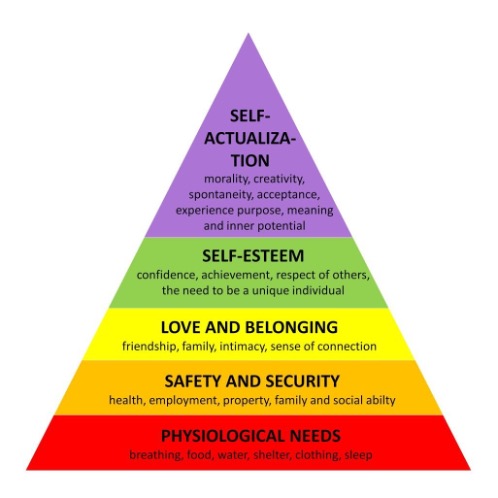
Everybody wishes to have a high quality of life but what exactly does that mean? We hear the term ‘quality of life’ a lot but what goes into the ‘quality’ of it and what makes for a satisfying ‘life’? Maslow’s hierarchy of needs has always been a good reference for me in describing what exactly makes us have a safe, secure, happy, and fulfilling life. I do believe we need to have our hierarchy of needs in mind as people when we focus on what’s best for our fellow man or women and how to build a prosperous society.

                                                                                                Source: SimplyPsychology.com

While I don’t wish to compare my own views on what true ‘quality of life’ is compared to Abraham Maslow’s ‘hierarchy of needs’ as shown in the pyramid diagram above, but it’s important to look at what makes a society flourish. I agree with Maslow at the base of the pyramid is the most important to ensure a life has some quality with it.

The societies that have the strongest base for ‘physiological needs’ usually are the happiest and satisfied with their quality of life. For example, you cannot focus on ‘safety and security’ as much as you can when you can’t even guarantee that the water you drink is clean and the air that you breathe is clean. Everything else on Maslow’s pyramid goes out the window if you are hungry, thirsty, don’t have a roof over your head or cannot clothe yourself or your family.

A lack or absence of ‘physiological needs’ is often found in the poorest or least developed of our societies and can still plague even our wealthiest and most developed societies. The key thing for all societies is that we should have an attitude of wanting to guarantee the ‘highest quality of life’ we can deliver to all people rather than just the few who can afford it financially. I do believe any society and its leadership is responsible for delivering on both ‘physiological needs’ and on ‘safety and security’ and once that is achieved, it will lead to better conditions whereas we go up Maslow’s pyramid, love, belonging, self-esteem, and self-actualization tend to be easier to achieve as well. True quality of life is knowing that if you fall on hard times, not by your fault, you’ll be looked after by your society and your government while you look to get back on your feet.

I don’t believe it’s anything farfetched or overly utopian to believe in everyone having the right to breathe clean air, drink clean war, have enough food each day, and have a roof over one’s head. I also think that while education and health care may not be on ‘physiological needs’, it ranks close in that regard to build that functional society. Everyone should be able to afford a good education and find good health care where they live and societies that accomplish this for their people are rewarded back and then some with citizens who are thriving as a result. Societies that are more educated, healthier, and with more opportunities to succeed tend to be those that have a true quality of life in my view.

You may be thinking that true quality of life is about having a big bank account, a bigger house, all the gadgets and electronics you could ever want, and all your material desires within reach, but to me, that would not go along at all with Maslow’s hierarchy. Having that stuff may make you happier but it doesn’t reflect a true quality of life in any society. If the roads are falling apart, people around you are suffering and in poverty, and you can go bankrupt for seeking medical care or a higher education, your quality of life will also suffer as a result even if you’re not directly affected by it.

When we are looked after or cared by others in the society who can ensure we have a good education, good health care, and to have affordable housing, the quality of life for everyone will go up. We are not islands unto ourselves alone and we are reflections of how we treat others. If you’re reading this article, think more about how your society or country could have a better quality of life not just for yourself but for the people living there too.

I ask that you believe in your ability to create change whether that’s advocating for more environmental regulations, prioritizing people’s access to basic needs including food and housing and thinking more about how we can include people in making them feel they belong in the society. We should collectively work towards providing more opportunities to everyone, so they don’t feel left out. Any healthy society has those public places to gather, discuss, and hopefully fix the quality-of-life issues going on in their community, town, city, or country.  

I don’t judge a society by how wealthy it is, how big the houses people live in are, or how much they have in material goods and services available. I judge a society by how they treat the least well-off members, how they prioritize the public good or not, and what they are doing to improve the overall quality of life rather than ignoring it or having it steadily decline under their watch.

It’s important for us to start thinking about not just ourselves and our own quality of life but those of our fellow man and woman. When they are worse off than us, let’s lift them up and look out for them instead of shunning them or isolating them instead. We should always be advocating for a ‘true quality of life’ where everybody is given the opportunity to succeed, grow, live healthy and happy lives, and pursue their dreams.

We all will be better off for having invested in the basic tenets of civilized society such as education, health care, transit, housing, and healthy food supply rather than just guarantee them for the few who can afford it. The higher the quality of life is not just for us but for every member of our society, the more likely we will all flourish together and reach our highest fulfillment.

Why Cooking is Relaxing to Me (and Can Be for You Too)

“Cooking, beyond its practical necessity to prepare food to eat without making yourself sick or worse, offers a unique blend of relaxation, creativity, and control that benefits our well-being if you put the time and effort in.”

Cooking may be stressful to some people, but to me, it’s relaxing. In our fast-paced, distraction-filled world, finding an activity that genuinely relaxes yet focuses my mind is a tough challenge. Cooking, while appearing ordinary and mundane on the surface, when approached with mindfulness, can be restorative and even therapeutic to engage in. Cooking, beyond its practical necessity to prepare food to eat without making yourself sick or worse, offers a unique blend of relaxation, creativity, and control that benefits our well-being if you put the time and effort in.

Cooking engages all of one’s senses, creating an immersive kind of experience that naturally draws attention away from other worldly distractions and to focus only on the present moment. The sizzle of garlic sautéing in a pan, the vibrant colors and shapes of fresh vegetables, the aromatic scents of herbs and spices mixing, the pleasure of melting olive oil and butter, and the first to last tastes of a carefully prepared dish – these kinds of inputs anchor the mind in the here and now. This immersion in cooking creates a state of being more mindful, like the effects of doing meditation or taking a yoga class.

The repetitive, rhythmic actions involved in cooking – chopping, stirring, arranging – provide a soothing and almost hypnotic effect. These repetitive actions can be incredibly calming to me, much like the rhythmic movement of playing notes on a guitar or the repetitive strokes of painting a canvas. The predictability of these actions creates a sense of stability and tranquility, allowing the mind to unwind and the stress of the day to dissipate, whatever that may be.

Cooking has always been to me a form of creative expression, offering endless possibilities to create, experiment, and innovate. Unlike many aspects of life that are governed by rules and regimen, cooking allows for a kind of freedom to embrace creativity. This creative aspect can be immensely satisfying and relaxing, which lends to providing a sense of accomplishment and fulfillment. Whether it’s experimenting with new recipes, combining unexpected ingredients, or presenting food in aesthetically pleasing ways, the creative process in cooking is what I’ve grown to enjoy over the years, especially since I started taking it more seriously in the wake of the COVID-19 pandemic.

Cooking requires total attention to detail and concentration, which naturally diverts the mind from other worries and distractions. Following a recipe, measuring the ingredients, timing the cooking process – these tasks demand focus and precision. This kind of attention serves as a mental break from the constant barrage of thoughts, worries, and concerns that often plague our minds. By channeling our cognitive focus into the cooking process instead, we can create a mental space free from our external stressors, promoting a sense of peace and clarity.

In a world where aspects of our lives feel beyond our control on a day-to-day basis, cooking offers one domain where we can exercise complete authority over the outcome. From selecting ingredients to purchasing the kind(s) of food to deciding how to prepare and present the dish, cooking is a personal endeavor where we are responsible for making all the decisions. This kind of control can be empowering and reassuring, providing a counterbalance to the uncertainties and overall unpredictability of life. By mastering the culinary process, we can gain more confidence and a sense of competence, which can extend to other areas of our lives over time.

While cooking can be a solitary activity, it also has the power to foster more connection and strengthen a community. Preparing and sharing meals with your loved ones strengthens social bonds and creates a unique sense of belonging. The act of cooking for other people can be a form of nurturing and care, enhancing feelings of empathy and compassion for the whole group. Additionally, by participating in communal cooking activities, such as cooking classes or potluck dinners, we can expand our social networks and provide opportunities for meaningful interactions.

Cooking more often leads to more mindful eating, a practice that encourages us to savor and appreciate our food fully and to know where it comes from. Mindful eating involves paying attention to the taste, texture, and smell of each bite, as well as acknowledging the effort and care that went into preparing the meal. This practice enhances our enjoyment of food and promotes a healthy relationship with food, reducing tendencies towards mindless or emotional eating or by ordering whatever you’re craving. By focusing on the present meal with the people around you at the dinner table, I believe we can cultivate mindfulness and gratitude for the food we eat.

Cooking is a key life skill that is always evolving, which means that even if you get a meal wrong and it’s a stressful outcome, you will have many other days and nights to grow in your abilities while having endless opportunities for further learning and growth. I particularly enjoy taking the time to experiment with new recipes, cuisines, and techniques, which can expand my culinary knowledge. The process in cooking of learning and improving over one’s life can be satisfying and motivating, providing a sense of both purpose and achievement. Additionally, even if you always find cooking relaxing, it’s good to have a little bit of stress involved. You can do this by finding new challenges in cooking like mastering a difficult recipe or perfecting a technique you learned which builds other skills like resilience and problem-solving.

The preparation process in cooking can be seen as a daily ritual that signals a necessary transition from the busyness of the day to a more relaxed state. Setting up the kitchen, gathering the ingredients, putting the tableware together, and arranging the utensils can be a meditative kind of practice that prepares the mind and body for the act of cooking. This ritualistic aspect of cooking creates a sense of anticipation and intention, enhancing the overall experience, and promoting a mindful approach to the task at hand of feeding yourself. The hungrier you are in my view too, the better of a cook you will be that evening if I can speak from personal experience.

In my opinion, cooking is much more than just a means to an end; it is a therapeutic kind of effort that offers a myriad of benefits for one’s mental well-being. By engaging each of the five senses in a deep way, providing a creative outlet, fostering total focus, offering us a sense of control, and promoting a greater connection to the food we buy and then eat, cooking becomes a powerful tool for both relaxation and mental clarity. In our world filled with constant distractions and stress, the simple act of preparing a meal for oneself and for your loved ones can bring profound peace, happiness, and joy. By embracing the art of cooking, it allows us to nourish not only just our bodies but also our minds and souls.

What Is Your Spice of Life?

“You may be able to find this in your studies, your daily vocation, or even your career, but for many of us, what you do to earn a living may not make up what you are excited most about in the act of living. We often must look elsewhere outside what we do day to day to find our ‘spice of life.’”

How do we explore the full richness of life? This is the kind of age-old question that philosophers and writers have asked for many centuries. What truly fulfills us and makes us enjoy what life has to offer? I would argue that it’s more important than ever to find the ‘spice’ in life that makes you excited, engaged, and fulfilled. You may be able to find this in your studies, your daily vocation, or even your career, but for many of us, what you do to earn a living may not make up what you are excited most about in the act of living. We often must look elsewhere outside what we do day to day to find our ‘spice of life.’

To get your ‘spice of life’ these days, you have to be willing to put yourself out there and try different things. What gets you excited, motivated, and fulfills you today may not be what motivates you years or decades down the line. You should remember that you won’t enjoy everything you do or try forever so it’s important to stay open minded about other possibilities and to not be tethered to one hobby or interest only. Some people have lifelong loves for different activities, hobbies, or sports, which is great, but you may not be able to do it for the rest of your life so keep it in mind that you don’t get attached to one single activity, hobby, or sport because you may not be able to commit to it forever or be as productive or successful at it in the long term.

I think it is wise to keep your identity pliable not just for one job or one academic calling but to be open to learning new things, to experimenting with new ideas, and to trying out different activities that you have some basic interest in. You won’t love everything you do, and you may only do it for a few months or a few years, but it is much better than the alternative of not having done anything at all. Our collective attention spans have become so short due to modern technology that we don’t even try new things or are patient with it because we are too distracted by the latest gadget or technological development.

True fulfillment and satisfaction can come from mastery of a subject or an activity for which you pored countless hours into and never gave up at it. You can also find the ‘spice of life’ from having fun with it and doing it just for enjoyment alone and not to master it completely. Life has a lot to offer and it’s important to keep that in mind beyond our careers and our education. We may have limited time to do what we want to do but we must prioritize that time because without our own choice(s) in what we want to do, we will not find any fulfillment at all. We can find fulfillment both in our day-to-day pursuits but also in those pursuits we do each week or each month without a set schedule in mind.

To find consistent joy in life is not easy, but it can be done by not giving up, by trying out new things, and by doing those things consistently for a little while to see if it is giving you happiness or fulfillment. Being able to give an activity or a hobby at least a few weeks or a month to try it out is key. If you find you are getting bored with something and don’t enjoy it as much or as often, it is okay to put it on the back burner, but don’t be afraid to try something else. Our likes and dislikes change as we go through life, but it is important to keep finding that ‘spice’ in our lives that gets us excited, keeps us motivated, and brings us joy.

Remember to never completely giving up on finding your own passions and fulfillment in life. It is not easy and is something you must continually motivate yourself to do but it can help your life satisfaction out to have something that you enjoy outside of what you have to do each day. Having nothing to enjoy or have fun doing could remove all the ‘spice’ or ‘zest’ that makes life worth living and you want to avoid getting into that kind of scenario. Be ready to try new things, find activities to do by yourself or with others, and be open minded in what you think you would enjoy.

It helps to make a list of activities or things that you have done that you would like to do again as well as those activities or things you’ve never done before but would like to try. There are tons of activities, hobbies, sports, or things to do in this world and you just have to try a few at a time to retain the ‘spice of life.’ Make sure you live life to the fullest in this way and I promise that you will not be disappointed by making the conscious choice to try new things.

Getting Off The Hedonistic Treadmill

“It is important to explore the pitfalls of exclusively chasing after hedonistic pleasures and why it’s crucial to get off the hedonistic treadmill.”

In our modern world that often seems primarily consumed by the pursuit of pleasure and instant gratification, the philosophy of ‘hedonism’, which advocates for the maximization of pleasure and the minimization of pain, has found its way into the hearts and minds of many people in our society. However, if we undergo a critical examination of the pursuit of hedonism for its own sake, it reveals a complex interplay between short-term pleasure and long-term well-being. It is important to explore the pitfalls of exclusively chasing after hedonistic pleasures and why it’s crucial to get off the hedonistic treadmill.

The hedonistic treadmill is a concept that is defined by how a person can be on a constant pursuit of pleasure, akin to running on a treadmill that never stops like a hamster looking to constantly drink from the waterspout in its cage or have a morsel of food released that it can devour. Despite one’s efforts to increase their well-being by seeking pleasure, individuals find themselves in a perpetual cycle where the happiness derived from hedonistic pursuits is fleeting, short-lived, and can’t match their prior pleasure intake. This treadmill effect occurs because as people experience pleasure, their expectations rise, and what once brought joy and satisfaction becomes the new baseline for the future. Consequently, a person must constantly seek higher and more intense pleasures to maintain the same level of satisfaction as they had experienced before.

At the heart of hedonism is the pursuit of dopamine hits, defined as ‘the brain’s reward neurotransmitter’ that is released in response to pleasurable stimuli. Whether it’s indulging in rich foods, drinks, smoking a cigar or cigarette, engaging in impulsive behaviors like skydiving, sports betting, or seeking another kind of immediate gratification, the dopamine rush provides a temporary sense of euphoria that we seek to replicate more and more. However, relying on these short-term pleasures can have detrimental effects on our long-term well-being.

The more individuals indulge in hedonistic behaviors solely for the sake of having pleasure, the more our brains become desensitized to the dopamine rush. This desensitization leads to a reduced ability to experience pleasure from the same stimuli over time. As a result, individuals may find themselves trapped in a cycle of escalating hedonistic pursuits, constantly searching for more intense experiences, to recapture the initial pleasure that they felt when experiencing it for the first time.

Hedonism fosters a tolerance to pleasure, where the same stimuli that once brought joy or happiness lose its effectiveness. This tolerance often drives individuals to seek novel and riskier experiences to elicit the same level of satisfaction. The pursuit of novelty, especially in different areas of pleasure, can lead to reckless behaviors, as individuals become increasingly desensitized and crave ever more intense experiences to maintain their hedonistic highs.

The relentless pursuit of hedonistic pleasure can take a toll on our mental health. The fleeting nature of pleasure on the hedonistic treadmill can contribute to feelings of emptiness, anxiety, and even depression when the anticipated happiness doesn’t materialize or quickly dissipates. The constant need for more pleasure can create a vicious cycle that undermines mental well-being and prevents the cultivation of lasting contentment.

Hedonism, when pursued exclusively, can create an illusion of fulfillment. Individuals may mistake the pursuit of immediate pleasures for overall life satisfaction, only to realize that the pursuit itself was devoid of deeper meaning. The fleeting nature of hedonistic pleasure leaves individuals yearning for a greater sense of purpose and fulfillment that goes beyond the momentary highs of pleasure-seeking.

In the relentless pursuit of hedonistic pleasures, individuals may inadvertently neglect the development and maintenance of their personal and professional relationships. The focus on self-gratification can lead to a disregard for the emotional needs and connections with others, hindering the development of supportive social networks that are essential for long-term well-being.

Hedonic adaptation is a psychological phenomenon wherein individuals return to a baseline level of happiness despite the positive or negative changes in their lives. This adaptation undermines the long-term effectiveness of hedonistic pursuits, as the pleasure derived from external sources tends to be temporary in nature. Understanding hedonic adaptation highlights the futility of relying solely on external stimulus for achieving lasting happiness and emphasizes the importance of internal factors such as mindset, gratitude, selflessness, and purpose.

While hedonism focuses on the pursuit of pleasure, ‘eudaimonia’, a concept rooted in Ancient Greek philosophy, emphasizes the pursuit of a meaningful and purposeful life. Eudaimonia involves living in a state of well-being, which aligns with one’s own values and contributes to personal growth but also the welfare of others in your life. Eudaimonia encourages individuals to seek their fulfillment through meaningful pursuits that go beyond momentary pleasures. By engaging in activities that align with your personal values and contributes to your personal growth, one can foster a deeper and more enduring sense of well-being.

Unlike hedonism, which can leave individuals vulnerable to the whims of external circumstances such as if the pleasure is achieved or not, eudaimonia promotes resilience. By focusing on internal strengths, values, and personal growth, individuals can weather life’s challenges with a sense of purpose and a resilient mindset.

Eudaimonia places a strong emphasis on the cultivation of positive and meaningful relationships at its core philosophy. Unlike the isolating nature of hedonistic pursuits for one’s own personal gratification, it is better to be building and maintaining connections with other people in your life, which contributes significantly to one’s long-term well-being.

The pursuit of hedonism for its own sake, driven by the relentless chase for dopamine hits, from lust to money to material items, can lead individuals into a never-ending cycle of escalating pleasures on the hedonistic treadmill. The ephemeral nature of these pleasures, coupled with the diminishing sensitivity to any kind of pleasure gained and an escalating tolerance to its achievement, poses a serious threat to any person’s long-term well-being and overall mental health.

It is crucial that we all recognize the limitations of pursuing hedonism, especially as the number one purpose in one’s life above all other priorities. I believe it is necessary to consider alternative paths to well-being, such as eudaimonia. By embracing a life of meaning, purpose, and both deeper and positive relationships, anybody can break free from the hedonistic treadmill and cultivate a more enduring and fulfilling sense of overall well-being. While pleasure has its place in a balanced life of moderating one’s impulses and desires, it should not be the sole driver of one’s overall pursuit of happiness. Ultimately, a life well-lived is one that combines pleasure with purpose, which creates a sustainable foundation for long-term contentment and fulfillment.

On Duty and Honor

“Two concepts that are not discussed very often today in our culture, but for which go hand in hand to have a purposeful life are duty and honor.”

Two concepts that are not discussed very often today in our culture, but for which go hand in hand to have a purposeful life are duty and honor. Duty is the obligation, either moral or legal, to uphold your responsibilities and to take upon tasks and actions when called upon. Duties are be thrust upon you such as being part of jury or registering to be eligible for military service but also done voluntarily such as keeping your community clean by picking up trash, giving money to a charity, being part of the local school board or town forum.

There are many variations on duty, but what they all have in common is to think of more than just yourself and to be responsible to those people around you. We are duty-bound by law in many such cases, but we are also duty-bound by morals and values that are passed on from generation to generation.

Being dutiful is conscientiously being able to know what your duties in life are, pursue them vigorously, and to conduct them in a moral manner. Duties may not be easy or fun to fulfill, but we have them in place so that society can function at a higher level. If no one was duty-bound to others, selfishness, greed, and egocentric behavior would replace it, which would cause the larger community and society to collapse over time. Lack of duties breeds this kind of behavior whether they are mandatory or not. If everyone is out for themselves and not able to look after others or think of their behavior’s effect on other people, it would create what we know to be as a ‘dog eat dog’ world.

When you fulfill your duties, legally bound or morally footed, you uphold the basic contract as a citizen and as a human being, to help improve your community and the society to some degree. If everyone fulfills their duties, trust, confidence, and belief in each other will be much more assured. If nobody does what is required or expected of them, nothing substantive can get done. The more duties we fulfill and the more we look out for another rather than ourselves, the better off we are to be when we commit to these obligations.

Duties can be granted and often must be enforced to be fulfilled but if we each uphold the duties we are given and see each other as all being on the same page, other duties that we voluntarily take on can be added on if we see that the system is working, and people are putting in their fair share. If a few individuals, especially if they leaders or representatives of their community, are found to be neglectful of their duties, and especially lied about fulfilling such duties, it can easily cascade to where the average person sees this and will unfortunately not find the duties they have been given as being as necessary to commit to if they see those who put them into place or have mandated them do not fulfill them as well.

Regardless of where you find yourself in the overall society, a leader, a citizen, a representative, a voter, etc., we are all held to the same duties and obligations that we commit ourselves to by law or by morality. If we all uphold those duties through acts of good faith and completing tasks that are insured to us, the better off everyone will be.

However, if duties are neglected, discouraged, or done away with even if they are mandated, the whole society will suffer as a result due to a loss of trust, faith, or belief in what upholds this basic sense of equality that we have to be beholden to the same duties as everyone else is regardless of age, sex, race, religion, ethnicity, etc. Now, it is commendable to do your duty, but it is even better to do so with honor.

Being honorable or conducting oneself with honor is taking the duties you are given to uphold or the tasks that come with such duties is to perform such duties with integrity, accountability, and trustworthiness. It is one thing to do your duty and it is another thing to do your duty well.

You can think of someone who is elected to be a representative of a community, town, city, or nation who will use the position for egotistical purposes and to twiddle the time away while doing nothing of honor to make sure the people who elected him or her will benefit as a result. They have been given the honor of representing their community or a nation and have squandered it by neglecting the privilege of having such a position to do good on behalf of others. There is no honor in that even if they are technically fulfilling the duty of public service.

Duties can be bestowed on soldiers, politicians, community leaders, public figures of influence, religious clergy, teachers, etc. and they can perform them because they have been trained or are seen as qualified to fulfill them. However, the question arises is if they are doing their duties with honor? Some will only do the bare minimum and will only think of themselves while having their position of power or influence wrapped up. Others will use their newfound duties to abuse their position for financial or social gain and lie to say that they did not do anything dishonorable to begin with.

Luckily, there will be those people in positions of status who will conduct themselves honorably and seek to uphold that trust bestowed upon them by being transparent, accountable, and forthright. A good leader or example of someone who conducts themselves with honor is that they do not only do their duties as expected of them, but they also seek out those in a similar position or authority who are not doing their duties. They will not only conduct themselves with honor intact but make sure they are holding others in their position accountable and to find out if their honor is there.

If not, that person of authority or influence would work to ensure that the individual without honor even while having done their duties albeit in a lackluster manner are held to account. To uphold that trust across a society where we all must do our duties and to do so with honor, those without honor should lose their given duties when it is found that they are not holding themselves to that standard. When we each hold ourselves to an honorable standard by doing the duties bestowed upon us to the best of our abilities, then the larger community or society will benefit as a result.

Without duties, there is no honor to be had. If duties are being done without honor, no functioning society will result. It is important to understand how much these two concepts feed off each other. One cannot exist without the other and if one concept is neglected, the other will suffer as a result. We all must commit the duties and obligations bestowed upon us whether by law or by creed, but duties must also be performed to high standards, both morally and ethically. Performing one’s duties without honor cannot work and nor can having honor without upholding one’s duties.  

A Life Well Lived According to Emerson

“Emerson was not a man who saw success in only the material or popular means that is often the case of how individuals measure success today. Instead, Emerson believed success in life was about much more than fame, fortune, and overall popularity.”

Whenever I am looking for inspiration in my own life whether it comes to how to develop myself professionally or to be better on a personal level with others, I like to refer to the excellent quote on success and on a well-lived life by American essayist, philosopher, abolitionist, and 19th century transcendentalist Ralph Waldo Emerson. Emerson was not a man who saw success in only the material or popular means that is often the case of how individuals measure success today. Instead, Emerson believed success in life was about much more than fame, fortune, and overall popularity.

Emerson saw success and life itself as leaving the world a little better than when you found it. He believed in the importance of caring for nature, of having good relationships with other people, of honing your craft professionally in whatever you were passionate about, and of caring for family or friends who could rely upon your kindness and care. This quote by Ralph Waldo Emerson has always been a favorite of mine because while it was a conventional means of measuring a life well lived or a ‘successful’ life in the 19th century; I believe that too often today, we measure a ‘good life’ in shallow and often selfish ways.

In the era of the transcendentalist movement, there was much more to life than accruing things for material worth, or showing off how much money you had, or thinking that because you have more you are then better than someone else. On the contrary, Emerson and other thinkers of that movement believed in progressive ideals of equality, justice, and fairness. They believed in giving back to others in whatever way was possible and to do so consistently. While it was not a religious movement, it was based around individual actions to help a larger community or society.

It did not shun personal success or individual wants or needs as being unnecessary, but it asked people to believe in the power of working together to a common goal or cause, treating your fellow man or women with respect, fairness, and dignity, and to believe in giving back through charity, through helping others, and to be of good character not just in words but in actual deeds. Emerson like others were idealists and believed in the goodness of humanity despite the dark impulses that can lead us astray. While we are unique individuals of free will, we must never forget to care for our family or our friends, or nature itself which is gift not to be squandered.

The actual quote by Ralph Waldo Emerson is a long yet impactful one that touches on many different parts of one’s success in life that must not be ignored. When most people define success in a singular manner and often involving their own joy and happiness, Emerson does quite the contrary by arguing that success or a good life is based on how we leave the world after we depart from the Earth and what do we do in life to leave those around us better off than they were before. Above all else, Emerson asks the reader to imagine how they can impact the world in their own way for the betterment of not just themselves but for others as well and humanity.

In the quote, he does not ignore our hierarchy of mental needs such as the need to be respected by others, to laugh often with friends, to be appreciated for what we do, to be able to overcome adversity such as suffering betrayal, which is inevitable at points in our lives but to also appreciate the beauty around us because it is temporary in life as well. Fulfilling that life well lived according to Emerson is not just about being there for others but also being there for ourselves mentally by having our emotional needs met and fulfilled with joy, happiness, laughter, kindness, respect, and overcoming negative emotions such as betrayal and deceit.

“What is success?…
To laugh often and much; to win the respect of intelligent people and the affection of children; to earn the appreciation of honest critics and endure the betrayal of false friends; to appreciate the beauty; to find the best in others; to leave the world a bit better, whether by a healthy child, a garden patch Or a redeemed social condition; to know even one life has breathed easier because you have lived. This is to have succeeded!”

― Ralph Waldo Emerson

When you look at this memorable quote from Emerson, he prioritizes in life partaking in individual joy in the form of laughter most importantly. He also indicates the need to be respected by other people especially who you choose to associate with as being intelligent either emotionally or figuratively. He also discusses the need to be compassionate towards children, whether they are your own or not. Knowing that critics are inevitable in various avenues of life, Emerson seeks that any individual appreciate the critics who are honest about him or her and asks the reader of the quote to be mindful of those who want you to improve and to try to do right by them in becoming better at what you do.

Emerson also asks that while some friends are necessary to have in life; we must be prepared for betrayals that can occur from those who you thought were friends but were rather only looking out for themselves. Even though others, even friends and family members will let us down at times, we should still seek to see the good in others and to try to get the best out of everyone we meet. Human beings are fallible creatures, Emerson would say, but we should try to look for signs of redemption and efforts of good faith because people deserve to show you that they have good in them, and they can rectify their wrong doings often when they are given a real chance.

Despite facing inevitable criticism, betrayal, and disappointments throughout life, we must stop and take time to appreciate life itself for all its natural beauty. It will calm us down, put our lives in perspective, and think of a world much bigger than our own internal musings. Because of the sheer beauty surrounding us that we can often fail to fully appreciate, this divine beauty should inspire us to be caretakers of this world that we inherited at our birth and to be true guardians of the planet for the next generations. He includes in his musings on success in life to include leaving the world ‘a bit better.’ As individuals, we can only do so much for the state of the world, but if we all pitch in to do our part, that will cause massive change to occur on a societal and global level.

Leaving the world, a bit better is not just about recycling or not littering or being aware of how you’re affecting the natural world with consumption but it’s also about beautifying the world too. Whether it is cleaning a park littered with trash or creating a garden patch for others to enjoy or deciding to walk instead of driving a car, little actions like these by individuals can leave the world better off than before. I saw this kind of contagious effect working with others as a volunteer lately in helping to create a new vegetable and flower garden for a youth center in Washington, DC. Getting your hands dirty, beautifying a small part of the neighborhood, and having others pitch in to help is one of the best feelings one can have in life. It’s not often in our lives when we get to see a positive change happen in real life but creating a garden or even beautifying a park has a large ‘ripple effect’ that can change the world for the better even if it is on a small scale.

Emerson lasts mentions that if you have a child or care for one in your custody that to ensure their health and happiness is one of the great joys of living and contributes to improving the world in a measurable way. Giving back to nature and to other people is a consistent theme in this quote by Emerson and to redeem a societal condition such as creating a garden, raising a child, or being a mentor to a friend who needs your help will not only be doing good for you but for others as well. Ralph Waldo Emerson finishes his quote to sum up success in life and having a good life as coming down to fundamentally whether because you lived, did others live easier because of your presence? Was someone or something healthier, happier, or more fulfilled because you were there? These are important questions to ask yourself. In your life, are you just in it for the fame, fortune, and your own personal gratification? Or are you living your life to leave a legacy that can do some good in the world in some measurable way?

Emerson never mentions personal gratification such as having a lot of money or being popular as keys to a life well-lived and I agree with him. Emerson prioritizes the fact that after we depart from this Earth, what will we be remembered by? What contribution to others and our society did we make? Are people in our lives better or worse off because of your existence? That is what true ‘success’ means in the long-run and that a life well-lived should be based around. I hope that you take this excellent quote by Ralph Waldo Emerson to heart as I have. It’s a brilliant piece of wisdom that gives each of us steps to make the most of our remaining days on this Earth. Let the joy, laughter, beauty, conscientiousness, and unselfishness among other characteristics that he mentions as being the keys to a life well-lived guide you in all your days here.


Life’s Fleeting Moments

Why is that sunrises and sunsets are often so captivating and moving? Perhaps it’s the uniqueness of the colors blending and merging together to form a painting-like setting that can’t be reproduced elsewhere. Maybe it’s the sense of satisfaction that comes from seeing a new day born or see the old day fade to its end. However, I tend to think the beauty of these happenings lies in another part of its overall appeal.

While some aspects of sunrises and sunsets bring a lot of beauty and perspective to life, I think the main reason why sunrises, sunsets, and even the random rainbow appeal to the human psyche is because these events represent fleeting moments that last for only a few seconds or minutes. They are impermanent, awe-inspiring, and hard to experience often. Sunrises and sunsets are ephemeral events that can be easy to miss and require one’s full attention to really appreciate them.

These sunrise and sunset events are what I like to call ‘fleeting moments’ and they are truly special. I say this because they do not last, and they require you to really pay attention and let your distractions float away. You have to be in the moment and that is increasingly difficult for most people to do nowadays. We are constantly bombarded by sensory overload that is often man-made and unnatural. Advertisements, loud noises, screeching vehicles, bumps in the roads we drive, these can cause us to lose sight of what’s truly important in life. Taking measure every now and then of why these fleeting moments are important to experience not only reminds us of the beauty of life but also how impermanent our time here really is. When you compare the fleeting moments of life to the routine moments in life, it really is no contest to as to which kind of moment is the preferred option to experience in full.

Categorically, the rewards of these fleeting moments are among the best in life because we all know that they are not common. Among the daily monotony and chores that encompass our routines, taking a few moments to appreciate being alive and being at peace are really what we all should be striving for even if these moments are fleeting. The fleeting moments are hard to capture but when you do, they bring the most joy and happiness that you can possibly have. As I mentioned in a previous article, there is a rule of diminishing marginal returns that we should be aware of and that’s why the more common we experience certain things in life, the less we really value them.

It’s quite a paradox when you think about it. The most enjoyable moments in life are the ones that we cannot plan for or anticipate, but that is part of the beauty of life and of living. Going back to my sunrise and sunset example, if they happened every hour instead of every day, that would be boring, right? You would probably start yawning after the fourth sunrise and the third sunset. Fleeting moments are special inherently because they are temporary, and you may not be able to enjoy them forever. Fleeting moments can also be part of your daily routine but ones that can only last a few seconds or a few minutes.

For some of us, it could be the first sip of a fresh cup of coffee at the beginning of the day or for others, it could be a hot shower after a long day of hiking. We know that the 2nd or 3rd cup of coffee like the 2nd or 3rd shower would not be as pleasurable or as enjoyable because then it becomes routine and our mind adjusts to it happening. However, the fleeting moment when your lips touch the coffee or when your face is enveloped with shower water, then it’s almost pure ecstasy for your body and mind. While these moments are definitely fleeting, they are the most enjoyable. Keeping them as part of your routine is important so that you will feel better both mentally and physically.

What we should all keep in mind is how to maximize the most enjoyment from these temporary moments because we know they don’t come around every minute or every hour of each day. My thinking on this is to really put all distractions away for those moments so you can be living fully and freely. When you are having a nice dinner with friends, make a habit to engage yourself in the conversation rather than daydream about what you’re doing afterwards. When you are watching the sun rise or set, put the phone away and just watch the colors merge together to form the painting-like canvas. Let your stress and worries melt away as much as possible to really enjoy these moments. There are so many distractions out there, but your sense of contentedness will be much higher if you are able to have the willpower yourself to be in the here and now wherever that may lead you.

Laughter among friends, patting a baby’s back, a spontaneous rainbow, a beautiful vista after a long climb, holding the hands of a beloved family member, these are the moments you want to remember throughout life. They are fleeting in length and a small amount of sand in the hourglass known as one’s lifespan, but they are precious and powerful. If you can take the time to work, to play, to sleep, to eat, then you can take the time to live in the moment and appreciate beauty and joy when it comes your way.

Being able to live fully by being in the moment will set you on a path of fewer regrets the further you go through life. Letting yourself experience moments of happiness and joy without distraction or worries will improve your well-being. It is a conscious effort to stay in the moment, but the rewards are well worth it. If you have to meditate, exercise, or even do yoga to help yourself stay present, then do so but don’t let life’s fleeting moments pass you by.

Finding Your Flow State

What’s one thing that all professional athletes, musicians, artists, writers, and anyone devoted to their craft have in common? They have all achieved a ‘flow state’, which is difficult to relate to unless you are fully immersed in terms of what you are pursuing and truly enjoy what you are doing. The flow state is elusive for most people because they either haven’t found their passion in life or haven’t put the time in yet to get better through consistent practice or play. The flow state is a higher state of being because for a point in time, your concentration is matched with your intensity producing a beautiful result.

When you can put other thoughts or other concerns out of your mind to focus on your craft regardless of what it is, you are utilizing your full potential and will be able to achieve a better result for yourself. To outside observers, the flow state looks nearly impossible to accomplish but when you are devoted to art, to music, to sports, or to writing, the final result is nearly guaranteed because you have put blood, sweat, and tears to produce something meaningful.

To me, the flow state is the most optimal state of mind that you can be in because it requires you to be at your best and to perform at the highest level. It’s requires being in a state of movement and using your body in some way to produce an action. You are putting your energy, your concentration, and your focus into a singular goal and it’s inspiring to those people who get to benefit in some way from what you were able to produce. It’s better to be a doer than to be an observer but it can inspire others to find their flow state when you see them do theirs and to do it extremely well.

For example, I was at a popular Jazz club in Mexico City recently and the headliner was a talented Danish guitarist along with a group of local musicians backing him up on the saxophone, the drums, and the Jazz bass. Every one of them was talented at what they do and were in sync generating a group kind of ‘flow state’ that is even more powerful. The thing with a good Jazz group is that you start to yourself get into the ‘flow’ of enjoying the music and moving your body to the rhythm as well.

As someone who played trumpet for 11 years straight and enjoyed the feeling of togetherness and comradery that playing in a Jazz Ensemble can bring, it is impressive to see a group working well together and nailing their parts to achieve their flow state together. To play a musical instrumently proficiently on your own is tough enough, but to work together with different musicians to produce a catchy tune without making any mistakes is as near to a modern-day miracle as it can get.

Musicians thrive off the energy and the drive of others as well as professional athletes and even politicians. It is much harder to achieve a flow state on your own in the solitude of one’s house especially if your craft requires some sort of public attention. Writers and artists tend to be more introverted on average and don’t need the attention of others to achieve an individual flow state. However, there’s something to be said for achieving a group flow state when you’re cheering on a ruthless dunk from a professional basketball player or listening intently in an arena to a Presidential candidate’s stump speech.

People want to believe in the achievements of others, and I know that we prefer to lift each other up rather than to tear each other down. While it’s beneficial to take part in watching other people reach and show off their flow state, you should be trying to find yours every day. You will get much more satisfaction out of life when you are in that mode where you are merging with your craft whether that’s art, music, writing, sports, etc. While it’s fun to cheer others on and take part in their joy, you should always be trying to create a little bit of your own.

Intense concentration and effort is not easy to achieve, but it is extremely rewarding to put your worries and anxieties aside to focus on a singular goal that you want to achieve. It may take hours, days, weeks, months, and even years to get to where you want to be but there is joy to be found in putting away all distractions and devoting yourself to a craft that you enjoy and are able to put serious time into. Our individual potential will not be able to be achieved unless we are able to reach a flow state relating to a kind of creative or intuitive pursuit.

Do your best to try different activities out and see what you like. If you find an activity or an interest you enjoy, continue to add more time to it and you should start to see results. Don’t start to look for monetary rewards or personal fame to keep you going with this pursuit but you should be doing it for yourself primarily and for your desire to reach that state of flow where you can fully immerse yourself in the activity whatever it may be.

You should find happiness and joy in what you do and become the best that you can be at it. If you can enjoy the activity, you’ll eventually find your ‘flow’ with it and be able to do it effortlessly. While you will have a lot of frustration and stress with practicing and doing the activity, if you like it and find it worthwhile, you won’t mind the downsides when the upsides can produce such an intense ‘flow’ where you are in the zone and are able to produce a beautiful result that others will appreciate. Being able to inspire others to reach their own ‘flow state’ creates its own ripple effect allowing our society to become more creative, intuitive, and productive as a result.