Thinking of Life Like It’s a Cup of Turkish Coffee

“Similarly to life itself, I find that the Turkish coffee experience is a lot like life and perhaps even more so than a box of chocolates (no offense to any Forrest Gump fans).”

I love Turkish coffee. Its roast, its scent, its strength, and subtle sweetness that I can’t get enough of. I don’t even mind the times I drink too much, leaving bitter remains on my tongue. I’m not too bothered by it because sometimes you must taste the bitter ends to get the sweetness out of most of the coffee you drink. Turkish coffee is unique, the jolt and caffeine rush unlike any other I’ve experienced in the world. Similarly to life itself, I find that the Turkish coffee experience is a lot like life and perhaps even more so than a box of chocolates (no offense to any Forrest Gump fans).

Preparing Turkish coffee to be served is an art, requiring patience, precision, and care, qualities life demands from us as well. The finely ground beans must be measured just right, water poured with attention, and heat applied slowly to coax out the perfect brew without letting it boil over. A slight misstep can change the flavor entirely, just as small choices in life can ripple into large consequences. Stirring the coffee gently, watching the foam rise, and letting it rest before serving mirrors the need to pause, reflect, and nurture the moments that matter most. In both coffee and life, the effort put into preparation shapes the richness of the experience and skipping the process only leaves you with a bitter, incomplete taste.

Just like a cup of Turkish coffee is carefully prepared with time and attention, life rewards those who pause to notice the details. The swirling patterns at the bottom of the cup hint at what’s to come, just as small choices ripple into larger consequences. Sometimes, life surprises you with unexpected flavors like a hint of cardamom, a twist of fortune, and other times it’s a sharp bitterness that makes you wince. But every sip, whether sweet or strong, shapes the experience and reminds you that the richness of life comes from paying attention, savoring the moment, and accepting the unknown.

When you first taste Turkish coffee, it’s like a jolt of pure energy and a rush that I would liken to the sun hitting your face as you wake up from a dream and when your consciousness first stirs in the morning. You try to recapture that feeling with each sip, chasing the sweetness that lingers consistently. You can even add a bit of sugar, stir it around to keep the bitterness at bay, and prolong the experience as much as you can. Life like a Turkish coffee cup is pretty small and the portion is not as big as you would expect. It’s a concentrated dose of caffeine and is a high-quality batch of brew.

Like life itself, you got to enjoy it to the fullest but also savor it at the same time. No matter your age, life rushes by, just like the last sip at the bottom of a Turkish coffee cup. Bitterness is inevitable in a Turkish coffee experience as it’s mixed in with the rest of the sweet flavor. There are bitter times in life to be had mixed in with the sweet times and as much as you try to avoid it or abstain from it, you need the bitter parts of life to truly realize how sweet the overall experience was. The bitterness reminds you to savor the good times and to not let it affect your perception of the life you had as a whole. Coffee, like life, can be bitter or strong at times, but that doesn’t mean we should stop living or stop drinking it. 

Especially towards the end of life, the bitterness is unavoidable and comes on strong. As health wanes and loved ones are lost, life goes on and you sip, and you savor it while it lasts. A good Turkish coffee is enjoyed ideally by a body of water like the Bosphorus Strait in Istanbul but ideally, it can be with a view of the ocean, the mountains, or even just on your back patio with the quiet of the day. Life, like Turkish coffee, should be embraced in all its sweetness, bitterness, and everything in between. You really don’t want to miss out on the whole experience having never fully lived it to the most extent. Don’t miss it. Drink it all.

Self-Awareness is a Key Trait to Cultivate

“In a world where everyone has an opinion on every imaginable topic, but very few people have genuine self-awareness, that quality now feels like a rare mineral. True self-awareness is valuable, hard to find, and even harder to refine if you do not cultivate it like copper or silver.”

In a world where everyone has an opinion on every imaginable topic, but very few people have genuine self-awareness, that quality now feels like a rare mineral. True self-awareness is valuable, hard to find, and even harder to refine if you do not cultivate it like copper or silver. At its core, self-awareness is simply understanding your thoughts, emotions, habits, and personal blind spots without flinching or ignoring them. It’s the ability to see yourself honestly instead of through the fog of ego, insecurity, or willful ignorance. That sounds simple, but anyone who’s confronted with their own emotional patterns knows that simple isn’t easy. In terms of personal traits that will serve you well at home, in the workplace, or in public, exercising self-awareness makes a huge difference and is a net positive in one’s life.

Self-awareness is rare today for a few reasons. First, distraction is the default setting of modern life. Between social media, nonstop notifications, and the pressure to perform instead of looking inward about their behavior, most people never slow down long enough to reflect or contemplate who they are or how they act. Secondly, ego protection kicks in for many of us. It’s uncomfortable to recognize that you might be wrong, inconsistent, reactive, or stuck in old habits that drain you or other people. Thirdly, our individualistic culture rewards projection over introspection and putting on an act over being yourself. Being loud, visible, and “on brand” is praised more than being grounded or honest with oneself. The result is a society full of people acting on autopilot, repeating the same behavioral patterns, and wondering why life keeps giving them the same lessons. Introspection is hard to do but it could help get you off an autopilot setting.

When life turns upside down, that’s exactly when self-awareness becomes most valuable. When the world is chaotic, clarity becomes a superpower. The more you understand yourself along with your triggers, your strengths, your weaknesses, your values, the better decisions you will make. You react less to external circumstances and respond more from a place of self-assurance by knowing who you are and what you want to be. Your relationships improve because you’re paying attention to how your behavior affects others. Even your career trajectory changes: self-aware people take feedback well, adapt quickly, and build trust, which quietly but consistently pushes them upward.

The good news for us all in this? Self-awareness isn’t fixed and it’s a muscle you can train. It’s a skill you can cultivate intentionally but you must make a consistent effort to do so successfully. At work, start doing quick “post-project or post-task reviews” for yourself: what went well, what drained you, what you’d do differently, what could be better next time, and how well did you work with others. Ask trusted people for feedback and instead of defending yourself, listen to what they have to say first and what they are genuinely telling you. Notice your stress triggers and learn to pause before reacting, whether it’s in meetings, emails, or elsewhere in your workplace.

I’ve had my own moments at work where I reacted prematurely instead of responding thoughtfully, only to later realize that having self-awareness could’ve saved me a headache. Instead of interrupting, acting abrasive, and preventing a real discussion, think about where they are coming from and why they think of you the way that they do. Focus on the ways that you can improve when they have legitimate critiques and suggestions for improvement in your work performance.

In your personal life, carve out time for your own reflection. Making that kind of effort will pay off tenfold by turning inwards to discover more about your mindset, your thought process, and your personal habits, good or otherwise. Even five minutes of journaling can reveal emotional patterns you never noticed. Try also meditation or silence at the beginning or end of your day and in just ten uninterrupted minutes, it can be surprisingly revealing. Pay attention to your relationships and friendships as well: where you feel energized, where you feel defensive, and where conflicts repeat with the people in your life. Life is too short to be around people who avoid self-awareness. If you are making the effort to be introspective and try to be a better person with self-awareness, you should gravitate to those people in your life who are making that effort too, friends, family or acquaintances especially.

Ultimately, self-awareness isn’t about perfection; it’s about alignment with who you are and how others see you. The more honest you are with yourself, the easier it becomes to make choices that fit the life you want. Know yourself deeply. Pause often for self-reflection. The world will stop dictating your path and you finally begin choosing it. 

Mi Quinto Conjunto de Poesia en Español (My Fifth Set of Spanish Poems)

My fifth set of Spanish poems focusing on the springtime, solitude, Guatemala, and experiences becoming new memories.

  1. La Distancia Entre Nosotros
    La distancia entre nosotros
    Me da una pena tan grande
    No sé lo que puedo hacer
    ¿Este es el fin, cierto?
    Tu cariño no lo siento como antes
    Eso me va a lastimar mucho
    La pérdida definitiva de ti.

2. Primavera Eterna
Quisiera ver las flores y toda la belleza
Por toda mi vida
El sol me da fuerza para enfrentar la vida
La belleza que no va a dañarme nunca
El florecimiento de la vida animal y vegetal
Es donde quiero estar por siempre


3. La Soledad
Al principio, me siento bien
La paz y la tranquilidad
Pero la soledad no es para todos los días
Es algo que puede destruirte sin interrupción
La conexión es insustituible
Nosotros nos necesitamos como humanos


4. Los Colores de Guatemala
Un país con belleza inmensa
Colores brillantes, ropa brillante y alimentos brillantes
Casi demasiado para mis ojos avellana absorber
Belleza natural se mezcla con belleza humana
Guatemala, impresionante y expresionista
Quisiera explorar la cacofonía de colores aquí


5. Ahora, es un Recuerdo
Momentos bonitos que ya están en el pasado
Quiero volver, pero ya no puedo más
Recapturar el mismo sentimiento será imposible
Los recuerdos que compartimos fueron especiales
Yo sé que solo existen en mi mente ahora, pero para mí
Todos mis días voy a recordarlos y a ti también

Dealing with Melancholy after Travel

“Still though, it’s hard for me after dozens of trips and hundreds of places visited to not have that feeling of melancholy wash over me after I come home again.”

There is a comedown feeling that happens after the end of a trip, regardless of how long or short it is. All the planning, the effort, the money spent, and the adrenaline rush that goes into relocating yourself elsewhere creates a unique feeling that is hard to replicate. Often, the trip will go smoothly, and you’ll have fond memories to look back on long after it’s over. Still though, it’s hard for me after dozens of trips and hundreds of places visited to not have that feeling of melancholy wash over me after I come home again.

Luckily, it is not a deep melancholy, but it is a melancholy of missing the feeling of being on an adventure or not knowing that the next day will bring. It’s the pure excitement of the unknown, of yearning to experience a new thing or event or place, and about being more open than usual to meeting new and often interesting people you encounter during your travels. Being able to settle back into your usual routine can be a bit of a downer after the rush of going from place to place, city to city, and being footloose for a while.

Despite a routine not being the most fun to go back into, it is necessary to reestablish a routine again as it can provide some comfort after a trip rather than doting on the past trip, however fun and exhilarating it may be. I do believe we need a routine in our lives often, rather than be rudderless and without anything to focus on. If our travels are temporary and we do not live life on the road on a permanent basis, easing back into our daily lives takes time but if we don’t have anything to refocus our attention on after a trip, the melancholy can be even more profound and difficult to deal with.

It is a good idea to develop your hobbies, interests, and your goals even more after a trip to accomplish what you want to set out to do with the time you have been given. Devoting yourself to something you’re working on or taking time to achieve something you want for yourself is a good way to deal with the blues that can happen after your travel is over. Being able to have ‘travel’ as something you enjoy doing is important, but it should not be the only thing you have going for you in your life. We cannot only be one-dimensional in our focus no matter how much we enjoy taking ourselves on the road.

Being able to share your travels with others is important because it helps hone and shape our memories. You may not be able to talk about your trip as much as you would like if you would like but it is good to share with your family and friends how it went because it’s likely they will want to know how it went. Beyond that, make sure to take care of your mementos, souvenirs, keepsakes, and other items you brought back with you, because they will give you a comforting feeling from having been to that place or done that activity, and it is good to reflect on the travels you’ve done in a sustainable way. I also like to organize my photos, create canvas prints, and even share videos from the places I’ve been and to keep them in my own records to reflect on to remember better of where I was, who I was back then, and how I felt about the trip.

Lastly, keep thinking of ways to travel again to go back to the place(s) you loved again or try new places you want to visit. Travel should be a passion that sustains you throughout life and you should know that it is a marathon, not a sprint. I like to casually look at where I want to go next as I do like to plan, and I always like to have something to look forward to. Think about the culture, the language, and the people who live in the place you’re going to and start studying up in advance to learn more about what it will be like there potentially and how to prepare yourself for the trip you want to take next.

The most rewarding travel experiences for me have been those that I spent time learning the language (if need be), studying the places I want to visit as part of the itinerary, and devoting time to knowing the history and the culture a bit there. Travel is more than just taking photos and eating good food to me. While those are both enjoyable to do on a trip, I do make a conscious and concerted effort to know a bit about where I am going, and to learn as much as I can before I step on the bus, plane, or train.  As travel writers have noted, it’s not the destination that is the central reward but the journey it takes to get there.

Remember, when you get back home, it’s not the end of your traveling days. You may have put the suitcase away and the mementos on the shelf, but you’ll be back on the road again, and sooner than you may think. Embrace what you’ve done, enjoy being home for a little while and seeing friends, family again while keeping up a routine, and start planning for your next trip when you can. Travel may not be your permanent mode of living as it isn’t for most people, but once you go somewhere, even if only for a short while, you’re still a traveler for life, and that is something that will never change.

Being The Bigger Person

“If you are not direct with someone about the issue and decide to go behind their back, they may think less of you and to not apologize or at least make the effort to because they will be surprised that there was even an issue to begin with.”

Sadly, some people never grow out of the ‘high school’ or ‘college’ phase of their lives. They become accustomed to gossiping or making conjecture about other people behind their backs and without their knowledge. This is often childish behavior and should be called out as such. If you have a problem or an issue with someone, you should address it in a mature manner, and directly if feasible as an adult. To not do so and to opt to gossip or slander someone’s reputation, even if justified, can often make the situation worse, not better.

There’s nothing wrong with speaking out about a kind of grievance or a specific problem you may have with another person but to do so in terms of gossip or hearsay is wrong. When you decide to ‘go through the grapevine’, it can often insult the person on top of the problem you already have with them and cause the problems to escalate rather than to be solved. If you are not direct with someone about the issue and decide to go behind their back, they may think less of you and to not apologize or at least make the effort to because they will be surprised that there was even an issue to begin with.

If the issue is valid and there is a real concern there, the best way to do it as adults is directly or with a third party directly involved to the ease the tension. If you go through a third party or a third person and then the person you have an issue with hears about it from them, I tend to think that will make them think less of you for having told a third person or party about the problem rather than going to that third party and to you at the same time. To do so professionally can cause problems but to do so in your personal life in the wrong manner can rupture a friendship or a family tie even worse.

When it comes to interpersonal relations, if someone has an issue with you, justly or unjustly, you should always advocate for that issue to be worked on directly whether with just the two parties involved or with a third party, who is supposed to be neutral in weighing the arguments or grievances from both parties. When you have someone as a third party who only hears one side of the story and then already makes a judgment without consideration of the other person’s perspective or viewpoint, then that is also a cause for concern in alleviating the situation.

Indirect grievances or gripes, conveyed to a third party indirectly, with the person or people you have issue with not even hearing from you about it at all can cause further annoyance especially when they feel that their reputation or their livelihood is at risk. I am an advocate for direct communication as much as possible even when the matter at hand can cause offense. It is simply better for both parties to hear each other out and to see if a resolution can be had, especially with a third party as an intermediary who does not make a premature judgment before both persons can be heard fairly.

If one side is not playing fair and is distorting the truth or completely lying about you or what happened, you have the right to defend both your honor and your reputation. You should air your side of the story and make sure the truth is heard. You should not gossip in retaliation or spread falsehoods ever about that person to get even if they have lied or gossiped or spread slander about you. That is what ties into the notion of ‘being the bigger person’ in interpersonal relations. You should not look to score cheap points or to get even or to go down to their level.

You must rise above their childish or teenage behavior and to be the only adult in the room if it comes to that. People’s perception of you or of your reputation does matter a lot especially if you’re a leading member of a community, a state / region, or a country. Even if what you think is gossip or conjecture should not be taken seriously or with a ‘grain of salt’, other people may not take it the same way and your reputation will be harmed as a result. Indirect complaints or problems can often cause bigger issues to emerge because it creates a toxic atmosphere of distrust or ill will especially when one person’s side of the story is not being heard at all, or they can’t find a neutral third party to issue a conclusion or a verdict, or when they would prefer to deal with the problem or issue at hand directly.

It’s often harder to be the ‘bigger person’ in any dispute or issue because some folks want to commit childish actions because they know it will be popular to do so. As odious as ‘gossiping’ is, some adults never grow out of that stage and act like children still even if they are of middle age or even elderly. They want to bring you down to their level in a way and get you to do the same kind of indirect gossip and conjecture as they do, but you should avoid that at all costs.

If you can make a dispute directly with that person in return or find fault with their argument(s), make sure you find a neutral third party to hear you out especially if they heard from that other party without you even knowing. It’s important to not let your guard down in a dispute and protect your reputation to the best of your ability and use the truth and the facts to outweigh the gossip and the falsehoods you may encounter. Being the bigger person is never easy, but it will show to others that you are able to deal with criticism in a healthy and mature manner.

Overreacting by getting upset or using the same ill-advised gossip as they do is a recipe for disaster and for that one issue to lead to multiple other issues. Resolve any dispute or issue that you may find yourself in with the truth of the matter, the straight facts, and to deal with the other party directly. Do not rely upon hearing something suspect, through the ‘grapevine’ as some others prefer to do and accept it without any reservations or questions. Those who accept this kind of conjecture without any pushback or evidence or getting the facts from both sides shows that they may not have matured as much as they think even after having left their high school grounds or their college campus.

The Art of Introspection

“There is no shame in turning inwards from time to time. When I say turning inwards, I am referring to the art of introspection.”

There is no shame in turning inwards from time to time. When I say turning inwards, I am referring to the art of introspection. Being able to concentrate solely on your thoughts, emotions, and feelings is a key part of being emotionally mature. Now, it does not mean that you are constantly evaluating how you feel about someone or something 24 hours a day, 7 days a week, but rather you are taking a few minutes or even an hour out of each day to step back, just pause and think, and reflect on how you are doing emotionally.

Being in touch with how you are doing without being prompted by someone else is healthy emotionally. Also, no one knows how you are feeling, what your thoughts are, or what you believe better than you. We can get caught up a great deal in how others view us and what they are thinking about us when the priority should be about what we are thinking or feeling about ourselves instead. Consciously stepping back from the world to analyze our thought processes, our feelings, and our worldview is a healthy thing to do, and I really encourage every reader perusing this article to do so daily, if not each week if you are pressed for time.

Introversion is never a sign of weakness or aloofness. Rather, it is a sign that you can be self-aware to the extent that you can take a step back from the world to pause, reflect, and view your emotions from your own personal standpoint. Being an observer is key not only for one’s surroundings and regarding other people you come across but also to observe yourself and to be able to sum up how you’re feeling, what you’re thinking not only about the present but to some extent to engage with what you’re examining for the future as well as the past.

Psychologists often say that introversion is not just observing or examining one’s own mental state but also one’s soul. Keeping one’s soul intact by evaluating your actions, beliefs, feelings and knowing how to do soul searching or to invigorate one’s soul is part of the introversion state. As a functioning adult or in the process of becoming one, performing self-analysis is key to being a more mature and responsible individual. Nobody’s perfect, of course, and being able to be introspective, will help you learn from your mistakes, do better next time, and see where you went wrong and how things could have gone better.

It’s easier to examine the people in your life’s actions, beliefs, or thought processes but those assumptions may not be accurate or fully formed because you never truly know what’s going on in another person’s life or why they act or believe in the way that they do. The only 100% analysis I believe that you can do is the one you can do on yourself since no one knows who you are better than you do. While you can still lie to yourself or not be entirely faithful to who you believe yourself to be, introspection is an action that you can always get better at the more you practice it sincerely.

When it comes to introspection or self-analysis, it’s not a one-and-done deal. You must be introspective multiple times a week in my view or at the minimum at least once a week. It is key to be in a quiet or tranquil place or setting by yourself and without any distractions. You should not be on your phone, with a friend, or performing some activity or action. You cannot do a real self-analysis or self-reflection when you are doing other things that require your attention.

Some people do not even realize that we already perform introspection without even noticing that we are committing this action in our daily or weekly routines. Whether it is brushing our teeth, jumping in the shower, going on a solo hike in a secluded forest, or even performing your fifteen minutes of yoga or meditation; these are all excellent forms of introspection where we can take the time to analyze our behavior, emotions, and feelings. It does not take a lot of time to do and if we have an activity that doesn’t distract us with talking, eating, listening to music, or being entertained by something we see or hear, you will better be able to perform your introspection or self-analysis at least a few minutes each day and it will add up over time.

When you can perform some introspection through some habit or activity in solitude that you do, you will get better at being able to perform this introspection without it being too difficult or tedious. There are twenty-four hours in a day and even a few minutes to check in with ourselves to see how we’re doing, what we’re feeling, thinking about how to be a better person or what to change for the future; that kind of introspection will be worth it to do so, and it will be easier to do so when we set some time apart to look inwards.

The next time you feel like you need some alone time to think, reflect, and get in touch with what you’re feeling: you should do that. There is nothing wrong with some introspection and I find personally that it is extremely healthy and beneficial to our mental clarity and our overall state of being. Each day, we are seemingly overwhelmed with the thoughts, beliefs, and actions of others and we are forced to react instantaneously since it affects our lives to some degree. It can be a struggle to take a step back to think things through or analyze why we reacted the way we did. Because of how fast things happen in our lives and how often we are around others and must be quick on our feet, it is very healthy to be able to carve out some time, even if a few minutes each day, to reflect rather than react and to process our actions to be able to be and do better in an effort to be more emotionally healthy and mature.

Anatomy of a Scene – The Dream

“In his 30+ years as a police officer, he means well but he has noticed an increasingly brutal fact that is inescapable. The world has become more unforgiving, violent, and it is hard for him to make an impact whereas at the beginning of his career, he sought to make it a better place.”

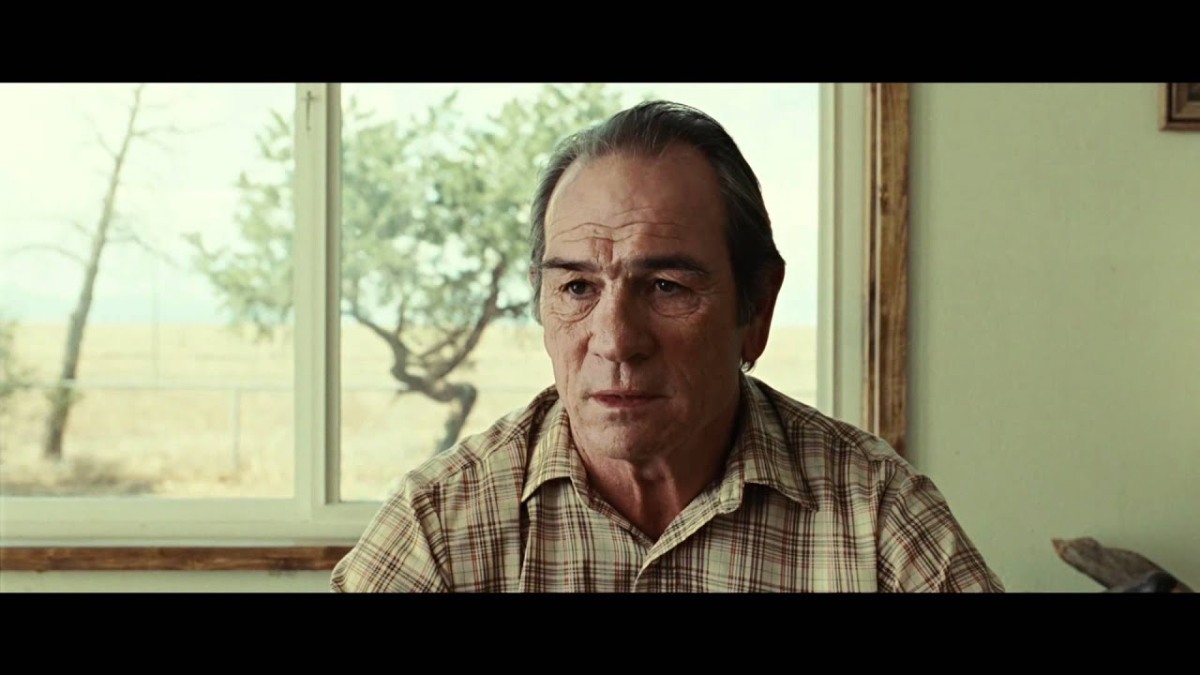
Tommy Lee Jones is an elderly police officer overmatched in the excellent ‘No Country for Old Men’ (2017). He is overmatched for a number of reasons including not being able to keep up with the actions of violent men who show no compassion or no remorse. Throughout the film, he is always just a step behind the sociopathic Anton Chigurh and fails to either apprehend him or to prevent him from killing innocent people. In his 30+ years as a police officer, he means well but he has noticed an increasingly brutal fact that is inescapable. The world has become more unforgiving, violent, and it is hard for him to make an impact whereas at the beginning of his career, he sought to make it a better place.

Ed Tom Bell is your average protagonist who means well, wants to do right in his work, and believes he can do good but finds himself overmatched and overwhelmed by what he is asked to do. When he thinks of his future, he wonders what is left for him and if retirement will bring him peace or have him think back on what could be.

The dream scene begins with Ed Tom, now retiring, looking out of his window at his farm’s seemingly barren landscape with a sole tree to his left through the window behind him. A man of seemingly few hobbies and fewer words, he thinks about his day ahead and thinks about the possibility of riding around on his horse. Not too enthused about it, he also asks his wife if he should help around the house. Seemingly because he is less than skilled at this work, his wife believes it’s better that “he not.” He asks if his wife will join him riding but she is still working and a member of society actively.

Resigned to his fate as a retiree instead of being an active police officer, he reflects to his wife that he’s had dreams and he wants to share them. She says that he has time for them now and that she’ll be polite while he remembers them. He goes ahead and states that there were ‘two dreams’, they were ‘peculiar’ and both of them involved his father who has long passed away. Ed Tom is an older man than his father ever was indicating his father passed away at a younger age that of which Ed Tom will live to be longer.

The first dream is almost like a flash as most of our dreams tend to be with the details muddled and hard to recall. Ed Tom only states that he meets up with his young father in town and he leaves him some money perhaps as a way of his father being there for him even if he wasn’t present physically in his life. Similar to losing his father early in life, Ed Tom believes he lost his money in the dream as well leaving him without help as his father’s early death may have inadvertently done.

The second dream is much more imaginative and involve Ed Tom and his father living in ‘older times’ perhaps when the West was not settled and was lawless. He is no longer a police officer maintaining law and order but rather a horse rider having adventures with his father as he wishes they perhaps would have had time for had he lived longer.

This second dream is much more vivid as Ed Tom recalls how it is cold, they are going through a mountain pass together. They ride together in the snow among the mountains of the night until his father rides past him with no explanation and his blanket wrapped tight against him. This is confusing to Ed Tom at first knowing how hard it is to be without his father who he loves and must face the cold world without him as if he has been abandoned again. Though he may have lost his father, Ed Tom recalls how his father was carrying ahead a fire and a horn of a golden moon color, which gave him comfort despite the fact that he was not with him riding together.

“He was going on ahead, fixing to make a fire.” Ed Tom believes his father in the dream is out there doing this noble act in the middle of all the dark and cold, which is brutal to handle. “I knew whenever I got there, he’d be there…then I woke up.” The hope that Ed Tom haves is that his father even though it seems like he abandoned him as the son is that he really is instead looking out for him and paving the road ahead with light so he would not abandon his hope.

He believes that his father even though he may not be there with him wants him to keep going ahead and to meet him eventually instead of becoming deterred. He paves the way for his son to chase the flame of his absence and to resolve to not let the dark encapsulate him fully. Ed Tom’s expression about the dream is one of resigned sadness that his father is no longer around but also one of lingering strength to believe his death was not in vain and that he will reunite with him one day. His father, like him later, use their lives to keep the flame and the light moving forward even when surrounded by the darkest aspects of human nature.

Like any dream scene in a movie, this one has a deeper meaning behind it related to one man’s grief involving the loss of not only his livelihood but of his hope for a brighter future for humanity. Having seen the horrors that people inflict on one another, he may be resigned to that fact but he also believes his father would have wanted him to keep the flame ‘alive’ and to keep carrying it forward throughout his life even if things looked bleak. His death did not stop Ed Tom from keeping the flame moving in his own life and to carrying it forward in the hopes that he would bring it to his father someday when they would eventually be reunited in another lifetime or in another dream that seemed real.

Anatomy of a Scene – The Box of Chocolates

Life is a Box of Chocolates – Forrest Gump (7/9) Movie CLIP (1994) HD

Few movie scenes sum up the random or arbitrary nature of life more than the scene of ‘Forrest Gump’ where Forrest’s mom talks about how life is “like a box of chocolates.” We never know what “we’re going to get.” Sally Field, a wonderful actress, explains in one sentence what some of us don’t understand in a lifetime: You have to do the best you can with what you have and then let life take its course. We do have control over our destiny to some degree but there are forces outside of our control.

Sometimes, we have to let life takes its course even with how painful that can be such as losing a loved one as depicted in this particular memorable scene of ‘Forrest Gump.’ “Death is just a part of life, something we’re all destined to do.” Forrest’s mom explains to him that we all have a destiny and it is what we make of it with the time we are given here on Earth. His mother further explains how being a mother was her destiny and that “she did the best she could.” Forrest is heartbroken but knows that her time has come to leave him. Forrest, given the way his own life has gone from college football player to Vietnam war veteran to shrimp boat captain is still trying to figure out his destiny at middle age.

The fact that Forrest is still unsure of his own destiny as a person even in middle age makes him extremely relatable to the audience watching in showing his own vulnerability for how life has changed him and what he still is unsure of to do with the time he has left. “What’s my destiny, momma?” She knows that even as mother, she can’t tell her son what his destiny is and that he has to “figure that out for himself.” The randomness of life summed up in choosing from a big box of chocolates is fitting in a way and is an expression that 25 years after this movie was released in theaters still has a way of connecting with people because we all know how true it is. While we do have some control over our lives, we must be ready and willing to face unknown challenges and changes that come our way.

Forrest is confronted by the death of the woman who brought him in to the world and is unsure of how to go on without her.  She tells him to be strong and that she will “miss him” like any good mother would. He has to continue on without her as hard as that may be. She had raised him to be strong, self-reliant, and to let his mental handicap hold him back from achieving his true potential. A woman who saw the value in her son when others marginalized and chastised him for something outside of his control.

As she tells him, you are what God made you and you have to do the best with what you are given. Forrest narrates how she got cancer and died on a Tuesday. He bought her a nice hat with flowers and gave her a proper burial to say goodbye to a woman who taught him so much. Without a father in his life, Forrest’s mom played both roles and did so under difficult conditions from that era. This is a powerful and moving scene in so many ways, but this movie scene has a particular message that we all can learn from.

Sally Field and Tom Hanks did an excellent job in this scene and in this movie. They have excellent chemistry and it shows in this particular scene where they say goodbye. You can feel the emotional depth of both actors to express what any mother or son would say to each other in such a sad moment in time. What most movies can’t accomplish in two hours, this particular scene accomplishes in two minutes. Losing a loved one is an immensely painful and traumatic experience. The emotional weight and gravity of this particular movie scene makes it one of the best of all-time.

“Life is a box of chocolates; you never know what you’re going to get.” Such a simple quote has resonated with audiences around the world for the past twenty-five years. An excellent film in its own right, ‘Forrest Gump’ is a tribute to the power of the human spirit in the face of tough challenges that the average person can go through during their life. Forrest preserved partly due to the love of his mother and despite not knowing what curveballs life would throw his way. He knew he had to make the best of his life with what he’s given. Because his destiny was not set in stone, he knew that he had the power to shape and mold it to make it what he wanted it to be even if life sometimes threw challenges and obstacles in his way.

English Corner – Using Words of Encouragement

A letter, essay, e-mail or other written form of encouragement in English serves the following purposes:

-An expression of approval and support.

-An act of giving hope or support to someone.

We use encouraging words in the English language for helping someone out especially when they are not doing well. We want to encourage each and every person to keep on doing their best.

Some Examples:

-Do not give up faith.

-Do not be discouraged.

-Do not lose hope as there will many more opportunities again.

-It has been a great incentive to get a bonus for my extra sales and I hope that this continues.

-I am confident that our Sales / Marketing team will have no trouble accepting this challenge.

-I am confident that you will make an excellent host.

-Your hard work and determination are greatly valued.

Ten Main Expressions of Encouragement to Use in Your Speaking and Writing

-You’re coming along nicely.

-Keep up the good work.

-That’s good effort on your part.

-You are showing real improvement.

-You’re on the right track.

-Keep going and do not give up.

-Come on, you can do it

-Give it your best shot

-What have you got to lose?

-If at first you don’t succeed, then you must try, try again.

Some Phrases to inspire people.

(You wouldn’t use these phrases often in regular conversation, but when you are writing speeches or creating motivational essays, they sound very inspirational.)

  • Always follow your dreams.
  • You should reach for the stars.
  • Do the impossible.
  • Believe in yourself.
  • The sky is the limit.

How To Use These Encouraging Phrases In English:

Phrases to use when someone hasn’t started yet.

(You can say these phrases to someone who is trying to figure out whether or not to do something that seems difficult or risky.)

1. Give it a shot.

Example: Your friend has never asked a girl out for coffee before. You offer to introduce him to your friend since she is single.

2. Go for it.

Example: One of your colleagues at work is looking for a raise and is thinking of asking his boss for one. You encourage him to do so.

3. Why not do it?

Example: Your wife asks you if she should enroll in a cooking class on the weekends. You tell her why not do it and see what happens.

4. It’s worth a shot.

Example: Your brother wants to try out for the Varsity basketball team at his high school but is not sure if he should do it. You tell him that it is worth a shot.

5. What are you waiting for?

Example: You are waiting for your friend to go down the waterslide and have some fun. You ask him ‘what are you waiting for?’

6. What do you have to lose?

Example: Your brother asks you whether or not he should take his girlfriend on a nice vacation to Italy this Summer. You tell him, “What do you have to lose?”

7. You might as well.

Example: Your professor asks you to see her after class to do some extra work so you can understand the class material better. “You might as well” to get a better grade.

8. Just do it.

Example: The famous Nike slogan but whenever you are put to the challenge physically or mentally, you say to yourself or others, “Just do it.”

Phrases to use when someone is already doing well.

(You can “encourage” someone to continue doing what they are already doing.)

1. There you go!

Example: You hit a home run to tie the baseball game and your teammates cheer you on.

2. Keep up the good work.

Example: You get an ‘A’ on your history exam and your professor commends you for your good work.

3. Keep it up.

Example: You are running in a Track and Field race and you have one lap to go. Your coach urges you to finish strong.

4. Good job!

Example: You improve your Grade Point Average (GPA) by a few percentage points and your parents want to congratulate you.

5. I’m so proud of you!

Example: You tell your grandmother about you getting in to your dream college and she exclaims how proud of you she is.

Phrases to use when someone is having trouble.

(These phrases are ways to tell someone to keep doing something even when it is difficult.)

1. Hang in there.

Example: Even though you have to hike for another hour, you need to ‘hang in there.’

2. Don’t give up.

Example: Life can be difficult but you need to persevere through its challenges by not giving up.

3. Keep pushing.

Example: Even though the weights you are lifting are very heavy, keep pushing and get them done.

4. Keep fighting.

Example: You have three rounds left to fight against the heavyweight champion of the world.

5. Stay Strong.

Example: I know losing a pet is very sad and difficult but you have to stay strong for your siblings.

6. Never give up. Never give in.

Example: Even when you have schoolwork, a job, and a mortgage to pay, don’t give up or give in.

7. Never say ‘die’.

Example: Anything is possible in life so there is a chance that your dreams can come true.

8. Come on! You can do it!

Example: When you have 500 meters left to swim and you’re in first place. You have the ability to win the race.

Phrases to use when someone is facing a hard decision.

(These phrases are ways to tell someone to keep trying)

1. I will support you either way.

Example: If you choose not to go to college and join the Army instead, I will support you either way.

2. I’m behind you 100%.

Example: Your family should be behind you 100% as long as you are working hard to better yourself.

3. It’s your call.

Example: I’m not sure where to go out tonight, sweetheart, ‘it’s your call.’

As you can see, there are numerous examples in English of this kind of supportive language. Words and phrases of encouragement play a key role in showing the person(s) or people that you care about them and that you want them to succeed. If you have a friend, family member, or a work colleague who is a native English speaker and you want to encourage them to improve, get better, or to do their best, you’ll want to use some of these examples listed above.

There’s not much that can make a person’s day more than receiving some encouragement so they can face their challenges head on and succeed in their goals. This list of vocabulary words and phrases will help you do just that as an English learner in both your speaking and writing abilities. In the English language, there are dozens if not hundreds of these vocabulary words but if you are able to put them to good use, you’ll be seen as being more proficient in the language. You will also be better able to connect emotionally with people and gain a few new friends through your kind words and actions.

If you would like to improve your English skills especially with regards to your grammar and vocabulary, check out my English grammar course offerings on Teachable:

https://english-from-a-to-z.teachable.com/ 

A Sense of Wonder

If you were to define the word ‘wonder’, you would characterize it as meaning a feeling of amazement or admiration caused by seeing or witnessing something beautiful, unexpected, captivating, and inexplicable. When you are a child, it’s easy to have that sense of wonder about the world. Your sense of curiosity and disbelief is quite high and your imagination can run wild believing in the possibilities of the unknown.

Even as we grow older and become adults, we still have a sense of wonder that never fully leaves us and is part of our essence as human beings. While you may not have the same sense or amount of wonder as you did when you were a child, it’s important to never fully extinguish that feeling and to let it stay within you even if you are an adult or in your elderly years.

Having a sense of wonder connects you to your childhood years and reignites the kid within you because that part of your being never truly goes away unless you let it. By maintaining that curiosity and desire to know about the world, this helps us keep our sense of wonder about life and its’ beauty. It can be easy nowadays to be jaded about the state of the world and to think that everything is going to hell in a handbasket.

While there are certainly serious problems to be fixed in our ever-changing and complicated world, being doom and gloom about it 24 / 7 won’t make you feel any better. You have to maintain the ability to never be too down or be too up about your surroundings. While there can be a lot of ugliness to be found, there is also a staggering amount of beauty to be in awe about.

I believe that it can be much easier to see things through a negative lens and seek out the ugliness in life. It’s harder yet much more rewarding to seek out the beauty and wonder that you can find if you know where to look. You also have to take the time to enjoy the beauty of things and open yourself up to the beauty of the world. While it may be cliché to state this, you have to have an open heart and an open mind. If you close yourself off to the wonders of life, you’ll never really be able to appreciate them fully.

A sense of wonder has to be cultivated over a long period of time and doesn’t happen overnight. When you are a child, you’re amazed by anything and almost everything new and unique. As you get older and you experience more of life, it can be more and more difficult to feel amazement or be captivated by life. Each person has a different sense of wonder, and different things amaze different people. When I think about wonder though, there are a few things that cause me to feel that unexpected thrill or captivation.

I think most people would agree that a sunrise or a sunset could really create awe and wonder in a person. The colors and the vibrancy of the environment when the sun lights up your world at dawn’s break or when it fades into darkness to make way for the stars and night sky; those moments can truly captivate a person’s imagination. You could also make the case that when you witness the sunrise from a mountain top or see the sun set from the backdrop of a vast ocean, witnessing those natural occurrences are too beautiful to be put into words.

Sunrises and sunsets never get old for me because they are never the same and they are always different depending upon which environment you’re witnessing them in. It only takes a few minutes to stop what you’re doing in your hectic day-to-day life to really enjoy the spectacle of the sun’s rising and setting. It’s also a reminder about how our time here on Earth is limited and that there are cosmic occurrences that happen beyond our control and our understanding.

I think this is mainly why solar eclipses are so powerful to witness in person because you’re seeing an event that is beyond human control and that only comes around once or twice in a lifetime. Those men, women, and children who traveled hundreds or thousands of miles to see the recent solar eclipse occur across the continental United States are in touch with their sense of wonder, and they believe in its’ ability to make you feel astonished, wowed, and even humbled.

Witnessing the sun’s and the moon’s movements aren’t the only ways to cause yourself to feel wonder though. There are hundreds, if not thousands of possibilities out there that will make your jaw drop in disbelief. I have always thought of photography as a good way to capture the wonders of the world, and I have taken many photos throughout my previous travels in order to really remember those special moments of life when I was on the road. Beyond just taking photos, it’s really wonderful to interact with your environment by jumping in a freezing lake, hiking up a mountain, smelling different flowers in a garden, rafting down a streaming river, etc. Those moments really make you feel alive and help to maintain a sense of wonder about the world.

You don’t have to travel, take photos, or be an adventure junkie to have a sense of wonder though. If you’re willing to challenge yourself by learning new things and bettering yourself, that will help you maintain a healthy curiosity about life and a thirst for knowledge. Whether its’ learning a new trade, developing a website, or speaking a new language, the pursuit of knowledge in different areas is a great idea and the things you will learn about yourself and the world around you will captivate and excite you. If you’re curious, confident, and willing to have an open mind, the world will teach you many things if you open yourself up to the possibilities.

Never let the flame inside you go out. As a child, you definitely did not have worry about wonder because you always had it and every day, you most likely had energy and a curiosity not easily extinguished. However, when you get older and more accustomed to the ways of the world, it can be very tempting to think of everything as mundane, childish, and routine, but that’s simply not how it should be.

However, The differences that occur when you’re a teenager or a fully-grown adult is that you have to pursue the wonder for yourself. You have to take the time and put yourself out there to figure out what really captivates you. Everybody has a unique way of seeing the world but make sure it’s not always from a serious and pessimistic point of view. Let yourself be wowed by the unknown or by the newly discovered. Pursue the passions and the beauty in life based on what fills your heart or your mind up.

For some, it may be playing Jazz music and for others, it may be hiking through the mountains. The best thing about experiencing wonder is that it is ever-present in our lives but you have to be aware of what reaches out to you and touches your soul. Most people live out their lives not fully embracing the wonders around them.

You have to be always on the lookout for what fills your heart up with joy and happiness whether it’s a watching beautiful sunset over the water, viewing an original painting by Claude Monet, or playing Beethoven in a symphony orchestra as your friends and family sit in the audience. Always be looking out for the wonders in life, otherwise, you’ll never find them at all.