What It Really Means to Be a True Friend

“Having a true friend is hard to come by and it’s important to get better at distinguish who is a ‘true’ or ‘real’ friend and who should deserve that kind of title in your mind.”

People tend to throw the word ‘friend’ around a lot especially when you may be desperate or wanting to have a new ‘friend’ come into your life. It is natural to want to build rapport with someone and to do so quickly. It is good to have someone want to spend time with you and get to know you are. When you are short on friends or when friends you know have moved on to a different town, city, or country, you want to work on replacing those lost or far away friendships that you used to have.

Especially as you get older, friends move away, get married, have children, and it can be hard to keep those friendships the same or keep them alive in a meaningful away. Having a true friend is hard to come by and it’s important to get better at distinguish who is a ‘true’ or ‘real’ friend and who should deserve that kind of title in your mind.

Unless the bonds you have are broken or ruptured due to any kind of factor, which does happen in life, you will still have your friends to pick up the connection again despite factor of distance or life circumstances. A friendship that has been established for years or decades doesn’t ever fully go away but you both must work to keep in touch to keep the flame alive into the future. Friendships do fade away, and you or the other person may not be getting what you need to keep it going. It can be sad to let go of a friendship especially when you invest the time, the emotions, and the money spent to keep it alive, but that is just part of life.

We have a tendency in American culture to form friendships at a dizzying pace or want to have someone as a friend quickly to ensure our own need for popularity or for social status. Other cultures tend to be slower in establishing those tight social connections or friendships, but once you do, you have a friend for life, or you have a true friend under a separate kind of category that should be reserved for a few friends and not for many connections or acquaintances.

Yes, we do throw around the word ‘friend’ a lot and too quickly. However, you should be wary of entrusting people who you consider ‘friends’ without feeling out how much that friendship entails. When I think of the meaning of a ‘true friend’, it is deeper than getting drinks every now and then or meeting up to play a sport or do an activity, it is someone who you can share both the good and the bad in your life and they can do the same with you. You don’t have to reveal your whole life story or be exhaustive about it, but a true friend is someone for whom you can be vulnerable with. A true friend won’t judge you for looking for their help, advice, or let you vent to them every now and then.

There are also several kind and thoughtful gestures a friend would do for you whereas an acquaintance or social connection would not. When you need to move and you’re free to lend a helping hand with the furniture, that is a true friend in action. If you need a ride to and from the airport and they don’t mind it even when it’s a little out of the way, that is a true friend. If you need a place to sleep or ‘crash’, and you would rather not splurge for a hotel room, a true friend will offer you their coach or a spare bedroom.

Now, there are two sides to any friendship so keep in mind that if they are willing to do that for you, you should try to do the same for them if the need arises. It is not being transactional but it’s remembering that any true friendship needs effort from both people, and it is good to look out for another especially in an increasingly isolated and technologically driven world. Our phone or our computer or our AI chat tool will never be a replacement for a true friend who is a real person, one whom you can share stories with, help each other with advice, and lend a hand to you when you are in need. Now, you can still drink, eat, play sports, or hang out with a ‘friend’, but if that friend isn’t someone who you can confide in, discuss life and its happenings, or be there for each other, it’s not a deep friendship or can be a bit shallow.

True friendships in my view take years or even decades to foster so while it’s good to try to make new friends, don’t neglect the older friendships you have that can be revived or don’t be too quick to trust someone without giving the friendship time to bloom and see if you both are compatible in the long-run. I would rather have five ‘true friends’ than a hundred or more ‘friends’ who don’t really know me, care about me, or for whom we are close enough to help each other out or just look out for each other.

Friendships are like relationships, though platonic in nature, they are just as important to foster in a healthy manner and that both people are contributing to it. You can start off just as acquaintances but if you’re putting in the time, trying on each side, and growing deeper as friends over the months and years, instead of staying in the shallow subjects, you really are building the ‘true friendships’ that survive time, distance, and other challenges.

Even if you’re married, or have children, or are busy at work, you also need friends and healthy friendships so keep trying to create them, build them, and be a good friend to others in your life. Remember to have quality friendships over the quantity of them as having a few friends for life is much better than have 100 friends who will drop you in a few months because you couldn’t keep up with their lifestyle or their demands or their ‘image.’ True friendship is missing someone when they’re gone and looking forward to the day when you can rekindle the friendship anew.

Anatomy of a Scene – ‘Family, Jimmy, Family’ (The Wire)

“This scene that I’ve titled, ‘Family, Jimmy, Family’ feels like it’s not just about the character, Jimmy McNulty, one of the leading roles of the show and a deeply flawed one at that but also could reflect on our own lives and who we prioritize in them.”

Sometimes, it takes a great work of fictional television to cause the viewer to do some soul searching themselves. ‘The Wire’ is not only an excellent crime drama and takes a critical lens to different facets of American society, but there are also multiple scenes that stand out for how they deliver truths to each of their characters for what they themselves are ignorant of or choose to forget. One of those scenes is short but whose succinctness of its message and point-blank delivery is something that you could do a deep analysis of. This scene that I’ve titled, ‘Family, Jimmy, Family’ feels like it’s not just about the character, Jimmy McNulty, one of the leading roles of the show and a deeply flawed one at that but also could reflect on our own lives and who we prioritize in them.

For a little bit of background before diving into the scene itself, which takes place in ‘The Wire’ Season 5, Jimmy McNulty is an obsessive workaholic and a functional alcoholic. His thirst for booze rivals his own thirst for self-satisfaction in being able to solve murders as a detective in the Baltimore Police Department. While he does crave justice, he craves adulation, admiration, and boosting his ego too because of his natural talents with regards to being a lead detective. However, without getting into too many details, the stress of the job, the clashes with his bosses, and the long hours cause him to drink heavily, carouse with random women, and cause him to lose control of his relationship with both his ex-wife and his children.

Jimmy loves being a detective, the purpose that comes with the badge, and the colleagues who he handles cases with. It’s also about the camaraderie that he finds in the work, the all-consuming nature of the work, and by outsmarting criminals and thugs who think they have successfully outwitted him and the police. The thing with letting work consume you is that it takes over your life and suffocates the rest of your identity with it. Jimmy is a great detective but throughout the show, the job takes a toll on his personal life and about separating work from his time out of work. When you have nothing but the job and the people in it, is it really a good life?

The scene I refer to titled, ‘Family, Jimmy, Family’ is instrumental in telling Jimmy McNulty what he needs to hear and what other workaholics need to hear: “The job won’t save you.” It takes five seasons but Beadie Russell, a Baltimore Port Authority police officer, introduced in season two, but for which her and Jimmy start to become romantically involved does what no one else in the show has the courage to do, tell Jimmy that the job isn’t everything.

“In the end, they’re not going to be there either.” Beadie sums it up in less than a minute with this scene but reminds Jimmy that the drinking pals at the bar, the workmates who he shares a patrol car with and shares stories, or even the girls he’s met for quick flings, they won’t be there when he really needs it. Yes, you can have fun, enjoy their company, and make the most of the work hours, but those people won’t be there for you when it comes to your health, wellness, and your overall fulfillment as a person. Beadie indicates to Jimmy that his workaholic behavior and his propensity for alcohol won’t save him and won’t give him the internal satisfaction he is always looking for.

“Family, that’s it. Family, and if you’re lucky, one or two friends who are the same as family. That’s all the best of us get. Everything else just…” Beadie pauses at the end of this scene and lets it all sink in for Jimmy. She knows she has reached him and lets him know that at your funeral or in your last days, you won’t have the girls you dated, the workmates or bosses, or the casual bar buddies you swap stories with there. If you’re lucky, you may have close family to care for you and maybe one or two close friends and that’s the truth of this scene not just for Jimmy McNulty of ‘The Wire’ but for all of us.

Beadie makes it clear that everything else goes away at some point once the job is done, the glasses are empty, and everybody goes their separate ways. Nothing is permanent but maybe your family will be there for you through most of it, thick and thin of life, if you’re lucky and until your dying day if you are truly blessed in that regard. Jimmy knows by the end of the scene that he needs to shift his priorities based on his body language.

He does not say anything back to Beadie, but he knows what she is saying as his new girlfriend is 100% true. It’s been a while since anyone has laid it out to him that clearly, but she gets through to him by telling him the unvarnished truth that he has refused to face up until that point. Like Beadie, we all need someone to cut through the nonsense and tell us what we really need to hear and if you watch this scene from ‘The Wire’, it’s not just Jimmy who this scene can reflect upon but maybe for our own lives too.

We all want to have productive work lives, make friends, and enjoy the fruits of our labor, but we must remember that it all does go away, and that family can be the most important and reliable thing we have throughout our lives if we’re lucky. Workmates, casual buddies and flings, and even friends come and go, but family can sustain us if we nurture those relationships and don’t let them atrophy and go away too.

Beadie reminds Jimmy to not let the work and the environment around his work consume him entirely. She saves him from himself to some degree but telling him what he needs to hear before he spirals out of control as a functioning alcoholic and workaholic. I think we all need a Beadie Russell in our lives to tell us what we need to hear rather than what we want to hear so that we can get that needed support to help reassess our priorities in life and change ourselves for the better.

How to Evaluate Your Year

“Evaluating the year that has passed can be a valuable exercise for yourself to gain deeper insights, identify growth opportunities for the new year, and celebrate the accomplishments or successes you had.”

2024 is ending soon as I write this article and I do believe it is important to look back on the year that was to evaluate it holistically, such as whether it was good, bad, or a mixed bag. Evaluating the year that has passed can be a valuable exercise for yourself to gain deeper insights, identify growth opportunities for the new year, and celebrate the accomplishments or successes you had.

Reflecting on various aspects of your life, even areas that you can improve upon will help you to set meaningful goals for the year ahead. Here’s a guide I have created on how to evaluate your year comprehensively, focusing on the five major areas of friends, family, relationships, experiences, and work or business.

Friends

Friendships are an essential part of life and key to one’s mental health as a surefire way to stay truly connected and bond over shared activities or hobbies or even lend each other a helping hand. Think about reflecting on your relationships with friends from over the past year. Ask yourself the following questions when doing so:

  1. Giving or Getting Support: Were your friends there for you during challenging times? Were you there for them when they needed you when they were in a rut or needed help? Did they offer emotional or practical support when needed? Could you say the same?
  2. Showing Mutual Effort: Did you invest some effort into maintaining these friendships? Conversely, did your friends reciprocate to make the effort to reach out to you as well?
  3. Quality over Quantity: Did you prioritize meaningful, deep connections over superficial ones with your friends? Were your interactions enriching and positive with your friends?
  4. Encouraging Growth: Did your friendships encourage personal growth or help you broaden your perspective? Did you give each other advice on how to better yourselves?

Document the moments and memories that stood out to you, whether they were fun gatherings, heart-to-heart conversations, or instances where you and your friends supported each other through a difficult time. Evaluate if there were any friendships that became draining or unbalanced and consider whether to address these issues or set boundaries or even cut off the friendship if it isn’t working out.

Family

Family relationships can greatly influence your emotional well-being in both positive but also negative ways depending on your own situation with your family members. I encourage you to reflect on the past year’s interactions with your family members and consider these questions:

  1. Building Connection: Did you spend enough quality time with your family? Were you present and engaged during these moments or were you distracted by your phone or another device?
  2. Conflict Resolution: Were there any unresolved conflicts? How well did you communicate and handle disagreements? Why did those conflicts arise and how can they be avoided next year?
  3. Support System: Did your family serve as a source of strength or encouragement? Were you able to offer the same in return? Did you help each other out in a mutual manner?
  4. Milestones and Memories: Were there any significant events or milestones within your family? How did you contribute to these moments? Did they celebrate your wins this year and did you do the same for them when they had successes?

Think about whether you balanced your time and energy across the various family member dynamics that are constantly evolving each year along with the different personalities that you have in your family. Identify some ways to strengthen bonds with family members next year who may need more of your attention or love than you were able to give up until this point.

Relationships

If you’re in a romantic relationship currently, evaluating this aspect of your life is crucial to keeping it on the right track into next year. Even if you’re single, reflecting on your relationship with yourself or any potential romantic connections is just as important. Ask yourself these questions as you close out the year:

  1. Compatibility: Are you and your partner aligned in your values, goals, and vision for the future? Have you talked about how you felt about the relationships enough in terms of how it is going?
  2. Communication: How effectively did you communicate this year? Were you able to express your needs and listen to your partner’s? Did you handle disagreements respectfully and come to a positive resolution with each other?
  3. Growth: Did your relationship encourage mutual growth? Did you feel supported and loved? Did they support you when you needed it, and have you done the same for them?
  4. Quality Time: How much time did you spend together? Were those moments meaningful and fulfilling? Were you also able to spend time apart in a healthy manner?
  5. Self-Reflection: If you’re single, consider how you’ve nurtured your relationship with yourself. Did you take time to understand your needs, desires, and goals in a potential relationship for next year?

Identify areas where you’ve grown together as a couple or individually when you two were apart. If there were challenges this year, consider how you’ll address them moving forward in your relationship.

Experiences (Travel, Hobbies, Interests, Fun Activities)

Reflect on how you spent your free time outside of work, school, or business and how engaged with life outside of your daily obligations and weekly chores you were. Think about where you went, what you did, what you learned, and how much you enjoyed life beyond the office or the shop or the factory floor. Consider the following in your assessment of your experiences:

  1. Local and International Travel: Did you explore new places, whether locally or internationally? How did these experiences broaden your perspective? What did you learn from the places you traveled to? Would you travel in 2025 and how did you grow as a person in your travels?
  2. Hobbies and Interests: Did you pursue activities that bring you joy or help you grow? Did you try something new? Were you committed to these hobbies and spend enough time on them? What new hobby or interest would you like to try in the new year?
  3. Having Fun and Relaxation: Did you allocate time for leisure and enjoyment? Were you able to strike a balance between work and play? How often were you able to relax yourself?
  4. Making Memories: What were the highlights of your year? Did you attend events, celebrate milestones, or create special moments? Who did you share those memories with?

Take note of the activities, hobbies, interests, etc. that brought you the most happiness and fulfillment. If your year felt monotonous and a bit too routine, think about incorporating more variety or adventure into your life next year. Plan the destinations, places, or cities with regards to travel ahead of time that you hope to visit in the new year.

Work or Business

Your professional or business life is another crucial area to evaluate at the end of any year as it makes up about 80% of our time throughout the year. Reflect on your career or business journey over the past year by asking yourself these questions:

  1. Major Accomplishments: What were your major achievements? Did you meet or exceed your professional goals? What was the process you used to achieve your goals?
  2. Overcoming Challenges: What obstacles did you face, and how did you overcome them? Were there any failures, and what lessons did you learn from them? Who helped you overcome these challenges in your professional or business pursuits?
  3. Professional Growth: Did you acquire new skills, take on new responsibilities, or achieve personal growth in your role? How will these new skills help you next year and beyond?
  4. Managing Work-Life Balance: Were you able to maintain a healthy boundary between work and personal life? Did work leave you feeling fulfilled or drained? Did you take enough time off for vacation or for staying healthy? How did you spend your time outside of work or business?
  5. Establishing Future Goals: Are you satisfied with your current trajectory, or do you feel the need for a change? Did you take steps toward your long-term career aspirations? Will you find a new job next year? Do you plan to launch a new business or company? Will you ask for a raise or promotion and how will you ask this question to your supervisor?

Reflect on whether your work or business aligns with your personal values and passions. If there are gaps in that assessment, start thinking about how to address them in the coming year with regards to making your work or business more personally fulfilling Once you’ve reviewed these areas and answered as many questions in these five major areas as possible, combine your thoughts to identify patterns, strengths, and areas for improvement.

Lastly, think about the following ways generally on how you could make next year the best one yet:

  1. Showing Your Gratitude: What are you most grateful for this year? Acknowledge the people and experiences that enriched your life and made it the year that it was.
  2. Compile Lessons Learned: What did the failures, challenges, and successes of this year teach you? How will these lessons shape your approach to the new year and beyond?
  3. Having Goals for Improvement: What areas need more focus or change from you? How will you set realistic and actionable goals to address these aspects next year?

Evaluating your year holistically gives you a clearer perspective on where you stand in your life and how to move forward in a positive manner. Use this article, the questions I’ve posed and to write a yearly reflection about these five major areas as a substantive foundation for setting meaningful goals and resolutions for the year ahead.

Navigating the Down Days in Life

“During these inevitable down days that we all go through, when challenges seem insurmountable, and the losses keep piling up, it is essential to cultivate your internal mental strength to navigate through the storm.”

Life inevitably has its various peaks and valleys, days filled with various successes and other days where nothing goes your way. During these inevitable down days that we all go through, when challenges seem insurmountable, and the losses keep piling up, it is essential to cultivate your internal mental strength to navigate through the storm. Being mentally strong doesn’t mean avoiding any hardship and making sure no problems ever find you; rather, it involves developing the resilience and coping mechanisms necessary to face your adversity head-on.

Everybody has down days in their life, and it is better for you to acknowledge and accept the down days, face them rather than run from them, understand the factors contributing to building up your mental strength, and adopting the practical strategies to emerge stronger and better on the other side.

As the popular English saying goes, “when it rains, it pours.” I’ve found that things tend to go wrong in bunches similarly to how when things go well, they tend to go well all at once. You must be able to brace yourself for these tough times and to look for the positives where you can during the down days. The first step towards bolstering your mental strength during challenging times is acknowledging and accepting the existence of down days.

Denying or suppressing negative emotions can exacerbate the situation, leading to prolonged stress and anxiety for every challenge that comes your way. You should not shy away from the reality of difficult moments as it will allow for a healthier processing of your emotions. It is essential to recognize that everyone faces hardships in life, and experiencing these lows is an integral part of what makes us human.

In addition, acknowledging the down days in life doesn’t equate to having a weakness. On the contrary, it is a testament to having both emotional intelligence and self-awareness. By accepting the presence of challenges that you are facing, you can better understand your emotional state and take proactive steps towards building up resilience.

Mental strength is not a fixed trait but a skill that can be developed through intentional efforts and experiences. Understanding the components of mental strength is crucial for cultivating resilience during tough times. If you can manage your emotions, have a positive mindset despite your circumstances, and still build healthy habits, you will be able to meet the down days head on instead of letting them consume you.

Effective emotional management is a cornerstone of one’s mental strength. It involves acknowledging and expressing emotions in a healthy manner. Suppressing your emotions can lead to a buildup of stress, anxiety, and other negative feelings. When things are going wrong, you should work even harder to navigate your emotions, seek healthy outlets such as writing, playing sports, talking to a friend or family member, or engaging in fun activities. Don’t let an argument, a disagreement, a difference of opinion make your down day worse than it needs to be.

Cultivating a positive mindset doesn’t mean denying the existence of your problems but rather in adopting an optimistic perspective to getting through them. This involves reframing those challenges as actual opportunities for growth and learning. Practicing gratitude, focusing on the solutions rather than the problems only, and surrounding yourself with positive influences can all help contribute to the development of a resilient mindset.

Our Mental strength is closely tied to our daily habits. It is key to keeping your routines going that prioritize physical health, such as regular exercise and sufficient sleep, which positively impacts mental well-being especially during down times. Additionally, I believe that incorporating mindfulness practices, such as practicing meditation, yoga, or deep breathing exercises, can help manage your stress, anxiety and enhance your resilience.

While understanding the components of our mental strength is crucial during rough periods of time, you should be thinking of practical strategies for navigating the down days of life. Here are some strategies that can come in handy when you are going through a tough time and may not know where to go for sustained support:

  1. Cultivate a Support System: During tough times, the value of a strong support system cannot be overstated. Whether it’s family, friends, or a professional counselor, having someone to share thoughts and feelings with about what you are going through will provide both emotional validation and a sense of connection. Social support acts as a buffer against stress and fosters one’s resilience.
  2. Set Realistic Goals: In the face of sustained adversity, it’s essential to set realistic and achievable goals. Breaking down larger challenges into smaller, manageable tasks on a day by day basis can make the journey seem less daunting. Celebrating small victories that happen to you, especially during the down days along the way, contributes to a sense of accomplishment and boosts confidence.
  3. Embrace Change as an Opportunity: Life is inherently dynamic, and change is a constant. Instead of resisting changes to your life, instead, you should view the change(s) as an opportunity for growth and adaptation. Flexibility in your thinking and the ability to adjust to new circumstances are key components of maintaining mental strength. Embracing the change(s) will allow you to navigate challenges with a more open and resilient mindset.
  4. Practice Self-Compassion: During difficult times or days, it can be tempting to often criticize oneself and focus on your perceived shortcomings. Practicing self-compassion instead involves treating oneself with kindness and understanding. Acknowledge that everyone makes mistakes and faces challenges. Nobody’s perfect. Treat yourself with the same empathy and support you would offer to a friend or a family member.
  5. Learn from Adversity: Every challenge, no matter how difficult or large it is, provides an opportunity for personal learning and growth. Reflecting on your past experiences, identifying the lessons learned from past challenges, and applying them to current situations contribute to personal development. Adversity can be a powerful teacher, which can shape individuals into more resilient and resourceful beings.
  6. Seek Professional Help When Needed: It’s important to recognize when professional assistance is necessary and that you do not have to go through it alone. If feelings of sadness, anxiety, or hopelessness persist, reaching out to a mental health professional can provide valuable support. Therapy offers a safe space to explore emotions, develop coping strategies, and gain insights into one’s thought patterns and habitual actions. There is nothing wrong and no stigma with taking care of yourself mentally in my view including reaching out to a mental health professional during down times.

Life’s down days are an inevitable part of being human, but they need not define us. Building mental strength to make it through the down days involves a combination of acknowledging the challenges, understanding the different components of resilience, and implementing practical strategies to navigate adversity and stress. By cultivating a strong support system, setting realistic goals, embracing change, practicing self-compassion, learning from adversity, and seeking professional help when needed, you can develop the mental fortitude necessary to weather life’s storms.

In the journey that is life, it is not the absence of challenges that defines us but our ability to rise above the ones we face. Mental strength is a skill that can be honed, a muscle that grows stronger with intentional dedication, effort, and practice. By embracing the down days and seeing them as possible opportunities for growth and self-discovery, you can emerge from adversity not only intact from having overcome them but also having been strengthened and made more resilient than ever before.

A Most Difficult Year

“The first year I can remember in my lifetime where expectations are dashed, lives are thrown off course, and uncertainty is the norm rather than the exception is 2020.”

When you begin a new year, you expect the most out of it in terms of happiness, health, and opportunities. You hope for the best and pray to avoid the worst. However, there are going to be years that don’t live up to expectations and if anything, topple over any kind of expectations you had to begin on January 1st. The first year I can remember in my lifetime where expectations are dashed, lives are thrown off course, and uncertainty is the norm rather than the exception is 2020.

For the vast majority of people, 2020 has been a year to forget and to put behind us. Still though, there is a lot that we can and should learn from this year to make the next one a more forgiving and hopeful year. 2020 was a most difficult year and one long, seemingly almost never-ending ‘Black Mirror’ episode but I take solace in the fact that those of us who made it through this year are more resilient, better able to deal with uncertainty, and able to be happy with less instead of more.

We will always remember 2020 and while I am looking forward to putting it behind me, there are certain lessons to be drawn from a year like this one to ensure we never have a year as uniquely horrible as this one if only we start to change our behaviors and our actions collectively as a society. Beyond climate change, racial injustice, rampant inequalities, and a raging pandemic, there is also the sense that we are failing each other not just in terms of our institutions but also in terms of our commitment towards one another. Revitalizing faith, trust, and kindness as fundamental tenets of our society will be an important benchmark in seeing how much we have learned from the ills of 2020 and how not to repeat these failures in a future crisis of our own making.  

In a time where our institutions are increasingly unable to meet the challenges placed upon them, I hope we will recommit to them additional resources rather than letting them atrophy and decay after the pandemic is over. I think most of us have learned how necessary it is to have functioning and responsive institutions in a crisis and how much we can be hurt by not having them be available to us especially when time is of the essence. Institutions will only work as much as we allow them to so it’s up to us collectively to believe in them, to fund them properly, and to have leaders who will tell us the truth, understand our needs, and be able to respond effectively. When our institutions fail us, we are all put in the precarious position of relying heavily on our friends and our families, which is sometimes a luxury that not everyone has available to them.

Our personal connections cannot help us though when it comes to securing masks, getting us tests, or giving us financial relief when we have no other option. A pandemic shows us how vital it is to have both local and national institutions in place who can help and are there to help rather than leaving every man or woman for him or herself causing us to act more selfish or more distrustful of others. Pandemics can bring the best out of people and they can bring the worst out of people. It is my belief that this pandemic has shown us how much our institutions have become dysfunctional, how our leaders have been corrupted, and how our society has become way too individualistic especially in a time where cooperation and unity are so desperately needed.

Individuals have been heroic for all of us whether its health care workers, grocery store clerks, delivery people, teachers, first responders, etc. who have shown more care and urgency than many larger institutions who have taken months to actually do anything substantive to help people. They are doing their job well under extremely difficult circumstances and hopefully after this year, we will reward them more not just with our thanks but also with better treatment in terms of financial payment, respect, and providing them with more resources when they need them.

Those people on the frontlines like the rest of us have had to become much more resilient in the face of such difficult circumstances. As I have mentioned before in previous articles, Resiliency is one of the most important traits you can have in a year that has been so difficult. The ability to overcome challenges, break down barriers, and surpass obstacles has been so important in 2020 where our resiliency has been tested each and every day practically. Some have had to be more resilient than others, but we have all had to play our part in keeping each other healthy and safe.

Resiliency is also about keeping your spirits up, not letting yourself get too down, and reminding yourself that tough times don’t last forever but tough people do. If you thought you were going to make it through your entire life without facing a challenging or historic year, you would be mistaken. Whether it’s the Great Depression, World War II, or the tumultuous upheavals brought on by the 1960s or the end of the Cold War, each generation is inevitably going to face moments where their resiliency is tested, where comfort is hard to find, and where good days may be hard to come by.

However, if we can get through the hard years in our life like 2020, there’s not much you cannot overcome if you are able to maintain your resiliency. 2020 teaches us that life can go sideways, and that uncertainty is more part of the human conditions than we would like to admit. While we strive for some sense of predictability or comfort in our lives, we inherently know that is just not possible and that we are never guaranteed tomorrow. I hope 2020 also teaches us not to take anything for granted especially our health or our financial security.

Inevitably, we must always plan for uncertainty because it may be coming to us when we least expect it as it did in the early months of 2020. Whether it’s trying to save more money, keeping ourselves that much more physically fit, or keeping some extra food around the house in case of an emergency, I hope that we will plan for uncertainty to come our way again because you never know when it can rear its ugly head again.

Learning how to be more resilient and also knowing how to face uncertainty have been keys to overcoming 2020 but it’s also been about how to be more kind to others. You never know what someone else is going through, how they have been affected by the pandemic, and what they are risking by coming in to work every day when they can’t stay home. If you can’t be kind, then you shouldn’t say anything to anyone. Now, more than ever, it’s important to be kind to one another, to look out for your fellow man, to donate money if you are able to, and even if you’re feeling particularly generous, donate your time and effort to a food bank or a homeless shelter to help those most in need right now.

Also, be sure to check in on those people most close to you whether it’s a close friend, a family member, or someone who you are close to at your workplace or school. Now is the time to make sure everyone is doing as well as can be, that they are not isolated without hearing your voice or seeing your face virtually indefinitely. It is very hard to spend the holidays alone so now is the best time before a new year begins to check in on those people who matter to you the most. Lastly, do not forget to support your local businesses during these hard times whether it’s the mom-and-pop store down the street or your favorite restaurant since they could all use the business right now and it’s the right thing to do to support the economy.

Kindness is going to be even more important in the coming year than ever. Between economic troubles, a continuing pandemic, and political strife, it’s best to be kind always and to empathize with what other people are going through even if they are complete strangers. Give help to those you need and fight for those with less. Make sure you continue to hold people accountable for their actions whether it’s your neighbor next door or the mayor of your town or city. Only by strengthening the bonds of trust through kindness, honesty, and transparency can we begin to heal the divisions and disparities within our society.

The pandemic and other events in 2020 have shown us how important it is to work together, to look for one another, to do unto others as we would have them do unto us, and to deal with uncertainty and stay resilient as much as possible. I hope things get better for all of us in 2021 and I want to encourage everyone to follow the public health guidelines throughout next year.

Keep wearing a mask, stay socially distant, wash your hands frequently, take care of yourself physically with enough exercise and healthy eating. Make your New Year’s resolutions too if you believe in them so as to strive for new goals and opportunities in 2021. Be kind to others again, stay positive, and don’t let adversity throw you into despair.

I wish all of my readers a very Happy New Year and for a healthy, prosperous, and safe 2021 to come to each and every one of us.

The End of Daily Social Interactions?

“One consequence of the pandemic that has accelerated in terms of being an option for our lives is how the easiness and convenience of going a day or more without seeing or speaking to another human being.”

One consequence of the pandemic that has accelerated in terms of being an option for our lives is how the easiness and convenience of going a day or more without seeing or speaking to another human being. Obviously, if you’re counting virtual meetings on Zoom or Microsoft Teams, you’re interacting with plenty of people on a daily basis but to me, it’s not the same and shouldn’t be considered a real replacement for face-to-face interactions. Whereas ten or twenty years ago, you would need to leave the house or apartment to get pretty much anything done, you now have the chance to do everything from the comfort of your own domicile, for better or for worse.

If you’re an introvert, you may be welcoming this kind of societal shift, but I do worry how we are sacrificing convenience for social awareness and better interpersonal relations. Even if you consider yourself pretty comfortable on your own, I don’t think it’s necessarily healthy to be cooped up all the time even in a pandemic. Of course, we have to be socially distant, stay home according to what guidelines may be in place, and keep washing our hands but that shouldn’t prevent us from saying ‘hello’ to a stranger or asking a cashier that’s not a robot or automated computer the common courtesy of ‘how you are doing?’

Right now, it’s acceptable to minimize human to human contact especially if you’re elderly, vulnerable, or with a preexisting condition but the rest of us should still make time to interact with someone outside of our ‘COVID bubble’ even if it’s in a limited way. I do believe that companies have made it way too easy for us to subsidize our usual running of errands by keeping us at home. While it does help people, who can’t leave due to concerns for their health, I think it does a disservice in making things a little too convenient and then perhaps keeping our reliance on applications, e-commerce, and delivery services to meet our every need.

Running errands to go to the grocery store or to pick up stamps or to pick up medical prescriptions may end up going the way of the Dodo bird and while some of us may be holdouts even after the pandemic, this is a huge societal shift that will affect our way to socialize and build shared communities with other people. The 2020s may have us needing to go out of our way and building our willpower up in terms of seeking out social connections rather than them happening organically. In order to meet new people, it may not happen as much if your university is online or you are a remote worker, you’re going to have to put it upon yourself to find a way to meet people again which will take some creativity.

The good news is that clubs, organizations, sports teams, and language groups aren’t going to die out even if some of them remain online in some capacity. You will have to seek out those groups that are similar to your hobbies and interests especially if you’re in a new city or a new country, but they are going to be out there, but you have to take the initiative to find those groups, attend those meetings, get involved, and also give back to that group when you can. Volunteering your time and effort in person will also be a boost to communities affected by the COVID-19 pandemic and even after it is finally over, if you find yourself isolated and needing to be social more, volunteering with others is a great way to do it and will be sorely needed due to economic and health needs that people will need help with.

What you need to avoid is getting too comfortable with the increasing automation of our society, which will make it harder to deal with anyone face to face, for better or worse. Even if you do leave the house, it’s becoming likelier that you’ll deal with an automated register at a convenience store or supermarket, an ATM at a bank, and with a touchscreen to order food. With just a smartphone alone, you can order groceries delivered to your door, get dry cleaning picked up for you, have prescriptions delivered, food for lunch and dinner, and also most consumer items with a conglomerate like Amazon or Alibaba. The eCommerce industry is set to grow exponentially in this young decade to suit consumer needs and with the rise of Internet of Things, your home will become more adjustable to your comforts too making it harder to leave your place.

Whether it is UberEats, HelloFresh, Amazon’s prescription service (coming soon), online banking, or Zoom for teleconferencing, the pandemic has accelerated wide shifts in society and one that becomes more evident each day is how much easier it is getting to stay at home 24 / 7. Again, after the pandemic, this may let up a bit as people socialize again but the automation of jobs will continue, remote working will become the norm, and online education will become cheaper and of better quality to suit those who want to be virtual for at least part of their higher learning.

I don’t encourage people to become hermits, recluses, or to avoid human contact with anyone who is not a family member or a friend even if it’s during a pandemic with safety precautions in mind. However, the societal shift to convenience at any cost and becoming an island to oneself does have a cost. While you may love your dog Fido or your cat Fifi, they are not substituting for other people. With increased convenience comes a cost like anything else and in this case, it’s our ability to socialize and be around others.

In a post-COVID world where automation, eCommerce, and the Internet of Things will make it harder to leave your home, you are going to need to be more proactive in seeking out activities, events, and groups where you can be free to meet new people and have new friends. We will all be socially awkward after the pandemic but at least we’ll be social again and I promise it will be worth the effort.

While you’re not going to be friends with most of the people we meet, it is important to be open to the possibility and to put yourself out there again. Staying at home with your delivered food, groceries, and prescriptions may be really appealing and easy to get used to but I promise after a while, you’ll miss the feeling of going to a physical store or a pharmacy and just being in a public place again and away from your screen(s). That’s a unique feeling that I hope never truly goes away because our daily interactions, somewhat mundane but potentially unique too, can help make our life that much fuller and richer.

Steady As We Go

As we all know by now, the world is going through a very tough time right now. Instead of speculating about when will things be back to some sense of normalcy, it would not be right to do guesswork about that as of today. Instead, I think it would be best to remind ourselves of a few things we can do over the next few weeks or months to prepare ourselves both mentally and physically for these challenging times. I would like to give my readers out there some advice which has helped me so far in terms of moving forward with my day-to-day activities and also the larger goals that I have for myself.

  1. Take Care of Your Friends and Family: Now is the time to be there for your family and close friends in any way that you can. Even if you are not in the same city or in the same country, take some time out of your day to call or message them to see how they are doing. If you can do so, try to help around the apartment or house with cooking, cleaning, running errands, etc. This is a time to be close to the ones you love and to be there for them.

Remote work and schooling are important and should be a priority, but you should not forget to make time for those around you and to check in on them. Given how much running around you could be doing, you will likely have more time to reach out to loved ones and really take the time to engage in conversation or have dinner together or just to FaceTime every night before bed. I think it is the #1 priority right now to have during this difficult time.

  1. Look for New Opportunities: Obviously, this is a hard time both employment wise and financially. If you have to find a new job or a new opportunity, do your best to be prepared to find those jobs and work opportunities even if they are not ideal for your long-term career pursuits. In a time like this, it would be best to swallow your pride and expand your availability for jobs that will be coming down the pipeline. You have to do what you have to do within reason to keep the lights on and feed your family. It may be working to stock shelves to delivering groceries or to work as a receptionist but if it comes with health insurance and a decent wage, it may be in your best interest to take that opportunity at least for a few months.

Nothing is permanent and even if it is not a job you want to be doing, consider it a way to build up your resilience and to be helping others especially if the job calls for it. The wider you broaden the search, the better off you will be. You just want to make sure you polish off your resume and your cover letter to update it after a gap of some time.

  1. Be Kind to Others: People are stressed out and worried. You have to act like that is currently the situation and give others the benefit of the doubt. You don’t know what is going on in their lives during this crisis and it’s not something you should be asking about. Be respectful, patient, and kind. Don’t be demanding, rude, or just overall a bad person to others. There is such a thing as karma, and it can accrue in both good and bad ways especially now. I do believe that you should treat others the way you would want to be treated and that is how you should approach life under quarantine.

Tempers can flare with ease and things can get out of control so just be aware of your emotions, realize that nothing is worth a verbal or physical confrontation over (especially toilet paper), and always remember to say please and thank you. It does not cost anything to be nice and you should always leave the house if you have to now with that in mind. Good manners will always help you get through a crisis like that.

  1. Volunteer and Donate If You Can: This is only a suggestion but this is the time to give blood if you are eligible, donate extra food and clothes to those organizations who need it and can vouch as to where the money is going, and also see if you can deliver groceries if you have free time. It should go without saying that you should only be volunteering in public if you have a clean bill of health and have not been traveling overseas in the past two weeks. I have seen numerous remote volunteering opportunities pop up in the past week include video conferencing with senior citizens and asking as a pen-pal for them as they stay secluded at home and could use a friend.

Get together with some friends and put together a spreadsheet of organizations / places in your local town or city that are asking for monetary donations or for food/clothing/supplies, etc. It is a misconception that you need to leave the house to donate or to volunteer. In a time like this, sometimes, people especially the elderly or the solitary just could use someone to talk to or listen to them. I have heard stories of mental health professionals volunteering their time for free to help those people in need and that warms my heart quite a bit. If you are not completely healthy and/or free of symptoms, you should not be volunteering outside of the house!

  1. Stay Home and Wash Your Hands: This advice should go without saying by now, but it should be repeated that you should not be leaving your home unless your job requires it or if you need to pick up groceries or go to the pharmacy. I try not to compulsively wash my hands but it’s better to overdo it than under-do it so make sure you sing the ‘happy birthday’ song twice and use enough soap for the 20 seconds it takes to wash your hands.

If you can go for a walk on your own, it is great to get some fresh air even if it is just around the block. You will need some sunlight (vitamin D) and as long as you maintain your social distancing of 2 meters (six feet), there’s nothing wrong with walking for 10-15 minutes to clear your head and shake off the inevitable cabin fever.

  1. Cleaning, Cooking, and Organizing: A good way to avoid being lethargic during this time is to occupy yourself away from work and/or school by keeping things neat, tidy, or clean in the house or apartment where you reside. Daily tasks like cooking meals, cleaning your room, or organizing your papers will definitely keep you busy. Currently, it’s ‘Spring cleaning’ season so you will have your work cut out for you these next few quarantined weeks if you have not cleaned your place since the beginning of the wintertime.

Who knows? If you found extra items or clothes around during cleanup time, you could perhaps donate them when you’re finished collecting all those things you may not need but may help out somebody else during this tough time. With restaurants closed for the time being and delivery every day an expensive proposition, now is the best time to crack open your old recipe book and take your cooking more seriously.

You may be able to eat healthier now more than ever with the added time to cook and prepare your meals in advance and it is a good way to bond if you have a family or a loved one with you. Organizing extends to your personal computer and devices as well to make sure your files, bills, and documents are in order. Don’t forget to take the time to give your phone, tablet, or laptop a good cleaning too because it is a germ magnet and it would be wise to keep it clean as much as possible.

  1. Get Some Exercise In: Gyms and fitness centers are closed. No more pools, saunas, or even Yoga classes. So, what do you do now? Well, it can be easy to give up on your fitness goals but luckily, we have the Internet and delivery services are still working. You can utilize both to keep working out as there are hundreds of home workout exercises and guides out there now. Most of the information is free to use and easily accessible especially with YouTube videos showing you exactly how to do these exercises.

I believe you don’t need much to do these workouts as most of them can be done just with your bodyweight when it comes to pull-ups, sit-ups, pushups, squats, crunches, etc. If you can spend the money, it doesn’t hurt to get some free weights or some barbells in order to add some weight to your exercises. You can also get creative by doing some Yoga and Meditation with just a simple mat.

Due to the Internet, you can look up practically anything fitness related to create a good 30 to 45-minute workout. As if that wasn’t enough, you can always use your body to move quickly with sprints, hill runs, jogs, or a brisk walk if you can get out of the house for a bit. It won’t be the same as going to a physical gym, which has a ton of equipment and a sauna or other great amenities but it’s better than nothing and it is relatively easy to make the most of it.

  1. Flex Your Creative Muscle: If you have some extra time on your hands now, put it to good use by being creative. Sit down and figure out how best you want to pass the time in a productive way. Perhaps you can learn an instrument, pick up a new language, or even write an eBook or an entire book. Harness that energy into action to make the most of your time spent indoors and without most of the distractions that we have in our normal daily lives.

In the next weeks and months, I am positive that there will be an absolute growth in creative pursuits, both online and offline. There are a number of skills and traits that you can work on almost always for free or if you spend money, it is likely be a worthwhile investment from the right teacher. It is also a great time to develop that business idea or side hustle you have been thinking about but never actually committed to. You can always bounce these ideas off your family and friends or if you are able to do so, try to find like-minded people through your network or your organizations to see what they think of your idea and if it has some potential.

Isaac Newton, for example, worked day and night, when a great plague was spreading around the world and due to the time he had to just sit, learn, and experiment, he was able to come up with the brilliant equations and inventions that helped invent the modern life that we have today. Even if you fail, it is better to have tried and done your best than to have wondered later on, what if?

We will all get through this difficult time. It will be a tragic time in human history, but you will be a stronger and more compassionate person at the other end of this pandemic. There are often things in life that happen that are out of our control. It sucks and it is demoralizing but you have to move on, move forward, and keep on moving. We have no choice but to move on and to make the most of the time that we are given. We owe it to ourselves, our family, and our community to be the best that we can be especially now. I hope you take this difficult time to be caring, be kind, and be productive. I wish you well and hope you are well.

Retaining The Ability to Connect

How many times have you been out, either alone or with a friend or family member, and you have noticed in the café or restaurant a couple or a group of people just staring at their phones rather than each other? I’ve noticed this occurring multiple times and more often than not in the past year or so. Now, it’s not great to be out in public on your own on your phone either but it seems rather ironic to be out in public with a friend or a family member and you are both on your phone at the same time rather than living in the moment and being engaged with each other instead of their device.

It’s one thing as well for friends to be on their phones at the same time perhaps to keep up with their other friends but it’s quite silly for me to see couples out in public staring down at their phones when they should be connecting with each other. What is the point of going out to a café or to a restaurant or any other public place if you would rather interact with your handheld device than the person sitting right in front of you?

I can see if one of the two or more people in the group need to respond or send a text, check on a work e-mail, or take an important call but it is quite ridiculous when both people or all people in the group have nothing better to do than to look at their phones. There are a number of ways that I want to suggest in this article on how to retain that important ability to connect with another person especially out in public rather than connecting on social media, be social yourself with the person(s) you are with.

1.The Lost Art of People Watching: There is really something to be said about just wondering what other people are doing and checking out how they are going about their daily lives. Now, I am not suggesting you and your group or friend(s) just stare at somebody and make them uncomfortable. That’s not it at all. What I would recommend is to really just watch how people go running, cook your food, clean up the streets, deal with other restaurant patrons, etc.

For example, if you are at a park with someone else, it’s nice to make conversation about the joggers, the musicians, the frisbee players, the traffic police, etc. It’s a good way to stay engaged in conversation without turning to the phone to be entertained. Watching the world go by is a pleasurable activity and it can make you appreciate the rhythms of daily life. You should not be ‘people watching’ so intently that you make those who know they are being watched notice you doing so! Try to do so casually and without staring too intently. That’s a good way to do it in the mature way.

2. Leave the Phones at Home: What better way to have a good time with somebody then to leave the phone at home. It can be mutually agreed upon beforehand and you can both figure out where to meet up the old-fashioned way: by consulting a map or checking Google before leaving the house. It is really easy to leave the phone at home when you have the logistics squared away in terms of time, date, and where to meet. It’s also easier by car as well when you can leave the phone in your car for the two or three hours you are spending with them and can come back to it later to help you navigate home.

This is a really underrated way of maintaining that personal connection with someone and also strengthening it by flexing that resistance muscle and resisting the temptation of the phone by putting it both out of sight and at least, temporarily out of mind. I think both of you will be glad to rid yourselves of the phone for a few hours or even a whole day and the conversation and the activity will be much more rewarding. You will also remember what happened a lot more because you just were that much more engaged in what was happening because that person and the activity you did together had your full and undivided attention.

3. One Phone, One Group: If you feel the need to compromise about phones in a group, a good way to fix the issue or at least put a stopgap to it is have one phone for everybody in the sense that you are using that phone for everybody to see or use such as making a quick phone call away from the group, checking out travel pictures together, or doing a fun game through an application. Instead of everyone bringing their phones to the group meetup, if one person does it, you’ll have to share and be social about it. Obviously, you do not want others to see your private text messages and contacts on your personal phone but there are ways to do it and still be secure in having others use it.

I really do suggest having some group games on there or using it for showing off pictures and talking about travel or activity plans that you have all done. Another way to be social about a phone is to hook it up to somebody’s speaker and listen to different music together. It can even be some kind of a game where each person chooses a different song in a circle-like setting and your friends or family have to guess the musical artist or the name of the song itself. Being social and using your phone do not have to be separate from each other but the best way to make that happen is to only have one phone per group rather than one phone per person if you want to keep that ability to connect.

4. Enjoy the Silence and Nature: If you have been out with someone or a group for a few hours and you all happen to run out of things to say to each other, don’t go back to the phone! Instead, simply enjoy the silence and each other’s company. You do not have to fill every waking moment together with a witty remark or a sarcastic joke. Sometimes, it’s nice to be alone in your thoughts, people watching together, or just living in the moment and enjoying the ambiance of the place where you are at. This also applies to enjoying nature especially if you are outdoors. You both or the group will not need your phones when you are listening to the birds chirping, watching the monkeys climb to the peak of the trees, or checking out the beautiful mountain or sea view vistas.

You may say, “well, Ben, how can I enjoy nature when I do not have my phone to take a picture of the beauty?” That’s a good question but there’s an easy and simple solution to that problem as well. It’s known as bringing a camera that you like and rely upon and practice taking real photographs. I think it’s often better to take pictures of nature and scenery with a real camera than your phone even though camera phones have become quite popular. Practicing your photography skills with a real camera is a great way to use the tip well and to your advantage.

Photography can be a group activity and will allow both of you or your whole group to take better pictures, enjoy the nature around you, and listen carefully for the silence of the world around you. Lastly, you do not always have to be talking with each other to be connected. That is a false construct invented by our culture really that you have to be engaged with each other socially by always talking. Friends and/or loved ones of many years know so much about each other that they can really be there with one another in silence without filling the void with a conversation 100% of the time.

5. Shame the Phone User(s): This tip will be the most controversial of my suggestions, but I stand by it as having done so myself on a few occasions. The best way to avoid two people from using their phone at one time is to shame politely the first person who pulls out their phone first. Now, ‘shame’ has a negative connotation as it should have in our culture but a little dose of shame in my opinion is not the worst thing in the world especially when what that person is doing is impolite or inconsiderate. If the person you are out with, especially on a date, is constantly checking their phone every five minutes or is not engaged with you socially, then you have the right to shame them for it and ask them to stop.

If they continue with that kind of behavior, instead of doing it right back to them and escalating the tensions, it would be best to just say goodbye and let them know that you don’t appreciate them being on their phone. There are sometimes in life when you have to be both direct and firm with those who are in your social circle, even friends and family members. Respect is a key component in any relationship so if that person doesn’t value you enough to put their phone away like you are for an hour or even more unless it’s an emergency, then they simply do not deserve your time or the money spent to hang out together. Shaming the phone user in public when you’re with them is principally about setting healthy boundaries which are key in our relationships.

Also, you should hold yourself to the same standards and put the phone away as well lest that person you’re with get offended, walk away, or shame you into being more socially conscientious. Turn the phone off, put it in a locker, tell them that text or Instagram message can wait but above all else, shame them politely and remind them that we should be connecting and enjoying each other’s company and not off in a virtual world with other people. Maintaining that sense of cordiality will ensure better relationships and less wasted time staring at your phones in public.

Our healthy and lasting relationships are a key part of our mental health and our outlook on life. I believe that social media is still making us less social and while these networks do connect people on the surface, they do not foster deep friendships or relationships. Social media are like the gateways to having connections with others but you and only you are responsible for fostering and harvesting those connections to grow and become deeply rooted over time. You and the other person(s) who want to connect must do your best to put your phones away and focus on connecting directly by following some or all of these tips I have suggesting especially keeping the phone out of sight and out of mind temporarily.

Flexing your willpower and retaining that ability to connect will make you a happier and a healthier person overall. Your attention span is likely to improve as well as your friendships and/or relationships. I also believe and the research would show that your anxiety, feelings of depression, or of loneliness will decrease the more time you spend connecting with a person in person instead of through a virtual network. This ability to retain deep connections with people is a profound struggle in this age of instant yet flighty connections.

There are easy ways to counteract this trend though by letting go of the temptation when possible, embracing the silence and the natural world, and by politely reminding the person(s) you are with how it is good social etiquette to give someone their undivided attention when you are together in a public place or setting. If you struggle or have a setback, do not beat yourself up too much about it. Keep doing your best, lessen your use of your phone in the first place, and let the people in your life know how much they mean to you by giving them more of your attention and your love.

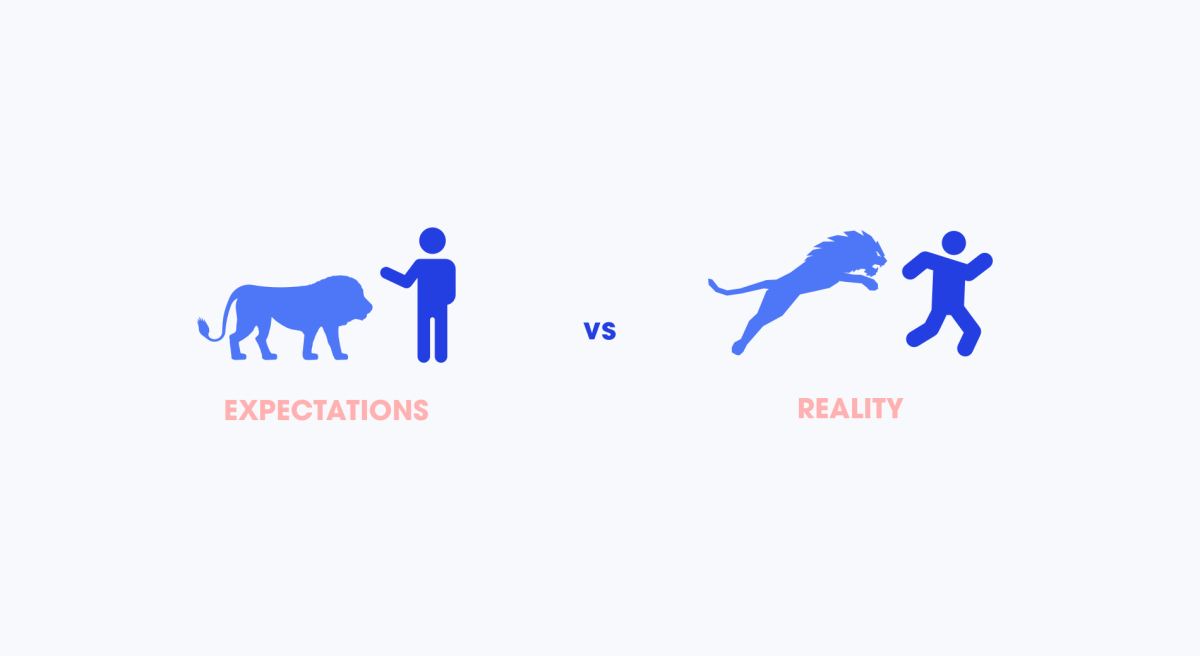
Expectations vs. Reality

An important part of maturing and becoming a fully functional adult is to keep your expectations in check and to manage them as to not conflict with what the reality of the situation is. Keeping your expectations in check is difficult to do but it is necessary in order to not let an oversized ego, or arrogance, or selfishness keep you from becoming the person you should be. One has to always be prepared for reality to not line up with our initial expectations. You can never really be fully certain of how things in life are going to shape up to be. A true sign of maturity is wishing for the best but understanding that you could be in for disappointment and setbacks even when you think that everything can turn out fine.

The word ‘expectations’ can be synonymous with being ‘unrealistic’ because you are hoping for things to be better than average and to be better than you hoped they could be. Often times, things are about the same as you would expect or can even be worse if you set your expectations too high. Keeping your expectations in check will also to help keep both your emotions and feelings in check as well. There are a number of things one can do in order to measure expectations enough to keep them in line with reality. They include focusing on the present, cultivating patience, and taking the good with the bad. These three keys alone will help anybody’s reality win out over their expectations. While having expectations is not necessarily a bad thing, having too many expectations that are unrealistic or impede your ongoing hard work and efforts will make the reality of that situation worse. Keeping your expectations realistic is something we all must do as adults.

Focusing on the Present: Controlling what we can and not worrying about the things outside of our control goes a long way towards keeping our reality in line with what our expectations should be. Doting too much on the future without having a plan for today is a recipe for disaster in terms of not being able to meet your expectations. It is good to set goals and to set your sights high, but the efforts and the work must be there as well. If you are not working on your goals in the present, you can expect your reality to look differently in the future if you were not actively working towards achieving them in the here and now.

Day-to-day expectations that are measurable and quantifiable are more easily met rather than those that are months or even years away. You cannot be worried or distracted about what could happen three months from now, but you should rather focus on what you are doing now to increase your happiness and satisfaction. You can only control your actions and your behaviors, which will save you a lot of angst and anxiety when you focus on what can be controlled and to focus less on what is out of your control especially for what is still away on the horizon of your life for which you are totally unsure of what is to come. The older I get, the more I realize it is good to plan for the long-term, but to expect things to change the further away from your current present reality are. Focusing on things on a day-to-day basis is part of a recipe for fulfilled expectations and kept promises.

Cultivating Patience and Perspective: Being able to understand that life has both its good and bad events, and you never know how things are really going to shake out is a true sign of keeping your expectations in check. We tend to think a new city, a new job, a new house, more money will fulfill us but sometimes, our expectations can fall short because we set them so high. We sometimes do the opposite in terms of cooking a meal for family members, volunteering at a homeless shelter, cleaning the house, or buying a gym membership in that we think it will not be as fun or fulfilling in reality but those kind of activities end up fulfilling us more than the former. Obviously, we set our expectations high or low based on our personal histories, personal biases, and our own desires and goals.

However, regardless of what we think will be awesome or what we think will be crummy can balance out more if we are able to cultivate patience regarding how any of our life events will shape out. You may not be satisfied with something on day one but then really love it by day 100. When it comes to expectations vs. reality, you have to show patience regarding both because what you expect to be good can end up being bad and what you expect to be bad can really end up being good.

Having perspective on what is going on with our lives can help us as well because our reality may not be what we expect but we can express gratitude for what good things we have to balance out what disappointments or ills that have befallen us previously. If you can count your personal blessings each day, you will be happier with your reality and you can better measure your expectations. Knowing that your perspective on life is totally unique compared to everyone else’s is comforting because your reality is going to be different in many ways from your fellow family members, friends, or work colleagues.

What you are going through cannot be adequately compared to other people because their reality and their expectations are never going to be the same. You can only be patient, be grateful, and realize that you should put your life in perspective as much as you can to remember that life has its ups and downs, and you should never get too low or too high because of it. Everyone has their good days and their bad days, and you never really know what people are going through because everyone has a different reality and different expectations of who they are, what they expect, and who they hope to be.

Taking the Good with the Bad: As I mentioned earlier, reality can bite sometimes especially when your expectations were sky high so anything in life is not going to be as rosy as you first imagined it. Even if something awesome happens in your life and you feel like you’re walking on cloud nine, you can be sure that there will be some small annoyances that come with it. Nothing is ever 100% good, and nothing is ever 100% bad. Similar to walking on ‘Cloud Nine’, you could be ‘down in the dumps’, but realize that your pain is temporary, and nothing lasts forever. The highest high and lowest low will pass and most of life is somewhere in the middle for which you make the best of and strive to meet expectations that only you can hold yourself accountable to. You can’t hold others accountable for standards that they can’t reach as much as you want them to for your own peace of mind. The world does not work that way. You have to hold yourself accountable and be that positive example for others.

You are always in a constant battle of Reality vs. Expectations but in this case, there is not going to be a clear winner. Sometimes, life will exceed expectations, other times, life will fall short of your expectations. The key thing to keep in mind is how do you react to both successes and setbacks in a mature and clearheaded way. You can get discouraged or be ecstatic, but you have to remember that life is about having patience, keeping it all in perspective, taking the good with the bad, and always focusing on the present and the here and now over the past and the future. If you can do these things, regardless of when reality wins or when expectations win out, you will be the winner as well because you will have cultivated the emotions, habits, and overall maturity needed to make it through both life’s ups and its downs.

Traditions

Why are traditions important? Why do we continue to pass down certain rituals, celebrations, customs, etc. from generation to generation? This is not a simple question to answer but I’d like to discuss my reasoning as to why traditions are important and why they should stick around in this article. In this day and age, there seems to be a movement against traditions and a counter-movement to think only about the present and what’s to come in the future.

I think that this view on traditions is shortsighted and inconsistent with human nature. While not all traditions are sustainable, useful, conscientious, or inclusive, there are numerous reasons as to why traditions should stick around, and why people should embrace traditions as being apart of how they live their lives. While people love to look forward into the future, it’s important to heed the customs and the ways of the past.

By observing traditions and celebrating them at times, we connect ourselves to past generations and rekindle the flame of days gone by. This is especially pertinent when it comes to the traditions instilled within us by our families and our communities. If we choose not to uphold those traditions instilled in us by past generations of family and friends, then we are doomed to lose traditions and the value that they held in our hearts and in our minds.

Each person must decide how much to incorporate the traditions of the forefathers into their lives and to what degree. However, to completely disavow of those traditions that lift the human spirit and are positive, and rewarding is to disregard one’s ancestry and upbringing in a sense. Not all traditions should make it from one generation to another but if there are traditions that are meaningful to you, and connect you to the past in a good manner, then those traditions should be continued and passed on to the next generation if that is the road you wish to take.

Having a tradition or traditions also helps you to create memories whether its’ with acquaintance, friends, or family. The memories around traditions are likely to be good ones and you’ll look back on them one day thinking about how special it was to celebrate or observe that tradition with the people you most care about in the world. While the tradition may only take an hour, a day, or a week, the memories of it will stay with you for a lifetime.

Also, it’s important to remember that traditions only come around every now and then whether it’s once a year or sometimes less than that so it gives you something to look forward to. Traditions give people a chance to relax, to enjoy, to reflect, and to be at ease in their lives surrounded by people who feel the same way. While the planning and the execution of traditions can be stressful and filled with anxiety, the payoff is worth it in the fact that you’re carrying on what’s been done for years, decades, or centuries beforehand, and that fact is something to really be proud of. Good and worthwhile traditions will likely lead you and others to count down the weeks and days until you can observe, celebrate, and reflect upon the special occasion.

It can be very difficult to get family and friends together under the same roof and near impossible especially if you live in different states or in different countries. Traditions give families an excuse to get together, laugh, talk, eat good food, and enjoy time together. Once your family starts a shared tradition together, it can be hard to let go of it. When traditions are observed, everybody has a role to play so it gives a chance for family members to connect with each other by having a personal stake in making sure that the tradition is observed in the correct manner. The ability to bring families together is a beautiful thing in life and sometimes it is only possible through the observance of a shared tradition. It can be difficult for family members to agree on everything but it’s likely that the thing they’ll all have in common is a desire to keep the tradition going, and make it a successful one.

Having a sense of identity is another reason why traditions are powerful. By connecting people to ideals, values, and beliefs, greater than themselves, your identity can truly feel whole. Being able to belong to a certain group, or a certain place can be quite healthy for most people, and to celebrate a healthy tradition as a group can really help to create a good sense of identity within an individual. It can be easy to lose your sense of identity nowadays, but by tying your identity to a set of values and ideals related to a group or your family through different traditions can help you feel like a whole person.

In a world where the present and the future take precedence, traditions can connect us deeply to those who came before us and to the past itself. Traditions from the past are important to preserve and uphold, and it’s a way to connect generations to each other. For myself, my traditions involve thinking about those who came before me and the sacrifices and struggles they went through in their own lives. Traditions are always passed down from generation to generation so that others and I in my family could celebrate and observe the traditions that are rich in history, religion and culture. If traditions are not followed and maintained in the current generation, then they are doomed to die out before being passed on to the next generation. If you or other family members refuse to pass on traditions to a member of the next generation, they will go extinct one way or another.

Finally, not all traditions are worth keeping or observing. Certain traditions can be harmful and carry a heavy height that people should not be forced to burden themselves with. Not every tradition created by humans is worthwhile, fair, or just. You don’t need to follow traditions if they don’t align with your moral conscience. Traditions can be good or bad, and they reflect upon our human nature.

The beauty of traditions is that you are given the choice, which traditions you would like to uphold to preserve and pass on to other people. If a tradition is aligned with the core values, beliefs that you have as an individual, then you should feel at ease with continuing it into the future. However, you should not seek to force your traditions on other people, and you should not preach about the superiority of your traditions when compared to the traditions of others. When it comes to traditions, use your best judgment and figure out which ones would be best to observe and celebrate with your family and friends.

Our ties to the past whether its’ through our ancestors, our family history, or our understanding of the world as it once was, is tied to our traditions. If you decide to forgo all traditions, then you are doomed to forget the past. Having a connection to the past through our traditions is a powerful thing and being able to celebrate them in a healthy manner should be encouraged. The memories we make with family and friends, the identity we gain from them, and the values and beliefs we pass on to the next generation make traditions a beautiful part of our existence on this planet. Whether its’ sitting down to a yearly Thanksgiving dinner, going to church weekly, or marching in a parade to celebrate your heritage and culture, traditions are apart of both who we are now and who we once were.


You may ask, how did this tradition get started? I’ll tell you…I don’t know, but it’s a tradition!” -Fiddler on the Roof