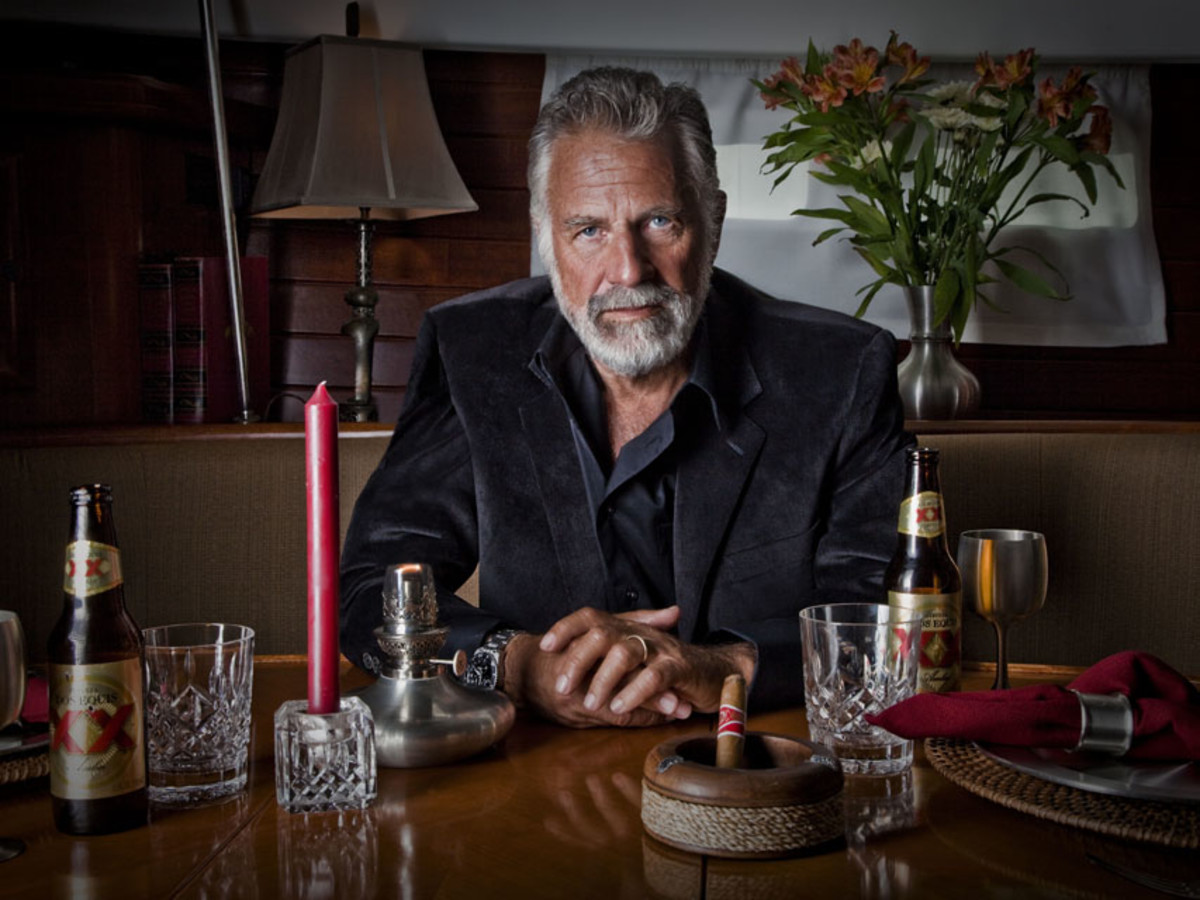
Emulating ‘The Most Interesting Man in The World’

“You don’t have to be the most interesting man or woman in the world, but I think these commercials did do a good job of why it’s necessary in life to embrace curiosity, experience, adventures, and being charismatic.”

I am not a big fan of commercials or advertisements generally, however, if they can be humorous or insightful, such as one kind of commercial that has captivated me for years, on what it is like to be ‘the most interesting man in the world’. I have long had a soft spot for the now defunct ‘Dos Equis’ beer commercials focusing on the character of “The Most Interesting Man in The World.” These commercials were not only humorous but also served as a cheesy yet truthful take in my view regarding how to be a more well-rounded, open-minded, confident, curious, and adventurous person. You don’t have to be the most interesting man or woman in the world, but I think these commercials did do a good job of why it’s necessary in life to embrace curiosity, experience, adventures, and being charismatic.

“The police often question him because they find him interesting.” In many of the ‘Most Interesting Man in The World’ commercials, you see the character actor, Jonathan Goldsmith engaged in various activities such as climbing Mount Everest, arm-wrestling a military general, or flying a plane. The character thrives on experiencing life and all it has to offer despite the risk(s) and danger(s) involved.

Whether its fencing, sea diving, or rescuing a lion, he thrives on novelty and making the most out of what life is all about. I don’t see anything wrong with you incorporating this kind of mindset such as seeking out new hobbies or interests, traveling to unique places, and learning new things to make life more exciting and fulfilling. You don’t need to be the most interesting man or woman in the world to do that, but you do need to take action to make that happen.

“He has inside jokes with complete strangers.” Having charisma, being appealing to other people, and showing confidence in your actions will carry you far in life. What ‘The Most Interesting Man in The World’ commercials show us is that it does help to be charismatic, confident, and able to handle social situations with ease. This kind of character takes time to develop and won’t come easily, but like ‘the most interesting man’, it can pay off for you when you invest in your social life and take time to get better at building those social skills. The character in the commercial is not doing these activities alone and he is not at the bar or restaurant alone. He is self-assured, confident, telling a story, and being humorous to enhance his relationships. You should work on doing the same in terms of having those characteristics in both your personal and professional relationships. You never know when having these kinds of interpersonal skills will come in handy, but I can guarantee it will help you in life in one way or the other.

“He can speak French…in Russian.” The character himself is well versed in those activities and is knowledgeable in many fields such as learning languages, playing sports, or knowing different instruments. These commercials, while funny, do show the viewer the value of being a lifelong learner as it will make you a more well-rounded person. Being able to ride widely on different subjects, picking up new skills over the years, and engaging in a wide array of activities will make you stand out in a good way in terms of forming a holistic personality. If the character can do it, you can make it happen as well though take it one step at a time in terms of becoming a Renaissance person. You may not get there right away with being well-rounded, but years or decades of work will help you get there most often.

“People hang on his every word, even the prepositions.” The most interesting man in the world doesn’t boast and talk at length without being prompted first to share his adventures and experiences. He is intriguing because he is mysterious and saves his best stories for those, he wants to share them with. Even in these commercials, the actor has a real presence about him, partly because of his age but also because of his body language. You do not need to overshare with the average person or stranger, but you should intrigue people with your aura and your confidence. You can let someone new know a little bit about you without giving everything away. It takes time to get good at that, but you should save your best stories for your most intimate friendships or relationships. You should divulge a little bit about yourself at a time while maintaining some mystery for those people who really care to get to know you better.

“His blood smells like cologne.” When you dress well like the character does, when you have strong composure and when you carry yourself with both dignity and respect, people will treat you better and take you seriously. Remember to boost your confidence this way by paying more attention to how you present yourself, how you speak, and how you think you’re being perceived. You don’t need to be a fashion icon but like ‘the most interesting man in the world’, you have it in your power to dress well, have more refined taste, and present yourself as best as possible. Having good body language, dressing well, and being confident may not make you the ‘most interesting person’ but it will make you much more appealing and intriguing to know more about.

“Presidents take notes when he speaks.” Everything about these commercials suggest that ‘The Most Interesting Man in The World’ has a legacy worth remembering and that his persona lives on long after he’s gone. The idea of having a legacy, contributing to something bigger than yourself, and being part of a greater mission are all themes from these commercials. Being remembered well, pursuing meaningful work, helping others who are less fortunate, and making bold choices should never be shied away from. You don’t have to be a fictional commercial character to do all these things.

The overall message behind this part of the character is something that we all can relate to in our lives. We want to have a positive impact in the world and leave something good behind whether that’s a family, a garden, or a charity. Whatever legacy you intend to have, ‘The Most Interesting Man in The World’ encourages us all to life a life worth remembering and one in which we have a positive and memorable impact on the lives of other people.

At the end of the day, The Most Interesting Man in the World may be a fictional character from a beer commercial, but the essence of his magnetic and charismatic persona offers real life lessons. By embracing curiosity, confidence, and a spirit of adventure, anyone can cultivate a richer and more well-rounded life by following this example.

Whether it’s learning a new skill, traveling to unfamiliar places, or simply carrying yourself with both charisma and composure, you can become more interesting as a result, man or woman. The key to remember here is to stay open to new experiences and never stop growing as a person. You don’t have to be the most interesting person in the world or even the most likable person in the world but by following the character’s example, you just might become the most interesting person in the room and that’s a big deal. Stay curious, stay bold, and of course, stay thirsty, my friends.

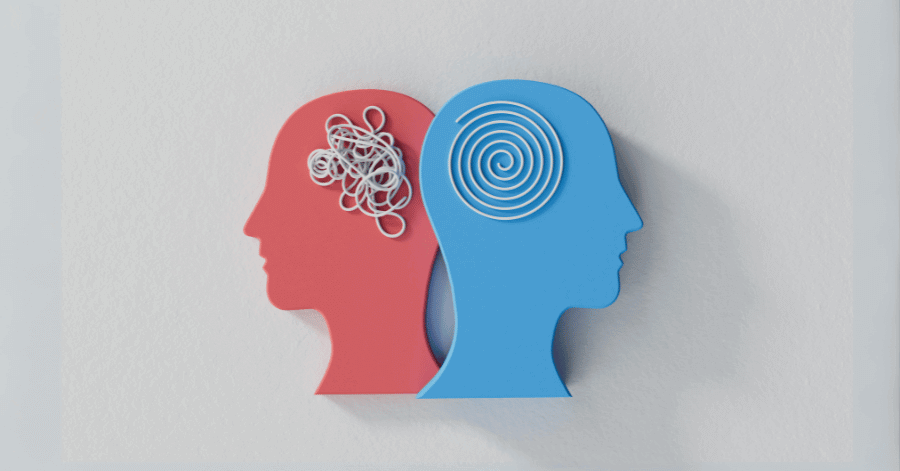
The Importance of Being Reliable and Responsive to People

“It is important to be both reliable and responsive to the people you care about and even to those you’re just getting to know if you can do so.”

How many times have you sent a text or an email to someone thinking it was useful, humorous, thoughtful, or even just to reach out for it to have been received but not replied to? Chances are good it’s happened at least once if not multiple times to the people reading this article. It is one of the inevitabilities in life that not every text, call, or email will receive the attention it deserves and that’s alright as not everyone has the time or the urge to respond. However, when it’s a friend, family member, or a colleague, who you trust or respect or have some kind of relationship with, then it can be a real problem when your outreach goes ignored.

It is important to be both reliable and responsive to the people you care about and even to those you’re just getting to know if you can do so. Nobody’s perfect but you can really stand out nowadays in a good way when you’re willing to make the effort to respond to someone, to be relied upon and follow through, and to hold yourself accountable. These are qualities in a person that will always make you stand out in a good way because in our attention-deficit addled society, these kinds of traits are becoming less and less common.

Things happen in life such as emergencies, setbacks, and sometimes we just need a break from being plugged in to what’s going on with everyone else. It’s okay to take time off from reaching out if you want to focus on yourself for a while. If people try to reach out still, let them know though that you need some time away from the phone or the computer and if they really need you, indicate that it should only be for an emergency or an urgent matter. I don’t mind when people are unreachable but if there’s a lack of communication about why or for what purpose, it can cause some resentment and the fraying of the relationship or friendship in the long-term.

Nowadays, you can silent your notifications, put your away message up for colleagues to be aware of, or just simply turn your social media channels or phone off for a little while. You can be unresponsive and still be a responsible person in my view. What causes concern in my view is when you refuse to answer me when you read my message and wouldn’t give me any reason or indication of what’s going on. There’s a lot of talk about ‘Ghosting’ people today and I believe we are all guilty of ‘ghosting’ on each other at one time or another, but if it’s a recurring pattern, you really should think twice in how you act towards other people, especially if they value your feedback, opinion, or just want to see how you are.

Whether at work or at home or in ‘third spaces’ with friends or someone you’ve just met, remember to be responsive within reason because it’s about common courtesy not only regarding your time and effort but also of theirs for having reached out to you in the first place. It’s something we overlook but when someone is reaching out to you, they are first thinking about you and spending some time out of the millions of other things they could be thinking about to focus on you as an individual to some degree. It does not mean you need to spend a lot of your time but if you have the availability, it doesn’t hurt to give a simple response or at least let them know where they stand with you, whatever kind of relationship you may have with that person.

Whether it’s a co-worker sending you a message on Microsoft Teams asking for advice on a presentation, an elderly family member asking you to do them a favor regarding a health question, or a friend inviting you to their wedding or their birthday party, you do have a responsibility to be responsive. These situations I posed may not be urgent, but they are important, and to ‘ghost’ them is neither mature nor responsible. You have a duty not only to yourself in how you act but how you carry yourself with others.

At the end of your life, how do you want people to remember you? That’s part of why being reliable and responsive takes on such importance especially as you get older. People will remember in any kind of relationship that you have or had with them how you treated them, if you responded to them, and how much you invested into the relationship, whatever it may have been. Make sure to remember this kind of legacy that you’re building each time you answer that e-mail, respond to that voicemail, or send that text message out. The irony of our technological age is that we are connected by our devices but are as disconnected as ever regarding reaching out, making plans, and being reliable in how we present ourselves.

You can set the tone by being a reliable person who’s available and is reliable whether at work, at school, or at home. Be the person who can be trusted, who gets things done, and is able to follow through when you make a commitment to someone else. Sadly, being both reliable and responsive to other people is becoming rarer and rarer in my view. I believe you can have a lot of professional success and personal happiness if you are able to respond to others in a timely manner and be counted on when they need you.

Hopefully, they will remember you for what you did, how you acted, and how well you treated them. They won’t forget it and ideally, they will follow your lead by picking up those kinds of traits in response. Being someone who is reliable and responsive can have that positive effect on how others behave as well creating a good kind of ‘domino effect’ and improving people’s behavior in a family, in an office, or in a group. You do not have to be available 24 / 7 and nobody is expecting you to be doing so but it’s important to be willing to respond, to follow up, to check in, and to be present with other people whomever they may be and whatever kind of relationship you may have with them.

The Virtue of Showing Emotional Restraint

“It’s important to explore the concept of having emotional restraint when facing criticism, the benefits of not escalating the situation to make it worse than it needs to be, and how it demonstrates maturity and grace when you can show restraint in the face of judgment or criticism, whether deserved or not.”

In both professional and personal settings, criticism is an inevitable part of life. Whether it comes from a colleague, a friend, or a family member, criticism can be challenging to navigate but important to embrace if it is justifiable. However, it can be especially difficult when the criticism is unwarranted or unjustified. Therefore, it is crucial to show emotional restraint in these situations, even when it feels difficult, rude, or unfair.

It’s important to explore the concept of having emotional restraint when facing criticism, the benefits of not escalating the situation to make it worse than it needs to be, and how it demonstrates maturity and grace when you can show restraint in the face of judgment or criticism, whether deserved or not.

Emotional restraint is known as the ability to control one’s emotions, particularly in challenging situations. When faced with criticism of something you did or something you said, it is natural to feel a range of emotions, including anger, frustration, and sadness. However, acting on these emotions and turning it back on the person(s) doing the criticism of yourself can often lead to negative outcomes. For example, responding to criticism with anger or defensiveness can escalate the situation and damage relationships, sometimes permanently. It can also lead to regrettable actions or words that cannot be taken back without regret or remorse.

On the other hand, showing emotional restraint allows individuals to respond to criticism in a calm, cool, and collected manner. This kind of attitude change can lead to more productive conversations and resolutions to problems that can arise. It also demonstrates emotional maturity and self-control, which are valuable traits in both personal and professional settings that will serve you well in life.

Emotional restraint is crucial in various everyday situations, as it helps maintain composure and fosters healthy relationships with other people. Here are a few examples where having good restraint in everyday situations can come in handy:

  1. Workplace Criticism: When receiving feedback or criticism from a colleague or a supervisor, it’s essential to remain calm and composed and to not react. Reacting impulsively or defensively can escalate the situation and damage your professional relationships. Instead, by showing emotional restraint, it allows for a more constructive dialogue and a better understanding of the feedback that you are getting, whether you feel it’s warranted or not.
  2. Family Disagreements: In family settings, disagreements are common, but reacting emotionally can lead to unnecessary conflict and trauma. By showing emotional restraint, individuals can avoid saying hurtful or insulting things they may regret later and work instead towards a resolution calmly and rationally that will maintain the relationship rather than rupture it.
  3. Social Media Interactions: Online interactions can often lead to heated debates or arguments especially since they are being done behind a screen and not face to face with that person or a group of people. Instead of engaging in a war of words that can seemingly go on forever and escalate to be rude, nasty, or involve insults, you should be exercising emotional restraint, which can help maintain a respectful discourse and prevent the situation from escalating to bullying or harassment.
  4. Customer Service Interactions: Dealing with difficult customers or clients in your work or volunteering often requires having emotional restraint. Remaining calm, kind, and empathetic can help resolve issues more effectively and maintain a positive reputation for the business or company that you’re working or volunteering for.
  5. Traffic Incidents: Road rage is a common issue in our society, but showing restraint can prevent dangerous or deadly situations. Taking a deep breath, maintaining your focus on what you can control on the road, and staying calm and relaxed can help avoid confrontations and maintain safety on the road and help save yourself from an accident or a crash. You never know who you’re dealing with the other car or truck or bus so it’s best to not yell, engage them further, or leave the vehicle at any time to escalate such a dicey situation when it comes to ‘road rage.’

In any of these types of situations, having emotional restraint allows you to handle conflicts and criticism more effectively, fostering healthier relationships, and promoting a more peaceful environment. When faced with receiving criticism which will happen both professionally and personally, it can be tempting to respond in kind or to escalate the situation with the other party. However, this rarely leads to a positive outcome and can make the situation worse. Instead, it often leads to a cycle of negativity and conflict. By showing emotional restraint and not responding in kind to get into an argument or worse, individuals can break this difficult cycle of bad behavior and create a more positive environment.

Not escalating the situation also allows individuals to maintain their dignity and self-respect. It shows that they are confident in themselves and their abilities, and that they do not need to resort to negative behavior to defend themselves from criticism, whether it is justified or not from the other party. This kind of attitude can earn them respect from others including co-workers, romantic partners, or friends, and help to build and maintain stronger relationships when you show positive characteristics in your behavior by not reacting in a negative way.

Emotional restraint is both a sign of emotional maturity and grace. It shows that the person in question can control their emotions and can respond to criticism in a thoughtful and measured way to learn from their mistakes or to just take it in stride by not losing control of their emotions. This can be especially challenging when the criticism is unwarranted or unjustified. However, by showing emotional restraint, individuals can rise above the situation and demonstrate their maturity and grace in their dealings with other people.

Emotional restraint also shows that someone can put the needs of the relationship above their own ego. It shows that they are willing to listen to others’ feedback and consider the other person’s perspective, even if they disagree with it or won’t change because of it. This can lead to more open and honest communication, and ultimately, stronger friendships and relationships.

Overall, it is necessary these days to have emotional restraint as it is a valuable skill that can help individuals navigate criticism in both professional and personal settings. By showing emotional restraint, individuals can respond to criticism in a calm, cool, and collected manner, and avoid escalating the situation further. This kind of behavior from mature adults can lead to more productive conversations, problem solving, and better resolutions, and ultimately, a healthier and happier life by having this kind of outlook on managing your emotions well.

Emotional restraint demonstrates the need for having both maturity and grace and shows that someone should be able to put the needs of the relationship above their own ego or beliefs. Having the capacity for emotional restraint is an important life skill that can help individuals navigate criticism with both dignity and decency.  

Our Many Faces

“We try to find those people or at least one person who we can share ourselves with and how to open up our ‘little weird worlds’ to them without being judged or criticized or made fun of.”

There is a touching scene in one of my favorite movies, ‘Good Will Hunting’, which focuses on Sean (played by Robin Williams), a former prodigious mathematician turned psychologist, who is mentoring Will Hunting (played by Matt Damon) but also providing guidance to a young man going through a tough time. Will is gifted but also has suffered physical abuse and mental trauma having lived with different foster families who did not treat him well. Sean notices Will not really sharing who he is fully and that is not just the case with Sean at first in their sessions but also with Will’s new girlfriend, Skylar.

Will is afraid to let his guard down and shows there are different levels or facets to he is but given his personal history, is afraid to let others into his world because he is worried that he’ll be hurt or abandoned again like his foster parents did to him. Sean tries to get through to Will on multiple occasions and so does Jerry, Sean’s old friend, who believes Will has great mathematical talent but is unwilling to work with him on his personal issues, which came to a forefront when Will got into a street fight with his friends and ended up assaulting a police officer.

In order to get Will to open up to him more, Sean attempts to tell Will why it is so important to show our true self or as I would like to call it here, our true face when we can because deep down that’s who we really are and it’s special to let someone in when we are vulnerable to get to know our full personality and who we are as individuals. Sean, in his personal anecdote, relays the story of how his dearly departed wife would fart when she was nervous and that only he as her husband would know that about her. Sean would sometimes hide the truth from her by saying it was him who farted even when it was so loud that it would wake the dog up when they were all sleeping in bed together.

“It’s the little things like that, that I miss the most.” Sean doesn’t reminisce primarily about their wedding, how they met perhaps, or about what they would do together on a date night. He would think about the things that made her his wife that no other person would know. In other words, Sean would see his wife’s true face or self because of how intimate of a relationship they had as husband and wife. Those little ‘idiosyncrasies or tics or habits that Sean knew about his wife is what made it such a special relationship even when she had passed away. Sean was encouraging Will to open up more to Skylar because it’s no use going through life without showing somebody you love your true self or face, which you likely hide from other people.

Will has friends, has his Mathematician mentor, Jerry, and his psychologist turned confidant, Sean, but these are different faces he presents to all of them, and the one true face Sean is encouraging him to show is with his girlfriend, Skylar. While Will can drink, talk construction, and reminisce with his buddies, he can’t show him his whole personality or face. In addition, Will can solve complicated Math problems and challenge himself intellectually with Jerry, he can’t do that with his friends. While Sean is a friend to Will and they can talk about sports and relationships and life, Will has a hard time confiding in Sean about his past and what he wants from himself.

I think all of us can relate to a movie like Good Will Hunting and a Character like Will Hunting. We try to find those people or at least one person who we can share ourselves with and how to open up our ‘little weird worlds’ to them without being judged or criticized or made fun of. It’s why we show different faces to our loved ones and our friends than we would with our work colleagues or a stranger. It’s hard to open up but we must do our best to be vulnerable with those we trust and whose relationship matters to us most. We can go days, weeks, months, or even longer without connecting with someone on a deep level, which is why it becomes even more special when we can share our peculiarities, our oddities, or the ‘good stuff’ as Sean would call it with someone we truly love and care about.

Similar to the character of Will Hunting, each of us can be hardened by life and find it difficult especially as we age to be vulnerable, to let people in to see the real ‘you’ without holding back, and to be accepted for it. A lot of times, we may be pretending with our other faces to please our boss, to support a colleague, to crack jokes with a friend, and even help a stranger out. It’s good to have those faces in public but it’s who we are in private with someone we care about or love that is our true face.

Thinking of the expression, ‘to put on a good face’, we often must withhold part of who we are at school, at an office, or at the local restaurant or bar, to hold back from showing 100% of what makes ‘you’ you. It’s not easy as Will and Sean illustrate in scenes from ‘Good Will Hunting’ how to show your real face and real personality to someone fully, especially if you have been burned before in the past and been hurt physically or mentally as a result.

We strive to be perfect and to not make mistakes in our daily dealings with others in both professional and personal interactions. However, it can be easy to forget in our lives to not be afraid to let our true face or our true self shine through as we each have our own flaws and our own ‘peccadillos’ that we set us apart from one another. The key challenge or opportunity in life, depending on how you look at it, is finding someone that we can be truly open and vulnerable with without putting on a different face.

Being able to let your guard down, share yourself fully with another person without fear, doubt, or anxiety, that can lead to some of the deepest joy or happiness in life as Sean had explained to Will in the film. While we may not be able to fully express ourselves day in and day out to most people we meet or interact with, hopefully, we can find the right person to spend as much time with as possible and for whom we can be 100% of who we are and what we are deep down inside.

A Most Difficult Year

“The first year I can remember in my lifetime where expectations are dashed, lives are thrown off course, and uncertainty is the norm rather than the exception is 2020.”

When you begin a new year, you expect the most out of it in terms of happiness, health, and opportunities. You hope for the best and pray to avoid the worst. However, there are going to be years that don’t live up to expectations and if anything, topple over any kind of expectations you had to begin on January 1st. The first year I can remember in my lifetime where expectations are dashed, lives are thrown off course, and uncertainty is the norm rather than the exception is 2020.

For the vast majority of people, 2020 has been a year to forget and to put behind us. Still though, there is a lot that we can and should learn from this year to make the next one a more forgiving and hopeful year. 2020 was a most difficult year and one long, seemingly almost never-ending ‘Black Mirror’ episode but I take solace in the fact that those of us who made it through this year are more resilient, better able to deal with uncertainty, and able to be happy with less instead of more.

We will always remember 2020 and while I am looking forward to putting it behind me, there are certain lessons to be drawn from a year like this one to ensure we never have a year as uniquely horrible as this one if only we start to change our behaviors and our actions collectively as a society. Beyond climate change, racial injustice, rampant inequalities, and a raging pandemic, there is also the sense that we are failing each other not just in terms of our institutions but also in terms of our commitment towards one another. Revitalizing faith, trust, and kindness as fundamental tenets of our society will be an important benchmark in seeing how much we have learned from the ills of 2020 and how not to repeat these failures in a future crisis of our own making.  

In a time where our institutions are increasingly unable to meet the challenges placed upon them, I hope we will recommit to them additional resources rather than letting them atrophy and decay after the pandemic is over. I think most of us have learned how necessary it is to have functioning and responsive institutions in a crisis and how much we can be hurt by not having them be available to us especially when time is of the essence. Institutions will only work as much as we allow them to so it’s up to us collectively to believe in them, to fund them properly, and to have leaders who will tell us the truth, understand our needs, and be able to respond effectively. When our institutions fail us, we are all put in the precarious position of relying heavily on our friends and our families, which is sometimes a luxury that not everyone has available to them.

Our personal connections cannot help us though when it comes to securing masks, getting us tests, or giving us financial relief when we have no other option. A pandemic shows us how vital it is to have both local and national institutions in place who can help and are there to help rather than leaving every man or woman for him or herself causing us to act more selfish or more distrustful of others. Pandemics can bring the best out of people and they can bring the worst out of people. It is my belief that this pandemic has shown us how much our institutions have become dysfunctional, how our leaders have been corrupted, and how our society has become way too individualistic especially in a time where cooperation and unity are so desperately needed.

Individuals have been heroic for all of us whether its health care workers, grocery store clerks, delivery people, teachers, first responders, etc. who have shown more care and urgency than many larger institutions who have taken months to actually do anything substantive to help people. They are doing their job well under extremely difficult circumstances and hopefully after this year, we will reward them more not just with our thanks but also with better treatment in terms of financial payment, respect, and providing them with more resources when they need them.

Those people on the frontlines like the rest of us have had to become much more resilient in the face of such difficult circumstances. As I have mentioned before in previous articles, Resiliency is one of the most important traits you can have in a year that has been so difficult. The ability to overcome challenges, break down barriers, and surpass obstacles has been so important in 2020 where our resiliency has been tested each and every day practically. Some have had to be more resilient than others, but we have all had to play our part in keeping each other healthy and safe.

Resiliency is also about keeping your spirits up, not letting yourself get too down, and reminding yourself that tough times don’t last forever but tough people do. If you thought you were going to make it through your entire life without facing a challenging or historic year, you would be mistaken. Whether it’s the Great Depression, World War II, or the tumultuous upheavals brought on by the 1960s or the end of the Cold War, each generation is inevitably going to face moments where their resiliency is tested, where comfort is hard to find, and where good days may be hard to come by.

However, if we can get through the hard years in our life like 2020, there’s not much you cannot overcome if you are able to maintain your resiliency. 2020 teaches us that life can go sideways, and that uncertainty is more part of the human conditions than we would like to admit. While we strive for some sense of predictability or comfort in our lives, we inherently know that is just not possible and that we are never guaranteed tomorrow. I hope 2020 also teaches us not to take anything for granted especially our health or our financial security.

Inevitably, we must always plan for uncertainty because it may be coming to us when we least expect it as it did in the early months of 2020. Whether it’s trying to save more money, keeping ourselves that much more physically fit, or keeping some extra food around the house in case of an emergency, I hope that we will plan for uncertainty to come our way again because you never know when it can rear its ugly head again.

Learning how to be more resilient and also knowing how to face uncertainty have been keys to overcoming 2020 but it’s also been about how to be more kind to others. You never know what someone else is going through, how they have been affected by the pandemic, and what they are risking by coming in to work every day when they can’t stay home. If you can’t be kind, then you shouldn’t say anything to anyone. Now, more than ever, it’s important to be kind to one another, to look out for your fellow man, to donate money if you are able to, and even if you’re feeling particularly generous, donate your time and effort to a food bank or a homeless shelter to help those most in need right now.

Also, be sure to check in on those people most close to you whether it’s a close friend, a family member, or someone who you are close to at your workplace or school. Now is the time to make sure everyone is doing as well as can be, that they are not isolated without hearing your voice or seeing your face virtually indefinitely. It is very hard to spend the holidays alone so now is the best time before a new year begins to check in on those people who matter to you the most. Lastly, do not forget to support your local businesses during these hard times whether it’s the mom-and-pop store down the street or your favorite restaurant since they could all use the business right now and it’s the right thing to do to support the economy.

Kindness is going to be even more important in the coming year than ever. Between economic troubles, a continuing pandemic, and political strife, it’s best to be kind always and to empathize with what other people are going through even if they are complete strangers. Give help to those you need and fight for those with less. Make sure you continue to hold people accountable for their actions whether it’s your neighbor next door or the mayor of your town or city. Only by strengthening the bonds of trust through kindness, honesty, and transparency can we begin to heal the divisions and disparities within our society.

The pandemic and other events in 2020 have shown us how important it is to work together, to look for one another, to do unto others as we would have them do unto us, and to deal with uncertainty and stay resilient as much as possible. I hope things get better for all of us in 2021 and I want to encourage everyone to follow the public health guidelines throughout next year.

Keep wearing a mask, stay socially distant, wash your hands frequently, take care of yourself physically with enough exercise and healthy eating. Make your New Year’s resolutions too if you believe in them so as to strive for new goals and opportunities in 2021. Be kind to others again, stay positive, and don’t let adversity throw you into despair.

I wish all of my readers a very Happy New Year and for a healthy, prosperous, and safe 2021 to come to each and every one of us.

The Value of Self-Awareness

“Having self-awareness shows that you also have the right personal values that will make it easier for you to get ahead in life in terms of your character.”

Self-awareness is a key character trait that will improve your relationships with others and also improve your relationship with yourself. Having self-awareness shows that you also have the right personal values that will make it easier for you to get ahead in life in terms of your character. Achieving self-awareness takes a number of traits to embody such as showing wisdom by working to understand yourself and your own actions. You have to understand how your actions affect others, both positively and negatively, and to also take responsibility for those actions in both cases.

Beyond wisdom, you have to be honest about what you are capable of and what you need help with including your abilities at work or at school. You want to be able to keep your ego in check and to know your own limits but to be able to work on pushing those limits. This is also a key part of having self-awareness. There are key differences between being confident and being cocky and a self-aware person knows the differences between the two traits. You should show confidence but know how that confidence is coming across to others and to be open to receive feedback even when it can be critical at times.

A confident person knows their strengths but also knows their weaknesses and will make those traits aware so that others know what you can do and what you cannot do. Being aware of those strengths and weaknesses will make you humbler and more open to learn from others. Admitting to others that you have weaknesses and that you have strengths openly will garner respect and help from people who will know that you are not perfect and that you always have things to work on to be better and to do better.

Humility and self-awareness go hand in hand too. Being self-aware means owning up to your failures and shortcomings and not blaming others for them. Taking responsibility for yourself and your actions is a key part of being self-aware. You applaud and recognize other people and do not take all of the credit yourself, which is what happens most often in life that you cannot take sole credit for an accomplishment, but with which is achieved through the mentorship and support of others. Showing humility and being humble are key parts of being self-aware and having that personality trait be made known to others through your actions and your words.

A self-aware person can exercise wisdom, be honest, show confidence without being cocky, and displaying humble actions and words to get others to support you and be a friend to you. Arrogance, dismissiveness, immaturity, and dishonesty all show a lack of self-awareness and I would argue that not being straightforward and direct with people will often hurt you in the long run because they will not know where you stand. Being able to self-reflect and look inward to what you did and why you did it will help you to become more self-aware in retrospect even if you do not practice self-awareness in the moment. Ideally, you would like to be self-aware at all times but if you are not self-aware at the present moment, at the least, you should try to be self-aware about the past for better or for worse.

Self-awareness and self-reflection go hand in hand so you must be able to so some self-reflection in order to be fully self-aware. Actions speak louder than words, so you need to make sure that the actions you take offer some space for some self-reflection afterwards. It’s critical that you know how to practice self-awareness in your actions, and I would like to give a few examples below.

Self-awareness in practice means also knowing how to apologize and being aware of your actions when they have caused harm or anguish. If you do not say ‘sorry’ or give an apology, it means you have a lack of self-awareness and other people may not want to be around you knowing that you do not take accountability for your actions. On the other hand, you do not want to react with anger or other strong emotions in order to get what you want. Remaining calm, cool, and collected is much needed as well when dealing with others. You should not ever be insulting them when they give you some feedback that you may not want to hear but it’s in your best interest to take it into consideration.

As mentioned earlier, you should not pretend to be a know-it-all and you should be self-aware to know the limits of your knowledge as well as your skillset. In life, you should not be afraid to reach out to others for advice, counsel, mentorship, or for them to teach you things whether that is a new language, a job skill, or a sport. You will never be the expert on everything, and it is not wise to pretend you know everything as that will cause other people to see that you are arrogant and too egotistical.

Being honest and direct with others should be done politely and tactfully. It is better for others to know where you stand than for them to be guessing where your head and heart are at a lot of the time. The feedback that you give should be genuine and the feedback that you receive from others should be taken into consideration even if you don’t agree with it. Being defensive, attacking the person who criticized you, or getting too emotional about it will look bad in the eyes of others and hurt your ability to work with other people.

A self-aware person knows where and when they need help, how they can become a better person, or always striving to be as empathetic as possible. You should want to put others in your shoes and vice versa to be emotionally in tune with other people (related to having a high level of emotional intelligence). Above all else, you want to stay true to yourself, to your family and friends, as well as knowing what your core values and principles are in life. You should always put yourself on the path to succeed while not stepping over anyone to get there.

Being self-aware will make you an emotionally healthier person, allow you to form healthier relationships, and also be able to form better friendships at work, at school, or elsewhere. You want to value other people and not ignore how they feel but to recognize their emotions and understand where they are coming from without dismissing their views outright. Self-awareness is not an innate trait in the sense that we all have it equally. It has to be worked on, fostered, and built up over our lives.

You need to be consistently aware of your behavior, your emotions, and how they play off on other people. It comes down to having respect for others, being humble in your demeanor and your abilities, and also knowing how to behave responsibly and without letting your emotions control how you act all the time without regulating them. Self-awareness is a really important personal trait and has so much value that you must be willing to work on it day-in and day-out to become a better human being.

Get Your Own House In Order

“Before you can set an example to others in your house, or others in your community, or others in an overall society, you first need to show that you can ‘get your own house in order.’ You need to be able to handle yourself and your own day-to-day problems first before you can lead others to do the same in their own lives.”

There’s an old adage I have been thinking about lately about how it is primarily important to take care of oneself first and not just in one way but in every part of your life. Before you can set an example to others in your house, or others in your community, or others in an overall society, you first need to show that you can ‘get your own house in order.’ You need to be able to handle yourself and your own day-to-day problems first before you can lead others to do the same in their own lives.

It can be hard for other people to take you seriously when you don’t take yourself seriously in the first place. How will you be able to lead a team or an organization or a company if you are not able to master your own tasks and your own desires? Self-development isn’t just about making sure you are able to create a good life for yourself but it’s also about setting a positive example for others who would look up to you as a result. You cannot be a mentor or a role model for others without first putting yourself out there and doing what needs to be done to make yourself successful.

When you have not struggled, when have not persevered, when you have not done what it takes to reach your goals, how can you give advice to other people on what they should do to have the same kind of success? “Getting your own house in order” means taking care of yourself first and doing so consistently before you can use those same pieces of advice and examples for others to follow. Firstly, your own house in order starts with your mental and physical health.

Your body is your own house so it must be taken care of first and foremost in terms of getting good sleep, eating properly, not indulging in vices like alcohol or tobacco to excess, and knowing how to exercise as well to keep yourself in shape. It also extends to being able to relax, de-stress, handle anxiety, and be mentally sharp by challenging yourself but also relaxing your mind so as to not exhaust it entirely. Your body and your mind are their own little houses and they must be maintained thoroughly so that other people will know that you are capable enough to handle other demands in life.

Another house we don’t think of is appearance and grooming. Your own house in this case means maintaining a good appearance and practicing good hygiene. These practices are necessary also on a daily basis and to show to the world that you care about yourself and want to be taken seriously. For a job, an internship, a presentation, a seminar, a lecture, etc., your personal dress should indicate that you are a serious person for the role or for the opportunity and that others will know that they can respect your house because you respect it yourself. They will not respect your house when you show up to an interview in shorts or when you wear Yoga pants to a college lecture. Physical appearance and grooming are another ‘house’ that we all must take seriously and to do so primarily before we can give advice to others on how to maintain their own ‘houses’ in good order.

Lastly, the last ‘house’ on a personal level that I would like to focus on is where you live regardless if it is a small studio apartment or a huge mansion. Maintaining your own physical shape in the world is crucial if you want to tackle bigger and better problems. If you can’t make your bed, clean your bathroom, or keep your kitchen clean, how can you tackle any major issue in your community or in your society? At the end of the day, this kind of ‘house’ maintenance comes down to self-respect and putting your own ego aside to do the work that we all must do.

The chances are good that at the end of the work to maintain this ‘house’ that you will feel a lot better for having done the work needed to keep up a clean and orderly home. It is not easy to do this consistently but it is necessary and if you plan on having guests over, having friends over for a get-together, or want to be romantically involved with someone, a clean ‘house’ will go a long way to making you respectable and responsible in the eyes of others. Being able to maintain care not just of yourself but your own physical space means that people will know that they can trust you with other tasks and matters of importance that extend beyond your ‘house’ and to the ‘houses’ of others in the community and in the society.

Thinking about a community as a whole, their ‘houses’ include making sure that the schools are meeting the needs of the students, that the community is safe and protected for all of its residents, that the roads and bridges are maintained and do not have potholes or faulty beams, and to make sure that each and every person has access to utilities including water, electricity, and yes, an Internet connection too. If a community does not have those necessities for a high quality of life, then that ‘house’ is not in order and those people who have their own ‘houses’ in order need to step up to do their part to help others get the community in good shape.

If you have your own ‘house’ in order, you can set the standard for the rest of the community and be able to use your ideas to help others especially if you gain their respect and their trust. With how you act and how you behave in addition to your own appearance, ideas, and personal goals, you can make the community better and it’s important for you to get in there and show that you can make a difference there.

When a community can all of its necessities in order, that one community can definitely have an impact on the larger society within a country and even the world. A community where everyone has equal access to a good education, where health care is not a privilege but a right to all in that society, and when kindness, honesty, and virtue are rewarded rather than chastised. That is an overall society that is getting its own house in order and can serve as an example to other societies in other parts of the world.

Being able to provide a high quality of life and a chance to succeed to all of the people in a society should be the goal of society with its own ‘home’ in order. I am not talking about a social utopia per say but rather an ideal place where people know that they can succeed if given a fair shot in life. It’s also about providing the basic tools of any society to all of its people without discrimination and without corruption. Whether that is no homelessness, enough healthy food for everyone, and an economy where inequality is minimalized, that is what a society should be focusing on and using as an example to other societies.

When a society prioritizes the needs of the few over the many based on wealth or another privilege, that society does not have its own house in order. If there are people out there hungry, homeless, or without health care, then that society is not in order. A society cannot be an example for other societies when it lacks the courage to invest in its most vulnerable populations or to provide a higher quality of life for all people.

Without that kind of an example, a society will lose its influence or example setting and will turn inward and often tear itself apart without good leadership or good values. A society that gets its own house in order prioritizes the right social needs and finds the investments, funding necessary to maintain these necessities of its people will automatically become an example to other societies whether they are near or far. A society that doesn’t does not have a moral ground to stand on and will lose the example it could set by practicing bad ‘house’ manners in different ways.

“Getting Your Own House in Order” does not just apply to one individual but it also applies to a community and a society as a whole. We all are human and fallible and sometimes, we will fall short but if we strive to do better in our homes, in our lives, and in our examples we set for others, that kind of ‘Ripple Effect’ of positive values will improve the larger community and society as a result. How we treat ourselves (mind and body), our homes, our way of life has a direct effect on the community we share, and, on the society,  we find ourselves a part of. This kind of example setting starts at home, but it can ripple throughout to the rest of the world and it all begins with ourselves and our own actions.

The Art of an Apology

“One thing I have noticed recently is that some people have a hard time giving a simple apology when they mess up, are rude to others, or don’t have the emotional intelligence to realize when they were in the wrong about something. Now, this is not a good habit to develop as an adult and one that makes you appear to be childish more so than any other negative trait that you could display.”

One thing I have noticed recently is that some people have a hard time giving a simple apology when they mess up, are rude to others, or don’t have the emotional intelligence to realize when they were in the wrong about something. Now, this is not a good habit to develop as an adult and one that makes you appear to be childish more so than any other negative trait that you could display. Learning how to apologize is done when we are children and our parents tell us to always ‘say sorry’ and to learn to be nice to others.

‘Sorry’ is one of the golden words we learn are key to our day-to-day lives. It doesn’t take much to do and will cost you nothing. The fact that many adults don’t know how to do this today in our society is a worrisome sign of how personal relations have decayed compared to previous times. Some people choose to dance around the offense and not acknowledge it while others refuse to take responsibility for their actions which leads to the person who was offended feeling aggrieved and holding a grudge against that person for longer than they should need to.

The old adage of ‘you forgive but you don’t forget’ is not a pretty one but if there is no apology from that person who committed the offense, the other person may learn to forgive them but they will not forget that there was no apology rendered from the other person. I do not endorse holding a long-lasting grudge against other people but being rude, saying bad things about others, and overall not being a respectful person will cause you to lose many different relationships with others. Most adults do not know want to associate with somebody who refuses to apologize or does not take responsibility for their actions.

I believe that with social media and how often we do not see the other person’s face and their body language that we feel comfortable getting away with rude behavior and it has led to that kind of behavior spilling over into real life interactions. A lack of an apology can be due to a person’s own narcissistic nature and to think that the rules like the ‘golden rule’ don’t apply to them and that they can ever do no wrong including causing harm or offense to other people.

The sign of a true mature adult is one who apologize and does so in a sincere manner. It is a heartfelt apology and is usually more than just a simple ‘sorry’ and then move on. If someone cannot even say ‘sorry’ or realize the hurt that they have caused, then they still have a lot of growing up to do and act more like a child or a teenager in an adult’s body than an adult themselves. The sad thing to see in society is when a 45 year old acts like a 15 year old or when a 75 year old acts like a 5 year old, which is often as the result of them not registering other people’s emotions or feelings, and thinking reflectively about their behavior, their tone of voice, and how their language was inappropriate.

The art of an apology is not as simple as it can be made out to be with just a quick ‘sorry’. Often in life, a simple ‘sorry’ does not cut it. I think it’s better to follow these steps to having a legitimate and heartfelt apology that will make the other person feel better and try to restart the relationship or improve it rather than letting it fester and causing the other person to dwell on your insult.

1. Acknowledge You Were Wrong

The first step for any good apology is to acknowledge to someone face-to-face if you can or over phone or email if you can’t see that person that you were wrong. Whether it was something you said or something you did or that you hurt their feelings, acknowledge the thing that caused the original offense, state how it wasn’t right for you to do that, and apologize in that way beyond a quick ‘sorry’. It’s as direct as “I was wrong to…”, “It was not right for me to…”, “You deserve an apology for…”

2. Remember the Incident and What You Took from It

When you acknowledge what you did and that it was wrong, it makes the other person feel like you remembered that it was not the right thing for them to do and that pain was caused. It also means remembering that certain feelings were hurt and that the other person realizes they could have done things different / not said anything at all / or watched what they have said better. Saying ‘sorry’ or apologizing without saying what the ‘sorry’ is for is not a good way to do an apology because you have to be specific regarding what the apology is for and what you did wrong if you caused offense.

3. Be Sincere and Don’t Rush It

How you say an apology is often more important than what you say in the apology. If you are rushing through it, only saying a one-word apology, and not even looking at the person or acknowledging their presence while saying it, then that is not a real apology. A real apology must be congruent with your body language and your eye contact and your tone of voice all on the same page together. You should give that person your full attention and not be checking your phone, reading your email, or have your attention generally elsewhere while doing the apology.

Also, not rushing it means it’s going to take more than a five second ‘sorry’ and move on, if you follow the previous two steps, a good apology will take as long as it needs to which could be anywhere from a minute to ten minutes depending upon what the other person has to say. Depending on the severity of the negative action, you want to give that person a chance to respond, to accept your apology, and to decide how your relationship with them is going to move forward. You cannot force an apology to move forward without the other person agreeing to it so make sure you are patient, forthcoming, and open to listening to what they have to say to you.

4. Be Open to a Change in the Relationship

Even with an apology, sometimes, that person is going to want to take a break from seeing you, hanging out with you, or being around. It can be hard to bring that relationship back to what it was when harsh words are exchanged or when negative actions happened between two people to cause the strife. You have to understand and accept what the other person does because they may not want to trust you again as much or recognize that you aren’t the person who they thought you were.

This may be a hard pill to swallow but you are likely going to have to spend some time away from that person, let them forgive you on their own timetable, and they will set the terms on if they see you again or not. It is possible they may never fully get over what you did and not want to be around you again at all. This is a harsh truth to face for most people but the least you can do is apologize and try to move on.

If that person chooses to accept your apology but not go out of their way to see you again then that is their right to do so and it is up to them how they want to conduct their interactions with you moving forward. As adults, people want to spend time with those people who treat them well, respect them, and are emotionally mature. If you can’t do that, it’s going to be tough to have friends or to be around other family members.

I write this article because too often today I have seen other adults refuse to apologize for being in the wrong and this can cascade throughout the rest of our society. There is a fundamental lack of accountability and also responsibility that starts with a failure to apologize sincerely. It takes real wisdom and maturity to apologize to someone, but it is necessary since we are all flawed and make mistakes.

A true adult owns up to these mistakes they made, apologizes for them to seek forgiveness, and accepts what the other person does in response without any future expectations on how the relationship can move forward. It begins with saying ‘you’re sorry’ but it does not end there and a good apology is more than saying ‘sorry.’ It means acknowledging what you did was wrong, being sincere about it, listening to the other person, and being open to a change in the relationship based on how they want to move forward with you in the future. That is the true art of an apology and one that I hope you will follow in your own life.

How to Spot a BS Artist

I do not like to speak ill of people, but I do think it is important to warn about certain people who may not have your best interests in mind. You may want to look out for what I will reference as being ‘BS Artists’ as I do not like to curse in my writings. I will tell you what a BS Artist is, what to look for in spotting a BS Artist, and how to avoid them as best as you can. BS Artists do not necessarily intend or want to be mean and they are not necessarily bad people, but they can be deceptive, misleading, and not have your interests in mind.

BS Artists are definitely not your friends even though they may initially appear to be friendly. They seem to care about you initially and remember certain details about who you are. Their kind of friendliness is an obvious bit of shallowness that leaves you feeling a little let down. You can tell after a little while that the friendliness was not genuine, that they are looking to curry a favor or are trying to take more from you than they want to give back, and they are mainly looking out for themselves and want to take advantage of your time or your money.

A BS Artist will do their best to convince you of something without giving any proof or by hyping something up without checking his or her facts. They do not see lying as that bad if it’s a means to an end even if that hurts people’s feelings or misleads them. They resent facts and the truth and will attack you if you push back on them. If it is in their interests, they will BS their way even if it means disregarding the truth to further their own agenda even if it causes harm.

Instead of admitting that they are wrong or that they do not know or to say that they need to find out the facts first, they go ahead with illogical assumptions and conclusions on any given subject and will not back down at any cost. They would rather ‘save face’ or maintain positive relations with others rather than be honest and upfront about what they might have been wrong about. Because lies upon lies can do the most damage, BS Artists cause a lot more harm because the little white lies become big lies and before they can admit fault, many people can be hurt from being misled.

It is not a bad trait to be confident, but BS Artists take it to the next level by being cocky and showing hubris even in the face of contrary evidence or contradictory claims. They can be overconfident, selfish, and demeaning when other people disagree with them or want to debate regarding the facts of the matter. Being that cocky will get a BS Artist into trouble and can cost them dearly even if they are able to evade the truth for a little while. Even if they put off the truth for months of years, it will come back to bite them and it could cost them money, their jobs, their families, and their freedom.

From devious landlords to banking fraudsters to pyramid scheme creators to corrupt politicians, they are all BS artists at the heart of it and while some people in these professions are good people and care about others, BS artists in these fields of work give others a bad reputation because of the heinous acts they end up committing.

What we have to do as a society is to not enable them to rise to influence other or hold power over others. It starts with a strong sense of accountability, ethics, and holding people responsibility for their actions. It has to also begin with not any of the small lies slide which end up becoming bigger and bigger lies that cause a lot more damage the more a BS artist gets enabled. A BS Artist is bad enough but when he or she has free reign to do as they please with no consequences so then the rest of society will be left holding the bag and with no due recourse to hold them accountable.

You first have to detect if there are any lies, get to know that person really well and decide if they are truthful and trustworthy. It may take months or even years but don’t jump into a friendship or a business partnership with someone you haven’t seriously gotten to know for. When you are not in a rush, why risk a lot when you don’t know anything about that person? Another warning sign is when they refuse to divulge information about themselves when you start to get to know them such as what their job is like, a little about their hobbies, and what they enjoy doing.

You should also make sure that they want to get to know you and that they follow up on their commitments when you ask them for their time. If they aren’t willing to respond to your emails or phone calls, you should not push forward with any higher level of commitment such as an in-person commitment or any long-term partnership or relationship. Do not let a BS Artist let you waste your time or your money whether it’s through the television or face-to-face.

A BS Artist is not hard to find, and they are always going to be around. Part of being a functioning adult is knowing how to think critically about who you are dealing with and how you deal with them. You have to be skeptical to some degree and having a ‘wait and see’ mentality when it comes to other people. You do not want to give much or give too little but it’s not good to heavily invest since you may get burned in the process. The best you can do is really get to know the other person well whether its’ for business, relationships, or career-wise.

The main characteristics that you want to avoid are people who are deceitful, uncaring about the truth, and not willing to hear the facts. They can be manipulative, compulsive liars, and they may use you to get ahead and not feel any remorse about it. Some BS Artists are so good at it sadly that you may only realize that they are a BS Artist a decade or two decades later. There are going to be times like that unfortunately where you may be taken advantage of and done all you can to avoid that happening. The best you can do in that case is admit that you made a mistake but were trying to protect yourself to the best of your ability. At times in life, you have to cut your losses and hope the damage was not too bad.

Ultimately, what we all must do is make sure that the BS Artists do not hold too much sway over our society or our economy. That is when the real trouble begins when they control a lot of daily life leading to greater corruption, inequality, and societal dysfunction. When an entire society is deceived, the damage may last for decades and we are likely to know that we were warned but not enough of us were aware that we were dealing with BS Artists rather than genuine and good people. We have to do better than that and make sure that we prioritize the right kind of character, ethics, and personal qualities in our politics, in our daily life, and in our society.

Patience Will Set You Apart

We are all imbued with the important personal trait of having patience. I believe that each of us is imbued with a certain amount of it though and there’s a certain limit or tolerance level that we have within us innately. It can be difficult to augment or increase the amount of patience you have without serious mental training and willpower. Everybody has some amount of patience, but that level will stay the same unless you can train yourself to learn to have more of it and to put yourself into situations where it is tested.

In my opinion, patience is the most important trait that a mature adult can have and can change your life for the better or for the worse depending upon how much it is exercised. The level of patience you have or what you teach yourself to tolerate will depend upon your overall maturity, resilience, and willpower. The less patience you have, the more stressful your life will be ironically. The more patience you have, the less stressful your life will be too. Managing your stress levels comes as a result of how much you are able to flex your ‘patience’ muscle.

Patience such as willpower takes time to develop but the more of it, you’re able to accrue, the more payback you’re likely to see later. For example, if you’re at a bureaucratic office of some sort and you are given a number to wait your turn and you’re not sure how long it will take for your number to be called, there’s no logical reason to complain about it. The more you get peeved about it, the more it will backfire for you. Why not make the most of your time and read a book, catch up on e-mails, listen to music, or even make a few calls to pass the hour(s)?

Not only in bureaucratic functions will patience serve you but in every aspect of your life really. When you’re learning a new language, you need to have patience regarding your ability to obtain and retain what you have learned in order to improve. When you’re starting a relationship with someone, you have to be patient with their faults and with their quirks because they are going to have to do the same with you as you get to know each other more and more.

When you’re getting used to your responsibilities and roles in a new job, it will take both patience and time to get the swing of things and you have to accept that you’ll likely make mistakes at first. When you are starting a business for the first time and you have to learn a lot of new skills as well as take on duties that you have never had before to grow the business. In any of these hypothetical but possible situations to occur in your lifetime, you have to be patient in any of these personal or professional endeavors regardless of what they are.

When things are not going your way, you just got to keep your composure, keep pushing through, and stay optimistic that things will eventually work out. Like quitting too early, giving up on exercising your patience will backfire on you more often than not. Nobody really likes someone who loses their patience a lot. There’s a time and a place for confrontation but that is a very rare occurrence especially in an extreme circumstance where you really cannot wait or deal with any further delays. If you don’t have anywhere to be, if there’s a solution to be had, if it’s not a big deal in the grand scheme of things, it’s better to be patient than blowing your gasket and letting go of your emotions.

You will earn respect from other people if you are able to be level-headed, to not let your emotions overtake your decision-making ability, and to keep calm under outside pressure(s). It is a great way to set yourself apart when you are able to exercise patience in 95% of situations and in the other 5% or able to de-escalate the situation calmly without losing control in some way. It is also a fallacy to suggest that you can’t exercise patience and stand up for yourself at the same time.

You do not have to be confrontational, but you do have to advocate for your interests and for your livelihood. This all can be done without losing one’s patience and it will be a sign of how emotionally mature you are when you are able to express your emotions in a healthy manner. Being able to exercise patience on a consistent basis will also make you happier, healthier, and more appreciative of others, flaws and all, when you can maintain a real sense of calm and composure.

Exercising patience is a real skill and positive trait to have that will pay off for you and then some throughout your life. However, like any muscle, it has to be exercised constantly and because life will test you, often at the most random times, this particular muscle will be tested often and you have to decide how much you can adapt and beat these tests that life will throw at you. Speaking as someone writing this article who sometimes struggles with exercising my own patience, it is a lot of work, but it is worthwhile to get better and better at it.

Whereas meaningless and trivial things would have bothered you in the past, if you can simply brush them off and move on quickly to focus your patience and your willpower on things that actually matter to your life and livelihood, then you will be on the right path. Do not let the small irritants of your day-to-day life affect your patience because you will waste precious emotional capital on inconsequential problems. When the waiter takes too long with the bill, when the checkout cashier is rude to you, and when the boss wants to call an extra meeting over something that was previously agreed upon, take a deep breath and let it all slide off your back.

Remember to guide your thoughts to real things that affect you and wait out or not react to the small irritants. The real battles of your patience will be much larger and longer in scale so don’t waste exerting a lack of patience for those irritants of minutes or hours. Save up your patience for the days, months, and years in your personal and professional endeavors that will require you to be in top shape emotionally to handle the challenges that are to come along.

As I have mentioned in other articles, a real mixture of commitment, patience, and willpower will set you apart and cause you to succeed in the long run where others do not. Those three emotional traits are a sign of both intelligence and maturity. Letting them decay or not exercising them consistently will set you back and cause you to fail more. Always do your best to keep those three traits in mind when you set your mind on something new because you will need all three traits of commitment, patience, and willpower to get ahead in life and to make your life the best it can be.