The Lost Skill of Making People Feel Seen

“Most people aren’t lonely because they lack friends, they’re lonely because nobody truly sees them. In a world of constant interactions, at work, online, or in our daily routines, these moments are often shallow, rushed, and forgettable.”

Most people aren’t lonely because they lack friends, they’re lonely because nobody truly sees them. In a world of constant interactions, at work, online, or in our daily routines, these moments are often shallow, rushed, and forgettable.

One of the best books I’ve read recently on this subject is from New York Times writer and columnist, David Brooks, who authored the book, ‘How to Know a Person: The Art of Seeing Others Deeply and Being Deeply Seen’ in October 2023. The core idea of his book was that you can divide people into two camps of ‘Illuminators vs. Diminishers’, with illuminators making people feel recognized, clearer, more important, and the diminishers who make interactions about themselves or forget about the other person (often not on purpose). If attention is now the primary currency in our lives, giving or receiving quality attention is the key difference in seeing others fully.

Let’s go into what ‘feeling seen’ means in 2025 and what it doesn’t because it can get confusing if you’re new to this concept. Feeling seen is not about just agreeing with someone, praising them effusively, being ‘nice’ or ‘kind’, fixing their problems for them, dumping your own problems or inadequacies on them to compensate in return for them sharing their issues. Rather, feeling seen is about being perceived accurately and without judgment often, having your inner logic understood and how you see the world, and feeling that your emotions are being recognized rather than just analyzed and interpreted.

An example of this in action could be a friend, a spouse, or a co-worker telling you, “I don’t necessarily agree with you here, but I understand why that matters to you and I see your perspective.” Being able to let that person know that you know where they are coming from in their views and why it matters to them makes a huge difference in your personal and professional life.

Technological and other daily distractions aside, there are various reasons why people don’t feel fully seen nowadays. Most people are not patient in waiting for their turn to talk, rehearse their response in advance while you’re still speaking, filtering everything through themselves and what they would do, or just not wanting to understand when they listen. If you are not seeing someone enough, start with listening to understand the other person rather than listening to reply or putting themselves in their shoes right away. You cannot see someone else while you’re playing their role in your own mental movies or thinking through what you would do, say, or behave in their shoes.

Like any social skill, there are ways to make someone feel more seen and to build up that skill like it’s a positive habit. The more you use, repeat, and solidify these response tactics, the more comfortable other people will feel around you. First, listen to the emotion that they are carrying with their words even if they don’t express it outright. Train yourself to hear the ‘fear, anxiety, pride, shame, sadness, frustration, hope, joy, etc. that they exude with their cadence and tone beyond the words they are saying. Being able to voice what emotions they may be expressing to you in their words is very powerful and will make someone feel very seen. For example, “You sound disappointed, not angry, about ____.” As David Brooks wrote about ‘illuminators’, seeing people’s emotions clearly even if they aren’t telling you with their words what exactly they are feeling is a very useful people skill.

Second, I think it’s key to asking expanding questions, rather than extractive or basic ones. Good questions open doors to a deeper and more fulfilling conversation while bad questions can feel like an interview or an interrogation. A good question could be, “What part of your work gives you the most fulfillment?”, which can expand the conversation and take that person through a positive memory or a feeling of contentedness sharing what they do for a living in a specific way. Rather than an extractive question that may not lead anywhere that we often hear a lot as “So, what do you do?” If the question helps them understand better or explains why someone does what they do, you’re doing it the right way.

Additionally, some other ways to make others feel seen is to avoid pivoting to yourself right away. You should want to reflect on the conversation rather than redirect it to be about yourself or what you would do. For example, you could say “What I’m hearing from you is ____”, allowing that person to know that you were paying attention but also that you heard them correctly in terms of their viewpoint. Remember to ask questions that open the conversation, not trap it. Name specific strengths you notice. These small moves make someone feel truly seen. A friend once told me they felt burnt out by their job. In this case, just nodding back wasn’t enough, but I reflected on their frustrations with their work environment, and it completely shifted the conversation

Naming the strength(s) and good qualities of a person is also an excellent way to make them feel seen. Instead of calling someone you respect ‘smart, clever, hard-working’, go deeper than that by taking why you think they are that way and what it is specifically that led you to come to that conclusion about them. At a meeting once, instead of saying “Good point. I said, ‘I see why that approach would make sense given the constraints you’re dealing with.”

Lastly, people are unfinished characters meaning that they are complex, deep, and contradictory at times. Mr. Brooks’s book emphasizes the need to have a ‘moral imagination’ about someone to get beyond who you think they are just because you know their politics, childhood, job, worst moment(s). Assume in good faith that there is a lot more going on in a person’s life than you currently understand and try to hold judgment about them based just on the information that you have available about them.

Being seen by another person deeply is a great feeling and is increasingly rare these days. Seeing others requires courage, dedication, and attention, which is in short supply. The ability to see and be seen demands humility, slowing ourselves down, removing our ego armor, and being present with them fully. It is also worth noting that the people who feel most unseen by others end up being the worst at seeing others in response as it becomes a negative cycle. If you’re not seen at all or at least a little bit, why would you want to do the same for others rather than breaking the cycle?

Making others feel seen changes you for the better as a person. When you see others well, your relationships deepen, you become a better leader, your conflicts soften or end, and your own sense of personal meaning grows as a result. As Brooks writes in ‘How to Know a Person’, “To know other person well is one of the highest forms of love.” I think this is a great lesson worth imparting on us all to try to illuminate other people as often as people and to do so in a consistent manner. I’ve seen it personally in my classrooms, work meetings, or even casual coffee chats as people light up when someone hears them and not just nods along.

Try this once today: make someone feel truly understood. Watch what happens. Whether it’s a comment, a reflection, a thoughtful question, a moment of real attention without distraction, you can make a positive difference in that person’s life, especially if they are going through a tough time. You don’t need grand gestures, just presence, attention, and care. In a world obsessed with being seen, the rarest superpower is knowing how to see.

Thinking of Life Like It’s a Cup of Turkish Coffee

“Similarly to life itself, I find that the Turkish coffee experience is a lot like life and perhaps even more so than a box of chocolates (no offense to any Forrest Gump fans).”

I love Turkish coffee. Its roast, its scent, its strength, and subtle sweetness that I can’t get enough of. I don’t even mind the times I drink too much, leaving bitter remains on my tongue. I’m not too bothered by it because sometimes you must taste the bitter ends to get the sweetness out of most of the coffee you drink. Turkish coffee is unique, the jolt and caffeine rush unlike any other I’ve experienced in the world. Similarly to life itself, I find that the Turkish coffee experience is a lot like life and perhaps even more so than a box of chocolates (no offense to any Forrest Gump fans).

Preparing Turkish coffee to be served is an art, requiring patience, precision, and care, qualities life demands from us as well. The finely ground beans must be measured just right, water poured with attention, and heat applied slowly to coax out the perfect brew without letting it boil over. A slight misstep can change the flavor entirely, just as small choices in life can ripple into large consequences. Stirring the coffee gently, watching the foam rise, and letting it rest before serving mirrors the need to pause, reflect, and nurture the moments that matter most. In both coffee and life, the effort put into preparation shapes the richness of the experience and skipping the process only leaves you with a bitter, incomplete taste.

Just like a cup of Turkish coffee is carefully prepared with time and attention, life rewards those who pause to notice the details. The swirling patterns at the bottom of the cup hint at what’s to come, just as small choices ripple into larger consequences. Sometimes, life surprises you with unexpected flavors like a hint of cardamom, a twist of fortune, and other times it’s a sharp bitterness that makes you wince. But every sip, whether sweet or strong, shapes the experience and reminds you that the richness of life comes from paying attention, savoring the moment, and accepting the unknown.

When you first taste Turkish coffee, it’s like a jolt of pure energy and a rush that I would liken to the sun hitting your face as you wake up from a dream and when your consciousness first stirs in the morning. You try to recapture that feeling with each sip, chasing the sweetness that lingers consistently. You can even add a bit of sugar, stir it around to keep the bitterness at bay, and prolong the experience as much as you can. Life like a Turkish coffee cup is pretty small and the portion is not as big as you would expect. It’s a concentrated dose of caffeine and is a high-quality batch of brew.

Like life itself, you got to enjoy it to the fullest but also savor it at the same time. No matter your age, life rushes by, just like the last sip at the bottom of a Turkish coffee cup. Bitterness is inevitable in a Turkish coffee experience as it’s mixed in with the rest of the sweet flavor. There are bitter times in life to be had mixed in with the sweet times and as much as you try to avoid it or abstain from it, you need the bitter parts of life to truly realize how sweet the overall experience was. The bitterness reminds you to savor the good times and to not let it affect your perception of the life you had as a whole. Coffee, like life, can be bitter or strong at times, but that doesn’t mean we should stop living or stop drinking it. 

Especially towards the end of life, the bitterness is unavoidable and comes on strong. As health wanes and loved ones are lost, life goes on and you sip, and you savor it while it lasts. A good Turkish coffee is enjoyed ideally by a body of water like the Bosphorus Strait in Istanbul but ideally, it can be with a view of the ocean, the mountains, or even just on your back patio with the quiet of the day. Life, like Turkish coffee, should be embraced in all its sweetness, bitterness, and everything in between. You really don’t want to miss out on the whole experience having never fully lived it to the most extent. Don’t miss it. Drink it all.

Seeing The Multiplicity of Human Realities Through Travel

“To me, it’s also about seeing alternate realities in the sense that you get to witness how people around the world have distinct ways of living, thinking, and experiencing the world that challenge and even change your own perspective.”

I have always thought of travel as more than just changing your physical location to another place. To me, it’s also about seeing alternate realities in the sense that you get to witness how people around the world have distinct ways of living, thinking, and experiencing the world that challenge and even change your own perspective.

There’s the saying that you should want to “put yourself in someone else’ shoes” and travel is the best way to do that. By relocating ourselves if even for a few days, a week, or more, you can get a deeper understanding of the seemingly almost endless varieties of the human experience and reflect on the limits or possibilities inherent in our own worldview.

As Mark Twain once famously wrote, “Travel is fatal to prejudice, bigotry, and narrow-mindedness.” Travel allows us to gain access to a parallel world in a sense where the values of the people, the rhythms of their lives, and their daily routines or priorities differ from our own or they could surprisingly be similar or even the same as our own. In our own town, city, or country, we have such a tight conception of what everyday life should look like that travel allows us to see beyond our own way of living to see how other people live even if just for a short while.

As mentioned earlier, the reality of time and the pace of life can differ depending on the culture and it can help to reshape our own perception of time or daily rhythm that we are most accustomed to. We may think our quality of life is best based on how we spend our time each day, but travel allows us to see the alternatives out there or the different realities that are out there to experience.

For example, if you go to Italy or Spain, you’ll likely be able to have a long lunch, take an hour or two to go home and rest, and there’s a desire to not rush to do things if there’s no need to do it right away. The emphasis on leisure, family time, or catching up with friends can have a huge impact on our own perception of what’s important with our time after seeing what others think is better for mental well-being and what is actually a good use of one’s time. Focusing on ‘time is money’ or ‘efficiency matters most’ is certainly a reality that is out there but there are other alternatives that people around the world embrace and enjoy each day.

Individualism vs. Collectivism is another way to view the priorities that communities have when it comes to how the society is structured and what the role of the community is. How people connect, what they connect over, and when they connect is a useful observation to make when it comes to seeing the reality of community and connection in your travels. Some cultures prioritize family gatherings and a communal approach to problem solving and making decisions collectively. Others including in the United States focus on being independent, relying on yourself, and making something of yourself without relying on your family or community.

Social structures can differ in terms of how strong or weak the social safety net is and if it is prioritized at all. You can get a good sense of how strong a social structure is when you travel based on the use of public spaces, the embracing of local or national festivals, and how the least well-off people are treated in the society. Each culture in my view values community and social cohesion but travel exposes us to different realities regarding how strong or weak the communal ties are and if there is a sense of togetherness or isolation because of how the community or society is.

Every culture also has their reality of what they value and prioritize especially when it comes to how they interact with the world around them, specifically the material world. Different cultures have conceptions of what is essential and what is superfluous to living. You will likely see that each culture has different priorities in terms of consumption and materialism based on their own priorities but also what the culture tells them to prioritize.

Some cultures are okay with minimalism and cleanliness while others highlight material gain and being consumer driven. It is good to be able to travel to see these different realities of materialism vs. minimalism and how you fall on that spectrum. Some cultures are also more spiritual, in tune with nature and environmentalism, and what exactly constitutes personal happiness, fulfillment, and whether consumption falls within those values or whether it is better to have enough, or to go without as much as possible than to have too much.

Each culture also embraces its reality of what constitutes history, memory, and whether they are oriented more to the present, past, or the future. Societies each try to deal with the past in their own way to create a present identity and how to think about their collective future. Having a collective memory is a way to keep your culture relevant and to bring people together as well. All over the world, museums, memorials, and monuments are dedicated to fostering cultures’ collective memory, responsibility, and how to keep the culture going into the future.

We also have ancient ruins that are still there surrounded by modern life, reminding each culture regarding the rise and fall of past civilizations, and how each culture goes through these cycles of prosperity and decline. Historical awareness helps societies shape their values and keep their cultures alive into the future. When you travel, think about if the culture you are experiencing values the past the most or if it is geared more towards the present or even the future. Preservation of history, memory, and cultural artifacts helps us understand any culture or society’s priorities as well.            

By traveling, you are exposing yourself to the multiplicity of human realities, which comes about because of how many different cultures and societies are out there with differing perspectives on time, consumption, values, community, and history itself. It is good to see these realities in person, even if for a quick trip, to not just explore the world for a bit, but to question your own values, beliefs, and worldview. Our assumptions about a culture, a society, and the world at large are often misguided or incomplete. Traveling allows us to redefine the boundaries of our own existence and help us come closer to understanding more what it truly means to live in this world.

Control What You Can Control

“Instead of trying to change things that we cannot control, it is best to focus solely on things that we can control and hope that we can make a positive impact on the people around us and the wider world through this kind of ‘ripple effect.’”

There is only so much that we have control over in our lives. We are constantly being influenced and affected by factors outside of our control for which we may not even have any awareness of. There are events that take place each day of our lives that can change our trajectory without us even knowing. We try to make sense of the lack of control we have but it does no good to constantly be wishing things were different if you were to have control where none exists. Instead of trying to change things that we cannot control, it is best to focus solely on things that we can control and hope that we can make a positive impact on the people around us and the wider world through this kind of ‘ripple effect.’

Life is unpredictable each day, filled with uncertainties and unknowns that can provoke anxiety, frustration, and stress within us. From work pressures to global events, it’s easy to feel overwhelmed by circumstances that appear beyond our control or influence. In this chaotic and ever-changing world, I believe it’s important to adopt the mindset of “control what you can control” to foster both resilience and personal fulfillment. By focusing on what is within our reach, we gain clarity on what is most important, reduce stress, and strengthen both our mental and physical health, preparing us to navigate the complexities of life.

It’s natural to feel compelled to try to control everything or as much as we can in life, especially in a world that rewards constant achievement and control over one’s surroundings. However, trying to control things that lie outside our influence can lead to a never-ending cycle of frustration and disappointment. Conversely, focusing on what we can control allows us to feel grounded and empowered, fostering inner peace despite external turbulences.

By narrowing our focus on what we have control over, we can manage our energies better and put it toward actions that genuinely make a difference in our lives and for those around us. Concentrating on our own responses, attitudes, and habits lets us sidestep the paralyzing effect of factors beyond our control. This approach is about freeing us from wasting energy on things that simply cannot be changed. Adopting this mindset is not about giving up or avoiding the ills around us but about creating a more productive and healthy approach to life’s challenges.

It’s a fair question to ask at this point in what do we have control over? It is more than you would think based on this list below of what we can control in our life.

  1. Our Attitudes and Perspectives

How we perceive situations has a profound effect on how we experience them. While we may not control the events, we do have control over how we interpret and react to them. Developing a positive or growth-oriented mindset allows us to find lessons, strength, or motivation even in difficult situations. When we focus on what can be gained or learned from the events, setbacks become opportunities for growth rather than new sources of despair.

  1. Our Reactions and Behaviors

Our reactions are among the most tangible aspects we can control in life. Although emotions often arise involuntarily without much forethought, we can practice responding to situations in ways that align with our values. Choosing how to react, rather than allowing automatic responses to take over, is a skill that can be developed with focusing on mindfulness. This life skill enables us to handle our challenges more constructively, turning potential stressors into manageable experiences.

  1. Our Habits and Choices

The habits and routines we cultivate each day play a significant role in our quality of life. We control what we eat, what we drink, how much sleep we get, and how we manage our free time. Positive routines, such as regular exercise, limiting social media content, focusing on healthy eating, and setting aside time for relaxation, create a foundation for resilience and better health. When we invest in these areas of life, we build a stronger buffer against the impact of unexpected difficulties and changes.

  1. Our Goals and Efforts

While outcomes that happen to us or that which affect us are not always within our control, our efforts are in our control. Setting personal goals and consistently working toward them provides us with a sense of purpose and direction. Focusing on the quality of our work, rather than obsessing over the potential results, ensures that our self-worth remains stable regardless of external factors. This effort-oriented mindset helps us feel accomplished and satisfied even in unpredictable and changing environments.

Understanding what lies beyond our control is essential in practicing acceptance and letting go of what is beyond our grasp. These examples include:

  1. Other People’s Actions, Behaviors, and Opinions

Attempting to control how others think, feel, behave, or act is an exhausting and fruitless endeavor. People are influenced by their own experiences, beliefs, and emotions, which we cannot change. Rather than trying to shape others’ opinions or actions, focusing on tolerance, self-respect, and authenticity allows us to establish genuine connections without feeling responsible for people’s behaviors.

  1. External Circumstances and Events

Natural events, market trends, or political shifts are all examples of uncontrollable circumstances that happen to all of us. While we can adapt to these realities and prepare for them to some extent, we cannot dictate or know when they will occur or what the outcome(s) will be. Learning to accept and know that the world will continue to evolve with or without our influence is liberating; it relieves the pressure of feeling responsible for the many forces beyond our own reach.

  1. What Happened In The Past and What Will Happen In The Future

The past is unchangeable as we cannot go back to change anything about it and the future remains uncertain at best. While reflecting on our past experiences can provide insight and comfort to us; dwelling on past mistakes or obsessing over potential future scenarios drains our energy that could be used in the present to improve our daily lives. Embracing the present moment enables us to shape our future without being paralyzed by what it may be or what you think it could be.

When we focus on controlling what is within our reach, we naturally turn inward to cultivate resilience especially when times are tough. Investing in our mental and physical health creates a solid foundation that allows us to weather the storms of life, even those we cannot control at all.

Practicing mindfulness and self-care helps us stay present and reduces anxiety about both the present and future. Activities such as meditation, journaling, painting, or simply spending time in nature help to cultivate a calmer mind. Regular acts of self-care, such as setting boundaries, prioritizing rest, and engaging in hobbies helps nurture a strong mental state. When our minds are balanced, we’re better equipped to face challenges with a clear, calm perspective.

Physical health also supports mental resilience, making daily exercise, balanced nutrition, and sufficient rest, vital components of handling stress and anxiety. Physical exercise releases endorphins, boosts our mood, and reduces out stress. When our bodies are well-nourished and strong from exertion, we can face life’s uncertainties and changes with more stamina and energy.

We can always control who we spend time within our personal lives. Building meaningful connections with others we care about creates a network of support, which is especially important when facing various challenges. We cannot control how others act, but we can control the energy we put into cultivating positive relationships. Trusted friends, family, or networking groups offer encouragement, perspective, and comfort during tough times.

Developing a growth mindset will serve you well throughout life especially in being able to exert more control in areas of professional and personal development. It is key to have an openness to learning from every situation, which helps us adapt and thrive both in the workplace and at home. Life rarely goes exactly as planned, but those who can adapt to those changes we cannot control maintain resilience and will be better off as a result. Investing time in learning new skills, embracing change as much as possible, and nurturing a lifelong curiosity and inquisitiveness empowers each of us to see life’s challenges as opportunities for growth and improvement.

Adopting this philosophy of “control what you can control” is not easy to do but it does empower us to live more peaceful, healthy, and balanced lives. By focusing on what we truly have influence or control over such as our attitudes, learning, reactions, habits, and health builds resilience and clarity. Accepting that certain aspects of life are beyond our control frees us from futile worry and frustration as a result. In this way, we prepare ourselves to not only withstand life’s uncertainties but to thrive amid them, cultivating inner strength and well-being. In the end, it is not about being able to control life itself; rather it is about becoming the best stewards of ourselves as we navigate the beautiful, unpredictable, and uncertain journey that is life itself.

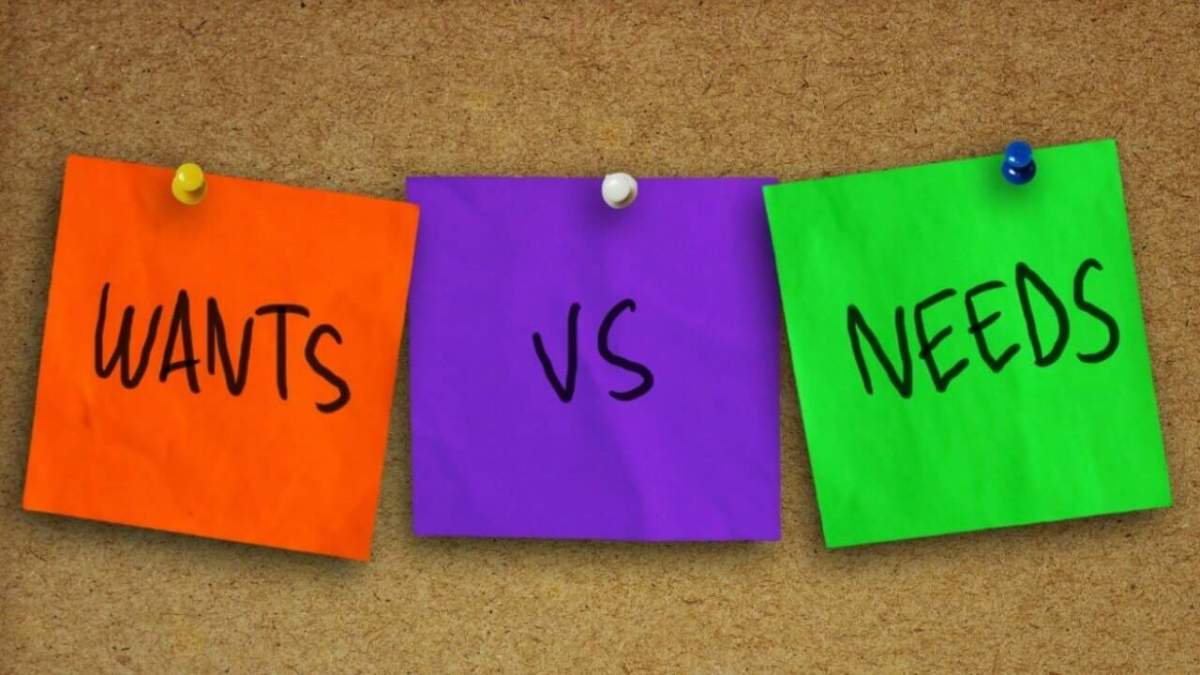
What We Need vs. What We Want

Understanding that you must be able to divide up the two categories fairly and also be able to balance them healthily with our seemingly limitless desires at times is key to being a fully formed individual.

A key part of adulthood is being able to know the differences between knowing ‘what we want’ vs. knowing ‘what we need.’ Understanding that you must be able to divide up the two categories fairly and also be able to balance them healthily with our seemingly limitless desires at times is key to being a fully formed individual. As children, we are taught to temper our desires to manageable levels and to remember to not be selfish especially when it conflicts with the needs of others.

We are flawed as humans in that we often let our wants overtake our immediate needs and that we cannot distinguish the two in terms of actual importance. I may want a new suit but if I only have so much money, do I really need it? Am I being selfish by buying a suit when I already have a perfectly good one at you? These questions are especially important to pose when you have limited money or time to contribute towards either your needs or wants. What we focus on each day shows us if we care more about ‘needs’ or ‘wants.’

It has to be non-negotiable in your own life how your needs come first and will always come first. Your wants have to be considered in terms of whether you actually need them and how much they will actually add that much to your life. When it comes to your wants, you should not only be thinking about their utility in the short-term but also in the long-term. Will you be that much better off not just a day later, a week later, or a year later when you satisfy those wants? A short-term want will be fleeting and may end up not even be worth it whereas a long-term want like starting a business, getting your degree, or moving overseas are often worthwhile investments and satisfactory wants that will put you ahead in your life. If you do want to fulfill your wants, they should be in the interest of you moving forward, learning new things, and developing your interests.

Short-term wants are good every now and then like a new bicycle, a nice meal out with friends, or a trip to a day spa, but the gratification will be short-term, and you can’t rely on those wants to fulfill you in the long-term. Long-term wants are harder to achieve but they often have higher levels of satisfaction. These wants aren’t automatically given to you and you have to work for them but it’s often worth the effort more so than just things being handed to you automatically. Your wants have to be kept in moderation too because if you let your wants overwhelm your needs, you may be left with less than you had before. An adult keeps their wants in check and prioritizes their needs first to make sure that their life is headed in the right direction. Long-term gains have to always take priority over short-term gratification, which may give you happiness but won’t give you fulfillment in the long run.

Your needs in daily life should always come first in terms of securing them. Whether it is water to drink, clean air to breathe, food to eat, and a roof over your head; they are all part of the equation to keep you in good spirits and in good health. Do not let your wants take away from your immediate needs because when it comes down to it, your wants may come and go but your needs are your needs and that never really changes. Abraham Maslow’s ‘hierarchy of needs’ was pretty much on the money in terms of distinguishing what are most urgent needs are and beyond that, what could be considered wants. We have the physical needs of eating, drinking, sleeping, maintaining homeostasis (not too warm or too cold) but beyond that, we start to go into the wants territory of seeking out self-actualization as well as having a steady purpose in life.

We all need human connection along with friends and family who care about us but that is not given to everybody and that kind of need is something that you have to work for and what you have to ‘want’ in a way. We all need safety and security to carry out our lives but that is something that we have to work towards to and that is not guaranteed when we are born. What we need may not been given to us like friends and family or the security of a place we live in and we may have to take action to turn those needs into a reality by wanting them badly enough.

In Maslow’s ‘Hierarchy of Needs’, our basic needs must be taken care of first as the pyramid shows us but then you have our psychological needs such as love, relationships, friendships, and feelings of accomplishment and goal-setting. As you go up the pyramid, you get into the ‘self-fulfillment’ needs category of achieving our potential, reaching our set goals, and becoming the best version of ourselves through self-actualization. This category is tricky, but we may feel that we need to be fulfilled that way; how hard are you willing to work to achieve that and how much do you really want to achieve it?

I would argue that our basic needs of food, drink, shelter, warmth, etc. are real needs but our psychological or self-fulfillment needs are different in that while each of us need them in our life, they are really ‘wants’ that you have to earn and to work for. Our basic needs are not given to us either, but they are of such urgency that we will do almost anything to have them guaranteed and it often subsumes our other ‘needs’ like love, friendship, or career goals.

What we need to live is our number one priority. Everything after that is supplementary in life. What we want Is important but it’s clear that our wants are endless at times and we need to prioritize with our limited time and/or money what matters to us most to achieve or to have. Being able to prioritize while understanding this internal battle is key to being a fully formed individual capable of holding our wants at bay while getting our needs taken care of.

Lastly, it is important to distinguish between short-term needs and long-term needs. Short-term needs should always take priority over long-term needs, but you can work towards both at the same time. You can hunt for food and still have companionship with a loved one at the same time. You can watch your vegetables grow while you’re studying for your next course exam or replying to emails. However, if your immediate needs are unmet or neglected, your long-term needs will have to take a backseat because they are just not as critical as what short-term needs are in terms of daily occurrence. You need to eat and drink water a lot more than you need to see your family and friends as an adult. I’m sure you would love to see them every day but it’s more likely you would see them once a week or a month or maybe less if you’re really busy.

Your immediate needs can be balanced with long-term needs, however, if you can’t cook for yourself, make money to support yourself, or be able to clean and take care of yourself physically, not many or very few of your long-term needs can be met after. As an adult, you need to take care of the daily details before you can reach your lifelong dreams and goals. What we need vs. what we want is a constant battle taking place in our mind. If we don’t pay attention to how to win this battle by trusting in our innate knowledge of what we are capable of doing to achieve them one by one and what are healthy priorities to focus on, you won’t be able to get very far in life with either your needs or your wants.

Get Your Own House In Order

“Before you can set an example to others in your house, or others in your community, or others in an overall society, you first need to show that you can ‘get your own house in order.’ You need to be able to handle yourself and your own day-to-day problems first before you can lead others to do the same in their own lives.”

There’s an old adage I have been thinking about lately about how it is primarily important to take care of oneself first and not just in one way but in every part of your life. Before you can set an example to others in your house, or others in your community, or others in an overall society, you first need to show that you can ‘get your own house in order.’ You need to be able to handle yourself and your own day-to-day problems first before you can lead others to do the same in their own lives.

It can be hard for other people to take you seriously when you don’t take yourself seriously in the first place. How will you be able to lead a team or an organization or a company if you are not able to master your own tasks and your own desires? Self-development isn’t just about making sure you are able to create a good life for yourself but it’s also about setting a positive example for others who would look up to you as a result. You cannot be a mentor or a role model for others without first putting yourself out there and doing what needs to be done to make yourself successful.

When you have not struggled, when have not persevered, when you have not done what it takes to reach your goals, how can you give advice to other people on what they should do to have the same kind of success? “Getting your own house in order” means taking care of yourself first and doing so consistently before you can use those same pieces of advice and examples for others to follow. Firstly, your own house in order starts with your mental and physical health.

Your body is your own house so it must be taken care of first and foremost in terms of getting good sleep, eating properly, not indulging in vices like alcohol or tobacco to excess, and knowing how to exercise as well to keep yourself in shape. It also extends to being able to relax, de-stress, handle anxiety, and be mentally sharp by challenging yourself but also relaxing your mind so as to not exhaust it entirely. Your body and your mind are their own little houses and they must be maintained thoroughly so that other people will know that you are capable enough to handle other demands in life.

Another house we don’t think of is appearance and grooming. Your own house in this case means maintaining a good appearance and practicing good hygiene. These practices are necessary also on a daily basis and to show to the world that you care about yourself and want to be taken seriously. For a job, an internship, a presentation, a seminar, a lecture, etc., your personal dress should indicate that you are a serious person for the role or for the opportunity and that others will know that they can respect your house because you respect it yourself. They will not respect your house when you show up to an interview in shorts or when you wear Yoga pants to a college lecture. Physical appearance and grooming are another ‘house’ that we all must take seriously and to do so primarily before we can give advice to others on how to maintain their own ‘houses’ in good order.

Lastly, the last ‘house’ on a personal level that I would like to focus on is where you live regardless if it is a small studio apartment or a huge mansion. Maintaining your own physical shape in the world is crucial if you want to tackle bigger and better problems. If you can’t make your bed, clean your bathroom, or keep your kitchen clean, how can you tackle any major issue in your community or in your society? At the end of the day, this kind of ‘house’ maintenance comes down to self-respect and putting your own ego aside to do the work that we all must do.

The chances are good that at the end of the work to maintain this ‘house’ that you will feel a lot better for having done the work needed to keep up a clean and orderly home. It is not easy to do this consistently but it is necessary and if you plan on having guests over, having friends over for a get-together, or want to be romantically involved with someone, a clean ‘house’ will go a long way to making you respectable and responsible in the eyes of others. Being able to maintain care not just of yourself but your own physical space means that people will know that they can trust you with other tasks and matters of importance that extend beyond your ‘house’ and to the ‘houses’ of others in the community and in the society.

Thinking about a community as a whole, their ‘houses’ include making sure that the schools are meeting the needs of the students, that the community is safe and protected for all of its residents, that the roads and bridges are maintained and do not have potholes or faulty beams, and to make sure that each and every person has access to utilities including water, electricity, and yes, an Internet connection too. If a community does not have those necessities for a high quality of life, then that ‘house’ is not in order and those people who have their own ‘houses’ in order need to step up to do their part to help others get the community in good shape.

If you have your own ‘house’ in order, you can set the standard for the rest of the community and be able to use your ideas to help others especially if you gain their respect and their trust. With how you act and how you behave in addition to your own appearance, ideas, and personal goals, you can make the community better and it’s important for you to get in there and show that you can make a difference there.

When a community can all of its necessities in order, that one community can definitely have an impact on the larger society within a country and even the world. A community where everyone has equal access to a good education, where health care is not a privilege but a right to all in that society, and when kindness, honesty, and virtue are rewarded rather than chastised. That is an overall society that is getting its own house in order and can serve as an example to other societies in other parts of the world.

Being able to provide a high quality of life and a chance to succeed to all of the people in a society should be the goal of society with its own ‘home’ in order. I am not talking about a social utopia per say but rather an ideal place where people know that they can succeed if given a fair shot in life. It’s also about providing the basic tools of any society to all of its people without discrimination and without corruption. Whether that is no homelessness, enough healthy food for everyone, and an economy where inequality is minimalized, that is what a society should be focusing on and using as an example to other societies.

When a society prioritizes the needs of the few over the many based on wealth or another privilege, that society does not have its own house in order. If there are people out there hungry, homeless, or without health care, then that society is not in order. A society cannot be an example for other societies when it lacks the courage to invest in its most vulnerable populations or to provide a higher quality of life for all people.

Without that kind of an example, a society will lose its influence or example setting and will turn inward and often tear itself apart without good leadership or good values. A society that gets its own house in order prioritizes the right social needs and finds the investments, funding necessary to maintain these necessities of its people will automatically become an example to other societies whether they are near or far. A society that doesn’t does not have a moral ground to stand on and will lose the example it could set by practicing bad ‘house’ manners in different ways.

“Getting Your Own House in Order” does not just apply to one individual but it also applies to a community and a society as a whole. We all are human and fallible and sometimes, we will fall short but if we strive to do better in our homes, in our lives, and in our examples we set for others, that kind of ‘Ripple Effect’ of positive values will improve the larger community and society as a result. How we treat ourselves (mind and body), our homes, our way of life has a direct effect on the community we share, and, on the society,  we find ourselves a part of. This kind of example setting starts at home, but it can ripple throughout to the rest of the world and it all begins with ourselves and our own actions.

Don’t Rest on Your Laurels

“One of my favorite expressions in the English language: “Don’t rest on your laurels” means to not be complacent with what you have done and to keep moving forward.”

Complacency is the killer of any sustained success. What you have done in the past is in the past. Unfortunately, you cannot rest on your laurels for very long. One of my favorite expressions in the English language: “Don’t rest on your laurels” means to not be complacent with what you have done and to keep moving forward. Success is only temporary and while it can be lasting, if you don’t sustain what you’ve done to accomplish more, you may find yourself back at square one. You can be satisfied with your achievements and recognize them, but it is not wise to continue relying upon them when you need to be aware of what you have to do in the present and in the future.

With the current pandemic not going away anytime soon, it can be difficult to resign yourself to going with the flow, staying housebound, and waiting for things to become somewhat normal again. However, it should not be used as an excuse for you to let yourself go mentally or physically. Even if the first half of the year was a total wash for you and you put your own goals on hold, you still have a good chunk of the second half to make progress in whatever you set your mind to. Even though you may not be able to have fun as much as you like, this is a great time to reassess what is truly important to you, who truly matters to you, and how you want to be into the future. We all have extra time to think now and while that may feel like an undue burden, there is an opportunity in there to seek out what you are hoping to accomplish and will keep moving you forward during this unprecedented and difficult time.

Not resting on your laurels may sound difficult right now but it may be the perfect chance for you to move forward, to accomplish personal tasks that you’ve been putting off, and to pick up learning something new that you’ve been meaning to but never had the time before quarantine began or before you were resigned to staying at home more than you would have liked.

Each person is going to have their own set of goals and hopes but the main thing to keep in mind is that you have at least one thing that you want to accomplish that you didn’t have time for before the pandemic hit. Use your extra time even if it is just an hour or so each day to work towards a personal goal. With just one hour, you can accomplish a lot over the next five months. I would recommend setting a mental goal to hit like practicing meditation each day for 10 to 15 minutes or doing daily language practice for a new language that you would like to learn. You should also have one physical goal in mind like doing 50 pushups each day or 20 sprints or just being able to get in a form of exercise when you are not working or studying.

You cannot have just good physical health but poor mental health or vice versa. You need to work on both forms of health as they complement each other quite a bit. I truly believe that if you are making progress in both forms of health than you will be better able to confront the challenges of your day and your week. With this extra time at home, you can hit on both your mental and physical health in ways that you might not even be aware of.

If the gym is closed, go ahead and use your workout equipment at home. There are dozens of videos on how to do these kinds of exercises without needing very fancy equipment. You can also likely find stretch bands, jump rope, barbells, dumbbells, pull-up bars online to help you create that good 30-minute workout that can hit on different parts of the body. If you don’t have an outdoor space, look to your nearest park or public outdoor area to do sprints, go for a walk, go for a jog, or even do Yoga if you so desire to get a workout in.

Daily exercise is not only good for your body but it’s good for your mind as well. I think the pandemic has personally shown me as well the importance of staying fit and healthy and how it can get neglected when you are running around all the time, commuting to school or to work, and not making enough time for yourself to take care of your body. Now, with a little extra time, hopefully, we can collectively prioritize our physical health even if it’s just a simple home workout of 30 minutes.

Challenging yourself mentally on at least a weekly basis but preferably daily means learning something new to keep your mind sharp. If you are looking for work or haven’t been to school in a while, online learning opportunities are abundant from Coursera to LinkedIn Learning to Duolingo, which can challenge you to learn new skills to not only help you with your mental dexterity but can help you find a job depending on the type of industry you’re focusing on. Online learning is often less expensive than traditional means of education and since you are likely spending a lot more time in your apartment or your house, giving yourself thirty minutes to an hour per day of self-study can help you learn new skills while we are all living in this age of pandemic.

Keeping both your mental health and your physical health in mind during this trying time is very important. Not resting on your laurels even when life is influx and so many things are uncertain is not an excuse for your letting your mental and physical abilities go to waste. You are not only keeping yourself sharp to face ongoing challenges but you’re also getting out of your own head and letting your worries fall away for a little while. Wear a mask, socially distance, and wash your hands are all necessary in this current time but what’s also not being said is make sure you are taking care of both your mental and physical health too.

Whether it is a walk in the park, learning a new skill, doing home workouts, improving your cooking, trying to keep your routine even when homeward bound is very key to coming out of this pandemic better and more resilient. It’s something I have to work on myself but it’s key to keeping up a positive and forward-looking spirit. If you have more free time on your hands, that’s natural right now. Don’t become a sloth though and look to just vegetate out in front of the television. You have to do your best to stay active, stay positive, and keep moving forward.

It can be easy to rest on your laurels when much of our lives have been upended but you have to keep making progress towards your goals in ways that are possible right now. Hopefully, you have had time to think about which goals you want to achieve in the past few months and how you want to make the most of these remaining months of 2020. It’s been a hard year for everyone around the world, but you can still make it a fulfilling one for your own development by focusing on what you can control and how you make the most of these remaining months too.

How to Spot a BS Artist

I do not like to speak ill of people, but I do think it is important to warn about certain people who may not have your best interests in mind. You may want to look out for what I will reference as being ‘BS Artists’ as I do not like to curse in my writings. I will tell you what a BS Artist is, what to look for in spotting a BS Artist, and how to avoid them as best as you can. BS Artists do not necessarily intend or want to be mean and they are not necessarily bad people, but they can be deceptive, misleading, and not have your interests in mind.

BS Artists are definitely not your friends even though they may initially appear to be friendly. They seem to care about you initially and remember certain details about who you are. Their kind of friendliness is an obvious bit of shallowness that leaves you feeling a little let down. You can tell after a little while that the friendliness was not genuine, that they are looking to curry a favor or are trying to take more from you than they want to give back, and they are mainly looking out for themselves and want to take advantage of your time or your money.

A BS Artist will do their best to convince you of something without giving any proof or by hyping something up without checking his or her facts. They do not see lying as that bad if it’s a means to an end even if that hurts people’s feelings or misleads them. They resent facts and the truth and will attack you if you push back on them. If it is in their interests, they will BS their way even if it means disregarding the truth to further their own agenda even if it causes harm.

Instead of admitting that they are wrong or that they do not know or to say that they need to find out the facts first, they go ahead with illogical assumptions and conclusions on any given subject and will not back down at any cost. They would rather ‘save face’ or maintain positive relations with others rather than be honest and upfront about what they might have been wrong about. Because lies upon lies can do the most damage, BS Artists cause a lot more harm because the little white lies become big lies and before they can admit fault, many people can be hurt from being misled.

It is not a bad trait to be confident, but BS Artists take it to the next level by being cocky and showing hubris even in the face of contrary evidence or contradictory claims. They can be overconfident, selfish, and demeaning when other people disagree with them or want to debate regarding the facts of the matter. Being that cocky will get a BS Artist into trouble and can cost them dearly even if they are able to evade the truth for a little while. Even if they put off the truth for months of years, it will come back to bite them and it could cost them money, their jobs, their families, and their freedom.

From devious landlords to banking fraudsters to pyramid scheme creators to corrupt politicians, they are all BS artists at the heart of it and while some people in these professions are good people and care about others, BS artists in these fields of work give others a bad reputation because of the heinous acts they end up committing.

What we have to do as a society is to not enable them to rise to influence other or hold power over others. It starts with a strong sense of accountability, ethics, and holding people responsibility for their actions. It has to also begin with not any of the small lies slide which end up becoming bigger and bigger lies that cause a lot more damage the more a BS artist gets enabled. A BS Artist is bad enough but when he or she has free reign to do as they please with no consequences so then the rest of society will be left holding the bag and with no due recourse to hold them accountable.

You first have to detect if there are any lies, get to know that person really well and decide if they are truthful and trustworthy. It may take months or even years but don’t jump into a friendship or a business partnership with someone you haven’t seriously gotten to know for. When you are not in a rush, why risk a lot when you don’t know anything about that person? Another warning sign is when they refuse to divulge information about themselves when you start to get to know them such as what their job is like, a little about their hobbies, and what they enjoy doing.

You should also make sure that they want to get to know you and that they follow up on their commitments when you ask them for their time. If they aren’t willing to respond to your emails or phone calls, you should not push forward with any higher level of commitment such as an in-person commitment or any long-term partnership or relationship. Do not let a BS Artist let you waste your time or your money whether it’s through the television or face-to-face.

A BS Artist is not hard to find, and they are always going to be around. Part of being a functioning adult is knowing how to think critically about who you are dealing with and how you deal with them. You have to be skeptical to some degree and having a ‘wait and see’ mentality when it comes to other people. You do not want to give much or give too little but it’s not good to heavily invest since you may get burned in the process. The best you can do is really get to know the other person well whether its’ for business, relationships, or career-wise.

The main characteristics that you want to avoid are people who are deceitful, uncaring about the truth, and not willing to hear the facts. They can be manipulative, compulsive liars, and they may use you to get ahead and not feel any remorse about it. Some BS Artists are so good at it sadly that you may only realize that they are a BS Artist a decade or two decades later. There are going to be times like that unfortunately where you may be taken advantage of and done all you can to avoid that happening. The best you can do in that case is admit that you made a mistake but were trying to protect yourself to the best of your ability. At times in life, you have to cut your losses and hope the damage was not too bad.

Ultimately, what we all must do is make sure that the BS Artists do not hold too much sway over our society or our economy. That is when the real trouble begins when they control a lot of daily life leading to greater corruption, inequality, and societal dysfunction. When an entire society is deceived, the damage may last for decades and we are likely to know that we were warned but not enough of us were aware that we were dealing with BS Artists rather than genuine and good people. We have to do better than that and make sure that we prioritize the right kind of character, ethics, and personal qualities in our politics, in our daily life, and in our society.

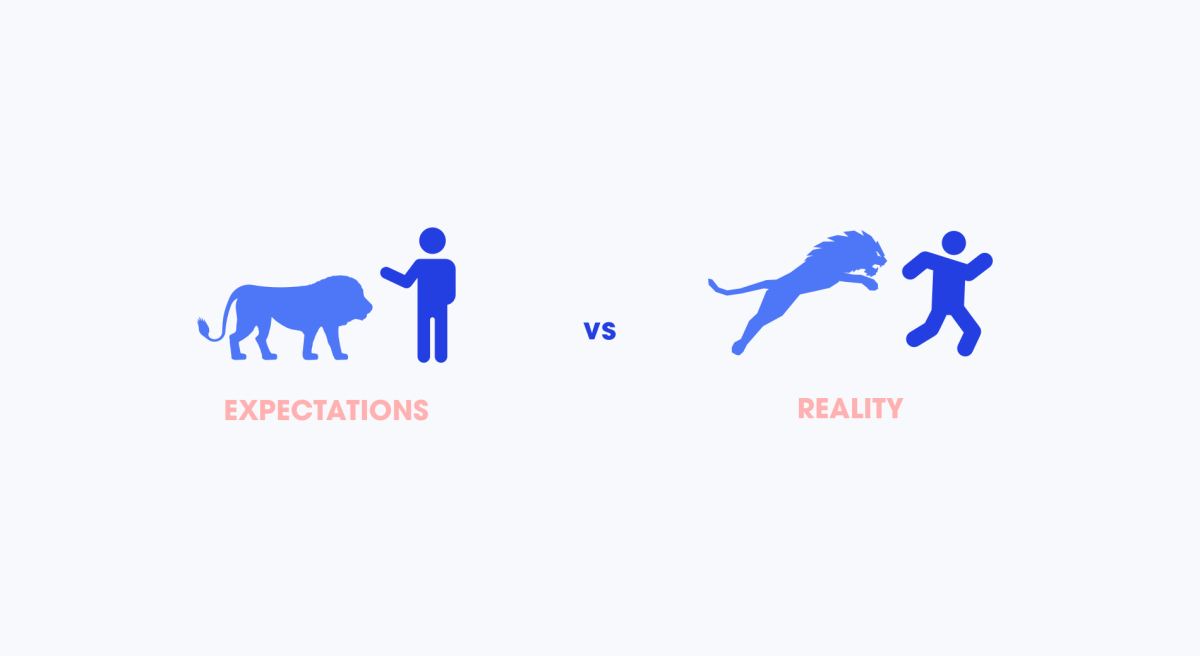
Expectations vs. Reality

An important part of maturing and becoming a fully functional adult is to keep your expectations in check and to manage them as to not conflict with what the reality of the situation is. Keeping your expectations in check is difficult to do but it is necessary in order to not let an oversized ego, or arrogance, or selfishness keep you from becoming the person you should be. One has to always be prepared for reality to not line up with our initial expectations. You can never really be fully certain of how things in life are going to shape up to be. A true sign of maturity is wishing for the best but understanding that you could be in for disappointment and setbacks even when you think that everything can turn out fine.

The word ‘expectations’ can be synonymous with being ‘unrealistic’ because you are hoping for things to be better than average and to be better than you hoped they could be. Often times, things are about the same as you would expect or can even be worse if you set your expectations too high. Keeping your expectations in check will also to help keep both your emotions and feelings in check as well. There are a number of things one can do in order to measure expectations enough to keep them in line with reality. They include focusing on the present, cultivating patience, and taking the good with the bad. These three keys alone will help anybody’s reality win out over their expectations. While having expectations is not necessarily a bad thing, having too many expectations that are unrealistic or impede your ongoing hard work and efforts will make the reality of that situation worse. Keeping your expectations realistic is something we all must do as adults.

Focusing on the Present: Controlling what we can and not worrying about the things outside of our control goes a long way towards keeping our reality in line with what our expectations should be. Doting too much on the future without having a plan for today is a recipe for disaster in terms of not being able to meet your expectations. It is good to set goals and to set your sights high, but the efforts and the work must be there as well. If you are not working on your goals in the present, you can expect your reality to look differently in the future if you were not actively working towards achieving them in the here and now.

Day-to-day expectations that are measurable and quantifiable are more easily met rather than those that are months or even years away. You cannot be worried or distracted about what could happen three months from now, but you should rather focus on what you are doing now to increase your happiness and satisfaction. You can only control your actions and your behaviors, which will save you a lot of angst and anxiety when you focus on what can be controlled and to focus less on what is out of your control especially for what is still away on the horizon of your life for which you are totally unsure of what is to come. The older I get, the more I realize it is good to plan for the long-term, but to expect things to change the further away from your current present reality are. Focusing on things on a day-to-day basis is part of a recipe for fulfilled expectations and kept promises.

Cultivating Patience and Perspective: Being able to understand that life has both its good and bad events, and you never know how things are really going to shake out is a true sign of keeping your expectations in check. We tend to think a new city, a new job, a new house, more money will fulfill us but sometimes, our expectations can fall short because we set them so high. We sometimes do the opposite in terms of cooking a meal for family members, volunteering at a homeless shelter, cleaning the house, or buying a gym membership in that we think it will not be as fun or fulfilling in reality but those kind of activities end up fulfilling us more than the former. Obviously, we set our expectations high or low based on our personal histories, personal biases, and our own desires and goals.

However, regardless of what we think will be awesome or what we think will be crummy can balance out more if we are able to cultivate patience regarding how any of our life events will shape out. You may not be satisfied with something on day one but then really love it by day 100. When it comes to expectations vs. reality, you have to show patience regarding both because what you expect to be good can end up being bad and what you expect to be bad can really end up being good.

Having perspective on what is going on with our lives can help us as well because our reality may not be what we expect but we can express gratitude for what good things we have to balance out what disappointments or ills that have befallen us previously. If you can count your personal blessings each day, you will be happier with your reality and you can better measure your expectations. Knowing that your perspective on life is totally unique compared to everyone else’s is comforting because your reality is going to be different in many ways from your fellow family members, friends, or work colleagues.

What you are going through cannot be adequately compared to other people because their reality and their expectations are never going to be the same. You can only be patient, be grateful, and realize that you should put your life in perspective as much as you can to remember that life has its ups and downs, and you should never get too low or too high because of it. Everyone has their good days and their bad days, and you never really know what people are going through because everyone has a different reality and different expectations of who they are, what they expect, and who they hope to be.

Taking the Good with the Bad: As I mentioned earlier, reality can bite sometimes especially when your expectations were sky high so anything in life is not going to be as rosy as you first imagined it. Even if something awesome happens in your life and you feel like you’re walking on cloud nine, you can be sure that there will be some small annoyances that come with it. Nothing is ever 100% good, and nothing is ever 100% bad. Similar to walking on ‘Cloud Nine’, you could be ‘down in the dumps’, but realize that your pain is temporary, and nothing lasts forever. The highest high and lowest low will pass and most of life is somewhere in the middle for which you make the best of and strive to meet expectations that only you can hold yourself accountable to. You can’t hold others accountable for standards that they can’t reach as much as you want them to for your own peace of mind. The world does not work that way. You have to hold yourself accountable and be that positive example for others.

You are always in a constant battle of Reality vs. Expectations but in this case, there is not going to be a clear winner. Sometimes, life will exceed expectations, other times, life will fall short of your expectations. The key thing to keep in mind is how do you react to both successes and setbacks in a mature and clearheaded way. You can get discouraged or be ecstatic, but you have to remember that life is about having patience, keeping it all in perspective, taking the good with the bad, and always focusing on the present and the here and now over the past and the future. If you can do these things, regardless of when reality wins or when expectations win out, you will be the winner as well because you will have cultivated the emotions, habits, and overall maturity needed to make it through both life’s ups and its downs.