Cause, Chaos, and Consequence: Ripple vs. Butterfly Effect Explained

“I’ve written about the Ripple Effect before but while they sound like each other, The Butterfly Effect is far from being the same thing as a concept. They are philosophical cousins to be honest but while they are related, they were both raised in different households.”

I’ve written about the Ripple Effect before but while they sound like each other, The Butterfly Effect is far from being the same thing as a concept. They are philosophical cousins to be honest but while they are related, they were both raised in different households.

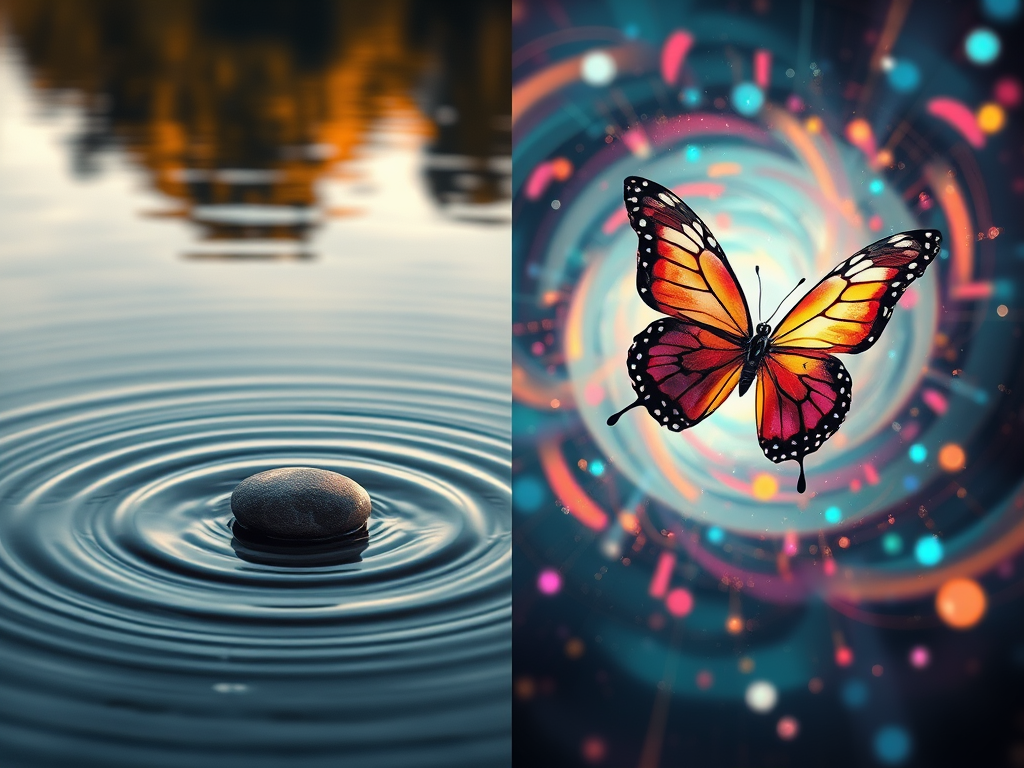
To give some further background on the Ripple Effect, it is one action that causes a series of consequences that spread outward like ‘ripples on the water.’ These are both linear and observable consequences that are clear to see, like water droplets hitting the ocean. For an example of this phenomenon, if you donate to a college scholarship fund, that money would directly help a student go to a college or university. Maybe that student goes on to start a non-for-profit because of the help you gave to help hundreds of other students who were in the same position as he or she was when you donated the money. The effects of your one action spread out logically from the original action taken. The ripple effect has been used in the social sciences, in business development, and in personal decision-making each day.

When it comes to the Butterfly Effect, the definition of it pertains to a very small or slight change in the initial conditions of someone’s day or a event that was rather small or insignificant at the time that ends up causing unpredictable and massive effects down the line affecting untold numbers of people. The key idea for this phenomenon is that events can be nonlinear and cause chaotic consequences when you think the effects would have been minimal or nonexistent instead. For an example, a butterfly flapping its wings in Mexico could theoretically start a chain of atmospheric events that cause a tornado to occur across the border in Texas. The Butterfly Effect is often used in describing chaos theory, meteorology, or how complex systems work together succinctly or can become dysfunctional rather rapidly.

AspectRipple EffectButterfly Effect
DefinitionOne action causes a series of predictable consequencesTiny change leads to massive, unpredictable outcomes
Nature of ImpactLinear and logicalChaotic and nonlinear
PredictabilityGenerally predictableHighly unpredictable
ExampleHelping one student who then impacts othersBeing late to an event and missing a life-changing meeting
Field of OriginSocial sciences, psychology, personal developmentChaos theory, meteorology, complex systems
Visual MetaphorPebbles dropped in water creating wavesButterfly flapping wings triggering a tornado
Control Over OutcomeModerate to high: effects unfold over timeLow: small causes can lead to wildly disproportionate results
Typical UsageCause-and-effect logic in planning or strategyDescribing randomness or complexity in systems

Regarding the main difference between The Ripple Effect and The Butterfly Effect, ripple effects are much more predictable to the average person, and you can trace the causality more easily. Butterfly effects and their events are unpredictable, chaotic, and can happen when you least expect them yet have been put into motion for quite some time. To sum it up, Ripple effects have an obvious cause and effect that are easy to explain and observe while butterfly effects show how tiny inputs or changes can lead to wildly disproportionate outcomes.

To explain how this would play out in the real world, a Ripple Effect in one’s personal life would be deciding to go to the gym three times a week consistently. You start to feel healthier, have more energy, sleep better at night, improve your mood, you’re more productive at work, which leads to a monetary raise or even a promotion in your title. That one small but consistent change to your lifestyle with a new habit consistently done can ‘ripple’ out across your whole life in a predictable way given the known yet useful benefits of consistent exercise. 

As for the Butterfly Effect example when it comes to your personal life, let’s say you show up five minutes late to an important networking event. As a result, you may miss meeting someone who could have been a business partner for your new venture. Your career ends up going in a completely different direction because of that missed opportunity. Because of that, you end up having to move and live in a different city, with different friends, and a different lifestyle, all because of that five-minute delay that happened once in your life. This is a key example of an unpredictable event with unforeseen consequences. You probably or will never realize how your life changed as a result unless someone observing your life full-time could tell you about the chain reaction that occurred because of that late networking event arrival.

We can also look back at history for key examples where the ripple and butterfly effects were present in what happened in retrospect. With regards to the ripple effect, the Civil Rights movement in the United States leads to the Civil Rights Act being passed by Congress. This law causes desegregation to take place in public schools, which opens more education and job opportunities for minority students and eventually leads to more diverse leadership in both government and business. It’s a chain of predictable and traceable events that go back a few decades, but for which still resonates up through the modern era.

A famous example of the Butterfly Effect in action from world history was when an obscure Serbian nationalist, Gavrilo Princip, assassinated the Archduke Franz Ferdinand of Austria, in 1914. After that momentous but surprising event happened, Austria-Hungary declared war on Serbia, alliances with France and Russia kicked in, which lit the spark that consumed Europe during the first World War.

This momentous event of World War I then led to the fall of empires like the Ottoman and British empires over time, the stale peace that led to World War II, and then the rise of Communism and the Cold War. Would a war have started regardless of if Franz Ferdinand had not been assassinated that day? Most likely, but there was a chance that it would not have happened had the assassination not occurred. That one moment created chaos and unforeseen consequences that no one in Europe or around the world could have foreseen at that time in 1914.

Understanding the differences between the ripple effect and the butterfly effect isn’t just academic, it’s practical for your own life. In our personal lives and careers, most of us try to make thoughtful choices, expecting reasonably predictable outcomes. That’s the ripple effect in action: you invest time in learning a skill, and it pays off in future opportunities. However, life doesn’t always play by those rules. Sometimes, a seemingly insignificant decision, sending a message, missing a meeting, crossing paths with someone new, spirals into consequences no one could’ve predicted. That’s the butterfly effect crashing into the party to say it has arrived. Knowing both concepts helps us become more intentional with what we can control while remaining humble about what we can’t control. It’s the mental toolkit for navigating both stability and chaos in this uncertain world.

The truth of the matter is that life is shaped by both ripples and butterflies. Some of your actions will create steady waves of impact over time while other choices might unleash unpredictable storms. That doesn’t mean you should live in perpetual fear of chaos or paralysis over tiny choices. It does mean though that we should approach life with a mixture of clarity and curiosity: plant the seeds you can in life, but don’t be shocked if something unexpected grows.

As the saying goes, “We make plans, and the universe laughs.” Still, you should plan anyway and be prepared with the awareness that every choice matters, even when the outcome doesn’t go according to plan. You might be one ripple away from changing your community or your world, or one butterfly flap from a wild new chapter in your life.
Anatomy of a Scene – ‘The Lady In The Red Dress’ (The Matrix)

“In a simulated world, which is built both on illusion and deception, distraction is the perfect weapon for keeping one complacent and from asking questions.”

In a simulated world, which is built both on illusion and deception, distraction is the perfect weapon for keeping one complacent and from asking questions. Few film moments capture that idea more powerfully than a short but iconic scene from The Matrix (1999): Neo (Keanu Reeves), newly unplugged from the simulated world he once thought of as reality or the ‘real world’, walks through a bustling cityscape inside a training simulation that is programmed to feel like ‘The Matrix’, but whose participants realize it is a simulation and not the ‘real world’.

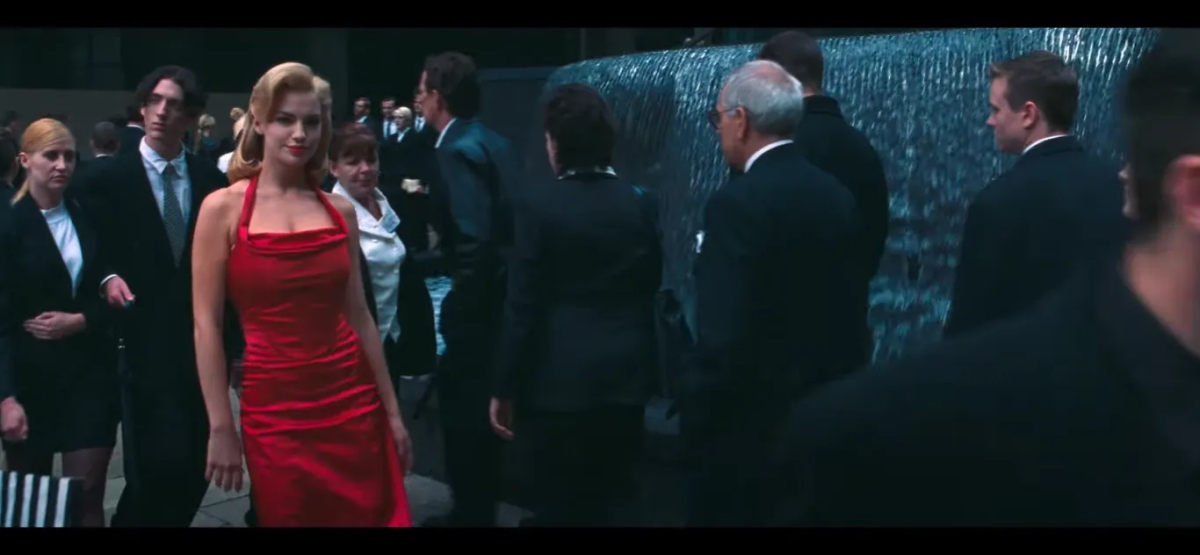
Suddenly, his attention is captured fully as he stops listening to Morpheus’s speech and focuses elsewhere. This distraction is not of danger, but by desire. A stunning blonde woman in a bright red dress walks past him on a city street. He turns to look at her and take in her beauty. A moment later, he’s staring down the barrel of a gun from an Agent of The Matrix.

This moment, while brief, is the Matrix in miniature form, a system that doesn’t just imprison the body, but hijacks the mind as well. In this scene, the Wachowski Brothers, who directed the Matrix film series, deliberate show the audience how distraction can be deadly, how perception can be manipulated, and how even the most liberated minds are vulnerable to illusion even after escaping from the simulated word of The Matrix. Over two decades later, this scene resonates more than ever as we live in a blurred world now of reality and simulation and of seemingly endless distractions like the lady in the red dress.

Let’s walk through how the scene unfolds similarly to how Neo and Morpheus experience the simulation themselves. Neo and Morpheus are in what appears to be a peaceful, clean city environment with sun-drenched streets, people in business attire moving in orderly fashion of different occupations and livelihoods. It’s not the gritty or green-tinted world Neo has just escaped from. Everything here is vibrant, bright, almost too perfect and calm. There’s a catch to it but we don’t know what it is yet as the audience.

Morpheus explains to Neo, “This isn’t the real world. It’s a computer-generated dreamworld built to keep us under control.” They’re inside a training program that mimics the Matrix, but this version is safe and controlled with seemingly no threats like what lurk inside the Matrix. As they walk, Morpheus encourages Neo to stay alert and keep up with him. However, Neo’s attention suddenly drifts elsewhere. A tall, blonde, and slightly smirking woman in a red dress glide past him, a stark contrast to the grayscale suits and muted tones of the crowd. The camera follows Neo’s gaze and not Morpheus’ words. Just as Neo turns around to look at her again, Morpheus interrupts: “Were you listening to me, Neo, or were you looking at the woman in the red dress?”

Neo turns again and instead of the woman, an Agent from the Matrix stands there with a gun to his head. The simulation freezes. Morpheus smiles. “Look again.” This is Neo’s wake-up call after he flinches from the sight of the Agent’s gun in his face. Neo is shaken as at any time in the Matrix, any of those ‘people’ are enslaved by the Matrix can turn into an Agent who is looking to prevent others from being freed from their enslavement by Neo, Morpheus and his crew. In The Matrix, distractions can be deadly because anyone can be an Agent and turn into one at any time. Neo learns his lesson and Morpheus instructs Neo about the real danger of going back into the Matrix, but they have a mission to free those from a reality that is not real, whatever the cost may be.

At its core, the Lady in the Red Dress scene isn’t just about Neo getting distracted having not been accustomed to the unique threat of an Agent. It’s about how the Matrix and by extension, any system of contro uses desire, beauty, and sensory overload to mask its true threat.

The woman in red is not a glitch, nor an accident of the simulation. She is designed by Morpheus’s crew to test Neo’s ability to focus and to challenge his awareness in an environment that constantly floods the senses, a virtual simulation that is meant to feel real but isn’t real. Morpheus isn’t just teaching Neo about the Matrix’s mechanics but also, he’s teaching him about vulnerability. The greatest danger isn’t always visible or known in the Matrix. Often, it’s hidden behind the things we want most or desire to have the most.

The red dress is more than a splash of color on a woman who is simulated to be a distraction. It’s a symbol in the overall movie of temptation, distraction, and the human tendency to follow what pleases us, rather than what protects us, even if it will end up hurting us later. In mythology, this kind of idea of ill-fated temptation appears often: sirens luring sailors to their doom in ‘Odysseus’, the forbidden fruit offered to Adam and Eve in Eden from the Old Testament, each of these illusions are designed to distract heroes from their quests or to lead to the fall of man and woman.

In this scene, the woman in the red dress is a test, one for which Neo fails, momentarily, and I think a lot of us would fail like he did with the distractions that are constantly thrown at us each day. His eyes are drawn away from his mentor, away from the lesson he is teaching, and toward something that feels more real than the truth. The result of his ill-fated choice? Instant danger and his potential demise if he were to make the same mistake again.

The brilliance of this scene lies in how it’s staged visually and shot from Neo’s perspective: everyone is dressed in grayscale, forming a camouflage of conformity and ordinariness. The woman is the only thing that stands out to Neo and the audience. She breaks the pattern of what we see and thus, attracts attention and an extra look. That’s what makes her the perfect distraction and allegory for ill-fated temptation, and that’s what makes this scene timeless.

Fast forward to today’s world where distraction has become the default mode for many of us. Our attention is fragmented by design, engineered by algorithms, applications, increasingly ‘real’ virtual and simulated realities, and seemingly endless digital stimuli, for which has dramatically shortened our attention spans. The modern “Matrix” isn’t an actual simulation in our brains, at least not yet as I write this, but it’s a network of more and more screens, news feeds, constant notifications, and seductive content. It’s the all-knowing algorithm pushing what it knows will make you pause mid-scroll and continue to feed your dopamine receptors.

Every time you find yourself watching a video you didn’t intend to watch, reacting to an outrage post on a political or social issue, comparing your life to curated influencer perfection on social media, or buying something new because it popped up at just the right time in your news feed, that’s the ‘red dress’ in action. While you’re watching the distraction, whatever kind it may be, something else is happening in the background of our lives: real threats are forming that pose real danger to us. Climate change. Political instability. Ongoing wars. Mental health crises. Surveillance capitalism. Social isolation. Economic inequality. Things that are far more dangerous and impactful than seeing ‘a lady in red’. Like Neo, we rarely see ‘the Agent’ or the real threats coming at us on the horizon.

In The Matrix, Morpheus teaches Neo that true liberation begins with awareness, not just of the system, but of how the system manipulates us and our desires. The Lady in the Red Dress is a metaphor for all the ways we’re trained to look away, to not pay attention, to surrender to the pleasure of the moment rather than focus on the issues of the present and the future. In 2025, this scene is more relevant than ever to our real world. It reminds us that to stay aware, engaged, and vigilant in a constantly distracted world is a small yet meaningful act of rebellion.

The focus and impact that you give to the world around you rather than cheap simulated or virtual distractions is actual power. Being able to have greater perception and awareness is everything these days and will allow you to help other people do the same. The next time something flashy, tempting, or beautifully packaged grabs your attention, you should ask yourself: “Am I listening, or was I looking at ‘the woman in the red dress’?”

My Thoughts on Voltaire’s Most Relevant Quote Today

“His quote underscores the perilous connection between irrational beliefs and destructive actions, an infamous dynamic that has been exploited throughout history and remains a pressing concern today around the world.”

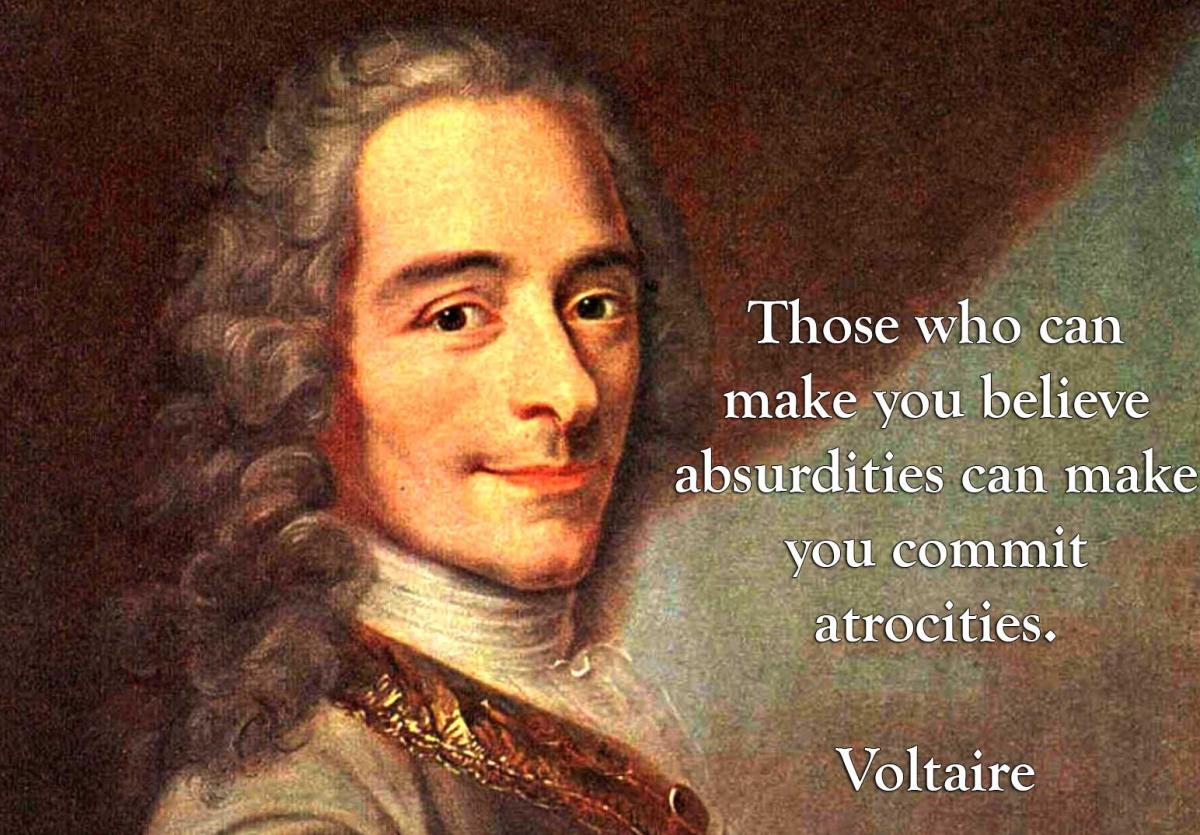
The famous French philosopher and writer, Voltaire, is known for his various works from poetry to stories to essays in the 18th century but Voltaire’s quote, “Those who can make you believe absurdities, can make you commit atrocities,” carries a profound meaning for the modern world in 2025. It serves as both a warning and a call to be vigilant against the forces of misinformation, manipulation, lies, and prejudice. His quote underscores the perilous connection between irrational beliefs and destructive actions, an infamous dynamic that has been exploited throughout history and remains a pressing concern today around the world.

At its core, Voltaire’s quote on ‘absurdities causing atrocities’ highlights the susceptibility of human beings to believe falsehoods when they are presented compellingly and repeatedly particularly by figures of authority or influence or power. In the digital age of social media and instant communications, this vulnerability is amplified by the unprecedented speed and reach of information instantaneously. Social media platforms, news outlets, and even AI-generated content contribute to a landscape where disinformation and blasphemy can thrive. Absurdities, once relegated to the fringes of our society, can now gain mainstream traction in a matter of minutes or hours.

A stark example of this phenomena is the spread of conspiracy theories. From unfounded claims about global health crises to political propaganda, these theories manipulate emotions and exploit fears, dividing societies, and undermining trust in our institutions. The belief in absurdities, whether it’s a denial of scientific evidence or the vilification of certain groups of people unjustly, creates fertile ground for acts of hatred and violence to occur.

To protect against the dangers of absurd beliefs that are spread rapidly without fact checking, fostering critical thinking is more important than ever. Education systems should do a better job of prioritizing media literacy, teaching students and even professionals how to evaluate sources, discern biases, and question narratives. In 2025, where now AI-driven content can mimic credible sources and change them slightly, the ability to think critically is more vital than ever.

Fact-checking organizations and regulatory measures can also play a role especially when social media companies refuse to do it themselves as was evidenced by Meta founder, Mark Zuckerberg, refusing to have his platform offer fact checking to users on what gets posted on the platform. Social media platforms should be held accountable for curbing the spread of disinformation especially when they do nothing to curb it. Transparency in the algorithms that they are using along with stricter content moderation policies are necessary to mitigate potential harm to users and information consumers. However, these efforts should also be balanced with protecting freedom of expression and speech to avoid creating new forms of digital censorship.

At the individual level, fostering open dialogue and empathy is crucial. Encouraging conversations that bridge ideological divides can reduce the allure of echo chambers that can bring out the worst in others. People are less likely to fall prey to absurdities when they are exposed to diverse perspectives and any differences are addressed through mutual understanding.

Voltaire’s quote also speaks to the unseemly process of ‘othering’ where certain groups are dehumanized or treated as inherently inferior based on lies and slander. This phenomenon has been a precursor to some of history’s darkest chapters. When absurd beliefs about the “other” are accepted and not dismissed or countered with facts, atrocities can become justified in the eyes of the perpetrators.

Historical examples abound and there are dozens of them I could write about. The Holocaust during World War II is a chilling reminder of how anti-Semitic propaganda and pseudoscientific absurdities fueled the systematic extermination of over six million Jews and millions of other minority groups. Nazi ideology relied on first dehumanizing Jewish people, portraying them as threats to society. This ‘othering’ laid the foundation for the eventual genocide that occurred.

Similarly, the Rwandan Genocide in 1994 illustrates how media propaganda can incite mass violence. Hutu extremists used radio broadcasts to spread hate speech against the Tutsi minority, describing them as “cockroaches” and urging their extermination. The absurd belief that the Hutu extremists had about an ‘existential threat’ posed by the Tutsi population led to the massacre of approximately 800,000 people within 100 days, one of the darkest years in the 20th century.

In more recent history, the treatment of Rohingya Muslims in Myanmar serves as another example. The dissemination of false online narratives about the Rohingya group, portraying them as invaders and terrorists, was used to justify violence and forced displacement from their homes. The role of social media, particularly Facebook, in amplifying hate speech highlights the modern implications of Voltaire’s warning about believing absurdities eventually leading to atrocities.

As we continue to navigate the complexities of a globalized and interconnected world, Voltaire’s words remind us of our shared responsibility to uphold truth, justice, and basic humanity. Combating absurd beliefs requires collective action across educational, technological, and cultural spheres in our society. Governments, organizations, and individuals must work together to challenge disinformation and promote inclusivity and respect.

Empathy, acts of kindness, and compassion are all potent antidotes to prevent ‘othering.’ Recognizing the shared humanity of all people, regardless of race, religion, or background, diminishes the power of divisive and toxic narratives that are not true. History teaches us that atrocities thrive in the absence of understanding or dialogue. By fostering connections and celebrating diversity while respecting and acknowledging our differences from one another, societies can resist the allure of absurdities and the horrors they could potentially enable.

Anyone can make an impact in preventing the spread of falsehoods, blasphemy, or scapegoating as this begins at the grassroots level, such as within our own neighborhoods and communities. To achieve this goal, individuals and groups must actively engage people in fostering environments of mutual respect and accountability. Open communication and dialogue are key to identifying and addressing harmful narratives before they gain traction and spread futher.

When you encounter falsehoods or lies, it is important to call them out in a civilized manner. This means addressing the issue without resorting to any aggression or personal attacks. Instead, provide clear, evidence-based counterarguments and facts that encourage reflection rather than defensiveness. For example, sharing verified data, fact-checking done through reliable sources, or calmly asking thought-provoking questions can shift the conversation towards the truth.

Community leaders, educators, and influencers have a unique role in setting an example for their neighbors, students, and followers. By promoting fact-checking, highlighting diverse perspectives, and actively countering divisive and hateful rhetoric, they can cultivate a culture of inclusion, tolerance, and critical inquiry. Grassroots initiatives, such as hosting workshops on improving media literacy, how to do fact checking, or creating forums for dialogue with people of different backgrounds, can also help inoculate communities against the spread of absurdities.

Additionally, I believe it is very important to foster empathy through personal storytelling and connections that can counteract scapegoating. For example, over the decades, thousands of Holocaust survivors have shared their story of how they were able to survive atrocities that came about because large groups of people in their society started believing or tolerating absurd claims based on lies and falsehoods. Hearing the lived experiences of marginalized or affected individuals from Rwanda to Myanmar to the Sudan humanizes them and challenges stereotypes. This approach can dismantle the ‘us versus them’ mentality that fuels both hatred and violence.

Ultimately, building resilient communities requires consistent effort and constant dedication. By prioritizing education, empathy, and open dialogue with others, we can better guard against the dangers of falsehoods and prevent absurdities from taking root or spreading. In doing our part, we uphold the principles of truth, justice, and fairness that Voltaire so fervently championed.

In conclusion, Voltaire’s insight is as relevant in 2025 as it was in the 18th century when his quote was born. Believing absurdities paves the way for atrocities to occur, but by embracing critical thinking, rejecting hate, and nurturing empathy, humanity can rise above these challenges that remain with us today sadly. The famous quote from Voltaire is not just a warning for us but a guidepost for maintaining a world grounded in truth, justice, and compassion for one another.

Getting Off The Hedonistic Treadmill

“It is important to explore the pitfalls of exclusively chasing after hedonistic pleasures and why it’s crucial to get off the hedonistic treadmill.”

In our modern world that often seems primarily consumed by the pursuit of pleasure and instant gratification, the philosophy of ‘hedonism’, which advocates for the maximization of pleasure and the minimization of pain, has found its way into the hearts and minds of many people in our society. However, if we undergo a critical examination of the pursuit of hedonism for its own sake, it reveals a complex interplay between short-term pleasure and long-term well-being. It is important to explore the pitfalls of exclusively chasing after hedonistic pleasures and why it’s crucial to get off the hedonistic treadmill.

The hedonistic treadmill is a concept that is defined by how a person can be on a constant pursuit of pleasure, akin to running on a treadmill that never stops like a hamster looking to constantly drink from the waterspout in its cage or have a morsel of food released that it can devour. Despite one’s efforts to increase their well-being by seeking pleasure, individuals find themselves in a perpetual cycle where the happiness derived from hedonistic pursuits is fleeting, short-lived, and can’t match their prior pleasure intake. This treadmill effect occurs because as people experience pleasure, their expectations rise, and what once brought joy and satisfaction becomes the new baseline for the future. Consequently, a person must constantly seek higher and more intense pleasures to maintain the same level of satisfaction as they had experienced before.

At the heart of hedonism is the pursuit of dopamine hits, defined as ‘the brain’s reward neurotransmitter’ that is released in response to pleasurable stimuli. Whether it’s indulging in rich foods, drinks, smoking a cigar or cigarette, engaging in impulsive behaviors like skydiving, sports betting, or seeking another kind of immediate gratification, the dopamine rush provides a temporary sense of euphoria that we seek to replicate more and more. However, relying on these short-term pleasures can have detrimental effects on our long-term well-being.

The more individuals indulge in hedonistic behaviors solely for the sake of having pleasure, the more our brains become desensitized to the dopamine rush. This desensitization leads to a reduced ability to experience pleasure from the same stimuli over time. As a result, individuals may find themselves trapped in a cycle of escalating hedonistic pursuits, constantly searching for more intense experiences, to recapture the initial pleasure that they felt when experiencing it for the first time.

Hedonism fosters a tolerance to pleasure, where the same stimuli that once brought joy or happiness lose its effectiveness. This tolerance often drives individuals to seek novel and riskier experiences to elicit the same level of satisfaction. The pursuit of novelty, especially in different areas of pleasure, can lead to reckless behaviors, as individuals become increasingly desensitized and crave ever more intense experiences to maintain their hedonistic highs.

The relentless pursuit of hedonistic pleasure can take a toll on our mental health. The fleeting nature of pleasure on the hedonistic treadmill can contribute to feelings of emptiness, anxiety, and even depression when the anticipated happiness doesn’t materialize or quickly dissipates. The constant need for more pleasure can create a vicious cycle that undermines mental well-being and prevents the cultivation of lasting contentment.

Hedonism, when pursued exclusively, can create an illusion of fulfillment. Individuals may mistake the pursuit of immediate pleasures for overall life satisfaction, only to realize that the pursuit itself was devoid of deeper meaning. The fleeting nature of hedonistic pleasure leaves individuals yearning for a greater sense of purpose and fulfillment that goes beyond the momentary highs of pleasure-seeking.

In the relentless pursuit of hedonistic pleasures, individuals may inadvertently neglect the development and maintenance of their personal and professional relationships. The focus on self-gratification can lead to a disregard for the emotional needs and connections with others, hindering the development of supportive social networks that are essential for long-term well-being.

Hedonic adaptation is a psychological phenomenon wherein individuals return to a baseline level of happiness despite the positive or negative changes in their lives. This adaptation undermines the long-term effectiveness of hedonistic pursuits, as the pleasure derived from external sources tends to be temporary in nature. Understanding hedonic adaptation highlights the futility of relying solely on external stimulus for achieving lasting happiness and emphasizes the importance of internal factors such as mindset, gratitude, selflessness, and purpose.

While hedonism focuses on the pursuit of pleasure, ‘eudaimonia’, a concept rooted in Ancient Greek philosophy, emphasizes the pursuit of a meaningful and purposeful life. Eudaimonia involves living in a state of well-being, which aligns with one’s own values and contributes to personal growth but also the welfare of others in your life. Eudaimonia encourages individuals to seek their fulfillment through meaningful pursuits that go beyond momentary pleasures. By engaging in activities that align with your personal values and contributes to your personal growth, one can foster a deeper and more enduring sense of well-being.

Unlike hedonism, which can leave individuals vulnerable to the whims of external circumstances such as if the pleasure is achieved or not, eudaimonia promotes resilience. By focusing on internal strengths, values, and personal growth, individuals can weather life’s challenges with a sense of purpose and a resilient mindset.

Eudaimonia places a strong emphasis on the cultivation of positive and meaningful relationships at its core philosophy. Unlike the isolating nature of hedonistic pursuits for one’s own personal gratification, it is better to be building and maintaining connections with other people in your life, which contributes significantly to one’s long-term well-being.

The pursuit of hedonism for its own sake, driven by the relentless chase for dopamine hits, from lust to money to material items, can lead individuals into a never-ending cycle of escalating pleasures on the hedonistic treadmill. The ephemeral nature of these pleasures, coupled with the diminishing sensitivity to any kind of pleasure gained and an escalating tolerance to its achievement, poses a serious threat to any person’s long-term well-being and overall mental health.

It is crucial that we all recognize the limitations of pursuing hedonism, especially as the number one purpose in one’s life above all other priorities. I believe it is necessary to consider alternative paths to well-being, such as eudaimonia. By embracing a life of meaning, purpose, and both deeper and positive relationships, anybody can break free from the hedonistic treadmill and cultivate a more enduring and fulfilling sense of overall well-being. While pleasure has its place in a balanced life of moderating one’s impulses and desires, it should not be the sole driver of one’s overall pursuit of happiness. Ultimately, a life well-lived is one that combines pleasure with purpose, which creates a sustainable foundation for long-term contentment and fulfillment.

A Life Well Lived According to Emerson

“Emerson was not a man who saw success in only the material or popular means that is often the case of how individuals measure success today. Instead, Emerson believed success in life was about much more than fame, fortune, and overall popularity.”

Whenever I am looking for inspiration in my own life whether it comes to how to develop myself professionally or to be better on a personal level with others, I like to refer to the excellent quote on success and on a well-lived life by American essayist, philosopher, abolitionist, and 19th century transcendentalist Ralph Waldo Emerson. Emerson was not a man who saw success in only the material or popular means that is often the case of how individuals measure success today. Instead, Emerson believed success in life was about much more than fame, fortune, and overall popularity.

Emerson saw success and life itself as leaving the world a little better than when you found it. He believed in the importance of caring for nature, of having good relationships with other people, of honing your craft professionally in whatever you were passionate about, and of caring for family or friends who could rely upon your kindness and care. This quote by Ralph Waldo Emerson has always been a favorite of mine because while it was a conventional means of measuring a life well lived or a ‘successful’ life in the 19th century; I believe that too often today, we measure a ‘good life’ in shallow and often selfish ways.

In the era of the transcendentalist movement, there was much more to life than accruing things for material worth, or showing off how much money you had, or thinking that because you have more you are then better than someone else. On the contrary, Emerson and other thinkers of that movement believed in progressive ideals of equality, justice, and fairness. They believed in giving back to others in whatever way was possible and to do so consistently. While it was not a religious movement, it was based around individual actions to help a larger community or society.

It did not shun personal success or individual wants or needs as being unnecessary, but it asked people to believe in the power of working together to a common goal or cause, treating your fellow man or women with respect, fairness, and dignity, and to believe in giving back through charity, through helping others, and to be of good character not just in words but in actual deeds. Emerson like others were idealists and believed in the goodness of humanity despite the dark impulses that can lead us astray. While we are unique individuals of free will, we must never forget to care for our family or our friends, or nature itself which is gift not to be squandered.

The actual quote by Ralph Waldo Emerson is a long yet impactful one that touches on many different parts of one’s success in life that must not be ignored. When most people define success in a singular manner and often involving their own joy and happiness, Emerson does quite the contrary by arguing that success or a good life is based on how we leave the world after we depart from the Earth and what do we do in life to leave those around us better off than they were before. Above all else, Emerson asks the reader to imagine how they can impact the world in their own way for the betterment of not just themselves but for others as well and humanity.

In the quote, he does not ignore our hierarchy of mental needs such as the need to be respected by others, to laugh often with friends, to be appreciated for what we do, to be able to overcome adversity such as suffering betrayal, which is inevitable at points in our lives but to also appreciate the beauty around us because it is temporary in life as well. Fulfilling that life well lived according to Emerson is not just about being there for others but also being there for ourselves mentally by having our emotional needs met and fulfilled with joy, happiness, laughter, kindness, respect, and overcoming negative emotions such as betrayal and deceit.

“What is success?…
To laugh often and much; to win the respect of intelligent people and the affection of children; to earn the appreciation of honest critics and endure the betrayal of false friends; to appreciate the beauty; to find the best in others; to leave the world a bit better, whether by a healthy child, a garden patch Or a redeemed social condition; to know even one life has breathed easier because you have lived. This is to have succeeded!”

― Ralph Waldo Emerson

When you look at this memorable quote from Emerson, he prioritizes in life partaking in individual joy in the form of laughter most importantly. He also indicates the need to be respected by other people especially who you choose to associate with as being intelligent either emotionally or figuratively. He also discusses the need to be compassionate towards children, whether they are your own or not. Knowing that critics are inevitable in various avenues of life, Emerson seeks that any individual appreciate the critics who are honest about him or her and asks the reader of the quote to be mindful of those who want you to improve and to try to do right by them in becoming better at what you do.

Emerson also asks that while some friends are necessary to have in life; we must be prepared for betrayals that can occur from those who you thought were friends but were rather only looking out for themselves. Even though others, even friends and family members will let us down at times, we should still seek to see the good in others and to try to get the best out of everyone we meet. Human beings are fallible creatures, Emerson would say, but we should try to look for signs of redemption and efforts of good faith because people deserve to show you that they have good in them, and they can rectify their wrong doings often when they are given a real chance.

Despite facing inevitable criticism, betrayal, and disappointments throughout life, we must stop and take time to appreciate life itself for all its natural beauty. It will calm us down, put our lives in perspective, and think of a world much bigger than our own internal musings. Because of the sheer beauty surrounding us that we can often fail to fully appreciate, this divine beauty should inspire us to be caretakers of this world that we inherited at our birth and to be true guardians of the planet for the next generations. He includes in his musings on success in life to include leaving the world ‘a bit better.’ As individuals, we can only do so much for the state of the world, but if we all pitch in to do our part, that will cause massive change to occur on a societal and global level.

Leaving the world, a bit better is not just about recycling or not littering or being aware of how you’re affecting the natural world with consumption but it’s also about beautifying the world too. Whether it is cleaning a park littered with trash or creating a garden patch for others to enjoy or deciding to walk instead of driving a car, little actions like these by individuals can leave the world better off than before. I saw this kind of contagious effect working with others as a volunteer lately in helping to create a new vegetable and flower garden for a youth center in Washington, DC. Getting your hands dirty, beautifying a small part of the neighborhood, and having others pitch in to help is one of the best feelings one can have in life. It’s not often in our lives when we get to see a positive change happen in real life but creating a garden or even beautifying a park has a large ‘ripple effect’ that can change the world for the better even if it is on a small scale.

Emerson lasts mentions that if you have a child or care for one in your custody that to ensure their health and happiness is one of the great joys of living and contributes to improving the world in a measurable way. Giving back to nature and to other people is a consistent theme in this quote by Emerson and to redeem a societal condition such as creating a garden, raising a child, or being a mentor to a friend who needs your help will not only be doing good for you but for others as well. Ralph Waldo Emerson finishes his quote to sum up success in life and having a good life as coming down to fundamentally whether because you lived, did others live easier because of your presence? Was someone or something healthier, happier, or more fulfilled because you were there? These are important questions to ask yourself. In your life, are you just in it for the fame, fortune, and your own personal gratification? Or are you living your life to leave a legacy that can do some good in the world in some measurable way?

Emerson never mentions personal gratification such as having a lot of money or being popular as keys to a life well-lived and I agree with him. Emerson prioritizes the fact that after we depart from this Earth, what will we be remembered by? What contribution to others and our society did we make? Are people in our lives better or worse off because of your existence? That is what true ‘success’ means in the long-run and that a life well-lived should be based around. I hope that you take this excellent quote by Ralph Waldo Emerson to heart as I have. It’s a brilliant piece of wisdom that gives each of us steps to make the most of our remaining days on this Earth. Let the joy, laughter, beauty, conscientiousness, and unselfishness among other characteristics that he mentions as being the keys to a life well-lived guide you in all your days here.

The Whiskey Philosopher

“In a year of ‘red lights’, it’s been both enlightening and refreshing to read a book by a man who has spent his first fifty years on the planet chasing ‘greenlights.’ That phrase of catching ‘greenlights’ is also the formal title of Matthew McConaughey’s memoir / autobiography / personal growth tale that quickly draws the reader in.”

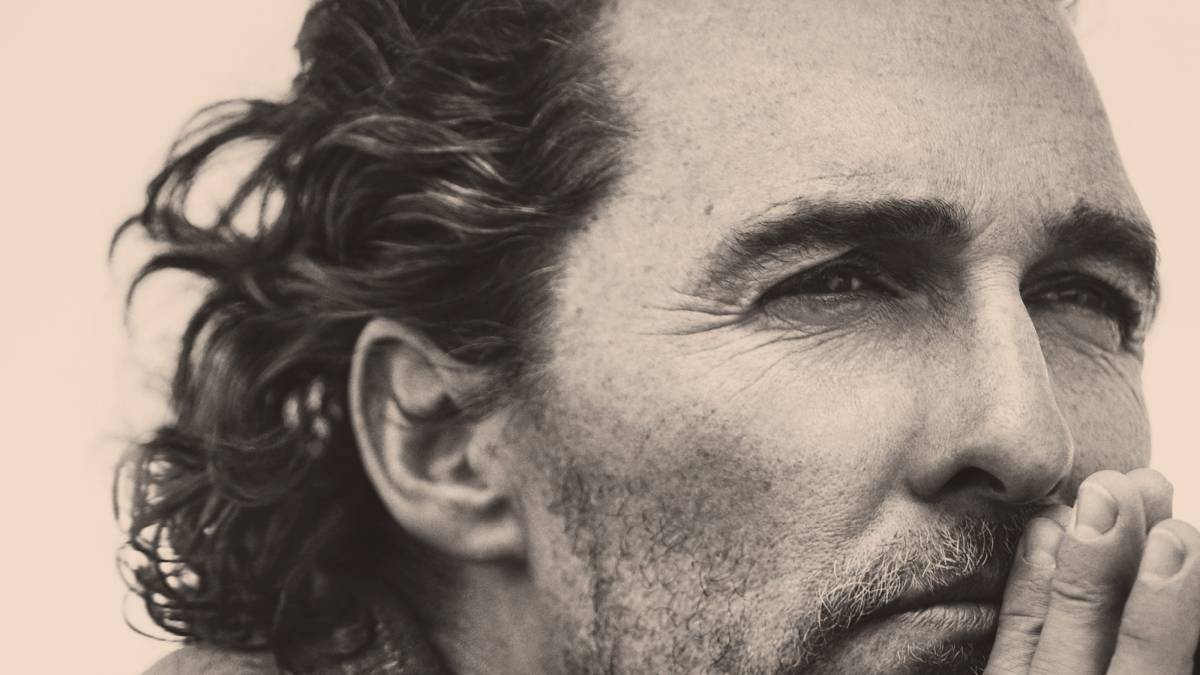
In a year of ‘red lights’, it’s been both enlightening and refreshing to read a book by a man who has spent his first fifty years on the planet chasing ‘greenlights.’ That phrase of catching ‘greenlights’ is also the formal title of Matthew McConaughey’s memoir / autobiography / personal growth tale that quickly draws the reader in. I first heard about Mr. McConaughey’s book when he appeared on the ‘Joe Rogan Experience’, Joe Rogan’s popular podcast. Mr. Rogan coined the book as being ‘whiskey philosophy’ with McConaughey being the philosopher over a glass of whiskey.

I found this metaphor to be quite fitting for the book ‘greenlights’ as the author talks about his life foremost as an observer and a reflector who is able to take a step back and analyze his decisions, his perspectives, and his overall views on his life and how he got to be who he is today. You immediately feel comfortable with McConaughey’s narrative and his ability to tell stories like you were sitting with an old friend over a fire pit drinking whiskey and regaling each other with both good times and bad. Throughout the book, you feel welcomed in and embraced as if you were right there with Matthew having a chat.

What I do love most about ‘Greenlights’ is the raw honesty and the ability to peer into a life like his, which I would argue is different from your average celebrity. Instead of obsessing over the glitz and glamour of being famous in Hollywood, you spend more time with McConaughey in different places around the world. I, for one, did not know that he was an avid traveler ever since he took a gap year in high school to go to Australia on an exchange program. He has often felt the call to go out in the wild, to be secluded from others, and to meet new people along the way.

Surprisingly, the book takes us from the Chihuahua Desert of West Texas to the autobahns of Germany to the jungles of the Peruvian Amazon and across the ocean to the small villages of Mali. One story of Matthew’s that stood out in particular was his wrestling match with a local Malian villager who challenges him as the only white man who has shown up as a guest to wrestle together. It’s not clear to the reader who wins the match, but it doesn’t matter to the village who sees Matthew wrestle. What is most important to them is that he accepted the challenge and not about who won or who lost.

I find that this particular story resonates across Matthew’s life so far and his willingness to put himself out there. Whether it’s going up to ask the woman he eventually marries if he can make her a margarita to seeking his permission from his father to go into acting as long as he doesn’t ‘half-ass it’ to keeping his promise to become a father because that was the most important thing for him to do in life, McConaughey is always willing to accept a challenge and embrace the possibility of failure. His ten guiding goals of what he wanted out of his life back in 1992 when he begun to keep a journal and of which he details in the book of what they were shows the readers how he may have taken a few detours but was able to stay true to his values and his desires even though he’s still working on a few of them.

His main goals of being a father, meeting the woman who was best for him on Earth, putting family first, and even winning a Best Actor award did not happen automatically and he had to run through a number of ‘red lights’ in order to get his ‘greenlights’ eventually. While ‘red lights’ would dissuade a lot of people to keep pushing such as being placed in romcoms for over ten years like Matthew was or perhaps having a falling out with his mother due to his having children out of wedlock, these ‘red lights’ did not discourage him from staying committed to who he was as an actor and as a person.

I think the main message of ‘greenlights’ is to not let the inevitable ‘red lights’ stop you from pursuing your goals and once you see an opportunity, you have to run with it and work hard to turn those lights green. Another particular example from the book that stood out to me was Matthew’s insight to playing Ron Woodroof in the acclaimed film, ‘Dallas Buyers Club’, an immensely emotional role, which led McConaughey to win the Best Actor award for his performance. The role itself wasn’t probably the highest paying role for an actor nor was it going to be a huge box office hit like his previous romcoms.

I believe Matthew took the role because how moving the personal story of Woodroof was and how he was moved to tears talking to Ron’s family and learning about his life through Ron’s own personal journals. While the actor and the man portrayed are very different, they are both native Texans and avid journal keepers. Matthew details his intense diet of losing up to 50 pounds to play the role in the movie and how he had to put himself in the mind of a man quietly dying from the horrific AIDS virus, which was stigmatized at the time. Even if they had to do the film over-budget, it was being made because Matthew, like all good actors, knows a good passion project when he finds one and puts all of his effort into acting the role to make the film as good as it can be. In this case, he won the Best Actor award and made his father proud who tells him the book to not ‘half-ass it’ and those words of encouragement stuck with Matthew.

In addition to seeing Matthew’s life play out since he was a child growing up in Texas, you get to see his really well-written poems, notes, anecdotes, and short stories, which really do convey an intuitive wisdom to them. From discussing love to pleasure to pain to truth to meaning, these poems scattered throughout the book are refreshing to read and relate to his life as a whole. His scribbles, notes, and recollection of different events in life is quite impressive. I do believe even more so after reading ‘Greenlights’ how I should start keeping my own journal for the long-term. Matthew was successfully able to turn his journal full of notes, memories, poems, and stories in a really good book about self-discovery, personal growth, the stages of life from childhood through adulthood, and one’s journey in seeking out ‘greenlights’ even when they can be few and far between as they have been for many of us throughout 2020.

At 285 pages, this is a great memoir and autobiography that doesn’t feel like its length. It is very much an easy page turner that doesn’t feel forced or slow-going. It really grips you for the ride and McConaughey’s life has been full of adventures, events, and precious memories up to year 50 where the book concludes. My only suggestion for improving the book or adding on to it in the future is to really focus more on the ‘red lights’ that happened in the author’s life and what specifically did he learn from those lean times as someone struggling as an actor or having family troubles or being tired of singledom.

I would be curious to learn more from Matthew about what advice he would give to someone during those ‘red lights’ times and how to make the most of them or how to best turn them green in the future. I did find that part to be missing from ‘Greenlights’ a bit too much as the ‘greenlights’ got a lot of the book space whereas I think it’s the ‘red lights’ in life that cause us to reflect more, learn more about who we are, and challenge us to be more creative in overcoming adversity.

In conclusion, ‘Greenlights’ by Matthew McConaughey is one of the best books of 2020. It is an engaging, emotional, and insightful look into a man’s life who has been one of the most important actors and entertainers of the past few decades. You learn a lot more about who Matthew is, what drives him, what’s important to him, how he views family, friends, his career, and what truly matters in life. I enjoy his whiskey philosophy and if I happened to be hanging out in Texas with anyone such as having a stiff drink and swapping stories together, it would be with Matthew McConaughey.

Get Your Own House In Order

“Before you can set an example to others in your house, or others in your community, or others in an overall society, you first need to show that you can ‘get your own house in order.’ You need to be able to handle yourself and your own day-to-day problems first before you can lead others to do the same in their own lives.”

There’s an old adage I have been thinking about lately about how it is primarily important to take care of oneself first and not just in one way but in every part of your life. Before you can set an example to others in your house, or others in your community, or others in an overall society, you first need to show that you can ‘get your own house in order.’ You need to be able to handle yourself and your own day-to-day problems first before you can lead others to do the same in their own lives.

It can be hard for other people to take you seriously when you don’t take yourself seriously in the first place. How will you be able to lead a team or an organization or a company if you are not able to master your own tasks and your own desires? Self-development isn’t just about making sure you are able to create a good life for yourself but it’s also about setting a positive example for others who would look up to you as a result. You cannot be a mentor or a role model for others without first putting yourself out there and doing what needs to be done to make yourself successful.

When you have not struggled, when have not persevered, when you have not done what it takes to reach your goals, how can you give advice to other people on what they should do to have the same kind of success? “Getting your own house in order” means taking care of yourself first and doing so consistently before you can use those same pieces of advice and examples for others to follow. Firstly, your own house in order starts with your mental and physical health.

Your body is your own house so it must be taken care of first and foremost in terms of getting good sleep, eating properly, not indulging in vices like alcohol or tobacco to excess, and knowing how to exercise as well to keep yourself in shape. It also extends to being able to relax, de-stress, handle anxiety, and be mentally sharp by challenging yourself but also relaxing your mind so as to not exhaust it entirely. Your body and your mind are their own little houses and they must be maintained thoroughly so that other people will know that you are capable enough to handle other demands in life.

Another house we don’t think of is appearance and grooming. Your own house in this case means maintaining a good appearance and practicing good hygiene. These practices are necessary also on a daily basis and to show to the world that you care about yourself and want to be taken seriously. For a job, an internship, a presentation, a seminar, a lecture, etc., your personal dress should indicate that you are a serious person for the role or for the opportunity and that others will know that they can respect your house because you respect it yourself. They will not respect your house when you show up to an interview in shorts or when you wear Yoga pants to a college lecture. Physical appearance and grooming are another ‘house’ that we all must take seriously and to do so primarily before we can give advice to others on how to maintain their own ‘houses’ in good order.

Lastly, the last ‘house’ on a personal level that I would like to focus on is where you live regardless if it is a small studio apartment or a huge mansion. Maintaining your own physical shape in the world is crucial if you want to tackle bigger and better problems. If you can’t make your bed, clean your bathroom, or keep your kitchen clean, how can you tackle any major issue in your community or in your society? At the end of the day, this kind of ‘house’ maintenance comes down to self-respect and putting your own ego aside to do the work that we all must do.

The chances are good that at the end of the work to maintain this ‘house’ that you will feel a lot better for having done the work needed to keep up a clean and orderly home. It is not easy to do this consistently but it is necessary and if you plan on having guests over, having friends over for a get-together, or want to be romantically involved with someone, a clean ‘house’ will go a long way to making you respectable and responsible in the eyes of others. Being able to maintain care not just of yourself but your own physical space means that people will know that they can trust you with other tasks and matters of importance that extend beyond your ‘house’ and to the ‘houses’ of others in the community and in the society.

Thinking about a community as a whole, their ‘houses’ include making sure that the schools are meeting the needs of the students, that the community is safe and protected for all of its residents, that the roads and bridges are maintained and do not have potholes or faulty beams, and to make sure that each and every person has access to utilities including water, electricity, and yes, an Internet connection too. If a community does not have those necessities for a high quality of life, then that ‘house’ is not in order and those people who have their own ‘houses’ in order need to step up to do their part to help others get the community in good shape.

If you have your own ‘house’ in order, you can set the standard for the rest of the community and be able to use your ideas to help others especially if you gain their respect and their trust. With how you act and how you behave in addition to your own appearance, ideas, and personal goals, you can make the community better and it’s important for you to get in there and show that you can make a difference there.

When a community can all of its necessities in order, that one community can definitely have an impact on the larger society within a country and even the world. A community where everyone has equal access to a good education, where health care is not a privilege but a right to all in that society, and when kindness, honesty, and virtue are rewarded rather than chastised. That is an overall society that is getting its own house in order and can serve as an example to other societies in other parts of the world.

Being able to provide a high quality of life and a chance to succeed to all of the people in a society should be the goal of society with its own ‘home’ in order. I am not talking about a social utopia per say but rather an ideal place where people know that they can succeed if given a fair shot in life. It’s also about providing the basic tools of any society to all of its people without discrimination and without corruption. Whether that is no homelessness, enough healthy food for everyone, and an economy where inequality is minimalized, that is what a society should be focusing on and using as an example to other societies.

When a society prioritizes the needs of the few over the many based on wealth or another privilege, that society does not have its own house in order. If there are people out there hungry, homeless, or without health care, then that society is not in order. A society cannot be an example for other societies when it lacks the courage to invest in its most vulnerable populations or to provide a higher quality of life for all people.

Without that kind of an example, a society will lose its influence or example setting and will turn inward and often tear itself apart without good leadership or good values. A society that gets its own house in order prioritizes the right social needs and finds the investments, funding necessary to maintain these necessities of its people will automatically become an example to other societies whether they are near or far. A society that doesn’t does not have a moral ground to stand on and will lose the example it could set by practicing bad ‘house’ manners in different ways.

“Getting Your Own House in Order” does not just apply to one individual but it also applies to a community and a society as a whole. We all are human and fallible and sometimes, we will fall short but if we strive to do better in our homes, in our lives, and in our examples we set for others, that kind of ‘Ripple Effect’ of positive values will improve the larger community and society as a result. How we treat ourselves (mind and body), our homes, our way of life has a direct effect on the community we share, and, on the society,  we find ourselves a part of. This kind of example setting starts at home, but it can ripple throughout to the rest of the world and it all begins with ourselves and our own actions.

What are we left with? (Our Memories)

I was asked a question recently that was very deep and thought-provoking. A friend asked me if I had to choose between an old age spent losing my physical abilities but keeping my mental faculties or an old age spent losing my mental faculties and keeping my physical abilities, which one would I choose? The question gave me pause because I normally do not focus a lot on my impending aging but it’s natural to think of what life will be like once you are an elderly person. My friend did not hesitate to say that he would choose having his physical abilities intact since he is a very active person and enjoys running, hiking, and exercising at the gym.

He thought that I would agree with him and I do like to keep active as well physically but I also thought of what would happen to my mind if I could no longer process and retain information about books I love, music I enjoy, and movies where I can recite a lot of lines of dialogue from. Perhaps most importantly, I thought of all the memories I have made up until this point of both friends and loved ones and how it would be anguishing to me if I succumb to a disease of the mind where I lose sight of who I am or who my family or friends are. I think that really is a fate worse than physical deterioration because I find that our physical abilities and our peak performance do not last and Father Time will have our way with all of us regardless of how much we exercise, take vitamins, and play sports. Eventually, your body will break down especially the older you get and there is only so much you can do to spot that.

However, I tend to believe that exercising our mind and our mental capabilities can be a lot easier and take a lot less work than it takes to maintain our physical body. We live in an age where you can learn anything you want about an unlimited number of subjects. Keeping our minds sharp by studying foreign languages, learning new subjects, reading good books, writing our thoughts down in a journal are all healthy activities to kind the mind sharp. I am not an expert in terms of how to keep our mental capacities up as we go through life but I would imagine that putting your brain to the test especially with puzzles, trivia games, and sudoku especially can help you preserve what is most important to you.

Unfortunately, I have seen firsthand how sad and tragic it is for others to slowly lose their mental capacities and that is what tipped me towards the idea of focusing as much, if not more so, on giving myself the best show to work on my concentration, my memory, and my ability to learn new things. I believe that we all have that same capacity to preserve our mental capacities although it does take consistent work that not only last years but lasts decades as well.

Part of the reason why it is good to be able to exercise your brain as much as possible is because I really believe it makes you a more well-rounded and thoughtful person. Learning new things is something you should never really give up on. Having a college degree or a law degree or a medical degree is not really an excuse to stop learning and stop exercising your mind to the most you can push it.

We do not know what old age will hold, what will it be like, what abilities or faculties we will be left with but what we have control over is today and what we focus on whether that is mental or physical exercise. What I do know is how meaningful it is to remember what has happened over the course of your life and to be aware of those special memories that are yours and yours alone. In the end, what are we left with? We are left with our memories and hopefully it is more of an endless ocean than a single drop of water.

To focus today on making those memories with the people we care about and the things we enjoy doing will make old age that much sweeter. If your body one day gives out but your mind is still sharp, I think that is the better side of the deal. Obviously, it would be great to be fit as a fiddle and sharp as a tack until your last day, but I find that to be wishful thinking. I hope to remember who I am, what I’ve done, who I met, and most importantly who I loved when that time comes to reminisce and there aren’t many more memories to make.

Having memories in your mind that are fresh and seemed like they happened yesterday is the best you should hope for and what you can strive for by working today to strengthen your mental capacities as much as possible.  Your body at 70 is unlikely to be as good as your body at 70 but I’m a believer in the capacity of your mind at 70 to be as sharp as your mind at 20 within reason.

There are definitely outside factors to contend for in terms of your ability to retain your memories such as your genetic predisposition, your family history, and your own mind’s chemistry, but you can control a lot today through your own actions what memories you will be left with 50 years later. It also does not hurt to start writing down in a journal or diary on a daily basis or at least a weekly basis what happened in your life. This is especially the case if you live an exciting or an eventful life.

In addition, having photographs of yourself at different ages and in different places will jumpstart your memories and remind you of where you have been and what you did. Towards the end of your life, think of what you will have left. Yes, you will have your money, your possessions, and hopefully good physical health but I wish you also to remember deeply the memories you have made from different parts of your life and they are as vivid as possible. Your life towards the end of it should be like a cinematic movie of many parts, one as distinct from the other, and I hope you can look upon those memories you have made with great enjoyment and great fondness for what was and what it meant to you.

The Why of Standards

How do we define standards? What exactly do they mean to our society and the world as a whole? See, the thing about standards is that if they are not observed by everyone to some degree than what would be the point of having them in the first place. Having standards when it comes to behavior, dress, professionalism, ethics, etc. helps society to function and for people to live productive and healthy lives. Without having standards or not being beholden to anyone else will create a society of winner-take-all or every man or every woman for themselves, which is not only counterproductive but also self-destructive in the long run.

As defined by Dictionary.com, A ‘standard’ is defined as “something considered by an authority or by general consent as a basis of comparison; or an approved model.” It’s a general definition but you can see that creating a standard requires the consent of the society at large. Standards can be difficult or easy to enforce depending on how popular they are but the total absence of standards in different areas of life should be fought against as much as possible. Everybody has different standards but the key to keep in mind is whether a lack of standards or a complete abandonment of standards is making the local community or overall society worse off as a result.

We don’t think about it but basic standards helps create laws, rules, and regulations that keep society running well. When there are no standards in anything whether its’ with business, politics, dress, the environment, etc. then every individual man, woman, and child will suffer in some regard as a result. Another thing to keep in mind is that a lack of standards or standards that are burdensome and counterproductive also cause harm to us as well.

Standards change over time but there are certain ideals and beliefs that I think should stand the test of time. By this I mean that basic manners and politeness should always be observed, presenting yourself well in your outer dress and appearance depending on the setting is crucial, and that you add with basic integrity, decency, and honesty when doing business or leading as a member of your community. Standards over time for these particular areas should not change and should even become stronger so that the next generations do not forget how to act, behave, and be good.

Standards can be relaxed in a number of areas or they can be hardened in other areas depending upon the mood and whims of the larger society but those areas I listed above should be consistent and not be trifled with. When basic manners, integrity, and matters of presenting become optional rather than mandatory, it’s likely that the entire society will feel the ill effects of such an absence of standards rather quickly. Fundamentally, systemic societal issues such as corruption, violence, and poverty, which while they have a wide range of causes are still related to an absence of moral and behavioral standards.

In a free society, standards can most definitely change and be adapted to fit to the times but it has to be with the approval of the majority of those people in that society. Leaving standards to the whims of a few leaders can be cumbersome and even negligent especially if they themselves due not match the standards for which they should follow based on their leadership roles. Standards are best when they are created, managed, and enforced in a democratic fashion and where the majority of people in that society are able to follow those standards.

While we are all individuals, we are all still apart of a collective society and we have to sometimes sacrifice our personal standards when we come up against those standards of the larger society even when we may fundamentally disagree with them. No standard is perfect but if the society has collectively agreed upon those standards, then all of the people must abide by them to the best of their ability. If the standards are to be changed, that should be done over time with the consent of the majority. Even if we don’t like the standards, if no one agrees to them, then they are not standards anymore and society could suffer as a result.

If you don’t like the absence of certain standards or believe that they are too burdensome on you or people that you know, then you need to make the effort and put in the work to change these standards. If you don’t like with how someone is behaving, then you need to make an informed argument as to how that person should behave in a more polite and decent manner. If you see some form of corruption and certain political leaders are letting it slide, then you need to take some responsibility in holding yourself first to a higher standard and then calling out that corruption to get others behind you so that the corruption may end in the future.

Individuals have power in a society with standards but they will fundamentally have less power in a society where there are weak standards or none at all. That is also the case where one sole individual can set standards for everyone else without so much as a protest from others, which is also dangerous and detrimental to society as a whole.

While standards such as for behavior, dress, professionalism, ethics, etc. may not always be popular to uphold, these standards form the backbone of the collective society. With the absence of any sort of standards comes at the behest of laws, rules, regulations, and principles as well. Standards form the base for a civilized society and in their absence; there is no way that a society of individuals can function at all.

When you read this article, think about your own standards and how they came to be in your thinking. Also, think about how important they are to you. Lastly, think about the current standards of your society and how long it took for them to be formed and implemented as well as how important they also are regardless if you agree with their being in existence or not. Standards are not meant to be popular all the time but they are meant to ensure codes of conduct in various manners of life.

The sheer absence of standards leads to an anarchy of sorts that would render polite society meaningless and turn individuals against each other in a collective free-for-all. Understanding the why of standards will make you more likely to improve and better your own existing ones.