Maslow’s Hierarchy of Needs and The True Quality of Life

“Maslow’s hierarchy of needs has always been a good reference for me in describing what exactly makes us have a safe, secure, happy, and fulfilling life. I do believe we need to have our hierarchy of needs in mind as people when we focus on what’s best for our fellow man or women and how to build a prosperous society.”

Everybody wishes to have a high quality of life but what exactly does that mean? We hear the term ‘quality of life’ a lot but what goes into the ‘quality’ of it and what makes for a satisfying ‘life’? Maslow’s hierarchy of needs has always been a good reference for me in describing what exactly makes us have a safe, secure, happy, and fulfilling life. I do believe we need to have our hierarchy of needs in mind as people when we focus on what’s best for our fellow man or women and how to build a prosperous society.

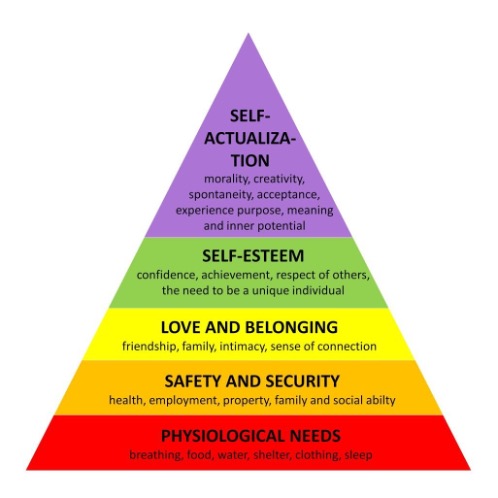
                                                                                                Source: SimplyPsychology.com

While I don’t wish to compare my own views on what true ‘quality of life’ is compared to Abraham Maslow’s ‘hierarchy of needs’ as shown in the pyramid diagram above, but it’s important to look at what makes a society flourish. I agree with Maslow at the base of the pyramid is the most important to ensure a life has some quality with it.

The societies that have the strongest base for ‘physiological needs’ usually are the happiest and satisfied with their quality of life. For example, you cannot focus on ‘safety and security’ as much as you can when you can’t even guarantee that the water you drink is clean and the air that you breathe is clean. Everything else on Maslow’s pyramid goes out the window if you are hungry, thirsty, don’t have a roof over your head or cannot clothe yourself or your family.

A lack or absence of ‘physiological needs’ is often found in the poorest or least developed of our societies and can still plague even our wealthiest and most developed societies. The key thing for all societies is that we should have an attitude of wanting to guarantee the ‘highest quality of life’ we can deliver to all people rather than just the few who can afford it financially. I do believe any society and its leadership is responsible for delivering on both ‘physiological needs’ and on ‘safety and security’ and once that is achieved, it will lead to better conditions whereas we go up Maslow’s pyramid, love, belonging, self-esteem, and self-actualization tend to be easier to achieve as well. True quality of life is knowing that if you fall on hard times, not by your fault, you’ll be looked after by your society and your government while you look to get back on your feet.

I don’t believe it’s anything farfetched or overly utopian to believe in everyone having the right to breathe clean air, drink clean war, have enough food each day, and have a roof over one’s head. I also think that while education and health care may not be on ‘physiological needs’, it ranks close in that regard to build that functional society. Everyone should be able to afford a good education and find good health care where they live and societies that accomplish this for their people are rewarded back and then some with citizens who are thriving as a result. Societies that are more educated, healthier, and with more opportunities to succeed tend to be those that have a true quality of life in my view.

You may be thinking that true quality of life is about having a big bank account, a bigger house, all the gadgets and electronics you could ever want, and all your material desires within reach, but to me, that would not go along at all with Maslow’s hierarchy. Having that stuff may make you happier but it doesn’t reflect a true quality of life in any society. If the roads are falling apart, people around you are suffering and in poverty, and you can go bankrupt for seeking medical care or a higher education, your quality of life will also suffer as a result even if you’re not directly affected by it.

When we are looked after or cared by others in the society who can ensure we have a good education, good health care, and to have affordable housing, the quality of life for everyone will go up. We are not islands unto ourselves alone and we are reflections of how we treat others. If you’re reading this article, think more about how your society or country could have a better quality of life not just for yourself but for the people living there too.

I ask that you believe in your ability to create change whether that’s advocating for more environmental regulations, prioritizing people’s access to basic needs including food and housing and thinking more about how we can include people in making them feel they belong in the society. We should collectively work towards providing more opportunities to everyone, so they don’t feel left out. Any healthy society has those public places to gather, discuss, and hopefully fix the quality-of-life issues going on in their community, town, city, or country.  

I don’t judge a society by how wealthy it is, how big the houses people live in are, or how much they have in material goods and services available. I judge a society by how they treat the least well-off members, how they prioritize the public good or not, and what they are doing to improve the overall quality of life rather than ignoring it or having it steadily decline under their watch.

It’s important for us to start thinking about not just ourselves and our own quality of life but those of our fellow man and woman. When they are worse off than us, let’s lift them up and look out for them instead of shunning them or isolating them instead. We should always be advocating for a ‘true quality of life’ where everybody is given the opportunity to succeed, grow, live healthy and happy lives, and pursue their dreams.

We all will be better off for having invested in the basic tenets of civilized society such as education, health care, transit, housing, and healthy food supply rather than just guarantee them for the few who can afford it. The higher the quality of life is not just for us but for every member of our society, the more likely we will all flourish together and reach our highest fulfillment.

Is ‘The Grass Always Greener’ On The Other Side?

“There is a sense of whimsy about wishing what would your life be like if you had made a different decision or if a different opportunity had come your way.”

The popular English language expression on ‘the grass is always greener on the other side’ is a common refrain when discussing the possibilities of where one could see themselves in a different reality or circumstance other than their own. There is a sense of whimsy about wishing what would your life be like if you had made a different decision or if a different opportunity had come your way. You may even want to switch places with someone else you know or someone you admire or someone you read about. Beyond that, it could also be wanting to live in a different city or country or to experience a different culture or set of customs other than the one you were born into or grew up in.

I find that there is nothing wrong with daydreaming about the possibilities for change or how to make your life better or more successful. I do think it is a good thing to be reflective as well on how others live, what you can take from their example or even discard based on your own perspective, and to not be afraid to even experiment with making different choices in life based on what others have done ahead of you. It is good to be inspired by other people, read about their lives, and to change your own approach to how you live, where you work, how you act, and what you can be within reason.

I think, however, that it is important to not be fantasizing all the time about how others live or envious of other people without knowing the full story. Being obsessed with mimicking or copying other people is also a recipe for disaster in my view. It is okay to be influenced by others around you who are making a positive impact and living life in a successful and moral manner. However, it does not justify being a ‘copycat’ or a ‘sycophant.’ Often, we must think for ourselves, make our own decisions, and to live a life true to our own morals, values, and code. Doing what others do just because they think it is ‘popular’, ‘cool’ or ‘successful’ is not what a mature individual should be following.

You may think that the other person or group of people has it all figured out, but the reality is much more complicated than that. You may envy the house, the car, the lifestyle, or the personality they have but often, you only know the surface of what you can see about that person. The same goes for endlessly admiring another city, country, or culture. It is okay to admire and adopt those customs, the food, the language, and the beliefs, but it’s important to take a step back to see what is compatible with you and what you would rather not adapt as your own self-expression.

As another saying goes, ‘walk a mile in another person’s shoes’, that is not a bad thing to do in life. Still, to automatically wish to live like them, be like them, and change who you are entirely is losing your own conception of self in the process. I am a fan of learning about other people, their backgrounds, their cultures, and their viewpoints, but that should be a way for you to more fully accentuate who you are as a result rather than change you are entirely. It’s good to see how others live, why they live like that, and be the more educated and worldly for it, but there’s a limit to how much we can live like those people.

Instead, use those variety of experiences, either lived or learned, to water ‘your own grass’ to be ‘greener and livelier.’ Instead of envy, jealousy or obsession, be more concerned with how to live a life that’s truer to yourself and what you wish to achieve. Think about what you’ve learned, seen, or heard, to adapt that to benefit your own life. Adopt those practices that will make your life better and make you a better person. Use your expansive knowledge based on living in different places, meeting different people, or studying different topics to make your life much more fulfilling and richer. We never truly have all the information regarding the lives of others and often we just see a snapshot of it rather than the full picture.

This is the same when we visit a place or even live there for a little bit of time. Even with that knowledge of a place and a people, we are not born there, or grew up there, and it limits our perception of what is going on there to some degree. Regardless of if you’re envious, apprehensive, dismissive, or neutral about a person, place, or culture, you should not automatically think that where you are or the ‘grass’ on your side is better or worse than theirs because you really can’t even make a real judgment.

You can always ‘walk in other’s person’s shoes’ for some time but you’ll never fully live in their shoes as they do. The same goes with where, why, and how we live and comparing it to others’ lives we learn about as they may want to have our life and we may want to have theirs, but we should remember that we will never have the full picture regarding their life’s circumstances. Instead of envying the ‘grass on the other side’ that we are constantly exposed to in person and online, you should remember to focus primarily on watering, fixing, and shaping your own ‘grass’ under your own feet and in your life to make it a more fulfilling, joyful, and happy kind of life to live.  

Some Thoughts On “This Too Shall Pass”

“The main message of the quote is meant to be comforting to those who hear the words strung together either in a poem, a speech, a song, or a fable, and it is supposed to let us all know that whatever we are experiencing or feeling at the moment, whether it is positive or negative, good or bad, happy or sad, “this too shall pass.”

A favorite quote of mine in the English language, originally adapted from Farsi / Persian centuries ago, has been used by both Sufi poets and American presidents alike to describe the impermanence of everything. The main message of the quote is meant to be comforting to those who hear the words strung together either in a poem, a speech, a song, or a fable, and it is supposed to let us all know that whatever we are experiencing or feeling at the moment, whether it is positive or negative, good or bad, happy or sad, “this too shall pass.”

The human condition is ever evolving and what we experience one moment, one hour, or one day can be drastically different later from what was before. Nothing is permanent as we all know because one of the first things we become sentient of is our own mortality and our own impermanence on Earth. While this can fill us with existential dread and despair, it can be a blessing too because the pain, the suffering, and other negative emotions we experience in this life are not for forever. Just as we can’t be experiencing euphoria in the form of only good things happening every moment of our life, the same can be said for having everything go wrong throughout life.

What happens to us in life is largely beyond our control but what we can control is how we react to life and its challenges. In addition, we should remind ourselves that tough times are not forever and if you stay in the game, you keep moving forward, you give yourself a chance of pulling yourself out of a bad rut or a down time. I find it healthy emotionally to remember the Persian and now translated to English saying of, “this too shall pass.” It is a good reminder for us all about the impermanence of all things we experience including life itself.

In addition, this quote of “this too shall pass” can be correlated to “carpe diem” because we must do our best to enjoy life despite its challenges because we never know how many days will be given to live this life. You may not know what life will throw your way day by day, but you should be prepared to make the most of it, to ‘seize’ it, and to have an impact on it in whatever way you can.

The impermanence of everything in life should make us savor the good moments more whenever they come to us. We can remind ourselves that the bad times don’t last forever too and that good times can be just around the corner if we believe in ourselves to turn things around. Being more grateful, more appreciative, more kind, and being a better person even when we don’t feel like karma or life itself is reflecting the good that we’re doing should not mean we stop trying. The reward of life is to live it to the fullest and to do it well even with the inevitable ups and downs, the highs and lows that come with it.

We must refuse to give up or surrender when the bad times in life challenge us, sometimes beyond what we would ever want to endure. We must believe in doing good and being good even when bad things or times happen to us. Life is a gift; however we are affected by existing and living day by day, we must make the most of it and to continue making our lives better even when times are tough on us. Those four words of “this too shall pass” have comforted people in different cultures and in different languages throughout the centuries.

The human condition is not the same day by day and what we experience today will not be what we experience tomorrow. Time can blend, routines can become suffocating, and experiences can become mundane in life, but it is up to you and you alone first to make changes to your life, to make different choices to how you react to life, and to form different habits that could make what looks like a permanent situation turn into a temporary blip in your life trajectory. We may think that we are on a set course, but we have agency, and nothing is permanent, and we can make our lives what we wish if we decide to act and make change to go from good to bad or bad to good depending on how we act on both our actions and choices.

“This too shall pass” is a timeless piece of wisdom that resonates deeply with the human experience and has done so for centuries. At its core, this universal phrase has served as a powerful reminder to all human beings of the impermanence of all things and of life itself. By acknowledging that both good and bad moments are fleeting, we cultivate a healthier and balanced perspective on life. When faced with the challenges life throws at us each day, remembering that “this too shall pass” helps us to endure the hardships with greater resilience, humility, and patience. It encourages us to stay grounded, knowing that difficult times will not last forever. This outlook can alleviate the weight of anxiety and stress, providing a sense of hope, belief, and a clear mind to navigate through life’s adversities.   

Similarly, this kind of wisdom also teaches us to cherish the happy and joyful moments more fully, understanding that they are both precious and temporary. It fosters an appreciation for the present moment we are living in, urging us to savor the beauty and happiness we encounter even in a minute way. By internalizing this phrase in our lives, we become more mindful and grateful for the positive experiences in our lives when they occur.

Incorporating “this too shall pass” into our mindset every day can lead to a more balanced emotional and mental state. This quote promotes resilience by reassuring us during tough times and maximizing our joy by reminding us to live in the present, whether good or bad. Ultimately, this simple yet profound wisdom from earlier times in the history of humanity helps us embrace the ebb and flow of life with grace and humility, transforming how we approach both our triumphs and our trials.

What Is Your Spice of Life?

“You may be able to find this in your studies, your daily vocation, or even your career, but for many of us, what you do to earn a living may not make up what you are excited most about in the act of living. We often must look elsewhere outside what we do day to day to find our ‘spice of life.’”

How do we explore the full richness of life? This is the kind of age-old question that philosophers and writers have asked for many centuries. What truly fulfills us and makes us enjoy what life has to offer? I would argue that it’s more important than ever to find the ‘spice’ in life that makes you excited, engaged, and fulfilled. You may be able to find this in your studies, your daily vocation, or even your career, but for many of us, what you do to earn a living may not make up what you are excited most about in the act of living. We often must look elsewhere outside what we do day to day to find our ‘spice of life.’

To get your ‘spice of life’ these days, you have to be willing to put yourself out there and try different things. What gets you excited, motivated, and fulfills you today may not be what motivates you years or decades down the line. You should remember that you won’t enjoy everything you do or try forever so it’s important to stay open minded about other possibilities and to not be tethered to one hobby or interest only. Some people have lifelong loves for different activities, hobbies, or sports, which is great, but you may not be able to do it for the rest of your life so keep it in mind that you don’t get attached to one single activity, hobby, or sport because you may not be able to commit to it forever or be as productive or successful at it in the long term.

I think it is wise to keep your identity pliable not just for one job or one academic calling but to be open to learning new things, to experimenting with new ideas, and to trying out different activities that you have some basic interest in. You won’t love everything you do, and you may only do it for a few months or a few years, but it is much better than the alternative of not having done anything at all. Our collective attention spans have become so short due to modern technology that we don’t even try new things or are patient with it because we are too distracted by the latest gadget or technological development.

True fulfillment and satisfaction can come from mastery of a subject or an activity for which you pored countless hours into and never gave up at it. You can also find the ‘spice of life’ from having fun with it and doing it just for enjoyment alone and not to master it completely. Life has a lot to offer and it’s important to keep that in mind beyond our careers and our education. We may have limited time to do what we want to do but we must prioritize that time because without our own choice(s) in what we want to do, we will not find any fulfillment at all. We can find fulfillment both in our day-to-day pursuits but also in those pursuits we do each week or each month without a set schedule in mind.

To find consistent joy in life is not easy, but it can be done by not giving up, by trying out new things, and by doing those things consistently for a little while to see if it is giving you happiness or fulfillment. Being able to give an activity or a hobby at least a few weeks or a month to try it out is key. If you find you are getting bored with something and don’t enjoy it as much or as often, it is okay to put it on the back burner, but don’t be afraid to try something else. Our likes and dislikes change as we go through life, but it is important to keep finding that ‘spice’ in our lives that gets us excited, keeps us motivated, and brings us joy.

Remember to never completely giving up on finding your own passions and fulfillment in life. It is not easy and is something you must continually motivate yourself to do but it can help your life satisfaction out to have something that you enjoy outside of what you have to do each day. Having nothing to enjoy or have fun doing could remove all the ‘spice’ or ‘zest’ that makes life worth living and you want to avoid getting into that kind of scenario. Be ready to try new things, find activities to do by yourself or with others, and be open minded in what you think you would enjoy.

It helps to make a list of activities or things that you have done that you would like to do again as well as those activities or things you’ve never done before but would like to try. There are tons of activities, hobbies, sports, or things to do in this world and you just have to try a few at a time to retain the ‘spice of life.’ Make sure you live life to the fullest in this way and I promise that you will not be disappointed by making the conscious choice to try new things.

Adriatic Rainbow

Rainbow over the Adriatic Sea

Camera: iPhone 12

Location: Dubrovnik, Croatia

Sunset in Dubrovnik

Sunset in Dubrovnik

Camera: iPhone 12

Location: Dubrovnik, Croatia

Deep vs. Superficial Friendships

“The friendships that we create in life come in various types and kinds, from the shallow and fleeting to the profound and enduring, but the idea of friendships in general, are crucial to maintaining a healthy and well-balanced life.”

The friendships that we create in life come in various types and kinds, from the shallow and fleeting to the profound and enduring, but the idea of friendships in general, are crucial to maintaining a healthy and well-balanced life. We must recognize though that there is a stark disparity between having deep friendships and having superficial ones. We should always try to prioritize having the former as much as possible as it is vital in helping with our emotional well-being and it is important to cultivate such enriching and long-lasting bonds when we can in life.

Deep friendships are akin to having actual roots that anchor us, offering solace, support, and understanding amidst life’s tumultuous events. Unlike superficial friendships, which often revolve around surface-level interactions and fleeting interests and hobbies, deep friendships transcend the superficiality of small talk by delving into the depths of our souls. These profound connections are characterized by authenticity, vulnerability, and reciprocity, serving as sanctuaries where we can reveal our true selves without fear of judgment.

The importance of having a deep friendship cannot be overstated. Research in psychology consistently underscores a myriad of benefits, ranging from enhanced emotional resilience to increased lifespan longevity. Deep friendships provide a nurturing environment where individuals can share their joys and sorrows, seek counsel, and celebrate milestones. Moreover, these intimate bonds foster a sense of belonging and validation, buffering against the pangs of loneliness and isolation that plague so many in today’s hyperconnected yet paradoxically lonely world.

Conversely, superficial friendships, while ubiquitous, often leave us feeling hollow and disconnected. In the age of social media, where likes and followers reign supreme, it’s all too easy to confuse online acquaintanceships with genuine friendships. Superficial friendships are characterized by surface-level interactions, revolving around shared activities or interests rather than by having a deep emotional connection or being able to be vulnerable with the other person without judgment or regret. While they may provide fleeting moments of amusement or distraction, they lack the depth and intimacy necessary for true companionship.

American culture, with its emphasis on individualism and instant gratification, often perpetuates the primacy of superficial friendships rather than deeper ones. From the frenetic pace of social gatherings, the inability to have spontaneous meetups with friends without scheduling weeks or months in advance to the superficiality of online interactions, many Americans find themselves these days caught in a whirlwind of shallow connections, neglecting the profound bonds that sustain us throughout our lives. Societal pressures in American culture of projecting a false or inflated image of success and popularity rather than being realistic of what your life is like. This kind of attitude can incentivize people to prioritize quantity over quality when it comes to friendships, leading to a proliferation of superficial ties at the expense of forming genuine connections with others.

This trend is particularly pronounced during the adolescent phase of life, which is a formative period characterized by peer pressure and social conformity. Teenagers, eager to fit in and be accepted, may gravitate towards superficial friendships based on shared interests or social status, neglecting the deeper connections that truly nourish the spirit. Similarly, adults, juggling the demands of career and family, may find themselves ensnared in a web of acquaintanceships, leaving little time or energy for cultivating deep friendships.

How can we resist the allure of superficial friendships and cultivate the depth and authenticity we crave? The first step is awareness, recognizing the differences between superficial and deep friendships and acknowledging the profound impact the latter kind can have on our well-being. Deep friendships are marked by essential qualities such as empathy, trust, and mutual respect, whereas superficial friendships are characterized by shallowness, frivolities, and transience.

Furthermore, cultivating deep friendships requires intentionality and effort. It entails investing both serious time and energy in building and nurturing those meaningful connections, prioritizing quality over quantity when it comes to who your friends really are. This kind of approach may involve initiating vulnerable conversations, actively listening to both our friends’ struggles and triumphs, and showing up for them in times of need, even when it may be inconvenient for you to do so. It also means being willing to reciprocate the same level of vulnerability and support, fostering a sense of mutual trust and understanding between the two people involved. If your friend is going through a personal crisis, or wants to celebrate his success(-es) with you, or needs some advice, will you be there for them through both the good times and the bad? You really must know that answer before you consider it a deep friendship.

It should be noted that fostering deep friendships necessitates setting boundaries and discerning when to invest in relationships that align with our values, beliefs, and nurture our personal growth. This may mean distancing ourselves from toxic or one-sided friendships that drain our energy, our time, and diminish our sense of self-worth. While it can be daunting to confront the discomfort of letting go from any friendship you make because of how difficult it can be to start from scratch with a new person, prioritizing one’s own emotional well-being is essential for fostering deeper and more fulfilling connections for creating more rewarding friendships.

Moreover, we must challenge societal norms that prioritize superficiality over depth and authenticity. This requires redefining our cultural narratives around friendship, valuing vulnerability, and emotional intimacy as essential components of genuine connection. By modeling deep friendships in our own lives and advocating for their importance in our communities, we can shift the cultural paradigm towards one that values quality over quantity in friendships.

The profound impact of deep and enduring friendships on happiness and health cannot be overstated. Research spanning past decades has consistently demonstrated many benefits of having meaningful social connections, from reduced stress and anxiety to improved immune function and physical health. Deep friendships provide a buffer against the inherent stresses of life, offering emotional support and validation during challenging times. When we have friends who truly understand us and care for our well-being rather than just know who our favorite sports team is or what we enjoy doing on weekends, we feel less alone in our struggles and more capable of navigating life’s ups and downs.

Deep friendships help us foster an essential sense of belonging and acceptance that is essential for our psychological well-being. When we can openly share our joys and sorrows with trusted friends, we validate our experiences and affirm our sense of self-worth. This sense of belonging not only enhances our self-esteem but also strengthens our resilience in the face of adversity and challenges. Studies have shown that individuals who have strong social support networks are better equipped to cope with stress, anxiety, and trauma, leading to improved mental and emotional health over time.

Additionally, deep friendships provide opportunities for personal growth and self-discovery, as we learn from and are inspired by the unique perspectives and experiences of our friends who can relate to what we’re going through each day. In essence, deep and lasting friendships enrich our lives in ways that superficial connections simply cannot replicate, contributing to our overall happiness and well-being in profound and meaningful ways. Having deep friendships is a large part of the bedrock of our emotional well-being, offering solace, support, and understanding in an increasingly superficial and shallow world. Distinguishing between deep and superficial friendships requires having emotional awareness, intentionality, and discernment. By prioritizing authenticity, vulnerability, and reciprocity in our friendships, we can cultivate deeper friendships that nourish the soul and sustain us through life’s tribulations and triumphs.

Getting Good at Asking Questions

“Asking questions is a fundamental life skill that you should always be improving on. You should be able to ask relevant questions without feeling as if you are imposing on someone.”

Asking questions is a fundamental life skill that you should always be improving on. You should be able to ask relevant questions without feeling as if you are imposing on someone. There are limits to how many questions or what kind of questions we can ask but you won’t know if that question will be answered until you ask it. Most of the time, there is no harm in asking someone a question and seeing what the response will be. I find that it’s often better to have posed the question than not to have asked anything at all.

Unfortunately, I would say that a lot of people are afraid of asking any questions at all. They may not want to cause a stir, fear a reprisal, or feel that their ego would be harmed by asking a question. I can sympathize with these concerns but it’s important to make sure that before agreeing to someone, before signing a document, or verifying a statement, that you ask all relevant questions that come to mind.

I would also argue that asking questions is not only necessary professionally but in your personal life. Being able to know more about your friend(s), your family member(s), and even your romantic partner comes down to asking good questions without overdoing it. It is one thing to be able to ask simple questions, but I would encourage you to get good at asking questions by following a few steps before you ask the question of the other person or of a group of people.

  1. As I mentioned earlier, the question should be relevant to the subject(s) that you are talking about. To give a simple example, if you need to ask someone what their plans are job or career-wise, I could ask them, “what would you like work on in the future?” or “where would you like to work in the future?” I wouldn’t say, “what does the future hold?” or “what will you do?”. You must make the sentence a bit more relevant by expressing that you are asking about ‘work’ specifically and highlighting ‘in the future’ to make sure that you are discussing a future opportunity. The other two questions are too general and do not specify enough that this is about a future job or opportunity. You should also make sure your question focuses on ‘your future’ and not ‘the future’ when asking that person. The other question of “what will you do?” has ‘in the future’ missing from the end where it could be more relevant.

2. Not only should questions be as relevant as possible, but you should avoid having them be open-ended. Similarly to not omitting ‘in the future’ from the end of the question, your question should be more concrete and firmer in what you are asking. Instead of asking someone, for example, “Did you tell the truth?”, it’s too open ended compared with, “Did you tell the truth about what happened at the party?” The person you are questioning may feign ignorance about an open-ended question such as not know what ‘truth’ or ‘true statement’ you are referring to. At the end of the question, you should be specific about what the ‘truth’ pertains to such as ‘the party’, that the person you’re questioning was likely at and can tell you more about it. I believe that when it comes to asking questions, they should be relevant but not be open-ended so the other person will not better what you are asking them about and will find it more difficult to feign ignorance. You only may have one chance to ask the relevant person(s) your question(s) so it’s better that they be as a specific as possible and discuss what the person or people should already have some familiarity with.

3. Lastly, when it comes to getting good at asking questions, make sure you are addressing not just ‘what’ and ‘why’ but to get the full context, including all the -wh question words as well as ‘how’ to add on to it. I believe ‘what’ and ‘why’ to be the most important kinds of question words to use in any question. However, I would recommend not neglecting the chance to have follow up questions if feasible. Those follow up questions you ask should include ‘where’, ‘who’, ‘when’, and ‘how.’ You can also include other ways to ask the question such as ‘for what reason _______’ or ‘for what purpose ______’ as questions can begin in English with ‘for’. If you have just one question to ask, ‘why’ followed by ‘what’ can be used almost interchangeably but are most effective in finding out the person’s reasoning or justification regarding the answer.

Don’t repeat the same kind of questions repeatedly. It is important to mix up your questions involving the question words that you use at the start of the sentence. If you can ask multiple questions, make sure you address each relevant question word with the person you’re asking. You’ll find that you will get more information from them and will get better answers by using each question word. Whether it is reason, explanation, justification, or overall rationale in their answer(s), the various question words can be a large difference in the information you receive as a result. If you are going to ask questions, do not make them the same and vary them each chance you get to achieve better results.

Asking good questions is not easy and there is some skill involved. It is better to ask a question than to not have asked one at all if you take the time to practice. You should want to make sure that you are asking questions generally but ones that are relevant, not too open-ended, more specific, and are also varied in how they are phrased. These key steps will set you apart in terms of the kind of answers you may get. If your questions are vague, irrelevant, open-ended, or too generic, you will likely not get the answers you need, and your professional or personal life may not progress as well as a result.

Like any good life skill, asking good questions will take serious time and effort. Make sure to practice what questions you’ll ask someone before stepping in front of them. Take the time to prepare, write down your questions, analyze them for relevance, and practice with a trusted person before stepping up to ask the actual question. You’ll be glad for the practice in doing so and I think you’ll be much better off as a result when ‘question time’ comes around.

Managing Life’s Risks is a Balancing Act

“While risks often bring about growth, innovation, and personal growth, it is crucial to acknowledge that not all risks are created equal, nor do they have the same level of probability of occurring.”

What is life without a little risk involved? Life itself is an intricate and colorful tapestry woven with uncertainties, challenges, and opportunities. In navigating this profound tapestry, one cannot escape the reality that risks are an inherent part of the human experience and cannot be 100% avoided no matter how hard we try to do so. While risks often bring about growth, innovation, and personal growth, it is crucial to acknowledge that not all risks are created equal, nor do they have the same level of probability of occurring.

Therefore, it is key that your priority should be to strike a delicate balance between embracing risks for personal and professional growth and mitigating those risks that could pose threats to your health, safety, and livelihood, which is paramount to keep in mind. It is necessary to explore the importance of embracing risks to some extent, while highlighting the need for discernment and smart risk mitigation strategies.

Embracing risks is synonymous with embracing the unknown, and it is in these uncharted territories that personal and professional growth often thrives in that space. Taking risks fosters resilience, adaptability, and the ability to confront and overcome challenges in one’s life. It is through risk-taking that individuals discover their true capabilities, push their boundaries, and expand the limits of what they thought was possible.

Innovation, a driving force behind societal progress, is born from calculated risks that inventors, visionaries, and leaders have pushed for. History is filled with examples of individuals and organizations that embraced risks, leading to groundbreaking discoveries, technological advancements, and societal transformations. From the pioneering spirit of explorers venturing into the unknown waters to the entrepreneurial risk-takers who fueled economic growth; risks have been an essential ingredient in the human condition.

However, it is important to differentiate between positive risks that contribute to growth and innovation to those that can jeopardize well-being. Striking this balance requires a thoughtful approach to risk-taking, where one acknowledges the potential rewards while also recognizing the potential pitfalls.

Here are some steps to keep in mind to control or manage one’s risk-taking:

  1. Making a Risk Assessment and Evaluation: Before embarking on any venture or decision involving risk, it is imperative to conduct a thorough risk assessment. Identify potential outcomes, both positive and negative, and evaluate the likelihood of each scenario occurring. By understanding the risks involved, individuals can make informed decisions about whether the potential rewards outweigh the potential consequences involved.
  2. Set Clear Objectives and Goals: Establishing clear objectives and goals provides a framework for risk-taking. Knowing what one hopes to achieve allows for a more focused and calculated approach to risks. By aligning risks with specific objectives, individuals can better gauge the potential benefits and make decisions that align with their overarching aspirations or goals.
  3. Continuous Learning and Adaptability: Embracing risks necessitates a commitment to having continuous learning and showing adaptability. Staying informed about potential challenges and being open to adjusting strategies based on feedback and evolving circumstances are key components of smart risk-taking. This iterative process allows individuals to refine their approach while mitigating potential risks along the way.
  4. Diversification of Risks: In both personal and professional contexts, diversifying risks is a prudent strategy. This involves spreading your risks across different areas or investments rather than putting all resources or net worth into one venture. By diversifying the risks, individuals can reduce the impact of potential failures in one area, which helps with increasing overall resilience.
  5. Financial Planning and Contingency Measures: Financial stability is often at the core of risk mitigation. Developing a robust financial plan and having contingency measures in place provide a safety net in the face of unforeseen challenges. This preparation not only cushions the impact of potential setbacks but also instills a sense of confidence and security, enabling you to take calculated risks.
  6. Seeking Professional Advice: In complex situations, seeking advice from professionals in the relevant field of expertise can be invaluable. Whether it’s financial advisors, personal development mentors, or industry experts, consulting with those people who have years or decades of experience can provide insights that may not be apparent to the person who is taking the risk. Learning from the experiences and expertise of others can contribute to smarter and more informed decision-making.
  7. Prioritize Health and Well-being: Not all risks are worth taking in life, especially those that could compromise physical or mental health. Prioritizing well-being physically and mentally is non-negotiable, and any risk that poses a threat to your health should be approached with extreme caution. Buying a motorcycle to drive on the highway going 100 MPH may be a once-in-a-lifetime experience, but ask yourself beforehand, is it worth potentially risking life and limb to have that kind of experience? That is just one example of prioritizing health and well-being before jumping into a risk that could affect one’s body and mind. Recognizing the value of a healthy and vigorous life is integral to making wise decisions about the risks one is willing to embrace physically and mentally.

In the great arena that is life, risks are the threads that we weave together through moments of triumph, growth, and self-discovery. Embracing risks, to some extent, is essential for both our progress and personal development. However, it is equally important to exercise prudence and discernment, avoiding risks that could compromise one’s health, safety, and livelihood.

The steps that I outlined above provide a roadmap for keeping your risk-taking under control. From thorough assessment and goal setting to continuous learning and seeking professional advice, these strategies empower individuals to navigate the delicate balance between embracing risks and mitigating potential harm. In the pursuit of a fulfilling and successful life, it is not about avoiding risks altogether, but instead it is about making informed and smart choices that lead to personal growth, greater innovation, and increased well-being.

Having The Zero-To-Zero Mindset

“Essentially, it is a perspective that encourages us to start fresh, wipe the slate clean, and approach each day with the determination to put wins on the board.”

As the calendar flips to the new year of 2024, many of us find ourselves eager to leave behind the challenges and setbacks of the past year and embark on a fresh journey. It’s a time when our New Year’s resolutions are made, goals are set, and aspirations run high. However, sustaining the motivation throughout the year can be a daunting task, especially when faced with the inevitable obstacles that life throws our way.

I am going to discuss the concept of what a goalkeeper I know from a previous recreational soccer league I played in, introduced me to the term of having a “zero-to-zero” mindset. Essentially, it is a perspective that encourages us to start fresh, wipe the slate clean, and approach each day with the determination to put wins on the board. Drawing inspiration from the world of sports, particularly the role of the goalkeeper in soccer, I will focus on the strategies to stay motivated and persevere, even when the odds seem insurmountable.

The zero-to-zero mindset involves viewing each day as a new opportunity, unburdened by the failures or successes of the past, like putting a bad or good soccer game behind you. It’s about adopting a mindset where the scoreboard resets to zero every morning, allowing us to focus on the present and the potential for success in the day ahead. This perspective enables us to shed the weight of past mistakes, disappointments, or even our achievements, fostering a sense of renewal and revitalization.

In the context of personal development and goal setting, the zero-to-zero mindset encourages a forward-thinking approach. Rather than dwelling on our past failures or basking in the glory of previous triumphs, we can channel our energy into the actions required to achieve their objectives. This mindset promotes resilience, adaptability, and a willingness to learn from both successes and setbacks.

To better understand the essence of the zero-to-zero mindset, we can draw parallels from the world of football or as I like to call it, soccer. The role of the goalkeeper in a soccer match is analogous to the individual striving to stay motivated and achieve their goals.

Any goalkeeper’s primary responsibility is to prevent the opposing team from scoring goals. They are the last line of defense, and their performance often determines the outcome of the game. Importantly, a goalkeeper maintains a constant vigilance, irrespective of the score line itself. Whether their team is ahead by two, five, or ten goals or vice versa on the losing end, a goalkeeper understands that complacency can lead to a sudden turnaround in fortune.

In applying this analogy to personal development, we can draw valuable lessons from the goalkeeper’s mindset. Just as the goalkeeper stays focused on thwarting any attempts to score, individuals pursuing their goals must remain vigilant against complacency and overconfidence. The zero-to-zero mindset encourages a relentless commitment to progress, acknowledging that even a comfortable lead can be eroded if one loses sight of the bigger picture.

The concept of putting wins on the board encapsulates the proactive and strategic approach required to achieve goals. Rather than waiting for success to come to us, adopting the zero-to-zero mindset prompts us to actively pursue victories, no matter how small, to build momentum and confidence. Just as a goalkeeper makes critical saves to keep their team in the game, individuals must make strategic decisions and take deliberate actions to secure wins in their personal and professional pursuits.

To put wins on the board in soccer and in life itself, it is crucial to break down larger goals into smaller and more manageable tasks. These incremental goals serve as milestones that provide a sense of accomplishment and progress. Achieving these smaller victories contributes to a person’s overall success and reinforces the zero-to-zero mindset by emphasizing the importance of each step in the journey.

Recognizing and celebrating small victories is essential for maintaining motivation. Whether it’s completing a challenging task at work, learning a new skill at school, or overcoming a physical or mental obstacle, acknowledging these accomplishments reinforces a positive mindset in your life. Celebration acts as a motivator and encourages individuals to persist in their efforts and build on their successes.

The zero-to-zero mindset recognizes that setbacks are inevitable in life as in soccer. Instead of viewing failures as insurmountable obstacles, individuals should approach them as opportunities to learn and grow from them. Like a goalkeeper analyzing the opponent’s goals to improve their technique, people can glean valuable insights from their failures, which can refine and further shape their strategies for future successes.

Flexibility and adaptability are essential components of the zero-to-zero mindset. Just as a goalkeeper adjusts their tactics based on the opposing team’s moves, one must be willing to adapt their approach in response to changing circumstances. This flexibility ensures a dynamic and resilient pursuit of goals, even in the face of unexpected challenges.

Embracing a growth mindset is foundational to the zero-to-zero mentality. Individuals with a growth mindset perceive challenges as opportunities to develop their abilities rather than being seen as threats to their competence. This perspective fosters a love of learning, resilience in the face of setbacks, and a belief that hard work and sheer effort will lead to improvement.

In soccer, the goalkeeper is not alone in their quest to prevent goals. They work in tandem with a defensive line that shares the responsibility of thwarting the opponent’s attacks. Similarly, in the pursuit of personal and professional goals, everybody can benefit from a support network that includes their friends, family, mentors, and colleagues. The zero-to-zero mindset extends beyond the individual, urging not only oneself, but others to embrace the spirit of renewal and progress.

Just as a goalkeeper communicates with the defense to coordinate strategies, people should engage with their support network. Open communication fosters collaboration, allowing individuals to share their goals, seek advice, and receive constructive feedback. This collective effort enhances the likelihood of success and reinforces the zero-to-zero mindset for everyone.

The goalkeeper not only focuses on their own performance but also encourages and motivates their teammates consistently to maintain a collective defensive effort. Similarly, individuals should inspire and support those around them in their pursuits. By fostering a positive and encouraging environment like teammates on the soccer field do for each other, we can contribute to a shared sense of purpose and motivation within our friend groups and social circles.

Goalkeepers often serve as leaders on the field, like a general or a commander, setting an example for their teammates through their dedication and work ethic. Similarly, the average person, when they step into a leadership role, can inspire others by embodying the zero-to-zero mindset in their own actions and behaviors. Leading by example involves demonstrating resilience, embracing challenges, celebrating victories, and above all else, motivating others to adopt a similar approach in their own endeavors.

In the journey of personal and professional fulfillment, the zero-to-zero mindset serves as a powerful tool for staying motivated to achieve one’s goals. Drawing inspiration from the goalkeeper’s role in soccer, everybody can approach each day as a new opportunity to put wins on the board or getting goals in the net. By setting incremental goals, celebrating small victories, learning from failures, being adaptable, and cultivating a growth mindset, anyone can actively shape their path to success and achievement.

Lastly, the zero-to-zero mindset extends beyond our individual efforts, because when we urge collaboration, encourage motivation, and practice good leadership, we can help create a supportive and strengthened community. Just as a goalkeeper communicates with their defense to thwart the opposing team’s attacks, each person can benefit from engaging with their support network to amplify their collective efforts to achieving something great together.

As we embrace the new year with the zero-to-zero mindset, let us recognize the great potential for growth, renewal, and success that each day ahead of us holds in 2024. By adopting this promising perspective, we empower ourselves to navigate the challenges ahead, put wins on the board, and make the most of the opportunities that arise in our personal and professional lives.