Rio from the Water

Camera: Samsung Galaxy J2 Core

Location: Rio de Janeiro, Brazil

See the Stars

“If you are going through troubles in your life, I believe it can be comforting to see the stars not only to realize that while our problems are serious and need to be dealt with, it is also good to realize the beauty in things and nothing is perhaps more beautiful than a clear, night sky where you can see the constellations, the full moon, and even a shooting star if you are lucky.”

One nightly ritual that should make a comeback is to see the stars. A simple yet effective way to remember our place in the universe and how small we really are when it comes to the cosmos. If you are going through troubles in your life, I believe it can be comforting to see the stars not only to realize that while our problems are serious and need to be dealt with, it is also good to realize the beauty in things and nothing is perhaps more beautiful than a clear, night sky where you can see the constellations, the full moon, and even a shooting star if you are lucky.

While not likely under the traditional definition for a ‘meditation experience’, I think that you can definitely get lost in your own thoughts or perhaps stop thinking for a while as you concentrate on the brightest stars or the allure of the full moon. Instead of thinking about your problems and your worries, you can try to map the ‘Big Dipper’ or ‘Orion’s Belt’, which can be a fun activity not just for you but for your loved one as well.

In our modern, fast-paced world, it is increasingly difficult to find places or open spaces where light pollution has not clouded the stars or has kept us from fully appreciating the sheer number of stars, galaxies, and planets out there in the universe. If you live in a major city or even a big town, light pollution as well as other forms of pollution have likely kept you from appreciating the stars in their full capacity. I honestly believe that shutting off the city lights or the town’s lights for just a few minutes for some simple star gazing would ease a lot of people’s anxieties, stresses, and worries as they look to the heavens to see the possibilities of what lies beyond humanity’s reach.

In my opinion, looking at the stars is more humbling than scary, more illuminating than disturbing, and more beautiful than dark. A clear sky on a full night is a precious gift and one for which we should all appreciate in those little moments of peace that we can make for ourselves in our daily lives. Not only is it healthy for you to relax, to grab a chair, and even make a snack over the fireplace while you appreciate the stars above, it’s a great way to bond with your family and your friends.

Sadly, you may need to take a vacation to a rural country home or to a mountain chalet in order to be able to immerse yourself in stargazing. Most of us around the world live in densely populated communities and cities where finding the stars is as difficult sometimes as finding the sky during the day due to the various forms of pollution. However, it’s good in general to go to quiet spots from time to time where the air is fresh, the water is clean to drink, and the stars are bright to enjoy nature in its fullest.

From open country fields to the mountain tops, there are still places out there in the world that are isolated from civilization and where you can really appreciate the stars at night. It may take effort and money to do so but it’s worth it to be introspective and to think about what could be out there, what it could be like to explore those different planets that may be habitable to man, and how cool it would be to be up in space where gravity is non-existent and where you can see how small and unique our little blue planet really is.

One tip that you should consider using to fully appreciate the stars is a really good telescope that can zoom in to see certain constellations and planets at a really high resolution and for which you can eventually become good at making a map over a week or a month of where they are located at in the night sky. Telescopes are the best tool for also seeing shooting stars or seeing what stage the moon is in during its monthly cycle. It can be a worthwhile investment if you live in a rural or unpopulated area where the night sky is always clear, and the stars are abundant to see.

Being able to appreciate the stars is a simple joy and one which is overlooked in a fast-paced world. However, I believe it is good for the soul and for our peace of mind. Looking at a full night sky has different meanings for different people but for me, it is reassuring. It’s nice to know what what we consider astronomical problems here on Earth are actually not that big in the grand scheme of the universe.

We should try to keep our small place in the universe in mind when we consider the scale of our own Earth-based problems. While it’s a definite fact that we must make our own planet more livable, freer, more just, and cleaner, we also have to acknowledge that we are most likely not alone in its great expanse. Our place in the universe and even in our own Milky Way galaxy is so tiny that we can’t help but appreciate what could lie beyond our planet and that maybe one day we will finally be able to find out what’s out there and to reach further for the stars than we did before to find out, once and for all, if we are truly alone in the universe and also what Earth-like planets would be there for us to discover and perhaps live on?  

Downtown Rio and Leblon

Camera: Samsung Galaxy J2 Core

Location: Leblon Beach and Downtown; Rio de Janeiro, Brazil

English Corner – The Basics of Business

“However, as you get older and you advance in your career or your business pursuits, you may find it to your advantage to know the basics of business English. In addition to the vocabulary and the grammar, you need to be aware of the major steps before you can advance in your position.”

It is likely that you will want to improve your English for purely professional reasons at some point. If that’s not you, then this blog post will not apply to you. However, as you get older and you advance in your career or your business pursuits, you may find it to your advantage to know the basics of business English. In addition to the vocabulary and the grammar, you need to be aware of the major steps before you can advance in your position. I cover a number of these topics in both Business English private lessons and also in an online course specifically for this subject.

For this article, I am going to focus only on the basics of business English and how to get your foot in the door to give yourself a chance to either get hired, get promoted or at least feel more comfortable using your English skills in a professional setting. I am not going to make a huge list of items for you to accomplish but rather give five pieces of general advice for you to get started in this niche part of the language. If you can get these five tidbits down in terms of remembering and utilizing them, you should have no problem getting to the intermediate or advanced topics within the business English curriculum, which is covered in both private lessons and an online course.

Let’s start with the most obvious point and then become more and more obscure from point #1 to #5. Some of these points of advice will seem obvious to you and I hope that others will make you think of your own approach and how it could be improved. I believe you will find these five pieces of advice useful to get you started with Business English and to keep you learning these kinds of topics into the future.

  1. Network, Network, and Network Some More: Networking and connecting with others is the key place to start when it comes to getting started with developing your business English skills. Networking is the foundation for doing the most amount of business and it can take various forms. When you’re emailing, you’re networking. When you’re at an event meeting people and practicing your English, you’re networking. When you’re calling potential partners or future customers over the phone, that too is a form of networking.

The biggest skill you’ll need to develop and hone for the English-speaking business world will be to become a good networker in a non-native language. There is no better test for your speaking, writing, listening, and reading skills then to put yourself out there and network with others who are also English speakers, native or otherwise. Networking also takes a serious amount of effort so make sure you put in the time to practice whether it is for writing e-mails, developing your business cards, or remembering to show up for events.

2. Remember the Small Details: In business, you not only have to remember the big details whether its’ for a project, a trip, or a presentation but it’s even more important to be aware of the small details. Mastering the small, insignificant details can make the difference between a successful business deal or an absolute disaster. What are the small details? Well, they could be a number of things. I like to think of them as peoples’ names, technical details, the times and dates of meetings, and staying on top of your tasks each and every day.

Preventing yourself from slacking off or getting complacent falls under this category of remembering the small details. You may think that names, dates, or the technical details are not important but if you forget or you neglect them, something is likely to blow up in your face. You may also hurt someone’s feelings or cause someone else to feel overwhelmed when you make little mistakes. In business, even small issues can become big issues, so it is better to strive to be a perfectionist than to let the small things slide. It does not mean obsessing over every little thing, but it means treating every part of a task the same and not slack off when something does not interest you because it could mean you making more careless errors. The little details can also make you stand out in a good way when you remember them and earn you greater respect and comradery at your work when you don’t make those careless errors too.

3. Put in The Extra Time: Similar to the Art of Networking extensively when you are starting out in business, putting in overtime to network or to get some extra work done or to put more effort on a project can develop your business acumen a lot quicker. Being a reliable and hard worker on a team can make up for your lack of knowledge in certain areas of the target language like English. However, you should be willing to put in extra time to study and work on the English skills needed to develop your proficiency in business, regardless of what type of business vocabulary and grammar you need.

You will need more than just the normal eight or nine hours doing your job but to develop your English level for business, you’ll need to be studying and practicing an hour per night to get really good at the English needed for your career.For this practice, you will need to mix it up with speaking practice, writing for potential work projects, and listening to other native speakers and seeing if you understand what they are telling you. Extra time not just for your job but also for your business English needs will set you apart if you are willing to put the effort in on a consistent basis over weeks or months in order to move ahead in your career.

4. Mastering Pleasantries: No business can be done without the correct way of speaking to both colleagues, potential partners and your superiors. You have to know how to talk to and interact with each type of person in your office or in your company. This involves studying pleasantries and the different vocabulary words that these conversations involve. There are different formalities and informalities involved when you’re talking with others professional depending on who they are. How you talk to your boss is different to how you talk to your intern who is in college.

Being proficient in business English means being able to have both productive and appropriate conversations with people from the higher ups to the new folks who just arrived. Greetings and goodbyes as well as making small talk are all important aspects of successfully doing business. Any good businessperson also is well versed in cross-cultural communication especially through the medium of a global language like English. Most of business is done over lunch, dinner, or an adult beverage.In order to have productive conversations, it starts with knowing how to address people in your own company and in other companies. It all starts with mastering pleasantries and then you can keep practicing mastering the entire conversation later on.

5. Know Who You Are (Background and Experience): Before you can begin to write about yourself let alone develop your professional resume (CV) and cover letter, you have to be able to know who you are. Knowing who are you means knowing how to write about yourself without bragging too much or boasting of things you did not do. You have to be aware of both your strengths and your weaknesses. You also should know what your skills are and what you still need to learn about. This trait of business involves having self-awareness and giving a fairly accurate perception of who you are professionally to other people.

Before you develop a resume, a cover letter, or even a short writing sample, it’s important that you firstly recounter your professional background up to this point where you start writing out everything in English. You’ll need to be aware of how to tie all of your professional experiences together, come up with a longer ‘pitch’ of what you bring to the table and how a company or business would benefit from you being there. Lastly, it’s key to brainstorm about your experiences, your career goals, and what your professional profile would be before you start putting pen to paper. This fifth basic trait may be the hardest to pull off but if you are to become comfortable using English for business purposes, you need to know who you are as a professional and about what you offer before you start jotting it all down.

These five basics of business for English may seem untraditional but you have to know how to walk before you can run, or you have to know how to network before you can sign the big deal for your firm. Your English skills for business have to master pleasantries, networking, and brainstorming before you can master presentations, deal making, or writing a formal cover letter. Taking these five basics seriously and getting them down first will not only make you a better English learner but you’ll also generally become a better businessman or businesswoman for having taken these bits of advice into consideration and acting on them to improve professional.

Once you have the basics down, let me know if you would be interested in a private Business English lesson or in enrolling in a Business English course to take your language skills in this area to a higher level. The sooner that you get started, the quicker you can advance in your career pursuits!


The Selaron Steps (Escadaria Selaron)

Camera: Samsung Galaxy J2 Core

Location: Santa Teresa Neighborhood; Rio de Janeiro, Brazil

The Why of Doing Mundane Tasks

“When the famous American inventor and politician, Benjamin Franklin, indicated that the two certainties in life were ‘death and taxes’, I think he forgot to mention an overlooked third one that we all experience at one point or another: mundane tasks.”

How much of our lives are made up of dull and repetitive tasks that we would rather not do? How often during the day, the week, the month, or the year are made of things that we have to do out of lack of choice but also an obligation? Whether it is an obligation based on our work, our homes, our hobbies, or our businesses; mundane tasks are simply part of life’s overall equation. When the famous American inventor and politician, Benjamin Franklin, indicated that the two certainties in life were ‘death and taxes’, I think he forgot to mention an overlooked third one that we all experience at one point or another: mundane tasks.

Whether it is going to pick up the newspaper or taking the mail in or dropping off something at the post office, these little errands or tasks are unavoidable and are not the most stimulating to go through. Other tasks like going to the supermarket, cleaning out a pool or cleaning your pool, doing the laundry, washing the dishes are all repetitive but if you notice how mundane they are, you will likely have a worse time doing them all and forget how important they are.

While we may think that we lack control over these dull tasks, the truth is we often do control our attitude to these mundane tasks and how we go about doing them. We control if we do them at all, how we do them, and how fast it will take us to do them. We can make them fun or enjoyable with the help of some music or even a game to see if you or a friend or a family member can do them faster than you. If you think about these tasks, we often feel better about ourselves for having done them afterwards and feel like our days were more accomplished because we were able to complete these tasks as a habit of ours rather than going out of the way to do them like an abnormal chore.

Tasks are meant to be completed but in many of these cases, without our actions, perhaps our lives will be more disorderly and disorganized without finishing these small tasks first. How can we accomplish great tasks in our day-to-day if we can’t get the little things done first? If we want to tackle issues in our community, our country, or even for the world, should we not start with making our bed first consistently first or being able to cook for ourselves with relative ease?

“If you want to change the world, start off by making your bed.” This particular excerpt of a great speech by United States Navy Admiral and Former JSOC Commander William H. McRaven puts the utility of these mundane tasks in our daily lives in perspective. The focus of his commencement speech was about how by accomplishing these tiny tasks, preferably at the beginning of our day, you start to gain more momentum to complete bigger and bigger tasks by the end of that day. Making your bed is just one of those many mundane tasks that we are faced with in our lives and that we usually have control over doing or not doing.

If we choose to not do them, this lack of confidence or a lack of accomplishment can carry over to the bigger and more pressing tasks that we have to handle later on, often in the span of minutes or hours, at work or in our relationships. As a former Navy SEAL, McRaven saw the bed-making procedure as key to the rest of his day. While at first, he thought of the task of being forced to make his bed tedious and maybe beneath him as a future SEAL, it later taught him necessary skills such as compliance, confidence, and reinforced habits.

Our mundane tasks that we have to do our based on our autonomy in that no one else can do them for us. By doing these tasks on a consistent basis, we build upon our good habits instead of bad habits. Perhaps most importantly, we learn that we do in fact have some control over our lives. While the big things in life can challenge and thwart us again and again, we know that we can handle basic tasks that make us feel better and give us the confidence to try and try again at the bigger tasks that are more complex and complicated.

If we cannot handle the small stuff no matter how tedious it is, we likely will not be able to handle the bigger tasks, which may be even more tedious. The mundane tasks are easy, repetitive, and do not take as much time usually. It goes without saying that if you can start to do them once or twice, you can start to build up that habit muscle and then you will be on your way to doing these tasks on a consistent basis making them easier and less daunting.

In a lot of ways, we overlook the little moments in life which tend to be the most endearing and the most special. It’s important to not do that as well with the little tasks such as making your bed, taking out the trash, or paying your bills. The little things are easy to accomplish when you measure them up against the harder tasks like running a marathon, becoming a millionaire, or having a successful business or career. Once you take care of the little things though, you may be in store for a positive ripple effect that could lead to wins or gains in the harder areas. Even if you have bad days or expectations of your day fall short, at least at the end of the day, you will know that you took care of the small stuff and can be proud of those small victories which keep us going during rough times, especially now in this perilous year of 2020.

Lastly, doing different mundane tasks on different days can help us as well give us that continued sense of accomplishment and meaning that we can often lack on certain days if we don’t have anything to do. Spreading out the mundane parts of life instead of saving them all for a weekend or one day in particular will also ease your stress levels and cause you to feel more evened out as you go through your week. You won’t be stressing out about 5 or 7 mundane tasks you have to do at the end of the week if you do one of them each day to balance it all out.

Nobody likes mundane tasks including myself, but they do serve a purpose in making you a more responsible adult and a better human being. You get better at them the more you do them and which also tends to make them less tedious over time. Unfortunately, we all find out in life that it is not all fun and games and part of life has to be drudgery, but it doesn’t always have to be doom and gloom. Throw on some music or your favorite podcast, use a cup of a coffee or a fruit juice to get you going and make your bed first thing in the morning to get the day started. I promise that with a little self-motivation and self-determination, life will look less daunting and your confidence will start to grow the more mundane tasks you accomplish on a daily and weekly basis.

Ipanema

Camera: Samsung Galaxy J2 Core

Location: Ipanema Beach; Rio de Janeiro, Brazil

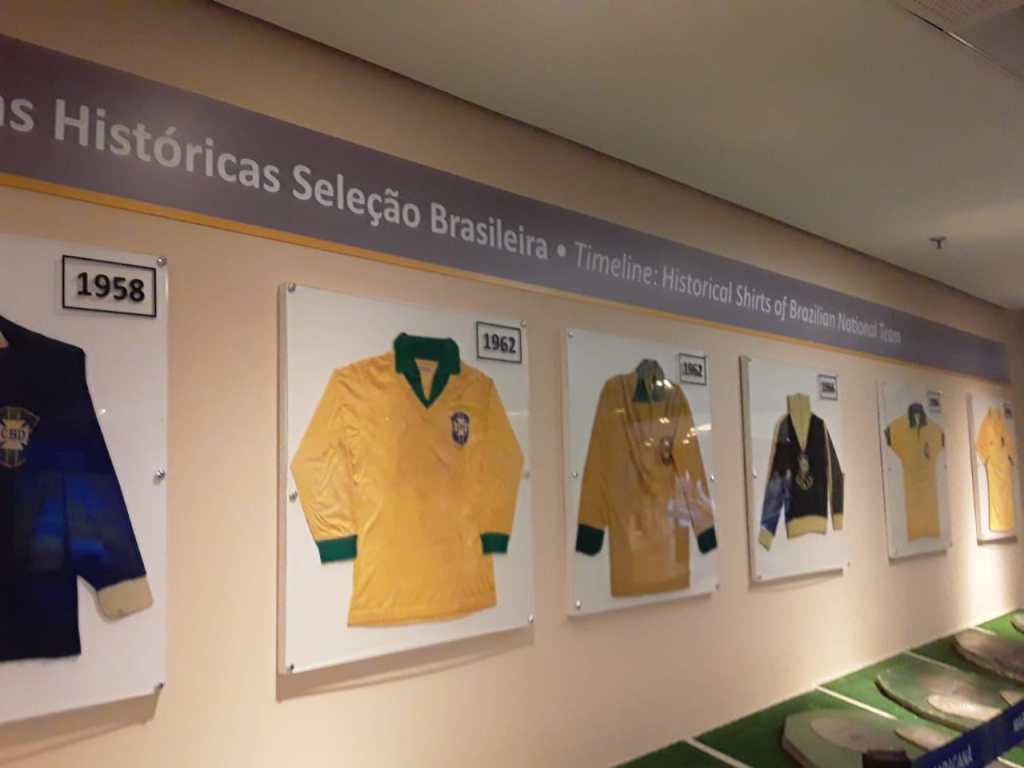
The Maracanã

“One of the most famous football stadiums in the world and which was featured in the 2010 FIFA World Cup in Rio de Janeiro, Brazil.”

Camera: Samsung Galaxy J2 Core

Location: Maracana Stadium or Estádio Jornalista Mário Filho; Rio de Janeiro, Brazil

English Corner – On Writing Memos

“What is a memorandum you may ask? A memorandum or ‘memo’ is a type of written message passed along in a business for internal changes and review. Being able to edit, write, and understand memos is a key part of being successful in the business world.”

What is a memorandum you may ask? A memorandum or ‘memo’ is a type of written message passed along in a business for internal changes and review. Being able to edit, write, and understand memos is a key part of being successful in the business world. Memos are usually shorter in terms of written length and can range from as little as 100 words to about 1000 words depending on the subject matter. Memos are not only used in the business world, but they also carry over to governments as well as to non-governmental organizations (NGOs) at times.

While memos are not as popular anymore due to the rise of electronic mail (e-mail), they are still a fast, secure, and cost-effective way of communicating with other people in the business or company. If you are to work in a business setting, you’ll need to do a wide variety of vocabulary as well as have a good understanding of formal grammar and syntax.

Some key aspects of the memo include the header or title to sum up what the memo is about, the subject line to describe the focus of what the memo’s topic is, and then you have who the memo is addressed to with the To: line and then below that is the From: line to indicate who wrote the memo and where it is from. Then, you have the body paragraph(s) where the ideas of the memo are divulged and then the conclusion which re-states the ideas and sums up the purpose of the memo.              

You also want to make sure that the memo is single spaced or double spaced depending on the guidance you receive from your workplace. If there is an ‘attachment’ such as an image or a text, make sure it is attached to the memo before you send it out and that you indicate that there is an attached file when you write up the memo. Lastly, it is very important to leave your name at the bottom as well as the date at the top so that person who received the memo knows not only who it came from but when it was written to see how fresh or old it is.                                   

Memos place a high emphasis on timeliness but also orderliness while being able to sum up a large amount of information in a short amount of space. Most memos are only a page long but can get up to no more than five pages depending upon the subject or general content you are writing about. The style of any memo you write should always be concise and succinct.

You have to show analytical clarity with your writing. (It has to make sense to the reader). It may be sensitive material so you will have to be your own editor and not rely on others in the company. The content has to be informative, persuasive, and relevant to the audience. When you write or read a memo, you should expect for it to be impactful in some manner to inform the reader.

There are main questions you will want to answer in any memo that you write such as:

  1. What is relevant for the person reading it to be aware of from my memo?
  2. Why does it matter to the business / company / organization?
  3. What is the objective of the memo?
  4. Who is my audience for it?
  5. What is the issue that we are working on?

The most important thing to be aware of when asking these questions is what is the objective?, who are my audience?, and what is the issue I care about? If you forget the other questions, it is very important to remember OAI: objective, audience, issue. As long as you address those three main questions, your memo should be really concise and informative.

When it comes to the actual structure of the memo, the scope of your issue have to be addressed up front as well as the main points you want to focus on. The Subject of your memo should always be both descriptive and short (about 4 to 8 words)

1. Example: How to Increase Our Fourth Quarter Earnings

The ‘bottom line’ or summary sentence must be upfront or at the top of the memo. You should always have a good ‘hook’ to draw in the reader’s attention. You’ll also want to articulate the key points or the recommendations in the first or second sentences of your memo. You have to assume that the reader of the memo may only have time to read one paragraph of it especially if you are in government or in the business world for your career.

You should always be using specific facts and relevant information to bolster your bullet points. You’re going to want to paint a comprehensive picture of the situation at hand and what can be done about it. Always be able to articulate the risks of your reasoning, the possible consequences to your action points, as well as the counterpoints (additional context) if your memo calls for it. The memo should have a logical flow and is not as structured as an essay or article. Lastly, remember to utilize precise language and avoid unnecessary words.

When it comes to what you should always do in memo writing, the Do’s are quite obvious from a writer’s perspective: Choose your words carefully. Be brief and clear as much as possible. Anticipate and address the reader’s questions in them. Avoid leaps in logic and assumptions based on the memo’s content. Proofread or edit your writing thoroughly and consistently. Use correct grammar throughout the entire memo.

The don’ts of memo writing is a bit more difficult but also involve some common sense in addition to having the structure and the techniques memorized. Perhaps most importantly, don’t summarize but analyze instead. Don’t ever use either abbreviations or acronyms to save some space as it is important to spell all the words out to retain their meaning. It’s important to not have unclear terms that will confuse the reader or audience. Keeping any run-on sentences at all in the final version is also a big no-no. You also would not like to have unprofessional or unrelated jargon (vocabulary) that is not related to the memo in the text of what you have wrote.

Memo writing is an advanced form of English writing, but it can be quite useful to know how to do if you are willing to put in the work. For business, government, or NGO purposes, good memo writing will be essential to your career so please make sure to study the structure, the techniques, and the overall uses for memos even after reading this article. Good luck to you and I hope being able to write formal memos will further your business and career goals as an English writer.

Japan House and Sao Paulo vs. Corinthians

Japan House Exhibit and Corinthians vs. Sao Paulo

Camera: Samsung Galaxy J2 Core

Location: Japan House; Estadio do Morumbi, Sao Paulo, Brazil