Cuisine Spotlight – Feijoada

Feijoada: The National dish of Brazil. It is delicious, fulfilling, savory, and tasty. There are not enough adjectives in the English language to describe this scrumptious plate of goodness. While also prepared in other parts of the Portuguese-speaking world such as Portugal, Angola, Cape Verde, and Mozambique, Brazilian Feijoada is more than just beans and pork. It has a little bit of everything to make it a unique dish that has protein, carbs, and even sugar to satisfy one’s taste buds. The Brazilian Feijoada was born in Recife and developed in Rio de Janeiro but has now spread across the entire country reflecting its status as a beloved national dish.

From Salvador to Sao Paulo and from Recife to Rio, every Thursday and/or Saturday, the hearty Feijoada dish is prepared for families and friends to enjoy together. While there is some variation in terms of what is to be offered on your plate, you can definitely expect to find a big clay pot bubbling with black beans, different pork and beef parts including oxtail and tripe, as well as tongue perhaps. In the Northeast of the country, the clay pot can also include different vegetables such as kale, potatoes, okra, carrots, etc.

The side dishes can vary across the country, but it is quite common to serve couve, a kind of collard greens dish that is chopped up and stir fried adding to its overall flavor. You also can have chicken steak with fried yucca (mandioca) as well as fried plantains (bananas) as a kind of dessert or sweet tooth necessity if you still have room. To mix with the black beans and the couve, you also have cooked white rice, which is nicely mixed together with the meats as well to create a beautiful plate of both Brazilian history and culture.

To clean your palate afterwards, some fresh orange slices can also be added to the plates offered in order to help with digestion. Beforehand, usually, you will be offered a cup of savory black bean broth, kind of like the soup, to slurp down ahead of the feijoada, which can also be added to the dish if you so choose to. Of course, you have baked pieces of bread as well that can soak up the juices and the broth to add on to an already gigantic plate of heavenly food.

What you need to keep in mind about Feijoada before diving in is that you need to eat it on an empty stomach and to clear your schedule for the day because chances are good that you will need a nap and a glass of water after diving in. For those of you who get the ‘meat sweats’, it’s good to take your time and eat slowly. The Feijoada dish is very heavy so it’s good to relax, have a beer or caipirinha, talk with your friends, and make sure you pace yourself since you will be likely not to do anything else for the rest of the day.

This is not a national dish for vegetarians and Brazil is not the easiest country to be a vegetarian in. You can have Feijoada without the pork parts and the beef stew, but it is really not the same in my opinion. Vegetarians can join in on this delicious dish, but they are definitely not getting the same experience as meat lovers sadly enough. I do love that Feijoada is only offered once or twice per week showing that it’s kind of a national pastime to have it specifically on a Saturday and then you can take the rest of the weekend off as you will probably need to after gaining a few pounds or kilograms.

You can have Feijoada for lunch or for dinner, but it usually is only eaten one day a week. The only thing you should really plan to do after eating Feijoada is perhaps watching the big football match of the weekend and perhaps relaxing with a few glasses of water. You can compare it to the Colombian dish of Bandeja Paisa in a way, but the amount of different foods represented in Feijoada is definitely impossible to beat. You could compare it to the ‘soul food’ cuisine of the Southern United States but there’s still no dish from the American South that quite compares to Feijoada. Similar to the traditions of ‘soul food’, there is a complicated and rough history behind the beginnings of Feijoada which just goes to show how resilient people in very difficult situations regarding food can make a beautiful, tasty dish out of almost nothing or the scraps made available to them on purpose. In order to really know Feijoada, it’s important to dive into the history of the dish as well and what exactly makes it unique to Brazil.

From what I have learned, the origins of Feijoada are up for date but since this kind of stew with pork and beans was quite popular among European settlers, it can be inferred that it was brought over by the Portuguese during the colonization period. However, it seems that the dish was expanded upon by the slaves in Brazil who would add other ingredients such as the couve, the arroz (rice), and the mandioca as these were other foods available to them. Gathering all of these foods together and putting them as a mixture on a big plate would be a hearty yet simple meal to have when it came time to preparing it before or after a long day of work in the fields or farms. While slaves were restricted to rice and beans, special occasions such as holidays allowed them to get different pork parts or beef parts considered less desirable by their masters and to throw them together in a stew to help them feed themselves and get more protein as they worked in the kitchens. From the kitchens to the fields to the cities, Feijoada has earned its status as the national dish of Brazil.

Feijoada is very much a creative and improvisational dish where you have to do the best you can with what you have and put it all together when you don’t have much time to prepare a flashier meal. What Feijoada lacks in flashiness, it more than makes up for it in the sheer number of flavors and food groups the dish makes up. Between the rice and beans, the meats, the greens, and the after-meal delight of an orange slice or a shot or two of cachaça and you will definitely be satisfied with one of the greatest meals you could ever have in Brazil.


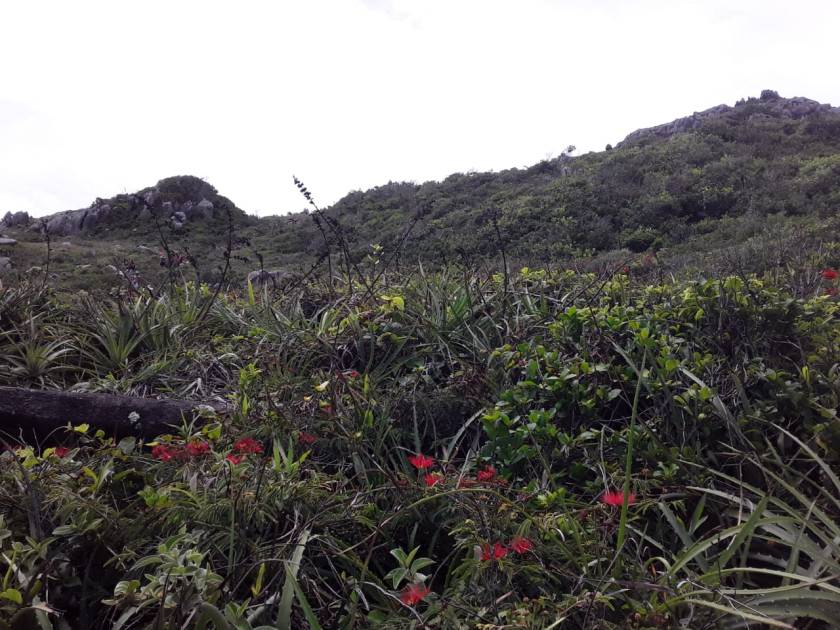
Hiking in Florianopolis

PHOTO-2020-02-12-18-40-11PHOTO-2020-02-12-18-40-11 (1)PHOTO-2020-02-12-18-40-12PHOTO-2020-02-12-18-40-13PHOTO-2020-02-12-18-40-13 (1)PHOTO-2020-02-12-18-40-14PHOTO-2020-02-12-18-40-16PHOTO-2020-02-12-18-40-16 (1)PHOTO-2020-02-12-18-40-17PHOTO-2020-02-12-18-40-19PHOTO-2020-02-12-18-40-19 (1)PHOTO-2020-02-12-18-40-20PHOTO-2020-02-12-18-40-14 (1)PHOTO-2020-02-12-18-40-17 (1)PHOTO-2020-02-12-18-40-19 (2)

Camera: Samsung Galaxy J2 Core

Location: Florianopolis, Santa Catarina, Brazil 

English Corner – Creating a Resume

What is a resume? To sum it up, it is the backbone of your professional background and experience summed up in a one or two-page document which you will be showcasing to potential employers and/or co-workers. It is not the sum total of who you are as a person but rather who you are as a worker and what professional skills you have to offer and to whom your skills would be useful for. In order to get a better job, to get a better salary, or to get that promotion to take the next step in your career, a good resume could make the difference between a ‘yes’ or a ‘no’ answer when it comes to you getting that employment opportunity.

The resume is how you showcase yourself to the professional world and let companies and organizations know what your value would be to them. It’s a document that is the heart of your application, but it’s not the only piece of the puzzle to getting a job. The ideal resume by U.S. standards is 1 to 2 pages length and nothing longer than that. The CV (Curriculum Vitae) is different from a resume.

Again, a resume should highlight your professional experience, educational background, job skills and knowledge, and your technical capabilities. You can create different resumes depending upon the job you’re applying to especially if you can only highlight certain previous work experiences. Without the interview or direct networking, the resume and the cover letter, if requested, are the only ways that you will be able to reach potential employers.

It’s a summation of who you are professionally, what you can offer in business, and should showcase your work effort and drive. It is also a great way for employers to verify that you are qualified for the job opening and that you would be an asset to them rather than a liability.

Compared to less qualified candidates, if your resume looks good on paper, you’ll be able to stand out for a potential interview when your qualifications are better than the other applicants.

When you first beginning writing out your resume, you are going to want to make sure to use action words to highlight those professional experiences and your previous accomplishments you’ve had as well. These actions words should not be the same each sentence and you should never repeat the same one more than once. Also, it is important to use the present tense or past tense correctly based upon if you are still doing the same job or if it was done previously and that you are no longer there.

There are hundreds of action words in the English language and learning a good amount of them is a great way to ensure that you have a good resume. In order to keep the interviewer interested, you do not want to repeat the same action word twice or three times so be sure to do your best to learn as many as you can and know what the meaning of those words are too.

Your action word is a key component of making the resume look legitimate to the reader. The action word should always go at the beginning of the sentence (i.e. next to the bullet point) during the ‘work experience’ part of the resume. If you are currently working at a job but are applying to change to a new job, the action word must be in the present tense. However, if you are writing about previous work experience in your resume, your action words should be in the past tense. Without using action words, your resume won’t look as persuasive or as actionable as it could be otherwise. Your employer will want to know what you bring to the table based on your past work experiences.

Here is a list of good action words you can use in your resume if they apply to what your profession does, it is a small sample list but includes many words that commonly come up in professional resumes and accurately depict what some jobs do:

  • assemble
  • assist
  • build
  • cook
  • drive
  • fly
  • operate
  • program
  • repair
  • sell
  • sew
  • supervise
  • translate

Action Word – Sentence Examples

  • Assemble the cars in the manufacturing plant before they can be inspected.
  • Assembled over 10,000 cars in the manufacturing plant before they were inspected.
  • Cook meals that were prepared by hand without any outside training.
  • Cooked dozens of meals per day that were prepared by hand without any outside training.
  • Lead a Sales team of five people to sell medical device products to clients.
  • Led a Sales team of five people in selling hundreds of medical device products to clients in biomedical industry.
  • Develop software products to make it easier for customers to order their groceries online.
  • Developed ten different software products that made it easier for customers to order their groceries online.

In the introduction of a resume, you will want to be able to do many things well to set it up on sound footing before getting to the heart of your resume by introducing yourself and your current skillset. You will want to have a statement of one to two sentences discussing who you are and what you can offer to the employer. It’s basically a summary of your resume and a short summary of what your professional skillset is.

“My name is John Anderson and I have over 10 years of experience in digital marketing focusing on SEO, social media, and advertising campaigns. I am a dependable, hard-working, and motivated individual looking to expand my knowledge and expertise.”

Remember to include at the top of your resume your full name, address, e-mail address, and cell phone number so the employer may be able to contact you.

Headline Example:

John Doe

22 Winston Way, Toronto, Canada 24589

   John.Doe@gmail.com

                                                  +( ) (   ) (   ) (    ) –> Phone Number

 The body part of your resume should focus on two major parts: your professional experiences as well as your educational background. At the top of your resume, you’ve introduced yourself and your professional profile but now you want to go more into detail.

Make sure to include relevant bullet points regarding actions you undertook in each of your previous jobs as well as what goals you were able to accomplish. Remember to write in complete sentences and use a timeline in chronological order from most recent to furthest away in terms of commitment.

For example: Bachelor of Arts Degree, Stanford University; Biochemistry (Major), Physics (Minor). 2011 – 2015.

In the conclusion, you want to highlight what your area of expertise is. You want to leave the reader aware of what kind of professional abilities, skills, and technical capabilities you have. Also, if you have any awards or earned any professional honors, you will want to list them in chronological order from most recent to furthest in the past.

If your work has been published or if you have any items in your professional portfolio, you’ll want to highlight the title of these articles as well as for which publication they were featured in. Depending upon what kind of employer you are focusing on, it’s sometimes beneficial to list what kind of hobbies and interests you have even if they are not professionally related. Regarding coding or foreign languages, you should highlight by the end of your resume which languages you know whether its Python (coding) or Spanish (foreign language) to stand out from the competition.

With a great resume, you will have a much better chance of landing that dream job. While it is not guaranteed, if you can explain yourself well professionally with good vocabulary with the correct action words as well as few or no grammatical errors, it’s likely you will be called in for an interview or be able to take that pivotal next step towards landing your next employment opportunity.

Retaining The Ability to Connect

How many times have you been out, either alone or with a friend or family member, and you have noticed in the café or restaurant a couple or a group of people just staring at their phones rather than each other? I’ve noticed this occurring multiple times and more often than not in the past year or so. Now, it’s not great to be out in public on your own on your phone either but it seems rather ironic to be out in public with a friend or a family member and you are both on your phone at the same time rather than living in the moment and being engaged with each other instead of their device.

It’s one thing as well for friends to be on their phones at the same time perhaps to keep up with their other friends but it’s quite silly for me to see couples out in public staring down at their phones when they should be connecting with each other. What is the point of going out to a café or to a restaurant or any other public place if you would rather interact with your handheld device than the person sitting right in front of you?

I can see if one of the two or more people in the group need to respond or send a text, check on a work e-mail, or take an important call but it is quite ridiculous when both people or all people in the group have nothing better to do than to look at their phones. There are a number of ways that I want to suggest in this article on how to retain that important ability to connect with another person especially out in public rather than connecting on social media, be social yourself with the person(s) you are with.

1.The Lost Art of People Watching: There is really something to be said about just wondering what other people are doing and checking out how they are going about their daily lives. Now, I am not suggesting you and your group or friend(s) just stare at somebody and make them uncomfortable. That’s not it at all. What I would recommend is to really just watch how people go running, cook your food, clean up the streets, deal with other restaurant patrons, etc.

For example, if you are at a park with someone else, it’s nice to make conversation about the joggers, the musicians, the frisbee players, the traffic police, etc. It’s a good way to stay engaged in conversation without turning to the phone to be entertained. Watching the world go by is a pleasurable activity and it can make you appreciate the rhythms of daily life. You should not be ‘people watching’ so intently that you make those who know they are being watched notice you doing so! Try to do so casually and without staring too intently. That’s a good way to do it in the mature way.

2. Leave the Phones at Home: What better way to have a good time with somebody then to leave the phone at home. It can be mutually agreed upon beforehand and you can both figure out where to meet up the old-fashioned way: by consulting a map or checking Google before leaving the house. It is really easy to leave the phone at home when you have the logistics squared away in terms of time, date, and where to meet. It’s also easier by car as well when you can leave the phone in your car for the two or three hours you are spending with them and can come back to it later to help you navigate home.

This is a really underrated way of maintaining that personal connection with someone and also strengthening it by flexing that resistance muscle and resisting the temptation of the phone by putting it both out of sight and at least, temporarily out of mind. I think both of you will be glad to rid yourselves of the phone for a few hours or even a whole day and the conversation and the activity will be much more rewarding. You will also remember what happened a lot more because you just were that much more engaged in what was happening because that person and the activity you did together had your full and undivided attention.

3. One Phone, One Group: If you feel the need to compromise about phones in a group, a good way to fix the issue or at least put a stopgap to it is have one phone for everybody in the sense that you are using that phone for everybody to see or use such as making a quick phone call away from the group, checking out travel pictures together, or doing a fun game through an application. Instead of everyone bringing their phones to the group meetup, if one person does it, you’ll have to share and be social about it. Obviously, you do not want others to see your private text messages and contacts on your personal phone but there are ways to do it and still be secure in having others use it.

I really do suggest having some group games on there or using it for showing off pictures and talking about travel or activity plans that you have all done. Another way to be social about a phone is to hook it up to somebody’s speaker and listen to different music together. It can even be some kind of a game where each person chooses a different song in a circle-like setting and your friends or family have to guess the musical artist or the name of the song itself. Being social and using your phone do not have to be separate from each other but the best way to make that happen is to only have one phone per group rather than one phone per person if you want to keep that ability to connect.

4. Enjoy the Silence and Nature: If you have been out with someone or a group for a few hours and you all happen to run out of things to say to each other, don’t go back to the phone! Instead, simply enjoy the silence and each other’s company. You do not have to fill every waking moment together with a witty remark or a sarcastic joke. Sometimes, it’s nice to be alone in your thoughts, people watching together, or just living in the moment and enjoying the ambiance of the place where you are at. This also applies to enjoying nature especially if you are outdoors. You both or the group will not need your phones when you are listening to the birds chirping, watching the monkeys climb to the peak of the trees, or checking out the beautiful mountain or sea view vistas.

You may say, “well, Ben, how can I enjoy nature when I do not have my phone to take a picture of the beauty?” That’s a good question but there’s an easy and simple solution to that problem as well. It’s known as bringing a camera that you like and rely upon and practice taking real photographs. I think it’s often better to take pictures of nature and scenery with a real camera than your phone even though camera phones have become quite popular. Practicing your photography skills with a real camera is a great way to use the tip well and to your advantage.

Photography can be a group activity and will allow both of you or your whole group to take better pictures, enjoy the nature around you, and listen carefully for the silence of the world around you. Lastly, you do not always have to be talking with each other to be connected. That is a false construct invented by our culture really that you have to be engaged with each other socially by always talking. Friends and/or loved ones of many years know so much about each other that they can really be there with one another in silence without filling the void with a conversation 100% of the time.

5. Shame the Phone User(s): This tip will be the most controversial of my suggestions, but I stand by it as having done so myself on a few occasions. The best way to avoid two people from using their phone at one time is to shame politely the first person who pulls out their phone first. Now, ‘shame’ has a negative connotation as it should have in our culture but a little dose of shame in my opinion is not the worst thing in the world especially when what that person is doing is impolite or inconsiderate. If the person you are out with, especially on a date, is constantly checking their phone every five minutes or is not engaged with you socially, then you have the right to shame them for it and ask them to stop.

If they continue with that kind of behavior, instead of doing it right back to them and escalating the tensions, it would be best to just say goodbye and let them know that you don’t appreciate them being on their phone. There are sometimes in life when you have to be both direct and firm with those who are in your social circle, even friends and family members. Respect is a key component in any relationship so if that person doesn’t value you enough to put their phone away like you are for an hour or even more unless it’s an emergency, then they simply do not deserve your time or the money spent to hang out together. Shaming the phone user in public when you’re with them is principally about setting healthy boundaries which are key in our relationships.

Also, you should hold yourself to the same standards and put the phone away as well lest that person you’re with get offended, walk away, or shame you into being more socially conscientious. Turn the phone off, put it in a locker, tell them that text or Instagram message can wait but above all else, shame them politely and remind them that we should be connecting and enjoying each other’s company and not off in a virtual world with other people. Maintaining that sense of cordiality will ensure better relationships and less wasted time staring at your phones in public.

Our healthy and lasting relationships are a key part of our mental health and our outlook on life. I believe that social media is still making us less social and while these networks do connect people on the surface, they do not foster deep friendships or relationships. Social media are like the gateways to having connections with others but you and only you are responsible for fostering and harvesting those connections to grow and become deeply rooted over time. You and the other person(s) who want to connect must do your best to put your phones away and focus on connecting directly by following some or all of these tips I have suggesting especially keeping the phone out of sight and out of mind temporarily.

Flexing your willpower and retaining that ability to connect will make you a happier and a healthier person overall. Your attention span is likely to improve as well as your friendships and/or relationships. I also believe and the research would show that your anxiety, feelings of depression, or of loneliness will decrease the more time you spend connecting with a person in person instead of through a virtual network. This ability to retain deep connections with people is a profound struggle in this age of instant yet flighty connections.

There are easy ways to counteract this trend though by letting go of the temptation when possible, embracing the silence and the natural world, and by politely reminding the person(s) you are with how it is good social etiquette to give someone their undivided attention when you are together in a public place or setting. If you struggle or have a setback, do not beat yourself up too much about it. Keep doing your best, lessen your use of your phone in the first place, and let the people in your life know how much they mean to you by giving them more of your attention and your love.

Beco do Batman (Batman Alley)

PHOTO-2020-01-20-17-16-43PHOTO-2020-01-20-17-16-42 (1)PHOTO-2020-01-20-17-16-42PHOTO-2020-01-20-17-16-41 (1)PHOTO-2020-01-20-17-16-41PHOTO-2020-01-20-17-16-40 (1)PHOTO-2020-01-20-17-16-40PHOTO-2020-01-20-17-16-44 (1)

Camera: Samsung Galaxy J2 Core

Location: Beco do Batman; São Paulo, Brazil

Patience Will Set You Apart

We are all imbued with the important personal trait of having patience. I believe that each of us is imbued with a certain amount of it though and there’s a certain limit or tolerance level that we have within us innately. It can be difficult to augment or increase the amount of patience you have without serious mental training and willpower. Everybody has some amount of patience, but that level will stay the same unless you can train yourself to learn to have more of it and to put yourself into situations where it is tested.

In my opinion, patience is the most important trait that a mature adult can have and can change your life for the better or for the worse depending upon how much it is exercised. The level of patience you have or what you teach yourself to tolerate will depend upon your overall maturity, resilience, and willpower. The less patience you have, the more stressful your life will be ironically. The more patience you have, the less stressful your life will be too. Managing your stress levels comes as a result of how much you are able to flex your ‘patience’ muscle.

Patience such as willpower takes time to develop but the more of it, you’re able to accrue, the more payback you’re likely to see later. For example, if you’re at a bureaucratic office of some sort and you are given a number to wait your turn and you’re not sure how long it will take for your number to be called, there’s no logical reason to complain about it. The more you get peeved about it, the more it will backfire for you. Why not make the most of your time and read a book, catch up on e-mails, listen to music, or even make a few calls to pass the hour(s)?

Not only in bureaucratic functions will patience serve you but in every aspect of your life really. When you’re learning a new language, you need to have patience regarding your ability to obtain and retain what you have learned in order to improve. When you’re starting a relationship with someone, you have to be patient with their faults and with their quirks because they are going to have to do the same with you as you get to know each other more and more.

When you’re getting used to your responsibilities and roles in a new job, it will take both patience and time to get the swing of things and you have to accept that you’ll likely make mistakes at first. When you are starting a business for the first time and you have to learn a lot of new skills as well as take on duties that you have never had before to grow the business. In any of these hypothetical but possible situations to occur in your lifetime, you have to be patient in any of these personal or professional endeavors regardless of what they are.

When things are not going your way, you just got to keep your composure, keep pushing through, and stay optimistic that things will eventually work out. Like quitting too early, giving up on exercising your patience will backfire on you more often than not. Nobody really likes someone who loses their patience a lot. There’s a time and a place for confrontation but that is a very rare occurrence especially in an extreme circumstance where you really cannot wait or deal with any further delays. If you don’t have anywhere to be, if there’s a solution to be had, if it’s not a big deal in the grand scheme of things, it’s better to be patient than blowing your gasket and letting go of your emotions.

You will earn respect from other people if you are able to be level-headed, to not let your emotions overtake your decision-making ability, and to keep calm under outside pressure(s). It is a great way to set yourself apart when you are able to exercise patience in 95% of situations and in the other 5% or able to de-escalate the situation calmly without losing control in some way. It is also a fallacy to suggest that you can’t exercise patience and stand up for yourself at the same time.

You do not have to be confrontational, but you do have to advocate for your interests and for your livelihood. This all can be done without losing one’s patience and it will be a sign of how emotionally mature you are when you are able to express your emotions in a healthy manner. Being able to exercise patience on a consistent basis will also make you happier, healthier, and more appreciative of others, flaws and all, when you can maintain a real sense of calm and composure.

Exercising patience is a real skill and positive trait to have that will pay off for you and then some throughout your life. However, like any muscle, it has to be exercised constantly and because life will test you, often at the most random times, this particular muscle will be tested often and you have to decide how much you can adapt and beat these tests that life will throw at you. Speaking as someone writing this article who sometimes struggles with exercising my own patience, it is a lot of work, but it is worthwhile to get better and better at it.

Whereas meaningless and trivial things would have bothered you in the past, if you can simply brush them off and move on quickly to focus your patience and your willpower on things that actually matter to your life and livelihood, then you will be on the right path. Do not let the small irritants of your day-to-day life affect your patience because you will waste precious emotional capital on inconsequential problems. When the waiter takes too long with the bill, when the checkout cashier is rude to you, and when the boss wants to call an extra meeting over something that was previously agreed upon, take a deep breath and let it all slide off your back.

Remember to guide your thoughts to real things that affect you and wait out or not react to the small irritants. The real battles of your patience will be much larger and longer in scale so don’t waste exerting a lack of patience for those irritants of minutes or hours. Save up your patience for the days, months, and years in your personal and professional endeavors that will require you to be in top shape emotionally to handle the challenges that are to come along.

As I have mentioned in other articles, a real mixture of commitment, patience, and willpower will set you apart and cause you to succeed in the long run where others do not. Those three emotional traits are a sign of both intelligence and maturity. Letting them decay or not exercising them consistently will set you back and cause you to fail more. Always do your best to keep those three traits in mind when you set your mind on something new because you will need all three traits of commitment, patience, and willpower to get ahead in life and to make your life the best it can be.

English Corner – Creating a Cover Letter

What is a cover letter? Why is it important for an English learner to know about it and also how to create a good one? Well, a good cover letter can make the difference between landing that dream job or hitting refresh on the search results again to find the next job opportunity. Your experience and your professional background need to be succinct and summed up in a well-written way and the cover letter is your best way of doing that. It is an excellent way in which for you to improve your English writing skills and to prove that you can handle your future job’s writing components which there is likely to be many of them since you are a worker during an age of e-mails, 24 hour communications, and instant messaging services.

A cover letter is an opportunity for you to go into more detail about yourself and your experience(s) and background, both professionally and personally. However, your cover letter should focus on the job you are applying for as well as why you are interested in the particular company that you intend to work for. Your cover letter should be a balance of who you are as a professional, what you can offer for the job you’re applying to, and what your interest in the company is. It’s a balancing act between these two objectives and you should remember to personalize your cover letter depending on where you are applying to.

You may be asking yourself as you read this blog post: Why do I need a cover letter and what benefit(s) do I get from creating a worthwhile one? Well, there are a number of reasons for it which I will list below but be sure to note that it’s more than just a chance to land a good job but it’s a chance for yourself to become a better writer and know how to sell your abilities and skills.

Your cover letter is different from the resume in that it allows you to go more in-depth about yourself and why you’re a good fit for the job. Instead of short bullet points, you can highlight your experiences in broader detail. Employers will also expect why you would like to work for their company and how your skills line up with their requirements. It’s a chance to tell your story to them while interweaving how their company or organization aligns with your professional goals. In addition, you have the ability to showcase how good of a writer you are because the cover letter is more grammatically, and vocabulary focused than your resume.

Action words will make up a large component of your cover letter’s sentences so please be sure to put these verbs to good use. Here below are just a sampling of them listed below but remember that there are hundreds that can be used within the context of a regular cover letter. Try not to repeat yourself too much and to keep your usage of action words fresh and consistent throughout the letter.

Sample Action Words

  • Activate
  • Compose
  • Communicate
  • Develop
  • Direct
  • Manage
  • Organize
  • Review
  • Systemize
  • Test
  • Verify
  • Value

Note: Remember to add –d or –ed to the end of the action verb if using it for the past tense.

In addition, you have to be able to choose and use some phrases and sentences that will come in handy either at the beginning or end of the cover letter so that you will come off as being both professional and serious. You do not have to use all of them but there are a number of them that are cordial in nature that a potential employer will expect from you to see when they read it during their evaluation.

Here are some key useful phrases/sentences that you can use for your average cover letter:

  • Dear Sir or Madam…
  • I am applying for this ________________ opening with _______________ for the purpose of __________________________________.
  • This job appeals to me because ________________________.
  • Your company / organization / firm is my top choice because ____________________________________.
  • I believe that I offer a lot to this position based on my skills and qualifications.
  • For example, last year, I was tasked with ____________________________________ and I was able to help by ______________________________________.
  • Please do not hesitate to let me know if you have any questions or comments about my application.
  • Thank you for your consideration of my application for this _________________ position with ________________ and I look forward to hearing from someone soon.
  • Sincerely, __________________ (Your Name).

To give you reading at home a better idea of what the content and the structure of a cover letter looks like, I have included two sample cover letter excerpts that will show you how it can be written and what to write about potentially if you are still struggling for ideas as to how the cover letter should be shaping up.

Sample Cover Letter Excerpts

  • “I have over five years of management experience and led my team of software developers to develop a successful mobile application. This mobile application was instrumental in connecting doctors with patients in an online booking system that took out the middle man from participating in this previously onerous process.”
  • “I believe your company, Syntax Inc., has been successful in implementing various infrastructure projects related to bridges and tunnels throughout the Middle East. These kind of projects are related to what I hope to do with my career and I think that this work is very important to the future.”

Remember that you should know who your audience is and tailor your phrases to reflect who you are writing the cover letter for. Always use formal language such as sir, madam, sincerely, respectfully, please, thank you, etc. Go into detail about the job you are applying for and give different reasons on what you bring to the table for the position opening. Structure the cover letter into multiple paragraphs with an introduction, body paragraph(s), and a conclusion. The cover letter is a formal piece of writing so it should be structured as a formal letter whereas a resume is less substantive and more general.

In the introduction of the cover letter, remember to always put your full name, your current mailing address, your cell phone number, and your e-mail address at the header of the cover letter. The date at which you are sending out the cover letter should go next in the left hand part of the cover letter below your header. Then, you should begin the cover letter with “Dear Sir or Madam..” or “To Whom It May Concern”, or “Dear Mr. or Mrs. ________” if you know who specifically the cover letter should be addressed to. The introduction should be a paragraph or two focusing on what position you are applying to, the company associated with the position, and for which reasons you are applying for this specific position. You can also add the person or place that referred you to this job application especially if the person works for the company you’re applying to.

The body paragraph(s) of the cover letter should be a few paragraphs in total length but not be too lengthy or repetitive. Each paragraph should cover a different part of your professional or educational background and highlight what these experiences meant to you and what skills you developed. You should give a few examples of where you showed leadership, where you completed a successful project, and what you took from the experience. Do remember to not discuss every professional experience or educational program you’ve gone to but instead highlight the relevant ones related to the job application in question. Always use complete sentences for this part of the cover letter and check it over for grammatical coherence and correct vocabulary usage.

When it comes to a cover letter’s conclusion, you’ll want to re-state again why you are applying to this particular position and company. Discuss which characteristics, skills, and personal traits you have that will make you stand out as a job candidate. The conclusion of your cover letter should indicate gratitude and thankfulness for being able to apply and that you hope to hear back soon from the employer. Sign off with a salutation such as Sincerely, Best regards, Warm regards, Best wishes, Cordially, etc. and re-state your full name at the end of the cover letter. Don’t be too presumptuous that you will land the position but let your experiences, skills, and qualifications speak for themselves.

Your cover letter is what you make of it really and if you want the job bad enough, it will come through in your writing and in your sincerity. The point of becoming a better English learner is to put yourself to the test and to make the most of your abilities in this language and developing a good cover letter is a great way to do that. If you follow this advice, practice until there are few if no mistakes at all, and revise multiple times what you have written, you will be well on your way to having better success in your professional career in the English-speaking world.

‘Everything In Its Right Place’ (A Video Retrospective)

It’s hard to really love most music videos today which tend to be shallow and lacking in any original thought. During past decades leading up to the 2000’s, it seems like actual effort and work was put into music videos of songs in order to get on MTV but also to highlight the themes of the song as well as the entire album. There are a number of my favorite artists who produce great music videos including Radiohead, The Smashing Pumpkins, U2, Oasis, Dave Matthews Band, etc.

However, MTV and official music videos are not what they used to be. In an age of instant gratification and live concerts being streamed of the songs you love, it’s hard to appreciate music videos as being part of an increasingly crowded creative marketplace. While official music videos may be dying, creative videos and covers of songs from our favorite artists seem to be on the rise. Considering that music videos are usually for hit singles of certain songs and not for entire albums, there has started to be a movement towards producing independent music videos for songs that never received the official ‘music video’ song treatment.

The rise of YouTube and other video platforms has allowed creative people who are fans of good music to produce their own music videos. While they started out as being kind of cliché or very amateur, they are now becoming very professional and also very related to the lyrics of the song in question. I saw a particular music video of a favorite song of mine featured on YouTube a couple of weeks ago. The song is ‘Everything in Its Right Place’ by Radiohead and it is an excellent song by my favorite band but the one thing that this song never had was its own brilliant music video to go with it.

Because of YouTube, the creative skills of a fan named ‘Capitao Ahab’, which is a pretty fun name in its own right, although I believe the original video creator’s name is Joschka Laukeninks who created it and titled it ‘BACKSTORY.’ It is a now an unofficial music video on the popular video platform that is really well done and professionally shot that has received almost two million views. A video like this would not have existed ten years ago but luckily it does. Part of the reason why this music video is so impactful is that it works so well with the content of this particular Radiohead song.

‘Everything in Its Right Place’ like many of Radiohead’s songs are open to interpretation but it is soothing with its use of synthesizers, digitally manipulated voices, and haunting electronic sounds that sound comforting when you have your headphones on at full blast. The lyric itself of ‘Everything in Its Right Place’ focuses on how to maintain your composure and your levelheadedness as you go through life. The fan music video’s storyline of a baby becoming a boy, a man, and then an elderly man highlights the ups and downs of life and how there are ‘two colors in my head.’

The ‘two colors’ could be interpreted as the good and the bad that you will go through as you go through life’s uncertain and mysterious waters. In particular, the song begins with the oft-repeated lyric of ‘Kid A’, the title of Radiohead’s 2000 album and expresses the experiences of a ‘boy’ as he is born, grows up, matures, and eventually dies. “Yesterday, I woke up sucking on a lemon.” Is also a lyric up to the fan’s interpretation but it implies that life can be sour as well as sweet and that you will have to taste and swallow the bitterness of life if you want to enjoy the sweet part of the fruit.

The music video begins on a hopeful note as a baby boy gains his first steps as he walks through his parents’ house. The sweetness of his childhood is referenced with meeting animals for the first time, having his 6th birthday, going to the beach, and experiencing pure joy at that age. Childhood innocence does not last forever so the boy ends up experiencing his first pains in life including the accidental burning down of his house, fights between his mother and his father, the divorce and exit of his mother from his life, pressures from his father to succeed as he ages into being a teenager.

Learning in school, riding his bicycle, summer days at the swimming pool are some of the joys of teenage life including his first experiences with girls as well with drugs and late nights with friends. Still though, the joys of discovery and youth are balanced out by his struggles with partying too much, getting into rights, being angry at the world and dealing with bad breakups. In one part of the video, the teenager emerges from the pool as a young man ready to take on the world in his 20’s. He thinks his partying days and life as a Bachelor will last forever until he stares at the woman of his dreams on New Year’s Eve and she stares back signaling a new relationship that will change his life.

They date, travel, live together, and the young man eventually proposes to the woman of his dreams. As the video speeds up, so does the aging and life of the man as he gets married, celebrates the birth of his child, and gets ready for middle-aged challenges and prospects. Moving into a house as newlyweds, getting a better job, moving up the corporate ladder, using his new car, traveling for work, going to important meetings, and shuffling along while growing a beard signifies how fast life speeds up the older you become. Sometimes, you’re running so fast that you can’t keep track of who or what you are. In the video, the man still remembers the little blissful moments of carrying his child with his beloved wife, family dinners, and trying to balance work and family until tragedy suddenly strikes.

The hardest part of life is unforeseen tragedies and we hope and pray to never experience any to happen, but this man has the tragic occurrence of seeing his wife and child running towards him across the street only to be hit by a bus and to be taken off life support. The song’s crescendo builds up as the man struggles through grief, longing, and how to move on when he knows he can’t but has to anyway. After the tragedy, what once was promising is now dull and at once he was fast to move through the world, he staggers slowly through it wondering what it is all worth and why keep going? How can one fill the void in their own heart when it was taken out of them and cannot be put back?

We see the man continue with his work, entertaining clients, meeting a new woman and getting married again but there is the lingering sense that it is not what he envisioned his life to be. He can have a child with her, but it won’t be the same as his first true love or bring back his first child. Trying to fill the void with an extramarital affair, fighting with his new wife, jogging and running to keep moving forward to futilely escape from one’s own pre-destined aging are all ways of coping both unhealthily and healthily as you go through middle age to becoming elderly in your later life.

Maybe if he stops running or walking or jogging, he will have to face his own eventual demise and departure from this world or face his memories of losing loved ones or losing his mother. The aged man with gray hairs continues to work, to exercise, to keep up his health by going to the doctor and trying to save his marriage. Some of these battles he will win, and some he will lose although we will never know from such a short video. Eventually, the man is elderly and looking back on his life from his bed and looks to be alone in the world.

However, he does not remember the tragedies that befell him as we all must endure in life sometimes. Instead, he remembers the first time he went to dance at a club, the way he looked at his firstborn child, hugging his beloved first wife, and how she stared at him lovingly on New Year’s Eve and how she stared at him at their wedding and when she gave birth to their child. He remembers the tragedy too but remembers those special moments that made his life truly worth living. You are left wondering after watching this four-minute video of a complicated, yet powerful life filled with tragedy and joy whether it was all worth it for the man. Would he do it again if he knew what was to happen in the future?

If we all knew what was to happen in the future until the end of our days, would we all do it again from the beginning? Would it be worth it even if there is pain, tragedy, and death? Would it be worth the love, joy, and pleasure that we experience as human beings as well? It really is out of our control, but this music video does an excellent job of pondering life’s deepest questions in only four minutes and only with the wistful yet dreamy lyrics of Thom Yorke from Radiohead creating a powerful combination of a great song and a great video. It may not be an original music video from Radiohead but whoever created it did a great job of getting a powerful message across to this 2-million strong audience on life, love, and loss.

If you would like to watch the music video on ‘Everything In Its Right Place’, you can find it here on YouTube: https://www.youtube.com/watch?v=GnfPaaMR6Qc

‘BACKSTORY’ Full Video on Vimeo: https://vimeo.com/245687147