Cause, Chaos, and Consequence: Ripple vs. Butterfly Effect Explained

“I’ve written about the Ripple Effect before but while they sound like each other, The Butterfly Effect is far from being the same thing as a concept. They are philosophical cousins to be honest but while they are related, they were both raised in different households.”

I’ve written about the Ripple Effect before but while they sound like each other, The Butterfly Effect is far from being the same thing as a concept. They are philosophical cousins to be honest but while they are related, they were both raised in different households.

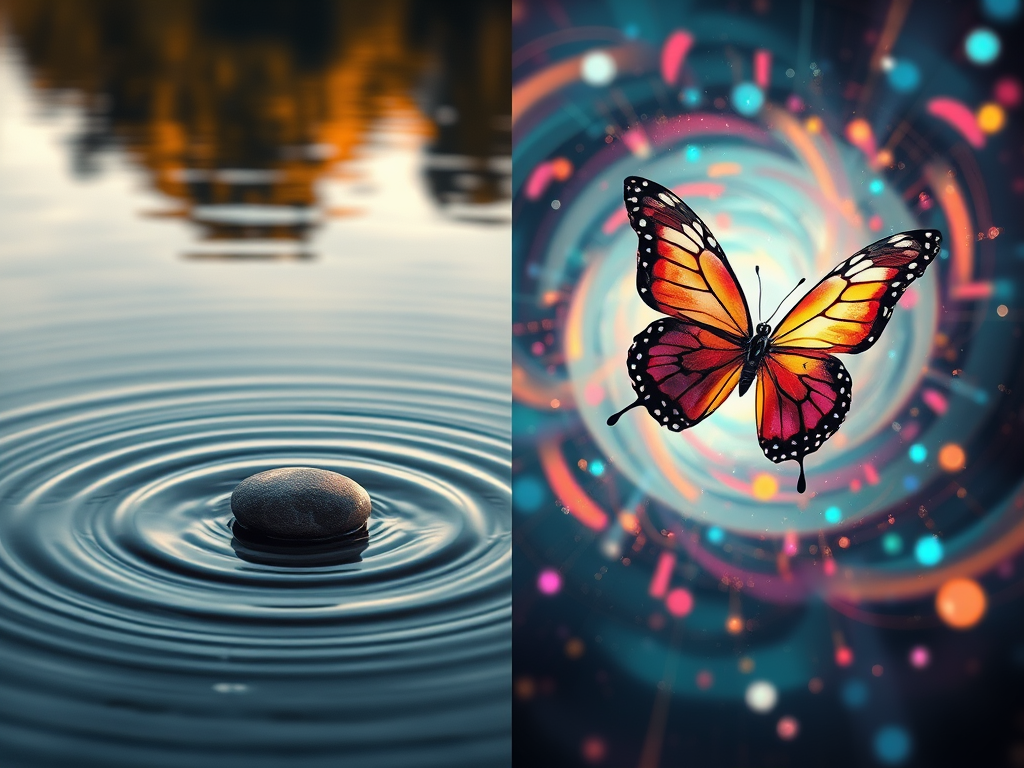
To give some further background on the Ripple Effect, it is one action that causes a series of consequences that spread outward like ‘ripples on the water.’ These are both linear and observable consequences that are clear to see, like water droplets hitting the ocean. For an example of this phenomenon, if you donate to a college scholarship fund, that money would directly help a student go to a college or university. Maybe that student goes on to start a non-for-profit because of the help you gave to help hundreds of other students who were in the same position as he or she was when you donated the money. The effects of your one action spread out logically from the original action taken. The ripple effect has been used in the social sciences, in business development, and in personal decision-making each day.

When it comes to the Butterfly Effect, the definition of it pertains to a very small or slight change in the initial conditions of someone’s day or a event that was rather small or insignificant at the time that ends up causing unpredictable and massive effects down the line affecting untold numbers of people. The key idea for this phenomenon is that events can be nonlinear and cause chaotic consequences when you think the effects would have been minimal or nonexistent instead. For an example, a butterfly flapping its wings in Mexico could theoretically start a chain of atmospheric events that cause a tornado to occur across the border in Texas. The Butterfly Effect is often used in describing chaos theory, meteorology, or how complex systems work together succinctly or can become dysfunctional rather rapidly.

AspectRipple EffectButterfly Effect
DefinitionOne action causes a series of predictable consequencesTiny change leads to massive, unpredictable outcomes
Nature of ImpactLinear and logicalChaotic and nonlinear
PredictabilityGenerally predictableHighly unpredictable
ExampleHelping one student who then impacts othersBeing late to an event and missing a life-changing meeting
Field of OriginSocial sciences, psychology, personal developmentChaos theory, meteorology, complex systems
Visual MetaphorPebbles dropped in water creating wavesButterfly flapping wings triggering a tornado
Control Over OutcomeModerate to high: effects unfold over timeLow: small causes can lead to wildly disproportionate results
Typical UsageCause-and-effect logic in planning or strategyDescribing randomness or complexity in systems

Regarding the main difference between The Ripple Effect and The Butterfly Effect, ripple effects are much more predictable to the average person, and you can trace the causality more easily. Butterfly effects and their events are unpredictable, chaotic, and can happen when you least expect them yet have been put into motion for quite some time. To sum it up, Ripple effects have an obvious cause and effect that are easy to explain and observe while butterfly effects show how tiny inputs or changes can lead to wildly disproportionate outcomes.

To explain how this would play out in the real world, a Ripple Effect in one’s personal life would be deciding to go to the gym three times a week consistently. You start to feel healthier, have more energy, sleep better at night, improve your mood, you’re more productive at work, which leads to a monetary raise or even a promotion in your title. That one small but consistent change to your lifestyle with a new habit consistently done can ‘ripple’ out across your whole life in a predictable way given the known yet useful benefits of consistent exercise. 

As for the Butterfly Effect example when it comes to your personal life, let’s say you show up five minutes late to an important networking event. As a result, you may miss meeting someone who could have been a business partner for your new venture. Your career ends up going in a completely different direction because of that missed opportunity. Because of that, you end up having to move and live in a different city, with different friends, and a different lifestyle, all because of that five-minute delay that happened once in your life. This is a key example of an unpredictable event with unforeseen consequences. You probably or will never realize how your life changed as a result unless someone observing your life full-time could tell you about the chain reaction that occurred because of that late networking event arrival.

We can also look back at history for key examples where the ripple and butterfly effects were present in what happened in retrospect. With regards to the ripple effect, the Civil Rights movement in the United States leads to the Civil Rights Act being passed by Congress. This law causes desegregation to take place in public schools, which opens more education and job opportunities for minority students and eventually leads to more diverse leadership in both government and business. It’s a chain of predictable and traceable events that go back a few decades, but for which still resonates up through the modern era.

A famous example of the Butterfly Effect in action from world history was when an obscure Serbian nationalist, Gavrilo Princip, assassinated the Archduke Franz Ferdinand of Austria, in 1914. After that momentous but surprising event happened, Austria-Hungary declared war on Serbia, alliances with France and Russia kicked in, which lit the spark that consumed Europe during the first World War.

This momentous event of World War I then led to the fall of empires like the Ottoman and British empires over time, the stale peace that led to World War II, and then the rise of Communism and the Cold War. Would a war have started regardless of if Franz Ferdinand had not been assassinated that day? Most likely, but there was a chance that it would not have happened had the assassination not occurred. That one moment created chaos and unforeseen consequences that no one in Europe or around the world could have foreseen at that time in 1914.

Understanding the differences between the ripple effect and the butterfly effect isn’t just academic, it’s practical for your own life. In our personal lives and careers, most of us try to make thoughtful choices, expecting reasonably predictable outcomes. That’s the ripple effect in action: you invest time in learning a skill, and it pays off in future opportunities. However, life doesn’t always play by those rules. Sometimes, a seemingly insignificant decision, sending a message, missing a meeting, crossing paths with someone new, spirals into consequences no one could’ve predicted. That’s the butterfly effect crashing into the party to say it has arrived. Knowing both concepts helps us become more intentional with what we can control while remaining humble about what we can’t control. It’s the mental toolkit for navigating both stability and chaos in this uncertain world.

The truth of the matter is that life is shaped by both ripples and butterflies. Some of your actions will create steady waves of impact over time while other choices might unleash unpredictable storms. That doesn’t mean you should live in perpetual fear of chaos or paralysis over tiny choices. It does mean though that we should approach life with a mixture of clarity and curiosity: plant the seeds you can in life, but don’t be shocked if something unexpected grows.

As the saying goes, “We make plans, and the universe laughs.” Still, you should plan anyway and be prepared with the awareness that every choice matters, even when the outcome doesn’t go according to plan. You might be one ripple away from changing your community or your world, or one butterfly flap from a wild new chapter in your life.


The Increasing Digitization of Everything

“Increasingly gone are the days where you can build a scrapbook of physical items like tickets, boarding passes, certificates, letters, newspaper clippings, etc. because of the digitization of everything.”

Call me old fashioned or a ‘luddite’ but I really do miss the feeling of paper tickets, boarding passes, and even the plastic menu. It does not mean I don’t enjoy the fruits of the abundance of technology that we have today, and it is something I’m comfortable with having grown up in the 1990s and 2000s as the computer, personal cell phone, and mobile applications came into being. I do also remember going to baseball games to buy a physical ticket at the ‘will call’ window and keeping the ticket stub as a form of memorabilia. The same could be said for receiving a boarding pass when you’re traveling to a new city or country and keeping it with you to remember when and where it was when you went there.

Increasingly gone are the days where you can build a scrapbook of physical items like tickets, boarding passes, certificates, letters, newspaper clippings, etc. because of the digitization of everything. Yes, you may still have the option to print out what it is you need or send out birthday cards, wedding invitations, college diplomas to enjoy the momentous occasions that come up throughout our lives, but when it comes to our day-to-day needs, we increasingly rely on digital wallets, QR codes, mobile applications, and smartphones to get the job done.

You could argue that given how present a reality climate change is in our current era that not using paper or plastic to protect our trees and wildlife is a positive step, but I would argue that everything has an environmental effect including our smartphones, smartwatches, and computers. Using less paper and plastic is overall a good thing but my concern these days is that it seems like we are not being given a choice to have either option.

I like to keep physical / paper records, when possible, up to a point whether for personal, financial, or medical reasons. It is hard to do that when you are only allowed to use a digital record for your files, which may not be as permanent or as secure. Maybe physical records are never 100% secure either but at least you know that you are the only one that has access to it or people you trust who you give access to as well.

When it comes to digital records or files, there is a cost involved in building up the security and safety measures around those sensitive records, and it is never 100% secure regardless of how many firewalls or barriers you put up. There have been numerous data breaches, hacks, and manipulation of people’s digital records, and that will be a cause for concern going forward as we increasingly go to a digital-first world where our first go to is a swipe of smart phone instead of the stroke of a pen. I believe that each person should have the option though to go forward with having both options of having a physical as well as a digital copy rather than having to choose between the two options.

There are always going to be external costs involved with both physical records (paper, plastic, etc. or digital records (computer, smartphones, smartwatches, wi-fi enabled devices). The key for the future is how to minimize these harmful costs whether to the environment, to our safety and security, or to our mental health as well when it comes to using either option. Those costs need to be factored in to how much we pay to use them and whether the competition can be fairer as companies vie to be both ethical and responsible in how they use our records, physical or digital.

Having a choice at the end of the day between physical v. digital when it comes to our personal data and records should be advocated for to companies and other entities before we give them access to our information and our wallets. The lack of an option to choose who, when, where, what, why, and how our data is obtained and shared should change especially as we increasingly rely on digital services and products to power our daily lives.

For example, during the COVID-19 pandemic, the QR code or barcode went from being used to scan items that we buy to allowing customers to read menus, see advertisements, subscribe to a new service, and have access to a unique link to sign-up for events and workshops. While in the interest of public health, the QR code utilization helped maintained social distance protocols and assisted in keeping workers safe by limiting contact with clients, however, QR codes have not really gone away in the post-pandemic era and are still being substituted for real person-to-person interaction.

Not only can you see your dinner menu on a QR code, but you scan your movie or concert ticket without needing a paper ticket or printout copy of it, you can also use it to order food or drinks or shop from that QR code without needing a catalog or a store magazine or a customer service employee to help you with the transaction. The rise of self-checkouts, automated service to order what we want and when we want, and being able to pay or reserve or check out with our phone alone is not just creating less paper but also the need for less person-to-person interaction.

Without being someone who yearns for the good old days, but you used to be able to order from a paper menu, get your ticket collected and stub ripped off for you to keep, and be able to pay with cash at a business without worrying if it was card or Apple / Google Pay only. Less paper and plastic are not a bad thing, but I do think it’s healthy from a social interaction point of view and as the world digitalizes and automates, I also think we will be less comfortable making small talk or socializing with those we don’t know who provide us with a service or a product.

There are real security concerns with an increasingly digital only world that have their own potential costs and drawbacks to consider as well. I hope that even as technology continues to advance with automation and artificial intelligence surpassing our own human capabilities, we will not allow ourselves to be robbed of our choice especially when it comes to how we receive our mail, pay our bills, buy our products, or if we can opt to talk to someone at the checkout register instead of self-check-out because we believe that 2-3 minutes we talk to a worker there is better than that 30 seconds or 1 minute we do it ourselves but without talking to anyone and with no one to maybe brighten our day a bit or make small talk with.

Losing that choice of digital vs. physical records or information would be detrimental in the long run. We should know of the environmental, security, and mental health costs involved if we tip too far in one direction or the other, but I think given that we are social creatures and we enjoy the physical touch of a book, a magazine, a letter, or even a ticket to a baseball game, let’s not try to go to 100% digital especially for those of us who remember when information was primarily shared physically.

It’s a complex era that we are currently living through, and it appears that we are transitioning slowly but surely to a digital-only world. However, my hope is that we allow ourselves to choose how much or little as individuals we opt into this ‘brave new world’. We may not be nostalgic now, but something tells me we would miss our scrapbooks, our photo albums, our book collection, and even our baseball tickets, and boarding passes if they were up in the ‘Cloud’ protected by facial recognition and multi-factor authentication instead. That’s not the world I wish for us to have in the future and that our choice(s) to opt-out will never go away.

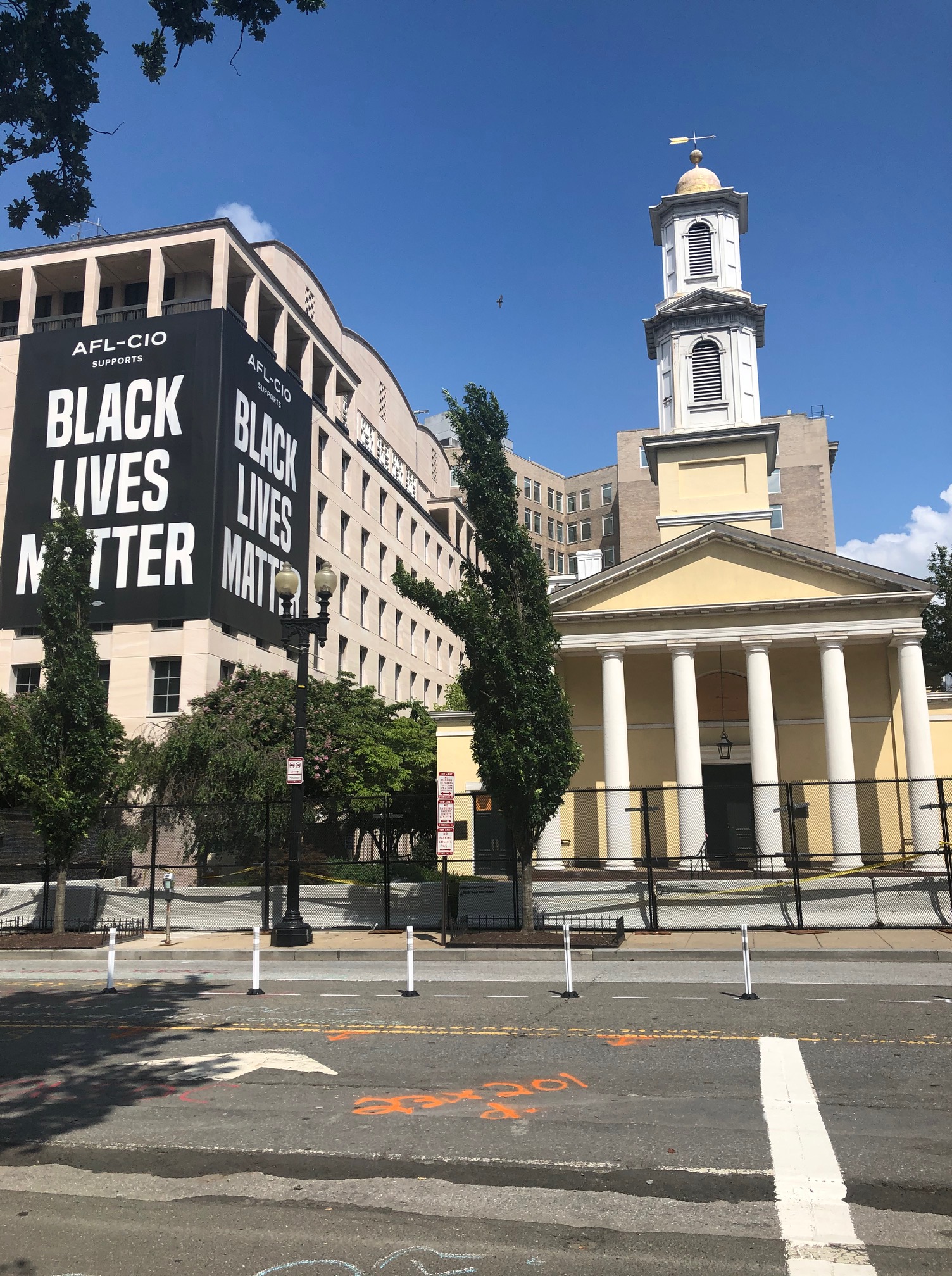
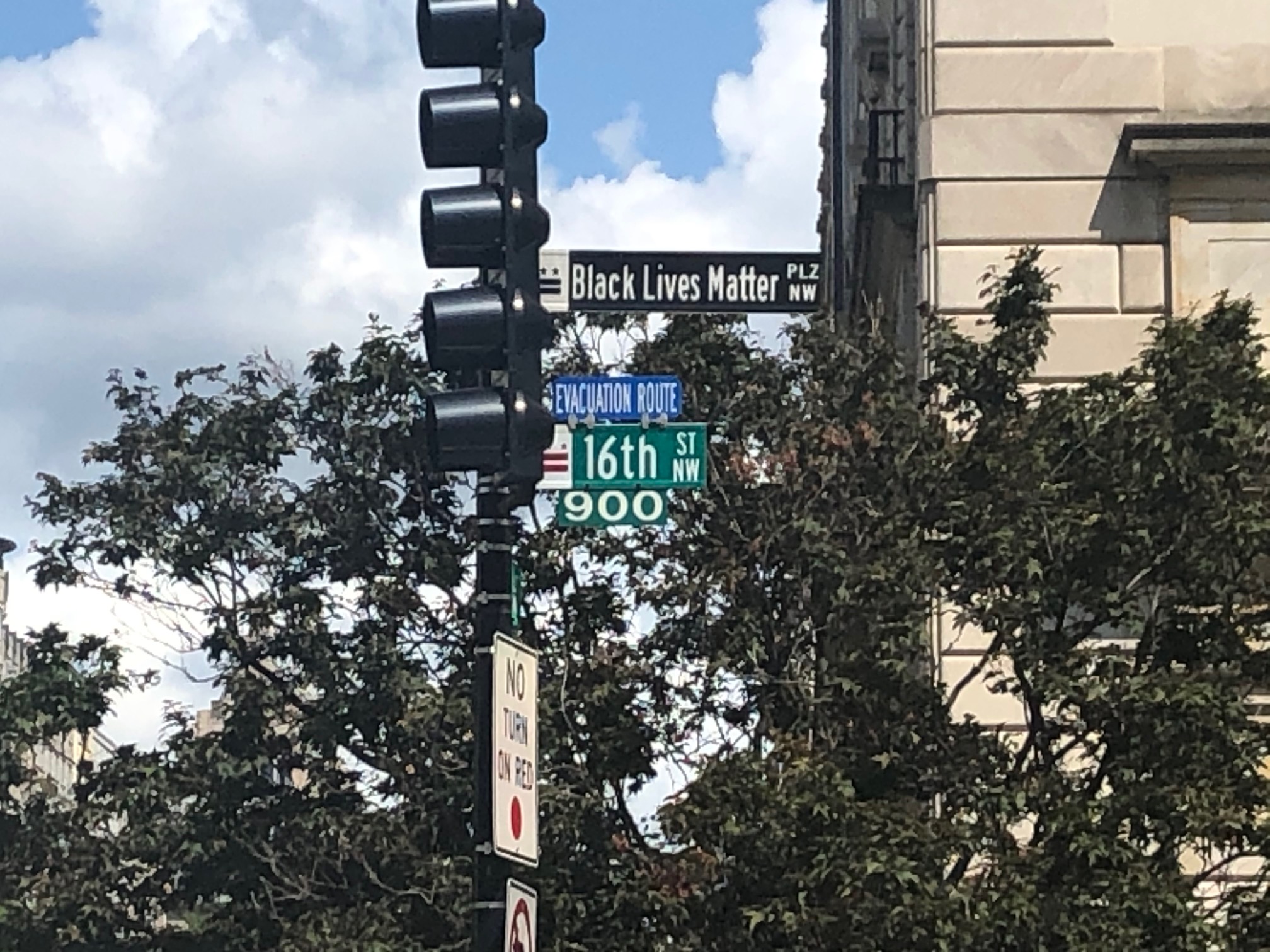
Black Lives Matter Plaza

Camera: iPhone 8

Location: Black Lives Matter Plaza; Washington, District of Columbia, United States

Don’t Rest on Your Laurels

“One of my favorite expressions in the English language: “Don’t rest on your laurels” means to not be complacent with what you have done and to keep moving forward.”

Complacency is the killer of any sustained success. What you have done in the past is in the past. Unfortunately, you cannot rest on your laurels for very long. One of my favorite expressions in the English language: “Don’t rest on your laurels” means to not be complacent with what you have done and to keep moving forward. Success is only temporary and while it can be lasting, if you don’t sustain what you’ve done to accomplish more, you may find yourself back at square one. You can be satisfied with your achievements and recognize them, but it is not wise to continue relying upon them when you need to be aware of what you have to do in the present and in the future.

With the current pandemic not going away anytime soon, it can be difficult to resign yourself to going with the flow, staying housebound, and waiting for things to become somewhat normal again. However, it should not be used as an excuse for you to let yourself go mentally or physically. Even if the first half of the year was a total wash for you and you put your own goals on hold, you still have a good chunk of the second half to make progress in whatever you set your mind to. Even though you may not be able to have fun as much as you like, this is a great time to reassess what is truly important to you, who truly matters to you, and how you want to be into the future. We all have extra time to think now and while that may feel like an undue burden, there is an opportunity in there to seek out what you are hoping to accomplish and will keep moving you forward during this unprecedented and difficult time.

Not resting on your laurels may sound difficult right now but it may be the perfect chance for you to move forward, to accomplish personal tasks that you’ve been putting off, and to pick up learning something new that you’ve been meaning to but never had the time before quarantine began or before you were resigned to staying at home more than you would have liked.

Each person is going to have their own set of goals and hopes but the main thing to keep in mind is that you have at least one thing that you want to accomplish that you didn’t have time for before the pandemic hit. Use your extra time even if it is just an hour or so each day to work towards a personal goal. With just one hour, you can accomplish a lot over the next five months. I would recommend setting a mental goal to hit like practicing meditation each day for 10 to 15 minutes or doing daily language practice for a new language that you would like to learn. You should also have one physical goal in mind like doing 50 pushups each day or 20 sprints or just being able to get in a form of exercise when you are not working or studying.

You cannot have just good physical health but poor mental health or vice versa. You need to work on both forms of health as they complement each other quite a bit. I truly believe that if you are making progress in both forms of health than you will be better able to confront the challenges of your day and your week. With this extra time at home, you can hit on both your mental and physical health in ways that you might not even be aware of.

If the gym is closed, go ahead and use your workout equipment at home. There are dozens of videos on how to do these kinds of exercises without needing very fancy equipment. You can also likely find stretch bands, jump rope, barbells, dumbbells, pull-up bars online to help you create that good 30-minute workout that can hit on different parts of the body. If you don’t have an outdoor space, look to your nearest park or public outdoor area to do sprints, go for a walk, go for a jog, or even do Yoga if you so desire to get a workout in.

Daily exercise is not only good for your body but it’s good for your mind as well. I think the pandemic has personally shown me as well the importance of staying fit and healthy and how it can get neglected when you are running around all the time, commuting to school or to work, and not making enough time for yourself to take care of your body. Now, with a little extra time, hopefully, we can collectively prioritize our physical health even if it’s just a simple home workout of 30 minutes.

Challenging yourself mentally on at least a weekly basis but preferably daily means learning something new to keep your mind sharp. If you are looking for work or haven’t been to school in a while, online learning opportunities are abundant from Coursera to LinkedIn Learning to Duolingo, which can challenge you to learn new skills to not only help you with your mental dexterity but can help you find a job depending on the type of industry you’re focusing on. Online learning is often less expensive than traditional means of education and since you are likely spending a lot more time in your apartment or your house, giving yourself thirty minutes to an hour per day of self-study can help you learn new skills while we are all living in this age of pandemic.

Keeping both your mental health and your physical health in mind during this trying time is very important. Not resting on your laurels even when life is influx and so many things are uncertain is not an excuse for your letting your mental and physical abilities go to waste. You are not only keeping yourself sharp to face ongoing challenges but you’re also getting out of your own head and letting your worries fall away for a little while. Wear a mask, socially distance, and wash your hands are all necessary in this current time but what’s also not being said is make sure you are taking care of both your mental and physical health too.

Whether it is a walk in the park, learning a new skill, doing home workouts, improving your cooking, trying to keep your routine even when homeward bound is very key to coming out of this pandemic better and more resilient. It’s something I have to work on myself but it’s key to keeping up a positive and forward-looking spirit. If you have more free time on your hands, that’s natural right now. Don’t become a sloth though and look to just vegetate out in front of the television. You have to do your best to stay active, stay positive, and keep moving forward.

It can be easy to rest on your laurels when much of our lives have been upended but you have to keep making progress towards your goals in ways that are possible right now. Hopefully, you have had time to think about which goals you want to achieve in the past few months and how you want to make the most of these remaining months of 2020. It’s been a hard year for everyone around the world, but you can still make it a fulfilling one for your own development by focusing on what you can control and how you make the most of these remaining months too.

How to Spot a BS Artist

I do not like to speak ill of people, but I do think it is important to warn about certain people who may not have your best interests in mind. You may want to look out for what I will reference as being ‘BS Artists’ as I do not like to curse in my writings. I will tell you what a BS Artist is, what to look for in spotting a BS Artist, and how to avoid them as best as you can. BS Artists do not necessarily intend or want to be mean and they are not necessarily bad people, but they can be deceptive, misleading, and not have your interests in mind.

BS Artists are definitely not your friends even though they may initially appear to be friendly. They seem to care about you initially and remember certain details about who you are. Their kind of friendliness is an obvious bit of shallowness that leaves you feeling a little let down. You can tell after a little while that the friendliness was not genuine, that they are looking to curry a favor or are trying to take more from you than they want to give back, and they are mainly looking out for themselves and want to take advantage of your time or your money.

A BS Artist will do their best to convince you of something without giving any proof or by hyping something up without checking his or her facts. They do not see lying as that bad if it’s a means to an end even if that hurts people’s feelings or misleads them. They resent facts and the truth and will attack you if you push back on them. If it is in their interests, they will BS their way even if it means disregarding the truth to further their own agenda even if it causes harm.

Instead of admitting that they are wrong or that they do not know or to say that they need to find out the facts first, they go ahead with illogical assumptions and conclusions on any given subject and will not back down at any cost. They would rather ‘save face’ or maintain positive relations with others rather than be honest and upfront about what they might have been wrong about. Because lies upon lies can do the most damage, BS Artists cause a lot more harm because the little white lies become big lies and before they can admit fault, many people can be hurt from being misled.

It is not a bad trait to be confident, but BS Artists take it to the next level by being cocky and showing hubris even in the face of contrary evidence or contradictory claims. They can be overconfident, selfish, and demeaning when other people disagree with them or want to debate regarding the facts of the matter. Being that cocky will get a BS Artist into trouble and can cost them dearly even if they are able to evade the truth for a little while. Even if they put off the truth for months of years, it will come back to bite them and it could cost them money, their jobs, their families, and their freedom.

From devious landlords to banking fraudsters to pyramid scheme creators to corrupt politicians, they are all BS artists at the heart of it and while some people in these professions are good people and care about others, BS artists in these fields of work give others a bad reputation because of the heinous acts they end up committing.

What we have to do as a society is to not enable them to rise to influence other or hold power over others. It starts with a strong sense of accountability, ethics, and holding people responsibility for their actions. It has to also begin with not any of the small lies slide which end up becoming bigger and bigger lies that cause a lot more damage the more a BS artist gets enabled. A BS Artist is bad enough but when he or she has free reign to do as they please with no consequences so then the rest of society will be left holding the bag and with no due recourse to hold them accountable.

You first have to detect if there are any lies, get to know that person really well and decide if they are truthful and trustworthy. It may take months or even years but don’t jump into a friendship or a business partnership with someone you haven’t seriously gotten to know for. When you are not in a rush, why risk a lot when you don’t know anything about that person? Another warning sign is when they refuse to divulge information about themselves when you start to get to know them such as what their job is like, a little about their hobbies, and what they enjoy doing.

You should also make sure that they want to get to know you and that they follow up on their commitments when you ask them for their time. If they aren’t willing to respond to your emails or phone calls, you should not push forward with any higher level of commitment such as an in-person commitment or any long-term partnership or relationship. Do not let a BS Artist let you waste your time or your money whether it’s through the television or face-to-face.

A BS Artist is not hard to find, and they are always going to be around. Part of being a functioning adult is knowing how to think critically about who you are dealing with and how you deal with them. You have to be skeptical to some degree and having a ‘wait and see’ mentality when it comes to other people. You do not want to give much or give too little but it’s not good to heavily invest since you may get burned in the process. The best you can do is really get to know the other person well whether its’ for business, relationships, or career-wise.

The main characteristics that you want to avoid are people who are deceitful, uncaring about the truth, and not willing to hear the facts. They can be manipulative, compulsive liars, and they may use you to get ahead and not feel any remorse about it. Some BS Artists are so good at it sadly that you may only realize that they are a BS Artist a decade or two decades later. There are going to be times like that unfortunately where you may be taken advantage of and done all you can to avoid that happening. The best you can do in that case is admit that you made a mistake but were trying to protect yourself to the best of your ability. At times in life, you have to cut your losses and hope the damage was not too bad.

Ultimately, what we all must do is make sure that the BS Artists do not hold too much sway over our society or our economy. That is when the real trouble begins when they control a lot of daily life leading to greater corruption, inequality, and societal dysfunction. When an entire society is deceived, the damage may last for decades and we are likely to know that we were warned but not enough of us were aware that we were dealing with BS Artists rather than genuine and good people. We have to do better than that and make sure that we prioritize the right kind of character, ethics, and personal qualities in our politics, in our daily life, and in our society.

‘Everything In Its Right Place’ (A Video Retrospective)

It’s hard to really love most music videos today which tend to be shallow and lacking in any original thought. During past decades leading up to the 2000’s, it seems like actual effort and work was put into music videos of songs in order to get on MTV but also to highlight the themes of the song as well as the entire album. There are a number of my favorite artists who produce great music videos including Radiohead, The Smashing Pumpkins, U2, Oasis, Dave Matthews Band, etc.

However, MTV and official music videos are not what they used to be. In an age of instant gratification and live concerts being streamed of the songs you love, it’s hard to appreciate music videos as being part of an increasingly crowded creative marketplace. While official music videos may be dying, creative videos and covers of songs from our favorite artists seem to be on the rise. Considering that music videos are usually for hit singles of certain songs and not for entire albums, there has started to be a movement towards producing independent music videos for songs that never received the official ‘music video’ song treatment.

The rise of YouTube and other video platforms has allowed creative people who are fans of good music to produce their own music videos. While they started out as being kind of cliché or very amateur, they are now becoming very professional and also very related to the lyrics of the song in question. I saw a particular music video of a favorite song of mine featured on YouTube a couple of weeks ago. The song is ‘Everything in Its Right Place’ by Radiohead and it is an excellent song by my favorite band but the one thing that this song never had was its own brilliant music video to go with it.

Because of YouTube, the creative skills of a fan named ‘Capitao Ahab’, which is a pretty fun name in its own right, although I believe the original video creator’s name is Joschka Laukeninks who created it and titled it ‘BACKSTORY.’ It is a now an unofficial music video on the popular video platform that is really well done and professionally shot that has received almost two million views. A video like this would not have existed ten years ago but luckily it does. Part of the reason why this music video is so impactful is that it works so well with the content of this particular Radiohead song.

‘Everything in Its Right Place’ like many of Radiohead’s songs are open to interpretation but it is soothing with its use of synthesizers, digitally manipulated voices, and haunting electronic sounds that sound comforting when you have your headphones on at full blast. The lyric itself of ‘Everything in Its Right Place’ focuses on how to maintain your composure and your levelheadedness as you go through life. The fan music video’s storyline of a baby becoming a boy, a man, and then an elderly man highlights the ups and downs of life and how there are ‘two colors in my head.’

The ‘two colors’ could be interpreted as the good and the bad that you will go through as you go through life’s uncertain and mysterious waters. In particular, the song begins with the oft-repeated lyric of ‘Kid A’, the title of Radiohead’s 2000 album and expresses the experiences of a ‘boy’ as he is born, grows up, matures, and eventually dies. “Yesterday, I woke up sucking on a lemon.” Is also a lyric up to the fan’s interpretation but it implies that life can be sour as well as sweet and that you will have to taste and swallow the bitterness of life if you want to enjoy the sweet part of the fruit.

The music video begins on a hopeful note as a baby boy gains his first steps as he walks through his parents’ house. The sweetness of his childhood is referenced with meeting animals for the first time, having his 6th birthday, going to the beach, and experiencing pure joy at that age. Childhood innocence does not last forever so the boy ends up experiencing his first pains in life including the accidental burning down of his house, fights between his mother and his father, the divorce and exit of his mother from his life, pressures from his father to succeed as he ages into being a teenager.

Learning in school, riding his bicycle, summer days at the swimming pool are some of the joys of teenage life including his first experiences with girls as well with drugs and late nights with friends. Still though, the joys of discovery and youth are balanced out by his struggles with partying too much, getting into rights, being angry at the world and dealing with bad breakups. In one part of the video, the teenager emerges from the pool as a young man ready to take on the world in his 20’s. He thinks his partying days and life as a Bachelor will last forever until he stares at the woman of his dreams on New Year’s Eve and she stares back signaling a new relationship that will change his life.

They date, travel, live together, and the young man eventually proposes to the woman of his dreams. As the video speeds up, so does the aging and life of the man as he gets married, celebrates the birth of his child, and gets ready for middle-aged challenges and prospects. Moving into a house as newlyweds, getting a better job, moving up the corporate ladder, using his new car, traveling for work, going to important meetings, and shuffling along while growing a beard signifies how fast life speeds up the older you become. Sometimes, you’re running so fast that you can’t keep track of who or what you are. In the video, the man still remembers the little blissful moments of carrying his child with his beloved wife, family dinners, and trying to balance work and family until tragedy suddenly strikes.

The hardest part of life is unforeseen tragedies and we hope and pray to never experience any to happen, but this man has the tragic occurrence of seeing his wife and child running towards him across the street only to be hit by a bus and to be taken off life support. The song’s crescendo builds up as the man struggles through grief, longing, and how to move on when he knows he can’t but has to anyway. After the tragedy, what once was promising is now dull and at once he was fast to move through the world, he staggers slowly through it wondering what it is all worth and why keep going? How can one fill the void in their own heart when it was taken out of them and cannot be put back?

We see the man continue with his work, entertaining clients, meeting a new woman and getting married again but there is the lingering sense that it is not what he envisioned his life to be. He can have a child with her, but it won’t be the same as his first true love or bring back his first child. Trying to fill the void with an extramarital affair, fighting with his new wife, jogging and running to keep moving forward to futilely escape from one’s own pre-destined aging are all ways of coping both unhealthily and healthily as you go through middle age to becoming elderly in your later life.

Maybe if he stops running or walking or jogging, he will have to face his own eventual demise and departure from this world or face his memories of losing loved ones or losing his mother. The aged man with gray hairs continues to work, to exercise, to keep up his health by going to the doctor and trying to save his marriage. Some of these battles he will win, and some he will lose although we will never know from such a short video. Eventually, the man is elderly and looking back on his life from his bed and looks to be alone in the world.

However, he does not remember the tragedies that befell him as we all must endure in life sometimes. Instead, he remembers the first time he went to dance at a club, the way he looked at his firstborn child, hugging his beloved first wife, and how she stared at him lovingly on New Year’s Eve and how she stared at him at their wedding and when she gave birth to their child. He remembers the tragedy too but remembers those special moments that made his life truly worth living. You are left wondering after watching this four-minute video of a complicated, yet powerful life filled with tragedy and joy whether it was all worth it for the man. Would he do it again if he knew what was to happen in the future?

If we all knew what was to happen in the future until the end of our days, would we all do it again from the beginning? Would it be worth it even if there is pain, tragedy, and death? Would it be worth the love, joy, and pleasure that we experience as human beings as well? It really is out of our control, but this music video does an excellent job of pondering life’s deepest questions in only four minutes and only with the wistful yet dreamy lyrics of Thom Yorke from Radiohead creating a powerful combination of a great song and a great video. It may not be an original music video from Radiohead but whoever created it did a great job of getting a powerful message across to this 2-million strong audience on life, love, and loss.

If you would like to watch the music video on ‘Everything In Its Right Place’, you can find it here on YouTube: https://www.youtube.com/watch?v=GnfPaaMR6Qc

‘BACKSTORY’ Full Video on Vimeo: https://vimeo.com/245687147

Why Is Having Willpower Important ?

Willpower is a key trait that has an immense effect on our daily lives. Without its presence, we are often at the whim of short-term pleasure, gratification, and sustenance. However, while it is not a trait that is equally shared among each of us, it can be built up over time by achieving bigger and bigger goals. The key thing with having willpower is that you have to start small and work upwards to really make a big impact in your life. Depending upon what goal or result you are trying to achieve, you have to set your willpower to be in line with that timeline to achieve it.

For example, if I want to become a consistent runner to become healthier, should I start out one day with a five-mile run of less than an hour? No, because it’s not necessary and you’ll often suffer for setting your sights too high. If you’re just starting out with it, it’s best to build up your willpower over time by building up your capacity and your progress. Having long-term willpower takes short-term success and this example is no different really from others.

If I am just starting out with running, I don’t go for five miles at first and almost an hour of running. You want to start small and build up to your final goal of five miles. It may take you a month or two to reach it, but you will be satisfied knowing that you got out of the house and achieved something. Perhaps in the first week, you ran once for ten minutes and it was a little over a mile within your neighborhood. That is something to be proud of! You need that initial spark to keep the flame within you rising over time.

Building up your willpower requires incremental change that is often measured and compared with your results getting better and better over time. After that first week, maybe you run twice the second week and run each time for 15 minutes for 1 ½ miles. Then, by the third and fourth week, you build up to three times a week for about 20 minutes. By the end of the first month, you should get to about the halfway point or more by running a couple of times per week for about a half an hour.

Sometimes, your goals such as running five miles may take a month, three months, or even a year. Everybody is different but having a basic sense of willpower will help launch your goals forward and keep you on a path where you are changing yourself a bit at a time. Thinking yourself as a failure for not reaching your given goal after a few weeks, a month, or even a couple of months is immensely counterproductive. Each week, you want to be making strides to build up your willpower as a muscle that is constantly flexed out to become stronger over time.

Consistency is key for becoming better with willpower and it also comes with exercising restraint. You have to be aware also of the consequences of your actions ahead of time. Eating chocolate ice cream before bed might feel really good in the short-term but you might not be able to fall asleep that easily and wake up the next day feeling hydrated and groggy. You know it feels really good to take out your phone when you’re out with friends to get a small dopamine hit of attention but you know you might be disappointing the people you’re out with and consciously decide to keep that phone in your pocket or purse.

Having good willpower, in my opinion, takes both consistency and awareness. You have to be consistent in building it up over time like you would with your muscles by working out at the gym. The second part is a lot more difficult in that you have to be aware of the consequences of your actions when you fail to exercise your willpower as you would normally. You also should not be too hard on yourself when building up your willpower. There will be times when you fail, when you get discouraged, when you feel like giving up but don’t.

Give yourself time to decompress, to relax, and to think about how you can improve with it. On those days you fail, think consciously about why it is you failed and how you can succeed in the future. You don’t have to be striving to be better 100% of the time with your will but if you can put in more than average effort over time, then you will definitely see positive results. When you commit yourself to a goal, stay at it and realize that consistent action and knowledge of the consequences of doing nothing will help see you forward.

Perhaps most importantly, find those family members and friends willing to support you with whatever you’re going to do. If you have a positive goal for yourself and you want their support, they should definitely be behind you and giving you words of encouragement. If they want to track your progress with you, then they should be able to do so to hold you accountable. Without pressuring you too much or faulting you for coming up short, please make sure that they are behind you for the right reasons. If you want to better yourself in some way and reach your goals by improving your willpower, they should want that for you and not judge you for making that your personal prerogative.

Willpower is important for a number of reasons but the main one is because it is the key to unlocking your full potential. It all starts with your mind and your decision to change something about yourself. Exercising your willpower is definitely like exercising your muscles. You have to do it consistently and with good effort to start achieving noticeable results. You have to be aware of what your final goal is and to strive towards reaching it. Even if you fall short, you can take pride in knowing that you are now better off than you were a few weeks ago, a few months ago, or even a few years ago. You can see that your willpower is improving when you start to see incremental progress in where you are at as opposed to where you were when you started. Each conscious effort we do each day takes some amount of willpower and that is why it is so important to improve upon.

Whether it is going to the gym, having a healthier diet, learning a new language, taking better care of your home or apartment, willpower is a key part of achieving any of these measurable goals. Without exercising your willpower, you will not go anywhere with these practical goals. You have to be willing to sacrifice some short-term pleasures to achieve these long-term results. You may have to cut a few people out of your life as well if they are not supportive of your goals or actively preventing you from reaching them. You also may find that your own identity will change because of your newfound habits but that I believe is a good thing as we cannot stay stagnant throughout our lives and must always be moving forward.

The Power of An Idea

According to the University of Southern California’s Laboratory of Neuroimaging, the average person has about 70,000 thoughts per day. That is about 45 thoughts per minute and 2,700 thoughts per hour. Most likely, 90% of those thoughts are focused on the day-to-day habits and responsibilities that we take upon ourselves out of necessity. Where we go to eat, where we go shop for food, what to clean and how to clean it, and the need to brush, dress, and groom ourselves so that we look presentable to the world. However, what makes us stand out as a species is our ability to pull a few ideas from these thousands of thoughts that end up changing the world in some measurable way.

Thoughts can be random, scattered, and hard to quantify but with concentrated effort and documentation, these thoughts become ideas that later can become a reality. How does an idea turn into a real thing? Well, one part of making an idea real is jotting it down on paper or even on a smartphone today and really spending a lot of time focusing on the plausibility of it. Ideas can make the best sense in the world to you but if they are not popular or don’t transcend just your belief in them, they will go nowhere fast.

Ideas are meant to be tested, changed, and optimized so that people believe in them, for better or for worse. The paradox that is inherent with ideas is that they are very similar to human nature. They can be used for the greatest good or the greatest evil. Ideas are so powerful that wars have been waged over them, millions have lost their lives, and untold amounts of money have been spent to promote or degrade them.

When you really think about it, ideas that are put into action have caused changes to human civilizations throughout the millennia. Whether its education, health, infrastructure, scientific advancement, community building, ideas are at the forefront of upending the status quo and changing human lives, sometimes for the better or sometimes for worse. While I just mentioned the positive advancements that come from ideas, it is also valid that ideas have led to war, poverty, inequality, destruction, and multiple isms that have caused conflict and strife among nations, races, and religions.

You may be reading this article and wondering that maybe it’s best to not contribute your ideas to the world in some way. I think this is a false dichotomy because I like to think that if your ideas are not harming people, are not harming the planet, and can lead to a better community, country or world, then you should try out your ideas and see what happens. The key part to realizing an idea of yours is to see how other people react to it. Are they happier because of your idea? Are they healthier because of it? Are they better educated because of your idea?

You should be asking yourself: Is my idea doing some sort of measurable good for the world and how can I improve upon it? Ideas start out as being imperfect but once you start acting to make those ideas a reality in the world, you will soon learn that implementation of those ideas will take serious hard work and effort. Getting feedback from unbiased users or participants is a key step to see whether the idea is worth merit and whether it is sustainable or not in the long-term. Imposing your idea on the world without substantive feedback or without understanding how your idea fits in to your specific niche will end up in failure.

If you have an idea, remember to write it down and construct how it could work and whether it would be worth pursuing. Similar to starting a business or launching a campaign, you have to test drive the idea first to see if people would be interested in what you have to offer whether they are paying customers or voters from the town you are running your campaign in. Careful assessment and fleshing out of your idea will make a better idea and will make your idea stand out from others that are similar or may be able to usurp yours.

Ideas do not always have to be original but there must be some added benefit or advantage that hasn’t been tried before or could change the status quo in some positive way. There is a rightful stigma against ideas, but it is important to realize that our faith in ideas is crucial to keeping civilization going even when some ideas turn out to be bad for us. Our shared belief in ideas is what leads to massive companies like Google or Apple becoming the most influential or profitable in the world and has led to nation-states forming in the past few centuries such as the United States of America or the United Kingdom.

Without thoughts that turned into ideas which turned into actions, where would humanity be? Our ability to analyze, process, and think about how to change the world or how to introduce something new in the world is what sets us apart from other species on the planet. Essentially, the story of human progress could be argued to revolve around how to maximize the impact and spread of good ideas and how to minimize the influence and the source of bad ideas. Most of us tend to shy away from sharing our ideas or trying them out but I think having a more entrepreneurial and innovative vision is a key part of being self-actualized as a person.

Having a sense of belief in your ideas and how you can leave the world better than you found it is extremely powerful. While working on the ideas of others and promoting them to the world is also very useful, I tend to think that each and every one of us has a good idea that could be fleshed out, tried out, and implemented with the help of others, which would play a key part in making the world a better place.

Because the world is so interconnected, ideas spread so rapidly that it can be overwhelming with how much is out there. However, the ideas that stick around are the ones that take time to develop, that are tweaked with, that refine their logic and their execution, and for which have gained a solid following of people who believe in those ideas. An idea that has a powerful story which resonates with people can also withstand the test of time.

The next time you have an idea, think deeply about it. Maybe you’re on your commute to work or you’re in the bathroom, or you’re on a walk in the local park, but don’t let it slip away if you think that it can serve a positive purpose and if it is actionable. Ideas can come and go in a millisecond so being able to concentrate on the idea, remember it, and write it down as soon as possible could pay off in a big way. Another way to let your ideas form is to focus on the impact that it could have and how people could benefit from the idea(s). I believe that the more observant you are of your surroundings, the better your ideas will be. Another part of gaining traction with your ideas is reading books, whether they were entrepreneurs, inventors, politicians, and reformists from different eras of history.

You may find that your idea is not so unique and may date back a few decades or even a few centuries but maybe that idea never took off. You are eager to learn more about that so you do your research, you find out more about the history of the idea, and you decide why it may be right for the present and into the future based on changes to society. Just because an idea failed in the past doesn’t mean it can’t make a return with a few useful tweaks. From the electric car to virtual reality to smartphones, these kinds of ideas have their roots buried firmly in previous unsuccessful efforts in the past only to be revived because of inventors and thinkers who thought of how to adapt these inventions to the modern era.

Ideas are powerful because of are shared belief in them and how they can change the world. However, without serious action, commitment, and hard work, ideas of ours will just stay like that as ideas alone. Ideas without belief or without support from others will go nowhere. The key to implementing good ideas in our era is that they have been tested, have some measurable benefit to humanity, and have staying power because of their relevance to our societies. If you are not sure that you are an ‘ideas’ person, try to concentrate on your thoughts and remember whether there are any of them in your daily life that could become a reality.

You must decide if any of these ideas of yours could be written down, planned out, implemented, and eventually supported by the work of others. Once you go through that chronological checklist, you will be ready to start putting those ideas into action. Your ideas may ultimately fail and you may get discouraged but if your idea(s) were able to have a kind of positive impact on someone or something because of that thought that you first had go through your mind, you will know that it will have been worth the effort of carrying it out in the first place.

Book Recommendations – Volume VII

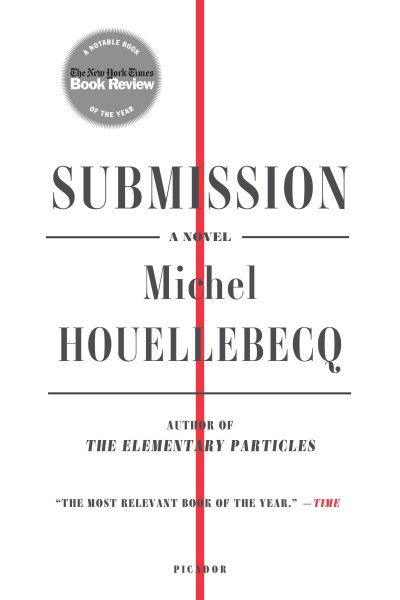
Over the past couple of months, I’ve been lucky enough to do some good reading. Each of these three books are enjoyable, interesting and which hold different lessons about the state of the world and humanity at large. These three books come highly recommended from myself and are well worth the time invested to read them. If you are looking for a few books to read, as spring becomes summer, below you will see the 7th edition of my book recommendations which highlights Submission by Michel Houellebecq, Sapiens: A Brief History of Humankind by Yuval Noah Harari, and A World in Disarray by Richard Haass.

71qwSzqHLcL

1.) Submission by Michel Houellebecq is an enjoyable and humorous take on French politics in the 21st The French author is known for his edgy content and his nihilistic take on modern life. Houellebecq is not known for writing about satire and for those who are a fan of his works, this novel was a sharp turn away from the other topics that he usually focuses on. Personally, I haven’t read the other novels associated with this writer but I really enjoyed this satirical look at French politics.

The premise of the novel is that there is a new political crisis in France. In order to stave off a win in the 2022 French presidential elections from Marine Le Pen’s National Front party, the Socialist party and the center-right Union for a Popular Movement party are forced to align with a newly formed Muslim Brotherhood party led by its charismatic leader, Mohammed Ben-Abbes in order to achieve victory as a coalition. The main character, Francois, is a middle-aged Literature professor at the Sorbonne is going through his own mid-life crisis. While he enjoys teaching at the university and cavorting physically with some of his students, he struggles to find meaning in his life and is distraught at the loss of both of his parents. This is on top of the fact that the rise of the Muslim Brotherhood party will affect his ability to keep his full pension and be able to keep his job.                                                                                                                       

On top of the probability of losing his teaching job at the Sorbonne as well as the fleeing of his steady Jewish girlfriend, Myriam, who leaves France for Israel in the face of rising anti-Semitism, Francois contemplates suicide but decides instead to seek refuge in a monastery in the town of Martel. Ironically, Francois, after going through a self-imposed exile for a few weeks, comes to realize that the world didn’t end when the Muslim Brotherhood party takes power. Instead of fighting the changes going on at the Sorbonne, Francois is intrigued by the fact that if he converts or ‘submits’ to Islam, he will be able to still find a prestigious job, keep his lucrative pension, and be able to have a few wives chosen for him since polygamy had become legal in France. The main character, Francois, is a spectator to the changing political landscape rather than an active player.

While this book is known for being controversial, I find it to be full of slapstick humor in making fun of the main character’s overly dramatic take on life. Francois is a mere spectator whose desire for alcohol, food, and sex overrides any core convictions that he may have politically. Mainly, Houellebecq is making fun of French intellectuals who can’t be bothered to invest in them beyond their own hedonistic desires.

His take on the political situation in France is an obvious dramatization and I don’t believe that he was looking to ruffle any feathers. The rise of an Islamic nationalist party in France in 2022 would be completely unrealistic which is what the author was making clear in focusing on the political satire associated with that idea. Overall, it is a witty, entertaining novel, which tells us more about human nature than it does about the precarious state of French politics in the 21st century.

51zJS6PmxbL._SX333_BO1,204,203,200_

2.) Sapiens: A Brief History of Humankind by Yuval Noah Harari is one of the best books I have ever read. In all likelihood, this is the kind of book that you can come back to multiple times and still enjoy it. This is not your average history book in that it focuses more on the big ideas and developments associated with each era of human history rather than diving into the endless details and events related to each period. Instead of a 4,000 page behemoth focused on human history, Harari does a great job in condensing the how and why of Homo sapiens into only 400+ pages.

While I was reading this book, it didn’t feel laborious at all and was a real page-turner. Harari’s main argument in the book is that the homo sapien (the modern human) were able to dominate the Earth because of our ability to cooperate and share with each other in large numbers. The downfall of pre-homo sapiens such as the Neanderthals along with various other extinct animals and plants was the result of the Cognitive Revolution, which occurred at around 70,000 BCE.

The exciting developments related to the establishment of shared human myths and imaginary mainstays such as money, religions, human rights, nation-states, etc. directly tied to Homo Sapien culture put sapiens on the path to long-term survival and flourishing. Harari convincingly argues that the history of humanity can be broken down into four parts: the Cognitive Revolution (the development of imagination), the Agricultural Revolution (the formation of collective societies), the Unification of humankind (the rise of empires and nations), along with the Scientific Revolution (the emergence of scientific knowledge) which is the stage where sapiens currently find ourselves in.

Harari believes that the rise of Homo sapiens as a species has had significant consequences on the planet we all inhabit as well as the harsh treatment of animals that has resulted from being at the top of the food chain. Also, while the Agricultural revolution led to the creation of large human societies and eventually sprawling empires, the shift from hunter gathering to farming caused the human diet and lifestyle to suffer as a direct result. Human beings after agriculture became less self-reliant and had to rely on a king, an emperor, or the state itself to provide food, water, and other necessities. Out of all of the developments in human history, the rise of agriculture was a fundamental shift in our thinking, which still affects us in the modern society we all inhabit today.

Overall, Sapiens is an excellent, informative, and timely read that I would recommend to anyone. It’s an easy book to pick up and a hard one to put down. I am currently reading another book of his, which is the sequel to Sapiens, this book and the one that follows it just shows how good of an author and intellectual that Mr. Harari is.

51mz0ftqxyL._SX329_BO1,204,203,200_

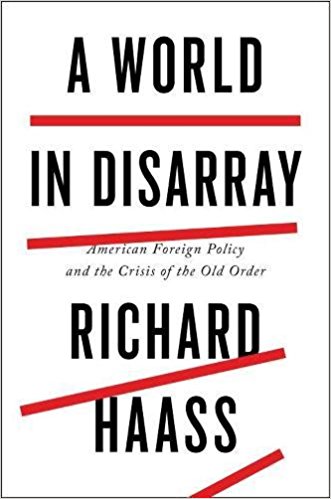
3.) A World in Disarray: American Foreign Policy and the Crisis of the Old Older by Richard Haass is a refreshing take on the topsy-turvy world of international relations in this current period. Mr. Haass, who is currently the President of the Council on Foreign Relations, has advised previous U.S. presidents and worked as the Director of Policy Planning at the U.S. State Department during the Bush Administration, is an expert on world affairs who has published multiple books and this one in particular could not be timelier.

While the U.S. remains the most powerful country in the world both economically and militarily, it has started to lose ground in terms of its ability to sway world opinion and events due to failures of U.S. foreign policy in the early years of the 21st century. The lack of success in denuclearizing of the Korean peninsula, the rise of Iran as a regional power in the Middle East, and the mixed results of the East Asia ‘pivot’ from the Obama administration have created a worldwide power vacuum. Also, due to the long and costly wars in Iraq and Afghanistan, both U.S. prestige and values were harmed by these adventures in the Middle East. Haass argues correctly that the post-WWII order that the United States and its European allies helped create is fraying due to the failure of its leaders, institutions, and policies to maintain stability across the globe.             

There are real challenges to contend with that the United States won’t be able to solve on its own. The threat of climate change, the challenge of cyber-security, and preventing the spread of nuclear weapons require a unified approach that has been lacking between the U.S. and its European allies. The events of Brexit, the Trump administration’s ‘America First’ isolationist policies, and the great power rivalries going on between Russia, China, and India have thrown the world in disarray. The days where the U.S. could have great influence and sway over events around the world may be drawing to a close. Haass sees that the U.S. is just one of the great global powers and must be willing to cooperate, collaborate with other powers in order to achieve results when the main issues of today are multilateral in nature.

In order for the world to follow America’s lead, Haass aptly understands that we must get our own house in order first. The rising national debt, the ongoing problems with investing in education, infrastructure, and health care prevent the United States from acting as an example to the rest of the world. A dysfunctional political process as well as a President who doesn’t believe in leading the international, post WWII order are preventing the United States from realizing its full potential as a global power.

For anyone who is new to international relations, A World In Disarray, is an excellent take on the history of the international system after World War II and how did we get to this point where the world seems more chaotic and unstable than ever. Mr. Haass understands the limits of American power and that in order to lead on the world stage; the U.S. must undertake reforms to benefit our own citizens at home. In order to solve complex, multilateral issues, the U.S. must value diplomacy and the relationships that we have with our allies. Where the U.S. used to be the only global superpower, after the fall of the Soviet Union, America is just one of the great powers now. In order to solve the multilateral issues of the 21st century, the United States cannot do it alone and we must be willing to use effective diplomacy and other forms of soft power to create peace and prosperity.

The Power of Mentorship

Since the days of ancient Greece, the concept of mentoring or mentorship has been apart of human recordkeeping and history. The naming of the word itself ‘mentor’ is said to have come from Homer’s ‘Odyssey’ where the main character, Odysseus, while getting ready to leave for his famous voyage, decided to leave his infant son behind. Because he didn’t want to leave his son alone considering how long his ‘odyssey’ could be, His infant son, Telemachos, was left in the care and companionship of Odysseus’s friend named ‘Mentor.’ From this allegorical story from Homer, we get a sense of how longstanding the idea of mentorship has been around and why it has lasted throughout the centuries.

Why exactly is mentorship so powerful? Well, there are a number of reasons why it can be such a helpful and important part of a person’s success. People very rarely can do everything by themselves and to have the ability to seek out someone who gives them both their time and expertise without asking for anything in exchange is what makes having a mentor so powerful. Now, not everybody starts out being the best mentor. It’s a skill like any other skill that takes time to develop. It’s also impossible to mentor somebody in every aspect of his or her life.

It would be better to focus on an area where you think you can be a good mentor and lend help to another person. For example, if you’re good at writing and consider yourself to be a writer, you should want to mentor someone else who’s aspiring to be a writer and not someone who wants to become a mechanical engineer. Your mentoring has to line up with the mentee’s aspirations and what they hope to do in the future. Mentorship doesn’t only have to be professional advice but it can also involve be personal advice as well. Mentorship can range from how to learn a new skill set in order to make more money to being able to manage your personal relationships better.

Before mentorship can begin though, a level of trust has to be built up over time between the mentor and the mentee. When you’ve taken upon the role of the mentor, it’s important to make sure that you think that the mentee can be successful and that they can put in the work and effort to reach their goals. If somebody is mentoring you, it’s important to make sure that you know them well already, you respect them, and you find that they have good expertise and knowledge in the field or area that you need mentoring in.

A mentor doesn’t have to be a boss or a co-worker. It could also be a friend or family member who you have a close relationship to and is able to give you sound advice based off of their personal and/or professional experiences. When it comes to mentorship, it has to be a consistent and long-standing relationship between two people. The mentor and the mentee should be meeting on a weekly, bi-weekly, or monthly basis together in order to make actual real and sustained progress on both their short-term and long-term goals. If you’re only meeting with a mentor once every month or every three months, it’s not going to work out and you’ll be lucky to make any lasting progress. If mentorship is done right, the mentee will see themselves go far in the area, skillset, or field that they’re focusing on especially if the mentor is giving out real, practical advice that they themselves have proven to work.

For mentorship to be successful, it’s important that this kind of relationship between two people be a two-way street and not just a one-sided affair. The mentee should not be getting 100% of the benefits out of the mentorship because respect and appreciation has to be paid from the mentee to the mentor. Time, as we all know, is quite valuable and for a mentor to be giving his time freely to the mentee especially on a weekly or monthly basis is a very selfless thing to be doing. While the mentor should not expect anything in return right away, a healthy mentorship would involve the mentee taking it upon himself to show his appreciation and thanks through small gestures. It could be buying your mentor a gift for the holidays or buying them a ticket to a baseball game or a concert but it’s important to show that you care about the mentorship and that you realize it’s nice to give back every now and then.

If you’ve built up a strong personal friendship with your mentor, it would be nice for the mentee to spend time with the mentor outside of their formal meetings / sit-downs, etc. For example, if you two have shared interests outside of business, you can go out together for dinner, or do an activity together. Mentorships don’t have to be strictly business all of the time and the best mentorships are when both parties like each other and would consider themselves to be good friends. One of the key powers of mentorship is its’ sustainability and longevity when it’s done right. A fruitful mentorship of months and even years can definitely change the course of a person’s life. While not the easiest thing in life to take upon oneself, being a mentor to someone is one of the most rewarding things a person can do and it’s an easy way to make the world a bit better than before.

Unfortunately, true mentorship today isn’t as prevalent as it used to be and is a far cry from what it was like just a generation or two ago. Most people today do not have a mentor in their lives to help them who can they rely on for good advice without paying money. If you’re able to be a mentor to someone who needs your help or advice, it is something that should be seriously considered especially if that person has a lot of potential. Mentorships shouldn’t always be thought of in terms of the mentor being older the mentee in terms of age.

That’s a fallacy in that there are ways in which older people can learn from younger people especially in this current digital age of technology. The power of mentorships lies in the inherent decency of one person helping another person to get ahead in life in any way that they can. The mentee can then take the advice to heart and work hard to improve themselves in professional and/or personal ways. The mentee should show gratitude and appreciation to the mentor because having a good mentor who is generous with his time is not easy to find these days. While mentorships and apprenticeships were more common a generation or two ago, they are exceedingly rare nowadays. If you’re able to have a good mentor in your life, remember to be grateful for it and pay it back in the future by mentoring another person who is growing through the same struggles and setbacks that you once conquered yourself.

If there were more active mentoring going on between people, not only would their own individual lives improve over time but also that of the local community and society as a whole. When more and more folks are willing to give back to others in their community and help them out consistently, that helps out the society in general. The power of mentorship is also a reminder that we’re all in this together and we should try to spur on success of others rather than kick them down a notch. You’ll feel happier and more engaged in the world to when you give mentorship a shot so I encourage those of you reading this article to go out there, think about why mentorship is important, and figure out if that is a calling that you personally would like to take upon in the future in an effort to help other people help themselves.