‘Springsteen: Deliver Me From Nowhere’ – Film Review and Analysis

“What I enjoyed about ‘Springsteen: Deliver Me from Nowhere’ (directed by Scott Cooper) is that for a biographical film, it really does dive into the effects of fame, expectations, struggling with one’s past, and reconciling it with a future very much unlike where you once came from.”

Everyone knows who Bruce Springsteen is by now, the Rock superstar and legend who has produced over twenty studio albums, won dozens of awards, and sold out shows over many decades. He is the extrovert’s extrovert on the stage producing marathon 3 ½ – 4 hour live shows with the powerful energy and stamina of a man half or one third of his age (Springsteen is 76 as of this writing). What I enjoyed about ‘Springsteen: Deliver Me from Nowhere’ (directed by Scott Cooper) is that for a biographical film, it really does dive into the effects of fame, expectations, struggling with one’s past, and reconciling it with a future very much unlike where you once came from.

‘Springsteen: Deliver Me from Nowhere’, the film has excellent source material in the book of the same name mostly due to interviews with the man (i.e. Springsteen) himself in the book, previously released in 2023 by author Warren Zanes. I highly recommend reading the book before seeing the movie to get a fuller picture of how Springsteen’s unlikely first solo album came to be in 1982. While the movie takes some time away for some side plots not related to the album’s making, it does do justice to how ‘Nebraska’ came to be and how it almost got completely derailed. The romantic subplot, while competently acted, feels tacked on and somewhat distracting from the core narrative. I found myself wishing the film had dedicated more screen time to the mechanics and mindset behind Nebraska’s creation as the book had done that it is based on; its stark originality is one of the most fascinating aspects of Springsteen’s career, and the film sometimes glides past that too quickly and not deeply enough.

Commercial success puts a lot of pressure on any musician and even Bruce Springsteen was exhausted both mentally and physically from ‘The River’ tour with his first taste of super stardom. It’s hard to top that kind of album so his decision after the tour to seek some peace and quiet at a rental home in Colts Neck, New Jersey seems like a good step to get the writing process started again. In the film, Bruce seems introverted almost to a fault when he gets off stage, must sit by himself to have some quiet and enjoy the peace of his dry towel hanging over his head.

While he responds warmly to fans and to his love interest especially during his guest set at The Stone Pony in Asbury Park, you still sense he’s caught between who he was and who fame is forcing him to become. I enjoyed how the film shows that he is battling himself at times in terms of what direction to take his life on top of his unresolved issues of his past highlighted by his turbulent relationship with his father (played by the great Stephen Graham). Even when you’re popular and famous for your music, sometimes anyone would want to do, including Bruce, is to isolate oneself for a while and be somewhere where you aren’t recognized or don’t want to be recognized. Bruce wants to focus on his musical range and channel his creativity away from the record executives’ wants, away from the band, and perhaps away from everyone.

Jeremy Allen White nails the role, embodying Springsteen’s physical stillness, haunted expressions, and the restless mind of a young artist wrestling with ideas he doesn’t yet fully understand. Being able to master guitar playing, the singing, the panic of not knowing who he is at times and searching for lyrics and the meaning behind them are tall tasks for any actor to convince an audience of and Jeremy nails it throughout the film. White’s performance works because he understands Springsteen not just physically but emotionally: a rising star caught between inspiration and uncertainty, trying to decode the meaning of his own lyrics as he writes them.

Coming up with an album different than anything you’ve ever done before takes time, effort, and introspection, which helps Bruce to look for movies, books, and stories that help create the theme for what Nebraska becomes. While Bruce and the E Street Band are shown in the film as a tight band, hitting on all cylinders, and creating great music for their own album, Bruce feels passionately about making something of his own and letting it not be changed or influenced beyond what he put together in an upstairs bedroom of his rental house on a simple four track cassette. Even in the early 1980s, technology could have given Nebraska a cleaner, more polished sound. But Springsteen refused to smooth out the edges. He believed the atmosphere, imperfections, and claustrophobic intimacy of the demos were the very thing that made the album special.

In both the book and the recent film, Springsteen is not afraid of Nebraska failing or his other music not being well received. Rather, he is afraid of how not to crack up from what is haunting him internally. Money, fame, and a bright future do not make him whole, and being able to carve out your own identity, deal with your past wisely, and find a way to deal with depression in a healthy manner takes time, support, and sometimes admitting when you need to seek help.

Luckily, Bruce has a loyal manager, Jon Landau (played by Jeremy Strong) who is more than looking out for making money off the next hit Springsteen album. He shows that he cares for Bruce as a person and more importantly as a dear friend and wants what’s best for him, even if Nebraska is not the album he would have hoped to promote or the kind of musical direction, he wants from Bruce either. Landau wants Bruce to find inner peace and happiness more than just fame, success, and wealth, which not every manager wants for their star.

Bruce, like the characters in Nebraska, are imperfect people in an imperfect world, and even if the stories are ghostly, gruesome, or unpolished, like the album, they must be told and given room to breathe. Even from great solitude and from introversion, Bruce’s personal struggle in that time led to one of his best albums and is still being covered and listened to over forty years later. Nebraska wasn’t built for radio or for Top 10 charts, even if it did outperform expectations, but it was built for truth and showed the underbelly of hard lives and harder circumstances. Bruce’s childhood and dealing with his past are covered in the film and you get the sense that there would be no Nebraska if the artist hadn’t any struggles in life or not been tested by family or by fame or by his search for the next song.

‘Deliver Me from Nowhere’ isn’t just a book or a film. It’s a reminder that even legends hit that crossroads where success, identity, and truth collide. It’s a thoughtful, beautifully acted portrait of an artist wrestling with his past to shape his future. For Springsteen fans, it adds new insight into one of his most daring albums; for newcomers, it’s an unforgettable introduction to the man behind the myth. Nebraska was never meant for radio or music videos; it was meant for honesty and truth-telling. More than forty years later after this album first came out, that honesty still cuts through all the noise.
Anatomy of a Scene – ‘Family, Jimmy, Family’ (The Wire)

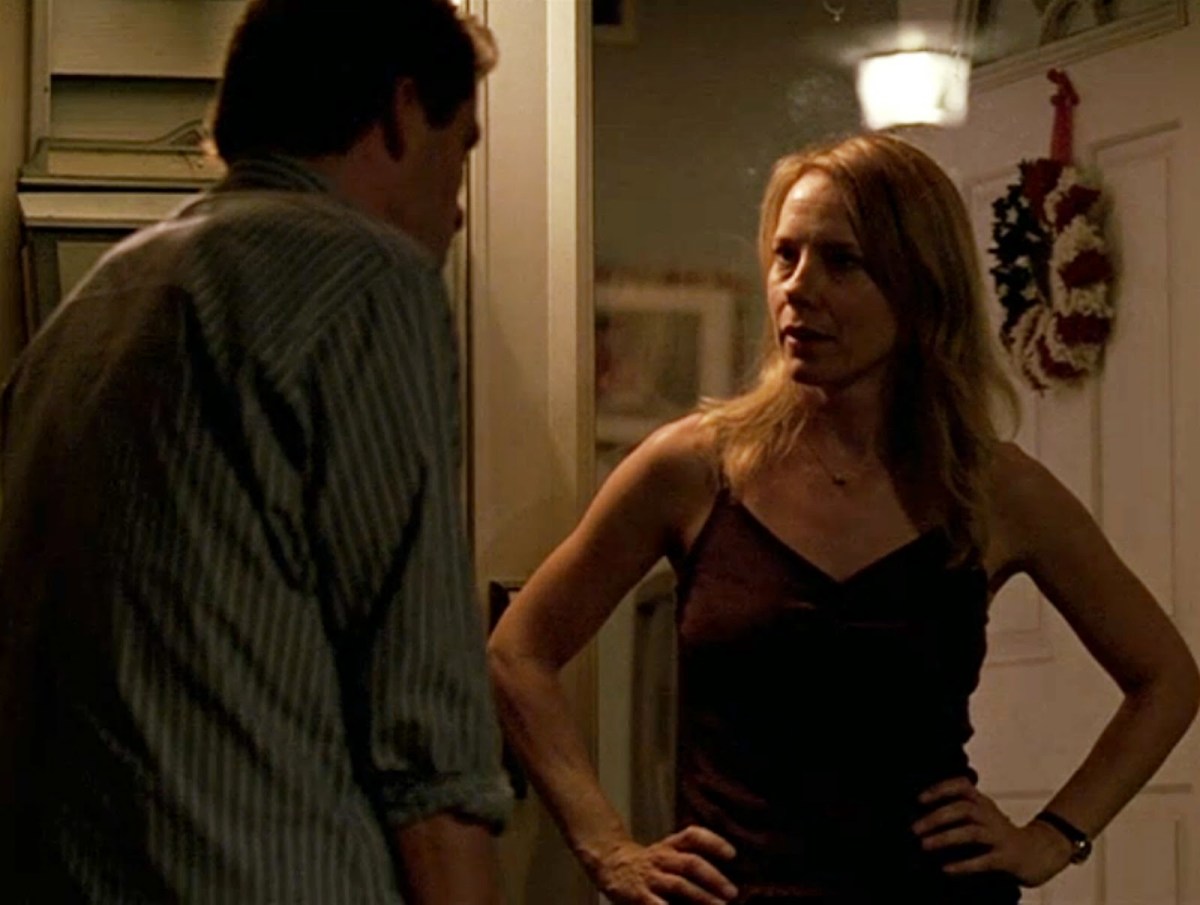
“This scene that I’ve titled, ‘Family, Jimmy, Family’ feels like it’s not just about the character, Jimmy McNulty, one of the leading roles of the show and a deeply flawed one at that but also could reflect on our own lives and who we prioritize in them.”

Sometimes, it takes a great work of fictional television to cause the viewer to do some soul searching themselves. ‘The Wire’ is not only an excellent crime drama and takes a critical lens to different facets of American society, but there are also multiple scenes that stand out for how they deliver truths to each of their characters for what they themselves are ignorant of or choose to forget. One of those scenes is short but whose succinctness of its message and point-blank delivery is something that you could do a deep analysis of. This scene that I’ve titled, ‘Family, Jimmy, Family’ feels like it’s not just about the character, Jimmy McNulty, one of the leading roles of the show and a deeply flawed one at that but also could reflect on our own lives and who we prioritize in them.

For a little bit of background before diving into the scene itself, which takes place in ‘The Wire’ Season 5, Jimmy McNulty is an obsessive workaholic and a functional alcoholic. His thirst for booze rivals his own thirst for self-satisfaction in being able to solve murders as a detective in the Baltimore Police Department. While he does crave justice, he craves adulation, admiration, and boosting his ego too because of his natural talents with regards to being a lead detective. However, without getting into too many details, the stress of the job, the clashes with his bosses, and the long hours cause him to drink heavily, carouse with random women, and cause him to lose control of his relationship with both his ex-wife and his children.

Jimmy loves being a detective, the purpose that comes with the badge, and the colleagues who he handles cases with. It’s also about the camaraderie that he finds in the work, the all-consuming nature of the work, and by outsmarting criminals and thugs who think they have successfully outwitted him and the police. The thing with letting work consume you is that it takes over your life and suffocates the rest of your identity with it. Jimmy is a great detective but throughout the show, the job takes a toll on his personal life and about separating work from his time out of work. When you have nothing but the job and the people in it, is it really a good life?

The scene I refer to titled, ‘Family, Jimmy, Family’ is instrumental in telling Jimmy McNulty what he needs to hear and what other workaholics need to hear: “The job won’t save you.” It takes five seasons but Beadie Russell, a Baltimore Port Authority police officer, introduced in season two, but for which her and Jimmy start to become romantically involved does what no one else in the show has the courage to do, tell Jimmy that the job isn’t everything.

“In the end, they’re not going to be there either.” Beadie sums it up in less than a minute with this scene but reminds Jimmy that the drinking pals at the bar, the workmates who he shares a patrol car with and shares stories, or even the girls he’s met for quick flings, they won’t be there when he really needs it. Yes, you can have fun, enjoy their company, and make the most of the work hours, but those people won’t be there for you when it comes to your health, wellness, and your overall fulfillment as a person. Beadie indicates to Jimmy that his workaholic behavior and his propensity for alcohol won’t save him and won’t give him the internal satisfaction he is always looking for.

“Family, that’s it. Family, and if you’re lucky, one or two friends who are the same as family. That’s all the best of us get. Everything else just…” Beadie pauses at the end of this scene and lets it all sink in for Jimmy. She knows she has reached him and lets him know that at your funeral or in your last days, you won’t have the girls you dated, the workmates or bosses, or the casual bar buddies you swap stories with there. If you’re lucky, you may have close family to care for you and maybe one or two close friends and that’s the truth of this scene not just for Jimmy McNulty of ‘The Wire’ but for all of us.

Beadie makes it clear that everything else goes away at some point once the job is done, the glasses are empty, and everybody goes their separate ways. Nothing is permanent but maybe your family will be there for you through most of it, thick and thin of life, if you’re lucky and until your dying day if you are truly blessed in that regard. Jimmy knows by the end of the scene that he needs to shift his priorities based on his body language.

He does not say anything back to Beadie, but he knows what she is saying as his new girlfriend is 100% true. It’s been a while since anyone has laid it out to him that clearly, but she gets through to him by telling him the unvarnished truth that he has refused to face up until that point. Like Beadie, we all need someone to cut through the nonsense and tell us what we really need to hear and if you watch this scene from ‘The Wire’, it’s not just Jimmy who this scene can reflect upon but maybe for our own lives too.

We all want to have productive work lives, make friends, and enjoy the fruits of our labor, but we must remember that it all does go away, and that family can be the most important and reliable thing we have throughout our lives if we’re lucky. Workmates, casual buddies and flings, and even friends come and go, but family can sustain us if we nurture those relationships and don’t let them atrophy and go away too.

Beadie reminds Jimmy to not let the work and the environment around his work consume him entirely. She saves him from himself to some degree but telling him what he needs to hear before he spirals out of control as a functioning alcoholic and workaholic. I think we all need a Beadie Russell in our lives to tell us what we need to hear rather than what we want to hear so that we can get that needed support to help reassess our priorities in life and change ourselves for the better.

The Yearning for Nostalgia

“Whether it is an escape through our popular culture, a preference to revisit the past than to explore what may come in an unknown future, or to enjoy simply what we have been accustomed to, the power of nostalgia should not be underestimated.”

What is it about nostalgia that stirs such powerful emotions in us all? Why do we insist on revisiting, remaking, and reconstructing the past? This innate yearning that is part of being human, I would argue, is a part of gaining back some comfort and familiarity in an increasingly unfamiliar and complex world. Whether it is an escape through our popular culture, a preference to revisit the past than to explore what may come in an unknown future, or to enjoy simply what we have been accustomed to, the power of nostalgia should not be underestimated.

As the new year begins, looking at the popular culture, which reflects trends in our overall society, this yearning for nostalgia has only gotten more prominent in the recent years, especially with the continuing of the COVID-19 pandemic. There are multiple examples in pop culture where nostalgia is the rule rather than the exception. One example would include video games where remakes, sequels, and remastered games from the Halo series to Assassin’s Creed to Call of Duty are still the most popular even after being decades long in terms of their original creation.

Another example would be television shows where one of the most popular series released recently is ‘Cobra Kai’ whose origins come from the Karate Kid movies of the 1980s, but for which has had a rebirth with the same actors almost four decades later but also with new characters who compliment the original story. Other popular shows involve those from the ‘Star Wars’ and ‘Marvel’ series whose revitalizations include the bounty hunter Boba Fett (also from the 1980s as a character) and popularly known comic book heroes including ‘Loki’, ‘Captain America’, and ‘Hawkeye.’ While these comic book heroes may be new to some viewers, they also date back in their creation back to the 1990s or even earlier allowing their fans to indulge in their own nostalgia in seeing these comic book heroes come to the small screen.

I haven’t even mentioned the plethora of movies from ‘Licorice Pizza’ (1970s), ‘The Power of the Dog’ (1920s Western), ‘The Matrix: Resurrections’ (1990s-2000s), released just in the past few months who pay homage to the past from settings we are familiar with or at least recognize. While there are films and TV series that do focus on mankind’s possible future(s), such as ‘Station Eleven’ on HBOMax or ‘The Expanse’ on Amazon Prime, most popular media today focuses on either adapted stories or at least remakes of stories with slight changes or new ideas related to the same characters to keep its popularity going.

In 2022, nostalgia sells the best, which is why new Halo video games, new Spider-Man movies, and new Game of Thrones books still rule the day in terms of our popular media consumption. Now, that does not mean that our appetite for new and original ideas in our popular culture are going extinct, but you can tell that we live in an age of rampant nostalgia, which is the norm rather than taking a chance or a risk on a new story or new ideas.

I believe that this resurgent nostalgia does have its positives to give people some familiarity with what they already know from their own past and for which they have experience in liking already. In addition, it can take more time to warm up to a new story, a new idea, or a new experience when it’s easier to go with something or someone you already know. Stories can change or adapt or get better sometimes over times and just because we are familiar with a character, or a series does not mean that it automatically gets boring after a certain point.

However, it is much easier to rely on nostalgia rather than to forge a new path. In anything in life and not just popular culture, it’s not as challenging to look back on what we’ve done, where we’ve been, or what we’ve experienced than to go forward, challenge oneself, and try new things. The impulse to be comfortable with what’s familiar rather than the unknown is a powerful force and an impulse that can be hard to overcome without pushing yourself. Nostalgia does not create lasting comfort though usually and it can be rather stale to rely on reliving things, experiences, or places rather than to look forward to unknown occurrences in the future.

Sequels, remakes, reshoots, adapted materials are harder to make better than the originals and they also do not break any new ground. Whether it is film, music, art, books, or in general, it may be easier to rely on nostalgia for creation but if it does not work out, it can be harder to bounce back from that failure. If you do something original or unique instead, it will stand out much more currently, and while you may polarize people who have gotten so used to nostalgia everywhere, you can be more wildly successful in your endeavor potentially and create a new cultural touchstone.

One great example from this past year that generated not only a cultural touchstone, but a worldwide phenomenon from Seoul to London to New York was the Netflix original series, ‘Squid Game.’ While the popular show contained elements from other TV series from the past, it had its own flair to it with unique set design, memorable characters, and a compelling and timely plot. It was the #1 TV series on the global streaming platform for over a month or so and generated important conversations in the public sphere regarding capitalism, income inequality, and debt servicing. The creators of the series took a big gamble, and they could have failed but they put their heart and soul into this unique show, and it paid off in more ways than one.

‘Squid Game’ and other original programming are a lesson for us all to not let our imaginations be stymied by what’s familiar and already known. Even in an uncertain world being continually upended by a pandemic and the effects of climate change, people want to be challenged to discover what’s new and what’s important. There is room in this world for both what’s new and what’s nostalgic. I think our problems begin in society when we only crave what’s comfortable or only what’s nostalgic to us. If we only choose to focus on what we already know, we won’t be able to face what’s new or on the horizon for us. It is not good to dwell only on what’s past and to rehash forever and ever what we already like rather than not trying to discover what we may like or embrace in the future that can help us learn more about the world around us.

The Whiskey Philosopher

“In a year of ‘red lights’, it’s been both enlightening and refreshing to read a book by a man who has spent his first fifty years on the planet chasing ‘greenlights.’ That phrase of catching ‘greenlights’ is also the formal title of Matthew McConaughey’s memoir / autobiography / personal growth tale that quickly draws the reader in.”

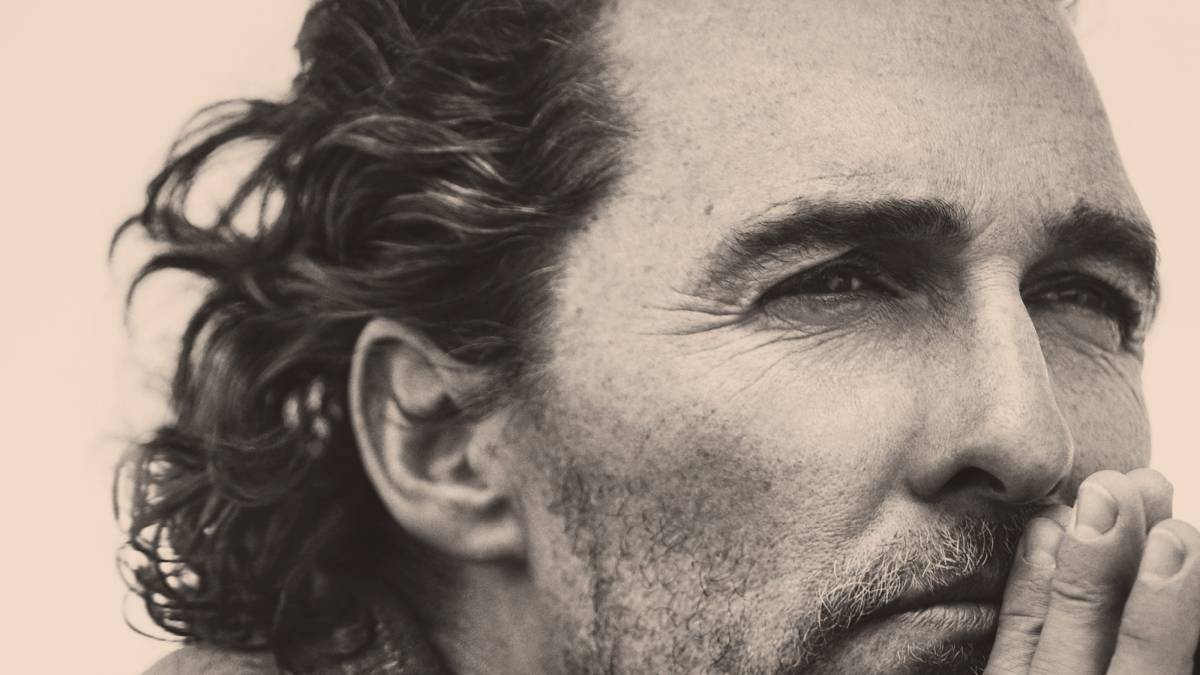
In a year of ‘red lights’, it’s been both enlightening and refreshing to read a book by a man who has spent his first fifty years on the planet chasing ‘greenlights.’ That phrase of catching ‘greenlights’ is also the formal title of Matthew McConaughey’s memoir / autobiography / personal growth tale that quickly draws the reader in. I first heard about Mr. McConaughey’s book when he appeared on the ‘Joe Rogan Experience’, Joe Rogan’s popular podcast. Mr. Rogan coined the book as being ‘whiskey philosophy’ with McConaughey being the philosopher over a glass of whiskey.

I found this metaphor to be quite fitting for the book ‘greenlights’ as the author talks about his life foremost as an observer and a reflector who is able to take a step back and analyze his decisions, his perspectives, and his overall views on his life and how he got to be who he is today. You immediately feel comfortable with McConaughey’s narrative and his ability to tell stories like you were sitting with an old friend over a fire pit drinking whiskey and regaling each other with both good times and bad. Throughout the book, you feel welcomed in and embraced as if you were right there with Matthew having a chat.

What I do love most about ‘Greenlights’ is the raw honesty and the ability to peer into a life like his, which I would argue is different from your average celebrity. Instead of obsessing over the glitz and glamour of being famous in Hollywood, you spend more time with McConaughey in different places around the world. I, for one, did not know that he was an avid traveler ever since he took a gap year in high school to go to Australia on an exchange program. He has often felt the call to go out in the wild, to be secluded from others, and to meet new people along the way.

Surprisingly, the book takes us from the Chihuahua Desert of West Texas to the autobahns of Germany to the jungles of the Peruvian Amazon and across the ocean to the small villages of Mali. One story of Matthew’s that stood out in particular was his wrestling match with a local Malian villager who challenges him as the only white man who has shown up as a guest to wrestle together. It’s not clear to the reader who wins the match, but it doesn’t matter to the village who sees Matthew wrestle. What is most important to them is that he accepted the challenge and not about who won or who lost.

I find that this particular story resonates across Matthew’s life so far and his willingness to put himself out there. Whether it’s going up to ask the woman he eventually marries if he can make her a margarita to seeking his permission from his father to go into acting as long as he doesn’t ‘half-ass it’ to keeping his promise to become a father because that was the most important thing for him to do in life, McConaughey is always willing to accept a challenge and embrace the possibility of failure. His ten guiding goals of what he wanted out of his life back in 1992 when he begun to keep a journal and of which he details in the book of what they were shows the readers how he may have taken a few detours but was able to stay true to his values and his desires even though he’s still working on a few of them.

His main goals of being a father, meeting the woman who was best for him on Earth, putting family first, and even winning a Best Actor award did not happen automatically and he had to run through a number of ‘red lights’ in order to get his ‘greenlights’ eventually. While ‘red lights’ would dissuade a lot of people to keep pushing such as being placed in romcoms for over ten years like Matthew was or perhaps having a falling out with his mother due to his having children out of wedlock, these ‘red lights’ did not discourage him from staying committed to who he was as an actor and as a person.

I think the main message of ‘greenlights’ is to not let the inevitable ‘red lights’ stop you from pursuing your goals and once you see an opportunity, you have to run with it and work hard to turn those lights green. Another particular example from the book that stood out to me was Matthew’s insight to playing Ron Woodroof in the acclaimed film, ‘Dallas Buyers Club’, an immensely emotional role, which led McConaughey to win the Best Actor award for his performance. The role itself wasn’t probably the highest paying role for an actor nor was it going to be a huge box office hit like his previous romcoms.

I believe Matthew took the role because how moving the personal story of Woodroof was and how he was moved to tears talking to Ron’s family and learning about his life through Ron’s own personal journals. While the actor and the man portrayed are very different, they are both native Texans and avid journal keepers. Matthew details his intense diet of losing up to 50 pounds to play the role in the movie and how he had to put himself in the mind of a man quietly dying from the horrific AIDS virus, which was stigmatized at the time. Even if they had to do the film over-budget, it was being made because Matthew, like all good actors, knows a good passion project when he finds one and puts all of his effort into acting the role to make the film as good as it can be. In this case, he won the Best Actor award and made his father proud who tells him the book to not ‘half-ass it’ and those words of encouragement stuck with Matthew.

In addition to seeing Matthew’s life play out since he was a child growing up in Texas, you get to see his really well-written poems, notes, anecdotes, and short stories, which really do convey an intuitive wisdom to them. From discussing love to pleasure to pain to truth to meaning, these poems scattered throughout the book are refreshing to read and relate to his life as a whole. His scribbles, notes, and recollection of different events in life is quite impressive. I do believe even more so after reading ‘Greenlights’ how I should start keeping my own journal for the long-term. Matthew was successfully able to turn his journal full of notes, memories, poems, and stories in a really good book about self-discovery, personal growth, the stages of life from childhood through adulthood, and one’s journey in seeking out ‘greenlights’ even when they can be few and far between as they have been for many of us throughout 2020.

At 285 pages, this is a great memoir and autobiography that doesn’t feel like its length. It is very much an easy page turner that doesn’t feel forced or slow-going. It really grips you for the ride and McConaughey’s life has been full of adventures, events, and precious memories up to year 50 where the book concludes. My only suggestion for improving the book or adding on to it in the future is to really focus more on the ‘red lights’ that happened in the author’s life and what specifically did he learn from those lean times as someone struggling as an actor or having family troubles or being tired of singledom.

I would be curious to learn more from Matthew about what advice he would give to someone during those ‘red lights’ times and how to make the most of them or how to best turn them green in the future. I did find that part to be missing from ‘Greenlights’ a bit too much as the ‘greenlights’ got a lot of the book space whereas I think it’s the ‘red lights’ in life that cause us to reflect more, learn more about who we are, and challenge us to be more creative in overcoming adversity.

In conclusion, ‘Greenlights’ by Matthew McConaughey is one of the best books of 2020. It is an engaging, emotional, and insightful look into a man’s life who has been one of the most important actors and entertainers of the past few decades. You learn a lot more about who Matthew is, what drives him, what’s important to him, how he views family, friends, his career, and what truly matters in life. I enjoy his whiskey philosophy and if I happened to be hanging out in Texas with anyone such as having a stiff drink and swapping stories together, it would be with Matthew McConaughey.

English Corner – The Building Blocks of Reading Materials

“When you are first starting out in reading the English language, it’s important to incorporate reading materials into your weekly habits.”

When you are first starting out in reading the English language, it’s important to incorporate reading materials into your weekly habits. It is a necessary complement to your learning and will help flex that muscle needed to retain both the grammar and the vocabulary that can drive your overall proficiency forward. It is not so much which reading material you choose but the fact that it should be appropriate for your reading level as a whole.

For example, it would not make sense to try something very difficult because you think you will advance that much quicker. Often times, if you go beyond your reading level in English, it will often cause an unnecessary step back and you will waste precious time in trying to understand a level of vocabulary and grammar that you are not yet ready for. It is often better to be err on the side of caution in terms of selecting multiple reading materials that you find yourself comfortable with and will challenge you yet you know for sure what the material is about and you can interpret the meaning and explain it to a teacher or a colleague.

If you are a beginner in the English language, I would start off your reading adventure with short poems and short stories, not more than a couple hundred words. Even if you are an adult as well, children’s books are a great way to get more familiar with the language level that you are currently at with basic vocabulary, phrases, and grammar principles. You may also want to read fliers and short email examples as well to become aware of the structure of those forms of writing.

I would also recommend short letters written about different subjects such as sports, weather, the daily habits someone has, and about going shopping or out to eat. It is key to read these short pieces of writing twice or three times to really understand the full meaning of what is being written. You may also want to read the story, the poem, or the letter out loud to work on your own pronunciation too to feel more comfortable absorbing the vocabulary that you are learning. A beginner should not be reading anything more than a few pages in length and at a very low vocabulary level. Preferably, a children’s book, a short email, or a quick poem are best for beginners in this sense.

For the intermediate learner, it is important to challenge yourself more and depending upon one’s age level, there are different options to consider. I encourage students who are younger to choose comic books, short stories, and even short mystery novels as well. Older students may enjoy reading magazines about sports, news, and even fashion depending upon their interests. I also encourage becoming more familiar with reading current events and news articles and being able to explain them to the teacher or to a friend.

Adding on to the difficulty means reading longer reading passages as well as longer letters or poems as well at any age group. You want to make sure that the reading level is higher so instead of at a 1st or a 3rd grade level, you should try to read materials that are at a 5th or an 6th grade level and perhaps up to an 8th grade level. Perhaps most importantly, at the Intermediate level, you should be able to hold a conversation about the topic you just read and to explain the main ideas and supporting ideas of the piece you read. Lastly, with your vocabulary, I would encourage being able to explain too your point of view for an article, what you thought about it.

The advanced learner should be at the point where they can read full books, magazines, and longer-form pieces of writing of at least a few thousand words or more. They should be able to understand and interpret vocabulary at the high school level. Depending upon which English-speaking culture they would like to learn more about, they should do their best to become familiar with writers of different backgrounds and be able to read successfully in a few genres, both fiction and non-fiction.

Reading and interpreting different kinds of texts that deal with different subjects and modern-day issues is also a key part of advancing in the English language. You should be a flexible enough reader at this point to be able to handle different types of reading that is longer than the other levels. From a 500-word poem to a 2500-word article to a 100-page book, being able to handle these types of reading at a high level will set you apart from the beginner or intermediate levels that you used to be at.

Another key to this advanced reading level is one’s ability to speak and write about what you just read with accuracy and by utilizing some advanced vocabulary and phrases learned from these reading exercises. If the professor or teacher were to assign you a persuasive, narrative, or argumentative essay for you to write about your reading assignment, you should feel comfortable by this point in doing so across a number of genres.

‘Building blocks’ take time to assemble and the same goes for building up your reading prowess. Again, it is necessary to start slow with short forms of writing from poetry to a short story to a quick email and then work your way up to a long article or a magazine and then on to the full novel or book that may take a month or two to finish. Getting better at reading in English is a key skill to have and is necessary to boost your proficiency and to do so in a comprehensive manner. It is not only true that your reading skills will get better the more consistent and driven you are with each page but your speaking skills should also improve and your writing abilities will be complemented if you can analyze, interpret, and describe what you have just written in your own words.

Patience is a virtue and reading are the biggest part of that quality when it comes to developing your English language skills. You may show quicker gains with speaking or writing but the long-term success of your English proficiency will be determined about how well you read, how you understand the reading, and what you can tell others about what you have read.

Book Recommendations – Volume XII

“However, while staying outdoors will become less and less pleasurable, this is definitely the time of the year to dive into your reading and to get back into the swing of things when it comes to reading good books.”

The end of the Summer is always a bittersweet one. With mixed feelings, August turns to September, fall season will soon be upon us and the daylight will become shorter while the cold weather is drawing near. However, while staying outdoors will become less and less pleasurable, this is definitely the time of the year to dive into your reading and to get back into the swing of things when it comes to reading good books. Colder weather, shorter days, and back to work / school will cause our minds to re-focus our attentions on the tasks at hand in our lives but we should not forget at night or on the weekends to kick back, relax, and enjoy a good book.

These four books that I’ve chosen are all non-fiction, but they tackle different subjects and are relevant to different academic or personal interests such as history, sociology, travel, or entrepreneurship. Each author brings something different to the table as well and the writing style is different along with the kind of narration you can expect. I can definitively say that each of these books is educational and you would not go wrong with reading any of the following books in the upcoming Fall season.

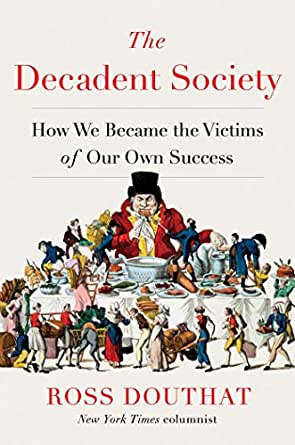
  1. The Decadent Society: How We Became Victims of Our Own Success by Ross Douthat

New York Times op-ed writer and author Ross Douthat is not optimistic about the future. Given that the present involves polarization, stalemates, and a lack of technological innovation, what does humanity have to look forward to? That is the main argument of Douthat’s book ‘The Decadent Society’ on how we may have reached the limits of our own ‘progress’ and that modernity is less fulfilling than we thought it would be. Douthat’s view is that our current culture, innovations, and motivations like originality and that we have become too complacent as a society.

Douthat cites falling birth rates, more reliance on video games / virtual reality, lack of new businesses being started along with increasing government dysfunction leading us all to be ‘comfortably numb’ as the famous Pink Floyd song goes. Douthat’s diagnosis of our current cultural and political malaise is quite convincing from citing Star Wars remakes to the fact that the Trump and Clinton families have stayed relevant for decades in politics with a lack of a fresh face to get us out of our national ennui.

While our ‘modernity’ has left us more comfortable than satisfied, Douthat struggles to mention ways that we can get out of the malaise or the needed policy or cultural changes that should take place to push our horizons more and our boundaries as a society. This was my one main gripe with the book as in the 2nd half or towards the end, a little optimism or forward-thinking would have gone over well but perhaps that was done on purpose. Douthat is not optimistic that much will change in the future and that perhaps it is best to accept our current ‘decadence’ as being set in stone or perhaps to prepare for a fall from grace that would shake more of us out of our slumber. I hope either scenario is not the case. ‘Decadence’ in my perspective gets boring after a while and human beings are creative and innovative at our core so hopefully our current malaise is not permanent as Douthat argues but rather a temporary blip on human history.

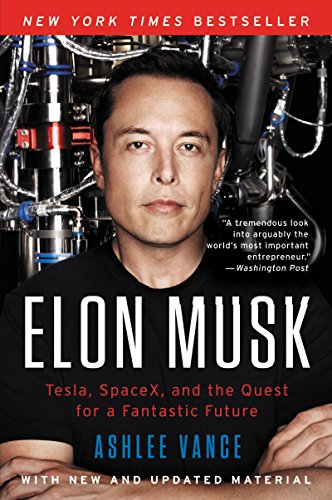
2. Elon Musk: Tesla, SpaceX and the Quest for a Fantastic Future by Ashlee Vance

Perhaps the great ‘irony’ of our age will be that a President or a Senator won’t be the one to lead us out of our current decadence. Perhaps it will instead be a foreign-born entrepreneur who rose from nothing to build multiple successful ventures that could transform the way we transport ourselves and how we interact with the cosmos. Entrepreneur Elon Musk may be the one to help lead us out of decadence and he seems to be on the way to making a dent in the wall that prevents us from creating the future. As many people don’t realize, Mr. Musk did not have an easy childhood, moved around multiple times, and even was a mediocre student at times but what he has that all entrepreneurs need is grit, resolve, and determination. To create something out of nothing and build your vision to make it a reality is where Elon has succeeded where many others have failed.

Musk clearly did not do it on his own whether it was Zip2, PayPal, or SolarCity but he was able to create a team and even companies to carry out his lofty vision. His tolerance for risk as an entrepreneur both financially and personally is simply beyond most people’s comprehension. Elon Musk is an entrepreneur so dedicated to making his companies a success that he will pour millions of dollars from a previous venture into his next one to ensure its longevity. Elon is currently the third richest person in the world and this autobiography gives rare insight into what it took for Musk to get to this point today with more than two decades of setbacks, failures, and even a few lawsuits here and there to overcome.

Ashlee Vance does an excellent job highlighting who Musk is as a person, what drives him, how his childhood and family affected him, who were the people around him, how could Tesla and SpaceX change life in the future and how big of an impact could they really have. Vance is illustrative in showing the whole of Elon Musk, both the good and bad, of the visionary entrepreneur. While he disdains any notion of socialism in government policy, he has received millions in government subsidies to help his businesses; His commitment to succeed can sometimes cause him to fall out with others who feel they were not treated well or were not given the recognition that they thought they deserved. A good biography shows both the triumphs and the warts of a man and this one is no different. Overall, this biography is an excellent look into the man behind both Tesla and SpaceX who continues on his quest to change the world by molding its future.

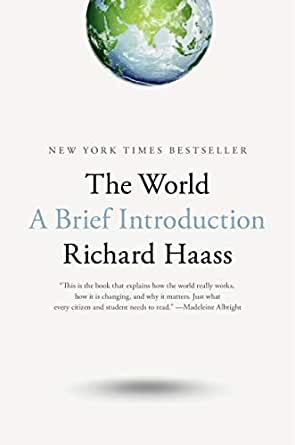
3. The World: A Brief Introduction by Richard Haass

This book is a love letter to International Relations in 2020 (pre-COVID) by the President of the Council on Foreign Relations Richard Haass. For those new to this field, it is a very enlightening and comprehensive book to ground someone especially in high school or their 1st year in college to know about the basics of the world in terms of foreign affairs and what are some of the main challenges of the 21st century for nation-states. While primarily a guide to the world for those new to international relations, I found that it is a good refresher for more advanced or experienced students of international affairs.

I enjoyed the historical overview, the breakdown of the regions in a succinct manner, and the number of economic, security, and development challenges that the world is grappling with at the beginning of the third decade of the 21st century. Richard Haass would definitely be an excellent professor to have in your Introduction to International Relations / International Relations Theories and this book would be a good starter text to have.

Clocking in at around 400 pages total, no major detail is spared, and no region of the world is left uncovered. If you are not familiar with an issue in IR or a region where you don’t know the culture or the language, Haass’s book is a good way to familiarize yourself and to stay up to date with what is going on regionally or thematically. For those of you in high school interested in the world and geopolitics, this book is a good place to start. For those of you starting college and planning to major in international relations, it is likely you will be reading this book not before too long.

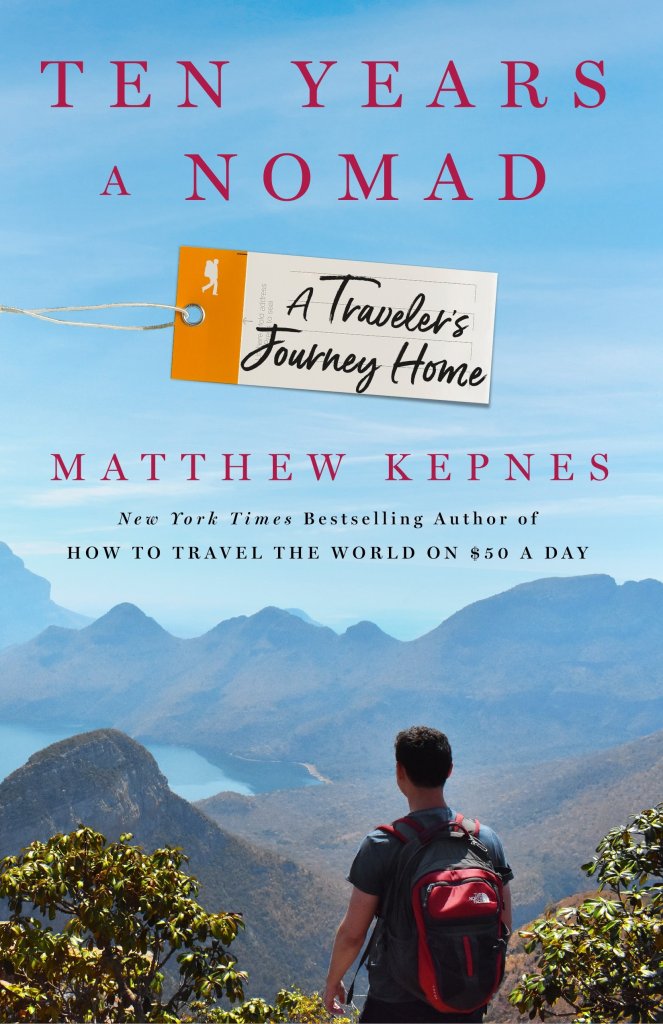
4. Ten Years a Nomad: A Traveler’s Journey Home by Matthew Kepnes

Home is whatever place you can find yourself comfortable in over a long enough period of time. I remember reading this piece of wisdom in Matthew Kepnes’s book and finding it to be quite the piece of truth. As a fellow traveler and shorter-term ‘nomad’ myself, Matthew’s travel memoir appealed to me because of its raw honesty and vulnerability. Life at home is comfortable but it can get dull and repetitive. Life on the road is new and exhilarating but can also lead to a sense of fatigue moving from place to place without settling down roots or losing friends and relationships as you feel the call to move somewhere else.

In my experience, Travel memoirs can be rather hit or miss but this one by Mr. Kepnes is on the mark in terms of the ups and downs of long-term travel and also about staying in a country for a year or more. I was personally away from home in my 20s for over three years and I can only imagine how ten years on the road would fundamentally change who I am, what I value, and how I want to live my life.

I really admire Matthew’s deep understanding on the joys of travel and how lucky we are to be on the road when we can. Travel is a privilege that especially now, we tend to have taken for granted. Once you get started on the path outside your town or country, it can be impossible to put the genie back in the bottle. That nomadic yearning to live life on your own terms, on your own pace is a flickering light that can burnish again with renewed intensity often times when we least expect it. This memoir highlights how rewarding travel can be, how much it can develop your personality and your worldview, and why it is so important to listen to your gut at times to know what you want in life.

Some of us travelers are meant to have one foot out of the door at all times and when we stay in one place too long, we tend to get stir crazy. I think what Matthew learned is how important it is to find that balance of being a nomad at heart but finding roots somewhere while keeping the freedom he gained over many years of hard work of being an independent writer, a recognized travel expert, and an overall creator with an ability to work remotely, which may becoming more and more common into the future.

You may think starting the journey is the hardest step to take when you’re going out on the road, but I find it’s true instead how coming home is often the hardest thing you’ll do when the journey comes to an inevitable end at some point. The good thing that Matthew notes in his memoir is that the nomad or the traveler is always within us even after the journey ends and that eternal flame can be rekindled making it easier and easier to get out on the road in the future to have more journeys without feeling that fear of the first step as happens on the first journey out of our comfort zone.

Book Recommendations – Volume XI

“There’s nothing better than sitting under your favorite tree in a backyard or out on the balcony with the sun in your face reading an engaging and enlightening book. As I have mentioned previously, Summer is the best season for reading and since a lot of other summer activities are postponed or cancelled, why not catch up on some reading?”

There’s nothing better than sitting under your favorite tree in a backyard or out on the balcony with the sun in your face reading an engaging and enlightening book. As I have mentioned previously, Summer is the best season for reading and since a lot of other summer activities are postponed or cancelled, why not catch up on some reading? Regardless if the book is fiction or non-fiction, spending a few hours each day reading a good book can make the time pass by quicker and get rid of any kind of twiddle-your-thumbs moments that can happen when you don’t have a movie, concert, or sporting event to distract you. While live events may be out of order this summer, your bookshelf is dying to have you open up a book, sit down on your favorite couch or chair, and let your mind wander to an imaginary or a real place to pass the time.

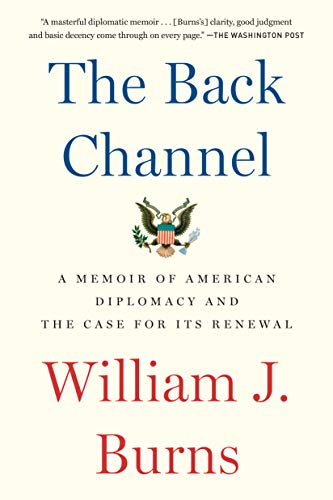
  1. The Back Channel: A Memoir of American Diplomacy and The Case for Its Renewal by William J. Burns

William J. Burns might be one of the best diplomats the United States has ever had. With over thirty years of experience and having served in two of the most important regions of the world, Mr. Burns’s story is an example of the good that diplomatic efforts can do in resolving conflicts, promoting peace, and ensuring cooperation among both allies and adversaries. He is one of only two career diplomats to have ever earned the title of ‘Deputy Secretary of State’ and he gave advice and counsel to five U.S. Presidents and ten Secretaries of State.

Mr. Burns’s storied career includes Ambassadorships to both Jordan and Russia and he held numerous Assistant Secretary positions within the State Department during his three-decade tenure. He was partly responsible for ceasefire agreements between the Israelis and the Palestinians, for helping to eliminate Libya’s nuclear weapons program, and for helping to reset U.S. relations with Russia in the early 2010s. He also shares insights in this book that were previously not publicly known involving his views on the Iraq War, the Civil War in Syria, and of the Russian aggression against Ukraine at the end of his tenure.

This 400+ page memoir is simply a must-read for anyone interested in how diplomacy works and how vital it is to maintain within a government’s foreign policy. In a time now where it has been underinvested and mismanaged, Burns’s book illuminates how big of a difference it can make and how one man’s impact can be felt throughout an entire foreign policy apparatus due to his vigorous study of culture, languages, and history in order for him to be taken seriously. The book is not only educational but is also gripping in terms of his recall of major events throughout his diplomatic career as well as the written cables that explain them. It is a real page turner and should be required reading for any student of international relations and who hopes to become a diplomat in their own future career.

2. On the Plain of Snakes: A Mexican Journey by Paul Theroux

Cooperation, friendship, and understanding is important among friends, but it is even more important among your neighbors. The US-Mexico relationship has been fraught with mistrust and tension especially during the years of the Trump administration. The best way to do away with stereotypes and misgivings about each other is to visit the lesser known places of a country and visit the non-touristy areas. Paul Theroux may be the best living American travel writer today.

From his experience as a Peace Corps volunteer in Malawi in the 1970s to his trek in the American Deep South, Paul Theroux has traveled around the world over five decades and counting. His latest novel about his travels in Mexico is a must-read for Americans and anyone else looking to understand Mexico from an outside lens. While not an exhaustive take on the complex country and its people, Theroux’s book, somewhat observant and otherwise felt like you’re in the middle of his travels is both illuminating and powerful.

Paul Theroux is really a true traveler and even though this is the first of his travel novels that I have read, this one felt very timely as it was released in 2019 during a time of souring relations between the two North American neighbors. Theroux spares no miles or kilometers in seeing all of Mexico that he can. From the desert Region of Sonora in the North to the Mexico mundo of Mexico City to the Southeast of the country where he visits the Zapatistas, this is an extremely educational look at modern Mexico.

Theroux’s book highlights the issues that Mexico is going through from immigration from the Northern Triangle to the ever-present threat of the drug cartels to the hopes of Mexico’s indigenous populations who believe that they have been left behind as other villages and towns hollowed out while the economic gains went elsewhere. It’s not just the issues that Theroux shines a lens on but also the beauty of the country’s culture and its warm people. As an elderly traveler, Theroux is treated with great respect and even reverence as ‘Don Pablo.’

He is welcomed as a guest, kept safe by complete strangers, and invited to interview Mexicans who normally would not talk to foreign travelers. Theroux travels all the way from Massachusetts across the border where few Americans are found to cross. He does so in his own car on his own dime and does not travel with any security or any kind of companionship. He learns Spanish and teaches writing to Mexican students. He is a refreshing kind of traveler, one who remembers to show people through a human lens and to not deal with harmful stereotypes.

Overall, ‘On the Plain of Snakes’ is an excellent travel novel for anyone interested in learning more about Mexico’s people, its culture, its struggles, and its hopes for a better future.

3. Rule Makers, Rule Breakers: How Tight and Loose Cultures Wire Our World by Michele J. Gelfand

This book has been my favorite one of 2020 and I only heard of it through a weekly David Brooks column in The New York Times Opinion section. The differences and similarities between cultures and societies is a topic that has fascinated me for years. As someone who has lived in both loose and tight countries as Mrs. Gelfand so brilliantly classifies, it is fascinating to see her extensive research come into fruition and how these loose and tight countries affect our outlook on everything from celebrations to driving to health care to tattoos.

Tight countries are cultures where norms are preserved and breaking them is frowned upon. Societal cohesion is encouraged and straying from norms is open to punishment. Loose countries are cultures where norms are often broken and breaking them usually comes with a shrug or a lack of care. Why do Germans always stop at a red light even when its 3 AM? Why do Brazilian clocks never run on time? Why do Japanese trains always run on time? Why do Singaporean laws ban gum from being chewed?

These tight and loose differences do not just extend to countries but also to states, cities, organizations, businesses and even within us. This book of ‘tight and loose’ norms highlights how we feel about any subject and how that is reflected in how we act with others. There is no right or wrong answer as to whether living in a tight culture is better or if living in a loose culture is better. Mrs. Gelfand excellently points out in each chapter how they both have their advantages and disadvantages depending upon the norm being considered.

Our upbringing, our environment, our country’s history, etc. all have effects on how ‘tight’ a culture is or how ‘loose’ a culture is. There can also be changes to a culture depending if there are big events like a terrorist attack, a pandemic, a natural disaster, etc. Cultures can tighten or loosen depending upon what is going on in the country and how people are being affected by these natural or manmade shifts to our lives.

Having seen both ‘tight cultures’ and ‘loose cultures’ up close and personal, this book has been a revelation to me in terms of explaining what I thought about only in my theories that I concocted after traveling from country to country but never really expressing it as well as she has in this great book. Mrs. Gelfand has done extensive research across many countries and continents to explain why some countries have more ‘rule makers’ and why other countries have ‘rule breakers.’ In order for our own cultures to shift from one spectrum to the other, we have to first understand why the country’s culture is the way it is and if it can shift, what benefits are there to tightening up or loosening up depending on what is going on in our lives and in our society at the time?

Book Recommendations – Volume X

The Summer reading session is well upon us and there is no better time to dive into another edition of my book recommendations. Whether you are at the beach, at the pool, or lounging on a rooftop deck, you can take some leisure time to read a great fictional or non-fictional offering to indulge your mind or open your imagination. The three books I cover are all non-fiction, which is the category that my favorite books often fall under. I do hope to dive into some fiction books sometime soon, but I’ll save that for other post.

The three books I recommend vary from personal finance to progressive politics to self-help psychology, but they all are educational and thought-provoking in their own way. These books aren’t mindless reads, so you’ll have to pay attention and even re-read certain chapters twice or more to really get the gist of what the author is getting at. However, each of these three books have staying power and they would make an excellent addition to anybody’s personal book collection since the different lessons that these books impart are timeliness in nature. Without further ado, let’s discuss which books I enjoyed in this latest volume of recommendations.

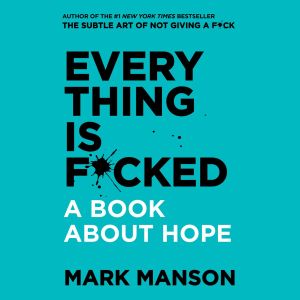
1.) “Everything Is F*cked: A Book About Hope” by Mark Manson

everything-is-f-cked
Following up on the tremendous attention and success gained from his previous New York Times best-selling book, The Subtle Art of Not Giving a F*ck, which dealt with unconventional yet powerful self-help advice, Mark Manson is back with an excellent follow-up book in tackling how to apply similar lessons to humanity as a whole. Whether its today’s turbulent geopolitics, the growing climate crisis, or the negative effects of social media, everything can seem to be f*cked nowadays and hopelessness as a condition of these events seems to be gaining steam.

Manson uses the teachings of Nietzsche, Kant, and other prominent philosophers to denote why humanity is facing these systemic problems and how they came to be based on our collective psychology as a species. He argues that having hope in of itself is a paradox and that it’s best to deal with life’s uncertainties and foibles as they come. Wishing for a better, happier, wealthier, and safer future is unproductive if you do not take actions in the present to create that more hopeful reality. Manson breaks down complex topics such as politics, religion, and even the future of artificial intelligence into digestible concepts on how humanity has gotten to be where it is currently.

One of the aspects I like most about Mark’s writings is that he doesn’t sugarcoat anything, and he allows you to draw your own conclusions based on the evidence he presents and the stories he tells. My favorite parts of Everything is F*cked focus on why treating people as means to an end is a selfish endeavor and how our feeling brain has a lot more influence on our thinking brain than we have been told. Also, in accepting what is ‘The Uncomfortable Truth’, as Mark cites in one of the first chapters is part of recognizing our innate humanity and what drives us collectively. This truth, while uncomfortable to all, is the main reason why we strive to do what we do in life, for better or for worse, and how we tend to live our lives denying that truth when it is staring us right in the face.

Instead of looking to politics or religion to give us hope, which tends to have its own set of consequences, it should rather be our own individual actions of being kinder, gentler, and more respectful of others that carry the day. We should not wait around for other people to change for you or be better to you. This book, like Mark’s first, is well worth a second and third reading to grasp all the lessons he lays out for the reader. Posing deep existential questions and acknowledging hard truths rarely covered elsewhere in the self-help genre, Manson stands out as one of my generation’s best authors and a good example of how to live a better life, not just for ourselves but for others as well.

2.) “Utopia for Realists: How We Can Build the Ideal World” by Rutger Bregman

9780316471916
I really liked this book by Mr. Bregman for several reasons. Whereas most books today examine problems and investigate how they came to be, Bregman describes the possible solutions there can be to these problems and how life in the 21st century should be different from the past. Given the rise of automation, how interconnected we have become globally, and increasing efficiencies in the workplace, Bregman dares to ask how we can make life better for vast majority of people in our societies based on these factors.

Rutger Bregman does an extensive amount of research for this book and draws upon years and decades of datasets and public policy to make his three main ideas not only relevant but persuasive to his overall argument. Bregman’s ideas are not new and have been discussed before but in ‘Utopia for Realists’, he really examines each of his proposals individually from a public policy perspective and how the time is ripe to make them become a reality. Today, it seems like we have lost to the drive to implement big changes to both our economy and our society. Bregman asks his readers to think of the plausibility of the 15-hour work week, a Universal Basic Income for all, and an ‘open borders’ policy that would benefits people’s lives in numerous ways as he lays out diligently in each chapter of the book.

While some may not agree with these proposals politically, Bregman backs up his arguments with facts and evidence, as a good social scientist would. One of the things I did not know before reading his book was how close President Richard Nixon and the U.S. Congress came to passing a universal basic income in legislative form back in the early 1970’s. Giving people the chance to have basic economic security, the ability to live across borders without bureaucratic roadblocks, and having more free time for family life or to better themselves through personal hobbies, interests, or side businesses are related to his three main proposals. These societal changes, he says, would lead to greater fulfillment and happiness and benefit our collective mental health.

While his ideas may be unrealistic today, the way in which the job market is shifting and has become more efficient in terms of productivity over the past few decades, how automation and advanced Robotics may affect millions of jobs being lost, and how the demographic crunch in the Western world may lead to more liberal immigration policies to spur economic growth, the main proposals that Bregman focuses on could become a reality sooner rather than later. It’s not a question of if these utopian ideas could ever happen, it’s more about when they will happen and how they can be implemented successfully around the world.

3.) “I Will Teach You to Be Rich” (2nd Edition) by Ramit Sethi

I-Will-Teach-You-To-Be-Rich
I will be the first to say that I have shied away from reading books on personal finance given that the advice given and the person giving it may not be reliable or trustworthy. However, based on the recommendations of other authors I like and how sensible his recommendations are from watching his videos, Ramit Sethi has delivered and recently updated one of the best personal finance books out there. For someone who is just getting started in thinking about optimal strategies for long-term savings and investments, Mr. Sethi breaks it all down from negotiating lower interest rates on your credit cards to how to find the best investment vehicles to deliver you a secure retirement.

If you are new to personal finance, this book is really meant for you. You don’t have to be an expert in 401ks, Roth IRAs, or index funds to make full use of this book. Ramit is not only an author but also provides an additional website, which offers a free blog, multiple courses to improve your finances, and career opportunities. His common-sense finance solutions garner millions of views per month and very positive media coverage. Ramit’s book does not make his readership feel guilty if they have made financial mistakes in the past. Instead, he offers tips and advice as well as personal stories from people he’s helped to get them out of trouble whether its credit card debt, student loan debt, etc. He wants his readers to figure out what exactly a ‘rich’ life is for them and what steps they can take to make it happen.

You are left reading this book feeling uplifted and ready to use his advice to improve your financial situation. You are also left wondering why Ramit’s book isn’t mandatory reading for high school students, given that we tend to neglect this kind of basic financial education for young people in the United States. Whether you are 18 or 28, it’s never too early to start thinking about your long-term finances. With Ramit’s well-written, digestible, and even humorous personal finance book, you are in good hands. He gives you actionable advice on how to greatly improve your finance in weeks instead of years and discusses in detail how many hours it will take you in setting up your savings, investments, and credit card debt payment options with as little of a hassle as possible. While Ramit can give you all the advice in the world, he leaves it up to you, the reader, to take actions yourself to improve your financial situation. Now that you have the knowledge based off his book, you’ll be ready to create a financially secure future for yourself and perhaps your family too.

Why Do We Read?

We often hear the phrase in school that “Reading is fundamental.” Maybe it is our parents, our teachers, or our friends who play the biggest influence on us when it comes to imparting the wisdom of how important it is to read and to read a lot. I remember taking trips to the school library when I was younger to pick out a book and read during recess or after school if I were to borrow one. Sometimes, my classmates and I would go to book fairs to buy a few books for cheap where they would be different genres including action, adventure, history, science fiction, etc. I always looked forward to these book fairs or to go to the library and I was lucky enough to go to schools where reading was encouraged and how it was part of the curriculum. This freedom to pick out books to rent or to buy and to choose what, when, and how to read is one of the fundamental joys of life. However, even in our modern age, I find that reading books is not emphasized nearly as enough as it should.

While we have access to more information than ever before in more ways than ever before, there are still disappointing statistics when it comes to how much the average American is reading books. According to Pew Research, a quarter of American adults have not read a book in electronic or physical form in the past year, either in finishing part of a book or finishing the whole of it. Even with the rise of electronic books such as Amazon Kindle, audiobooks such as Audible, and the continuance of the printed book form, there is still a sizable part of the population who choose not to read books.

It is important to note that you cannot force someone to read books or to acquire knowledge through the written form, but any society does have the responsibility to give its citizens the chance and opportunity to read books at low to no cost. In order to do this, it is important to foster a great sense of importance surrounding books and the acquiring of knowledge through that medium from a very young age. Every child should have access to discounted or free books so that they learn to love reading whatever the subject may be. I was lucky enough to have access through my school, the local public library, or through being assigned books to read by teachers who cared. Every young person should be able to access the same opportunity to read and to acquire knowledge in that way without barriers.

Reading should be a fundamental right and not a luxury. To build a better society, fostering a love of reading plays a critical yet underrated role. At our core, most of us are curious about the world and we can learn so much about it if we have access to books. Reading can be quite powerful in several ways in that it expands our comprehension of the world and all its peculiarities.

Our ability to experience the word is limited so reading plays a great role in expanding our understanding of different people, places, and concepts that we may not get direct exposure to. This is especially the case when it comes to geography, history, science, etc. because while we may not experience these events or these chain reactions or these places directly, reading books is the closest any of us will get to being there in person or being apart of what happened.

Reading also forms the basis of having a strong imagination, one that can conceptualize and create new ideas based on previous books that one has read in the past or currently. Architects, engineers, politicians, scientists, writers, etc. can better develop themselves in their professions precisely because of the books that they have read from those who came before them. While you wouldn’t copy word for word the experiences or the work of others, anybody who reads can take those ideas to influence their own ideas to carry our actions that would change the world in some measurable way.

Reading books is also a needed respite from the daily anxieties and stresses that we experience in daily life. Taking 30 minutes to an hour at night or in the morning to escape to a fictional, fantasy, or previous state of the world is a way to calm the mind and to let your imagination run wild in a healthy manner. To calm yourself down, to ease into a nice book, and to let your mind wander for a little while is a key part of developing a healthy individual and is almost meditative in its calming nature.

Long after high school, college, or even graduate school, the knowledge and wisdom encapsulated in books will remain an important way to develop oneself intellectually and stoke one’s curiosity long after the first part of your life is over. Reading is a way to tap into one’s ability to be a lifelong learner and to become better in your profession or in your career pursuits. Whether you want to become an expert in your chosen field or to start a business or to run with a new idea that could change the world, books hold the key that could make your dreams a reality.

Perhaps the next time you see someone reading a book, go up to them and politely ask them about it. You should bring yourself back to that time when you were younger, and you walked down the halls of the school or local library and were curious about many books that all seem captivating. You should not let that fire go out of you as you get older. You should make the time to go to the bookstore, to the public library, or to a local fair to read something that perks your own interest. One of the worst things that we can do to ourselves is to lose that sense of curiosity and wonder related so closely with reading a new book for the first time. It is also important to bond with other readers, find out what they like to read, and whether they would be able to recommend you anything based on your personal tastes.

Cultivate that love of reading and spread it around to your friends and your family. Reading books is contagious, and people are curious so don’t be afraid to read a book at the lunch counter, on the subway, or even in a public park. We can get more people to read books again by setting the example and by imparting the knowledge and wisdom gained from books to others through our reading experience. As I mentioned at the beginning of this article, “Reading is fundamental” and it should not be gone to waste.

Any active and engaged reader should also be standing up for others in terms of easy access to books, whether psychical or digital in our modern age. In your community, city, or country, you should be playing a part to make sure that public libraries stay open and are in good shape. You should donate books when you are done with them and especially to those children and adults who go without them. In addition, volunteering to read to children and/or teenagers is a great way to give back to your community. Everybody should have access to read and they should not be limited by the cost of it. That is why it is extremely important to support those politicians and community leaders who make sure the schools have libraries, that the public library is free for all, and that there are local book fairs that are cheap and are not too expensive for those citizens who want to buy books.

Without books, true knowledge and wisdom cannot be obtained. Be wary of those who do not read at all but do not insult them. Instead, try to bring them on to your side by highlighting the benefits of reading and how it has changed you to be a better learner. Reading should not be forced, of course, but it should be encouraged in helping to build a better society and a better world. Anyone can play a small part in this and I hope that you, the reader of this article, will play a small part in shaping it.

Book Recommendations – Volume IX

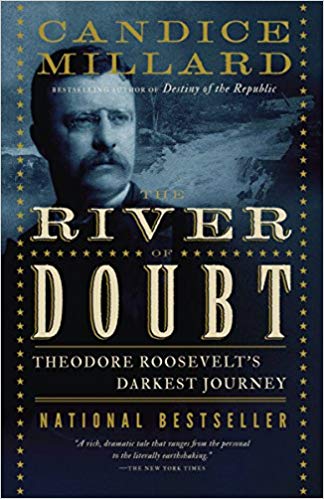
What better way to enjoy the Winter season than by enjoying a few good books by the fireplace or in a coffeeshop. Whether its’ fiction or non-fiction, being able to sit down and read for an hour each day is one of the best activities one can do during those cold, winter months. The three books I have recommended cover very different themes and topics but each of them is worthwhile reads especially if you are into non-fiction. From Candice Millard’s vivid storytelling of President Theodore Roosevelt’s perilous journey to the Amazon, James Clear’s atomic habits to build a better life, and author Chris Hedges’ look into the dark underbelly of American society, each book is one that I thoroughly enjoyed and would recommend to anyone depending upon what kind of non-fiction they are looking to dive into.

1.) The River of Doubt: Theodore Roosevelt’s Darkest Journey by Candice Millard

51JoMiXhYqL._SX322_BO1,204,203,200_

In our current era where past Presidents settle into retirement by creating foundations, writing memoirs, and going on paid speaking tour circuits, it can be difficult to recall that there was a time when the American president would not stay still but rather seek out new adventures. President Theodore Roosevelt was just such a former President when he embarked on a perilous and physically strenuous journey down the Rio Duvida (River of Doubt) in the heart of the Amazon. In the aftermath of his election defeat in 1912, the former President did not stand idly by and settle into a quiet retirement from politics. Instead, he did what he did best and ended up taking upon himself an adventure that no other modern President would think of doing nowadays.

Still in the early days of the 20th century, it was still the age of exploration as explorers from the Western world would go to the lesser known parts of the world to make their mark on mapping areas and landmarks that had not been discovered yet. From Antarctica to the Himalayas to the Amazon, men like President Roosevelt were drawn to both the adventure and the notoriety but also to discover the flora, fauna, and newly discovered animal species, which had never encountered humanity before. This expedition’s success relied upon the men whom Roosevelt and his Brazilian counterpart, Colonel Candido Rondon, would bring on to make sure it was successful in its mission of mapping the extent of the mysterious Rio Duvida. Because of the courage, hard work, and perseverance that men including the former President’s son, Kermit, displayed, they were able to get through a series of trials and tribulations that would have broken lesser men.

Over the six-month period of 1913-1914 when the 19 Brazilian and American men descended the River of Doubt, they were faced with multiple challenges including diseases like malaria, perilous weather conditions, intense rapids, and murder among their ranks. President Roosevelt dealt with near misses to his life including a close encounter with a venomous snake as well as a ghastly injury suffered when trying to retrieve a loose canoe that caused a serious gash injury to his leg. The President flirted with thoughts of suicide after his injury and infection leading his son and counterparts to decide whether they should honor his wishes or to carry him the rest of the way’s journey. Because of their pledge to not leave any man behind including the President of the United States, Kermit and others pushed through the physical obstacles ahead of them to arrive at the successful end to their journey through perseverance and the belief in their mission to map the entire river.

Brilliantly told and remarkably intense in its description as a fast-paced tale of adventure, Millard’s ‘River of Doubt’ is an excellent book that details a harrowing journey of the 26th President, his son, the Brazilian colonel Rondon, and his courageous men. It is hard to believe that there was a time when an American president would go on a journey like this one well into his 50’s but that was the kind of man Theodore Roosevelt was. Because of his courage and his perseverance, the Rio Duvida was renamed Rio Roosevelt in his honor. This story reminds us of what it takes to push past our mental and physical limits and why we remember these tales to understand what true bravery looks like and how Presidents should act in the face of a great challenge.

2.) Atomic Habits: An Easy & Proven Way to Build Good Habits & Break Bad Ones by James Clear

51q1UbBbv-L._SX320_BO1,204,203,200_

‘Atomic Habits’ by James Clear is an excellent book on how to re-think our habits and our reliance on them based on our awareness of how they come to be, how they are implemented, and how to change or remove them based on their overall utility. As Mr. Clear explains, “Habits are the compound interest of self-improvement.” We can only develop ourselves based on the habits we have on a daily basis. In order to change them effectively, small changes that lead to incremental improvements are what we should be aiming for. It’s not advantageous to change our systems of living overnight but rather to slightly shift our habits each day and start to see progress over a longer period of time.

One example is going to the gym for the first time. You may not stay for very long but if you are there for five to ten minutes and get through the initial hurdle of showing up, you can feel better about the progress you have made. Over time, you should start to feel more comfortable and attuned to going to the gym as well as staying longer once you get used to the new routine. I found James’s four-step process to breaking a bad habit or creating a good habit to be very persuasive in its argument. The ‘cue, craving, response, reward’ system is laid out in greater detail in his book but I believe that it’s an effective tool for developing better habits and eliminating bad ones.

Also, keeping track of both your bad habits and good habits will help you measure if you are making progress with either by understanding what habits you have on a daily or weekly basis. In order to better change our habits, we firstly have to be aware of them and classify them as ‘good’ or ‘bad’ based on their utility to our lives. For example, if you don’t floss your teeth, perhaps you have to make it attractive by highlighting the benefits associated with the action, putting the floss in a visible place on your bathroom counter so it’s visible, and then make it easy by not using mouth wash without flossing first to develop the system.

Mr. Clear’s book is easy to read, the system he advocates for is immensely appealing, and the four-step process is clear in its methodology. You cannot change your habits without doing it yourself but ‘Atomic Habits’ successfully gives its readers a vision of how you can do so while not making it overly complicated. The system is easy to follow and he incorporates outside materials like the ‘habit tracker’ to make it easy to start changing them while reading his book.

3.) America: The Farewell Tour by Chris Hedges

america-the-farewell-tour-9781501152672_lg

Beyond the stock market, the unemployment rate, and even the gross domestic product, notable author and journalist Chris Hedges writes eloquently and profoundly about the state of America in 2019. He does this through excellent on-the-ground reporting from Anderson, Indiana to Atlantic City, New Jersey in an effort to understand how while Americans at the top of wealth and power are doing well, the rest of us are struggling to get by in this new gilded age of income inequality. Hedges pulls no punches regarding the societal ills that have been wrought due to political dysfunction and record income inequality in America by describing in great detail the effects of the opioid crisis, the recent rise of hate groups, increased reliance on gambling, pornography, and sadism to escape reality.

Our ability to combat these negative societal trends is nullified when communities are weak and the bonds that religion, union membership, and rotary groups provided have been cast to the side. In an age of increased atomization and loneliness, Hedges argues that the average person will not be able to build a better future for themselves or their families if they have no ways of accessing economic opportunities or through having deeper social connections.

This book is a true warning sign that time is running out and that we must start paying attention to the swirling negative political and economic trends going on because it is likely that the next generation in America will be worse off if serious changes are not made. By failing to combat income inequality, climate change, gun violence, the opioid crisis, and failing infrastructure, faith in both the economic and political system will continue to decline. When power is concentrated in the hands of the few, that prosperity is not going to spread around or ‘trickle down.’

While it may be a dark and disturbing book to some, Mr. Hedges is a student of history and is eloquent in describing what are the warning signs or symptoms when a society is on the verge of decline or overall collapse. From the Roman Empire to the Soviet Union, the warning signs were there in the forms of inept political leadership and an unholy concentration of wealth. Mr. Hedges warns that we are on the same path to potential ruin and that the societal hollowing out relating to increased suicides, the fall in overall life expectancy, and the epidemic of gun violence are the sad consequences of how we are failing the average American citizen in 2019.

What I enjoyed most about this book is the sheer effort that went into meeting with people across the country to get a sense of how difficult things are and what challenges they are facing. Mr. Hedges should be commended with focusing on the real issues that confront us as Americans and being a truth-teller when it is not always popular to do so. My hope after reading this dire book is that we are able to make the necessary changes and confront these systemic challenges before it’s too late.