How to Present Yourself Well

We live in a world where the first impression that we give out to others is a key determining factor into what kind of relationship we have with them and how they see us as human beings. I believe that it is naïve in this day and age still to think that first impressions don’t matter at all because they really do matter and if you don’t know how to present yourself in a positive, mature manner, it may affect your life in various negative ways.

Our culture is based around the individual yet we cannot forget that ultimately, you are still tied to other parts of society such as your family, your local community, and your country. Now, one may not care what others think of them and that is their right to do so but your actions, words, habits, and personal dress have an affect on society whether you like it or not. You are not an island unto yourself where you can do whatever you want and there are no consequences that can come of that. We are all part of an overall society and failure to recognize that fact of life will not change this part of human nature.

Whenever you’re out in public meeting new people for the first time, how you dress, how you act, and how you use your spoken language carries a number of effects as to how people will treat you. You never know what kind of relationship whether personal or professional you’ll be able to build with somebody else if you’re not willing to put in that effort. There are numerous opportunities that the average person can miss out on in their daily interactions if they are not actively thinking about presenting themselves in the right fashion.

The key thing to know is that people are always going to judge you when they first meet you and this always happens very rapidly. There are certain ways that you can make yourself stand out in a positive manner which will benefit you in terms of more people will take you seriously and will respect you more. The opposite of that is also true in that if you fail to present yourself in a respectable manner when you meet other people for the first time, there could be a number of negative consequences for you if you don’t learn to change certain bad habits.

In this day and age where people are becoming more and more addicted to technology, especially the smartphone, you can stand out easily if you know how to present yourself. Basic social skills are not being taught as much whether it’s for young people in school or for adults in the workforce. Just a few generations ago, both men and women were taught at a young age how best to present them so they could be taken seriously as individuals who are part of the collective society. To put it simply, we do not teach these social graces, cues, and skills anymore but I’d like to propose a few tips on how to present oneself for the good of yourself and the good of your society.

  • Clean Appearance and Appropriate Dress

If you want to be taken seriously, you have to look the part. Everyone has the choice to make in terms of how they dress and look everyday but it is important to keep in mind how that will effect others opinions of you. If you go to an interview for a job that you really want, you have to present yourself professionally. You wouldn’t wear a baseball hat, shorts, and a tank top to an important job interview, right? If you don’t dress the part, it’s a certainty that you won’t get to play the part. Obviously, modes of dress in the workplace are flexible.                                                                                                                     

An office worker is going to dress differently than a construction worker but even for both jobs, you want to present yourself with an appearance where you’ll be taken seriously. If you put in the bare minimum and your colleagues are putting more effort into their appearance, who is going to get the benefit of the doubt? Your colleagues. A suit and tie isn’t necessary for most jobs these days but you don’t want to be that one person who shows up in flip flops and jeans when everybody else is putting in the effort. There’s a healthy balance that needs to be struck and you want to make sure that you are following the dress code while even going a bit above and beyond to make yourself stand out.

Your appearance is not just about what you wear but how you wear it. Good-fitting clothes, polished shoes, facial and body hair that has been cut groomed or shaved properly; all of these small actions add up that can help you in both your personal and professional life. If you’re not able to take care of your face and body, what does that say about you as a person? It doesn’t say anything positive because the effort really matters and other people will notice when your appearance is on point. Others will see that if you’re able to take care of your appearance, you’ll be able to manage an important coding project, closing that lucrative business deal, or overseeing the construction of a tall skyscraper. When you’re able to take care of yourself first, you’ll be better able to tackle the big projects that you will come across in your professional life.

If you’re worried about how much money it costs to put into your appearance, it really doesn’t cost too much these days. I’m not going to go into exact figures but some new clothes, a haircut, and a nice pair of shoes as your baseline in terms of appearance would cost about $100 here in the U.S. I believe that the return on investment would be much more on that because the clothes and shoes will last you a while and the haircut will be positively noticed by your peers. While you may put $100-200 per month into your appearance, think about how much use or gains that you can get out of this personal investment. I think most people would find that they get a lot out of dressing and looking well when you do the math.

  • Positive Attitude and Good Manners

Presenting yourself doesn’t end in terms of taking care of your dress and your grooming. It extends greatly to how you follow social graces and courtesies that keep our society running smoothly. Even if you have had a bad day and don’t feel like extending these courtesies to strangers, try to see it from their perspective. Being polite, respectful, and minding your behavior is an integral part to how you present yourself in public. While graces, courtesies, and customs vary greatly from culture to culture, I have found in my own travels that you should always say ‘hello, please, and thank you’ to win yourself some points. It doesn’t hurt to say ‘how are you?’ or the equivalent in other languages to strike up a conversation with the person making your coffee, serving your food, or cutting your hair.

While there is a trend of people being on their Smartphone, listening to the music through their earphones, and ignoring the world around them, you can be better than that by making an effort to express pleasantries to the people you rely upon in your day to day activities. Social skills take time to develop and they can atrophy if they are not put to good use. Everyone is guilty of being antisocial every now and then, and that’s okay, but it can be a bad habit if you don’t make the effort.

As human beings, we tend to err towards the negative as a biological impulse but it’s really important to try and stay positive. You may not think of it too much but we are all social creatures and the attitude that we display has a contagious effect on to how others act and behave. If you are negative about life constantly and put on a negative attitude to those around you, you should not be surprised when no one wants to hang out with you or even help you. It’s okay to express frustrations about the stress and anxiety of daily life but you have to keep it in check. Things do get better over time and having a positive attitude about life will help you enormously rather than being negative all the time.

With your manners, you also want to go the extra mile. Helping other people feels good and the easiest way to do that is by having good manners. You could help an old lady cross the street, let the women and children off the elevator first (chivalry is not dead yet, ladies), tip a service worker extra if they did a great job, or even wait to let people off the bus and train first before you get on. These actions all display having good manners and will brighten up someone else’s day causing a ripple effect throughout our society. If everybody observed the golden rule of ‘treat others the way you would like to be treated’, our manners and attitude would shift quite a bit.

Sometimes, we don’t have the right attitude or display good manners but it’s good to be remembered of what they are. Unfortunately, there are no schools or institutions anymore that teach these social graces and courtesies to young men and young women, but I do hope that they make a comeback. Without each member of our society trying their best to display good manners and have a positive attitude, there would immediately be dysfunction, chaos, and a torrent of rudeness.

  • Strong Eye Contact and Confident Body Language

You wouldn’t think about it often but it is the icing on the proverbial cake to be able to present yourself well when it comes to both your eye contact and body language. While these two actions take place subconsciously, if you’re able to be mindful of it at times especially at key moments in your personal and professional life, you will be able to stand out in a great way. Maintaining strong eye contact and confident body language could help you improve your life tremendously. This is especially the case when you are meeting someone for the first time. You want to look them in the eye, keep your head held high, and give them a firm handshake.

Even after you meet them, you want to keep your shoulders back and walk with purpose. I’m not an expert when it comes to body language but I know what not to do in most situations. You want to be keep your legs pointing forward, your head should be at eye level, and you should keep your body open in how you stand and sit. Bad body language like looking down at the floor, having your legs crossed all of the time, folding your arms, and scrunching your shoulders are all bad habits that you are going to be mindful of avoiding. It’s important when presenting yourself to be confident, serious, and even smile a bit to diffuse your own internal stress and anxiety depending on the situation you’re in.

The saying, “Fake it until you make it” is key when it comes to body language. If you practice it enough times, it will eventually be so ingrained in you that you won’t have to act the part anymore. Having strong eye contact and confident body language will set you apart from other people who display the opposite. If you’re looking for that edge in work, business, or aspects of your personal life, you’ll want to be working hard to present yourself well in these two regards.

When you meet strangers for the first time, eye contact and body language are two key things that they’ll notice right off the bat. If you’re not able to create a positive impression with them, it’s likely that you won’t get very far with them professionally or personally. If you have a trustworthy family member or a good friend, it’s beneficial to practice body language and eye contact with them. Once they give you high marks for setting the right tone and finishing it off with a firm handshake, you’ll be able to impress strangers, employers, and even love interests with this overlooked aspect of presenting yourself well.

The main reason why I wrote this article is because I think we have reached the point in society where we pay too little attention to presenting ourselves well. With the absence of rules or standards, society can degrade to a point where it becomes dysfunctional. This comes down to being able to present yourself well to the world in the hopes that it will return the favor to you in one way or another. It’s not just about other people too but it’s about self-respect and doing your best to live up to your own standards and code. Having an overall society made up of individuals who understand that appearances do actually matter but so do manners and body language can help us progress to be fairer, kinder, and more respectful of one another.

Unfortunately, knowing how to present oneself is not taught anymore and hasn’t been for a few generations but I hope with this article that this kind of advice can come back into fashion and spur a good dialogue. How you dress, what you say, and how you act does not stop at you as an individual but ripples out to the rest of your society. If you’re not putting in the effort, why should anyone else do the same? We all have an individual responsibility to present ourselves well because by doing that, the society as a whole can improve in a number of ways by following your example.


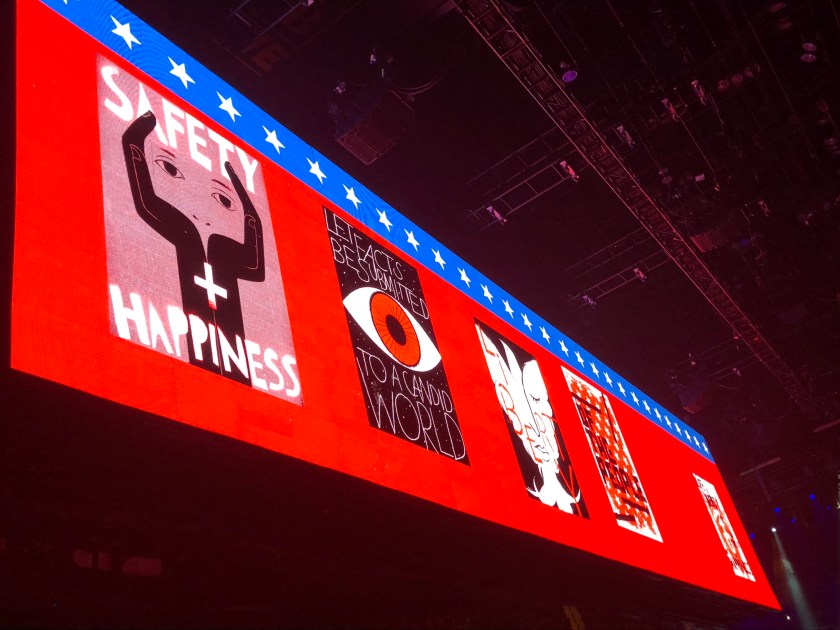
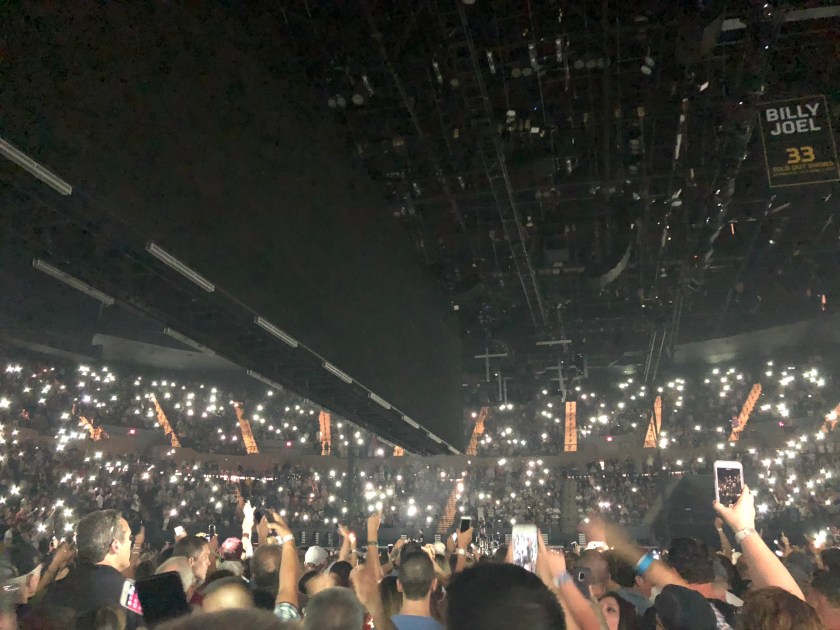
U2 at the Coliseum

gz1%tmoCT5iyFY0vdpeHUQ5O0UAF9rTo+XgJmeAcvFLAZbSvy2djTWu7%iDr36QnAwdrf0bqJBSLGR%6vb0gX6PgOqsmycqaSV6u9+4Q661fiQvIvnnjiyRaKetIWXGX5zUQPaimf7vjRsqPbVsgwzuJIgFYLrJIwZSNyyFarkjuDqsQBZauI1+cRuag8x+54m32zw7WMo0ITYQIWMk0A2BbPzUASTVIISu0SGWtXMpBtJIKdAS16nLOKITuyC+JDTiT%xLAWNLnIwdTT7KP95hr454ONAVo3IGlNWScKUNGkww5vlgAk7hvZJihQNuzSO8W7GCvdA

Camera: iPhone 8 

Location: Nassau Veterans Memorial Coliseum (NYCB Live) – Uniondale, New York, United States

Book Recommendations – Volume VII

Over the past couple of months, I’ve been lucky enough to do some good reading. Each of these three books are enjoyable, interesting and which hold different lessons about the state of the world and humanity at large. These three books come highly recommended from myself and are well worth the time invested to read them. If you are looking for a few books to read, as spring becomes summer, below you will see the 7th edition of my book recommendations which highlights Submission by Michel Houellebecq, Sapiens: A Brief History of Humankind by Yuval Noah Harari, and A World in Disarray by Richard Haass.

71qwSzqHLcL

1.) Submission by Michel Houellebecq is an enjoyable and humorous take on French politics in the 21st The French author is known for his edgy content and his nihilistic take on modern life. Houellebecq is not known for writing about satire and for those who are a fan of his works, this novel was a sharp turn away from the other topics that he usually focuses on. Personally, I haven’t read the other novels associated with this writer but I really enjoyed this satirical look at French politics.

The premise of the novel is that there is a new political crisis in France. In order to stave off a win in the 2022 French presidential elections from Marine Le Pen’s National Front party, the Socialist party and the center-right Union for a Popular Movement party are forced to align with a newly formed Muslim Brotherhood party led by its charismatic leader, Mohammed Ben-Abbes in order to achieve victory as a coalition. The main character, Francois, is a middle-aged Literature professor at the Sorbonne is going through his own mid-life crisis. While he enjoys teaching at the university and cavorting physically with some of his students, he struggles to find meaning in his life and is distraught at the loss of both of his parents. This is on top of the fact that the rise of the Muslim Brotherhood party will affect his ability to keep his full pension and be able to keep his job.                                                                                                                       

On top of the probability of losing his teaching job at the Sorbonne as well as the fleeing of his steady Jewish girlfriend, Myriam, who leaves France for Israel in the face of rising anti-Semitism, Francois contemplates suicide but decides instead to seek refuge in a monastery in the town of Martel. Ironically, Francois, after going through a self-imposed exile for a few weeks, comes to realize that the world didn’t end when the Muslim Brotherhood party takes power. Instead of fighting the changes going on at the Sorbonne, Francois is intrigued by the fact that if he converts or ‘submits’ to Islam, he will be able to still find a prestigious job, keep his lucrative pension, and be able to have a few wives chosen for him since polygamy had become legal in France. The main character, Francois, is a spectator to the changing political landscape rather than an active player.

While this book is known for being controversial, I find it to be full of slapstick humor in making fun of the main character’s overly dramatic take on life. Francois is a mere spectator whose desire for alcohol, food, and sex overrides any core convictions that he may have politically. Mainly, Houellebecq is making fun of French intellectuals who can’t be bothered to invest in them beyond their own hedonistic desires.

His take on the political situation in France is an obvious dramatization and I don’t believe that he was looking to ruffle any feathers. The rise of an Islamic nationalist party in France in 2022 would be completely unrealistic which is what the author was making clear in focusing on the political satire associated with that idea. Overall, it is a witty, entertaining novel, which tells us more about human nature than it does about the precarious state of French politics in the 21st century.

51zJS6PmxbL._SX333_BO1,204,203,200_

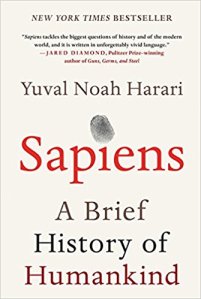
2.) Sapiens: A Brief History of Humankind by Yuval Noah Harari is one of the best books I have ever read. In all likelihood, this is the kind of book that you can come back to multiple times and still enjoy it. This is not your average history book in that it focuses more on the big ideas and developments associated with each era of human history rather than diving into the endless details and events related to each period. Instead of a 4,000 page behemoth focused on human history, Harari does a great job in condensing the how and why of Homo sapiens into only 400+ pages.

While I was reading this book, it didn’t feel laborious at all and was a real page-turner. Harari’s main argument in the book is that the homo sapien (the modern human) were able to dominate the Earth because of our ability to cooperate and share with each other in large numbers. The downfall of pre-homo sapiens such as the Neanderthals along with various other extinct animals and plants was the result of the Cognitive Revolution, which occurred at around 70,000 BCE.

The exciting developments related to the establishment of shared human myths and imaginary mainstays such as money, religions, human rights, nation-states, etc. directly tied to Homo Sapien culture put sapiens on the path to long-term survival and flourishing. Harari convincingly argues that the history of humanity can be broken down into four parts: the Cognitive Revolution (the development of imagination), the Agricultural Revolution (the formation of collective societies), the Unification of humankind (the rise of empires and nations), along with the Scientific Revolution (the emergence of scientific knowledge) which is the stage where sapiens currently find ourselves in.

Harari believes that the rise of Homo sapiens as a species has had significant consequences on the planet we all inhabit as well as the harsh treatment of animals that has resulted from being at the top of the food chain. Also, while the Agricultural revolution led to the creation of large human societies and eventually sprawling empires, the shift from hunter gathering to farming caused the human diet and lifestyle to suffer as a direct result. Human beings after agriculture became less self-reliant and had to rely on a king, an emperor, or the state itself to provide food, water, and other necessities. Out of all of the developments in human history, the rise of agriculture was a fundamental shift in our thinking, which still affects us in the modern society we all inhabit today.

Overall, Sapiens is an excellent, informative, and timely read that I would recommend to anyone. It’s an easy book to pick up and a hard one to put down. I am currently reading another book of his, which is the sequel to Sapiens, this book and the one that follows it just shows how good of an author and intellectual that Mr. Harari is.

51mz0ftqxyL._SX329_BO1,204,203,200_

3.) A World in Disarray: American Foreign Policy and the Crisis of the Old Older by Richard Haass is a refreshing take on the topsy-turvy world of international relations in this current period. Mr. Haass, who is currently the President of the Council on Foreign Relations, has advised previous U.S. presidents and worked as the Director of Policy Planning at the U.S. State Department during the Bush Administration, is an expert on world affairs who has published multiple books and this one in particular could not be timelier.

While the U.S. remains the most powerful country in the world both economically and militarily, it has started to lose ground in terms of its ability to sway world opinion and events due to failures of U.S. foreign policy in the early years of the 21st century. The lack of success in denuclearizing of the Korean peninsula, the rise of Iran as a regional power in the Middle East, and the mixed results of the East Asia ‘pivot’ from the Obama administration have created a worldwide power vacuum. Also, due to the long and costly wars in Iraq and Afghanistan, both U.S. prestige and values were harmed by these adventures in the Middle East. Haass argues correctly that the post-WWII order that the United States and its European allies helped create is fraying due to the failure of its leaders, institutions, and policies to maintain stability across the globe.             

There are real challenges to contend with that the United States won’t be able to solve on its own. The threat of climate change, the challenge of cyber-security, and preventing the spread of nuclear weapons require a unified approach that has been lacking between the U.S. and its European allies. The events of Brexit, the Trump administration’s ‘America First’ isolationist policies, and the great power rivalries going on between Russia, China, and India have thrown the world in disarray. The days where the U.S. could have great influence and sway over events around the world may be drawing to a close. Haass sees that the U.S. is just one of the great global powers and must be willing to cooperate, collaborate with other powers in order to achieve results when the main issues of today are multilateral in nature.

In order for the world to follow America’s lead, Haass aptly understands that we must get our own house in order first. The rising national debt, the ongoing problems with investing in education, infrastructure, and health care prevent the United States from acting as an example to the rest of the world. A dysfunctional political process as well as a President who doesn’t believe in leading the international, post WWII order are preventing the United States from realizing its full potential as a global power.

For anyone who is new to international relations, A World In Disarray, is an excellent take on the history of the international system after World War II and how did we get to this point where the world seems more chaotic and unstable than ever. Mr. Haass understands the limits of American power and that in order to lead on the world stage; the U.S. must undertake reforms to benefit our own citizens at home. In order to solve complex, multilateral issues, the U.S. must value diplomacy and the relationships that we have with our allies. Where the U.S. used to be the only global superpower, after the fall of the Soviet Union, America is just one of the great powers now. In order to solve the multilateral issues of the 21st century, the United States cannot do it alone and we must be willing to use effective diplomacy and other forms of soft power to create peace and prosperity.

Five Steps to Surviving City Life

Having spent the past eight years of my life living in different cities both here in the United States and overseas, you get accustomed to life in an urban environment and how to make the best of it. If you’re coming from a rural town or a suburb, adapting to a city can take months or even years when you’re not used to the frenetic scenes, fast-paced traffic, and always on the go mentality. A fact of this day and age is that the urban population around the world keeps increasing and a good amount of industries, jobs including in the high tech world are based out of cities.

According to the United Nations, over half of the world’s population, currently live in an urban environment. The exact percentage at this time is about 54% of the planet’s inhabitants. That percentage is expected to steadily increase to 66% of the world’s population by the year 2050. It is also estimated that over 2.5 billion more people will be living in the cities by mid-century and these people will be mostly concentrated in the continents of Asia and Africa. The 21st century may be remembered as the first truly urban century across the entire planet.

I bring these statistics and predictions up to you, dear reader, not to scare you but to enlighten you about what city life is like. The chances are good that if you’re reading this article that during your lifetime you’ll have to either live in a city or travel there occasionally for work or tourism purposes. By following the five steps outlined in my article, you’ll be able to adapt quicker to urban life and have an easier time adjusting to a city overall. As someone who has consistently lived in cities big and small since I was 18, I am speaking from almost a decade of experience now. Living in a city can be quite difficult at first but it can also be very rewarding both personally and professionally. I hope that these steps will help you to make better choices, live healthier, and stay out of trouble with the locals.

Here are my five steps to surviving city life:

  • Adapt to the local norms and customs.

Whether it’s waiting for someone to get off the train before you get on or standing to the right to let people pass you on the left as they go down the escalator, observing local norms and customs in cities is very important. From the experience I have of living in cities, it’s better to blend in than to stand out. When it comes to the dress code, metro etiquette, or how to tip at the restaurant, it’s best to “do what the Romans do.”

It may take some time to adjust and if you’re new in the city, people will understand that you’re not aware as to how things work exactly. In order to save yourself a lot of trouble and angst, it’s best not to fight against the way things are even if you disagree with them. Cities are essentially a living culture that is adaptable to change only when a significant part of the population there wants things to become different. The best way to get used to living in a new city is to be observant, asks the locals if you have any questions, and do your best to understand the local transportation system which leads me to my next step.

  • Use public transportation.

Depending on which city you’re living in, there’s likely to be a public transportation system made up of buses, trains, and local taxis. In addition, there’s also the new popularity of Uber, Lyft, and other ride-sharing services. In the modern city, there are plenty of ways to get around for cheaper than it costs to rent or own a car. The utility of walking or riding your bike in the city is also a great option and more environmentally friendly.

There are a few exceptions in terms of cities where it’s more sprawling and you would need to have a car but the majority of cities around the world encourage public transportation and its best not to have a car. If you need to get out of a car, there are rental car agencies galore as well as car sharing services that the urban dweller can use to get away from the hustle and bustle. In my opinion, owning a car in a city is expensive and a money sink. Between the cost of parking, the parking rules, and the higher cost of gasoline, it’s simply not worth it.

When you move to a new city, it’s important to take the time to learn the public transportation system especially for buses and trains. If you can afford to pay more, living in the center of the city will be more advantageous to getting around with public transportation. If you live on the outskirts of a city or outside of the city, then it’s more likely that you’ll need to have a car.

  • Do your best to meet new people.

Moving to a new city can be quite stressful and even lonely at times. If you’re new in the city and do not know anyone, that can be a real challenge. Luckily, I would say with the advent of the Internet, there are numerous groups out there especially for younger people in their 20s and 30s to meet like-minded people with similar interests and hobbies. One of the most popular websites for meeting new people is ‘Meetup.com.’

There are hundreds of groups in these cities that cater to professionals, artists, writers, entrepreneurs, sports fans, music fans, etc. Depending on how big the city you’re living in, the chances are good that you’ll find a group or two where you will have something in common with the people in the Meetup group. These groups are free to join usually and it’s a great way to make connections. I’m also quite partial to Couchsurfing, a website designed to help travelers around the world to get to know each other better and exchange stories about life on the road.

Usually, there are Facebook groups and local websites especially in the United States that focus on being social through sports. Whether its soccer (football), volleyball, kickball, etc., joining a social sports club is a good way to meet new people. The best way to meet people in a city though is just by opening your mouth and starting a conversation with someone who is a local. “I’m new here, what are the fun things to do in __________?” (name of city) That question alone should get the ball rolling.

  • Use common sense (Crime, Pollution, Weather).

Using common sense when it comes to living in a city is extremely important. Part of it comes down to doing your research about the neighborhood you’ll be living in, figuring out if there are any crime and/or safety issues to be aware of. Some cities also have an issue with air pollution and/or water pollution so it’s good to ask around about if it is safe to drink the water or if you need a mask to cover your face to breathe during certain times of the day. Being able to know what kind of climate a city has throughout the year is also key. There is a lot of information out there about the weather / climate zones that a city is located in.

For example, I knew that in Medellin, Colombia, there is a rainy and a dry season that changes depending upon the time of year. Otherwise, there would be no winter, snow, and the city would have a spring-time like climate otherwise. When I moved to Boston, I changed my mind set to reflect the new urban environment I would be living in. Instead of springtime weather year around, I would have to adjust to living in seasonal conditions again with colder winters and more humid summers.

Out of all the things that people overlook when moving to a new city in their country or outside of their country; it is adapting to the weather and climate conditions. Doing your research about crime, pollution, and the weather along with asking the locals is key to mastering this particular step. Also, it is key to know a little bit of information about each of the neighborhoods in your city and whether they are pretty safe or not. If you have children, knowing about the city schools should be high on your priority list.

  • Get out of the city occasionally.

I know from my own personal experiences that city life can be really rewarding but also quite stressful. You’re interacting with hundreds of strangers each day who you don’t know that well and are often going through life at a frantic pace. It can be overwhelming to our senses especially when it comes to all of the light, noise, traffic, and the amount of people nearby. Cities can also feel claustrophobic at times. That is why my last step focuses on getting out of your comfort zone to leave the city every now and then. Mixing it up to be in a more rural area with mountains or in a small town by the sea can really do you a world of good. In all honesty, cities are not the most natural environment for human beings to be in all of the time.

Collectively, we really need to be in nature whether its’ in the woods, in the mountains, or by the sea. Going for a hike, doing some fishing at the lake, or relaxing with a book at the beach are really good ways to help our mental health especially if you spend 90% of your time in a city. On top of that, being able to get some exercise and being outdoors will do you a world of good both mentally and physically. Even if it costs you some money and a rental car, leaving the city can be very beneficial to surviving city life. If you’re reading this article and haven’t been to either the mountains, the lakes, the rivers, or the beaches in a while, consider doing so if possible.

I’m quite confident that if you follow each of these five steps, you’ll be able to survive life in the city. Even if you’re only able to one or two of them, you’re setting yourself on the right path to developing a healthier mindset when it comes to urban living. I hope this article helps you and feel free to leave me a comment below if you have any further questions. I’d be happy to answer to the best of my ability.

Saint Patrick’s Day Parade

IMG_2975IMG_2982IMG_2989IMG_2999IMG_3003IMG_3004IMG_3005IMG_3017IMG_3019IMG_3021IMG_3025IMG_3027IMG_3030IMG_3033IMG_3035

CameraCanon PowerShot SX710 HS

LocationSouth Boston, Massachusetts

Isabella’s Museum

IMG_2927IMG_2930IMG_2936IMG_2937IMG_2940IMG_2942IMG_2946IMG_2949IMG_2951fullsizeoutput_7b9IMG_2960IMG_2964IMG_2967IMG_2968IMG_2971

CameraCanon PowerShot SX710 HS

Location: Isabella Gardner Stewart Museum; Boston, Massachusetts

A Study in Contrasts – the Medellin Metro and the Boston T

I’ve used a lot of different metropolitan transit systems in cities I’ve either visited or lived in. From Istanbul to Berlin to Washington, DC, it’s fascinating to see how different cultures and countries treat their metro systems. Some cities emphasize the ability to eat and drink at established vendors right next to the platform, while others emphasize the ability to know exactly when the next train will be arriving with real-time updates. In a way, these metro systems are a microcosm of a country’s culture. Unbeknownst to most travelers, you can learn a lot about a city and a country as a whole based on how they approach their public transportation. Each metro system I’ve used has had their own kind of flair to them whether it’s the London Underground’s cleanliness, New York Subway’s 24-hour service, and Istanbul’s kind food merchants.

Out of all the metro systems I’ve rode on, there are currently two in the world that stand out to me in their approach to customer service. While most systems rarely have attendants to help people enter or leave the train, the two cities that are the exception to this rule are Boston and Medellin. These two transit systems actually have attendants working on behalf of the transportation authority to help passengers to use the metro effectively but with different approaches. For example, the way Boston does its’ customer service would be more hands-off while in Medellin it is much more hands on.

This difference in culture may play into the fact that the Boston T system has been in operation since 1897 and the locals are pretty adept at navigating the transit system considering its’ more than a century old. When it comes to Medellin, the metro system there began in 1995, which is a little over twenty years old. Medellin currently has the only urban train network in Colombia. Still though, you could draw the conclusion that the way the customer service of these two transit systems functions is reflective of the overall culture. In the U.S., we tend to be more individualistic especially when it comes to our urban transportation. When I lived in Medellin, I was enamored with how collective the metro system was when compared to where I’m currently living. In Boston, it’s much more about every man or woman for himself or herself as they try to navigate the system regardless of whether you’re a long-time local or a first-time visitor.

For Medellin, the aspect of their metro system that stood out most to me was the number of attendants who would help riders enter the train platform, instruct users on how to board and exit the trains, and how to refill and use their metro cards. Instead of just one or two attendants there on behalf of the transportation authority, there were usually up to a dozen workers assisting customers at each station. It was really nice for me to see the attention to detail that the metro system had in terms of assisting passengers to use the system effectively. This approach was crucial especially during a busy rush hour when there would be thousands of passengers wanting to enter and exit the train station.

Having a dedicated group of workers on hand to help smooth things over and make sure passengers were respecting each other and the transit system was a really impressive thing to witness. It doesn’t hurt that the entire Medellin metro system is well kept and has no littering, little rats running around etc. at any of its’ dozens of train stations. Compared to other cities, Medellin does a great job with its’ communal approach to the metro system. One of the catchphrases of their advertising is to ‘Vive La Cultura de Metro’, which basically translates to living the metro culture by respecting others and keeping the system clean.

Other cities could benefit from replicating the effective customer service, the emphasis on cleanliness, and the easy access to information that the Medellin Metro provides. Like any other transit system in a major city, it still does get quite congested during rush hour, and it can be hard to get on the train during peak hours due to lack of trains available. I know this from my own past experiences of having to fight to get on the train at 6 AM some mornings when I was a teacher there.

When it comes to the Boston T system, it’s the oldest in the United States and doesn’t take much time to get acclimated to. However, compared to the New York or Washington, DC transit systems, there is some customer service and assistance given. However, when you compare Boston to Medellin in this regard, it’s really no contest. While there are usually one or two attendants from the transit authority present, they don’t really actively help passengers. Sometimes, you can see a transit worker more interested in a smartphone game than to see if anyone needs help or has a question. Instead of being on the train platform to help riders get on and get off the train without issue, they usually just stand by the entrance to the station making sure everybody pays their fare.

Coming from where I was living in Medellin before I moved to Boston, this was a bit of a culture shock to me. It’s nice to have one or two more customer service attendants around to ask questions but I wish there were more attendants on the platform handling crowd control and enforcing the unwritten rules of getting on or leaving the train especially during rush hour. Also, compared to the dozen workers at any train station platform in Medellin, a city like Boston should have a few more people helping out compared to one or two workers per station.

Perhaps this cultural contrast is due to the fact that metro systems in the United States are much more individualistic in nature and the fact that public transit has been part of cities’ makeup for decades especially in the Northeast. I’m guessing that the majority of Bostonians would prefer to be left alone during the morning and evening commute rather than have hands-on help from transit service officials especially at a station platform. However, it might make everyone’s day a bit better and smoother if there were workers actively helping to assist people to refill their transit cards, making sure the rush hour commute goes smoothly, and aiding travelers to the city with directions.

When you travel to different countries, it is tempting to compare and contrast approaches to daily life. In any city, the transit system is an extension of the culture and I find it interesting to see the similarities and differences between countries in how they run their metro systems. It’s good to see how other cities and other countries do things because you’re able to see within your own culture what could be better or more improved. However, what may suit your own tastes may not suit others as much, even your own countrymen.

Train systems like whole cultures tend to be more individualistic or communal. What one city may lack in efficiency, they can make up for it in customer service. I believe it’s best to shoot for improvement in all areas to create a better travel experience. Having the trains run on time, being treated fairly by attendants, and enjoying clean, safe rides are keys for any metro system to achieve. Hopefully as more and more people travel and see the world, we can better see what ways we can improve our own cities and countries by seeing how others do it themselves.

The Massachusetts State House

IMG_0139IMG_0140IMG_0141IMG_0142IMG_0146IMG_0147IMG_0148IMG_0149IMG_0150IMG_0151IMG_0160IMG_0161IMG_0162IMG_0145IMG_0143

CameraiPhone 6

Location: Massachusetts State House; Boston, Massachusetts

‘Babel’ – Film Review and Analysis

There’s a famous story from the Book of Genesis in the Bible that is known as the ‘Tower of Babel.’ It’s a mythic story about how human beings were once speaking the same language around the world and were able to communicate seamlessly enough where they were able to build a magnificent tower to reach the heavens. Humanity is united and in peace with each other given that they share the same language, culture, and geographical location.

After the ‘great flood’ washed away and receded, humanity wanted to build the tower of Babel in order to reach God and the heavens. In the story, God is befuddled by this show of hubris and ego that has united humanity together in building this tower to reach his presence, and decides to make humanity speak different languages, and separates people into different tribes located in different places around the world. The confusion of languages has a major impact on humanity causing a breakdown in communication, and leading to the future certainties of conflict, violence, and overall suffering.

Alejandro Gonzalez Inarritu has created a beautiful film named after this allegorical Biblical event titled, Babel (2006), which was released over a decade ago, and was a winner of Best Original Score at the Oscars as well as six other Academy Award nominations. The film was released to critical acclaim and has garnered a lot of recognition for its’ themes of globalization, cultural and language miscommunication, and the powerlessness of people to control critical events that happen in their lives.

‘Babel’ features an ensemble cast of actors from around the world, which include Brad Pitt, Cate Blanchett, Gael Garcia Bernal, Koji Yashuko, and Adriana Barraza. ‘Babel’ is an intriguing film in that the characters and situations in the film take place in three different parts of the world but are interrelated with each other. The sequences of events that occur are out of order but are shown to connect with each other as the film goes on. As for the countries where the film is set, they include Morocco, Japan, Mexico, and the United States. A lot of credit must be given to Mr. Inarritu for weaving these three storylines together without making it too hard to follow or too farcical to be believed. The aspects that make this film unique are the interweaving storylines, the excellent acting, and the themes and questions that ‘Babel’ poses to its’ audience.

The stories that make up ‘Babel’ show how unrelated and seemingly random events at the time can end up turning people’s lives upside down. The overall plot of ‘Babel’ starts out with a Japanese businessman giving a rifle to his hunting companion / tour guide in Morocco as an innocuous gift. This event seems harmless as a moment between two men of different countries and cultures sharing a gift but which causes different events of the movie to unfold over three different continents.

The hunting rifle that makes its’ way to Morocco, is eventually sold by Hassan Ibrahim, who receives the rifle from his old Japanese hunting partner and the rifle ends up in the hands of a goat-herder named Abdullah. Perhaps not using the best judgment as a grandfather should but not seeing a problem with it, Abdullah gives over the hunting rifle to his two sons, Yussef and Ahmed, who want to use it to ward off jackals from killing the goats in their flock.

The boys who are only teenagers and are not skilled with weapons end up practicing the range of the rifle and end up practicing the firing of the rifle on rocks, a moving car, and then the bus. The two boys do not really know the danger that they’re playing with and they don’t know who is on the bus they’re firing the rifle at. The Western tourists who are travelling through Morocco are also unaware as to what is about to happen and are trying to enjoy their trip to a foreign country. Susan, played by Cate Blanchett, is an American woman sleeping on that bus filled with Western tourists and is trying to get some rest when she is shot in the neck accidentally by one of the Moroccan boys with the hunting rifle.

Her husband, Richard, played by Brad Pitt, is caught unaware of what happens to his wife, Susan, but quickly catches up to the reality that his wife is severely wounded in a foreign country where he doesn’t speak the language, and he doesn’t have control of the situation. After losing their third child recently to the SIDS disease, Richard and Susan’s marriage is on the rocks and they took the trip to Morocco to get the spark back in their love life. In some scenes of the film, they seem angry, confused, and emotionally distraught after the tragic death of their infant child.

While Richard and Susan are on vacation in Morocco as a means to save their marriage, their two children are in the care of their long-term nanny who is originally from Mexico. Amelia (played by Adriana Barraza) is put into a difficult situation after Susan’s injured state becomes known. She is an undocumented person working in the United States illegally but she has been a nanny and housekeeper for Richard and Susan for many years. She treats their children like her own son and daughter after being a personal caretaker for them. It is made clear to the audience that Adriana has been in the U.S. for over a decade and a half and she has close ties to the American family.

During the film, Adriana is put into a very difficult situation, as she has to go back to Mexico for her son’s wedding but is unable to leave Richard and Susan’s children by themselves at the house in California. Because Richard can’t leave Susan’s bedside, they are delayed in their arrival back to San Diego. Against Richard’s wishes, Adriana decides to take their children with her to Mexico for the evening to enjoy the wedding of her son. Everything is fine for Adriana and the children at the wedding until her nephew, Santiago, decides to drink heavily during the celebration. He is shown to be intoxicated before driving on the way back to U.S.-Mexico border with Adriana and the children causing a number of unfortunate events that upends the lives of all those who are involved in his serious mistake.

The last part of the storyline takes place in Japan and focuses mainly on a teenage girl named Chieko Wataya (played by Rinko Kikuchi). Chieko is deaf and is unable to hear the outside world. On top of that, her mother recently committed suicide, which Chieko became the first witness to leaving her traumatized and inconsolable. She struggles in her attempts to relate to people anymore and is frustrated with boys her age. It is implied that her father and Chieko don’t have the best relationship with each other and haven’t discussed the traumatic event of her mother’s suicide.

During this storyline, it becomes clear that Chieko is confused, lonely, and looking to receive love from a father-like figure since her own father has been so absent in her life. Without spoiling the ending of this storyline, it is also revealed that Chieko’s father is the one to originally give the hunting rifle to the Moroccan man, Hassan Ibrahim, who he met on his trip there. The police eventually question Chieko’s father about why he sold his rifle to Hassan, and how Susan’s wounded state has become a major political point of contention between the U.S. and Moroccan governments.

Overall, Alejandro Gonzalez Inarritu does an excellent job of bringing these four storylines over three continents to life, and is able to tie them together seamlessly. ‘Babel’ is a story of human beings living their lives in their own ways within their own cultures but who get caught up in external events beyond their control. Inarritu is able to capture how interconnected our world is today in the early stages of the 21st century whether we would like to be aware of it or not. Seemingly unrelated events to each other are able to cause powerful effects that can change people’s lives when they least expect them.

A Japanese man goes on a hunting trip in Morocco, enjoys his Moroccan hunter’s company, and gives him a gift. That Moroccan man sells the rifle to a local goat-herder who lets his two sons practice with the weapon, and they fire the gun consecutively without knowing the damage it can do. The boys, not trying to do harm intentionally, end up shooting accurately at a bus that happens to be filled with Western tourists. An American woman who is catching some sleep catches a stray bullet and starts to bleed to death. She has to seek help from the local Moroccans in the village, and her wounded status causes a political feud between the U.S. – Moroccan governments over whether or not the act was ‘terrorism.’

While she’s recovering from her wounds, her housekeeper half a world away takes her children to Mexico to see her son get married at a wedding. Her nephew uses poor judgment on the drive back to the U.S. from Mexico and makes a fateful decision that changes Adriana and the children’s lives. ‘Babel’ was one of the first movies of the 21st century to really capture the phenomenon of globalization, and how actions that happen half a world away can affect other people’s lives directly. In this movie, we see how people try to do their best as people do, and often times don’t mean to do harm to others intentionally.

Sometimes, people can get caught up in making decisions that they think are good at the time but end up having the opposite effect. ‘Babel’ is not a simple black and white film with truly good or truly evil people. This is a film that understands that there are various shades of grey to life, and that it is difficult to control everything that happens to us and the people in our lives.

Overall, ‘Babel’ is an emotionally charged film that reminds us how people, things, and events can be misinterpreted. When you as an individual come from different cultural and language backgrounds, there are things that are likely to be lost in translation with another person of a different background. Unfortunately, miscommunication is apart of life, and problems are going to occur when people are unable to understand and connect with each other even if they do speak the same language with each other.

As the Biblical story goes, humanity ended up being divided by different languages after trying to be unified in their desire to build up a singular tower to the heavens. We are said to have been punished for our hubris and ego, which caused us to be separated from each other as we were spread out intentionally across the globe.

The audience is left to wonder at the end of ‘Babel’ if there is a truly happy or sad ending to take note of. The plain truth of the ending to me is that ‘Babel’ purposely shows all the elements of the human experience from Chieko’s joy at going to a rave party with her friends to Adriana’s pure despair at losing Richard and Susan’s children in the Mexican desert.

‘Babel’ shows us that life has its’ inevitable ups and downs, and that we can only control so much about our own lives, and many things are often out of our control yet still happen to affect us deeply regardless. Still, this brilliant film captures the resilience of its’ characters who try to make amends for their mistakes, and want to become better as they figure out the complexities and difficulties that make up life. I highly recommend ‘Babel’ to others and hope that it will get the recognition it deserves for years to come.

‘Batman Begins’ – Film Review and Analysis

I know what you may be thinking as you read out loud the title of this blog post. You’re probably wondering why I would choose to review and analyze a movie based off a super hero from a comic book series. It may appear to be juvenile but I made this creative choice for a couple of good reasons.

  1. Batman is not just any super hero. He is often ranked as being the most popular and well-known super hero worldwide up there with Superman or the ‘Man of Steel.’
  2. Batman isn’t your traditional super hero to make a movie about due to the fact that he has no super powers, and is an ordinary man who strives to be extraordinary.

A superhero who has been around since the early days of comic books in the early 1930’s, Batman is a popular cultural figure who until the 2000’s came around was never done justice on the silver screen. I remember as a kid watching the overly cartoonish and god-awful early film adaptations such as ‘Batman Forever’ and ‘Batman and Robin.’ The best film up until ‘Batman Begins’ was Tim Burton’s ‘Batman’, released in 1989, and even that movie was a bit goofy and contrived at times. Luckily, Batman on film earned a well-needed revival due to the masterful directing, screenwriting, and casting for Batman Begins, which was released over a decade ago in 2005.

Christopher Nolan, who directed Batman Begins, and helped to write the screenplay, did an amazing job in bringing Batman to life again as a superhero that comes from a realistic setting. Compared to The Avengers or X-Men, this is as close to reality as a superhero film can get. Compared to all of the comic book movies I’ve seen, and I’ve seen a good amount, ‘Batman Begins’ is the most realistic. It never gets too fanciful, and it takes itself seriously as a film that falls under the ‘drama’ genre.

For those readers who are unfamiliar with the origins of Batman, ‘Batman Begins’ does a great job of setting up the rise of this super hero from his childhood to his 30th birthday. You can see how much Bruce Wayne evolves into the role of the masked dark knight due to the painful tragedy that befalls him at an early age.

Bruce Wayne is a boy who grew up with everything a child could ask for: a loving family, a safe home, and a bright future. He has it all taken away from him when his parents are gunned down in front of him by one of the people they were trying to help. The Wayne family comes from immense wealth and they are tied to Gotham City through the generations. The Wayne’s are great benefactors to the city and try to help it out financially so that citizens can gain economic opportunities even during hard times.

The death of Bruce Wayne’s parents is the true beginning of his path to becoming Batman. This film does a great job in showing the phases that Bruce goes through after suffering a trauma such as the loss of his closest family members: his mother and his father. For many years, Bruce turns his deep-seated emotions onto blaming himself to feel the full guilt, the relentless anger, and the deep sadness fully. He is unable to use those powerful emotions, and turn them into constructive action.

An ever-present theme throughout ‘Batman Begins’ is Fear. As a young child, Bruce fell into a deep well near his parents’ mansion, and was unable to get himself out after experiencing a wave of bats surrounding him as they flew away into the sunlight. During an opera performance one night, young Bruce asks his father if they can leave the theater for a little while because he is frightened by the performers pretending to be bats in one of the play’s acts. Because of this fateful decision, for many years, Bruce blames himself completely for his parents’ death because they ended up being shot and killed by the mugger, Joe Chill, after Bruce asked them to leave the theater, and head into the nearby alley.

Bruce seeks out vengeance against the man who killed his parents and wishes to kill Mr. Chill as he leaves the courthouse. He buys a gun one day and wants to take justice into his own hands like a vigilante. Before he is able to do the grisly deed, Joe Chill is killed by one of Carmine Falcone’s men, a Gotham City mob boss. Although Mr. Falcone didn’t kill Bruce’s parents, the corruption befalling the city’s institutions, the unrelenting crime wave, and the lack of a respectable police force have led to more injustice than ever that has left Gotham City a shell of what it used to be.

One of the best scenes of ‘Batman Begins’ highlights the fact that Bruce has more to lose than he knows and should protect the people he cares about. He decides to use Batman as more than just a man flying around in a cape, but more as a symbol to be feared by criminals everywhere, and that anybody can become Batman if they have the will to act. Bruce is wise to use his fear of Bats and turn that fear into a powerful symbol, which criminals will one day fear themselves.

Despite the personal tragedy that befell him, men like Carmine Falcone lecture the young Bruce Wayne regarding his naivety about the world. “You always fear what you don’t understand”, and “people from your world have so much to lose.” Before becoming Batman, Bruce decides to travel the world, learn about the psychology of criminals, train himself in various martial arts, and harness the power of stealth to strike fear into the hearts of Gotham’s underbelly.

In order to learn fully about the evils of the world, Bruce has to go out there himself to experience what actually drives criminals to do what they do. He has to push himself physically and mentally in order to be able to stop them. In order to become Batman, he has to develop a strong moral code so that he can be incorruptible, and more than just a vigilante taking justice into his own hands. In this film, Batman doesn’t kill and he desires to make sure that all criminals face true justice to prove that it’s more than just vengeance for him.

In order to fully develop into Batman, he must complete his training under the tutelage of Henri Ducard (played brilliantly by Liam Neeson). Henri and Bruce have both suffered personal tragedies at the hands of ruthless criminals, but they decide to use their anger and pain to motivate them to strengthen, develop, and confront their adversaries whomever they may be. Bruce becomes Ducard’s best student and excels in different areas of physical and mental training. As Ducard imparts on Wayne, “Your training is nothing, the will is everything. The will to act.”

Batman Begins does an excellent job of showing the physical dexterity and the mental will needed to become a hero like Batman. In addition to that, the training scenes are spectacular in highlighting how Bruce must use deception, theatricality, and stealth in order to overcome his enemies with fear. Most similarly, he must play the role of an actual ninja. “In order to manipulate the fear in others, you must first master the fear within yourself.”

Batman is a symbol that cannot be bought off, corrupted, or killed. Ducard reminds Bruce Wayne of the fact, “If you make yourself more than just a man, if you devote yourself to an ideal, and if they can’t stop you…you become something else entirely…A legend, Mr. Wayne.” However, Ducard and Wayne have a fundamental difference of belief regarding the nature of criminals that puts them on an adversarial footing with each other, which leads to an inevitable confrontation later on. Bruce desires to bring criminals to justice but with the support of the police and the criminal justice system. On a fundamental level, he wants to uphold the institutions of Gotham City to be free of corruption in all of its’ forms.

We find out that Mr. Ducard is no fan of granting any leniency to criminals and wants them to be punished without any hesitation or limits. For Ra’s al-Ghul, Henri Ducard, and the rest of the League of Shadows, an organization that helped train Bruce Wayne to become Batman, crime cannot be tolerated and that criminals thrive when societies indulge themselves by not having them pay the ultimate price of death. Even if the criminal is a despicable murderer, Bruce still believes in the rule of law, wants them to be tried in a fair court, and does not desire to become a singular executioner.

Batman wants to save Gotham City in the right way even though he finds it to be an almost insurmountable task given the lack of allies he has. However, he discovers that he has help with the incorruptible Officer James Gordon of the Gotham City Police Department and his friend, Rachel Dawes, a district attorney who won’t be bought off.

Batman comes up against another villain who desires to strike fear into the heart of Gotham’s citizenry: The Scarecrow (played by Cillian Murphy) who uses fear toxin gas to poison people, and make them do horrible things to each other out of their fear of each other. Bruce Wayne must lead a double life, keep his secret safe, weed out corruption, and be able to combat two villains who use fear to prey on the fearful (Scarecrow and Ra’s al-Ghul).

Instead of using fear against the citizens of Gotham, Batman uses his terrifying appearance to strike fear into the hearts of criminals and villains everywhere. While he understands that justice is never ensured for all criminals, he does not want to be a murderer himself who decides the fate of all those enemies he fights and stops.

‘Batman Begins’ is a deep superhero movie that asks some philosophical and psychological questions regarding the nature of true justice, and how far individuals and a collective society should go in order to stop crime. The film also probes the feeling of ‘fear’ and how a person can master their own fear in order to become mentally and physically stronger.

Christopher Nolan asks the question of how do we control our own fear and keep it from controlling us. Batman is a flawed superhero, but he is able to control his fear to become a legend. His symbolism helps Gotham City to rise up against corruption, crime, and to fight injustice. While he is only just a man without any real superpowers, he is able to inspire others to fight the good fight with his moral example.

In a movie where there’s not much hope, the Batman inspires others to believe in themselves and their city again. He is a regular man, driven into action after going through a terrible tragedy. Instead of being broken by what happened to him at a young age, he uses his pain and sorrow to motivate himself so that others don’t suffer the same kind of tragedy in life of losing a loved one. As a superhero and as a film character, Batman sets himself up as an example to follow for the audience even if it is a fictional story.

Making a super hero film is an extremely difficult process, which is why director Christopher Nolan should be given a lot of credit. Mr. Nolan has directed a lot of great films including Inception and Interstellar. Batman Begins is the first of three movies in the Dark Knight film series, and it may be the most underrated of them all. He and his team did a great job of bringing this character back onto the big screen in a big way.

It’s a realistic take on the Batman, and its’ a film franchise that has produced three excellent, unique films. For myself and many other fans, Batman Begins is more than just a simple superhero movie. It is a morality tale about hope overcoming fear, how to overcome adversity to become a stronger person, and how to set an example for others to follow in your footsteps.

Batman has survived in our popular culture for so long because you get the sense that he is a relatable character for many people despite the fiction behind it. Ultimately, he is a man who has his strengths, his weaknesses, yet he is ultimately fallible. Still though, he is a powerful individual that strives to fight for justice, hope, and wants to bring the best out of others. It’s important to remember that you don’t have to become a superhero like Batman to emulate those characteristics. You just have to do the right thing and be a good person.