








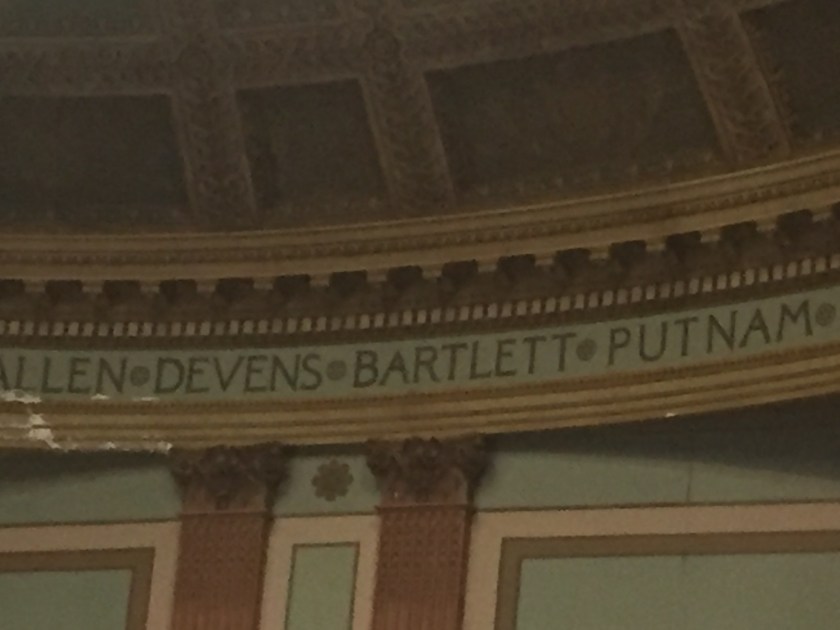





Camera: iPhone 6
Location: Massachusetts State House; Boston, Massachusetts

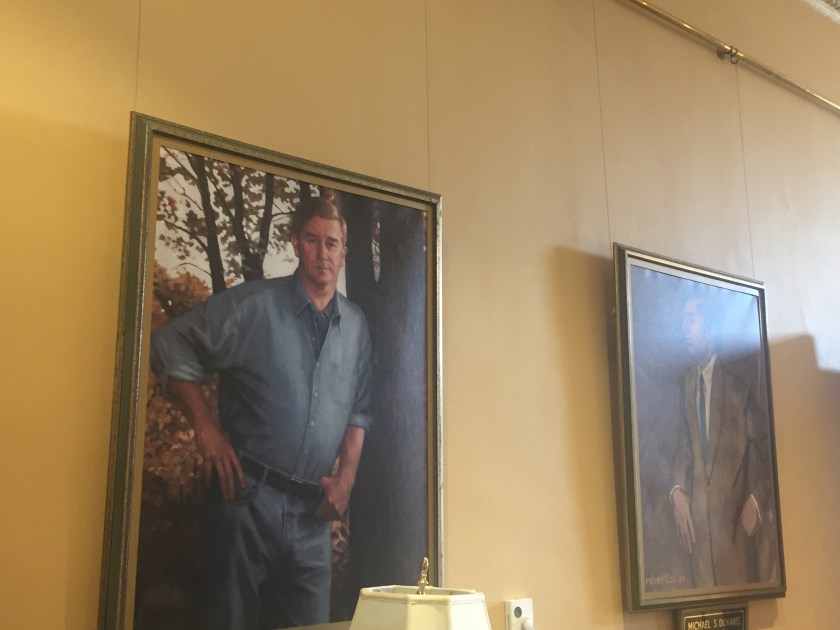
Camera: iPhone 6
Location: Massachusetts State House; Boston, Massachusetts
There’s a famous story from the Book of Genesis in the Bible that is known as the ‘Tower of Babel.’ It’s a mythic story about how human beings were once speaking the same language around the world and were able to communicate seamlessly enough where they were able to build a magnificent tower to reach the heavens. Humanity is united and in peace with each other given that they share the same language, culture, and geographical location.
After the ‘great flood’ washed away and receded, humanity wanted to build the tower of Babel in order to reach God and the heavens. In the story, God is befuddled by this show of hubris and ego that has united humanity together in building this tower to reach his presence, and decides to make humanity speak different languages, and separates people into different tribes located in different places around the world. The confusion of languages has a major impact on humanity causing a breakdown in communication, and leading to the future certainties of conflict, violence, and overall suffering.
Alejandro Gonzalez Inarritu has created a beautiful film named after this allegorical Biblical event titled, Babel (2006), which was released over a decade ago, and was a winner of Best Original Score at the Oscars as well as six other Academy Award nominations. The film was released to critical acclaim and has garnered a lot of recognition for its’ themes of globalization, cultural and language miscommunication, and the powerlessness of people to control critical events that happen in their lives.
‘Babel’ features an ensemble cast of actors from around the world, which include Brad Pitt, Cate Blanchett, Gael Garcia Bernal, Koji Yashuko, and Adriana Barraza. ‘Babel’ is an intriguing film in that the characters and situations in the film take place in three different parts of the world but are interrelated with each other. The sequences of events that occur are out of order but are shown to connect with each other as the film goes on. As for the countries where the film is set, they include Morocco, Japan, Mexico, and the United States. A lot of credit must be given to Mr. Inarritu for weaving these three storylines together without making it too hard to follow or too farcical to be believed. The aspects that make this film unique are the interweaving storylines, the excellent acting, and the themes and questions that ‘Babel’ poses to its’ audience.
The stories that make up ‘Babel’ show how unrelated and seemingly random events at the time can end up turning people’s lives upside down. The overall plot of ‘Babel’ starts out with a Japanese businessman giving a rifle to his hunting companion / tour guide in Morocco as an innocuous gift. This event seems harmless as a moment between two men of different countries and cultures sharing a gift but which causes different events of the movie to unfold over three different continents.
The hunting rifle that makes its’ way to Morocco, is eventually sold by Hassan Ibrahim, who receives the rifle from his old Japanese hunting partner and the rifle ends up in the hands of a goat-herder named Abdullah. Perhaps not using the best judgment as a grandfather should but not seeing a problem with it, Abdullah gives over the hunting rifle to his two sons, Yussef and Ahmed, who want to use it to ward off jackals from killing the goats in their flock.
The boys who are only teenagers and are not skilled with weapons end up practicing the range of the rifle and end up practicing the firing of the rifle on rocks, a moving car, and then the bus. The two boys do not really know the danger that they’re playing with and they don’t know who is on the bus they’re firing the rifle at. The Western tourists who are travelling through Morocco are also unaware as to what is about to happen and are trying to enjoy their trip to a foreign country. Susan, played by Cate Blanchett, is an American woman sleeping on that bus filled with Western tourists and is trying to get some rest when she is shot in the neck accidentally by one of the Moroccan boys with the hunting rifle.
Her husband, Richard, played by Brad Pitt, is caught unaware of what happens to his wife, Susan, but quickly catches up to the reality that his wife is severely wounded in a foreign country where he doesn’t speak the language, and he doesn’t have control of the situation. After losing their third child recently to the SIDS disease, Richard and Susan’s marriage is on the rocks and they took the trip to Morocco to get the spark back in their love life. In some scenes of the film, they seem angry, confused, and emotionally distraught after the tragic death of their infant child.
While Richard and Susan are on vacation in Morocco as a means to save their marriage, their two children are in the care of their long-term nanny who is originally from Mexico. Amelia (played by Adriana Barraza) is put into a difficult situation after Susan’s injured state becomes known. She is an undocumented person working in the United States illegally but she has been a nanny and housekeeper for Richard and Susan for many years. She treats their children like her own son and daughter after being a personal caretaker for them. It is made clear to the audience that Adriana has been in the U.S. for over a decade and a half and she has close ties to the American family.
During the film, Adriana is put into a very difficult situation, as she has to go back to Mexico for her son’s wedding but is unable to leave Richard and Susan’s children by themselves at the house in California. Because Richard can’t leave Susan’s bedside, they are delayed in their arrival back to San Diego. Against Richard’s wishes, Adriana decides to take their children with her to Mexico for the evening to enjoy the wedding of her son. Everything is fine for Adriana and the children at the wedding until her nephew, Santiago, decides to drink heavily during the celebration. He is shown to be intoxicated before driving on the way back to U.S.-Mexico border with Adriana and the children causing a number of unfortunate events that upends the lives of all those who are involved in his serious mistake.
The last part of the storyline takes place in Japan and focuses mainly on a teenage girl named Chieko Wataya (played by Rinko Kikuchi). Chieko is deaf and is unable to hear the outside world. On top of that, her mother recently committed suicide, which Chieko became the first witness to leaving her traumatized and inconsolable. She struggles in her attempts to relate to people anymore and is frustrated with boys her age. It is implied that her father and Chieko don’t have the best relationship with each other and haven’t discussed the traumatic event of her mother’s suicide.
During this storyline, it becomes clear that Chieko is confused, lonely, and looking to receive love from a father-like figure since her own father has been so absent in her life. Without spoiling the ending of this storyline, it is also revealed that Chieko’s father is the one to originally give the hunting rifle to the Moroccan man, Hassan Ibrahim, who he met on his trip there. The police eventually question Chieko’s father about why he sold his rifle to Hassan, and how Susan’s wounded state has become a major political point of contention between the U.S. and Moroccan governments.
Overall, Alejandro Gonzalez Inarritu does an excellent job of bringing these four storylines over three continents to life, and is able to tie them together seamlessly. ‘Babel’ is a story of human beings living their lives in their own ways within their own cultures but who get caught up in external events beyond their control. Inarritu is able to capture how interconnected our world is today in the early stages of the 21st century whether we would like to be aware of it or not. Seemingly unrelated events to each other are able to cause powerful effects that can change people’s lives when they least expect them.
A Japanese man goes on a hunting trip in Morocco, enjoys his Moroccan hunter’s company, and gives him a gift. That Moroccan man sells the rifle to a local goat-herder who lets his two sons practice with the weapon, and they fire the gun consecutively without knowing the damage it can do. The boys, not trying to do harm intentionally, end up shooting accurately at a bus that happens to be filled with Western tourists. An American woman who is catching some sleep catches a stray bullet and starts to bleed to death. She has to seek help from the local Moroccans in the village, and her wounded status causes a political feud between the U.S. – Moroccan governments over whether or not the act was ‘terrorism.’
While she’s recovering from her wounds, her housekeeper half a world away takes her children to Mexico to see her son get married at a wedding. Her nephew uses poor judgment on the drive back to the U.S. from Mexico and makes a fateful decision that changes Adriana and the children’s lives. ‘Babel’ was one of the first movies of the 21st century to really capture the phenomenon of globalization, and how actions that happen half a world away can affect other people’s lives directly. In this movie, we see how people try to do their best as people do, and often times don’t mean to do harm to others intentionally.
Sometimes, people can get caught up in making decisions that they think are good at the time but end up having the opposite effect. ‘Babel’ is not a simple black and white film with truly good or truly evil people. This is a film that understands that there are various shades of grey to life, and that it is difficult to control everything that happens to us and the people in our lives.
Overall, ‘Babel’ is an emotionally charged film that reminds us how people, things, and events can be misinterpreted. When you as an individual come from different cultural and language backgrounds, there are things that are likely to be lost in translation with another person of a different background. Unfortunately, miscommunication is apart of life, and problems are going to occur when people are unable to understand and connect with each other even if they do speak the same language with each other.
As the Biblical story goes, humanity ended up being divided by different languages after trying to be unified in their desire to build up a singular tower to the heavens. We are said to have been punished for our hubris and ego, which caused us to be separated from each other as we were spread out intentionally across the globe.
The audience is left to wonder at the end of ‘Babel’ if there is a truly happy or sad ending to take note of. The plain truth of the ending to me is that ‘Babel’ purposely shows all the elements of the human experience from Chieko’s joy at going to a rave party with her friends to Adriana’s pure despair at losing Richard and Susan’s children in the Mexican desert.
‘Babel’ shows us that life has its’ inevitable ups and downs, and that we can only control so much about our own lives, and many things are often out of our control yet still happen to affect us deeply regardless. Still, this brilliant film captures the resilience of its’ characters who try to make amends for their mistakes, and want to become better as they figure out the complexities and difficulties that make up life. I highly recommend ‘Babel’ to others and hope that it will get the recognition it deserves for years to come.
I know what you may be thinking as you read out loud the title of this blog post. You’re probably wondering why I would choose to review and analyze a movie based off a super hero from a comic book series. It may appear to be juvenile but I made this creative choice for a couple of good reasons.
A superhero who has been around since the early days of comic books in the early 1930’s, Batman is a popular cultural figure who until the 2000’s came around was never done justice on the silver screen. I remember as a kid watching the overly cartoonish and god-awful early film adaptations such as ‘Batman Forever’ and ‘Batman and Robin.’ The best film up until ‘Batman Begins’ was Tim Burton’s ‘Batman’, released in 1989, and even that movie was a bit goofy and contrived at times. Luckily, Batman on film earned a well-needed revival due to the masterful directing, screenwriting, and casting for Batman Begins, which was released over a decade ago in 2005.
Christopher Nolan, who directed Batman Begins, and helped to write the screenplay, did an amazing job in bringing Batman to life again as a superhero that comes from a realistic setting. Compared to The Avengers or X-Men, this is as close to reality as a superhero film can get. Compared to all of the comic book movies I’ve seen, and I’ve seen a good amount, ‘Batman Begins’ is the most realistic. It never gets too fanciful, and it takes itself seriously as a film that falls under the ‘drama’ genre.
For those readers who are unfamiliar with the origins of Batman, ‘Batman Begins’ does a great job of setting up the rise of this super hero from his childhood to his 30th birthday. You can see how much Bruce Wayne evolves into the role of the masked dark knight due to the painful tragedy that befalls him at an early age.
Bruce Wayne is a boy who grew up with everything a child could ask for: a loving family, a safe home, and a bright future. He has it all taken away from him when his parents are gunned down in front of him by one of the people they were trying to help. The Wayne family comes from immense wealth and they are tied to Gotham City through the generations. The Wayne’s are great benefactors to the city and try to help it out financially so that citizens can gain economic opportunities even during hard times.
The death of Bruce Wayne’s parents is the true beginning of his path to becoming Batman. This film does a great job in showing the phases that Bruce goes through after suffering a trauma such as the loss of his closest family members: his mother and his father. For many years, Bruce turns his deep-seated emotions onto blaming himself to feel the full guilt, the relentless anger, and the deep sadness fully. He is unable to use those powerful emotions, and turn them into constructive action.
An ever-present theme throughout ‘Batman Begins’ is Fear. As a young child, Bruce fell into a deep well near his parents’ mansion, and was unable to get himself out after experiencing a wave of bats surrounding him as they flew away into the sunlight. During an opera performance one night, young Bruce asks his father if they can leave the theater for a little while because he is frightened by the performers pretending to be bats in one of the play’s acts. Because of this fateful decision, for many years, Bruce blames himself completely for his parents’ death because they ended up being shot and killed by the mugger, Joe Chill, after Bruce asked them to leave the theater, and head into the nearby alley.
Bruce seeks out vengeance against the man who killed his parents and wishes to kill Mr. Chill as he leaves the courthouse. He buys a gun one day and wants to take justice into his own hands like a vigilante. Before he is able to do the grisly deed, Joe Chill is killed by one of Carmine Falcone’s men, a Gotham City mob boss. Although Mr. Falcone didn’t kill Bruce’s parents, the corruption befalling the city’s institutions, the unrelenting crime wave, and the lack of a respectable police force have led to more injustice than ever that has left Gotham City a shell of what it used to be.
One of the best scenes of ‘Batman Begins’ highlights the fact that Bruce has more to lose than he knows and should protect the people he cares about. He decides to use Batman as more than just a man flying around in a cape, but more as a symbol to be feared by criminals everywhere, and that anybody can become Batman if they have the will to act. Bruce is wise to use his fear of Bats and turn that fear into a powerful symbol, which criminals will one day fear themselves.
Despite the personal tragedy that befell him, men like Carmine Falcone lecture the young Bruce Wayne regarding his naivety about the world. “You always fear what you don’t understand”, and “people from your world have so much to lose.” Before becoming Batman, Bruce decides to travel the world, learn about the psychology of criminals, train himself in various martial arts, and harness the power of stealth to strike fear into the hearts of Gotham’s underbelly.
In order to learn fully about the evils of the world, Bruce has to go out there himself to experience what actually drives criminals to do what they do. He has to push himself physically and mentally in order to be able to stop them. In order to become Batman, he has to develop a strong moral code so that he can be incorruptible, and more than just a vigilante taking justice into his own hands. In this film, Batman doesn’t kill and he desires to make sure that all criminals face true justice to prove that it’s more than just vengeance for him.
In order to fully develop into Batman, he must complete his training under the tutelage of Henri Ducard (played brilliantly by Liam Neeson). Henri and Bruce have both suffered personal tragedies at the hands of ruthless criminals, but they decide to use their anger and pain to motivate them to strengthen, develop, and confront their adversaries whomever they may be. Bruce becomes Ducard’s best student and excels in different areas of physical and mental training. As Ducard imparts on Wayne, “Your training is nothing, the will is everything. The will to act.”
Batman Begins does an excellent job of showing the physical dexterity and the mental will needed to become a hero like Batman. In addition to that, the training scenes are spectacular in highlighting how Bruce must use deception, theatricality, and stealth in order to overcome his enemies with fear. Most similarly, he must play the role of an actual ninja. “In order to manipulate the fear in others, you must first master the fear within yourself.”
Batman is a symbol that cannot be bought off, corrupted, or killed. Ducard reminds Bruce Wayne of the fact, “If you make yourself more than just a man, if you devote yourself to an ideal, and if they can’t stop you…you become something else entirely…A legend, Mr. Wayne.” However, Ducard and Wayne have a fundamental difference of belief regarding the nature of criminals that puts them on an adversarial footing with each other, which leads to an inevitable confrontation later on. Bruce desires to bring criminals to justice but with the support of the police and the criminal justice system. On a fundamental level, he wants to uphold the institutions of Gotham City to be free of corruption in all of its’ forms.
We find out that Mr. Ducard is no fan of granting any leniency to criminals and wants them to be punished without any hesitation or limits. For Ra’s al-Ghul, Henri Ducard, and the rest of the League of Shadows, an organization that helped train Bruce Wayne to become Batman, crime cannot be tolerated and that criminals thrive when societies indulge themselves by not having them pay the ultimate price of death. Even if the criminal is a despicable murderer, Bruce still believes in the rule of law, wants them to be tried in a fair court, and does not desire to become a singular executioner.
Batman wants to save Gotham City in the right way even though he finds it to be an almost insurmountable task given the lack of allies he has. However, he discovers that he has help with the incorruptible Officer James Gordon of the Gotham City Police Department and his friend, Rachel Dawes, a district attorney who won’t be bought off.
Batman comes up against another villain who desires to strike fear into the heart of Gotham’s citizenry: The Scarecrow (played by Cillian Murphy) who uses fear toxin gas to poison people, and make them do horrible things to each other out of their fear of each other. Bruce Wayne must lead a double life, keep his secret safe, weed out corruption, and be able to combat two villains who use fear to prey on the fearful (Scarecrow and Ra’s al-Ghul).
Instead of using fear against the citizens of Gotham, Batman uses his terrifying appearance to strike fear into the hearts of criminals and villains everywhere. While he understands that justice is never ensured for all criminals, he does not want to be a murderer himself who decides the fate of all those enemies he fights and stops.
‘Batman Begins’ is a deep superhero movie that asks some philosophical and psychological questions regarding the nature of true justice, and how far individuals and a collective society should go in order to stop crime. The film also probes the feeling of ‘fear’ and how a person can master their own fear in order to become mentally and physically stronger.
Christopher Nolan asks the question of how do we control our own fear and keep it from controlling us. Batman is a flawed superhero, but he is able to control his fear to become a legend. His symbolism helps Gotham City to rise up against corruption, crime, and to fight injustice. While he is only just a man without any real superpowers, he is able to inspire others to fight the good fight with his moral example.
In a movie where there’s not much hope, the Batman inspires others to believe in themselves and their city again. He is a regular man, driven into action after going through a terrible tragedy. Instead of being broken by what happened to him at a young age, he uses his pain and sorrow to motivate himself so that others don’t suffer the same kind of tragedy in life of losing a loved one. As a superhero and as a film character, Batman sets himself up as an example to follow for the audience even if it is a fictional story.
Making a super hero film is an extremely difficult process, which is why director Christopher Nolan should be given a lot of credit. Mr. Nolan has directed a lot of great films including Inception and Interstellar. Batman Begins is the first of three movies in the Dark Knight film series, and it may be the most underrated of them all. He and his team did a great job of bringing this character back onto the big screen in a big way.
It’s a realistic take on the Batman, and its’ a film franchise that has produced three excellent, unique films. For myself and many other fans, Batman Begins is more than just a simple superhero movie. It is a morality tale about hope overcoming fear, how to overcome adversity to become a stronger person, and how to set an example for others to follow in your footsteps.
Batman has survived in our popular culture for so long because you get the sense that he is a relatable character for many people despite the fiction behind it. Ultimately, he is a man who has his strengths, his weaknesses, yet he is ultimately fallible. Still though, he is a powerful individual that strives to fight for justice, hope, and wants to bring the best out of others. It’s important to remember that you don’t have to become a superhero like Batman to emulate those characteristics. You just have to do the right thing and be a good person.
If you are looking for a mainstay of most living languages, you should look no further than the concept of the ‘Idiom.’ The Idiom is the closest thing that humans have in terms of a universal connector among the diversity inherent in all forms of spoken language. The most important thing to understand about the idiom is that you are not supposed to take them literally but you are still supposed to take them seriously. There’s a deeper, implied meaning beyond any idiom regardless of the language it’s spoken in. This is especially the case in the English language where there are hundreds, if not thousands of idioms that can be used for any matter or circumstance.
Idioms can be extremely diverse in their range and can refer to any amount of unique subjects or topics. Idioms can also be used very locally, regionally, or nationally depending upon the language and the culture it comes from. A dialect, jargon, or accent can also lend to the idioms used by a certain group of people who share common interests and/or beliefs. Idioms can be used in reference to business, politics, science, art, music, and other parts of daily life.
It can be tough to decipher which idioms are the most used in the English language but there are a few of them that stand out in terms of their popularity and their different ways of usage. Most people who speak English are likely to be familiar with these idioms below or have used them themselves.
Examples
Meaning: Don’t get ahead of yourself before things are accomplished.
Meaning: You’re bothered or annoyed by something that won’t go away.
Meaning: While not taking this statement literally, you shouldn’t pass judgment on someone or something before you receive all of the facts.
Meaning: Very common, easily found anywhere and everywhere.
Meaning: A secret advantage or a benefit that no one else knows about and is going to be used soon against an opponent or adversary.
Sentences
Idioms can refer to someone’s actions and the consequences of those actions highlighted in example idioms such as ‘Pay the piper’ and ‘Rub somebody the wrong way.’ Idioms can refer to people in general when you say that they are ‘sick as a dog’ or ‘six feet underground.’ Lastly, colors in English can often become part of idioms themselves such as when you describe somebody as feeling upset or depressed as having ‘the blues.’ You know that the person isn’t actually ‘blue’ in their color but rather they have ‘the blues’, which is referred to as when somebody isn’t feeling well. There is a whole musical genre that is devoted to this kind of mellow music called the ‘Blues.’ ‘Out of the blue’ is another example of a color kind of idiom that refers to something happening when you least expect it to.
It can be very difficult to get the hang of idioms especially if your proficiency level is at a low level. First, you need to be able to conjugate verbs, have a good grasp on the vocabulary by knowing a lot of different words, and then you need to be able to understand the meaning behind the idioms and use them with other native speakers in the right way. The idioms being used depends upon the region, the culture, and the social group you find yourself in. That is why there are such a sheer variety of idioms that can be used in any given situation regardless of the language that the idiom falls under. Idioms cut across language and cultural barriers and can have similar meanings to each other depending upon the situation.
The best way in which to comprehend and start using English idioms is to talk with native speakers who will use them throughout a conversation even if they don’t realize it at times. The more conversations you have with English speakers, the more idioms you will pick up on and remember. They will most likely want to help you out so do not be afraid to ask questions if you don’t understand the meaning of the idiom or why it’s being used in a certain sentence.
Before you start using idioms yourself, you want to be absolutely clear that you’re using the idiom within the right context for the right meaning. It can be a bit embarrassing if you tell your American friend who is starring in a Broadway play that you want him to ‘jump the gun’ instead of to ‘break a leg.’ Idioms take time to understand, use, and master but they are an important part of learning any language, including English.
______________________________________________
If you have liked what I have written in this ‘English Corner’ post, and you are interested in improving your English language skills whether its’ with speaking, writing, or just boosting your knowledge of grammar, I would be happy to help you reach your language learning goals. Check out Learn English With Ben to book a private lesson with me today!
Today, September 16th marks the 2nd anniversary of www.benjweinberg.com, my personal blog and website which I have been proud to create and build up over the past two years. I have to say that it’s been the most successful year yet in terms of both overall viewership and unique visitors. I am proud to note that I have reached thousands of people from around the world each month, and have published over one hundred and fifty and photo-blog posts total over the past two years.
In the last year, I’ve documented my travels throughout Colombia and have really made the ‘English Corner’ series a cornerstone of this blog. In addition, I have reviewed many films and analyzed them such as ‘Collateral’, ‘Traffic’, and ‘Lord of War.’ I continue to write about psychological themes that are highlighted in articles such as ‘How You Think Affects Everything You Get’ and ‘Reaching the Gold Standard.’
In this 2nd year of blogging, I have done my best to improve my writing and editing skills in order to create useful content for my site visitors. In the third year of my website, I hope to write longer-form posts at 2,000 or 3,000 words total in order to dive deeper into topics of my choosing. I continue to devote a lot of time and effort into this blog and I am very thankful to all of the readers, friends, and family who have supported it by reading my articles, leaving comments, and giving me constructive feedback.
I’ve recently moved to Boston, Massachusetts so I do hope to focus on some cultural aspects of living in this historical New England city and to highlight some of the destinations that are popular here. I will continue to write about ESL topics in my ‘English Corner’ posts but also focus more on personal and professional development ideas that I think will help my readers to succeed and advance themselves in different parts of life.
As this blog enters year three, I will continue to produce consistent content on a weekly basis, and to also update the layout and design of the website to be more viewer friendly. If you’re new to this blog and don’t know much about me or my writings, I have an archives section which has the location of all one-hundred and fifty of my posts which have occurred in the past two years. I also have a ‘Best Of’ Articles page where I highlight the ten-blog posts that I like the most when it comes to culture, lifestyle, traveling, music/movies/books, and personal development. You can find the individual links to these ten top posts here: https://benjweinberg.com/best-of-articles/.
Lastly, the biggest changes that I’ve made to my website are to incorporate the ability of ESL students to sign-up and take private English lessons with me if they are interested in doing so. If you go to the ‘Learn English With Me’ page, you can find out more about which kinds of private lessons I’m offering as well as my pricing per lesson. There’s a sign-up interest form at the bottom of this webpage, and you can also check out my ESL teaching background and experience here: https://benjweinberg.com/learn-english-with-me/.
I also have advertised my freelancing services in writing and editing. I have done freelance writing and editing jobs for clients over the past couple of years and am looking to expand my clientele. If you would like to find out more information about my pricing, experience, and see my portfolio, you can check it out at this webpage: https://benjweinberg.com/freelance-services/. There is a sign-up interest form at the bottom of that webpage too so you can get in touch with me through an e-mail message.
In this third year, I hope that my website will continue to grow in terms of audience and produce better and more useful content. I want to say thank you to all the readers and supporters of benjweinberg.com. I look forward to keeping in touch with you throughout the rest of the year and into 2018. As always, you are free to comment on any and all of my articles, give me helpful feedback through a direct message, or to show interest in my freelance and teaching services by completing a sign-up form. Thank you again for your readership and I think that this 3rd year of benjweinberg.com will be the best one yet. Cheers!










Camera: Canon PowerShot SX710 HS
Location: Hyde Park, New York – Franklin Delano Roosevelt Presidential Library and Museum, and The Culinary Institute of America







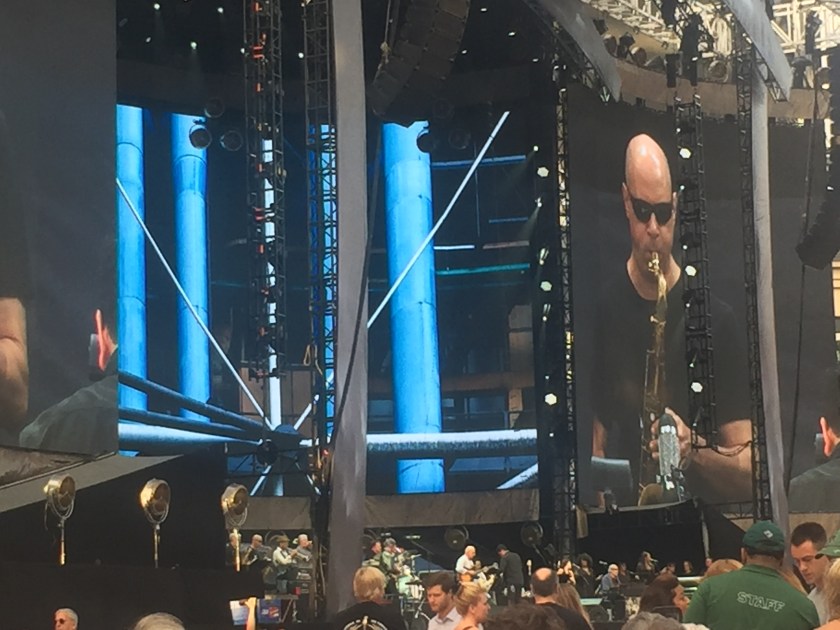




Camera: iPhone 6
Locations: Bronx, New York (Yankee Stadium), Queens, New York (Citi Field)

Getting better at a foreign language or achieving an advanced level of proficiency in one is not an easy task. I’m not going to sugarcoat it. Regardless of which language you’re focusing on, it can months or even years to get the hang of it. Depending upon how much hard work and effort you put in, you are going to likely improve quicker and remain committed to the process of becoming bilingual or multilingual. Certain people are going to pick up language(s) quicker because they may have a natural talent for it or because they truly enjoy learning the subject and find it easy to excel in.
However, even if you’re not naturally gifted or don’t pick it up quickly, you can still get ahead and make gains in the language through a number of ways. As someone who has studied foreign languages for over half of my life and has also taught English as a Second Language for a few years now, I have a pretty good idea at what separates those students who are going to succeed in their language studies and those students who are likely to fail.
Even though, you may want to be fluently writing in Japanese or speaking to friends in Spanish, you have to put the work in even if language learning happens to come easy to you. It won’t happen overnight but the process can be sped up if you want to boost your ability to learn with a few key steps that I will highlight in the rest of this post. Take these five steps that I will flesh out to heart because it could mean the difference between you being at an advanced level in a year rather than being stuck at the intermediate stage. You don’t have to do all of my five recommended steps to make language gains quickly but it’s definitely recommended to try our at least one or two of them for your own personal benefit as a student of foreign languages.
While not the most noteworthy recommendation, some language learners forget to put the work in on a consistent basis. If you happen to work five hours on one day specifically on learning a language, that sounds great on paper but if you happen to neglect the six other days of the week, then you’re not really going to make any progress. This is partly why if you study a foreign language in a school or at a university, you’re going to usually have classes four or five days a week so that it stays fresh in your mind. One or two hours per night five or six days a week will go a long way for you and your learning language goals.
Being consistent and responsible in your hours of study will pay off much greater dividends than cramming all of your language studies into one night for a bunch of hours. It’s likely that your brain and memory will be so overwhelmed by all of that information if you cram it into one night that you won’t be able to remember anything you learned by the next week or month. When it comes to any academic subject including foreign languages, you should listen to wise words of a popular phrase that I remember from my high school days: “It’s better to study smart, then it is to study hard.” Don’t overwhelm yourself, stay committed to a language study schedule, and remember to take one day off instead of five or six days off to retain the vocabulary, grammar, phrases, etc. that you have been learning.
We live in an amazing time and I would argue that it’s easier than ever to learn a foreign language if you’re willing to do your research, both online and offline. When it comes to online resources, there is almost a limitless amount of information that you can discover dealing with the study of a foreign language. Whether it’s grammar, vocabulary, listening, writing activities, etc. you’re likely to find what you need in order to study and improve if you make the effort to research carefully. In addition to that, it’s easier now than ever to do a language exchange with a native speaker through the medium of an online platform such as Skype, Google Hangouts, etc. You can also use a website like Meetup.com to find a social group to meet up, hang out, and practice your target language with if you happen to live in a big city or large town.
Beyond just online resources, you can network in person by offering to have coffee for an hour with a native speaker of the language you’re learning and if you haven’t had success with Meetup, you can enroll in language classes for a fee at either a foreign language center, community college, or at a local university of note. It’s much easier to make language gains when you live in a big city and have a good amount of money to spare for some formal classes. However, not everybody in the world has that luxury, which leads me to my next step.
As mentioned before, not everybody can live in a big city or have the ability to pay for classes at a university or a language center. However, if you can make the more affordable investment of getting a private tutor, it will save you some money and you will be able to practice directly, one-on-one with a native speaker and teacher of the target language.
Usually, a private tutor or teacher who you meet with face to face in person is going to be a bit more expensive than an online tutor. If you prefer to be physically present with your tutor to make it easier for you to learn and clarify the content that you’re absorbing, you may prefer to shell out the extra money for them to meet you at a café or to make a house call to your home and apartment.
However, if you are on a budget, don’t have access to a native speaker of the language you’re learning in your current location because you’re in a small town, don’t live near a foreign language center, etc. you should consider getting an online tutor or teacher. Even though you won’t be physically in the same room as your tutor, you’ll still be able to learn new material, go through lessons together, speak in the target language, and be able to complete homework and classwork to improve your fluency. Online tutors also tend to be less expensive as an investment when compared to real life tutors or to enroll in group classes.
You have to consider how much time you have to devote to the foreign language you’re learning and what your budget is. The cheapest and least expensive option is to have a free exchange of languages if you have a friend or colleague who wants to improve at your language in exchange for them teaching you their language. If you are particularly interested in learning a foreign language online, you should check out platforms like Verbling or Italki.
Another great way to boost your foreign language abilities is by seeking out opportunities outside of the classroom or textbook to brush up on your knowledge. Through a variety of media that is available both online and offline, you can spend an hour or two each day going through books, music (songs), movies, TV shows, etc. to listen and absorb the language you’re learning. For example, when you’re reading a book in a foreign language, you can highlight the words that you do not know and find out the meaning with a dictionary. You can also look up news articles online and take the time to translate the sentences and paragraphs from the foreign language into your own language.
You can immerse yourself more deeply into the culture behind the language you’re learning by being exposed to the songs and dances whose lyrics you’ll be able to study and analyze. In addition, you can pick up a lot of a language when you watch a popular TV Show, Movie, or other program. You can not only pick up a lot of a foreign language by spending some time listening to the language and interacting with it but also by observing the host culture(s), and finding out more about the individual expressions and phrases that also make this language you’re studying unique in its’ own ways.
To save the best and most important step for last, if you want to immerse yourself fully and take your foreign language studies to the next level, you’re going to want to move overseas for a period of time for some intense study of the language. You can watch a lot of movies, you can take a lot of classes, and you can study five or six nights out of the week, but moving to a country where they speak the language you’re learning as a fact of life will challenge your language skills and abilities as never before and put you to the test. Out of the five steps that I mentioned, this one will be the most beneficial to your language studies and also make the biggest impact on your life. I cannot recommend it enough for you as the student to go overseas for as long as you need to improve your language skills and improve as much as you can.
Even if you can only make it overseas for a cultural / language study exchange program for a month or two, you should take advantage of an opportunity like that. Also, if you happen to be in university and have the chance to study abroad for a semester or even a year, you should really do it especially if you’re committed to mastering the foreign language you’ve chosen. Foreign language learning doesn’t have to end even after you have earned your diploma.
You can continue to make trips to those countries where the language is the official one into the future. Other options include taking a gap year off from work or school to devote yourself to language study while you’re traveling around the world. If you are TEFL certified and want to learn a foreign language at the same time, you can move overseas to teach your language to students while receiving lessons from a teacher in that country as well as being immersed in the culture at the same time. There are tons of options out there so if you want to boost your language skills as much as possible, moving overseas for a long period of time could be a great chance for you.
There is no ‘magic bullet’ that will guarantee you perfect, almost native-like fluency in a foreign language. It’s a goal that takes a lifetime to master and even then you’ll still make mistakes and may retain your accent while speaking the language. Learning a foreign language is a lifetime project and is a skill that has to be consistently studied and improved upon.
It’s a common fact that the younger a person is when they start a foreign language, the better off they’ll be. If you start learning Chinese at five years old, you’ll be at a clear advantage when compared to somebody who is first starting a language at twenty years old. The younger a learner is when it comes to a foreign language, the more vocabulary and grammar they’ll be able to retain.
However, it’s important to not be discouraged about this fact even if you’re starting a foreign language in your 20’s and 30’s. With hard work and determination, you can still make a lot of progress especially if you follow these five steps. You can boost your level quicker than usual if you consider implementing these useful steps in your weekly or daily routine.
It’s also a positive that after you learn your first foreign language well, it’s likely to be easier for you when it comes to getting a high proficiency for your 2nd, 3rd, or 4th foreign language. Anything worth doing in life does not come easy so you have to decide how much the study of languages means to you personally. However, with the five steps that I have outlined in detail for you as the reader, you will be able to learn the language well, improve quickly, and reach your goals as a student to develop this crucial skill for the 21st century.
If you liked this article of mine and you are looking to improve your English language skills, please consider the option of having me as your private tutor. You can find out more information about this opportunity at https://benjweinberg.com/learn-english-with-me/. Whether it’s a lesson through Verbling, Italki, or another platform, I’d be happy to work with any English language student from around the world in their quest to achieve an advanced proficiency in my mother tongue. Good luck!
For my last blog post regarding Colombian culture for a while, I’d like to focus on a form of dance that is very popular there, especially on the Caribbean coast. Similar to cumbia, vallenato is a form of Colombian folk music that is both traditional and innovative in its’ instrumentation, interpretation. If we were to translate vallenato to English, it would roughly mean, “born in the valley,” which refers to vallenato’s roots coming from the Caribbean region of Colombia.
The valley that is being referenced as having started this popular music is located between Sierra Nevada de Santa Marta and the Serrania de Perija. Vallenato is also partly named after the Colombian city of Valledupar where this genre of music originated. Vallenato has become so popular not just in Colombia but also in rest of Latin America making it apart of mainstream Latin music that is apart of the cultural heritage of that country and that region of the world.
Vallenato originated from the tradition of farmers who would travel from Colombian village to village on long journeys in their quest to sell cattle in local fairs or look for greener pastures for them. During these trips, the farmers would sing together, play guitars and other instruments like gaita flutes (kuisis), which were indigenous to the local culture. Since these farmers would travel often, they would often bring news and information to the different towns that they visited. Sometimes, these messages to the village folk would be delivered in the song form so that the towns would know what’s going on nearby in the valley.
Vallenato is an eclectic mix of different kinds of world music such as Spanish, African, and Amerindian. Vallenato songs started to become common during the early 1900’s from the Caribbean region of Colombia. The early forms of vallenato would come with instruments such as gaita flutes, guacharaca (percussion), caja, bass guitar, and acoustic guitar. Additionally, you could make the sounds more European by adding instruments like the accordion or the piano.
Since the early days of vallenato, the accordion has become an increasingly large part of the sound of the songs of this particular genre of music. While vallenato was originally a genre of music for lower class folk and farmers in particular, it has since become popular across all spectrums and social classes within Colombian society. Many subgenres have come out of traditional vallenato such as romantic vallenato, commercial vallenato, and new wave vallenato.
Since the heart of the vallenato genre deals with telling stories, it is a very social form of music. You can drink liquor, enjoy a nice meal, and even dance with a partner to this genre. Listening to vallenato can go well with having a family party, attending a festival, or checking out a carnival. Vallenato has become so popular that there are two main festivals devoted to it: the Vallenato Legend Festival and the Cradle of Accordions festival. Valledupar has also become one of Colombia’s most famous cities given the fact that it was the birthplace of one of its most popular music genres, Vallenato.
When it comes to vallenato, you cannot have a song without the caja, the guacharaca, and the accordion to flesh out the sound and rhythm. The caja, is a small drum, that you can place between your knees and play with your bare hands. This drum was originally brought over by the Europeans during colonization and was mainly used by African slaves for entertainment.
The guacharaca, a wooden, ribbed stick that most looks like sugar cane can be rubbed together with a small fork in order to create a scraping sound. This instrument is meant to imitate the sound of the guacharaco bird from the Cesar region of Colombia, who is known to hunt for food and dance to perform the mating ritual. Lastly, you can’t forget to use the accordion of German origin in order to get the different tones needed to fill out the vallenato sound. By using the right buttons and hitting the right reeds, you should be able to get the rhythm down.
Speaking of the rhythms of vallenato, there are four different beats that create a rhythmic structure and a melody chord structure to form the basis for a song. The four rhythms are known as son, paseo, merengue, and puya. The son and paseo are played in a 2/4 time while the merengue and puya are played in a 6/8 time or ¾ time structure. ‘Son’ is known as being the slowest and most somber movement of vallenato and also has a heavy cadence. ‘Paseo’ is probably the most widely recorded rhythm of vallenato is known as being the most consistent of the four rhythms.
When it comes to ‘puya’, it’s the easiest rhythm of vallenato for each musician to have a solo with one of the three main instruments. It also has a faster up-tempo and is the oldest of the four rhythms. ‘Merengue’, which is not the same type of music as the original genre, but is the fourth and last vallenato rhythm, and was brought to Colombia by some African tribal groups. It’s a more narrative style of vallenato and is played in decimas, which is a 10-line format with Spanish internal rhythms the came over to Colombia originally during the 16th century.
There have been many composers, singers, and groups of Vallenato bands that have emerged over the past century who have helped to contribute to this genre of music. Perhaps the most famous Colombian composer of Vallenato was Rafael Escalona, who composed a number of famous songs and was one of the co-founders of the Vallenato Legend Festival along with Consuelo Araujo and Alfonso Lopez Michelsen.
Many Vallenato groups have also become orchestras in both their large size and instrumentation. The most popular of these orchestras are Binomio de Oro de America, Carlos Vives y la provincia, and Los Diablitos del Vallenato. You also can’t talk about Vallenato without mentioning Silvestre Dangond, who has become maybe the most famous modern day singer and composer of songs in this genre.
He has become popular not only in his native Colombia but also in Latin America and worldwide. While originally a genre of music from Colombia, Vallenato has expanded its’ popularity to Latin America and the rest of the world to share with its’ listeners both the joys, sadness, and romance of life itself.
Patacones are one of my favorite side dishes or entrees that you can find in Latin America. It’s a versatile kind of food that can be a side dish with fish, chicken, or beef but you can also make it a kind of entrée by putting two patacones together with a type of meat or fish inside along with lettuce, tomatoes, and other toppings. This food also makes for a wonderful snack if you want to munch on something between lunch and dinner. Patacones are relatively easy to make and don’t take too much skill because the recipe is pretty simple to follow.
Commonly known as ‘Tostones’, which comes from the verb tostar, “to toast” in Spanish are slices or pieces of plantain that have been fried twice over. While they are known as ‘tostones’ in countries such as Puerto Rico, Honduras, Guatemala, Nicaragua, Venezuela, the Dominican Republic, etc. They also have a different nickname of ‘tachinos’ (Cuba), ‘bananas pesees’ (Haiti). However, since I have been living in Colombia for almost a year now, I will refer to this delicious food as ‘Patacones’, which is the common name here and also in countries like Panama, Peru, Costa Rica, and Ecuador. You can find patacones of all shapes and sizes across both Central and South America, and there are many ways to put this food to good use.
When it comes to preparing and cooking patacones, you first have to pick up a few unripe plantains (green in color) from the local food market. After buying the plantains, you’re going to have to peel them and then slice into individual pieces that are circular in appearance. You should make sure that they’re big enough in length and width before you decide to begin frying them.
It’s important to put enough cooking oil in your frying pan, and to heat up the pan sufficiently first before putting the raw slices of plantains in there. For the first time, you’re going to want to fry the plantains for one to two minutes on each side until they start to look cooked enough by showing a golden color. One time isn’t enough to make patacones so you’re going to want to fry these patacones a second time to finish the job. However, before you decide to do that, it’s important to remove the patacones from the frying pan for a few minutes in order to get rid of excess cooking oil.
The patacones should be patted down and flattened before being fried a second time in the pan. For the second frying, the patacones should only be fried for a minute or two on each side before they are finished cooking. After they have been thoroughly fried, you should make sure to pound them flat with some kind of utensil that has a large flat surface like a bowl or a pot cover. By the time you’re done, your patacones should be golden, and crispy brown. It’s pretty common to add extra ingredients like salt, or some seasoning depending on if you want this food to be a bit spicy or not.
Patacones can also be served with garlic sauce (ajo in Spanish) or with hogao sauce as is done here in Colombia. You can make the comparison that Patacones are almost like French fries in that you can have them as a side dish or snack without too much effort. It’s easy to make between six to ten patacones to serve you and your guests. If you’re looking for an appetizer or a snack dish to serve friends and family at a house party, patacones are a great option. Patacones have their origin in West African cuisine, and made their way over to Latin America within the colonial period of Gran Colombia during the eighteenth century.
The best thing about a dish like patacones is how versatile it is. You can put anything on top of it whether its’ shrimp ceviche or avocado paste. It can function as a sandwich if you put two of them together with a kind of meat or fish in between to add additional flavor. They’re easy to cook, prepare, and delicious to eat. Be careful though because it’s likely you won’t be able to stop at just eating one patacone.
Whether it’s in the Caribbean, or in Latin America, or throughout the rest of the world, you’re likely to find patacones being served at a restaurant, or being sold as the original plantains in the supermarket. Personally, I look forward to learn how to cook patacones, and serving them to friends and family in the future. Now that I’ve tasted patacones many times and enjoyed this food, I’d like to make my own and have a taste of Colombia when I’m outside of this lovely country.